


We continue this series on the Chanthaburi region with Kung Wiman beach, a strip of land about 1 km long, which served as our "base" at the end of our stay. Just north of this beach is the peninsula with the viewpoint that has become an icon of the Chanthaburi region, Noen Nangphaya.
Following that, we went to Chao Lao, the two beaches being located west of the city of Chanthaburi , going up the coast from Laem Sing, which I told you about last time ( see my article on Laem Sing ).
Kung Wiman Beach
After this impromptu visit to our own hotel, we first went to the stretch of beach opposite it. The area is separated by a seawall running alongside the road, so there's no "direct" access; you have to climb a staircase to actually reach the beach. This means that the beach in this spot is quite narrow at high tide and not really suitable for a relaxing day, especially since there's no shade.


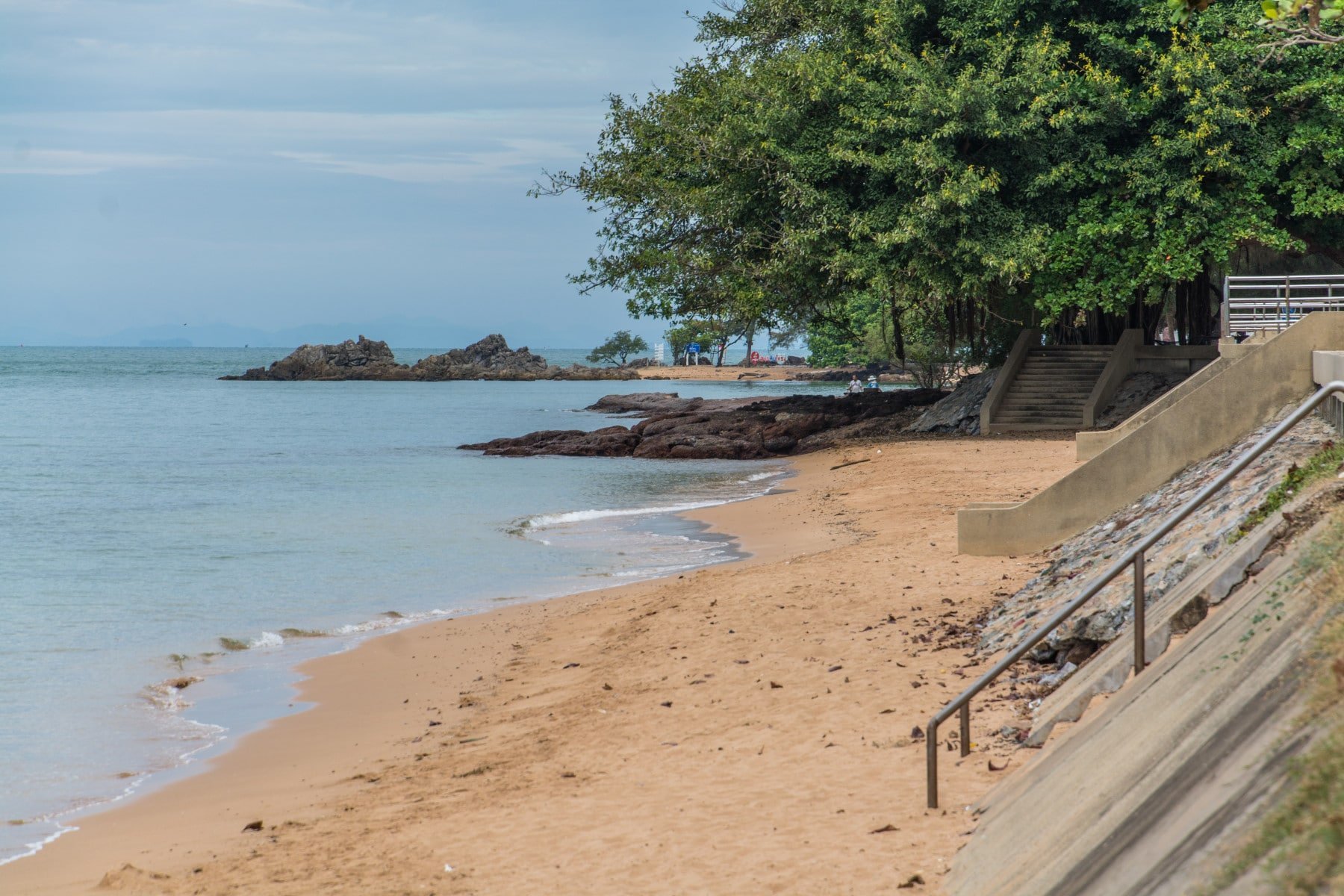
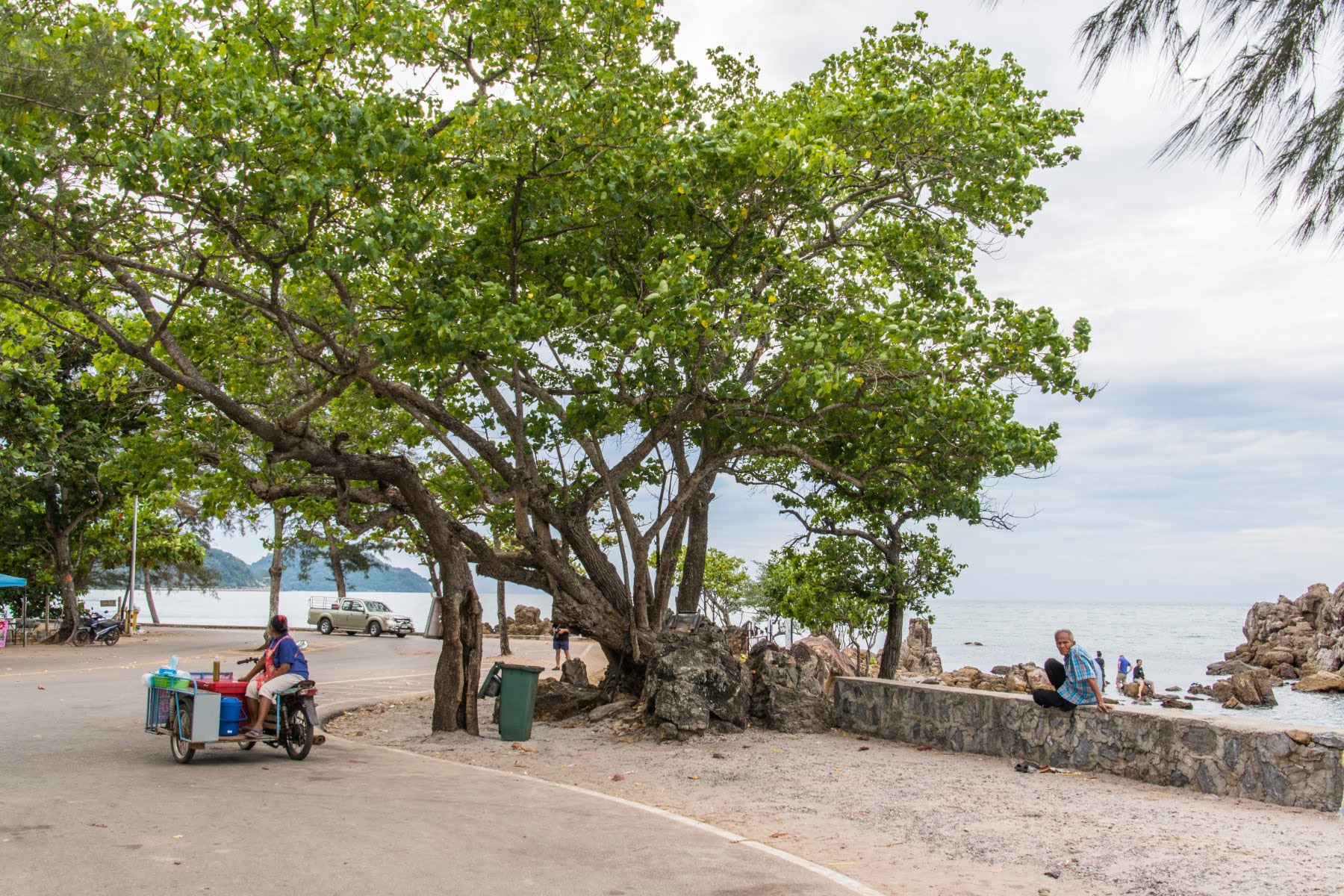
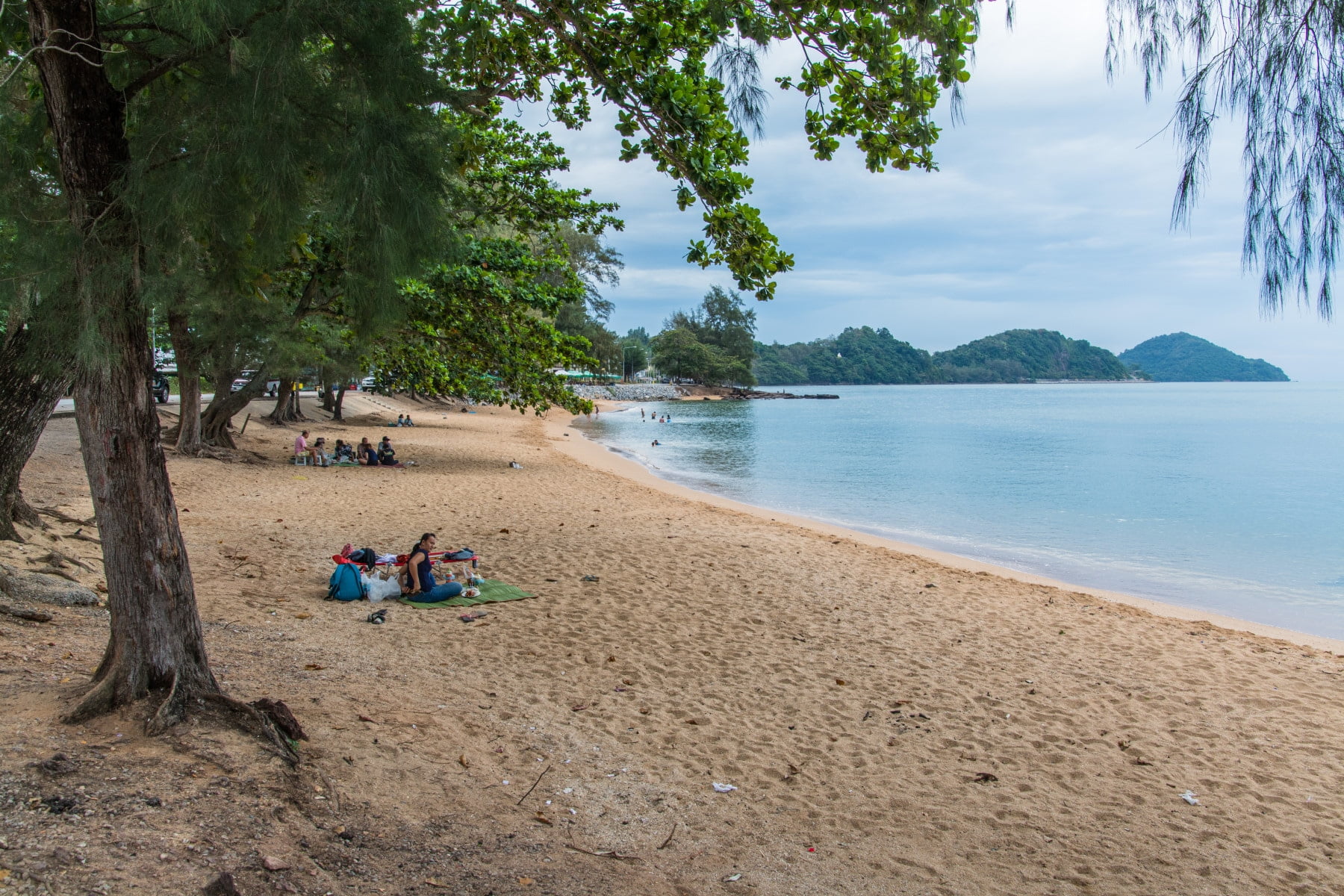
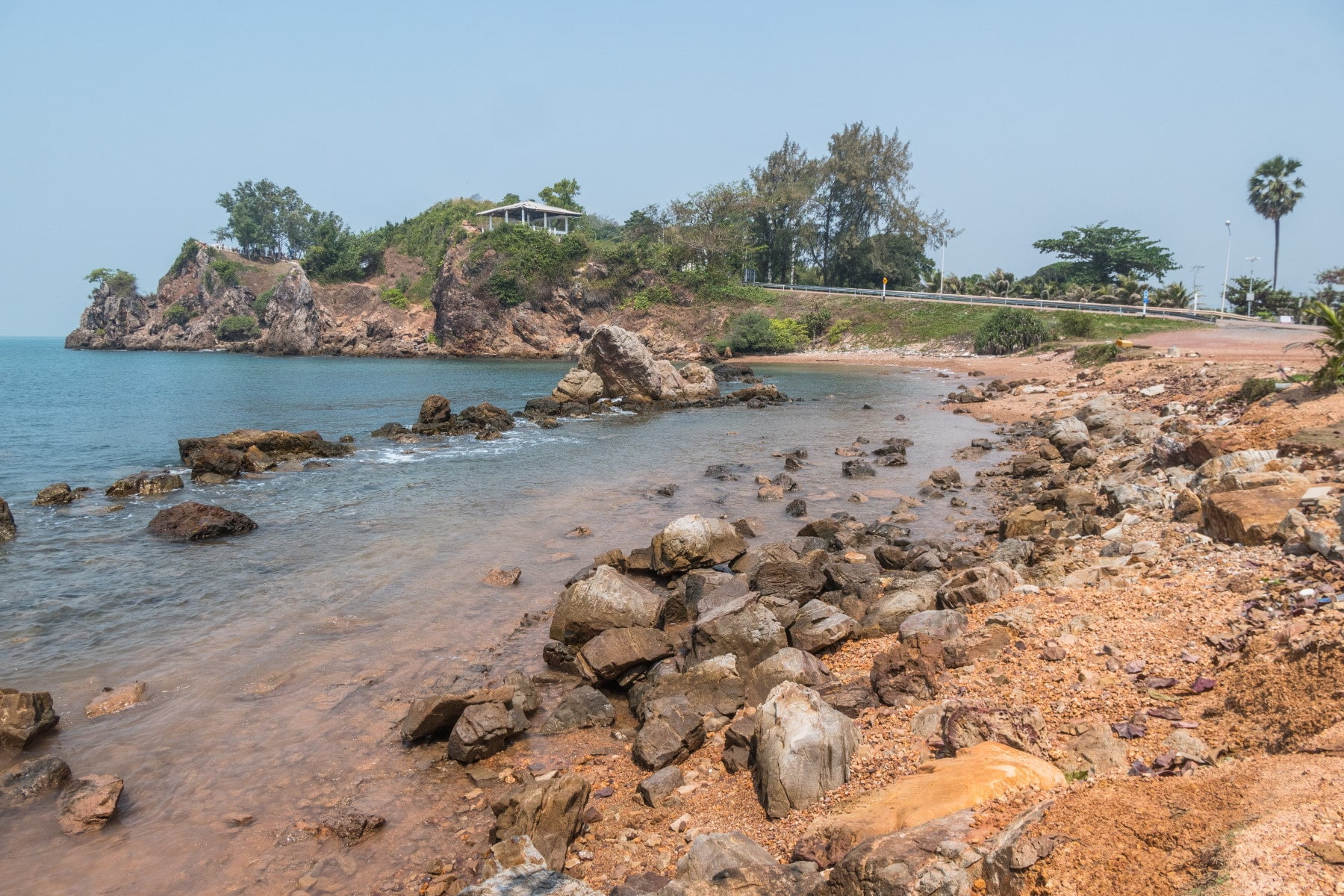
However, heading to the northern part of the beach, bordered by rocky areas on either side, leads to a cove where the beach widens and is lined with trees. We saw a few families there, but not many people. This area is a dead end, and at the far end you'll find a parking lot where a few street food vendors were set up. The weather was admittedly so-so that day, but the place has a certain charm, and I was surprised by the tranquility at this time of year.
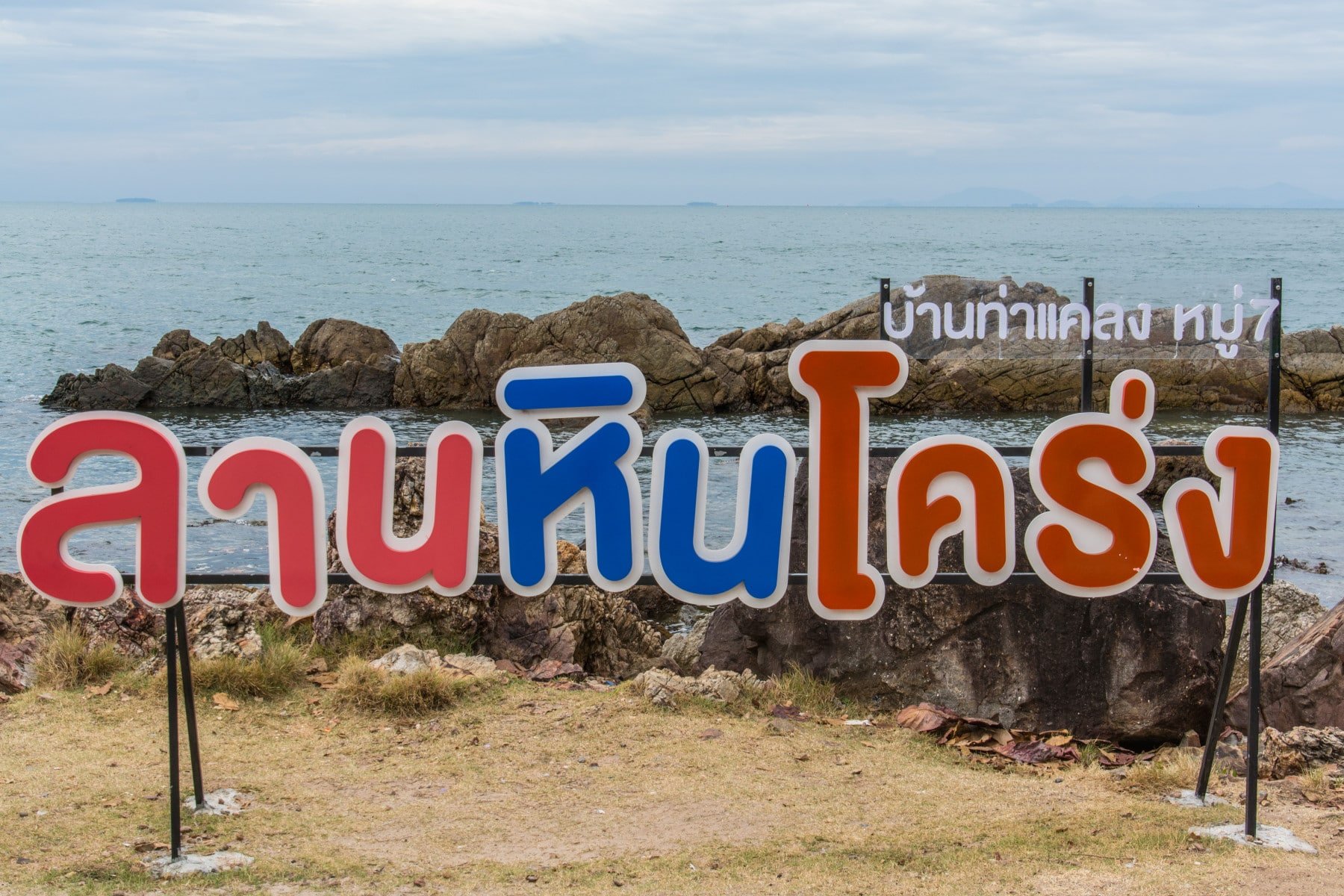
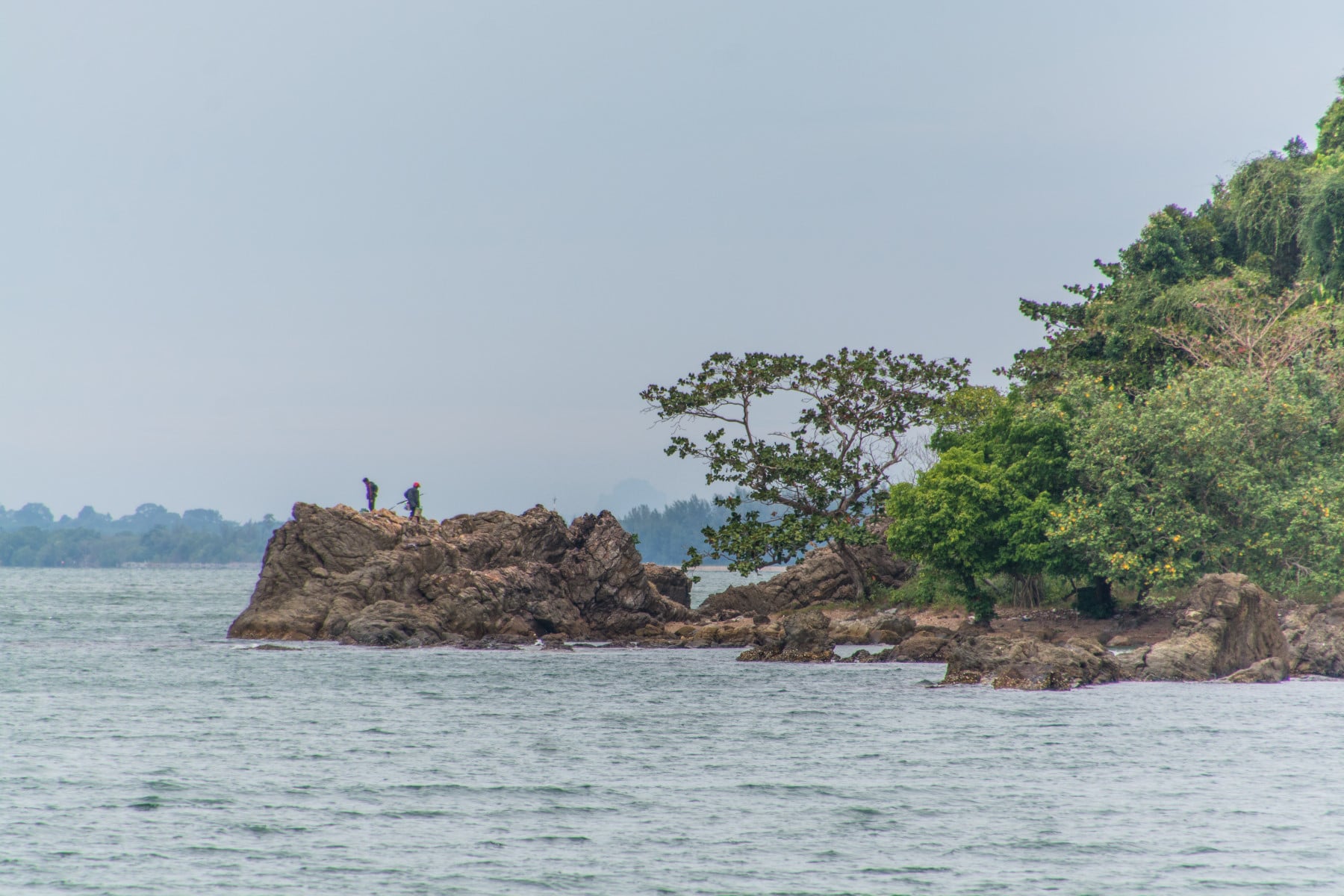
Noen Nangphaya Viewpoint
In the process, we went to the scenic road passing by the Noen Nangphaya viewpoint. The road to get there winds along the sea and is considered, despite its short length, as one of the most beautiful in Thailand. In any case, it has become one of the symbols of Chanthaburi, probably pushed by the tourist office playing on this image to attract people to this region. As if the "marketing" side behind it works, since we also went there. So what does it give?
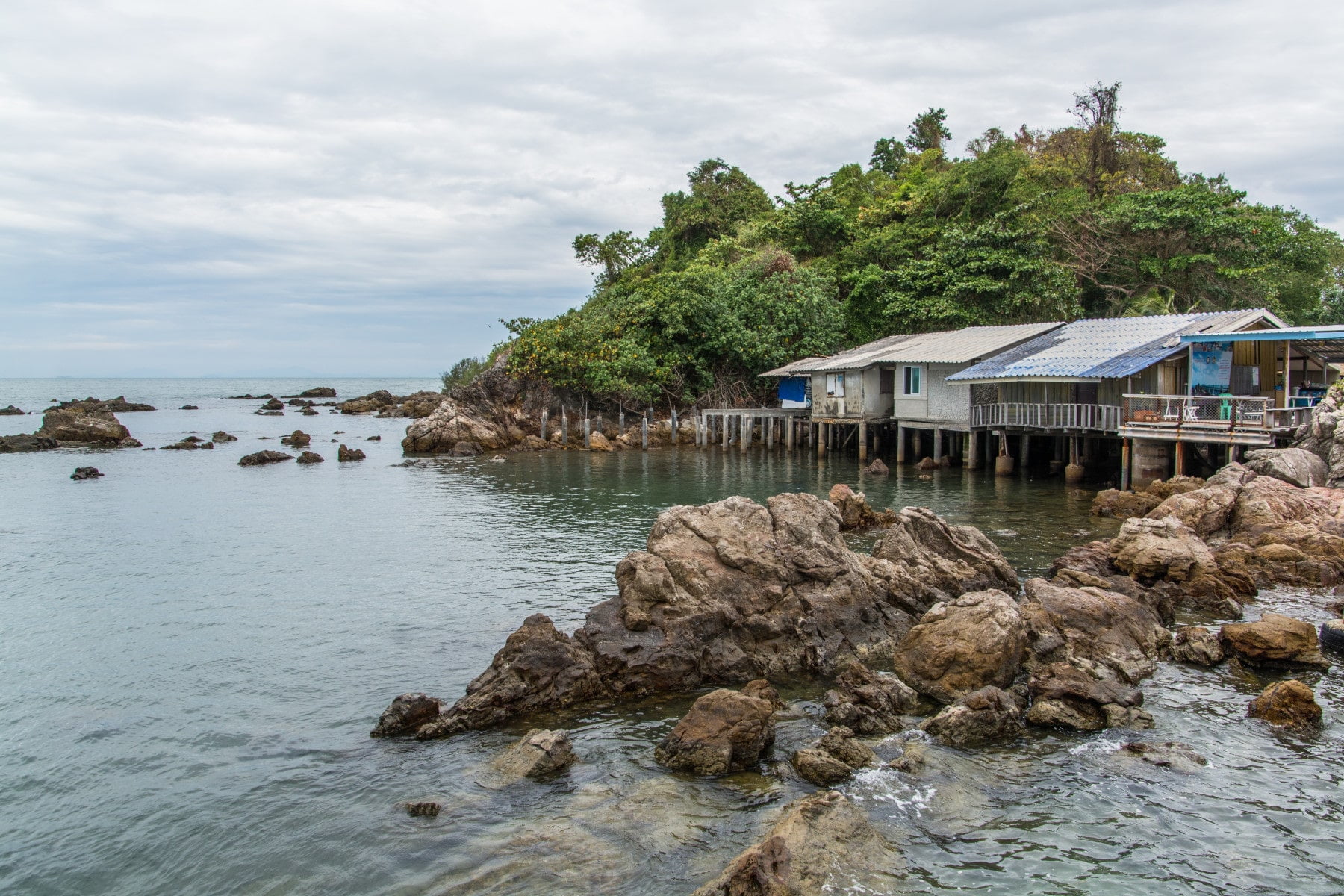
Well the road is beautiful yes, but as I said, it's short. As for the viewpoint, the parking lot is quite small, there is a restaurant and toilets there. You have to cross the road and the viewpoint is on a small hill overlooking the sea. A selfie spot par excellence, people buy padlocks there and fasten them along the railing, on the other hand the keys land on the cliff otherwise in the sea, not cool... The view is pretty that's undeniable, it overlooks the end of the peninsula where there is a fishing village behind the hill in the foreground.

Hua Laem Fishing Village and Pagoda
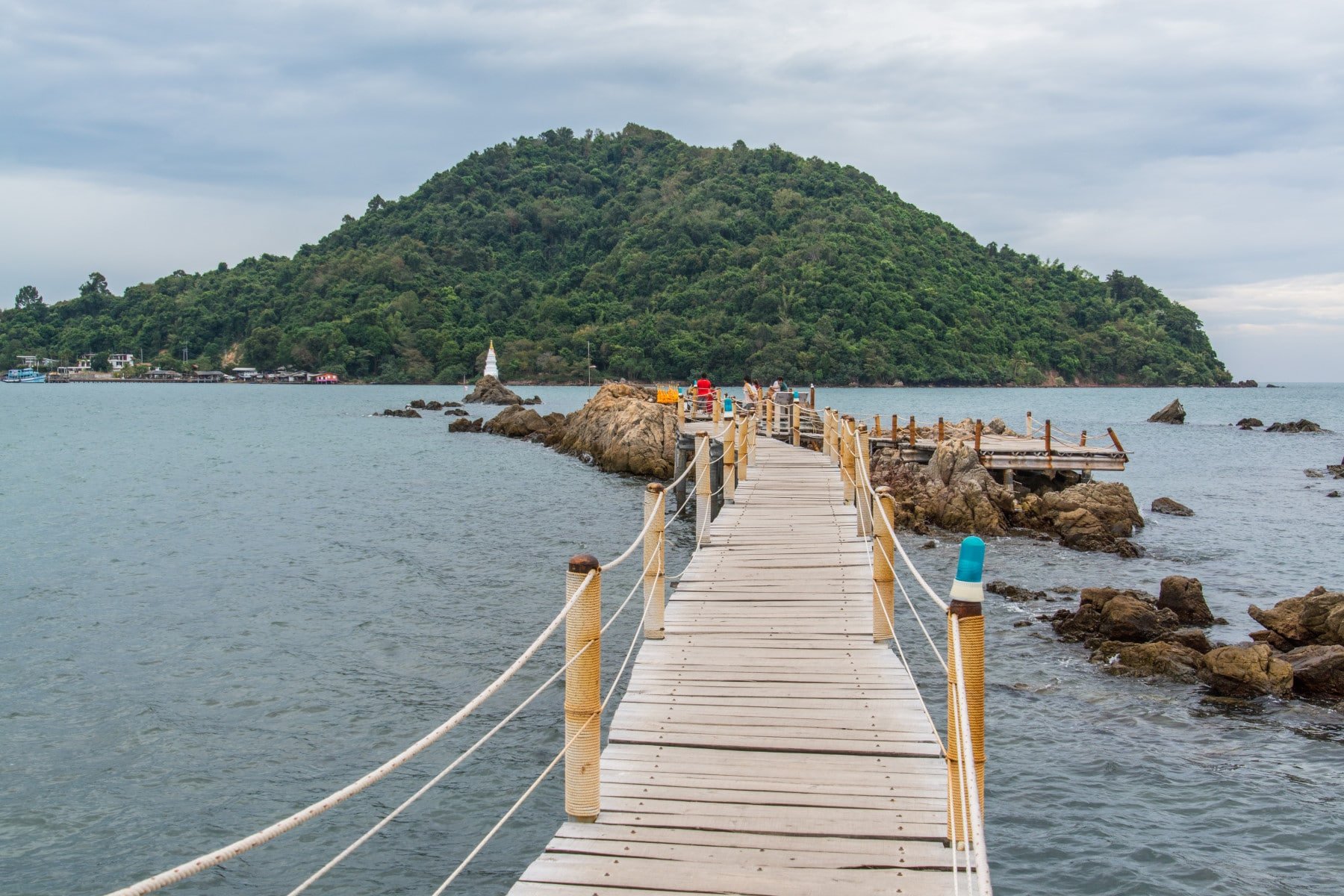
From what I understand, Hua Laem is the name of the fishing village below the viewpoint, going to the end of the peninsula. And that's exactly where we were going afterwards, because I wanted to see the small pagoda in the middle of the entrance to the bay. If that day we didn't really walk along the village, but I had the opportunity to come back a few months later as well as to the spot below the viewpoint, hence the following series of photos.
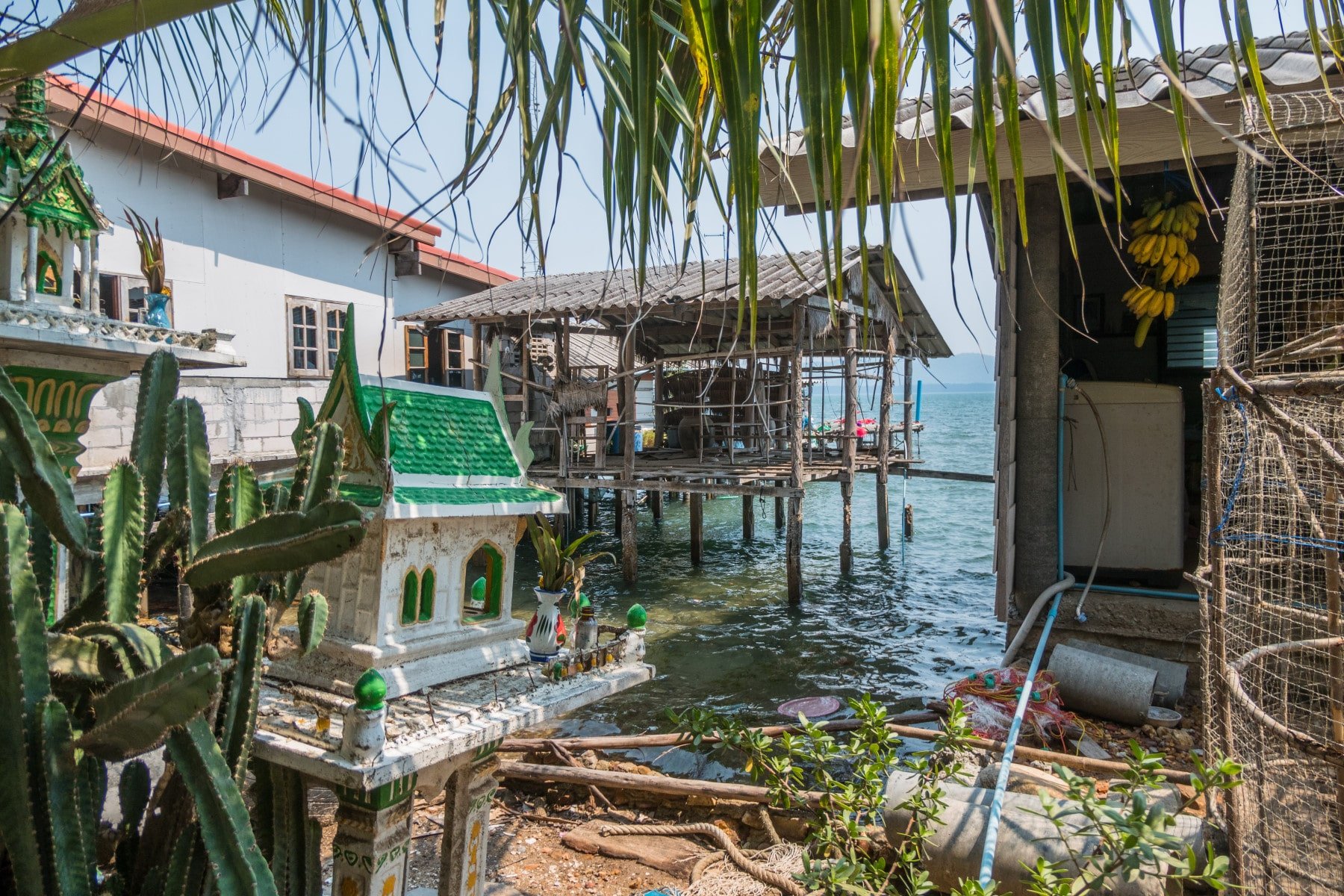
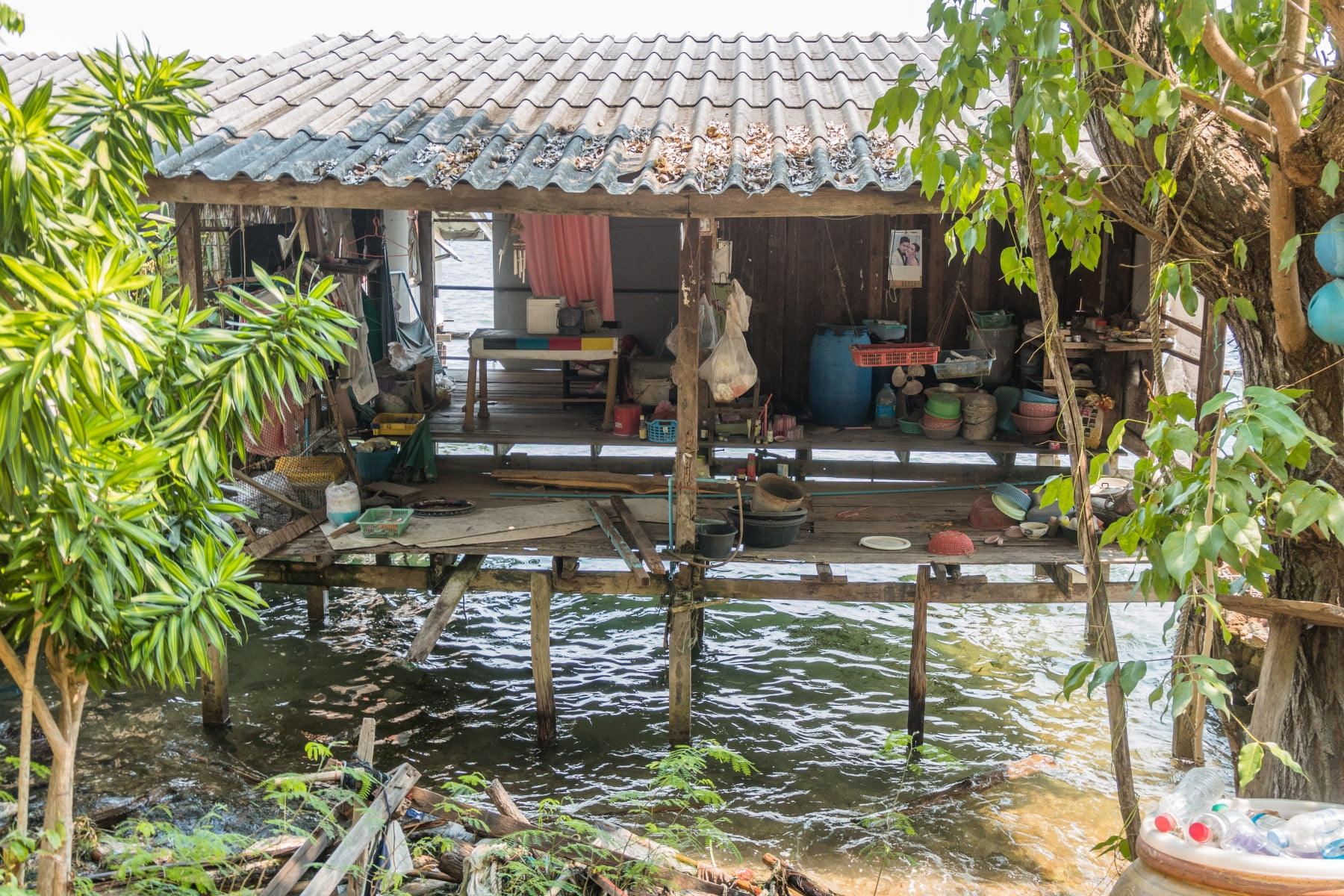
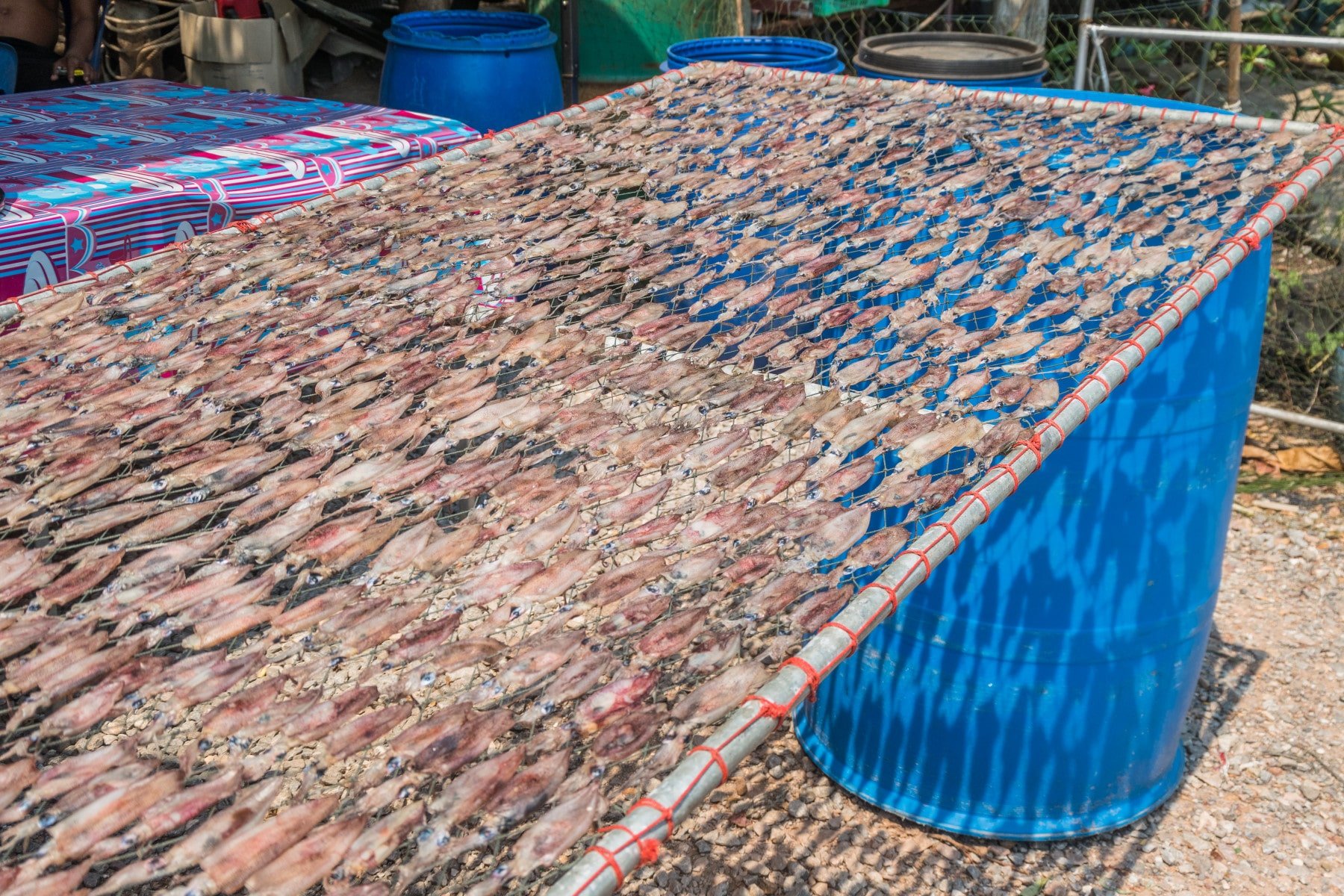
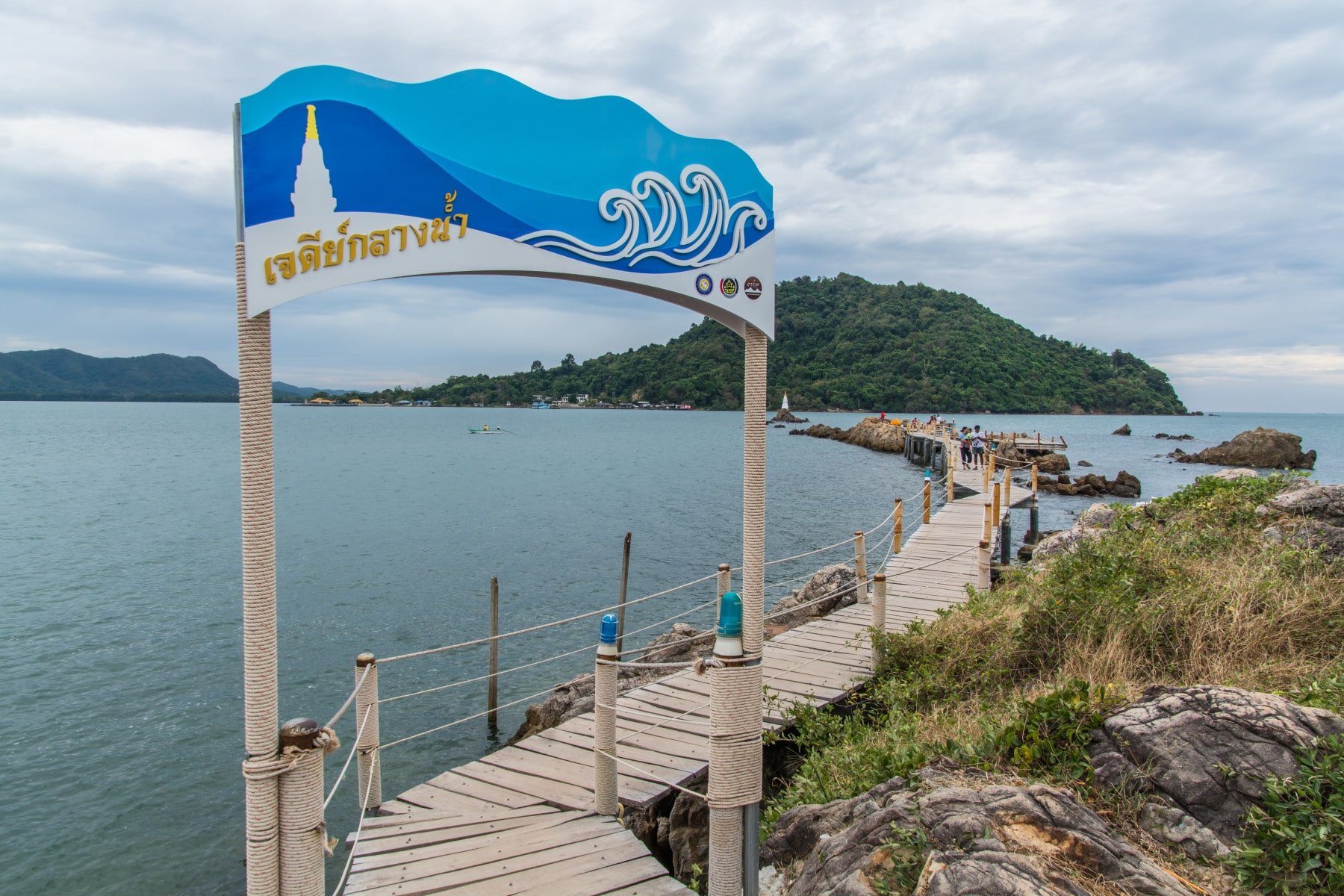
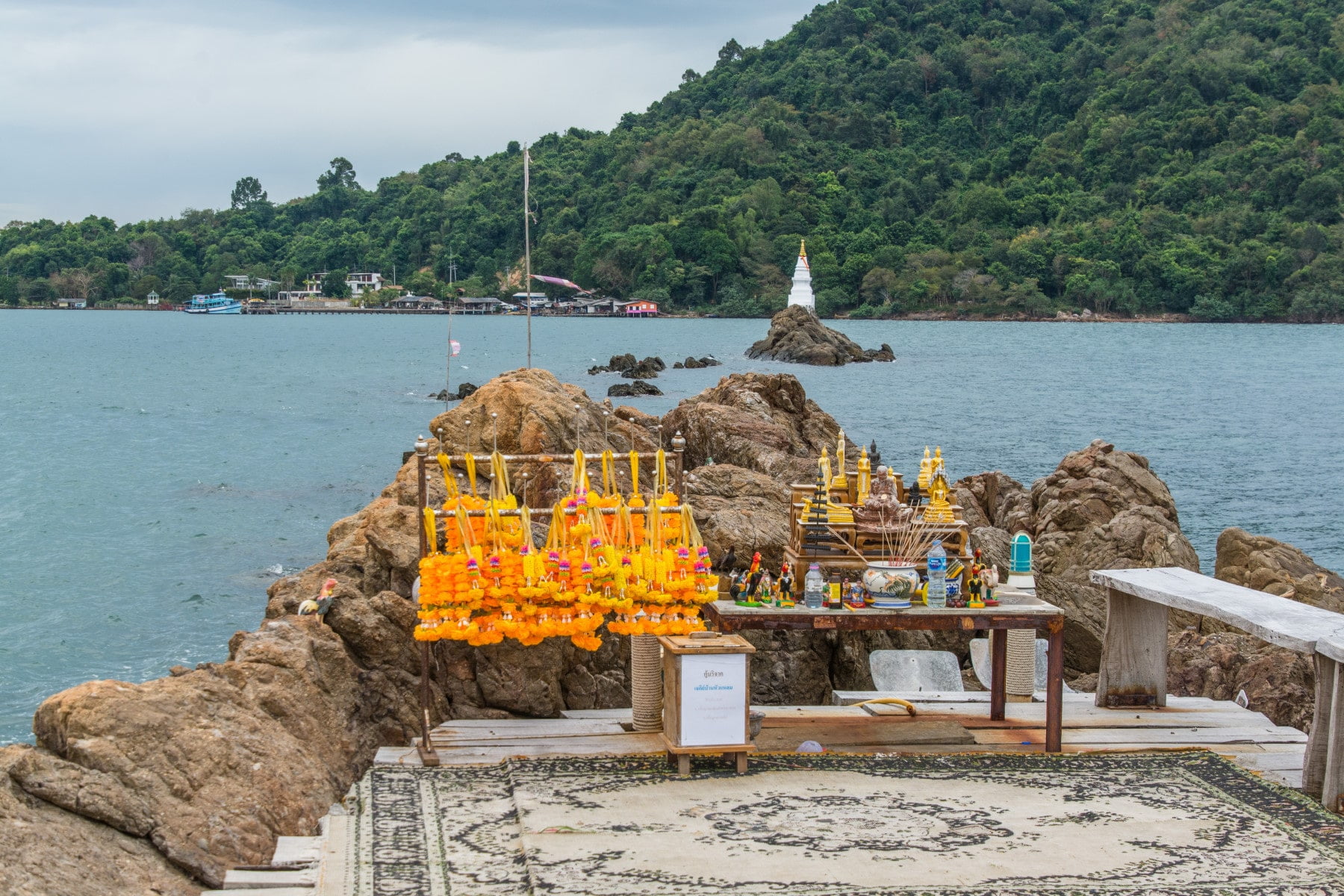
To see the small pagoda (also called Jaedee Klang Nam), you have to go to the very end of the village where there is parking. There are also Thai-style sidecar motorbikes that transport locals from the viewpoint to here (or from their nearby hotel, I guess, that makes more sense). A wooden footbridge built over the sea extends 100 m, the pagoda, which serves as an indication of a rocky area to prevent boats from running aground in the bay, is then 100 m away on a piece of rock. A prayer corner has been set up on a platform at the end, where you can find the "classic" bottles of red Fanta or water as offerings.
I can't help but imagine how many of them end up in the sea when the wind blows into the entrance of the bay (the bottles are not all full). Opposite is the other peninsula, Laem Sadet, and in between, a large bay called Ao Khung Kraben.
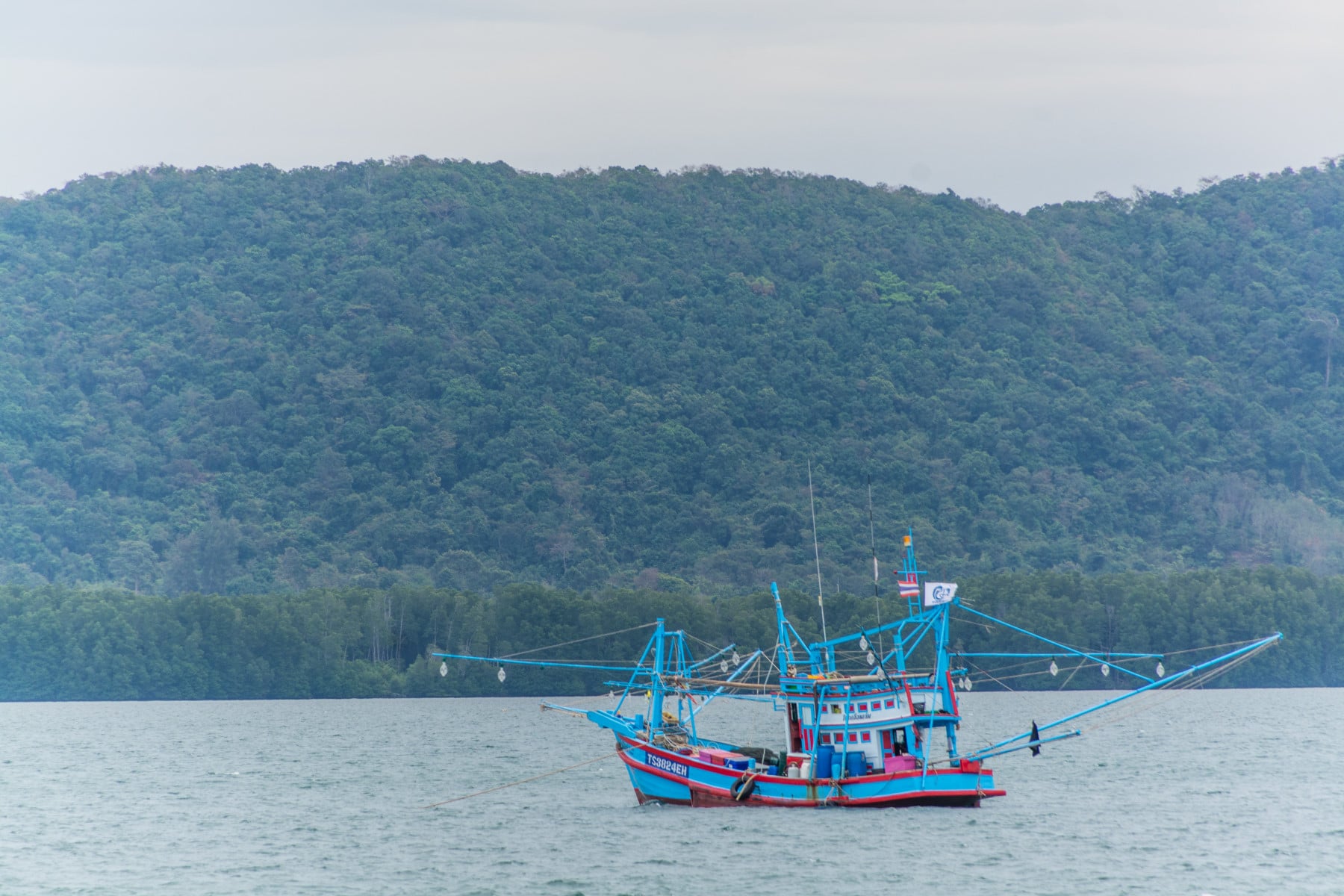
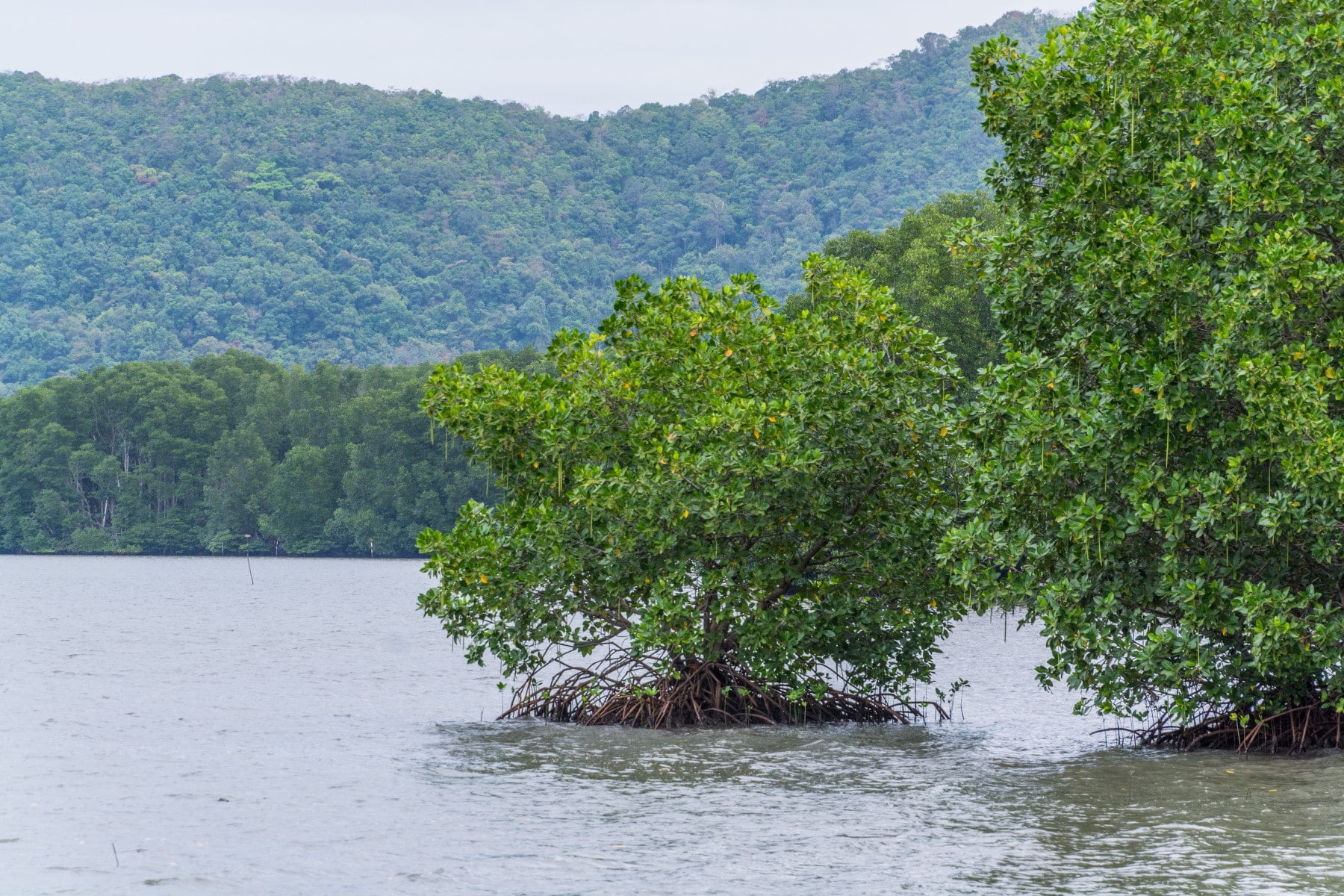
Following our visit around Kung Wiman, we went to the neighboring beach of Chao Lao, separated by the large bay of Ao Khung Kraben. From Hua Laem, it is more than 10 km to go around the bay, on the edge of which is a protected area with mangroves. We did not go to the western part bordering the bay, just in front of the Hua Laem pagoda, where there are several small resorts and restaurants, preferring to concentrate on the things to see along the beach.
The mangroves of Ao Khung Kraben
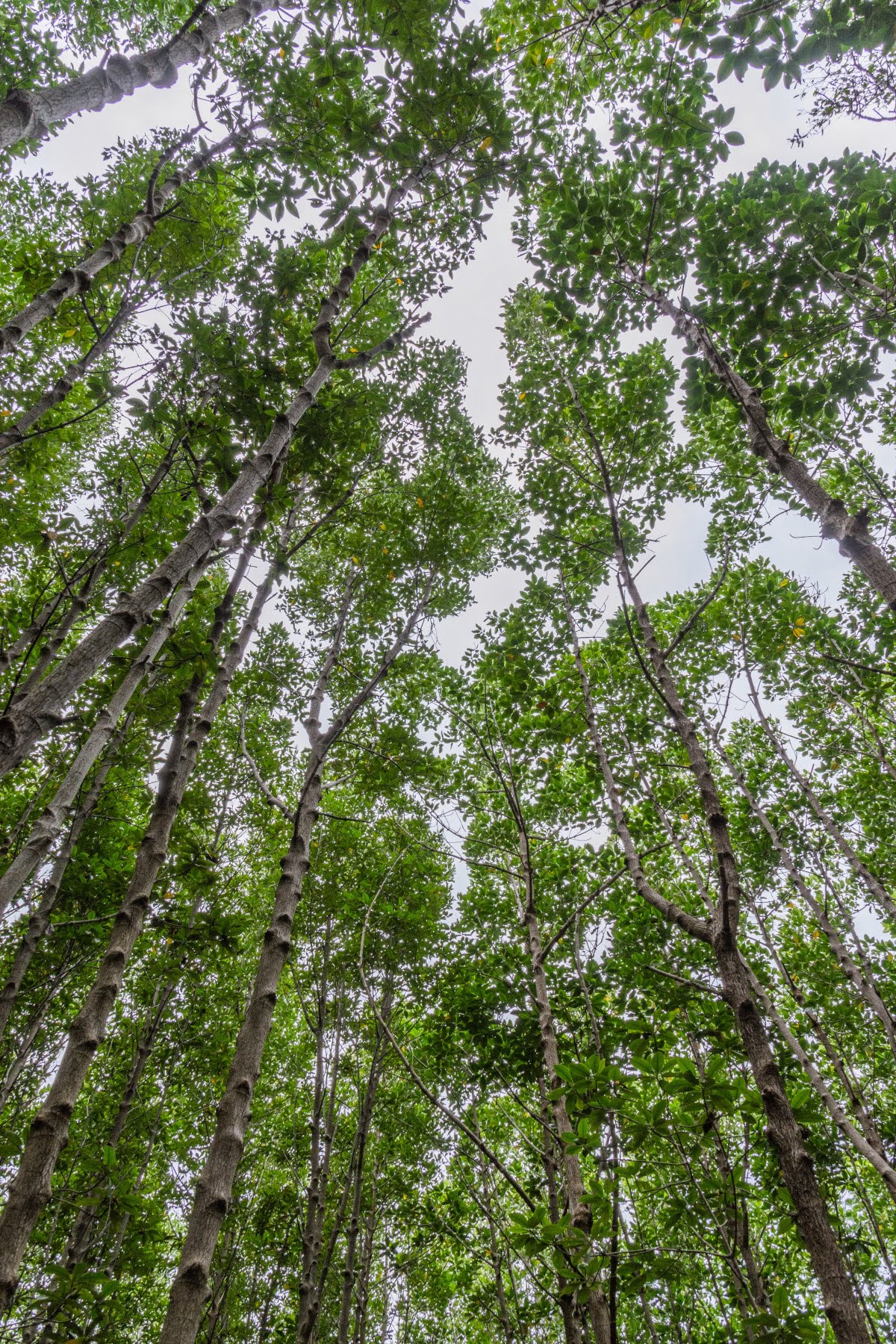
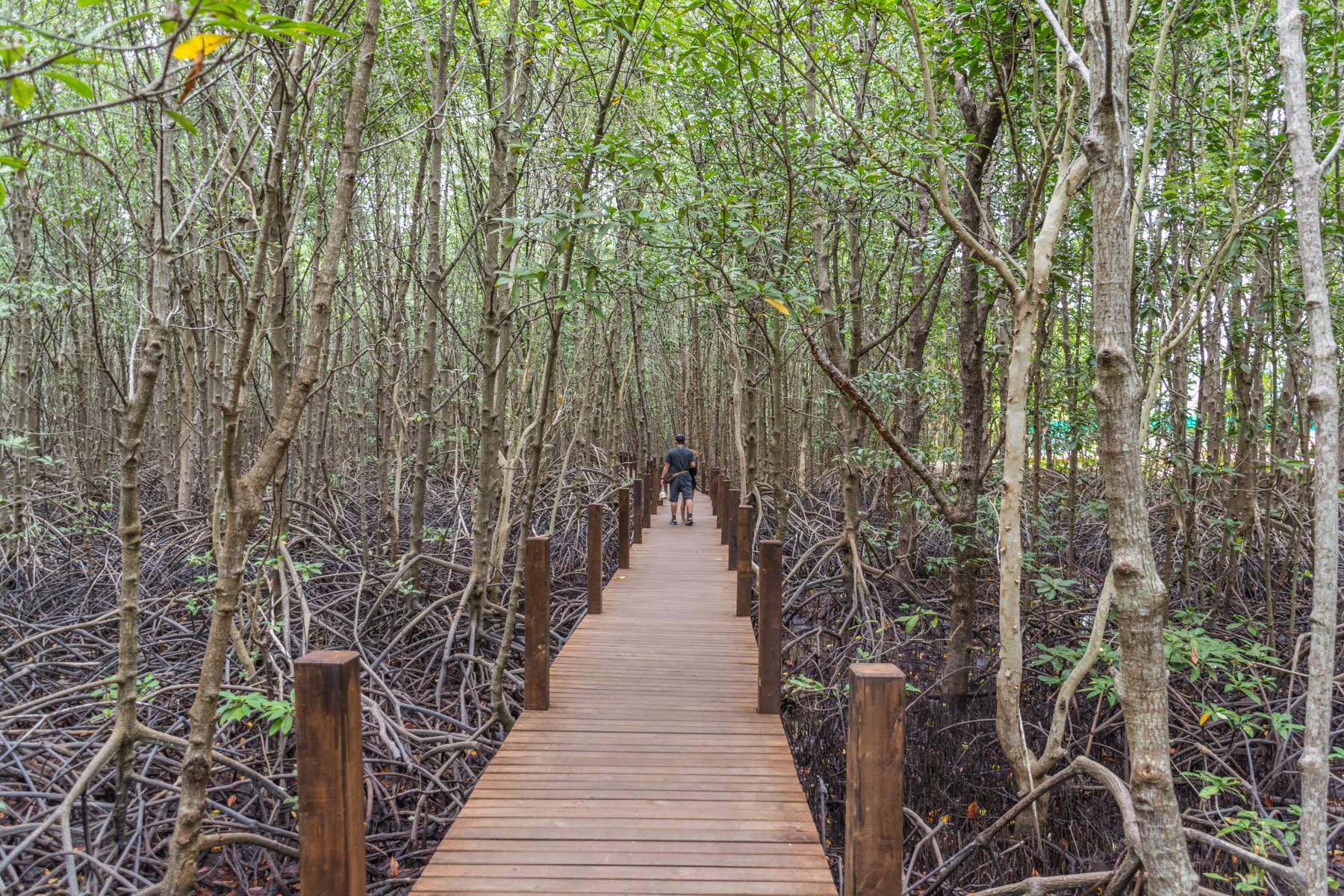
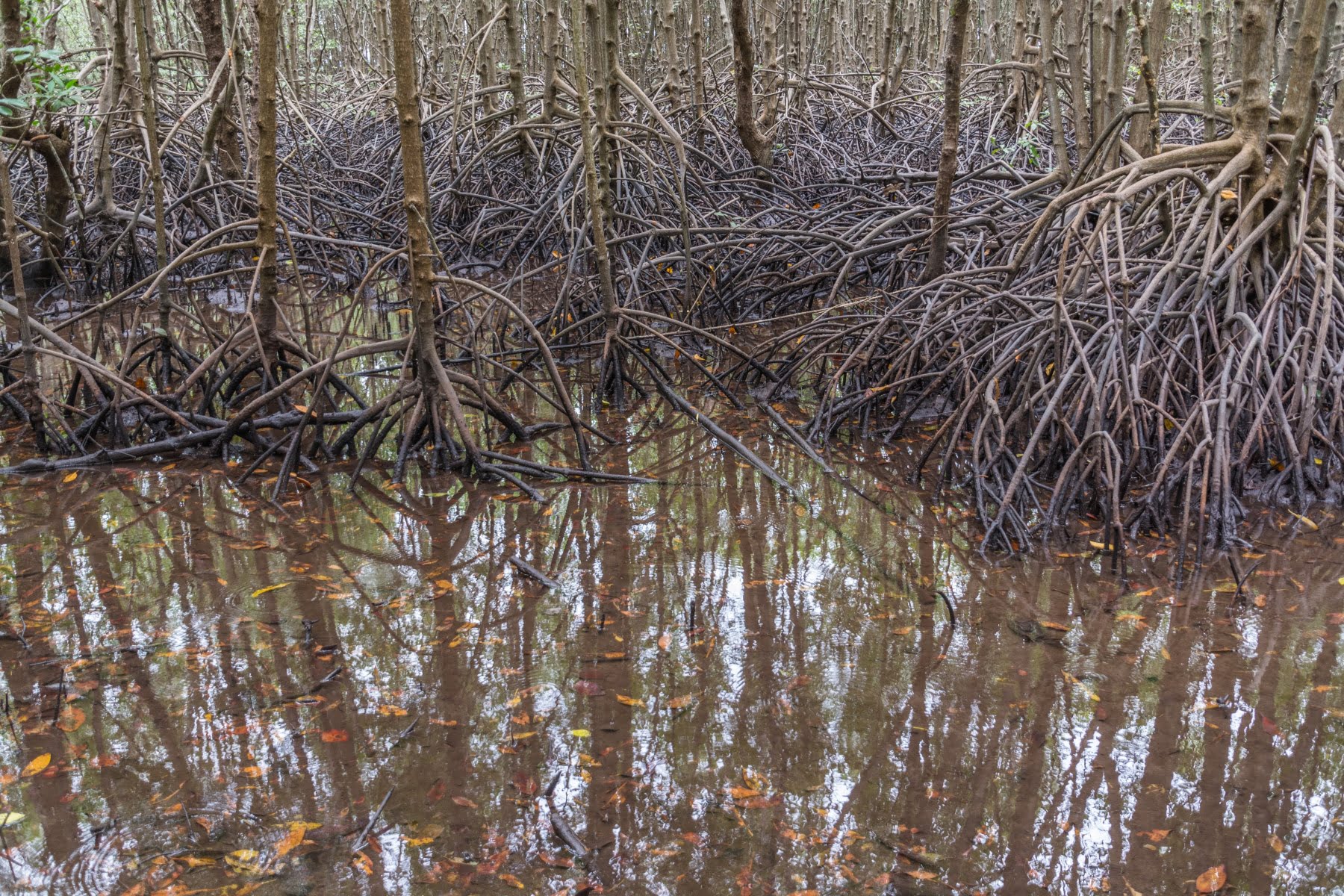
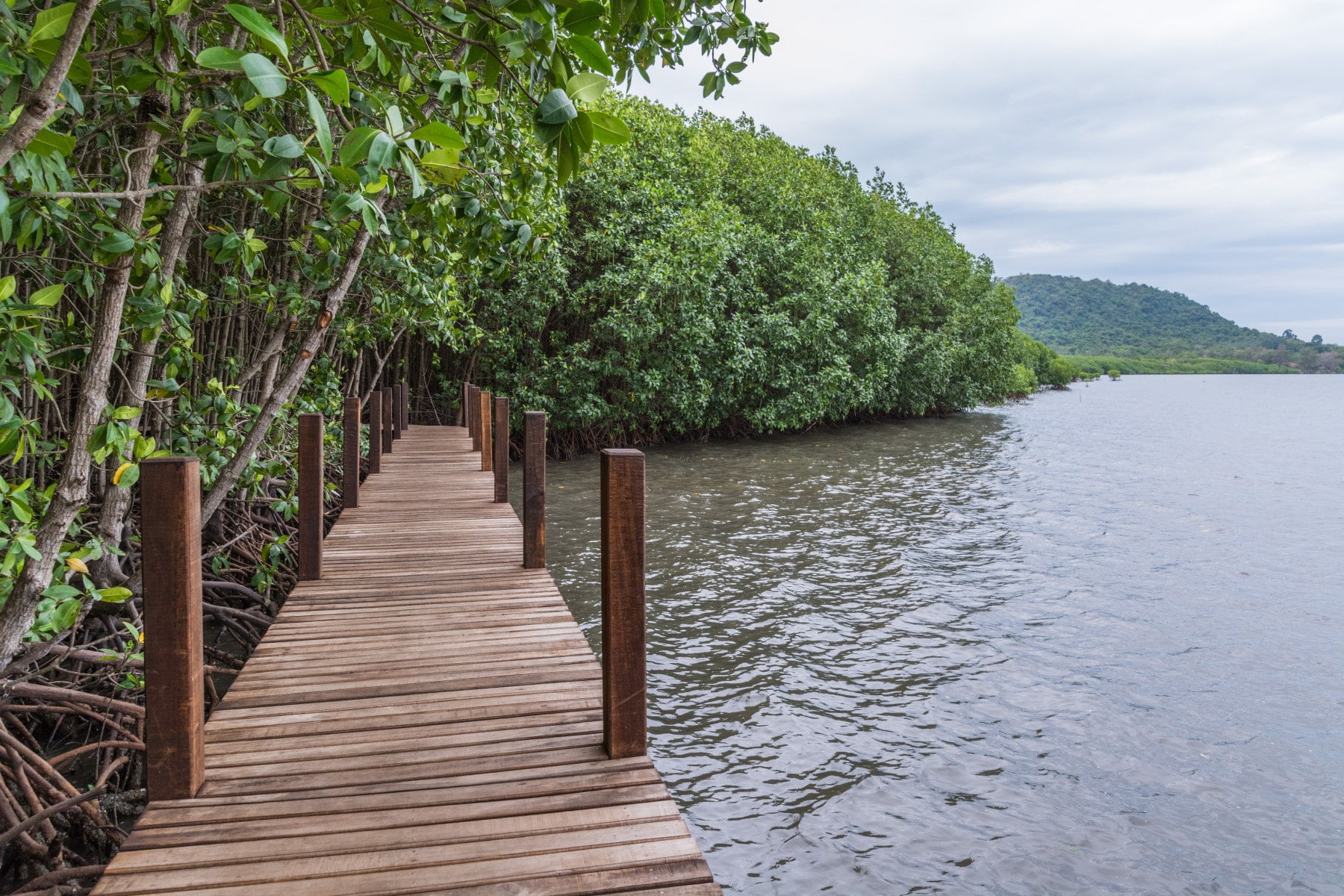
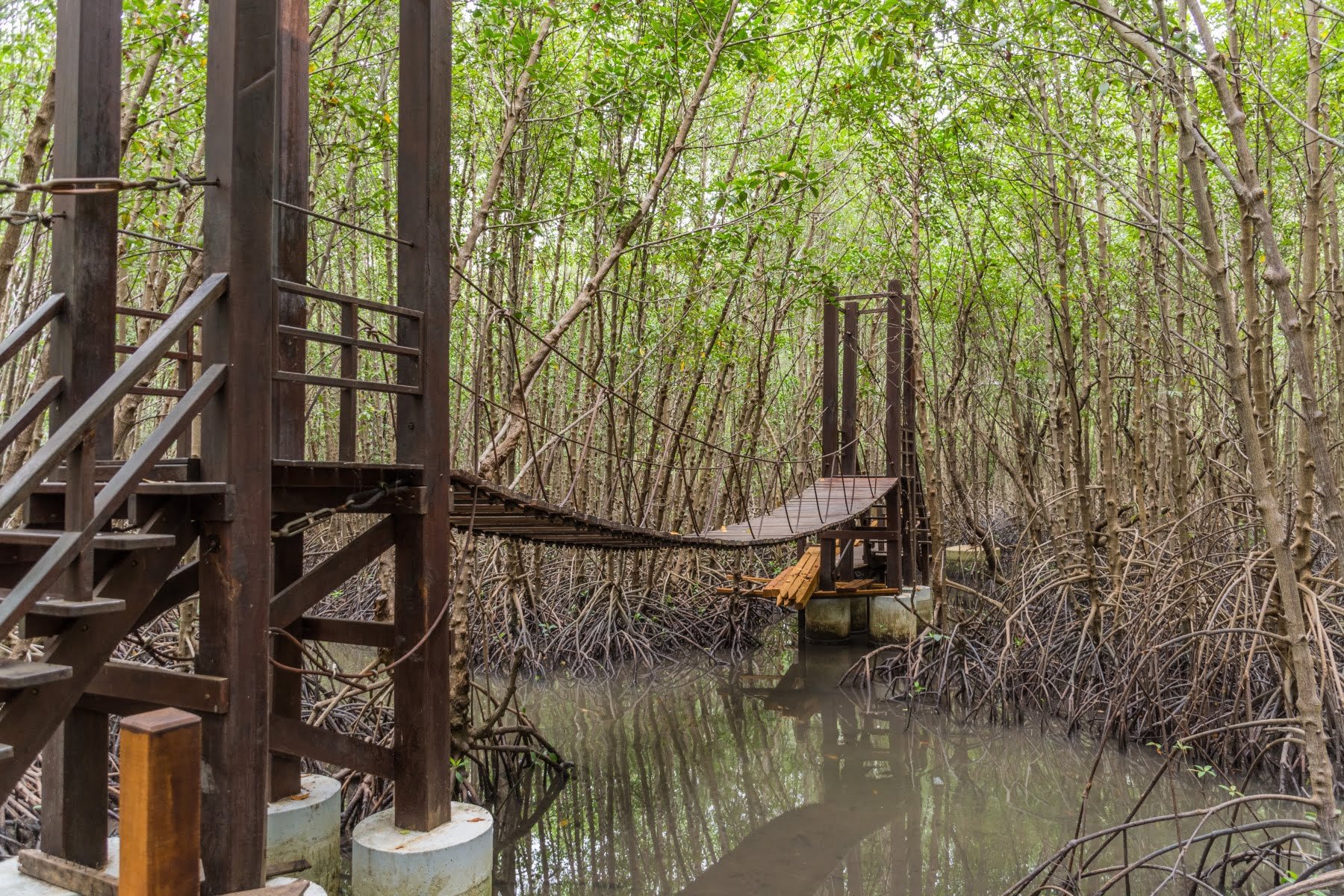
This wasn't my first time visiting mangroves (we'd seen some near the town of Ranong, for example). So, there was obviously a somewhat repetitive aspect to what we saw. Namely, a boardwalk leading you through the vegetation, composed of mangrove trees and other tree species typical of mangroves. Often, if you look down at the ground, you can see small crabs going about their business.


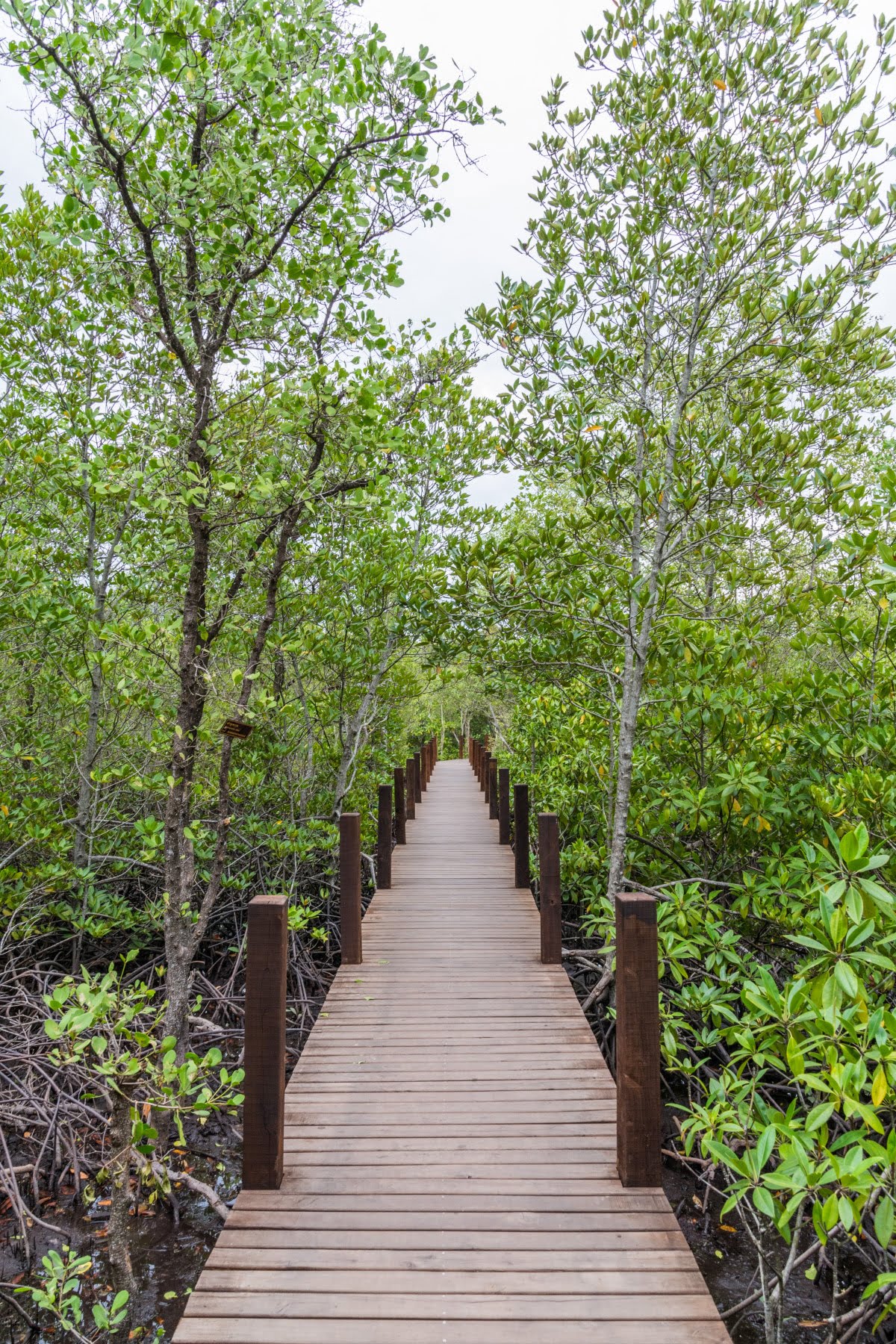
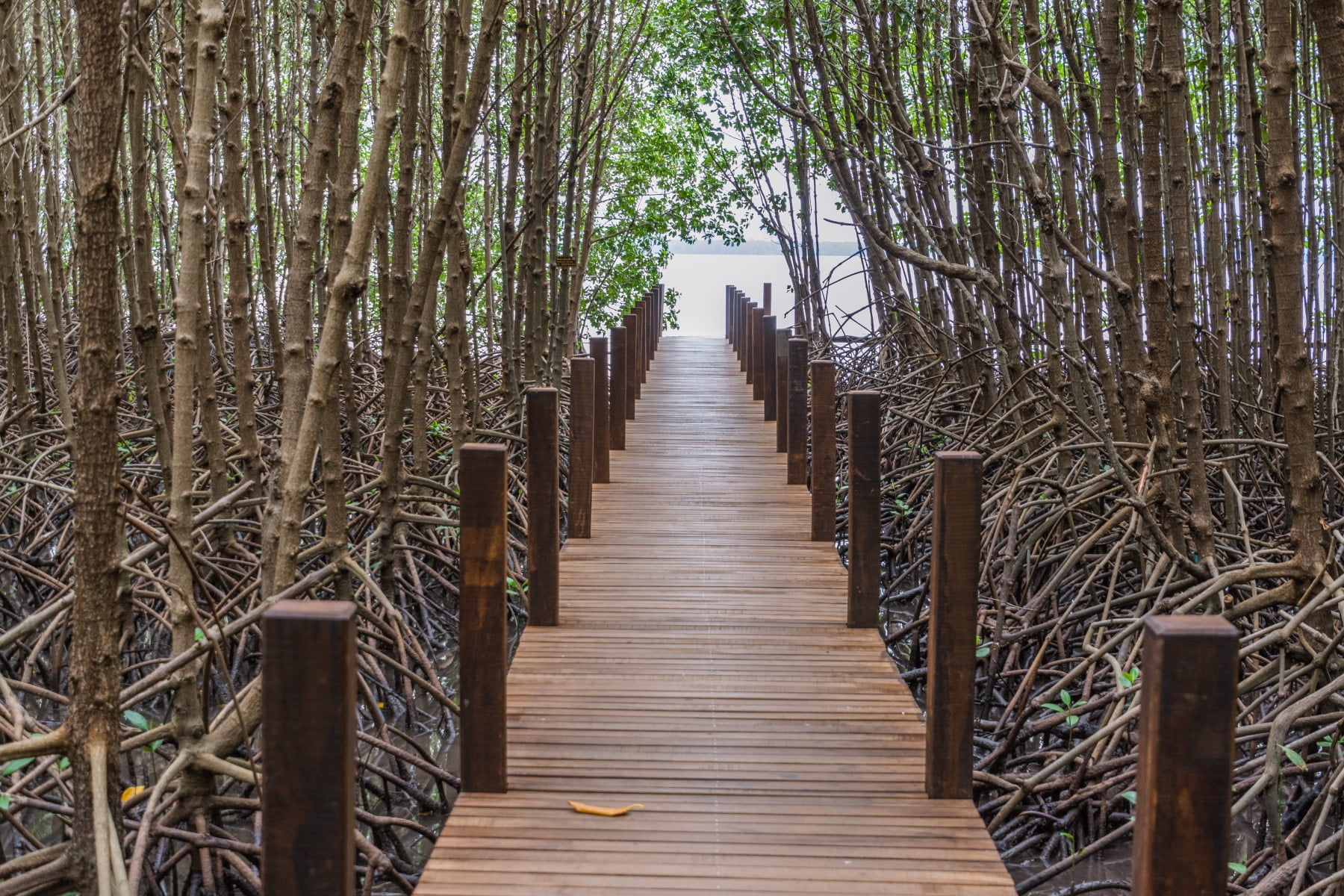
Normally, places like this are set up to make a loop trail, leading to the edge of the mangrove, with a view of the bay here, and another path to come back. Normally. At the time of our visit, it was being redeveloped, which is good in a way, but a bridge spanning a canal was then impassable, we had to turn back.
Afterwards, apart from not having to see the exact same trees again, it wouldn't have changed much on this visit because the area at the edge of the mangrove is about halfway so the overall distance would have been the same. By hanging around a lot taking pictures (true to my habit), it took us 20 minutes to reach the edge of the mangrove and a good ten to return to the parking lot.
Chao Lao Beach
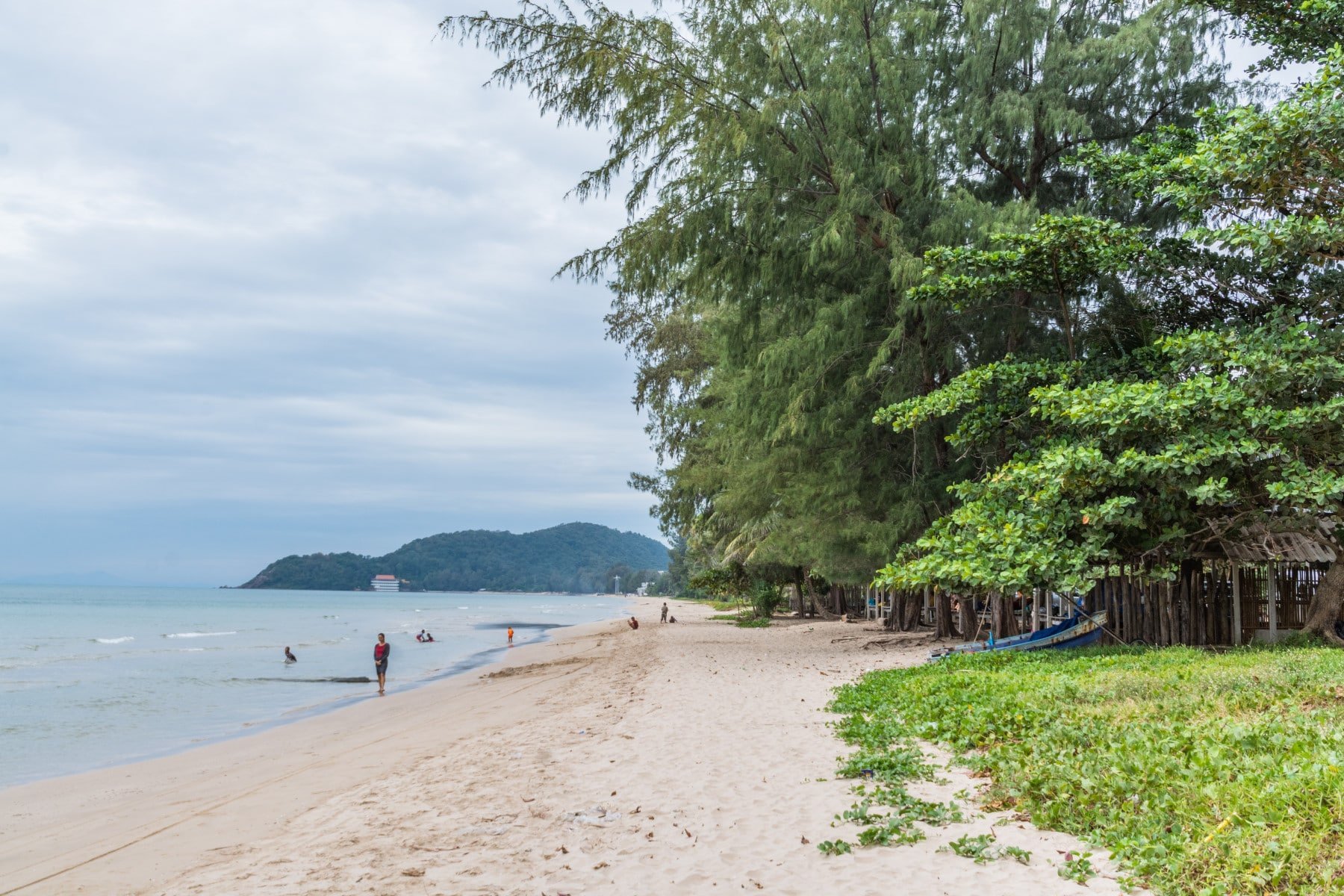
Just a stone's throw from the mangrove lies the long Chao Lao beach. It stretches for 7 km, though not continuously, as some sections lack sand (and therefore beach). While the whole area seems to share the same name, it is actually divided into several parts. Essentially, there's a long 5 km stretch of beach, ending at a small temple nestled against the hillside of the peninsula.
Chao Lao is one of Chanthaburi's most developed beaches, boasting dozens of establishments and restaurants along its shores. The sand is quite fine and, importantly, wide enough to sit on even at high tide. However, it's nothing like a seaside resort; there are no buildings in sight, just trees stretching as far as the eye can see. Nevertheless, it was the most crowded spot we encountered, despite the gloomy weather (not ideal for photos...).

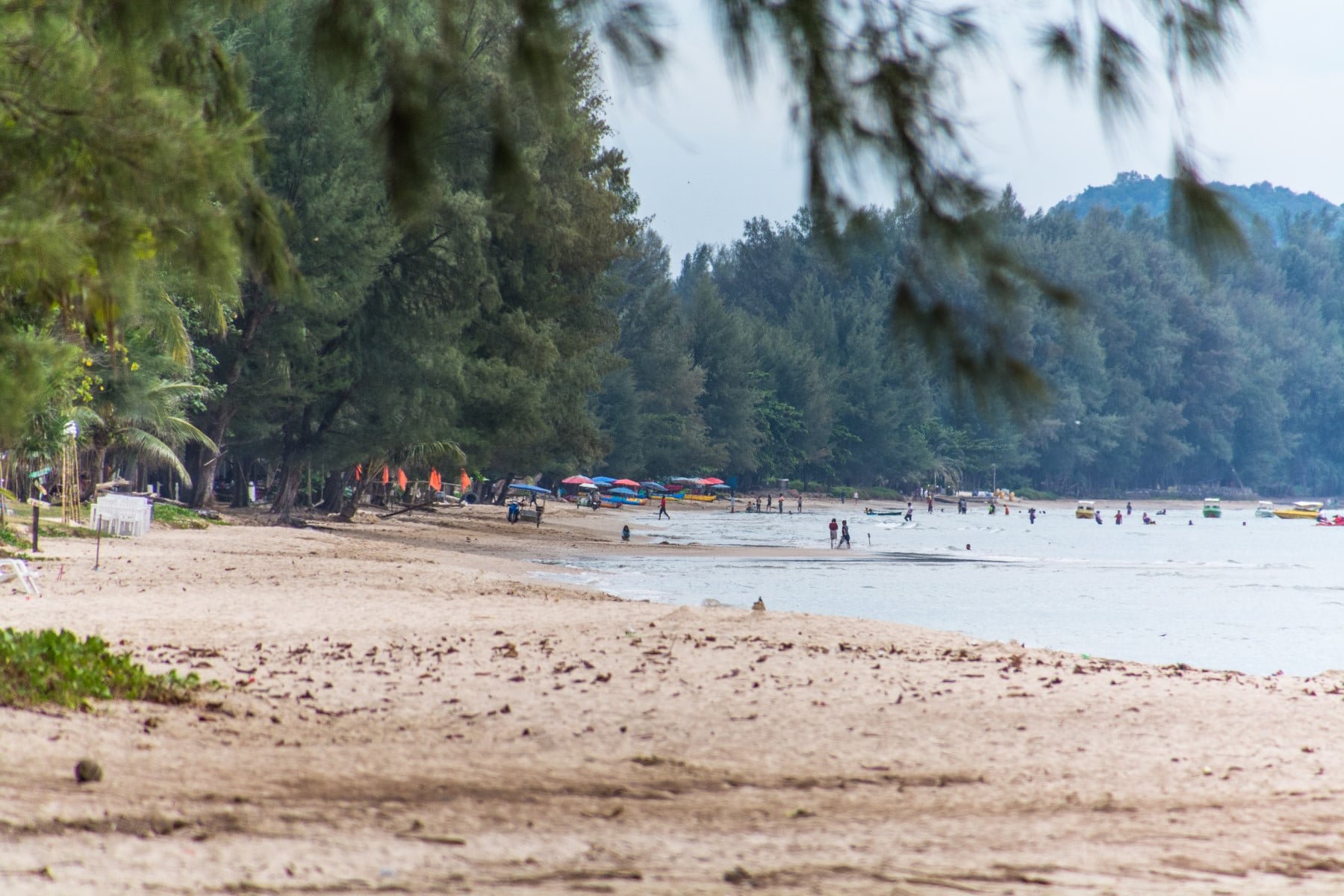


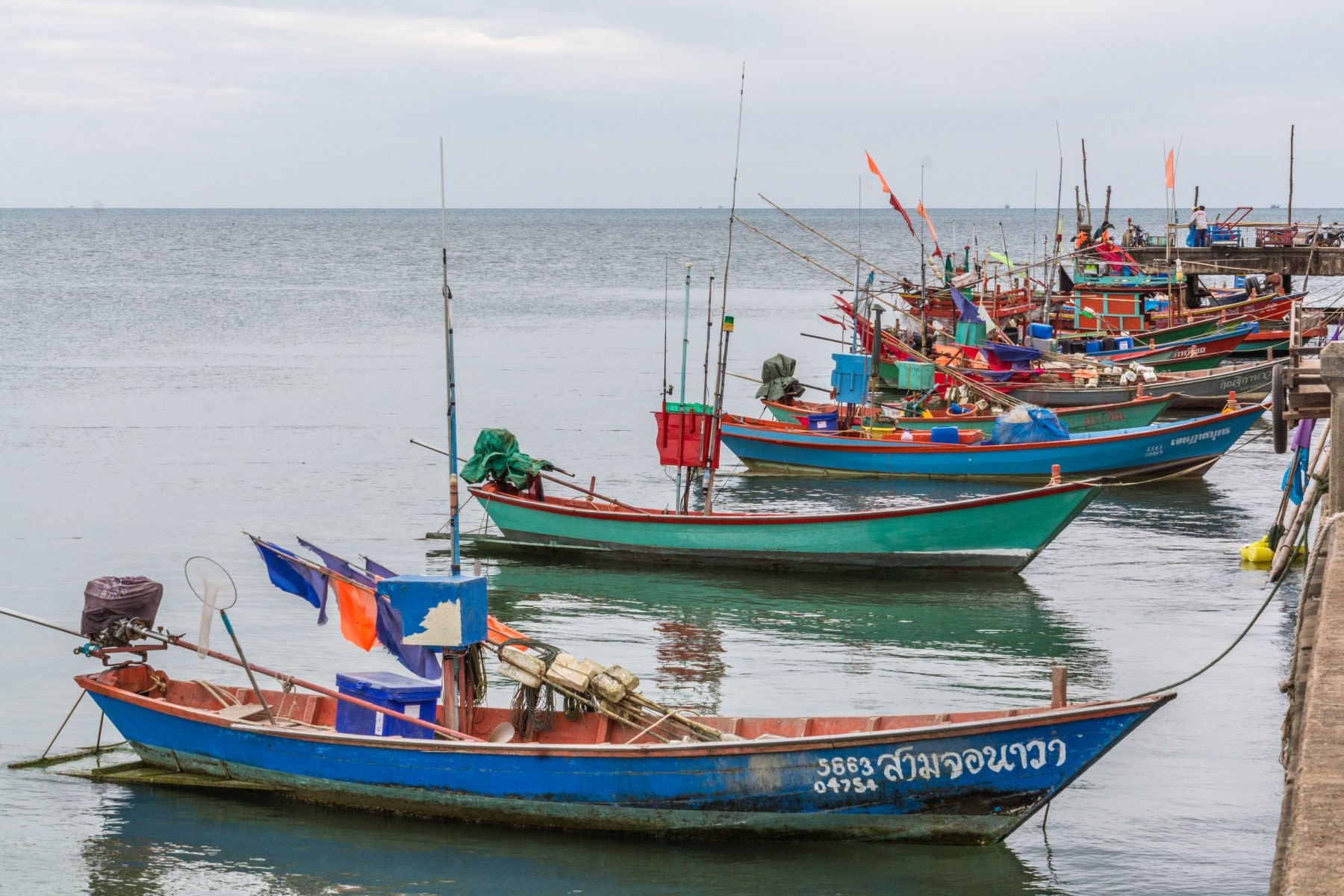
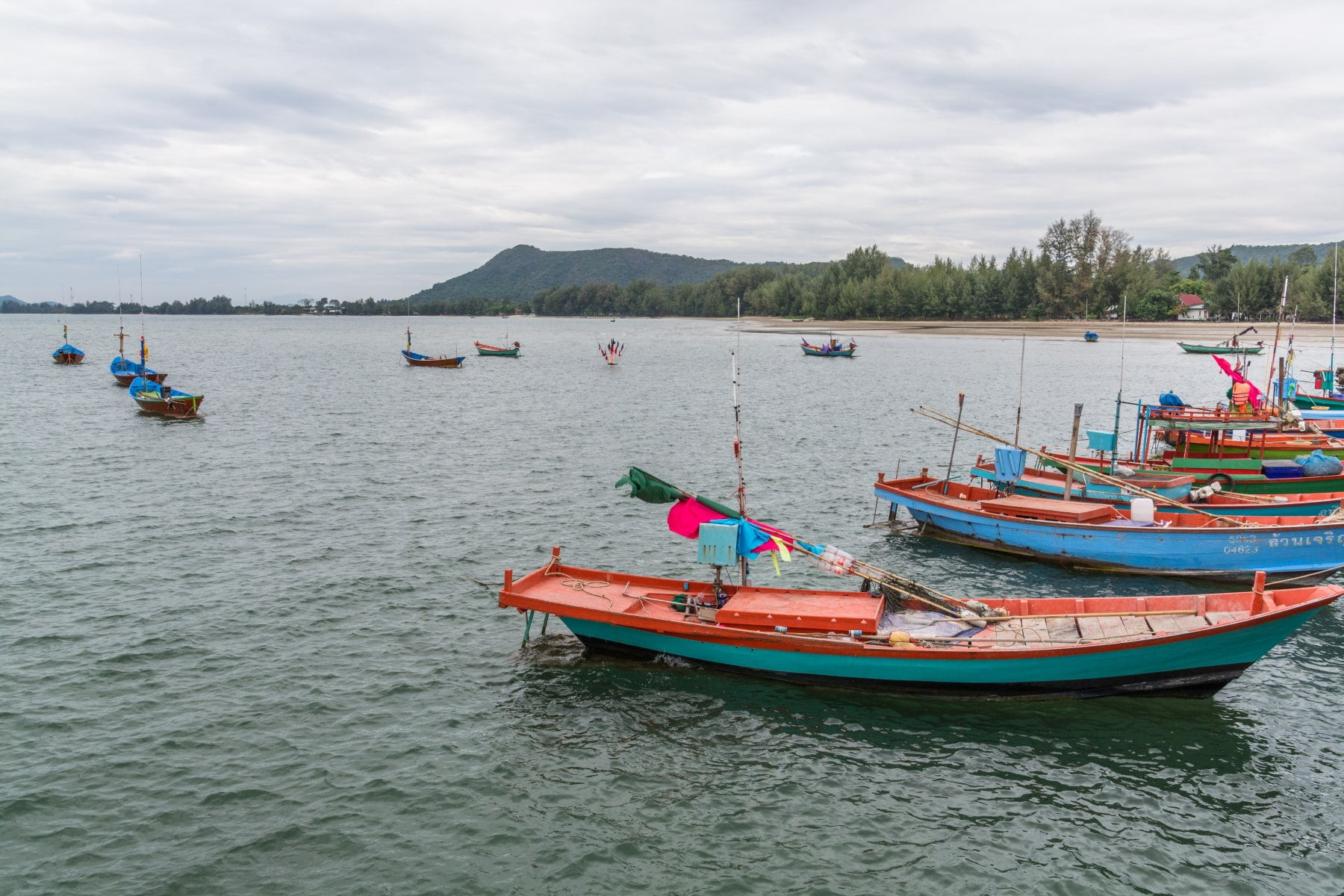
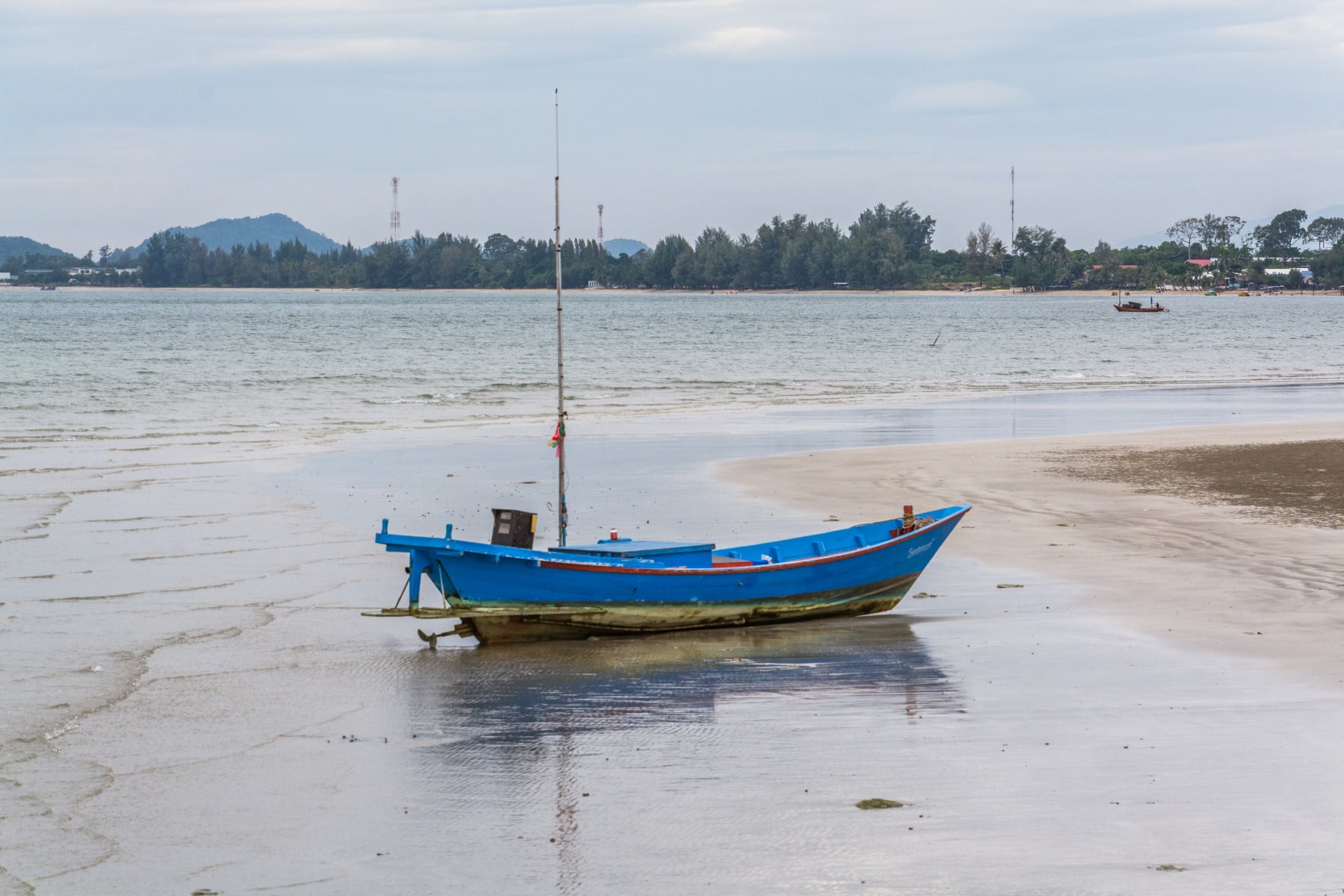
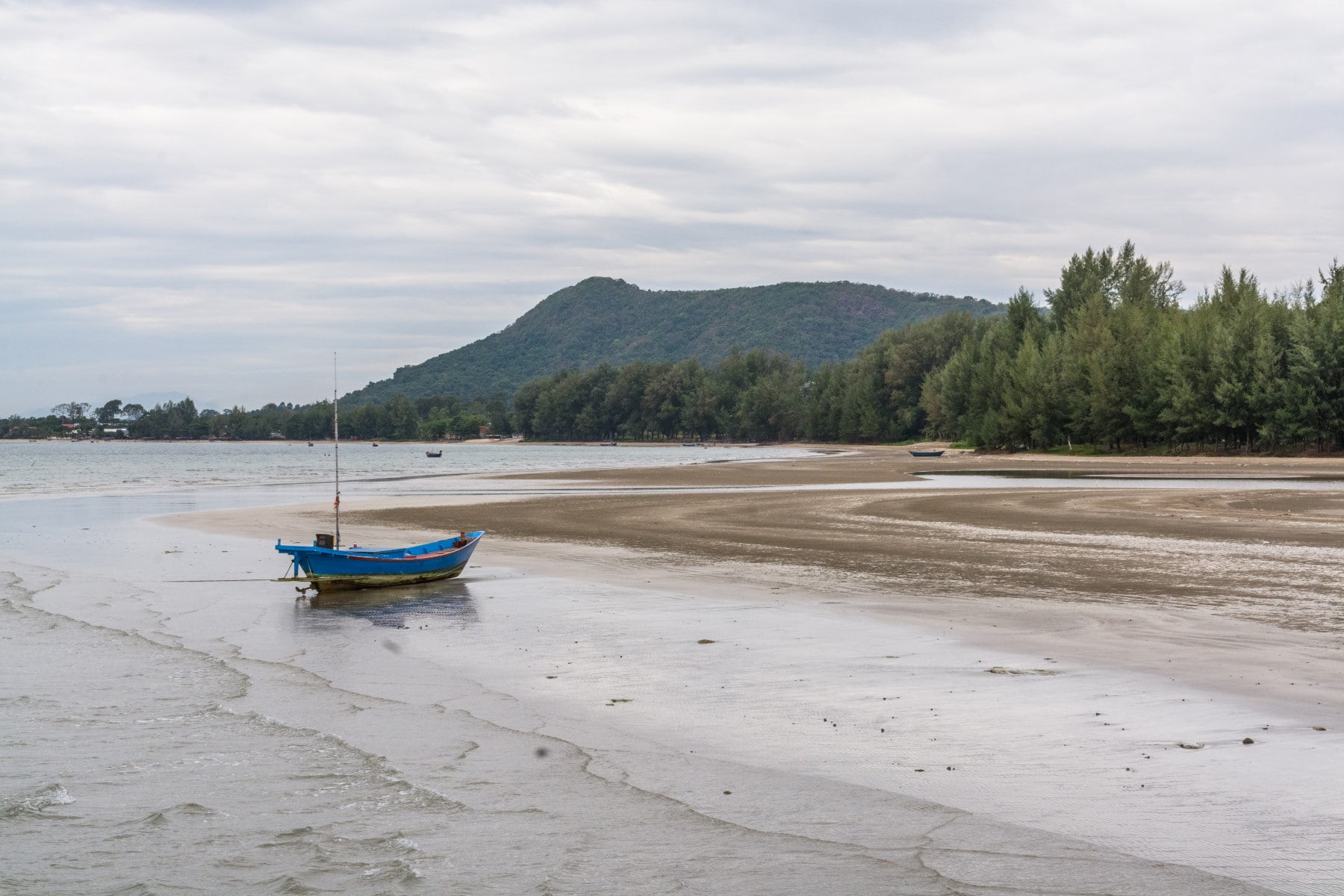
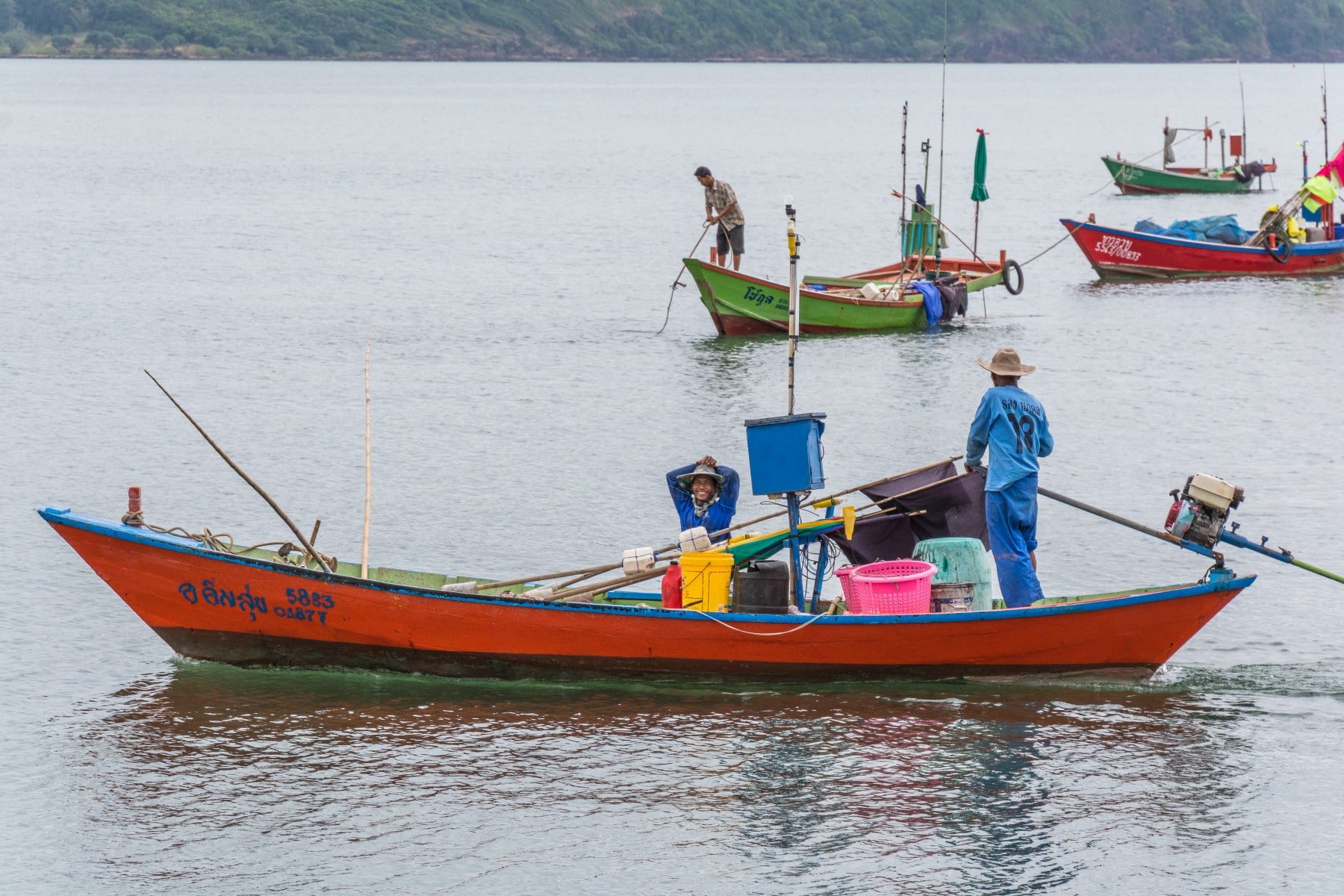
With the beach stretching out before us, we continued along the road to explore further. We stopped to see the jetty where the small fishing boats of the local villagers set out. Some fished there with lines or nets, the jetty allowing them to venture further out into the sea, when the tide was low and a wide beach was exposed, extending over 120 meters deep.
It was windy and overcast, which is pretty ideal weather for this activity, because otherwise no one would really risk standing in the direct sun here. It's less ideal for photography, because a gray sky is the photographer's enemy...


Kung Krabaeng Wildlife Sanctuary (Pink Stone)
And our next visit, and the last of the day, was to the Kung Krabaeng Sanctuary. To be honest, why this tiny piece of land jutting out into the sea is a sanctuary, I don't know, because given its size, apart from monkeys, it probably isn't teeming with animals. But that wasn't why I went there anyway. I was intrigued by a marker on Google Maps indicating "Pink Stone."
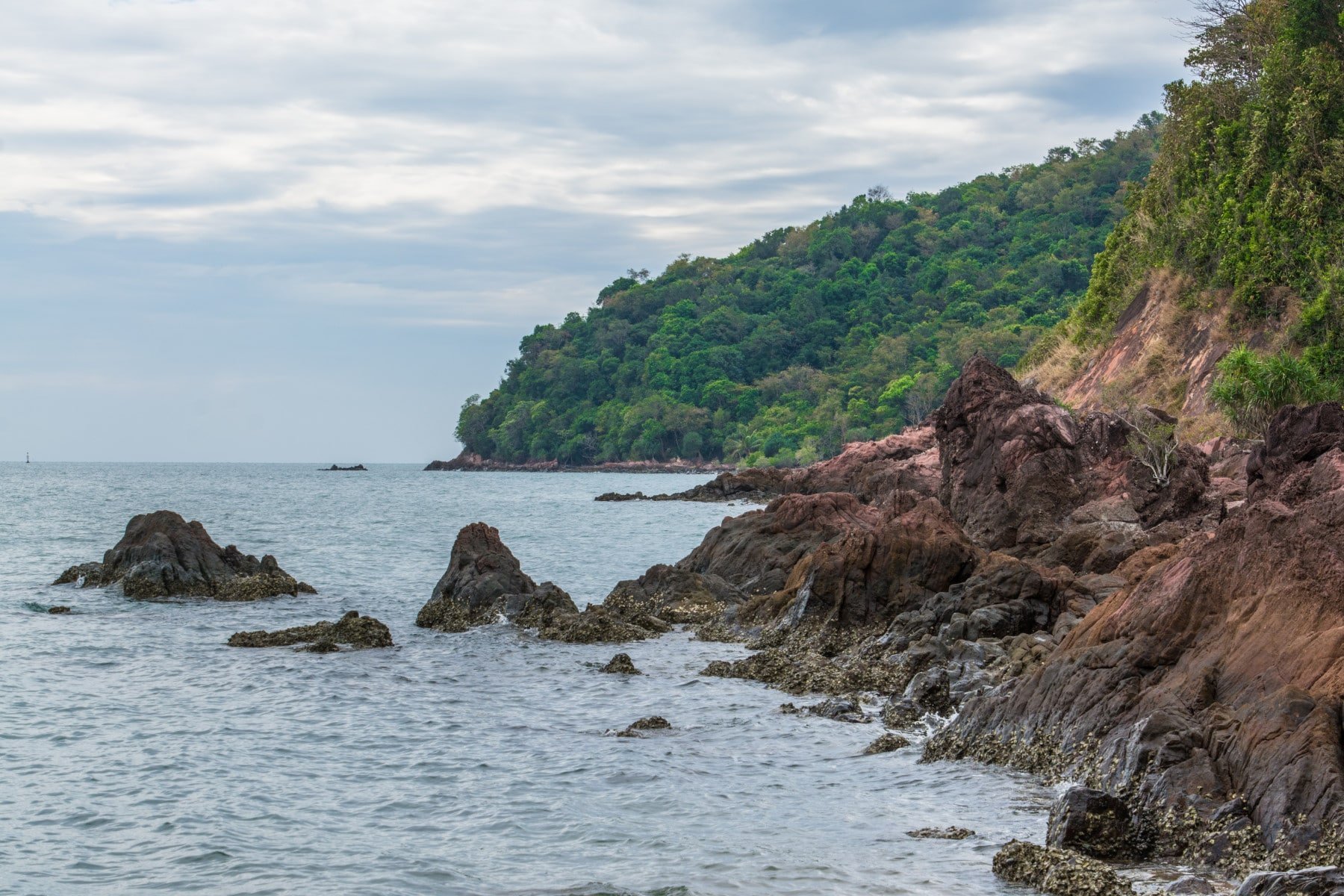
From the photos I'd seen, you could tell that the coastline of this peninsula is bordered by pinkish-hued rock, even if it wasn't immediately obvious. Hence my desire to go and see for myself what it was like. The big disappointment was discovering that despite the site's small size and secondary importance, the area charges an entrance fee, just like a national park ( 200 baht per adult , free for Thais, however...).


But since I was already there, I decided to take the "see for yourself" concept to its logical conclusion and went, paying the required fee. So there we were, following a path that started from a deserted stretch of beach next to the parking lot. Just beyond, another section of beach had a few people around, but we didn't stop there (time was getting on) and continued along the coastal path.
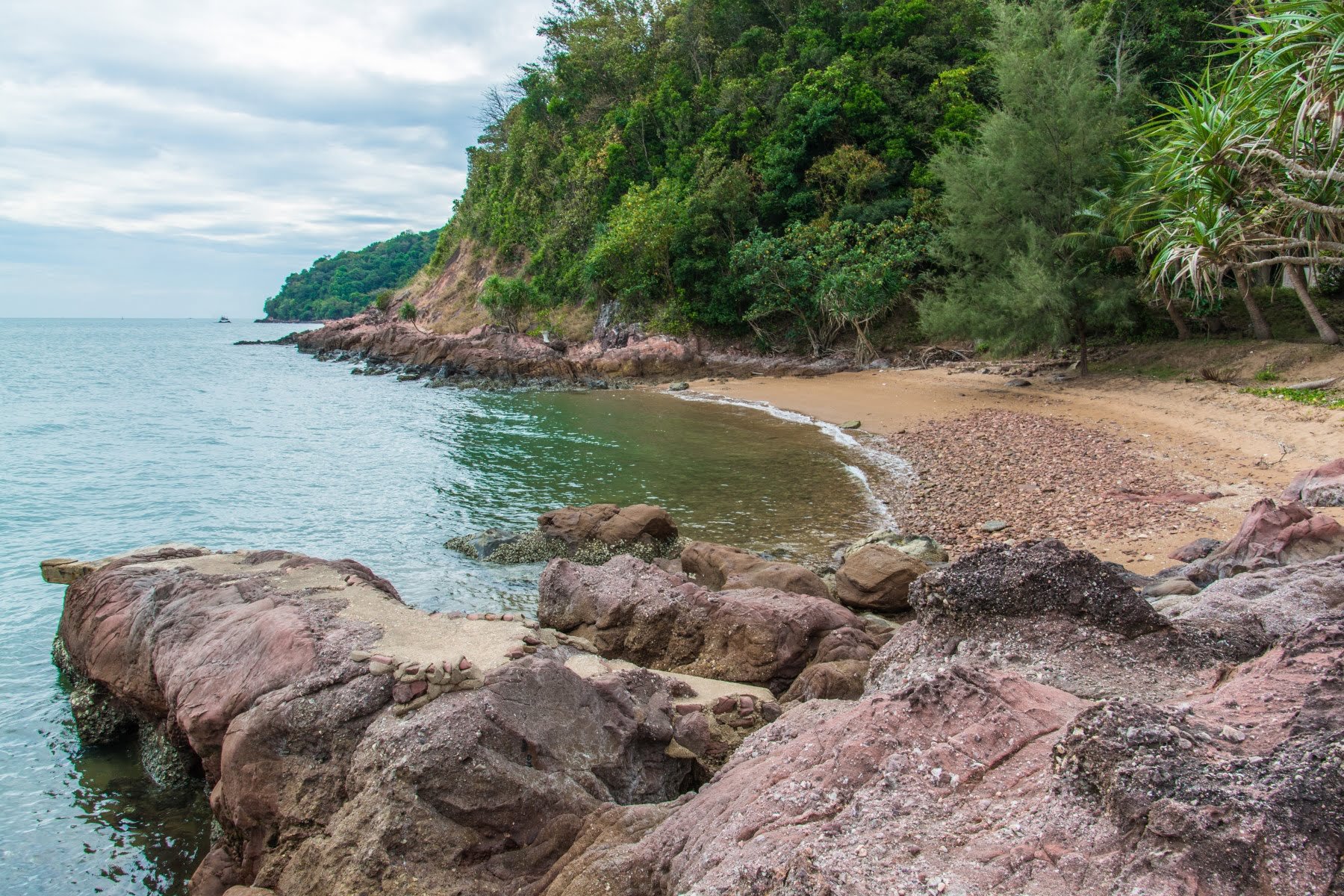
Honestly, the place remains aesthetically interesting, the rocks have a mixture of colors, between shades actually tending towards pink, those covered with algae and therefore rather green, plus the more "neutral" color of brown / black rock. After that from there to it being paid (only for foreigners especially) ...
In practical terms, our short walk today was incomplete due to lack of time. Normally, you can walk along the coast to the end of the peninsula (you should pass a small shrine with a Buddha statue along the way), where there's a large cluster of pinkish rocks. There, a path leads up the hill, offering a panoramic view of the peninsula, surrounded by nature and the sea below. The path then descends on the other side towards the parking lot, forming a loop. Looking at Google Maps, I estimate the complete loop to be about 2 km.


For our part, we barely went more than 300 meters. We crossed a small bridge, where just beyond was a tiny beach, with two trees on it, their roots intertwined and firmly anchored in the ground. The place is photogenic; a couple was taking pictures there, and Jitima didn't want to go any further (she wasn't feeling well that day), so she did the same while I continued on.
I only had time to pass another small beach, partially filled with pebbles, but above all, and more surprisingly, a house! Leaning against the hillside, I don't know if it was part of the sanctuary's infrastructure or if a private individual had made their little nest there, what is certain is that the place is now closed and unused.






Wat Pak Nam Khaem Nu
The temple is located shortly after the Kung Krabaeng Shrine peninsula, if you're heading towards Laem Sing. To give you some context, we checked out this temple the day before, in relation to the sites mentioned in this article, as we were finishing our visit to Laem Sing and heading back to our hotel (located on Kung Wiman Beach). I had spotted it while driving nearby. While on Route 4036 (Chaloem Burapha Chonlatit Road), we passed a 7-Eleven and then a junction with a small road (Khum Nu Alley) just before reaching the bridge over the river. Looking quickly to my right, I saw a large blue and white temple rising above the water.
It intrigued me. Enough to make me turn around, even though I was just continuing on my way for a few hundred meters. We didn't stop for long, of course, because I had one last place to visit that day to see the sunset (and it was almost time). But it was definitely worth the short stop. It's a beautiful temple, admittedly recent, but indeed decorated with striking blue and white tiles, a bit unusual; in addition to the rather imposing size of the elevated building, which stood out from the road.
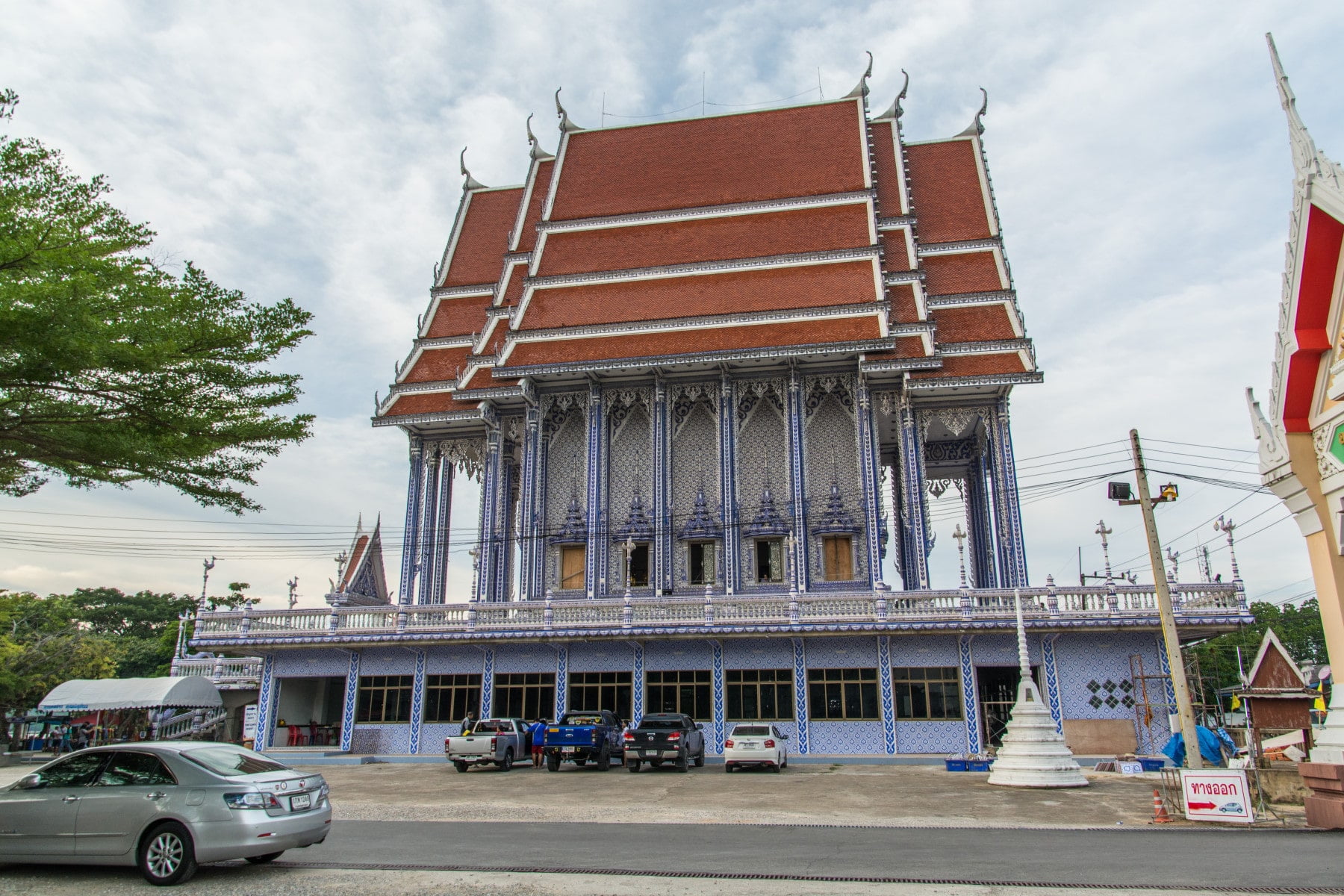
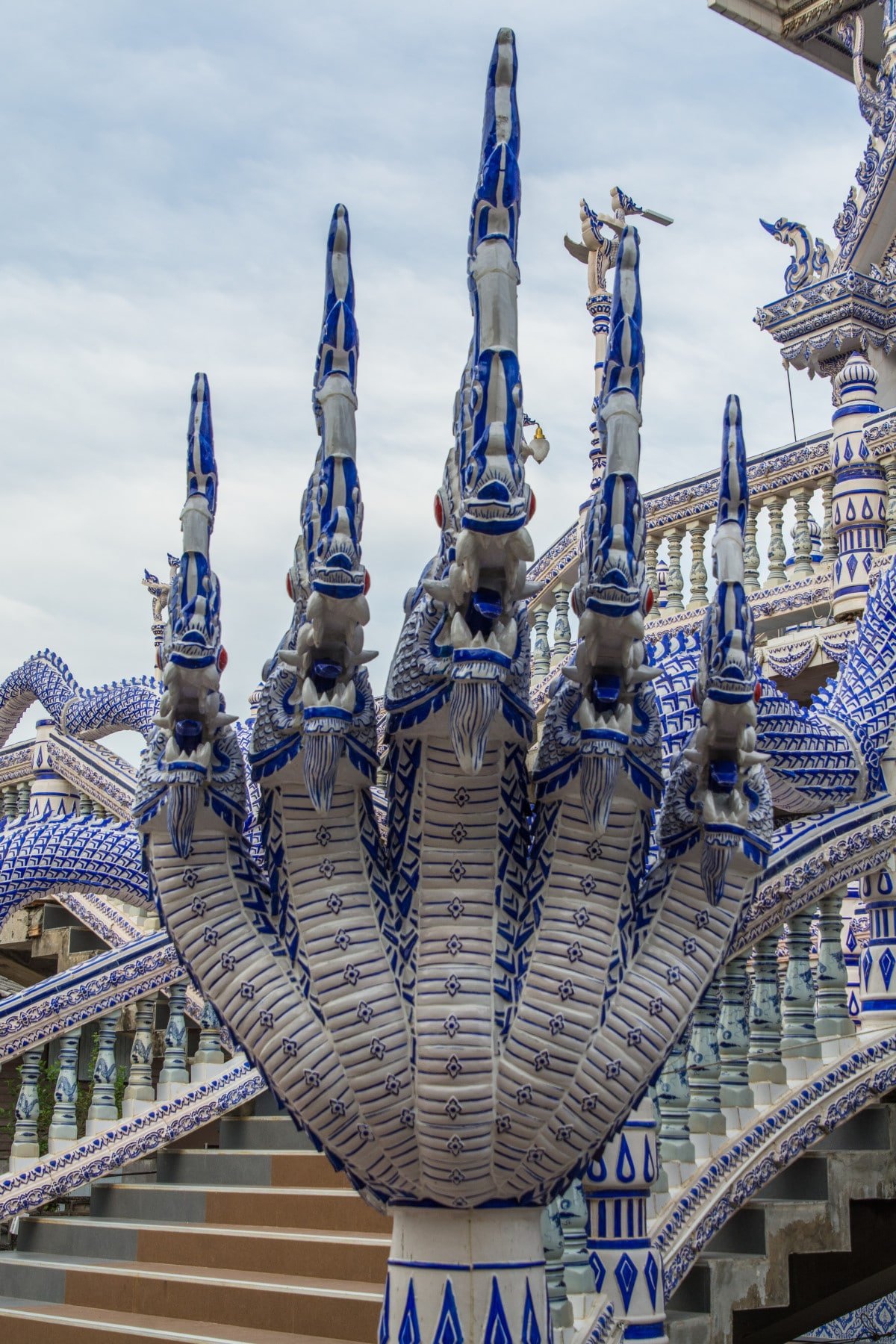
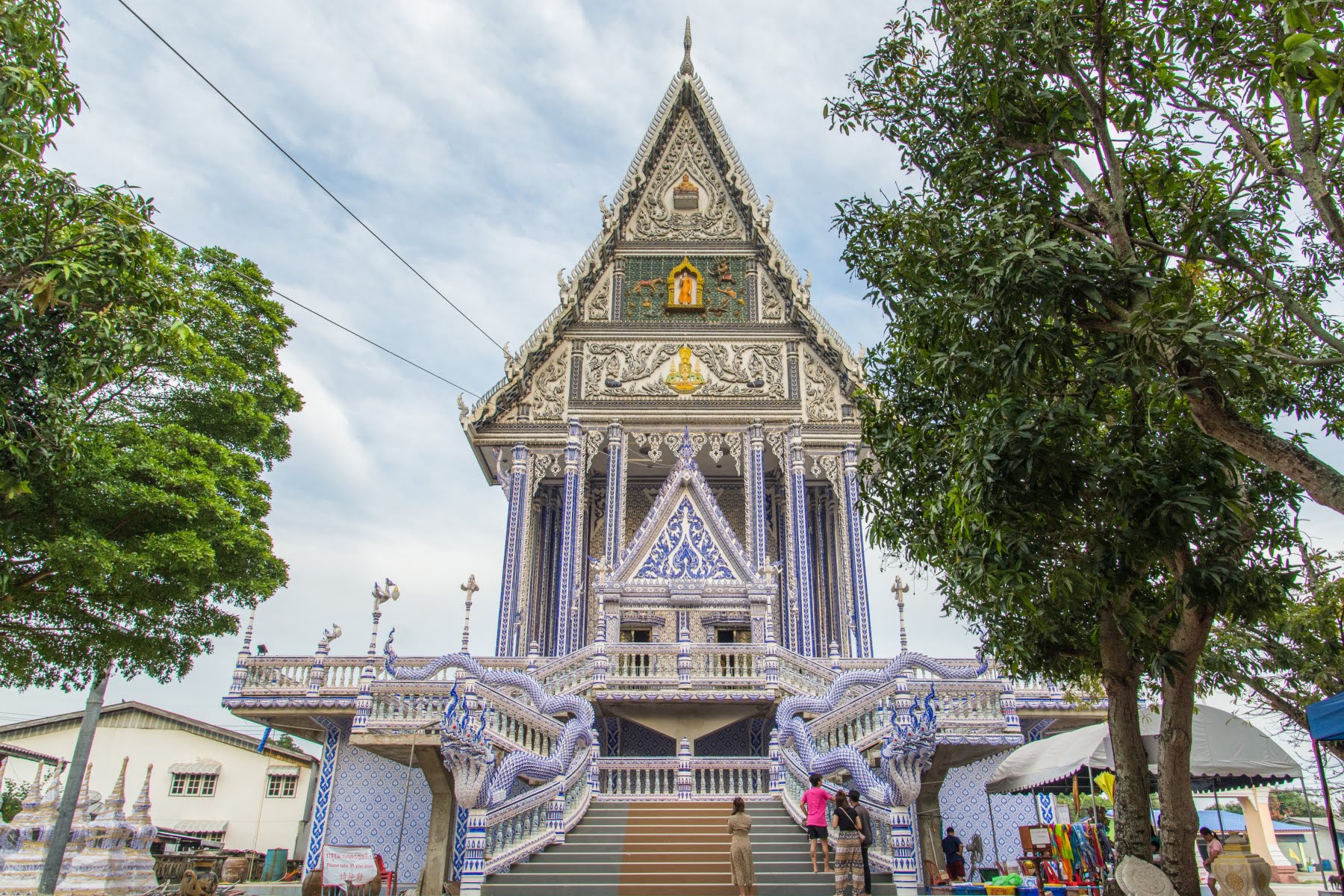
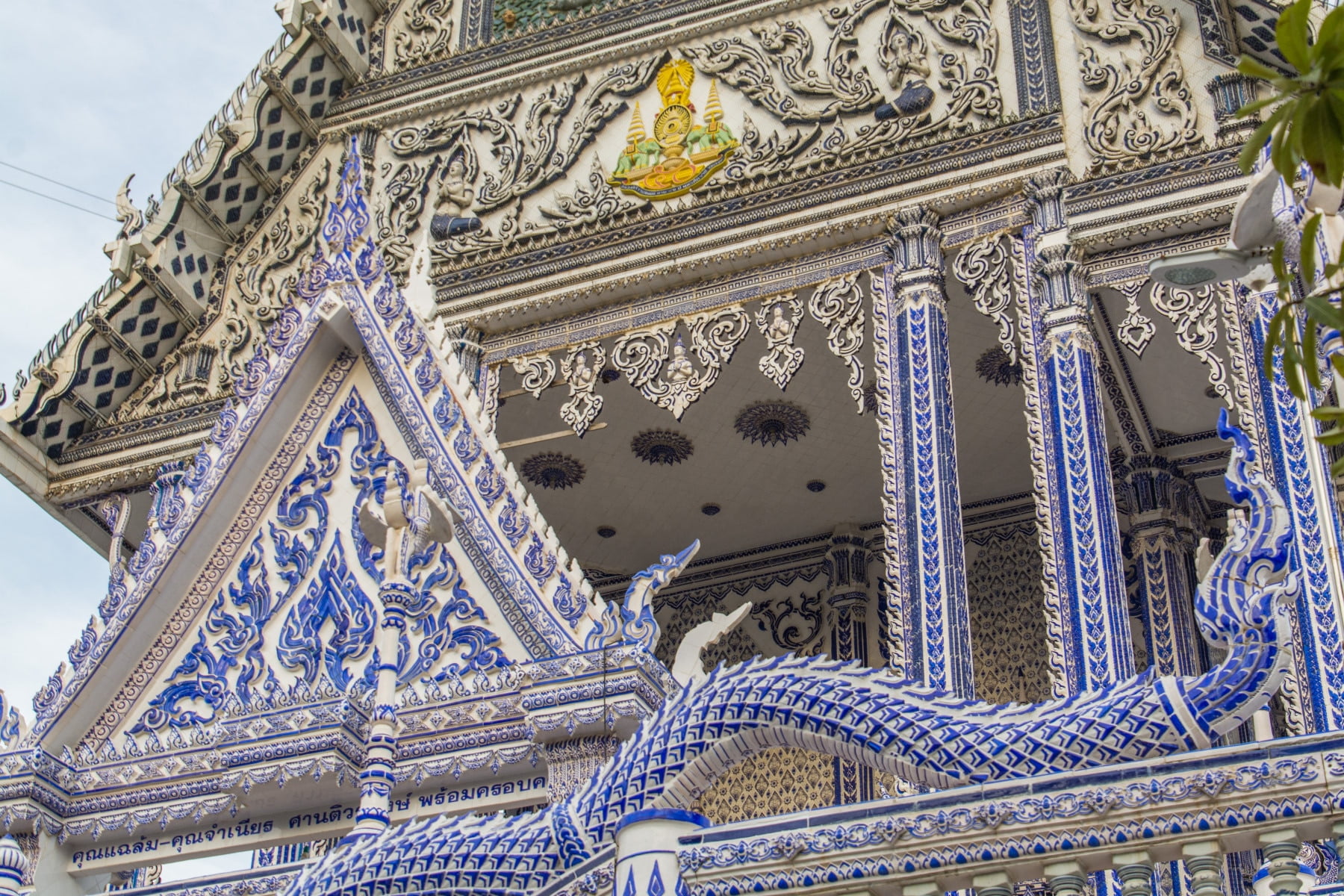
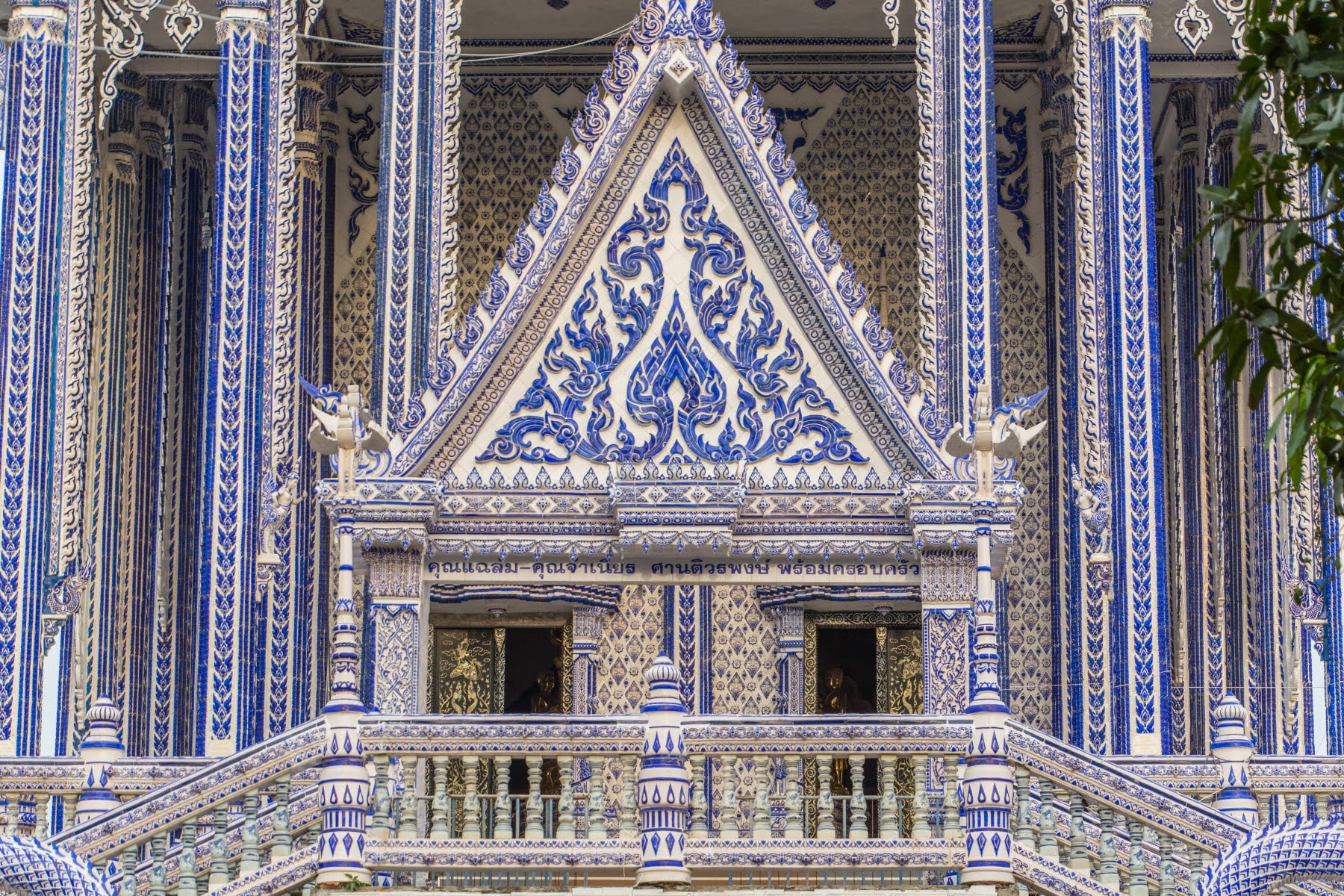
And since I mentioned the sunset, I positioned myself from a spot on the same peninsula as the Kung Krabaeng shrine. However, it's not a public area… While scouting the location, I saw an open area resembling a beach, with a path leading to it from the roadside, opposite the area containing the shrine.
In the end, I don't know if it's also part of the sanctuary or if it's private property, but as I was walking along the path, I found myself in front of a gate… that was open! The temptation was great, and a motorcycle with two local fishermen passing by at that very moment, so I went along and parked 50 meters further on…


Where to stay in Kung Wiman
Along the beach, there are a few hotels, including the one where we stayed before returning to Bangkok. It was the unusual Peggy's Cove Resort , which resembles a Nordic village (not Thai, but Scandinavian!).
It's fairly obvious that this type of establishment caters primarily to a Thai clientele (and a wealthier one at that), given how "Instagram-ready" the place is. Admittedly, this has its charm, and we ourselves spent quite a bit of time taking photos of the walkways around our bungalow, as the place was so photogenic (and well, that's partly why I chose it).


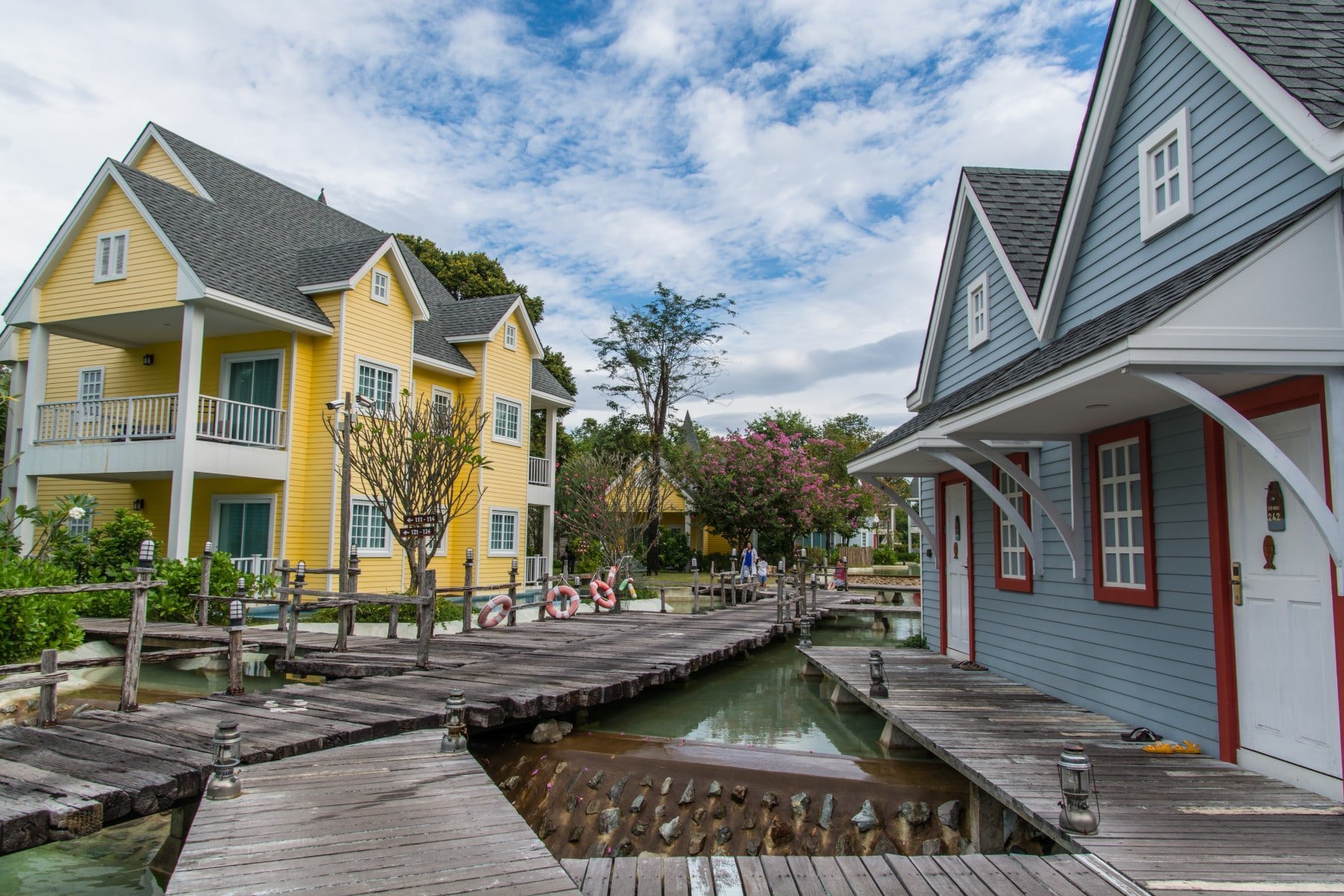
Peggy's Cove Resort
Budget: from 3 Baht (€400)
The rating: 9/10


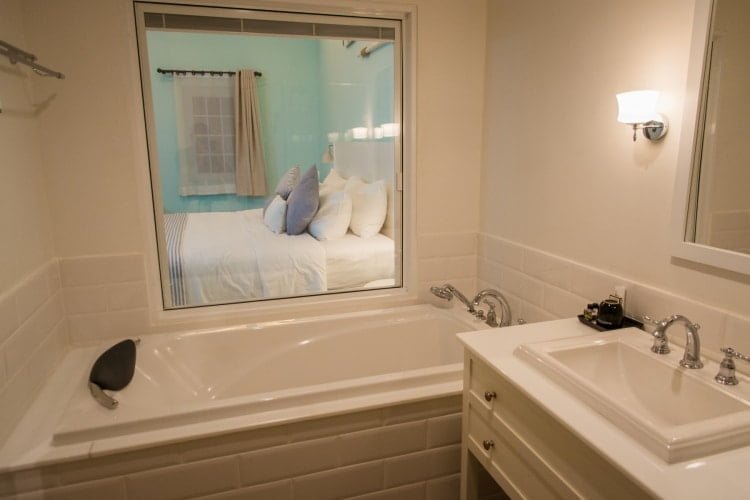


At that price, it had better be worth it. And there's not much to complain about; let's just say that, given it's Thailand, some establishments would offer similar service, even by the sea, for less. But it's still a lovely place, very clean, with a spacious and comfortable room. You obviously need a car to get there, because otherwise, it's difficult to get around.
If you are going to Chanthaburi, you might be interested in these other articles:
Did you like this article? Share it on Pinterest!

