



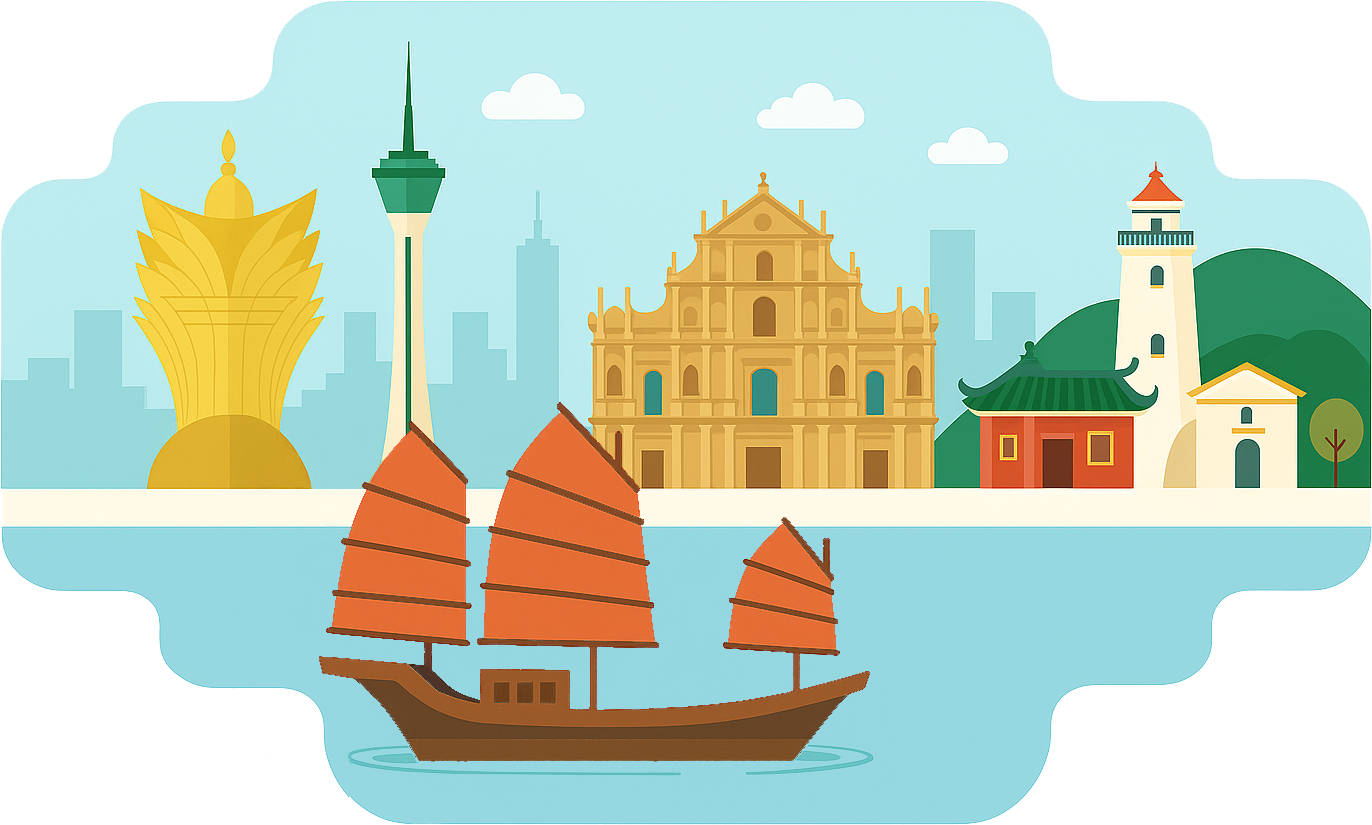
Why visit Macau?
Since we were passing through Hong Kong, its eastern "cousin," we didn't want to leave the region without visiting Macau. After the former British colony of Hong Kong, it was therefore the turn of the former Portuguese colony this time.
Portuguese for over 400 years (!!) , Macau was the last European colony in China and Asia, as it was only handed back to China in 1999. You can still find everything subtitled in Portuguese, a language that remained official along with Cantonese (even though it is now spoken by only 2% of the population).
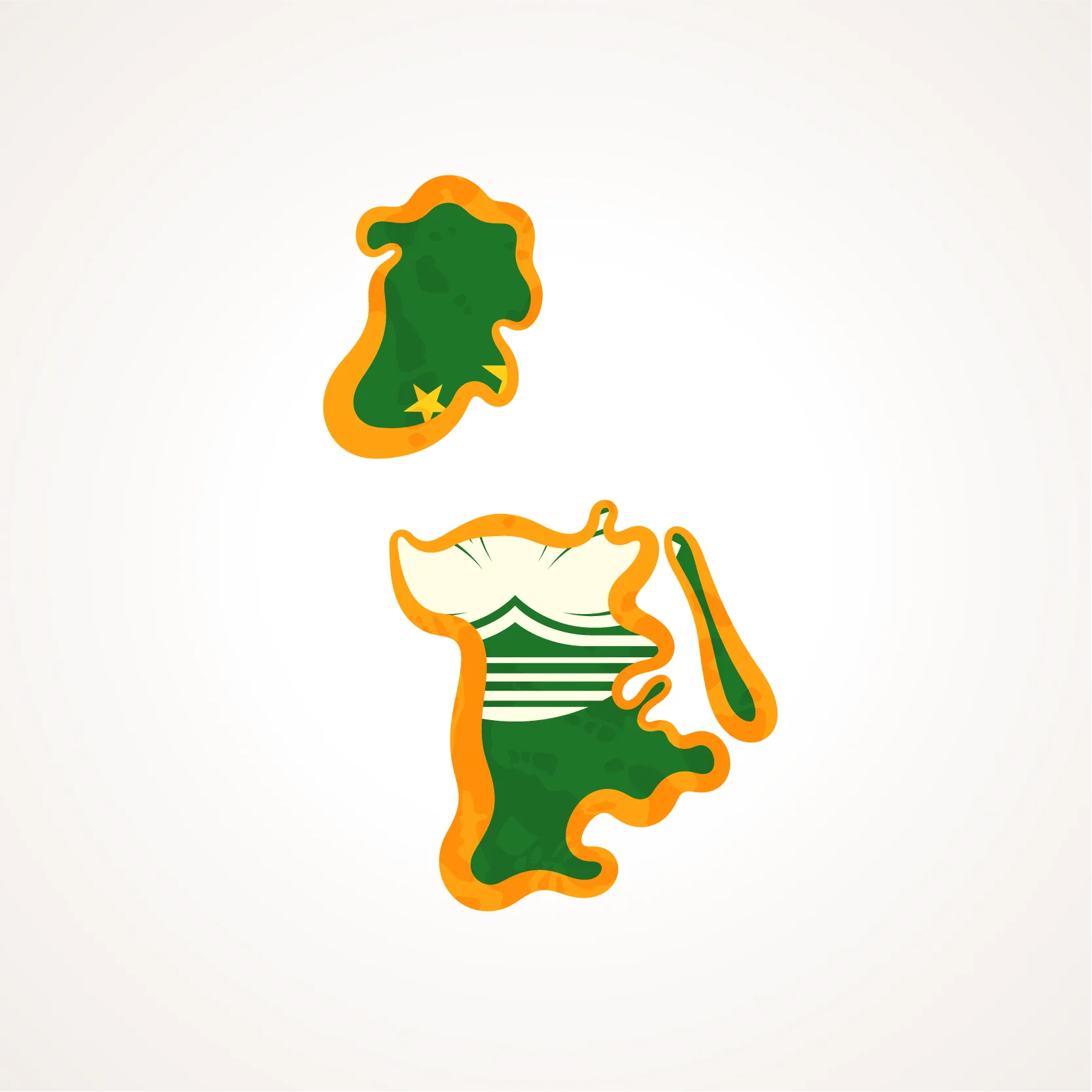
Macau consists of a peninsula in the north and, originally, two islands in the south: Taipa and Coloane. These islands are now connected by land reclaimed from the sea. This new district, COTAI, takes its name from the first syllables of these original islands (CO loane – TAI pa ). It's a striking mix of sprawling casinos and charming, traditional villages.
Like Hong Kong, located about 60 km away by ferry, Macau is among the wealthiest cities in the world. This is due to its incredibly rapid development in gambling and its booming tourism industry. Casinos have been springing up like mushrooms in recent years. By comparison, their revenue is four times higher than in Las Vegas!
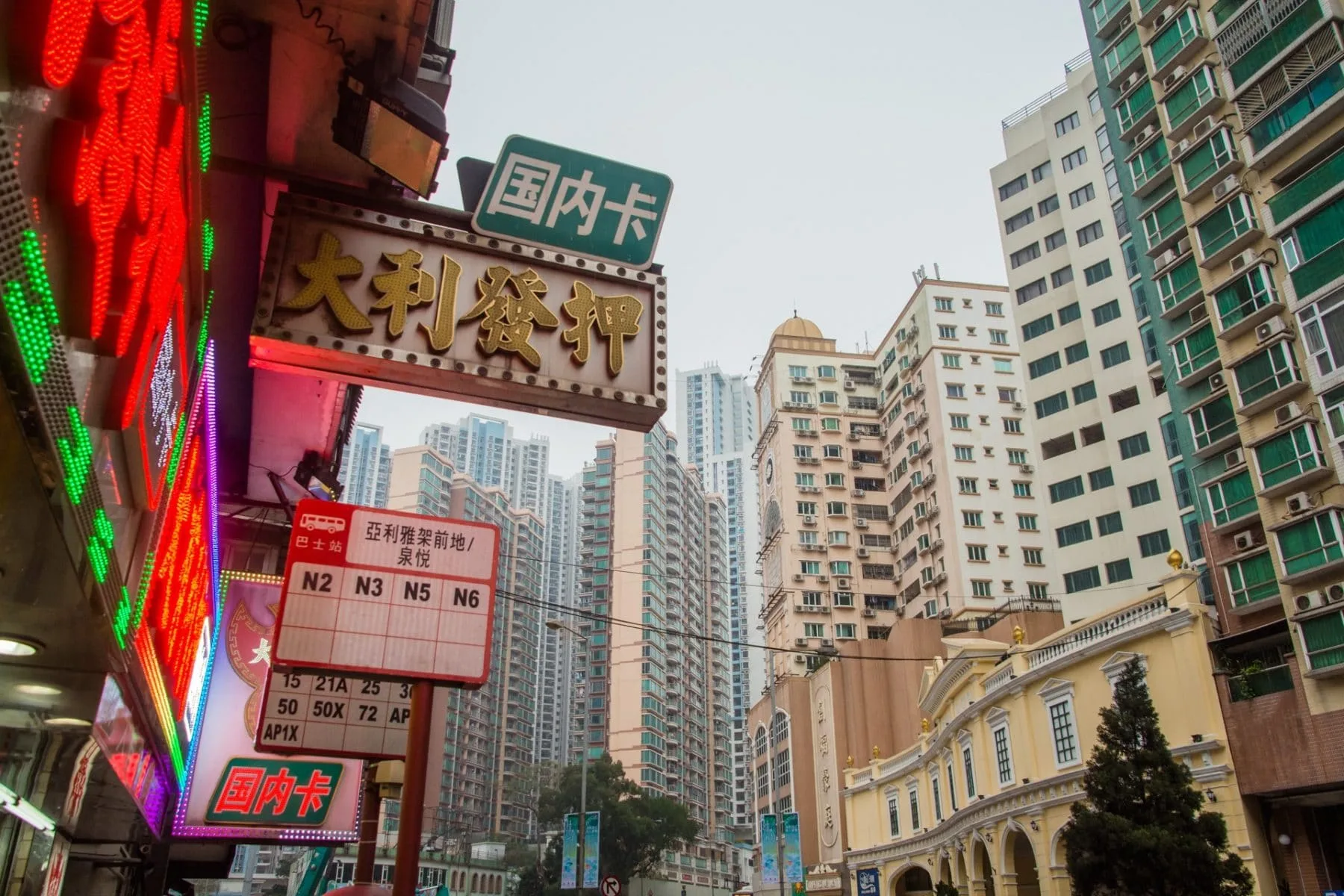
Macau has a long history with the Portuguese, but it remains predominantly Chinese. As a result, you'll find almost as many temples—Buddhist or Taoist—as Catholic churches. You might find yourself wandering through villages that seem to have stepped back in time, with their colorful alleyways, small markets, and little public squares (yes, because apart from the casinos, everything in Macau is relatively small).
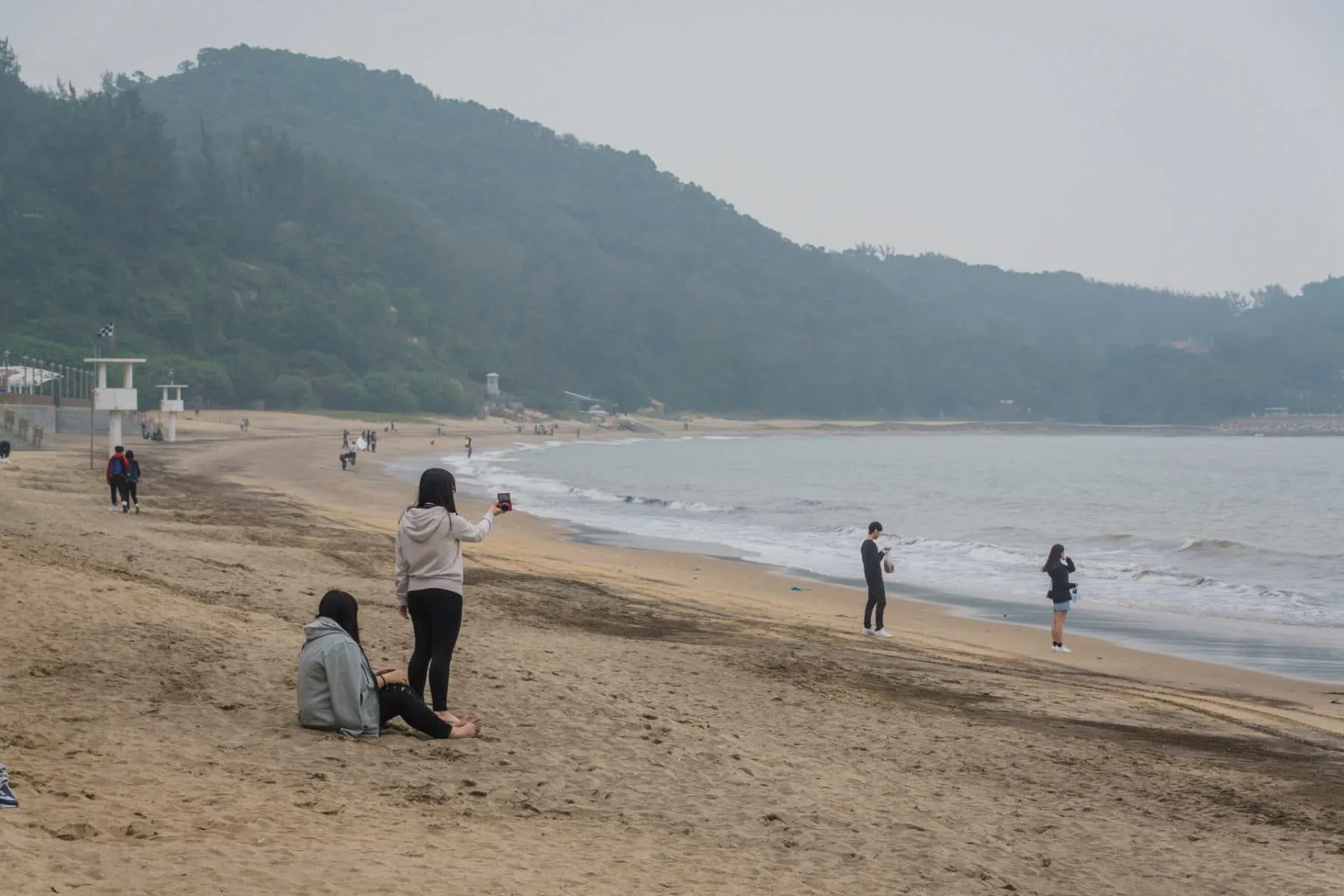
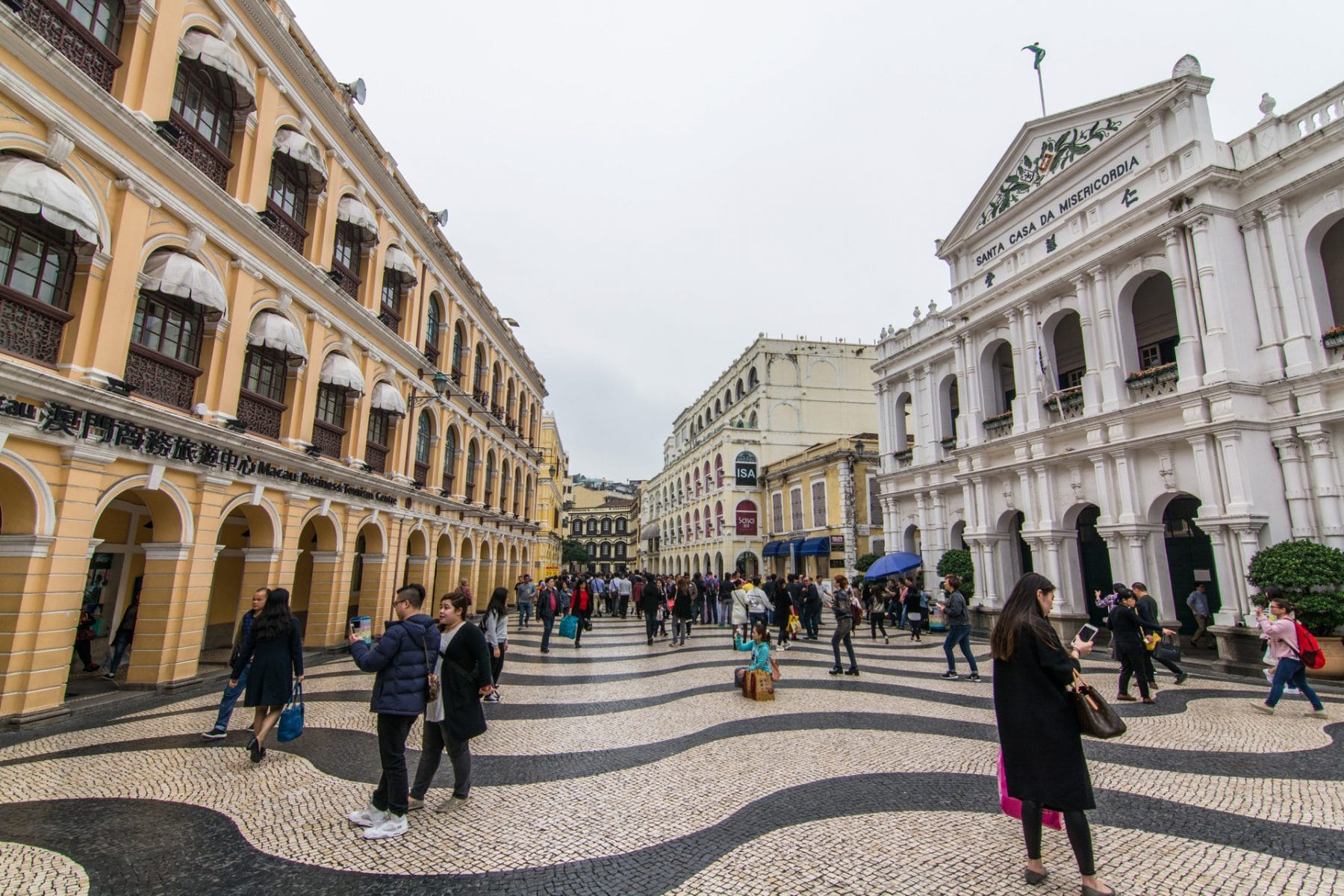
Macau's historic center, a UNESCO World Heritage Site, boasts beautiful cultural buildings blending Asian and European influences. Despite being surrounded by the sea, Macau has only two beaches, both located in the far south near Coloane: the small Cheoc Van beach and the larger Hac Sa beach, with its dark sand.
In general, and despite the gloomy weather, I really fell in love with Macau. It's a shame my photos with this dreary gray sky don't do the place justice, but I hope this page will help convince you to visit.

- Interesting story
- Experience luxury and casinos
- Quick to visit
- Delicious food blending Portuguese and Chinese specialties

- Quite touristy at the iconic locations.
- An Asian "Disneyland" / Las Vegas vibe that may not be to everyone's liking.
- Quite expensive.

The conditions are exactly the same as in Hong Kong, so if you are a French national, you do not need to obtain a visa for Macau (unlike for mainland China).
However, this exemption is valid for a stay of less than 90 days.
This exemption is valid for stays of less than 90 days.
A visa is therefore not required if you hold a passport from one of the 76 countries listed on the official Macau immigration website , which also indicates the possible points of entry (because there is not only the airport, but also ferries, including those from Hong Kong, so nine points of entry).
For other nationalities, I'm thinking of our cousins in Quebec, or if, like me, you have a Thai spouse, the limit will then be 30 days and not 90 (which is still more than enough anyway).
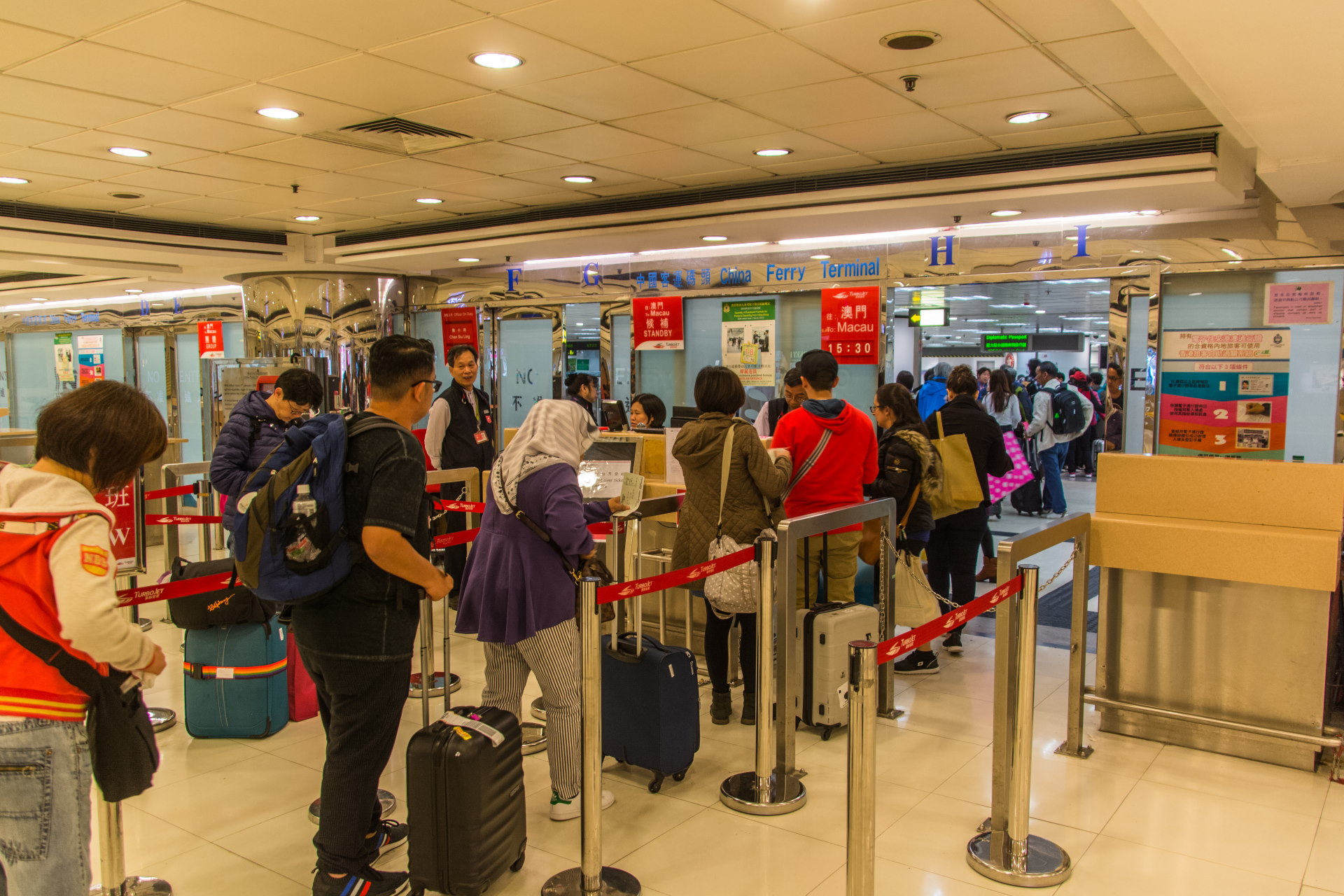
In all cases, a passport valid for at least six months after the departure date is mandatory. You must also have a ticket (train, boat, plane, it doesn't matter) proving your departure from the territory before the expiry of your allotted time. Finally, although it won't always be required in practice, you are normally required to demonstrate sufficient funds for a stay in Macau, namely 5,000 MOP (approximately €550).
Upon arrival, you will be required to go through immigration and will receive a "Slip of Authorization to Stay," a small document that serves as proof of your authorized stay. Visa-exempt visitors do not fill out an entry card, but this slip serves as proof of authorization and indicates the maximum length of stay permitted.
Please note: If you are going to China, then to Macau, then back to China, a double-entry Chinese visa is required.
If you are coming to or going to Hong Kong, crossing the border into/out of the territory remains mandatory. These two regions function as separate countries.
Stopovers in mainland China: the case of 72-hour / 144-hour layovers
If you are traveling to Macau and your flight includes a layover in mainland China (France → China → Macau), you may be eligible for the 72-hour visa-free rule. This would allow you to enter China for up to 72 hours during your layover (for a quick visit), and then continue your flight to Macau without needing a Chinese visa.
Stay of more than 3 months
To stay in Macau for more than 90 days (for work, internships, studies, etc.), you need a visa. Consult the different types and check the requirements on the website of the French Consulate in Hong Kong (which also handles visas to Macau).

Macau's climate is identical to Hong Kong's: a subtropical climate, humid and hot in summer, drier and milder in winter. It can be divided into two distinct seasons:
- October to March This is the cool, dry season, corresponding to winter. Although clouds are common, there is little rain. The weather is mostly fine, and temperatures, cool at night, remain pleasant during the day.
- From April to September This is the rainy season, and the hottest time of year. It's generally overcast and muggy due to the high humidity. Rainy weather and storms (typhoons) are possible between June and September.
Best time to visit Macau
The best time to visit Macau is at the end of the year. October, November, and December enjoy optimal sunshine.
Temperatures hover around 20°C and remain pleasant. Of course, this also coincides with the peak tourist season. If you'd prefer fewer crowds while still enjoying decent weather, consider visiting in January or February.
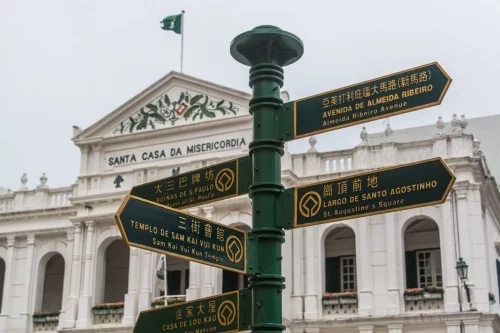
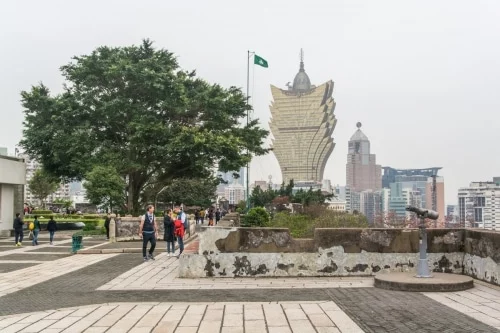
In my case, hence the rather gloomy photos, it was in March. The temperatures were generally pleasant, there was practically no rain, but the light was flat due to an almost constantly overcast sky.
In Summary
- Ideal October → March
- Okay, but hot and humid. April → June
- To avoid July → September (heat + typhoons)
| Month | Minimum temperature | Maximum temperature | Rain | Sunshine |
|---|---|---|---|---|
| Jan. | 11 ° C | 18 ° C | 22mm | 5 p.m. |
| Feb. | 12 ° C | 18 ° C | 39mm | 3 p.m. |
| Mars | 16 ° C | 21 ° C | 59mm | 3 p.m. |
| Apr. | 20 ° C | 25 ° C | 160mm | 4 p.m. |
| Mai | 23 ° C | 29 ° C | 281mm | 5 p.m. |
| June | 25 ° C | 30 ° C | 304mm | 6 p.m. |
| Jul. | 26 ° C | 32 ° C | 236mm | 7 p.m. |
| August | 26 ° C | 31 ° C | 303mm | 7 p.m. |
| Sept. | 24 ° C | 30 ° C | 194mm | 6 p.m. |
| Oct. | 22 ° C | 28 ° C | 104mm | 6 p.m. |
| Nov. | 17 ° C | 24 ° C | 31mm | 6 p.m. |
| Dec. | 13 ° C | 20 ° C | 25mm | 6 p.m. |

Macau can be explored in four main areas: the historic peninsula, Taipa, Coloane, and Cotai. Here's what you need to know about Macau, from the old town and casinos to the villages in the south.
The Macao Peninsula
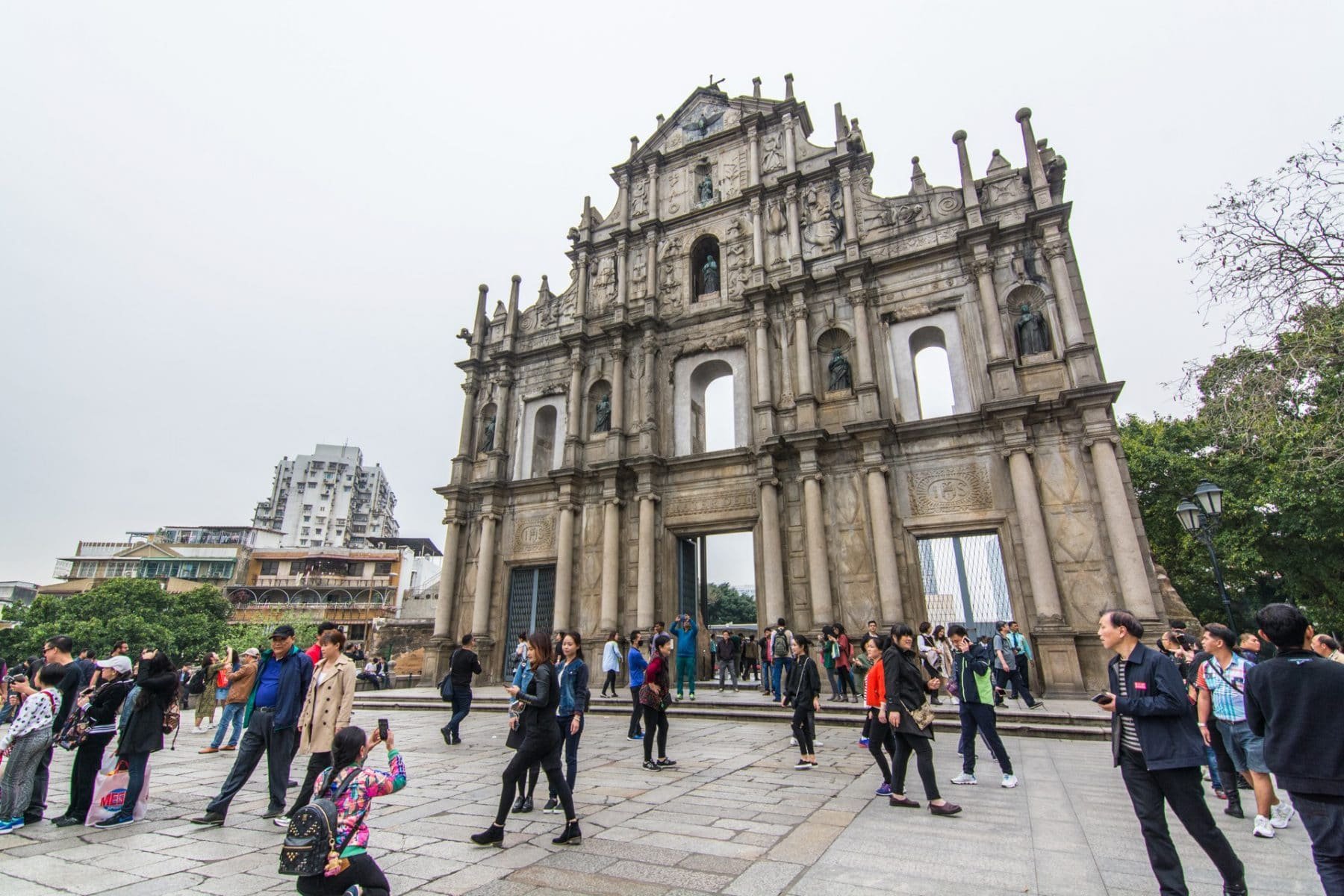
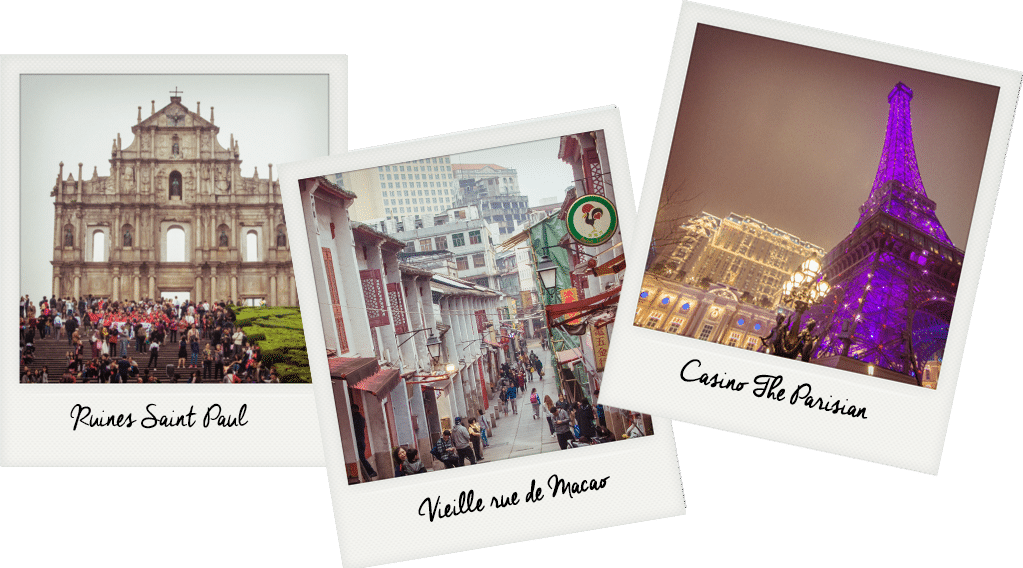
The peninsula encompasses the main ancient monuments, the old town, and Senado Square . Walking up São Domingos, da Palha, and then São Paulo streets, you will reach the ruins of St. Paul's Cathedral , a true symbol of Macau, of which only the facade remains.
Don't miss St. Dominic's Church or the Lou Kau Mansion , the late 19th - century home of a wealthy merchant. Further up, Mount Fort overlooks Old Macau. For a more comprehensive visit, continue to Tap Seac Square, then climb to Guia Lighthouse for another view of the fort.


For green spaces, the Camoes Garden is a good place to stop. Not far from the Senado Square, the Ruelle da Felicidade remains one of the few rows of old houses with their red shutters.
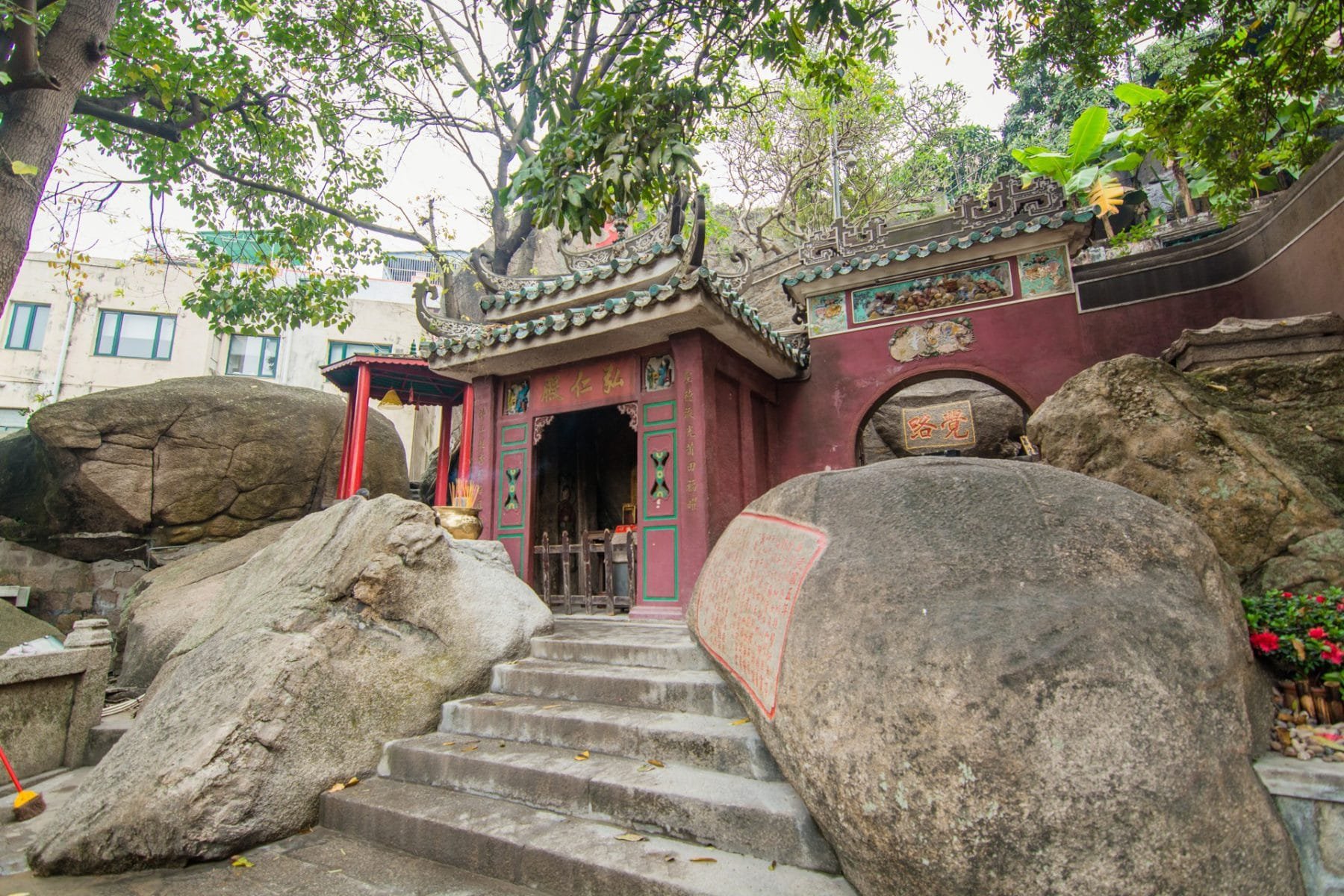
Heading south on the peninsula: St. Joseph's Church, St. Lawrence Church, Mandarin's House, and the small Lilau Park. After the Moorish Barracks, you arrive at Barra Square, where the Maritime Museum and, most importantly, the A-Ma Temple, the oldest in Macau , are located.
Finally, the hill of Our Lady of Penha offers a very beautiful view of the bay and the Macao tower.

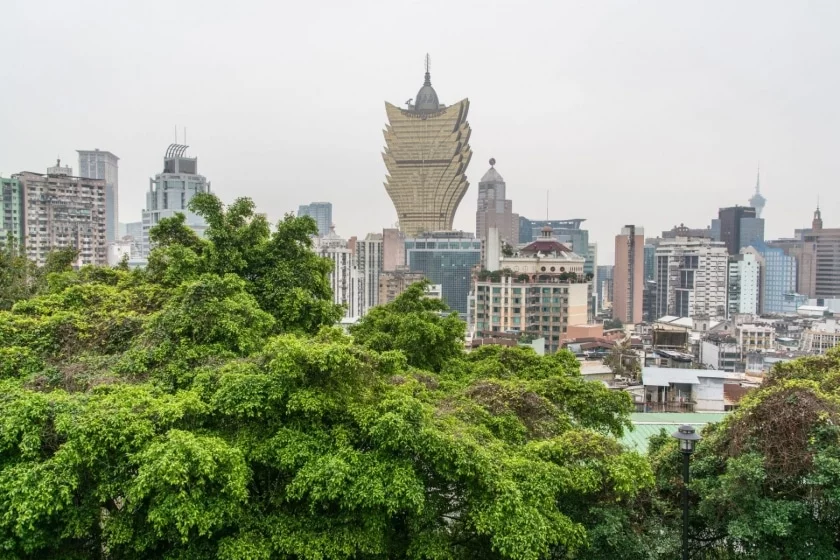
Macao: what to do in 1 and a half days in its historic center?
From its colonial alleyways to its casinos, Macau is full of surprises. Here's my itinerary for discovering the highlights of its historic center in a day and a half.
rammed earth
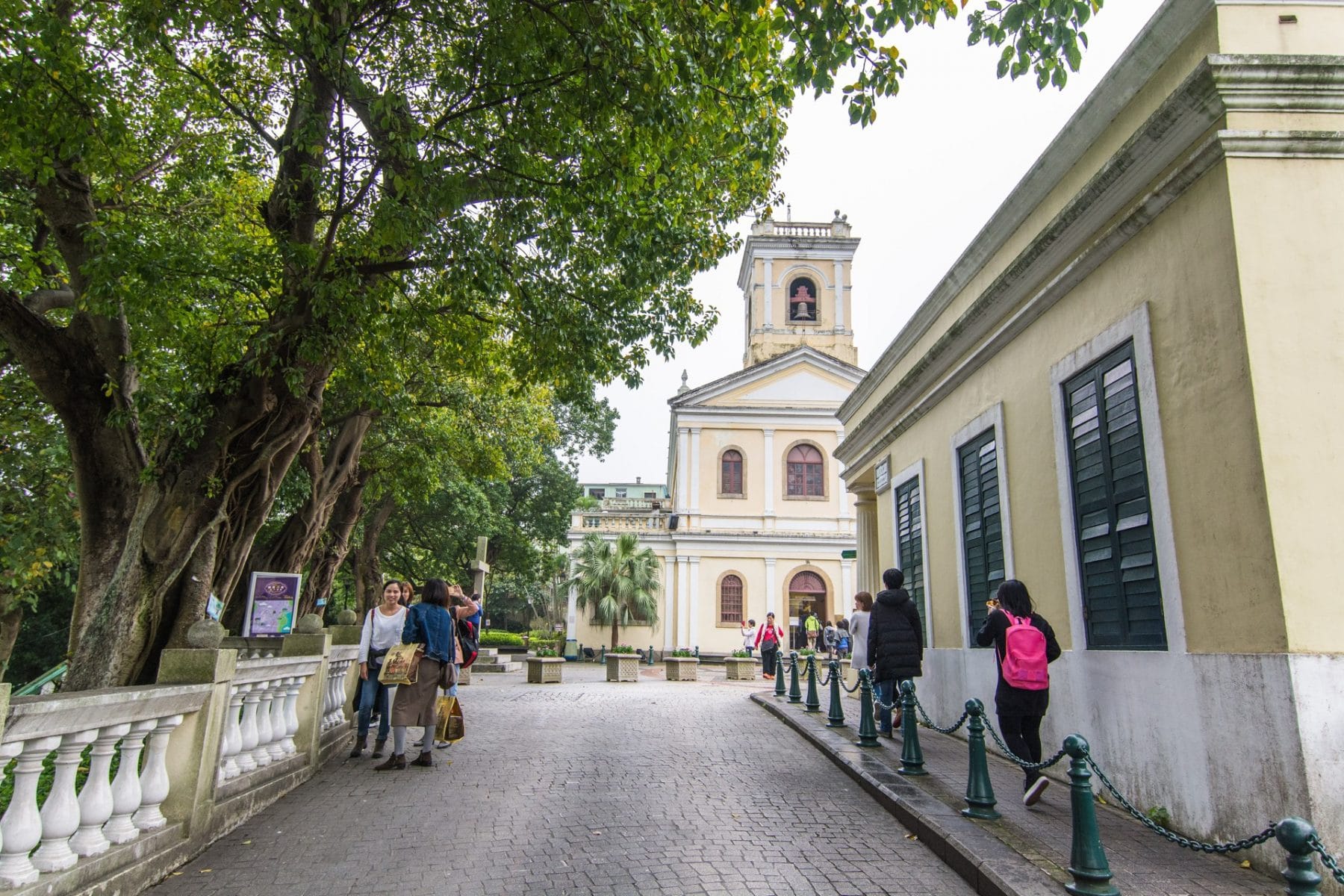
The heart of Taipa revolves around the square of the Church of Our Lady of Mount Carmel and the adjoining gardens. At the foot of the hill, the Taipa Houses — restored former colonial houses — now serve as a museum.
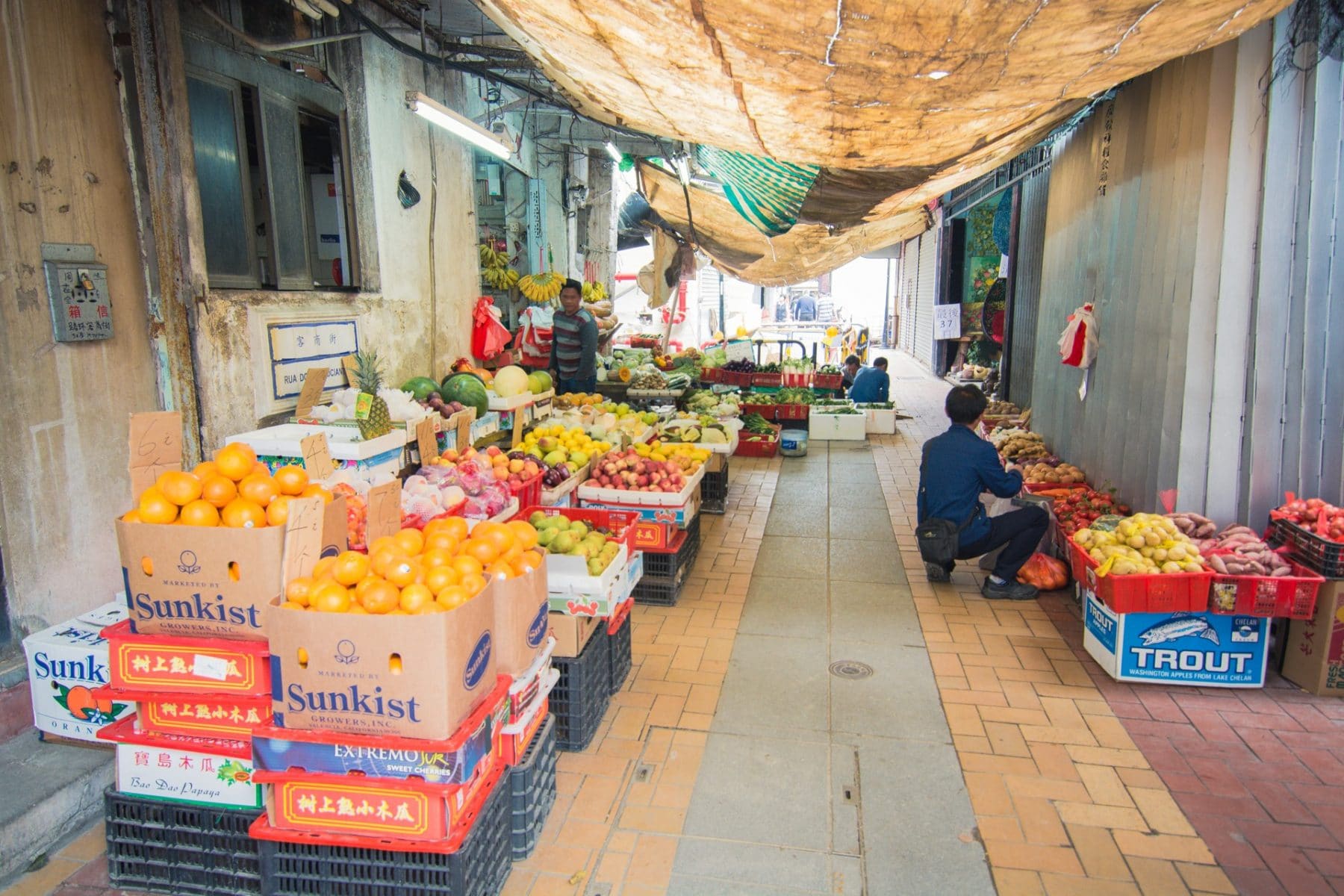
To get there, we walked along Fernão Mendes Pinto Street, past a small neighborhood temple (Sam Po Temple). But the main attraction remains the village: around the meat market square (Feira do Carmo), begins Rua do Cunha, a very lively shopping street with restaurants and shops.
Columns
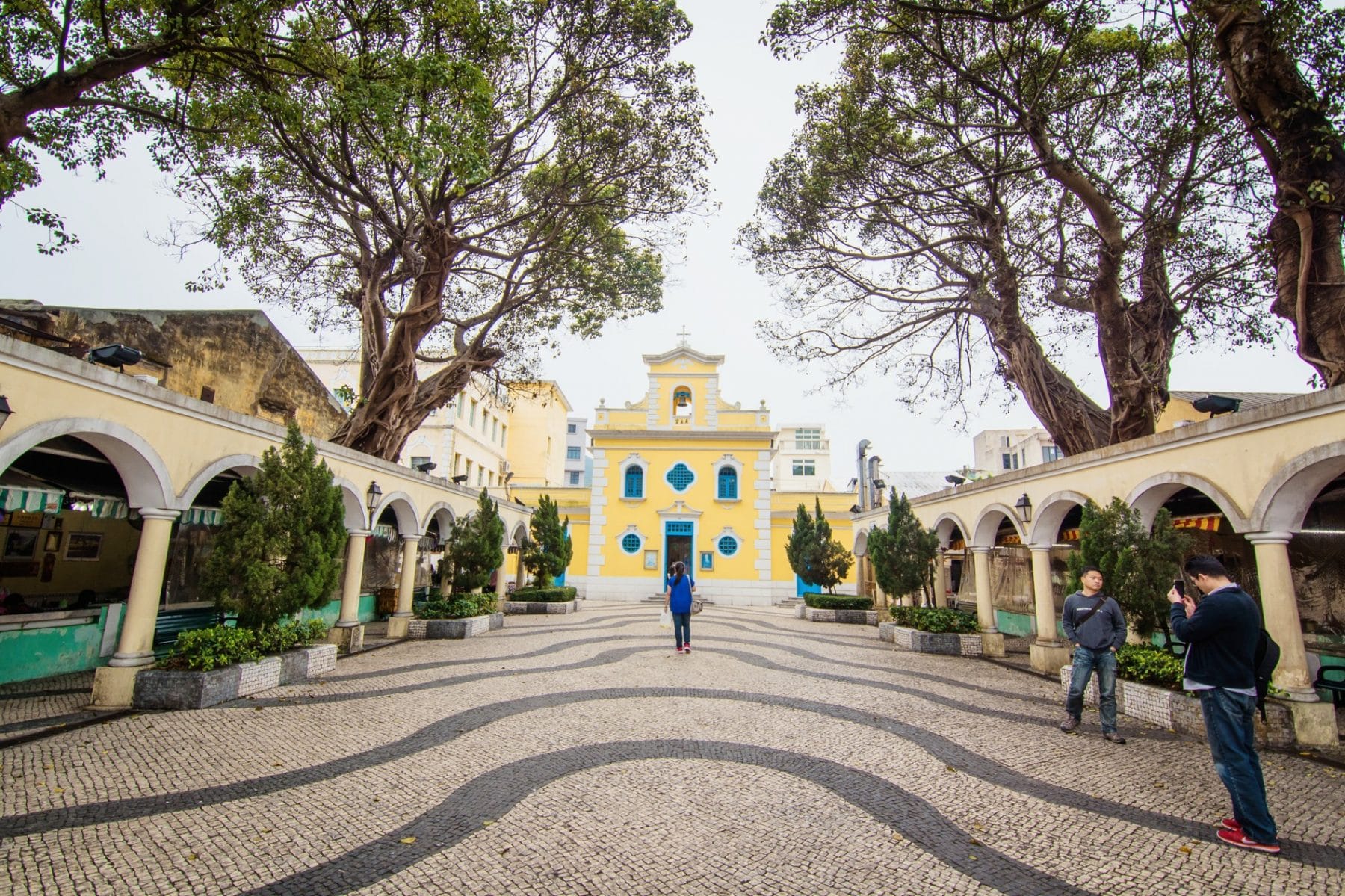
Coloane retains the charm of an old-fashioned village, a stark contrast to Taipa or Cotai. The village is renowned for its colorful alleyways, its small market, and the Eduardo Marques square dominated by the Saint Francis Xavier chapel.
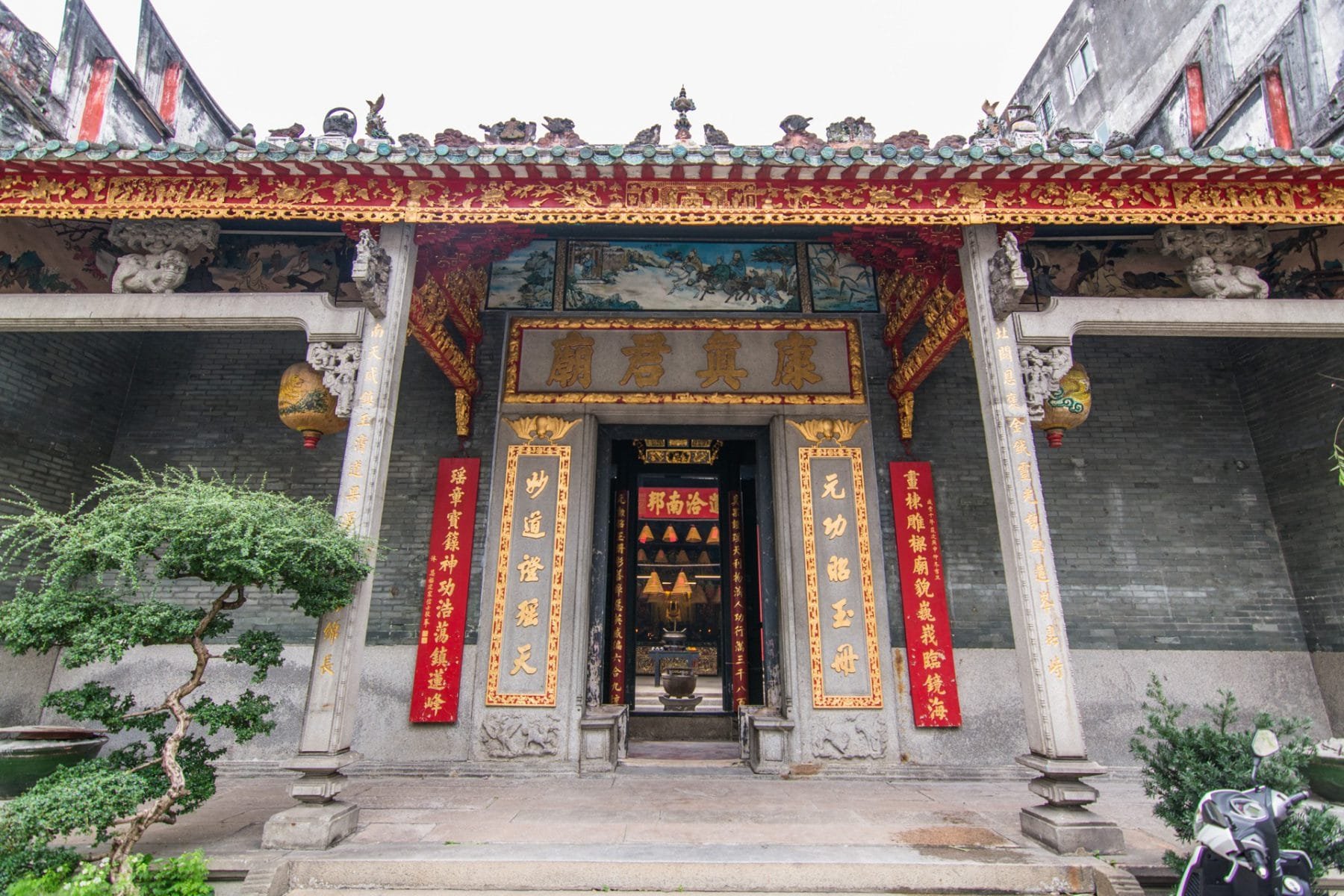
There are also a few temples like Kun Lam. On the coast: Cheoc Van beach less than 3 km away, and further on, the large Hac Sa beach (with blackish sand).
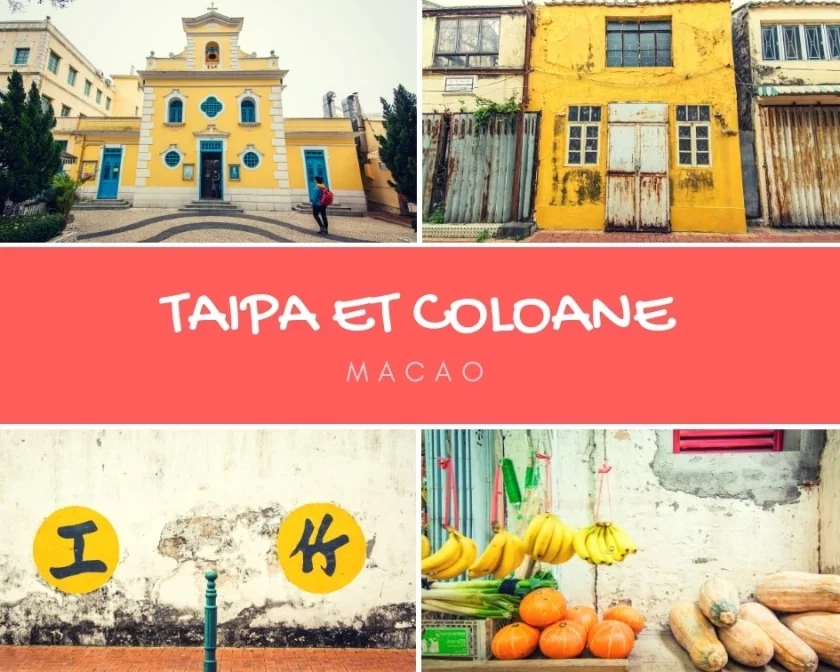
The villages of Taipa and Coloane, another vision of Macao
Ancient alleyways, colorful houses, temples, small squares and seaside: discover the calmer, more traditional side of Macau in Taipa and Coloane.
Cotai
Although there are a few casinos on the peninsula (like the Wynn), it is mainly on Cotai that the craziest resorts are located, hence its nickname of "Las Vegas of Asia".


Being French, I wasn't particularly interested in The Parisian (although, out of curiosity, we took a peek inside to see its giant Eiffel Tower in front). We had chosen The Venetian , with its interior canal, gondolas, and ceiling painted to resemble a permanent blue sky—a world apart! Next door, the City of Dreams is one of the most expensive buildings in the world, with a budget of $2,4 billion.
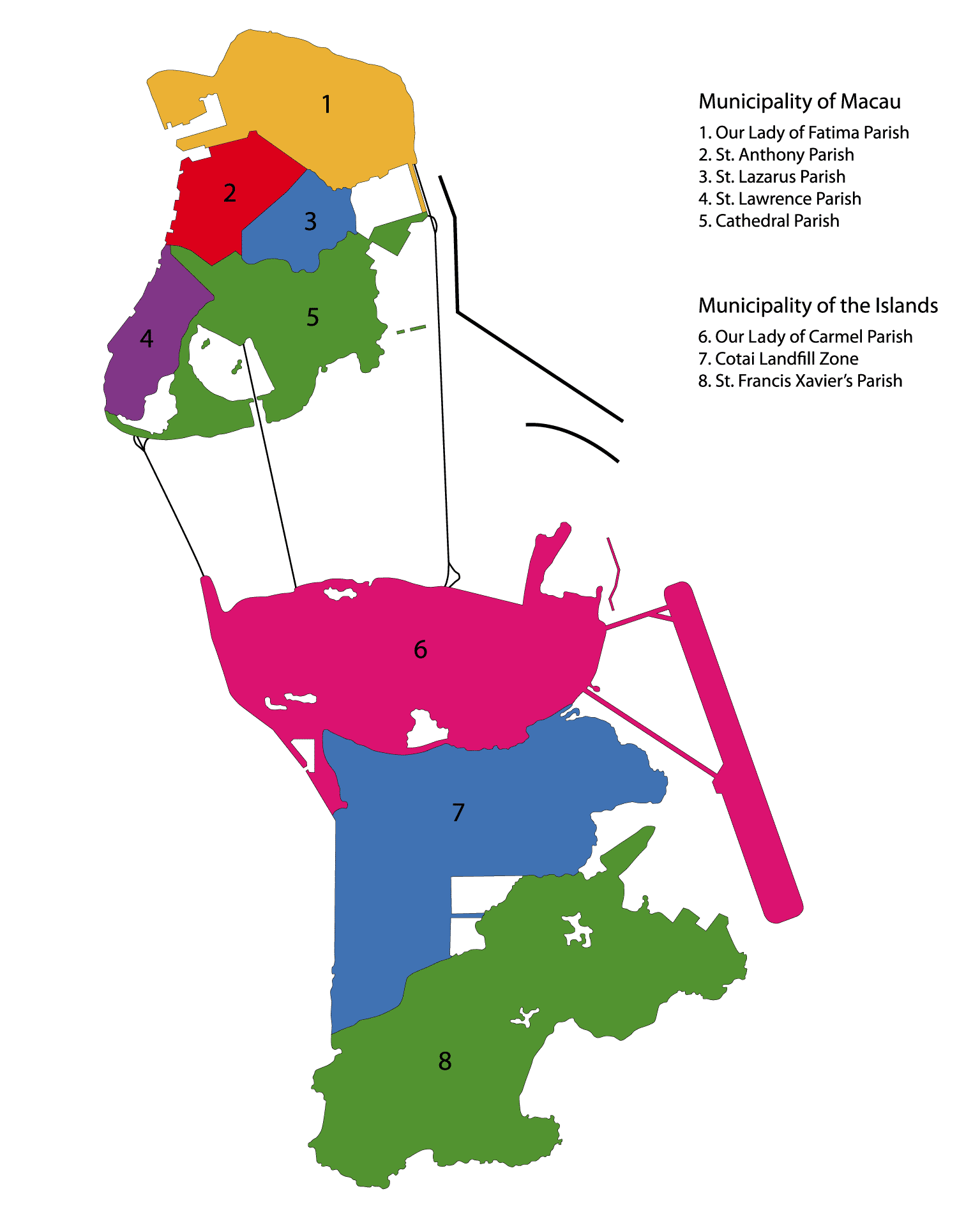
Macau in summary
- Macau Peninsula Senado Square & ruins of St. Paul's (old town), A-Ma Temple & Barra district
- rammed earth : Gardens and Church of Our Lady of Carmel, rua do Cunha
- Columns Colorful village, Saint Francis Chapel, Kun Iam Temple
- Cotai : The Venetian, The Parisian, City of Dreams
- views : Mont fort, Guia lighthouse, Penha hill
- Beaches : Cheoc Van & Hac Sa (black sand)

We had two full days to visit Macau. As such, this is enough to see the essentials, but for a more in-depth visit, and if your budget allows, a minimum of three days would not be excessive.
Our two-day tour program
Basically, we divided our visits like this: one day in the historic center and one day to visit Taipa and Coloane. We took advantage of an evening to go to a casino, to see all aspects of Macau.
Day 1 – Old Macau
- Place Senado → ascent to fort of the mountain
- Ruins of Saint Paul
- Guia Lighthouse (optional)
- Felicidade Alley
- Descent towards Barra via the rue da Barra
- Temple A-Ma
Day 2 – Taipa and Coloane
- Coloane Village (bus 26 from Plaça da Barra)
- A stroll through the village, the market, and the temples.
- BeachHac Sa (bus 21A)
- Back to Taipa Village, Taipa Houses and rua do Cunha
In the evening, take the opportunity to check out a casino (The Venetian, The Parisian, City of Dreams…).
If you have less or more time, I'll leave you with two suggestions below. Keep in mind that with three days you'll enjoy yourself a bit more and won't miss anything. Personally, I regret not having gone to the Guia Lighthouse , one of Macau's classic attractions, and there's also the Lou Lim Ioc Garden, which has its own charm.
If you're not afraid of reading a bit in English, I'm also including a link to the Macau tourism office with all the sites to visit;
1-day program
One day is enough to get a good overview of the peninsula and its iconic sites.
- Senado Square → São Domingos / da Palha streets → Ruins of Saint Paul
- Climb to the fort of the mountain Then, if motivated, Guia lighthouse
- Back to the Felicidade alley
- Descent southwards via the rue da Barra
- End of day at Temple A-Ma (Barra district)
With this route, you cover old Macau without rushing, enjoying the views and ancient alleyways.
3-day program
Over 3 days, you will have time to stroll more during the first two days and can dedicate a full day to Cotai.
- The Venetian canals, facades, gondolas, painted blue sky
- The Parisian : giant Eiffel Tower, galleries and themed decorations
- city of dreams : one of the most expensive complexes in the world
Giant casinos are an attraction in themselves, even without gambling: decor, entertainment, restaurants, galleries… it’s a world of its own.
Cultural alternative: if casinos are of little interest to you, you can dedicate this 3rd day to exploring the peninsula more thoroughly.
- Museum of Macau (at the fort of the Mount) — very well-done sections on Portuguese history, maritime trade and local traditions.
- Mandarin's House — large traditional house blending Cantonese and southern Chinese influences.
- Taipa Houses Museum — to complete the colonial history with the restored houses of Taipa.
- Barra Promenade — enjoy a longer stroll along the seafront to the A-Ma temple.
- Lou Lim Ieoc district — if you like Chinese gardens, this is the most beautiful in Macau, inspired by the classical gardens of Suzhou.
This option provides a much more comprehensive overview of Macau's history and cultural mix, encompassing Cantonese, Portuguese, and Asian influences.

Coming to Macau
Macau has an international airport, Macau International Airport ( MFM ), located on Taipa Island. It is smaller than Hong Kong's airport and therefore offers fewer airline options. In practice, many travelers arrive first in Hong Kong and then reach Macau by ferry or bridge.
Arriving in Macau (MFM) by plane
Direct flights from Europe do not exist, so you will need to make a stopover in Asia (China, Taiwan, Singapore, etc.). Fares are often similar to those for Hong Kong, but the airlines serving Macau are mostly Chinese.
- Air China – one of the easiest options to reach Macau
- XiamenAir – often among the least expensive
- China Eastern – prices close to XiamenAir
Overall, you can find a round trip Europe → Macau for around €450 to €600 , depending on the period and stopover.
Search for a flight to Macau
Arriving by ferry from Hong Kong
The ferry is a very common way to travel between Macau and Hong Kong (and vice versa). It's quick and easy: you arrive directly at the Macau ferry terminal.
- TurboJET : Hong Kong → Macau Outer Harbor (~55 minutes)
- Frequent crossings throughout the day
- Average prices: 20 to 30 € depending on the time and the weekend
If you are visiting Hong Kong, it is also an excellent way to take a break in Macau for one or two days.

Hong Kong–Zhuhai–Macau Bridge (HZMB)
Another option : there is now a bridge-tunnel between Hong Kong, Zhuhai, and Macau. Buses connect the two sides in about 40 to 50 minutes.
- Frequent departures 24/24
- Price: approximately 7 to 9 € per journey
- Arrival at the border checkpoint on the Macau side
It's convenient if you're staying near Hong Kong airport or on the Lantau side, but less direct than a ferry if you're staying in central Hong Kong.
Getting around Macau
Getting around Macau is easy: the peninsula is very pedestrian-friendly, Taipa/Coloane are visited by bus/taxi, and Cotai is served by hotel shuttles and taxis. Here are the practical details.
Road transport
The bus network is well-developed and convenient for covering longer distances. It's our preferred option for visiting Taipa and Coloane. The standard fare is around 6 MOP per trip, and the stops are generally well-marked. The only thing to be aware of is the direction of travel: some buses run in a loop and stop at the same stop in both directions, which can be confusing.
To plan your journeys, you can consult the official Macau bus website . The information displayed at the bus stops is also quite detailed.
The MacauPass is an electronic payment system accepted on all buses. It eliminates the need for cash and offers a reduced fare: each journey costs 3 MOP (standard bus) or 4 MOP (express bus), instead of 6 MOP with cash payment. The pass can also be used in some convenience stores, bakeries, and vending machines.

Please note: when paying in cash, the bus does not give change. You must throw the coins into the box near the driver; he will simply validate the payment.
If you are going directly from the airport to the large hotel complexes (The Venetian, Wynn, City of Dreams…), there are free shuttle services offered by the hotels and casinos.
There is also a "hop on hop off" bus system with a day pass (you can book here via Klook): Macau Open Top Bus TourThis might be suitable if you want a panoramic tour, but the public network already covers the city very well.
Buses: summary and useful apps
Unfortunately, the app I used to have, which worked perfectly, is no longer available. The one I installed is the one recommended by the tourist office, but it seems less effective.
- To plan a trip, consult the official website of the Macau Transport Bureau (lines, timetables, direction of travel) — in English.
- Try the official app: Experience Macau (Android ou iOS)
- Alternatively, Google Maps works very well for locating lines and stops.
- The MacauPass allows discounts on every journey.
- If you pay in cash: have the exact amount ready. No change will be given.
- Entered through the front door, exited through the rear door.
Taxis
We only took a taxi once, to get from the ferry terminal to our hotel (about 3,5 km). It cost us 41 MOP , with a starting charge of 19 MOP and then about 2 MOP every 240 m.
Please note: the rates have since been revised. The initial charge is now 21 MOP for the first 1,600 meters, then 2 MOP for every additional 220 meters . The surcharge per bag placed in the trunk remains 3 MOP.
Other surcharges apply:
- +8 MOP : departure from the airport, the Taipa Ferry Terminal or the Hong Kong–Zhuhai–Macau Bridge border crossing.
- +2 MOP : Taipa → Coloane routes.
- +5 MOP : routes Macau → Coloane.
However, there is no surcharge for journeys from Macau to Taipa or from Taipa/Coloane to the Macau peninsula.
Macau's light rail system, known as the LRT (Light Rapid Transit), is now partially operational. The Taipa line is already running, connecting the airport, the Taipa Ferry Terminal, Cotai, and several key stations in Taipa.
Other extensions have been opened, including the link to Barra on the peninsula side, which now makes it possible to connect directly between the historic center and Taipa without using the bus or taxi.
The network is still limited on a Macau scale, but the LRT is convenient for getting around between the airport, Cotai and the Barra waterfront.

Macau has two main terminals:
- Macau Outer Harbor Ferry Terminal : located on the peninsula, close to the historic center.
- Macau Taipa Ferry Terminal : located north of Taipa, next to the airport, convenient for Cotai and the major hotels.
Both terminals have shops, currency exchange services, luggage storage and connections by bus or hotel shuttles.


If Macau were a country (in its own right), it would be the most densely populated territory in the world. With over 18,000 inhabitants per km² , space is (very) limited… but unlike Hong Kong, hotel rooms are generally a reasonable size, around 20 m² for standard categories.
However, prices don't really change: expect to pay at least €55 for a single room in a 2-star hotel. Prices rise quickly as soon as you move towards 4-star hotels or resorts in Cotai.
In our case, we wanted to treat ourselves during this short stay in Macau and were trying out a beautiful 5★ establishment for the first time.
As our trip to Hong Kong drew to a close, we wanted to celebrate in style. Having used Agoda extensively—which I also regularly recommend—I had accumulated enough points (even though the system no longer exists) to benefit from some attractive discounts. So, we decided to stay at the Sofitel Macau at Ponte 16 .
We were incredibly lucky: we'd been upgraded. We got the next category up, with a river view, access to a private floor, smartphone service, and, most importantly, the Club Lounge. This category was twice the price of the room we'd originally booked.
The pleasant surprise is that current prices are particularly attractive. I don't know if competition has anything to do with it, but Macau now offers excellent value for money in the high-end market.
Sofitel Macau at Ponte 16 Hotel
Note: 8,7 / 10
Budget: from 86€
I must say I particularly enjoyed my stay: the room, the peace and quiet, the service… not to mention the smartphone provided with internet access and apps containing all the useful information about the city. It's nice to treat yourself to this kind of little pleasure from time to time.
And as is typical in Macau, the Sofitel naturally has its own casino right on the premises. Gamble responsibly.
Tips for choosing your accommodation in Macau
- Macau Peninsula : ideal for visiting the historic center (Senado, ruins of Saint Paul, A-Ma). Convenient neighborhood, everything is within walking distance.
- Taipa Village Quieter, closer to the Taipa Houses museum. A good compromise between local atmosphere and access to Cotai.
- Cotai Perfect if you're aiming for maximum comfort. Direct access to major complexes (Venetian, City of Dreams, Parisian). Note: greater distances and a resort-like atmosphere.
- Transport Hotels in Cotai and major resorts offer free shuttle services from the airport and ferry terminals.
- Budget Prices rise quickly on weekends and during events. Booking early can really make a difference.
To book a hotel in Macau, please use the search tool:

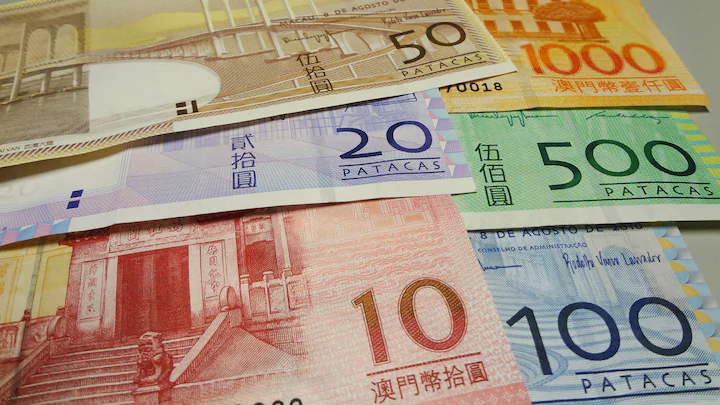
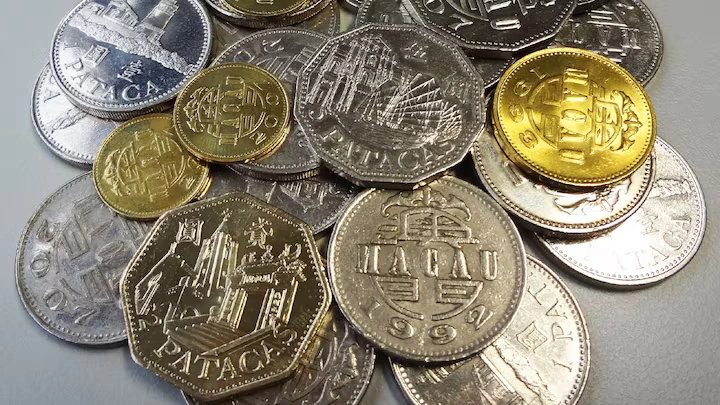
Local currency: The official currency is the MOP – Pataca of Macau . It is pegged to the Hong Kong dollar (HKD), and the HKD is widely accepted locally (change can be given in MOP).
The rate varies slightly but, as a general rule:
- €1 ≈ 8,8 to 9,3 MOP (order of magnitude of recent years)
- 10 MOP ≈ €1,05 to €1,15
Conversion guideline : to give you a simple reference point, 100 MOP ≈ 11–12 € , so the simplest way is to divide by 10.
Quick example – 500 MOP ≈ €50–55
Cuts and coins
- Parts : 10, 20, 50 avos; 1, 2, 5 MOP.
- Tickets : 10, 20, 50, 100, 500, 1000 MOP (issued by several banks: different designs possible).
In everyday life: small payments are often made in cash (MOP/HKD). Cards are widely accepted in hotels, shopping malls, and large restaurants.
Accommodations
- Entry-level room (2★): €55–70
- Standard hotel (3★): €75–120
- Good 4★ (peninsula / Taipa): €120–200
- 5★ / Cotai complexes: €200–300 (and more depending on the period)
Catering
- Small local restaurant/canteen: 40–80 MOP
- Cafe / bakery (pastel de nata + drink): 25–50 MOP
- Classic restaurant: 100–180 MOP per person
- High-end hotels: 250–500 MOP per person
Transport
- City bus: 6 MOP in cash; 3–4 MOP with MacauPass
- LRT (light rail): ~6–10 MOP depending on the distance
- Taxi: pick-up 21 MOPthen +2 MOP / 220 m (excluding supplements)
Visits
- Old town / ruins of Saint Paul / temples: free
- Museums (order of magnitude): 10–40 MOP
For up-to-date data (rents, restaurants, groceries…), consult Numbeo for Macau.
Small budget
Average budget
Comfortable

Do I need travel insurance?
Macau isn't necessarily a destination where travel insurance seems essential. However, a policy covering medical care, cancellation, and repatriation is strongly recommended, as costs can quickly add up.
Especially if you are going to Asia for several months, dedicated insurance can prove very useful in case of trouble, as bank card insurance is limited.
The health reimbursement limits of classic credit cards are often too low (around €10,000 compared to €200,000 for dedicated travel insurance) and do not cover civil liability.
I recommend you Heymondo Travel Insurance (5% discount via my link).
Transparency: if you subscribe via this link, I will receive a small commission — at no extra cost to you.
Health: the essentials
- vaccines No specific obligation for most travelers. yellow fever certificate This is only required if you are arriving from a high-risk country (or transiting for more than 12 hours). Keep your routine vaccinations up to date (hepatitis A/B, tetanus, etc.) as usual in Asia.
- Dengue / chikungunya Seasonal risk (summer/autumn). Protect yourself from bites (repellent, long sleeves, mosquito nets/air conditioning). Local authorities remind people of preventive measures every year.
- Tap water : water is processed and controlledHowever, many travellers prefer bottled water as a precaution.
- Hospitals / Emergency Rooms : referral hospitals Conde S. Januário (public) and Kiang Wu Hospital (private). Think of a travel insurance covering medical care and repatriation.
Sources : CDC (yellow fever requirements) and British authorities (reminder of entry requirements); Macau Health Bureau / mosquito prevention announcements; Macau Water Company/Laboratory (water quality); official hospital information.
Security in Macau
As in Hong Kong, the overall crime rate is low . Remain vigilant in crowded areas (Senado, casinos, shopping malls, public transport, markets) to avoid theft and pickpocketing.
- Casinos : legal age 21 years to enter and play. Tobacco is not allowed on the "mass" playing areas, with smoking lounges dedicated ventilated areas; frequent checks.
- Typhoons & heavy rains From June to September, especially. Follow the signaux SMG n°1/3/8/9/10 (possible closures and disruptions: ferries, attractions, schools…).
- Emergency numbers 999 (Police / Ambulance / Fire Department). 110 and 112 also work.
Practical advice
- Heat & humidity (April–Sept.): Stay hydrated, take breaks in cool places, avoid the hottest hours.
- After a tropical storm : mosquitoes more active → repellent, long sleeves in the evening.
- Documents & cash Keep separate forms of identification and payment methods; avoid carrying large bundles of cash in crowded areas.