


I've divided my articles on Hpa An into two parts, reflecting the two superb days we spent there ( the other one can be read here ). And we'll start here with the west bank, where we began with a viewpoint from Mount Hpan Pu , then headed towards Ya The Byan, the first cave of the day, before continuing on to the impressive Kaw Goon cave and its many Buddha statues.
Hpa-An (pronounced "Pa-Ann") is a city nestled among karst mountains, famous for its caves steeped in history and adorned with Buddhist sculptures. It is also the capital of Karen State —or Kayin State—one of the many ethnic groups present in Myanmar. While the country is predominantly populated by Burmese (or Bama), it also boasts a great diversity of peoples spread across its regions and states: at least 30 officially recognized ethnic groups. And in this region, the Karen are the majority.
Mawlamyine – Hpa An route
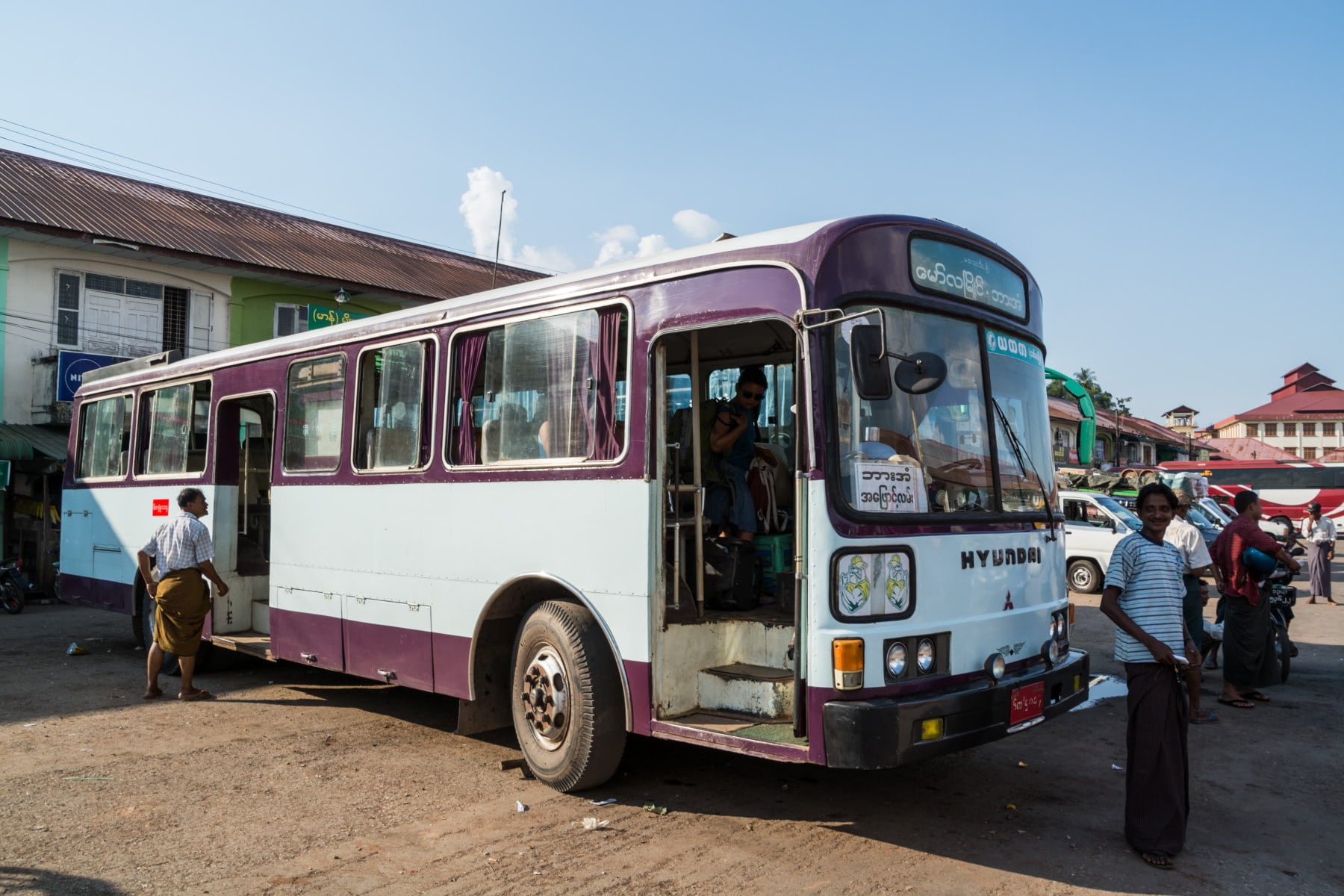
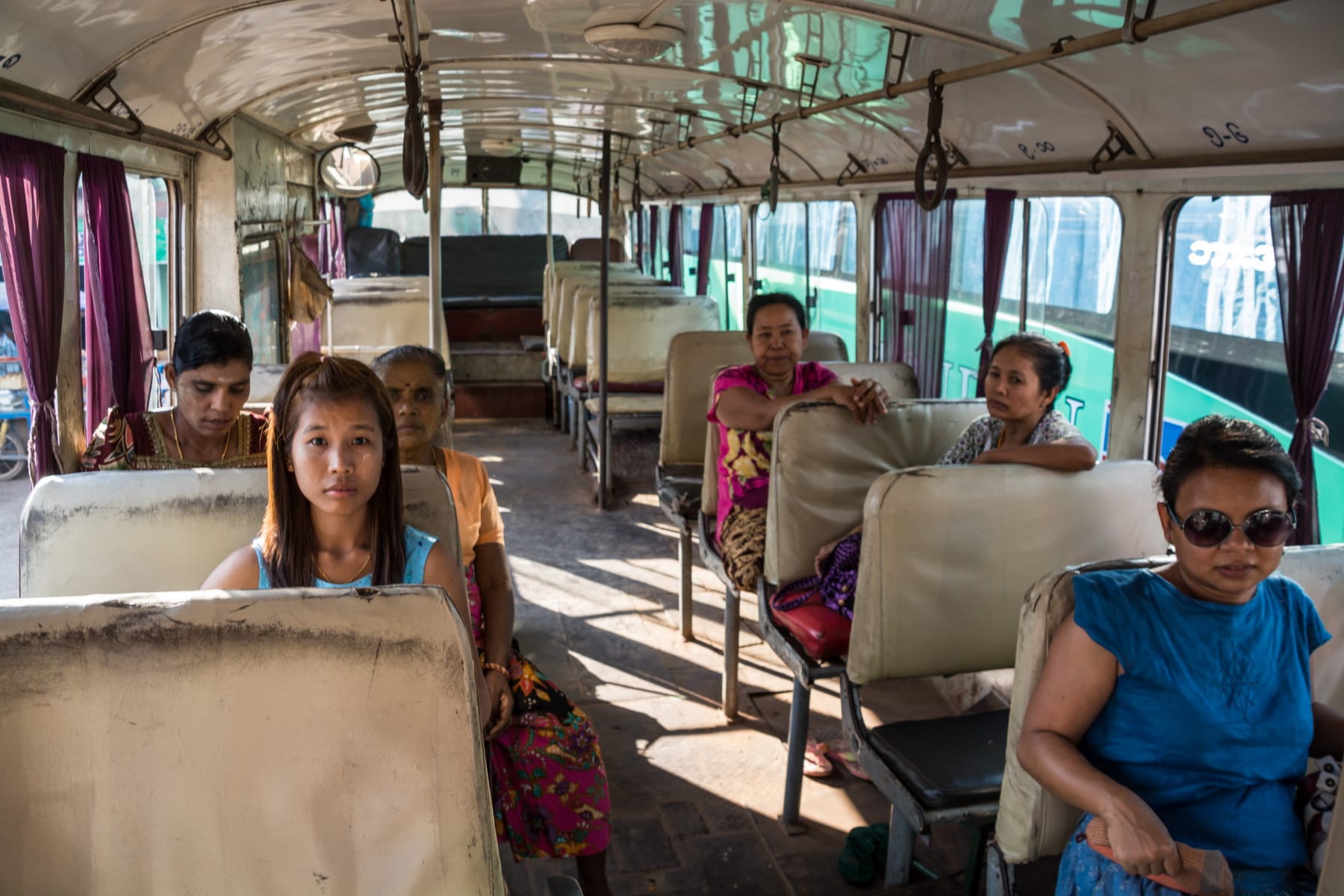
So, once again, we took the bus to the final stop of our 2014 trip to Burma, Hpa-An. For barely 1,000 kyats per person and after just two hours on the road, we arrived in the small Karen town of Hpa-An (population around 40,000, all things considered).
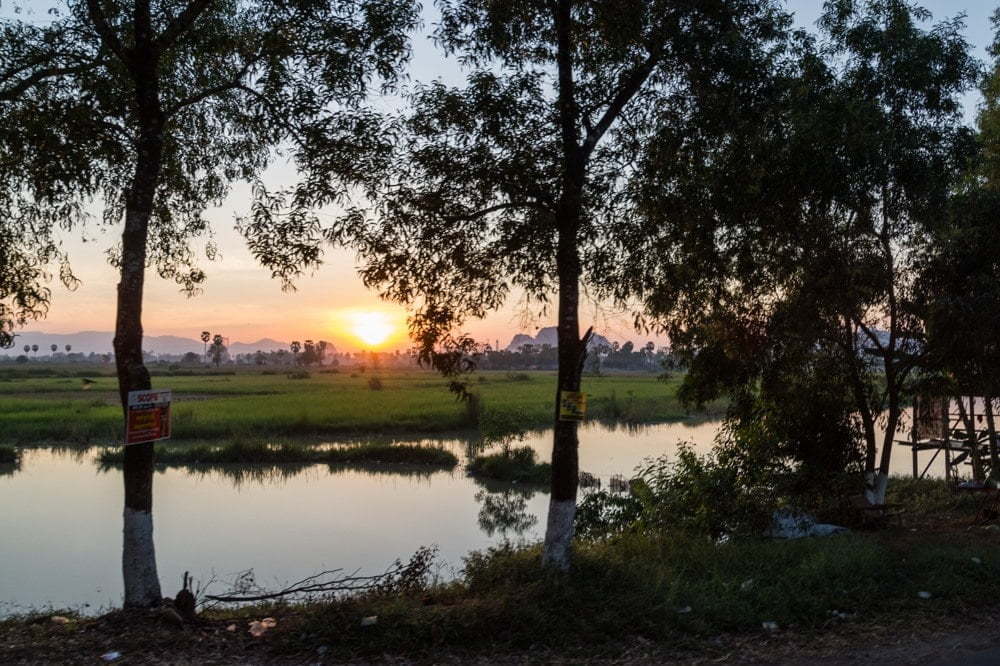
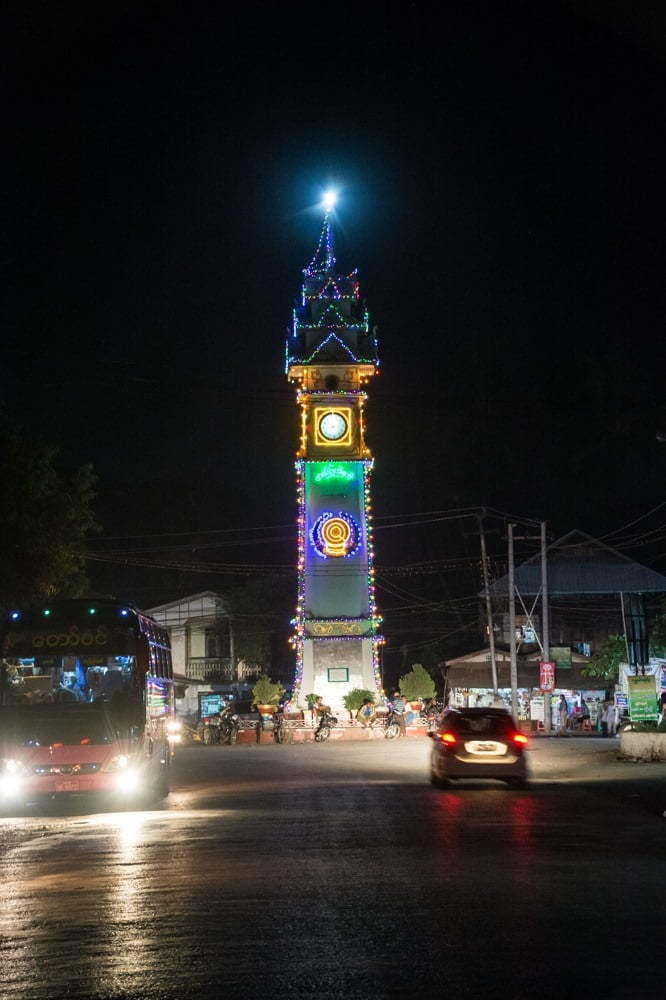
We arrived just as we could see a brightly colored sunset. The bus dropped us off right in the center, not far from a small roundabout, also not far from the city's "landmark", the clock tower.
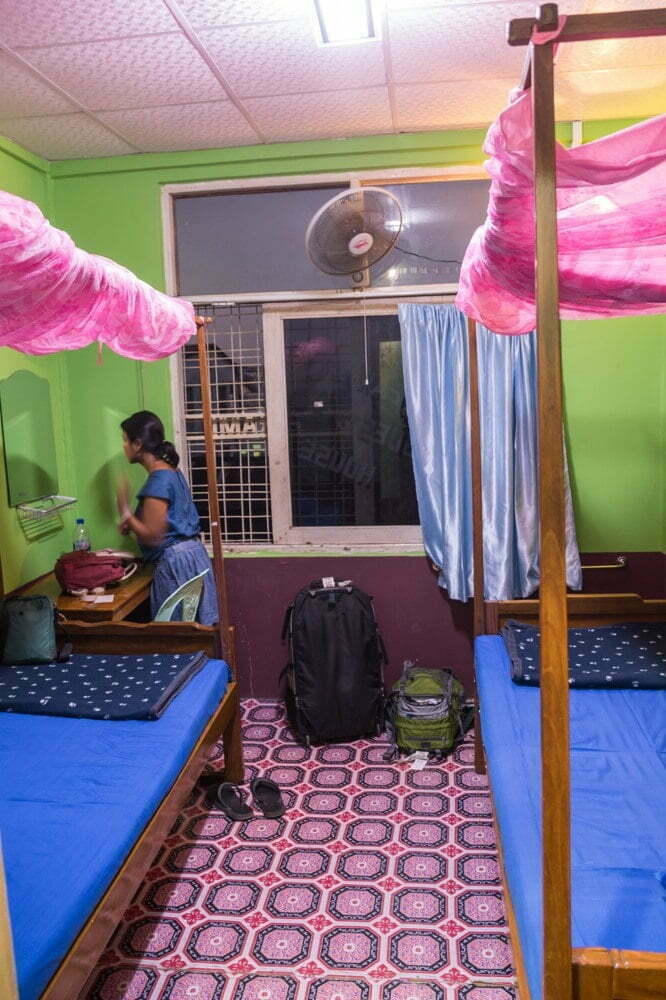
We now needed to find accommodation. Reading the descriptions of the suggestions provided by the LP guide, we headed towards the Parami Motel, about 200m away.
Basically, we wanted a reasonably decent room to finish our trip comfortably. Rooms with private bathrooms, etc., were fully booked for the first night, so we settled for basic rooms with shared bathrooms at $15 a night . We changed rooms the next day, somewhat reluctantly on my part, as it was quite expensive for what we got ($45!), the description in the Lonely Planet guide being a bit exaggerated.
Once settled in, we would first inquire about renting a motorbike to set off the next day to explore the surroundings of Hpa An.
Once we'd booked our motorbike, the evening's mission was to find something to eat… And let's just say that in Hpa An , that's not exactly easy. It's a small town in Myanmar , and here, after 19 pm, most of the restaurants are already closed! At least in the immediate vicinity of the hotel. We specifically looked for one of the restaurants listed in the guidebook, the New Day, but we only found it with some difficulty since it was already closed (even though it says it's open until 19 pm, and we found it around 18:45 pm)…

Initially, we just wanted to get some noodles from a small restaurant right across from our hotel… but it took a long time to explain even just to get a bowl of noodle soup, as the young waitresses didn't speak a word of English and we weren't sure they had even taken our order into account since we had to wait for a while…
We eventually got our little bowl, 500 kyats per bowl … but in the end, we were still really hungry… so we thought we’d do some shopping in the small shopping mall (yes, what luxury for this provincial town!) not far from the roundabout and almost opposite the New Day.
Or how to eat cakes and instant noodles (Mama!) like deadbeats...
On the way to Hpan Pu Mountain
The next morning, we went straight to pick up our motorbike for the day, rented for 6,000 kyats . Then we headed to the New Day for breakfast.


Then, feeling fresh as a daisy, I set off towards Mount Hpan Pu , practically opposite Hpa An; it is also accessible via a boat that crosses the Thanlwin River next to the Shwey Inh Myaw temple (500 kyats, a boat every 30 minutes between 7am and 17pm).
In our case, we have a route of approximately 19 km ahead of us for this first part of the day.
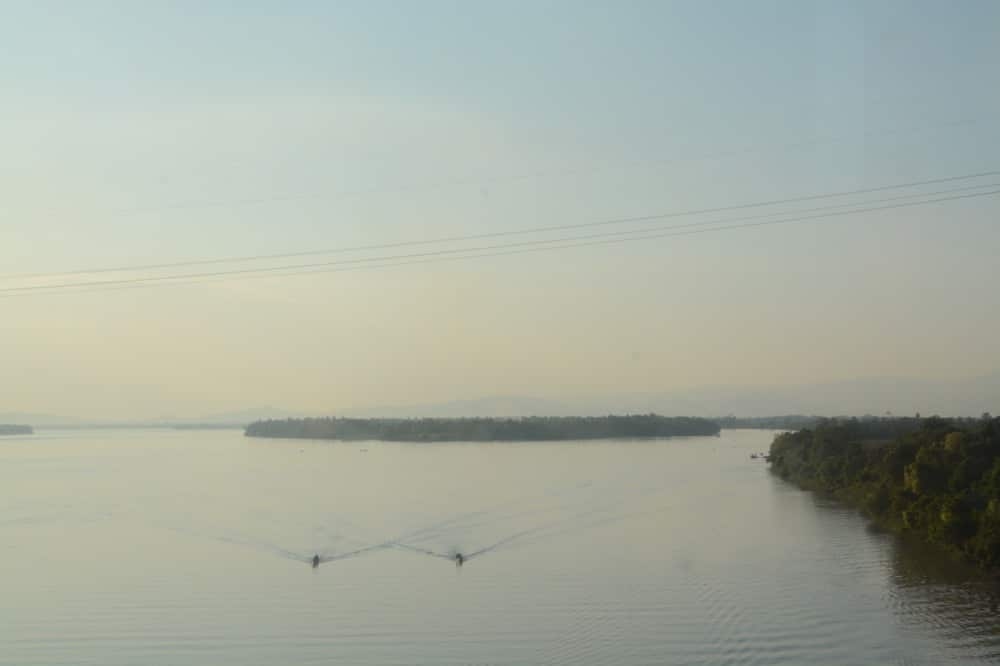
First stop just after the bridge spanning the river halfway, to admire the view, asking permission beforehand from the soldiers present in the area, because I was not sure (I have the example of the Howrah bridge in Calcutta, forbidden to be photographed for "strategic" reasons).
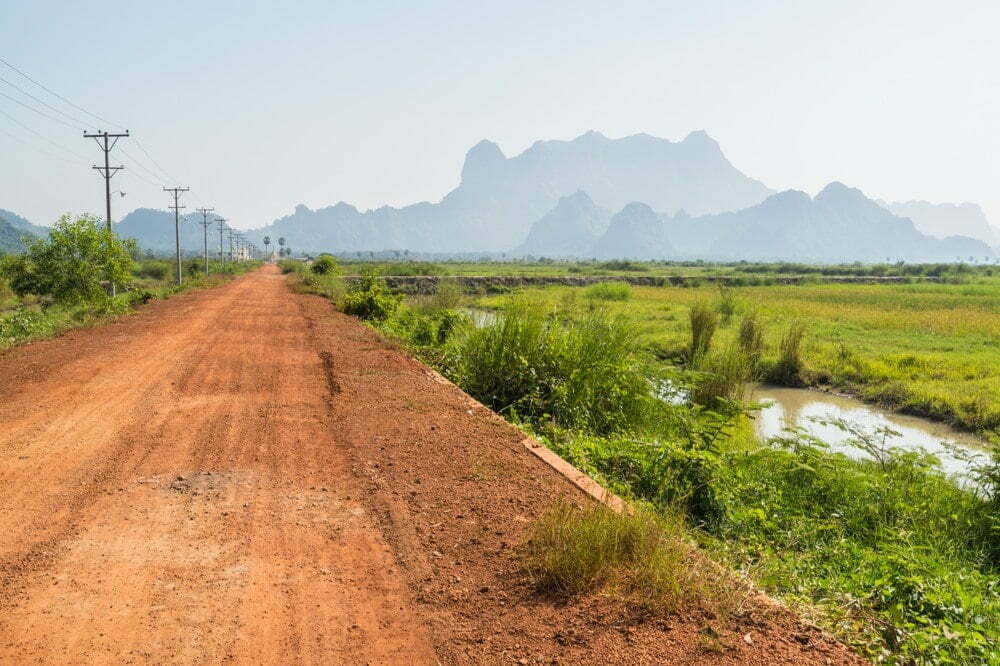
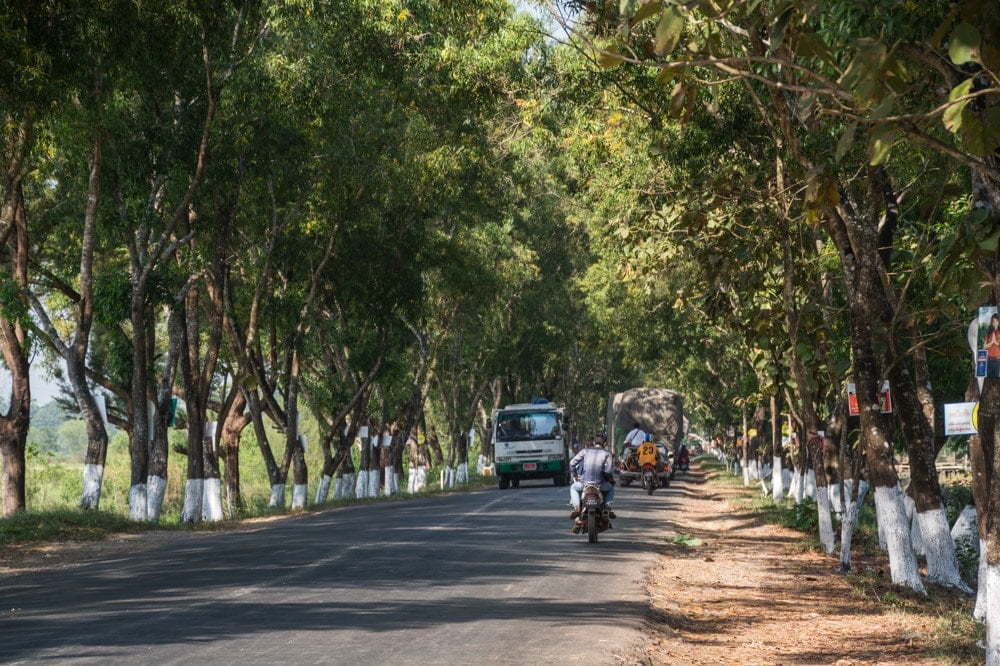
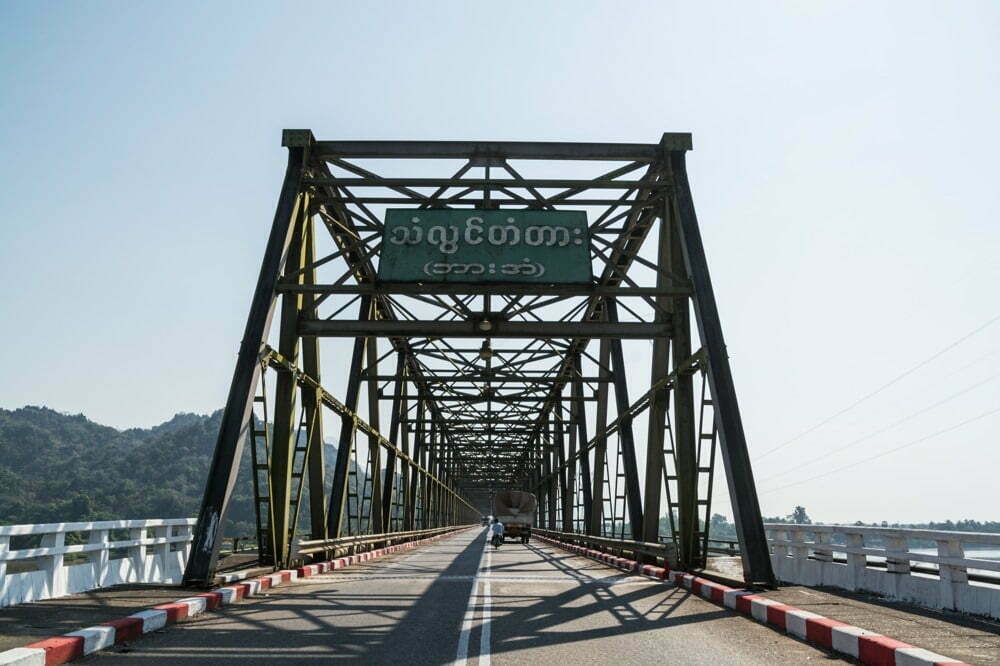
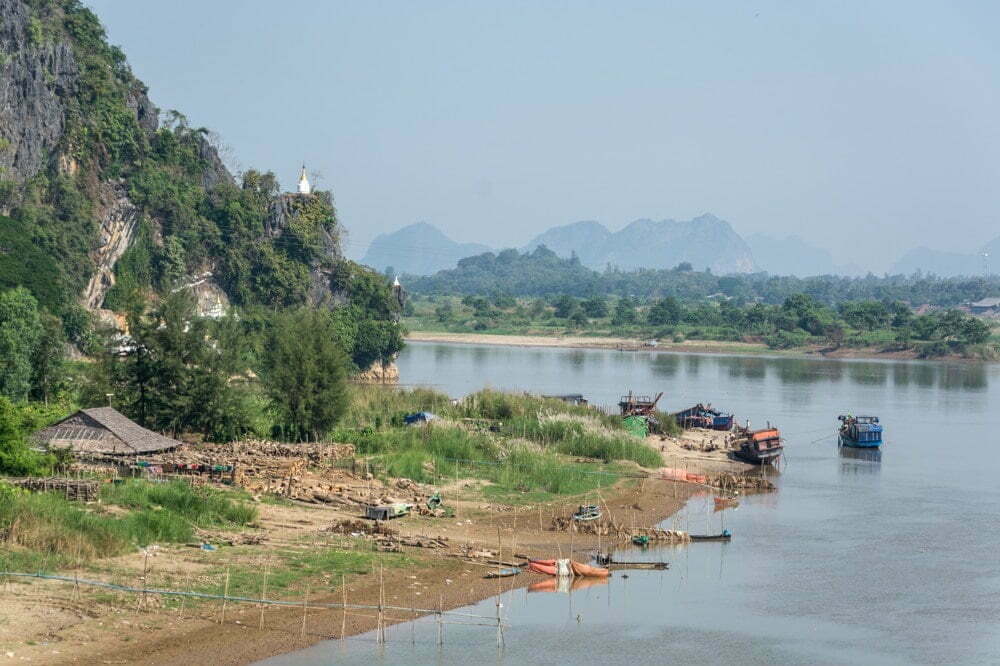
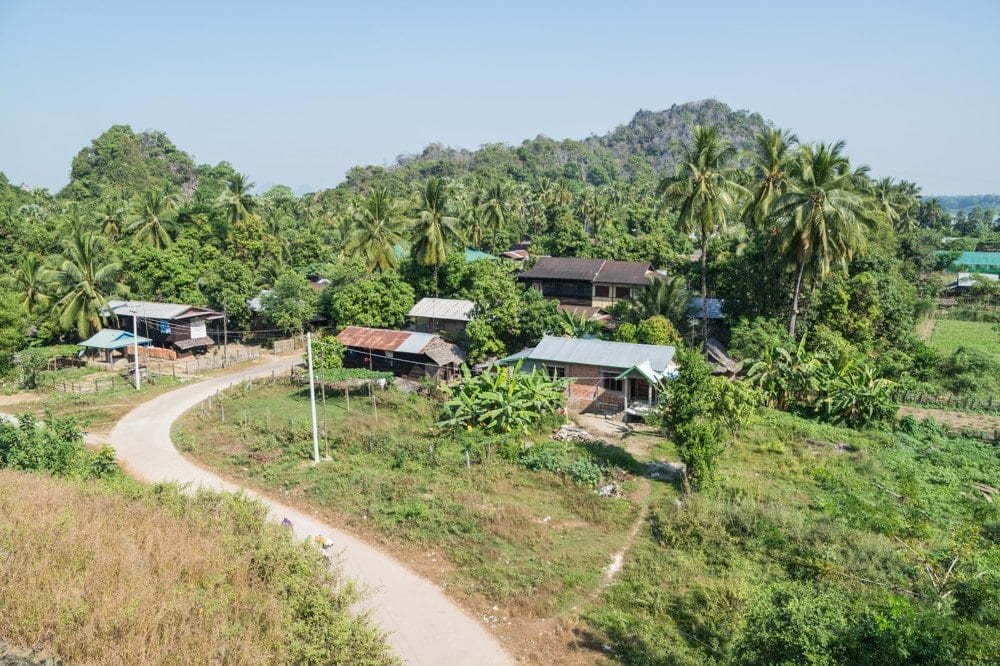
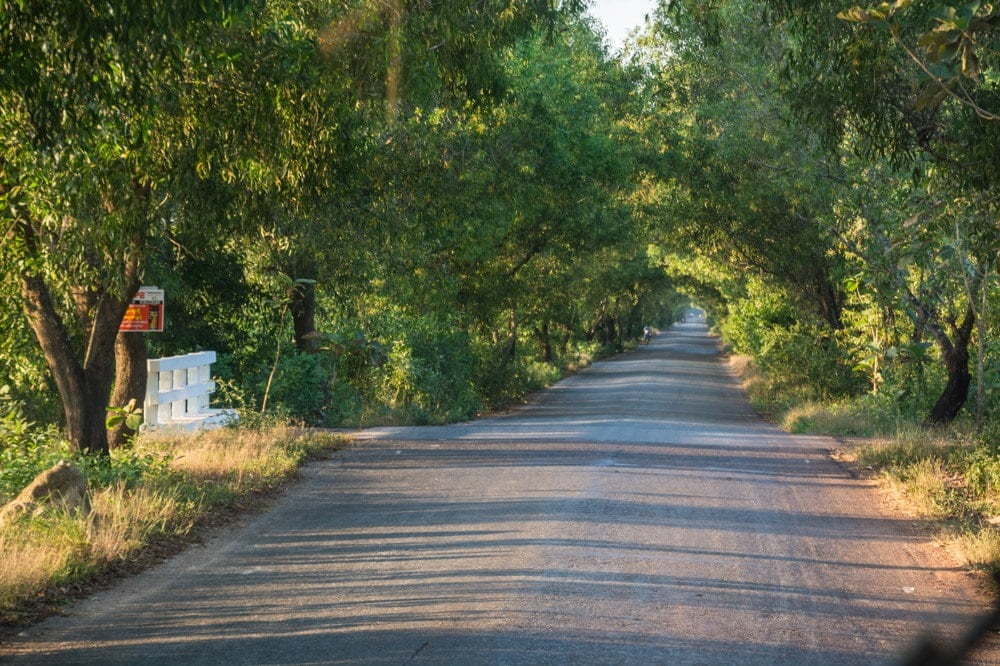
After a few kilometers, we turned off the main road (which joins Thaton) and took a dirt road. In a village where I stopped to get some water (it amused the girl who was selling it), I was curious to take a small path joining some fields and see the view of the Thanlwin River, practically opposite Hpa An, so this is where those arriving by boat disembark.
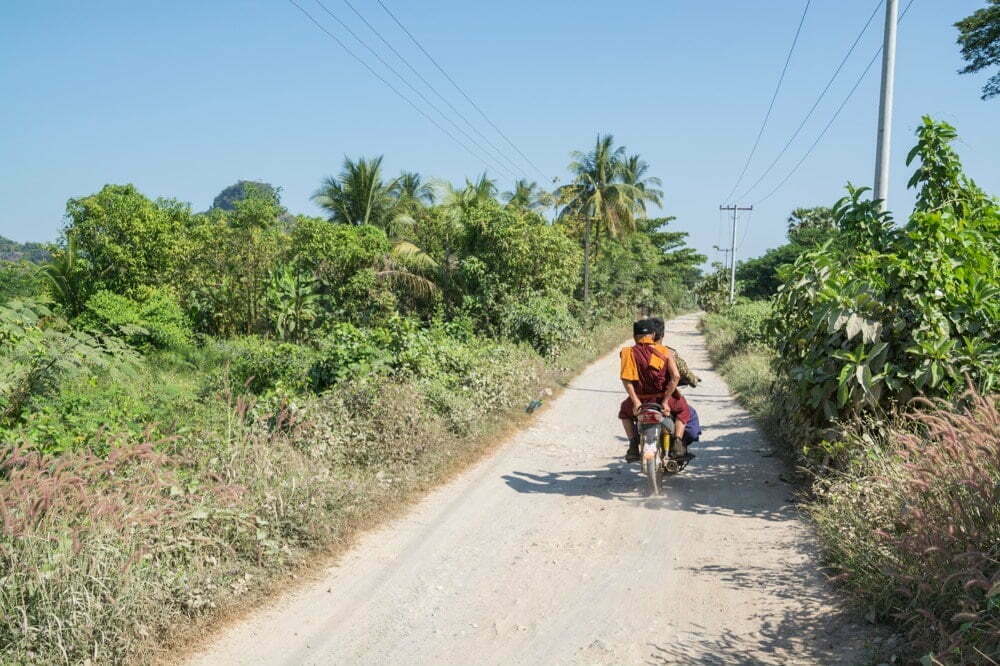
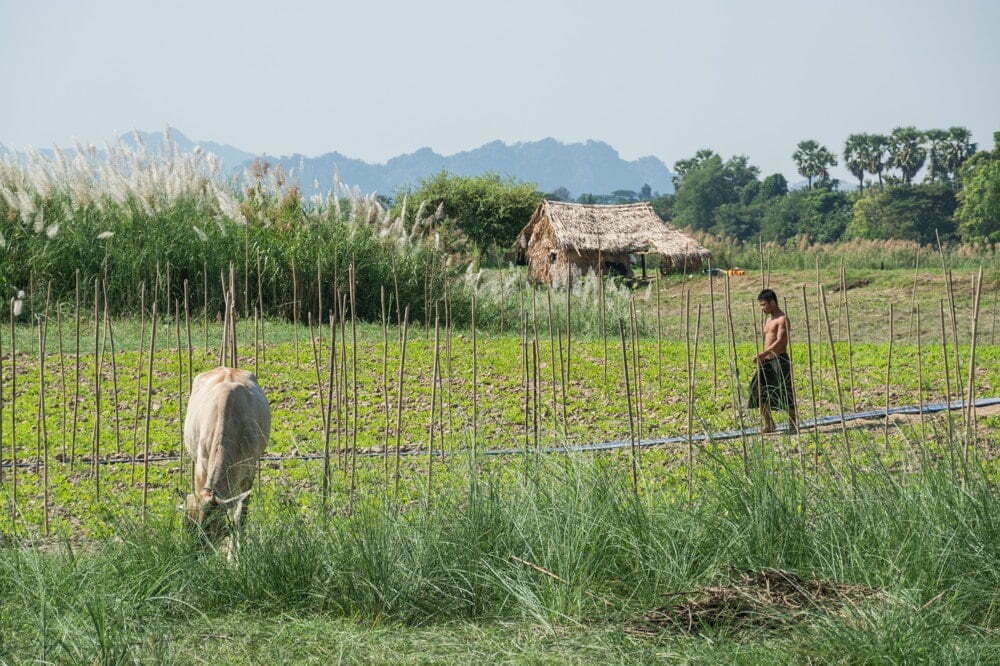

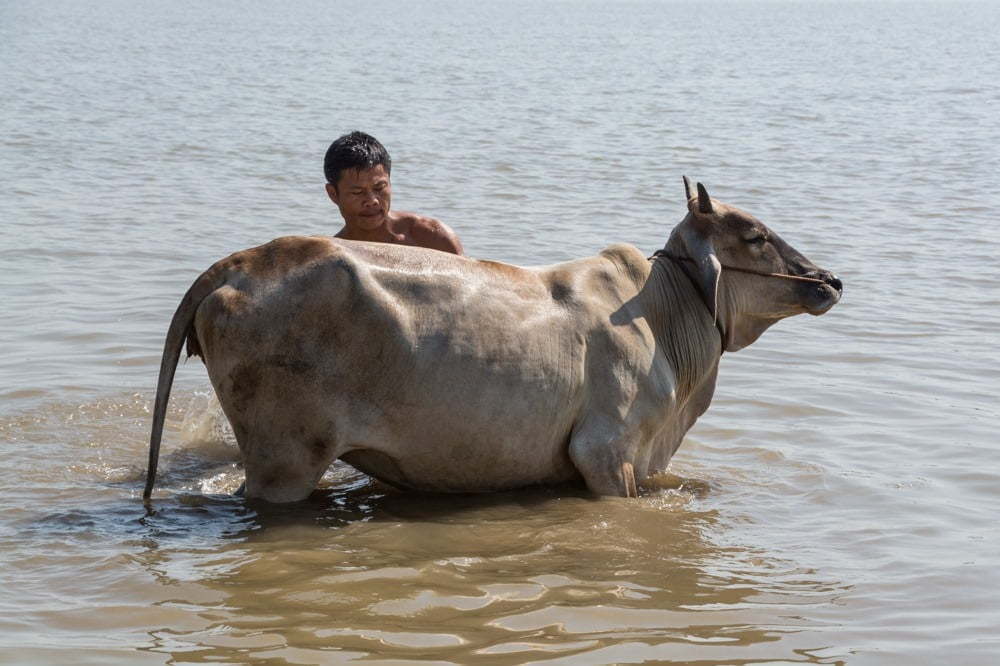
Further on, I park at the foot of Mount Hpan Pu , even here in the depths of Burma, the only tourists we come across, you guessed it, are French… in this case, 2 French women.
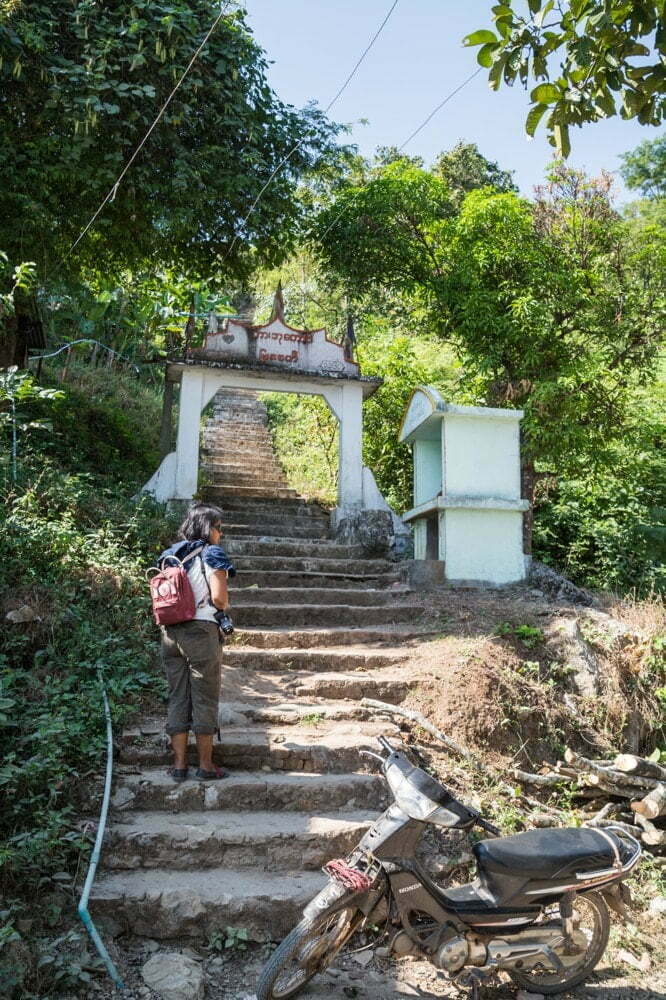
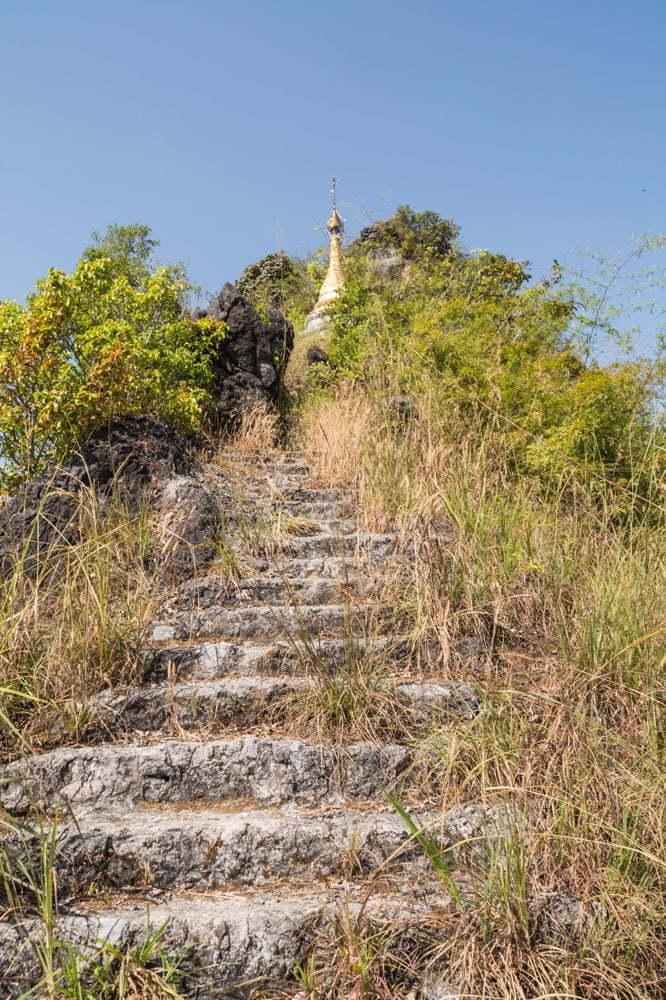
The climb is via small steps. It's not particularly strenuous, but the rather heavy heat doesn't really help. My wife will be content with the climb to a sort of rest area, which already offers a beautiful view.
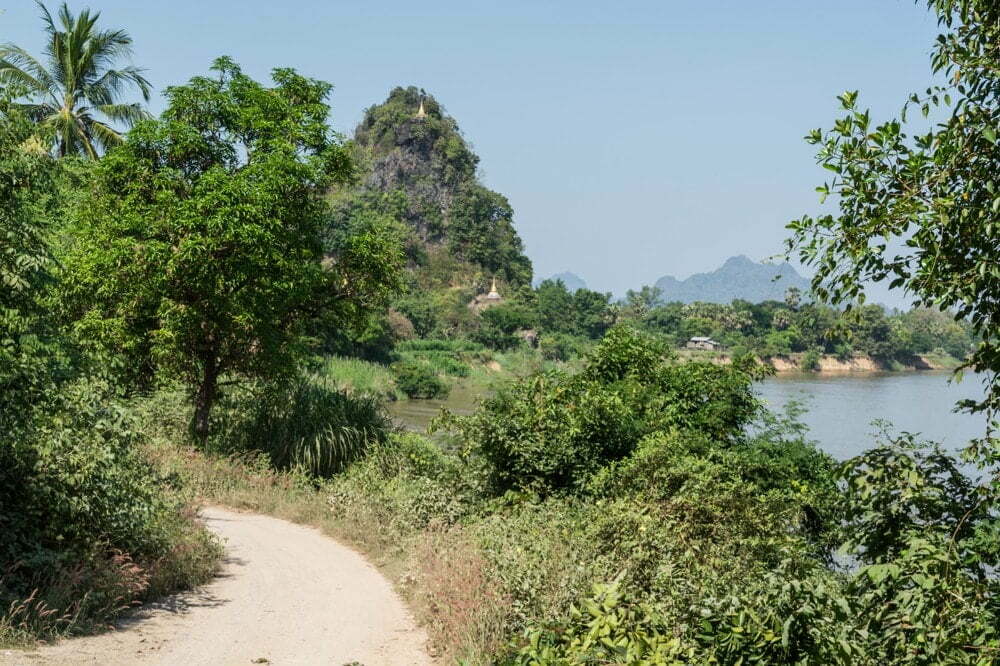
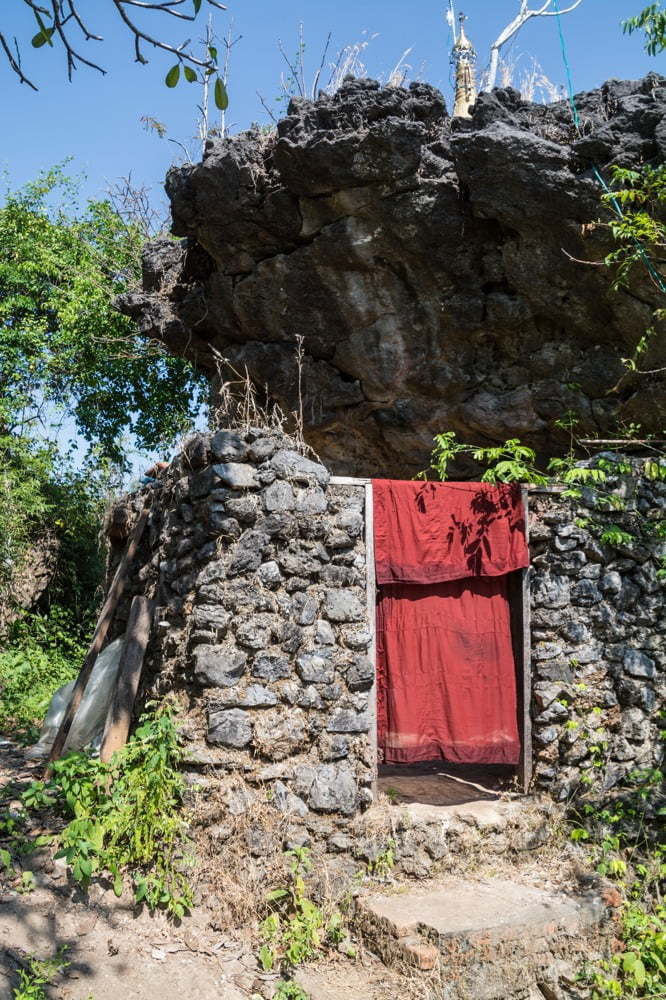

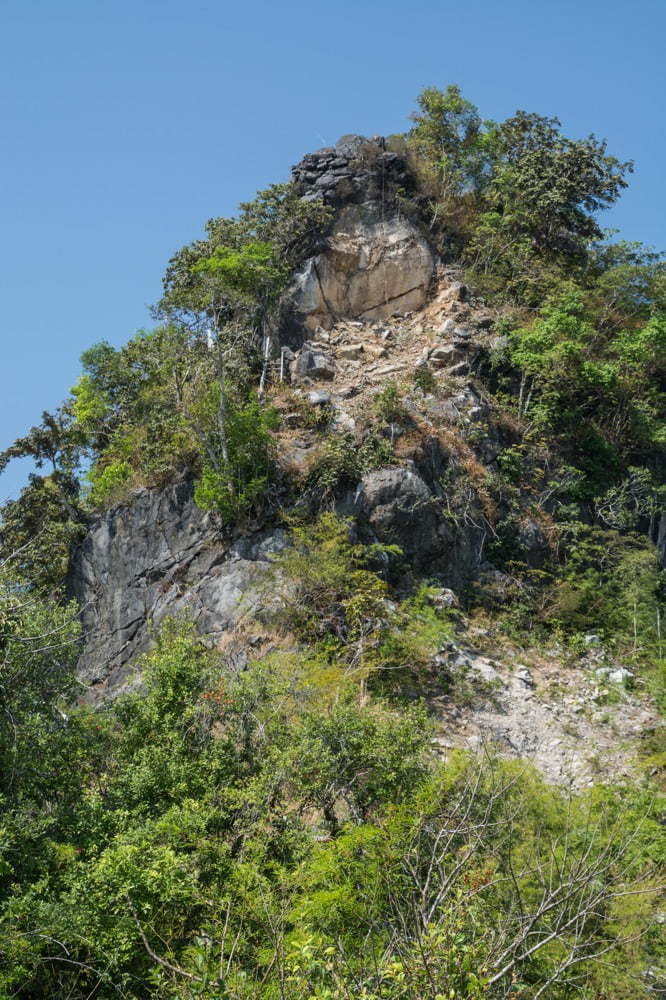
I was determined to go higher. I would go a few more meters before realizing that the last few meters were almost pure climbing.
The path disappears to make way for rocks on the edge of a ravine, higher up we can see an old wooden ladder... well, I won't go any further, I'm not bold enough for that, the view is already quite satisfactory from where I am!
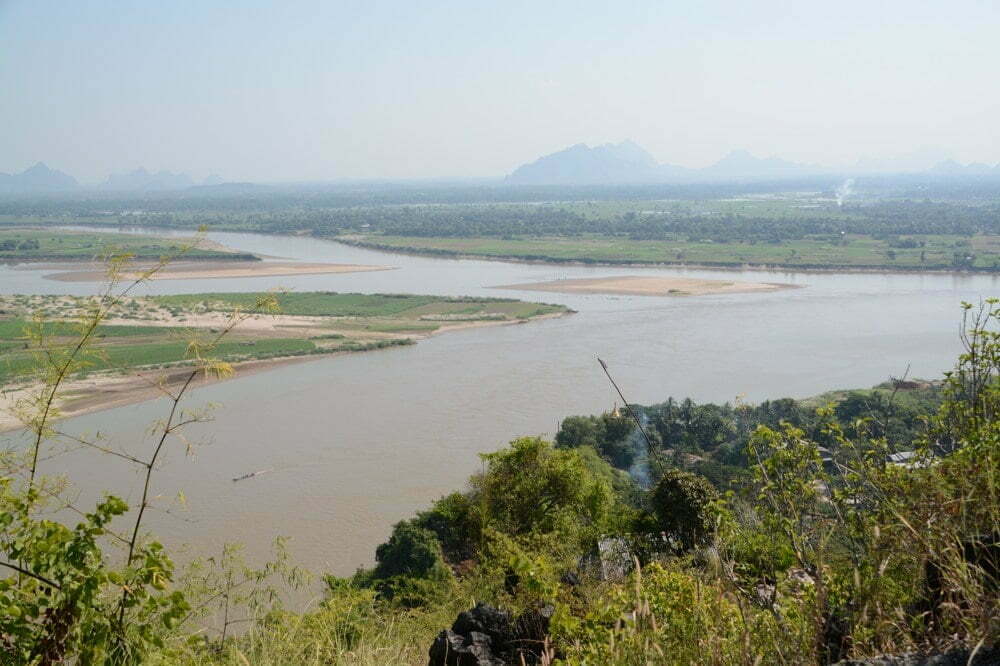
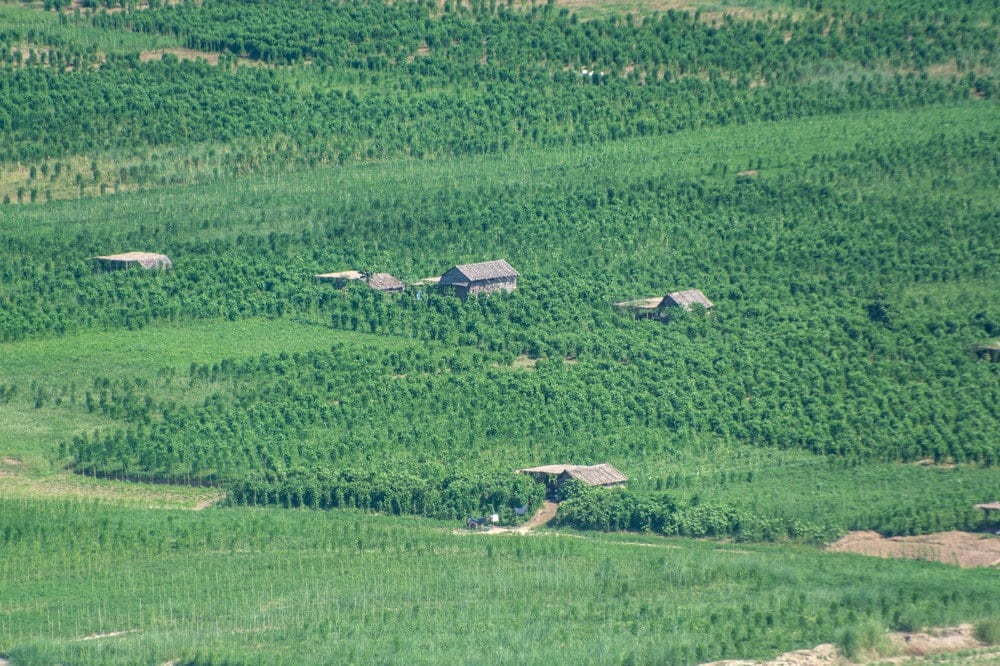
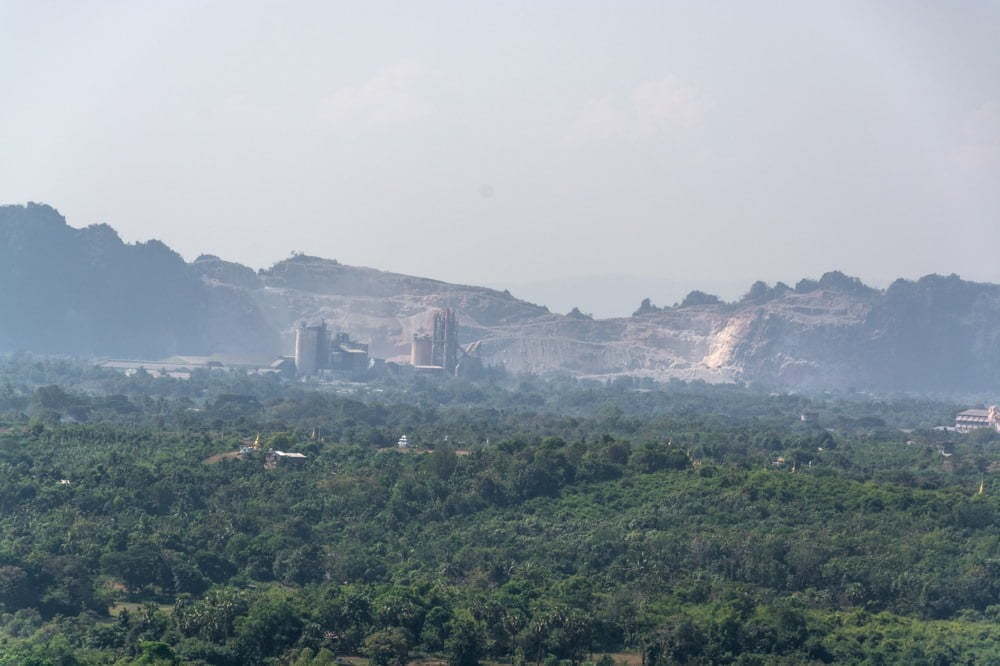
In the distance, however, I can see that an entire mountain is being scraped to recover the rock; modernization leaves its mark...
Yathaypyan Cave
Shortly before returning to the bridge, I turn right again, the main cave of Kawgun being indicated. Arriving there, he starts to get hungry (yes, I like this kind of expression sounding in bad French…). It seemed a bad start to find a restaurant with good toilets for the lady in this corner of the countryside…
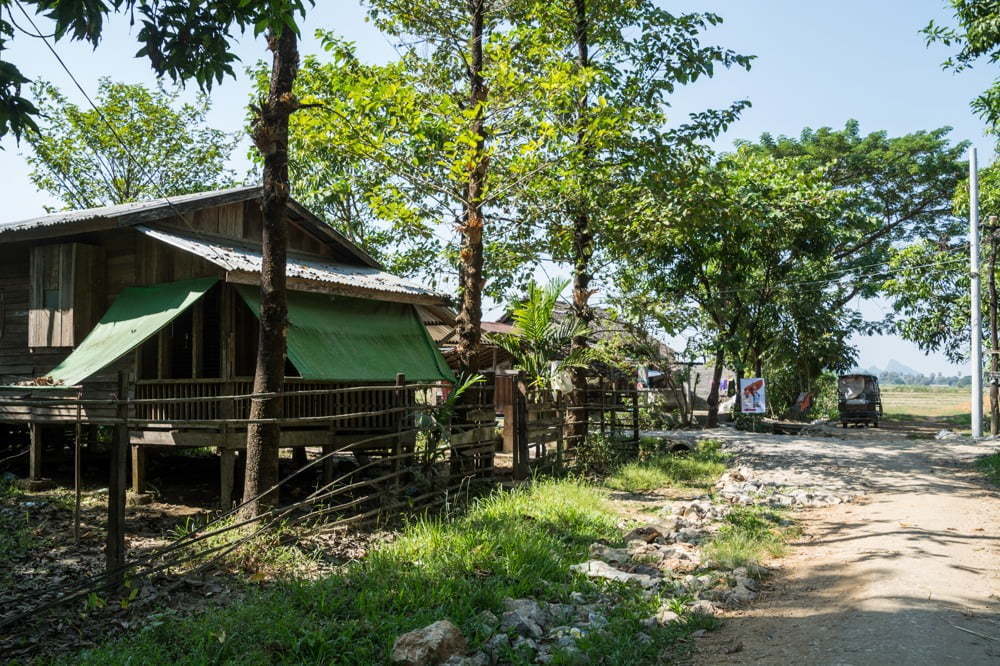
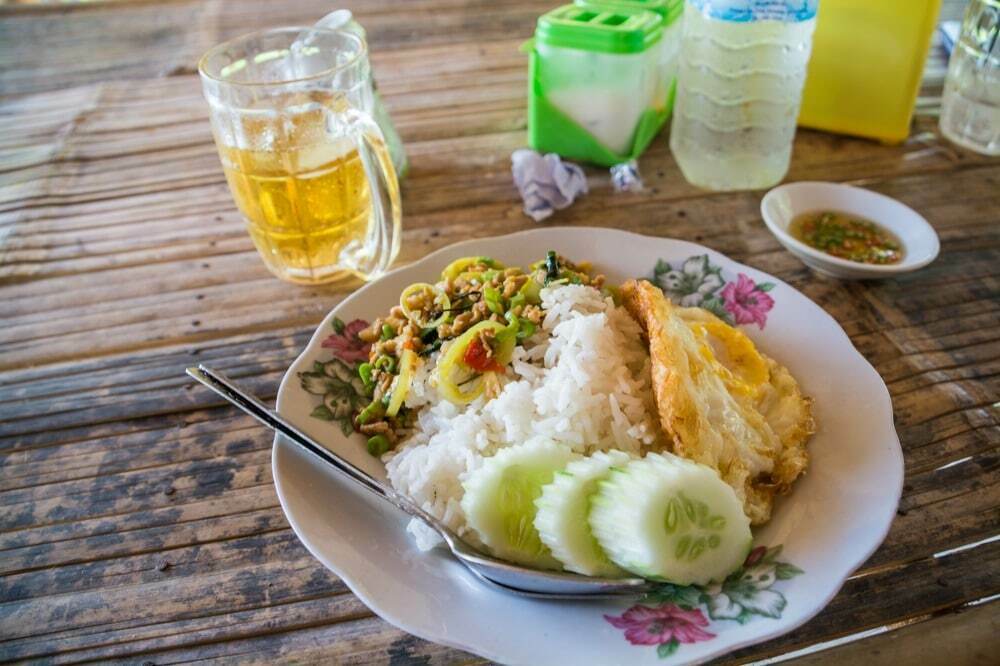
And yet, just a few hundred meters further on, you see a sign indicating a restaurant… A Mexican character… leading you to a Thai restaurant… find the logic.
The restaurant is new and has an unusual history. The owner is actually a Malaysian, married to a Thai woman. He explains that after about ten years working in his country and then in Singapore, he decided to completely change his life and settled here, in the middle of nowhere, in the countryside of Hpa An…
So we stayed for a while chatting (mainly in Thai) with this unusual couple, before deciding to get back on the road.
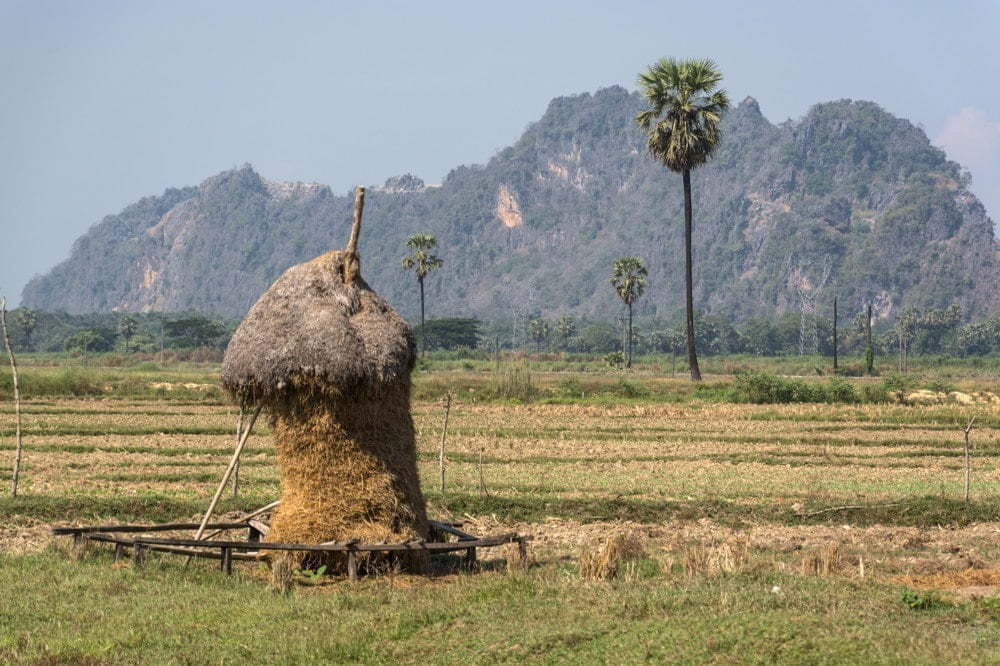
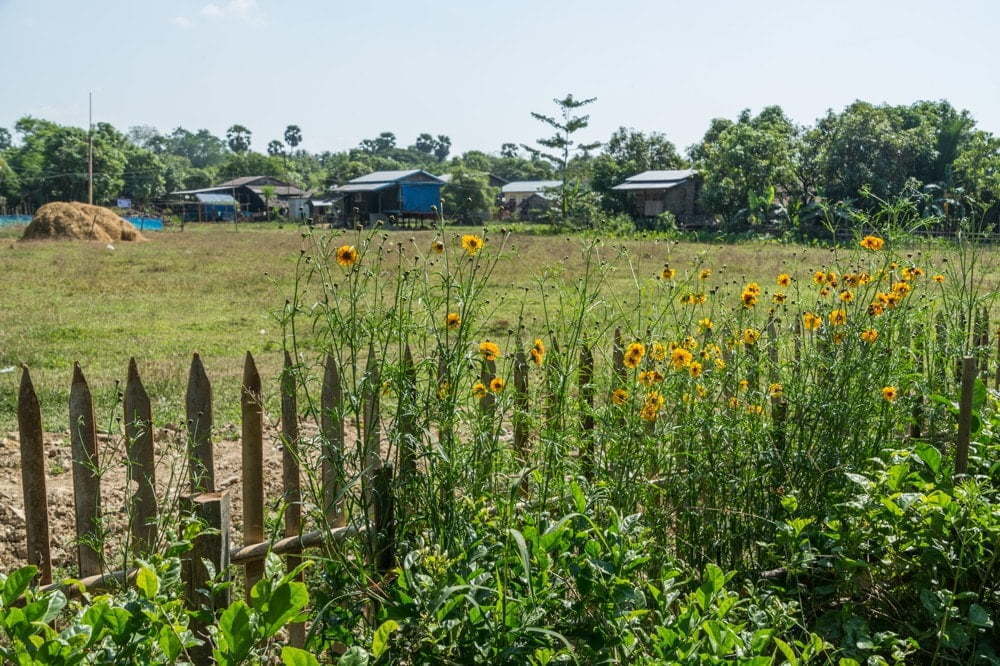
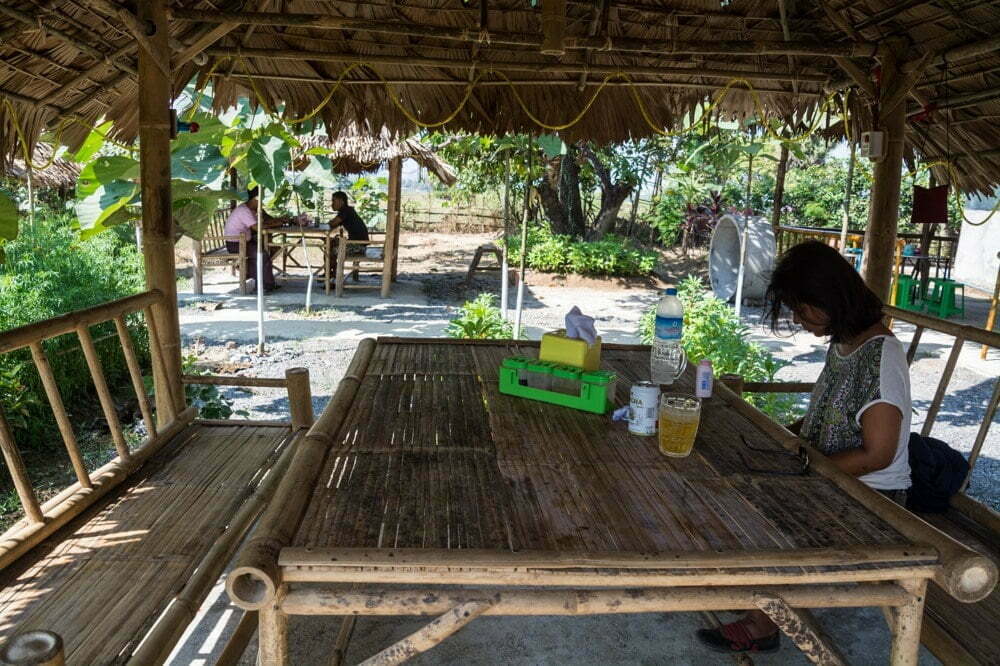
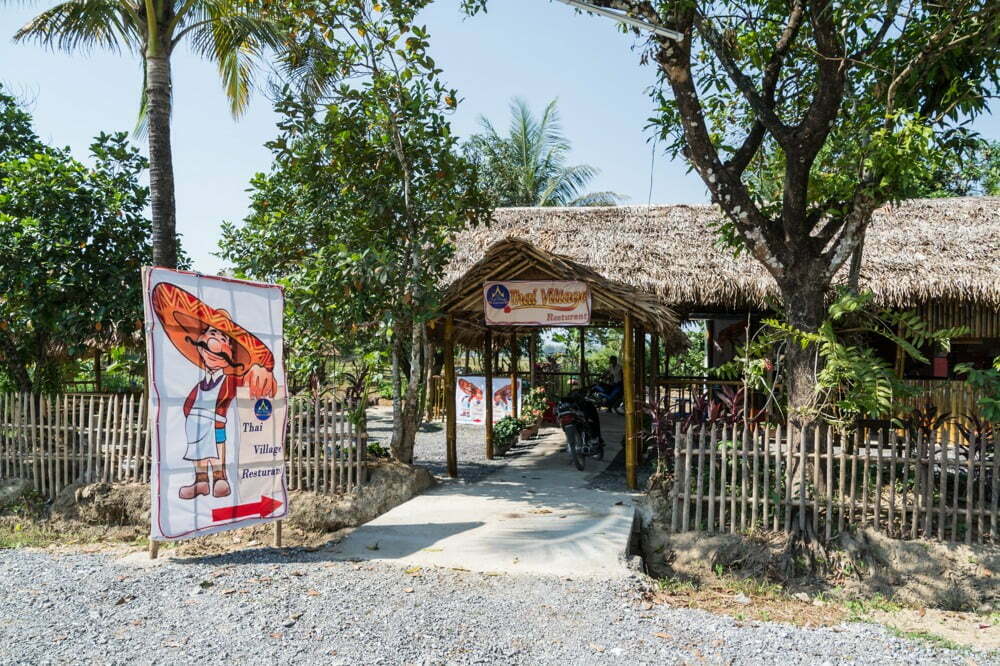
We soon arrived at the first cave of the day, Yathaypyan ( Yathaypyan according to Lonely Planet). You will then be "greeted" by some rather aggressive monkeys, so be careful if you leave anything lying around in your motorcycle basket (if you have one).
A monkey even tried to steal the little bottle of emergency gasoline offered by the owner (in case we got stranded in the middle of nowhere and it was a very good idea... seeing as we were going to use it that very evening!), luckily the granny who was there with her little shop took it from us and kept it warm.
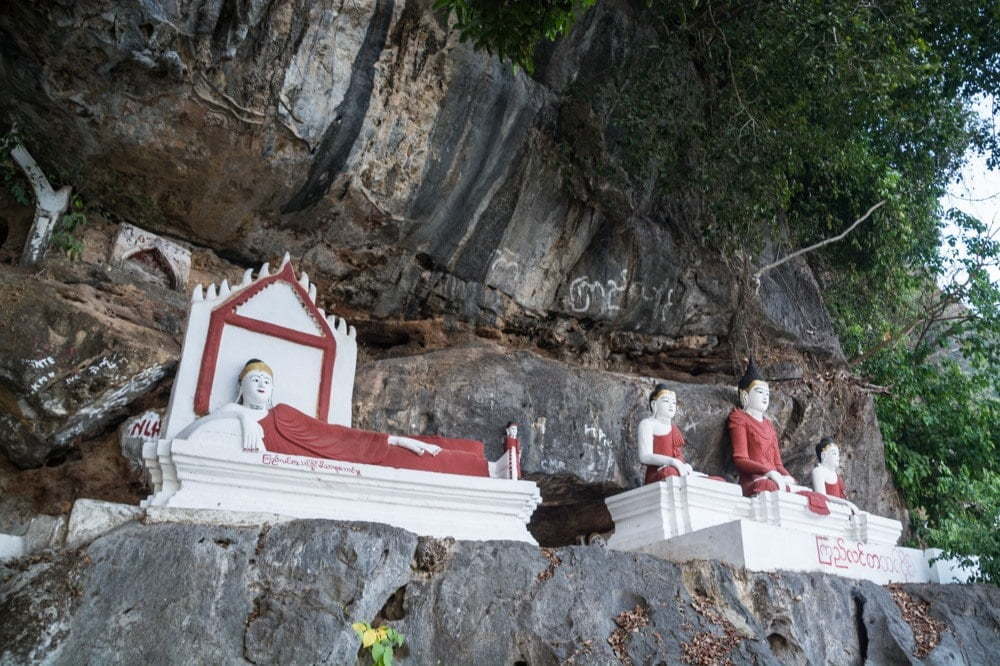
In addition to offering a pleasant view, this cave is a glimpse of what awaits you in the next one, as the latter has also been decorated with clay Buddha statues dotting the walls.


A brief historical aside : These caves have been used for centuries. According to some accounts, they were visited by the Queen of Mottama as early as the 7th century, and she is said to have had Buddha images placed there. The most common version, however, is that it was the work of King Manuha, the 59th and last king of the Thaton kingdom, who was defeated by King Anawrahta of the growing kingdom of Bagan. Seeking refuge here, he covered the walls with a multitude of clay Buddha statues.
The Yathaypyan cave can be traversed to an open area with a viewpoint . Some of the statues here date back to the 13th century and are very well preserved, as they are sheltered from sunlight. Many were donated by pilgrims in the 17th century.


Next stop: Kawgun Cave
After a quick stop at a small local temple to make a donation, I parked at Kawgun Cave – also spelled Kaw-Gon. And there, let me tell you, we were in a whole new league when it came to statues and Buddhas. There's an entrance fee for this cave , 6,000 kyats for two people , but it's worth it (plus, they've abolished the 500 kyat camera tax – it's 2014, after all! Well, it was, but that tax still applies in some places in Myanmar).
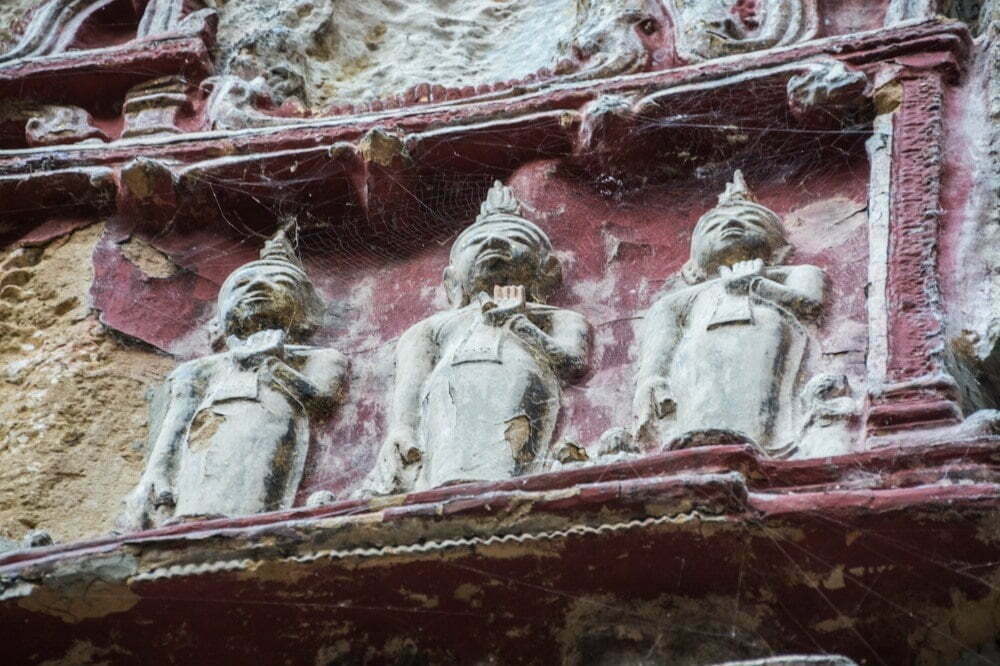
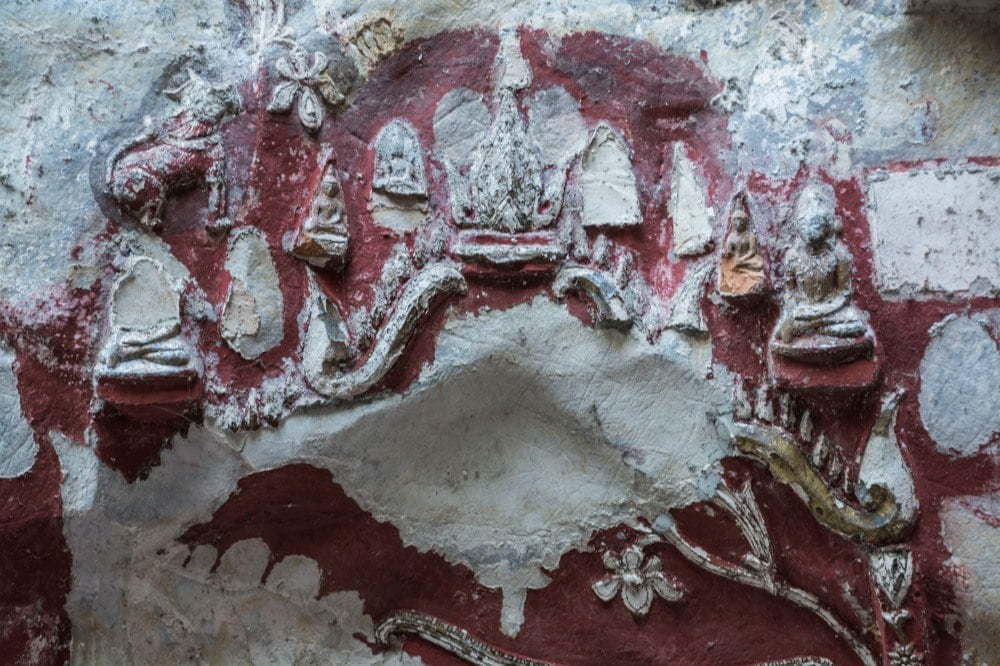
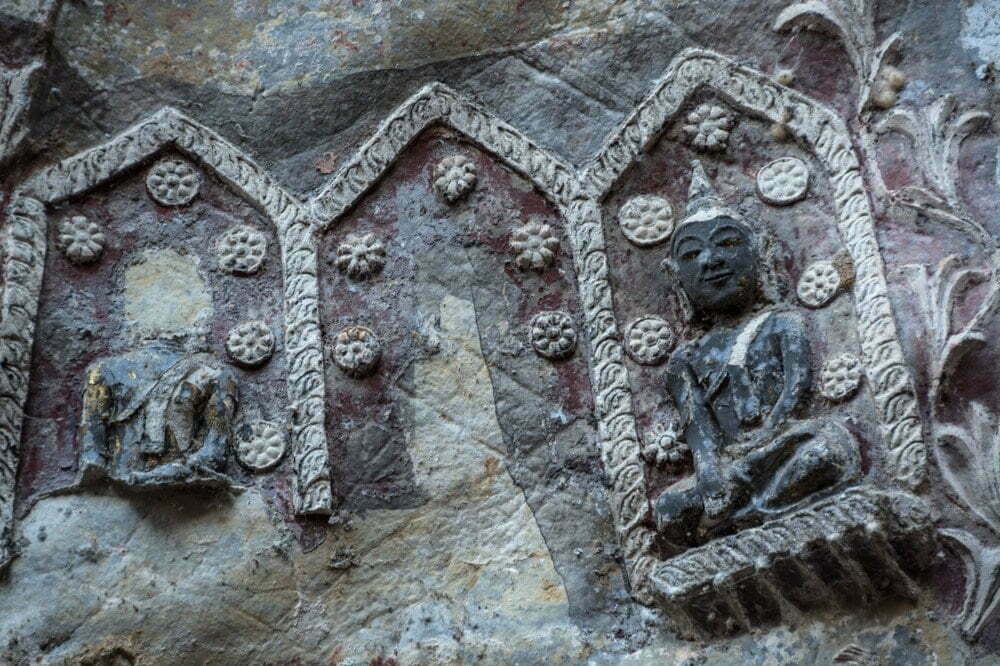
We find ourselves in front of a multitude of these small images of Buddhas, stuck on all the steep walls of the cliff, in addition to the other "conventional" Buddha statues, even if for many, also date from the 13th century as in the other cave.
I can't really explain it, but this place really fascinated me ; I was amazed by the skill of the guys who managed to stick these statuettes in really unlikely places.


On the side, you can see that they are creating access to the top of the hill, which obviously offers a great view of the surrounding countryside (as seen on this website !).
In both caves, sections of statuettes are still missing, both for natural reasons, but also because of the dynamiting of the surrounding hills (the blown-up hills I mentioned above...)
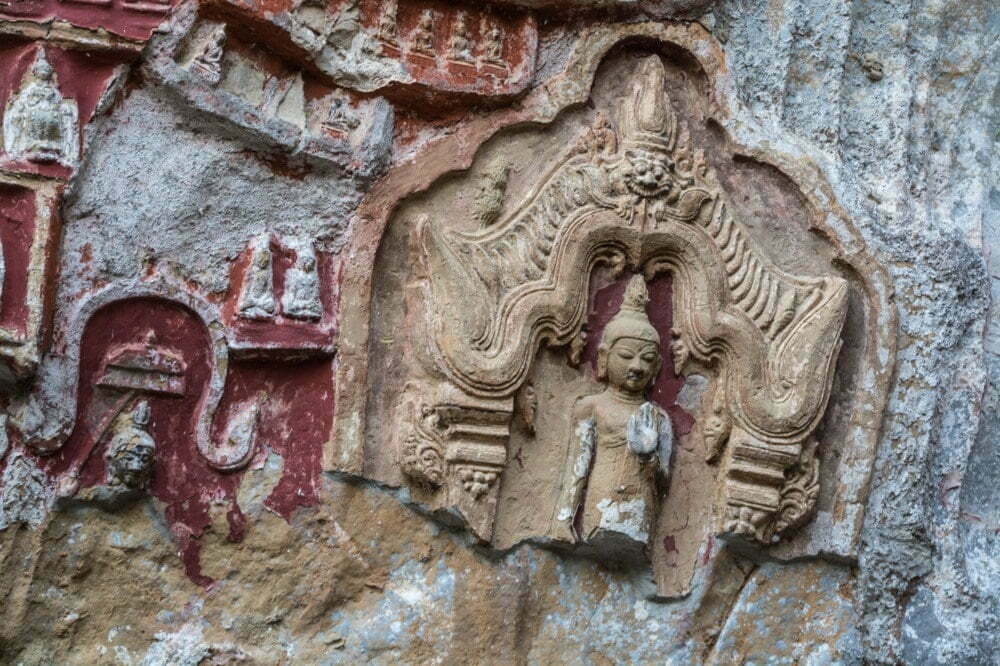
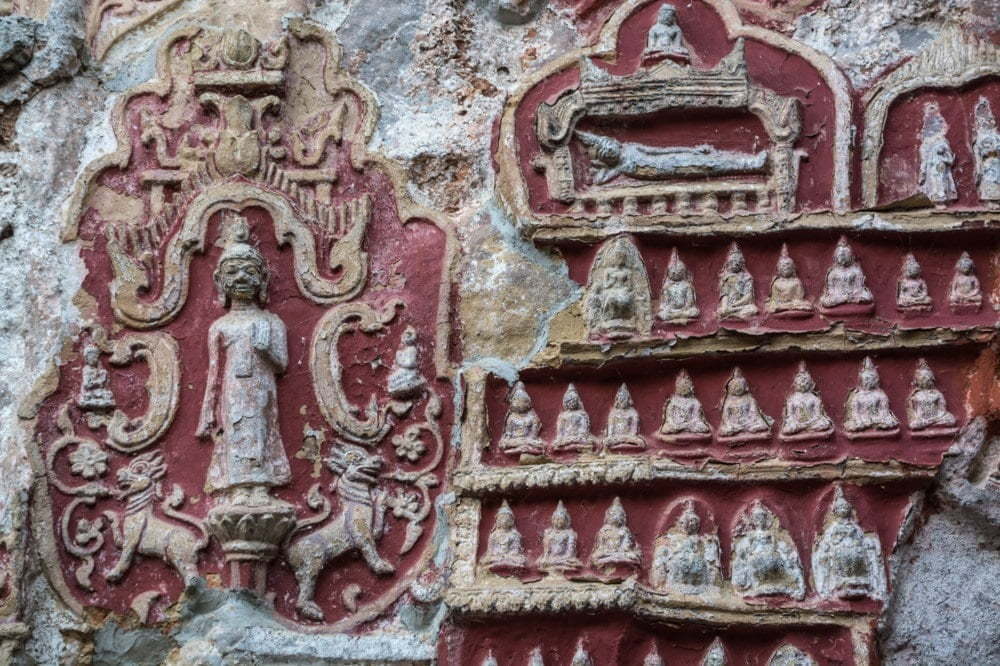
Last stop at the bat cave
It's past 16:30 p.m., so it's time to head off to our last point of interest. In fact, our motorbike rental company, in addition to giving us a map of the region, had advised us on routes and visits.


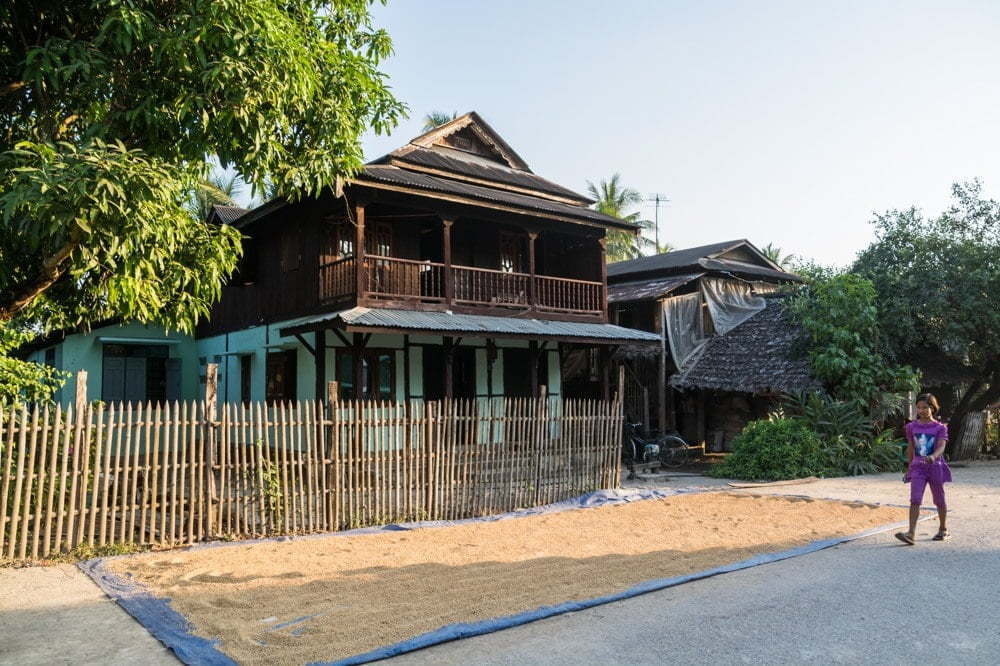
And to end this day, he invited us to go to a small temple next to the river, not far from a village (itself very close to the bridge). Village in which we will spend a few minutes, having still a little time in front of us.
On our way to the temple, however, we will find a closed gate... Ah... and what do we do? And there, a young man from the village makes us understand that we can still go there, better, he opens the gate for us himself...
So we continue on our motorbikes and cross this temple that looks deserted… and I parked further into the forest, near the river. At this place there are some statues of Buddhas, a pagoda and above all, a cave inhabited by bats.
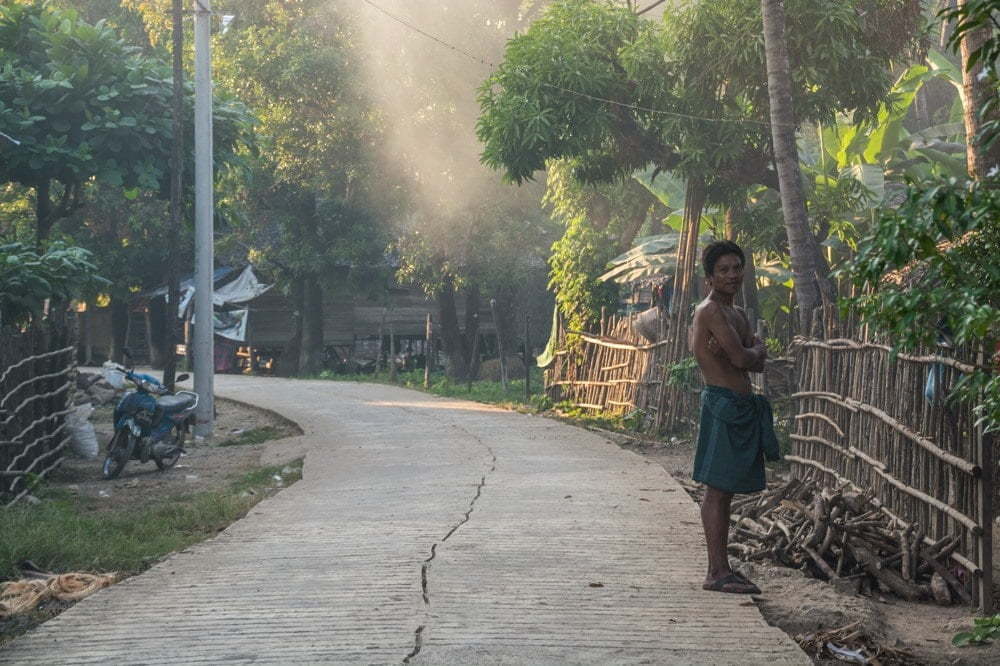
At nightfall, shortly before 18pm (around 17:45pm to be exact!), millions of bats start coming out to hunt and feed. There are so many that the cave takes about 3 hours to empty!
An old couple and some children are there, the old people are banging on empty cans all the time, apparently to stop the bats from hitting them...
In addition to this spectacle, if you arrive a little early, you can take the metal staircase and climb the wall to a small pagoda with a sublime view of Hpa An and its surroundings, including Mount Hpan Pu in the background and the bridge on the other side, with the sun setting at the corner of the mountain.
It's a well-known spot in the area, because you'll come across the largest concentration of tourists of the day there... Almost ten, some of them having come with a guide, and of course, there was also a French couple.


On the way back, initially leaving to go straight back to the hotel, we said to ourselves, given the time, that we could, given the proximity, go back to have dinner at the Thai restaurant at lunchtime, seeing how we had struggled the day before to eat in the evening in Hpa An. They were happy to see us again and it gave us a good meal not too expensive.
For this first day around Hpa An, we covered a little over 50 km. On our way back to the hotel, it turns out that we ran out of gas shortly after crossing the bridge, because the needle on our bike was no longer working properly (the owner surely anticipated this by offering us that famous extra bottle!!).
Back at our hotel, we changed rooms, moving to the larger one. Large, yes, but still a bit disappointing. But no matter, the next day promised to be just as exciting! Hpa An is already a favorite!

So, with that, does southern Burma tempt you?
