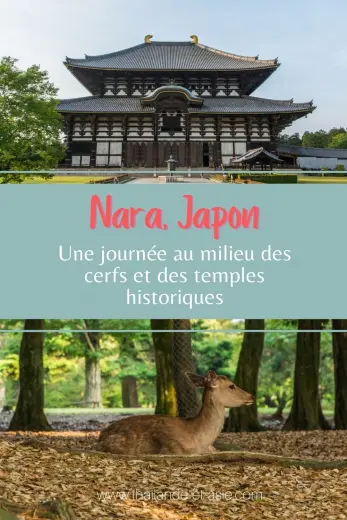
Located in the heart of the Kansai region, Nara is a small historical city, a UNESCO World Heritage Site, and considered the first permanent capital of Japan (from 710). With its numerous parks, shrines, and especially its ancient temples (among the oldest in Japan), Nara can easily be visited in a day from Kyoto, another former capital, located only 40 km away.
More than a full day, it was actually a collection of moments spread over 3 days, but the cumulative hours roughly correspond to a full day on site and the article below focuses on the main visits, notably involving the encounter with the famous deer roaming free in part of the city.

Kofuku-ji
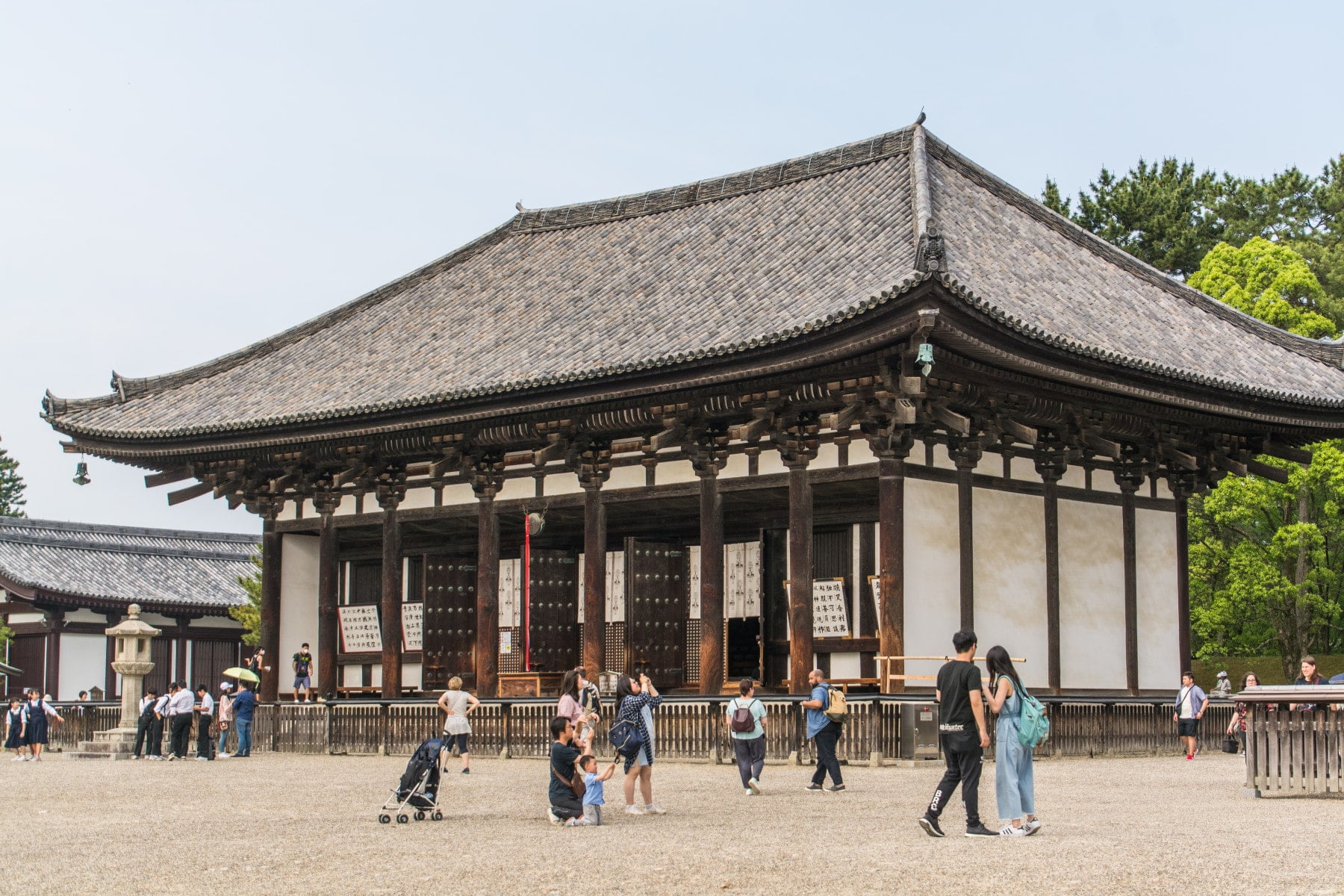
Because our morning excursion to the Wazuka tea plantations was longer than planned , we didn't begin our visits to Nara's ancient temples until early afternoon. We started with the Kōfuku-ji complex, a first-rate Buddhist temple.
Since we had just finished cycling and the weather was nice, we quickly stopped by our hotel for a shower, losing a few more precious minutes of sightseeing. Walking mainly along Sanjo-dori Street from our hotel ( the Nara Komachi Guesthouse ), we arrived at the foot of the stairs leading to all the buildings that make up the Kōfuku-ji complex.
To summarize the history of this temple, Kofukuji was the family temple of the Fujiwara, the most powerful clan during much of the Nara and Heian periods. The temple was founded as early as 669, initially in the Yamashina district of Kyoto and was then called Yamashina-dera. After a stint in the temporary city of Fujiwara, the temple was moved to Nara along with the capital in 710, thus being one of the first religious establishments in the new capital.
At the height of the Fujiwara's power, the temple consisted of over 150 buildings. However, its turbulent history, punctuated by numerous fires, ravaged the original buildings several times, notably in 1180 (at the same time as Tōdai-ji). As a result, most of the current structures are reconstructions spanning the XNUMXth to XNUMXth centuries (and more particularly from the Kamakura and Muromachi periods).
Nanendo
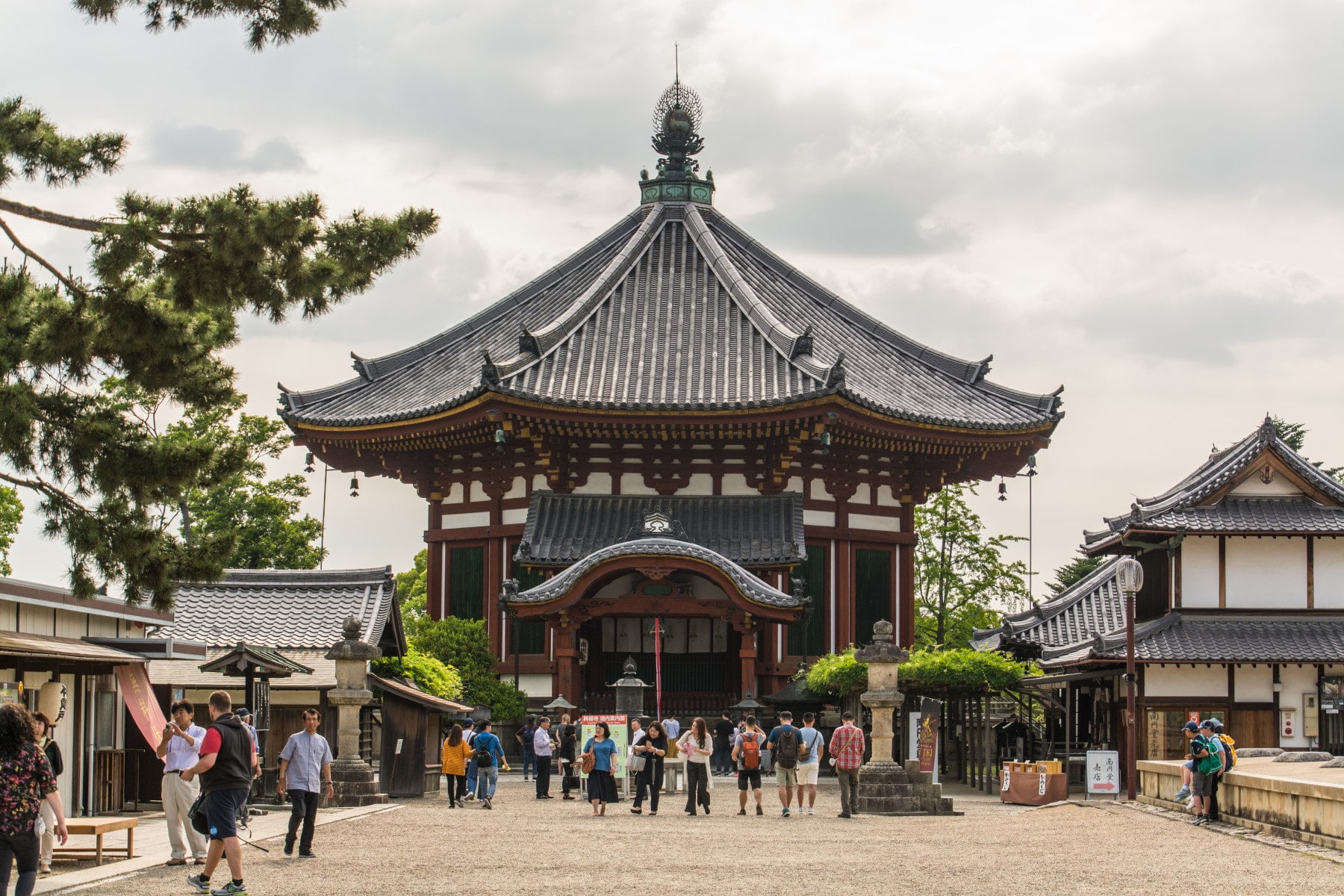
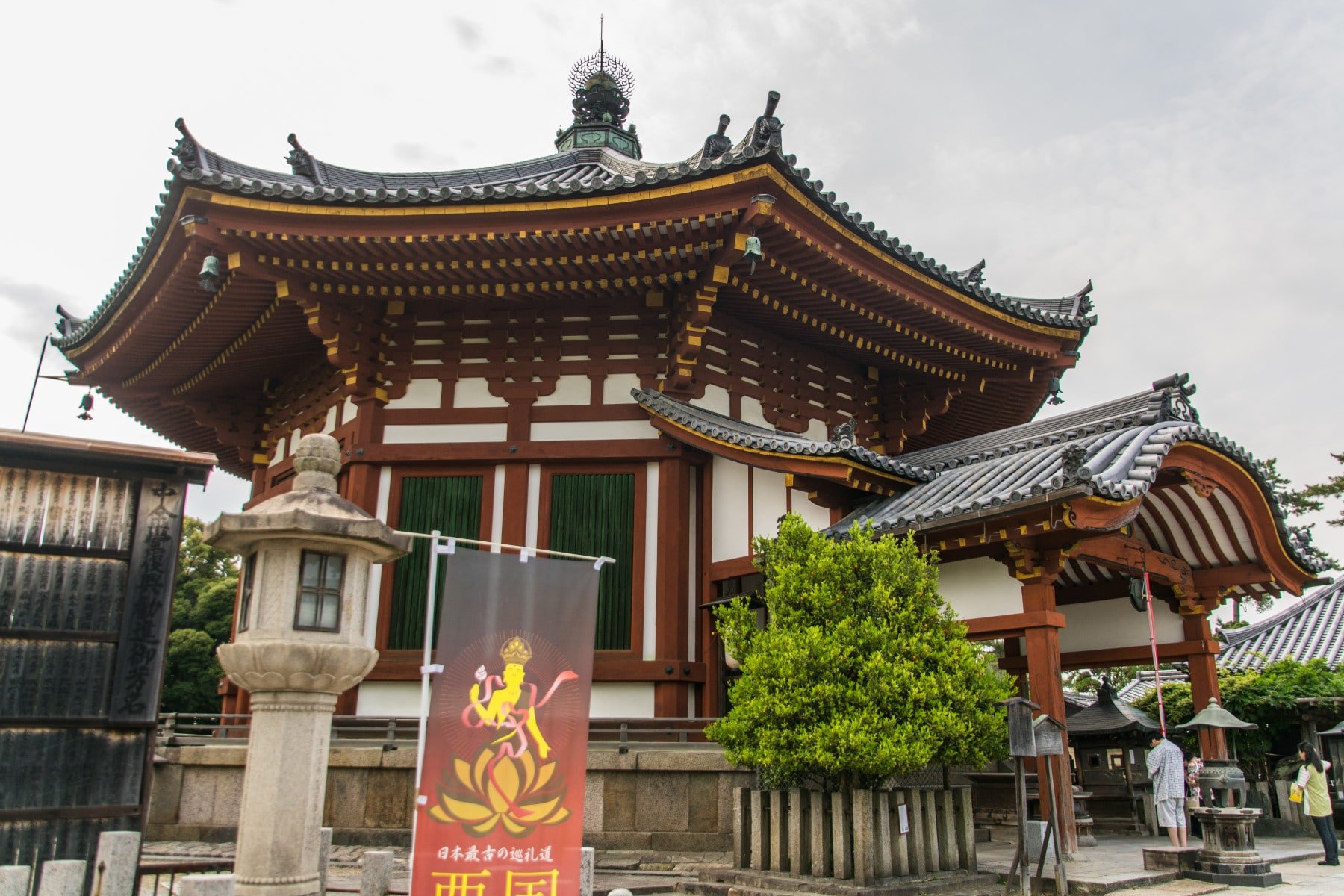
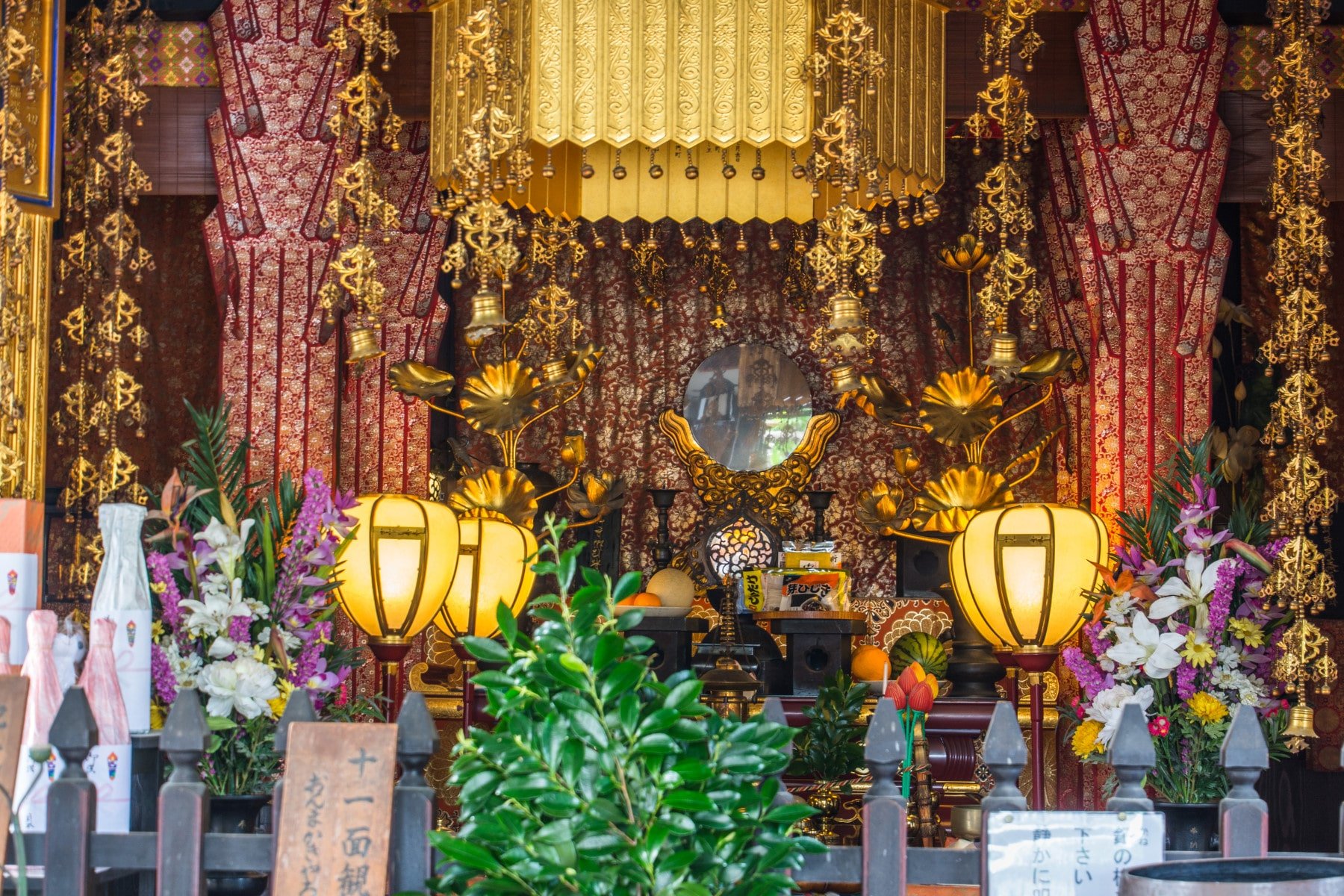
We first head towards the octagonal structure that we see on our left. Called nan'en-dō or nanendo in its "simplified" version, this pagoda contains a statue considered a national treasure. This is the "South" hall, as opposed to another octagonal structure (the hōkuendō) not far from there and considered the "North" hall. These two halls are also closed to the public (except on October 17 for the nanendo, I'm not sure about the other one).
Although the original building dates from 830, it did not escape the fires mentioned above and the current version is a reconstruction from 1789 (the hōkuendō dates from 1240).
Central Golden Hall (chu-kondo)
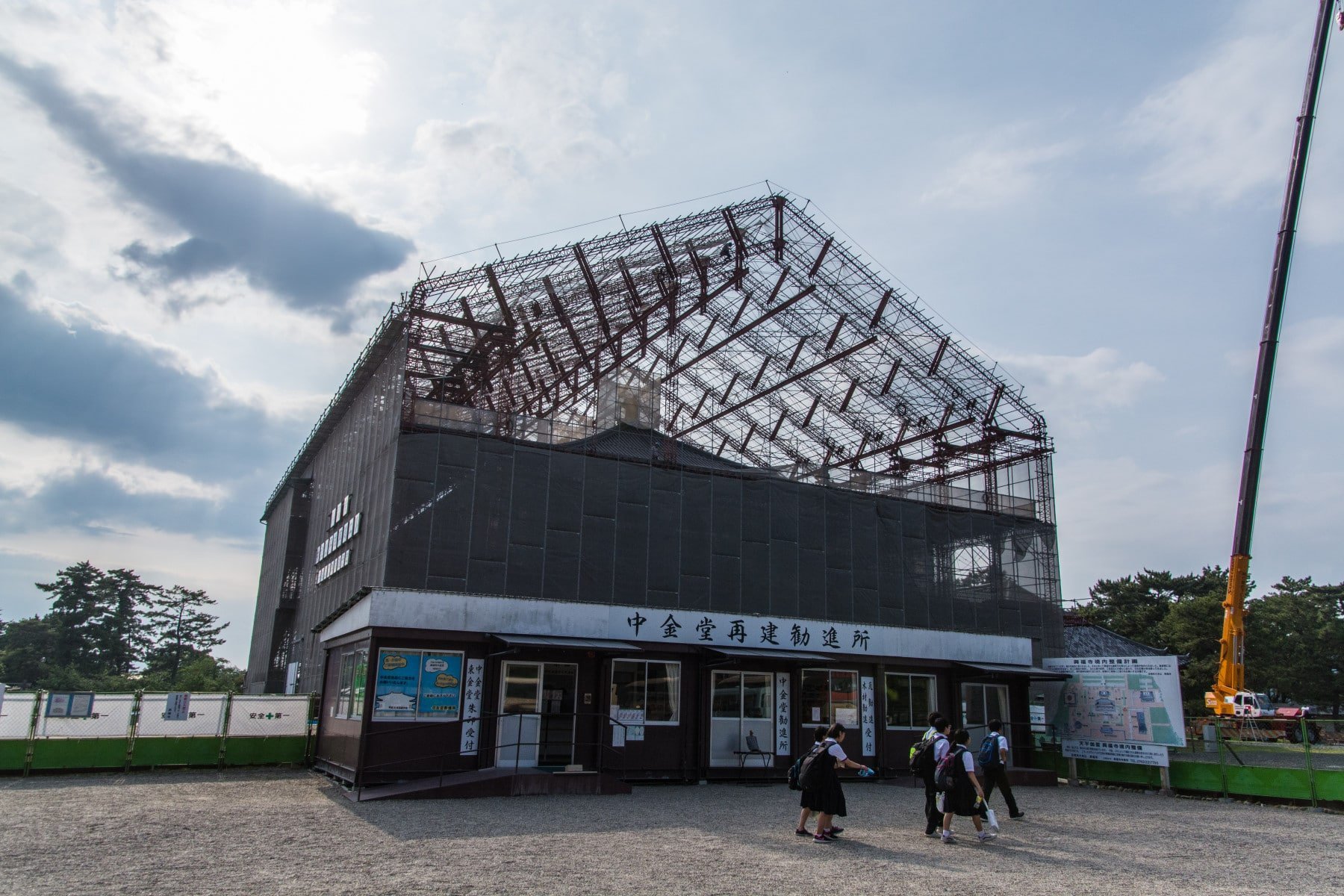
In the area between the nanendo and the other buildings, including the five-story pagoda, we can see the foundations of previous structures that were part of the temple complex. And to our left, we see a large covered structure, probably a renovation in progress I thought.
In reality, this is the main hall of Kofukuji Temple, which we'll call "the central golden hall" in proper English. In Japanese, it's called chū-kondō ( for central kondo ). And you guessed it, it was destroyed by fire in 1717 and rebuilt in 1819 as a small, temporary replica. What was underway during our visit was the finishing touches to a reconstruction in its original size (reopened to the public in October 2018).
Five-storied Pagoda and To-kondo
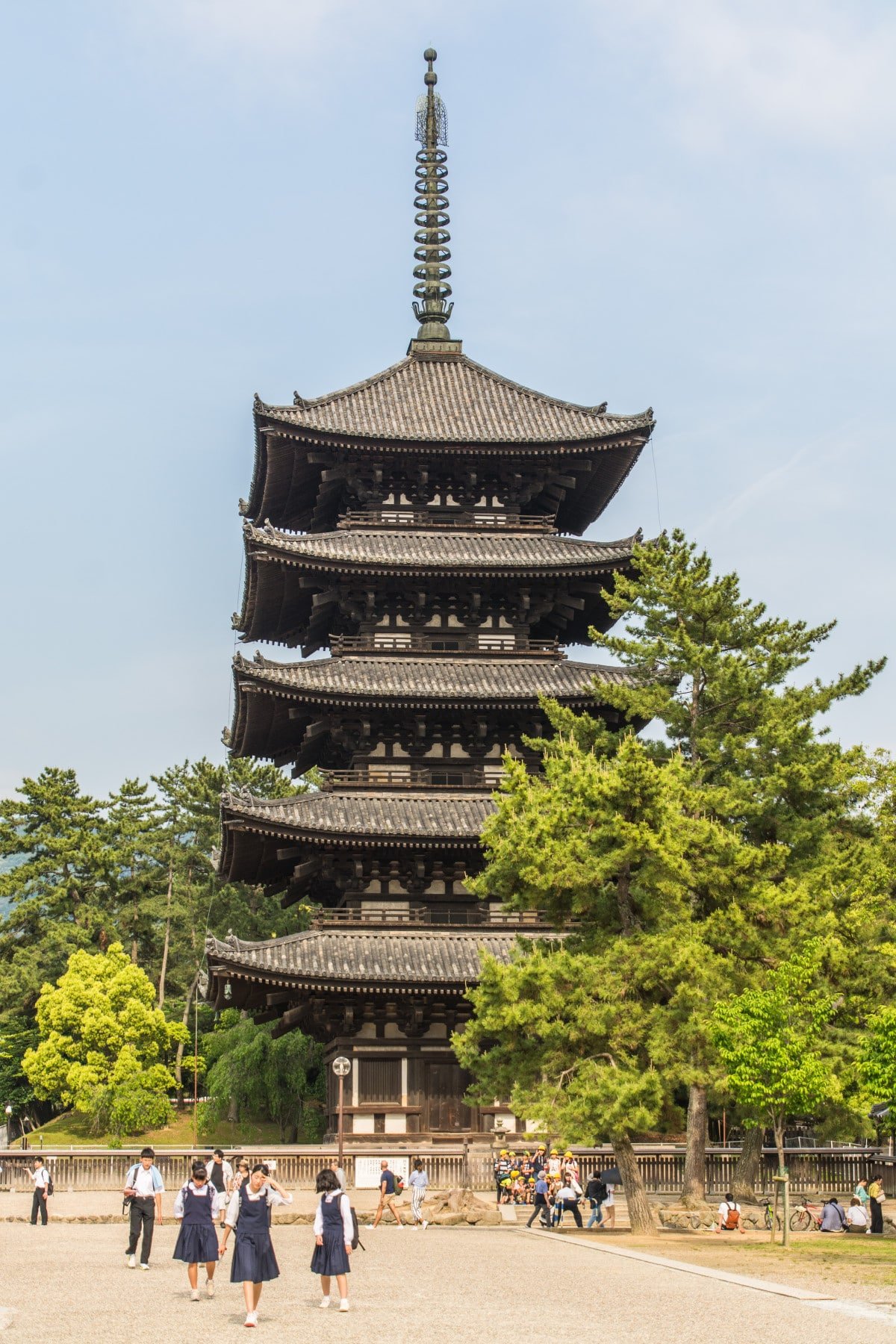
Next, we face what is a true symbol of Nara, the 5-story pagoda. Each floor symbolizes the five elements that make up our world, in order, earth, water, fire, wind and sky. At 50 meters high, this tower is the second tallest wooden pagoda in Japan, just seven meters shorter than the five-story pagoda of Kyoto's Toji Temple. Right next to it is one of the temple's main buildings, the to-kondo (literally eastern kondo but also called "eastern golden hall").
The pagoda and the to-kondo were both built in 730, but due to their turbulent history, both structures were burned and destroyed no less than 5 times between 1017 and 1411 (several of which were struck by lightning). Rebuilt each time, the current versions date respectively from 1415 for the to-kondo and 1426 for the five-story pagoda.

National Treasure Museum
Next to the to-kondo is a newer building (from 1959) housing the kokuhōkan (or "National Treasures Museum"). The latter includes statues, paintings, books and historical documents that have been designated as "National Treasures" or, failing that, considered important cultural property.
And while entry to the Kofuku-ji temple is free and possible 24 hours a day, the museum and the to-kondo are, along with the new central hall, part of the paying areas.
Meeting the deer of Nara
Our next stop is the imposing Tōdai-ji, located further east of Kofuku-ji. Fittingly, its name means "Great Temple of the East" (though it can also be interpreted as "Great Temple of the Rising Sun," since the sun rises in the east). To get there, we descend the few steps back onto Sanjo-dori Street and turn left, then continue straight for 800 meters (300 meters to an intersection, then another 500 meters under a tree-lined pedestrian walkway). So far, we haven't seen any deer, although it's possible to spot them around the previous temple.
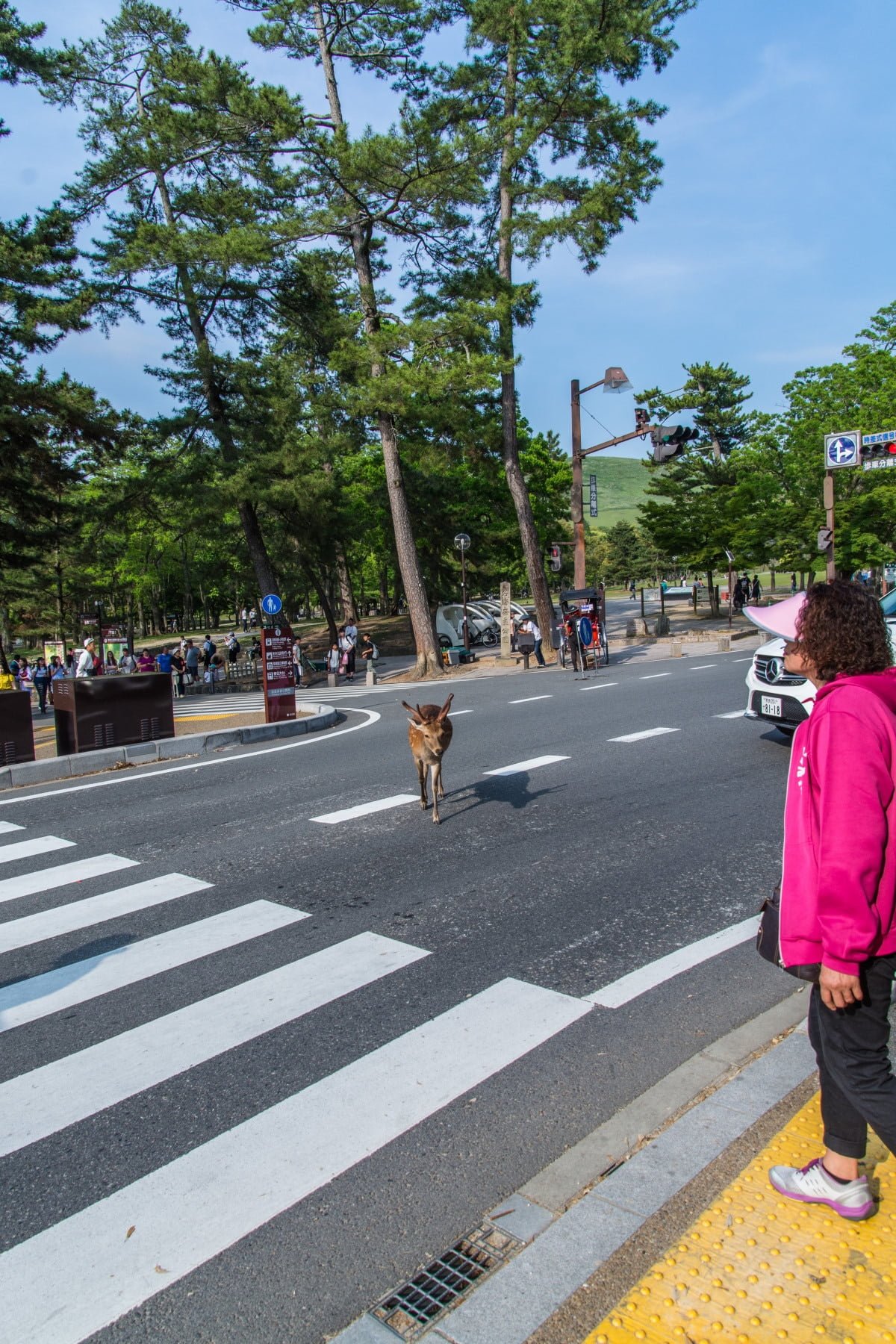
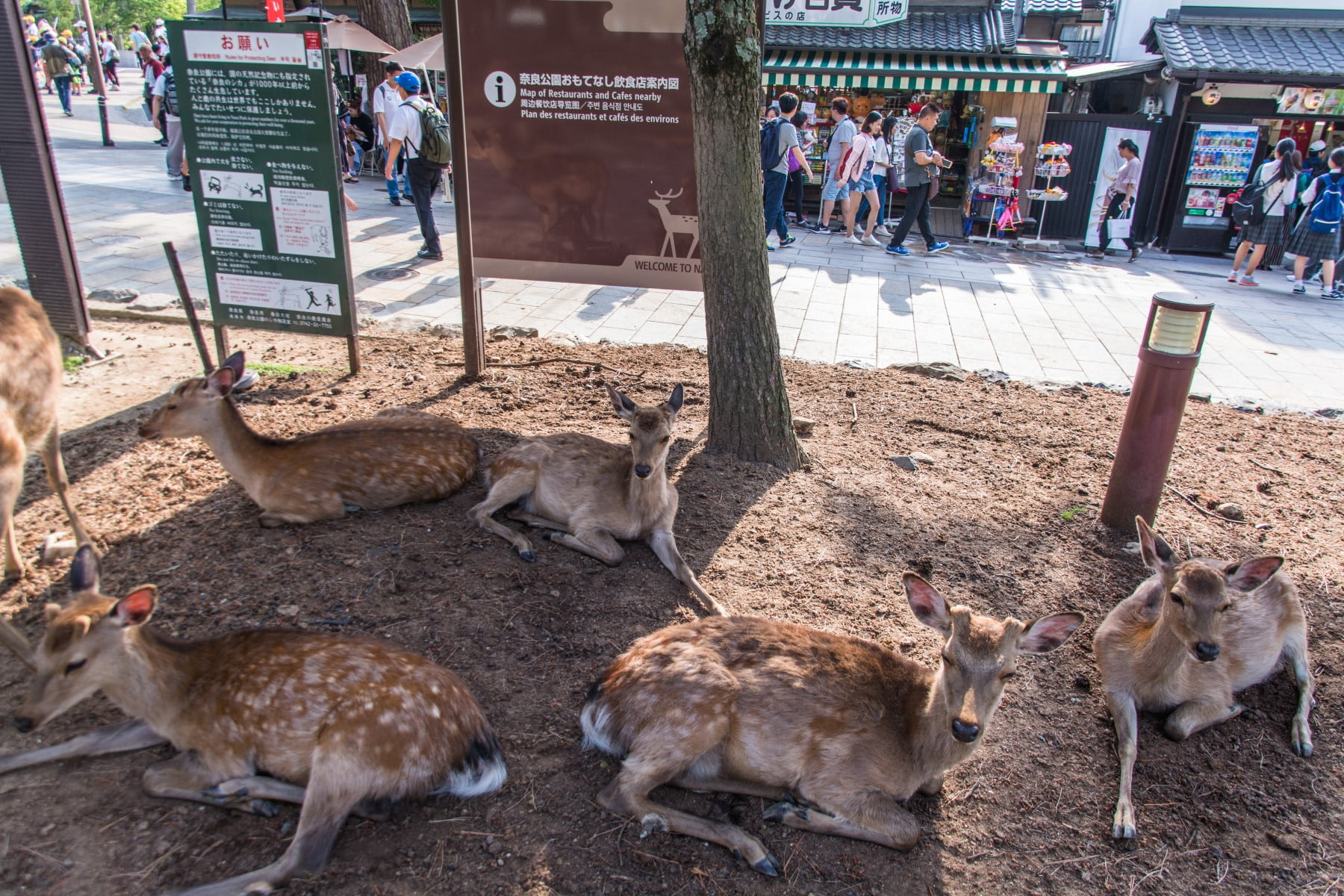
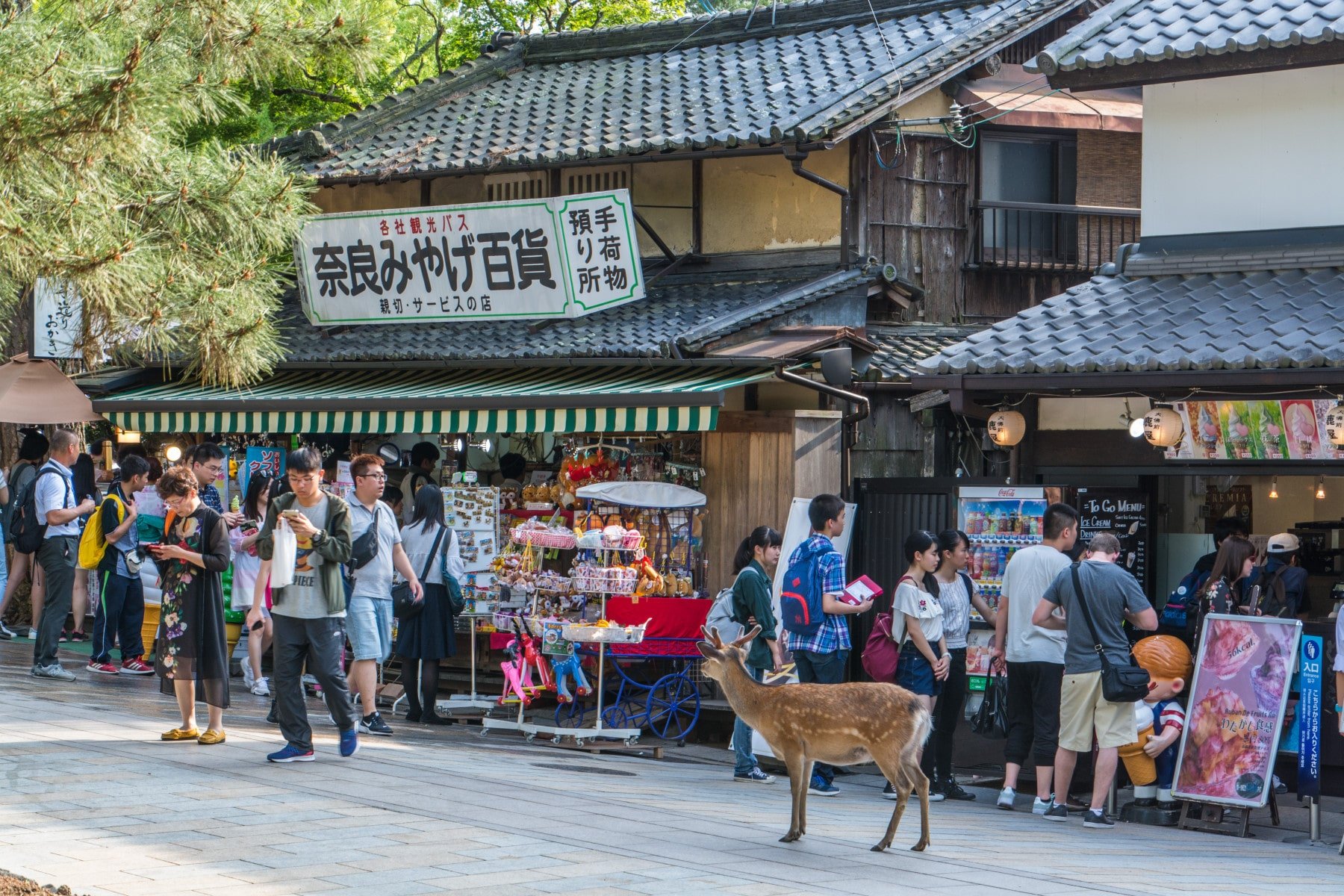
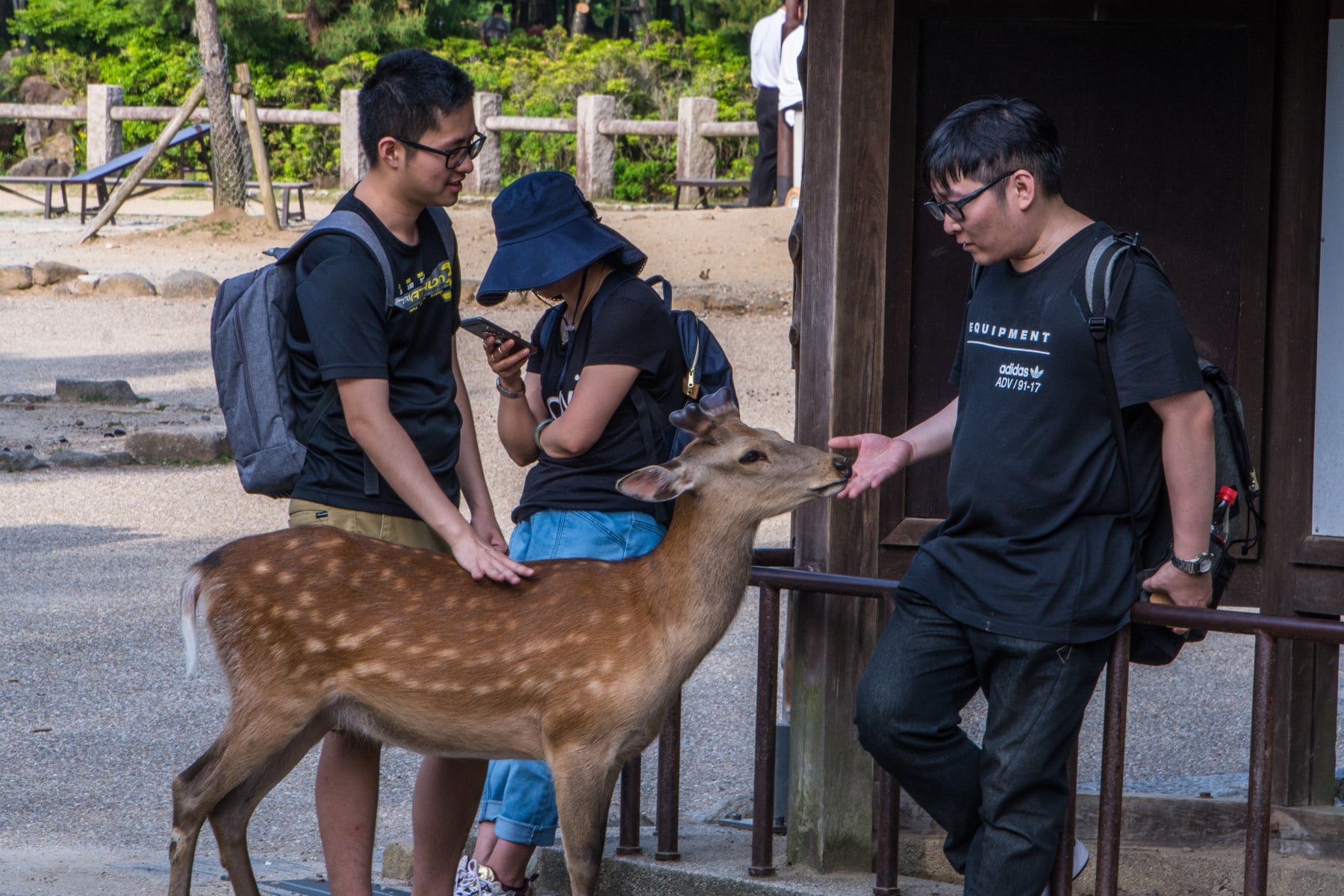
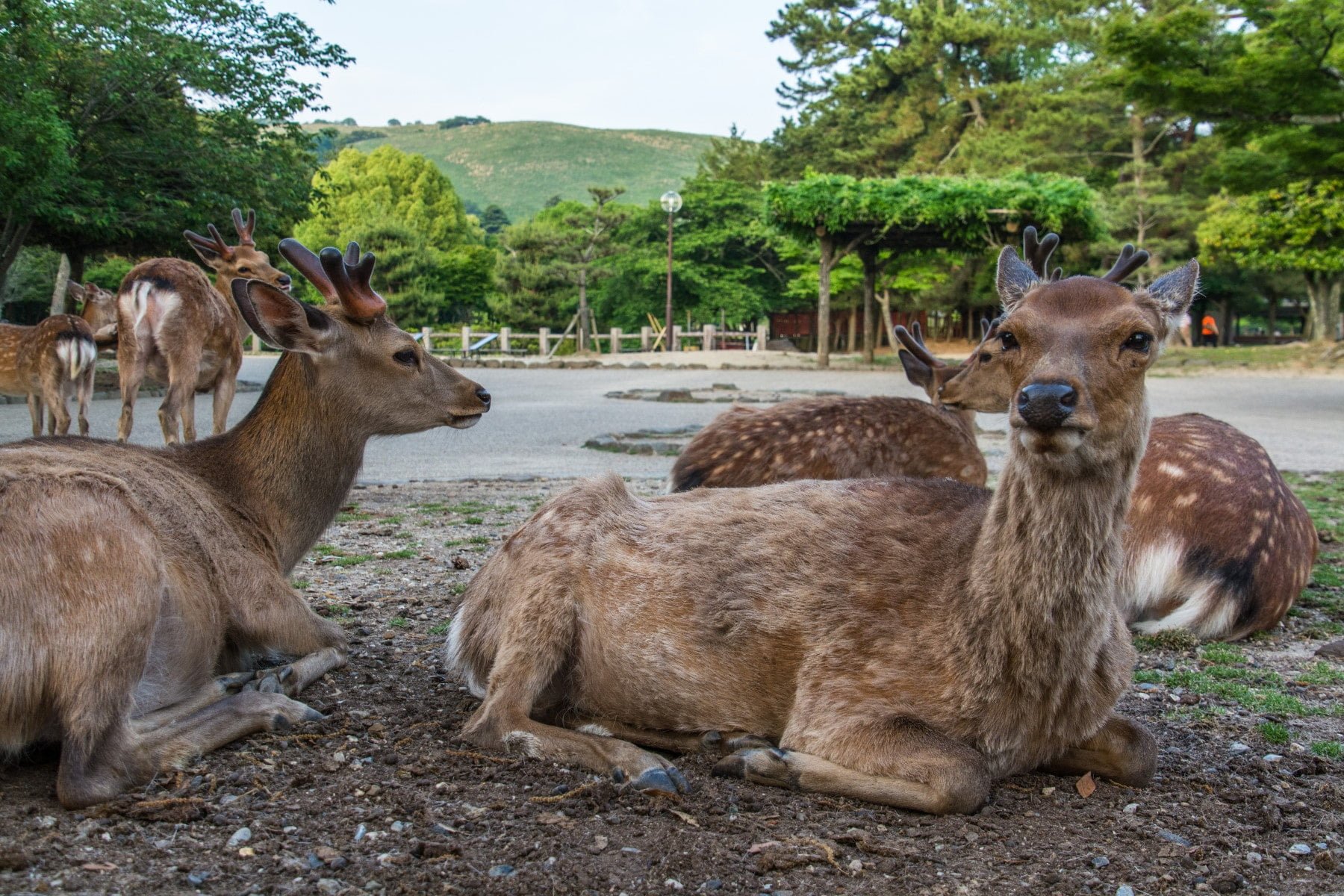
At the end of the alley, we turn left and that's where we come across our first deer, crossing the road peacefully. To understand the relationship between the city of Nara and deer, we must understand that they are considered divine animals and protectors of Nara (and of all of Japan in fact). As a result, the inhabitants used to have to bow to them as a sign of respect and killing one was punishable by death (until 1637, so it's a while ago, huh).


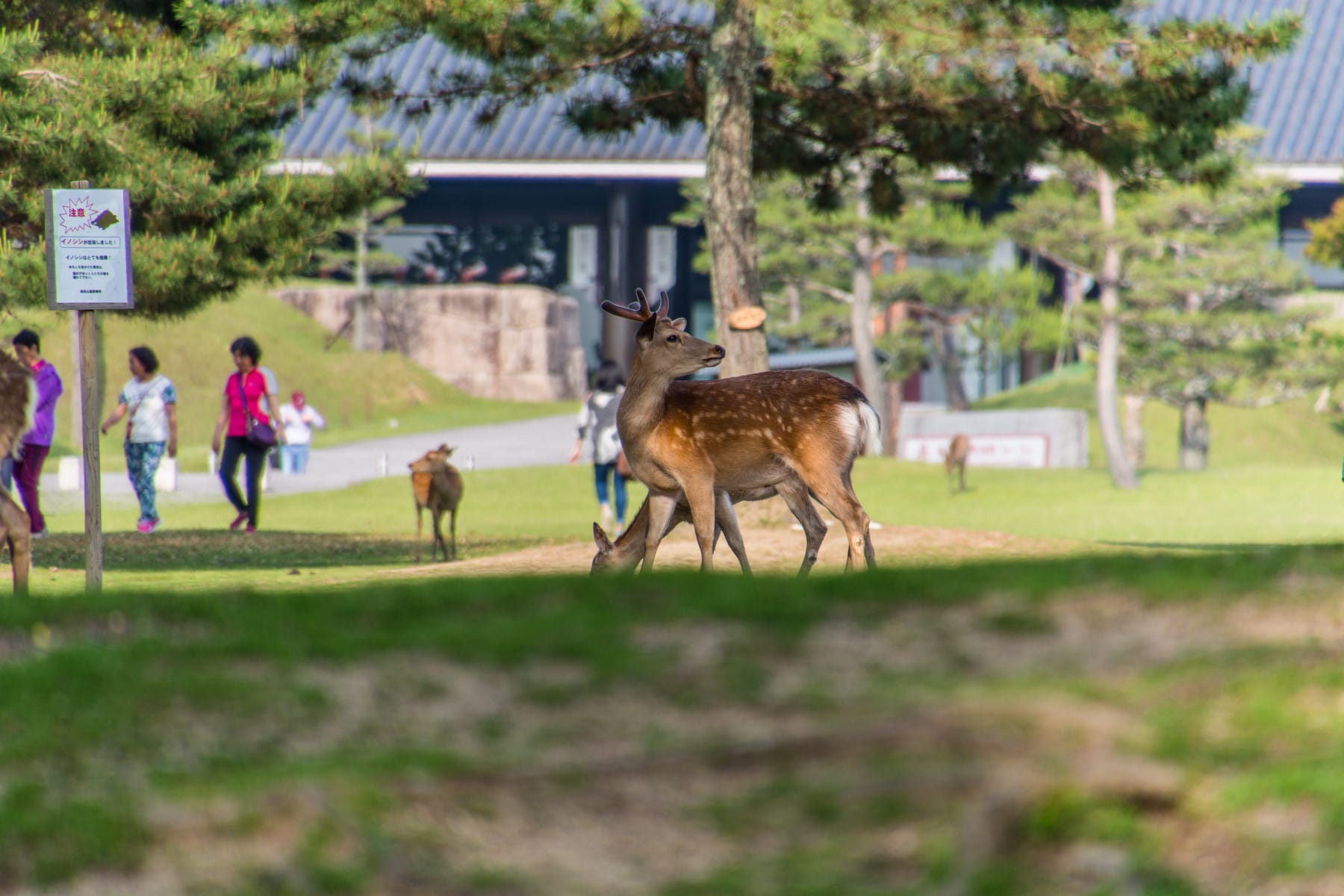
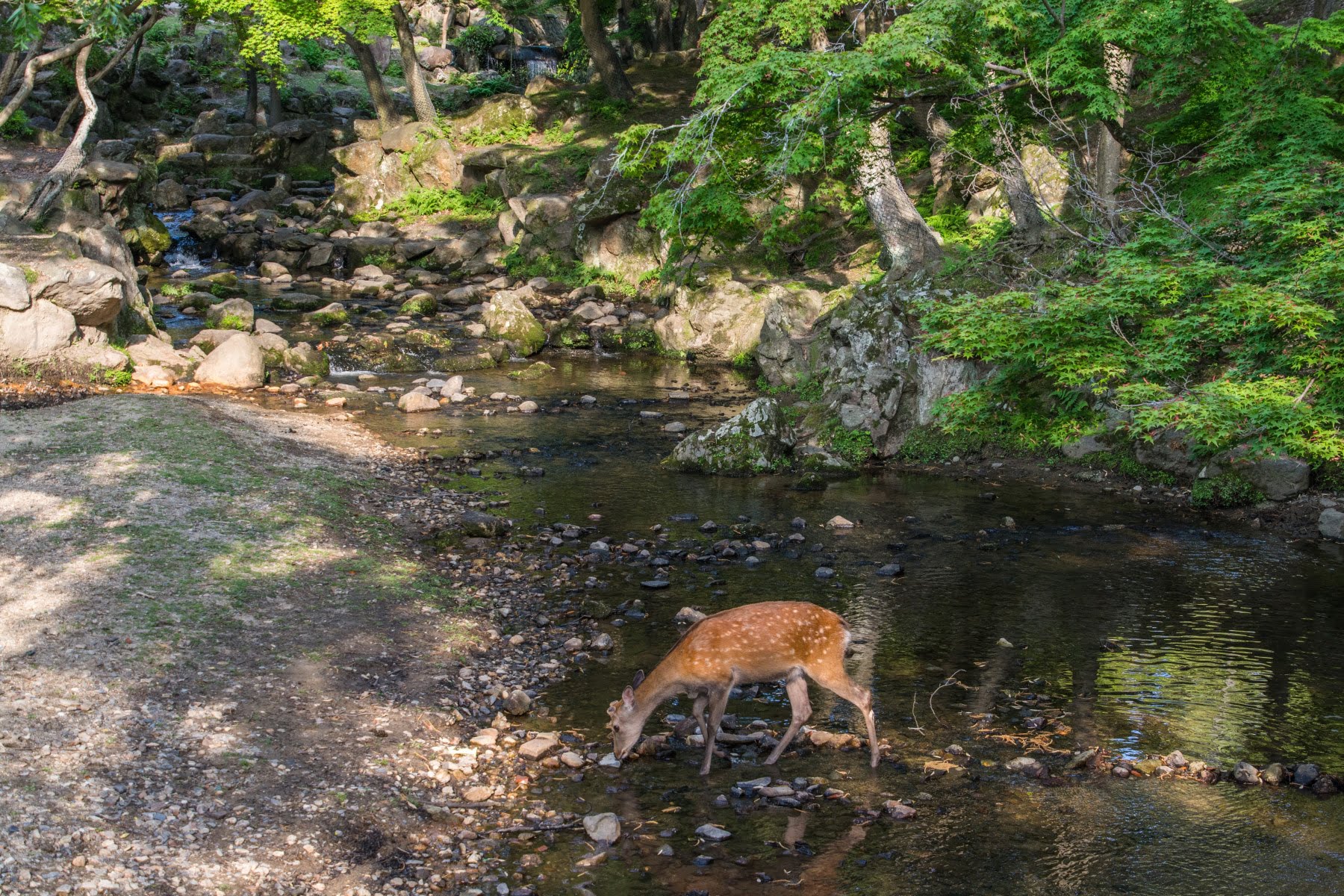
The reason lies in the legend surrounding the deity Takemikazuchi. It is said that she appeared riding a white, winged Sika deer (a breed native to Asia) and took up residence on Mount Wakakusa (also known as Mount Mikasa) to protect Heijo-kyo (the ancient name for Nara). Today, over a thousand deer, considered tame, roam freely in the city, primarily around Nara Park (established in 1880 and covering 502 hectares).
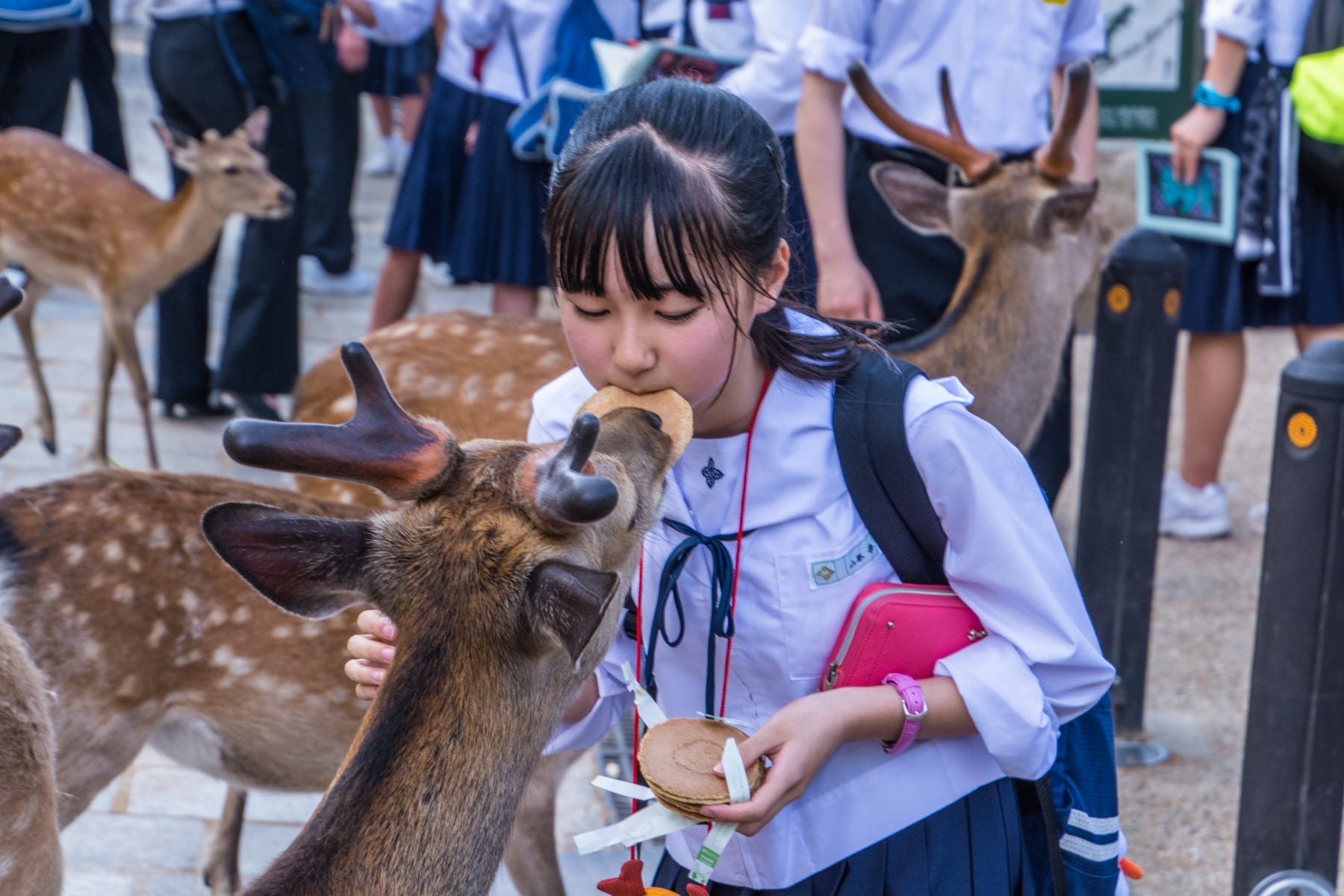
As we arrived at the area, many students were out and about. And apparently, the "game" is to give them treats (a kind of salty biscuit, sold for 200 yen each), especially by putting them in your mouth, which the deer will then come and get…
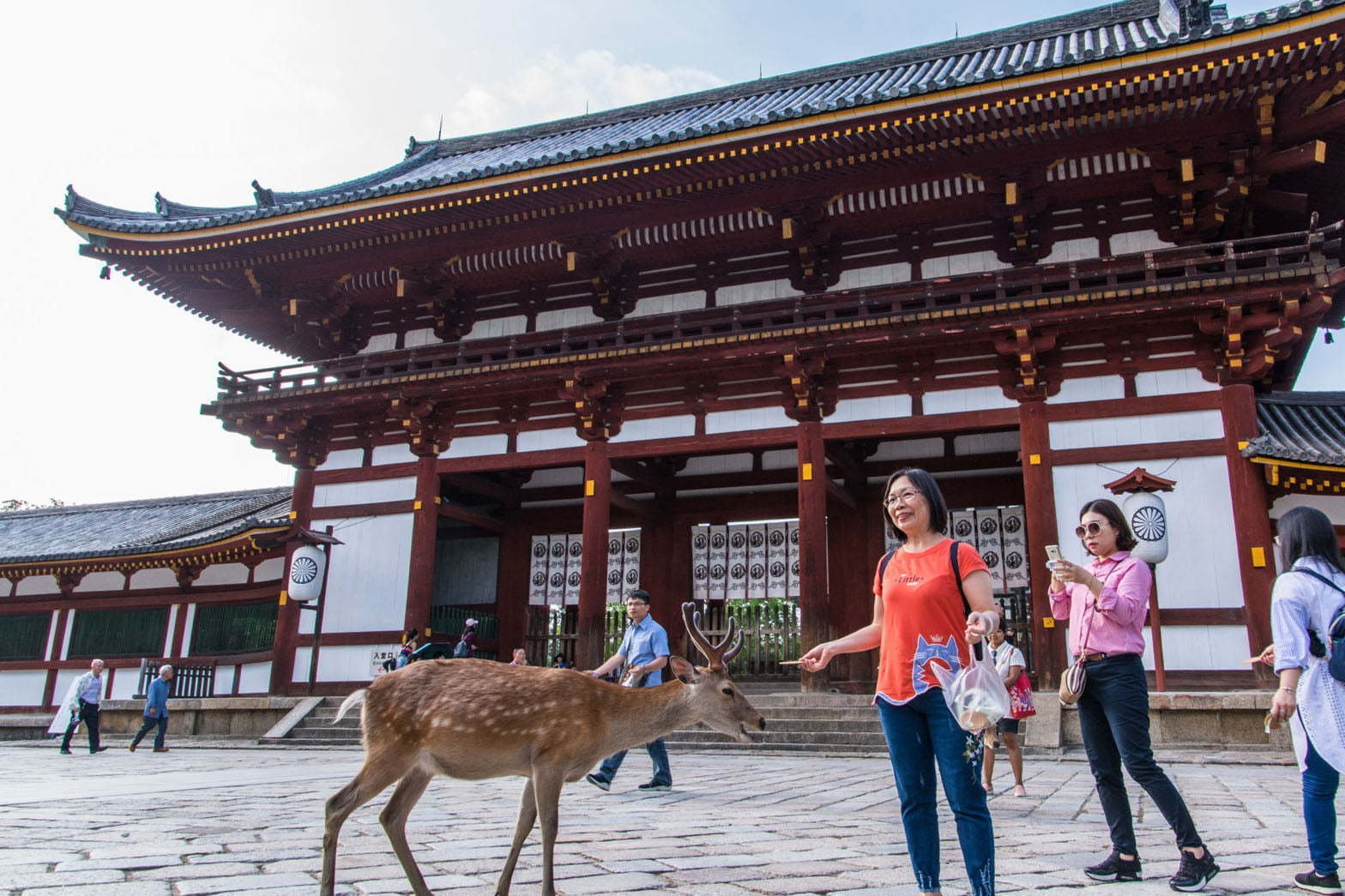
It quickly becomes apparent that the deer are more than familiar with humans and unfazed by their environment, even though it's urbanized. They wander here and there, thanks to the proximity of Nara Park, which is home to a large number of deer. They stop just about anywhere, even in front of the souvenir shops, before reaching the main South Gate, which leads to Todai-ji Temple.
Todai-ji
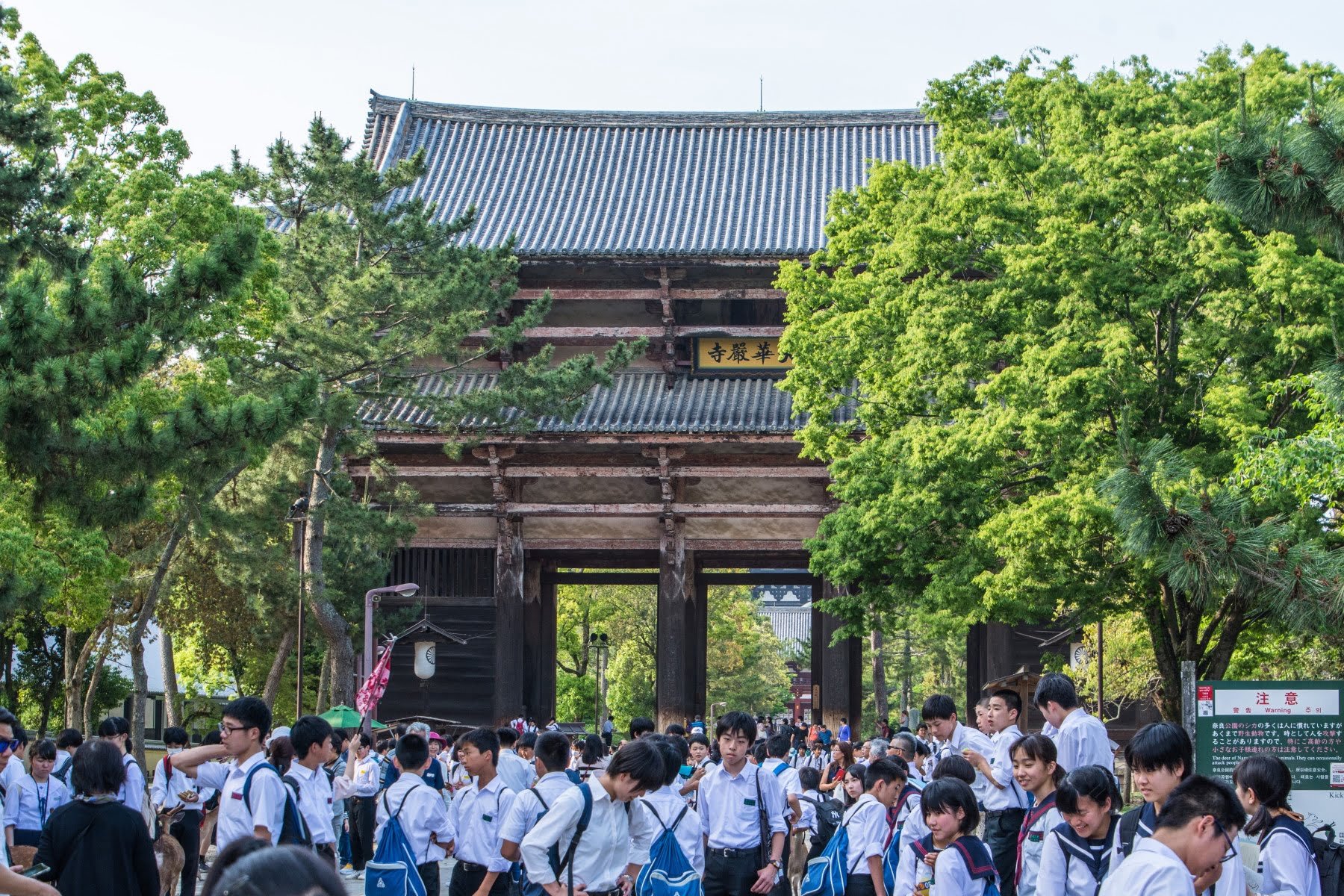
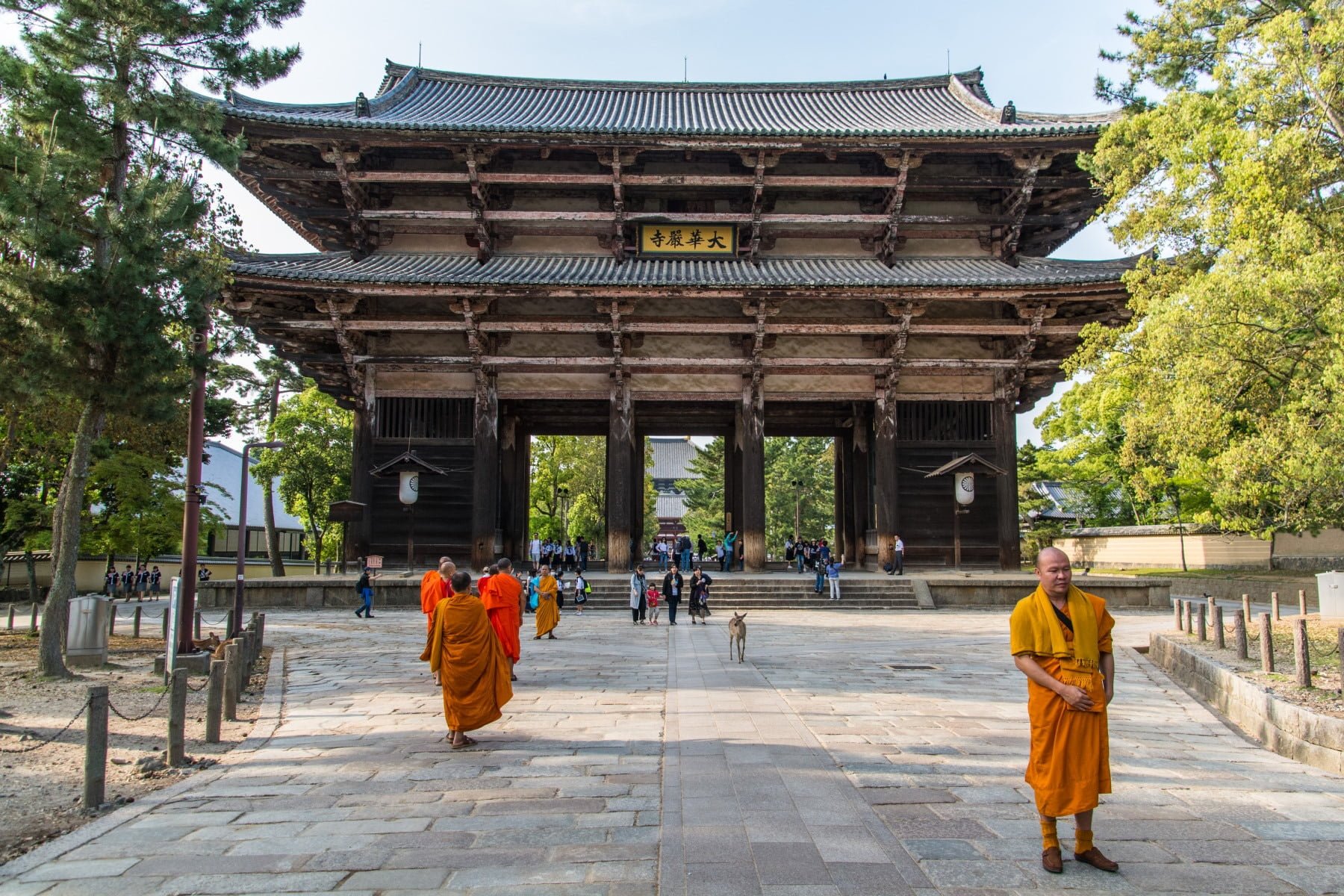
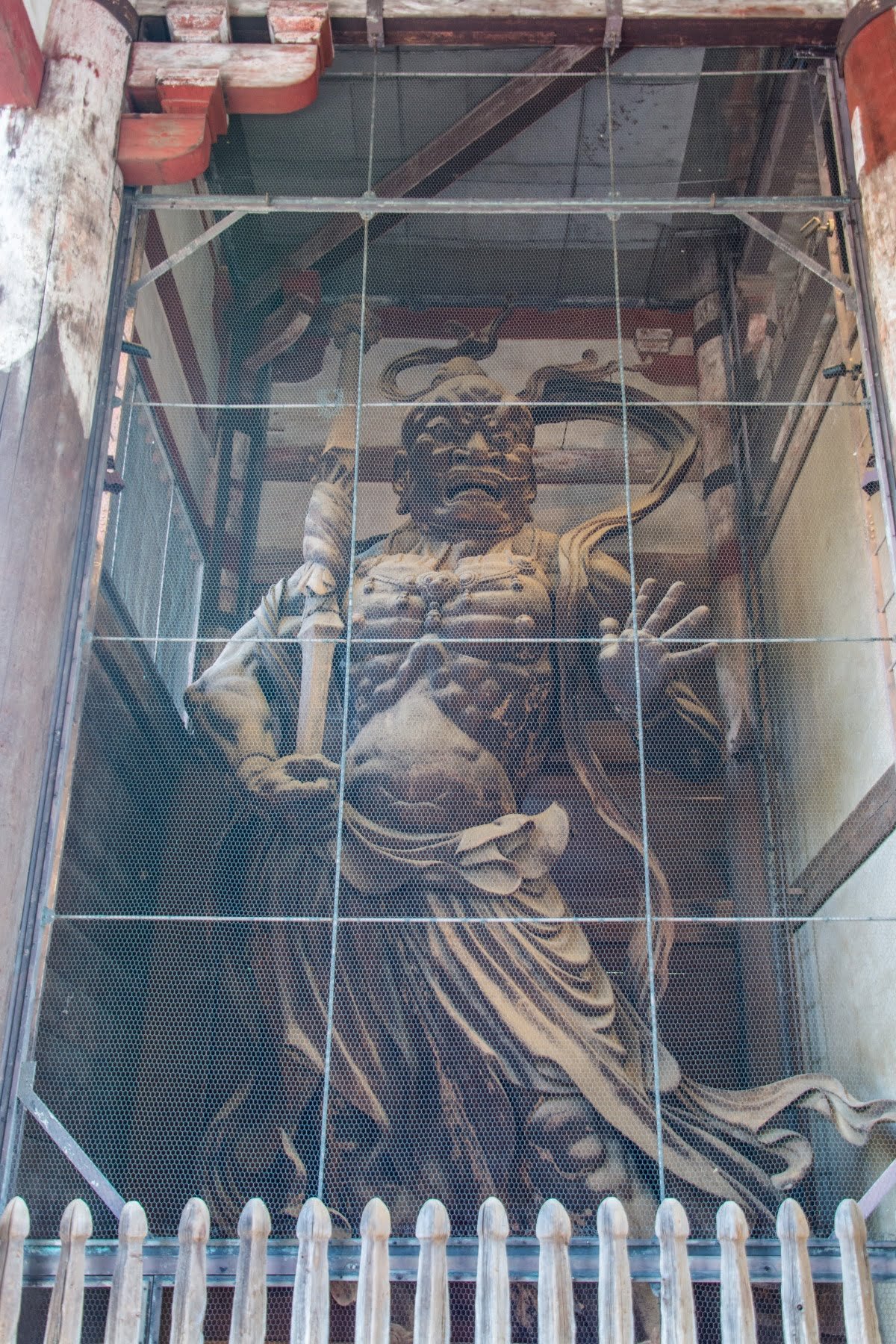
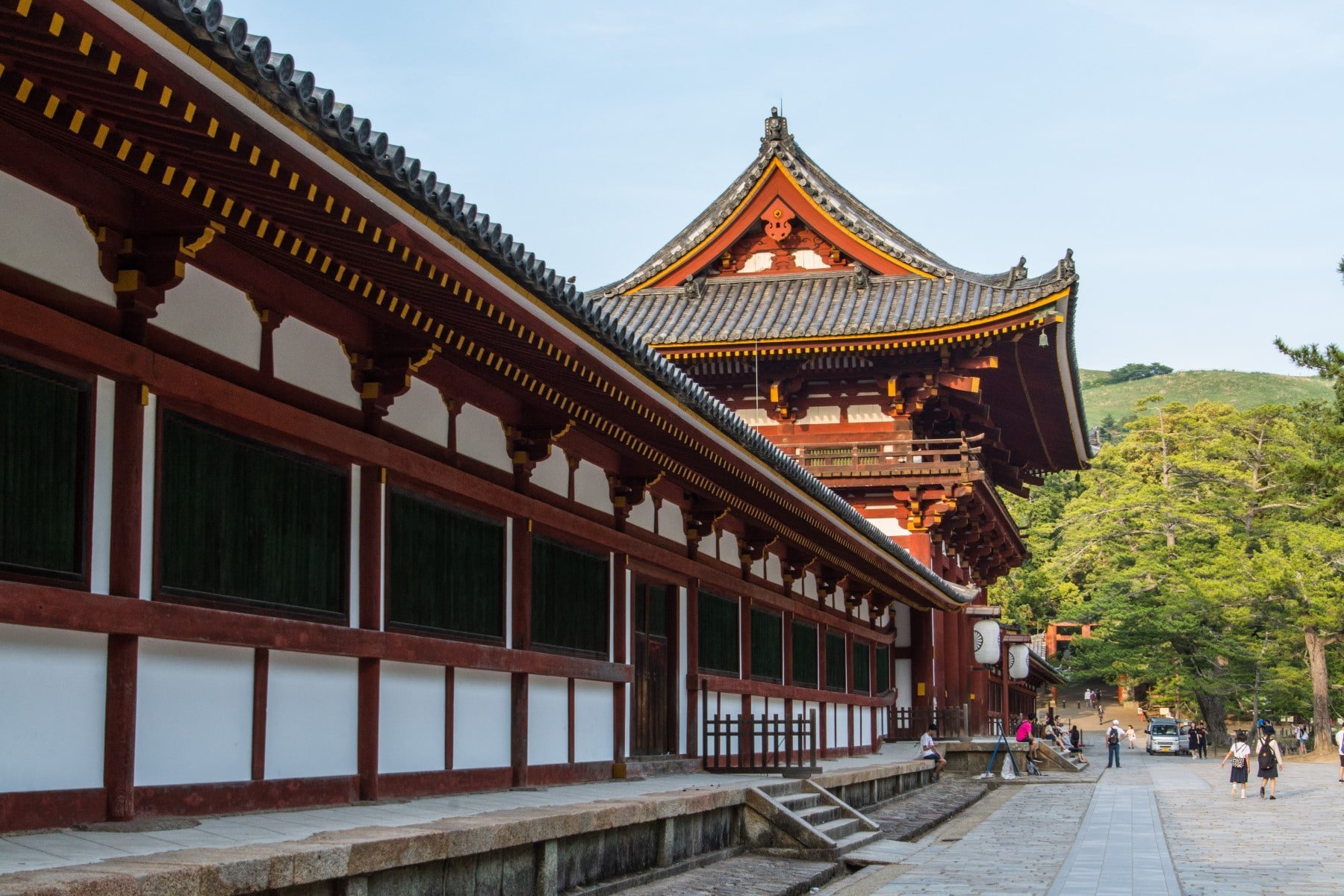
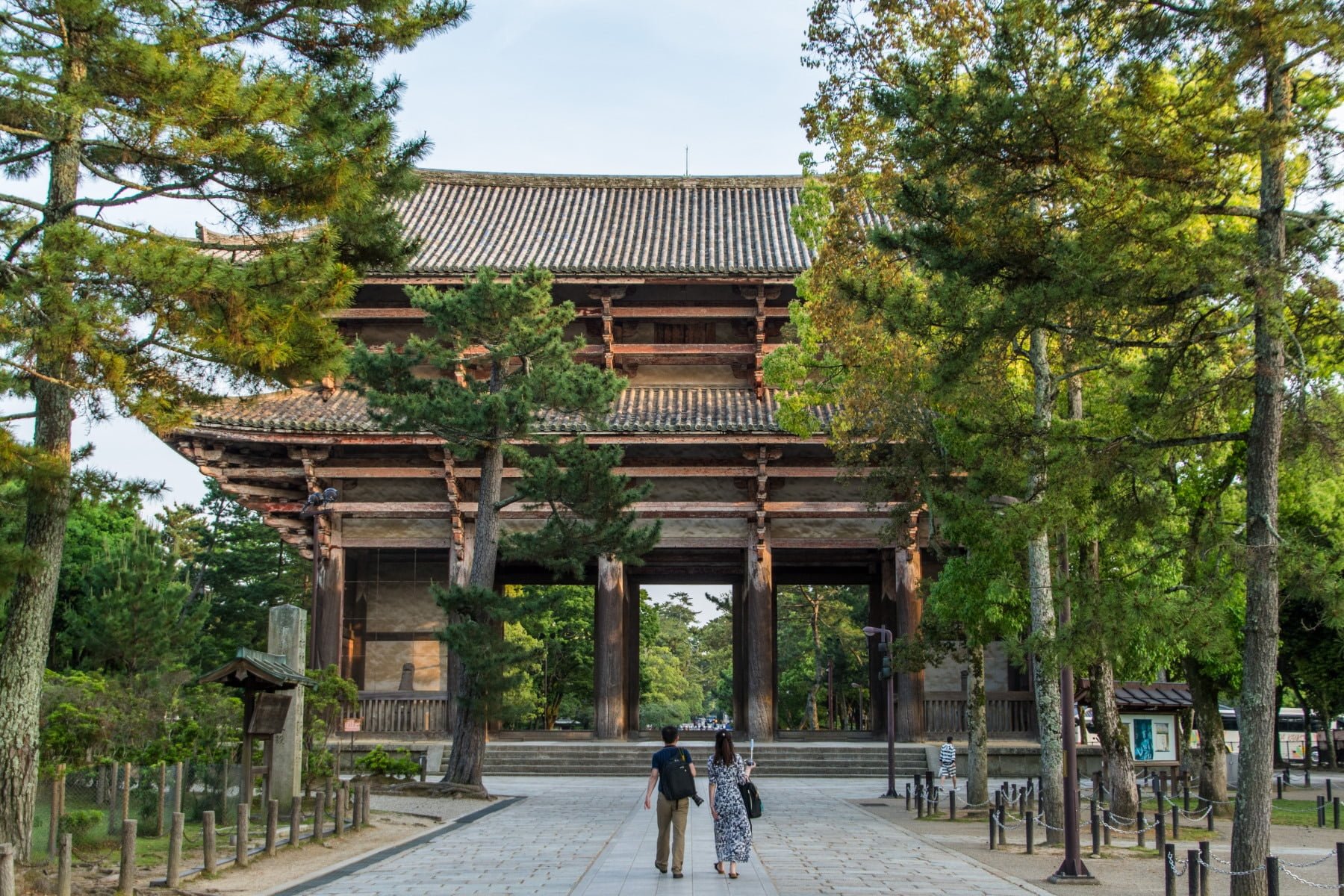
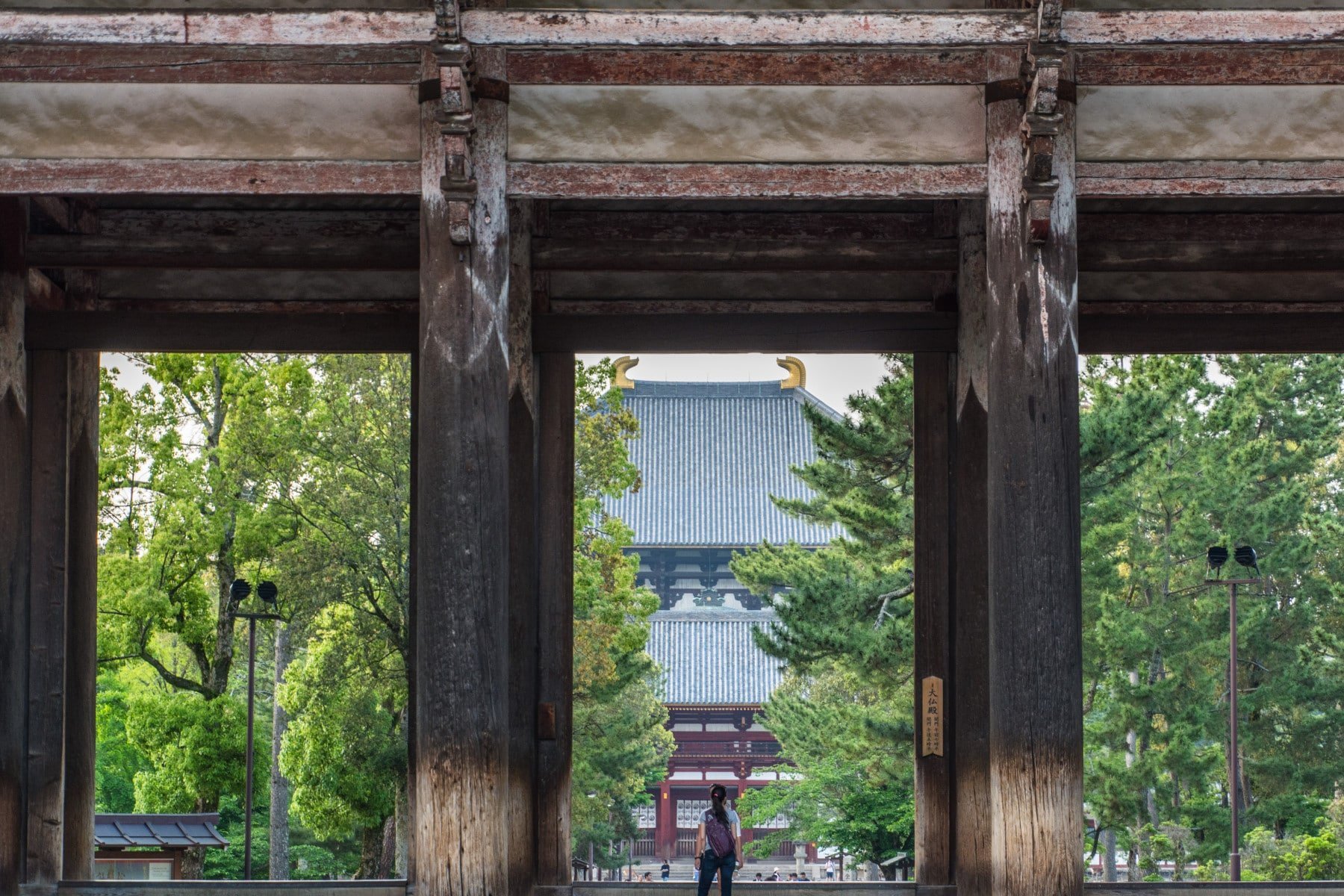
As we approach Todai-ji, the imposing South Gate Nandaimon rises before us , a massive wooden gate guarded inside by two large, eight-meter-tall statues acting as guardians (added in 1203, at the same time as the reconstruction of the main Nandaimon gate). It was originally one of the temple's entrances, the surrounding enclosure wall no longer existing.
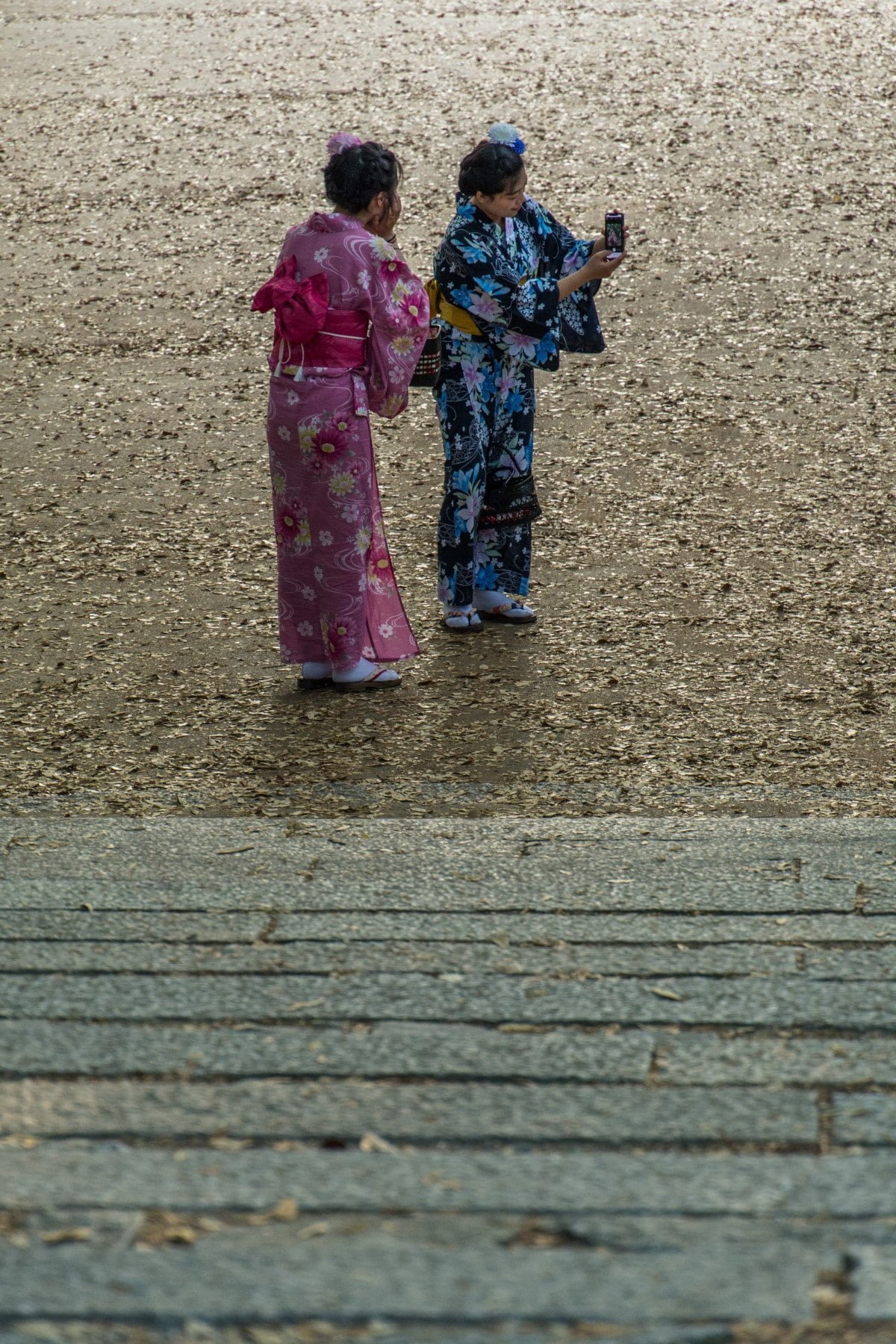
In addition to the students, you might encounter a few monks in orange robes; their accents suggest they are from Laos or northeastern Thailand. It's worth noting that Todai-ji is still used as a center for the Kegon and Ritsu schools, two branches of Japanese Buddhism, but all branches are studied there. As the temple remains active, its community of monks continues to perform the necessary daily and annual rites and ceremonies.
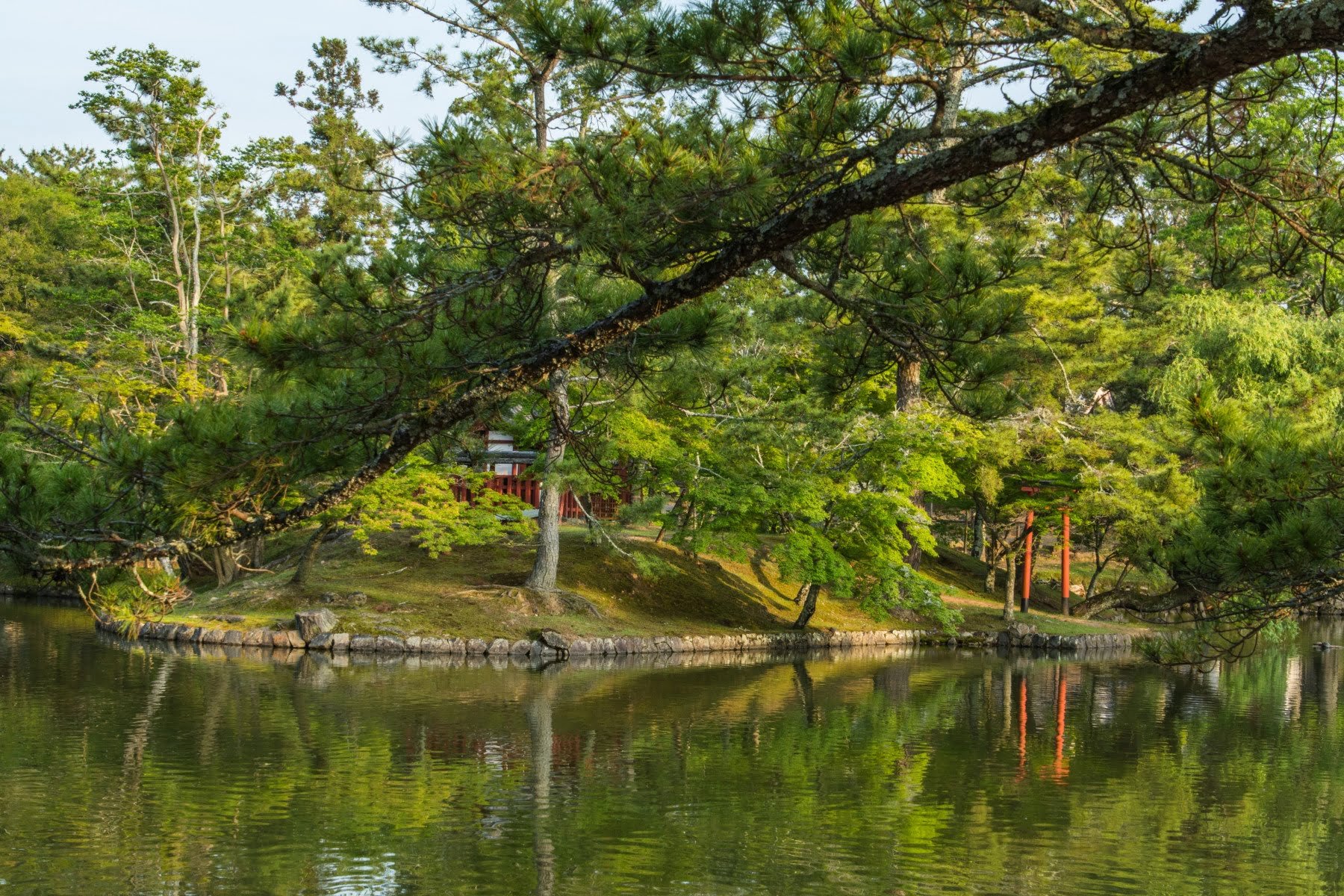
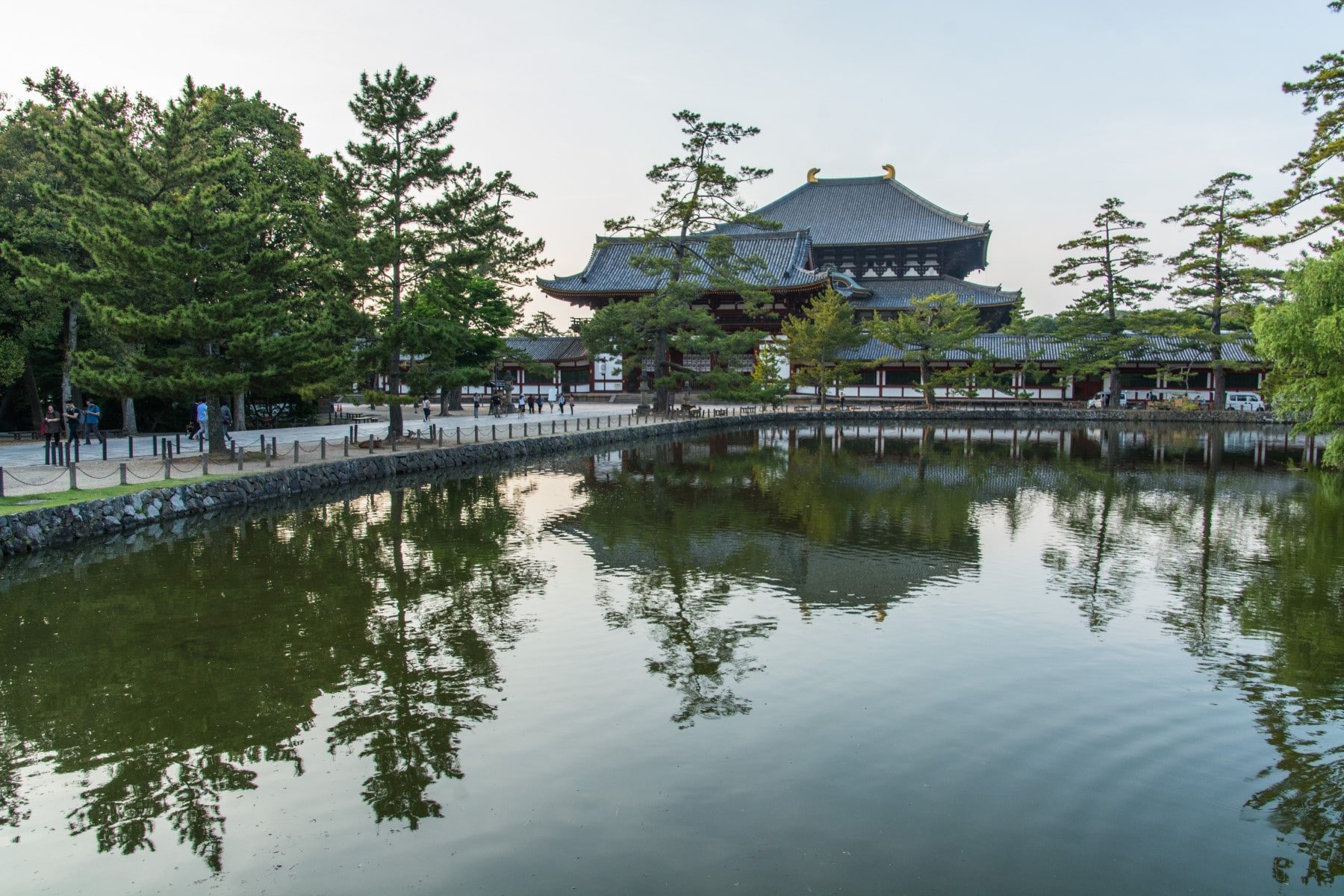
200 meters past the gate, you pass a small body of water, where there is a small island with a Shinto Torii gate, the Mirror Pond. This pond is located next to the inner gate of Todai-ji (called Chūmon), near which is the ticket counter for tickets leading to the temple's centerpiece , the Daibutsu-den.
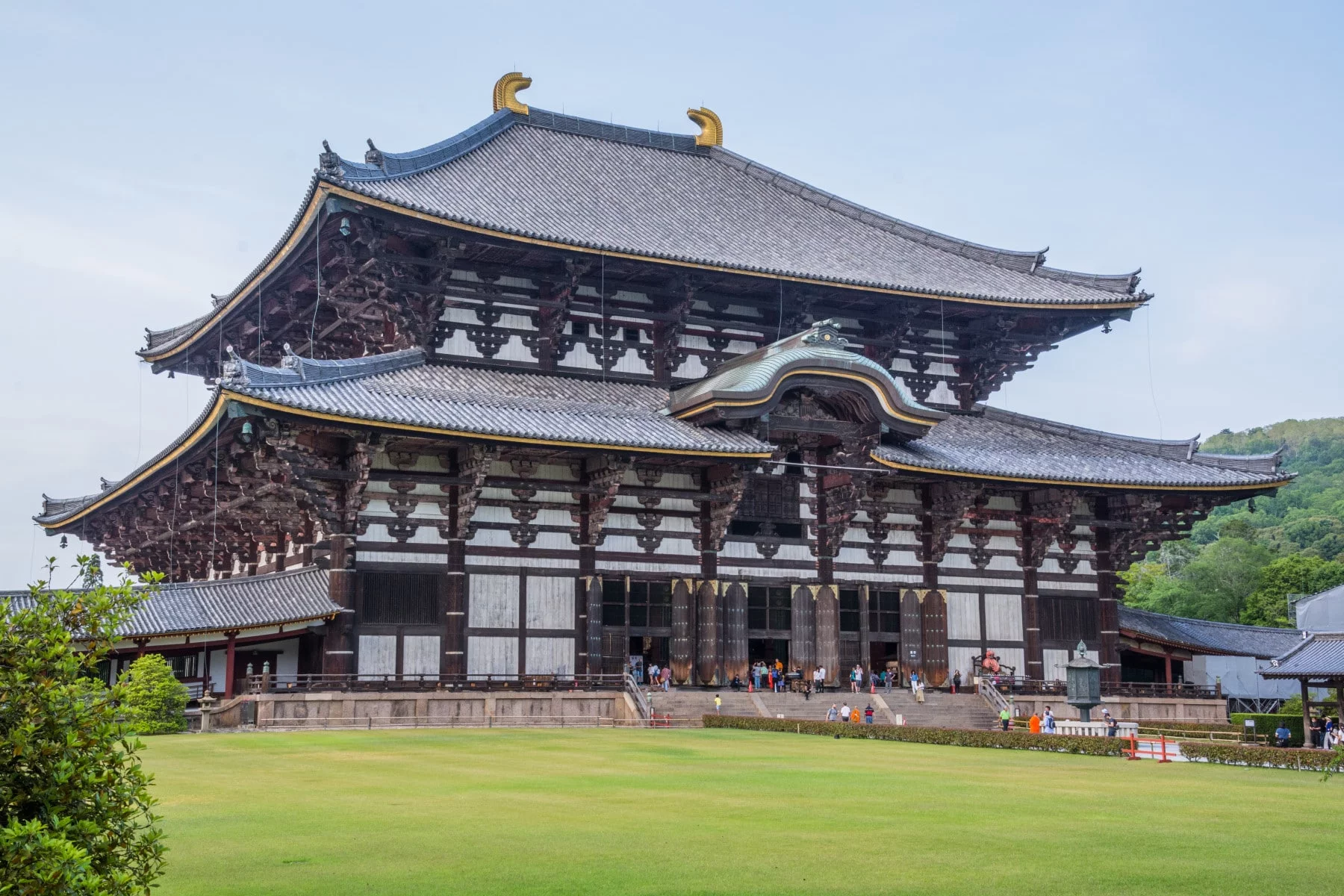
Everything dates from the last reconstruction. Yes, because I won't prolong the suspense, but Todai-ji, whose original construction dates back to 752, burned down, like many temples in Nara… It was completely rebuilt twice, first in the 12th century and then in the 18th. The Daibutsu-den is therefore the result of this last reconstruction, completed in 1707.

The impressive Daibutsu-den
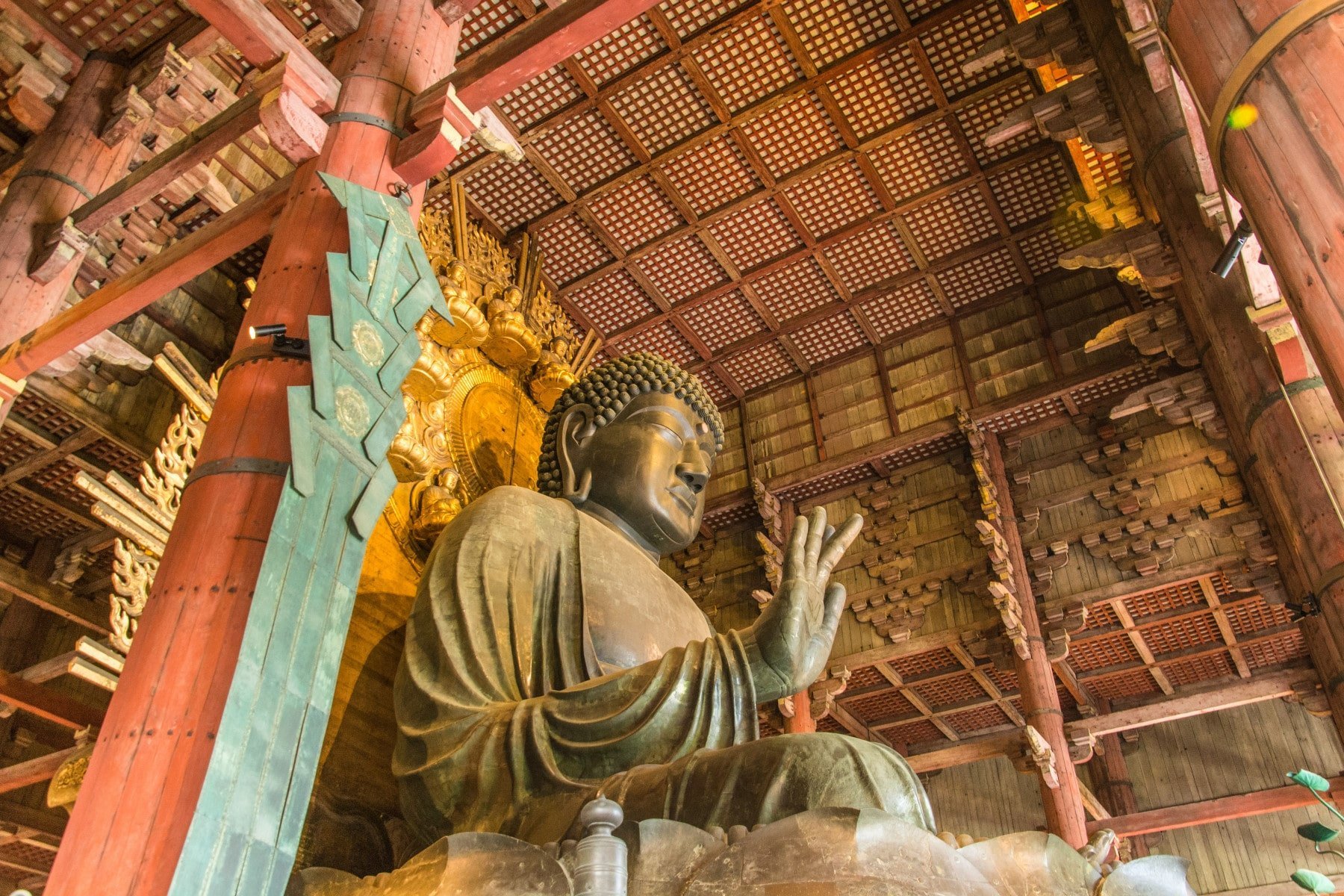
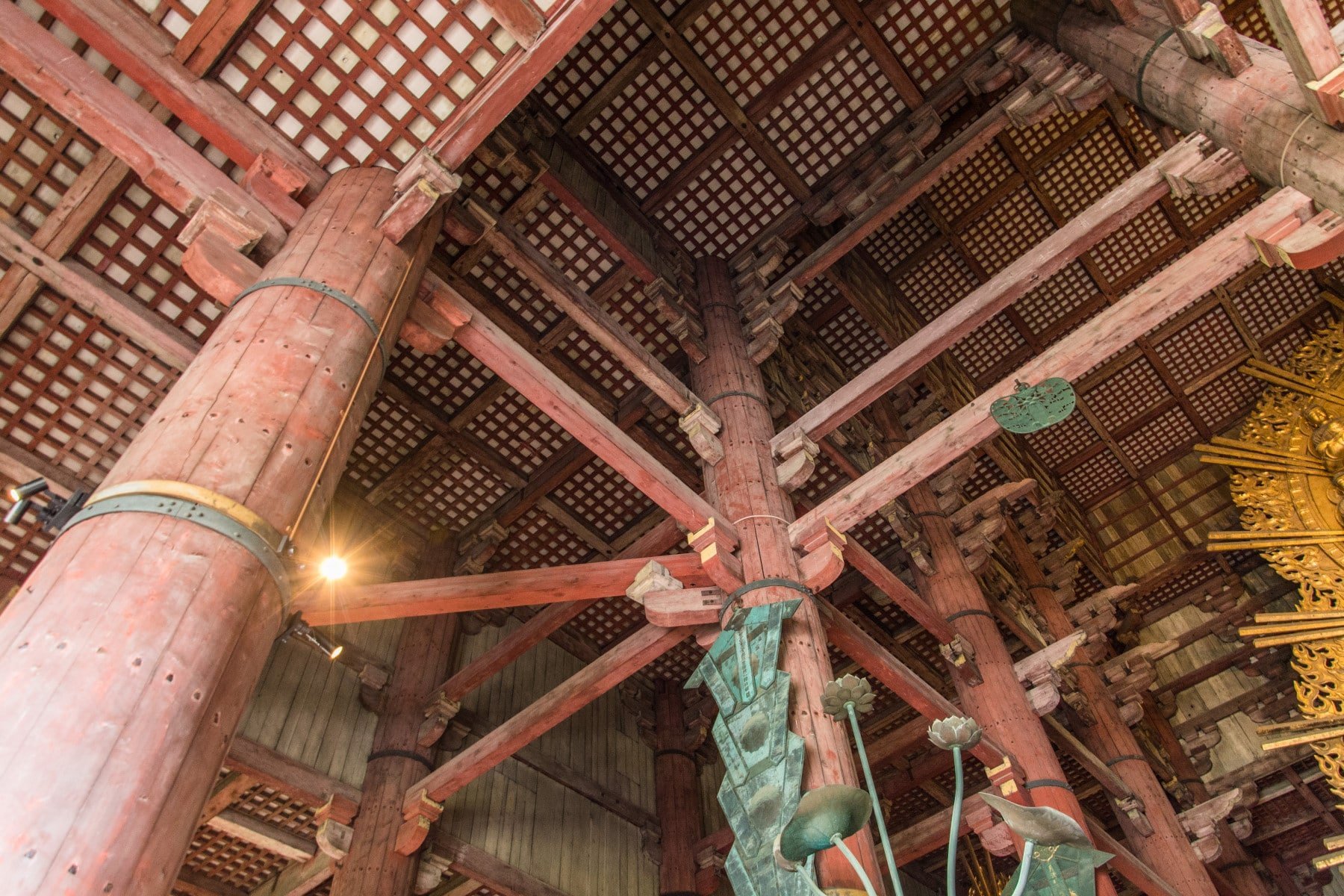
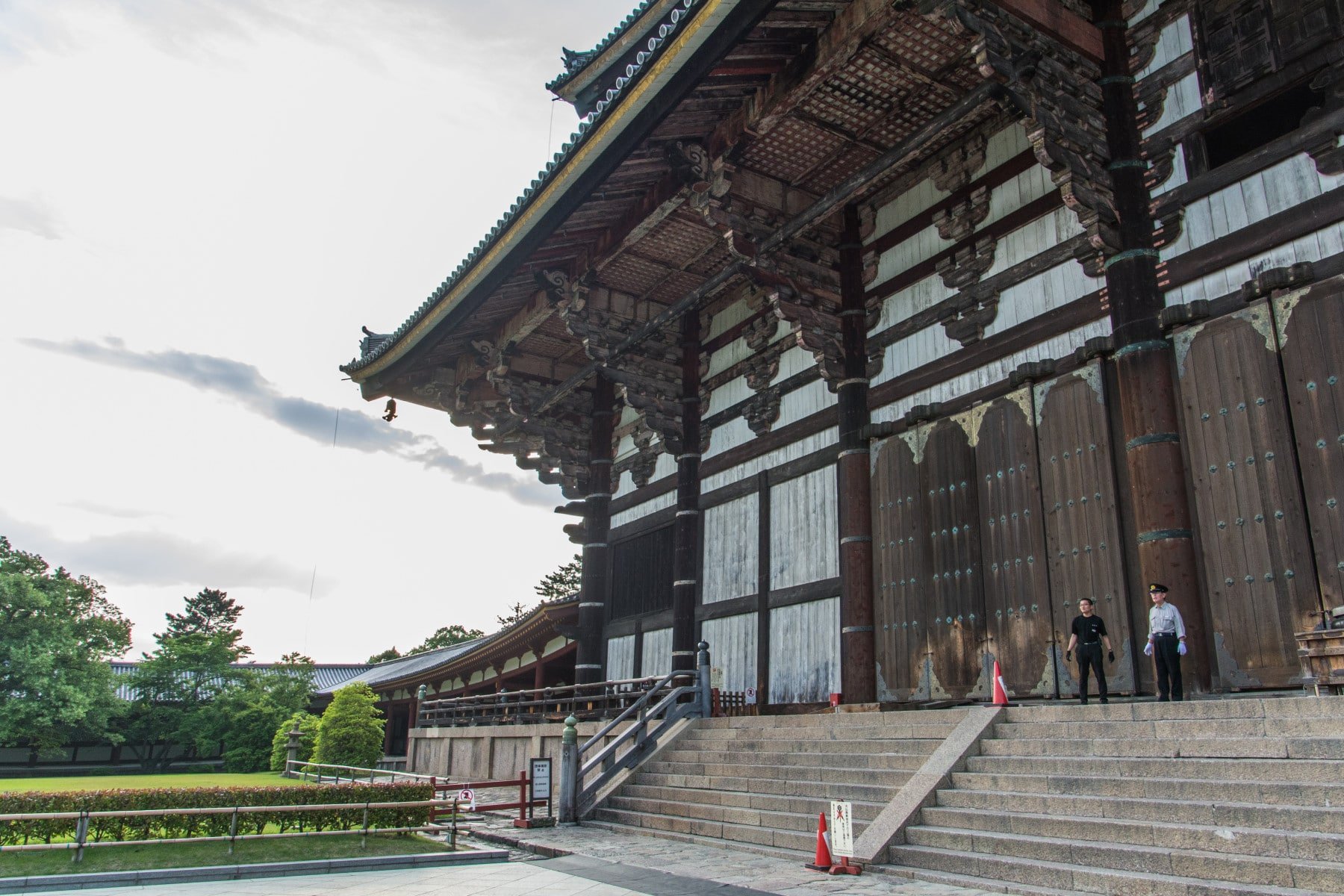
And there, I must admit, upon arriving at the cloister and catching sight of the Daibutsu-den, I was truly blown away. It's worth noting that at 57 meters long (and 50 meters wide), the building is imposing, but what's most impressive is realizing that the current structure is only two-thirds of its original size. The Daibutsu-den now rests on eight bays of pillars, whereas it originally had twelve (so we can estimate its length at 85 meters!).
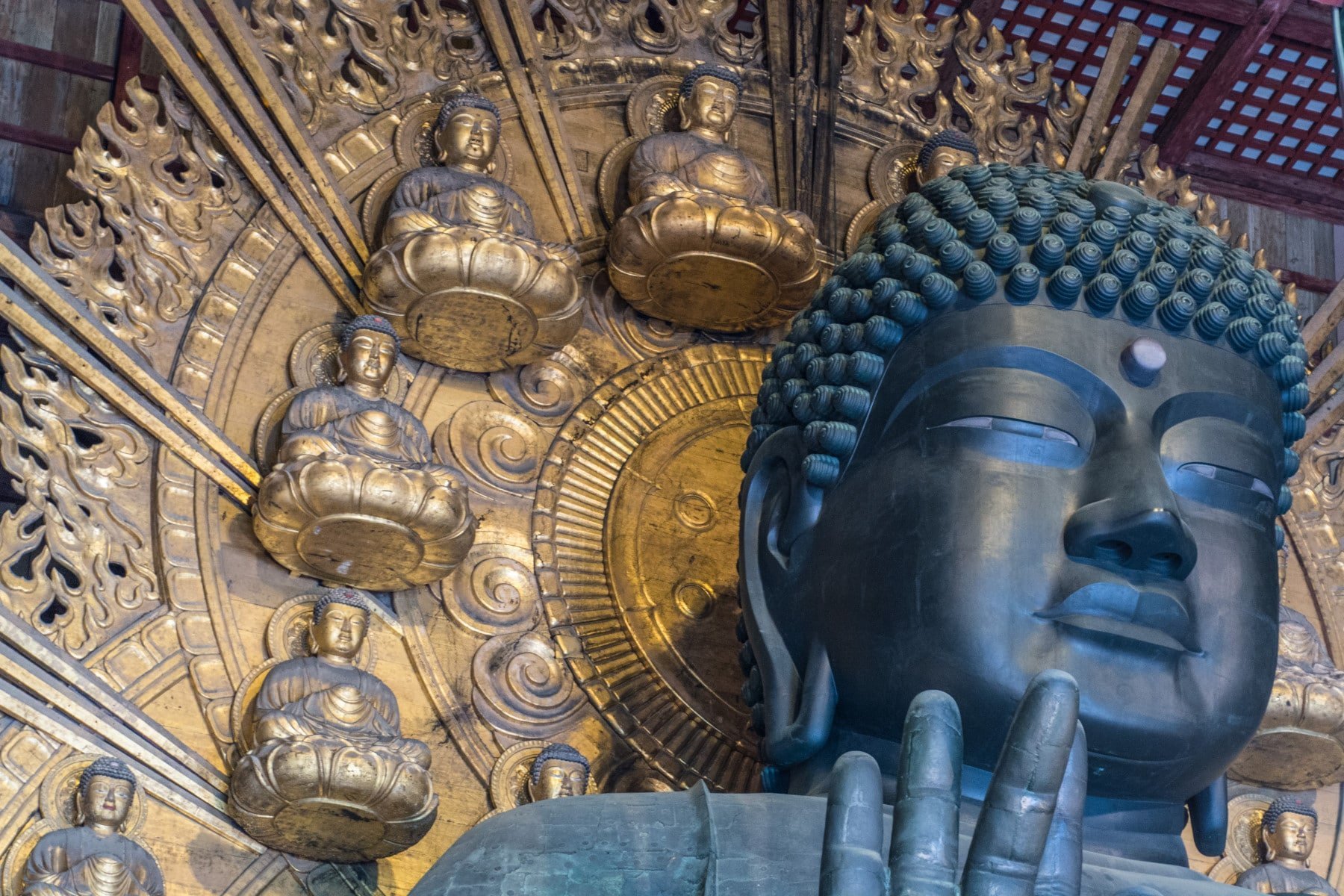
And despite its relatively small size, it remains the largest wooden structure in the world to this day, and is therefore unsurprisingly included as a UNESCO World Heritage Site. And where there's an imposing building, there's an imposing statue. The Daibutsu-den houses a colossal 15-meter bronze statue (18 meters including the pedestal), weighing an estimated 430 tons. It's important to note that while this statue dates back to the 8th century, it too has required several restorations due to damage and fires.

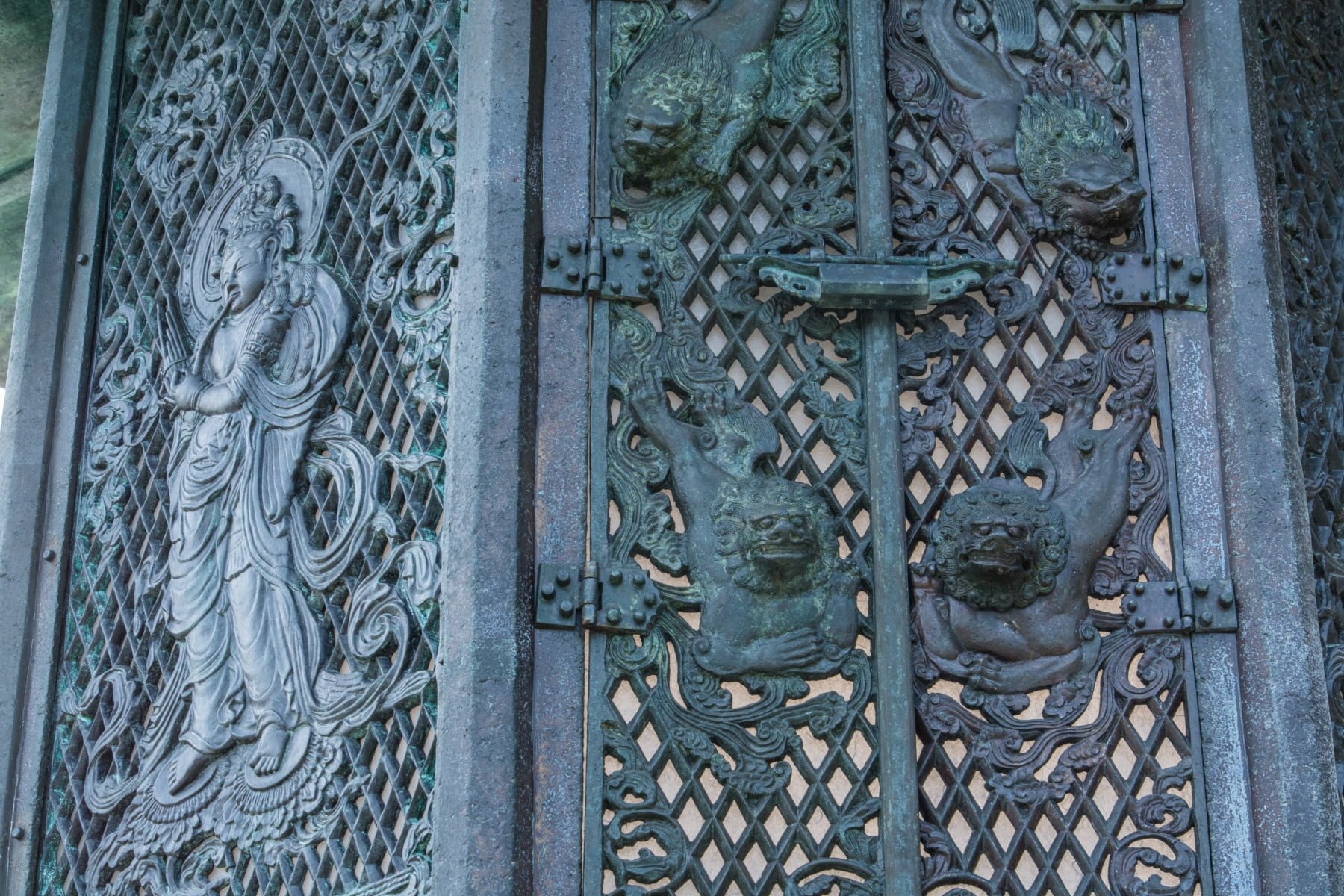
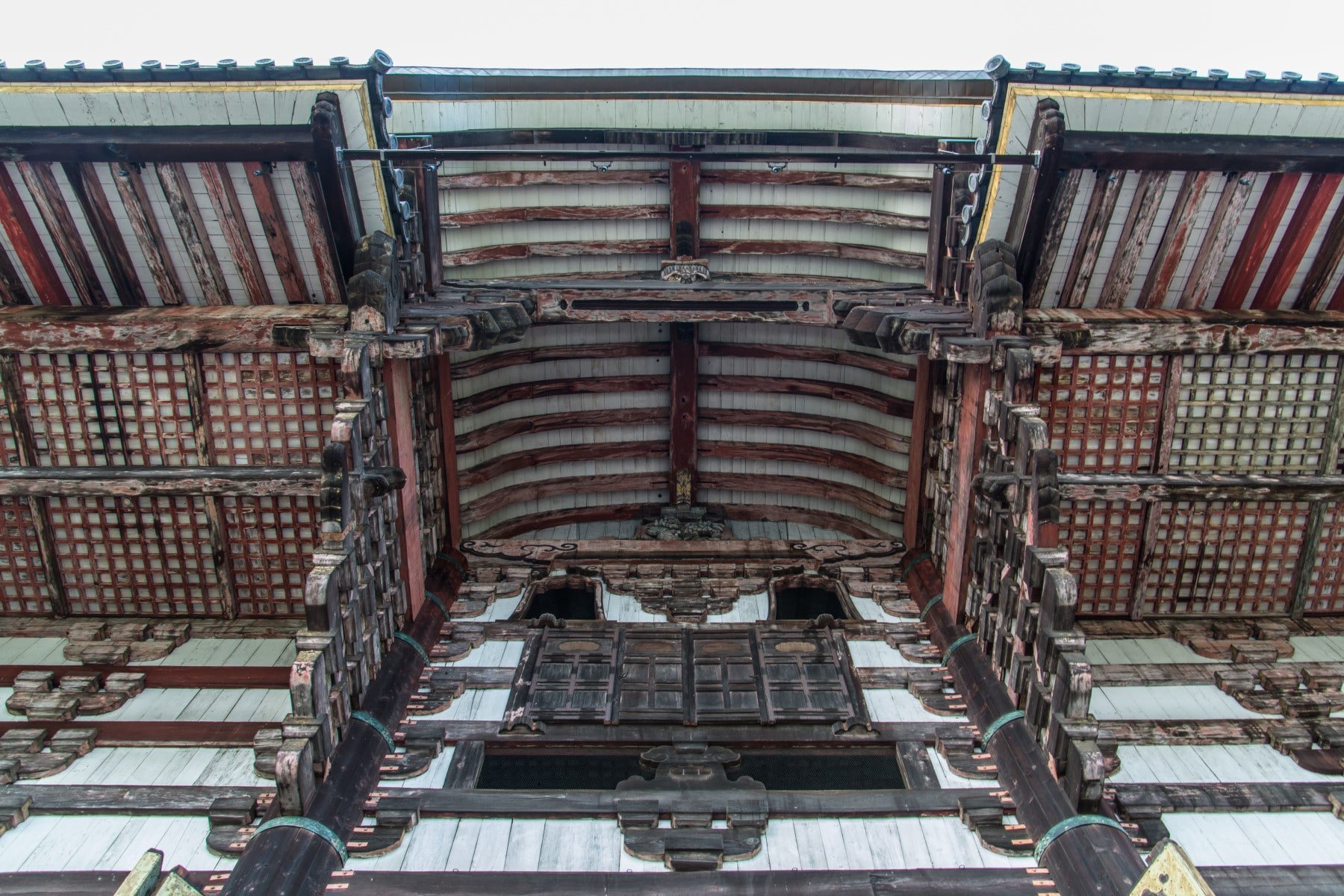
Already in 855, his head fell off due to an earthquake and had to be replaced, but it is considered that only part of the pedestal and the knees remain of the original Great Buddha, the rest being mainly the result of the restoration of 1692. Concretely, the statue represents the Buddha Vairocana in a seated position, called Daibutsu. This translates to "Great Buddha" and by deduction, we understand that Daibutsu-den therefore translates to the Hall of the Great Buddha.
Next to him is a 13 m statue of Kokûzô (also called Akashagarbha), another Buddhist figure. Also present in the Daibutsu-den are two wooden statues of celestial kings, in charge of protecting Buddhist temples in Japan. Originally from China, the Four Celestial Kings are the guardians of the horizons and Buddhist law, one king for each cardinal point.
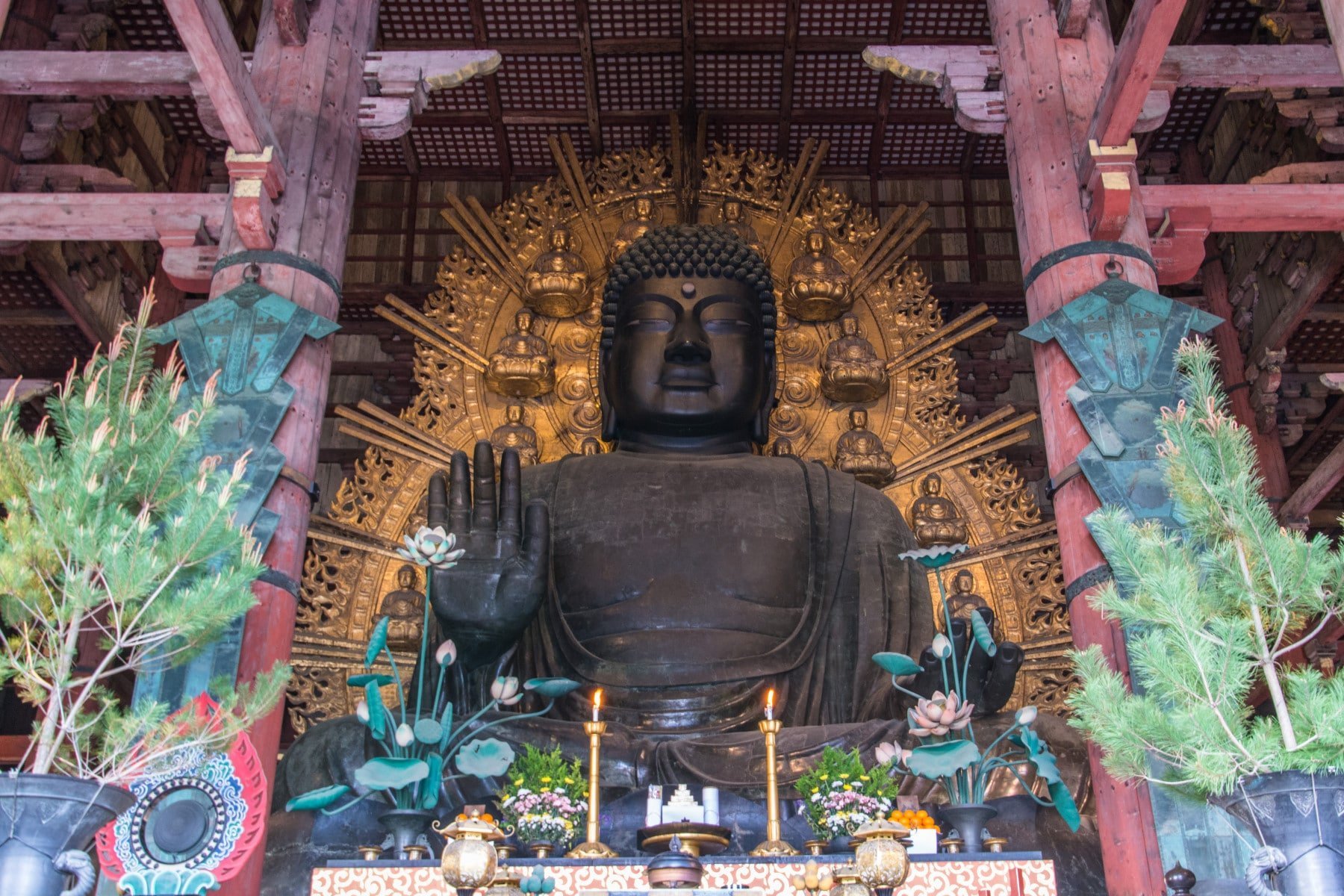
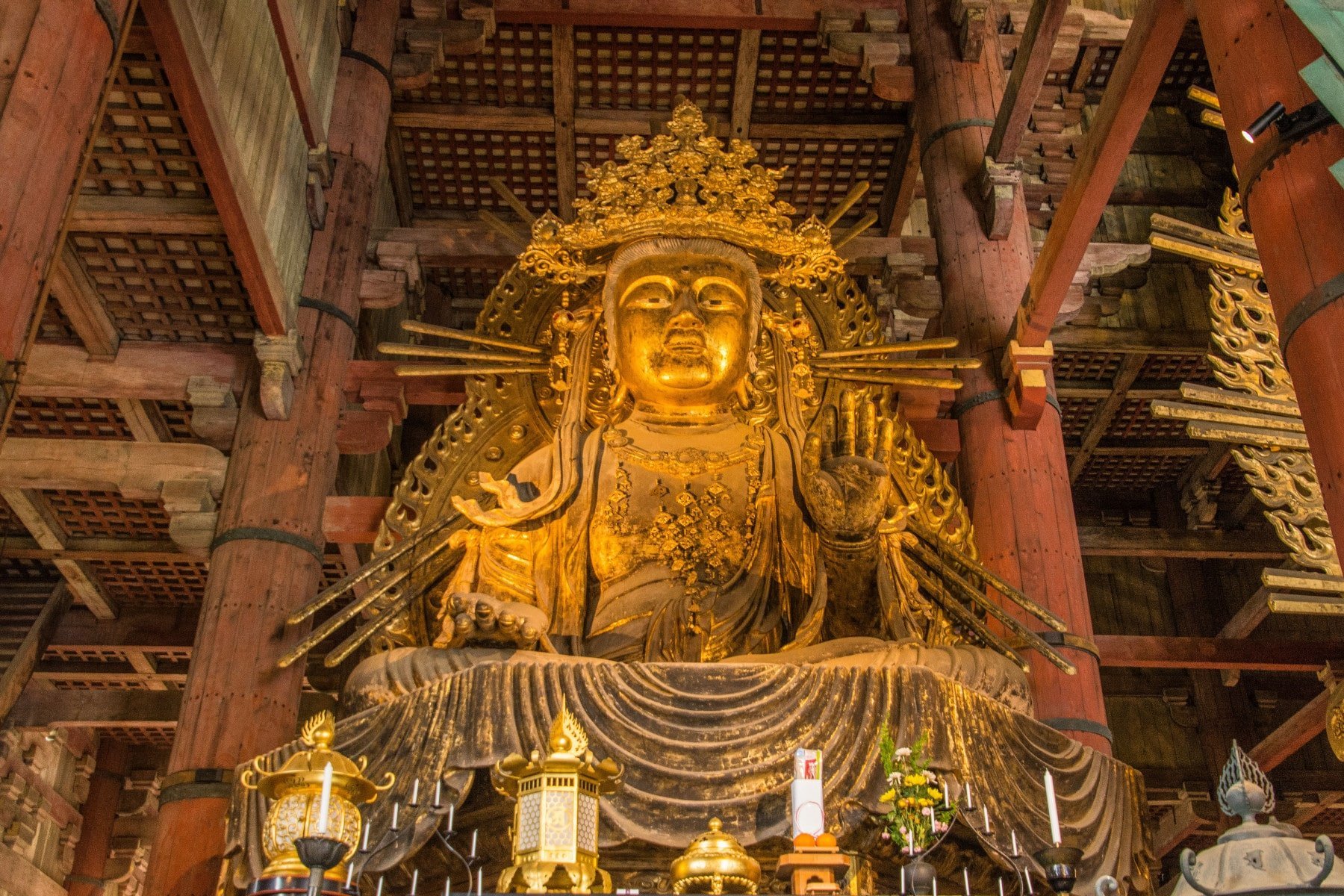
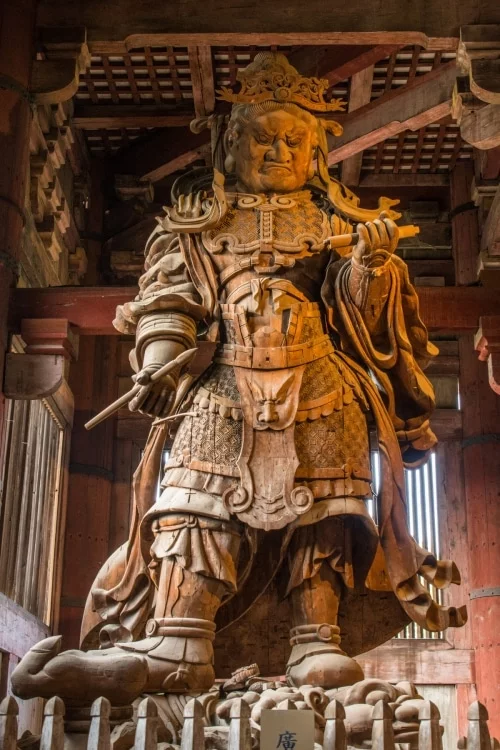
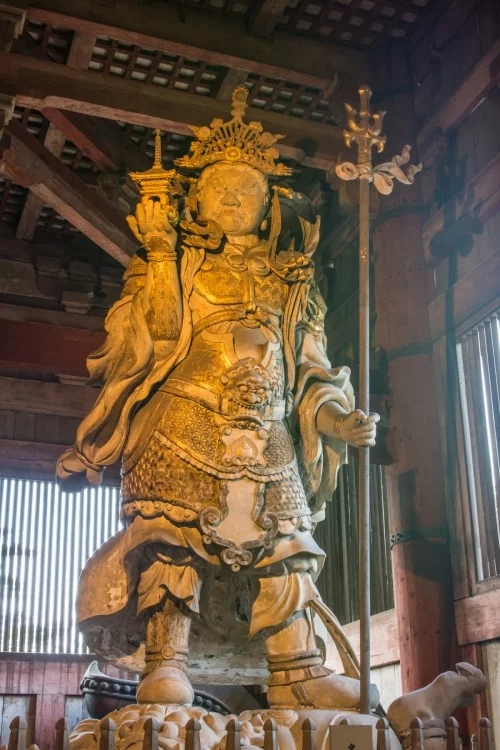
At Todai-ji, there are only two. On the left, Komoku-ten (Virūpākṣa in Sanskrit), king of the West, "the one who sees everything". On the right, a statue of Bishamon-ten, the guardian king of the North (also called Tamon ten in Japanese or Akashagarbha in Sanskrit), defender of Buddhist law and protector of prosperity.
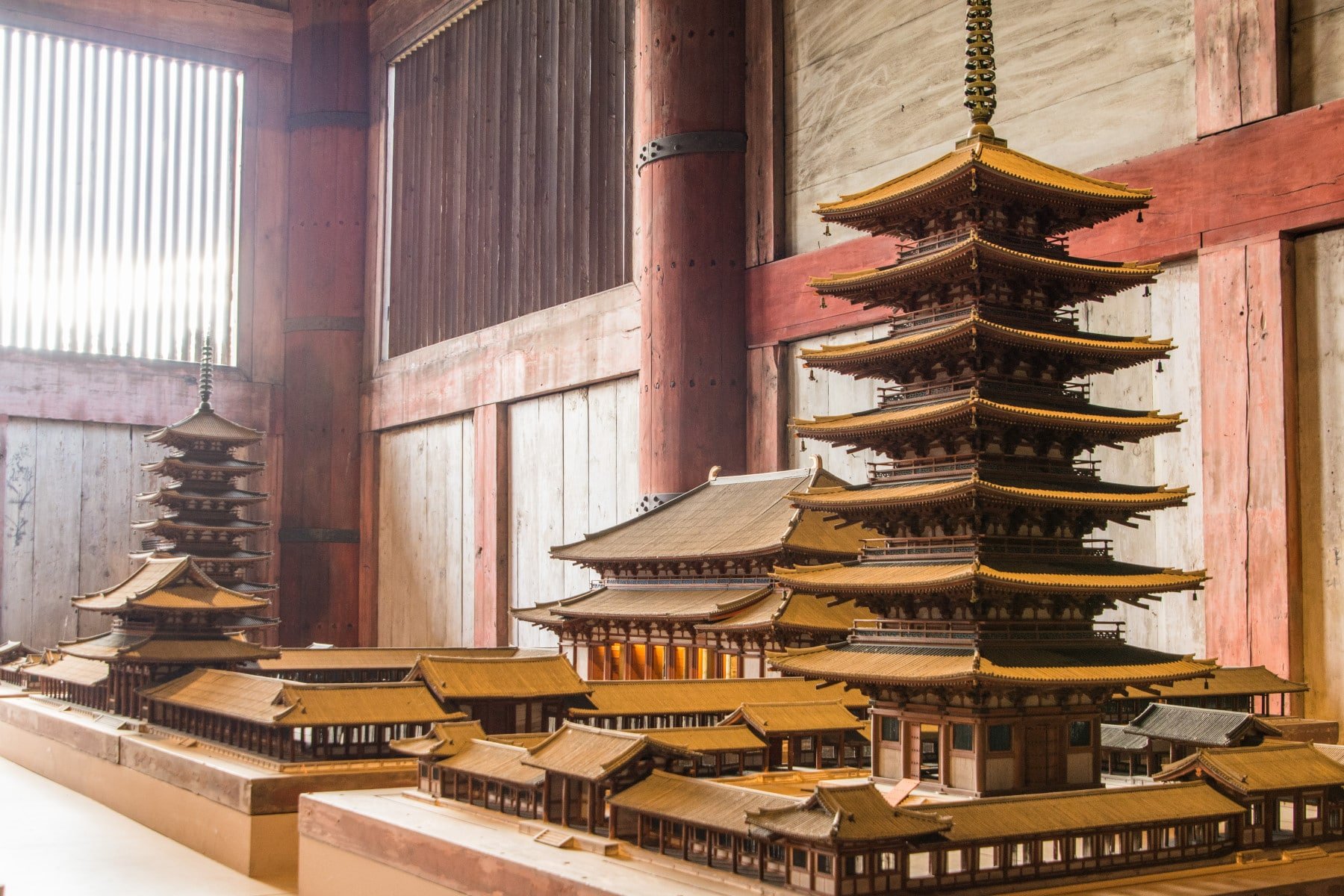
At the time of our visit, we arrive at closing time, so it starts to empty, which is not unpleasant. The late afternoon sunlight filters through the wooden bars that serve as windows. In the background, we can see a model (from the beginning of the last century) synthesizing the overall appearance of the Great Buddha Hall and what surrounded it. Namely two large seven-story pagodas, now gone and of which we can only see as a small mound in Nara Park next door.

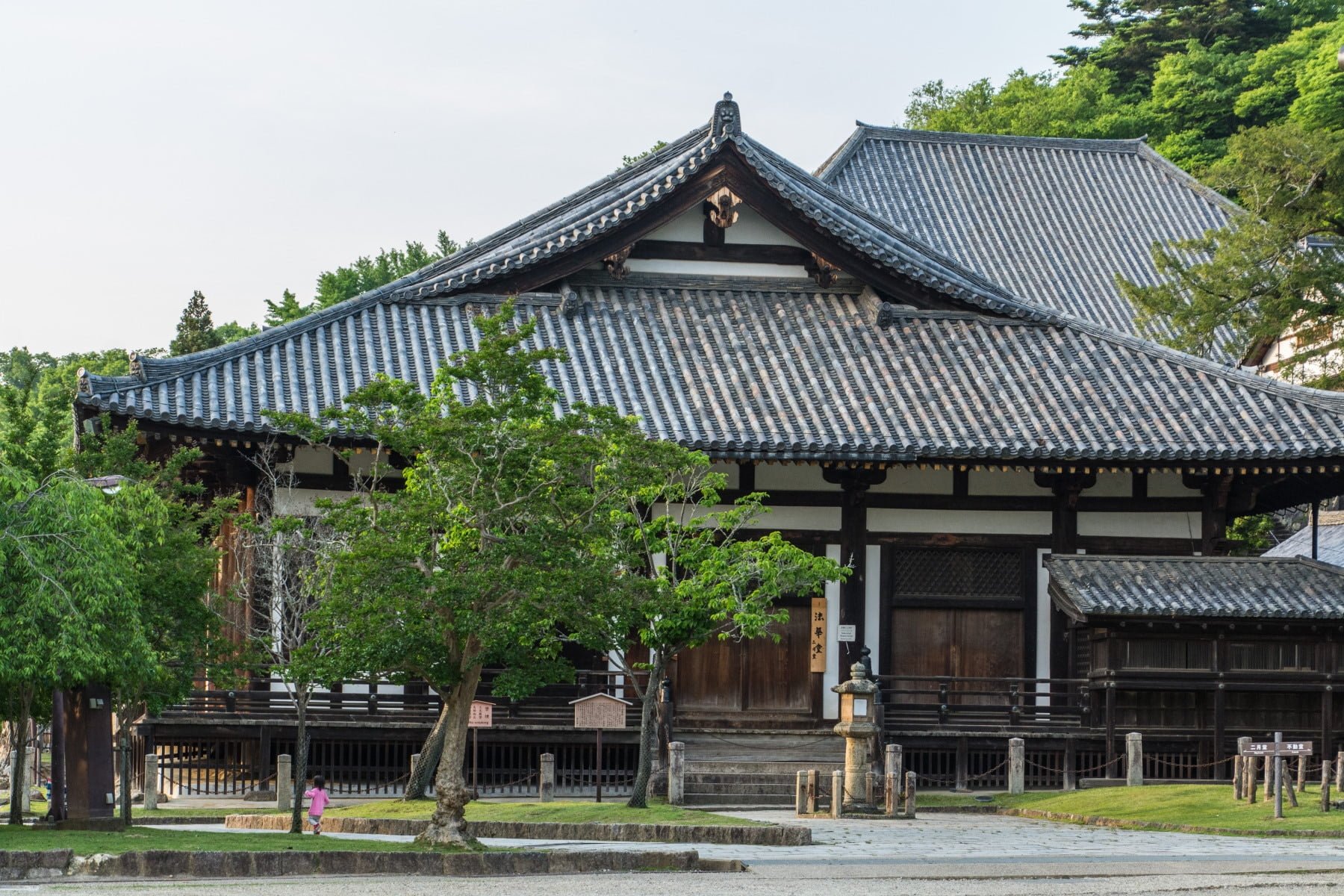
Hokke-dō and Tamukeyama Hachiman, original remains
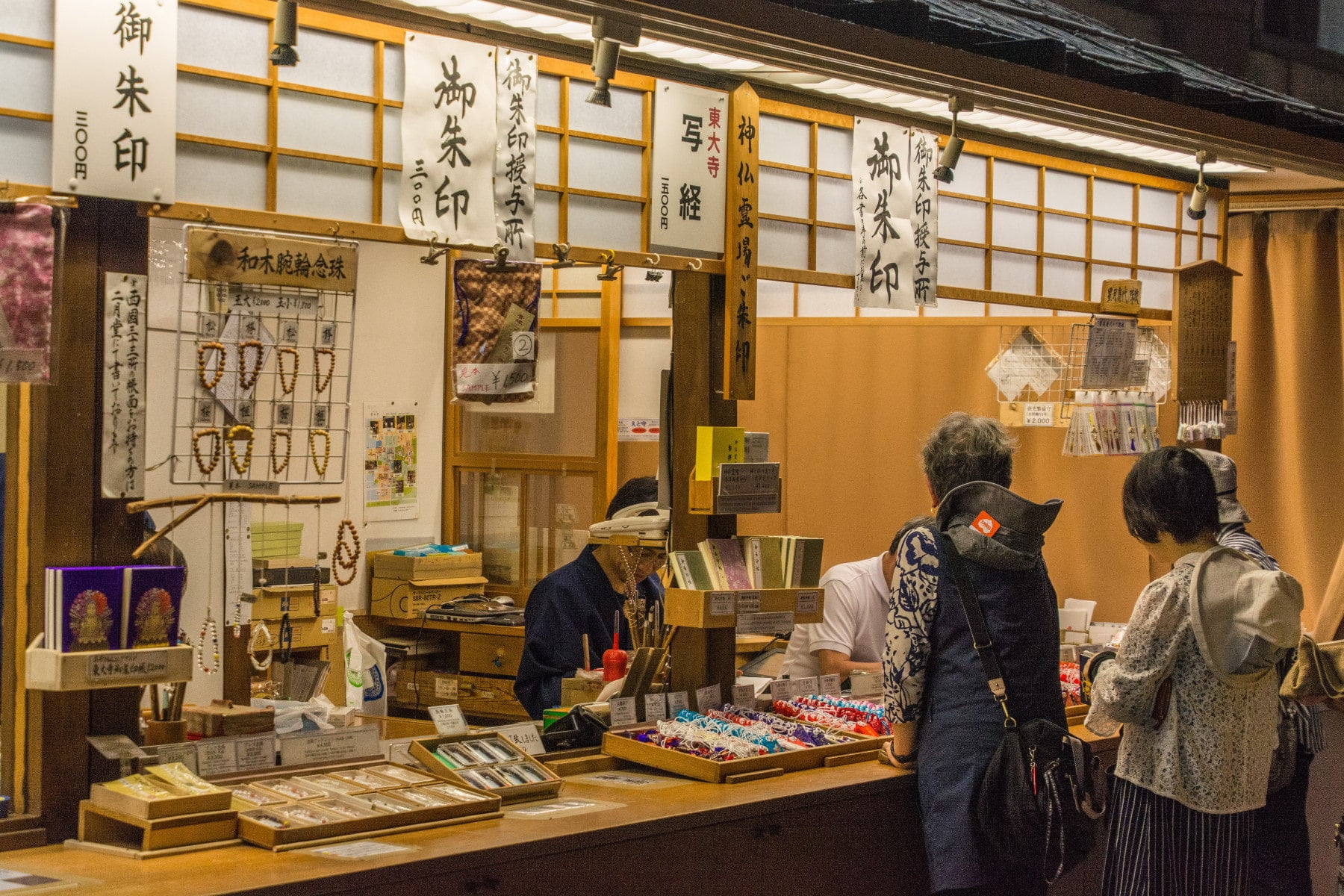
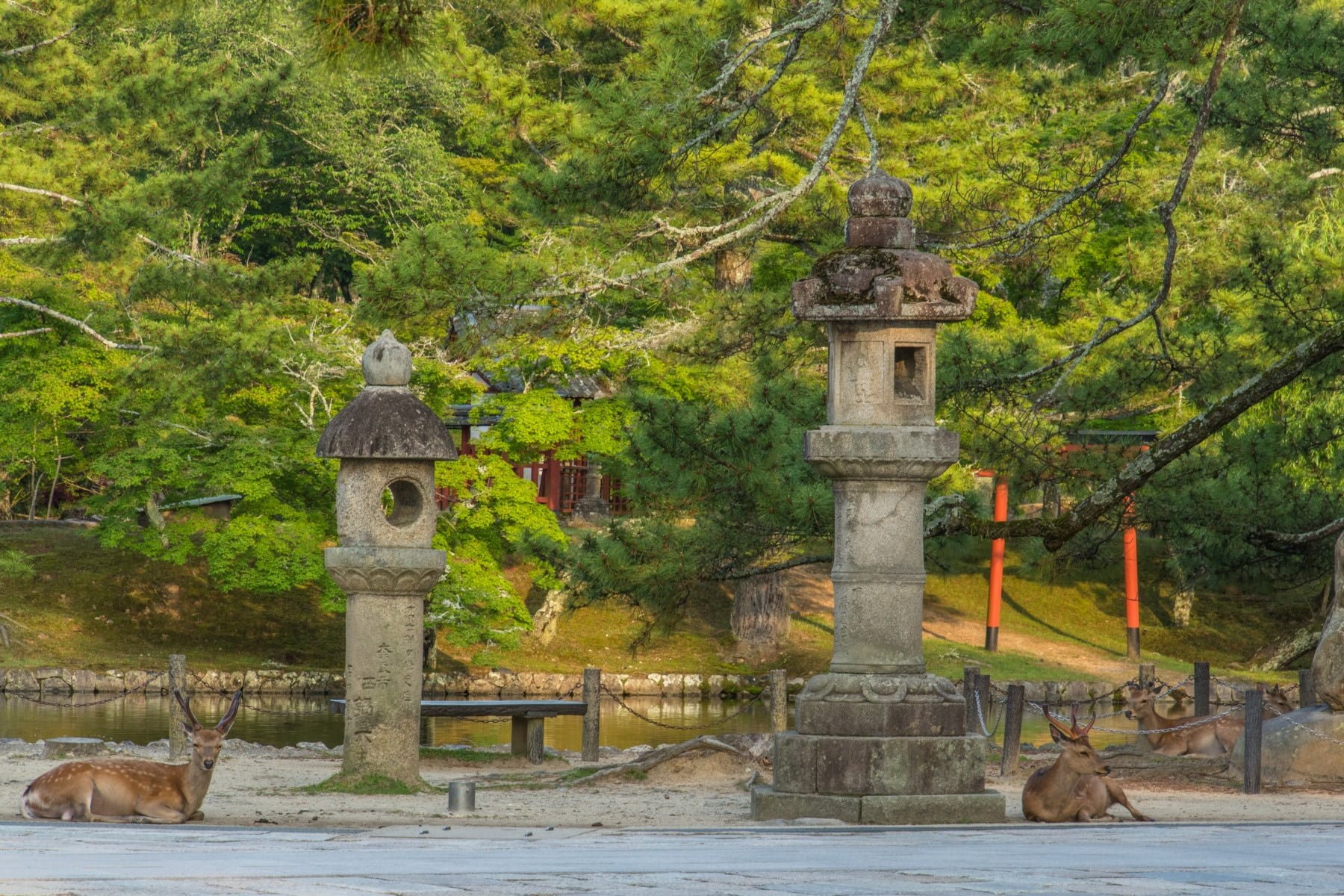
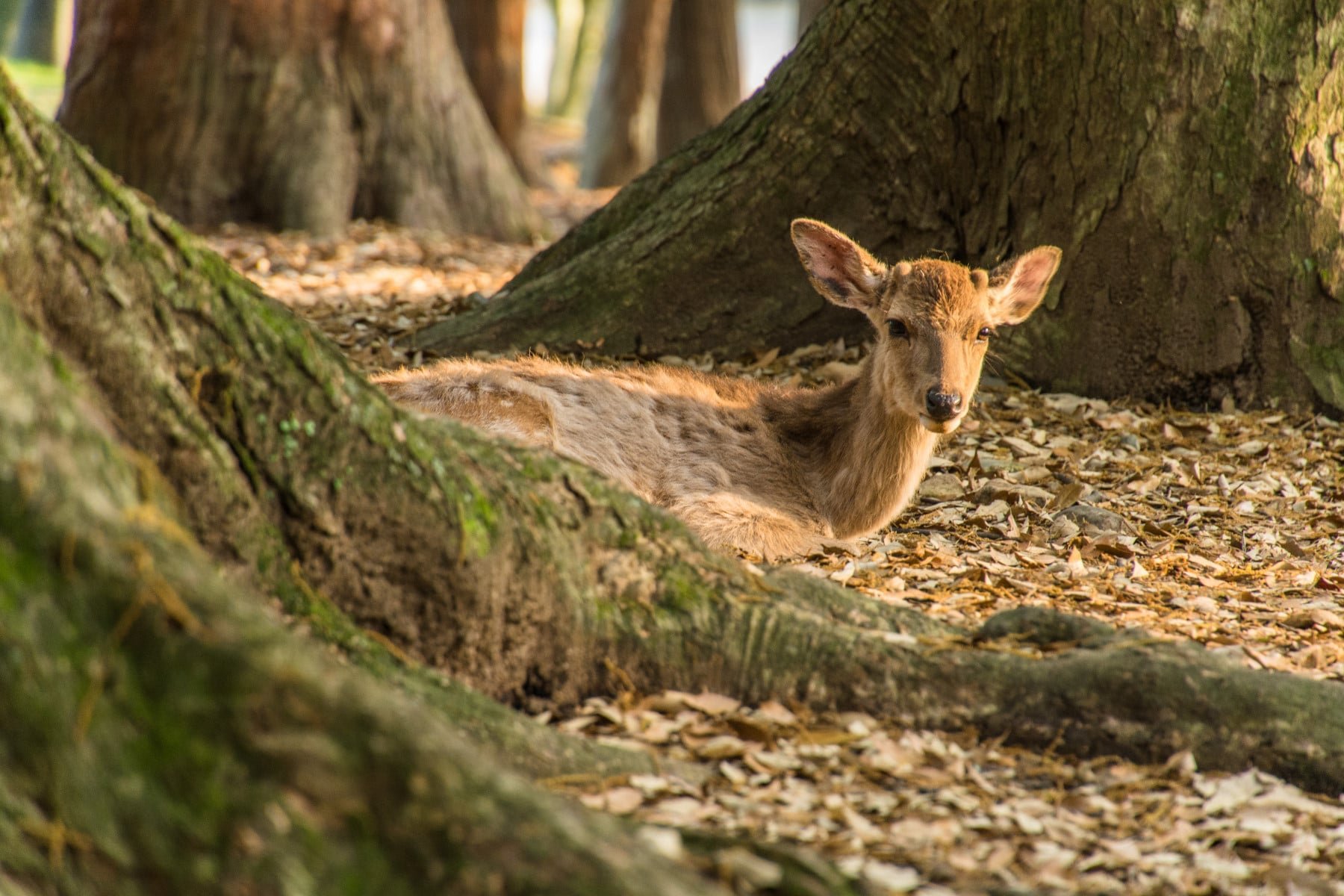
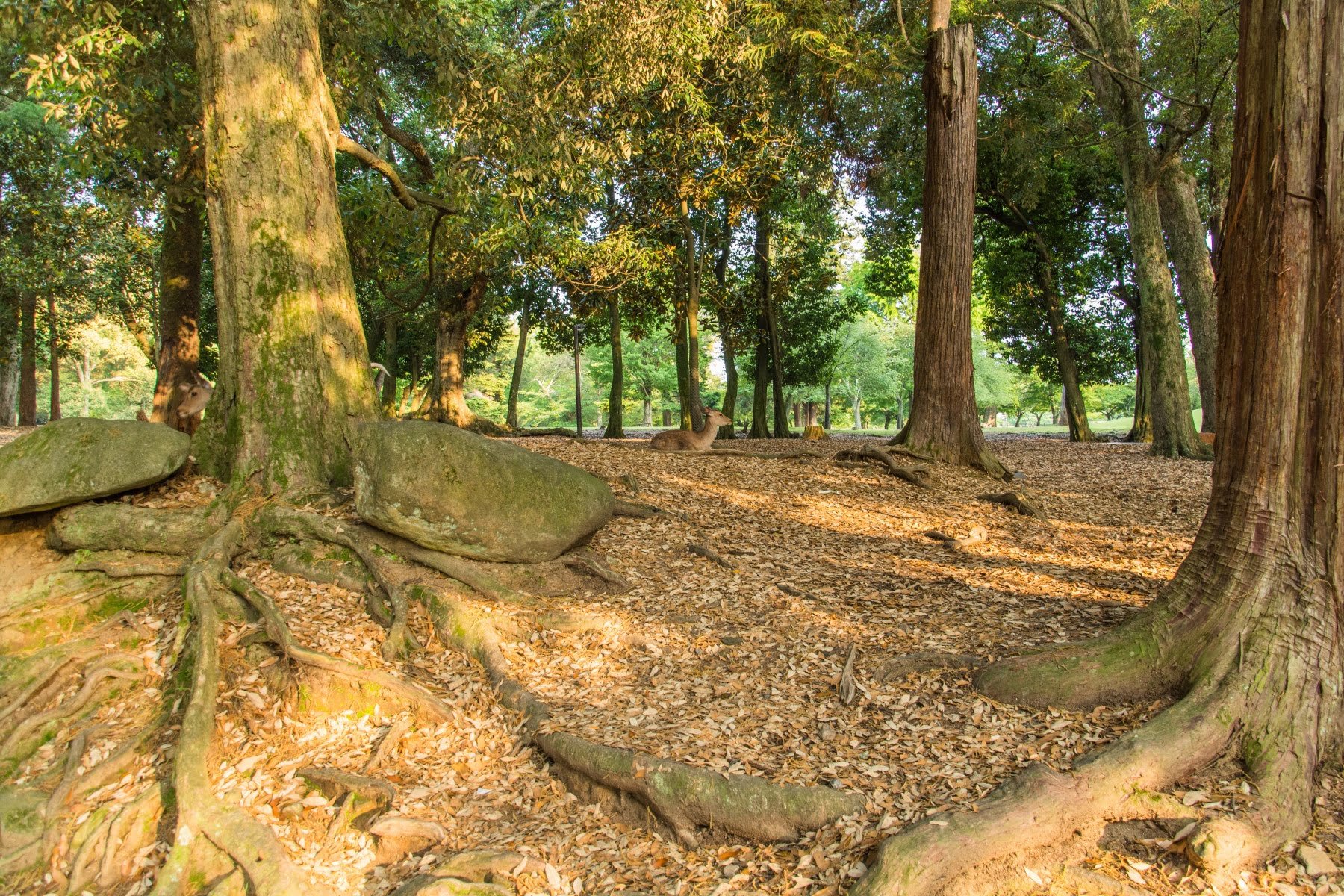
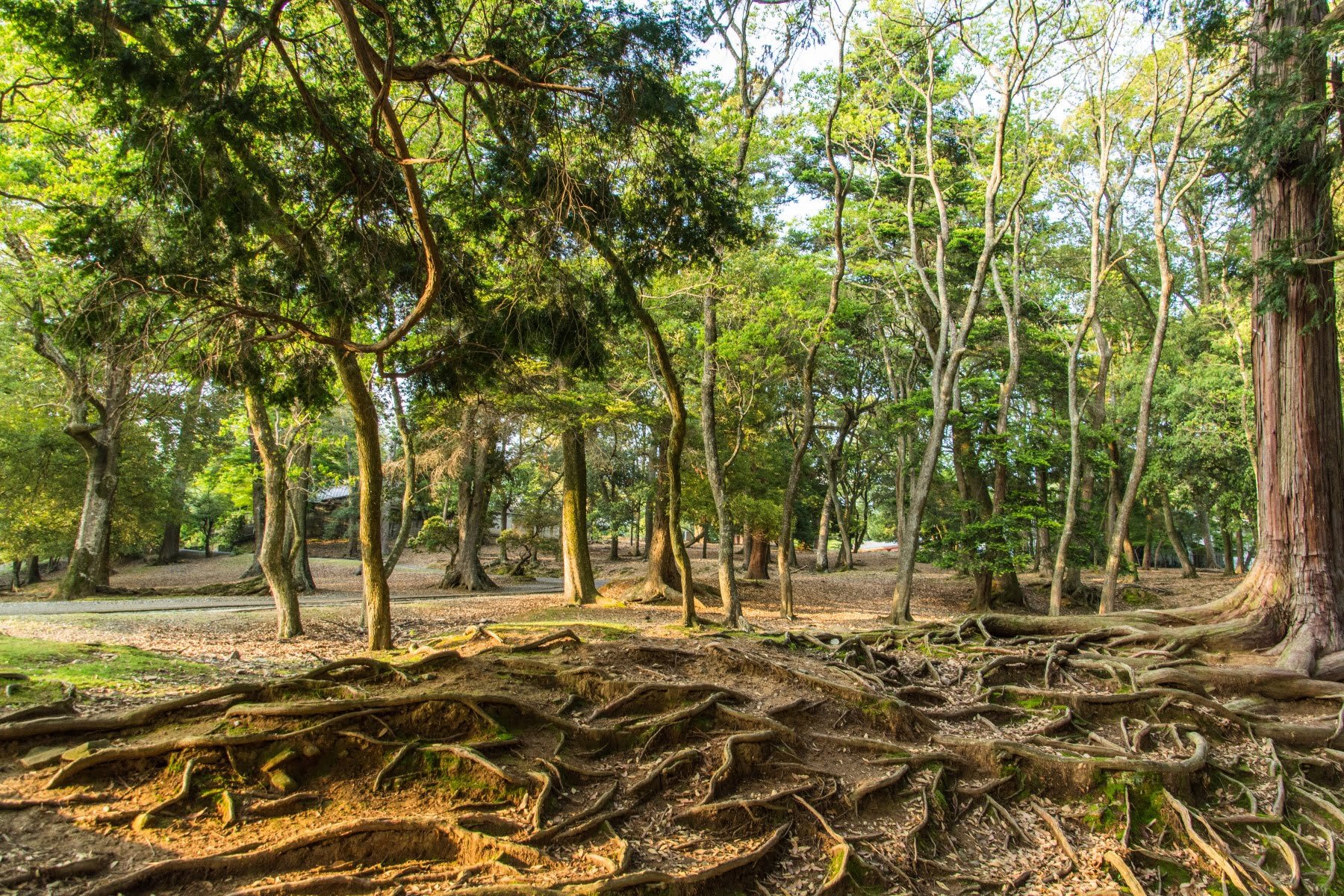
And speaking of the park, we're getting there, but before that, despite it being closed, we'll take a look at the annex buildings. Time is ticking, and the majestic temple is preparing to rest for the night. So, still in the main hall, we make a quick stop at the souvenir shop (I'm surprised it's located within the Daibutsu-den itself). Leaving the area, we walk along the outside of the cloister until we reach some stairs. We're then in a wooded area, where, of course, deer are resting in the shade, away from the tourists (though there aren't many at this hour).
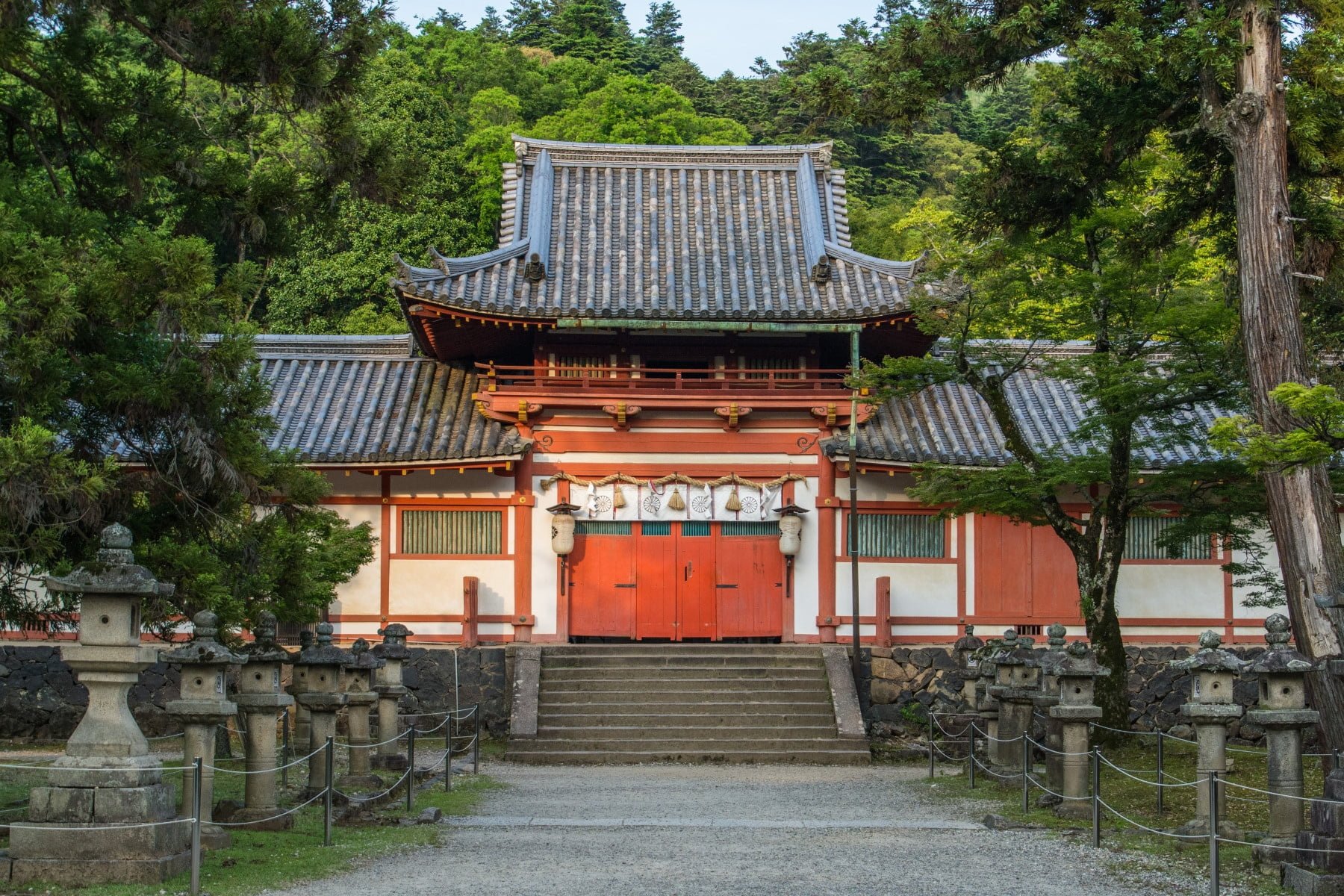
It was there that I realized how quickly time flies, and that just to visit Todai-ji, from the area before the South Gate, it took us an hour and a half. And we missed so much, including Nigatsudo Hall and Shōsō-in. The latter is a former storehouse, also known as the treasure room (because it housed works of art, important scrolls, and other temple treasures). Along with Hokke-do and Tamukeyama Hachiman Shrine, it is one of the few 8th-century buildings still standing today, thus preserving its original architecture.
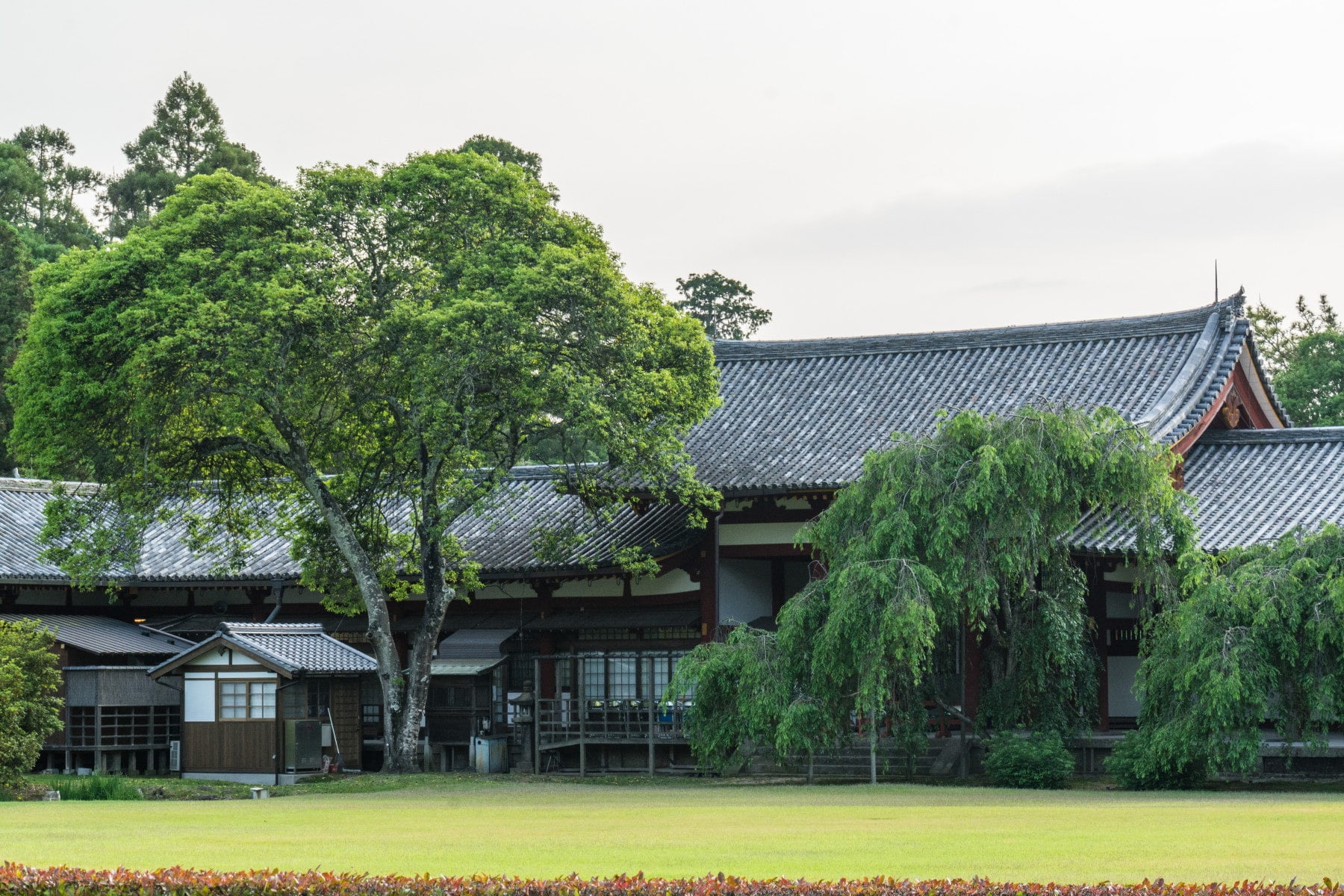
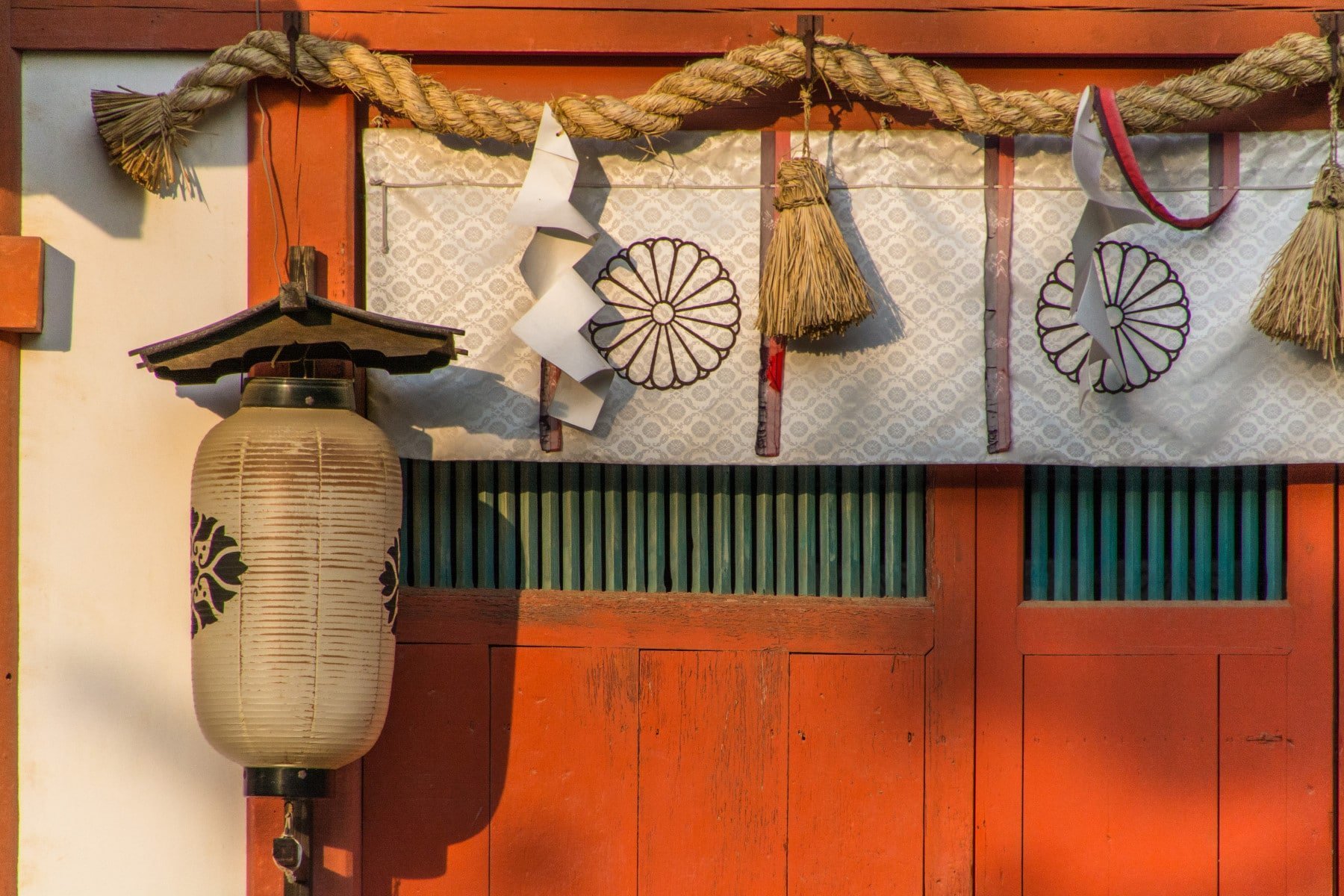
It is precisely the Hokke-do that we see on our left at the top of the stairs, with the Tamukeyama Hachiman sanctuary opposite.
Nara Park (Toto-ato enchi)
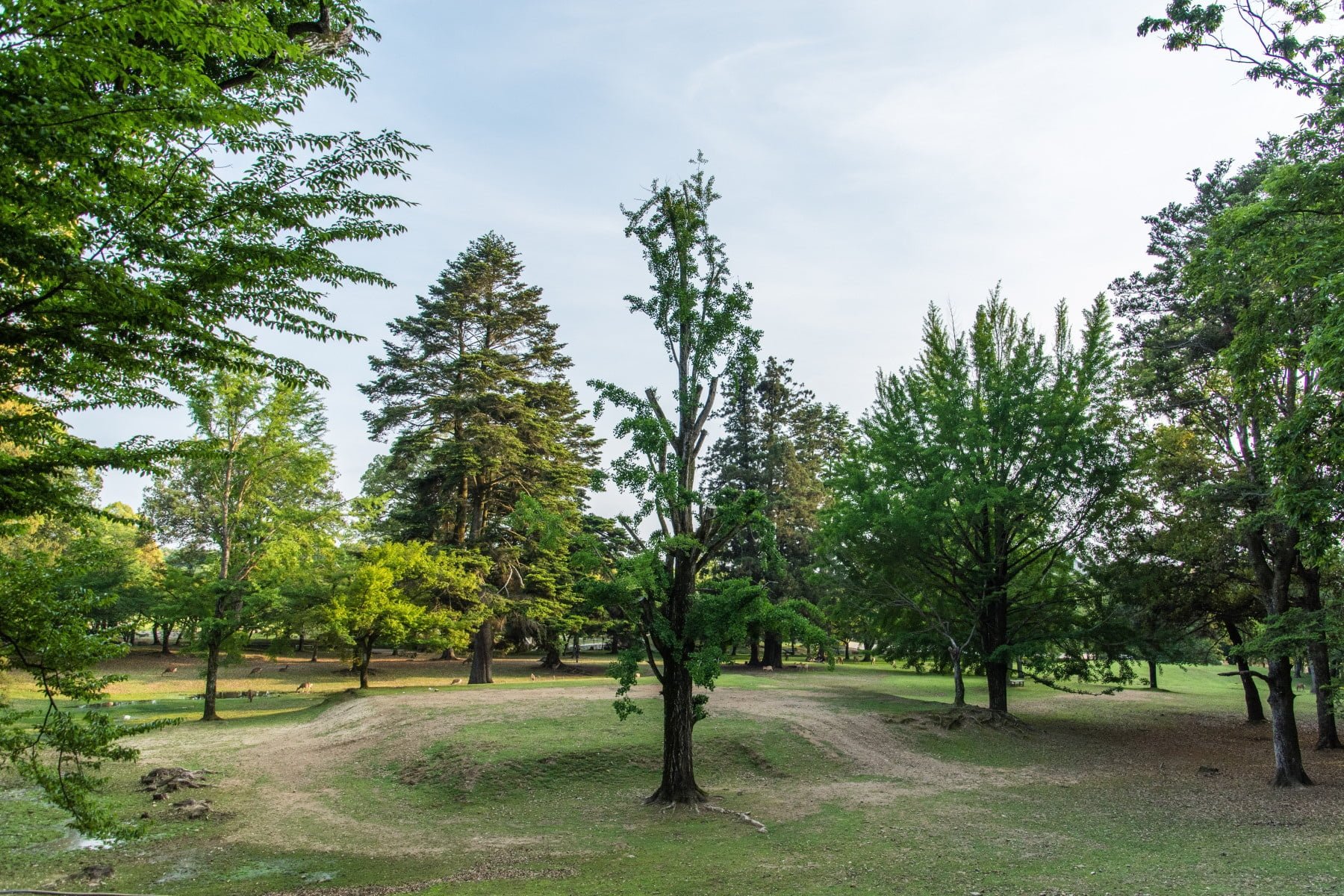
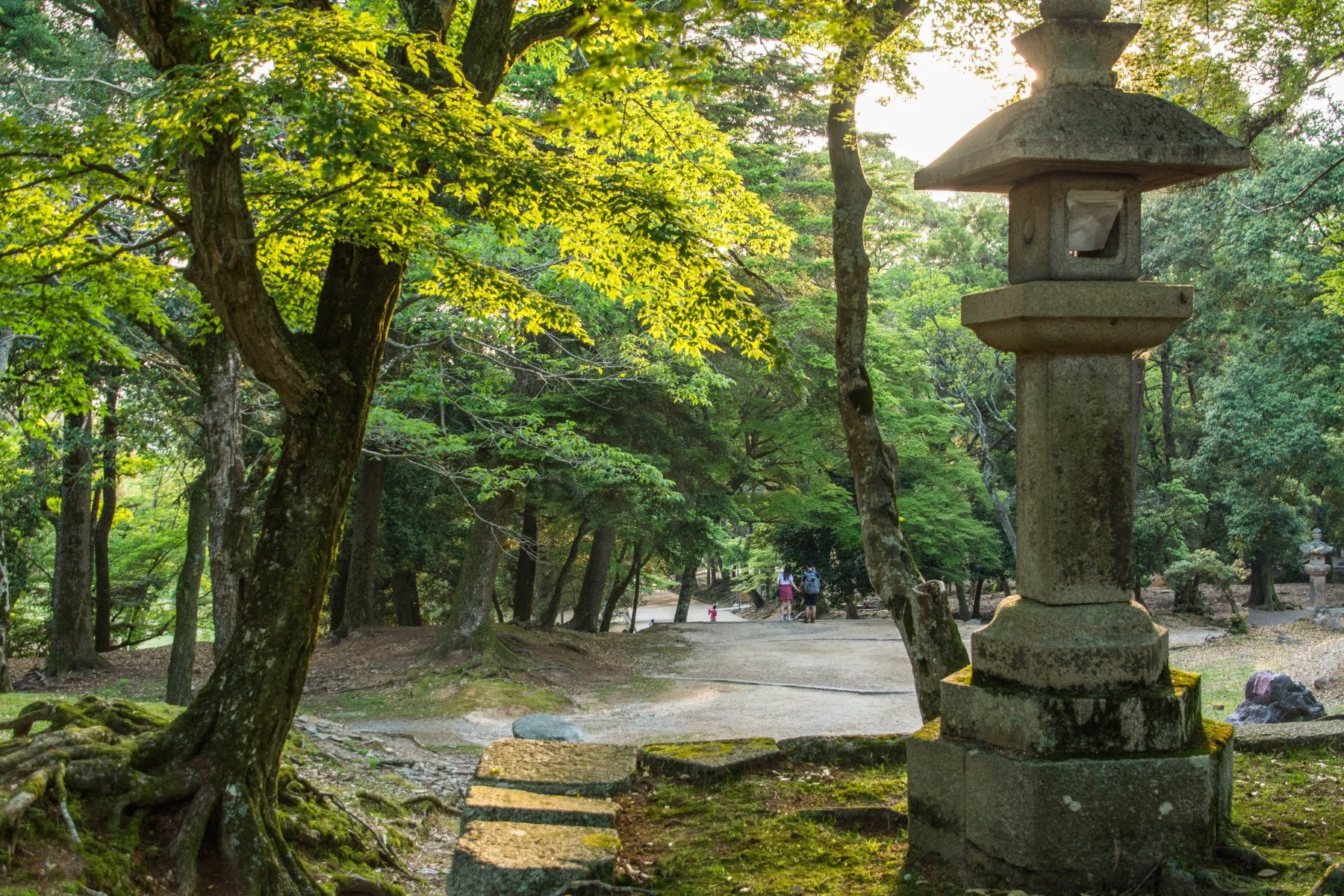
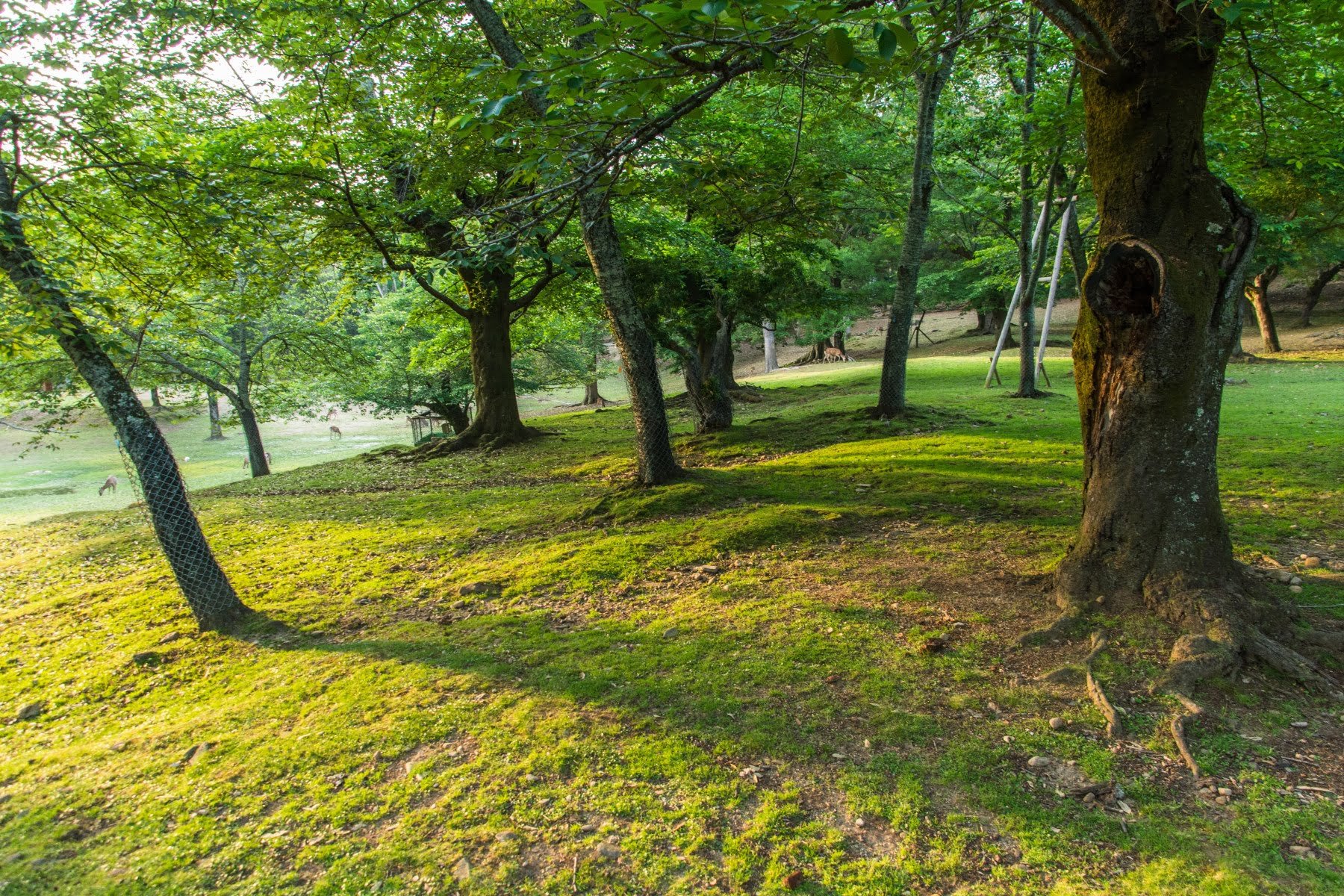
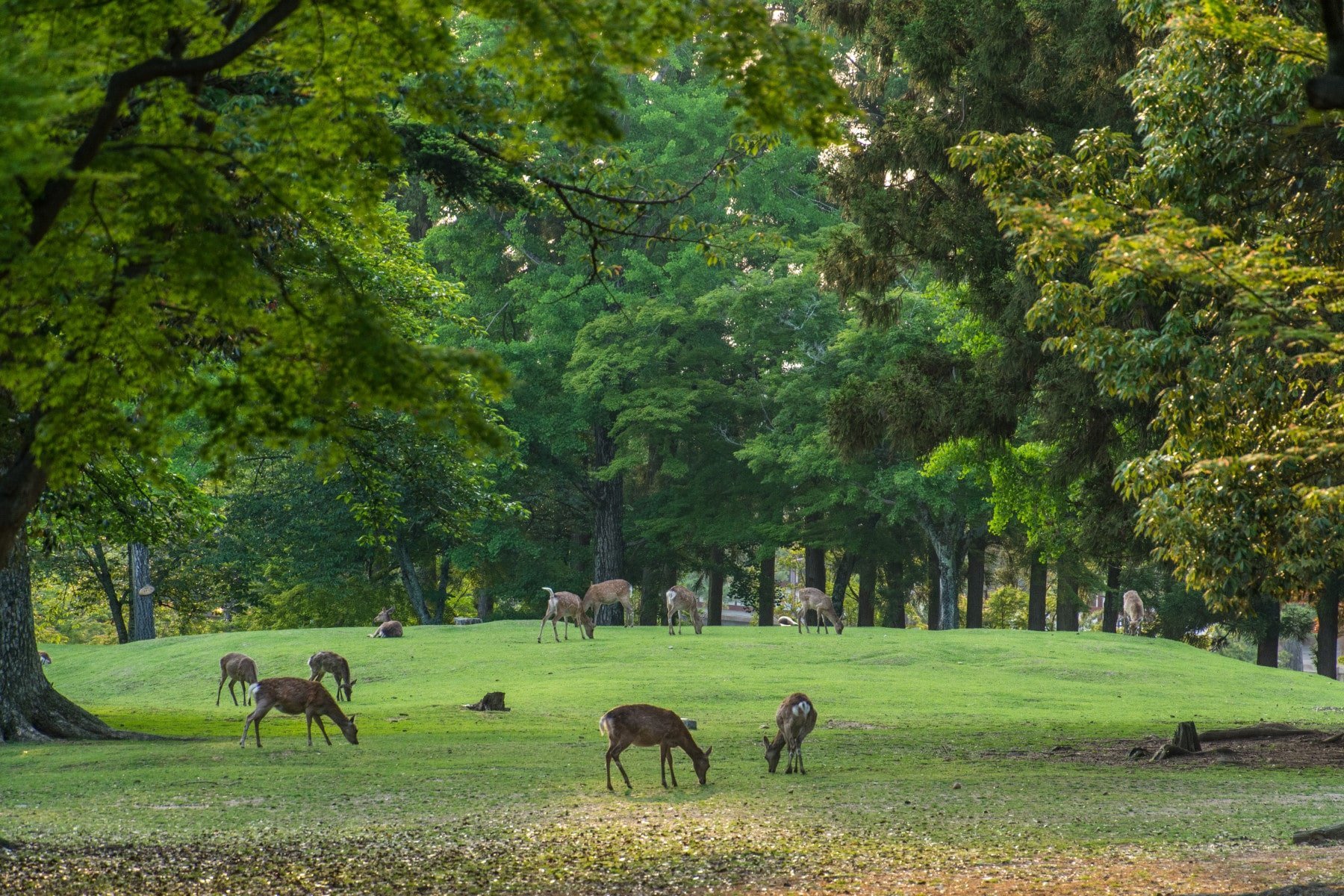
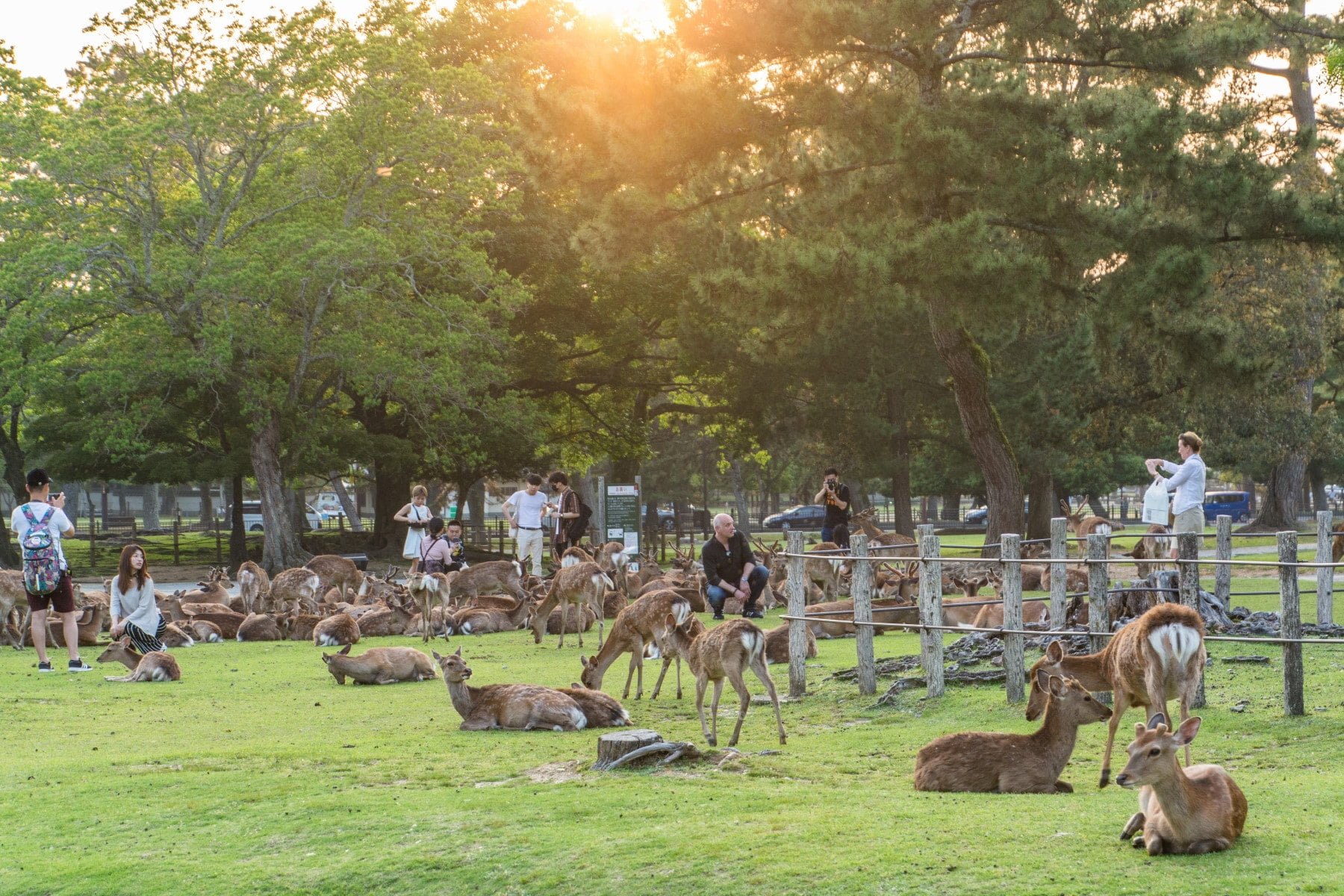
While I regretted, due to lack of time, not having been able to go to one of the other main temples of Nara, the Kasuga-taisha, we cross the northern part of Nara Park to retrace our steps. This is the area with the highest concentration of deer, and with this beautiful light at the end of the day, the setting is particularly pleasant.
We then pass by the Mirror Lake and the Nandaimon Gate, both deserted by tourists. Instead of taking the exact opposite path to where we came from, we pass this time through the park surrounding the Nara National Museum. This is where we finally come across the most deer gathered in one place. The spot where tourists ending their day in Nara, like us, rush to immortalize the moment, with the setting sun as a bonus.

Bonus restaurant + coffee
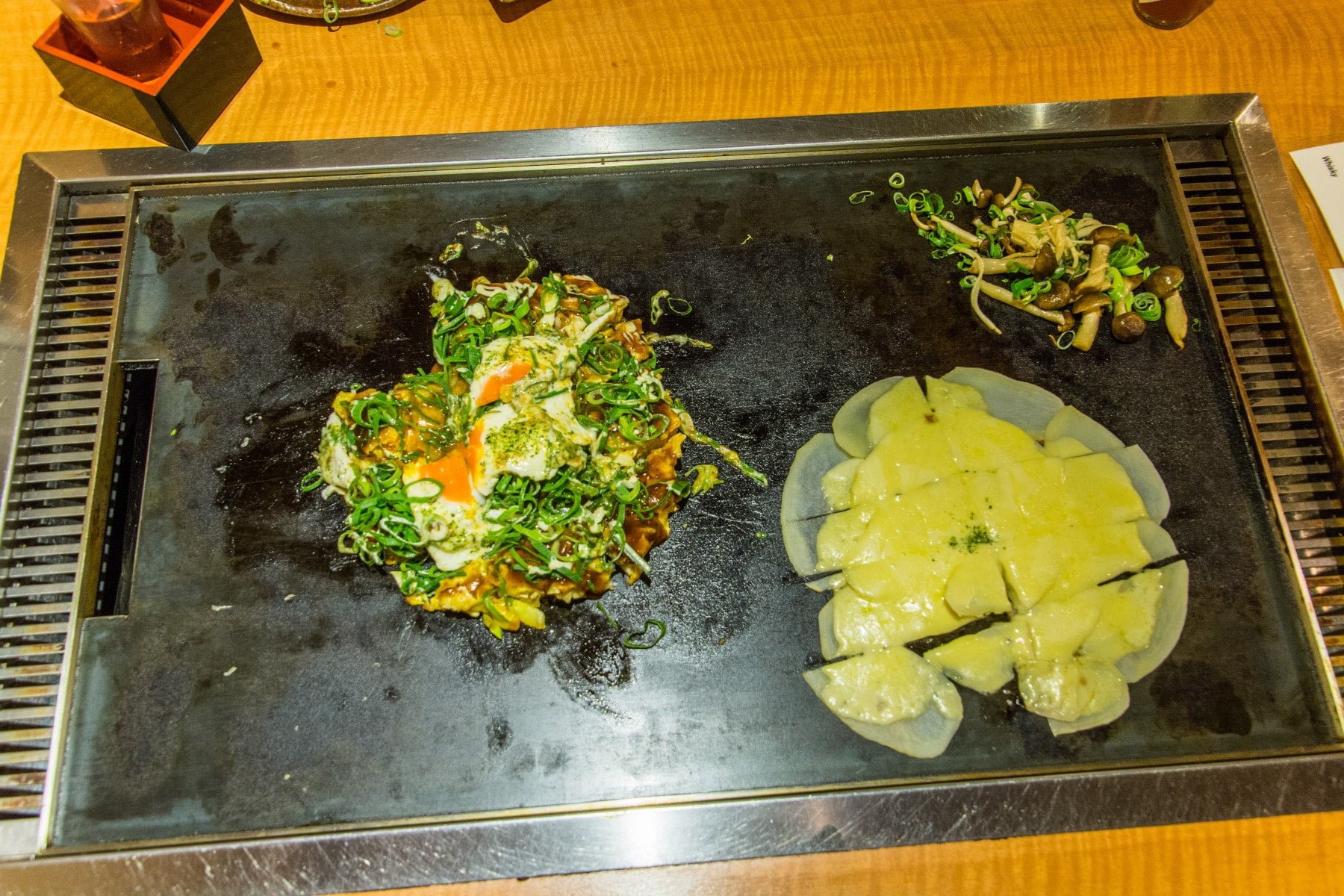
And speaking of bonuses, I'll give you one. To close out the day, and since we were hungry, we went straight to a restaurant we'd spotted the day before, Kamaya, which serves okonomiyaki, a kind of Japanese pancake that's prepared right in front of you on a griddle.
As a side note, I'm including this as a "bonus" because I don't usually talk much about restaurants and food on the blog. Firstly, because there are generally so many options that I tend to prefer discovering them for myself, and secondly, because it's so subject to change that I'm often afraid the information will quickly become outdated. Between changes of address, temporary or permanent closures, a change of chef resulting in lower service, etc. In short, there are many factors, so this time, the information is here, do with it what you will!

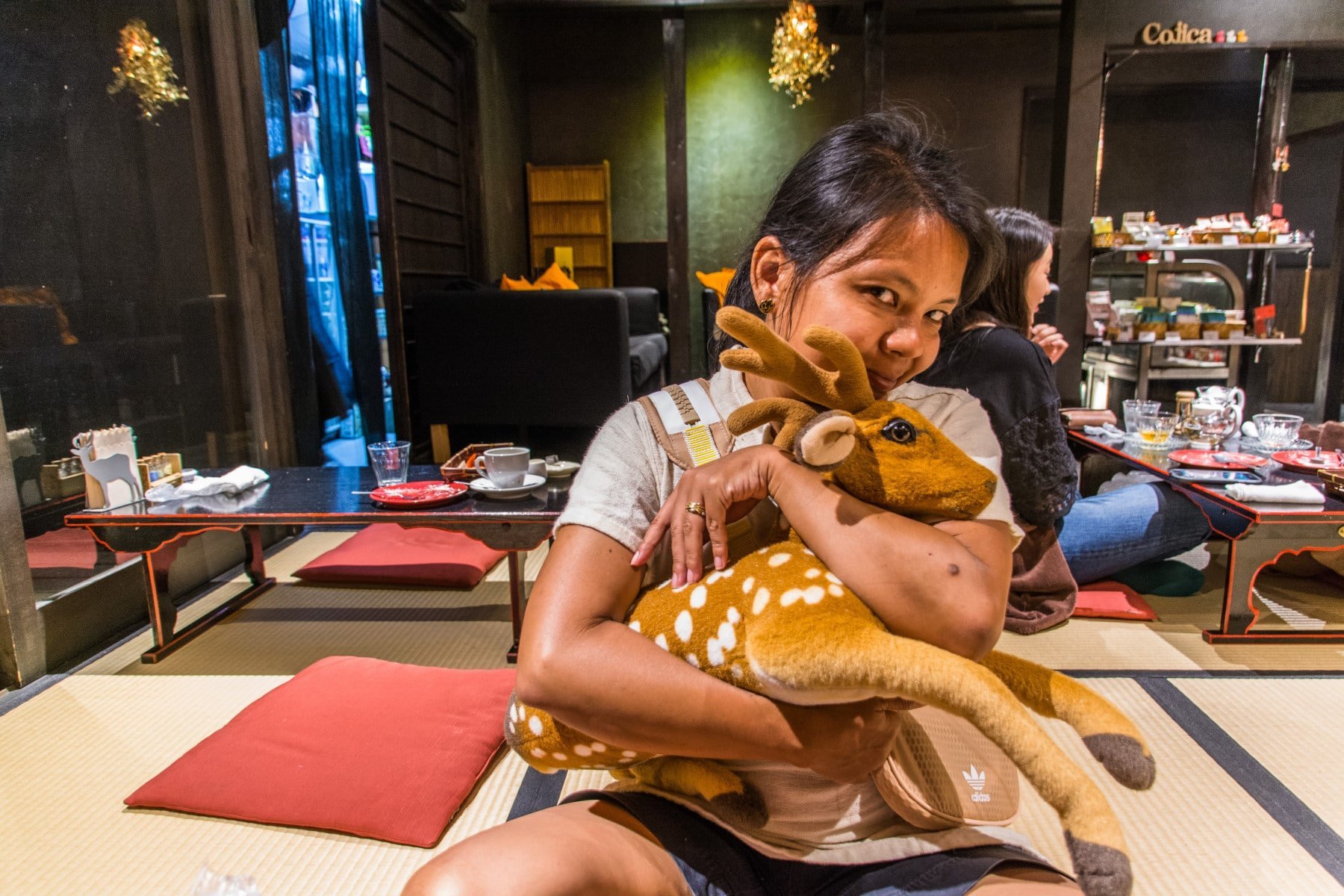
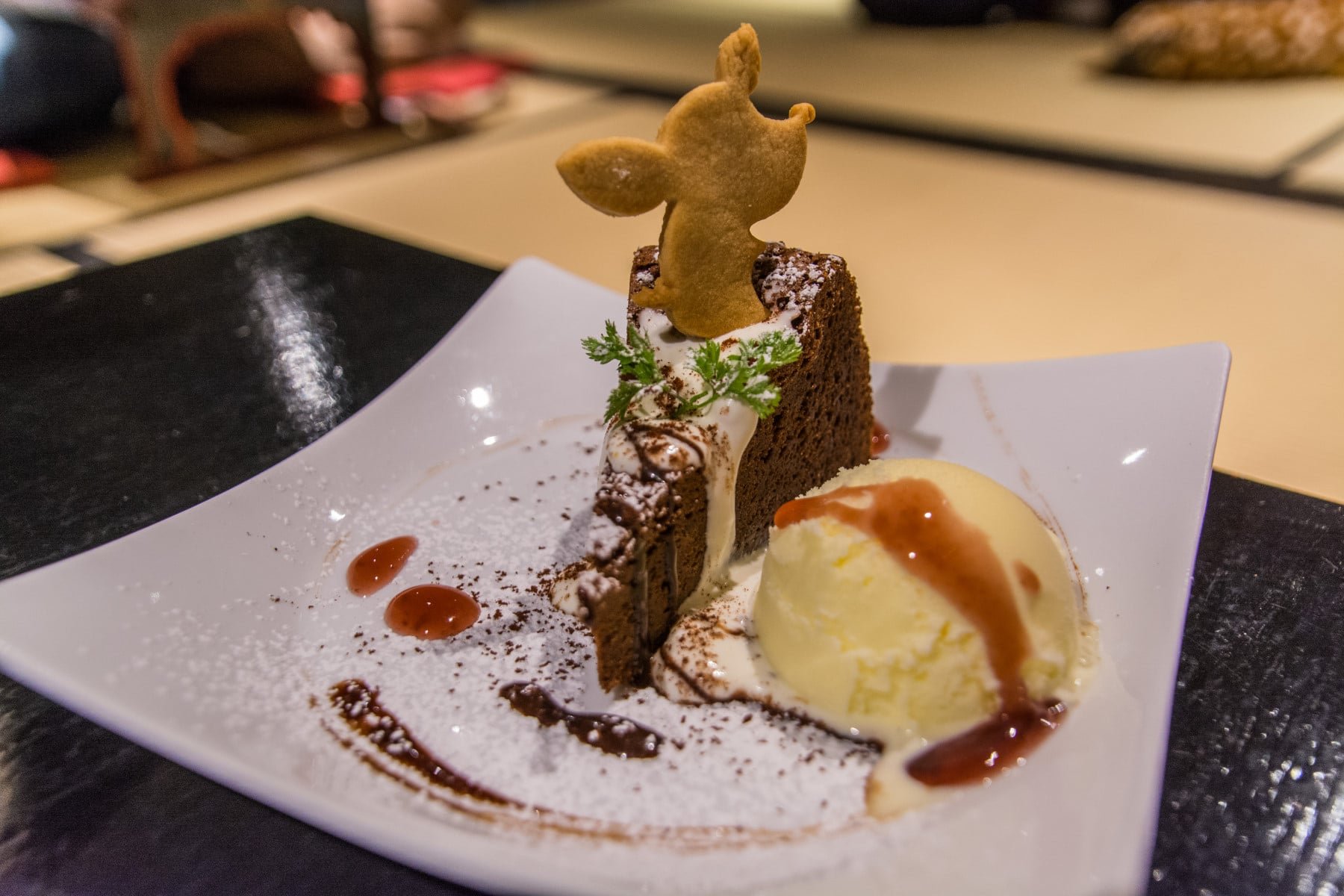
And as we return to the hotel, we crack 400 m from it for a small dessert while passing in front of a café, where we sit in the traditional way (without a chair), the Cojica café.
Nara, a must-see in the Kansai region?
In conclusion to this (too) short stay in Nara, I would say that just for the Todai-ji temple and its impressive Great Buddha hall, the trip, whether from Kyoto or Osaka, is worthwhile.
And from our experience, a full day on site, while it may be enough, may also be just enough if you really plan to delve into the history of this first capital and tour the main sites. I would say it depends if you are the type to just look "normally" and pass by or like me, to hang around, observe, take lots of pictures and spend an hour for a visit that would take half as long.
The advantage is that the main sights in Nara are clustered around Nara Park and at the foot of Mount Wakakusa. Originally, in addition to Kasuga Taisha mentioned earlier, we had planned to also visit Isuien Garden, next to Todai-ji Temple. We were also planning (we were a bit ambitious…) to hike up Mount Wakakusa, but clearly, with our visit to Wakakusa, that wasn't possible…
Afterwards, if you want to explore the region a bit more, besides Asuka, a village that preceded Nara as a political and religious center in the 6th and 7th centuries, don't miss Horyuji Temple, which we had originally planned to include in our itinerary… Founded in 607, it has never burned down, and as a result, Horyuji contains the oldest wooden structures in the world, in addition to being one of the oldest temples in the country. This temple is located near Yamatokōriyama (7 km away, but a train line running from Nara to Osaka passes close to the temple with a dedicated stop), a town southwest of Nara.
Did you like this article? Share it on Pinterest!