Krabi is much more than just dream beaches and photogenic karst cliffs. This southern Thai province, too often reduced to Ao Nang or Railay, is full of places to explore, national parks rich in flora and fauna, and activities for all tastes: kayaking, climbing, hot springs, waterfalls, go-karting…
Its appeal is no accident; it is undoubtedly one of the most beautiful regions in Thailand . Here is an overview of everything there is to see and do in Krabi — both on land and at sea.
Why go to Krabi?
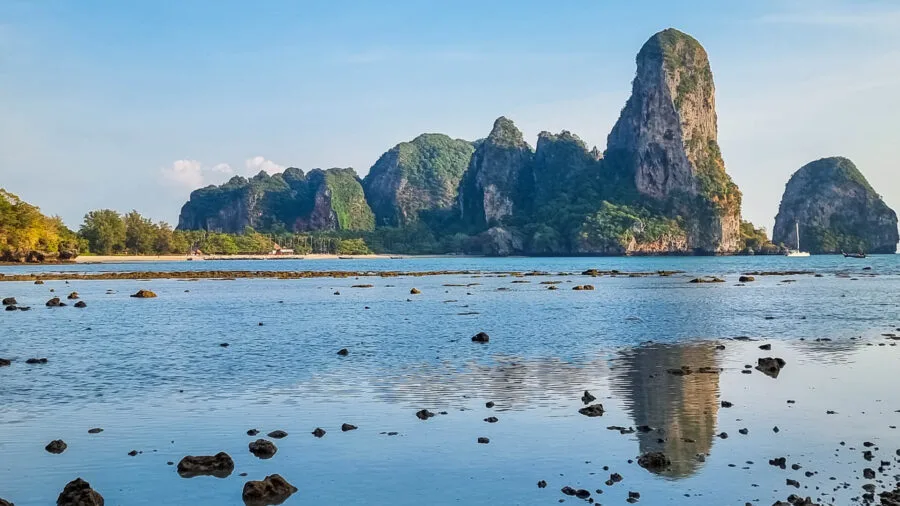
As mentioned in the introduction, Krabi is a particularly well-rounded province. It offers a rare balance in Thailand: spectacular beaches and idyllic islands, but also jungle, scenic hikes, and wilder areas far from the crowds.
Unlike Phuket or Koh Samui, the atmosphere here is generally more relaxed. And above all, we're talking about an entire province—not just a single island—which allows for a variety of landscapes and experiences without feeling like you're going in circles.
How many days should I plan for?
Allow at least 3 to 4 days to see the must-see sights around Krabi. A week allows you to explore the region more leisurely or add a stay on an island like Ko Lanta or Ko Phi Phi.
Where to put your suitcases?
- Ao Nang : the most practical and central base for exploring the beaches and islands.
- Railay : spectacular setting, more isolated as it is only accessible by boat.
- Krabi town : more local and quiet, ideal for a stopover or a late arrival from the airport.
- Koh Lanta : perfect for a more relaxed stay over several days, but less strategic for exploring the whole province.
The must-sees around Ao Nang
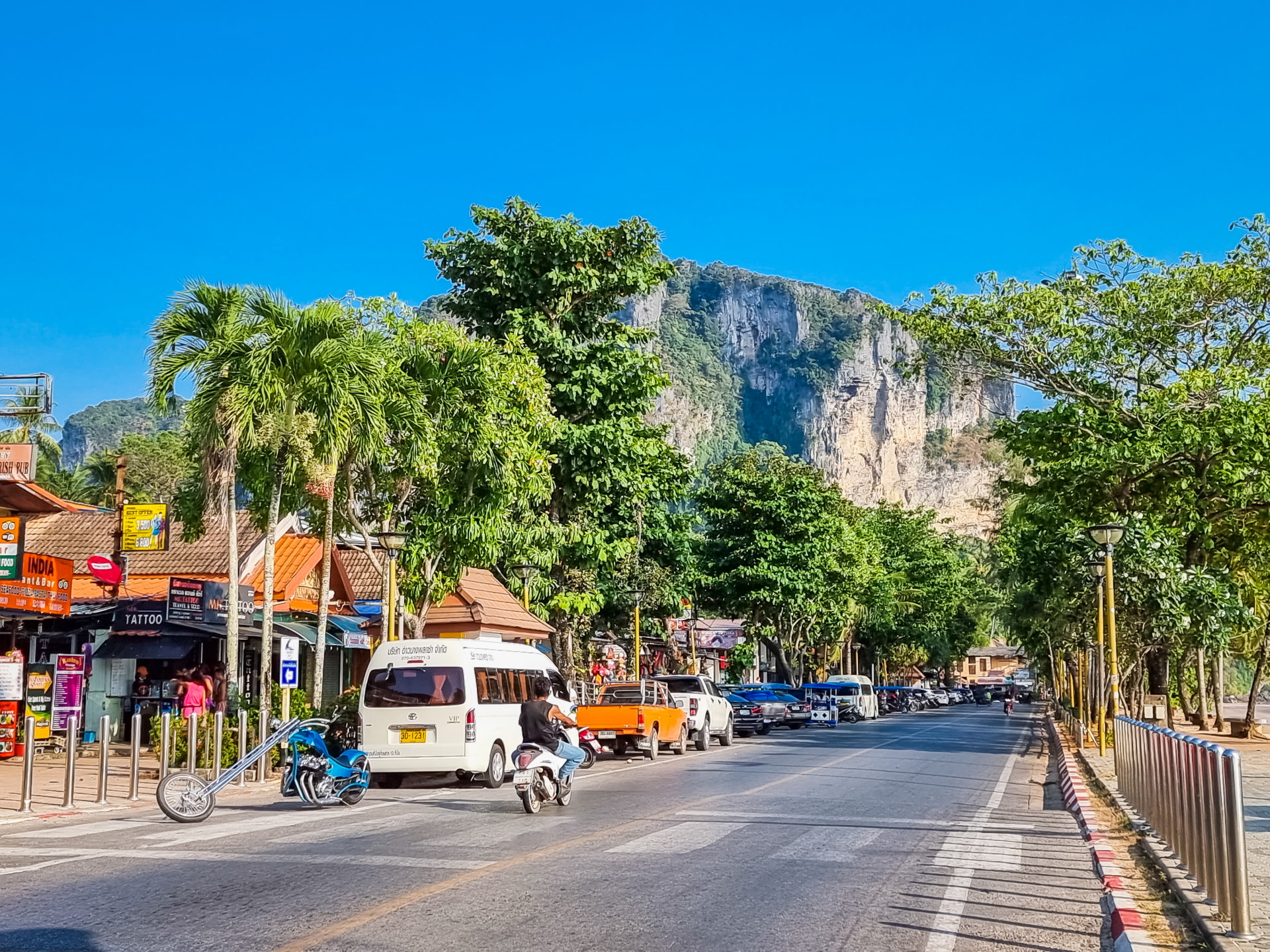
Most travelers use Ao Nang, and less frequently Krabi Town, as a base for exploring the region. While Krabi Town ultimately offers little in the way of a place to stay, Ao Nang is generally the preferred destination.
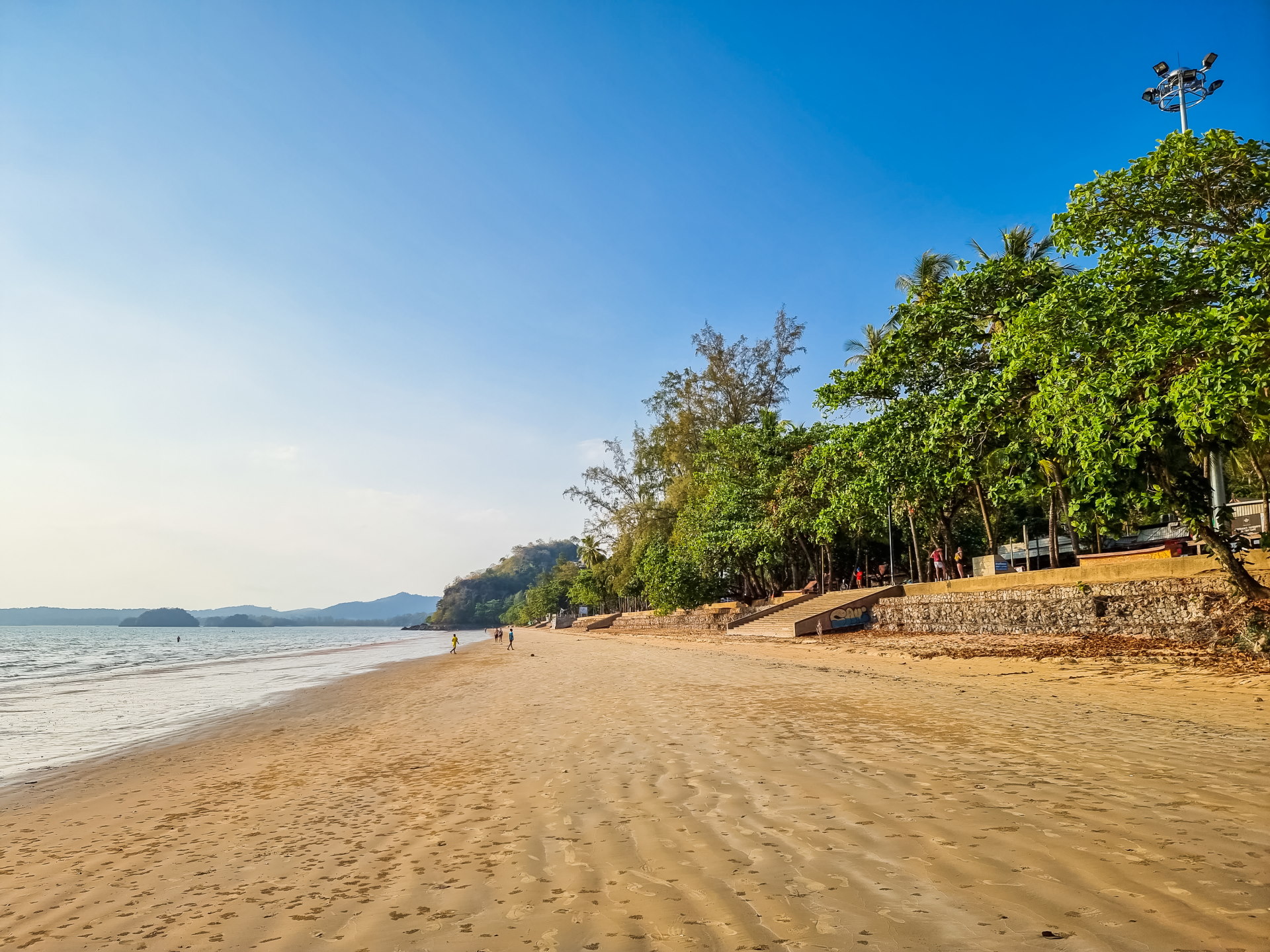
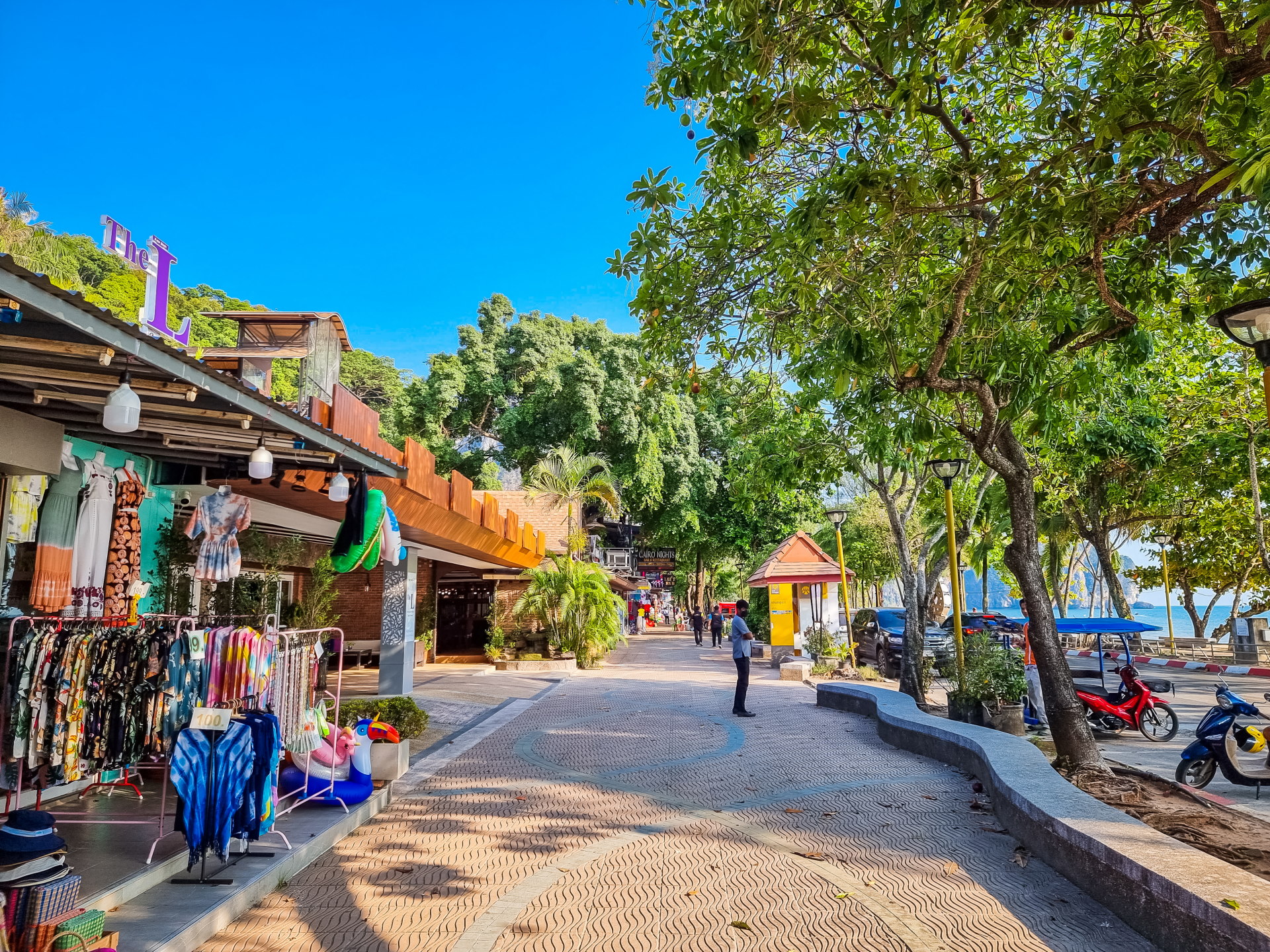
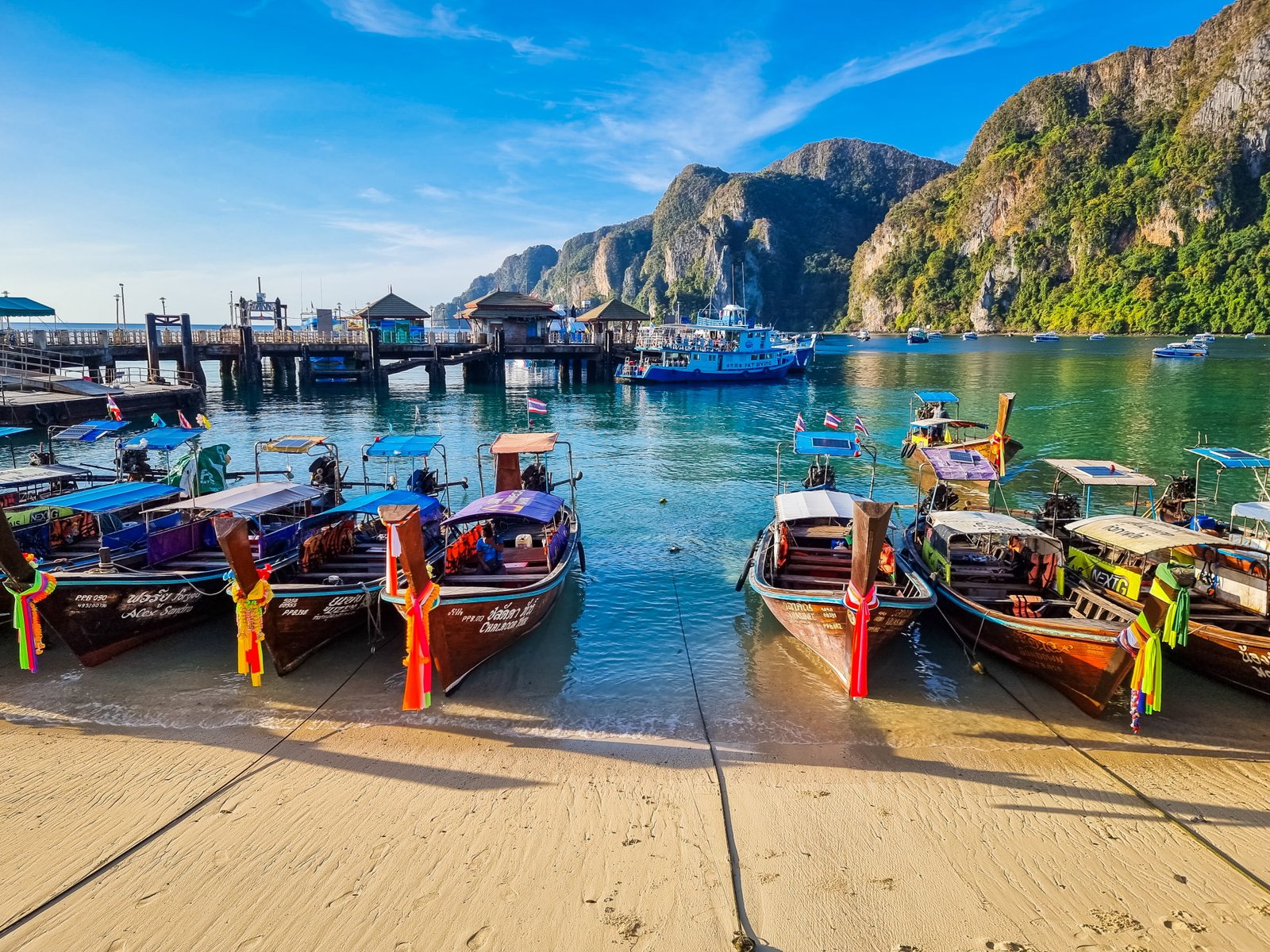
It is sometimes criticized for being too touristy, but it must be acknowledged that this famous beach in southern Thailand remains a very practical base: several of the unmissable sites of the province of Krabi are within easy reach and can be visited easily on a day trip thanks to the longtail boats available on the beach.
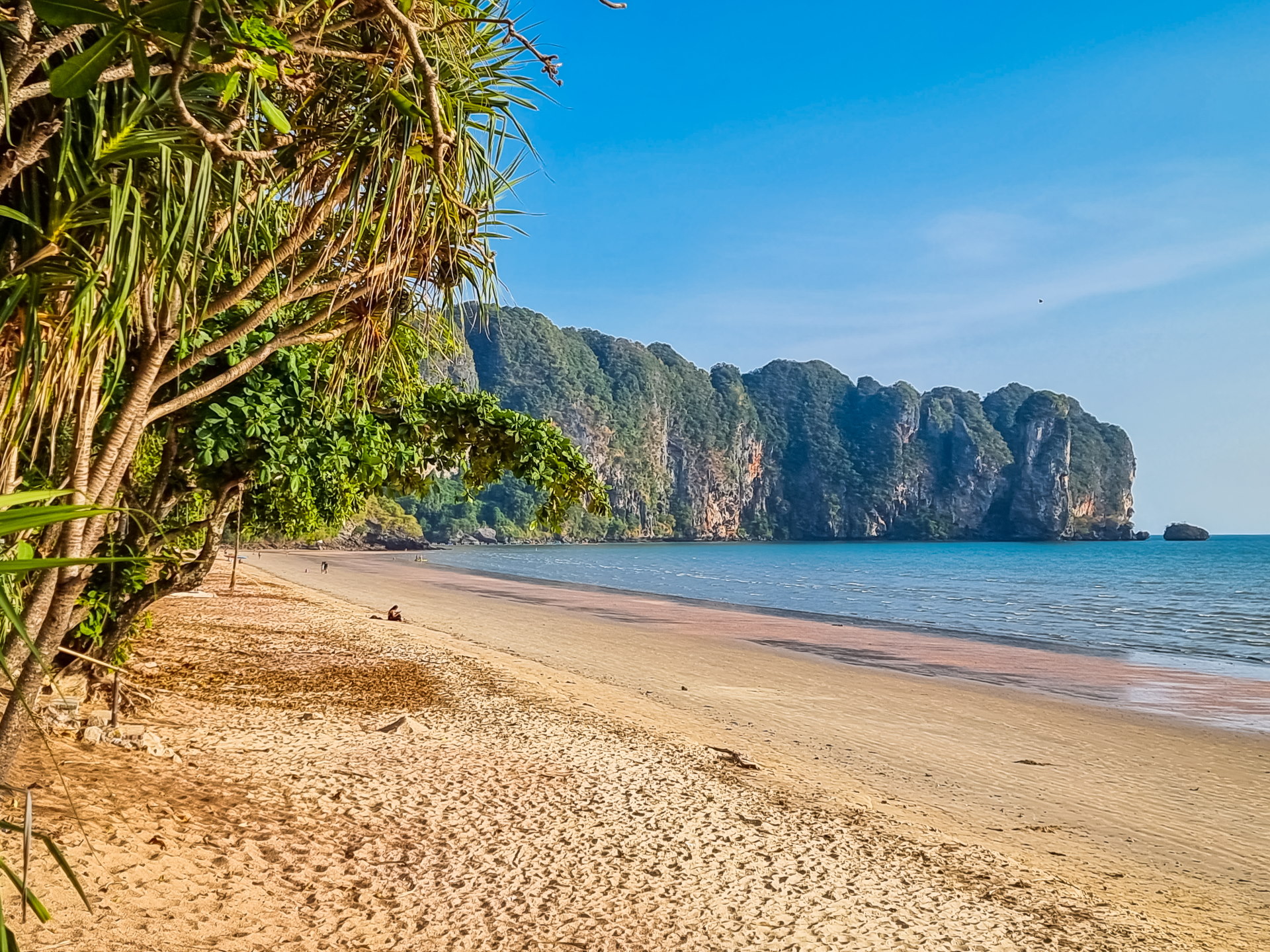
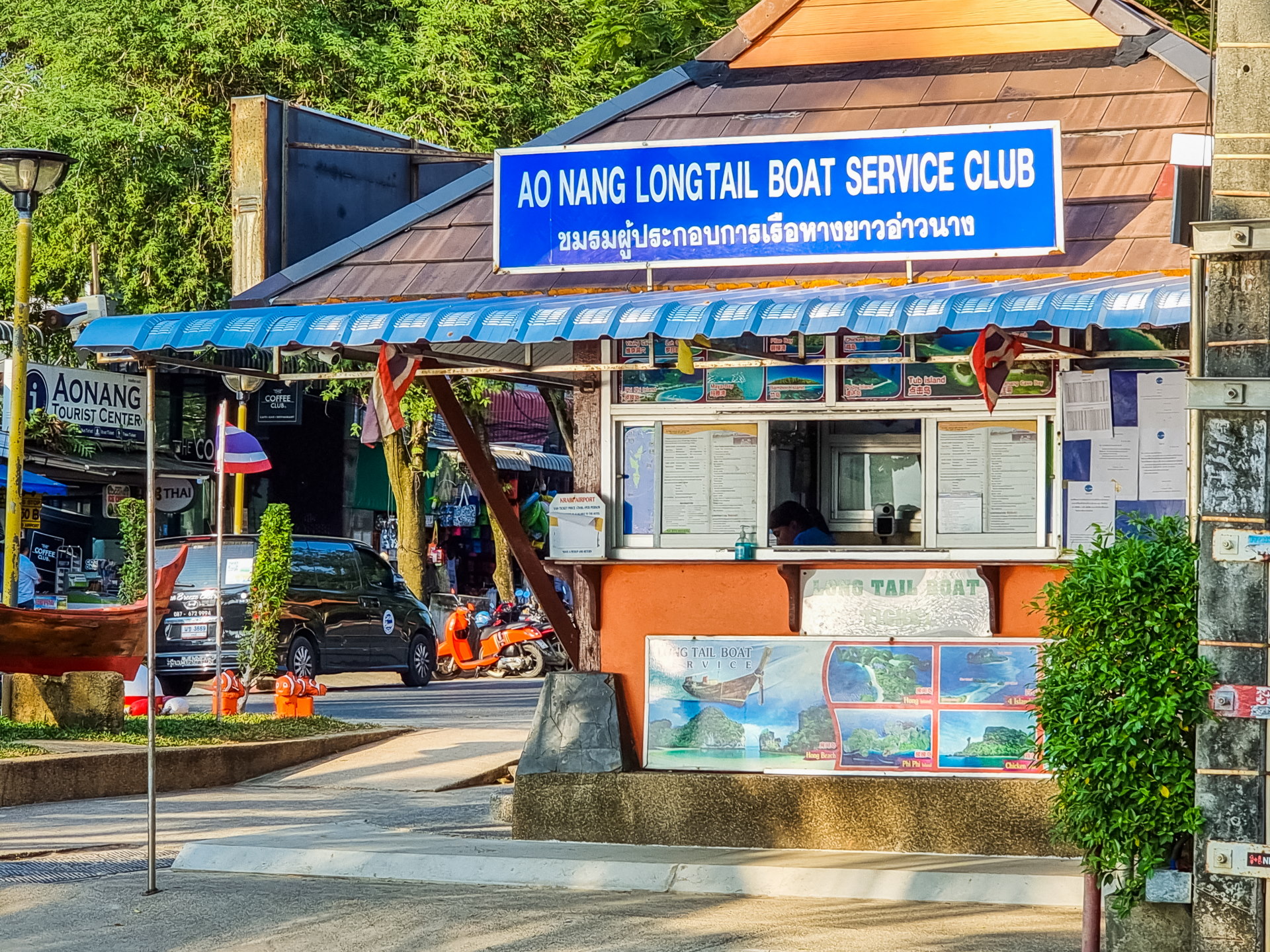
With its numerous shops, restaurants, and hotels, Ao Nang also makes it easy to find places to eat, go out, or organize activities between excursions. Despite its tourist development, it undoubtedly remains a key location for exploring Krabi.
Here are the must-see attractions to discover in the surrounding area.
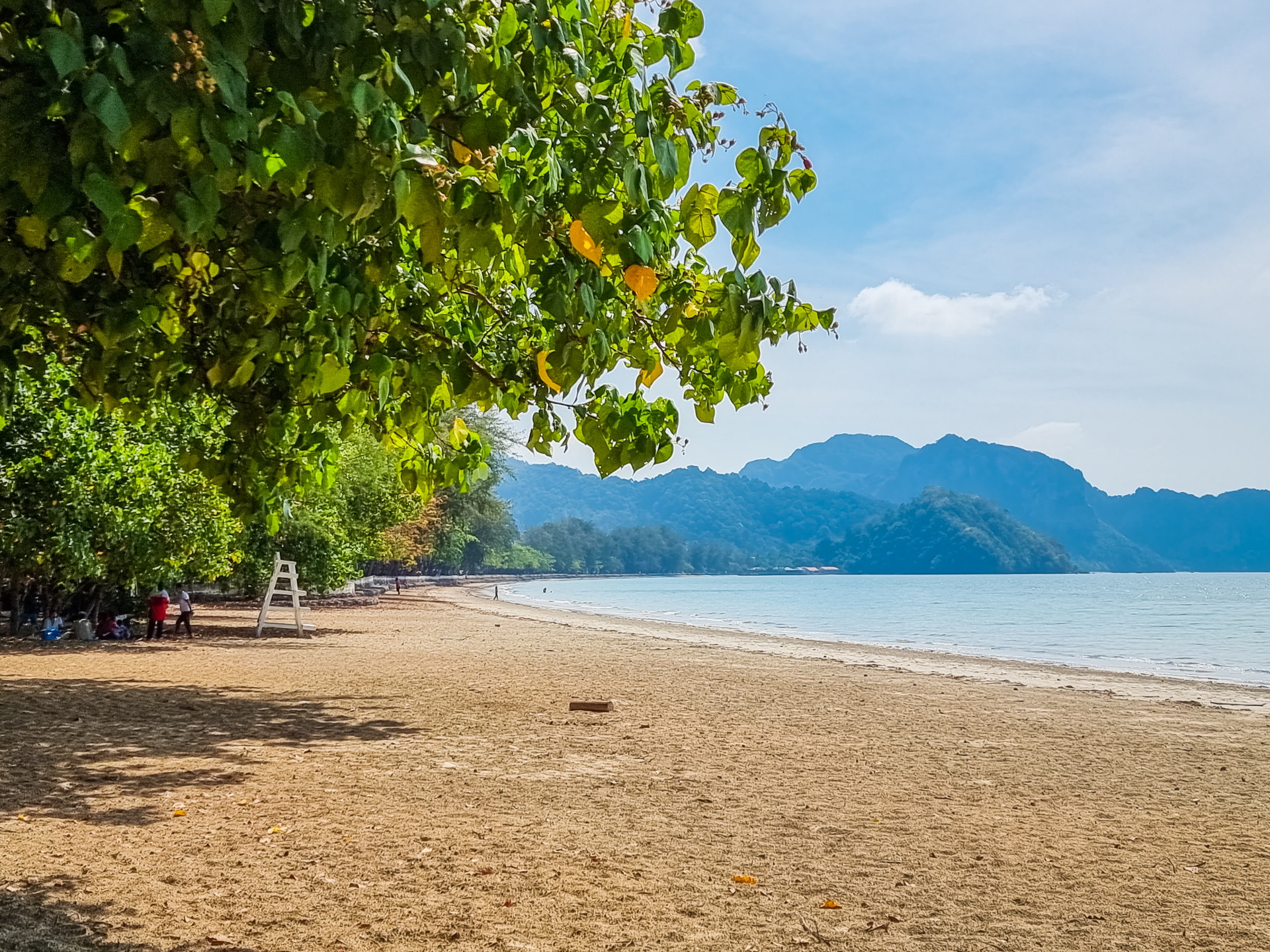
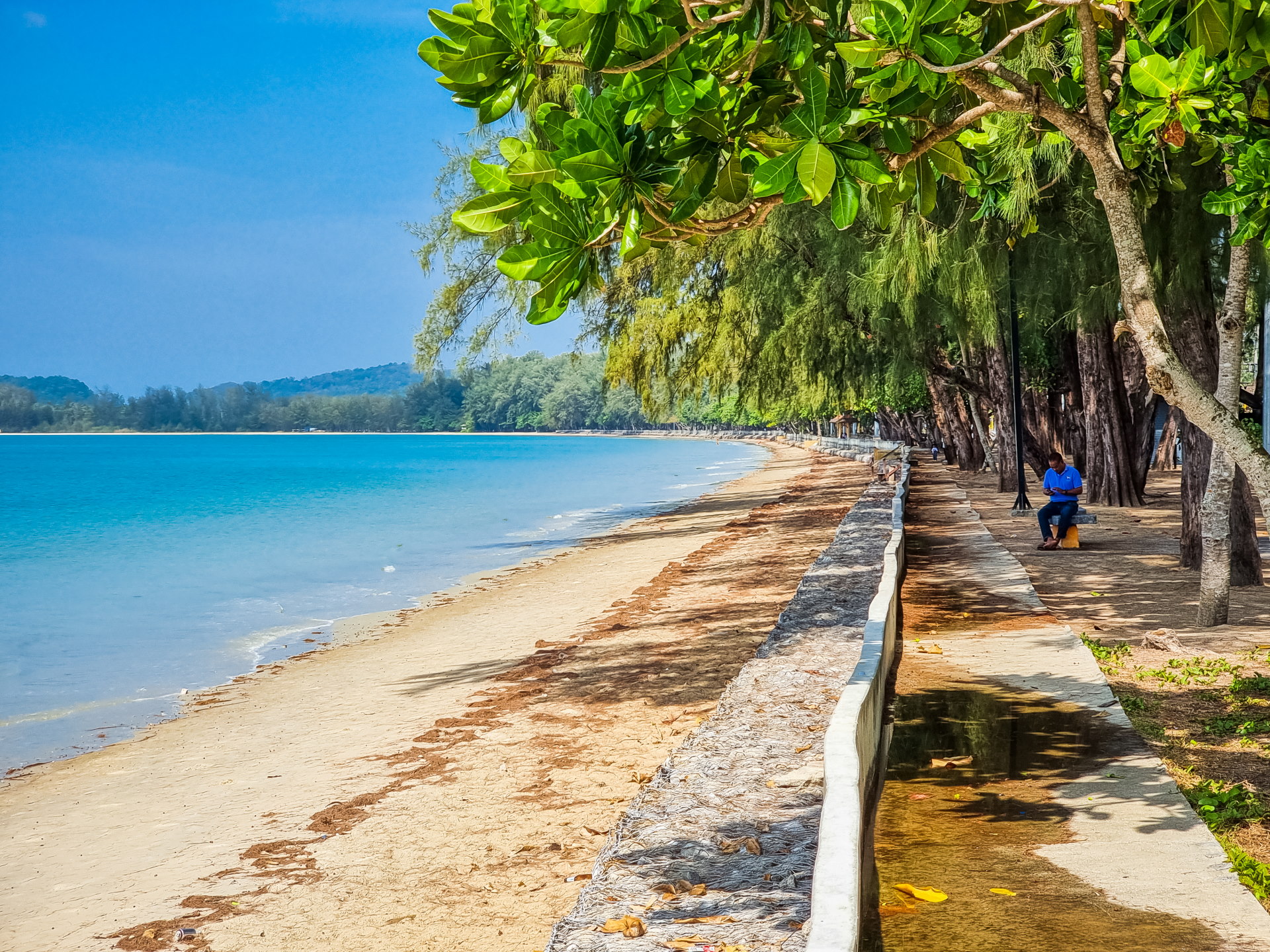
Railay and the beaches of the peninsula
The Railay Peninsula is one of the most popular spots in the region, after Ao Nang and Ko Phi Phi. It consists of three distinct beaches, each with its own unique atmosphere.
The first is to the west: it is the large Railay beach, the most famous, bordered by spectacular limestone cliffs and dominated by an imposing rocky peak at the end of the beach.
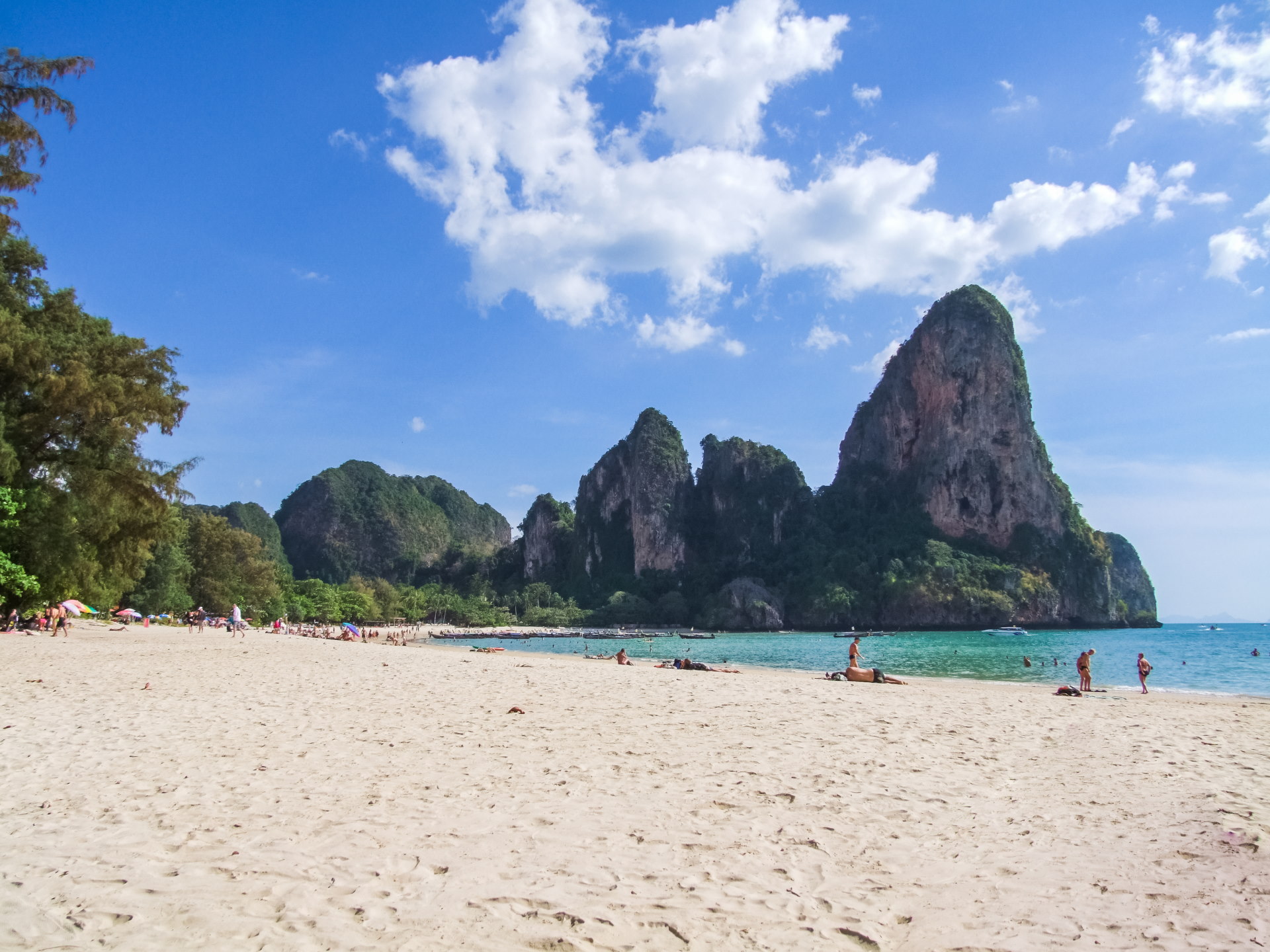
From here, you can see the cliffs along the coastline where you will find, in particular, the isolated beach of Tonsai (see just after).
On the other side of the peninsula lies Railay East . Swimming is not permitted here: the beach is primarily bordered by mangroves. The atmosphere is different, but it's also the access point for several trails and activities.
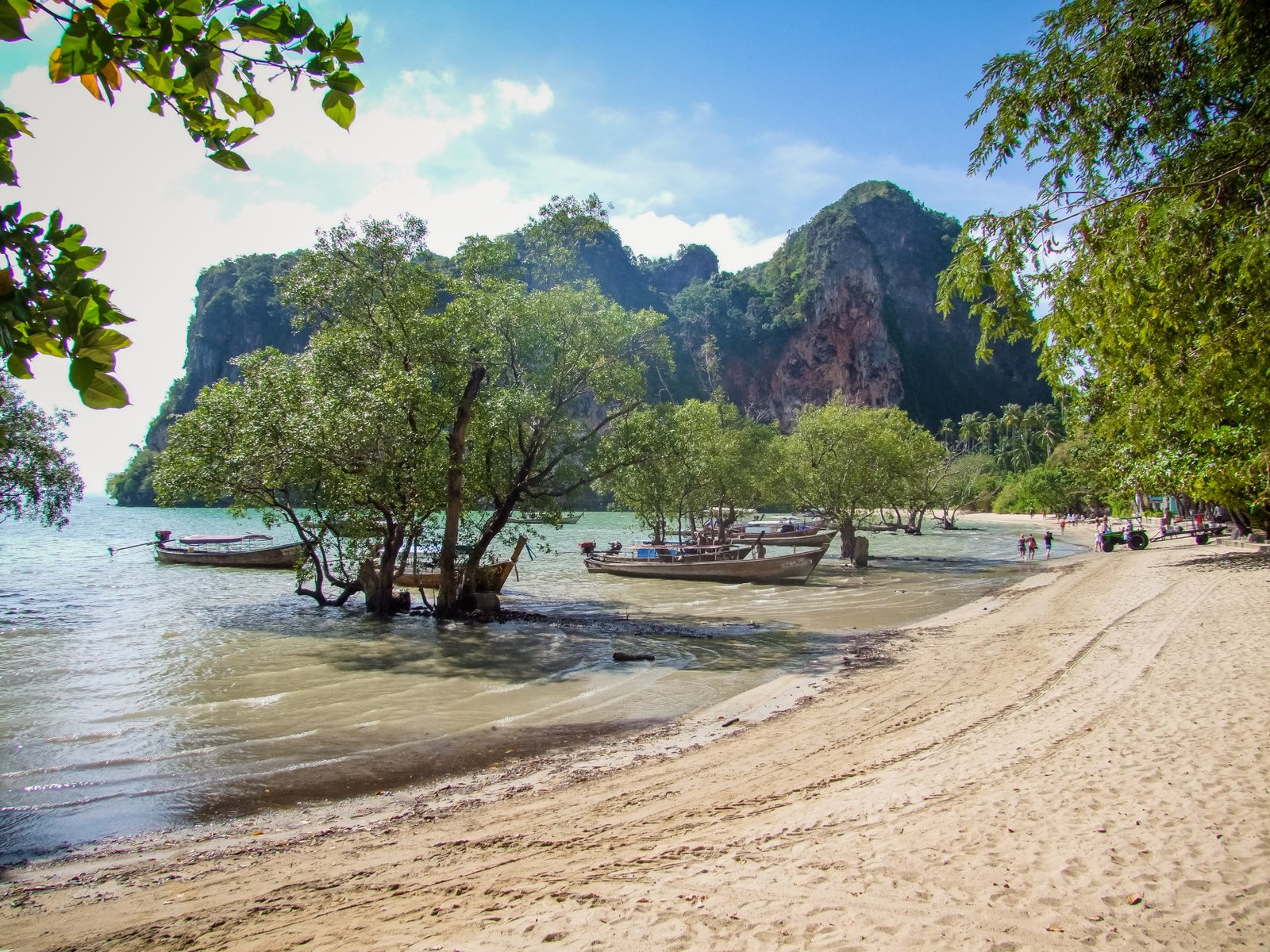
Finally, in the south of the peninsula lies Phra Nang , arguably the most spectacular of Railay's beaches, with its limestone cliffs and picture-postcard scenery.
It is also known for its cave, sometimes called Phra Nang Cave, sometimes Princess Cave . According to local belief, it houses a deity associated with the sea. This is why many wooden phalluses are found placed at the foot of a shrine: offerings made in the hope of improving fertility.
Many excursions doing the famous "4 islands" tours pass through here. Despite this, the beach remains surprisingly uncrowded except when the boats are passing, especially out of season.


If you still have some energy left, there are also several short hikes to do in the cliffs around Railay.
For those who are in good shape, be aware that there is a hidden lagoon inside the cliff, called Sa Phra Nang or Princess Lagoon.
From this same trail, you can also reach the Railay viewpoint , which offers a spectacular view of the peninsula. The area is also very popular for rock climbing, with numerous routes established on the cliffs.

Tonsai Beach
Tonsai is one of the beaches I dreamed of visiting. More remote than Ao Nang, it usually attracts fewer people, and here you find yourself surrounded by impressive limestone cliffs.
It took me a while, but since initially writing this article, I finally had the chance to stay there. And the experience was quite memorable. For the occasion, I treated myself by staying at the Tinidee Hideaway Tonsai Beach Krabi , which is right on the beach.
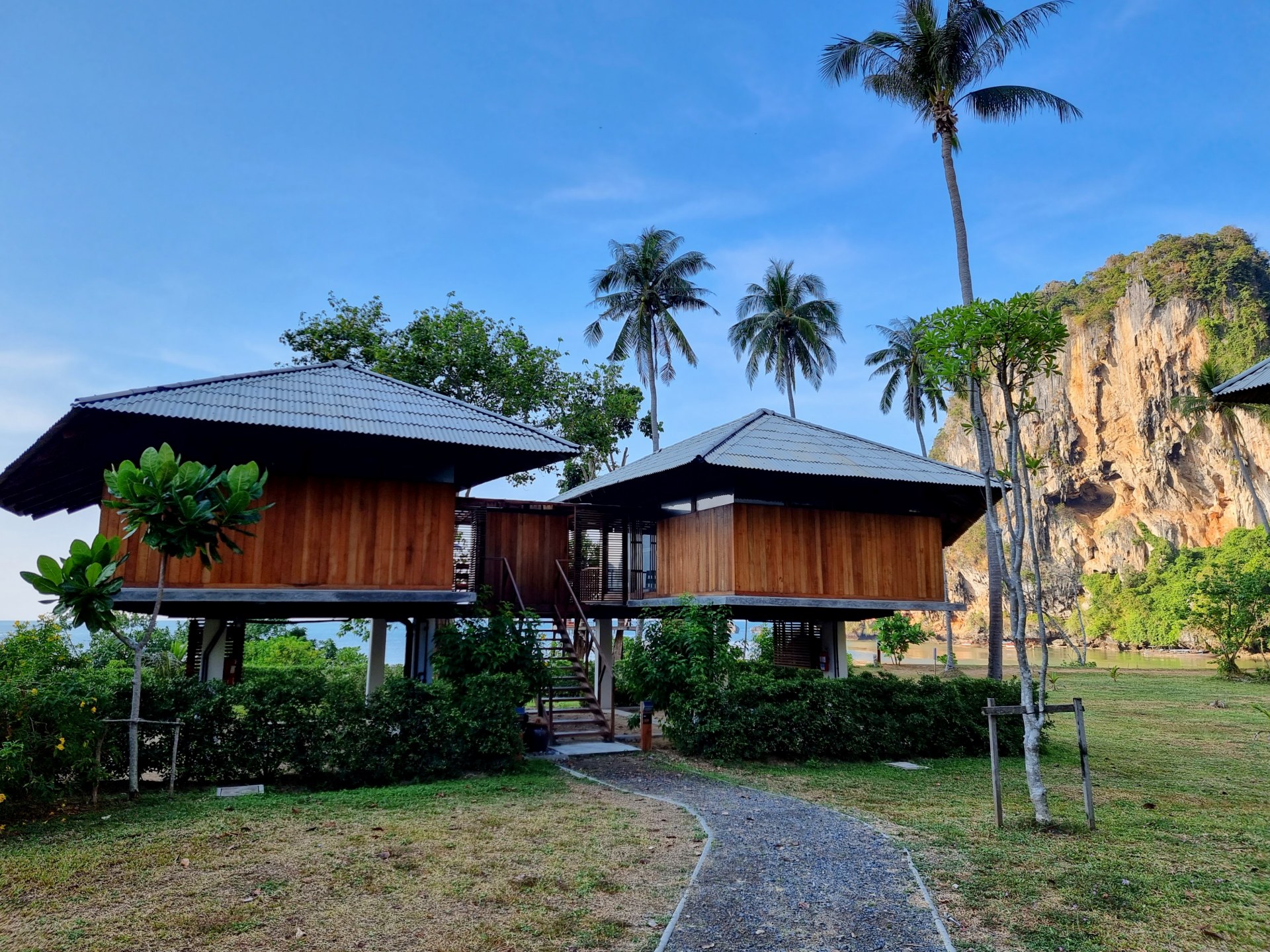
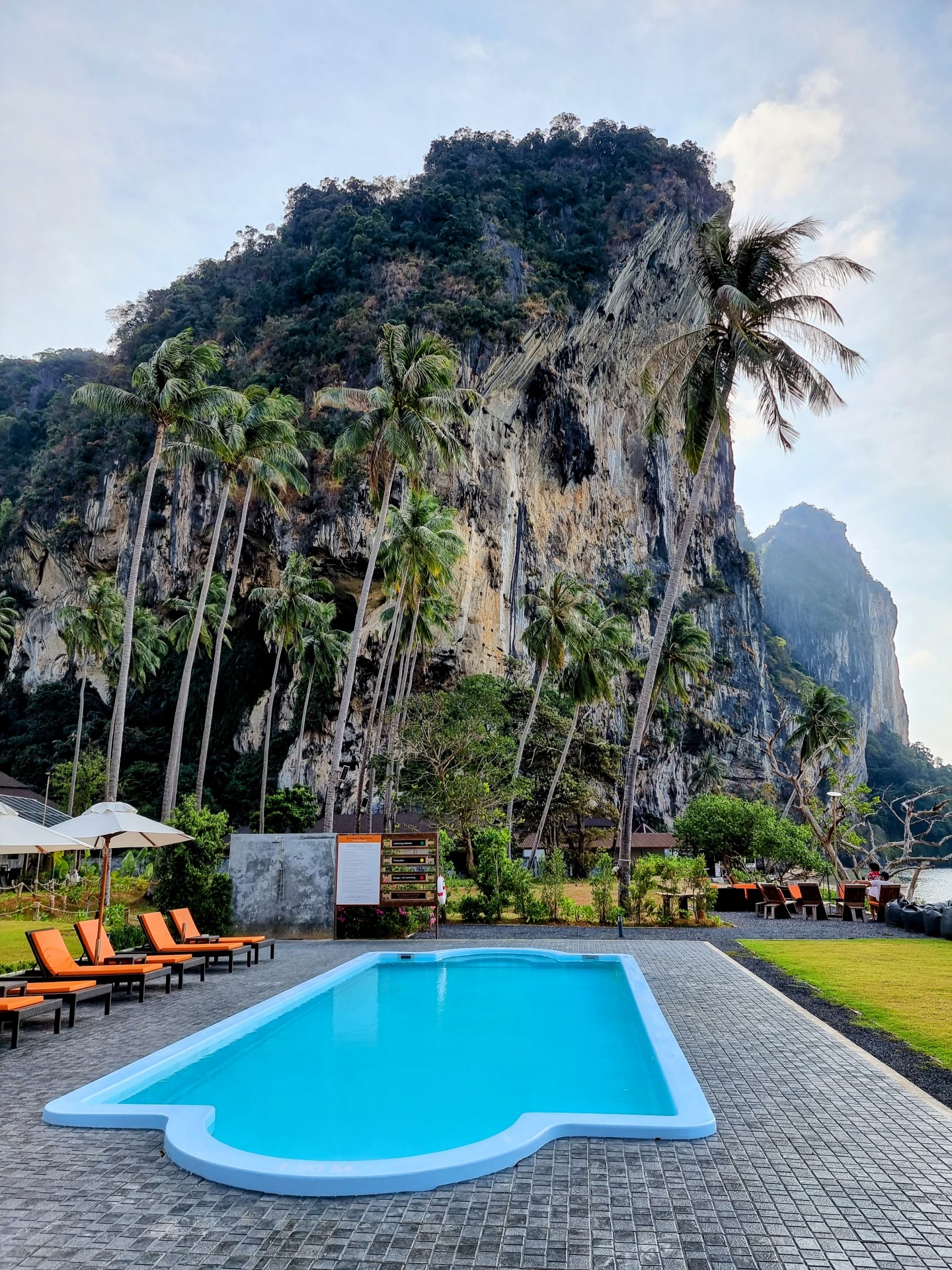
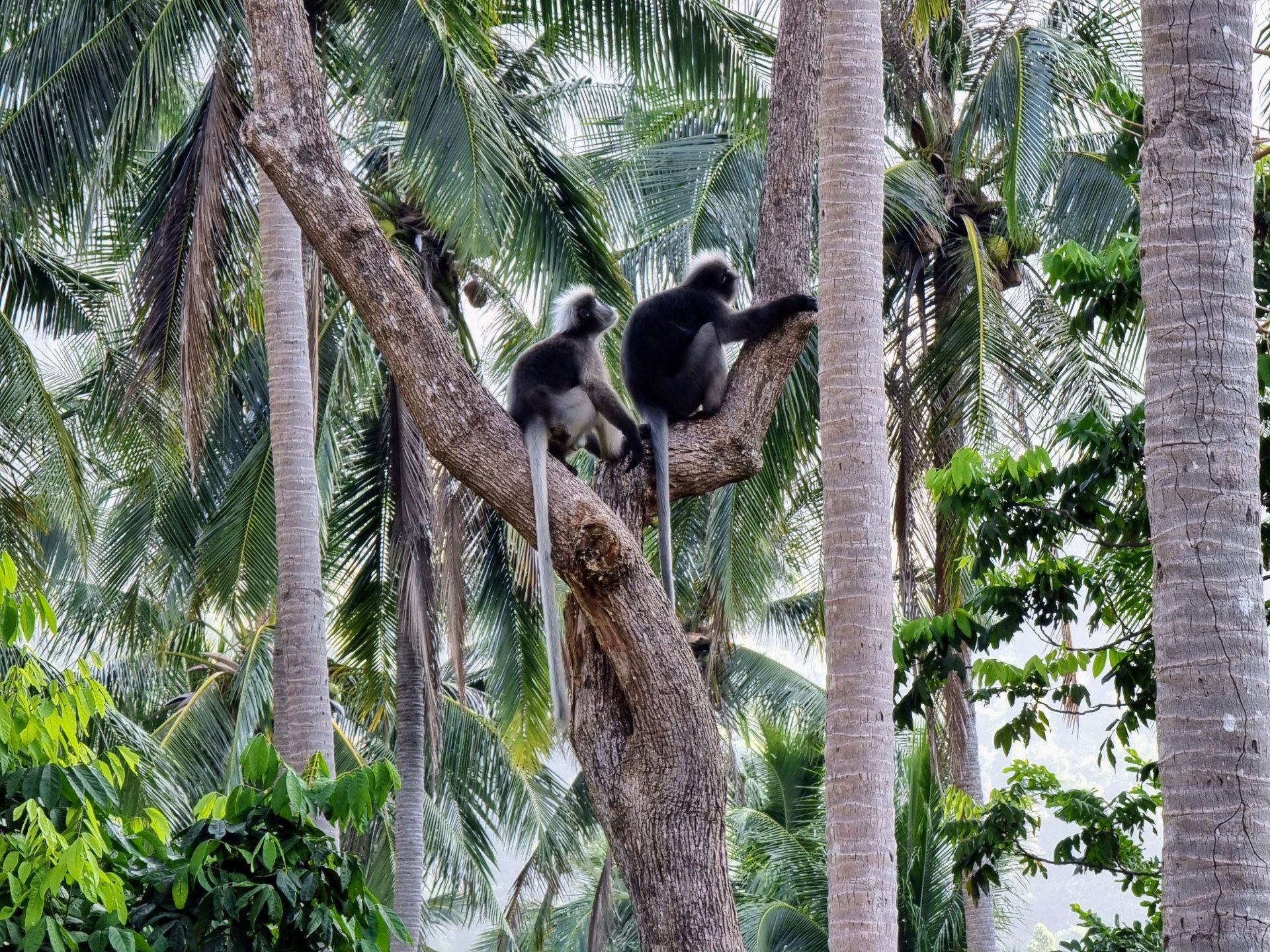
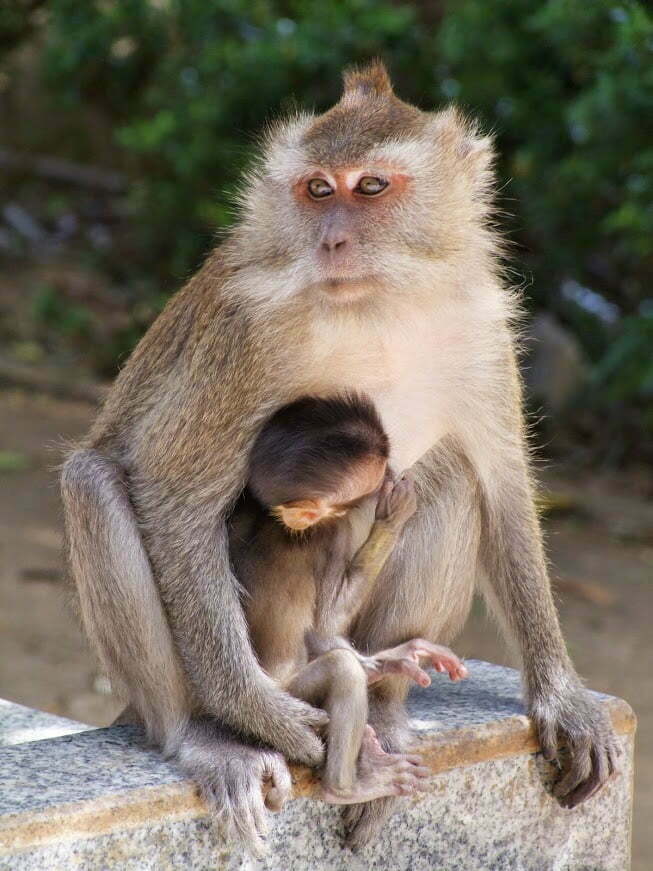
The beach is notably inhabited by spectacled monkeys, the langurs. A species usually quite discreet, but here they don't hesitate to wander around the bungalows: a jungle atmosphere guaranteed!
While often reached via a short longtail boat trip from Ao Nang, Tonsai is also accessible on foot from the Railay Peninsula. Simply follow the path that passes near the Railay Phutawan Resort.
While you're there, you can visit the Diamond Cave , the famous "diamond cave." It's part of Hat Noppharat Thara – Mu Ko Phi Phi National Park . There's an entrance fee of 200 baht (for the cave only, not for accessing the path).
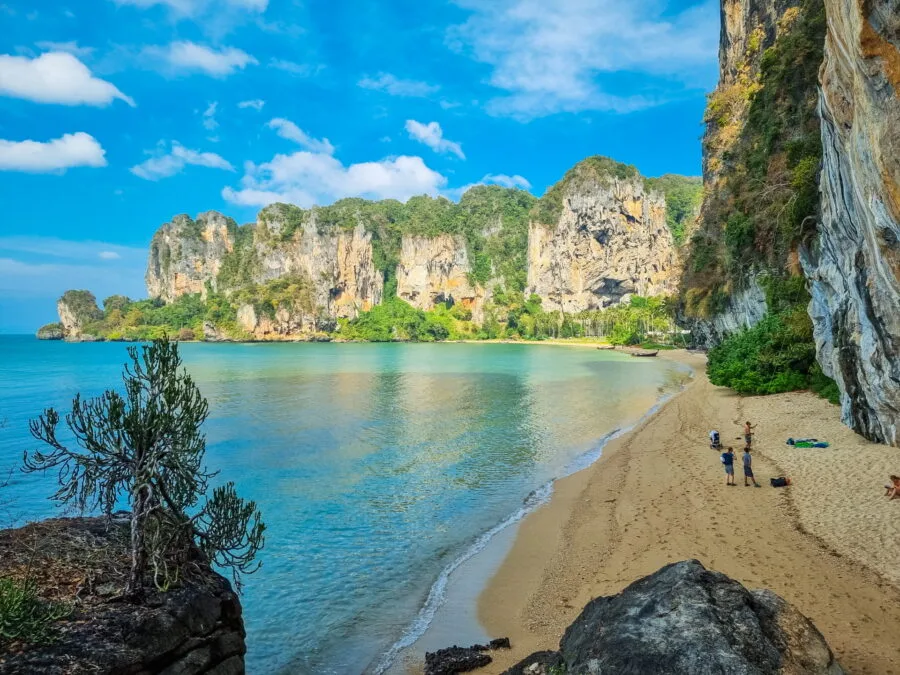
Allow approximately 50 minutes for this walk.
However, the path should be avoided at night as it is not lit. After rain, some sections can also become quite slippery.
It is also possible to reach Tonsai from Railay at low tide by walking along the cliff bordering the beach. A short walk of about 20 minutes.
Alternatively, you can simply take one of the water taxis waiting on Railay's main beach. The journey usually costs around 100 baht each way.
How to access the Railay Peninsula
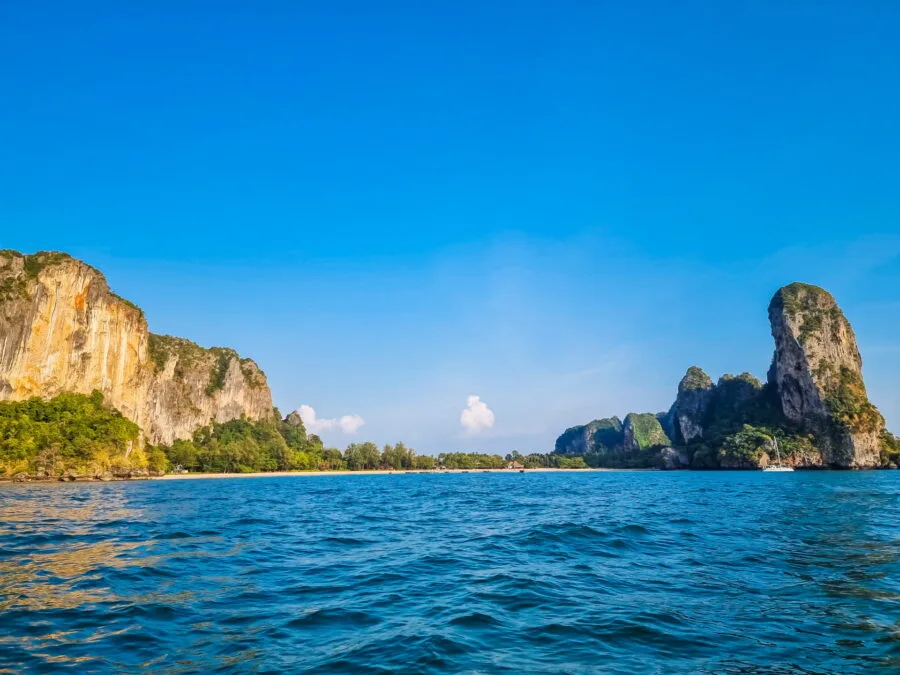
Access to the Railay peninsula is only possible by boat, as it is isolated from the rest of the continent by cliffs.
The most common departure point is Ao Nang beach, from which longtail boats regularly depart. The crossing takes approximately 15 minutes and usually costs 100 baht per person (150 baht after nightfall).

It is also possible to depart from the Ao Nam Mao pier, located about a ten-minute drive from Ao Nang. Boats leave approximately every half hour for 80 baht per person. This is often the preferred option for locals.
From Krabi Town, you can board a boat at the Chao Fah pier. The trip costs approximately 150 baht and drops you off at Railay East beach.
In practice, boats usually depart once they are full. If you are in a hurry or traveling in a group, it is also possible to charter a private longtail boat for around 1,500 baht.
Railay is accessible year-round by ferry from Ko Phi Phi. The ferry usually departs around 15:30 PM for approximately 400 baht. In the opposite direction, the ferry leaves Railay around 9:45 AM.
Railay is also connected to Phuket. The ferry usually departs at 8:30 am for a journey costing around 650 baht. The return trip to Phuket is around 15:00 pm.
During peak season, speedboats also provide service from Phuket, departing around 10:30 am for approximately 1,200 baht.
Finally, a ferry to Ko Lanta departs from Railay around 10:45 AM and arrives in Ko Lanta around 13:00 PM. The fare is approximately 450 baht. The return ferry leaves Ko Lanta around 13:30 PM.
Excursions to the small islands around Krabi
From Ao Nang, numerous boat trips allow you to discover the small islands located off the coast. Some are among the most popular excursions in the region and allow you to see several beaches and lagoons in a single day.
The Four Islands Tour: the classic excursion from Ao Nang
You will surely see many agencies offering this tour. As its name suggests, it is an excursion to discover four islands or beaches located around Krabi , usually departing from Ao Nang.
The stops most often include Ko Tup, Phra Nang Cave (at the southern tip of Railay), Ko Kai — nicknamed Chicken Island — and Ko Poda.
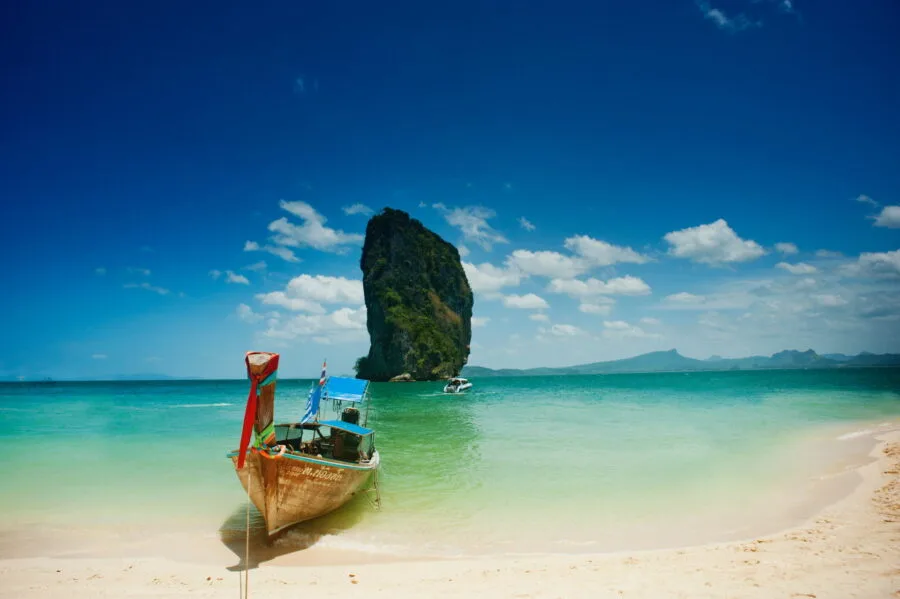
The trip is usually done by speedboat , but it's also possible to do it by longtail boat. The boats stop at each location to allow for swimming, snorkeling, quick exploration of the islets, and a lunch break.
Ko Hong
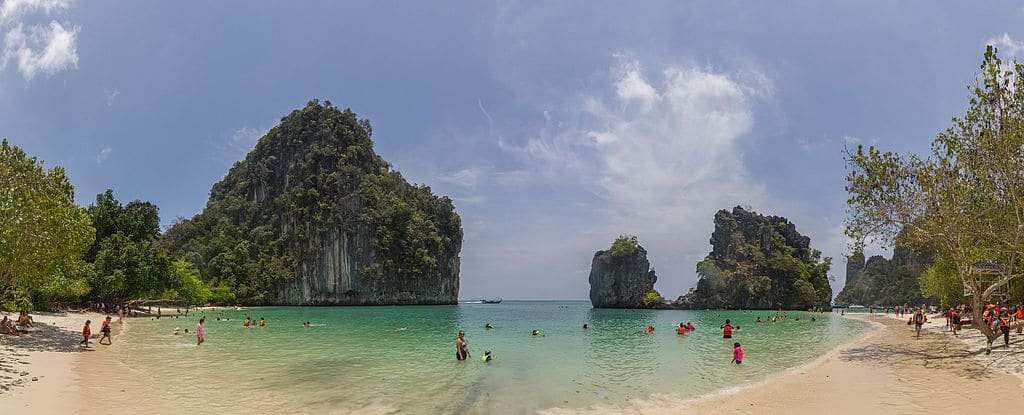
Ko Hong is best known for its stunning inner lagoon, accessible by boat through a narrow passage between karst cliffs.
The island is usually visited on a day trip from Krabi or Ao Nang, easily organized from most of the tourist beaches in the area.
Tiger Cave Temple (Wat Tham Sua)
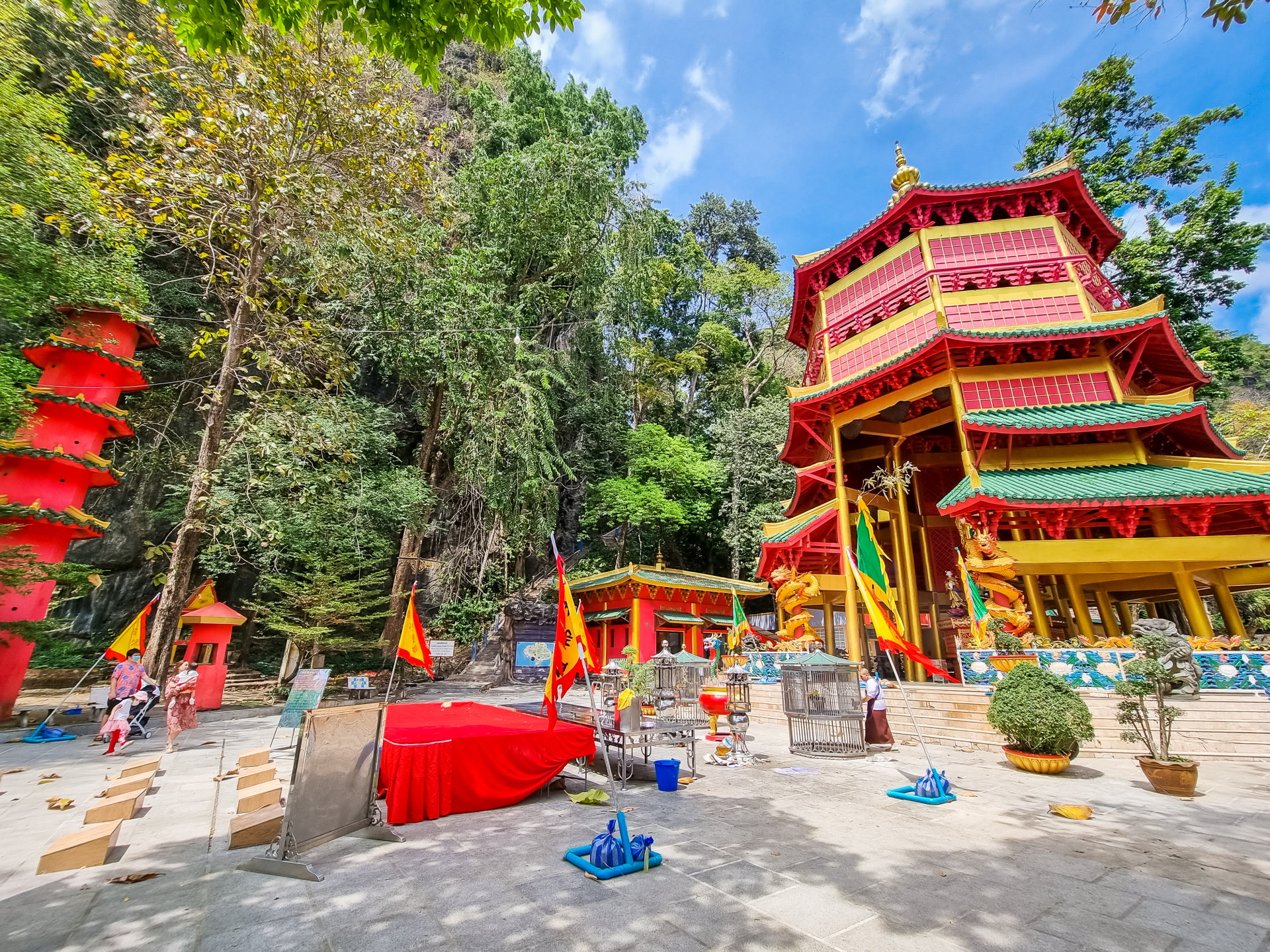
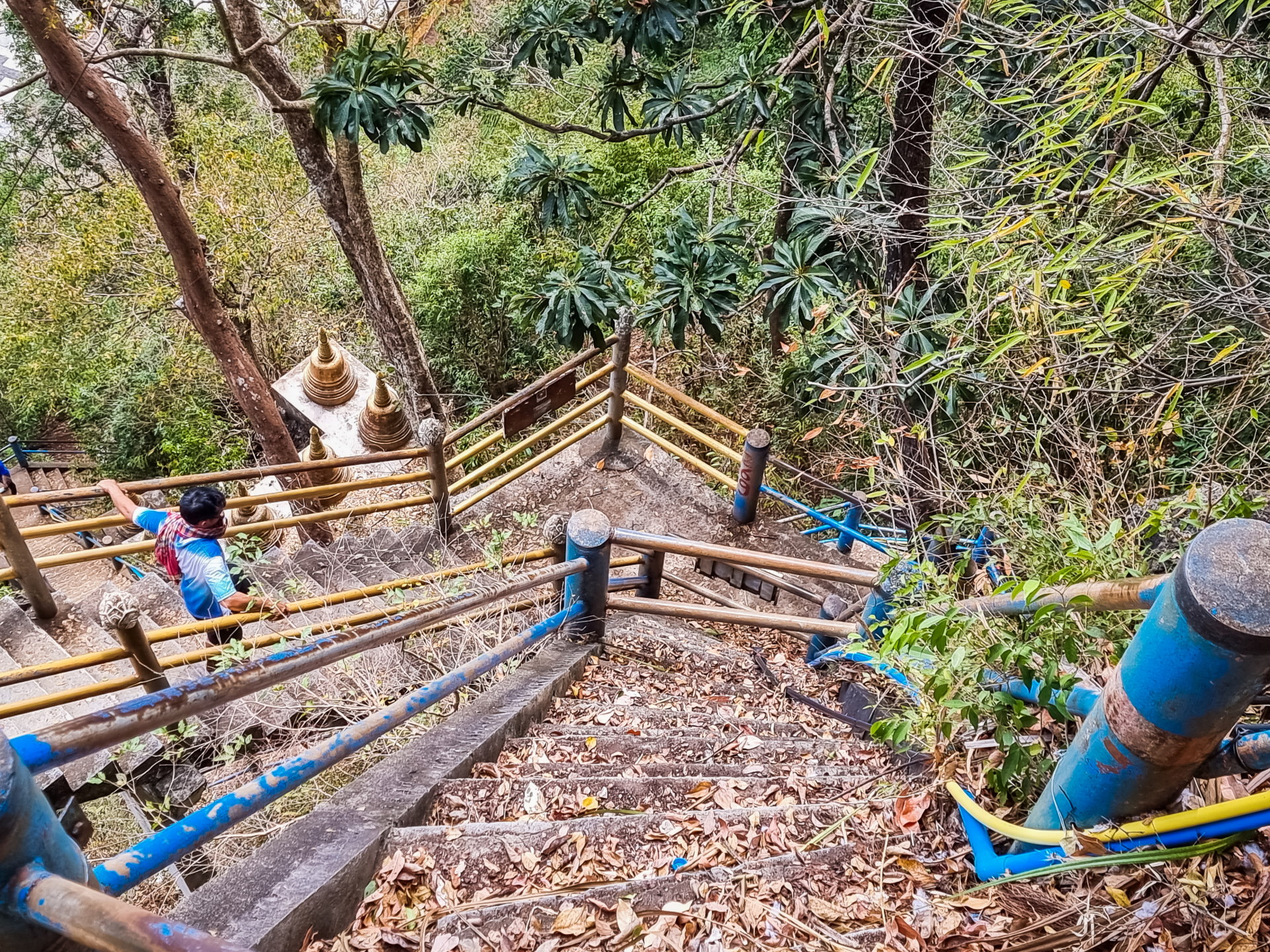
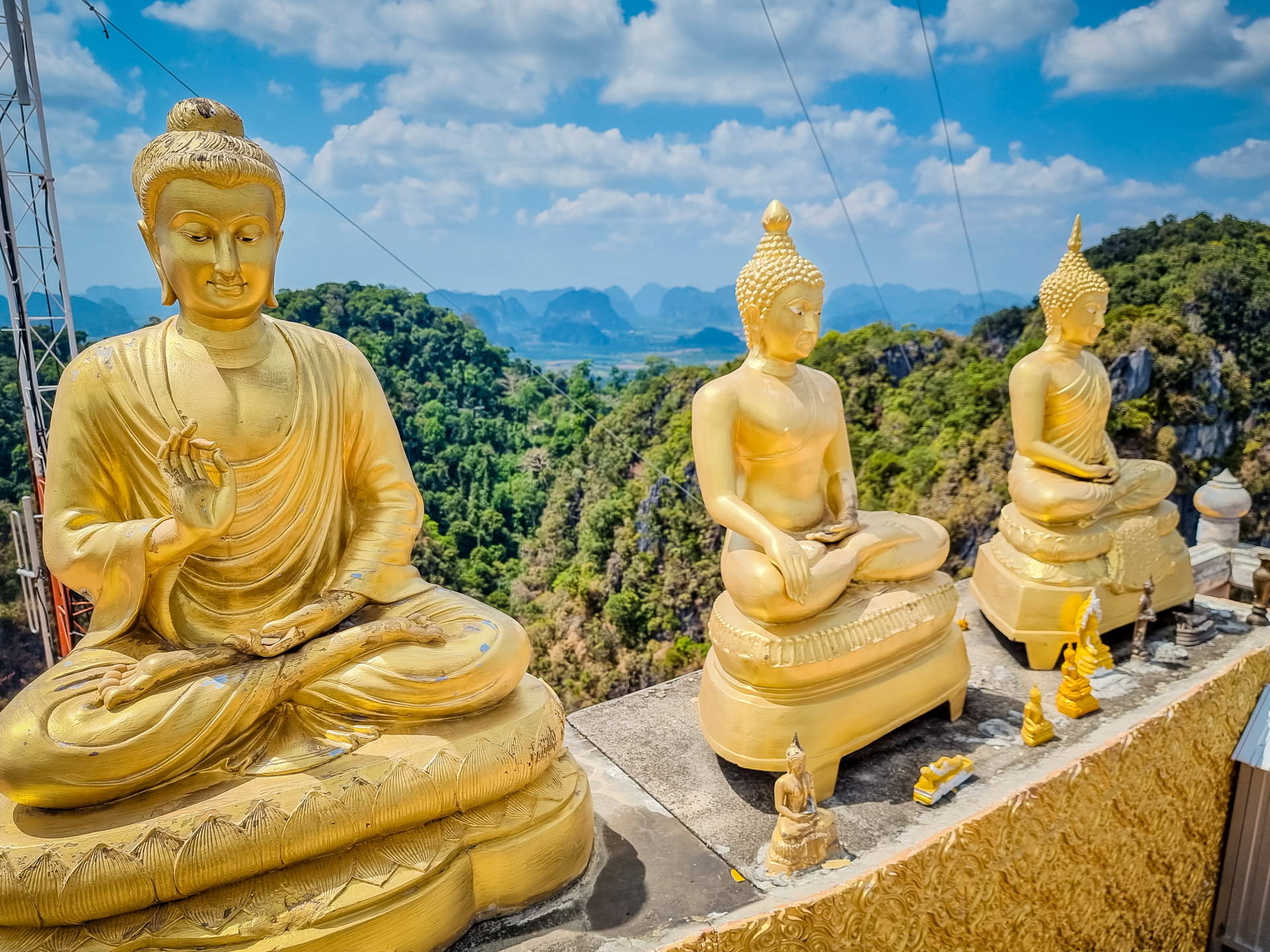
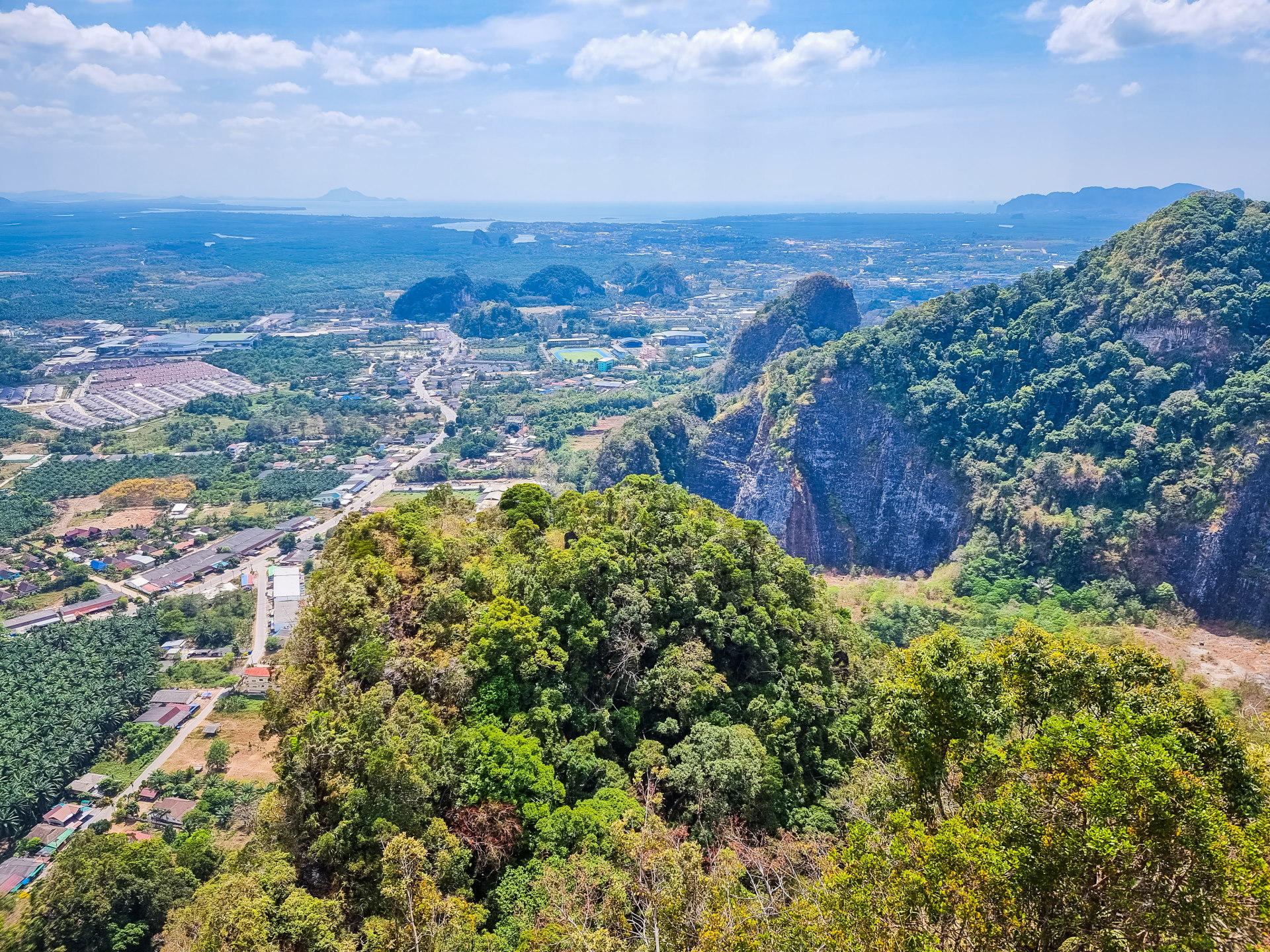
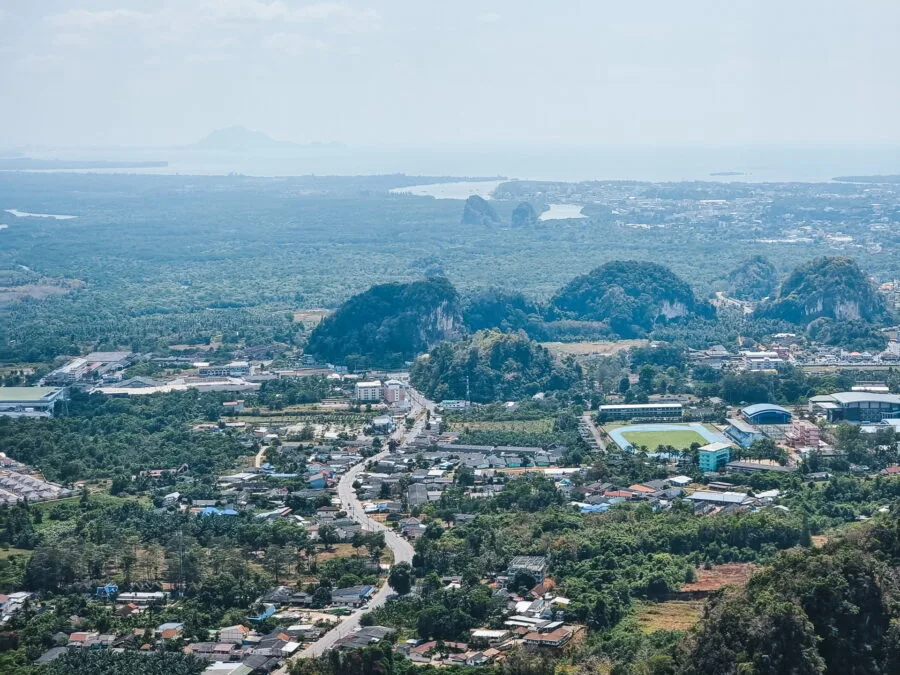
Located just a few kilometers from Krabi Town, the Tiger Cave Temple is one of the most impressive sites in the region. But the view is hard-earned: to reach the top, you have to climb no fewer than 1,237 steps.
The climb leads to a small golden chedi perched atop the rocky outcrop overlooking the region . Once there, the effort is richly rewarded with a superb 360° panorama of Krabi , its karst cliffs and the surrounding jungle.
Wat Tham Sua , literally "Tiger Cave Temple," owes its name to the natural cavities in the cliff at the foot of the temple. These caves now house several meditation spaces.
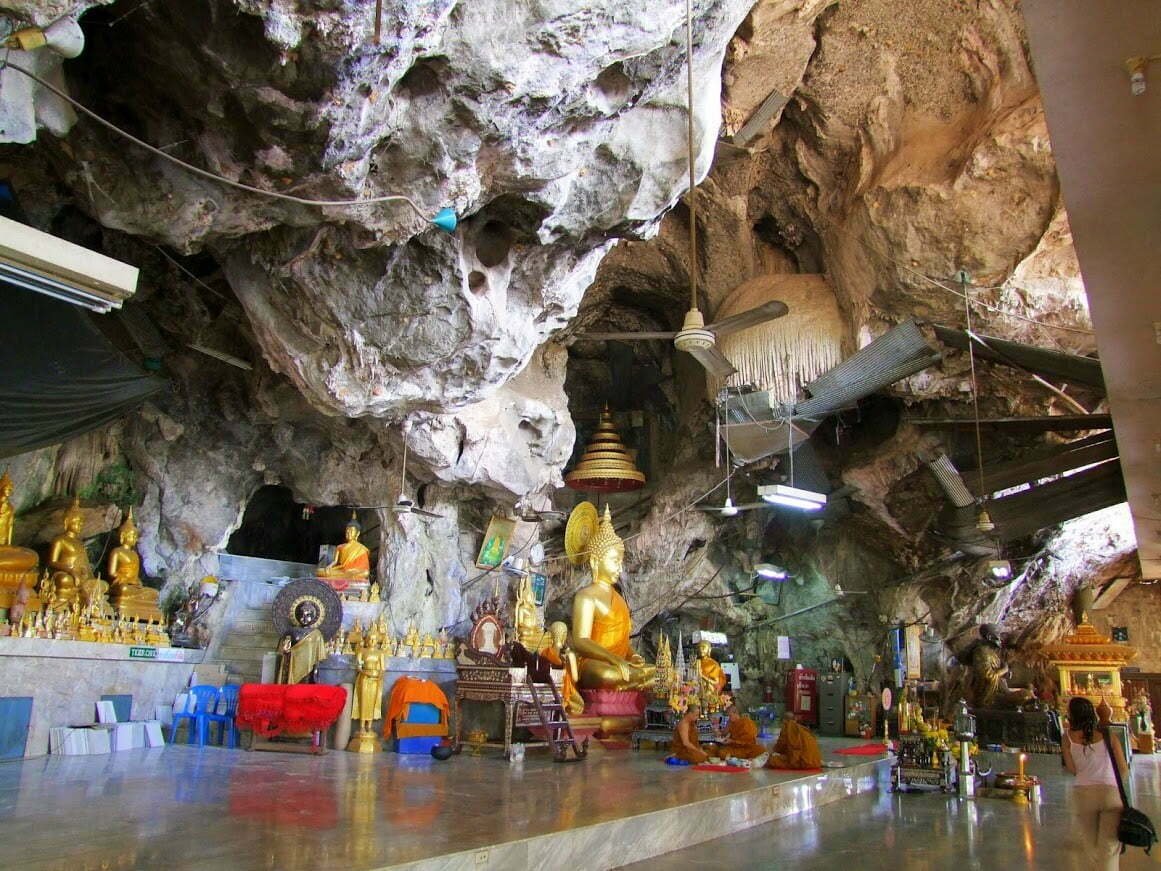
As for the "tiger," legend has it that a tiger once lived in one of the caves on the site. Inside some of the caverns, one can still see what are presented as footprints left in the stone.
Before leaving, take some time to explore the stairs next to the main temple. They lead to a wooded area where a few monks live, and where you can take a short walk through dense vegetation dominated by large, centuries-old trees.

Emerald Pool and Blue Pool
Also known as Crystal Pool in English or Sa Morakot in Thai, this natural pool is a must-see in the region. Located in the Khao Nor Chu Chi forest , the Emerald Pool is a natural pool filled with translucent, emerald-colored spring water, hence its name…
A favorite swimming spot for families, you just have to walk 800 m along a path from the car park to reach this unique swimming pool.
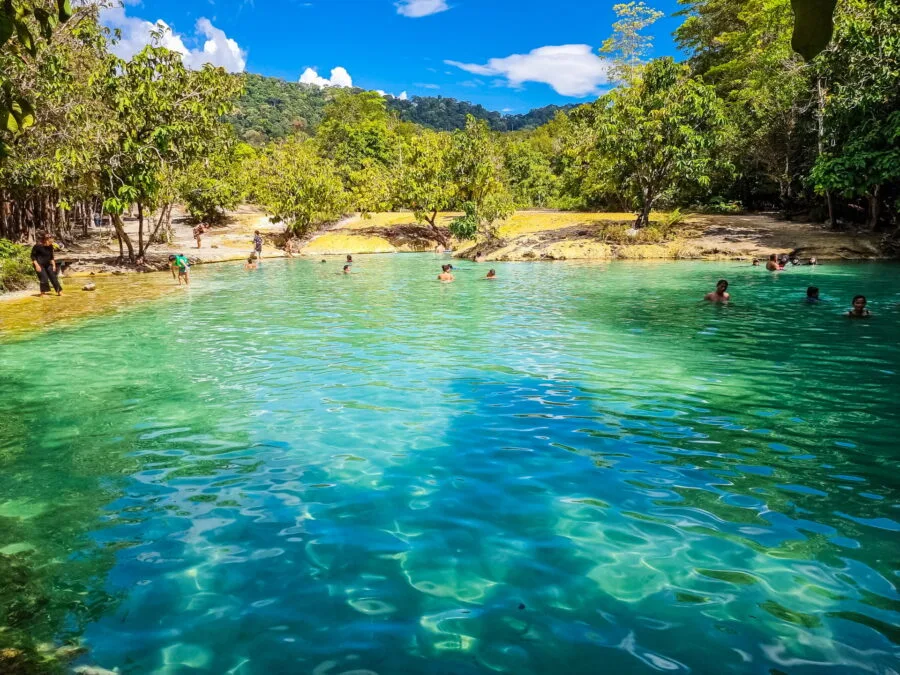
The setting is pleasant, surrounded by rows of tall tropical trees, you can enjoy the shade and refresh yourself in the water.
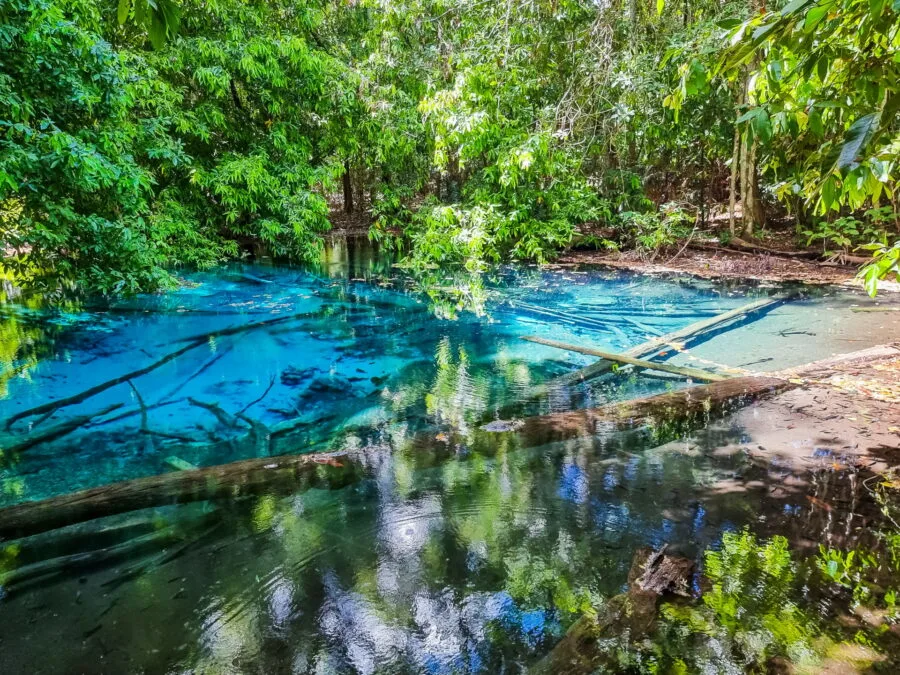
To complete your visit, don't forget to admire the " Blue Pool ." If its blue color tempts you to take a dip, please note that it's not permitted here. This is partly to preserve the site, but also because it's quite dangerous, as the area is surrounded by quicksand.
To get there , continue 600m north of the Emerald Pool.
Namtok Ron Khlong Thom (hot spring)
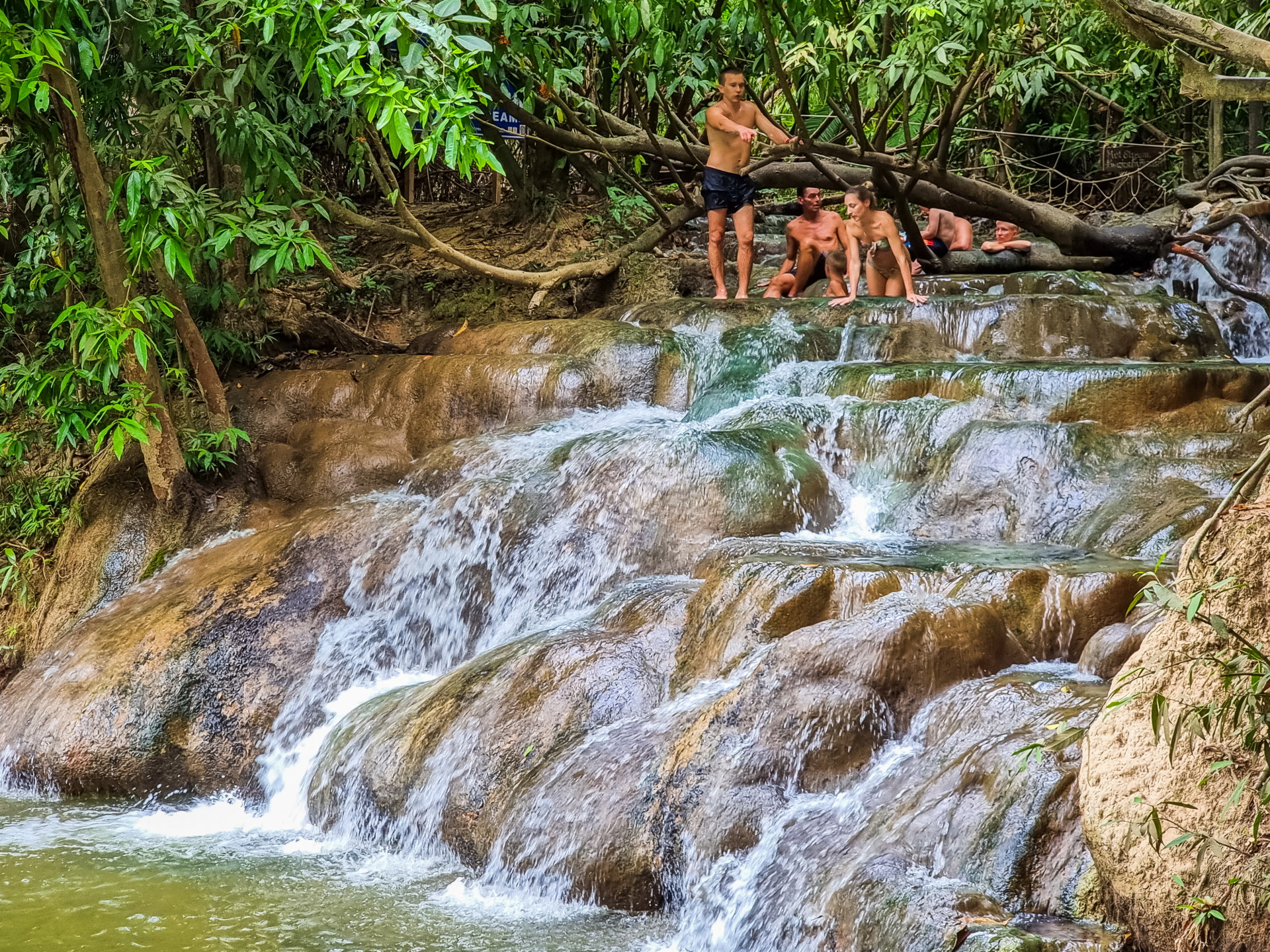
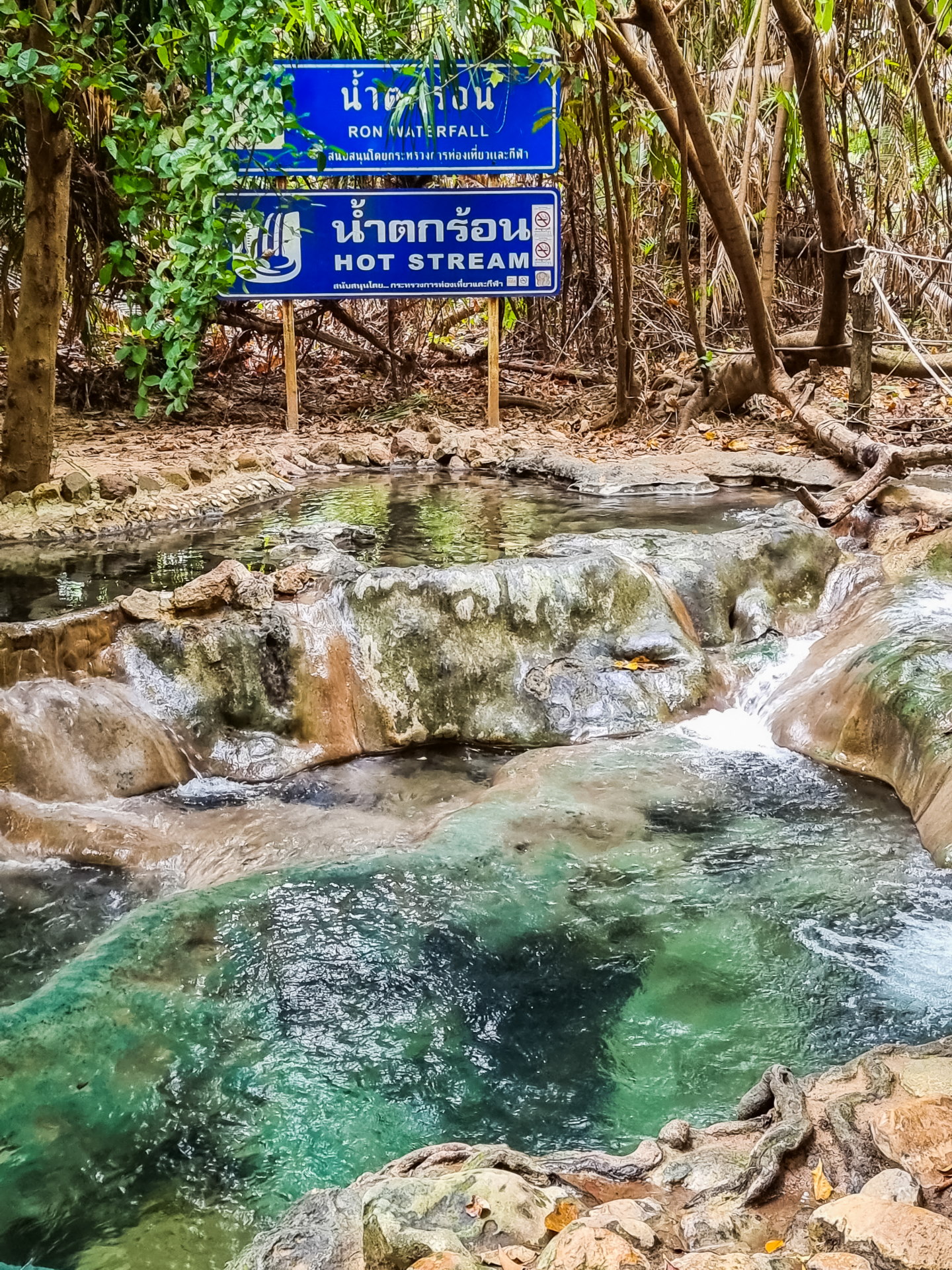
This is a special waterfall because it is naturally hot ! The water comes from springs heated naturally by underground volcanic chambers and flows at a temperature of around 40 degrees Celsius (therefore, the recommended bathing time is 20 min max).
The waterfall is located about 10 kilometers from the Emerald Pool (so the two sites are often visited together), in a tranquil jungle with numerous hot springs. Local signs will show the English term "Hot Stream Waterfall," while on Google Maps it's listed as "Khong Thom Nuea Hot Stream Waterfall Krabi ."
Dragon Crest (Khao Ngon Nak)
If there's one place I'd put on my "must-see/visit" list, it's this one. This nature walk takes you up the small hill of Khao Ngon Nak , or Dragon Crest Mountain in English.
This short trek is 3,7 km long. A small map will be given to you at the entrance giving hikers a brief introduction to what awaits you. In this case, you will first come across a stream, then 2 viewpoints and finally a small waterfall before reaching your goal, the summit!

Because that's what's ultimately interesting, the panoramic view from the summit overlooking this part of the Andaman Sea at 565 m, with the small islands and rocky peaks protruding from the ground as a backdrop.
If the start of the hike is flat, with a very picturesque passage passing under the shade of the jungle (which is not too much given the possible heat in Thailand), it will get more difficult after crossing the stream.
Allow 1 hour 45 minutes to reach the first viewpoint , on the sea side, you will then be able to see the island of Ko Hong and with a bit of luck, the Ko Yao (the small one and the large one, Noi and Yai).
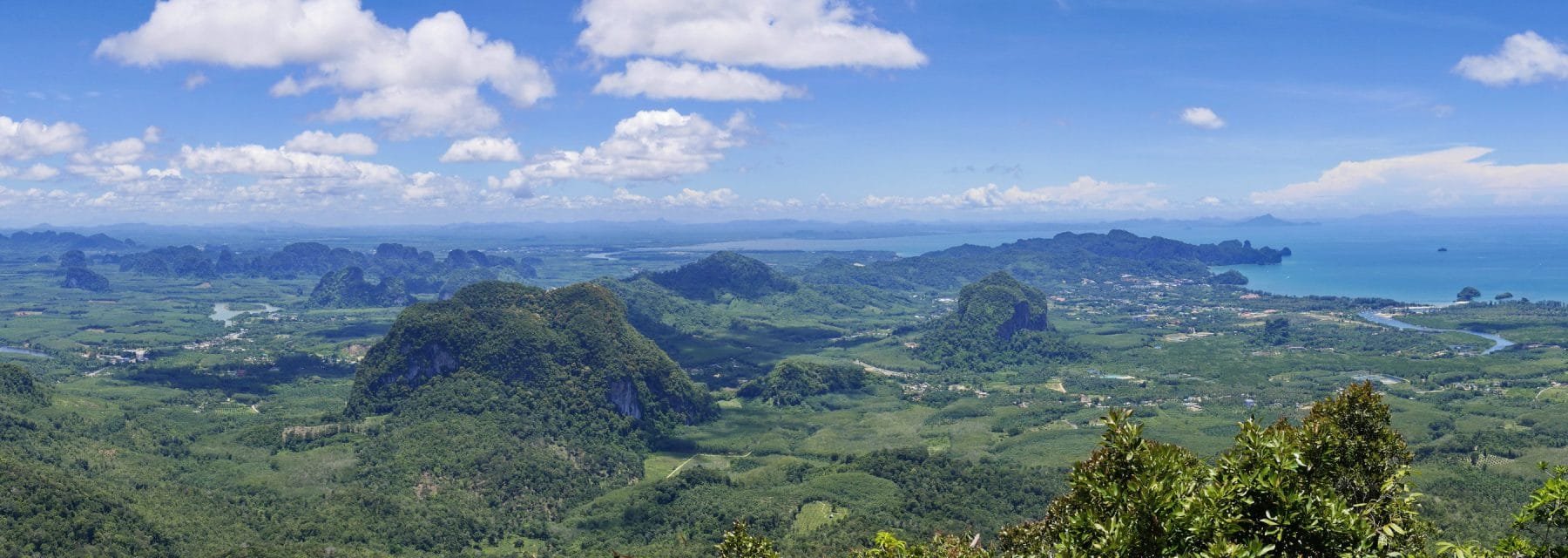
Shortly after, you will pass the 2nd viewpoint, which looks out over the land on the other side. Without the stops, count a little over 2 hours to make the climb. Before or after this beautiful walk, take the time to relax on the beach next to Tabkaek, you will be treated to a great sunset if you go there in the evening (that goes without saying).
Ao Thalane (kayak in the mangroves)
A little higher up than the small mountain of Khao Ngon Nak, you can reach Ao Thalane Bay (also spelled Tha Len). Located only 5km as the crow flies from Tabkaek Beach mentioned above, it's still 35km by road…
The best way to appreciate the area and explore this bay and its mangroves is to rent a kayak in the village of Ao Thalane . You'll find several for rent for around 500 Baht, or they also offer guided tours.
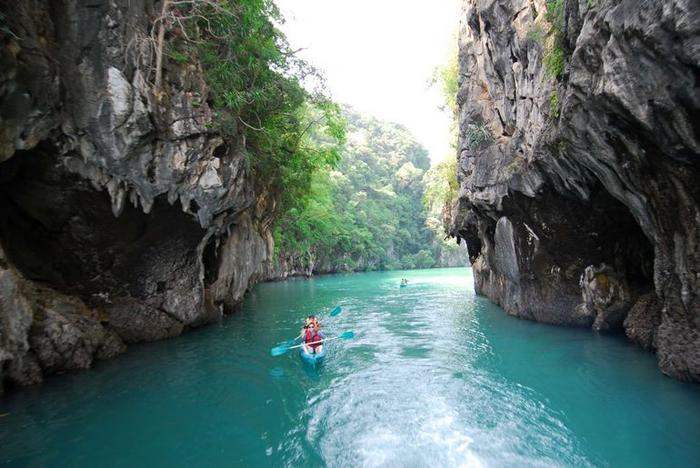
Located in the heart of a natural network of canals in the mangrove, you will be surrounded by the karst rock cliffs so characteristic of the Krabi region. In this unique ecosystem, you can come across birds, monkeys and crabs walking in the shallow waters of the bay.
If you want to go all out on the "off the beaten track" card, I invite you to find the small beach of Laem Jamu Khwai, located at the very end of the foot of the "boot" (Looking at the map, you'll understand 😉 ), southwest of the village of Ao Thalane.

This small beach, about 2km from the village, has a small natural arch, in addition to being a great spot for a sunset.
Tha Pom Klong Song Nam nature trail
This is also a site where I would definitely like to visit. It is located along a natural canal (Tha Pom) that passes through a network of marshes, similar to Ao Thalane. It is far from the typical gloomy and dark marsh. No, here, it is transparent waters that tend towards emerald green.
Tha Pom is called Khlong Song Nam by locals, which literally means "two canals" due to its characteristic location where crystal-clear fresh water meets seawater from the mangrove forest.
This particularity translates into the presence of three different ecosystems in a very concentrated area. Indeed, at first, just after the parking lot, you will encounter the incredibly clear waters that allow you to observe underwater life. The fresh water in this place has a high limestone content, which prevents the formation of precipitates.

Further along is the Chong Phra Keaw Marsh, a 40-metre-wide expanse where salt water from the sea meets fresh water, the latter coming from a network of limestone caves. For many years, the area was considered sacred, which is why the place has undergone very little change and has not been affected by the development of agriculture in the area.
The path is a short loop of 700 m, taking your time, it takes 45 minutes to do the little walk. Located at the foot of a small karst peak, it is a walk accessible to all that allows you to admire the mangrove forest by walking on the wooden footbridge that passes through.

Dotted along the way are explanatory signs about how this ecological system works (including the info above, which is a translation of a sign at the entrance). Overall, it's a very peaceful setting that's also great for a picnic. Good news if you're interested, few foreign tourists make the trip here.
Khao Phanom Bencha national park
If after the islands and beaches you're craving dense jungle, here's a great suggestion! The park encompasses Khao Phanom Bencha mountain , which rises to 1,397 meters. Its main attraction is the Huai To waterfall (also spelled Huay Toh waterfall), a cascade with no fewer than 11 tiers! The largest drop plunges 70 meters.

Accessible via a 500 m trail from the car park, which continues to a viewpoint 750 m from the start. For those in a hurry, there is also the smaller Huai Sa Kae waterfall 300 m from the visitor center.
This is a place to visit if you love nature, these mountains are home to a variety of flora and fauna ranging from the more "classic" wild pigs, deer, monkeys or squirrels, but also to the rarer Asian black bears, panthers or leopards.
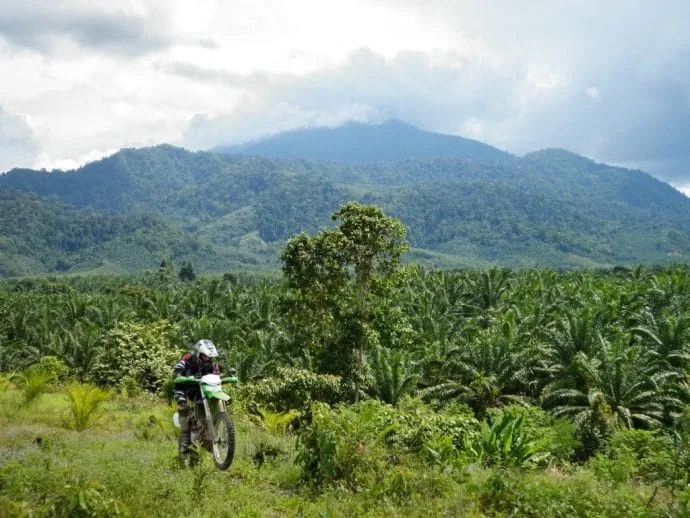
There is also the presence of many birds including a species thought to be extinct in the area (until a pair was discovered here in 1986), the Gurney's Pitta, an extremely rare bird with yellow, black, blue and brown colours.
There are many hiking trails leading into the mountains, but many are not well maintained, so it may be best to hire a park ranger to accompany you. Along the way, you can always stop and have a look at the Khao Pheung cave.
Than Bok Khorani national park
A site that you can combine a day visit with Tha Pom Klong Song Nam. While you will also have charming natural corners with green water, small waterfalls and forests, this national park is better known for its caves.
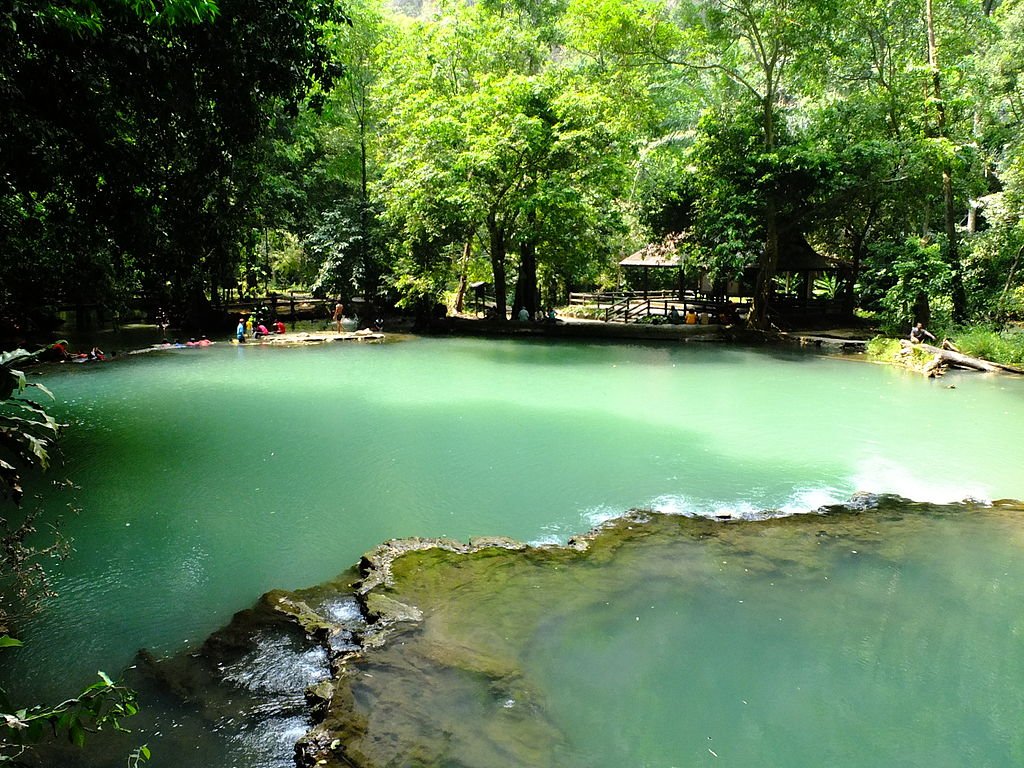
In particular, Phi Hua To Cave (which means "Ghost Head Cave"). Caves in the park like this one are known for containing prehistoric rock art . However, there is no evidence to suggest that people actually lived in the caves. The assumption is rather that they used the caves for religious ceremonies.
The drawings depicting people and animals in a very geometric and unique design. In the Phi Hua To complex, there are no less than 238 paintings that are generally well preserved despite their 3 years of age.
More rock paintings can also be seen at Tham Chao Lae, located 20 km further south along the coast near the village of Baan Laem Sak. The national park is vast and includes both land and sea, including the island of Ko Hong. But that's a lot to see in one day.

You can kayak along the stunning Khao Ka Rot peninsula (also spelled Karos). On the way there, not far from Tree Top Adventure, you can visit Khlang Cave.
To get there , if you don't have your own transport (which remains the cheapest option…), you can take a songthaew to Ao Luek (it's usually sky blue with a red stripe and marked "Ao Luk" in Latin letters). It will pass by the River View Hotel at the corner of Maharaj Soi 10 and Uttarakit Road, or next to the Vogue Department Store on Maharaj Road, in Krabi Town.
Please note that these only depart between 07:00 and 10:00. They will drop you off at the centre of Ao Luek, from there you can hire a taxi to the park.
In the village of Baan Bor Thor , near the park entrance, villagers will offer kayak rentals for 500 Baht, or, if you prefer the "easy" option, longtail boats for 600 Baht. These will take you to several caves, including Phi Hua To Cave or Tham Hua Kalok Cave , literally, the cave with the human skull.
Krabi islands where to stay
Off the coast of Krabi are nearly 200 islands. Some are just simple rocky outcrops rising from the sea, others are completely uninhabited, while a few are true islands where people live all year round.
From Krabi Town or Ao Nang, it's easy to explore the islands by boat. Independent travelers can rent a longtail boat for the day, while others may prefer to join an organized tour and be guided from island to island.
The best time to enjoy these sea trips is generally between November and April, when the Andaman Sea is at its calmest.
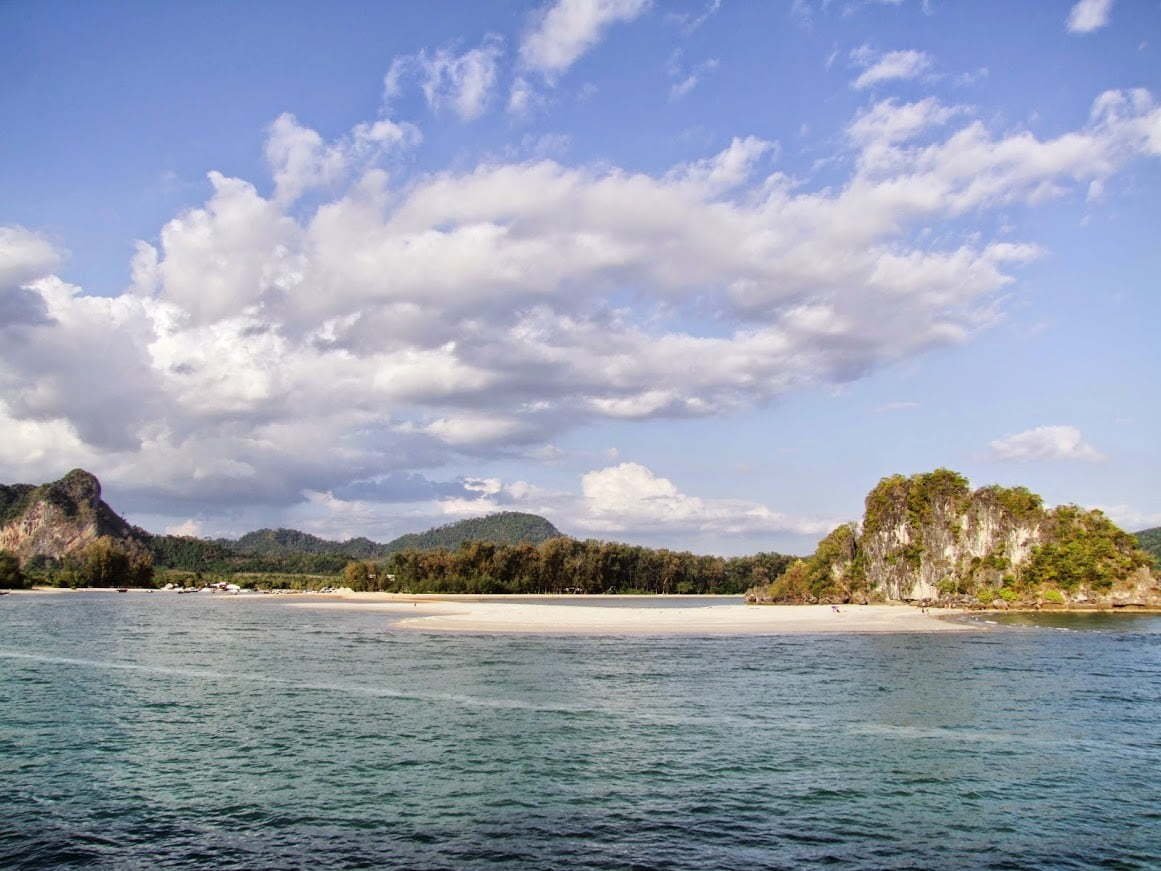
Ko Phi Phi
It is impossible to talk about the islands of the region without mentioning Ko Phi Phi . This archipelago remains one of the most famous in Thailand, especially since Maya Bay beach , located on the island of Phi Phi Leh , served as the setting for the film The Beach.
Alternatively, you will disembark on Phi Phi Don , the main island where the village is located, and find the hotels and the two large bays of Tonsai and Loh Dalum.

Despite its current popularity and sometimes lively atmosphere around the village, Ko Phi Phi retains its undeniable charm. Just a short distance from the center, you'll find much quieter spots, particularly on the island's east coast or in certain bays accessible by boat.
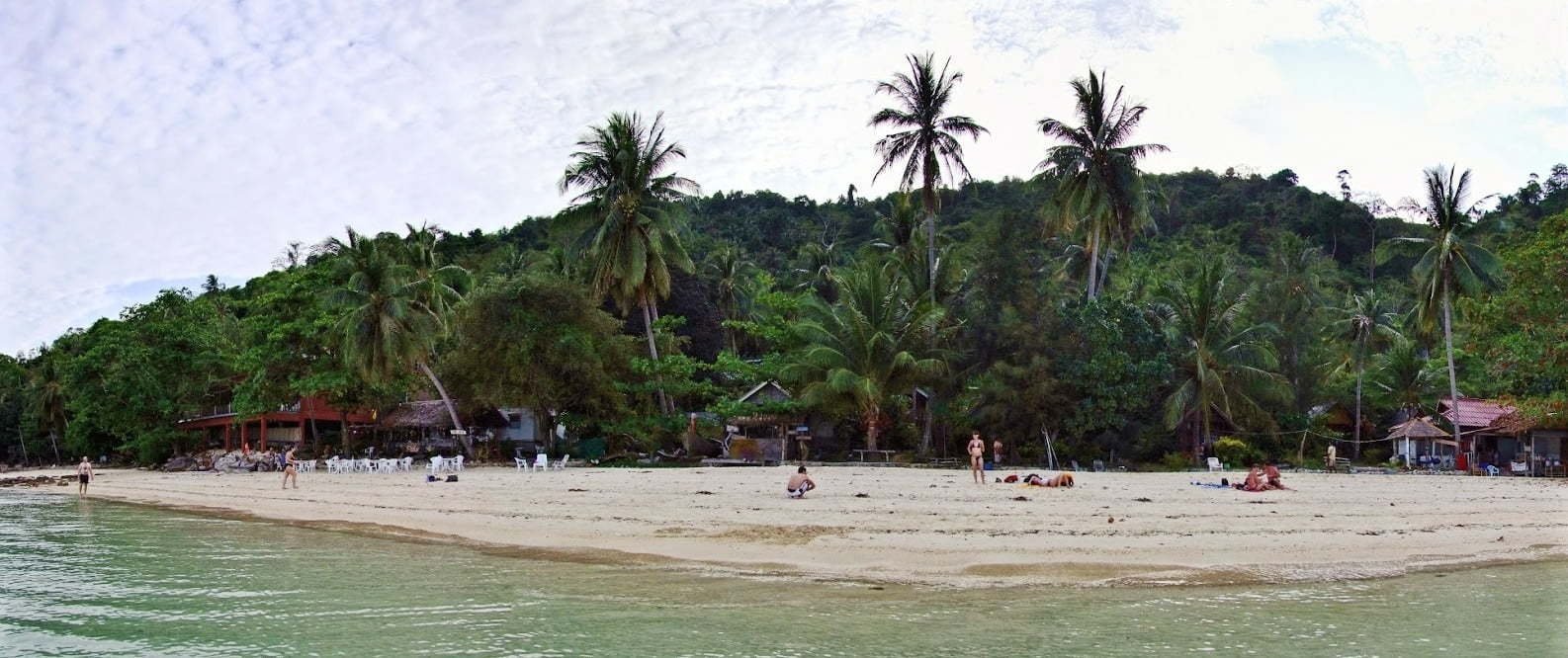
Phi Phi Viewpoint
If there's one thing you absolutely must do when visiting the island, it's to hike up to the Phi Phi Viewpoint . The climb, which is quite steep, takes about twenty minutes from the main village, but the view over the island's two bays is well worth the effort.
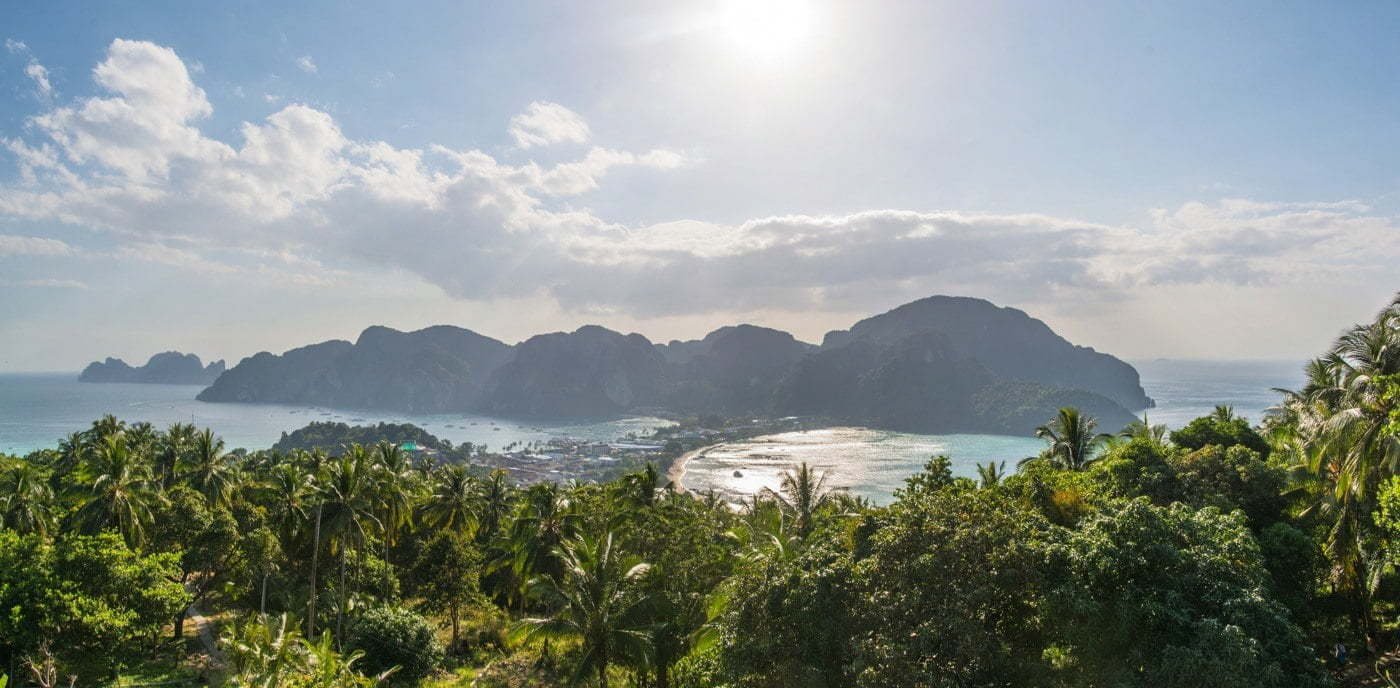
To explore the lagoons, beaches and snorkeling spots around the archipelago — including Maya Bay, Monkey Beach or Bamboo Island — the easiest way is to go on a boat trip.
For a more detailed overview of this sea trip, I invite you to consult this dedicated article:
→ Ko Phi Phi in a day: what is a private long-tail boat trip worth?
Koh Lanta
The island whose name everyone knows. Famous since the famous show, the first edition of which took place in the region (more precisely on the 2 small islands of Ko Rok Noi and Ko Rok Yai).
This may be partly why the island is quite popular with the French. The other (real?) reason is that it is a much quieter island than its sisters like Phuket or Samui (even if the size and style are clearly not comparable).
Koh Lanta is formed by 2 small islands, Ko Lanta Noi (the small one, to the north) and Ko Lanta Yai (to the south, the main part). The 2 are today connected by a bridge, but access from the continent is still by ferry, which is perhaps what helps to preserve this island, at present, from mass tourism.

Located about two hours from Krabi Town, it is a very long island, stretching for almost 30 kilometers from end to end. Generally less beautiful than elsewhere in the region, Ko Lanta still has charming long beaches, a fairly large mangrove forest, mountains with waterfalls and everything you need to explore a little and not get bored.
It offers a setting appreciated by families, but also backpackers looking for more "authentic" corners. If you want to relax for a few days, this is the ideal place to do so.

Prices on the island are still quite low, as tourism has not yet reached the levels of more popular islands like Phi Phi. If you like diving, it is like everywhere in Thailand also possible, given the beautiful spots further south of the island. An island that I only ask for one thing, to explore it myself so much I have heard about it, well yes, to this day never had the opportunity!
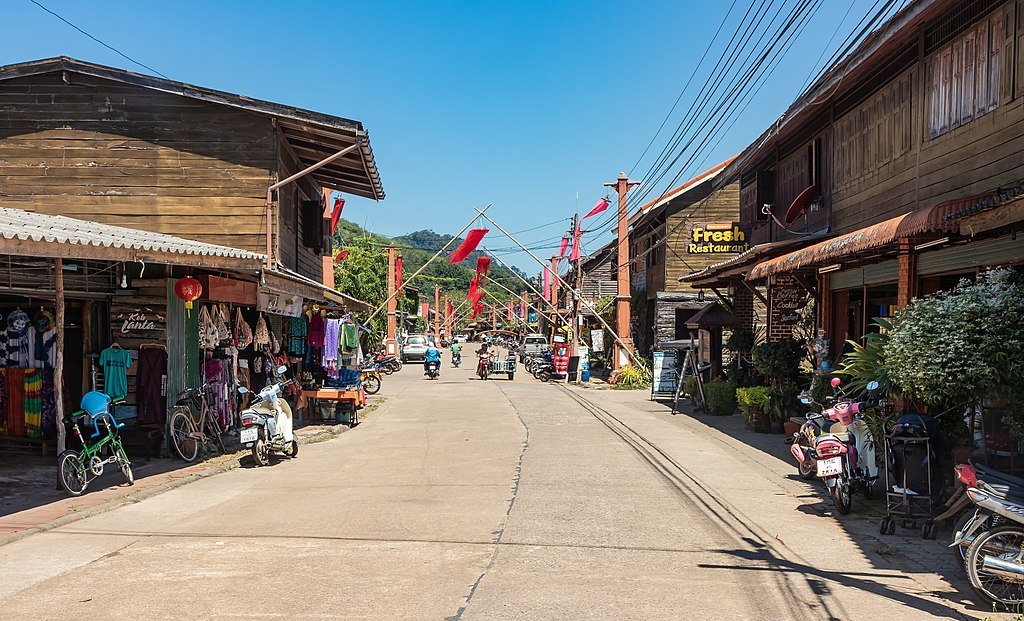
Among the things to see, I would like to visit the mangroves of Tung Yee Peng , and go to Ko Lanta "old town", the "old" town with its main street (the Sri Raya road) which looks nice, with its rows of wooden houses.
I will definitely take a trip to the very end of the island to see the village of the sea gypsies at Sang Ga Ou (the famous Sea Gypsies, also called Moken or Chao Lay in Thailand, like those I saw in Phuket on Rawai . Locally here, they are called Urak Lawoi), but also in the preserved part of the island; which is part of the Mu Ko Lanta National Park.
There seems to be a nice walk to do, in particular to see the lighthouse and the view that goes with it (or, apparently, to reach the sea gypsy village from there).
How to get to Ko Lanta?
If you arrive from Krabi Airport (the closest to Ko Lanta), you will find counters offering a transfer service to the island. Minivans leave every hour from morning until 16:30pm and cost 400 Baht.
From Krabi Town, minibuses depart from the bus terminal every hour also between 7:00 am and 17:00 pm. The cost is 250 Baht if you show up in person, a little more if you buy the ticket through an agency.
The journey takes around 1h30, including the wait for the ferry to get to the island.
A bridge now connects the southern part of the island called Ko Lanta Yai to Ko Lanta Noi, giving you even more places to explore without taking a boat.
Overall, you will commonly find trips to these destinations from Ko Lanta:
- Bangkok: departure at noon, first part by minibus to Krabi then regular bus, 14 hours of travel in total for 1200 Baht.
- Trang: 3 hours by minibus at 400 Bats, departing at 8:00 a.m., 11:30 a.m. and 13:30 p.m.
- Surat Thani: departure at 8:00 a.m., 4 hours of travel for a cost of 650 Baht if in town, 750 Baht if you go to Surat Thani station and then take a night train back to Bangkok.
- Ko Samui and therefore Ko Phangan or Ko Tao too: departure 8:00 a.m., the costs are respectively 1100 Bahts for Samui, 1200 for Phangan and 1400 for Tao.
- Khao Lak: also an 8am departure for a 3-4 hour journey. 700 Baht, same price if you go to Khao Sok National Park.
Ko Ngai
Geographically (or rather, administratively speaking), it is the only one of the small islands south of Ko Lanta that is part of the Krabi region; Ko Kradan and Ko Muk being part of the neighboring province of Trang.
If you're looking for a more romantic beach, on a beautiful island, and have a budget beyond the cheap pad thai/bungalow combo, then Ko Ngai is a viable option.
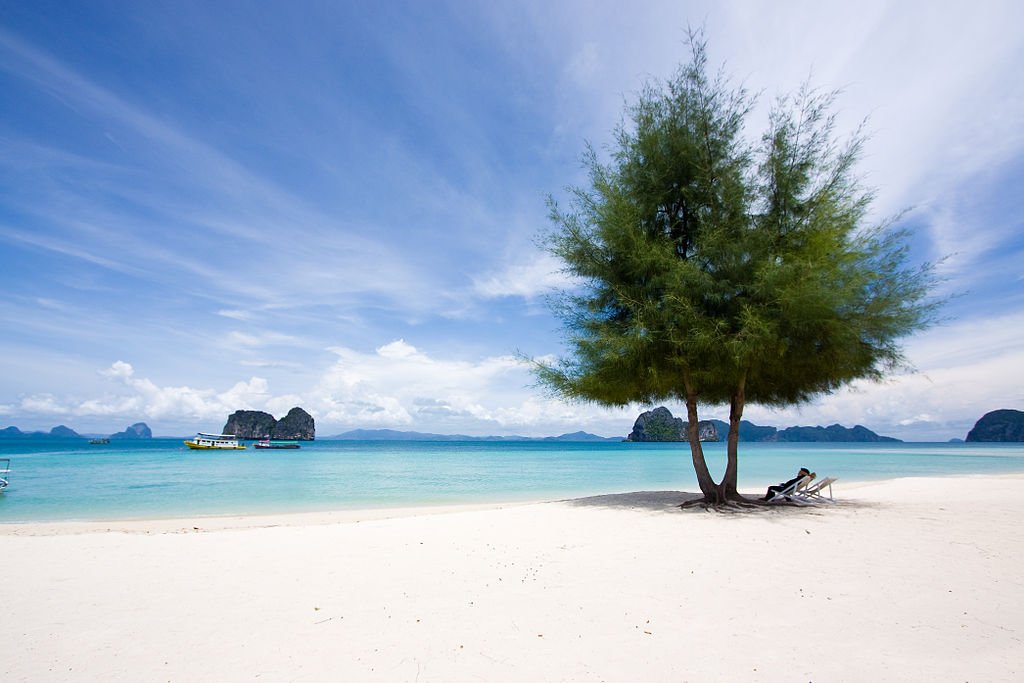
Officially, Ko Ngai is part of the Mu Ko Lanta National Marine Park . The island is easily accessible during the high season from Ko Lanta, from the mainland via Trang and several nearby islands such as the neighboring Ko Muk and Ko Kradan.
The regular ferry during peak season (November 1st to May 1st) departs from Pakmeng Pier every day at 12:00. It costs 350 baht per person and takes an hour to reach the island. The return to the mainland from Ko Ngai is at 10:00. You can find minivans taking you to Ko Ngai from Trang.
Knowing that many take the simple option of a van + ferry combo via an agency in Trang, the package being 500 Baht.
From Ko Lanta, the regular ferry departs from Ban Saladan at 9:00 am.
You'll also find speedboats operating to and from Ko Lanta during the high season. For example, the Bundhaya company offers this service, departing at 11:30 am and arriving in Ko Lanta half an hour later for just 650 Baht.
Another company, Satun Pakbara, offers a similar service but also continues to Ko Phi Phi for 1350 Bahts and Phuket for 2150 Bahts, arriving at 14:30 pm.
Ko Jum and Ko Siboya
Located off the coast between Krabi and Ko Lanta, Ko Jum and Ko Siboya are among the most secluded islands in the province. Far from the hustle and bustle of Ko Phi Phi or even Ko Lanta, they offer a much more rural and peaceful atmosphere.
These two neighboring islands have much in common: modest villages, often deserted beaches, and a relaxed atmosphere where time seems to flow a little more slowly. Here, there are no large resorts or mass tourism, but rather a few simple accommodations and a still very present local life.
Ko Jum
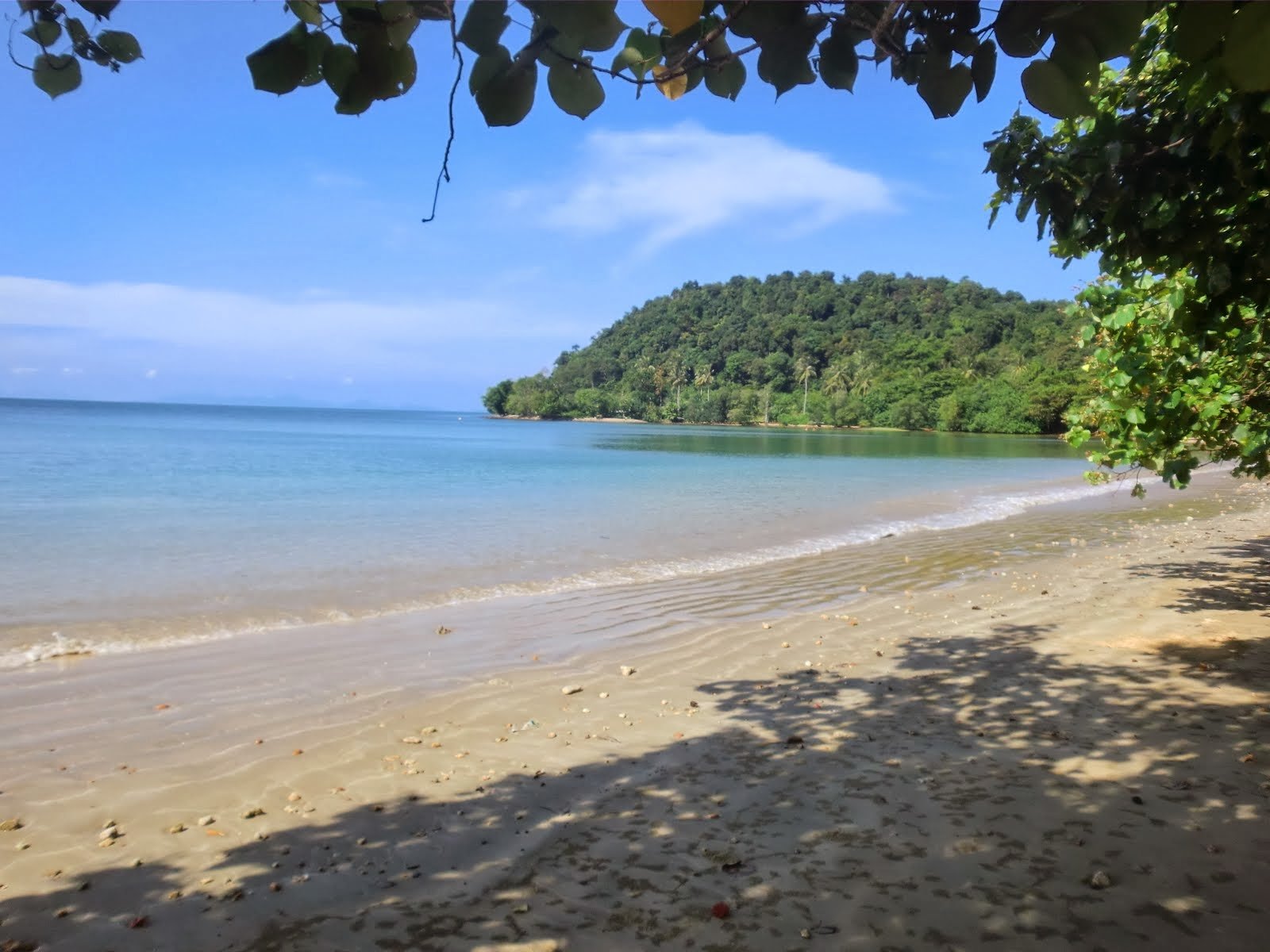
Also called Ko Pu (in its northern part, according to Google Maps…), Ko Jum is undoubtedly the better known of the two. The island is a mix of large, tranquil beaches and hills covered in vegetation, in a very relaxing atmosphere.
With mass tourism largely left to neighboring Ko Phi Phi and, to a lesser extent, Ko Lanta, Ko Jum maintains a peaceful pace of life. The inhabitants, predominantly Muslim as is more common in southern Thailand, have largely preserved their traditional way of life.
Its relative proximity to the mainland remains an advantage: unlike some very isolated islands, you will generally find electricity available 24 hours a day.
Ko Siboya
Even more discreet than its neighbor, Ko Siboya is first and foremost a rural island. People come here less to find picture-perfect beaches than to enjoy a calm environment and a decidedly off-the-beaten-path atmosphere.
Located halfway between Krabi and Ko Lanta, it remains largely off the beaten tourist track. The few travelers who make the journey there are often fewer in number than the locals… who themselves sometimes seem fewer in number than the cows grazing peacefully in the fields.
Things to do and see in Krabi Town
Krabi is primarily a transit town , used by many as a stopover point before heading to popular destinations like Ko Phi Phi, Ko Lanta or more broadly Ao Nang.
Generally speaking, and like many towns in Thailand, this small town of about 30,000 inhabitants has little "historical or architectural" interest. Nevertheless, it remains pleasant for its tranquil atmosphere, if only for its surroundings and the few possible visits in the vicinity.
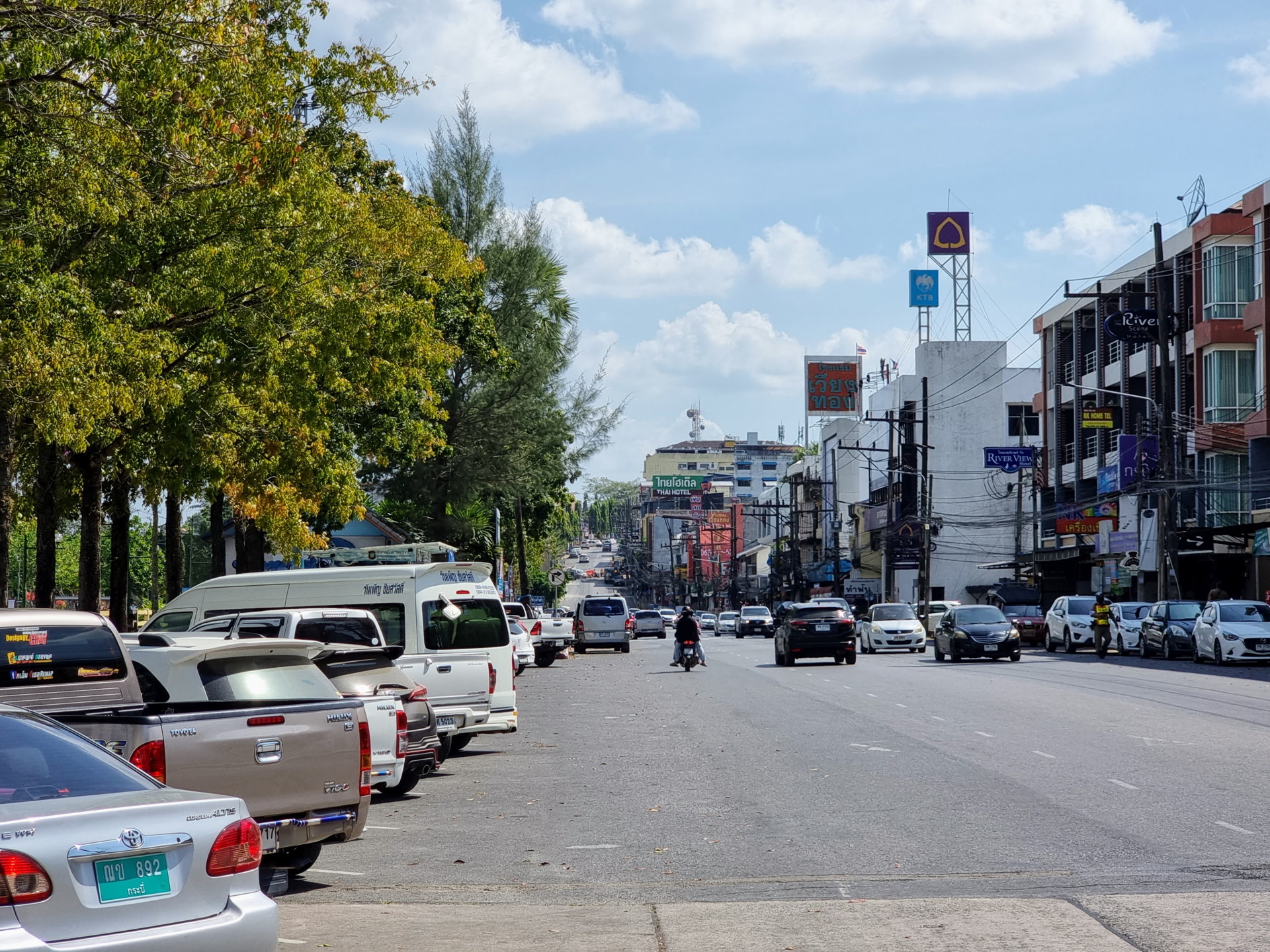
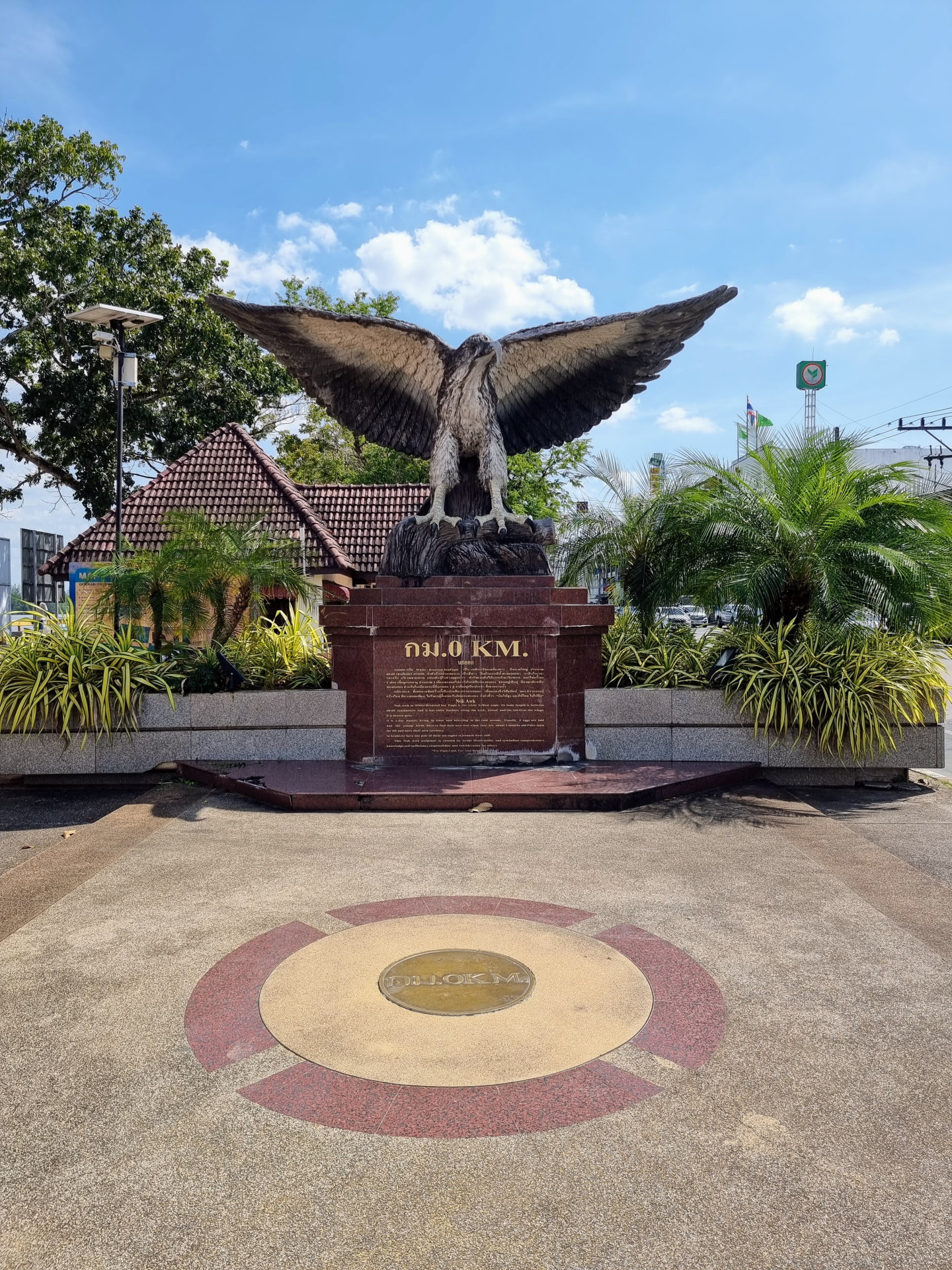
It remains a tourist town, so it is developed enough to find what you need in terms of accommodation, food or simply a cafe to sit in while waiting for your boat or your next departure.
Speaking of food, given its southern location, Krabi's population is predominantly Muslim. So, if you enjoy spicy curries, biryani rice, or the famous roti, you've come to the right place.
Even though most travelers simply ignore the town to go directly to the beaches, there are still some points of interest in Krabi Town and its surroundings that may be worth at least one or two days of rest.
Wat kaew korawaram
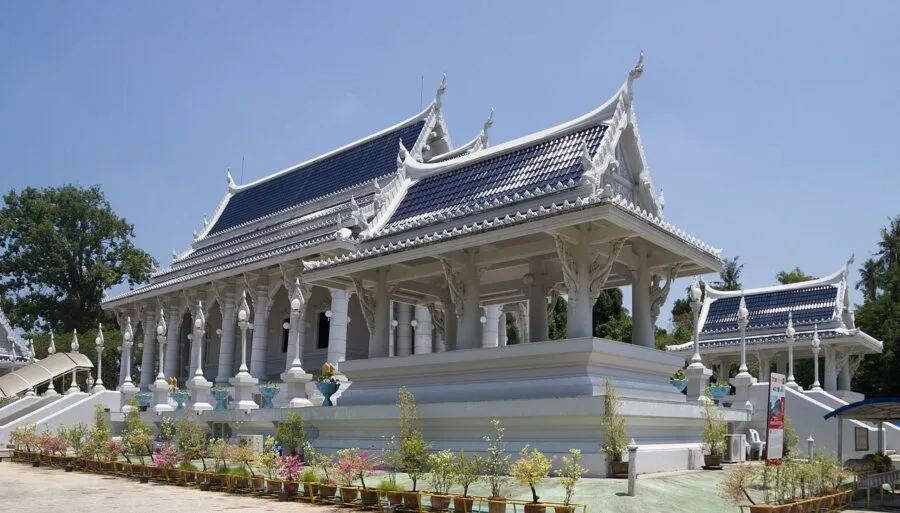
If you were to see just one temple, it should be Wat Kaew Korawaram , nicknamed the White Temple (but it has nothing to do with the one in Chiang Rai ). It is the largest religious complex in Krabi.
Overlooking a small hill (unfortunately too low to offer a full view of the city), the place gives off a rather peaceful atmosphere.
The main white building is relatively recent — construction started in 2011 — but its design has the merit of being a little different from what is usually seen in Thai temples.
Krabi markets
If you enjoy markets, several options exist in the city.
During the day, you can visit the Maharat market . In the evening, head to the night market near the Chao Fah pier.
And if you are there on the weekend (including Friday between 17pm and 22pm), you can stroll along the walking street of Soi Maharaj 8.
Chao Fah promenade and crab statue
You can also stroll along the landscaped promenade linking Chao Fah Park to the famous crab statue.
From this vantage point, you can see the two limestone peaks of Khao Kanab Nam , which appear to rise from the river like two whales emerging from the water. It's one of Krabi's most iconic views.
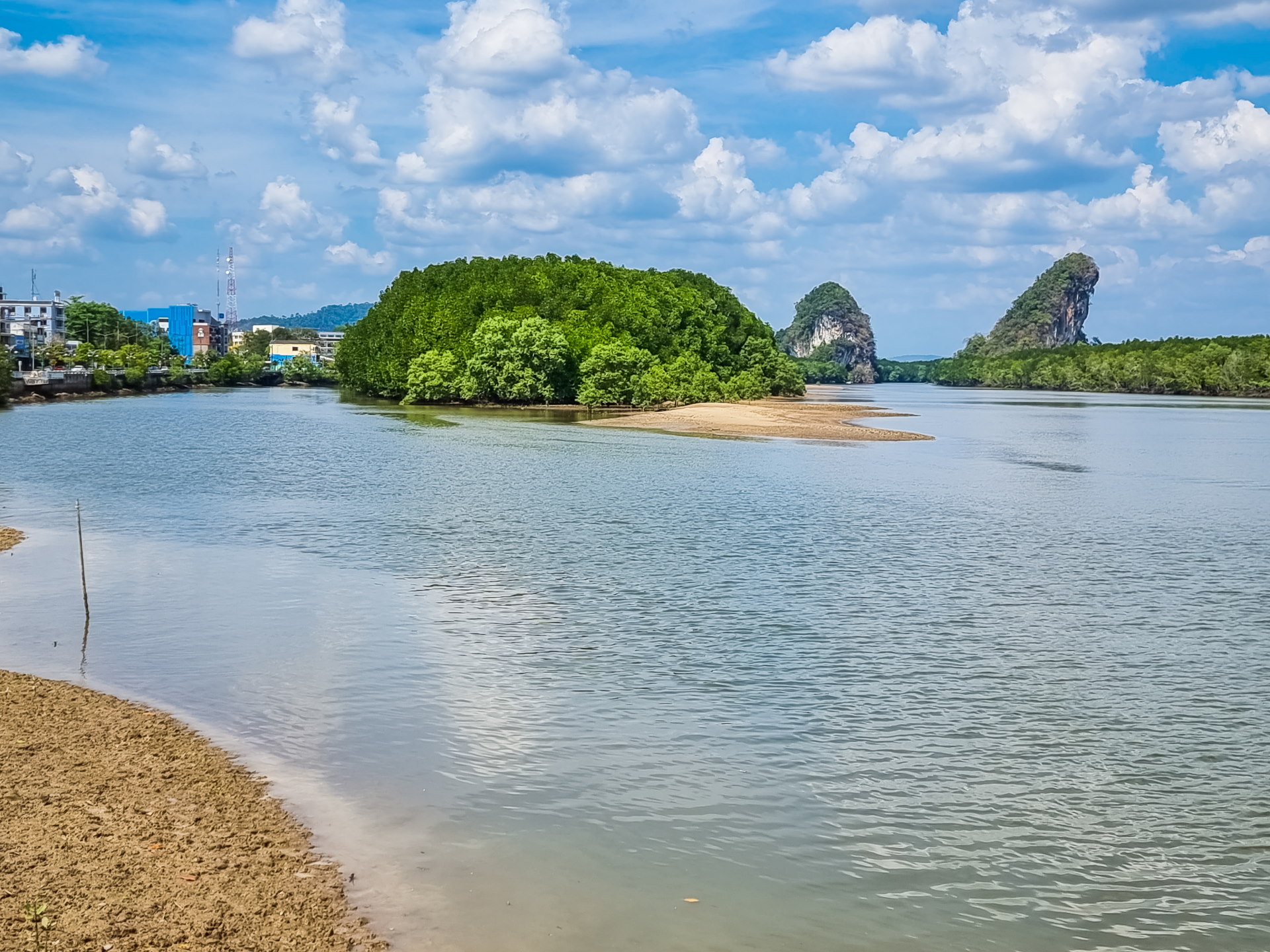
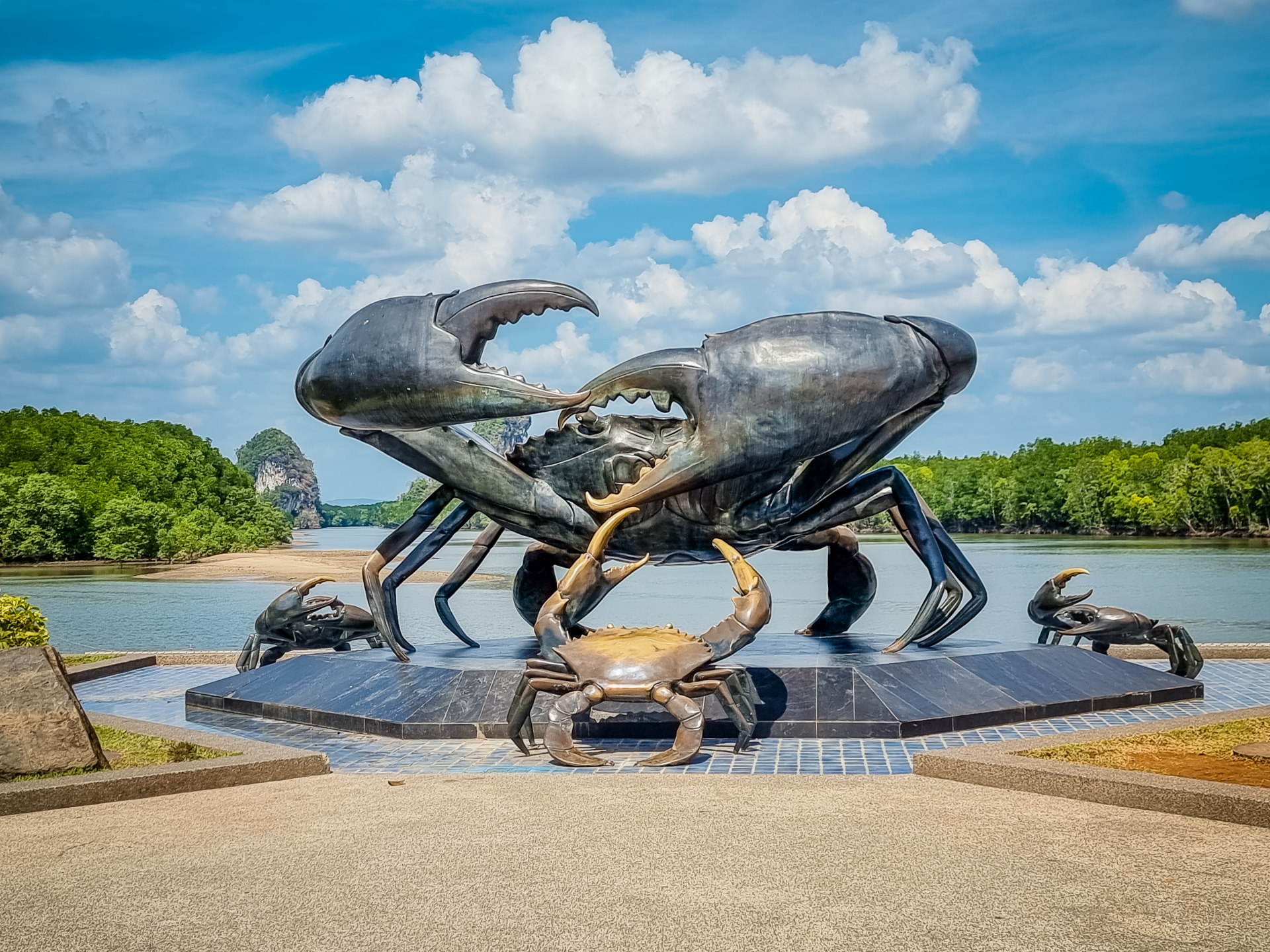
The walk is just under a kilometer, but if you wish to walk further, it can be extended to Thara Park , located near the mouth of the river.
Directly south of the city is the Klong Jilad pier , from where boats depart for Ko Lanta and Ko Phi Phi.
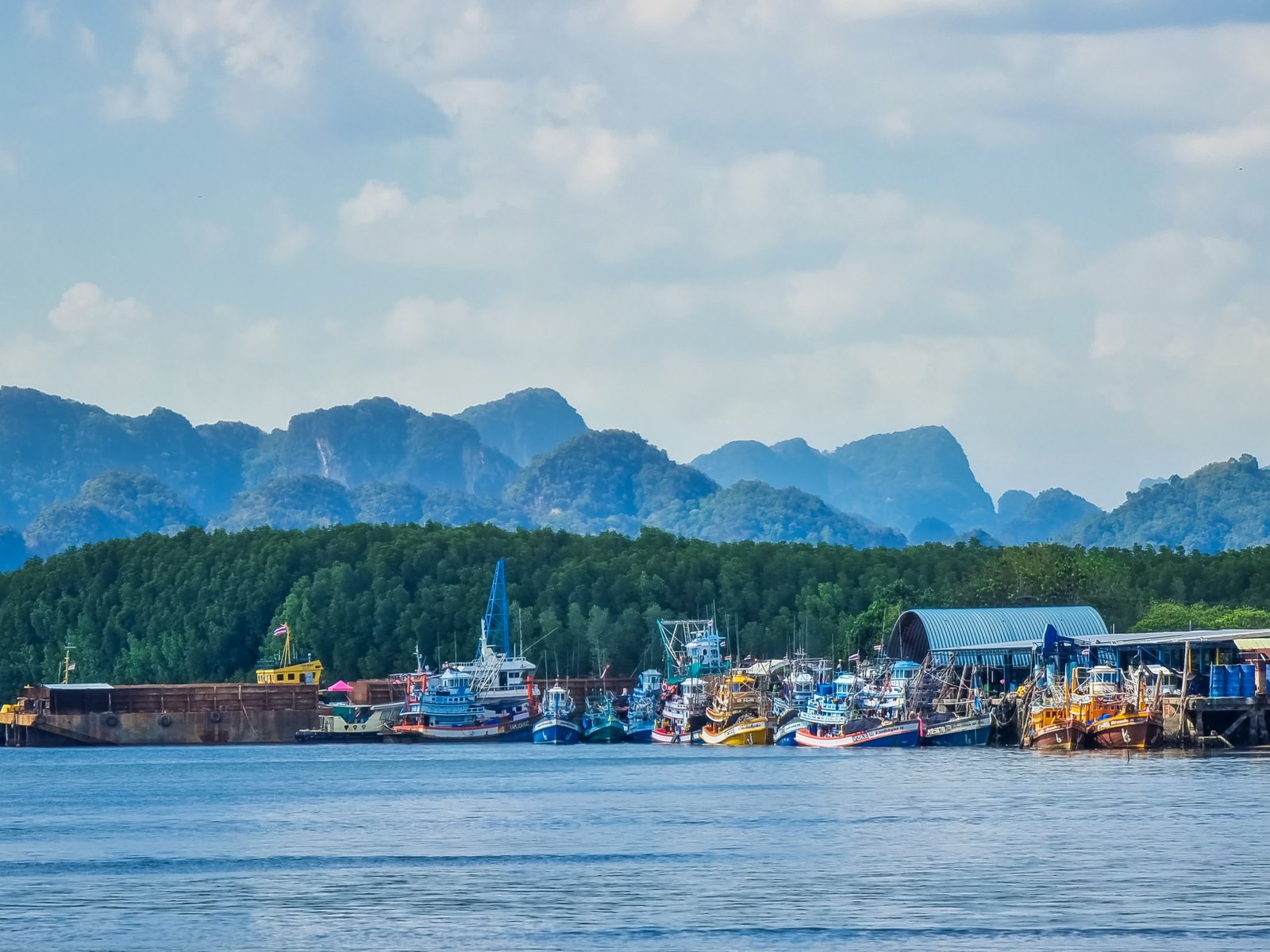
Excursion to Khao Kanab Nam and Ko Klang
From Krabi Town, this is an easy little excursion to organize. Simply use the services of one of the longtail boats usually moored near Chao Fah National Park.
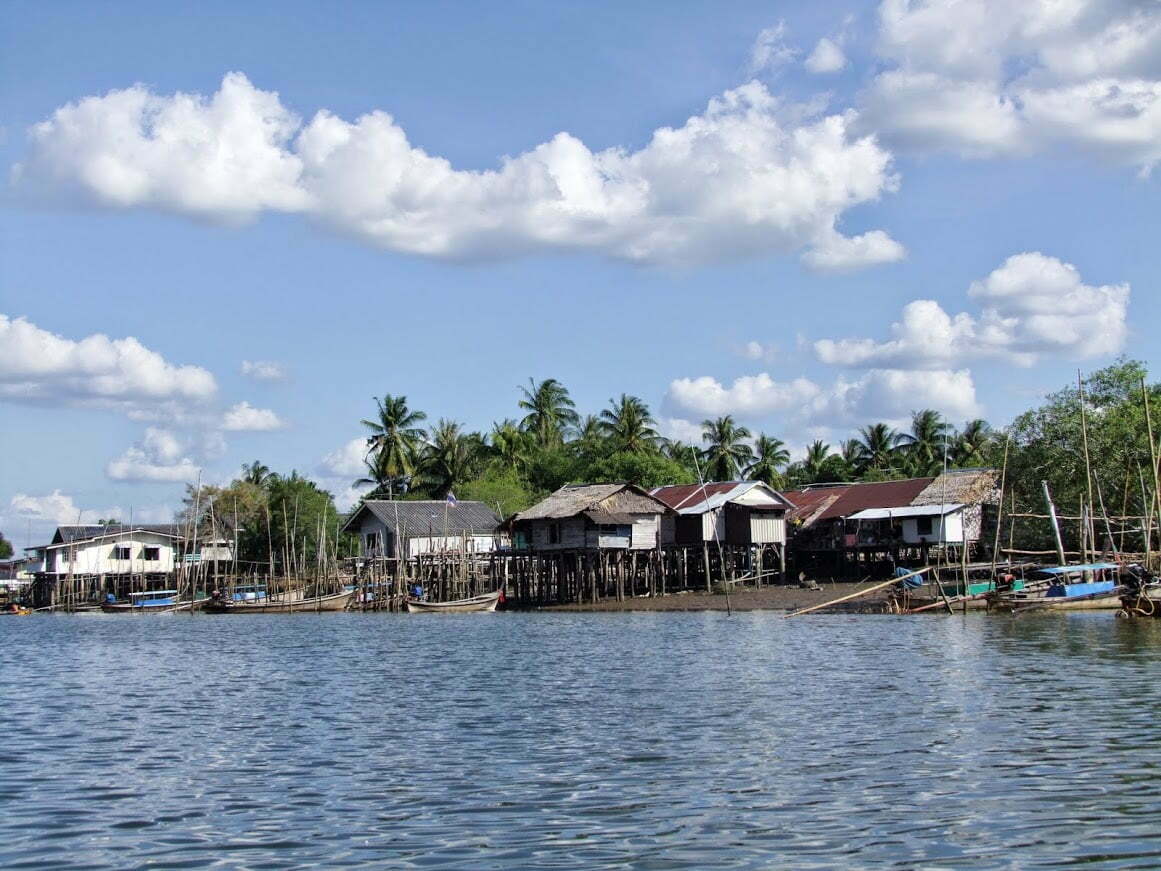
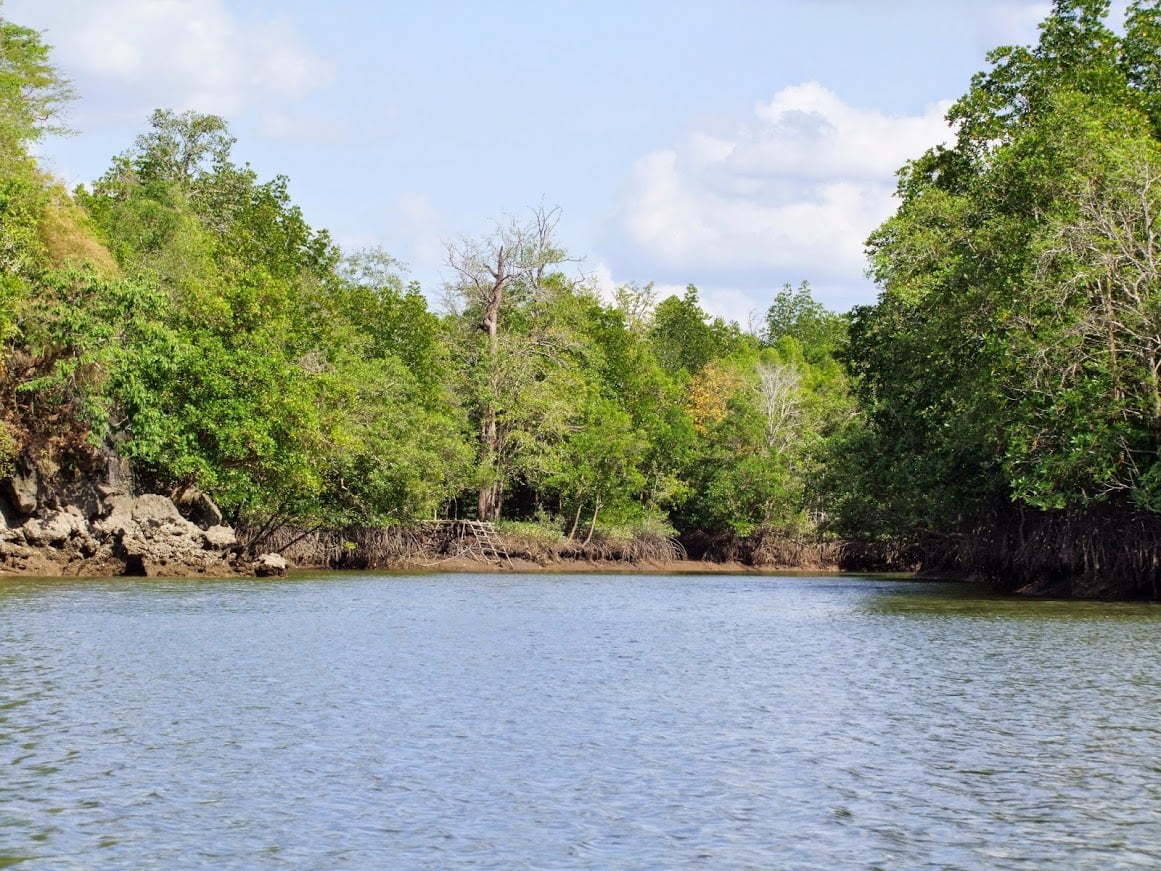
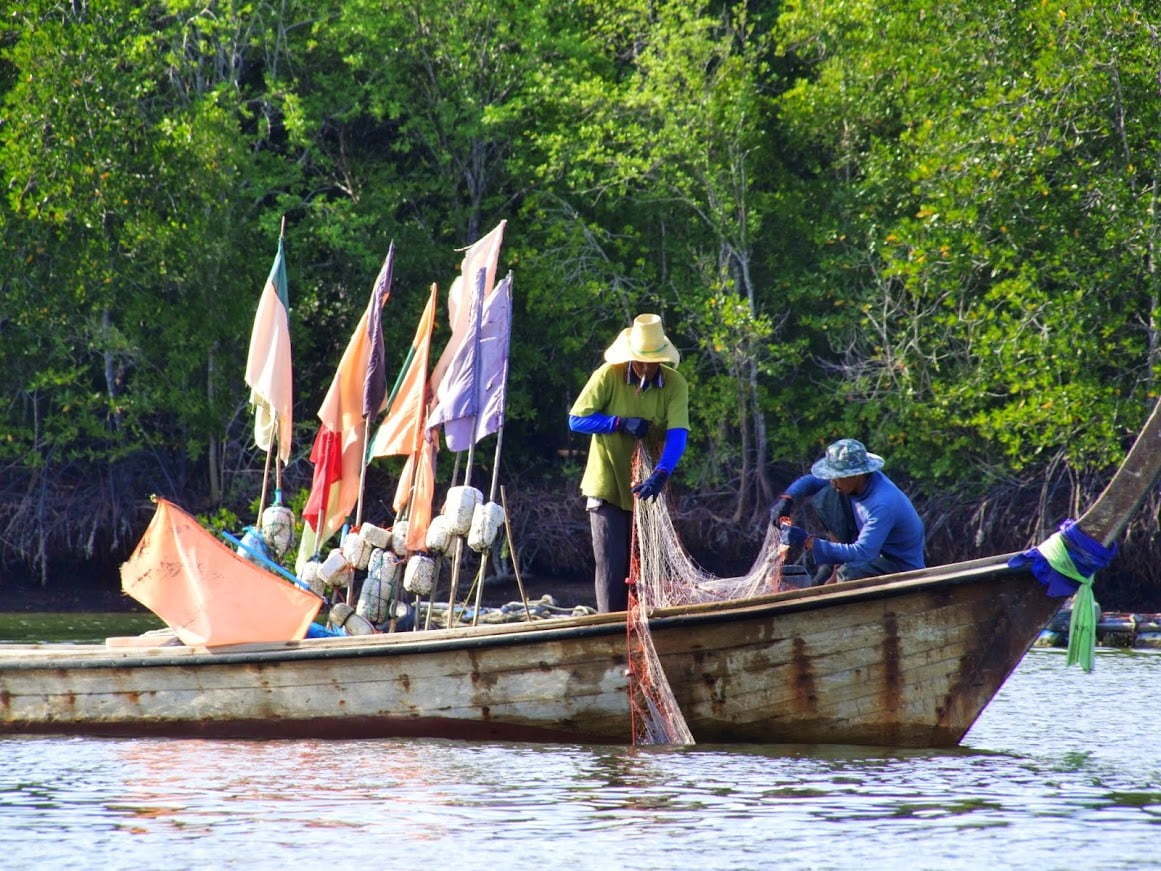
For about 300 baht per hour (last I heard), you can enjoy a ride on the Pak Nam River , passing by the fishermen's houses of Ko Klang village , the island located just opposite Krabi — yes, technically, it is an island.
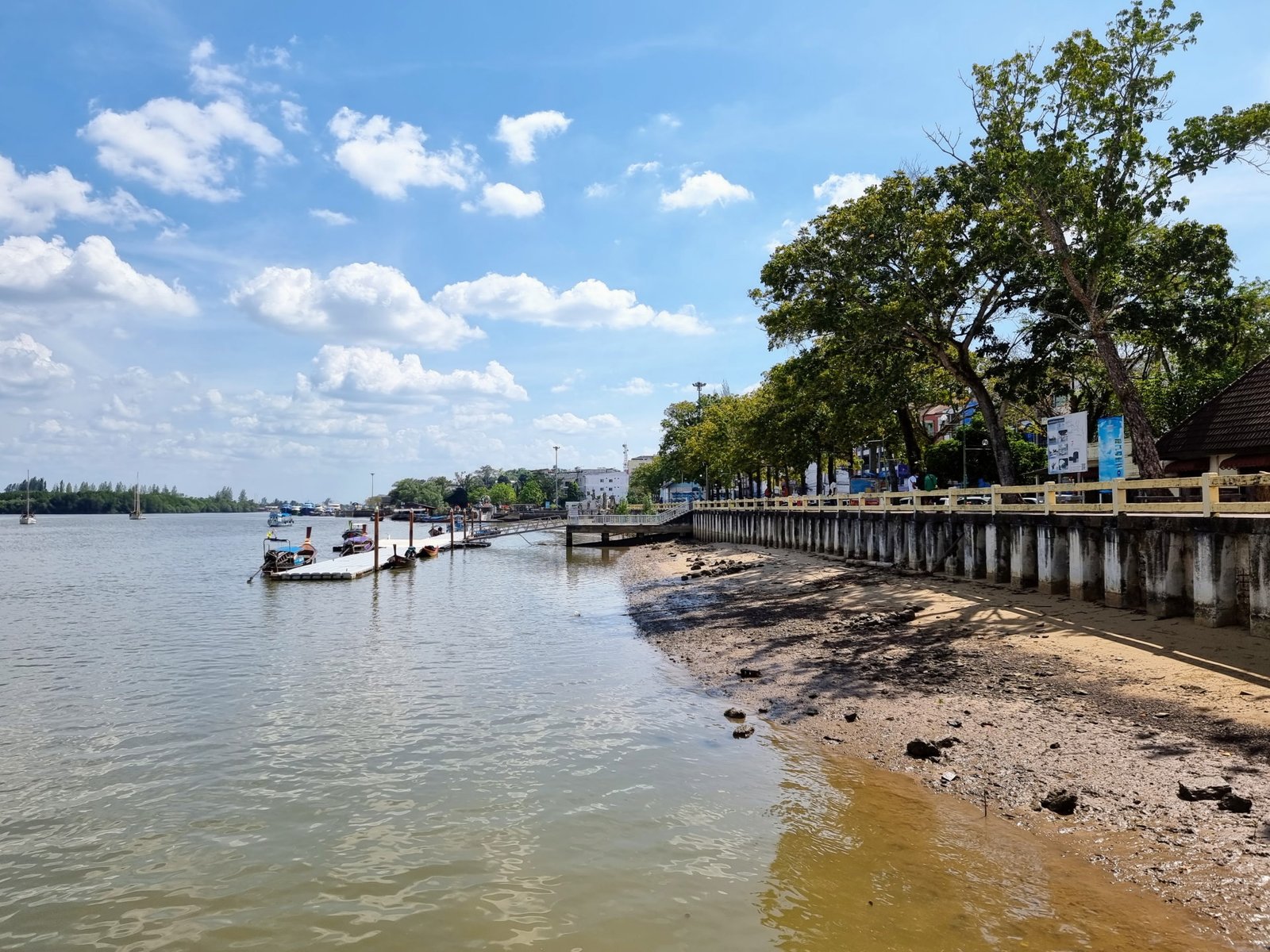
The boats then pass at the foot of Khao Kanab Nam , the famous limestone peaks that I described a few lines above as two whales emerging from the landscape.
Beneath the largest one, which rises to about a hundred meters, is a cave naturally lit by a hole in the wall.
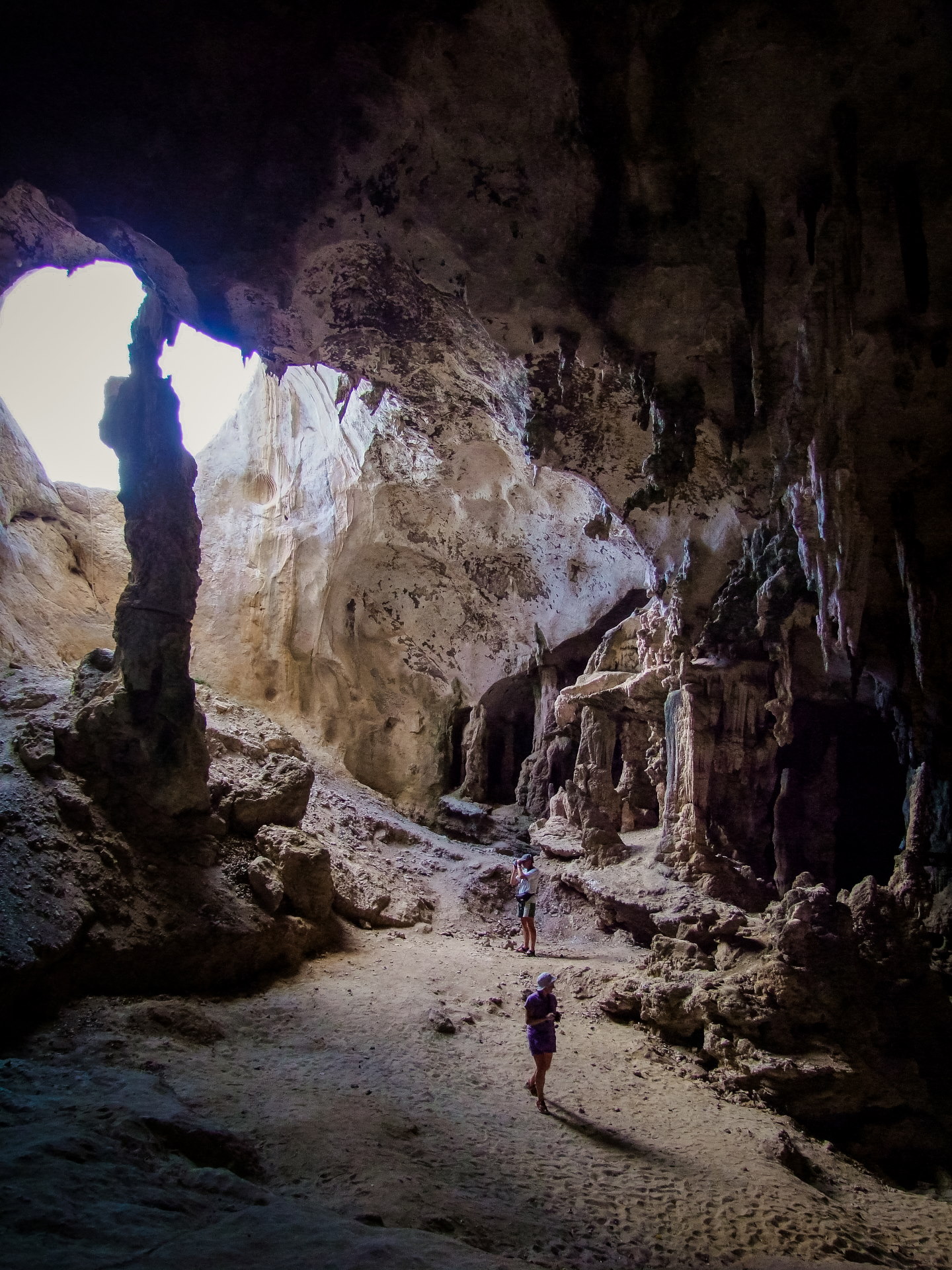
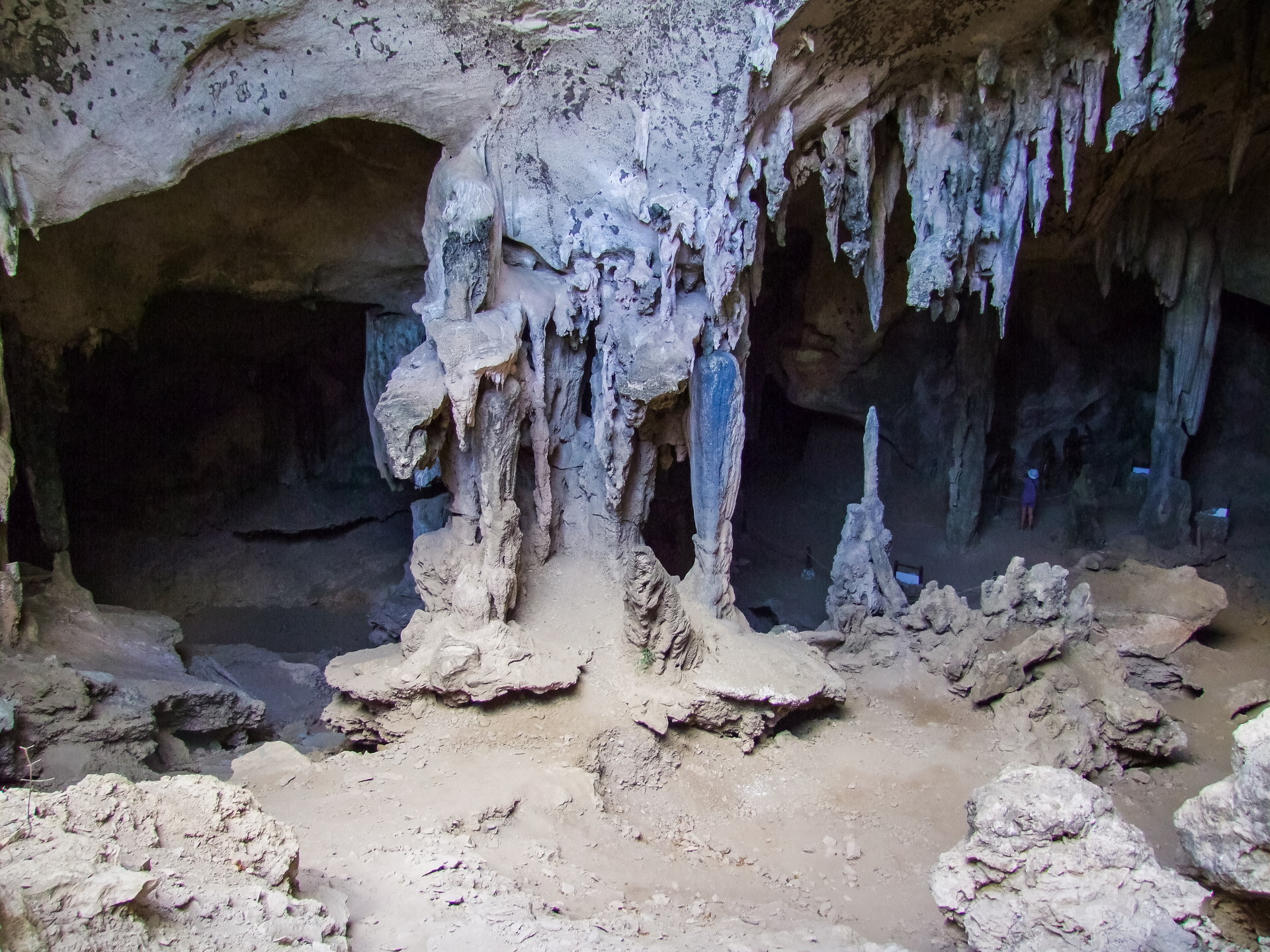
Bones were also reportedly found in the cavity, as in other caves in the region, suggesting that human presence in the area dates back several thousand years.
The trip often includes a stop at a fisherman's house in Ko Klang , where you can observe a small fish farm before returning to the starting dock.
Fossil beach (gastropod)
Susan Hoi (or Susaan Hoi) literally means, the shell graveyard (in English you will see signs indicating Fossil Shell Beach). This is a beach with a layer of fossilized shells that has accumulated over millennia. In fact, the estimated age of the fossils is between 25 and 40 million years.
Its formation is due to the fact that the site was once part of a freshwater marsh. Over time, successive layers of shells created limestone slabs of more than 40 cm.

Over time, this limestone in Susan Hoi has broken like a large "leaf" and looks like slabs of damaged concrete, but this is indeed the work of Mother Nature. The site extends over a width of 200m, it is one of the three cemeteries of this kind that has been discovered to date in the world, which is to say a rarity. If you have an interest in geology, this is surely a must-see if you are passing through Krabi.
Map of attractions in Krabi province
To better visualize all of this, here is a map showing the main places mentioned in this article.
To find your way around, you can open a small menu by clicking on the "window" logo at the top left of the map, you can then select the part of the region where you want to see these centers of interest and individually select an icon to locate its location.
Where to stay in Krabi
Most travelers choose to stay in Ao Nang , which is the most convenient base for exploring the region. It boasts the highest concentration of hotels, restaurants, and agencies that make it easy to arrange excursions to Railay, the islands, or the surrounding natural sites.
The other obvious option is Railay . The setting is spectacular, but access is only by boat, which somewhat limits travel to the rest of the province.
On the mainland, Tubkaek Beach can also be a good alternative for those seeking more tranquility, but it is better to have a vehicle to stay in this area.
Finally, Krabi Town remains a more local and quieter option, even if the majority of visitors prefer to stay near the sea.
To find accommodation, you can use the search tool below:
How many days should I plan to spend in Krabi?
The ideal length of stay depends mainly on what you want to see in the region. Many travelers only spend a few days here before continuing on to other destinations in southern Thailand, but Krabi province easily deserves more time if you really want to enjoy it.
2 to 3 days is enough to discover the must-see sights around Ao Nang, such as the Railay Peninsula, the Tiger Cave Temple or even an excursion to the neighboring islands.
Four to five days offers a more comfortable pace. You can add natural sites like Emerald Pool, Dragon Crest, or a kayaking trip through the mangroves of Ao Thalane.
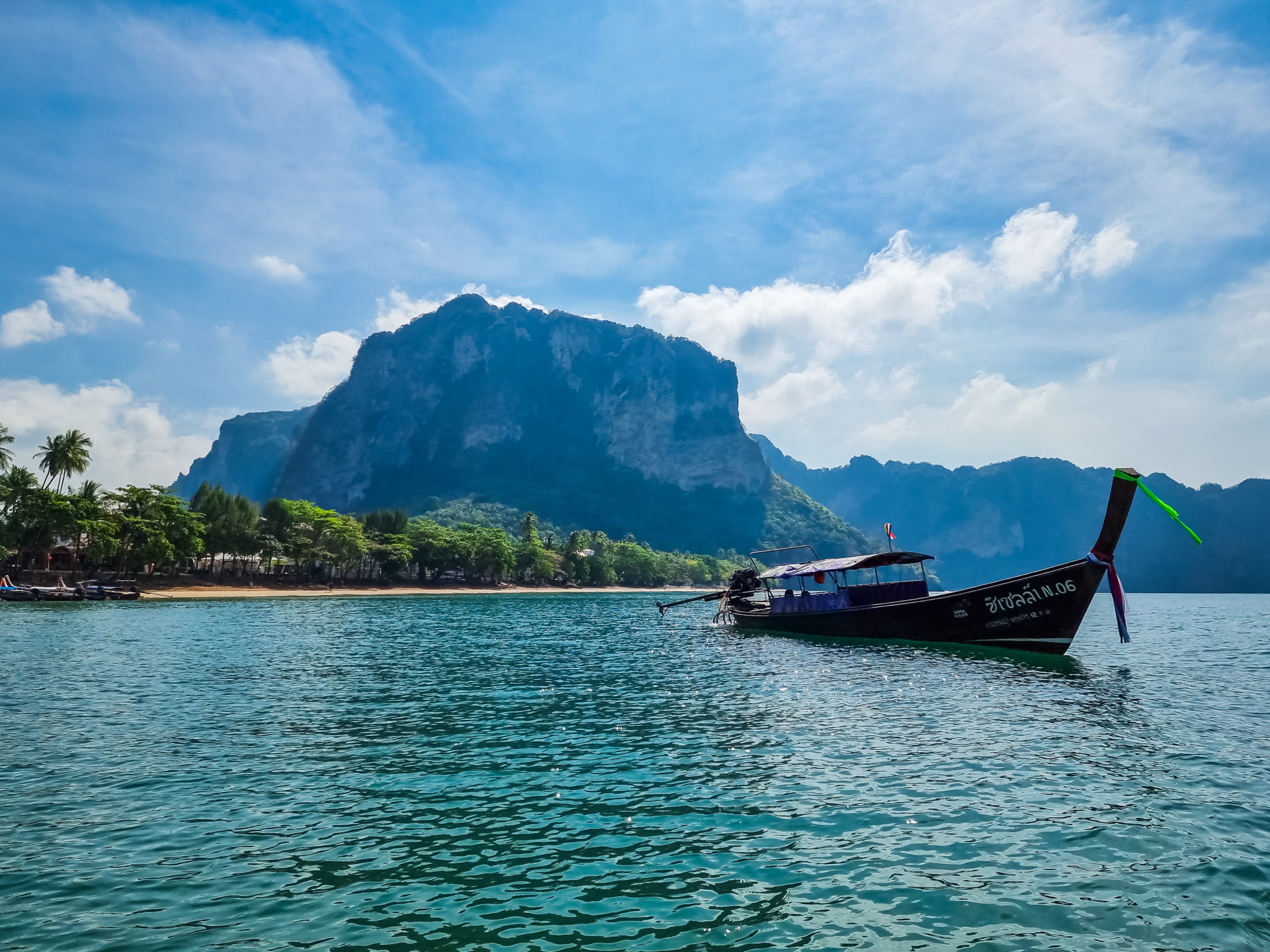
In practice, many travellers mainly choose a main base in the province: Ao Nang to explore the coastline and sea excursions, or an island like Ko Lanta for a stay more focused on the beach and relaxation while having some islands within reach for exploration (Ko Ngai etc).
Combining several locations in the province is of course still possible, but you should then plan a slightly longer stay to take transfers into account.
When to go to Krabi?
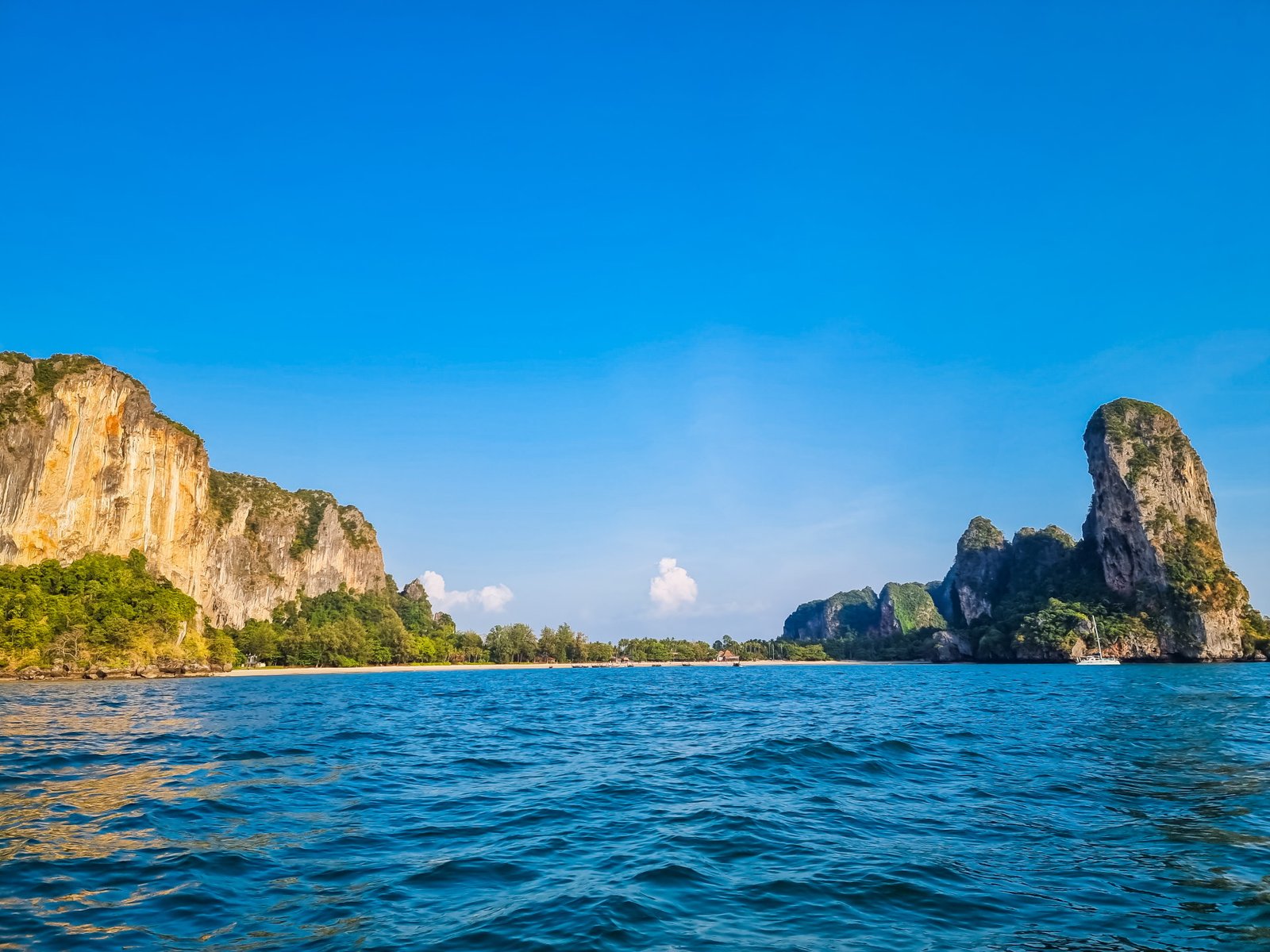
The best time to visit Krabi is generally from November to April , during the dry season. The weather is then more stable, with plenty of sunshine and often calm seas, which is ideal for boat trips to Railay or the islands of the province.
Between May and October , the region enters its rainy season. Showers are often brief but can be more frequent, and the sea sometimes becomes rough. Some excursions or ferry services may be cancelled depending on the conditions.
That said, traveling to Krabi during the low season also has its advantages: fewer crowds, even more lush landscapes, and often lower accommodation prices. You simply have to accept more variable weather and plan your activities with a bit more flexibility.
How to get to Krabi?
Krabi is a fairly easily accessible destination in southern Thailand. The province has its own international airport , served by numerous low-cost carriers such as Air Asia, Nok Air, VietJet Air, and Lion Air.
There are also some international flights, notably from Singapore or Kuala Lumpur in Malaysia, as well as some long-haul connections with a stopover, for example via Doha. ( see available flights here ).
Krabi is also accessible by sea , mainly from Phuket but also from several islands in the Andaman Sea, starting with Ko Phi Phi , which is also part of the province of Krabi.
If you are arriving from the Gulf of Thailand or other parts of the country, you will easily find bus or minivan connections . The city has a bus terminal with connections to destinations such as Surat Thani, Trang, Nakhon Si Thammarat, and Bangkok.
Note that there is no train line directly connecting Krabi.
Indicative fares for connections from Krabi:
- Phuket = 160 Baht (see all prices and book)
- Ko Samui (including ferry) = from 500 Baht (see all prices and book)
- Ko Phangan (including ferry) = from 650 Baht (see all prices and book)
- Bangkok (VIP, 24 Seater, First Class) = between 600 and 930 Baht (see all prices and book)
From Krabi airport, a bus connects to the city terminal for approximately 90 Baht . By taxi, expect to pay around 550 Baht.

All you have to do now is choose the places that appeal to you most and organize your stay in what remains for me one of the most beautiful provinces in southern Thailand.
As always, some practical information may change (schedules, prices, access, etc.).
If you notice any changes during your visit to Krabi, please let me know so I can update the article.
Did you like this article? Share it on Pinterest!