


Welcome to Talat Noi, a charming, historically significant and often overlooked neighborhood in Bangkok. If you're looking to get off the beaten path and discover an authentic side of the city, you've come to the right place.
In this article, I'll guide you on a walking tour to explore Talat Noi and its hidden gems. From auto parts shops and temples to narrow alleyways and old houses, there's so much to discover in this off-the-beaten-path neighborhood. Ready for an adventure? Follow the guide!
Talat Noi, a small part of Chinatown in Bangkok
Bangkok's Chinatown (which encompasses the entire Samphanthawong district) is well known to visitors to the Thai capital, with popular attractions such as Wat Traimit, Sampheng Lane, and of course, its main artery, Yaowarat Road, which comes alive in the evening to become a street food paradise.
The adjacent street, Charoen Krung Road, is also interesting, as it is lined with many shophouses, and above all of undeniable historical importance.
Whether you follow Yaowarat Road or Charoen Krung Road, you will land in front of the large gate of Chinatown, which adjoins the famous Temple of the Golden Buddha (a fitting nickname for Wat Traimit).
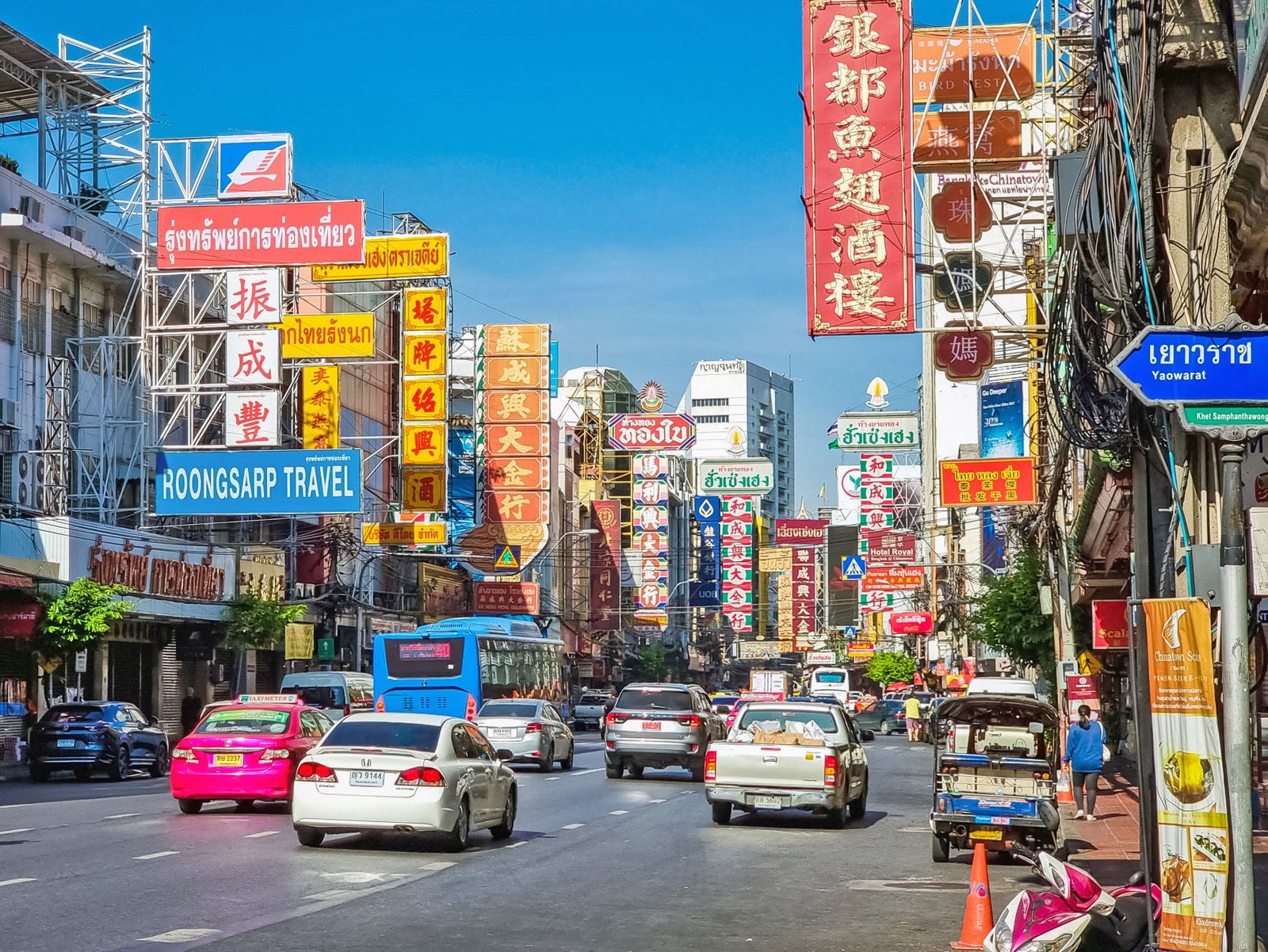
But until more recently, few ventured beyond, yet it is through here that you enter the Talat Noi district, one of the oldest in Bangkok, and one hidden from view.
It's just a few minutes' walk from the hustle and bustle of Yaowarat Avenue, but here you'll discover a completely different side of Bangkok's Chinatown. Talat Noi, although part of Chinatown, has its own distinct atmosphere.
If you're not a fan of the hustle and bustle, the teeming crowds and the commotion that can reign in the heart of Chinatown, then Talat Noi offers a peaceful alternative to the hustle and bustle of Yaowarat.
Here, life goes on as if it were unaffected by modern Bangkok, which is constantly expanding and growing and threatens to engulf it. An oasis of tranquility, prized by Thais who come to stroll and now recharge, particularly in one of the quaint little cafes scattered throughout the area.
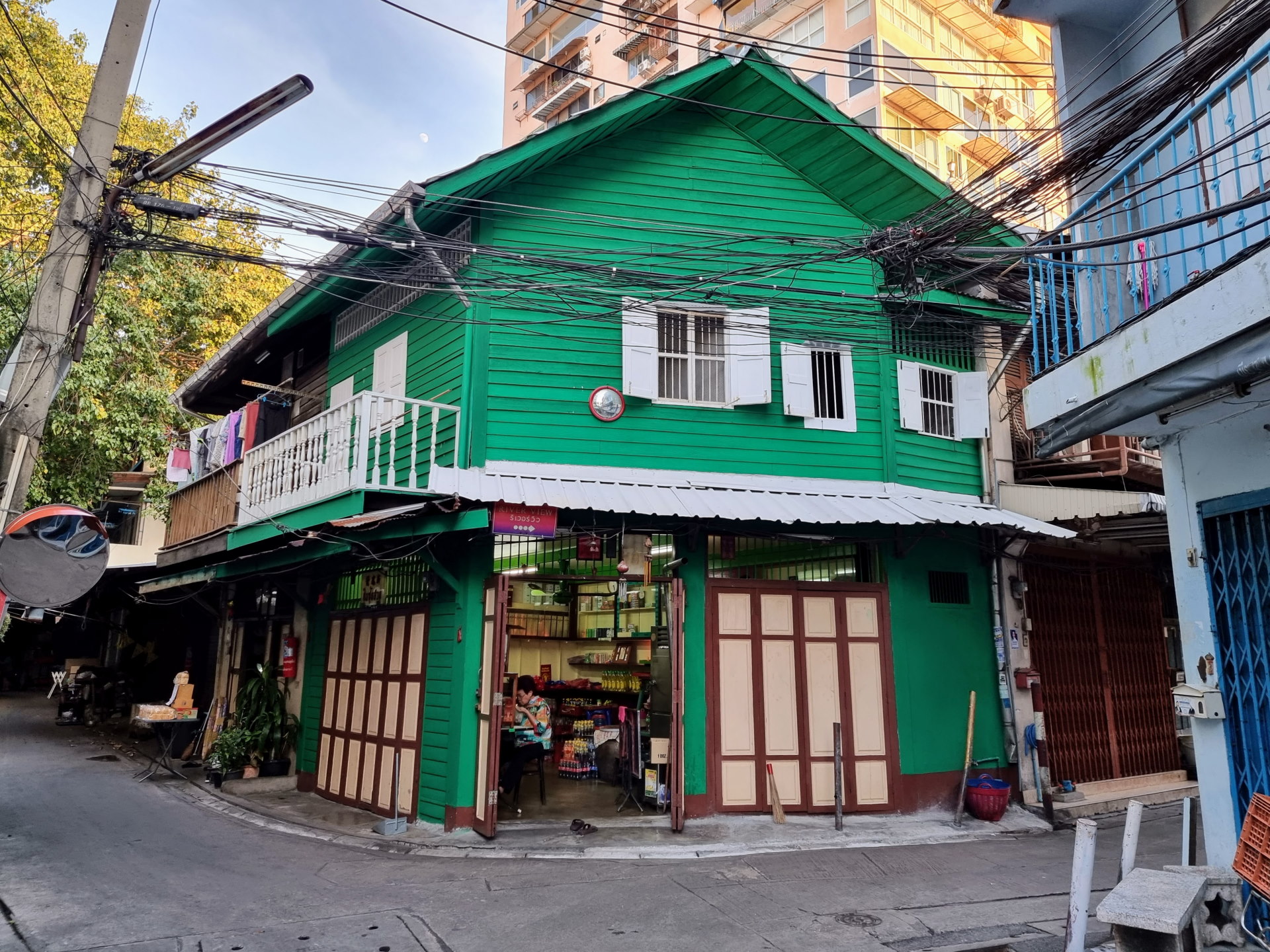
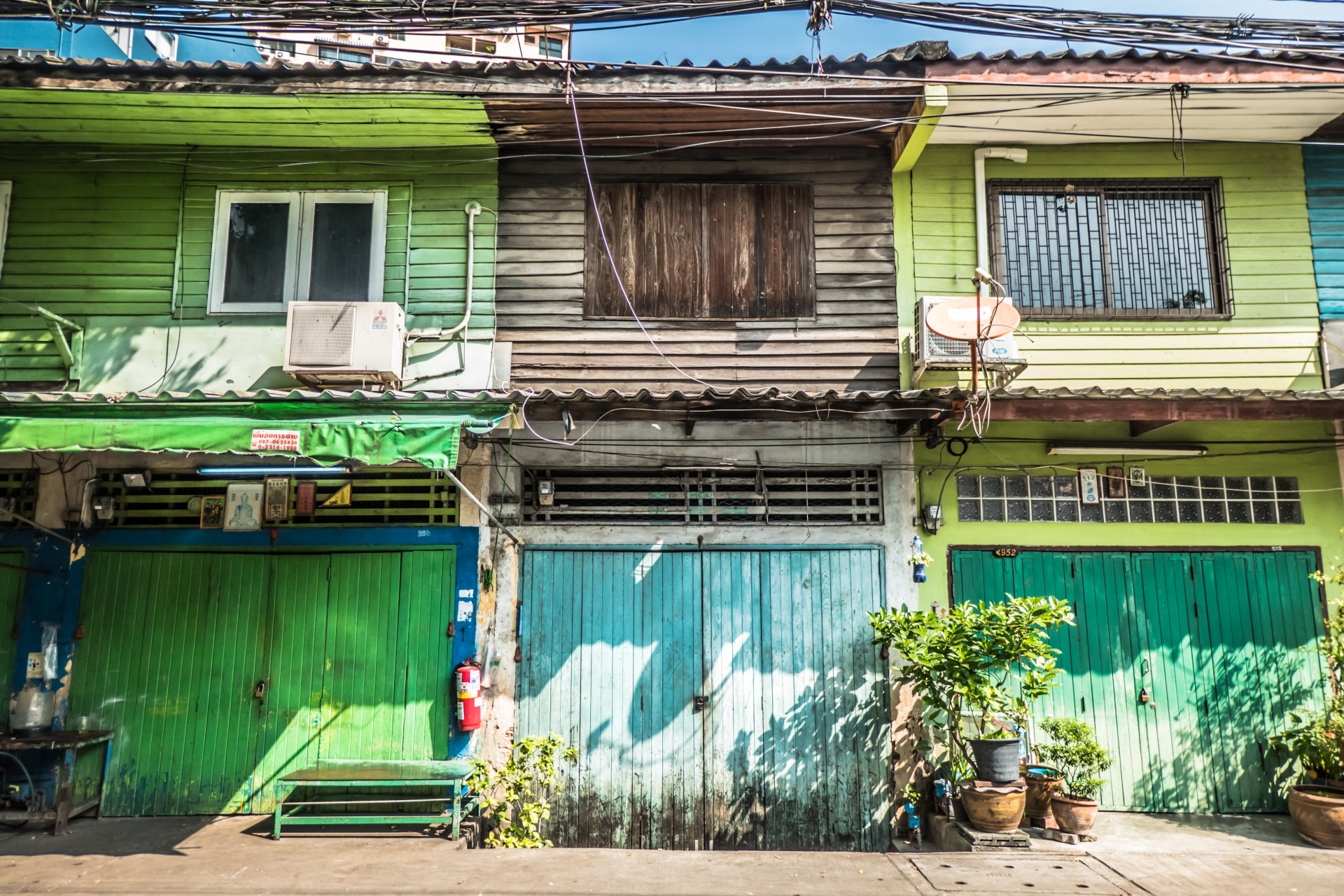
The Talat Noi district is also home to several historic buildings and temples, charming shophouses, and picturesque old alleyways, now enhanced with paving stones and dotted with murals.
This makes it a popular spot for photographers, so take note, amateur photographers!
In short, Talat Noi is an unusual part of town, perfect for exploring on foot thanks to its unique layout. Although often overlooked in favor of the more famous Yaowarat, it's full of attractions that I hope will captivate you.
Be curious and discover the charms of old Bangkok by following this Talat Noi walking tour.
A detailed map of the route is available by scrolling to the bottom of the page. You can also view the map of the walk directly to follow the route.
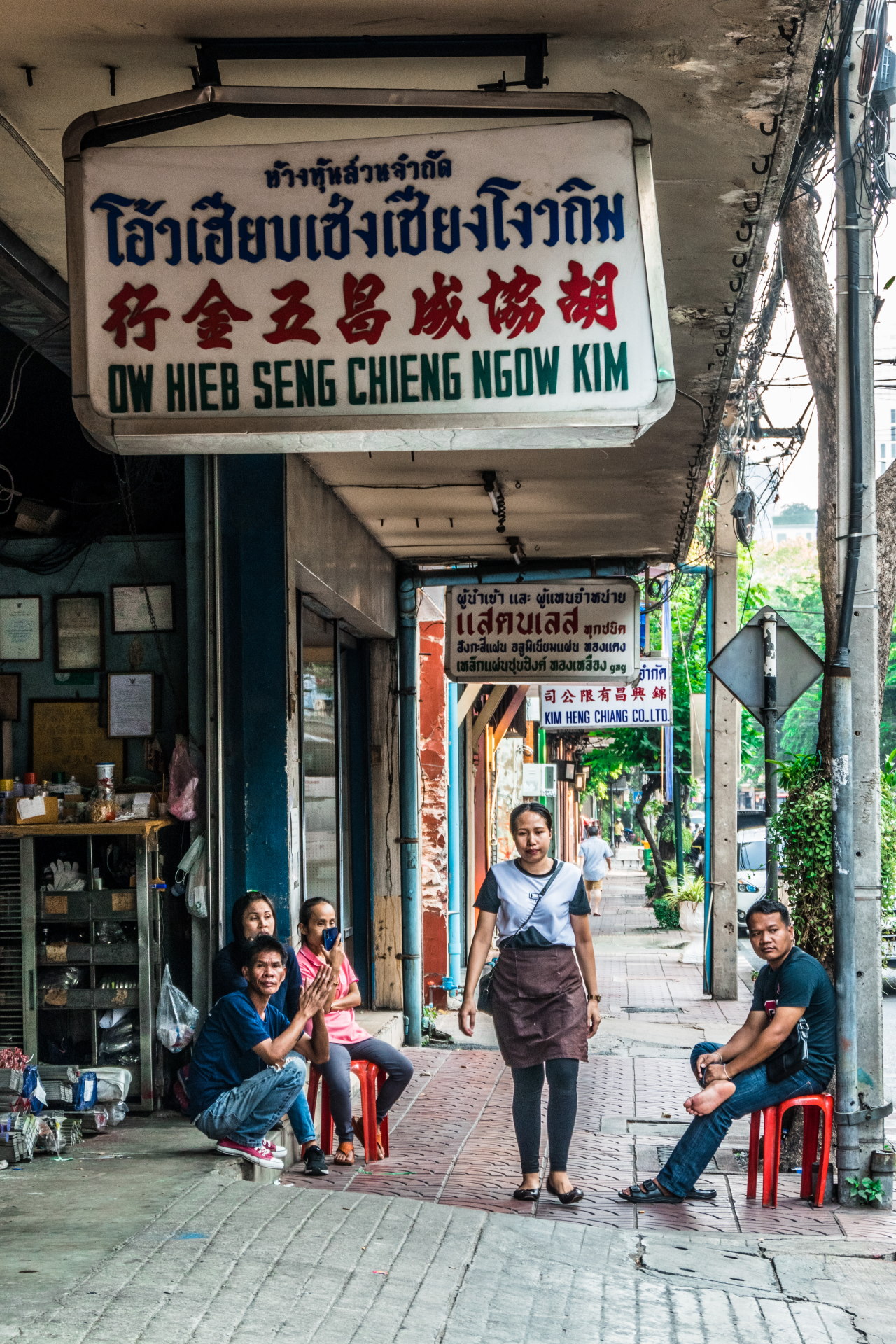
History of Talat Noi
Following the fall of Ayutthaya in 1767, the Portuguese were the first to settle in the area that is now Talat Noi, where they established the first port of what would become Bangkok. When the capital moved to the other side of the river from Thonburi to Rattanakosin in 1782, the various nationalities that then made up the city dispersed throughout the new urban area.
The Chinese, occupying the space where the Grand Palace will be built, move into what will become Chinatown and Talat Noi, where, in addition to the Portuguese, there are Vietnamese, Indians and a Muslim community.
Over time, the Chinese population (primarily of Hokkien and Hakka ethnicities) has grown due to the continuous influx of immigrants from China to work in the warehouses and factories of the port area.
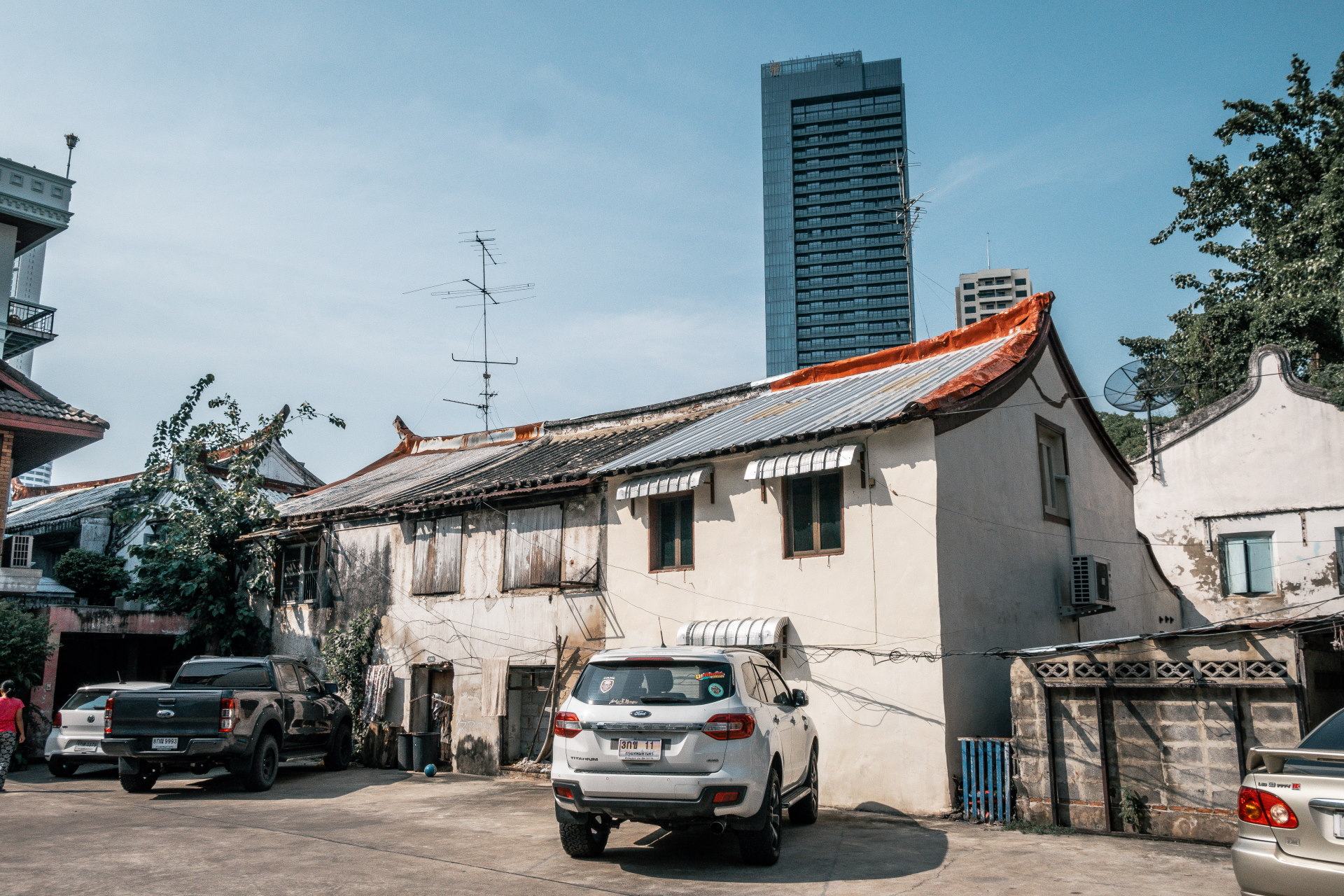
The Chinese community thus dominates the economic and cultural life of Talat Noi, supplanting other communities and making this district a place in its own right within the city of Bangkok.
The Muslim and Indian communities then spread out across the river and to the ends of Chinatown, while the Portuguese regrouped around the Santa Cruz church, a district now known as Kudee Jin.
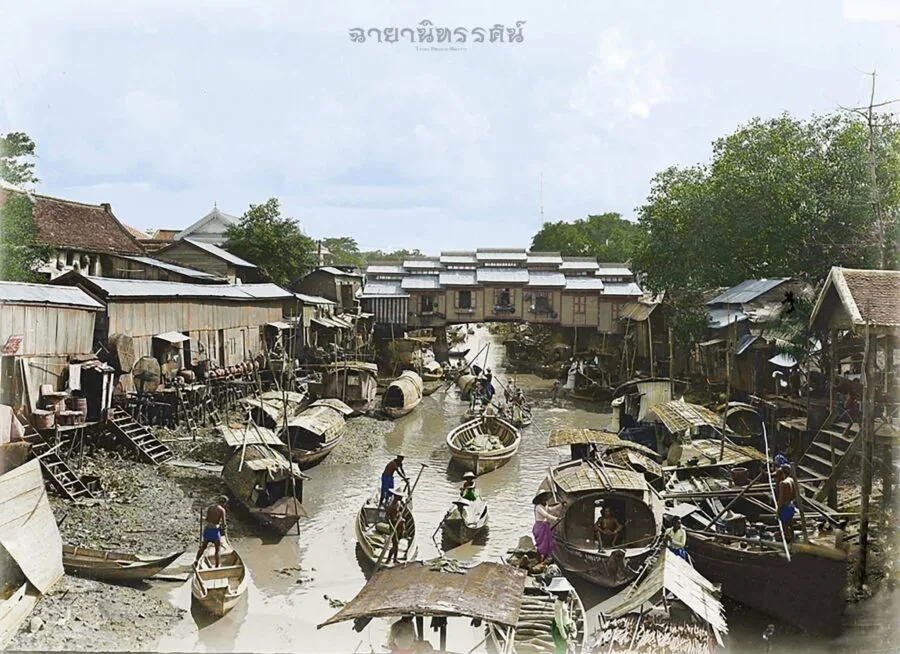
For more than 150 years, Talat Noi was the center of maritime trade until the opening in 1951 of Bangkok Port in the Khlong Toei district, which saved cargo ships from having to go up the river for more than 18 km.
With the decline of the port, many local workers retrained and created used car parts businesses in the area that would become known as "Sieng Kong".
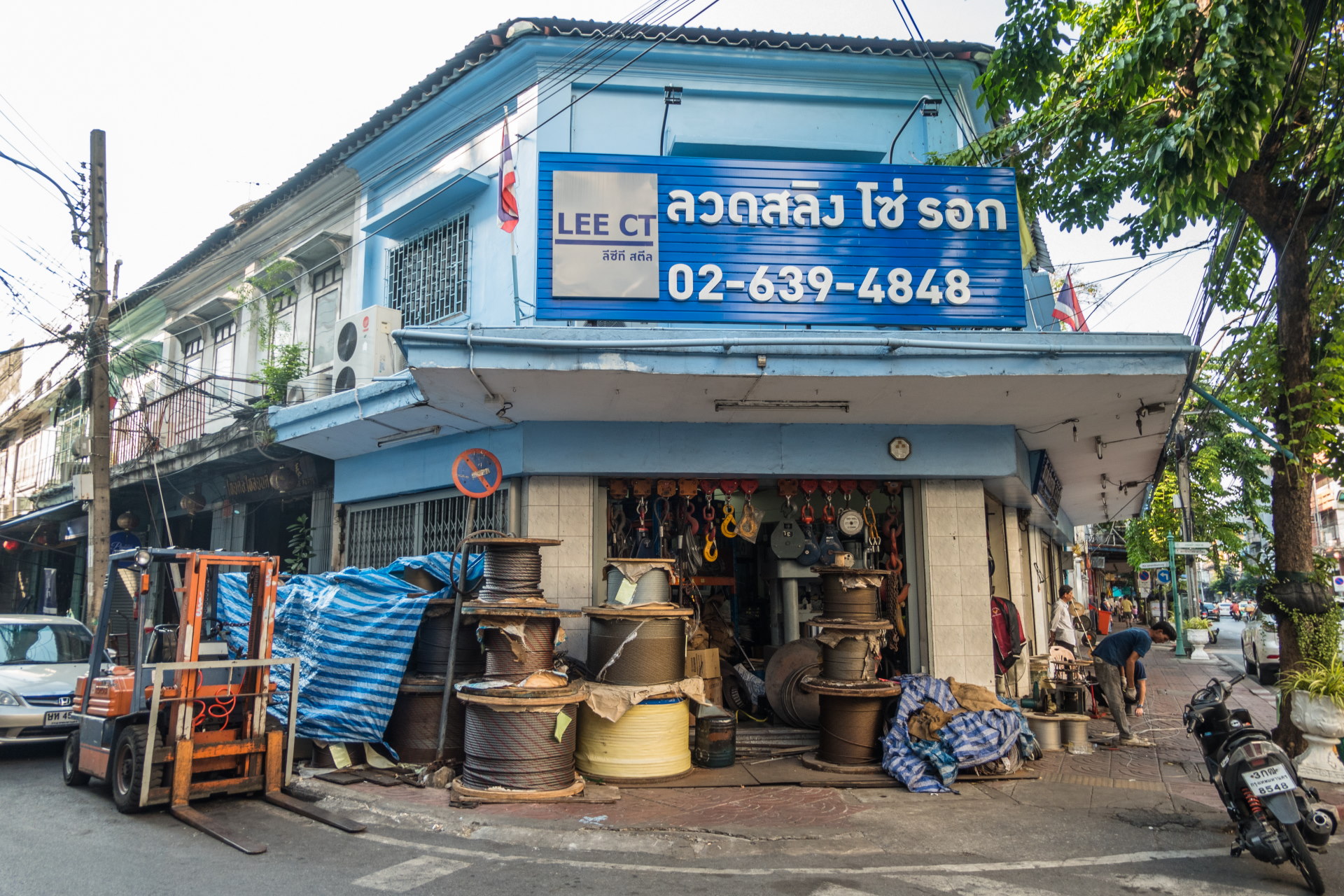
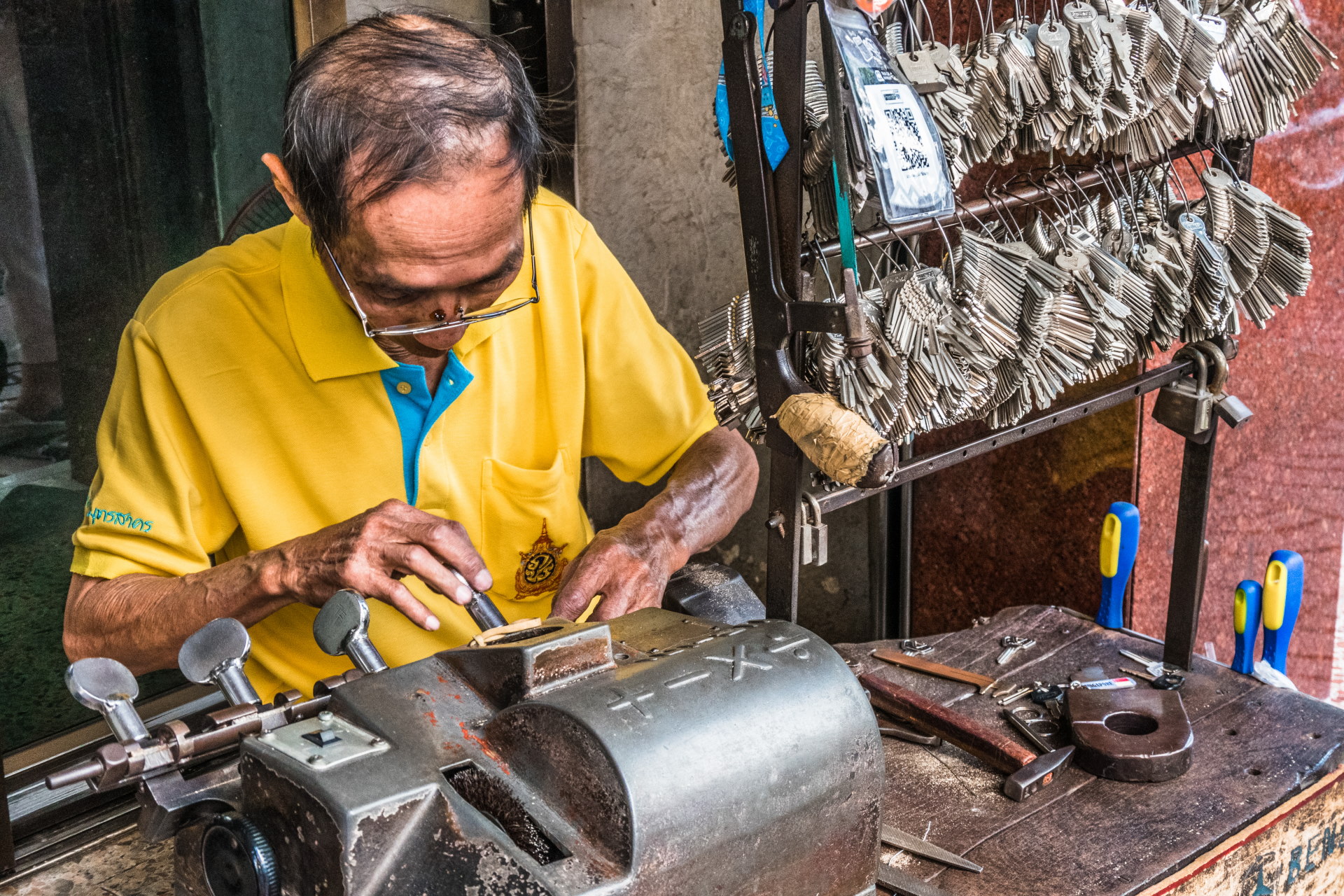
Today, the large Chinese community in Chinatown has retained much of its identity, including its culture, beliefs, and cuisine. The narrow streets of Talat Noi are filled with old shops where so many mechanical parts are piled up that one wonders how they all end up there.
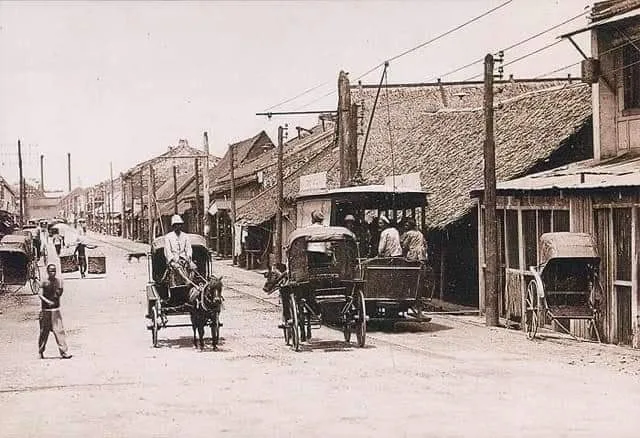
As it is a predominantly multicultural area, there are several temples and shrines, as well as a Christian church, Holy Rosary Church, a vestige of the Portuguese who were originally present here.
Exploring Talat Noi is the perfect opportunity to discover an aspect of Bangkok often overlooked by visitors and to spend an enriching day discovering this multicultural community.
Over time, the area has transformed, with the emergence of small cafes and an improvement in the riverside alleys. On weekends, it's not uncommon to see many Thai people roaming the neighborhood in search of the Instagram photo of the moment. It's becoming less intimate but decidedly charming.
Itinerary to discover Talat Noi on foot
The route ideally begins at Wat Traimit , which is just a ten-minute walk from Hua Lamphong Station. Right next door is the Chinatown Gate , also known as Odeon Circle, which marks the entrance to Chinatown.
You can then make a stop at Wat Pathum Khongkha before plunging into the streets of Siang Keng, where you will encounter many scrap metal dealers and budding mechanics.
→ This temple offers a good entry point to another section of Chinatown: Song Wat
For a brunch break, head to Hong Sieng Kong 's renovated house by the river. Afterwards, take a look at the nearby Zhou Song Gong Shrine, one of the oldest temples in Talat Noi.
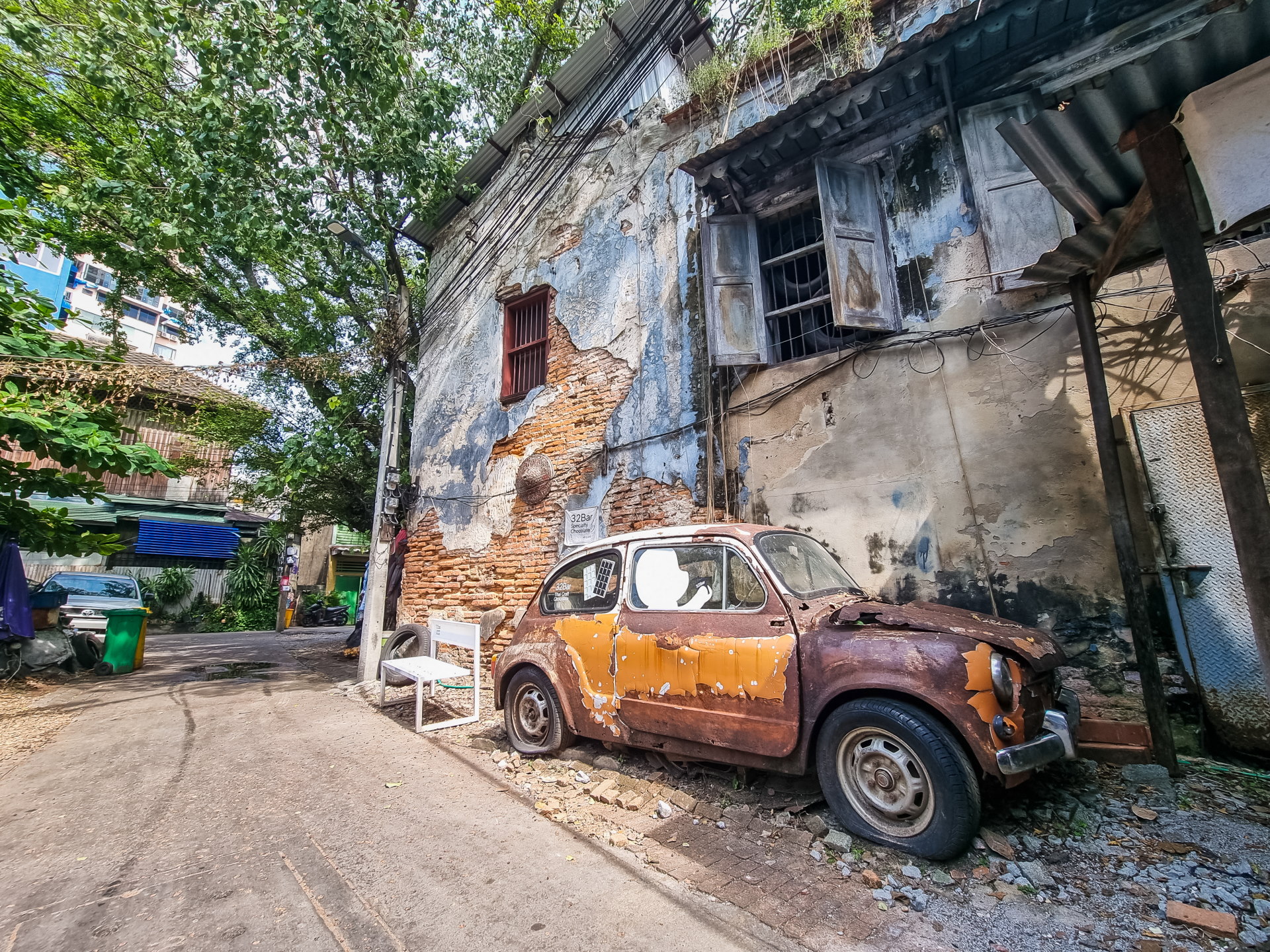
On your way to the curious 200-year-old Sol Heng Tai Mansion, you will pass the iconic rusty Fiat 500, which has become a reference image in Talat Noi, before reaching the Rong Kuak shrine by the river.
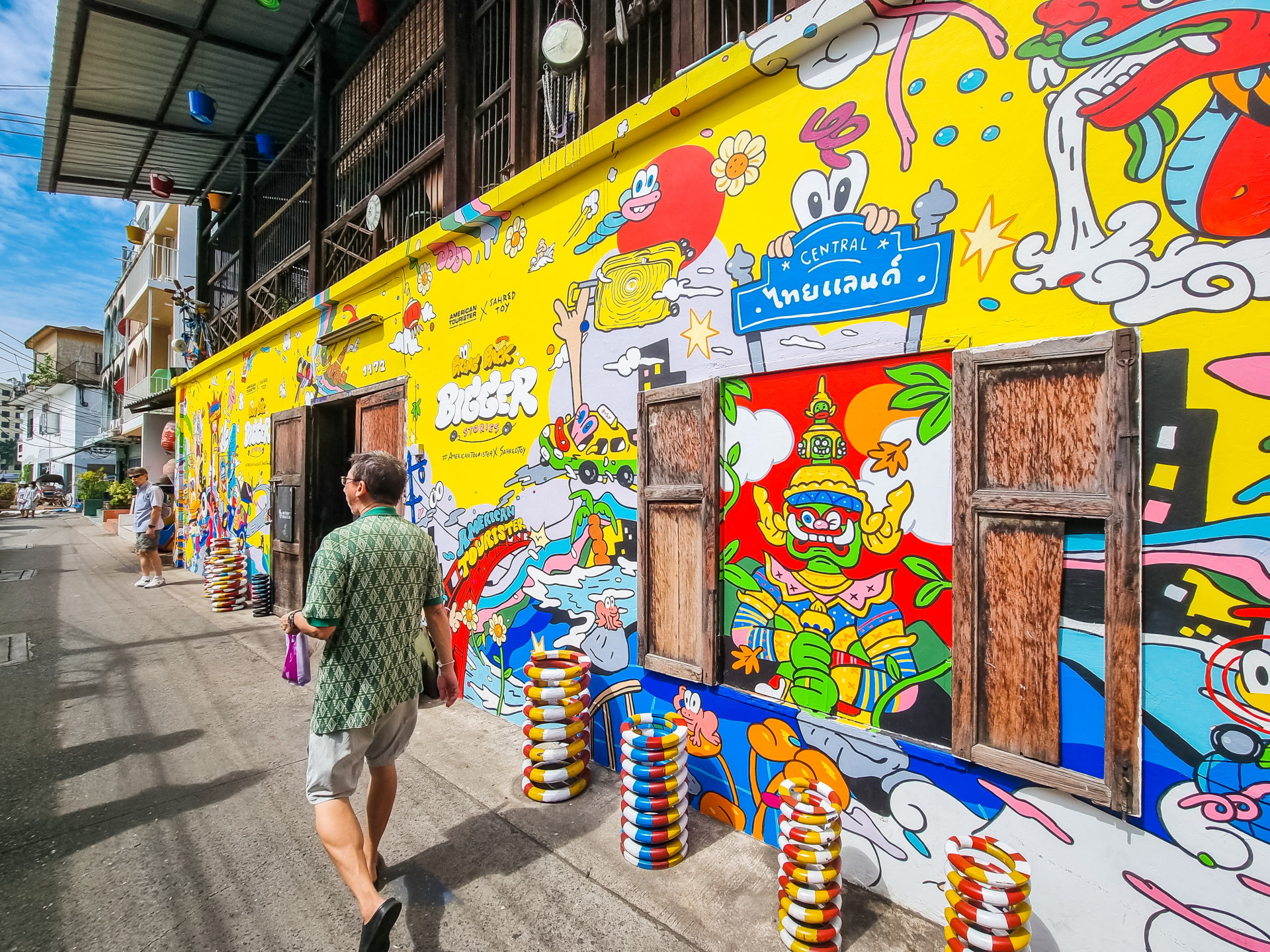
Discover the street art of Talat Noi in Trok San Chao Alley , just past the Rong Kueak Shrine , where you can take a coffee break at Mother Roaster Talad Noi. You can also stroll past the historic Holy Rosary Church and enjoy the air conditioning at River City , a small shopping center dedicated to local artists (paintings and sculptures).
To complete the route, walk along the iconic Charoen Krung Street and past Wat U Phai Rat Bamrung ; this will complete the loop. It is also possible to do the route in reverse, especially if you arrive by ferry at Si Phraya Pier.
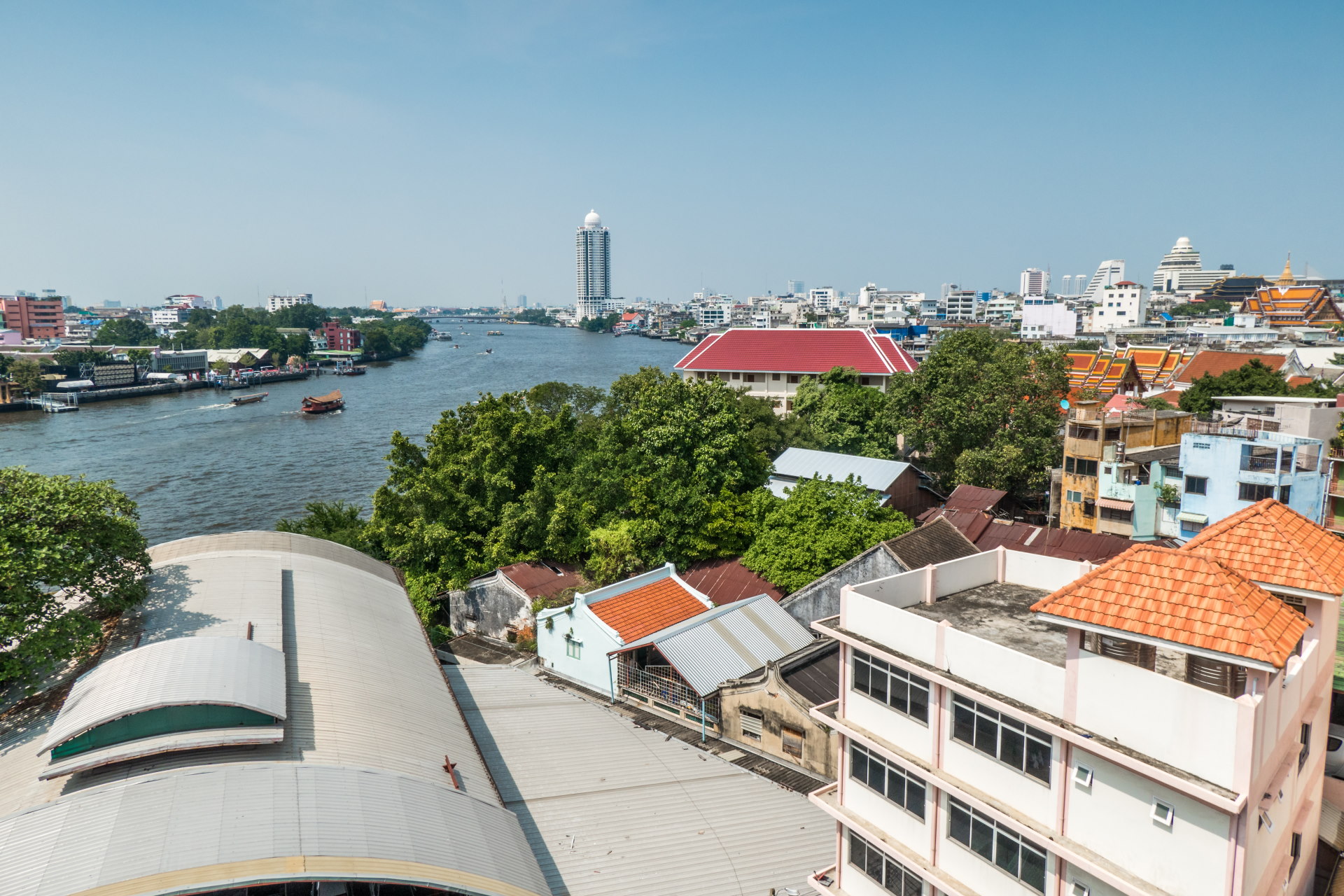
Another interesting conclusion is to visit the River Vibe Restaurant and Bar to admire the river view from its rooftop, not far from Hong Sieng Kong.

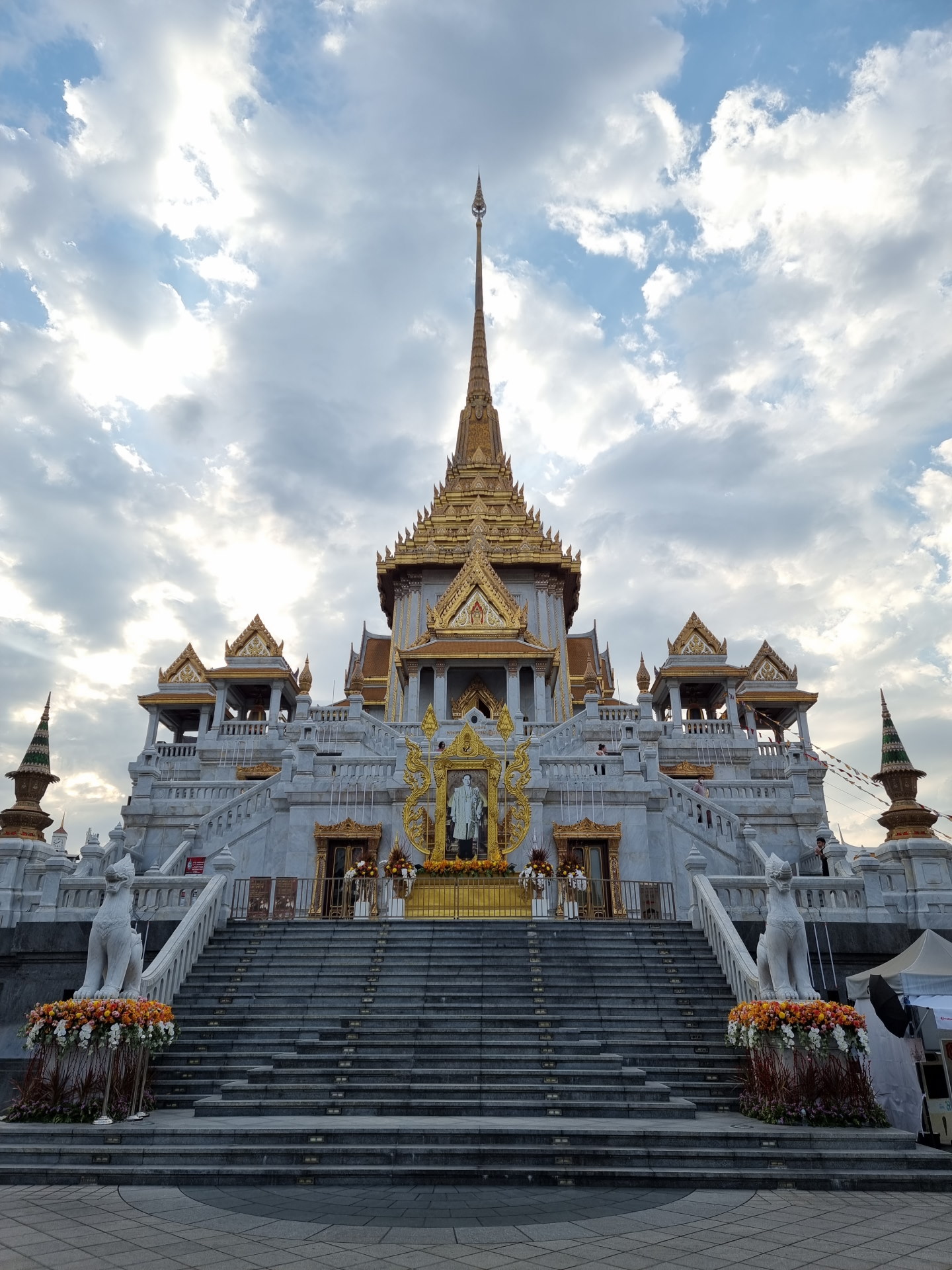
1- Wat Traimit (temple of the Golden Buddha)
Wat Traimit is a Buddhist temple. You might say, "Another one?" Especially since its overall appearance isn't particularly remarkable, apart from this elegant and imposing marble-clad building, constructed less than 20 years ago.
Its appeal lies mainly in its container, no surprise given the parenthesis, the famous golden Buddha (officially titled Phra Phuttha Maha Suwana Patimakon ), a statue whose obvious nickname indicates its composition: solid gold.
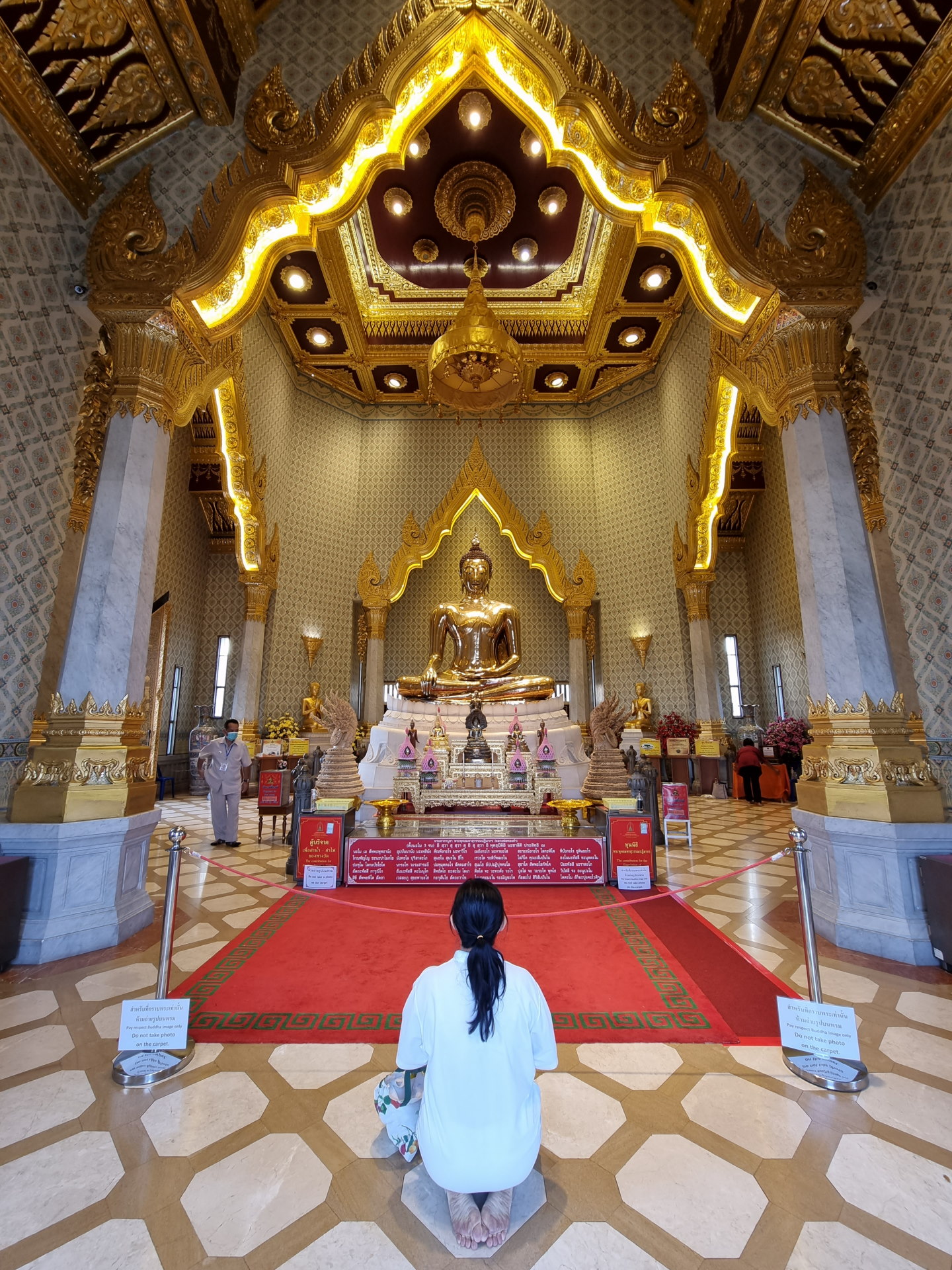
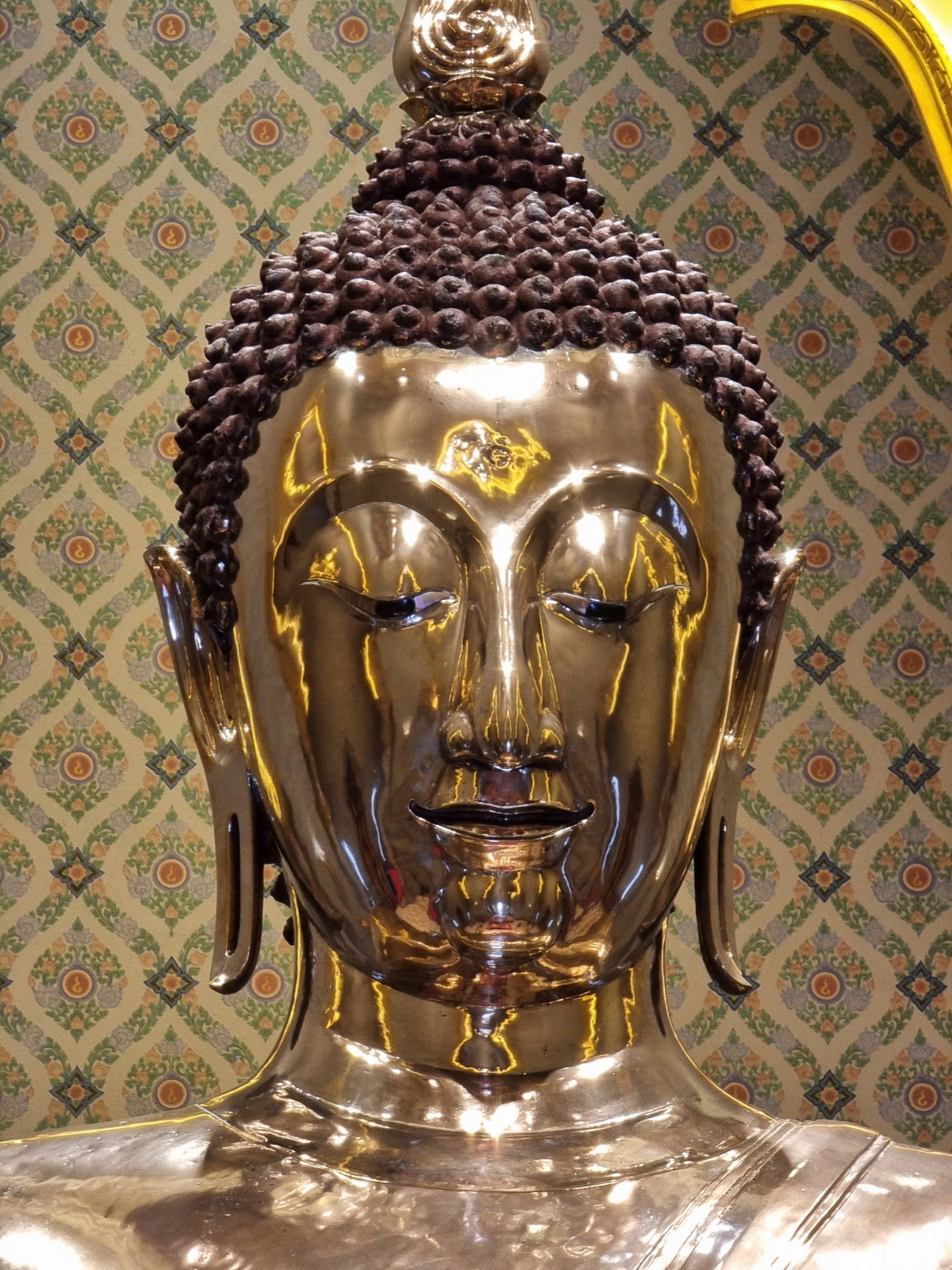
This 3-meter-high seated Buddha image weighs 5,5 tons and is considered the largest solid gold Buddha image in the world. If that isn't impressive enough, the story of its discovery is even more remarkable.
→ I give you the details in my article here: Bangkok in 2 or 3 days: the essential sights
2- Chinatown Gate (Odeon Circle)
After visiting Wat Traimit, head towards Odeon Circle, more commonly known as the gateway to Chinatown. This gate, with its colorful Chinese architecture and serving as a roundabout, was built for the 72nd birthday of King Bhumibol (Rama IX) in 1999. The term "Odeon Circle" refers to the Odeon cinema that previously stood on the site.
Another name it once had was "Dragon Head," because the gate is located at the entrance to the road formerly known as "Dragon Road" or Thanon Mangkon, now Yaowarat. It is a symbol and one of the landmarks of Bangkok's Chinatown, as well as an emblem of the Samphanthawong district.
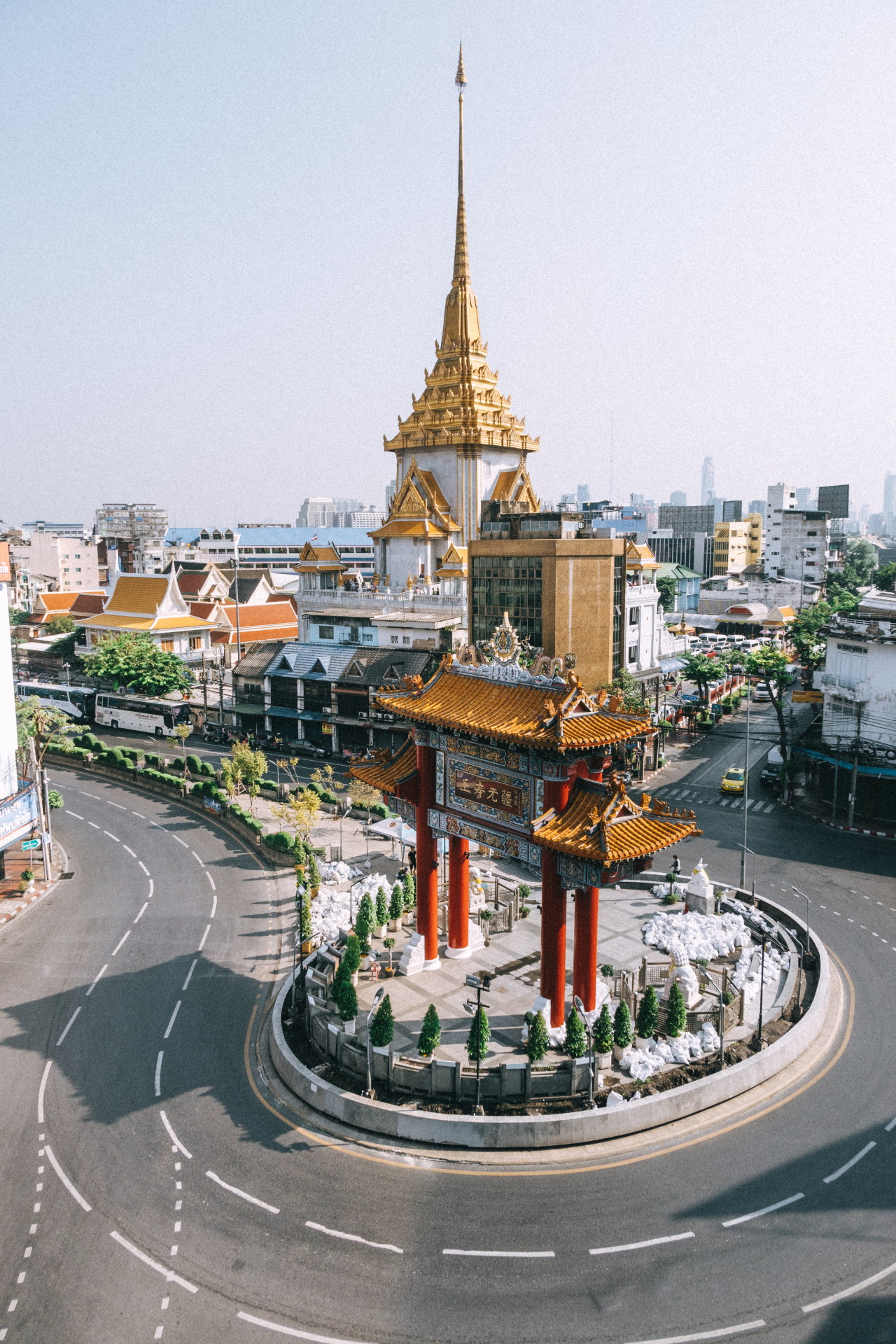
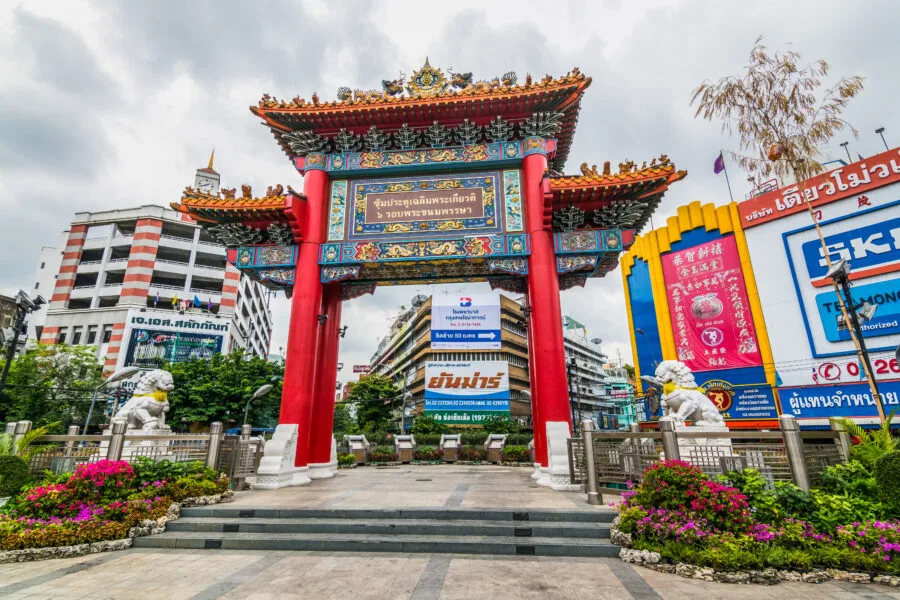
Two white jade lion statues guard the gate to Chinatown; they were a gift from the Chinese government in 2007 for the 80th birthday of Rama IX. Another statue, this time of a rabbit, the year of the king's birth, will also be a gift from China to mark his 84th birthday.
From the Chinatown gate, you can reach Yaorawat Avenue, known for its food stalls in the evening, or follow Charoen Krung Road, formerly known as New Road. But in our case, you'll need to follow Tri Mit Road to reach the next point, the Wat Pathum Khongkha.
3- Wat Pathum Khongkha
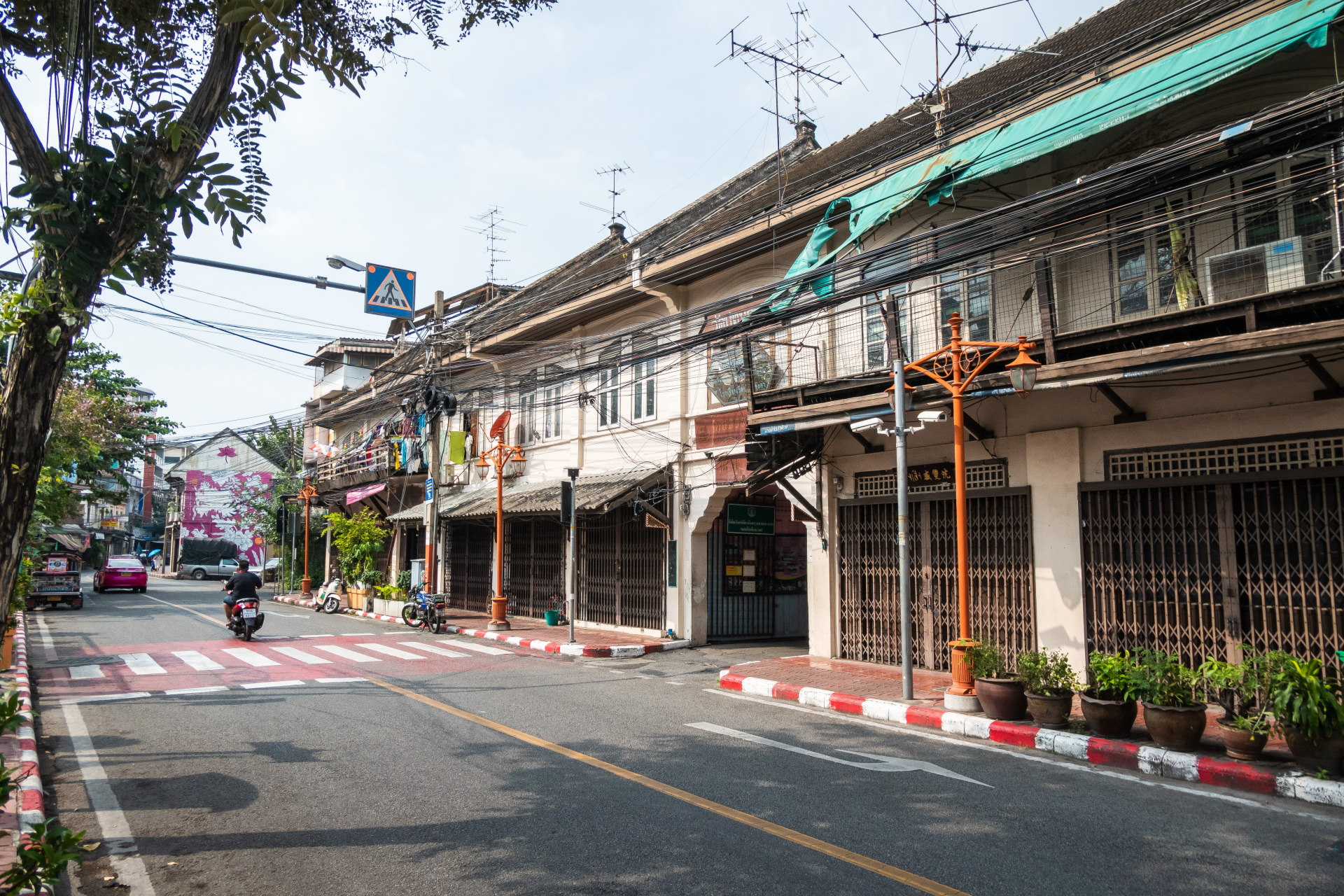
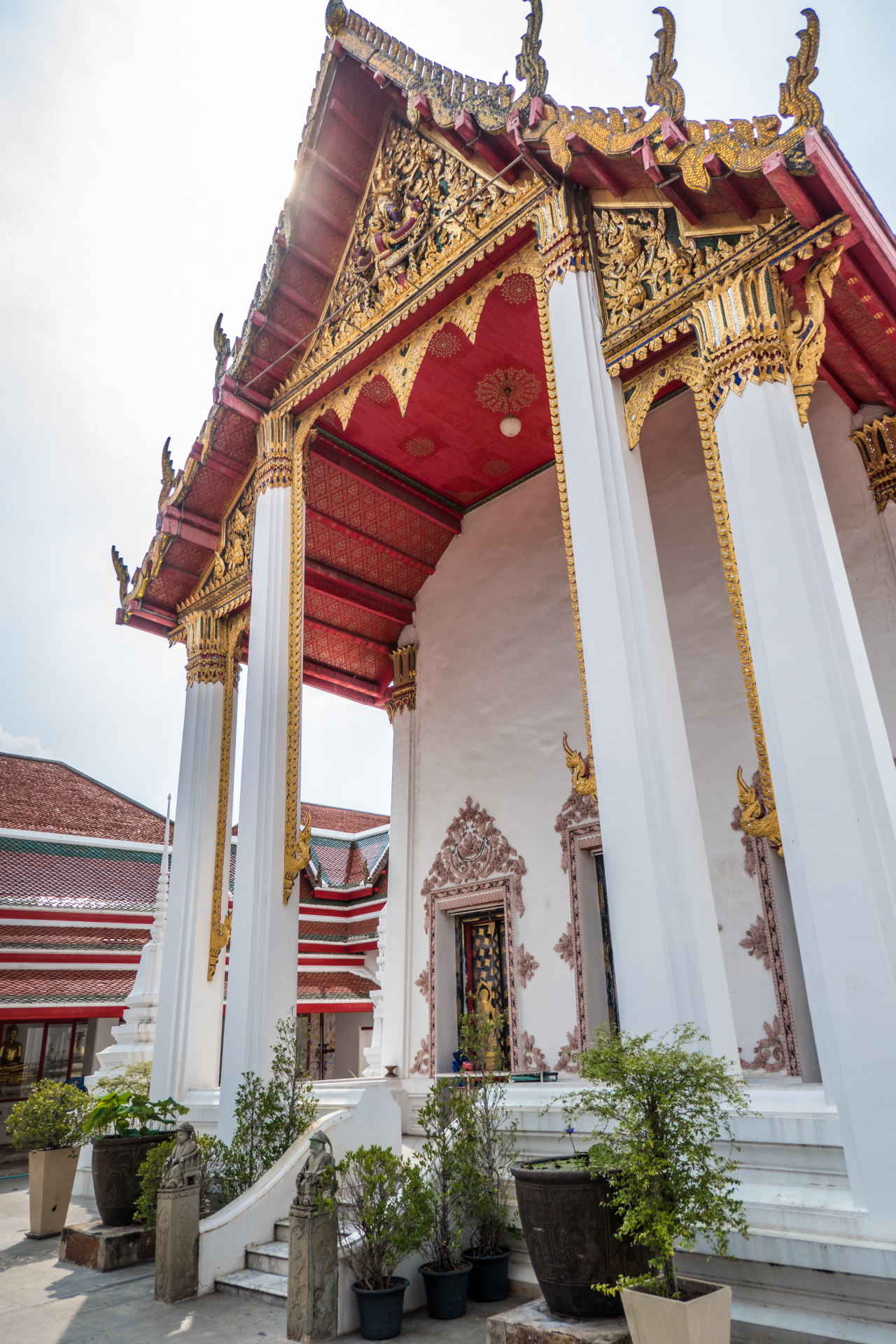
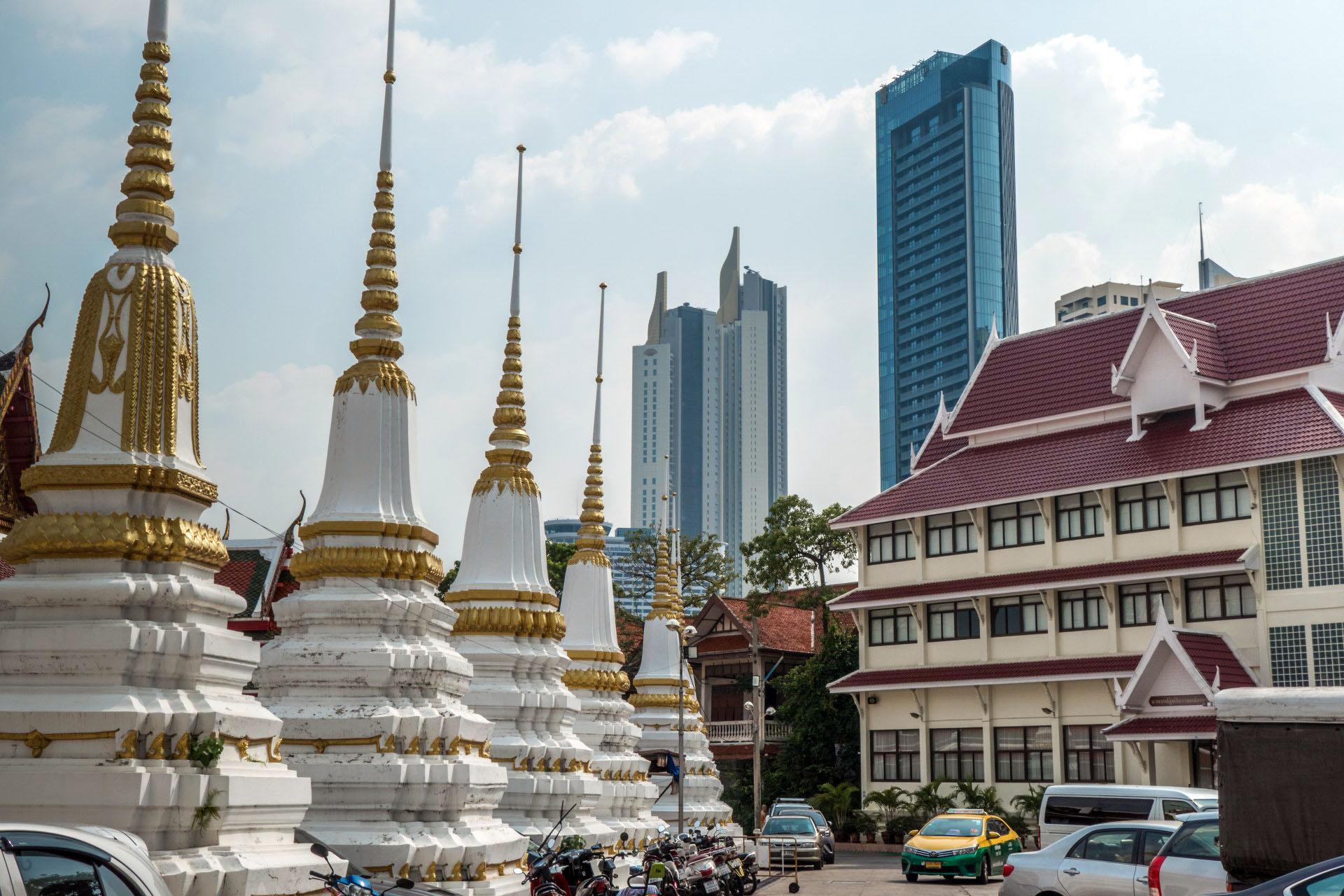
The temple itself is not of particularly memorable architecture. However, it is located on a street with a beautiful row of Chinese merchant houses, and it is situated right next to Phanurangsi Street, which marks your gateway to the Sieng Kong area.
It also has an interesting history, as it is, in fact, one of the oldest temples in Bangkok, dating back to the Ayutthaya era.
Renovated by the brother of King Rama I, it then became a second-class royal temple at the beginning of the 19th century and was named Wat Pathum Khongkha , which can be translated as "temple of lotuses on the river".
It was on its soil that the rebellious brother of King Rama III was executed (the stone on which the sentence was carried out is preserved). The proximity to the adjacent Chao Phraya River also made it an important site for royal cremations but also for white elephants, animals exclusive to the king, of which it was also the symbol of the Siamese flag between 1855 and 1916.
4- The Sieng Kong area
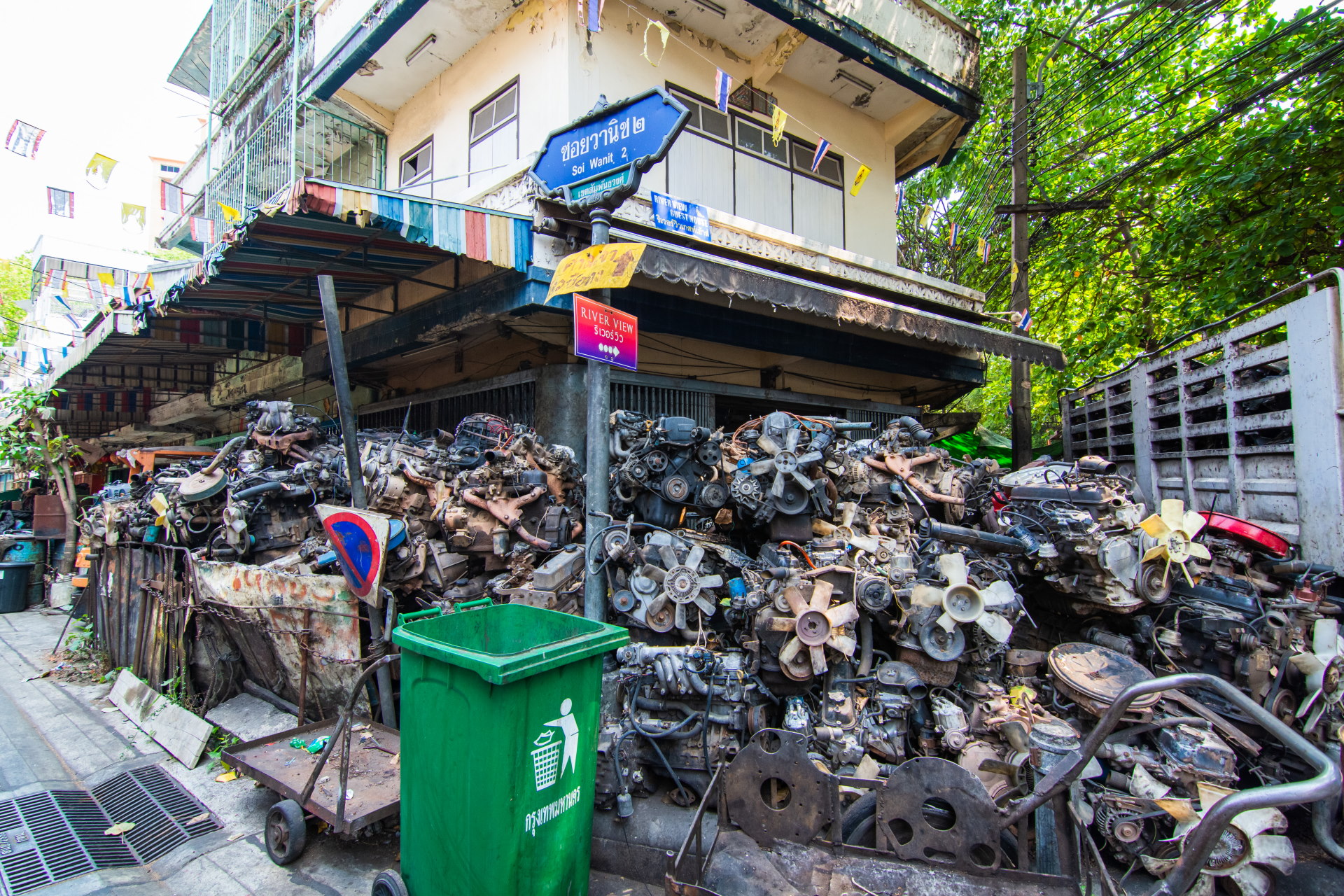
Following Soi Panurangsi, you will come to a fork with a street on the left called Soi Wanit 2. You then enter an area filled with small workshops selling car parts and scrap metal.
You are now officially in the Sieng Kong area! The name is derived from Teochew, a Chinese dialect, where Sieng means "god" and Gong means "uncle." Although the name has nothing to do with used auto parts, it is now synonymous with the auto parts trade.
Before World War II, local dealers mainly dismantled and repaired bicycles, but following the war, many vehicles were decommissioned. The business grew even more as it had previously been necessary to order spare parts from Japan, and recycling locally available parts quickly became lucrative.
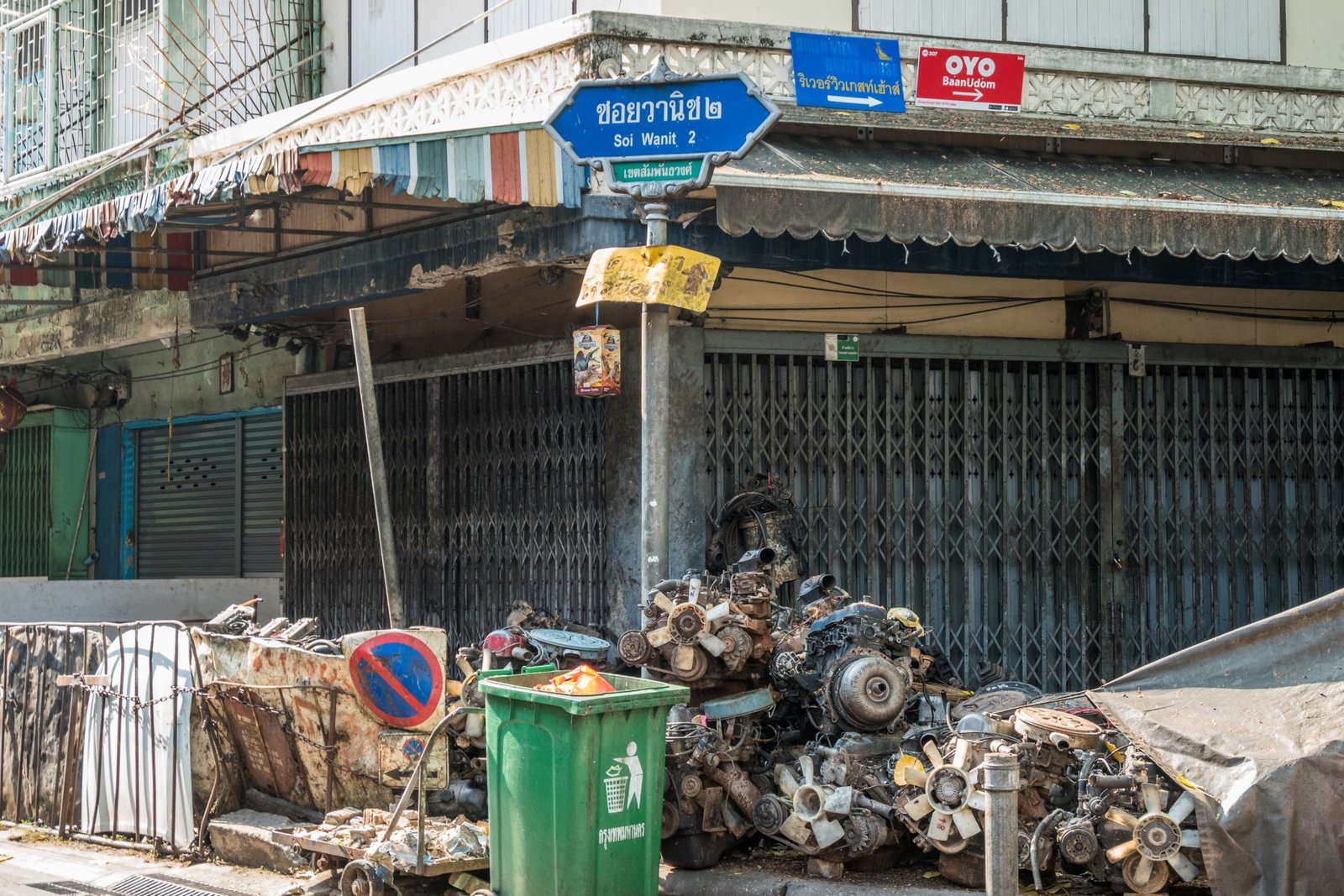
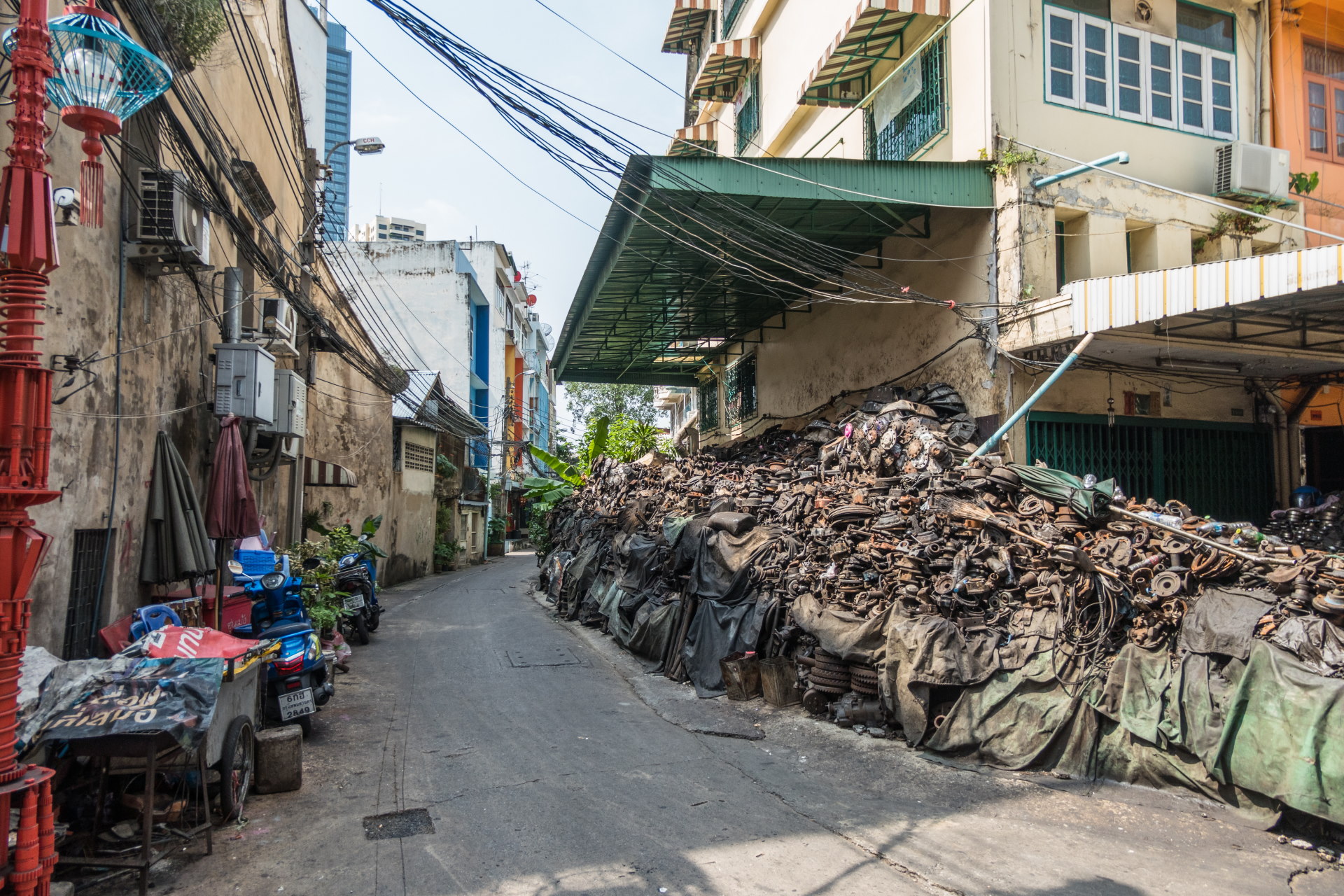
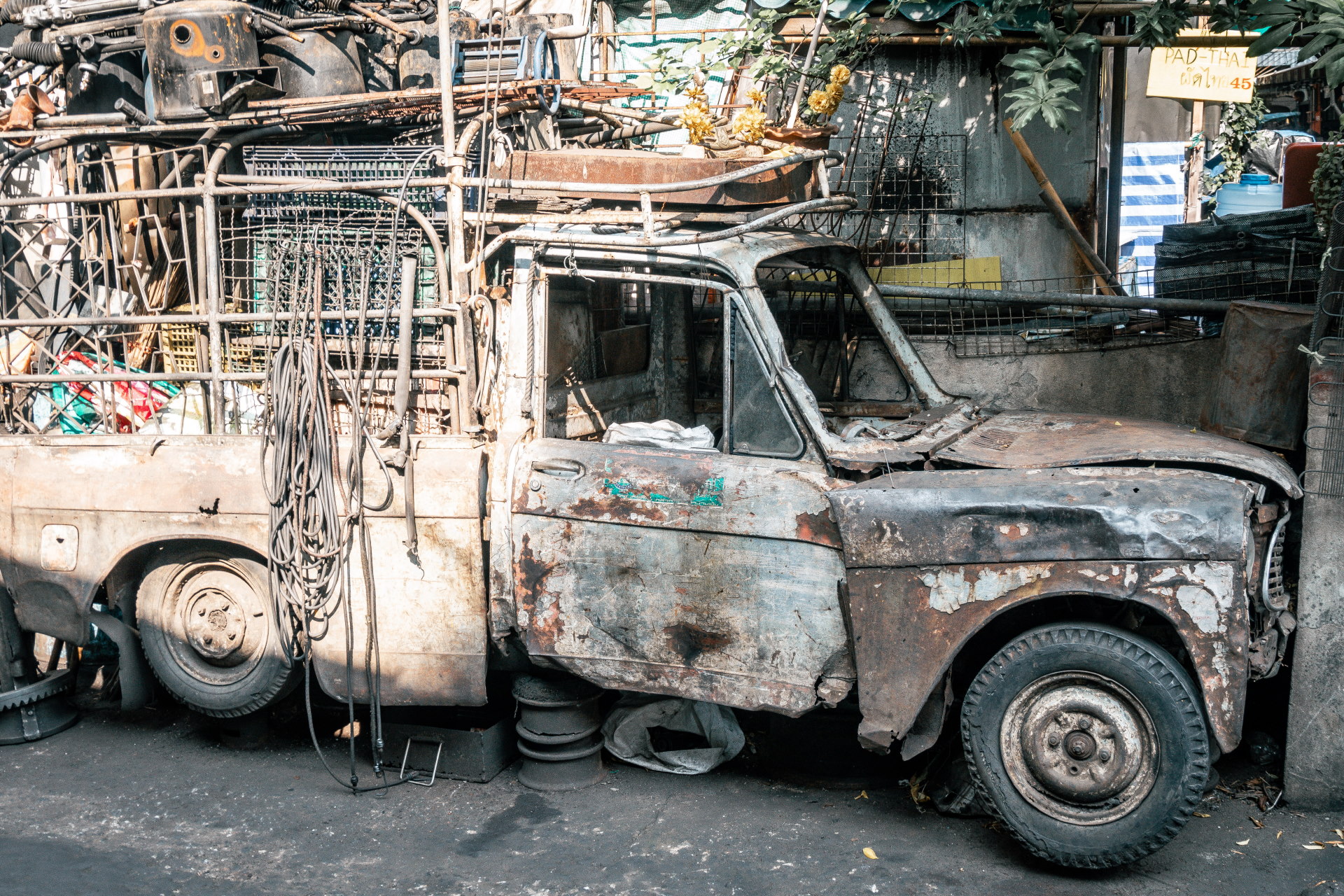
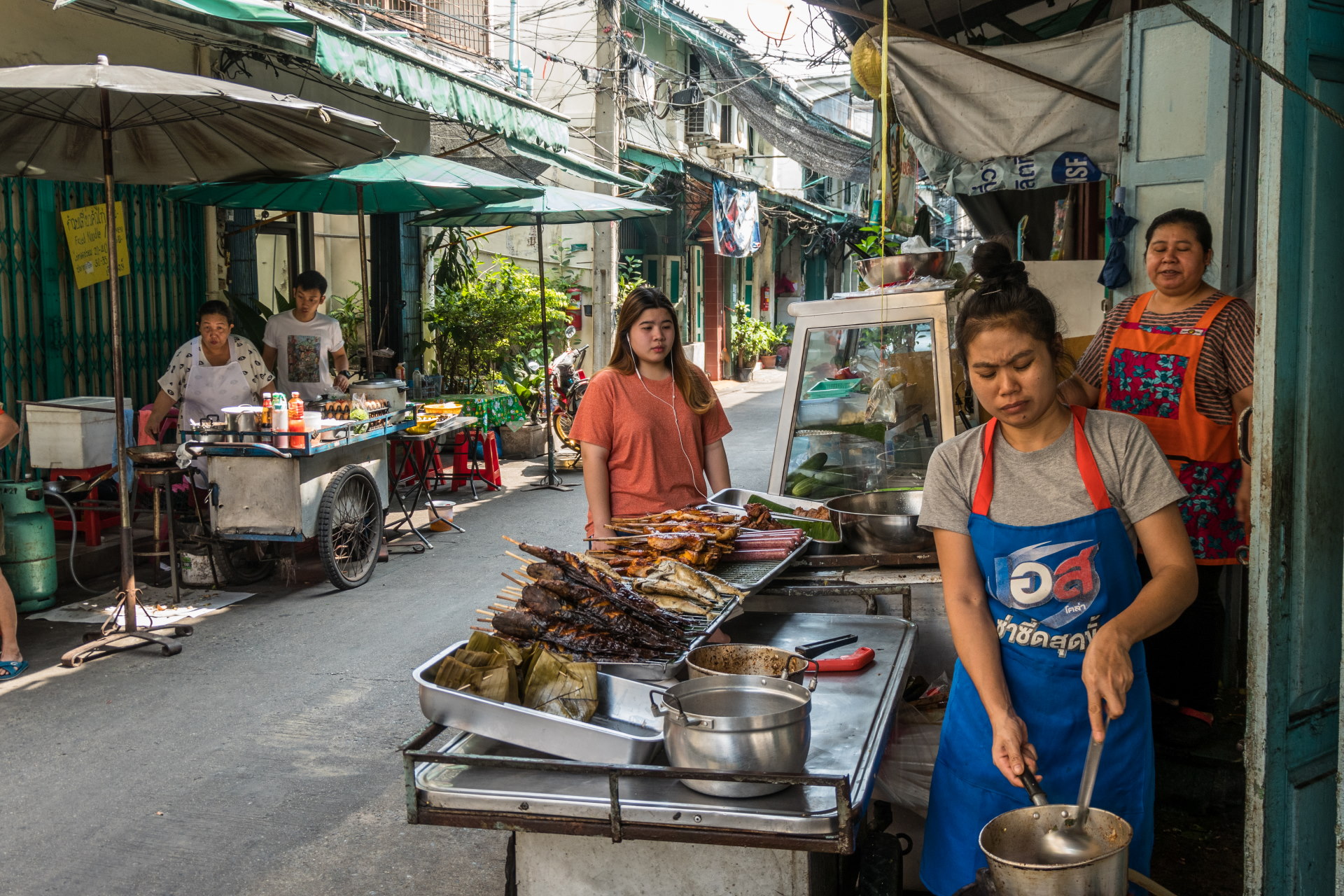
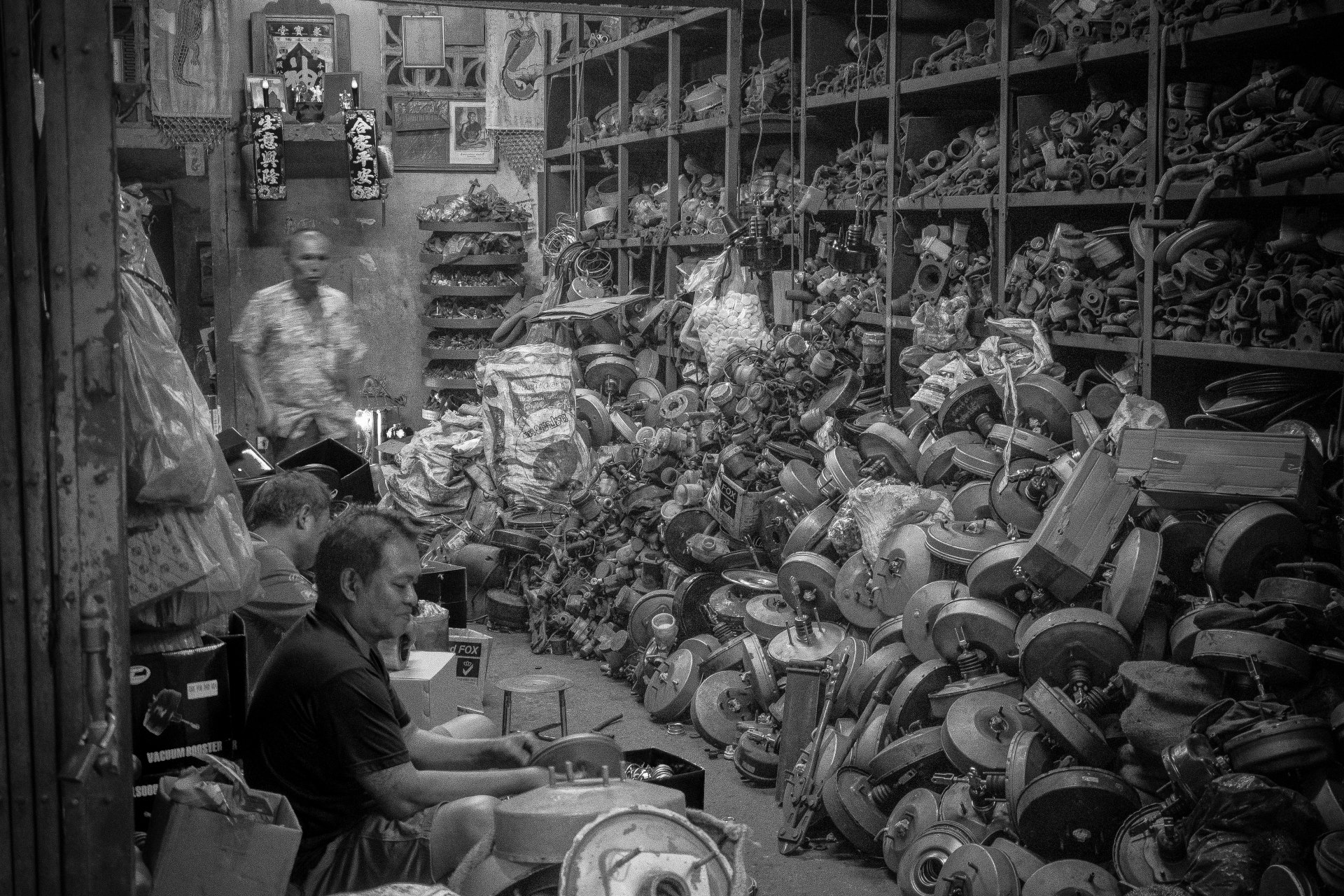
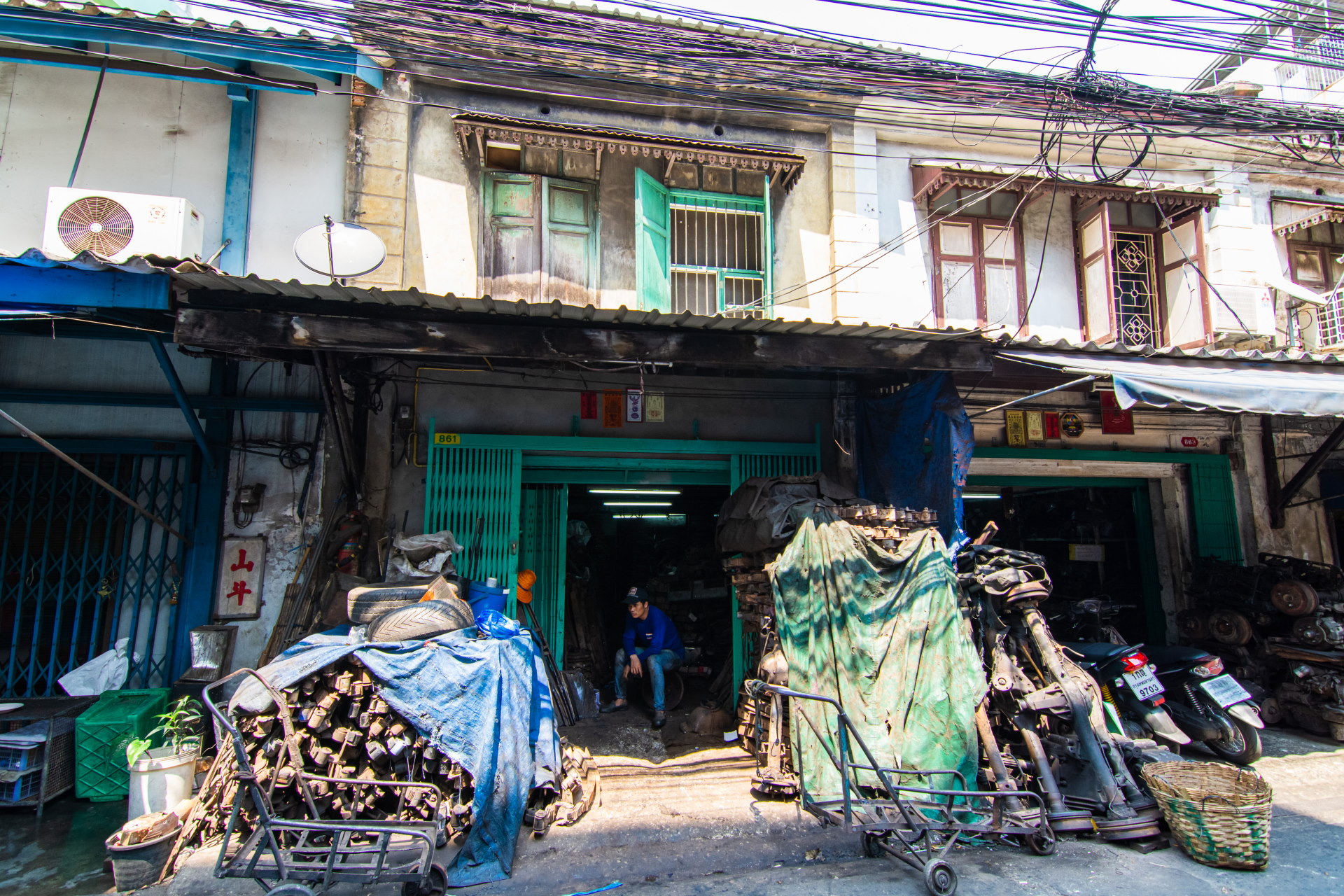
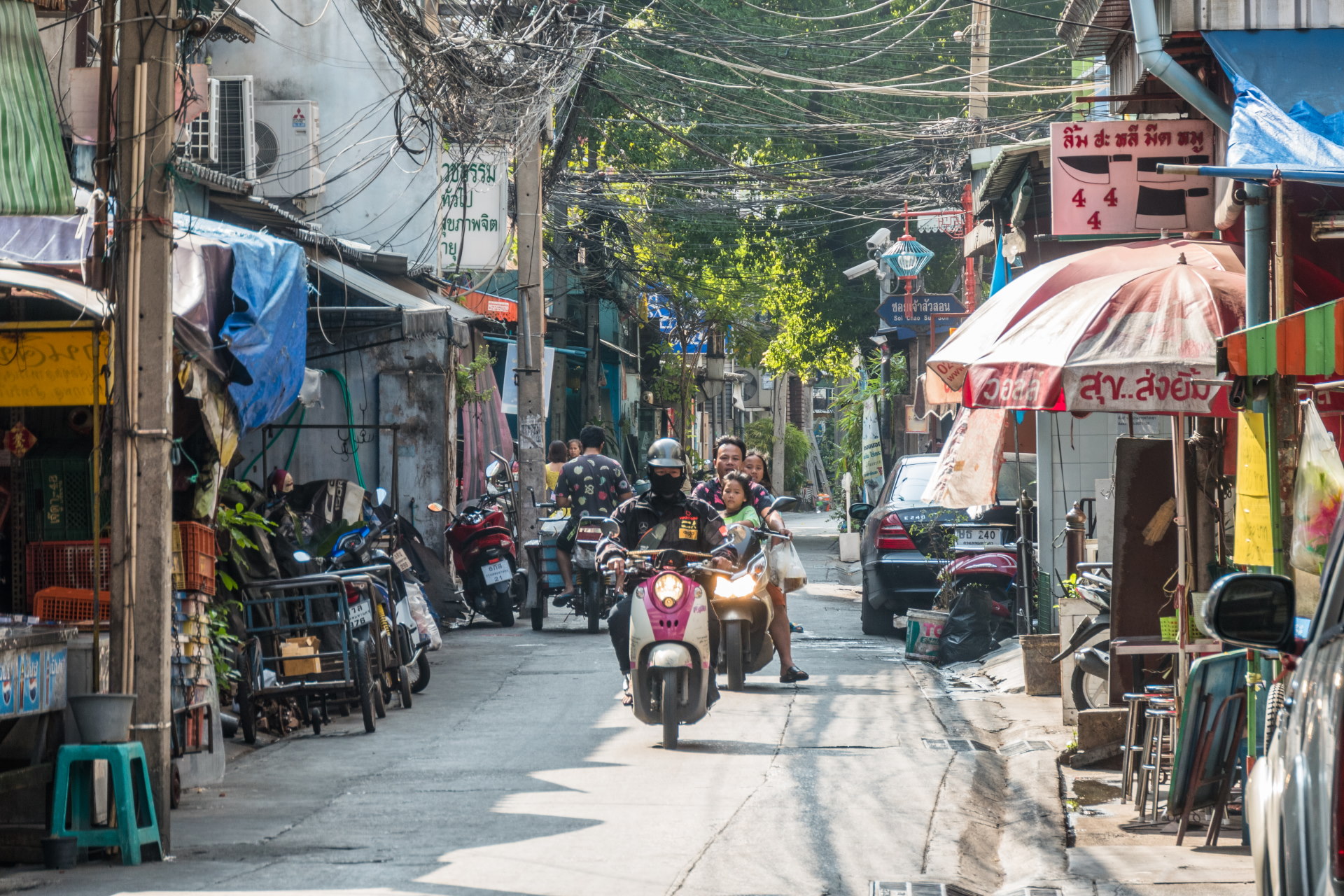
For people who appreciate street photography like me, it's a true visual paradise. There's a dirty, chaotic side to it, as it's teeming with piles of blackened, oily gears and engine parts tumbling onto the sidewalks.
The mechanics, fewer and fewer in number it must be said, are busy in small open shops, surrounded by so much metal that one wonders how they find their way around.
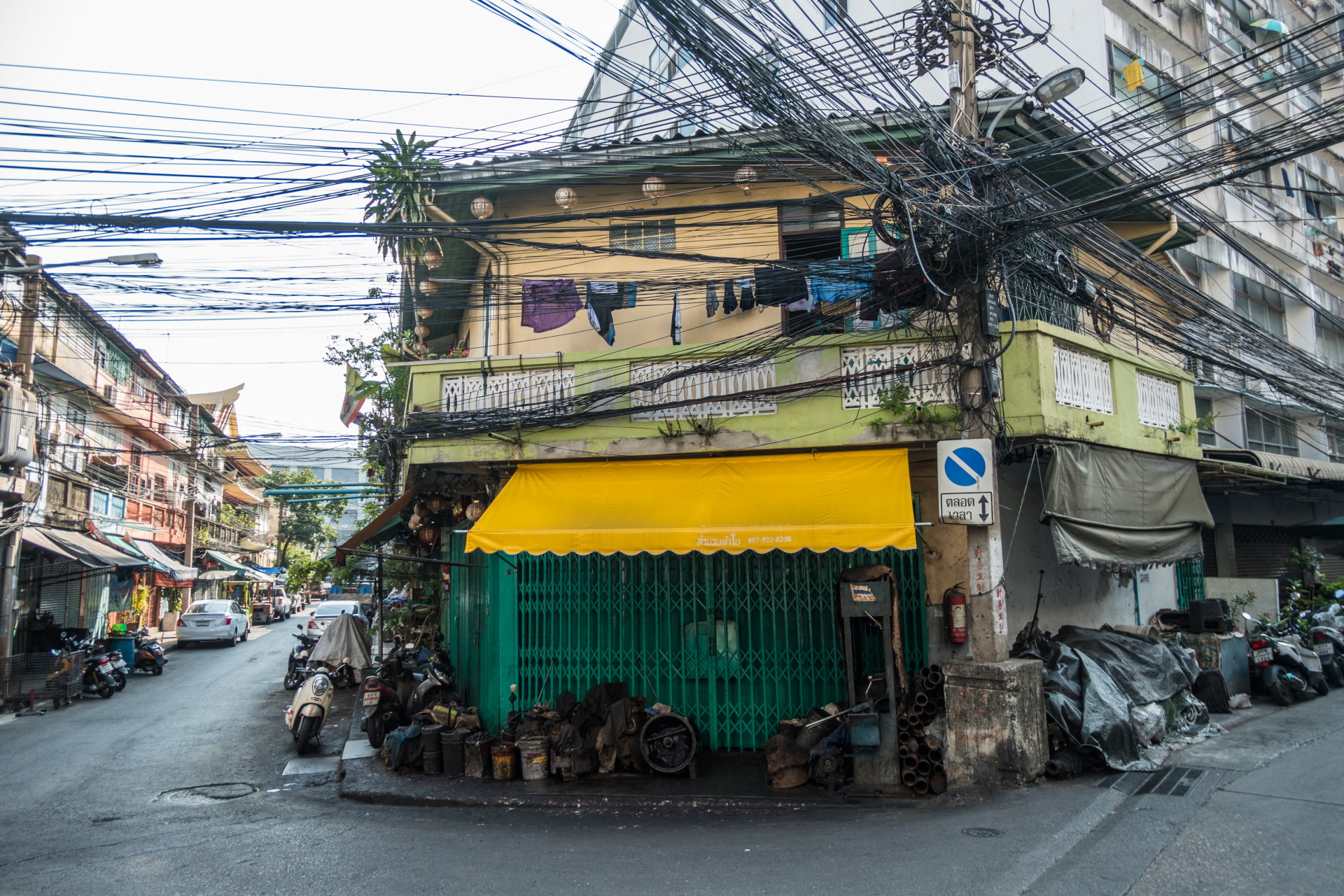
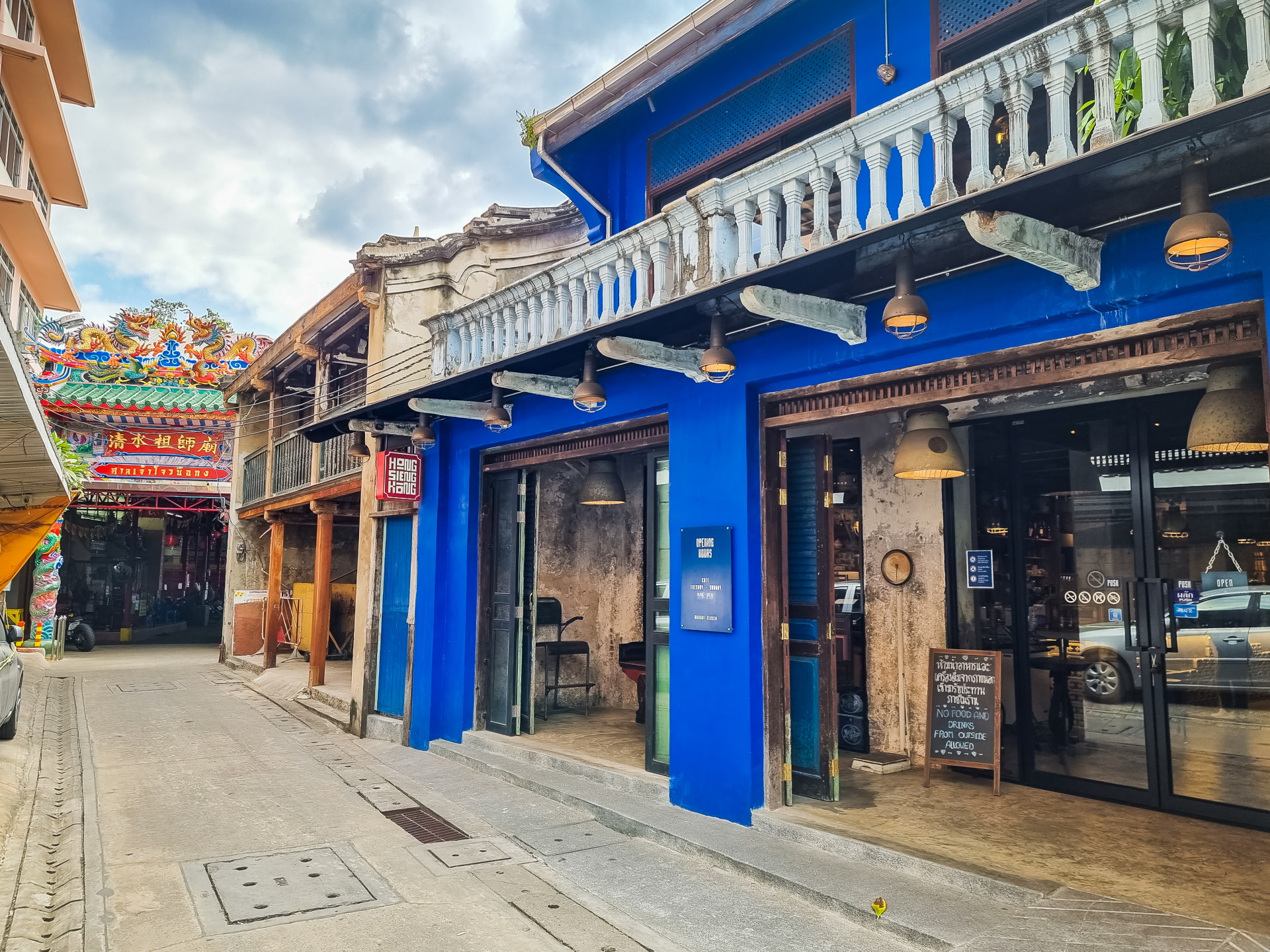
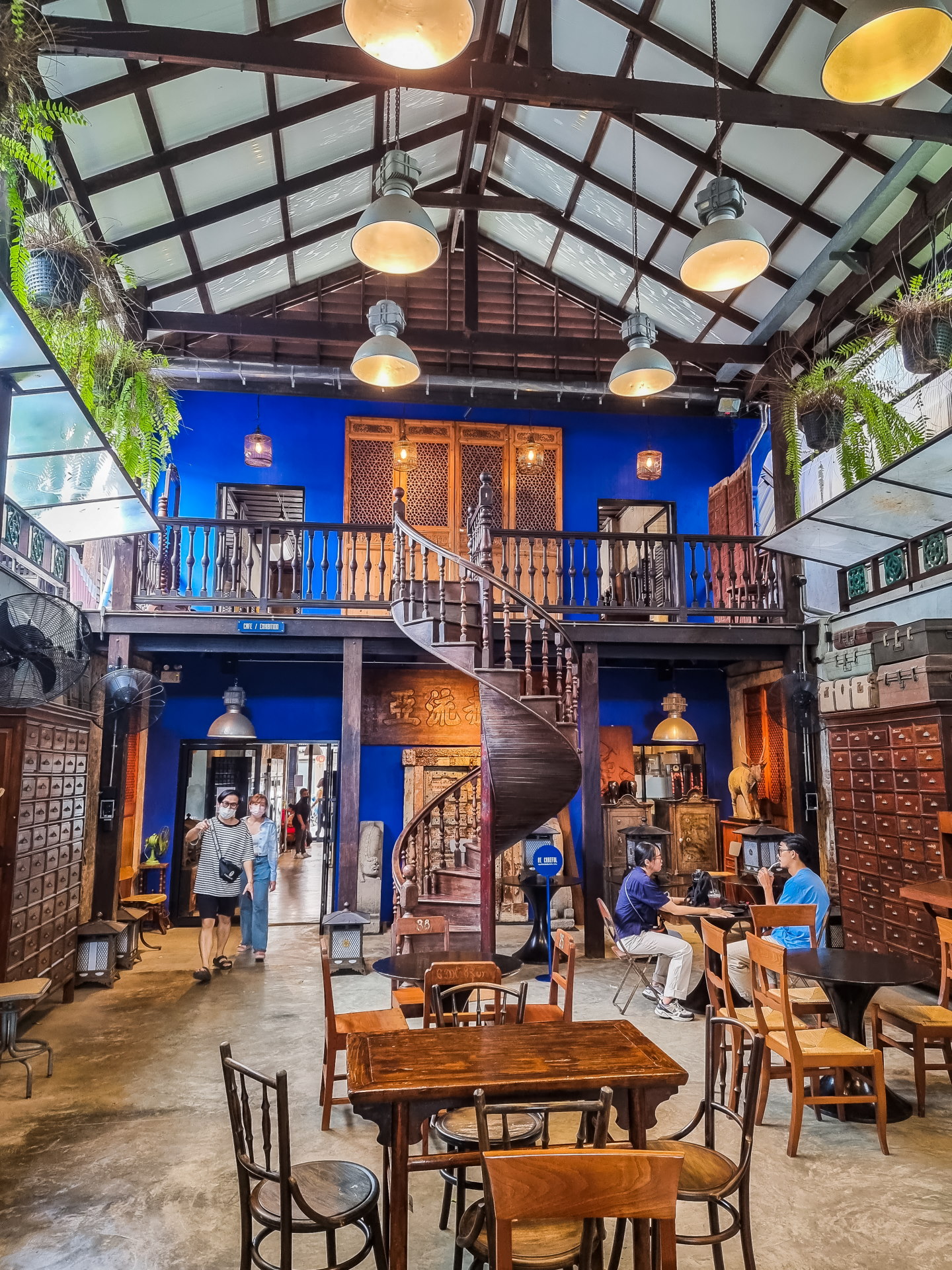
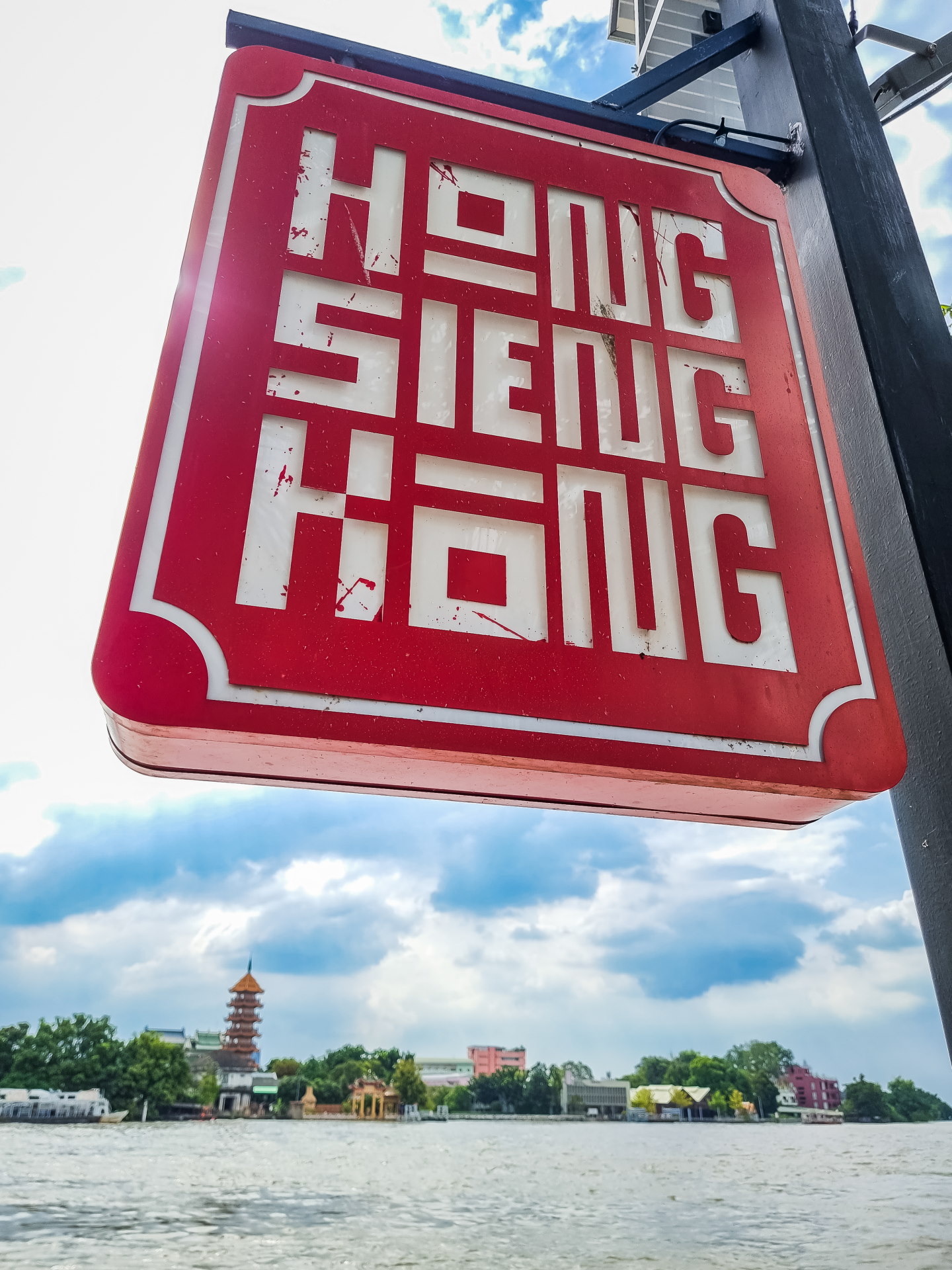
As you walk down the small street Soi Chew Su Kong, you will come across the trendy Hong Sieng Kong cafe , set in a group of period houses, superbly renovated in its idyllic location on the riverbank.
This is one of the last ones created in the area, which is gradually transforming into a leisure and entertainment area, and the scrap metal shops could well disappear completely to make way for restaurants and cafes in the longer term.
This was also the case for the neighbor, a large wooden shack which, on my last visit, was being renovated.
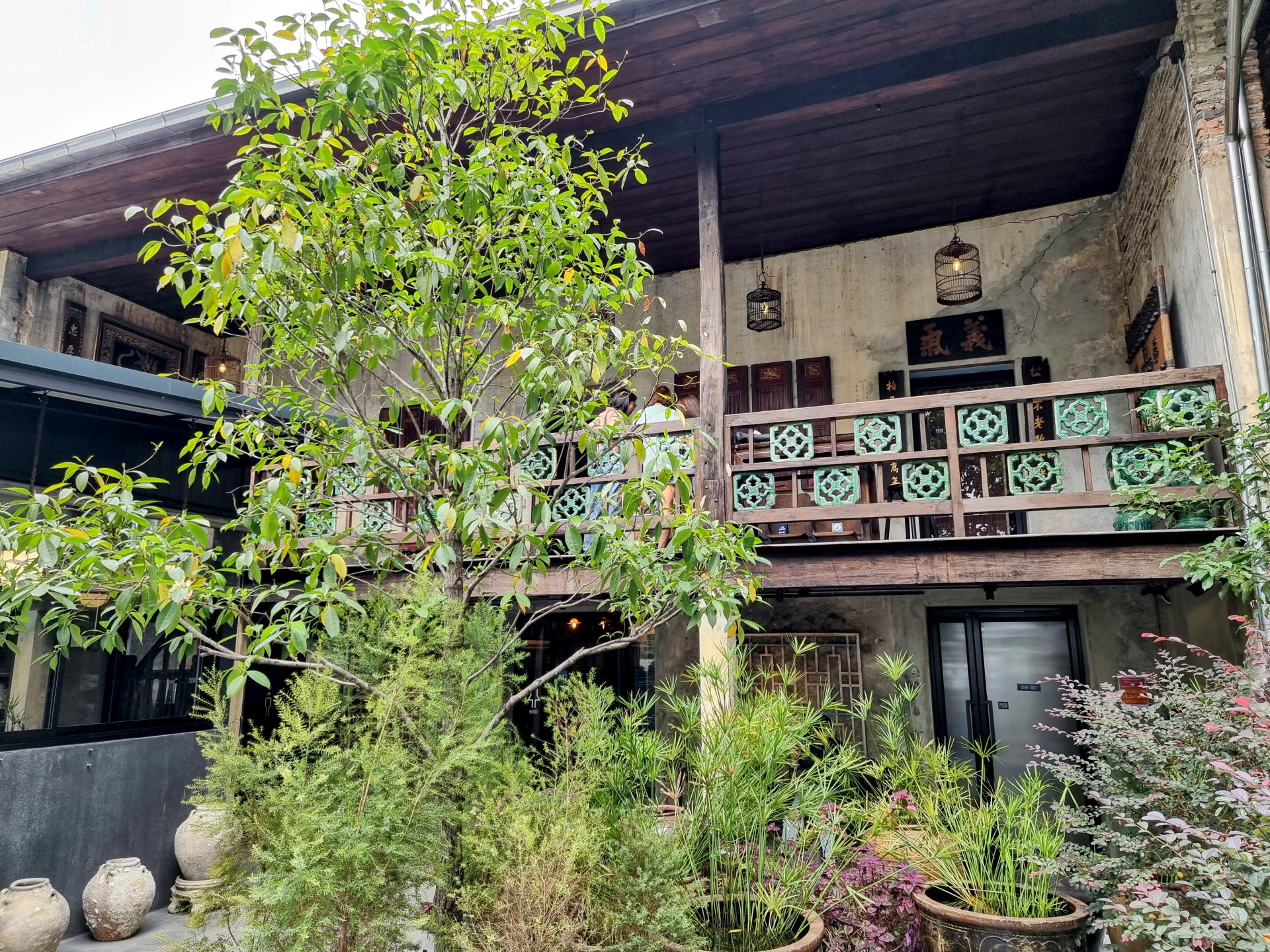
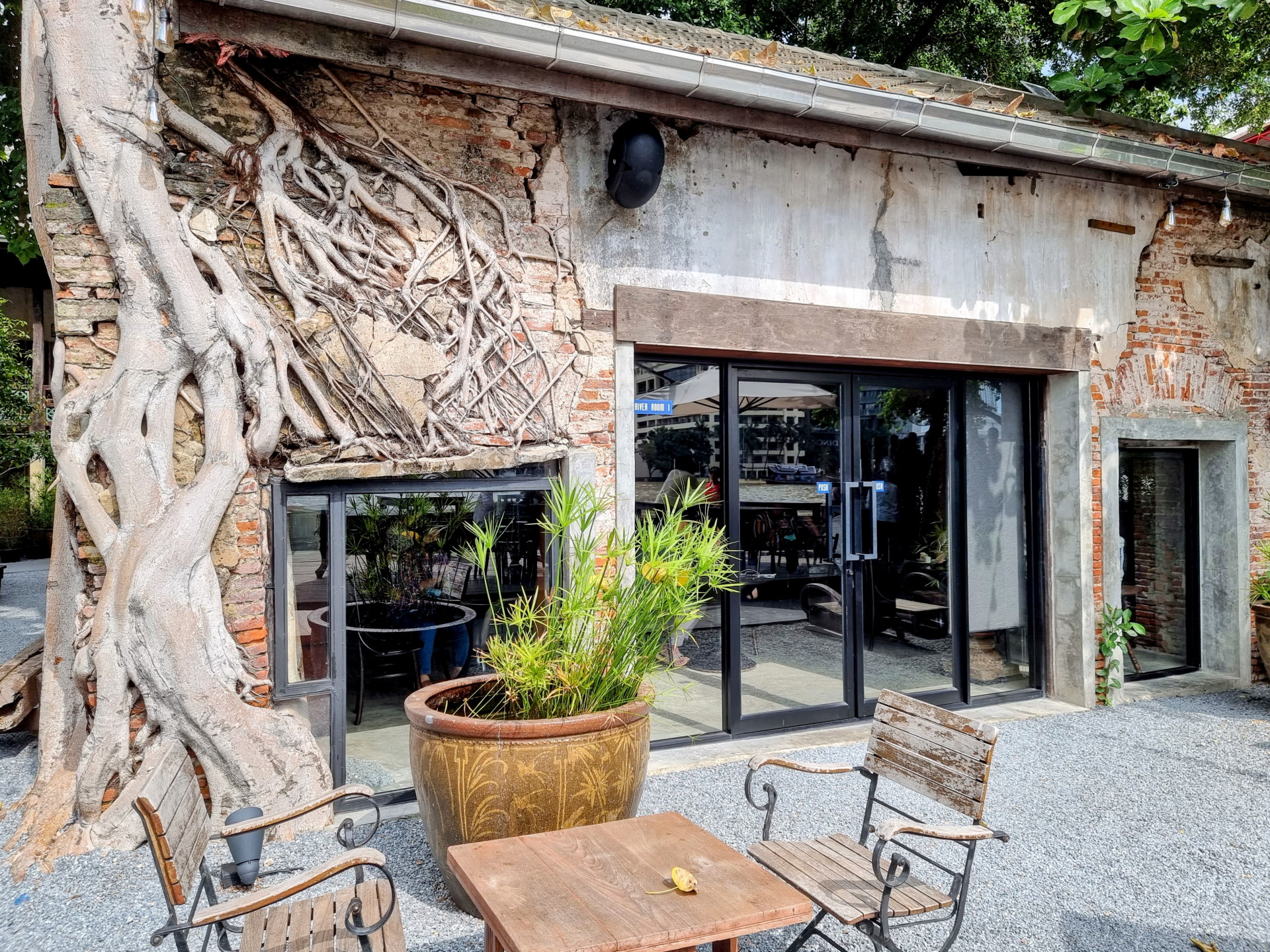
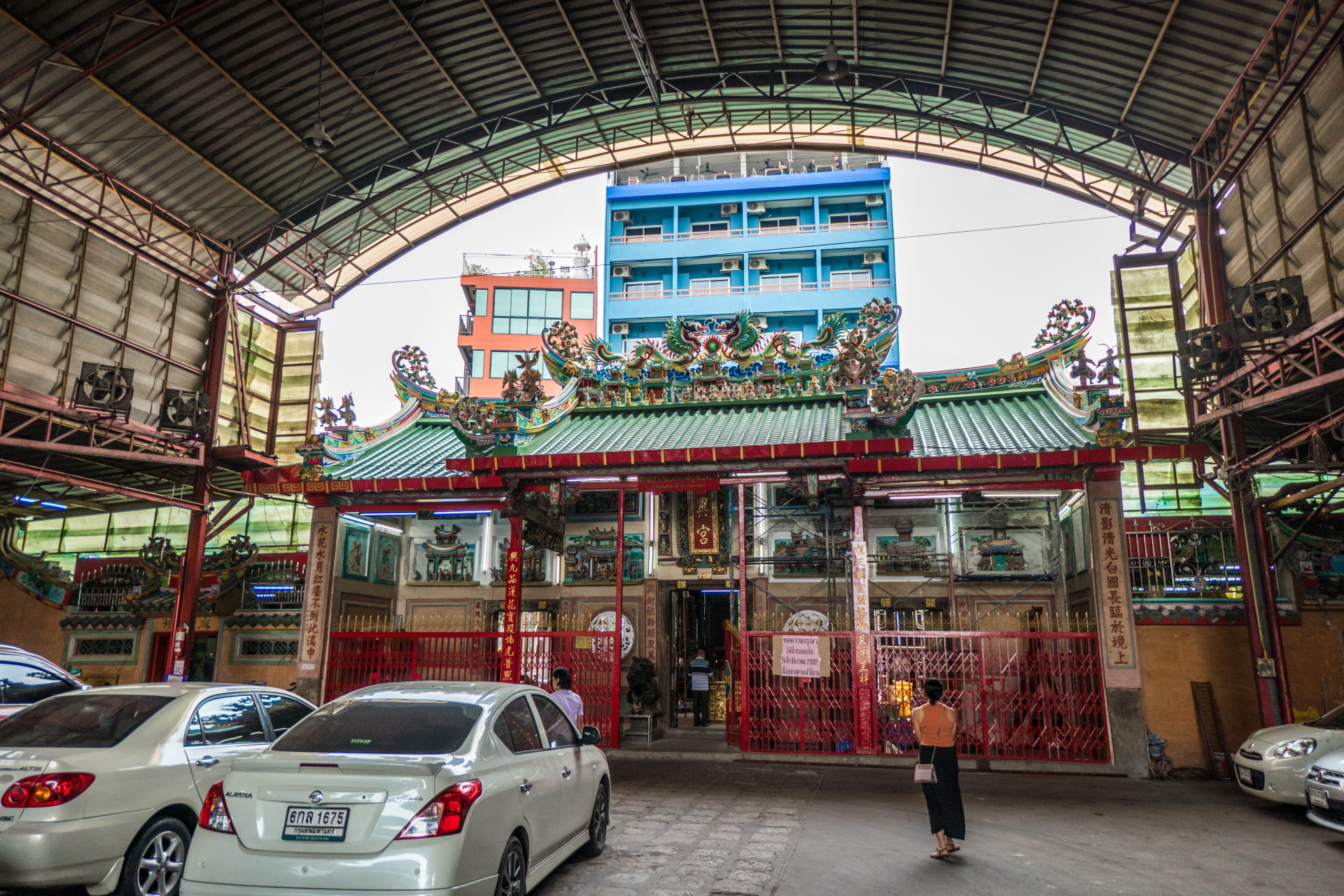
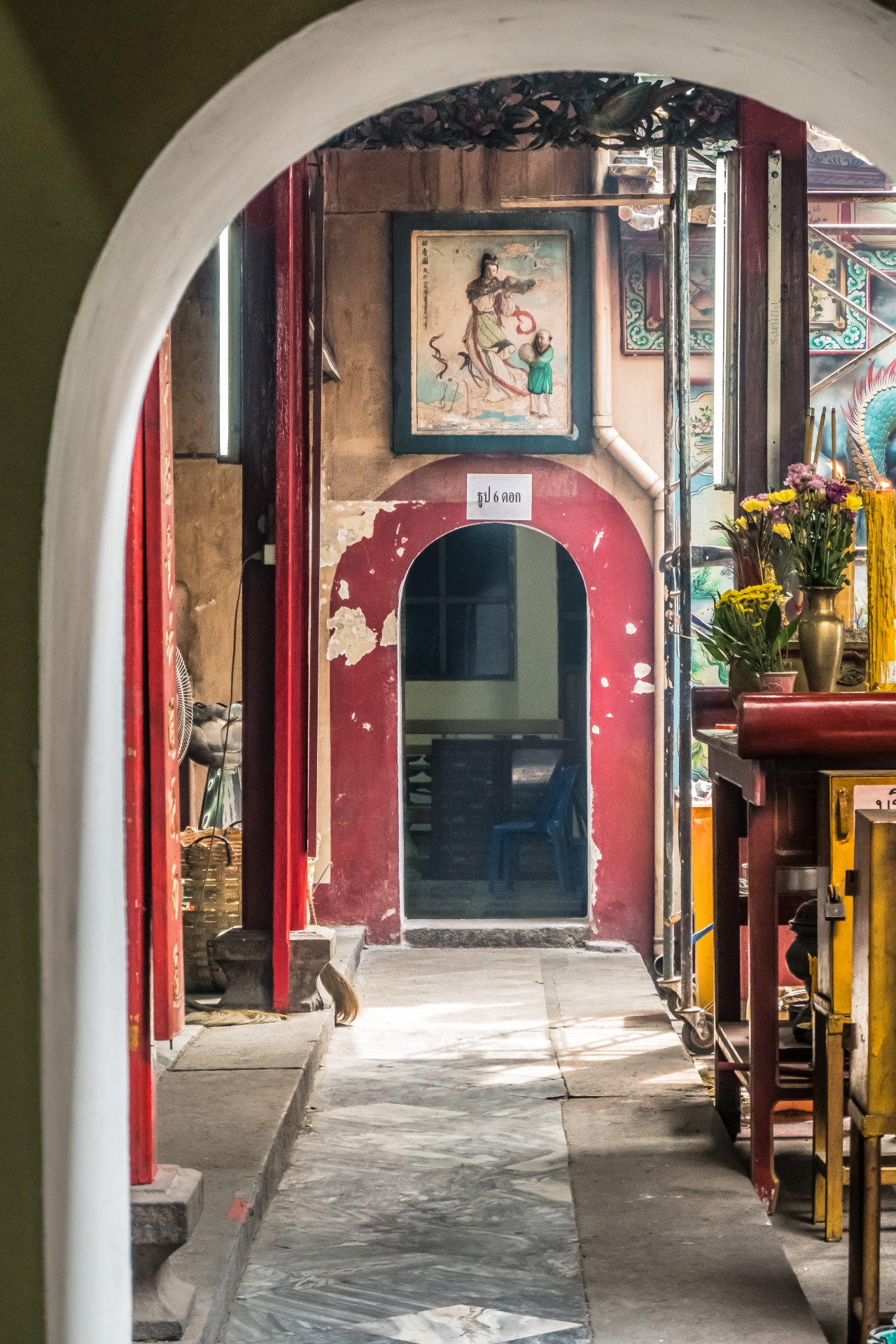
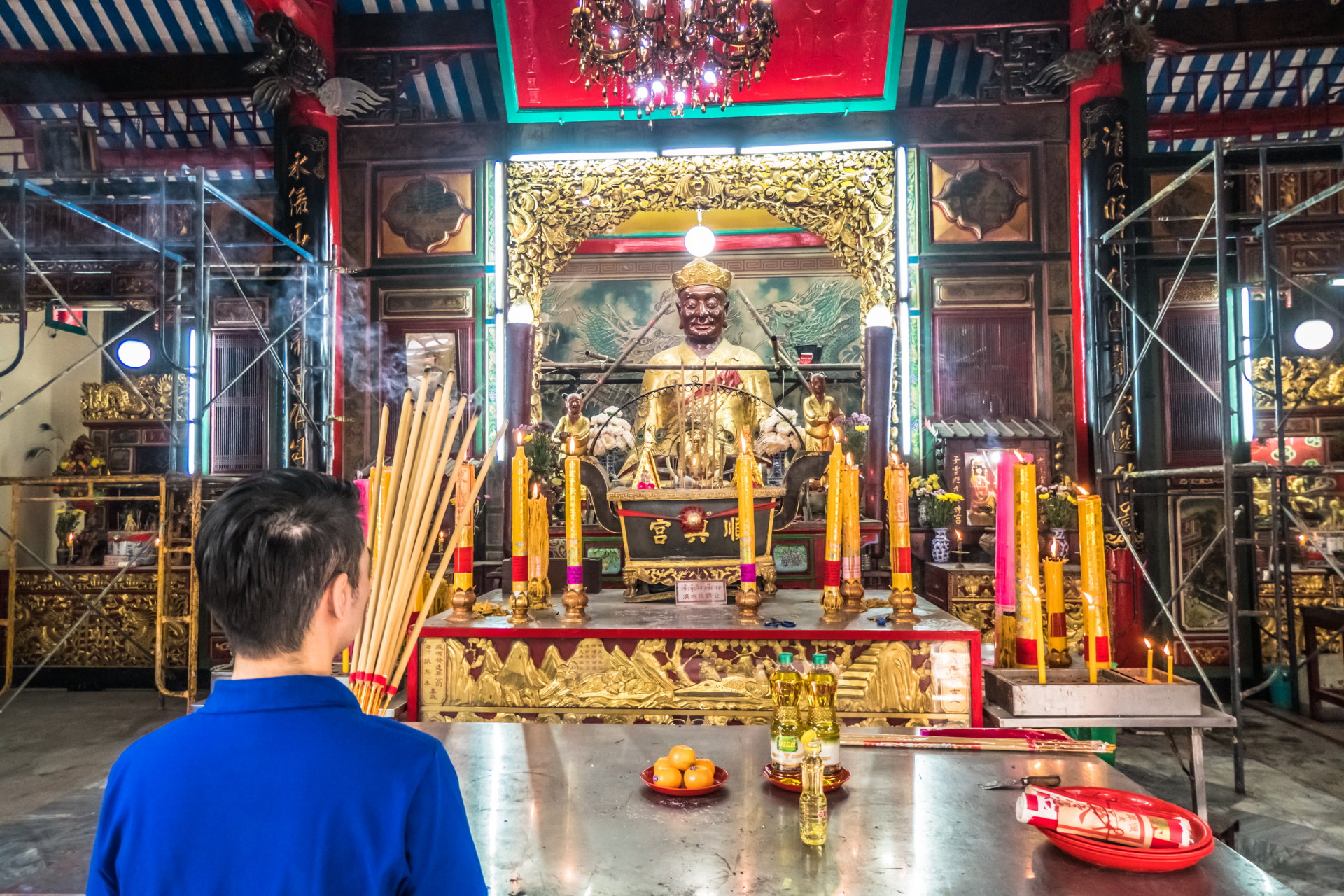
Right next door, you have an important Chinese shrine which bears the name of the street previously walked on, Chow Sue Kong Shrine (whose transcription on Google Maps is Zhou Song Gong Shrine), dedicated to the eminent Chinese doctor, Chow Sue Kong, appreciated in his lifetime for his knowledge of medicinal plants and herbs, the mixtures of which he tested on himself before offering them as a remedy to his patients.
Built in 1804, this temple is one of the oldest temples in the Hokkien Chinese community of Talat Noi.
Adjacent to the temple, there is another recently tested cafe, which also offers guest rooms, the Photohostel & Photocafe , and next door you have the famous River View Residence, at the top of which is the terrace of the River Vibe Restaurant and Bar mentioned above.
5- The So Heng Tai Mansion
Turning left after the River Residence, a few meters further on you will come across a magnificent sacred tree, surrounded by colorful ribbons. It is located at a fork in the road.
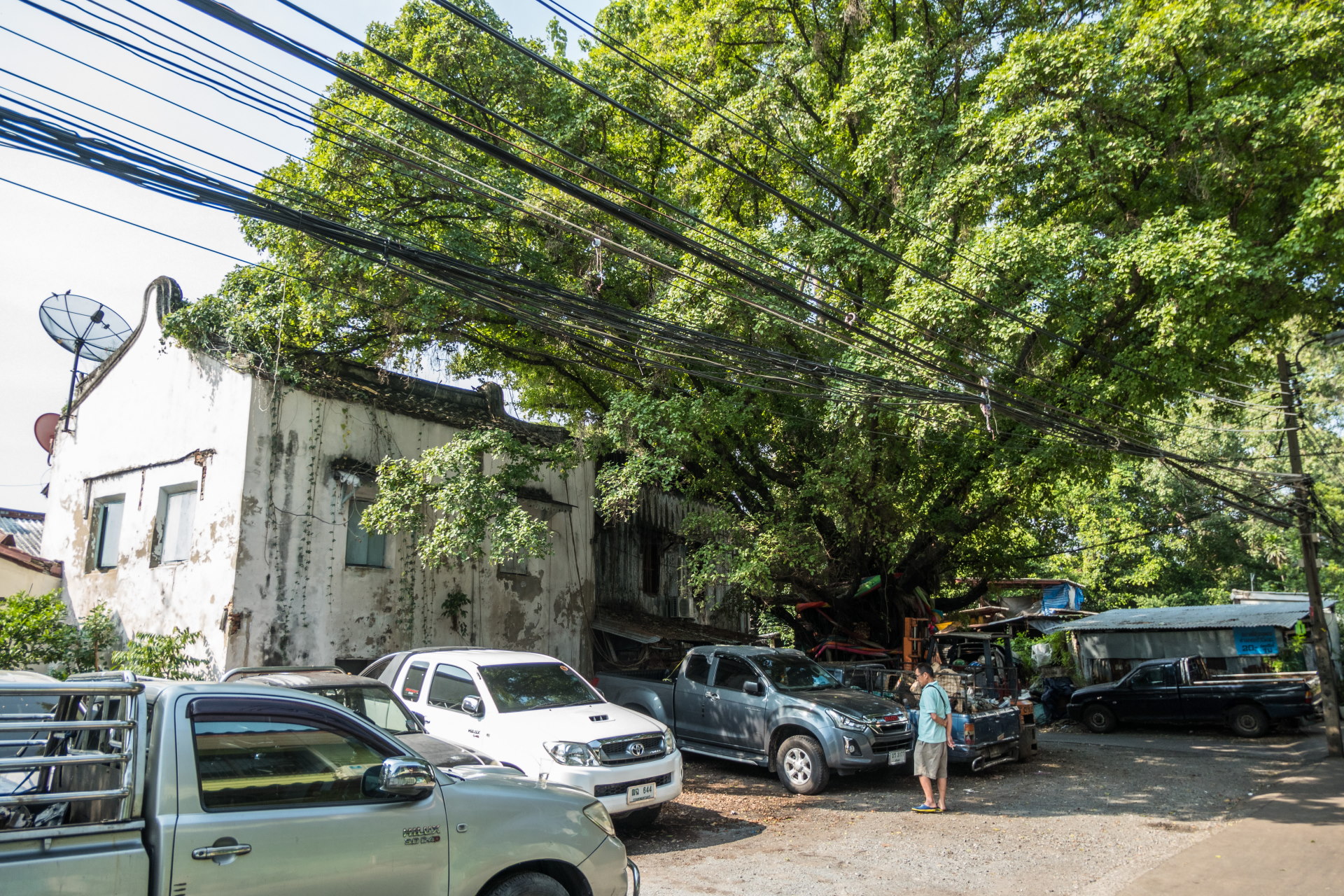
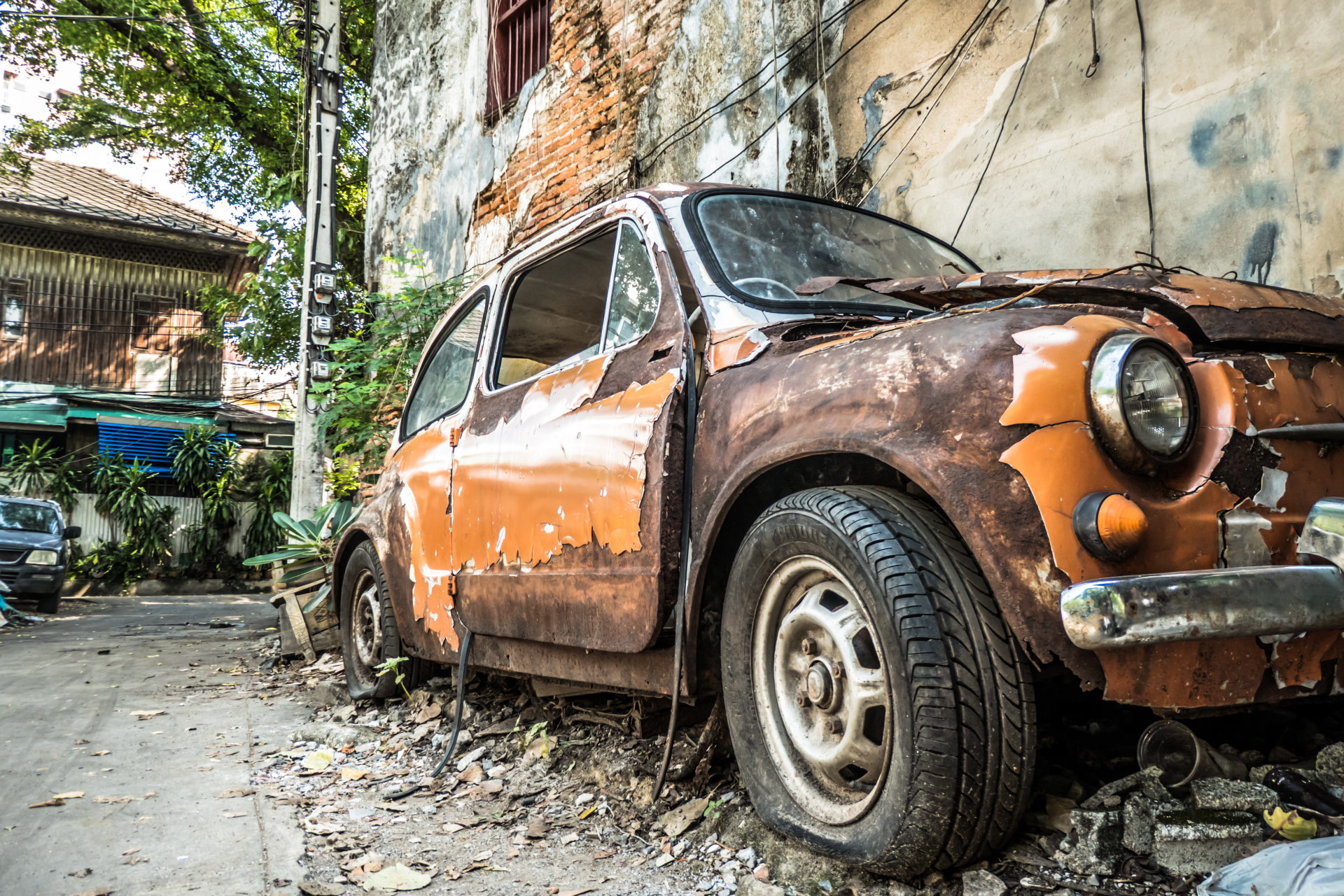
If you continue straight ahead at the tree (which will then be on your right), you will return to Soi Wanit 2. I invite you to take the small street on the right, after which you will see an old Fiat 500 parked there and forgotten against the wall, which has become a very popular spot for Instagram and illustrates the vibe that Talat Noï provides.
Next door in the building is a chocolate bar… never tried it but it's an opportunity to try it if you like it.

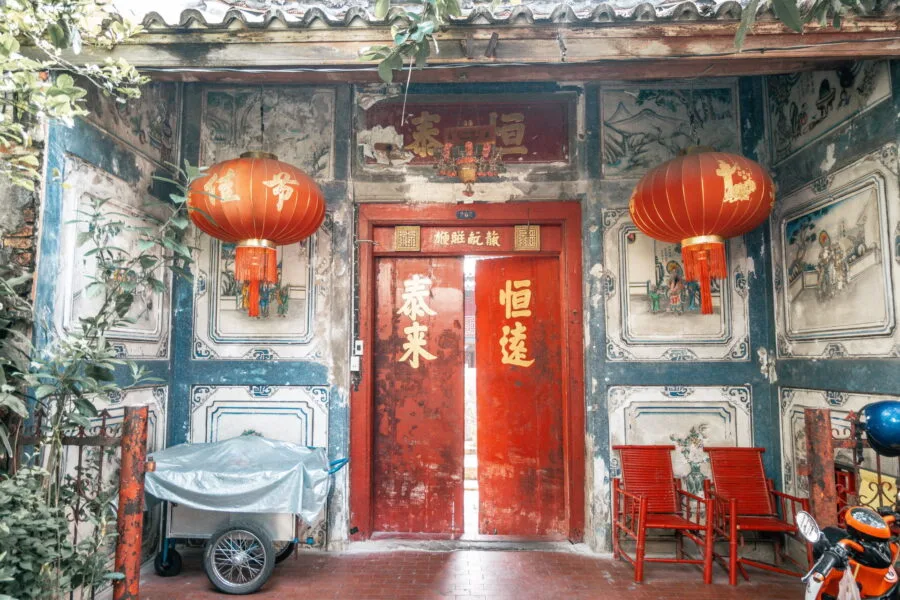
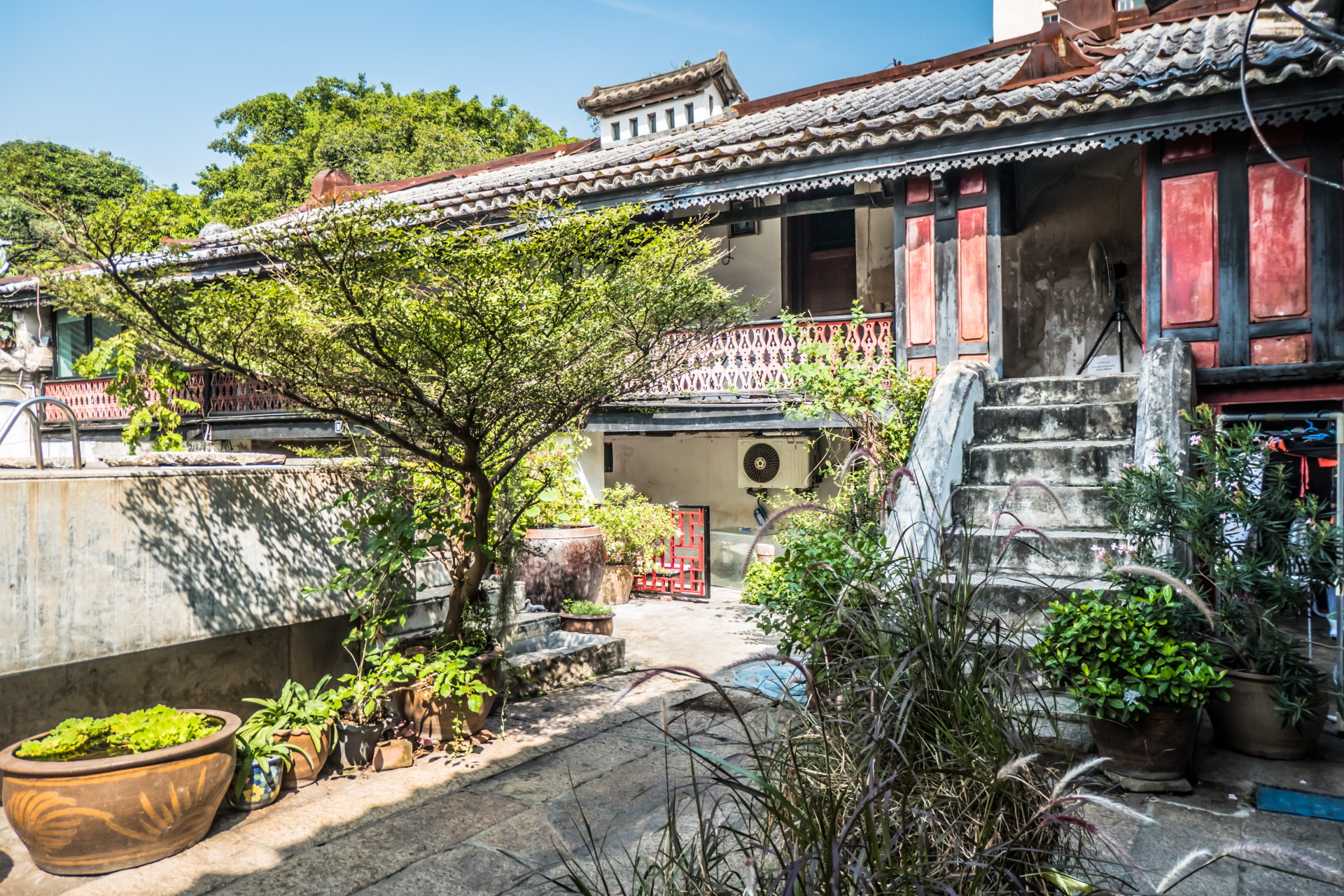
Just a few more meters and you'll come across a rounded red door, typical of old Chinese houses; you've arrived at the entrance to So Heng Tai Mansion . It's a rarity in Bangkok – a hidden treasure just waiting to be discovered.
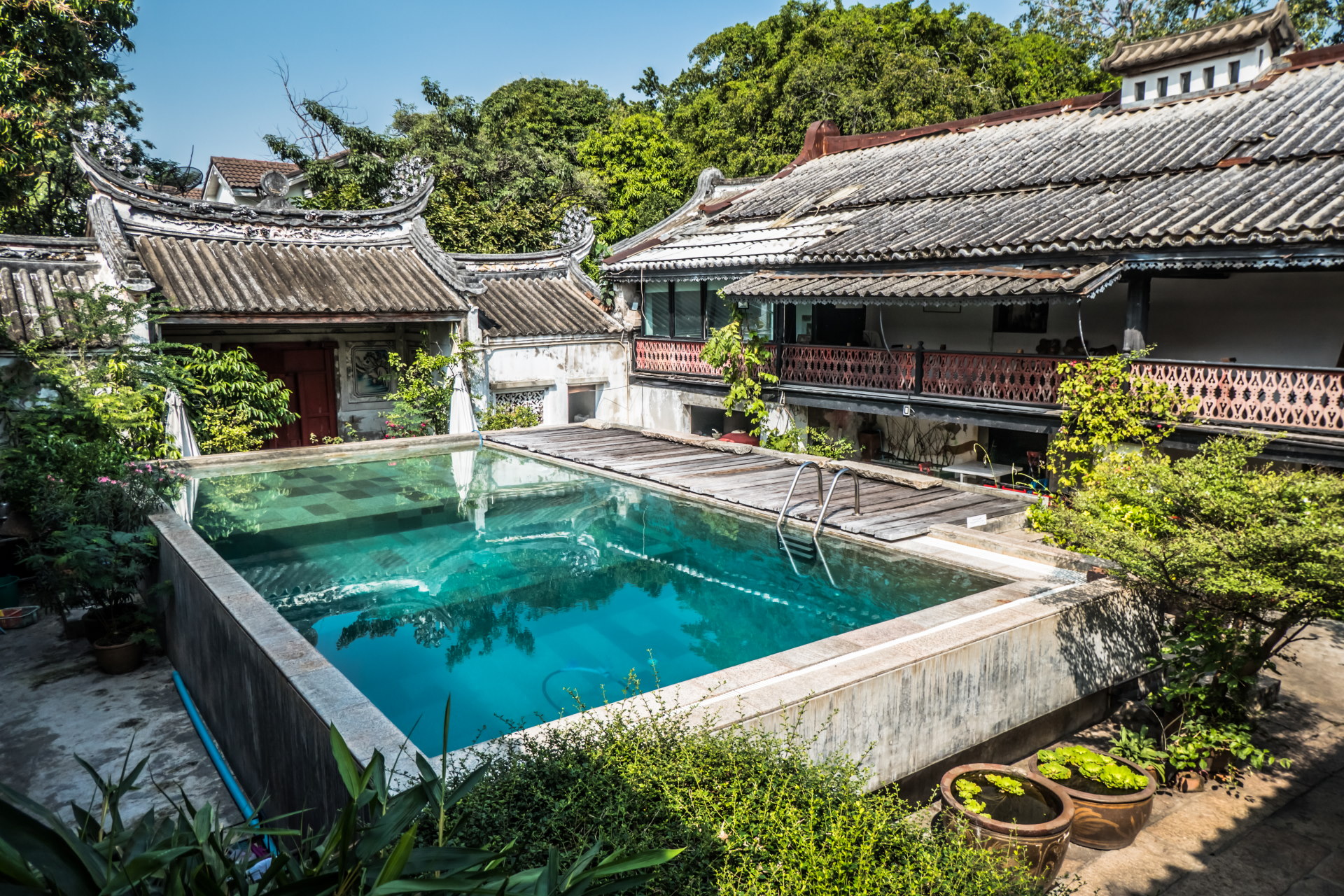
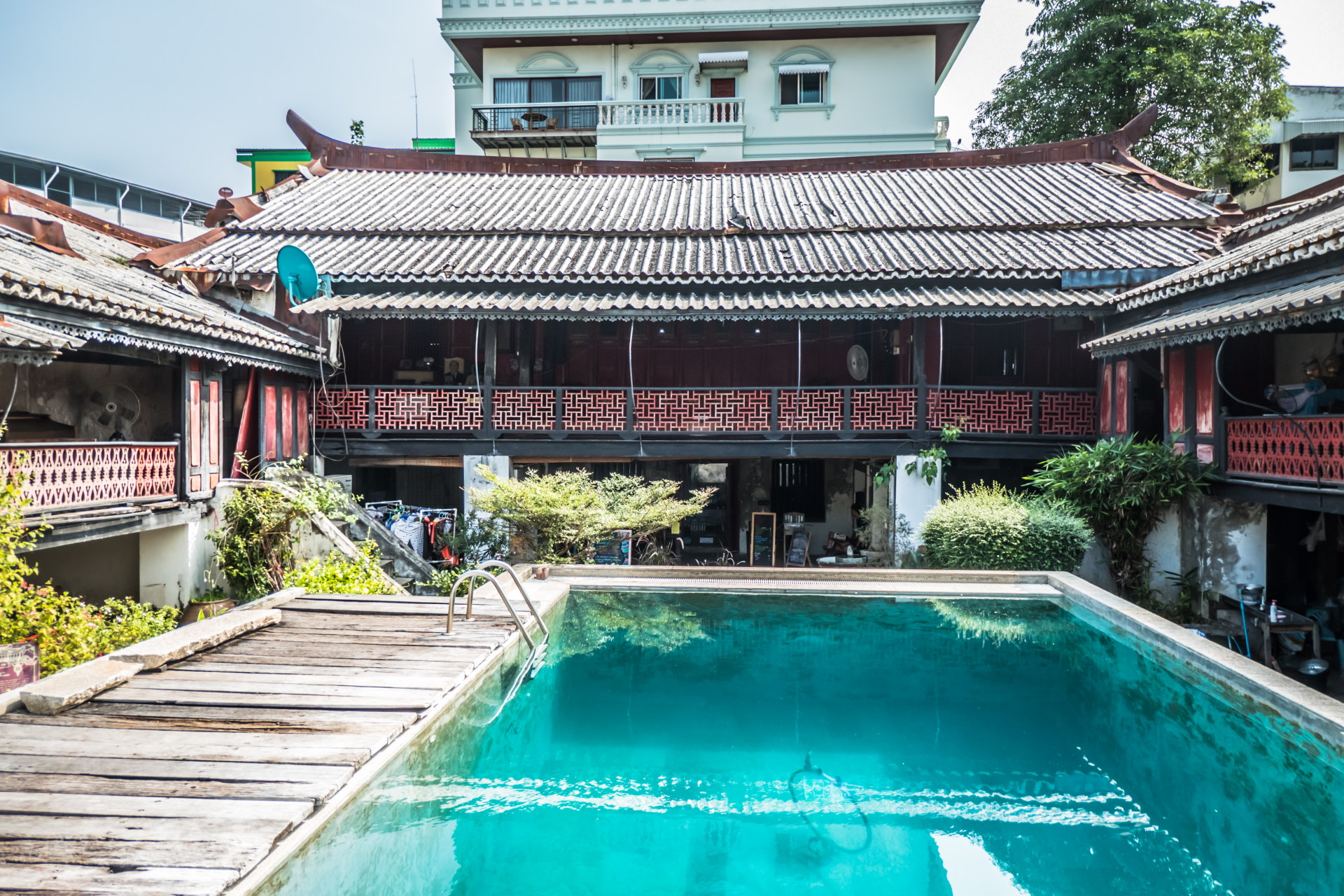
Pass through the ornate entrance gates and enter a courtyard that might leave you puzzled. Indeed, in the middle of the courtyard you will find a basin, or rather a swimming pool.
So, is this just a small guesthouse in the heart of Talat Noi? Actually, no. Here, a stone's throw from the Chao Phraya River, you'll find what serves as a scuba diving center . Yes, indeed. Located in one of Bangkok's oldest Chinese courtyards, the So Heng Tai Mansion runs a diving school as well as a small on-site café.
The creation of this swimming pool in this historic location was controversial at the time, but it was the solution found by the owner to generate income and maintain all four houses surrounding the courtyard and forming the So Heng Tai Mansion.
It was built by a member of the So clan, Phra Aphaiwanit (1813-1849), a Chinese of Hokkien ethnicity, originally from Fujian, who made his fortune in Thailand by becoming the holder of a government concession to collect swallow nests, a delicacy still prized and expensive today.
The house was later transformed into a financial center to allow the many Hokkien living in Thailand to send their earnings to their families remaining in China.
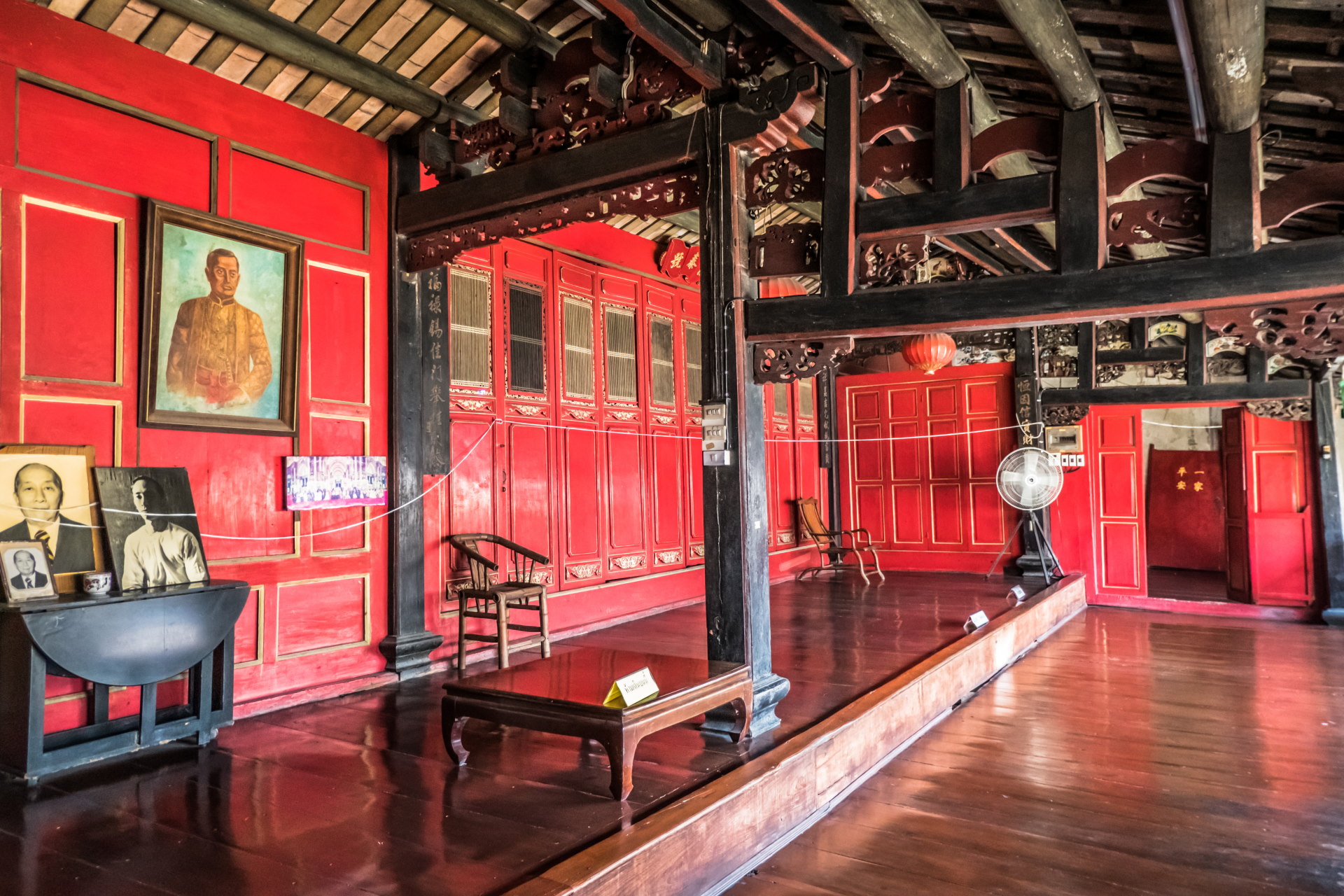
Today, the house is still inhabited by his descendants, one branch of whom now forms the Posayajinda family. It is one of the last traditional Chinese houses in Bangkok and claims to be the oldest private residence in the city.
Despite a monthly maintenance cost of 150,000 baht, he has already refused substantial purchase offers and is keeping the family home in the hope of preserving it as it approaches its bicentenary (in 2047).
Although the diving center, launched in 2004, is now little used, it has converted to what is fashionable, so it is possible to have a little coffee while sitting on the terrace set up on the 2nd floor of one of the houses on the side, which overlooks the diving pool and the central courtyard.
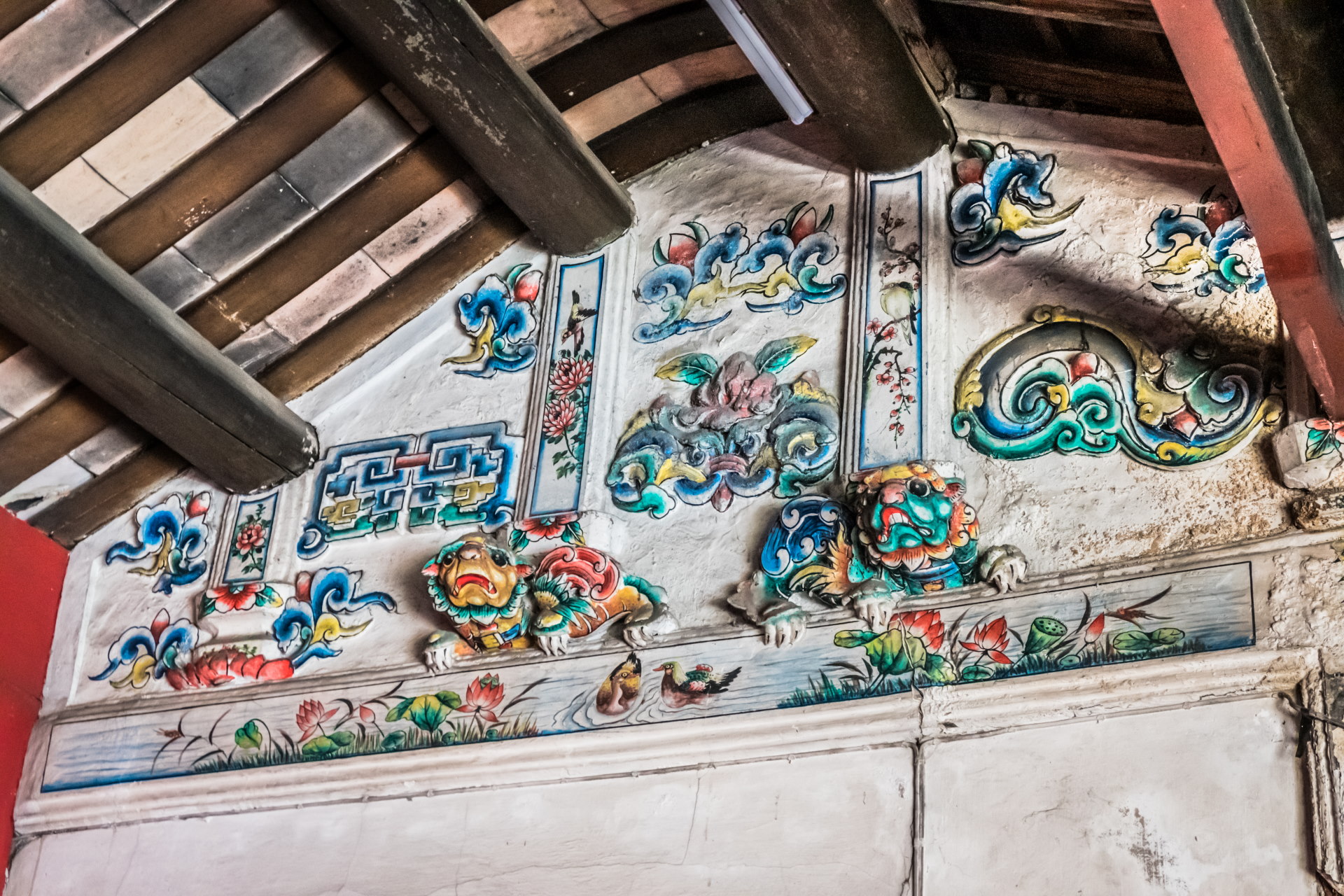
With its gently curved roofs, touches of bright red, portraits of ancestors and colorful porcelain adorning the walls, the house is a magnificent living museum.
Small Update: They now charge 50 baht entrance fee if you don't plan on having drinks.
6- Rong Kueak Shrine
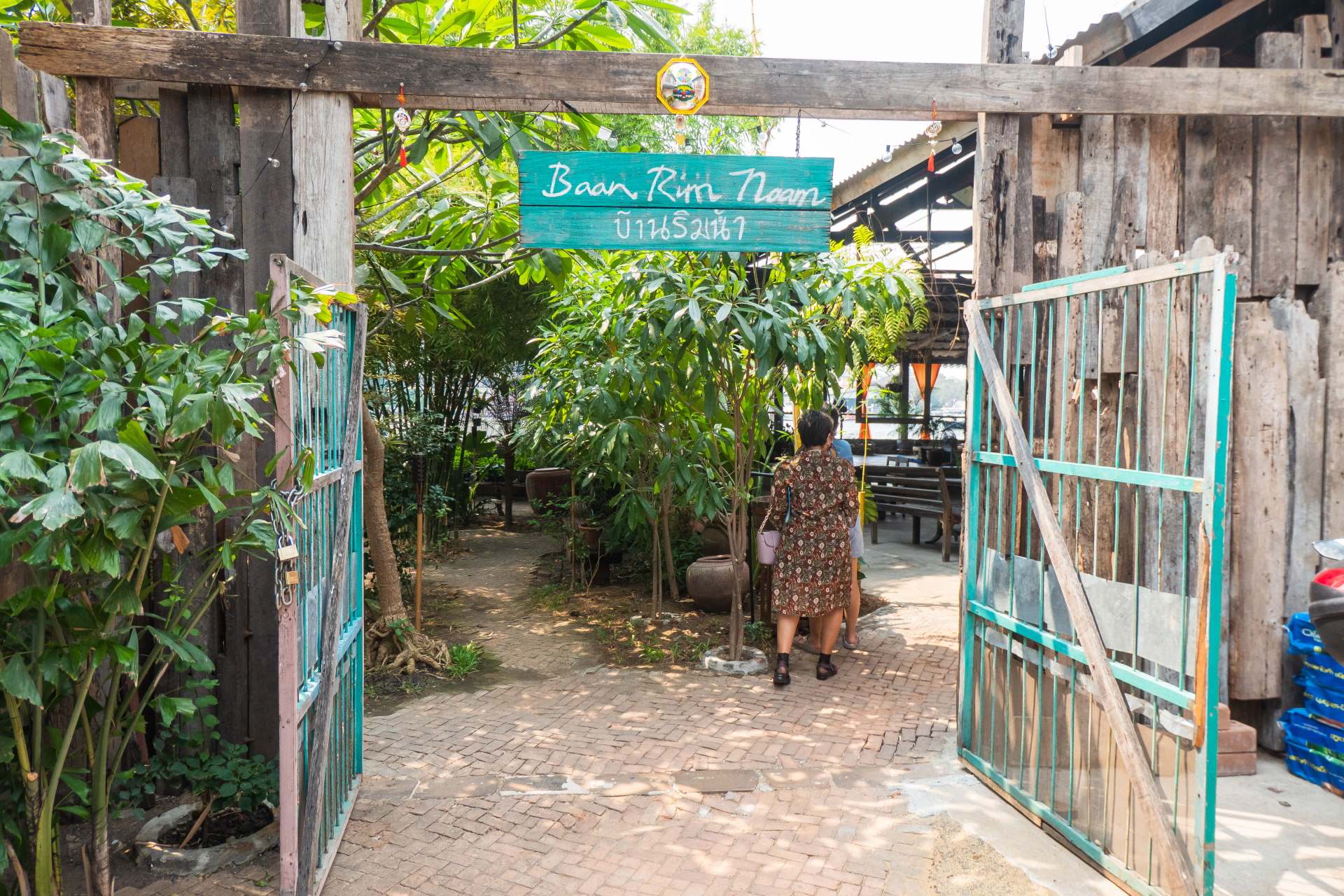
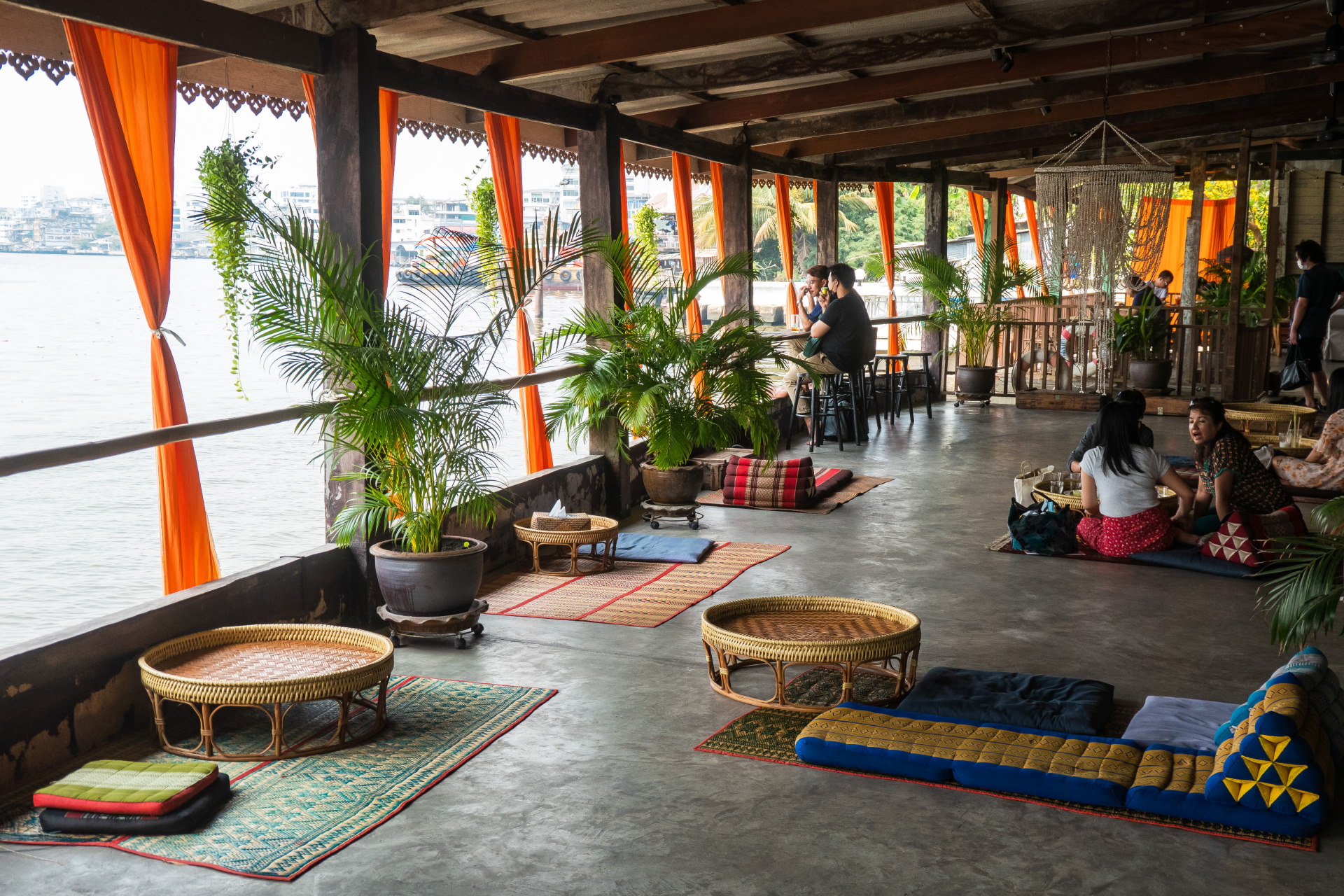
If you go back outside and continue in the same direction, to the left of the So Heng Tai Mansion, you'll find a somewhat hidden restaurant, located on the riverbank and housed in what remains of a two-hundred-year-old warehouse. The only time I wanted to try it, we changed our minds because, looking at the menu, we found the prices exorbitant.
To give you an idea of the price range, a basic dish like stir-fried basil leaves, which usually costs around 70-80 baht with a fried egg, will set you back 250 baht here at Baan Rim Naam —three times the normal price. If you're in the mood and the setting, charming as it is, appeals to you, then perhaps it's the perfect opportunity for a lunch break.
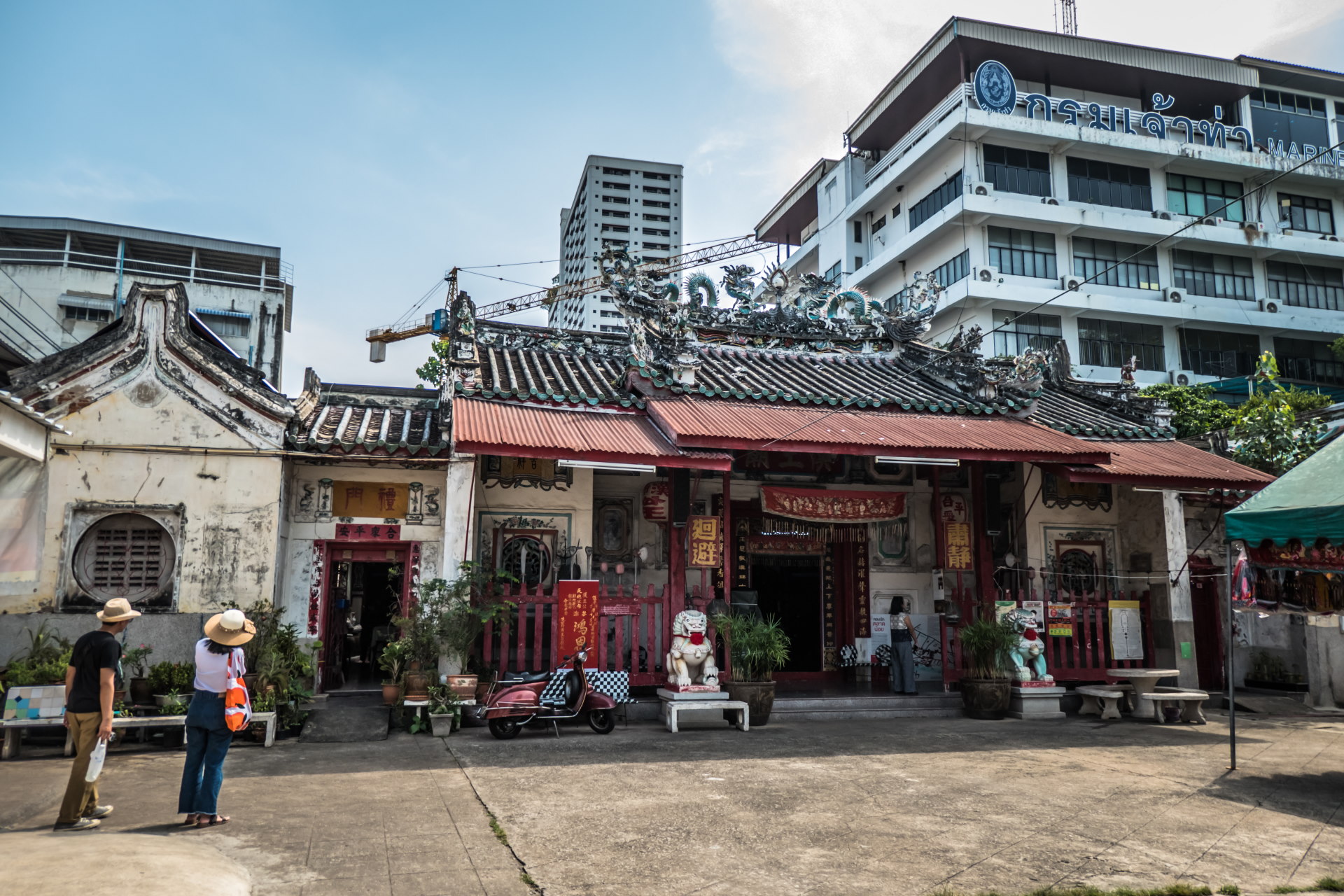
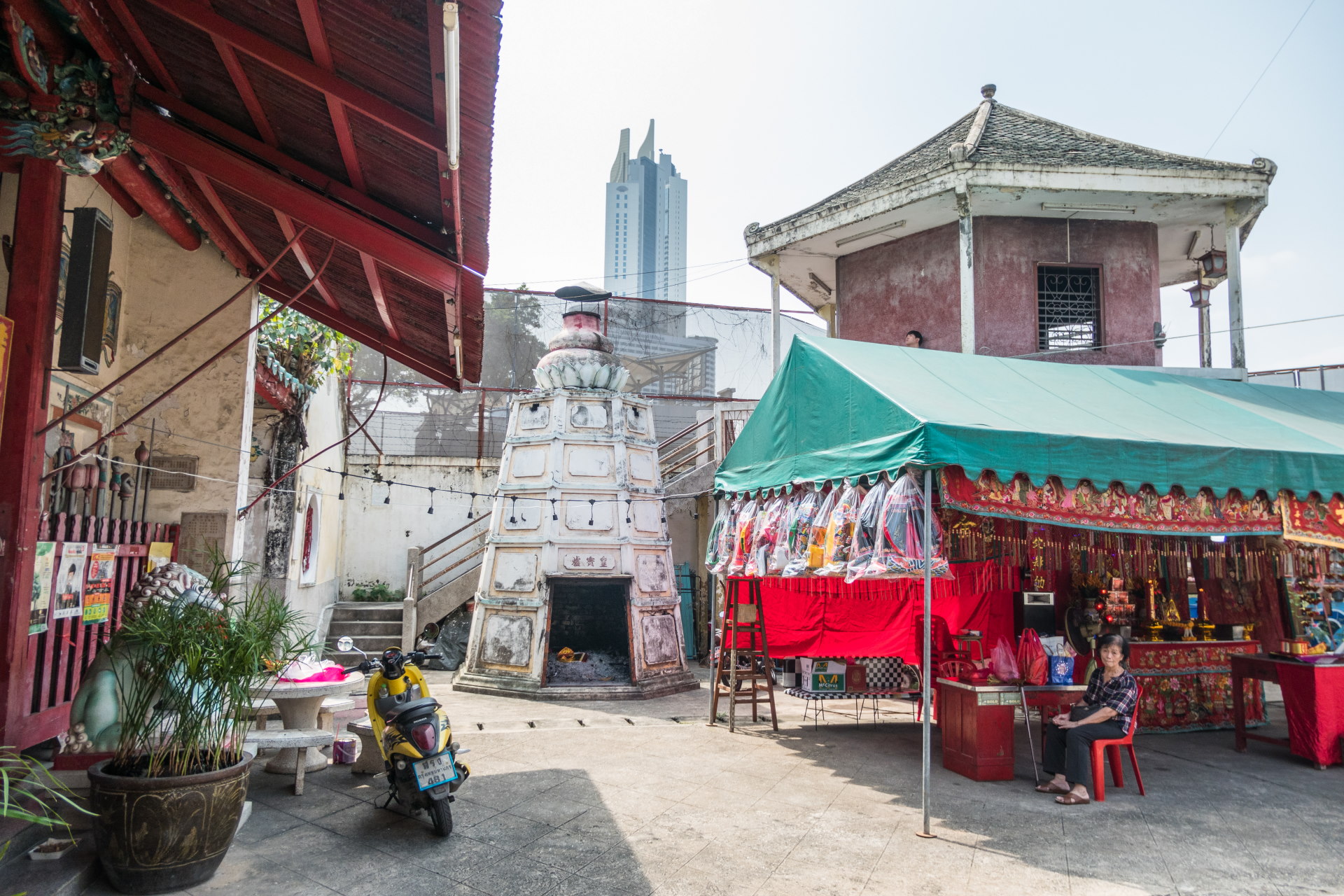
Shortly after, you arrive at the courtyard of a small Chinese shrine—yes, another one. This time, it's a shrine built by Hakka people. Its name is a nod to the past, when the area was home to blacksmiths who made horseshoes.
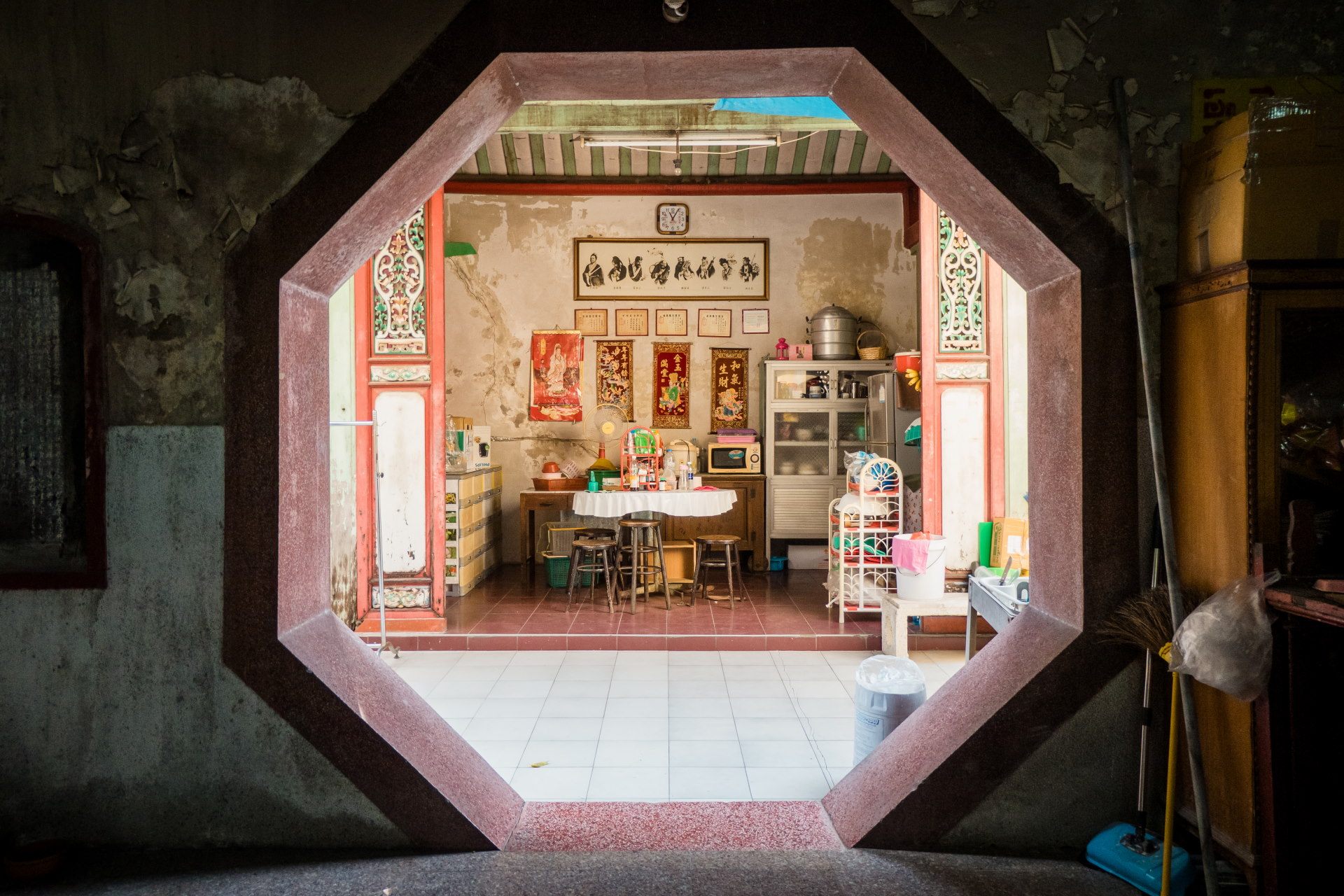
With its exquisite roof carvings and worn murals on the exterior walls, the shrine is a testament to the Hakka architectural style. One of the shrine's distinctive features is its octagonal doorway opening onto the side of the site (these are more commonly round).
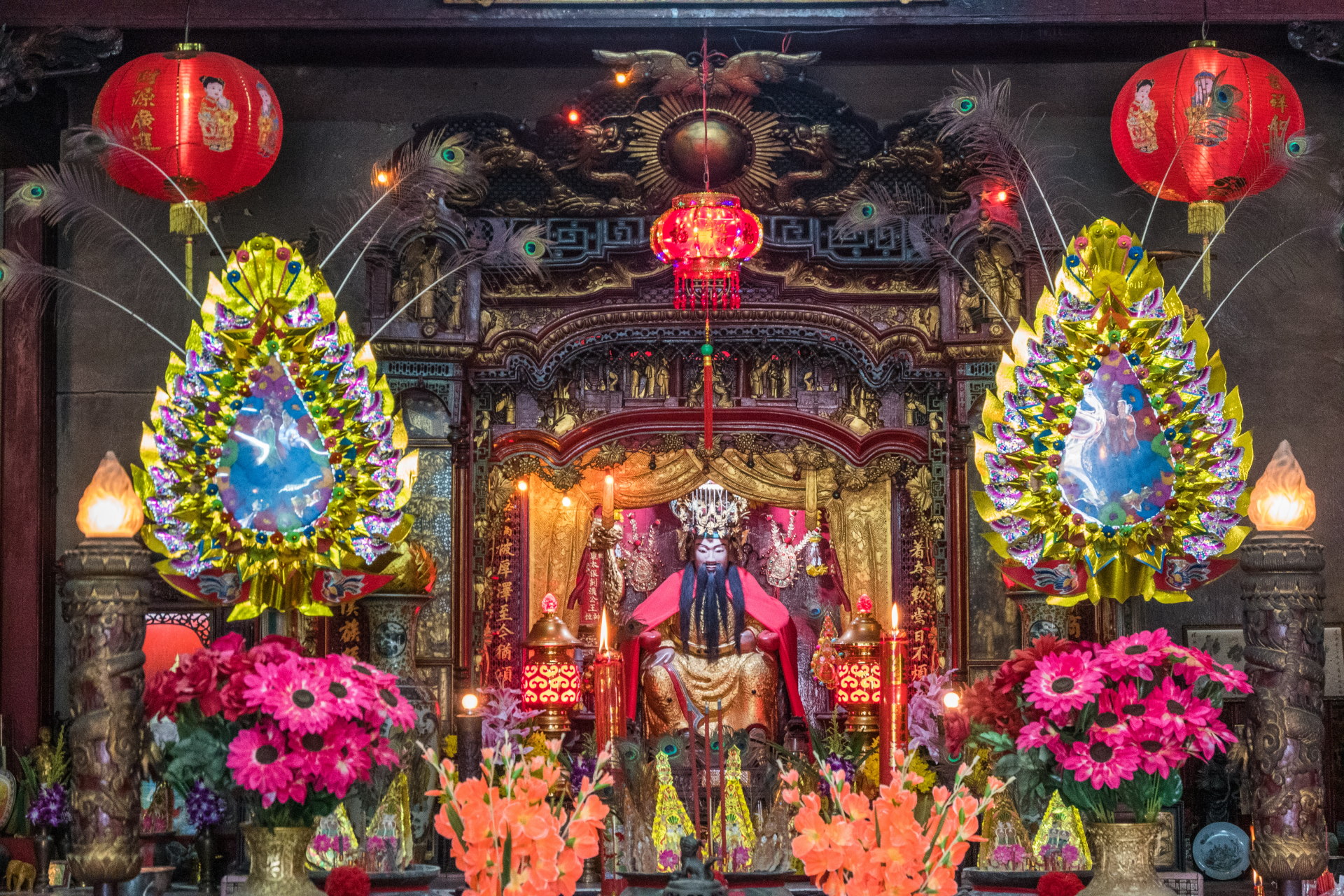
The interior houses the statue of Hon Wong Kung, the first emperor of the Han dynasty of China (206 BC – 220 AD), who is reputed to bring good fortune. It is therefore particularly popular during the Chinese New Year (although this is true for many Chinese shrines).
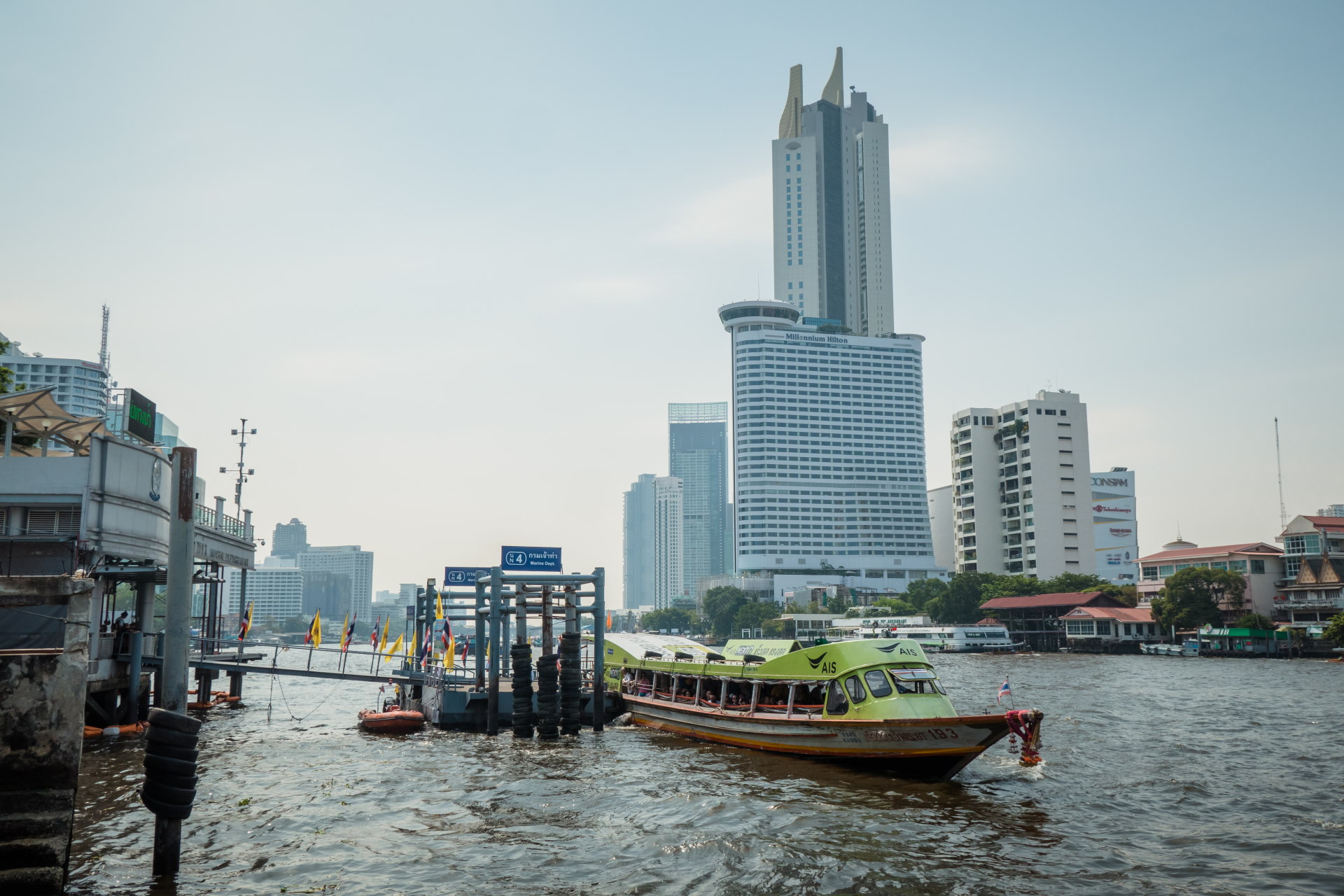
One year when we went there around the New Year period, a small market was organized on the weekend in the courtyard of the temple itself. It is also on the riverside, next to one of the stops of the Chao Phraya Express (Marine Department). You have a view of the Icon Siam, the Millenium Hotel and its famous bar, the ThreeSixty Rooftop Bar.
7- Street Art in San Chao Rong Kueak alley
Turning right after Rong Kueak, you will cross the alley that bears the name of this shrine, San Chao Rong Kueak. It is popular for housing a number of murals depicting scenes from the history of Talat Noi and Chareoen Krung (the first street of Bangkok, which passes not far from here, as a reminder).
If you still haven't had a coffee break yet, here's an interesting address: Mother Roaster Talad Noi . It's the first large old house you'll come across on the left, with a collection of street art on its facade.
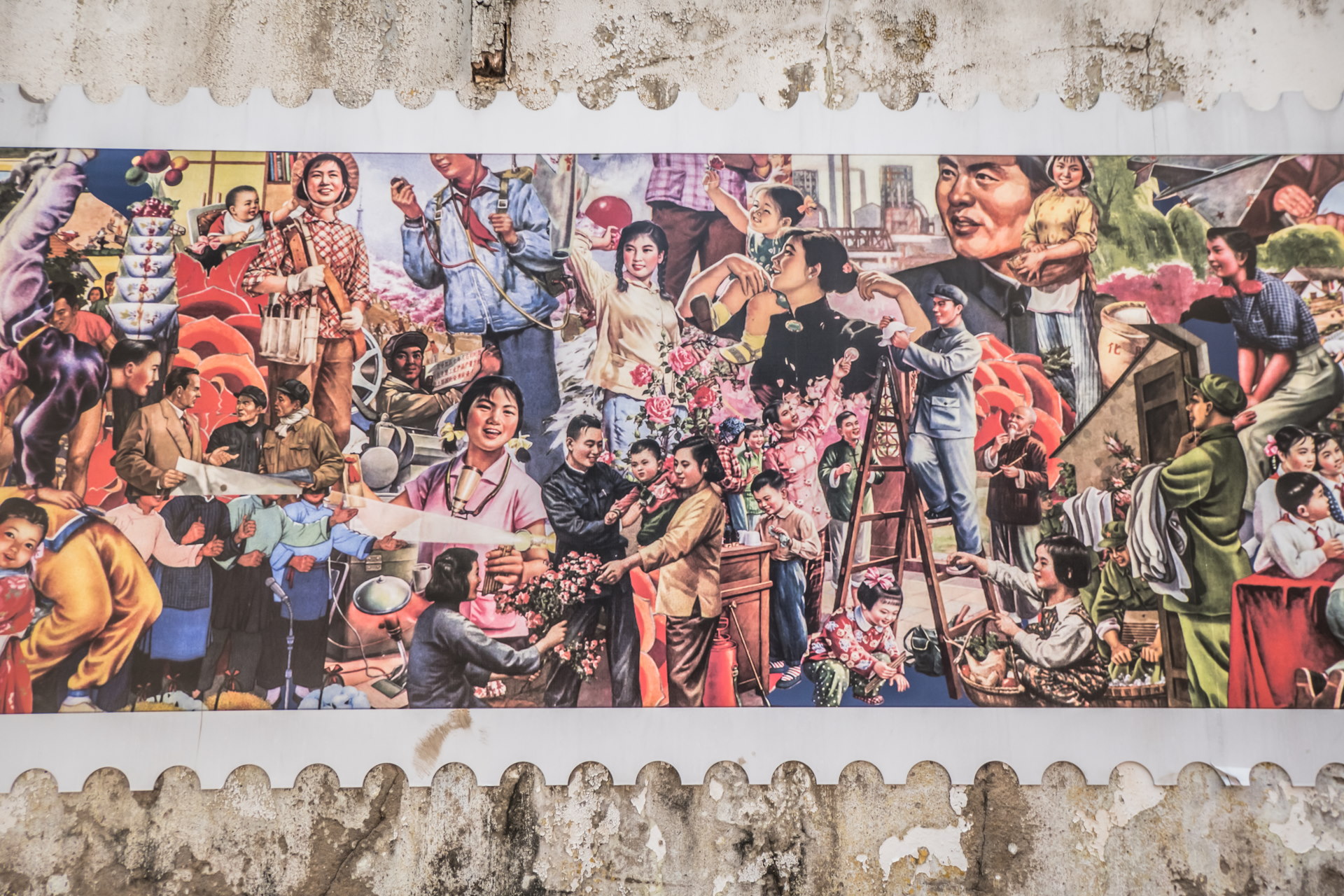
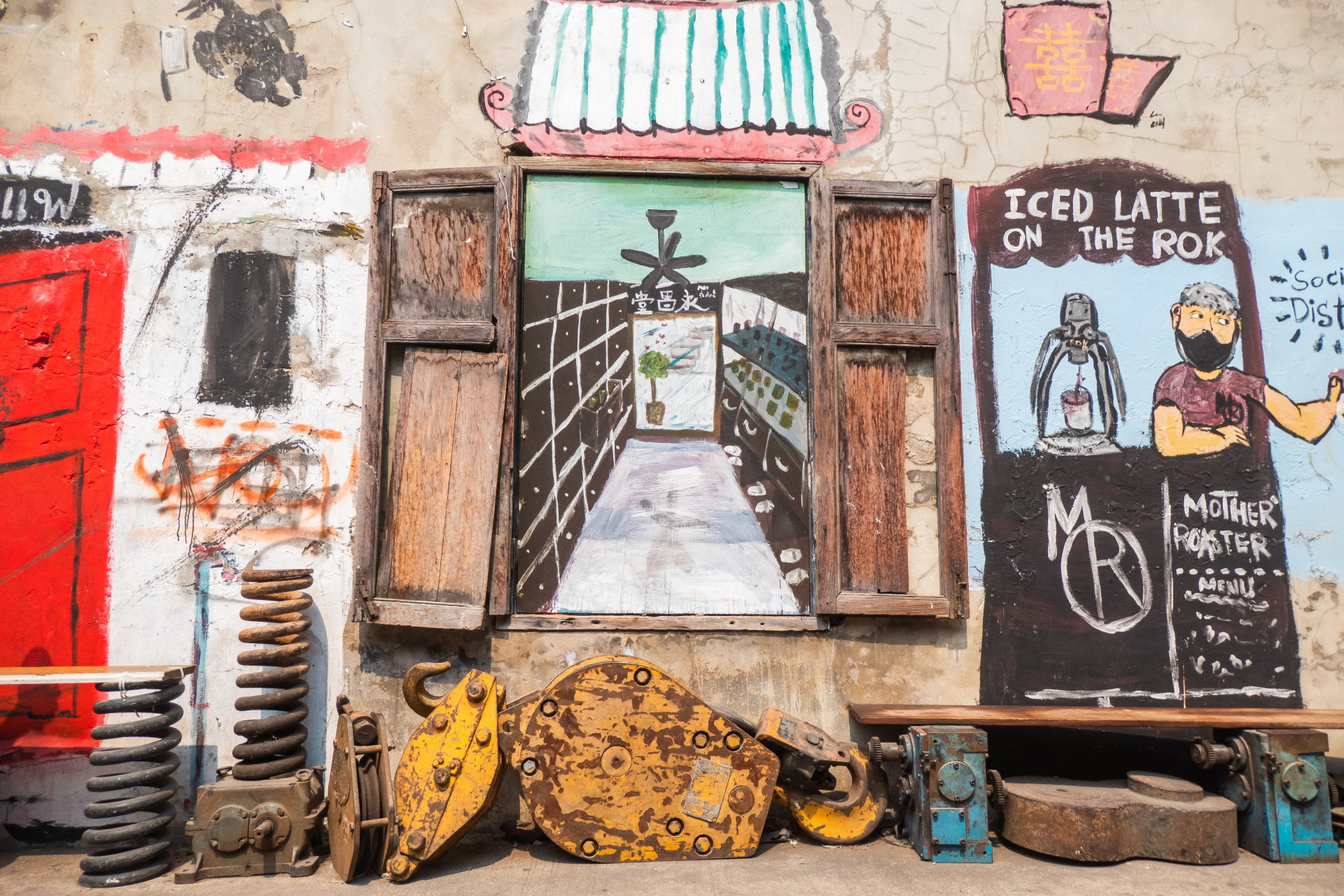
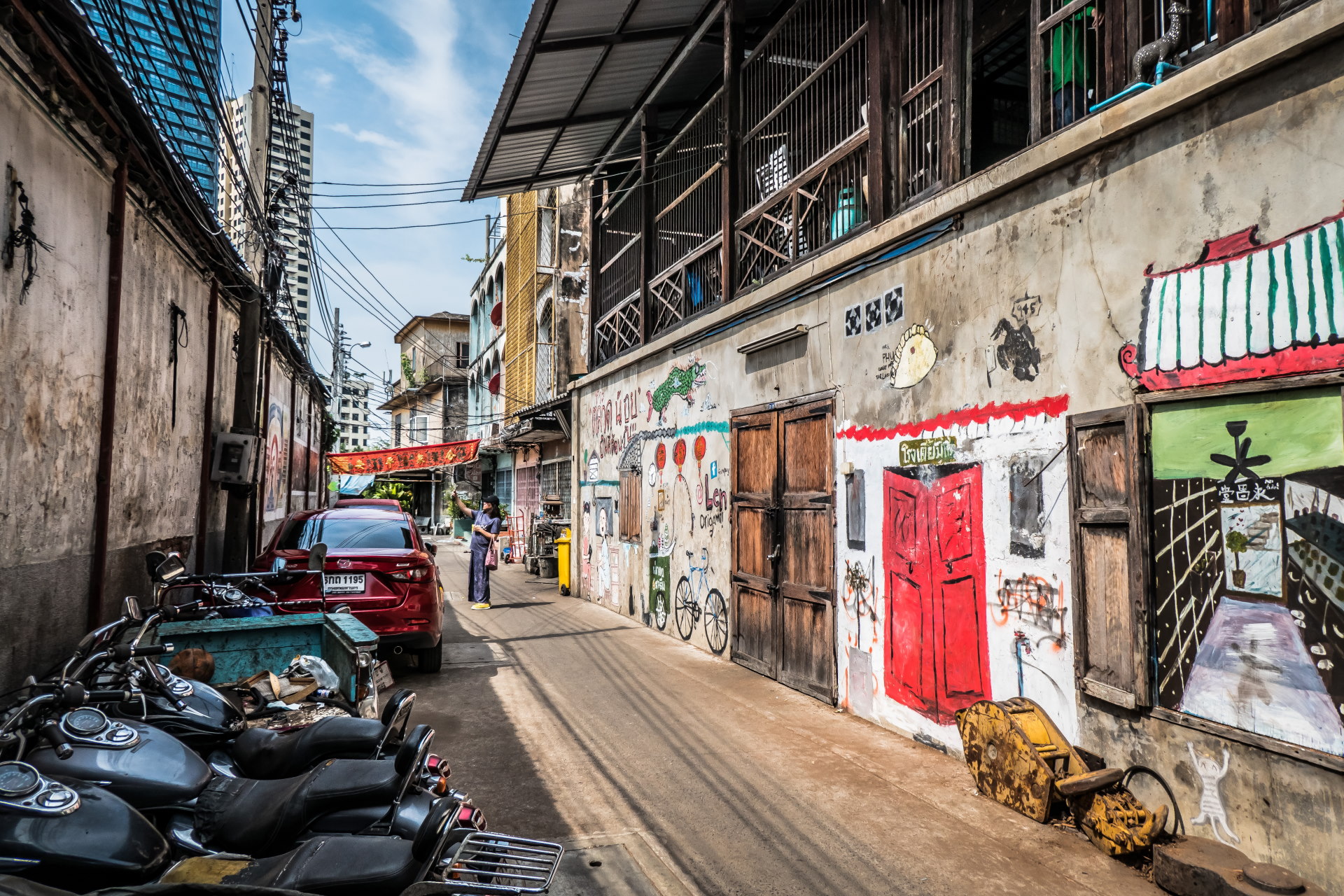
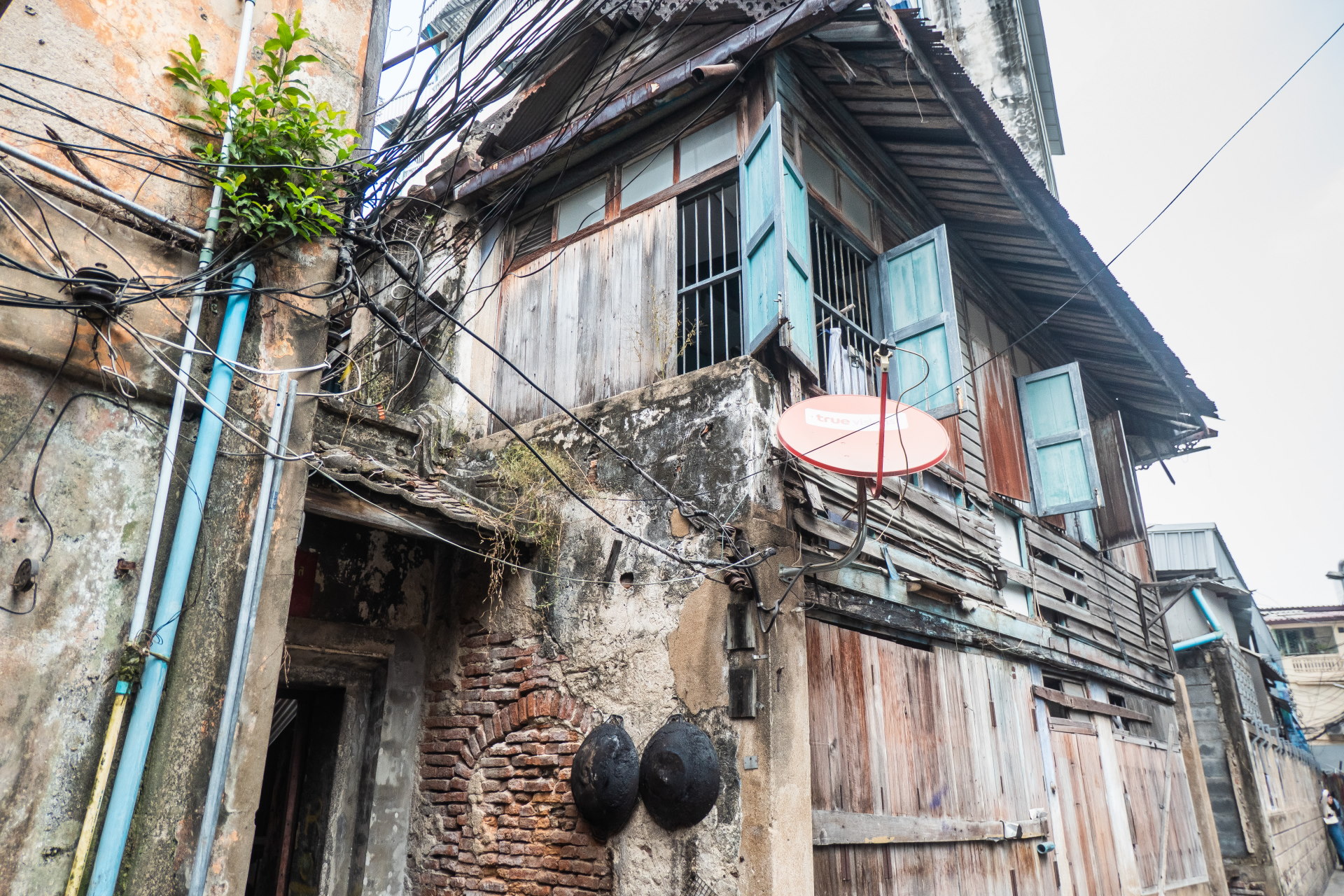

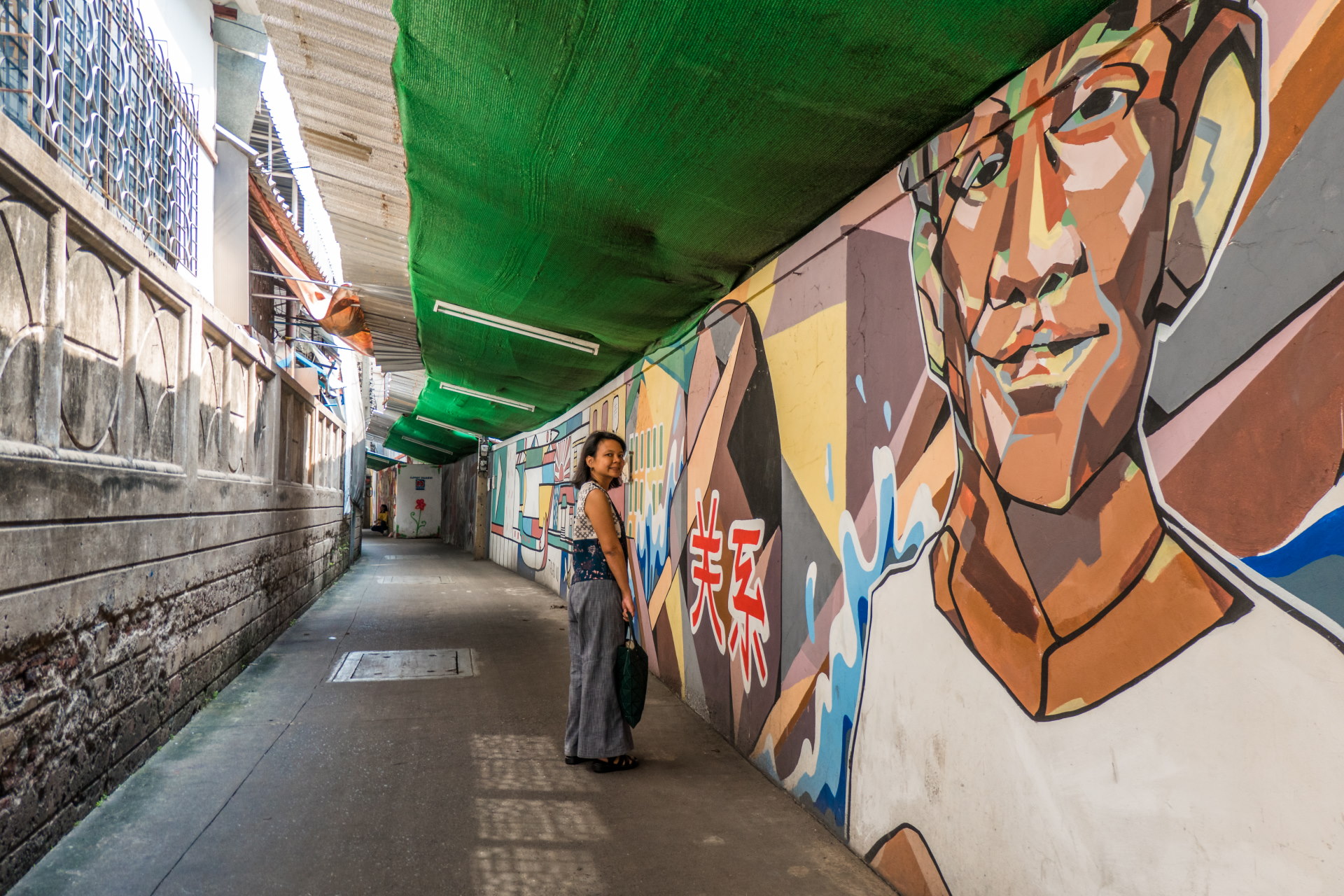
Don't be put off by the apparent mess just behind the entrance; it's part of the concept. Follow the signs upstairs, where the café is located. I particularly appreciate this kind of concept, which breathes new life into old houses that have been somewhat forgotten over time. Getting back to the street art, you'll see all styles, some rather childlike and others more elaborate and stylish.
The advantage of this street art is that it evolves, and therefore you could see new "paintings" compared to the few I'm showing you here in photos.
Another example of a trendy cafe, housed in an old Chinese house I had spotted a few years earlier when it was still abandoned, was the popular Patina. I say " was " because it has since become a cultural center.
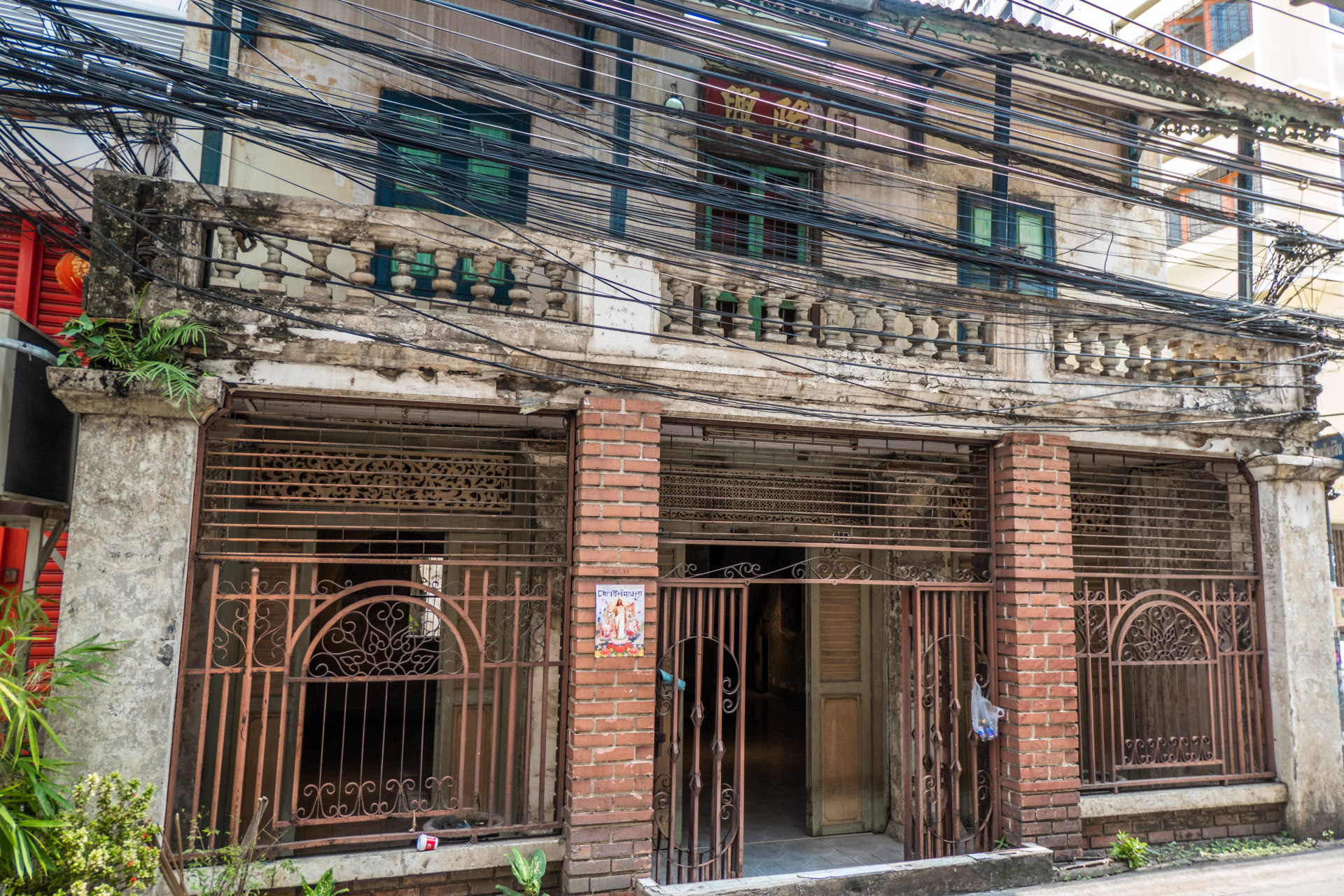
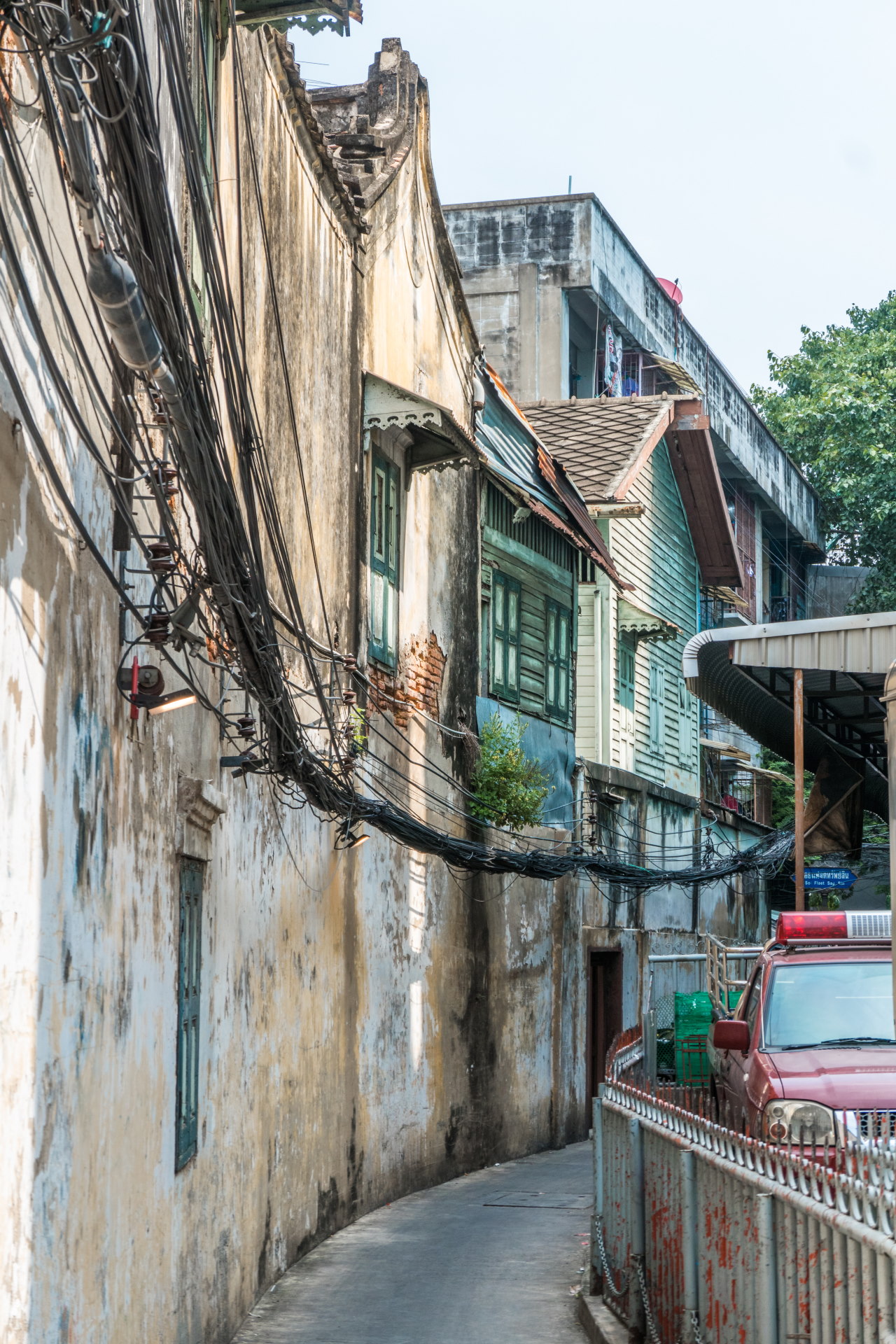
8- Holy Rosary Church
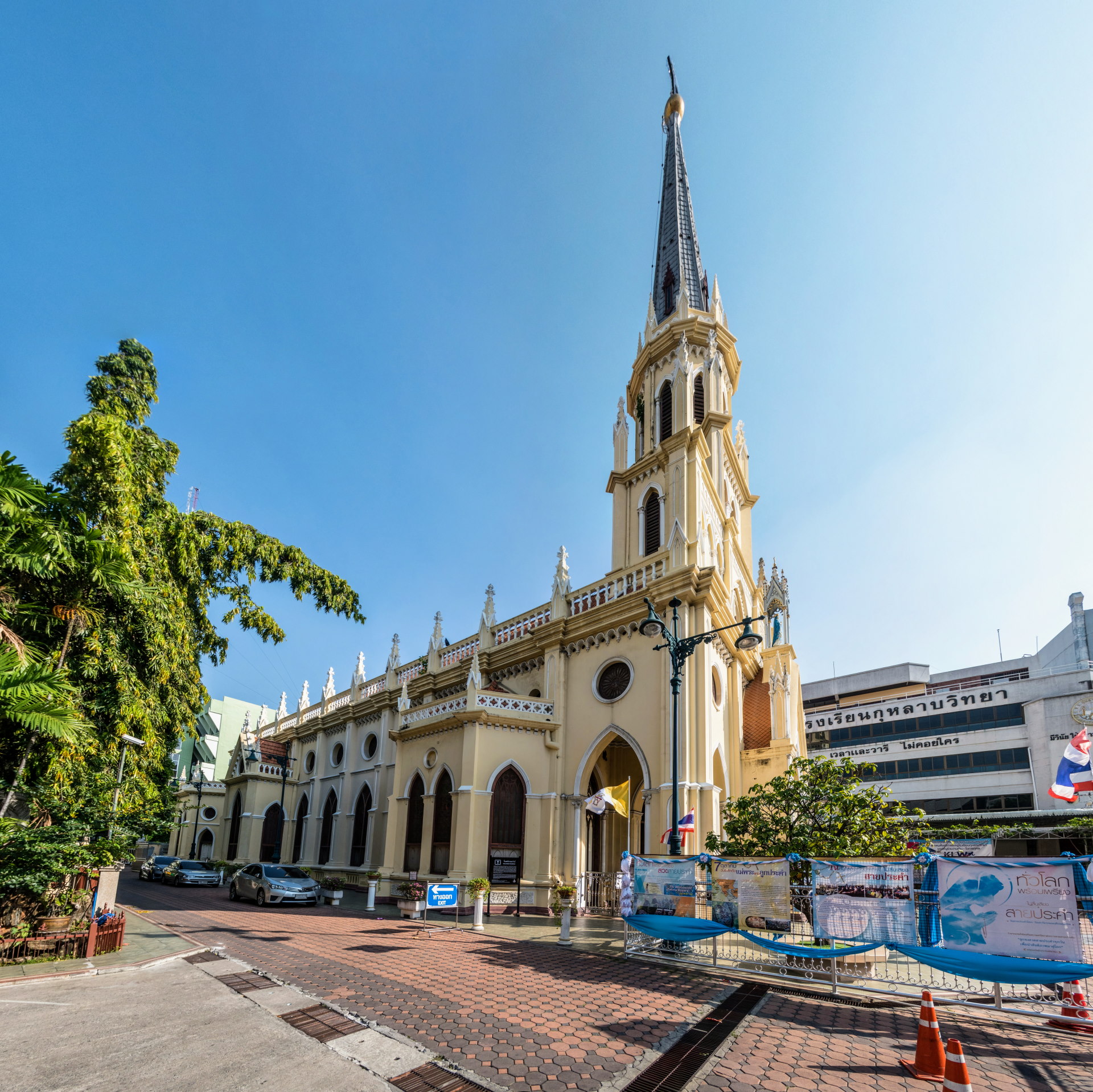
Once back on the small Soi Wanit 2, you have about a hundred meters left to reach the gate leading to the Holy Rosary Church , or in proper French: the Church of the Holy Rosary of Bangkok.
This is an integral part of a Catholic school, as it is located in the schoolyard, separated from the river by basketball and soccer fields, a location that seems so out of time to me today.
The first version of this religious building was established shortly after the fall of Ayutthaya, when a group of Portuguese settled here in the Talat Noi area. A first church, made of wood and on stilts, was built there around 1787.
As an aside, if there are two churches built under the aegis of the Portuguese (including Santa Cruz de Kudee Jin), it is because the missionaries were then led by a French priest from the French Mission.
However, a faction was apparently at odds with the latter and settled on the other side of the Chao Phraya River. Unfortunately, while they did have a church, they didn't have a resident priest, so they ended up celebrating Mass in Santa Cruz anyway…
It wasn't until 1822 that this damage was rectified. Subsequently, easily damaged over time, a second version, combining a stone base and wooden walls, was erected in its place in 1838.
By this time, the Portuguese community had already dispersed considerably, and most of the faithful were Chinese merchants. Having fallen into ruin by 1890, particularly following a fire in 1864 that destroyed the adjacent buildings, Father Desalles commissioned the construction of the current neo-Gothic building in 1891, which was consecrated in 1897.
The church is also known as Kalawar, a reference to the Portuguese term calvario, which refers to Mount Golgotha, or the Calvary of Jerusalem.
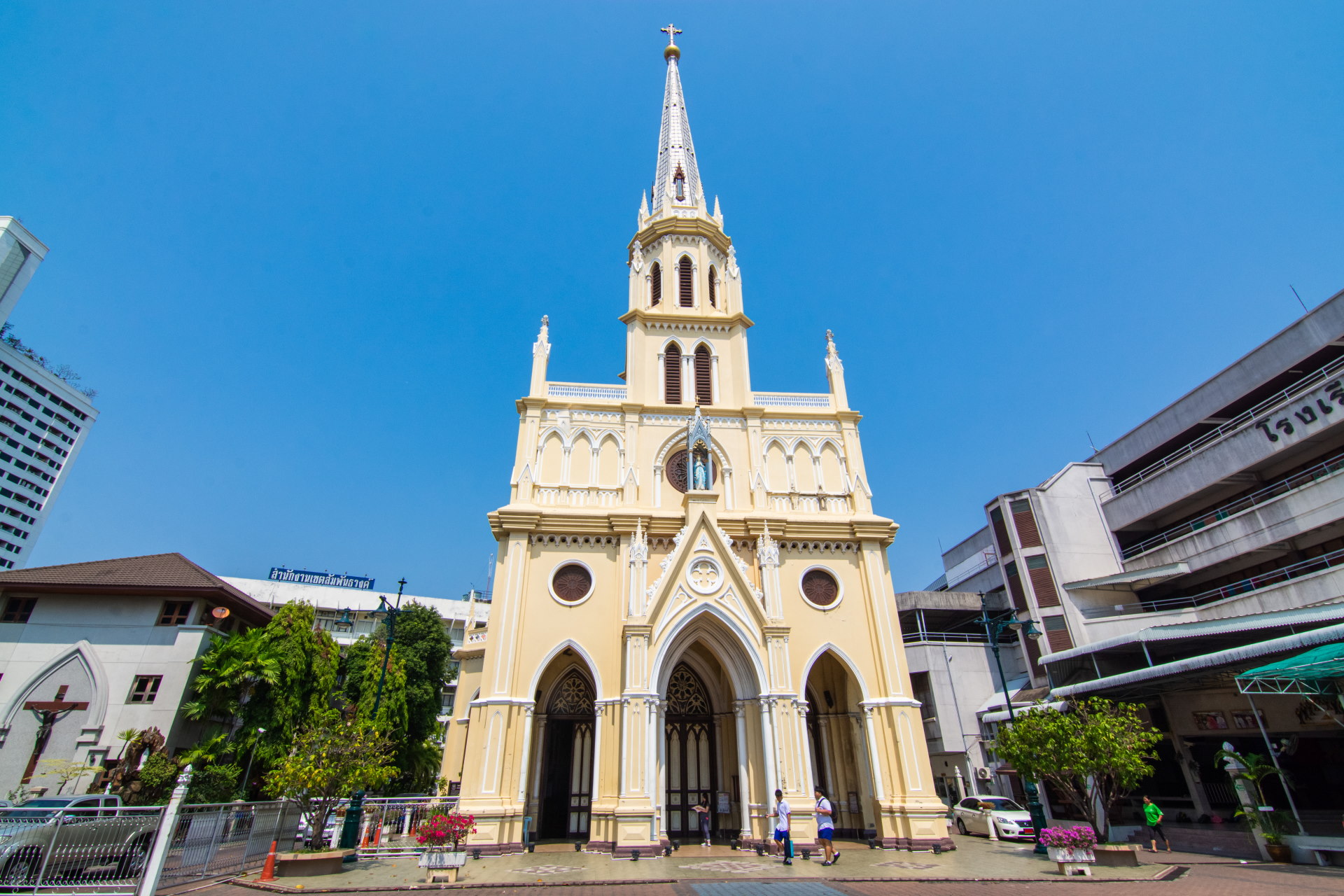
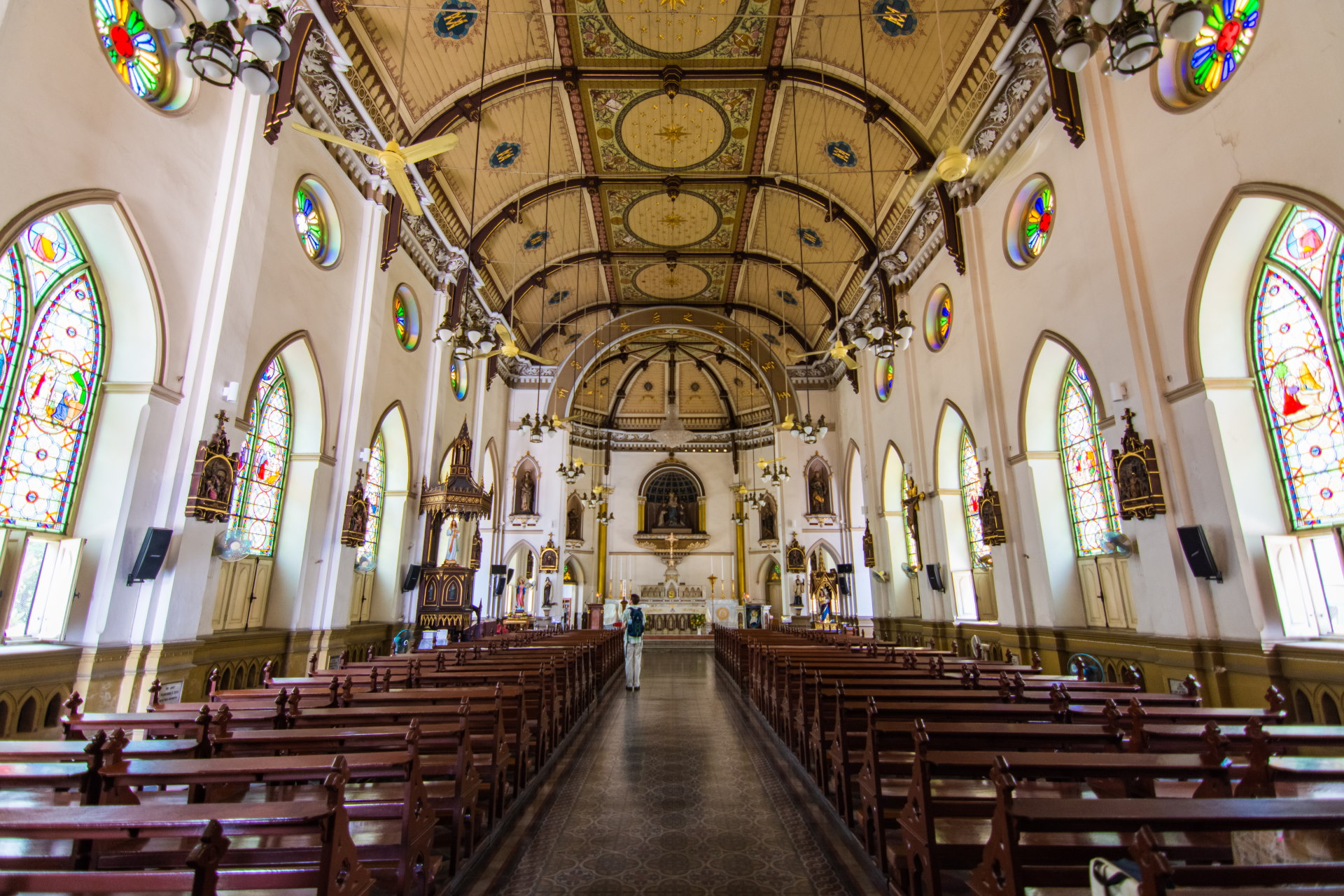
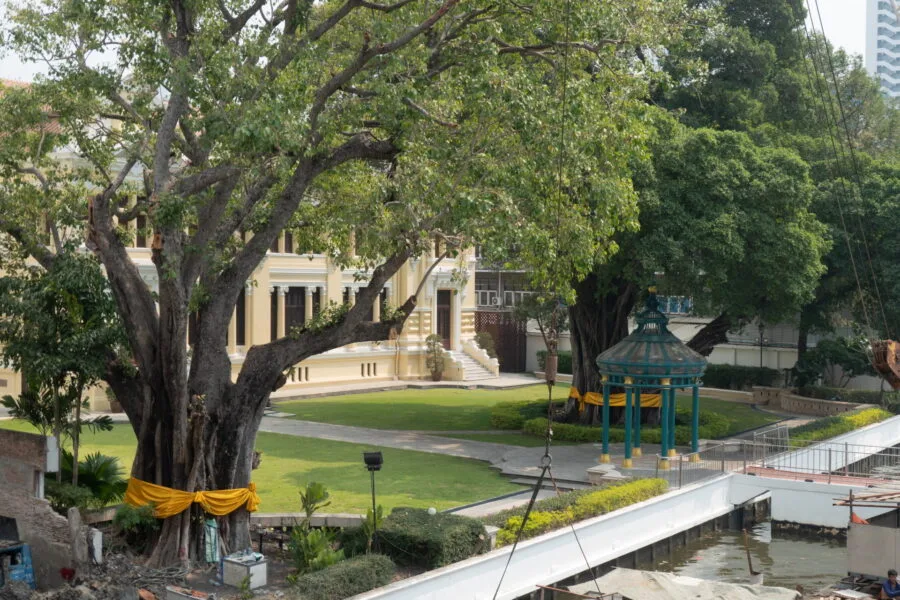
Next to it is another historic building belonging to the Siam Commercial Bank (which has also preserved several old houses in this style, scattered throughout the city), the first Thai bank.
The Talat Noi branch is the first and oldest bank branch in Thailand, as it is still in operation! Built in 1908 in a Beaux-Arts style that was very fashionable at the time, the building is the work of the Italian architect Annibale Rigotti.
The choice of this location is not insignificant and demonstrates how important Talat Noi once was as a vital hub. In addition to being a very active port area, it was also the residence of many Chinese businessmen who had established commercial operations around the Song Wat, Sampheng, and Yaowarat areas.
Surrounded by a beautiful lawn, on the riverbank, this bank is elegantly beautiful and enjoys a prime location. I only mention it briefly because I personally didn't know it was open to the public, but you can visit during the bank's normal opening hours.
9- Wat U Phai Rat Bamrung (Chùa Khánh Vân)
We finally arrive at the last visit, which remains the most optional. After the church, you can go to the Si Phraya pier, near River City, to take a boat back, or continue on foot along Charoen Krung to the Saphan Taksin BTS station.
If you make a loop by returning towards the Hua Lamphong MRT, then you can go to Wat U Phai Rat Bamrung , passing back through Charoen Krung but in the opposite direction as if returning to Wat Traimit.
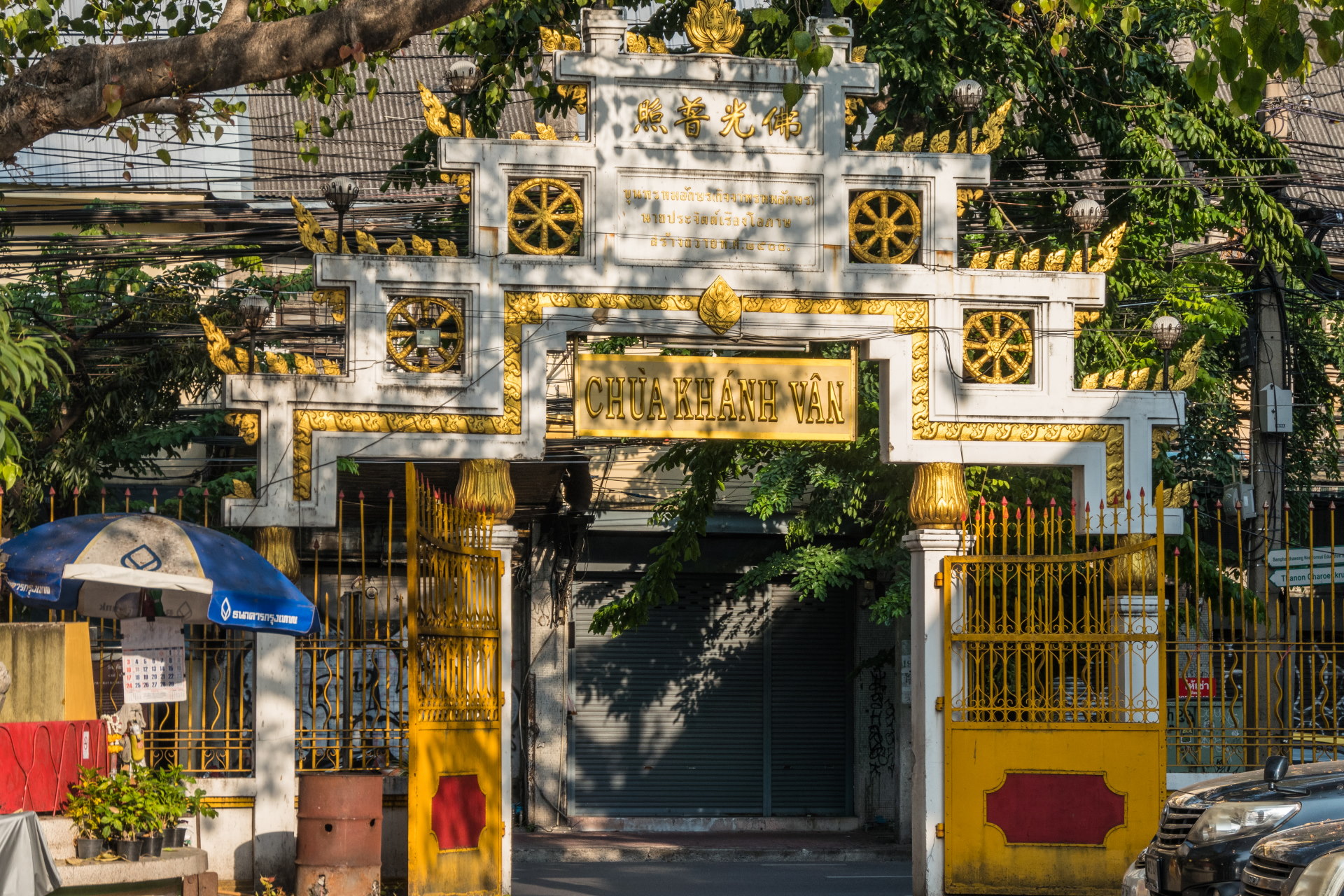
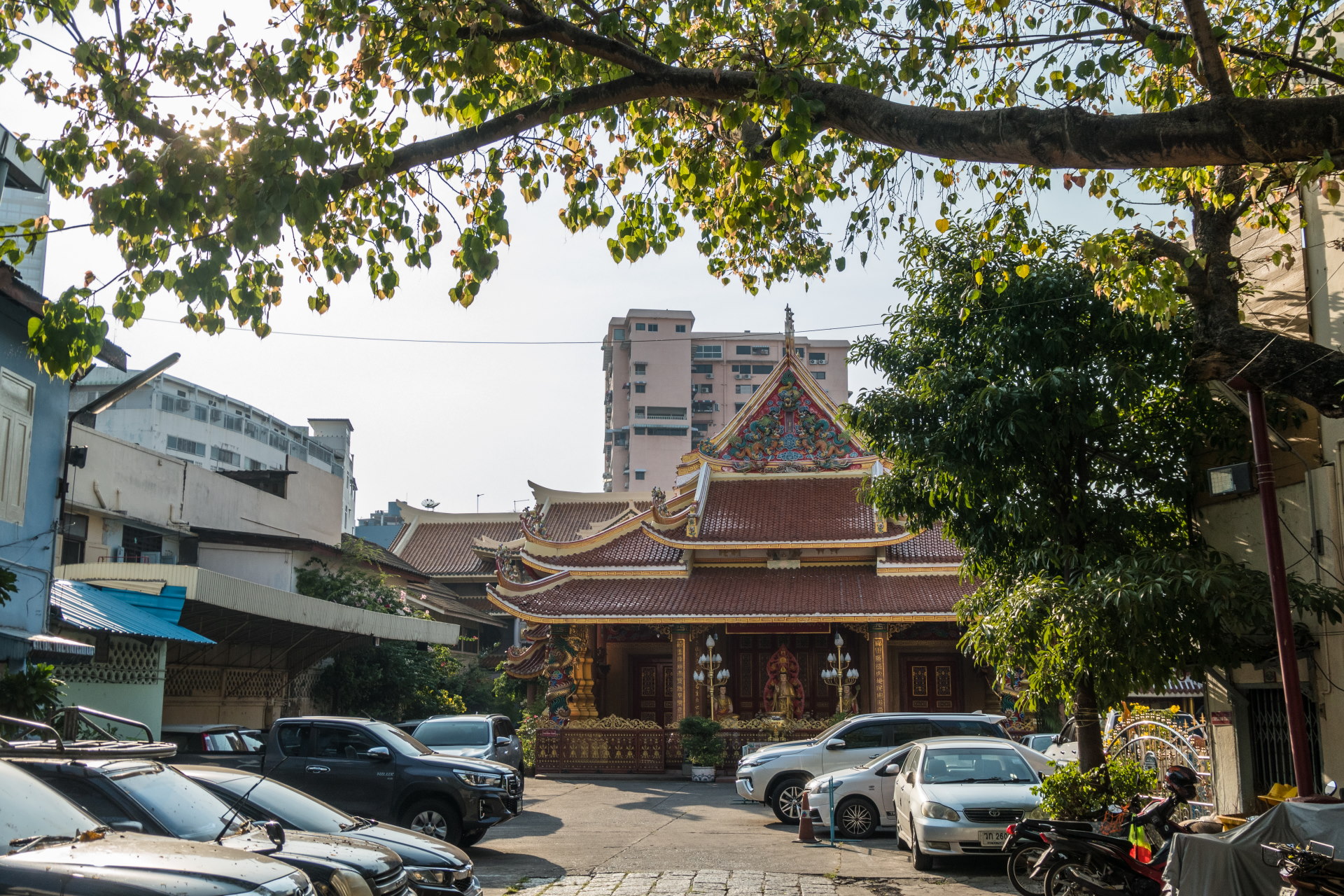
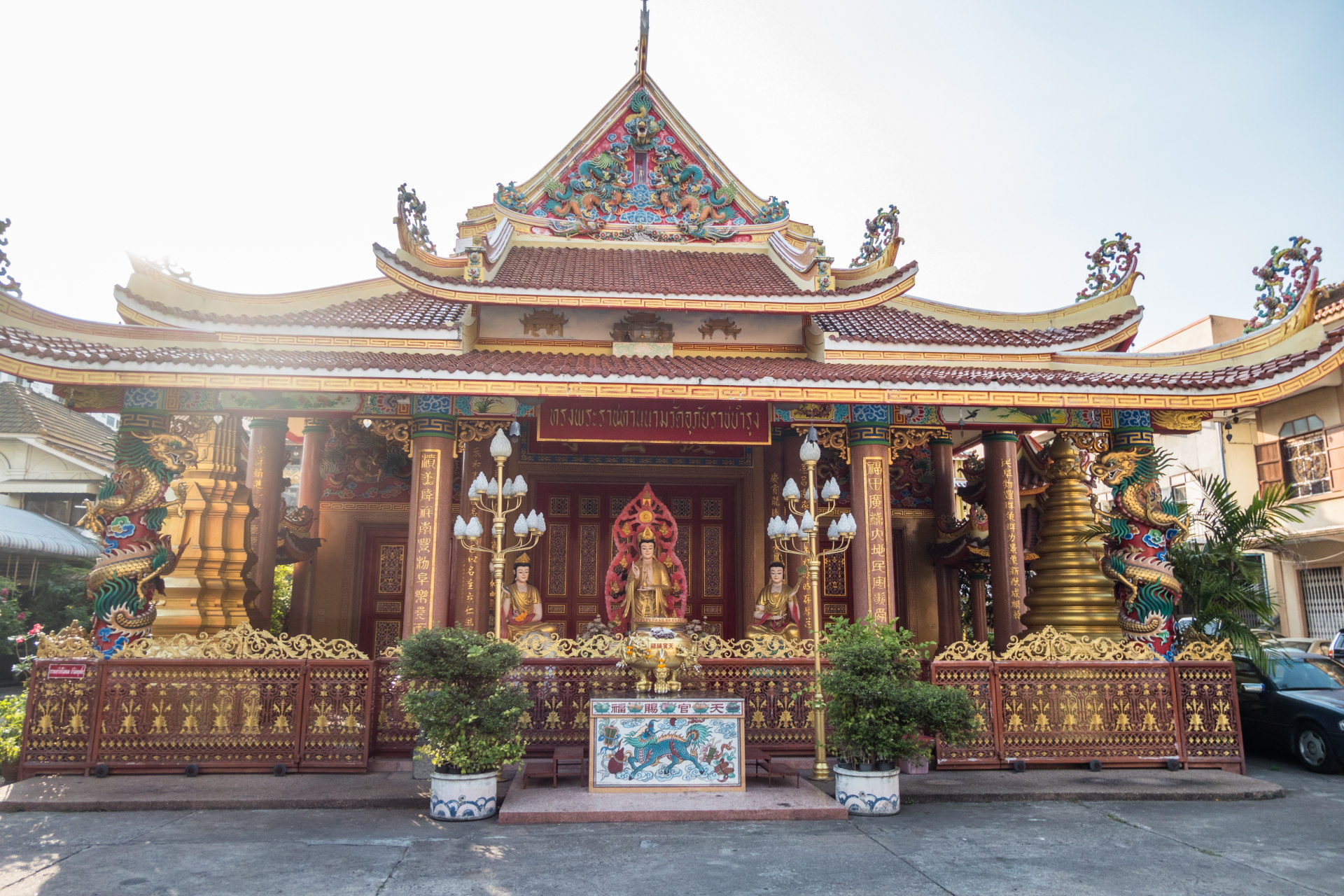
The Chùa Khánh Vân is one of the earliest Vietnamese temples in Thailand, built in the late 18th century. Several kings of the Chakri dynasty maintained close ties with the Vietnamese community, supporting each other during several regional conflicts in Indochina.
This is how the temple received royal patronage from Rama IV onwards, and then by his successor, Rama V, who also donated the Bodhi tree which can be admired next to the entrance gate.
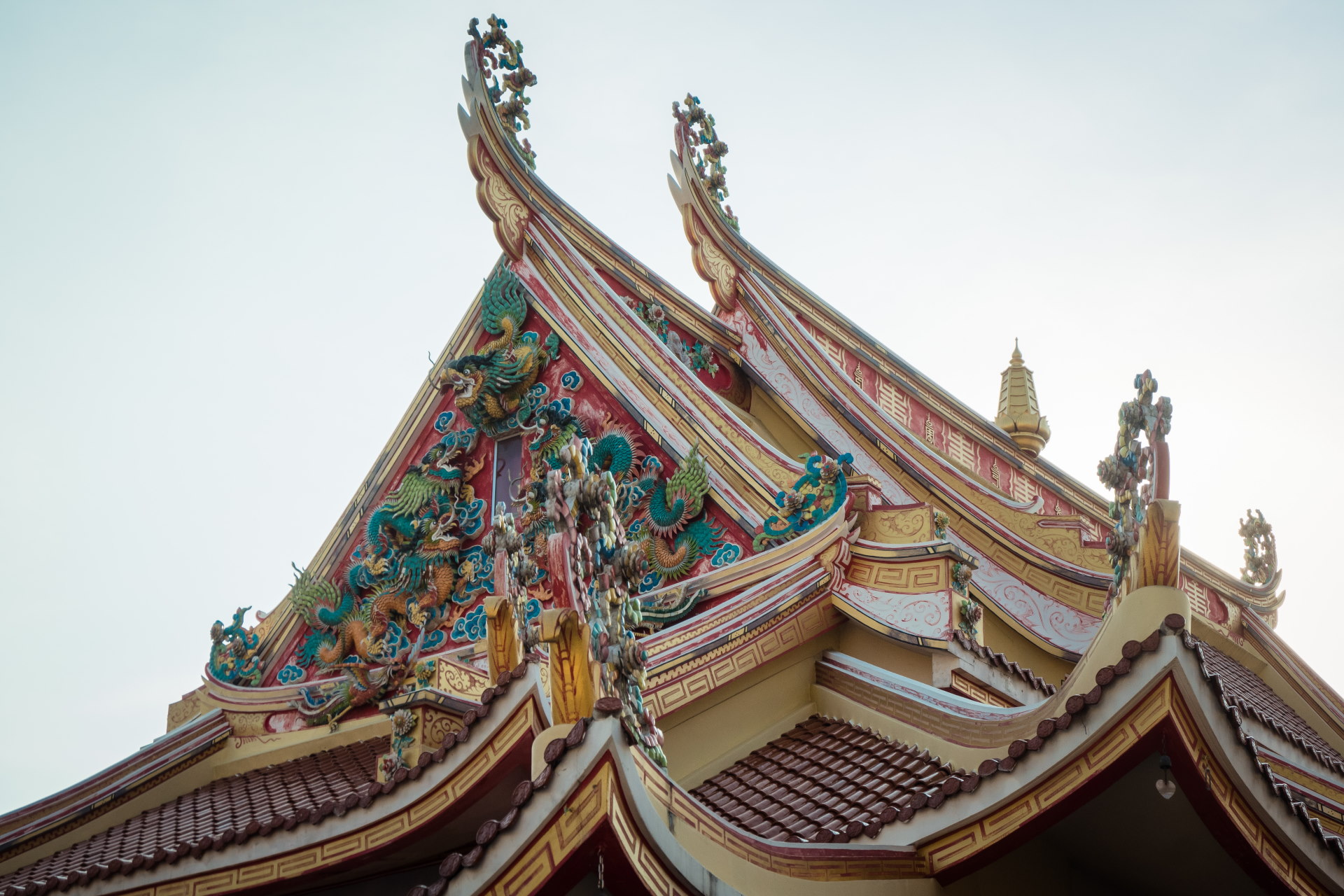
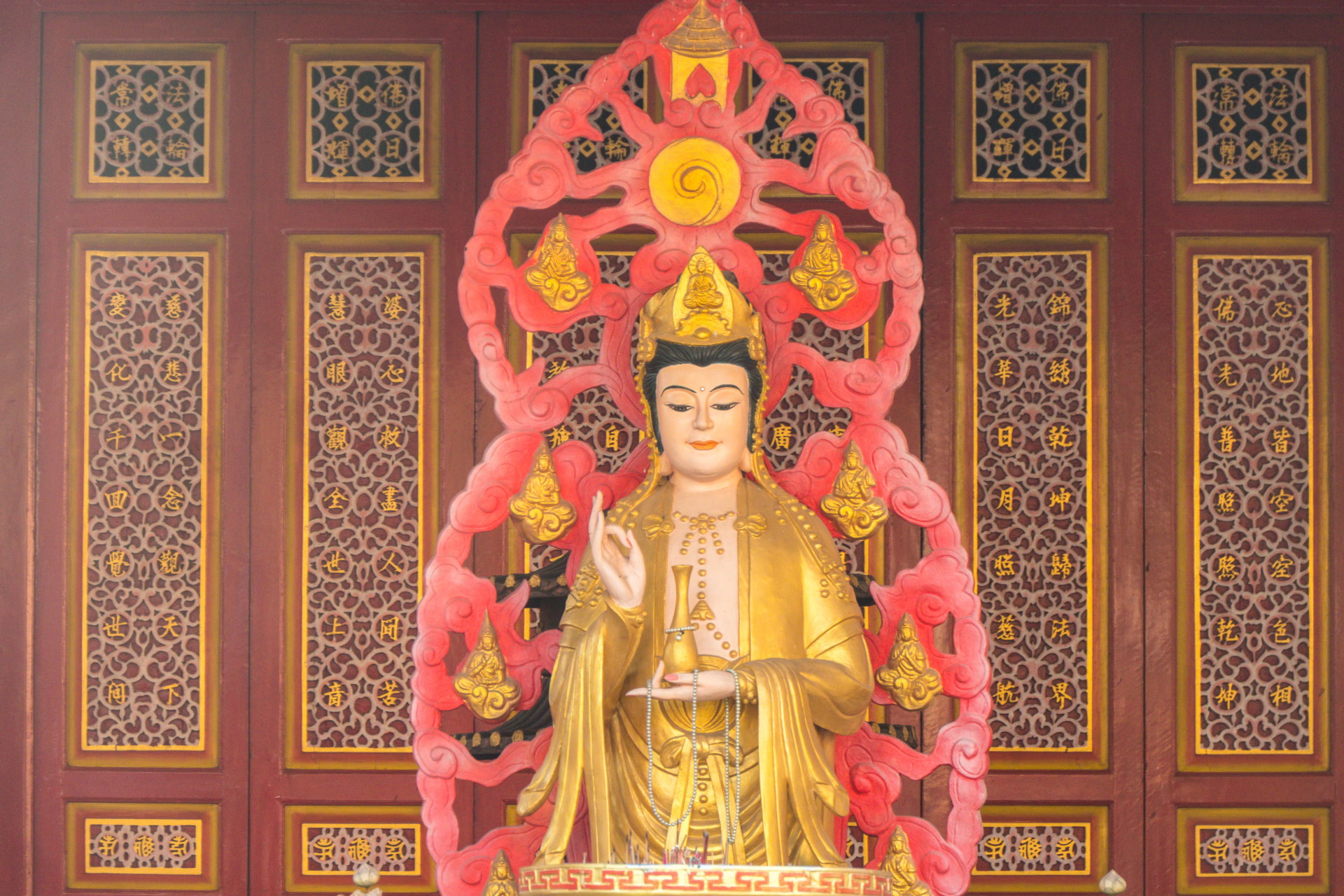
The temple is well worth a look, because while it is usually quite common to come across Chinese sanctuaries, it is rarer to see Vietnamese ones. In terms of architecture, it is a mix between that of Thai temples for the form, and the shimmering colors of a Chinese temple precisely, a rather atypical combination.
Practical information for visiting Talat Noi
Getting to Talat Noi
As with any visit to Bangkok, it's recommended to start early to avoid the potentially stifling afternoon heat and to allow ample time to explore the area, which could take longer than expected. Plan at least half a day for a leisurely visit, with breaks for rest and refreshments. While the suggested itinerary covers the main points of interest, don't hesitate to venture into the smaller side streets, which are brimming with interesting scenes of daily life.
Map of the walk in Talat Noi
Where to stay near Talat Noi?
For visiting Talat Noi, the Chao Phraya River area is probably one of the most pleasant places to stay. You're close to Chinatown, the alleyways of Talat Noi, the piers, and several sites accessible by boat. It's also where you'll find some of Bangkok's finest hotels.
For sleeping in the alleys of Talat Noi, the Photohostel & Photocafe , mentioned above, also offers rooms in a renovated old Chinese house. I tried the café, but not the accommodation.
→ If you are still unsure which area is best for your stay, I have detailed the different options in my guide to choosing where to stay in Bangkok.
