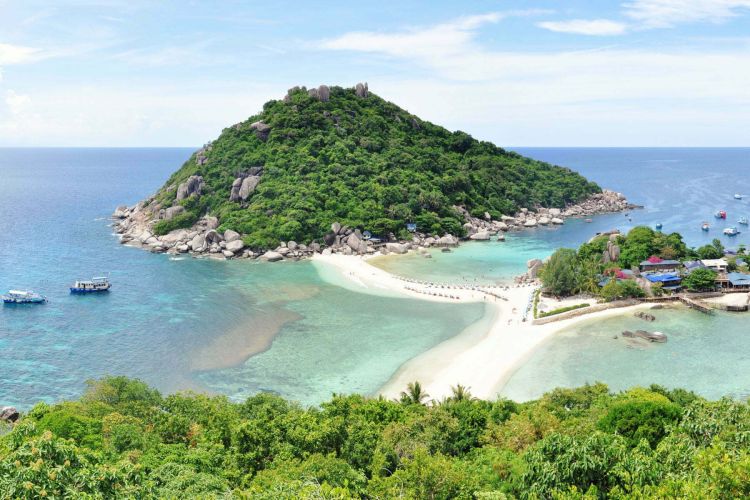
Located approximately 70 km south of Prachuap Khiri Khan, Ban Krut is a small town situated along the Gulf of Thailand. From Bangkok, it is nearly 360 km to reach this long beach, which is mainly frequented by Thai visitors.
We find ourselves in the middle of this narrow coastal strip that runs down the Gulf of Thailand before reaching the tourist regions in the south of the country. It goes without saying that few international travelers take the time to linger in this area.
Ban Krut is a perfect destination for relaxation, thanks to its authentic local atmosphere and the small roads that wind through coconut groves. As for sightseeing, the must-see is Khao Thong Chai, the hill overlooking the coastline with its various religious buildings.
Why go to Ban Krut?
We often hear travellers ask this kind of question: " But where to go in Thailand to find authentic places, untouched by international tourism? " Well, due to its somewhat secluded location, Ban Krut is one of those places.
The small seaside resort has grown by finding its audience among Thais eager to escape the daily grind for a weekend or a few holidays.
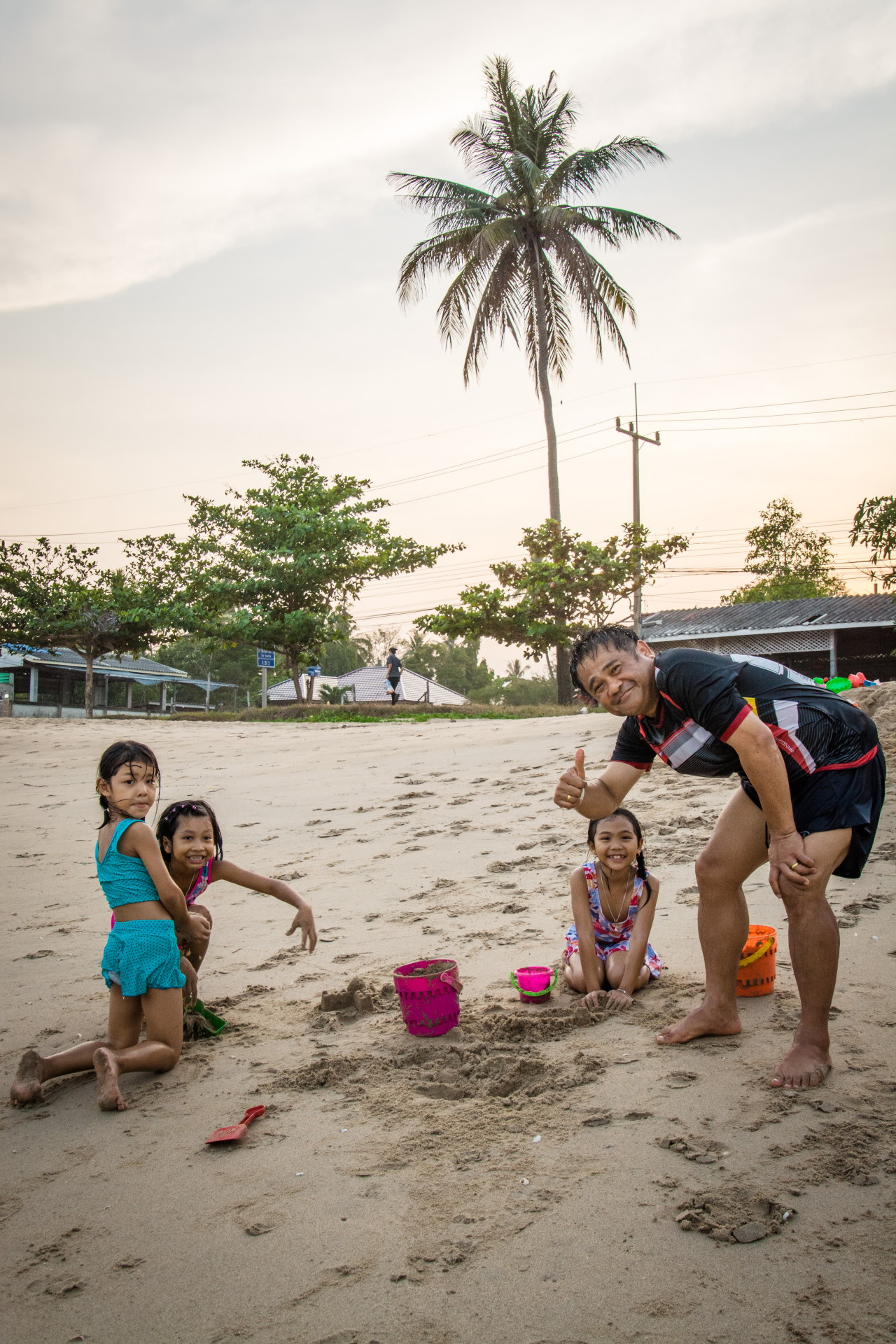
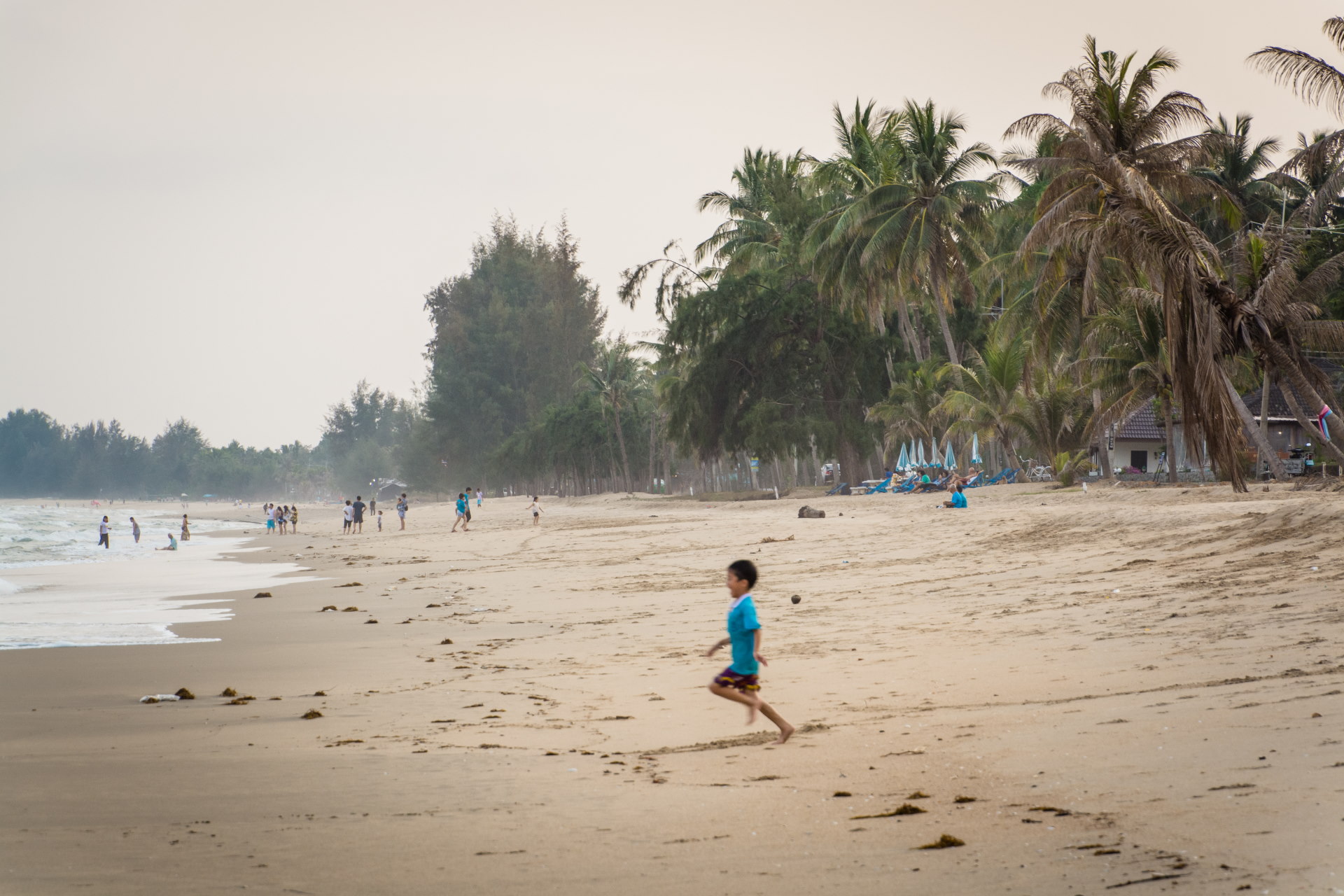
In practical terms, you will find several resorts bordering the beach, with restaurants to go with them, but the atmosphere remains family-oriented and much calmer than in the better-known destinations closer to Bangkok, such as Hua Hin or, further north, Cha-am, especially during the week.
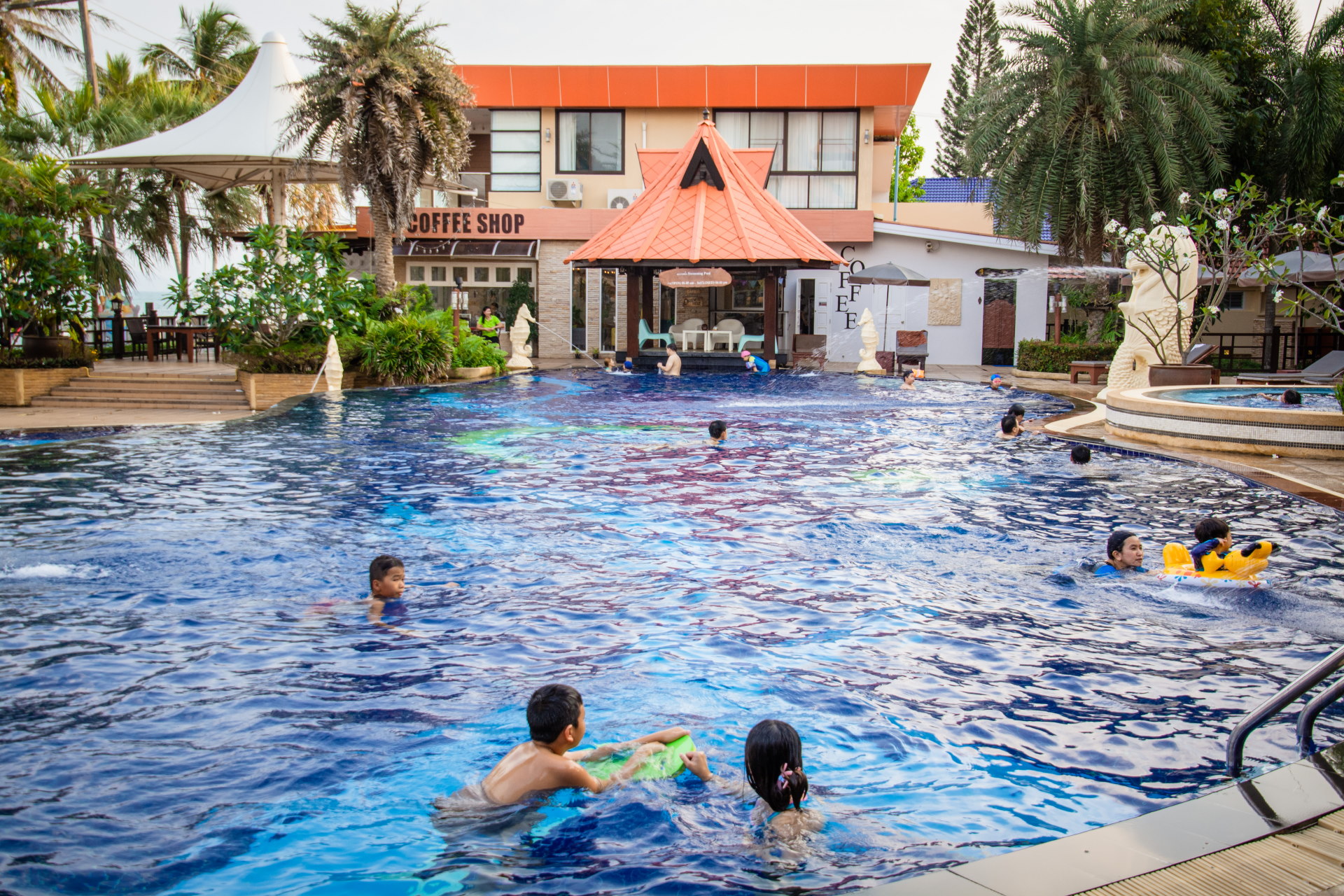
People come to Ban Krut mainly to slow down: to walk on the beach, to cycle along the coast or between the coconut trees, to enjoy the pool at their hotel or to quietly visit the few attractions in the area.
That was precisely why my wife had suggested Ban Krut for our first stay, a weekend getaway, proof that at the time (it was a while ago), it was already a popular destination for Thais. We went there specifically to relax by the sea, even though it's a five-hour drive from Bangkok.
In hindsight, I would advise stopping there rather than making a detour or coming specifically for this destination, as it remains somewhat "isolated". On our second visit, Ban Krut served as a stopover on our way back from a family visit in the south of the country (Jitima is originally from Nakhon Si Thammarat , as a reminder).
Bang Saphan or Ban Krut: do we really have to choose?
When you research the region, you'll likely come across these two names. And to be honest, the answer would be: no need to choose… because the second is contained within the first…
In Thailand, a common source of confusion arises from the mixing of names for localities, cities, and provinces, as well as districts and sub-districts. For example, Hua Hin is a city in the province of Prachuap Khiri Khan (which is also full of attractions like the famous Sam Roi Yot National Park ).
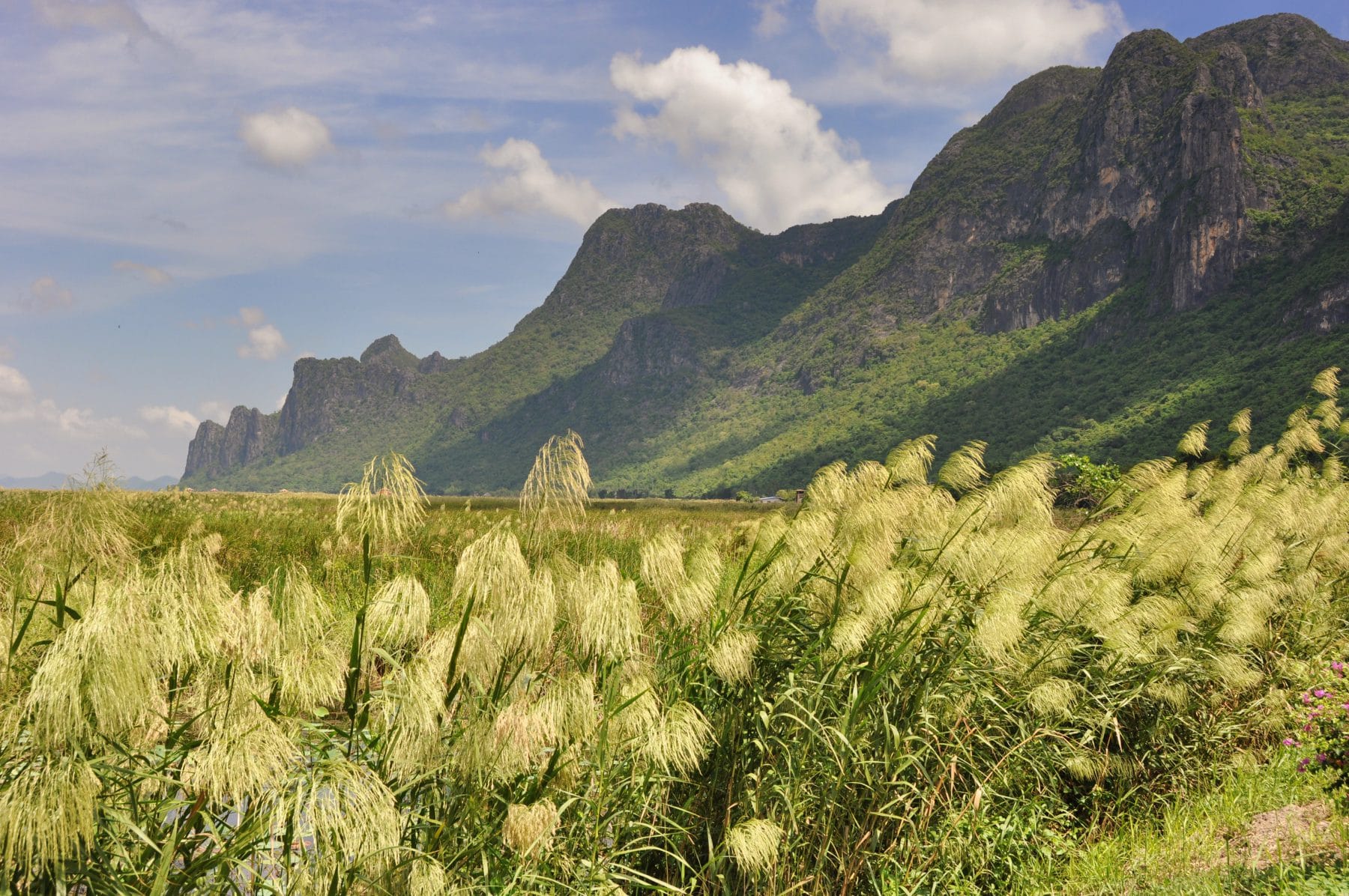
In this case, thinking only about the city of Prachuap Khiri Khan can lead to underestimating the distances between the different attractions, which are spread throughout the province and not necessarily around the city itself.
And here, Ban Krut is a locality, which gives its name to the beach, located in a larger district: Bang Saphan.
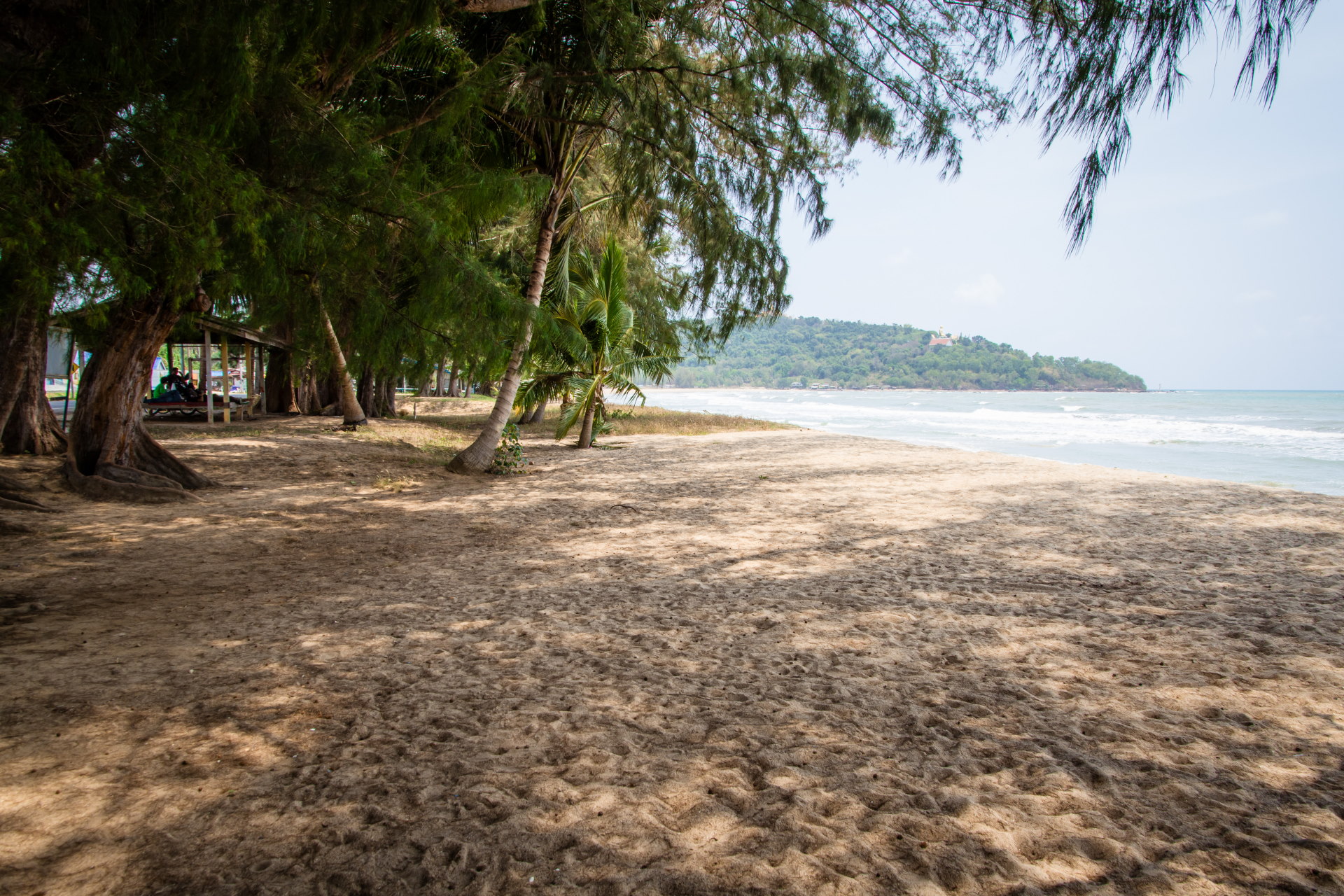
Another peculiarity regarding place names: it's common in Thailand to find different spellings for the same location. Ban Krut is the spelling I prefer. This name refers to both the town and the beach located nearby, shown as "Baan Krood Beach" on Google Maps.
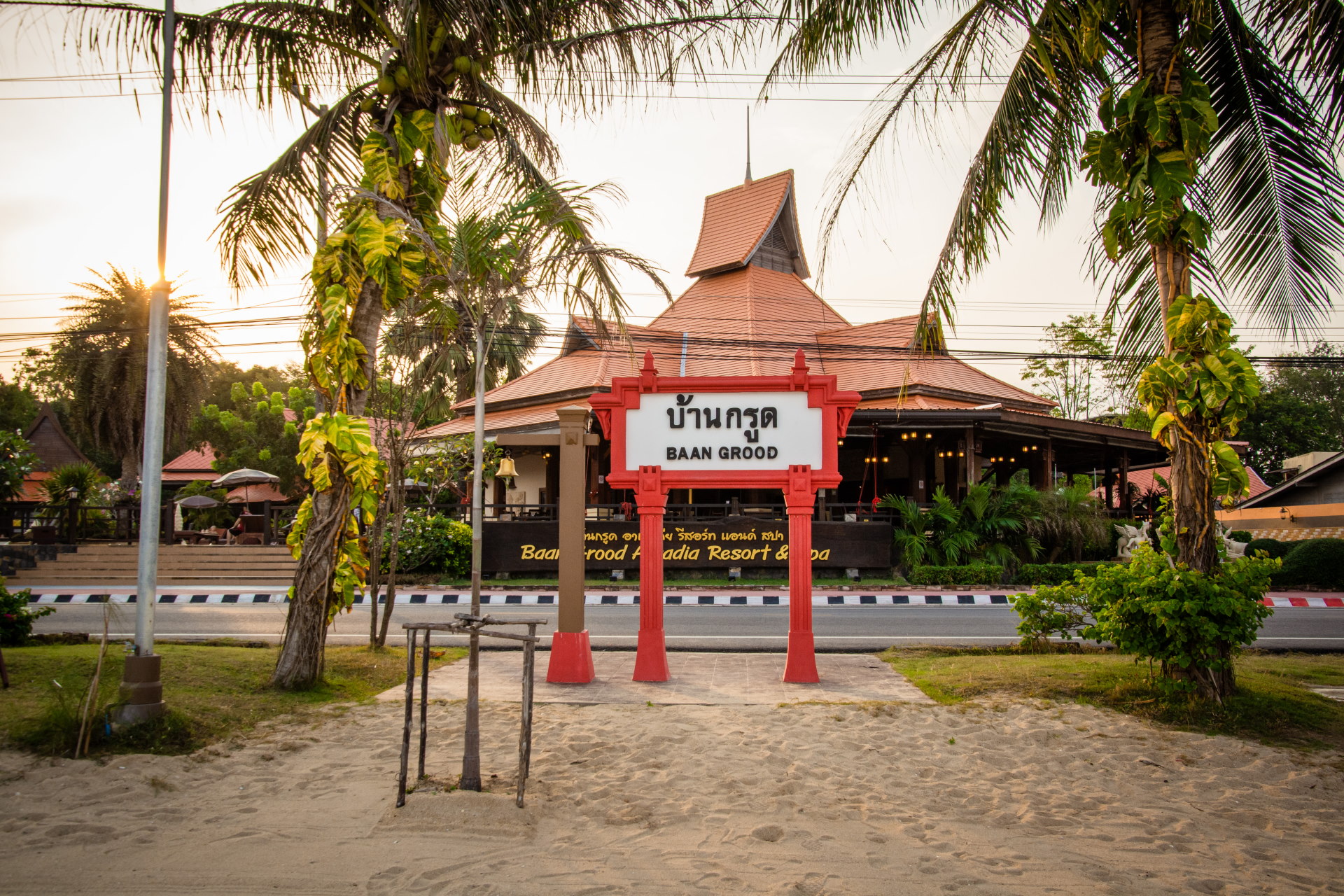
But you can also read Baan Krood, Baan Grood, as in our hotel, or, more rarely, Ban Kroot. For someone unfamiliar with Thai pronunciations, these different transcriptions in the Latin alphabet don't always make the connection obvious: Ban Krut and Baan Grood wouldn't necessarily jump out as referring to the same place.
What to do in Ban Krut
Ban Krut is part of a coastal area which is divided into several parts: Sai Kaew Beach at the foot of Thong Chai Hill, Ban Krut Beach in its continuation, then Don Samran, which forms a more distinct portion and occupies the entire south of this large bay.
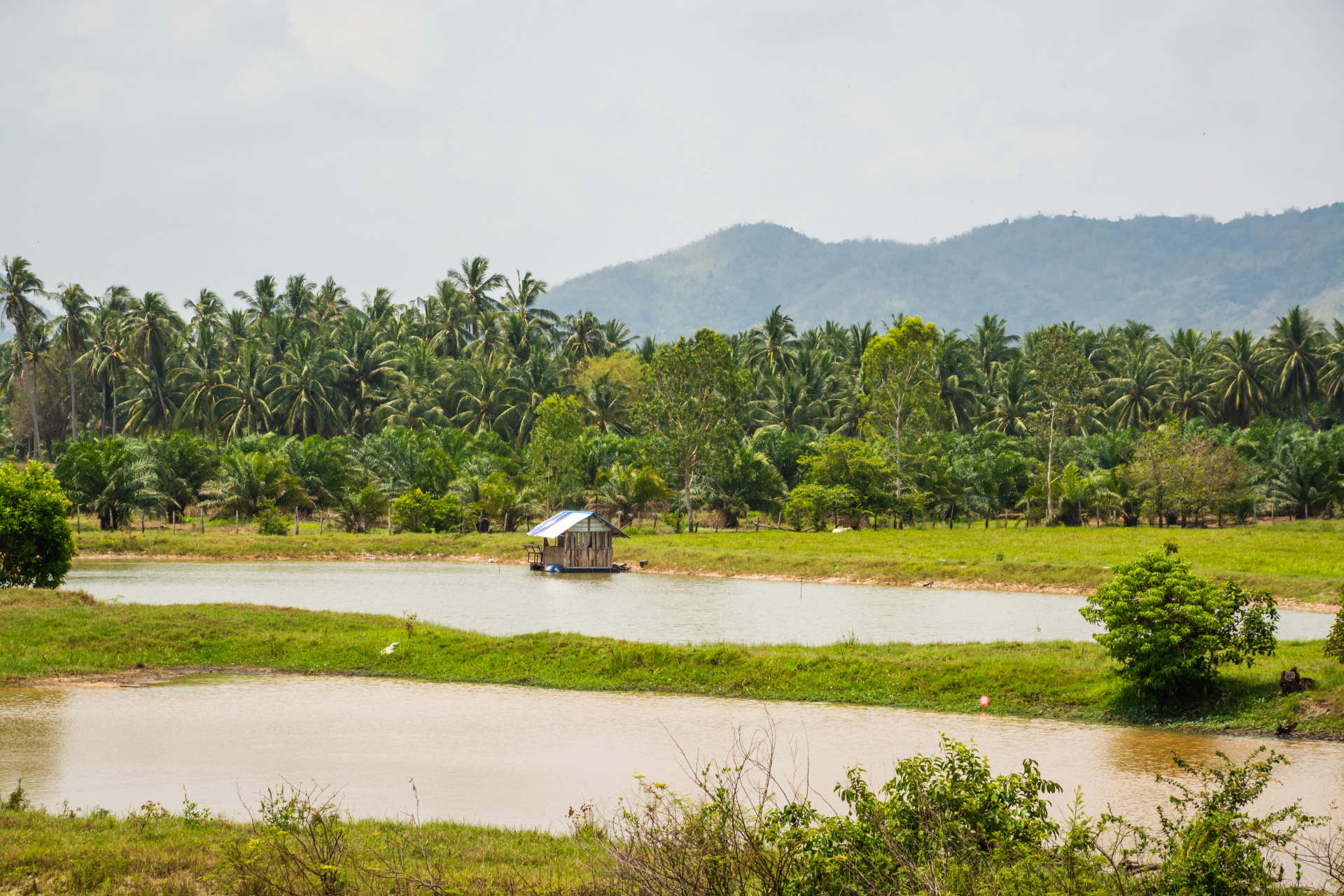
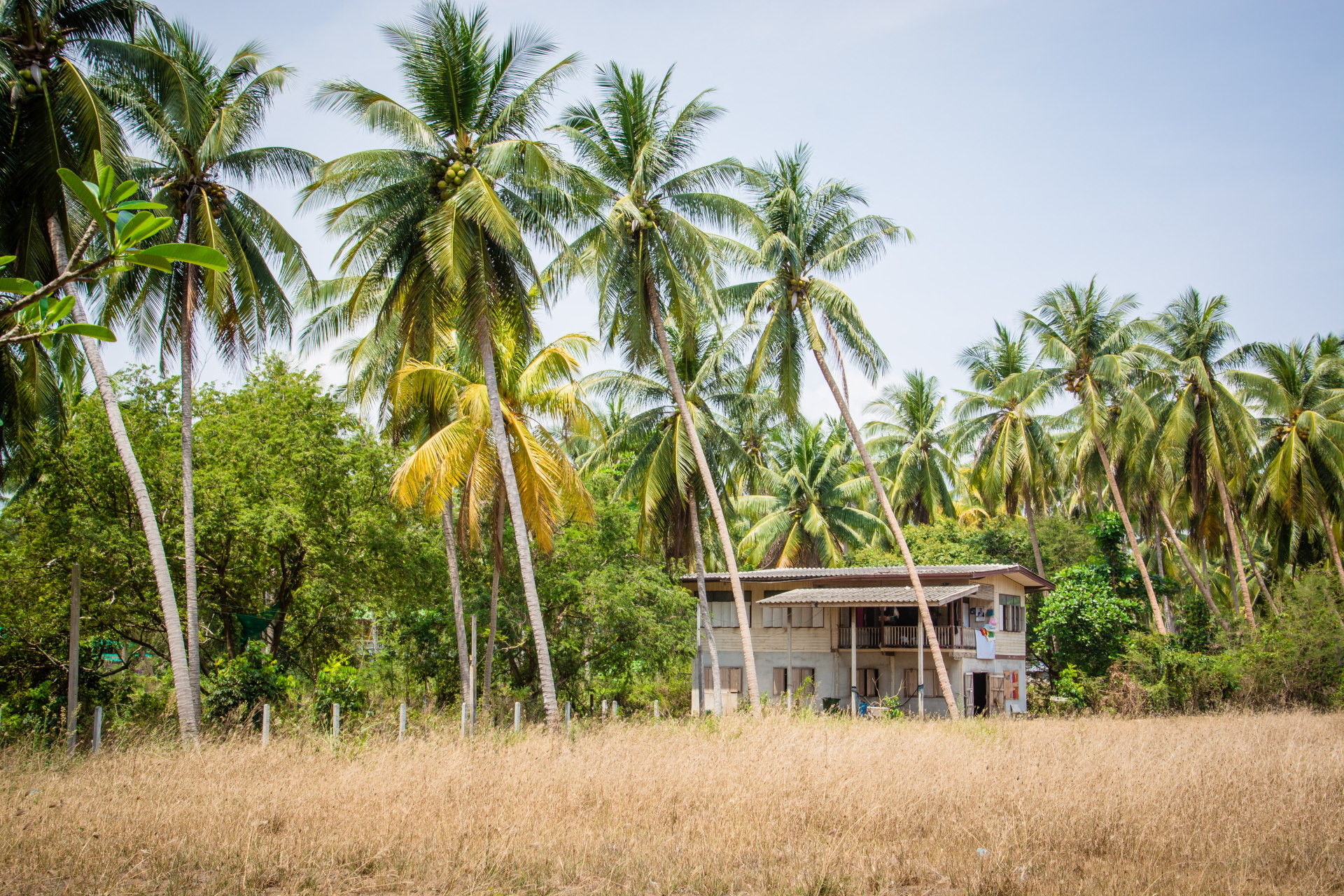
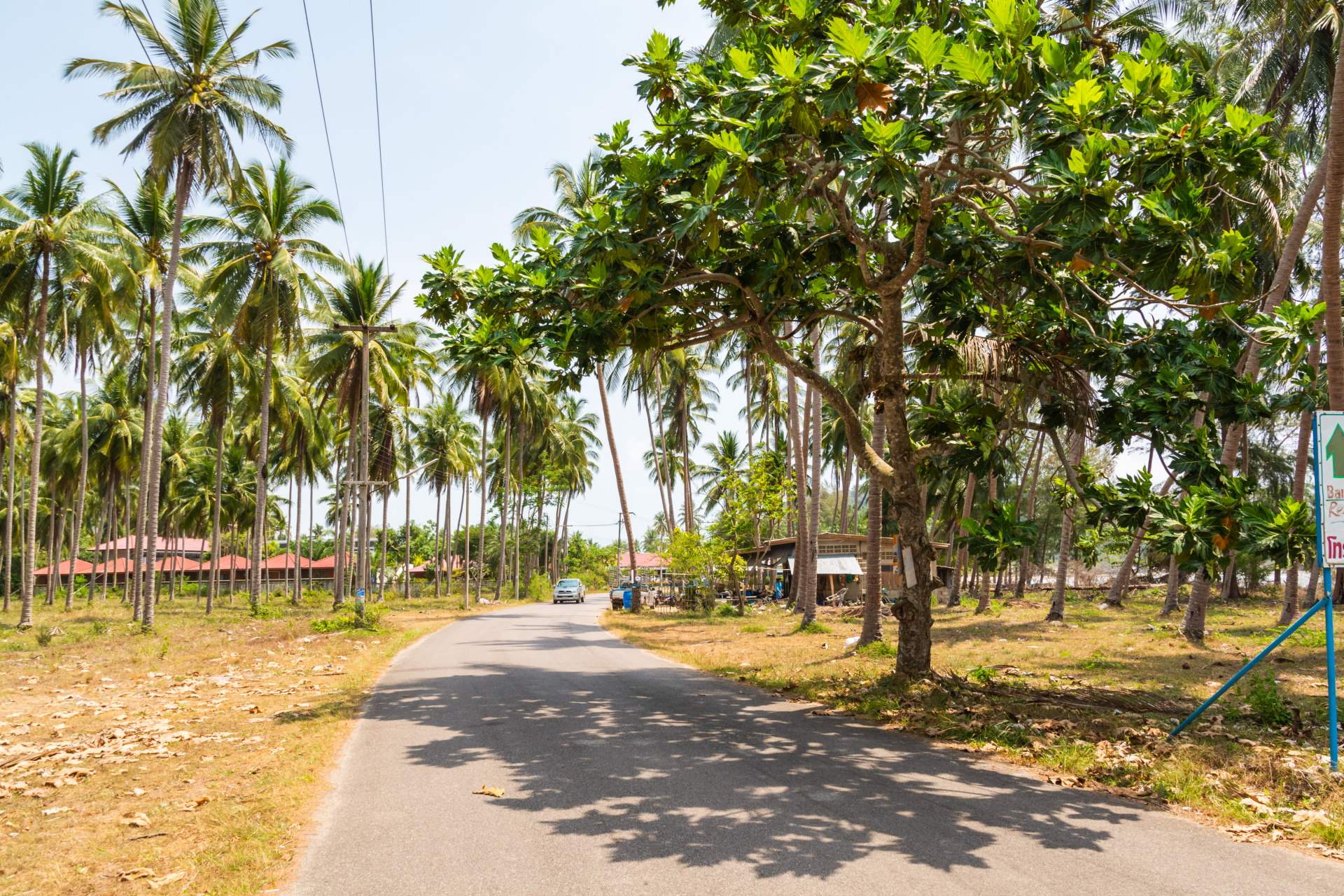
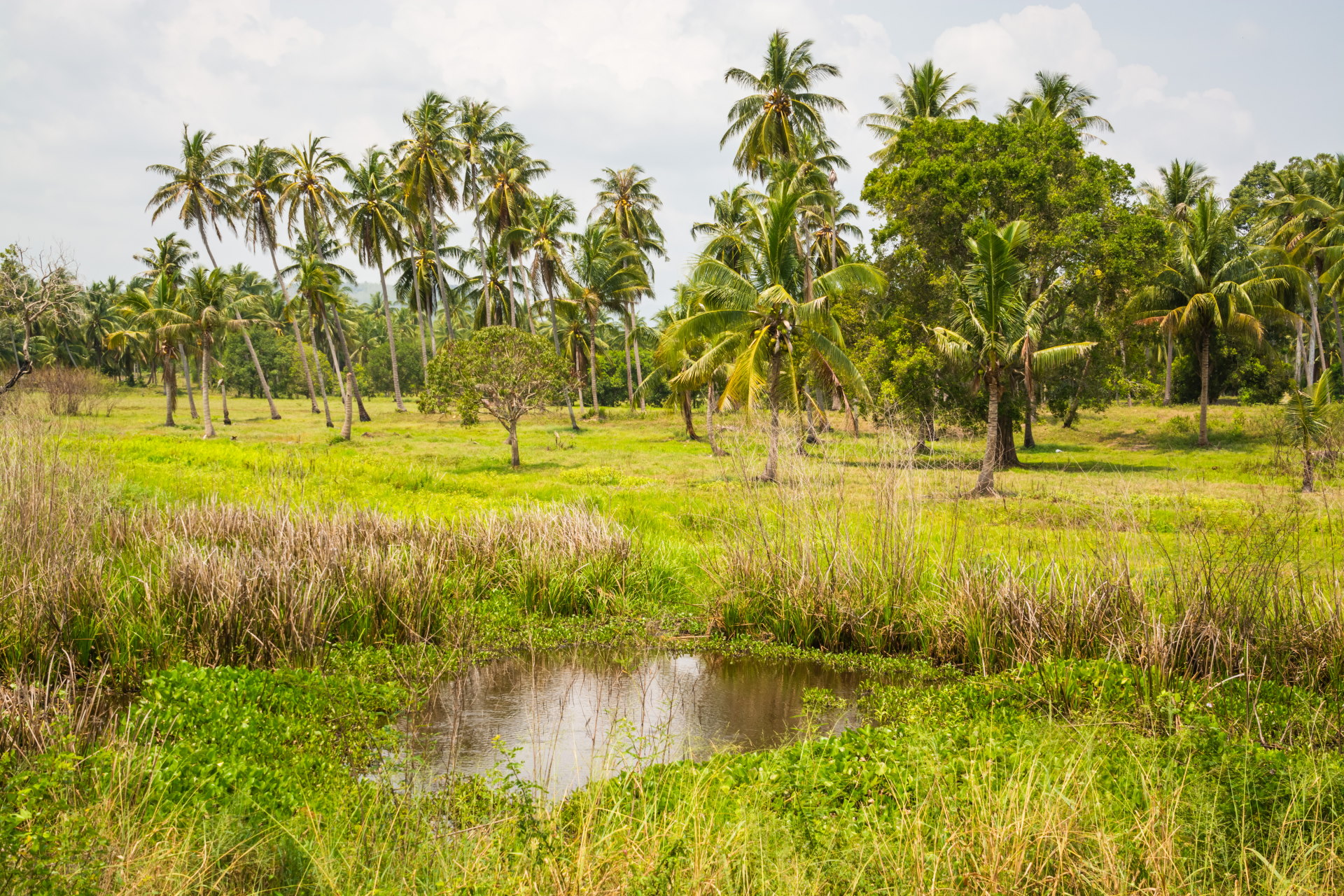
Apart from the beach, it is possible to take the roads located away from the coastline, which cross the countryside and the coconut groves of the surrounding area.
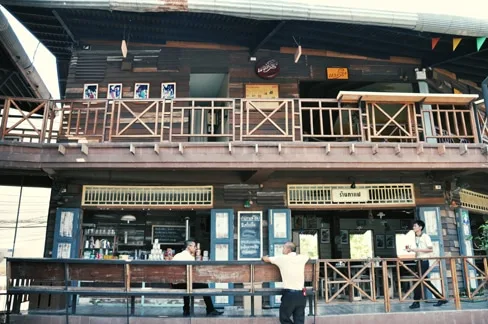
You can also take a trip to the village of Ban Krut. It consists largely of a main road running alongside the train station, but its morning market and wooden houses are nonetheless quite interesting.
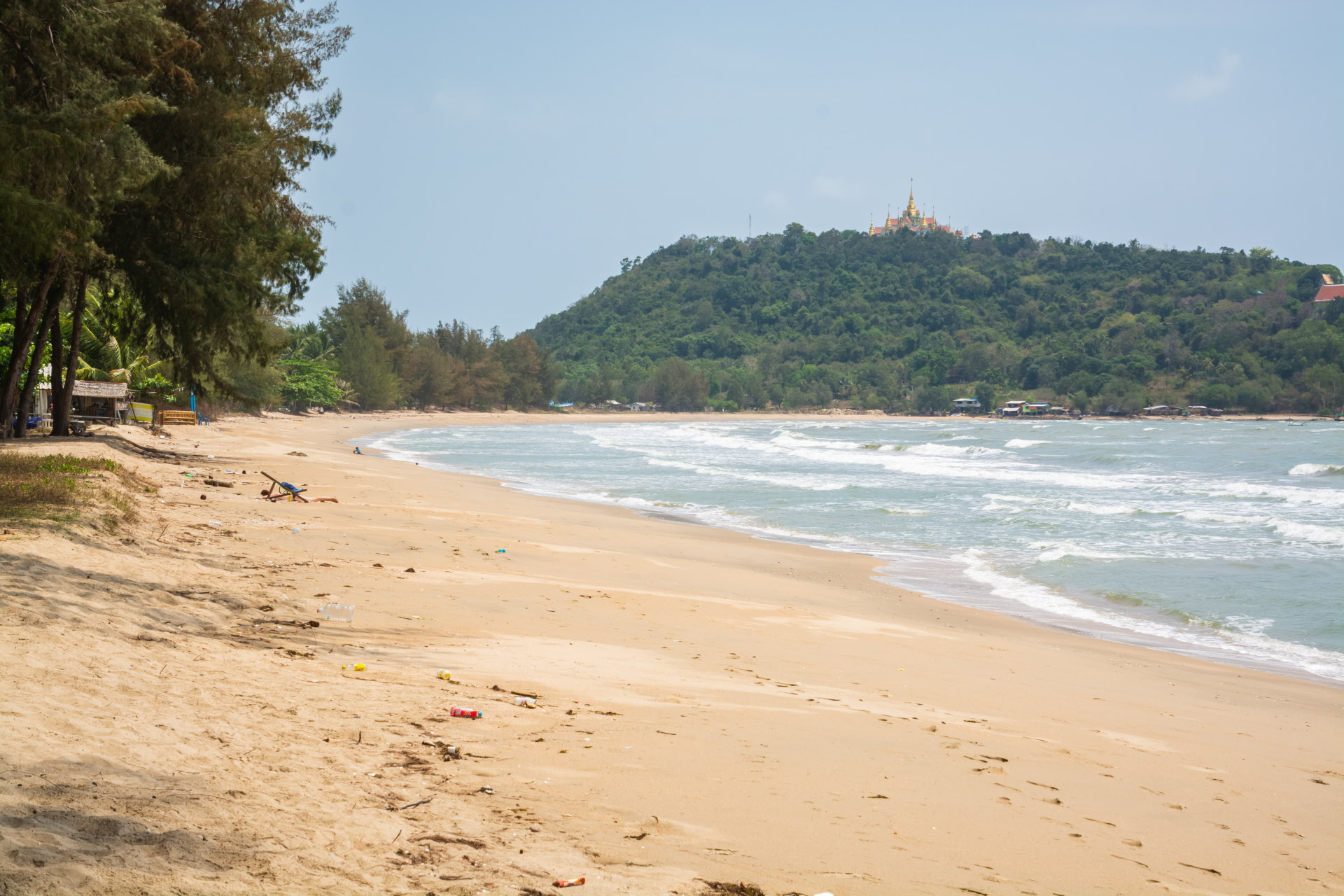
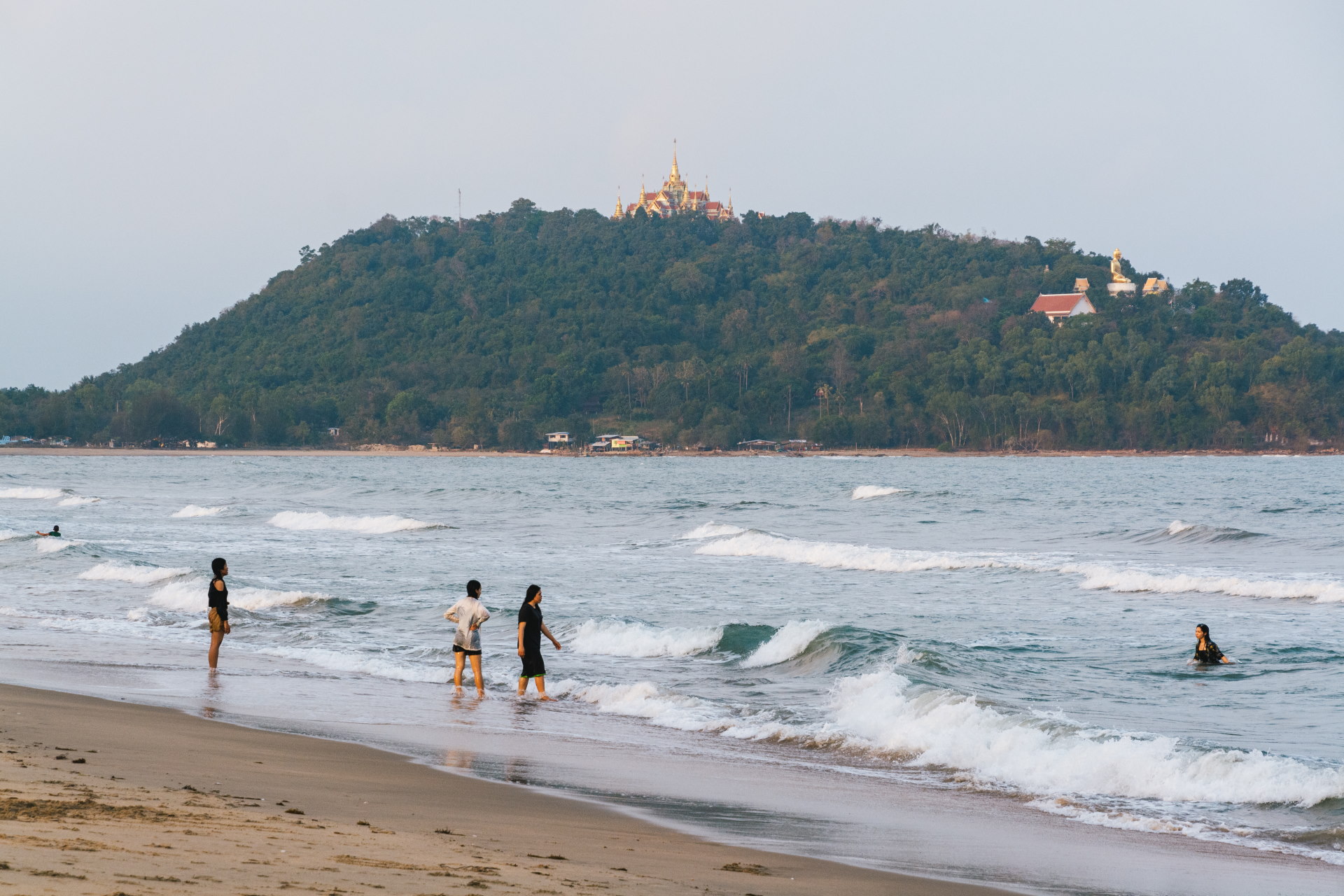
Finally, in the far north, Khao Thong Chai forms the main hill of Ban Krut. The hill separates different sections of the coastline and contains several buildings, often grouped under the single name of Wat Thang Sai.
Enjoy the beach
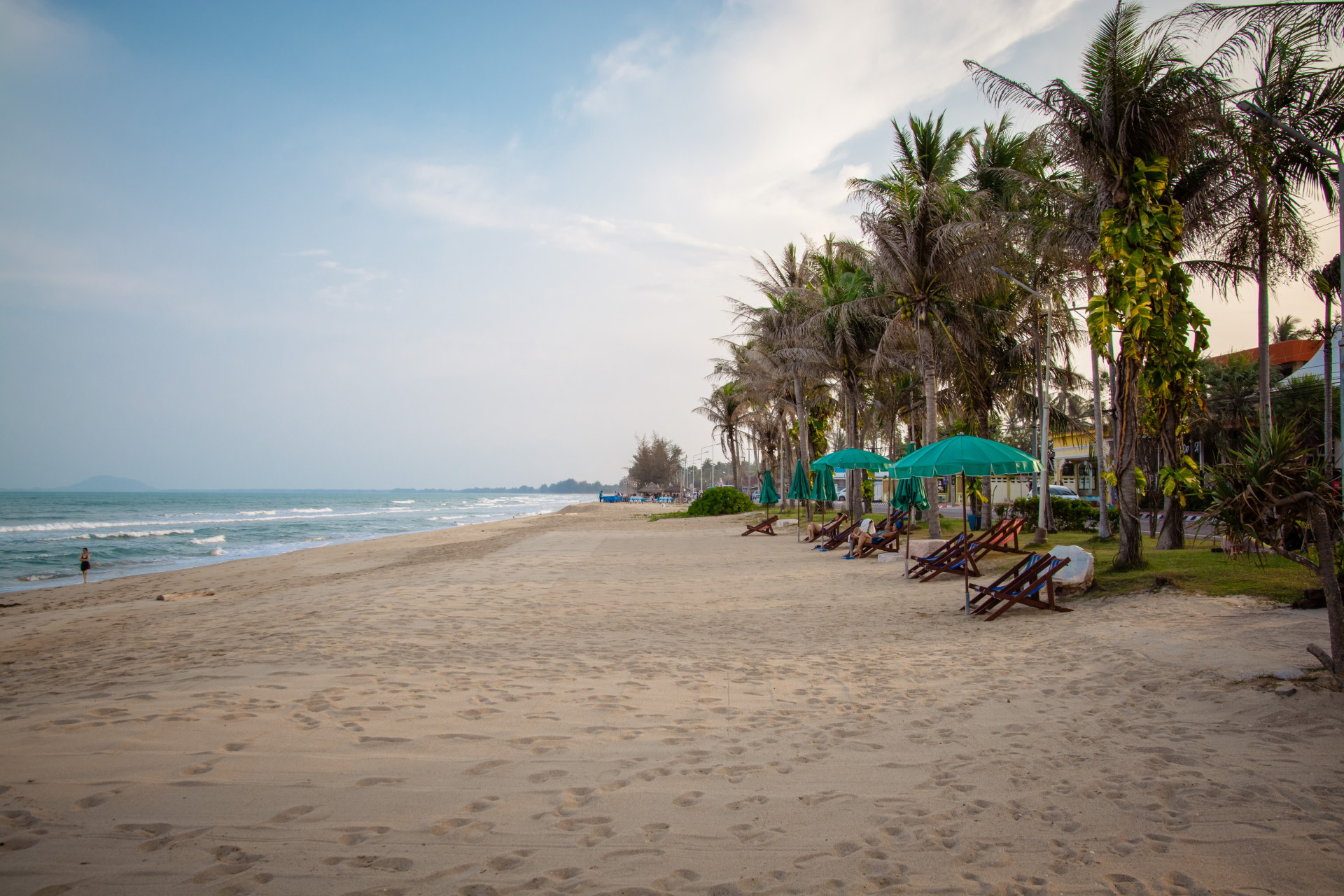
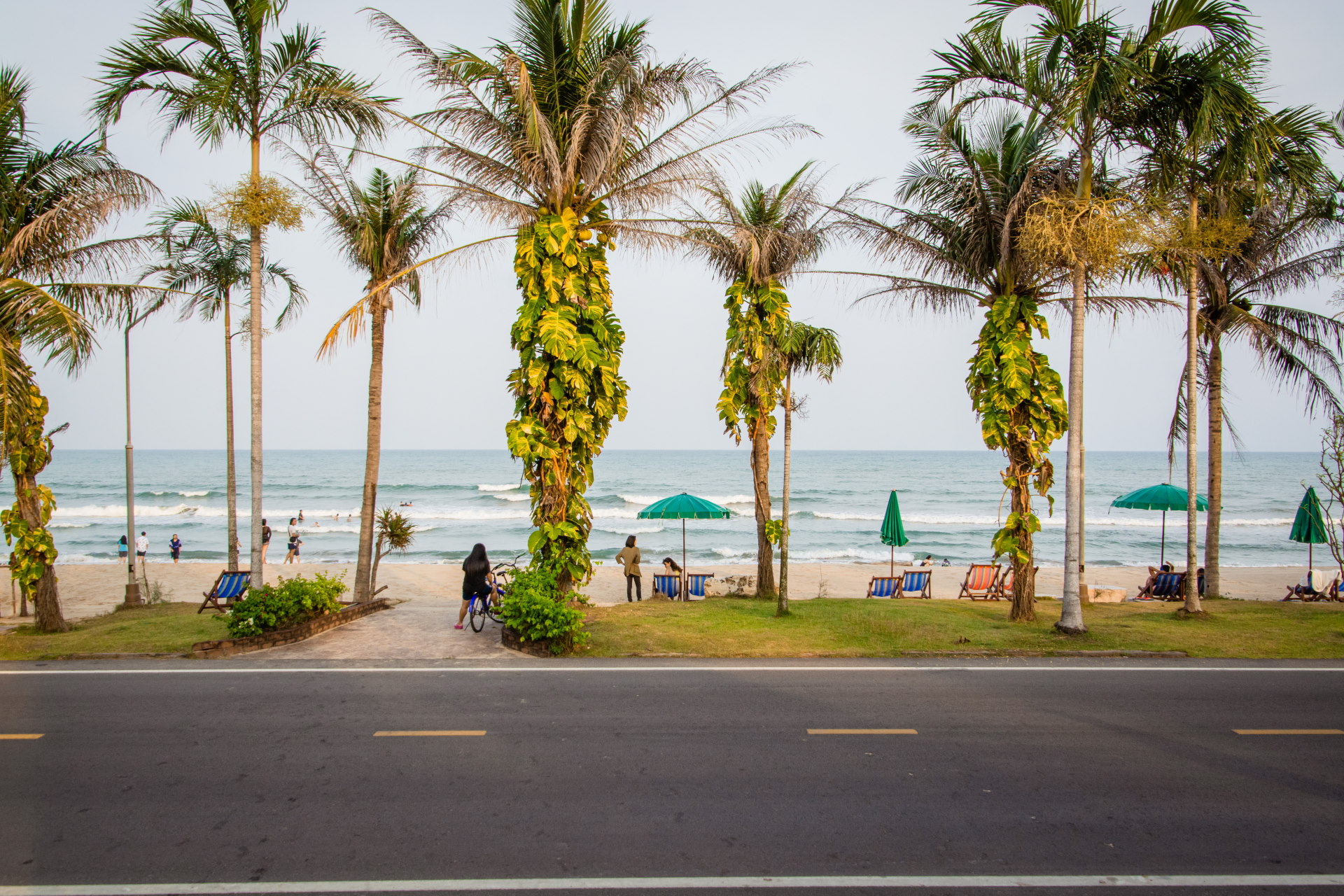
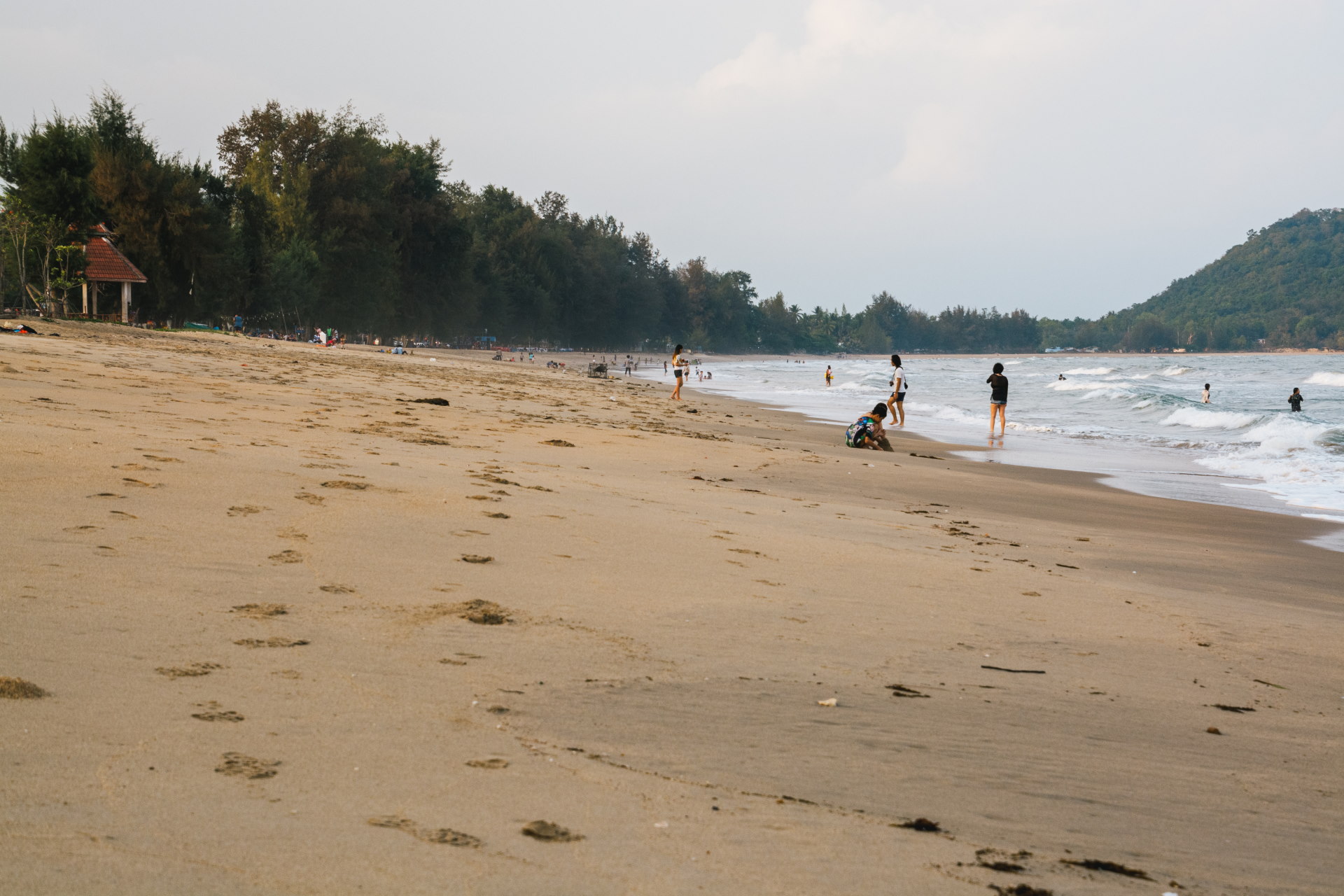
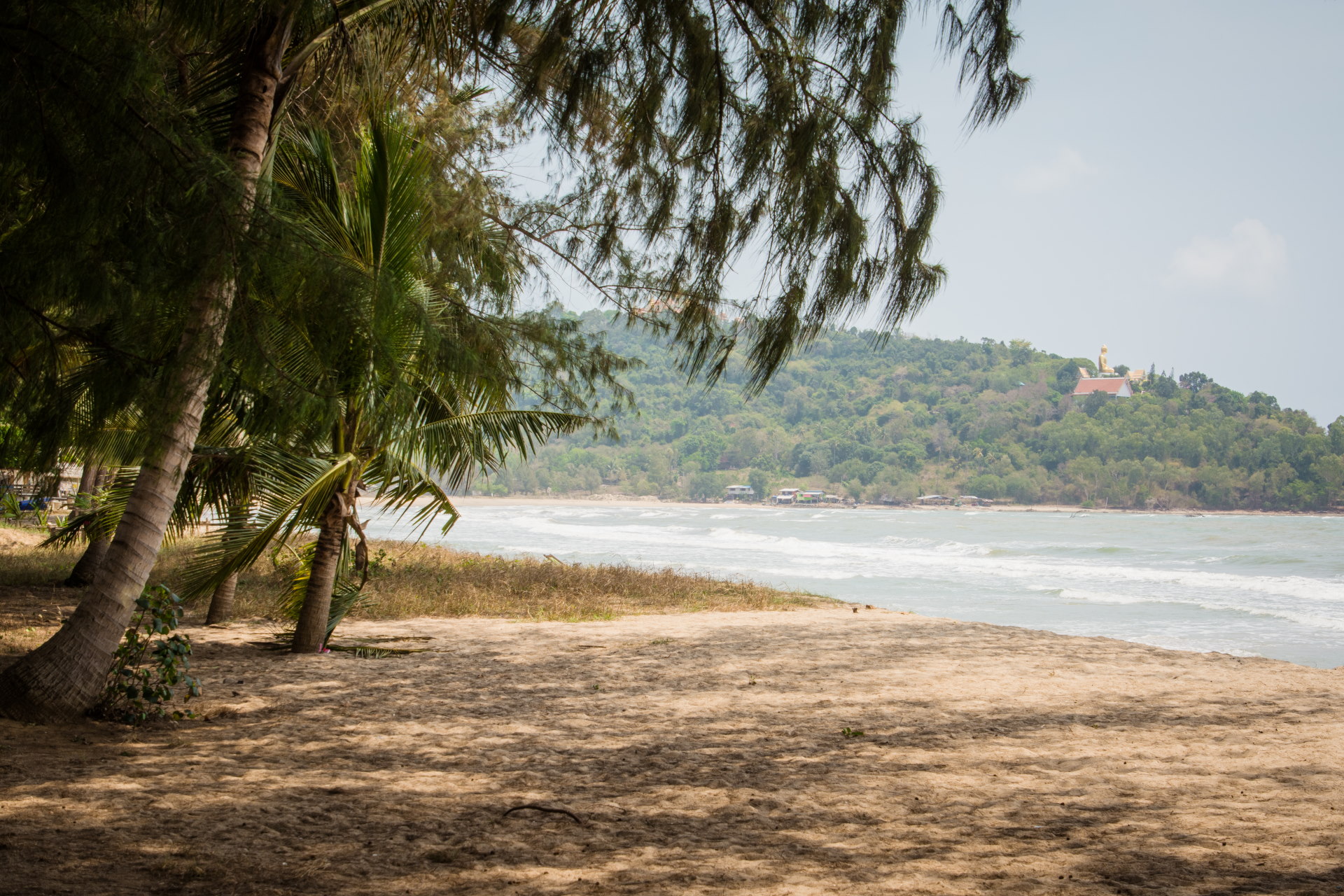
The beach remains the main attraction in Ban Krut. It stretches for several kilometers along a coastal road lined with trees (a mix of coconut palms and casuarina trees), restaurants and resorts fairly spaced apart.
I want to be frank: this eastern coast is obviously not the most renowned when it comes to seeing "paradise-like" beaches with translucent water and fine sand. The water quality is already highly dependent on the season, wind, and currents, but the lack of a densely built-up seafront gives it a certain charm.
In the evening, it's particularly pleasant for a stroll and finding a little restaurant with a sea view. This is when Ban Krut comes alive: people go out and swim, while in the morning, the beach returns to its usual rhythm, with few people on the sand – two distinct times, two different atmospheres.
The village of Ban Krut: its train station, its market
I've never actually been there (my bad…) because I thought the town was just the beach road. In reality, the heart of the village and the train station are located slightly inland from the coast, about a kilometer from the sea.
The train continues to occupy an important place in the life of Ban Krut since the station allows direct access to the locality without having to organize a transfer from the national road, making the destination quite accessible even without a car.
This area is where you'll find the shops, small boutiques, a pharmacy, and a few food stalls. On the way there, you'll also pass other houses, along with a small supermarket and a 7-Eleven – always welcome conveniences for picking up everyday essentials.
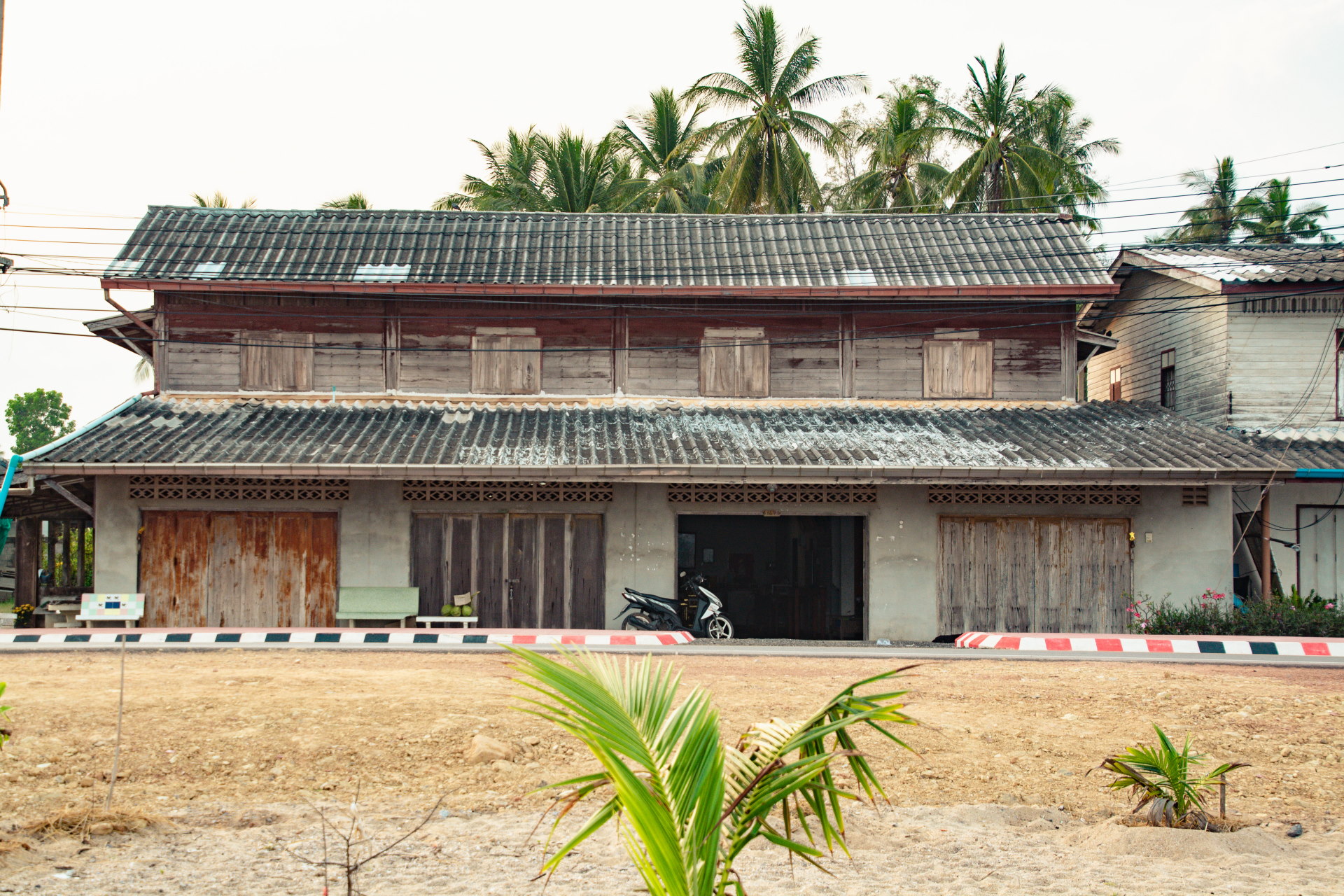
Furthermore, if you enjoy the atmosphere of local markets, a food market ( Ban Krut Daily Morning Market ) is held early in the morning just behind the train station. It is only active during the early hours of the day (5:00-9:00 AM), when locals come to buy fish, vegetables, fruit, curries, and prepared meals.
If you are not an early riser, don't worry, other markets or rows of stalls appear at other times, depending on the day.
- On Thursday afternoon, you will find one on the esplanade of the Wat Thong Chai Thammachak, a temple located along the road, set back from the beach.
- On Saturdays, stalls are set up near the tracks.
- On Sunday evenings, the coastal road comes alive.
Explore Ban Krut by bike
During my first stay, I explored the surrounding area using a bicycle provided by our hotel. The terrain is flat, traffic is light on the small roads, and the distances between the beach, the village, and the coconut groves are reasonable: it's therefore a simple and accessible way to visit the nearby area.
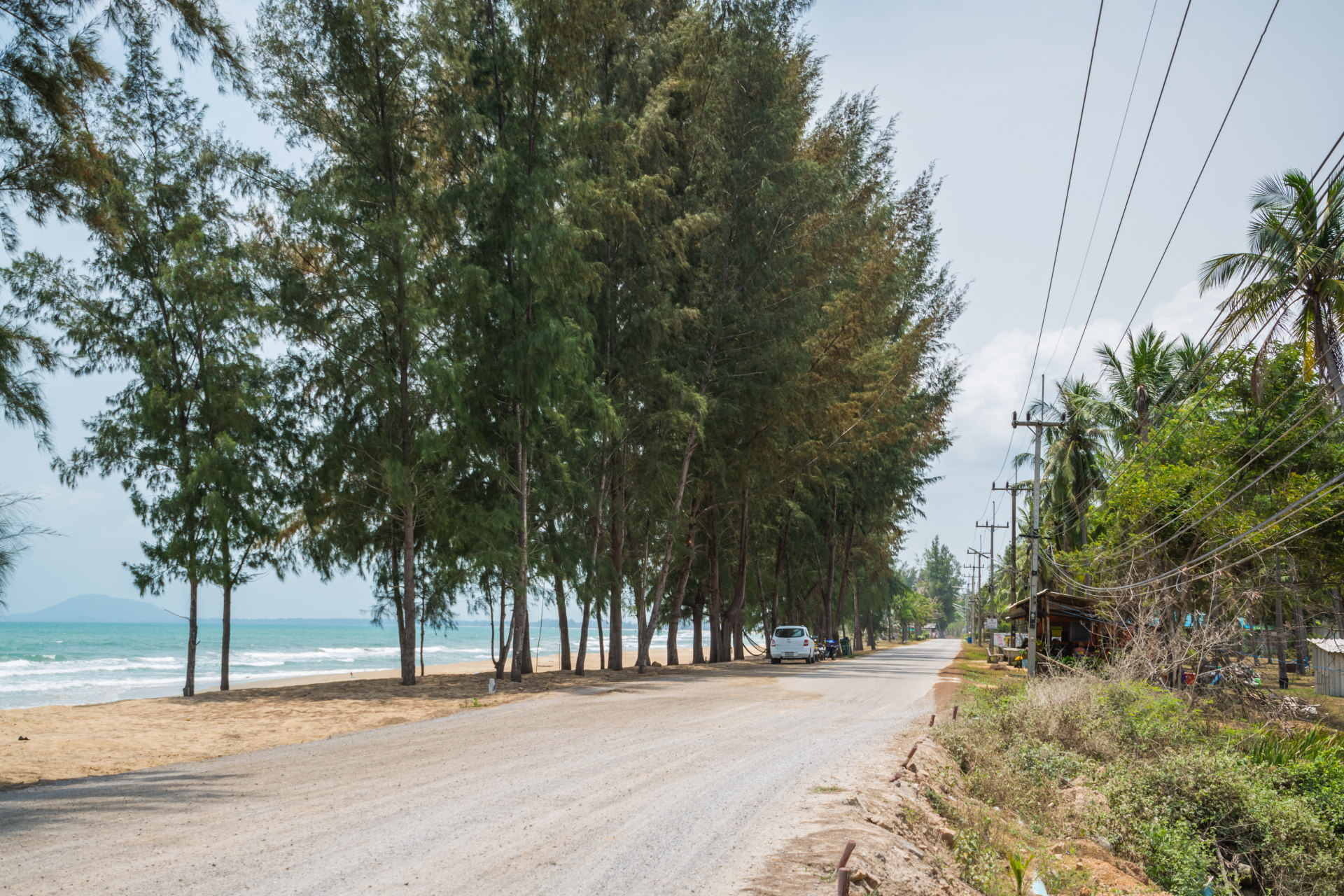
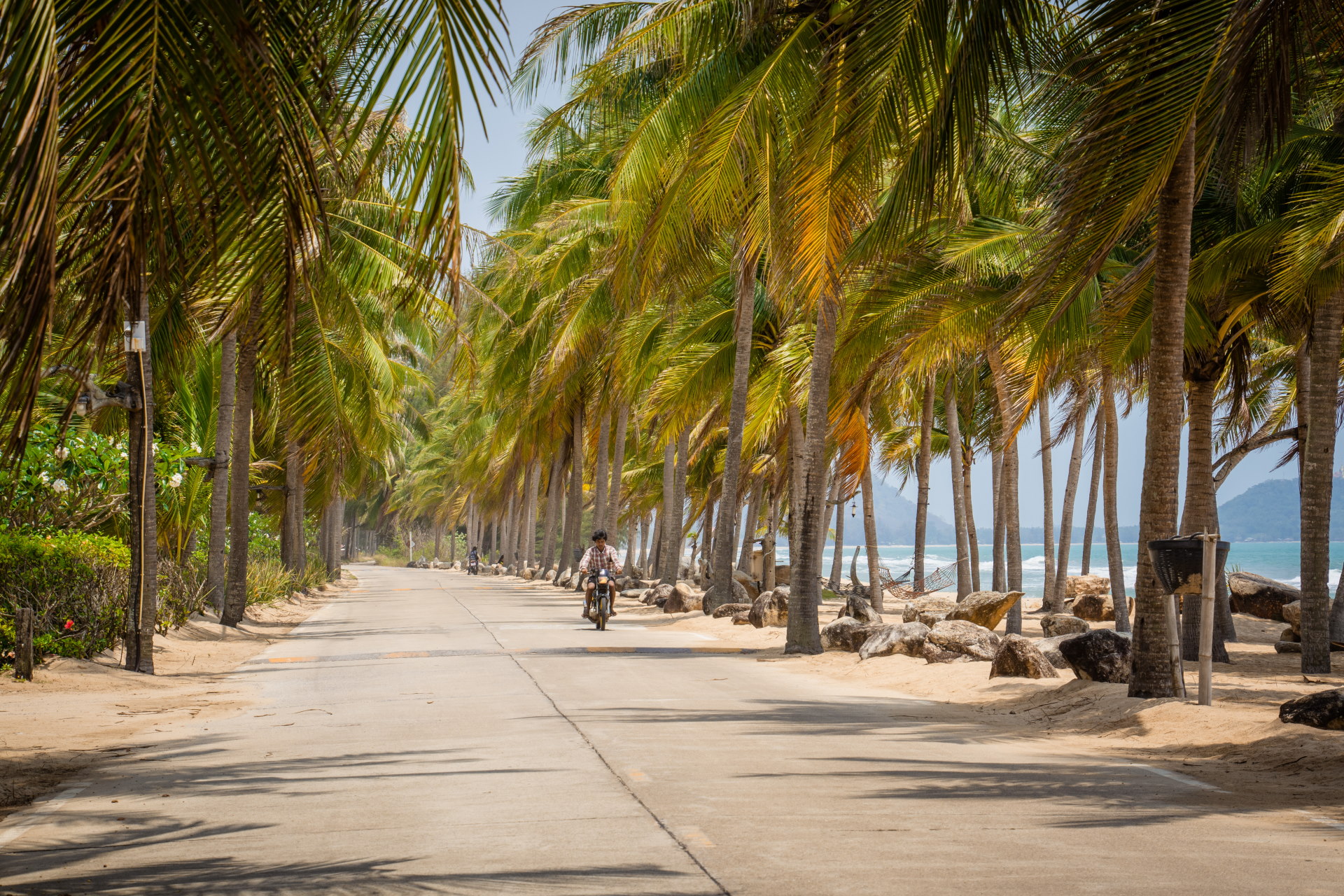
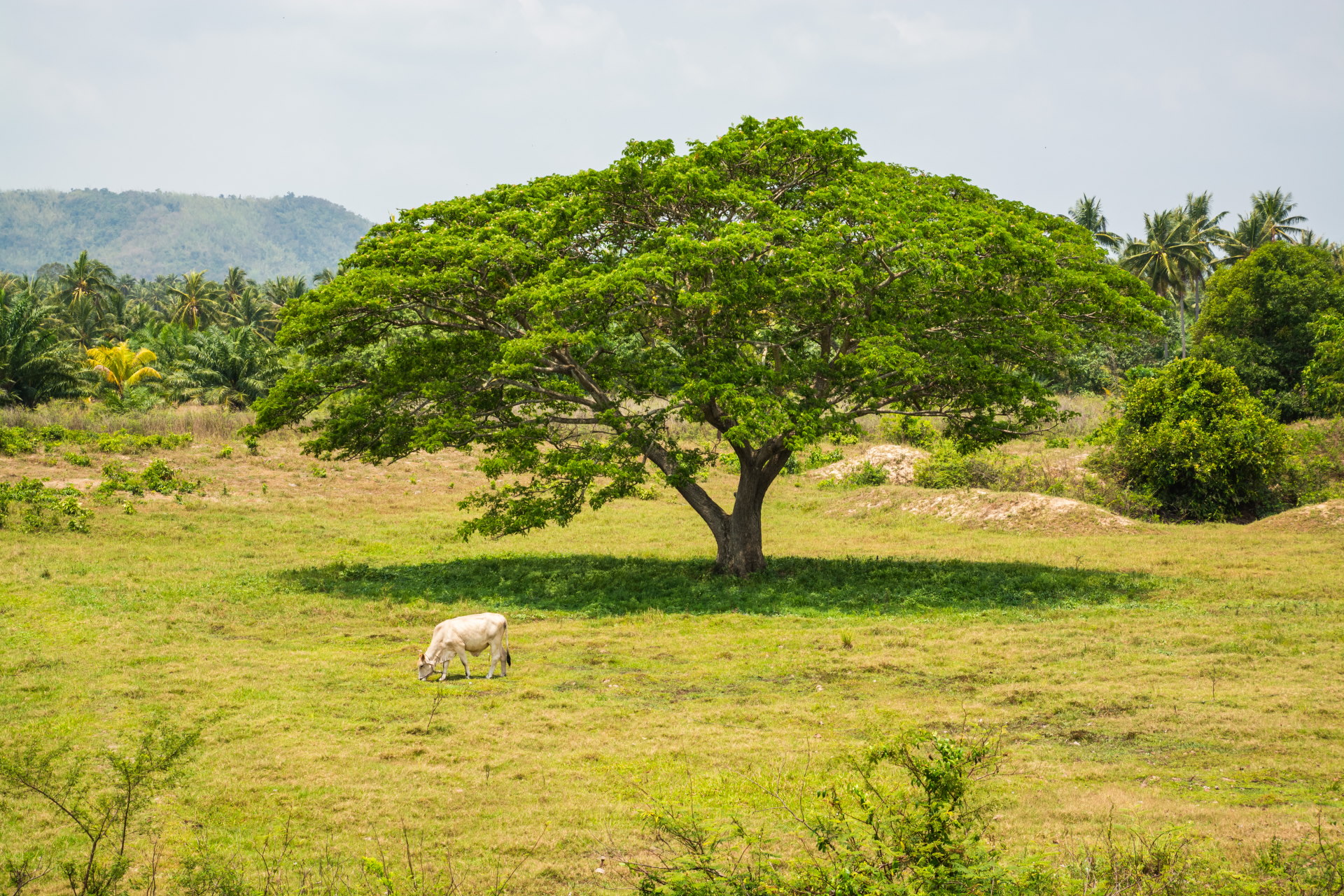
Cycling also allows you to leave the coastal road and cross the agricultural areas surrounding Ban Krut. The resorts quickly give way to houses, coconut plantations, and small local roads.
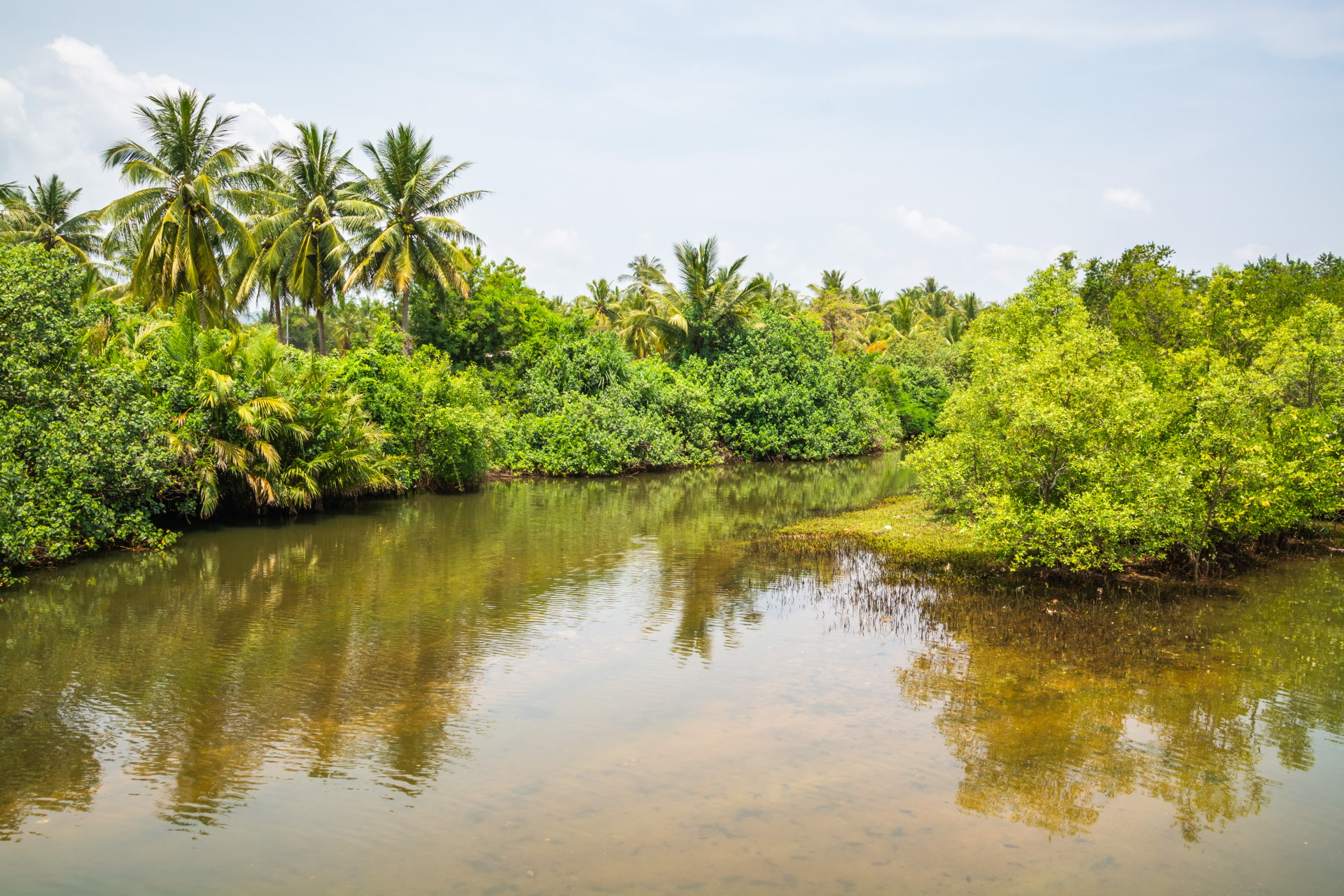
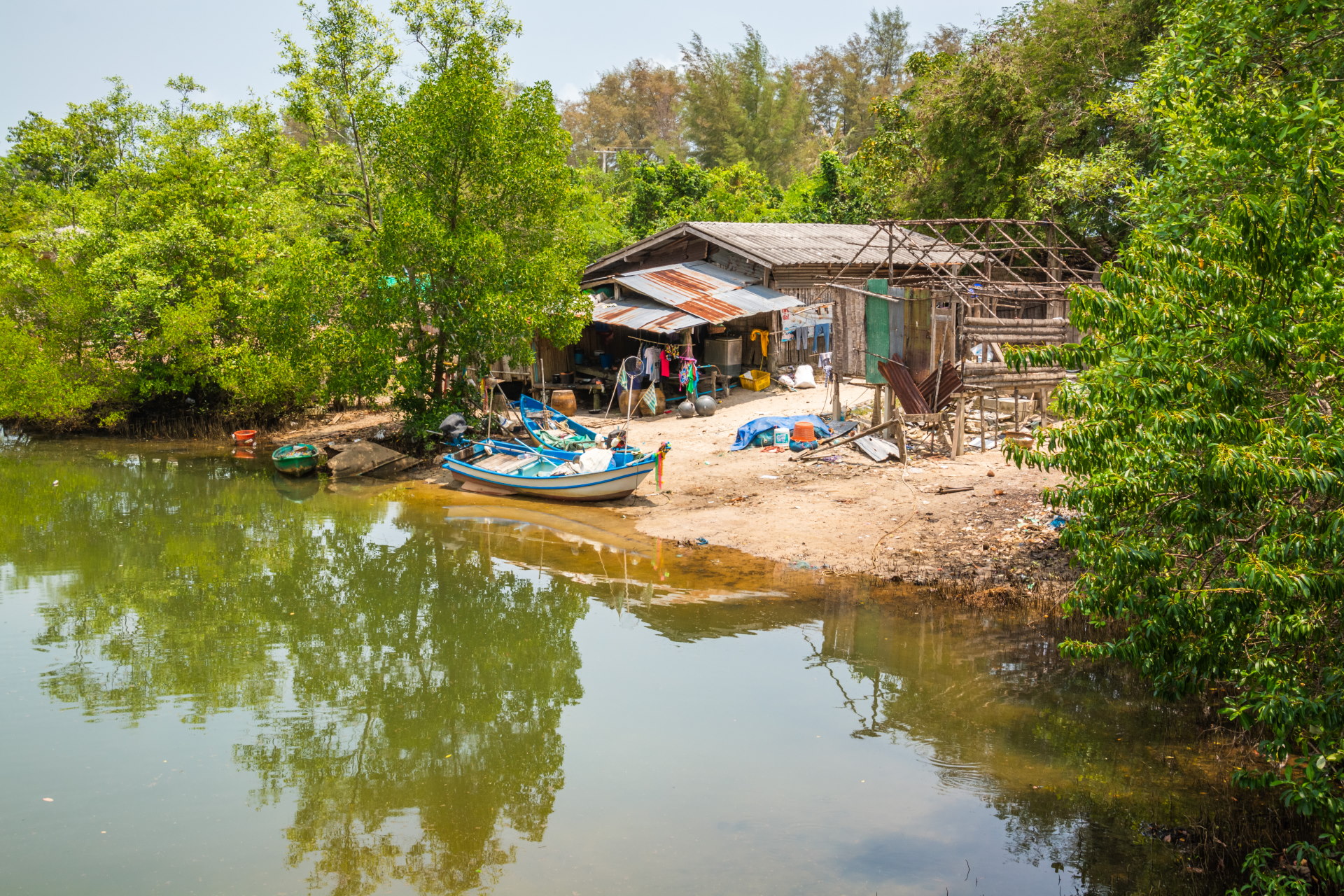
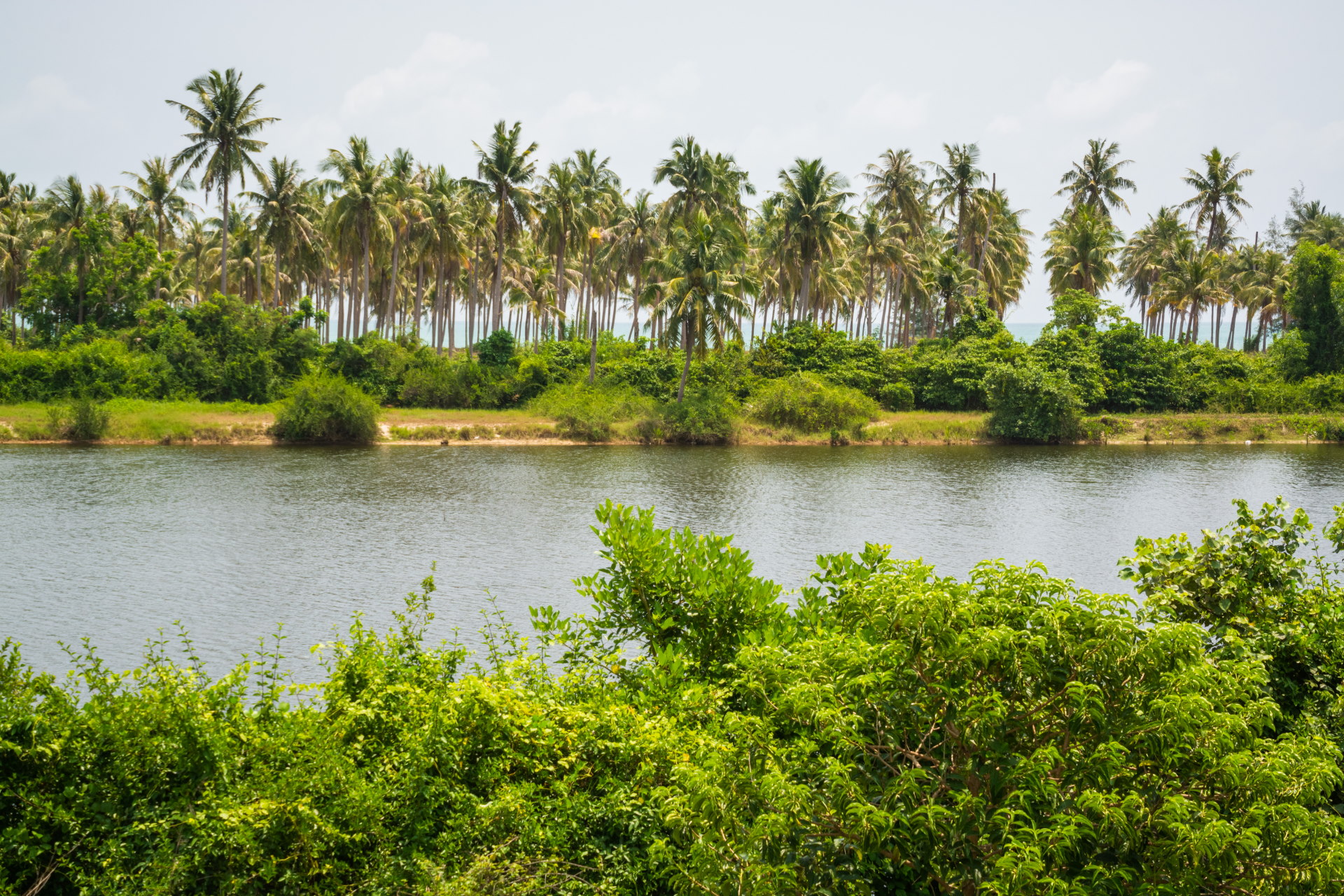
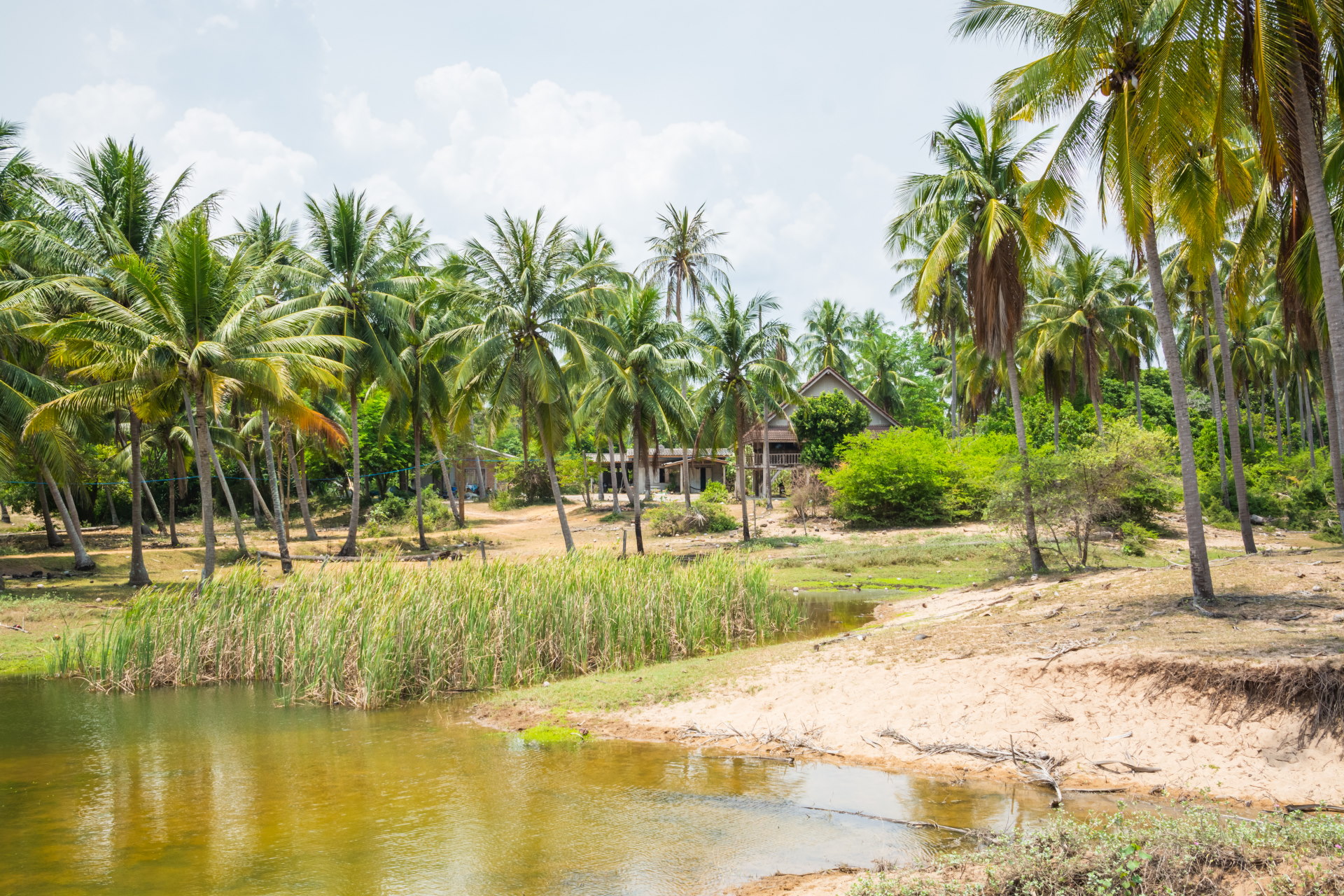
Ban Krut is surrounded by water as a canal runs parallel to the beach, offering varied landscapes, sometimes with ponds surrounded by vegetation with cows grazing, and further on, mangroves with houses and fishing boats moored next to them.
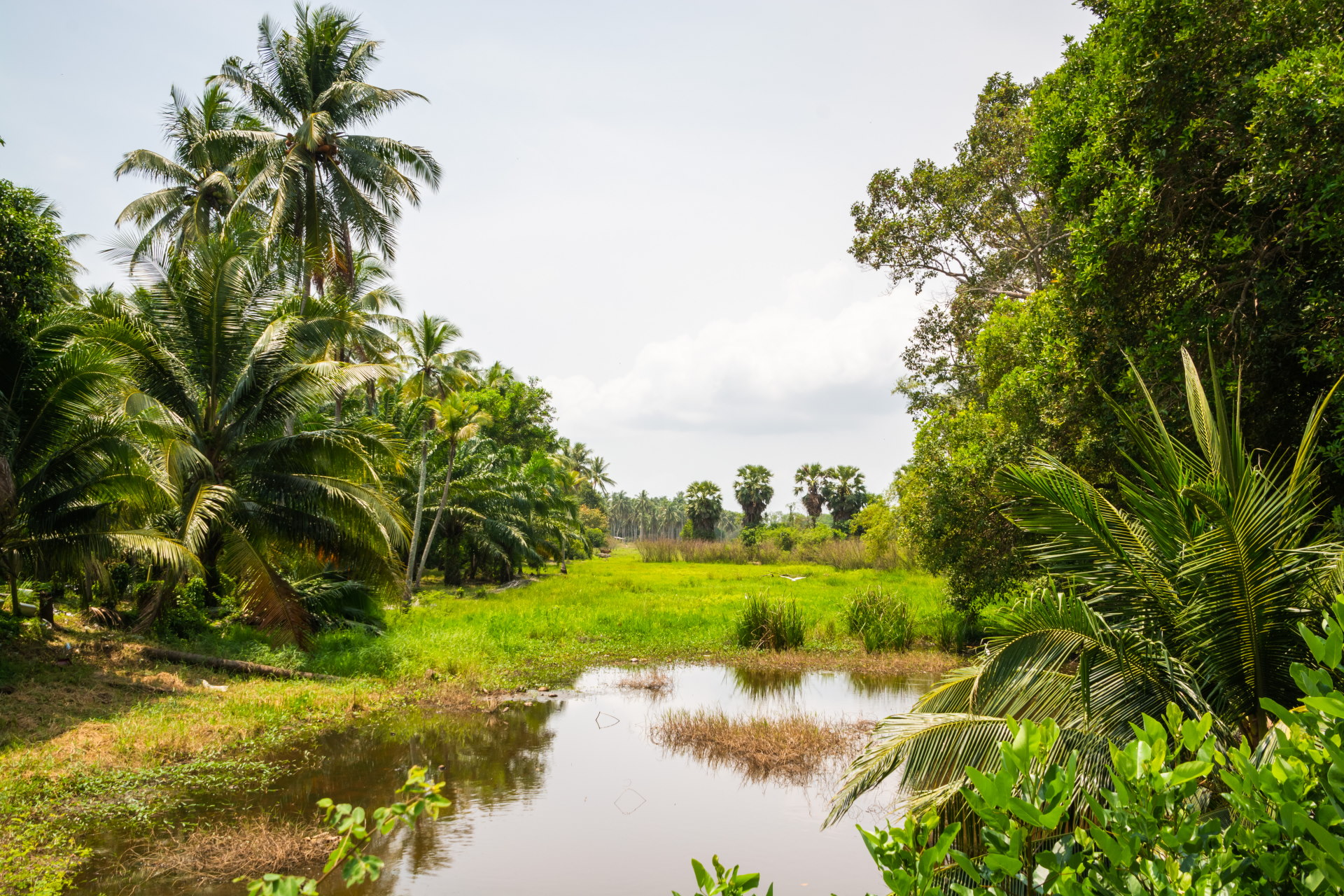
An original way to enjoy the area by bike is to join the local cycling club, which organizes morning rides departing from Ban Krut. To do so, meet at 7:30 am in front of the 7-Eleven (there's only one in the vicinity).
Officially, everyone is welcome and the pace is presented as relaxed and friendly, but, judging from the photos and equipment, I think you shouldn't expect to dawdle and have time to bombard the landscape with photos as I tend to do.
→ You can take a look at the local website "About Ban Krut" for more details.
Thong Chai Hill
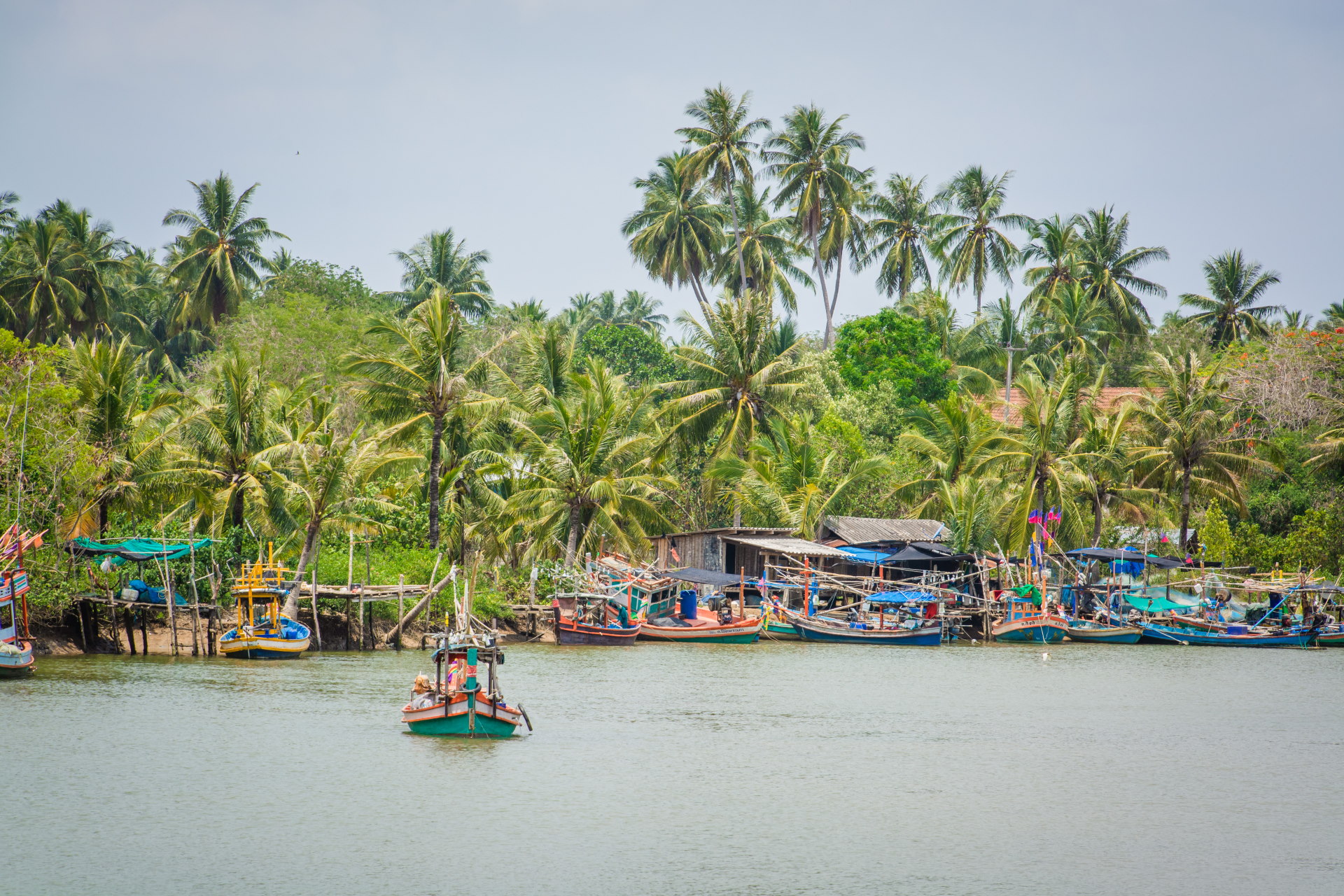
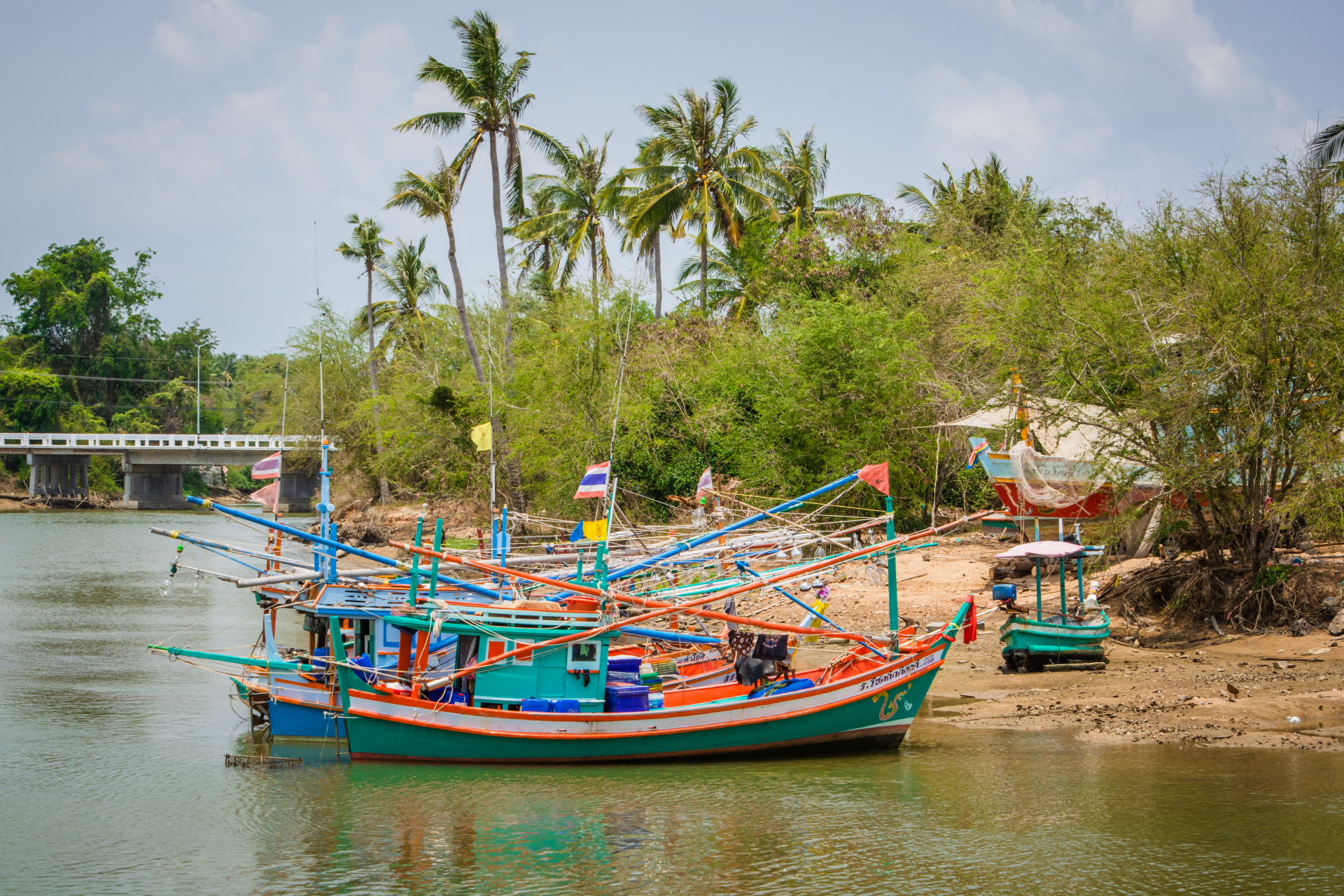
On your way to the base of Khao Thong Chai, you can take a look at the place marked on Google Maps as " Ban Krut Fishingboat Lagoon ". There you will see the small fishing port of Ban Krut, where the boats are gathered sheltered from the sea, a very different scene from that of the resorts located along the beach.
Luang Pho Yai
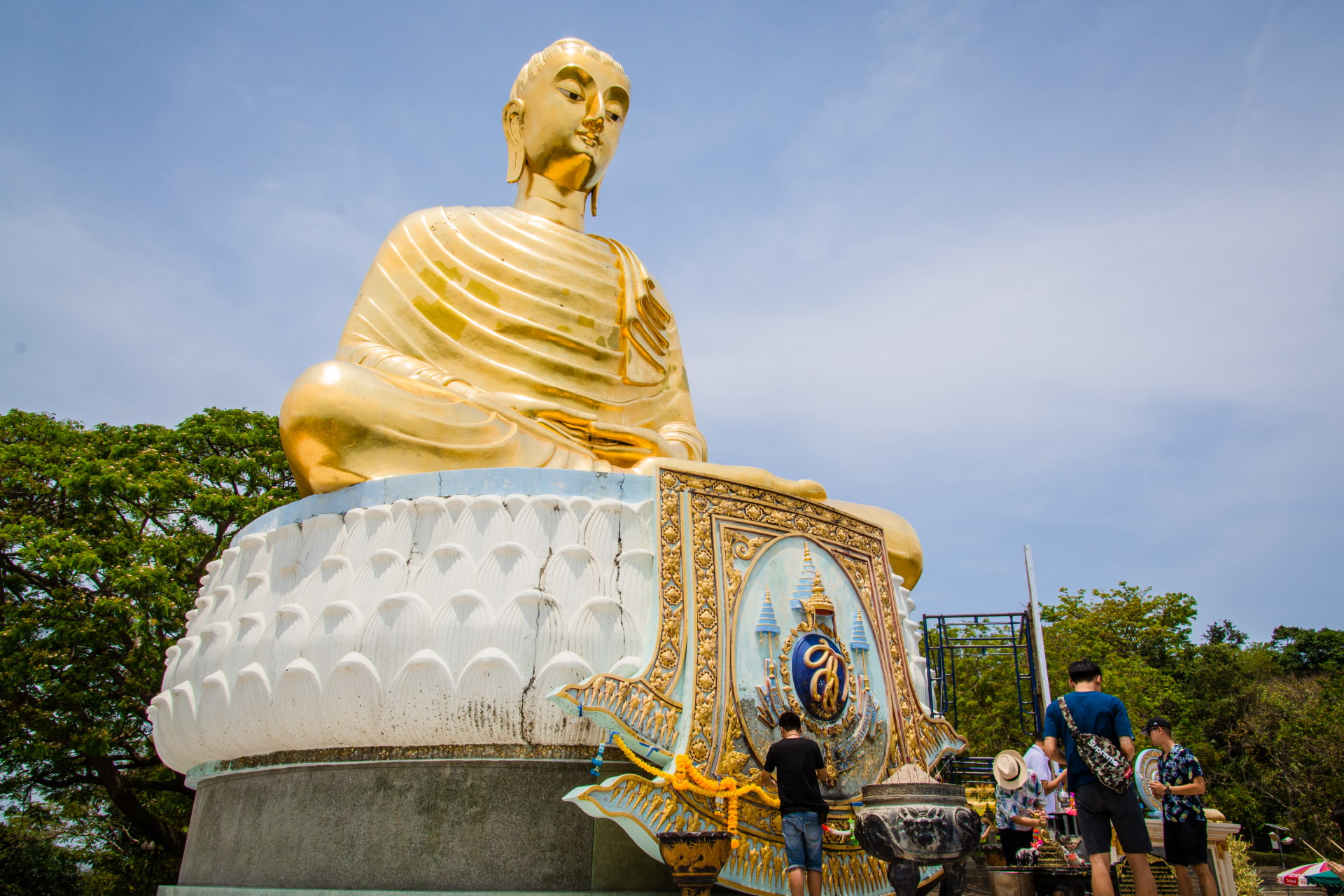
Visible from the coast, Luang Pho Yai is the local name for Phraphut Kiti Sirichai, a large golden Buddha seated facing the sea. The statue was built by the residents of Bang Saphan to honor Queen Sirikit on her 60th birthday.
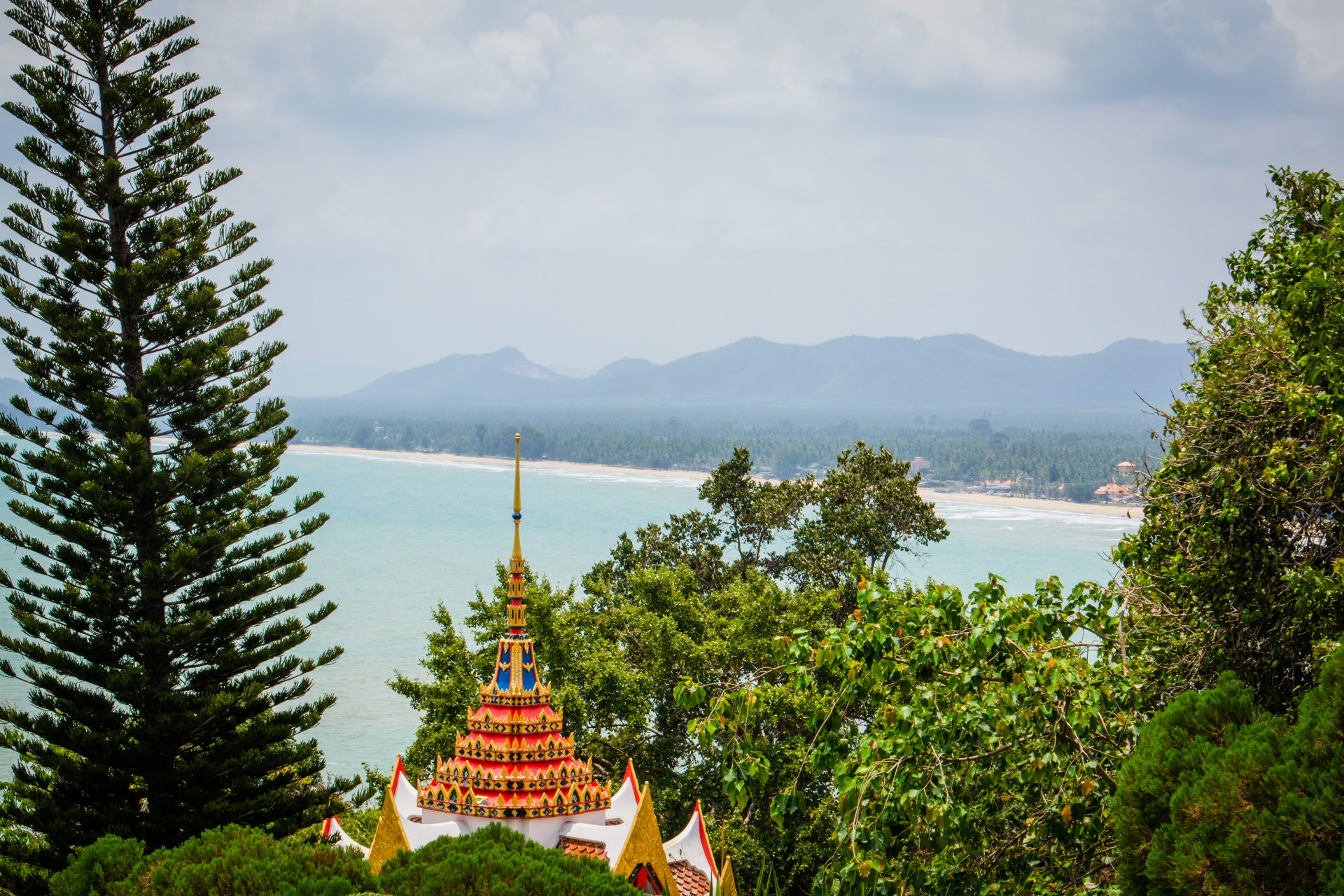
Its main interest for me lies in the terrace that surrounds the Buddha and offers a partially unobstructed view of the Gulf and part of the Ban Krut coastline.
The Buddha is adjacent to another monument, Krommaluang Chumphon Khet Udomsak Shrine , a shrine dedicated to the highly respected Prince and Admiral Abhakara Kiartivongse, better known by his title of Prince Chumphon Khet Udomsak, considered the founder of the modern Royal Thai Navy.
The Phra Mahathat Chedi Phakdi Prakat
Further up Khao Thong Chai is the Phra Mahathat Chedi Phakdi Prakat. This imposing 5-story building was constructed in 1996 to commemorate the 50th anniversary of King Bhumibol Adulyadej's reign.
The number nine refers to the dynastic name of the king, Rama IX: thus, its architecture features nine pagodas visible between the superimposed roofs. The access to the main platform alone is breathtaking, lined with rows of frangipani trees when in bloom.
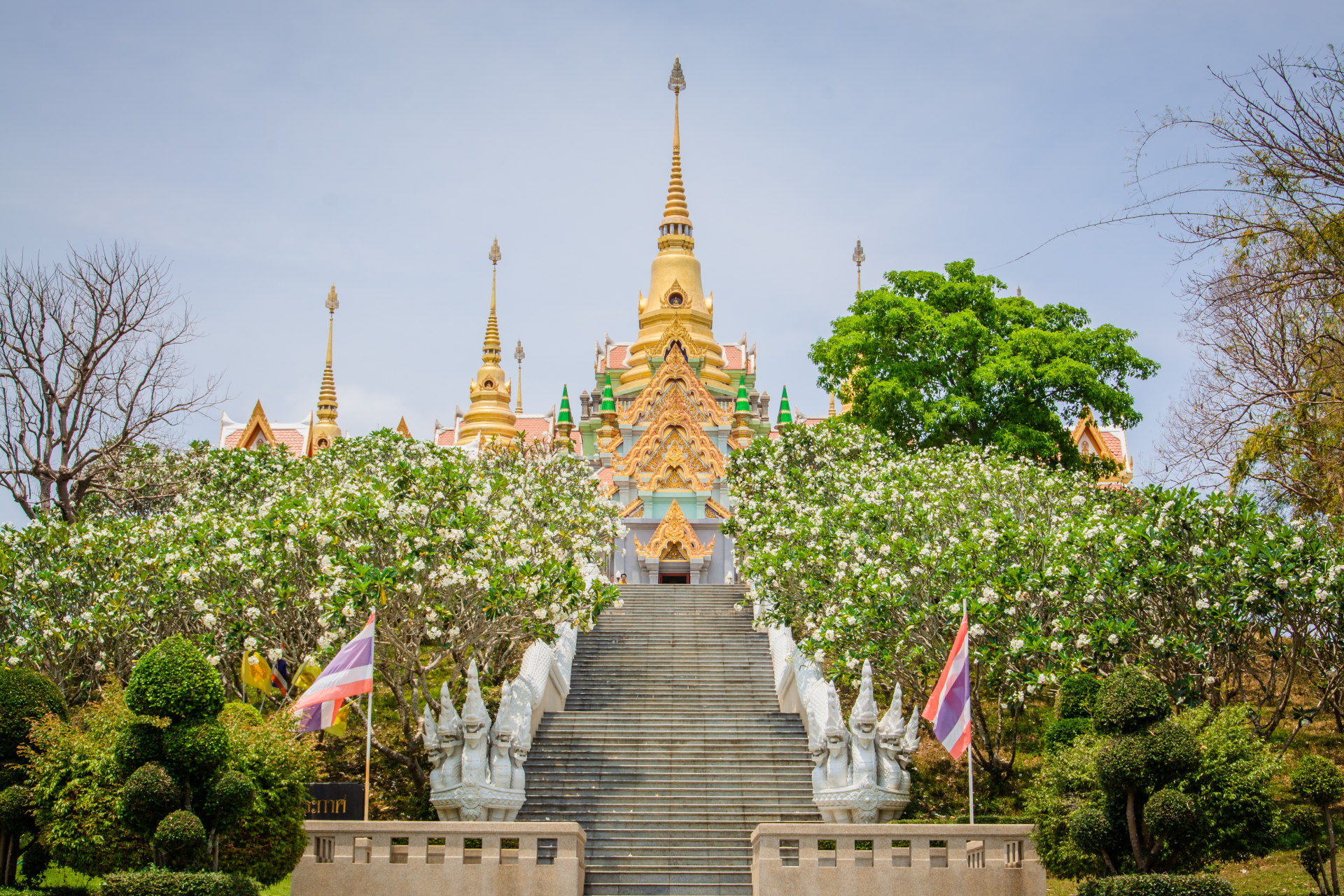
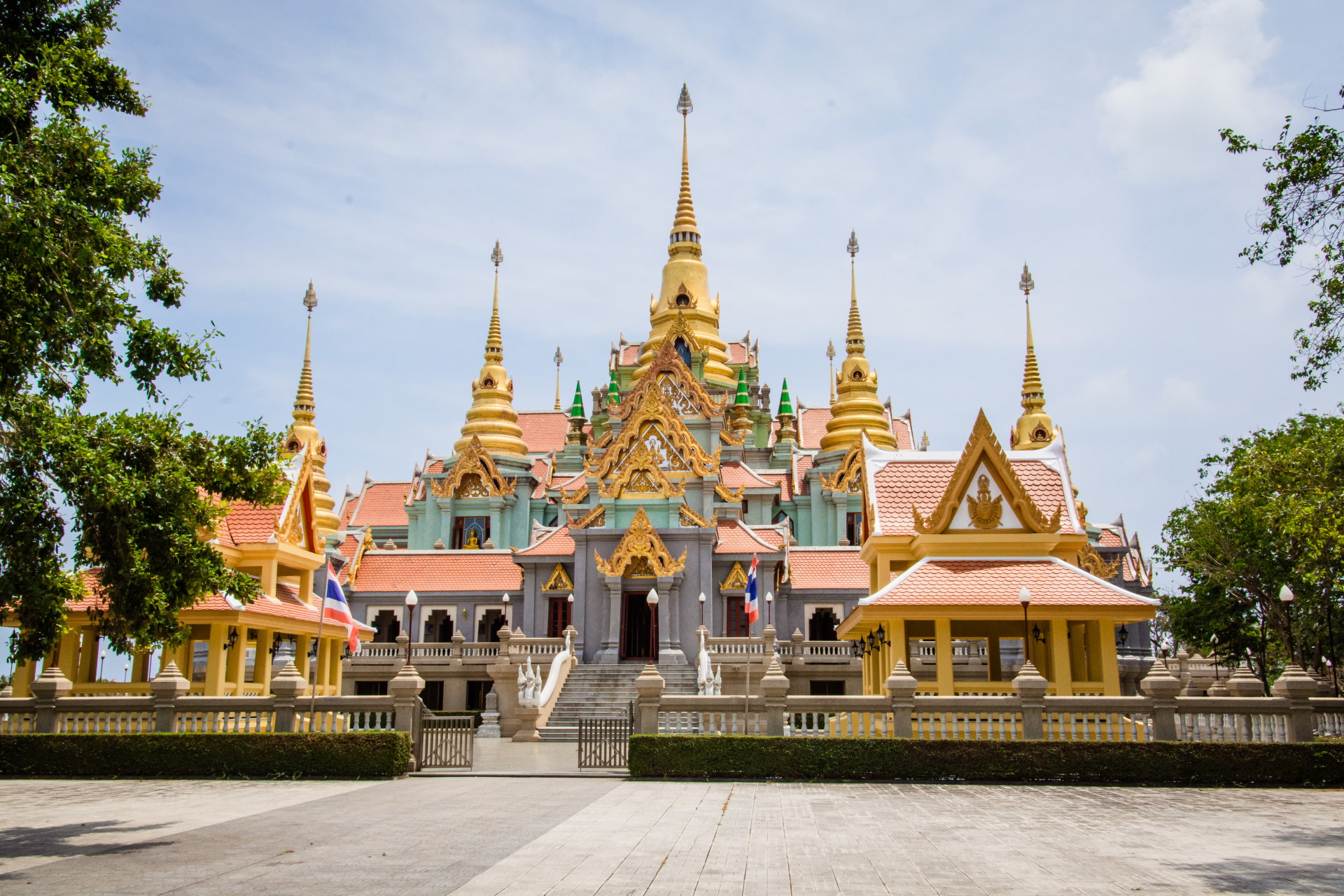
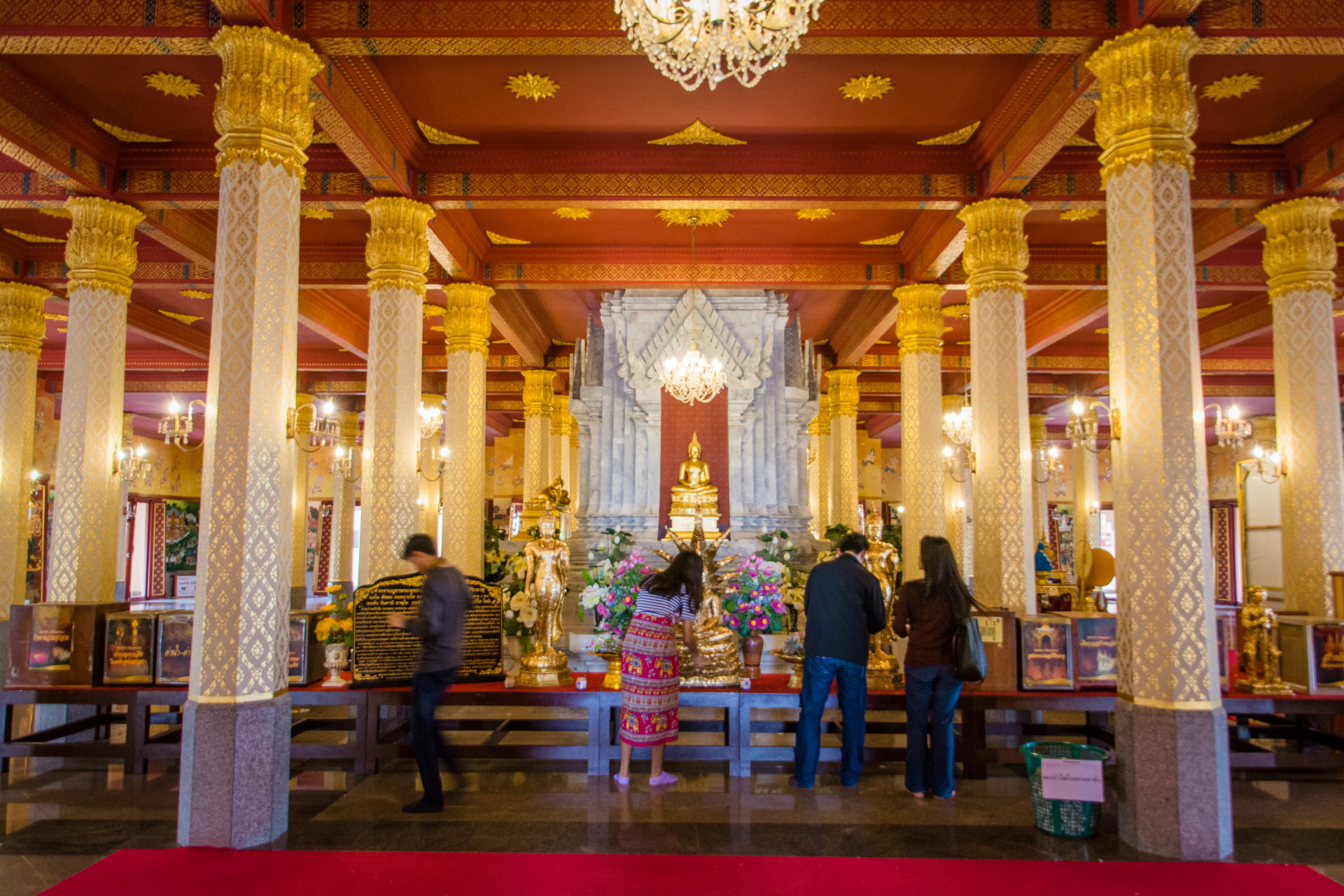
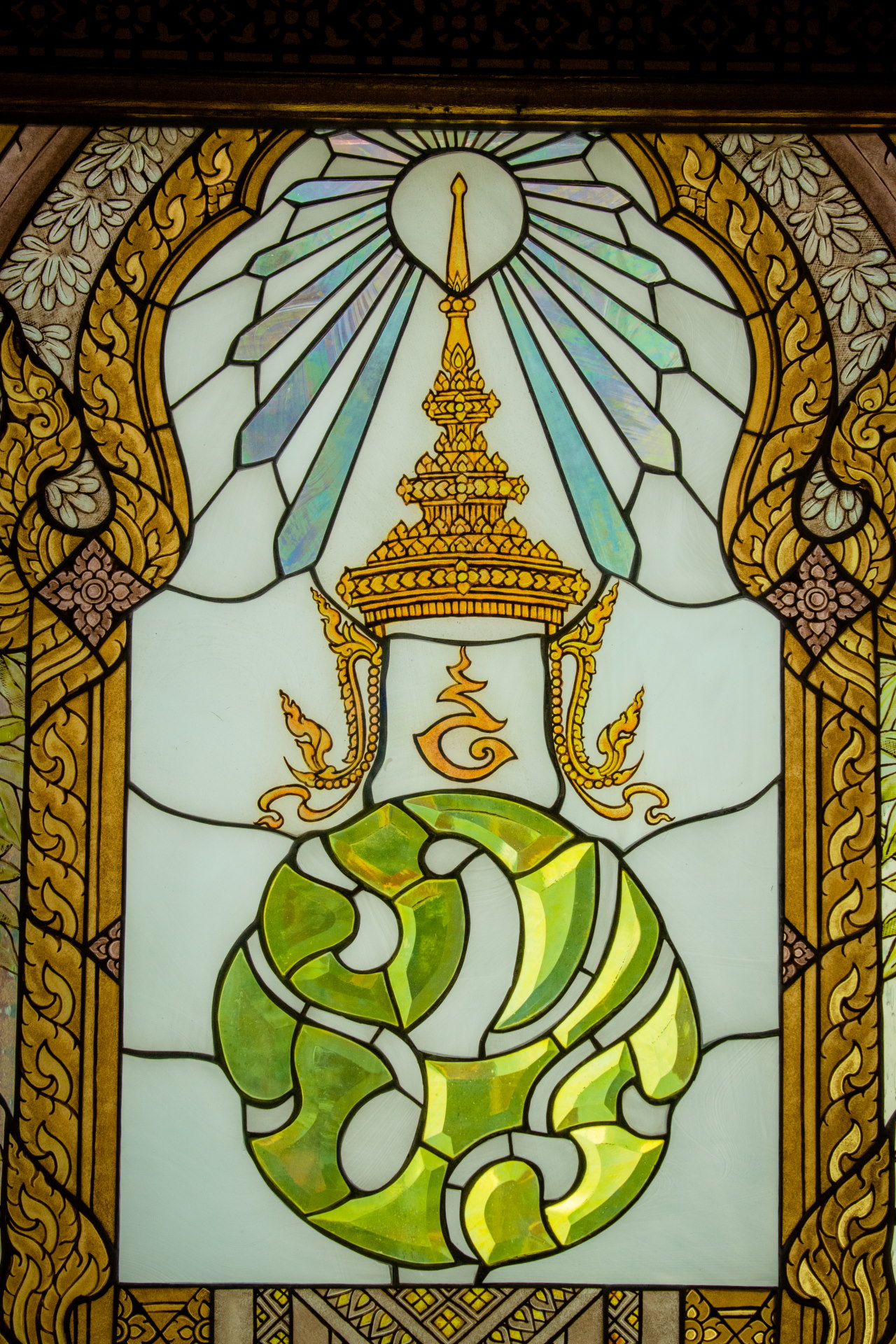
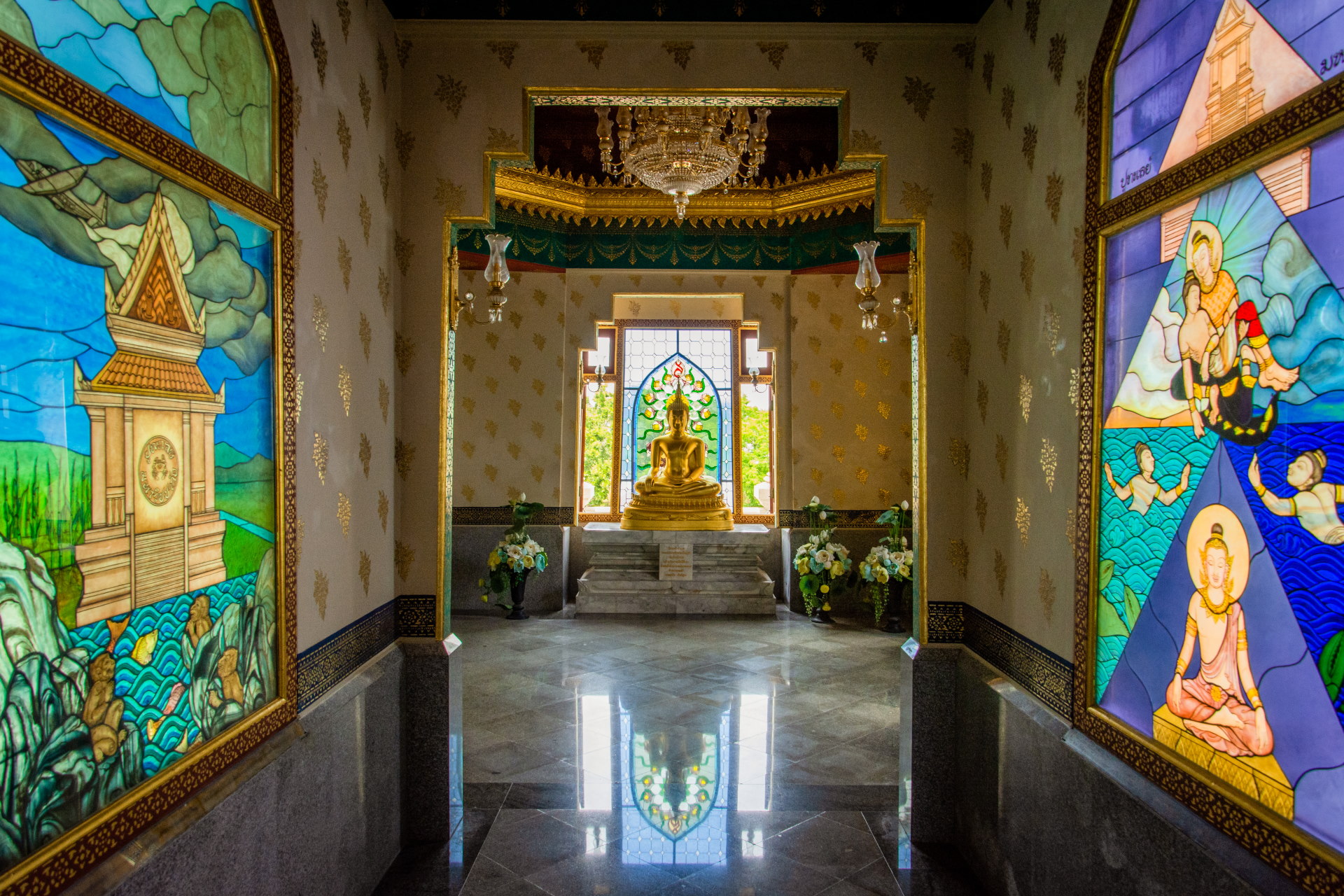
The interior of the chedi is decidedly modern, featuring classically painted murals, but the building is distinguished by its numerous gilded details and, above all, the rather unusual presence of stained glass windows. It's a way of reminding us that even in a country where temples abound, one can still surprise and possess its own unique identity.
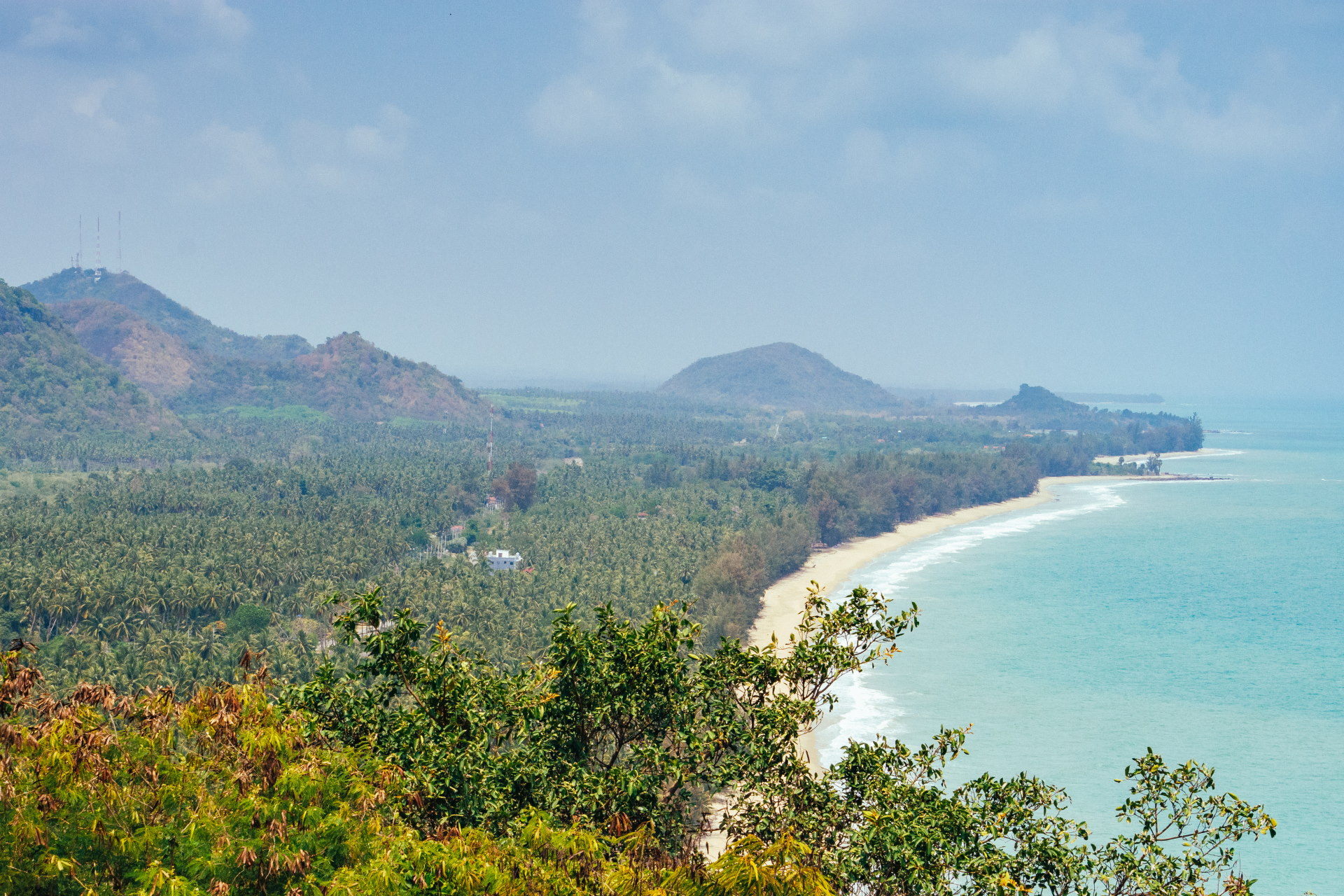
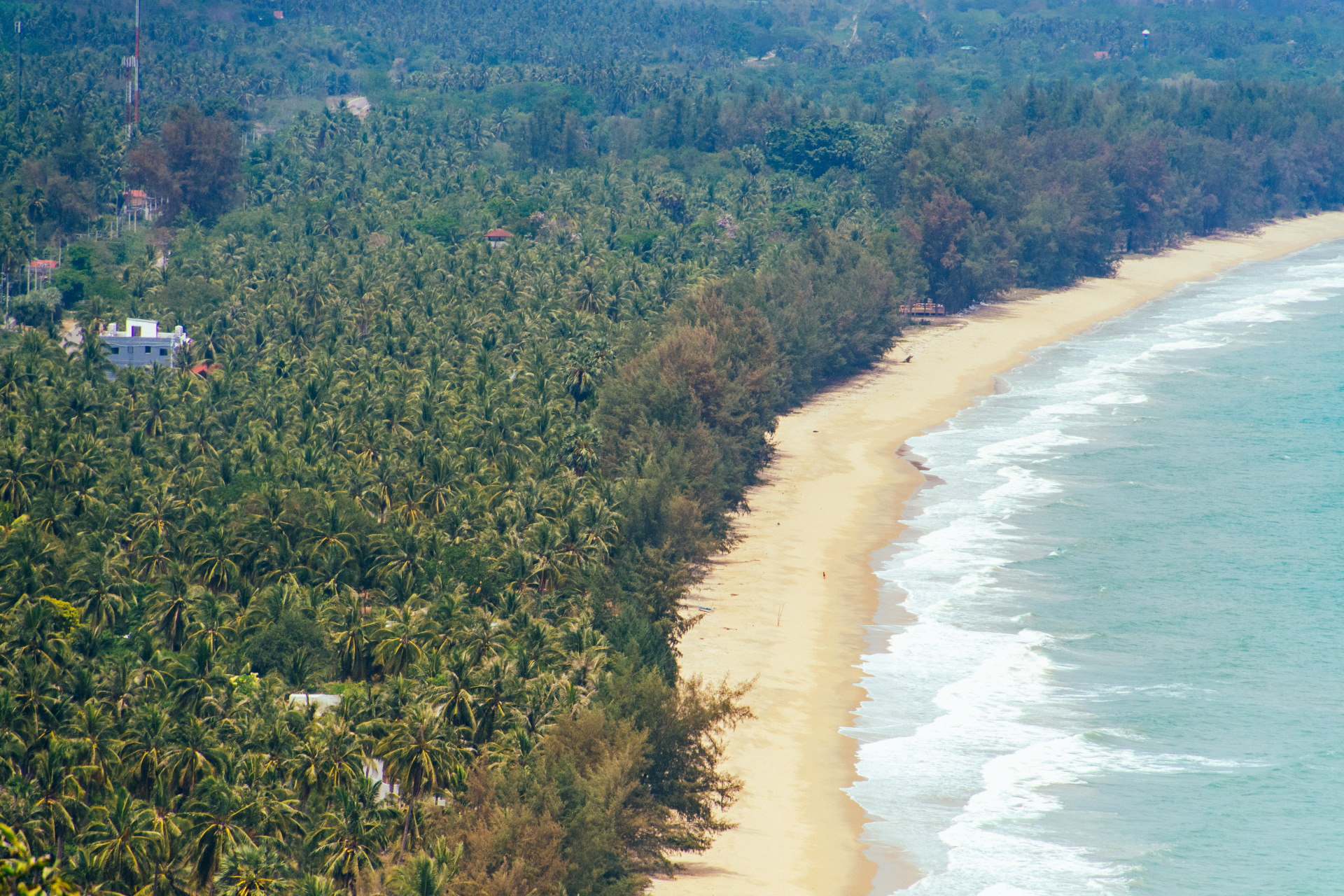
And above all, the summit allows you to appreciate the coastline north of Ban Krut, with its breathtaking view of the succession of beaches, the vegetation largely dominated by coconut trees and the few hills scattered along this shore.
Ao Bo Thong Lang, excursion south of Ban Krut
Bo Thong Lang Bay is located approximately 20 km south of Ban Krut, still within the Bang Saphan district.
The bay does not directly constitute the end of Ban Krut beach since between the two lies Don Samran Beach, a very distinct beach, itself separated from the Bo Thong Lang area by a physical break in the coastline.
To put things in context, we didn't pass through there during one of our stays in Ban Krut. We stopped there for lunch on our way down to Nakhon Si Thammarat.
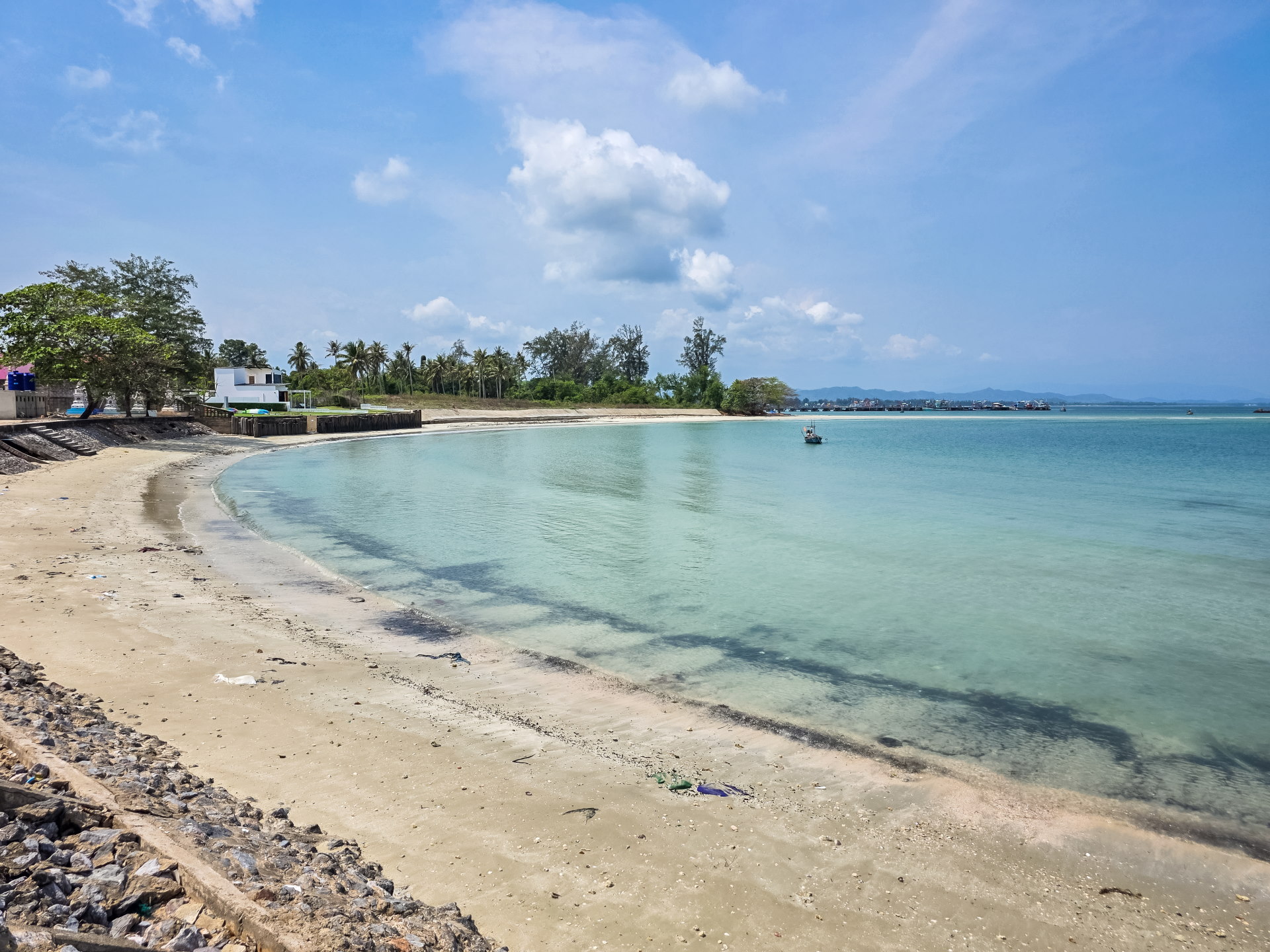
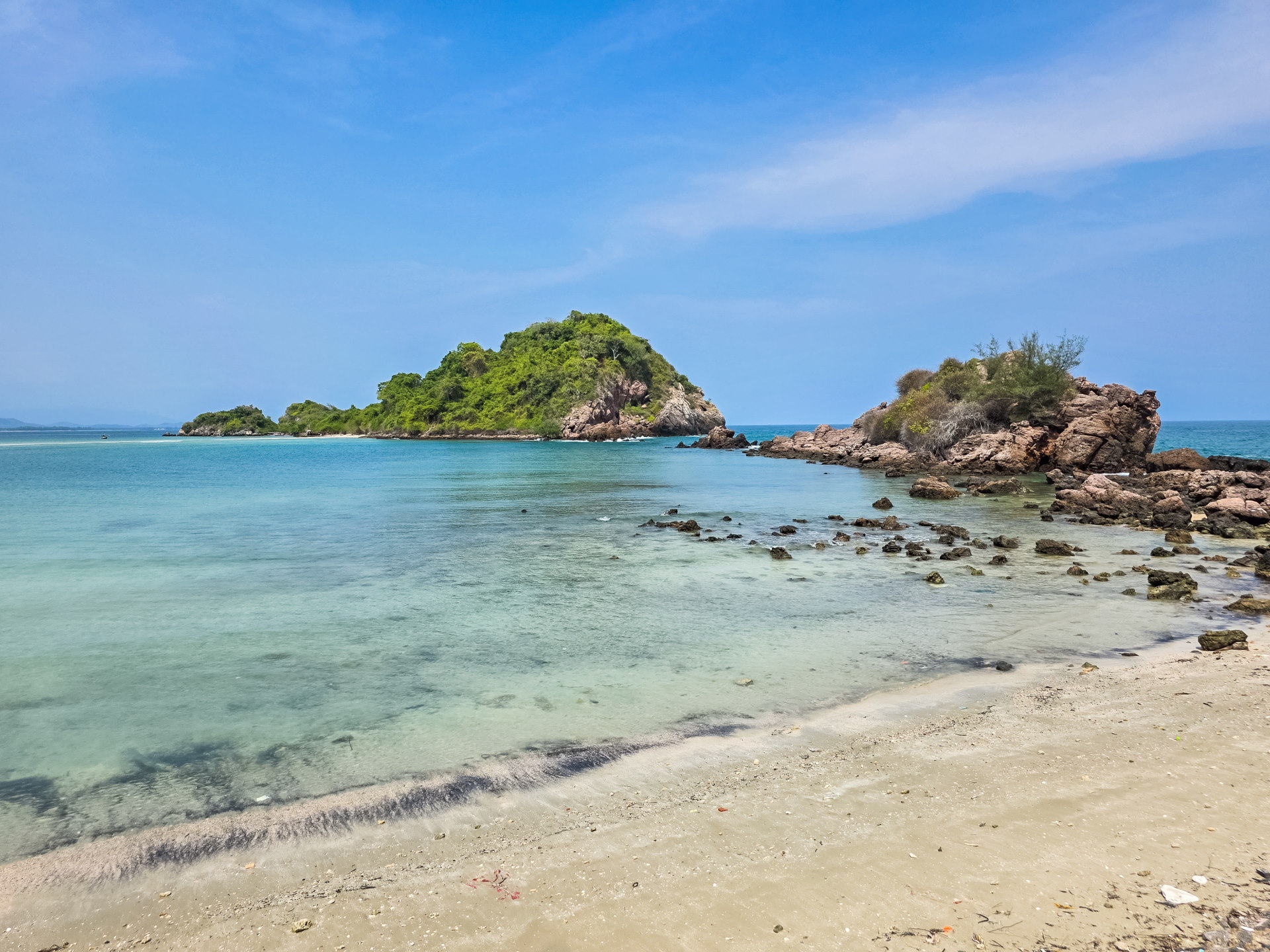
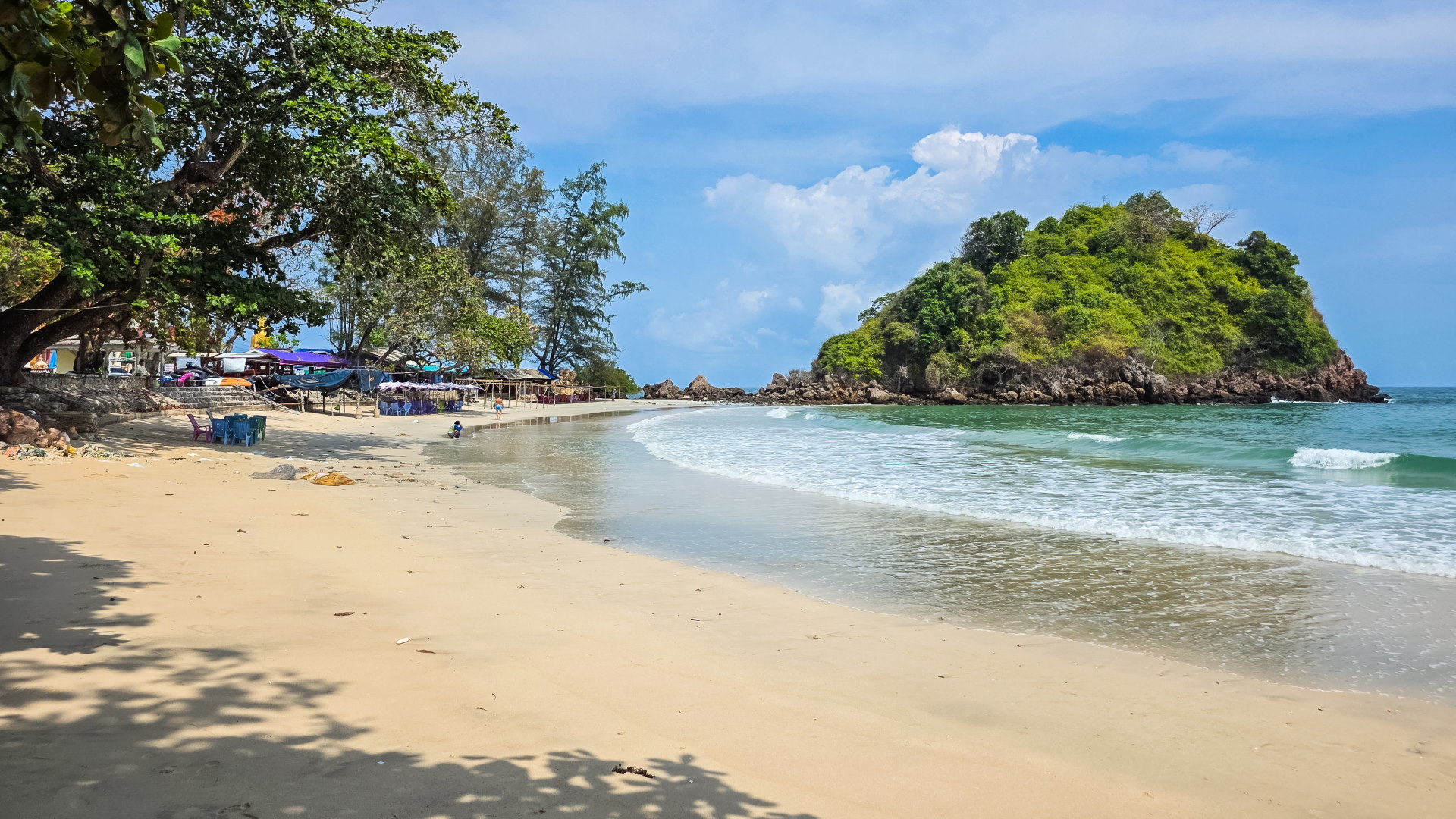
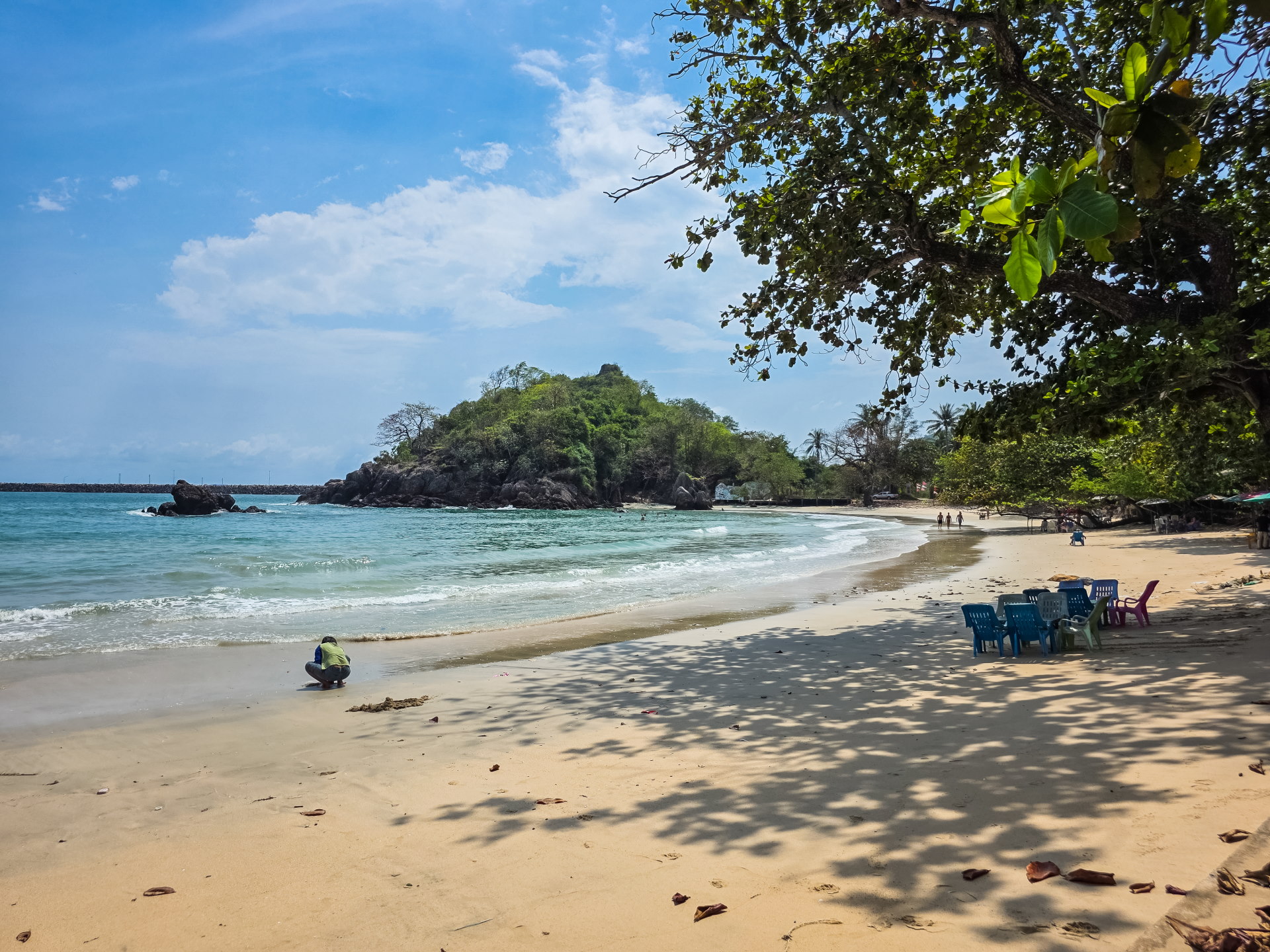
To be more precise, Bo Thong Lang Bay forms a pretty, almost circular little bay, seemingly enclosed by the small island of Ko Hua Phin just opposite. I'm including the other curved beach under this name, where there are a few restaurants set up along the waterfront.
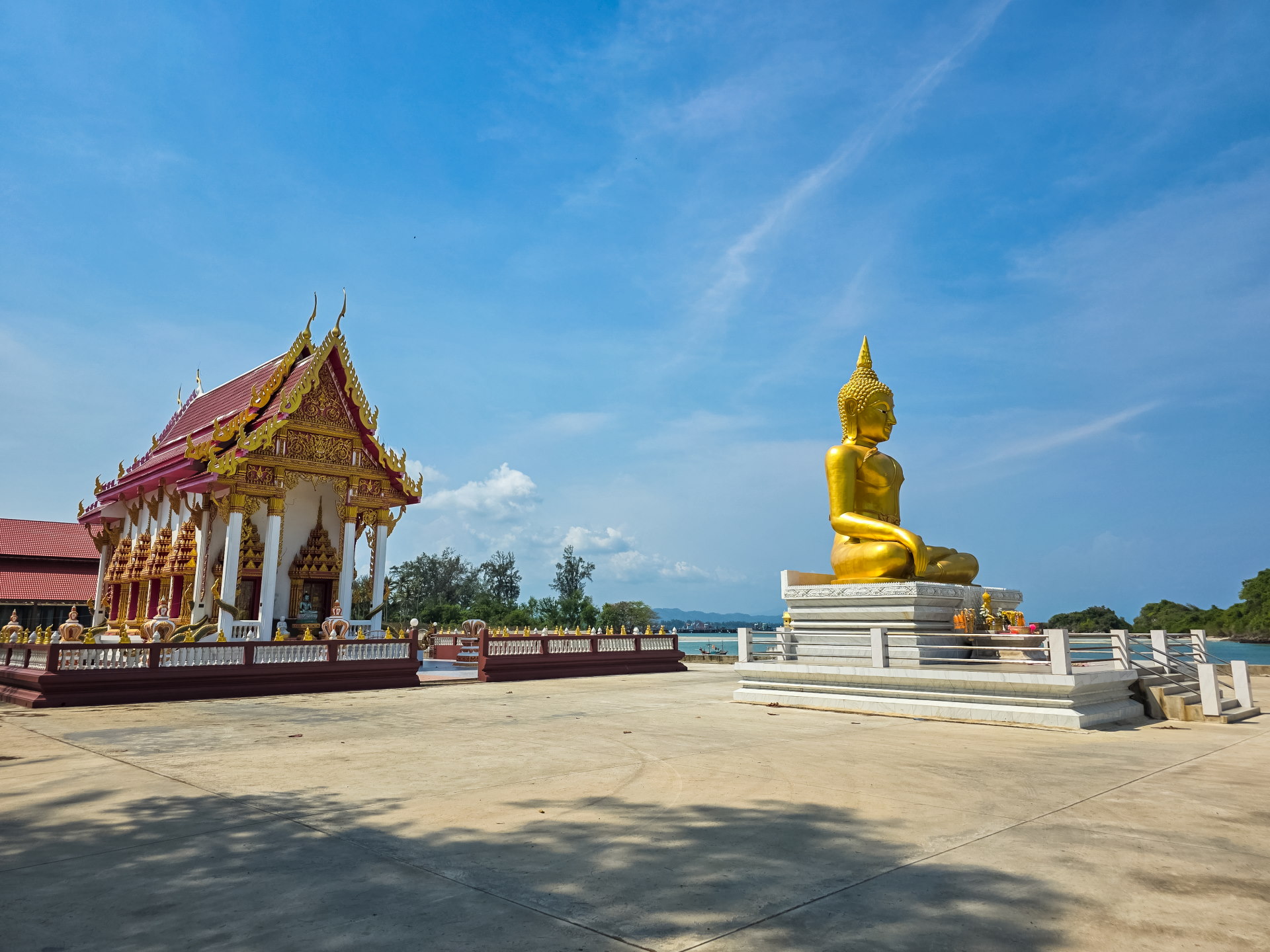
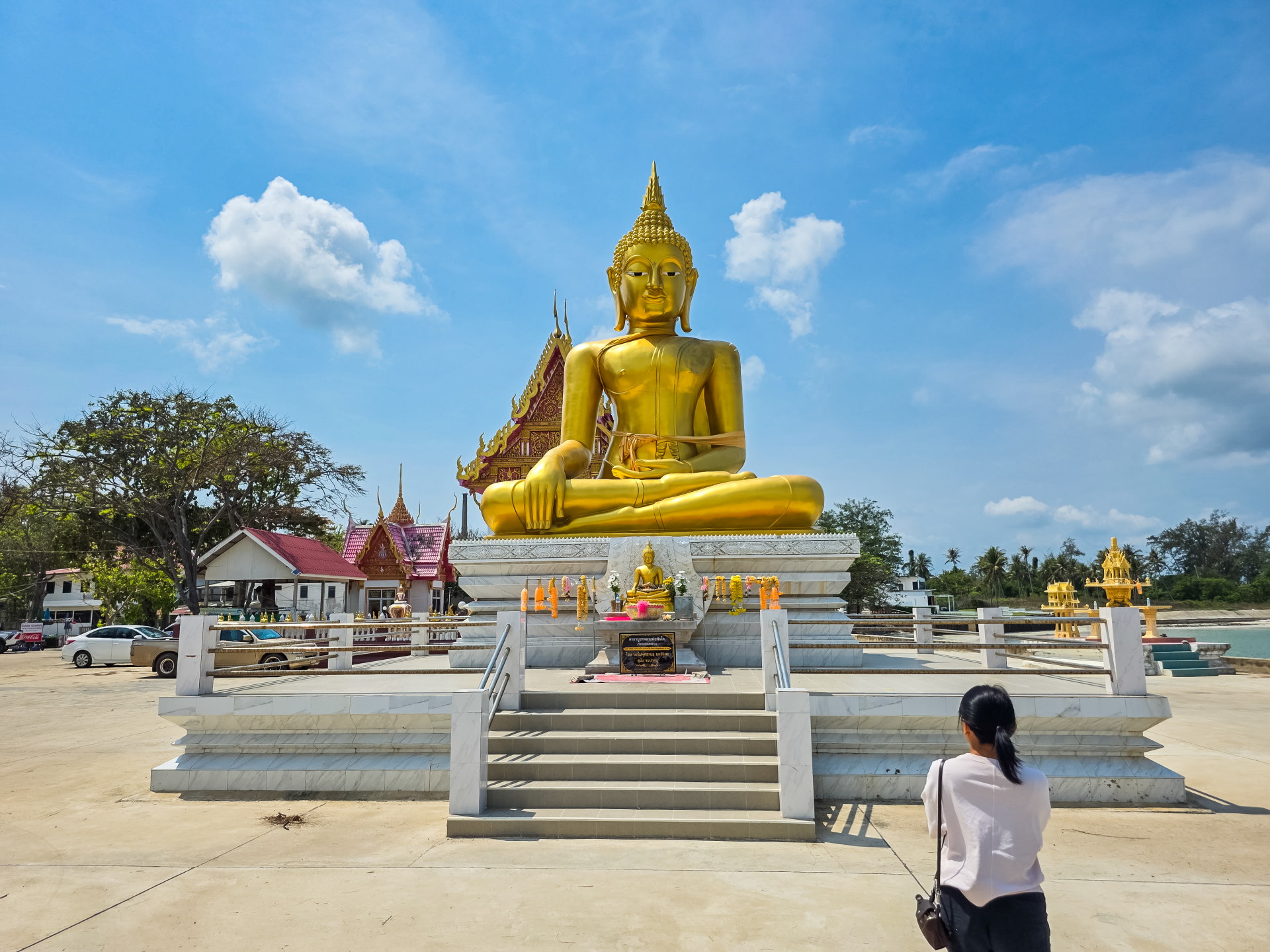
Straddling these two beaches, you'll find a temple with a very fitting name: Wat Bo Thong Lang . It's not so often, seemingly out of nowhere, that you find temples right on the seafront, with a particularly strong contrast between the seaside atmosphere and this "spiritual" presence, visible especially with its seated Buddha enthroned in front of the temple's main building.
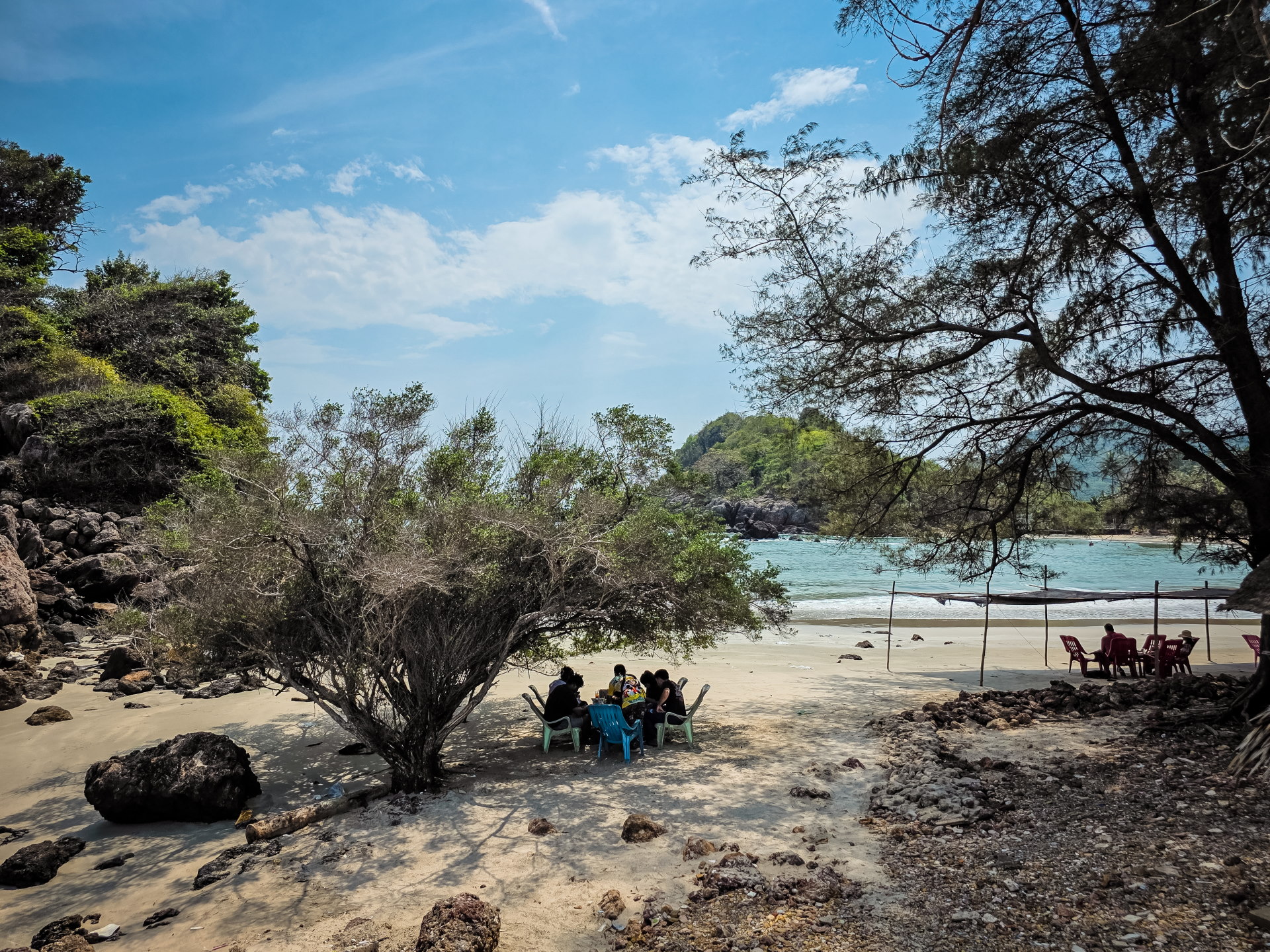
The beach lined with restaurants was pleasant. And I was the first to be surprised to find that Bang Saphan still attracts a minimum of foreign tourists since we came across several enjoying this pretty setting, and even a French family sitting at a table in the same restaurant where we had settled.
Bo Thong Lang can therefore be a pleasant detour for lunch or to discover another side of the Bang Saphan coastline. It makes particular sense if you have a car and enjoy exploring the district's beaches more broadly, or even if you are continuing your journey south.
Other notable places
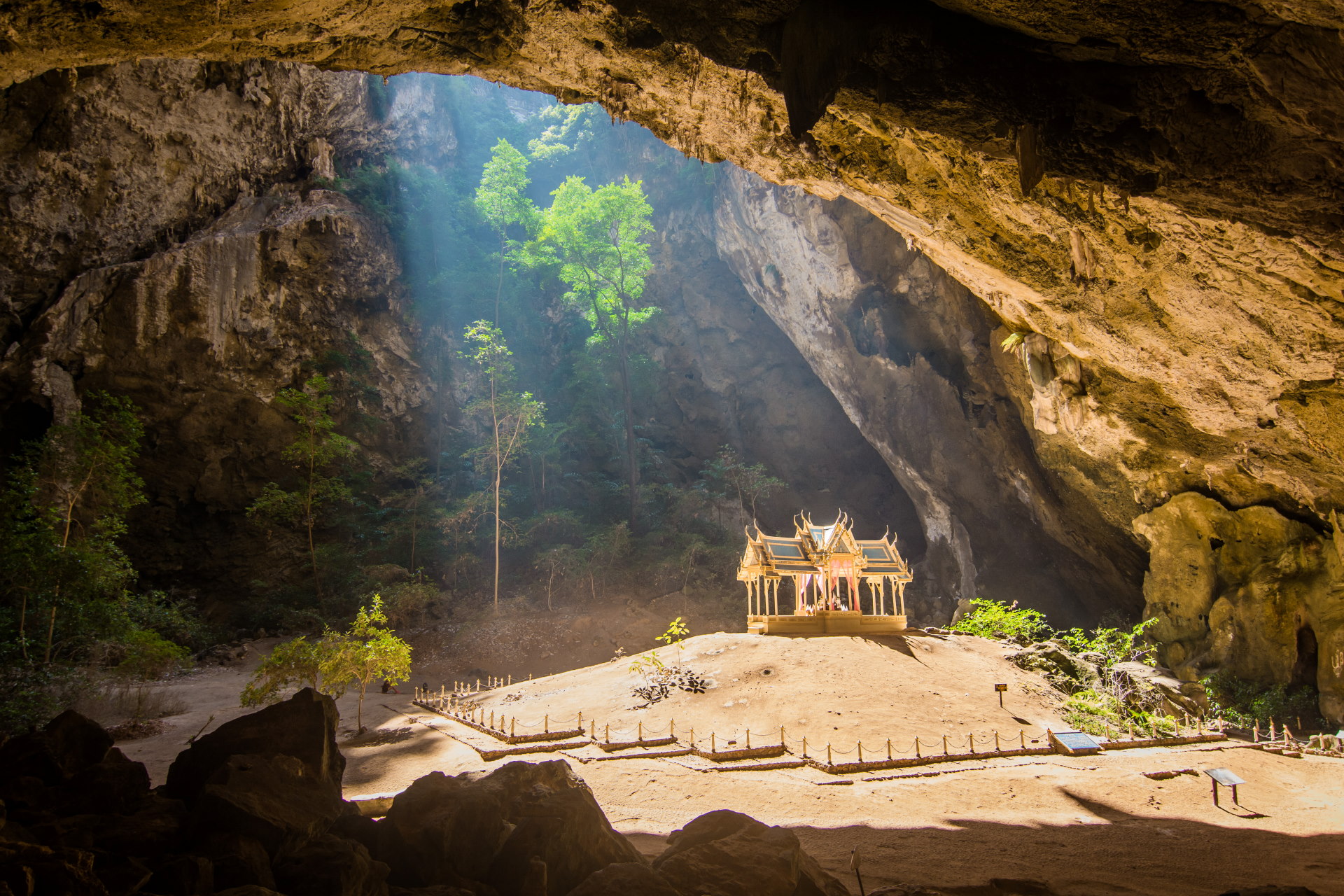
There are at least two other local attractions in the area. Near Thong Chai Hill, you have Wat Tham Kiriwong , a temple known for its two caverns housing various Buddha statues, including a reclining Buddha covered in gold leaf.
In a similar vein, Wat Khao Tham Ma Rong , south of Ban Krut and not far from Bo Thong Lang Bay, houses a more impressive collection of caves. The temple is also located near the small town of Bang Saphan, which is well worth a visit.
How long should I stay in Ban Krut?
Even one night is enough to discover the essentials of Ban Krut. You can arrive in the afternoon, enjoy the beach at the end of the day, then visit Khao Thong Chai the next morning before hitting the road again.
That's what I had done on my way back up from Nakhon Si Thammarat. After my night in Ban Krut, I continued a little further up to Pranburi, where I spent the following night.
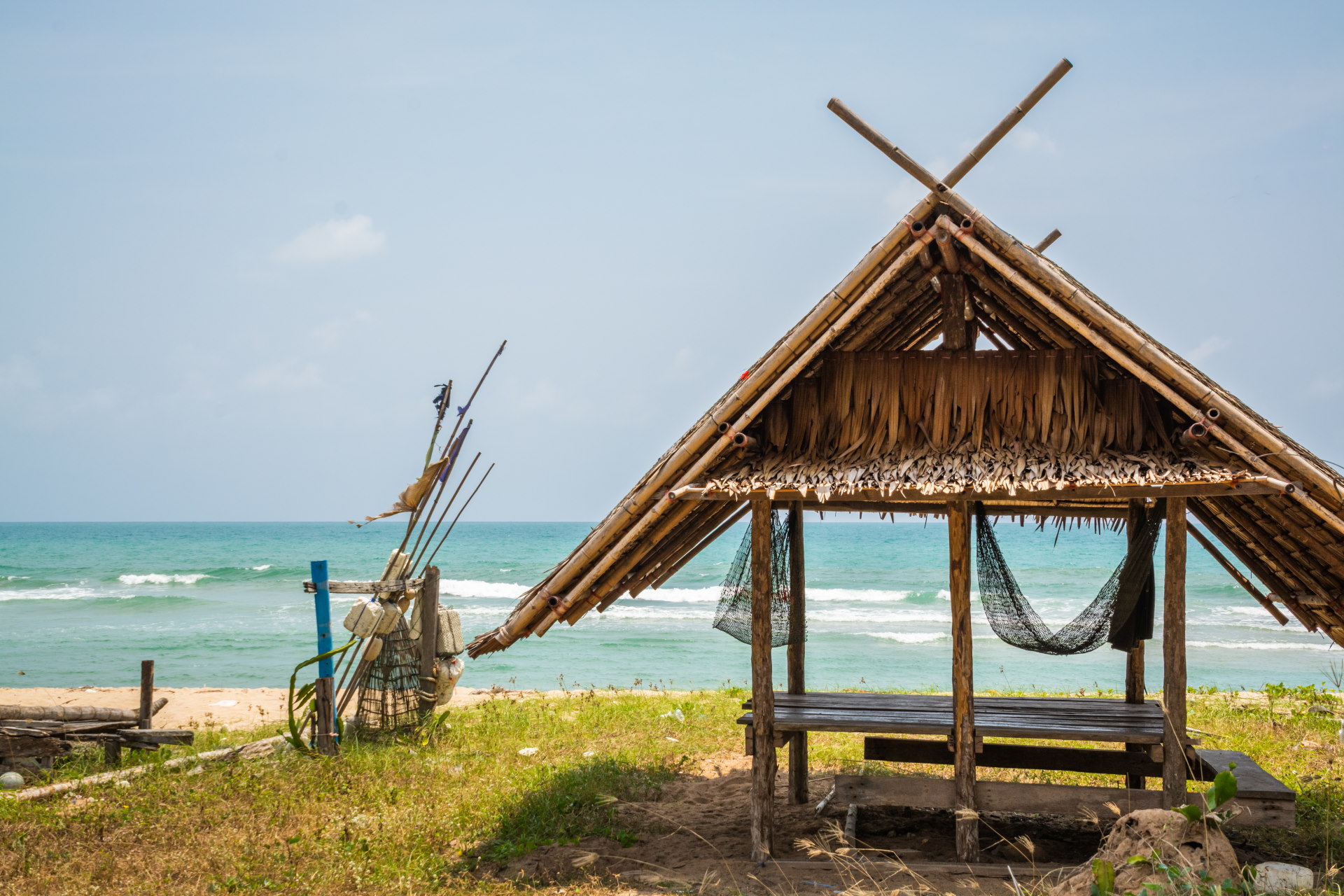
Two nights, however, offer a pace better suited to the destination. You'll have time to better enjoy the beach, explore the surrounding area by bike, and visit the various monuments of Khao Thong Chai without it being just a stopover.
Beyond that, Ban Krut will be most suitable for travelers who are looking for rest and who accept not filling each day with new visits.
How to get to Ban Krut?
Getting to Ban Krut by train
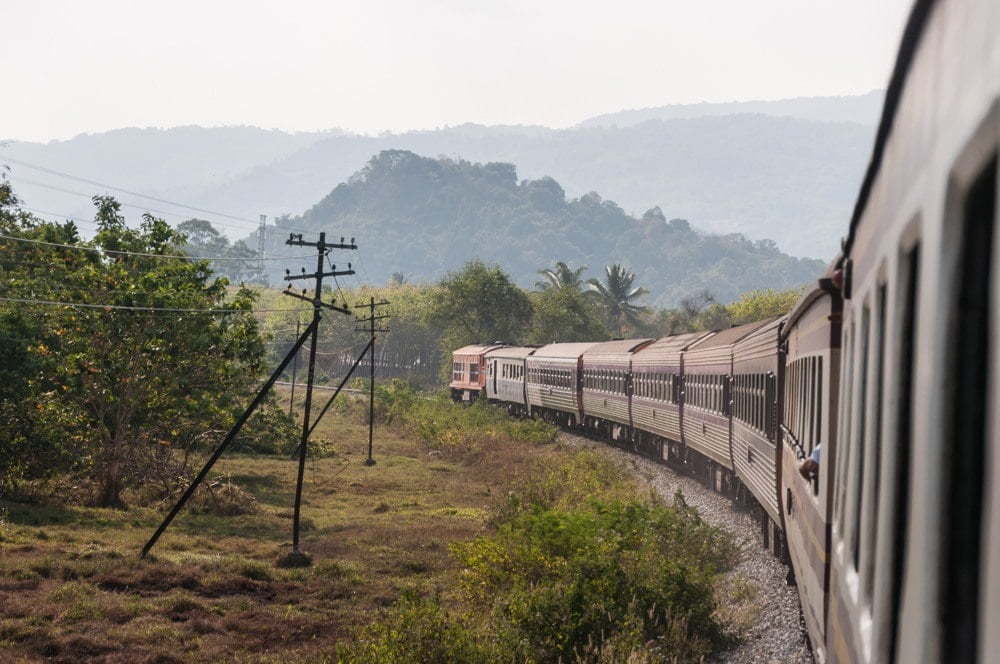
The train is the most convenient option for reaching Ban Krut without a car. The station is located right in the town, just one kilometer from the beach.
Three trains a day currently serve Ban Krut, and the journey from Bangkok takes approximately seven hours. Motorbike taxis usually wait at the train arrival point, and some hotels can also arrange transfers.
→ You can book your tickets on the official SRT website or use the tool provided below, which also includes the bus option.
Getting to Ban Krut by bus
From Bangkok, buses depart from the southern terminal of Sai Tai Mai towards Bang Saphan Noi. This is not the most convenient option as you have to ask to get off at the Ban Krut intersection, located on National Route 4.
There are then about 10 km left to travel from this crossroads, usually by motorcycle taxi or via a transfer arranged in advance with your accommodation.
For the return trip to Bangkok, it's a bit simpler as a bus normally departs from Ban Krut market at 12:30pm. This schedule must be confirmed locally or with your hotel before departure.
Getting to Ban Krut by car
Ban Krut is about 360 km from Bangkok, roughly a five-hour drive. After reaching the famous Rama II Highway, follow National Route 4, also known as Phetkasem Road. At the turnoff for Ban Krut, you'll have about ten kilometers left to reach the beach.
A car is particularly convenient if Ban Krut is a stop on a route south. It also allows you to easily travel along the different sections of the coastline.
In general, schedules and transport options may change, so remember to check the information on the Ban Krut access guide.
How to get around in Ban Krut?
For a short stay centered on Ban Krut, walking and renting a bike may be enough, but the location of your hotel remains important since the resorts are spread over several kilometers and the village and the train station are located slightly inland from the coastline.
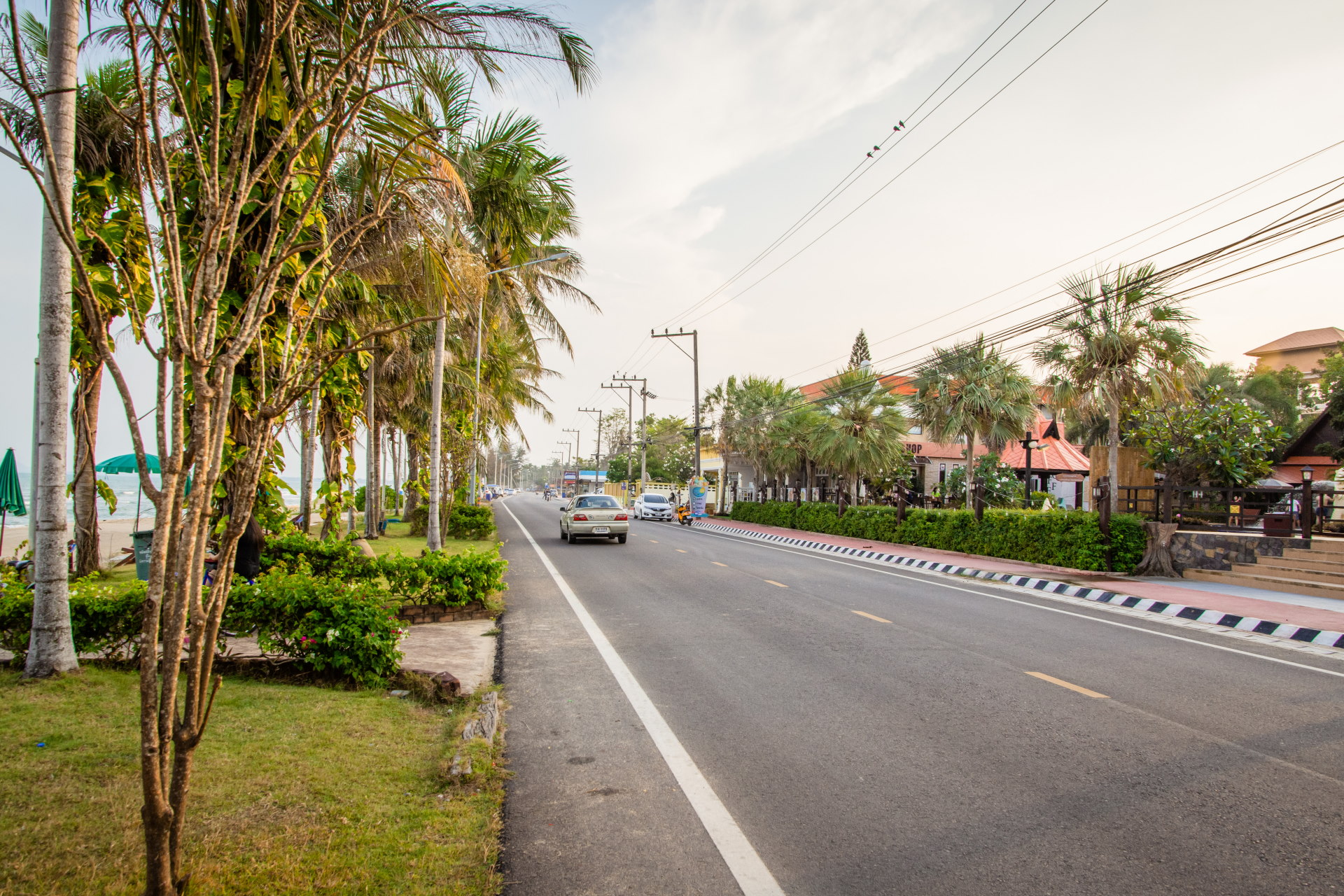
- To rent a bicycle: Expect to pay from 100 baht per day. The easiest way is to ask your accommodation directly, as many resorts and guesthouses offer bicycles to their guests. You will also find at least a small rental shop near the beach.
- To take a motorcycle taxi: Drivers usually wait at the train station when trains arrive. Expect to pay around 50 to 80 baht to reach accommodation near the beach, depending on its location. For longer trips, especially to Khao Thong Chai, agree on the price before setting off and, if necessary, request a round trip that includes waiting time at the beach.
- To get around by car: If you wish to explore the coastline more extensively, it is best to rent your vehicle in Bangkok or Hua Hin before heading to the region.
Where to stay in Ban Krut?
During my two stays in Ban Krut, I chose the Baan Grood Arcadia Resort & Spa . The property is located opposite the main beach, has a lovely swimming pool, and is close to the village as well as the few restaurants located along the coastal road.
The establishment remains a benchmark, but as my last stay was several years ago, I still advise you to check recent reviews and photos before booking.
See available accommodations in Ban Krut
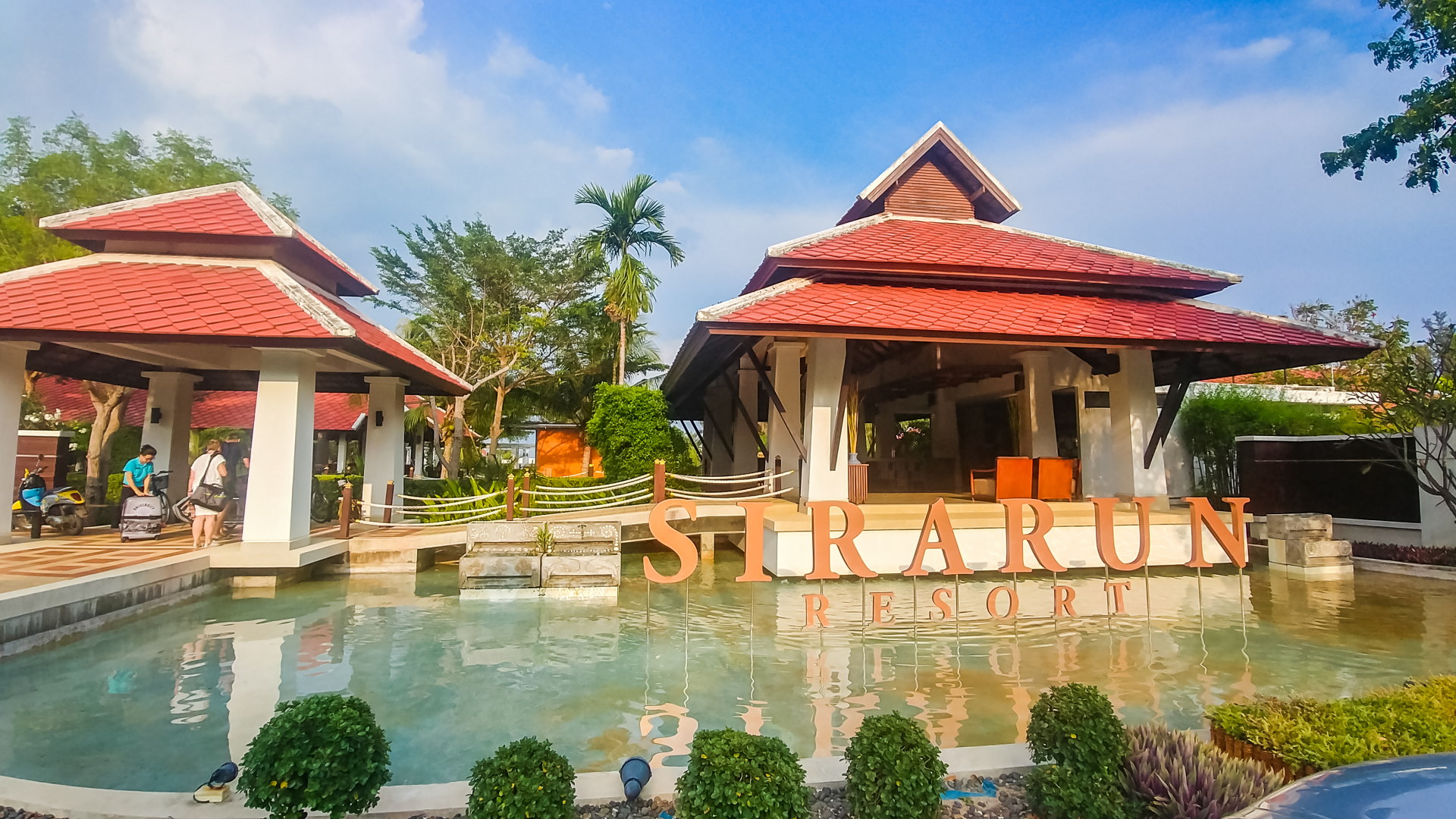
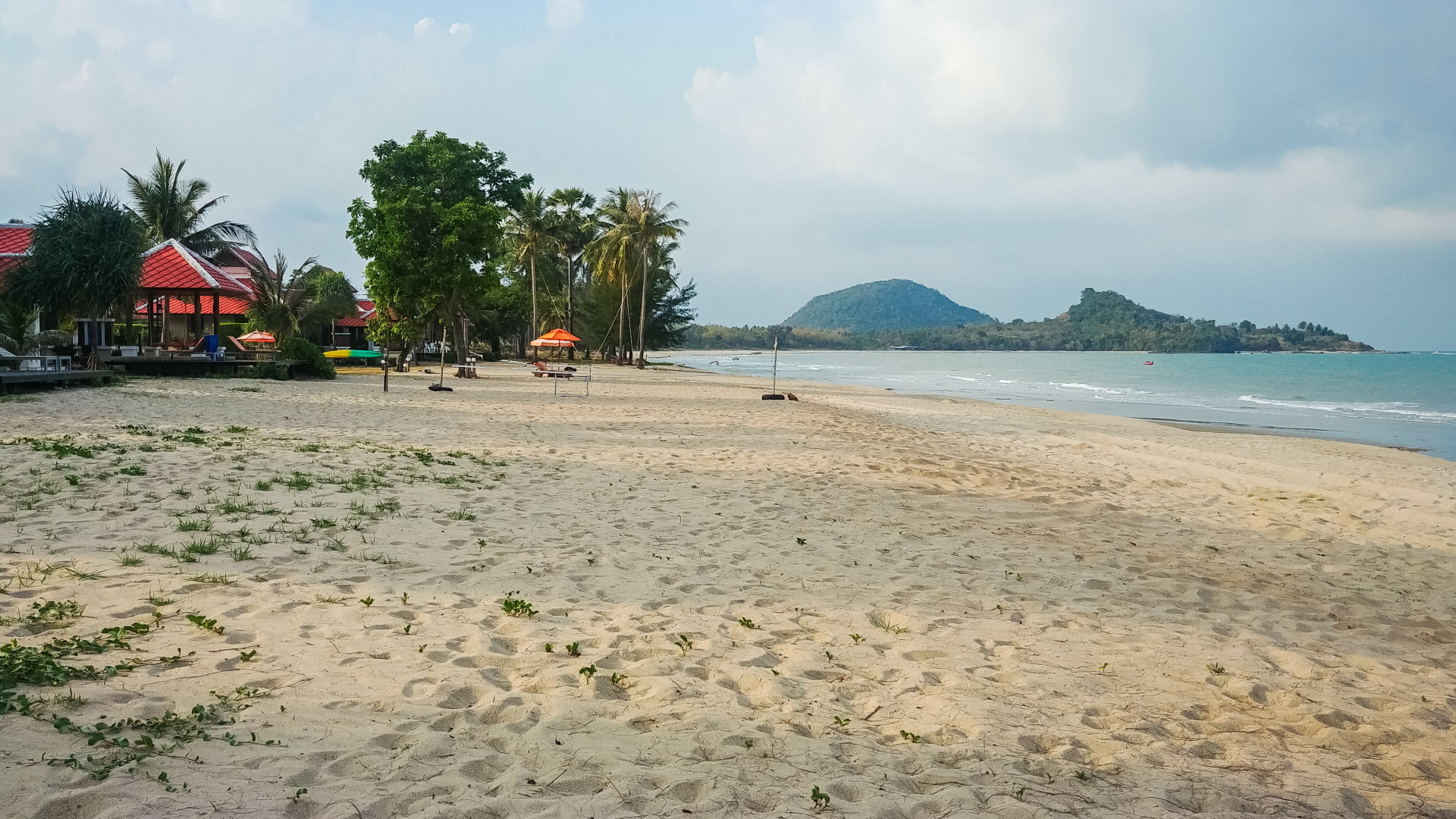
Alternatively, staying close to Ban Krut (8 km), we stumbled upon the Sirirun Resort while we were checking out the local (unnamed) beach. It looked like a nice place and the beach was lovely, perhaps even nicer than Ban Krut.
When to go to Ban Krut?
The period between late summer and spring generally offers the most favorable conditions for enjoying the coast. Temperatures are more pleasant in December and January, while the sea is often calmer during the dry season.
The rainy season doesn't necessarily preclude a trip, but rainfall becomes more frequent and the sea can be rough. Autumn is one of the wettest periods in this part of the Gulf of Thailand.
The day of the week matters almost as much as the season. If you're looking for a truly peaceful beach, opt for a midweek stay and avoid long weekends and major Thai holidays. Hotels can fill up quickly and their prices increase during these times.
You can compare more precisely the favorable periods with my tool dedicated to the weather in Thailand.