


If there is one major site that you absolutely must see in South Korea and Seoul, it is Gyeongbokgung Palace.
It's somewhat equivalent to the Grand Palais in Bangkok or Versailles in France, to compare its importance. And while there are five grand palaces in Seoul , which are among the classic sights to see in the capital, Gyeongbokgung Palace is the largest and most important in the country.
Construction dates back to 1395, at the very beginning of the Joseon Dynasty (Korea's most influential period), to house the royal family. Its founding also marked the change of capital, the former capital being the city of Kaesong, 50 km north of Seoul and now part of North Korea. Its location was considered blessed by the gods, nestled between Mount Bugaksan and Mount Namsan opposite. This is why its name means "Palace Greatly Blessed by Heaven."
This article is part of my series on Seoul. If you're planning a complete itinerary, you can find the detailed 4-day Seoul program here.
Practical information

Getting to Gyeongbokgung Palace
The Palace is easy to reach, as it is located in the heart of Seoul, at the end of Gwanghwamun Square, a sort of local Champs-Élysées.
Address : 161, Sajik-ro, Jongno-gu, Seoul
The fastest and most efficient way to get around Seoul. Given the importance of the site, there are obviously subway exits nearby, which will only take a few minutes of walking.
- Line 3, Gyeongbokgung Station (Government Complex-Seoul), exit 5
- Line 5, Gwanghwamun Station, Exit 2
A quick note: the site is open in the evening on certain nights of the year (see below). Since metro exit 5 on line 3 is closed at these times, you should use exit 4 instead.
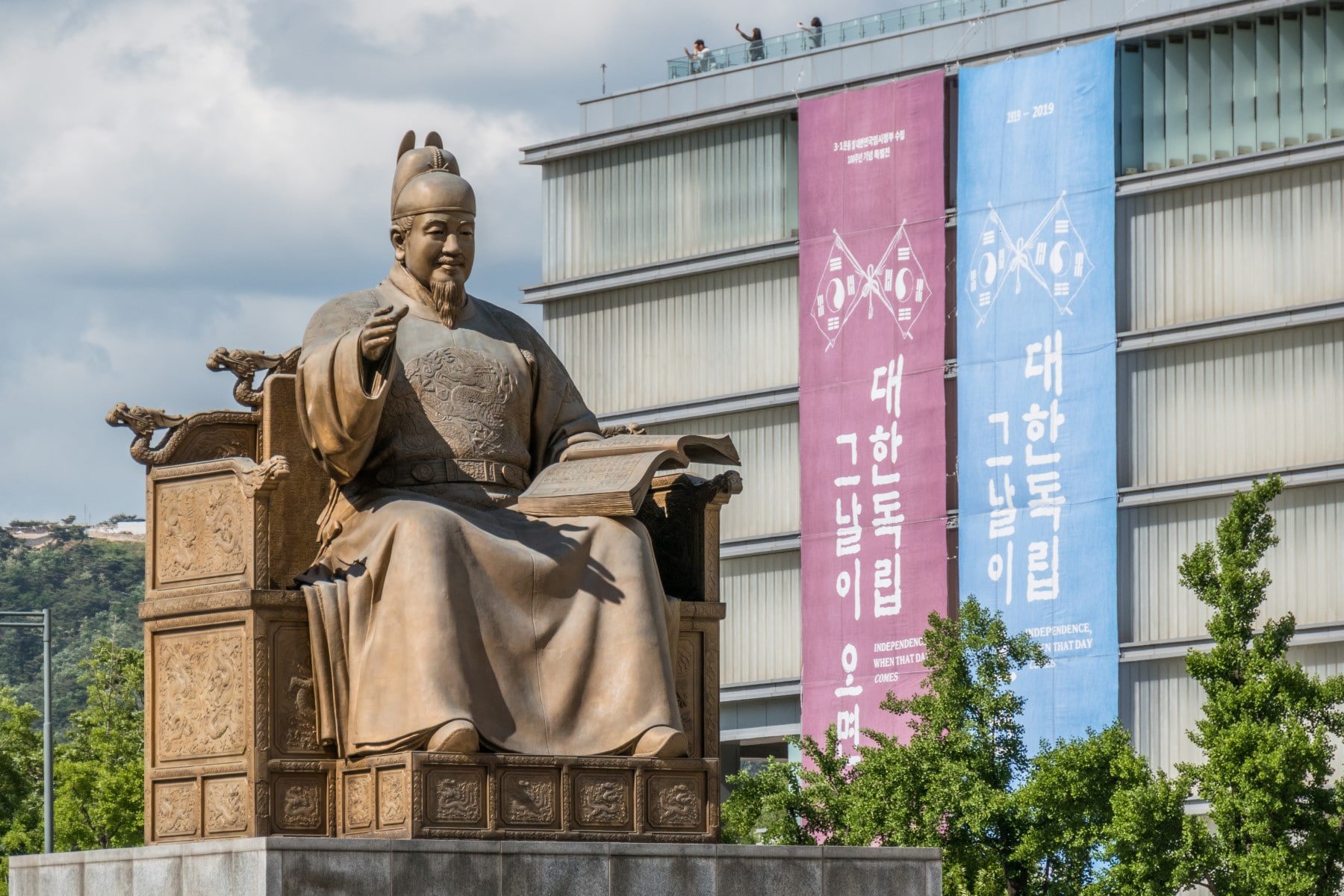
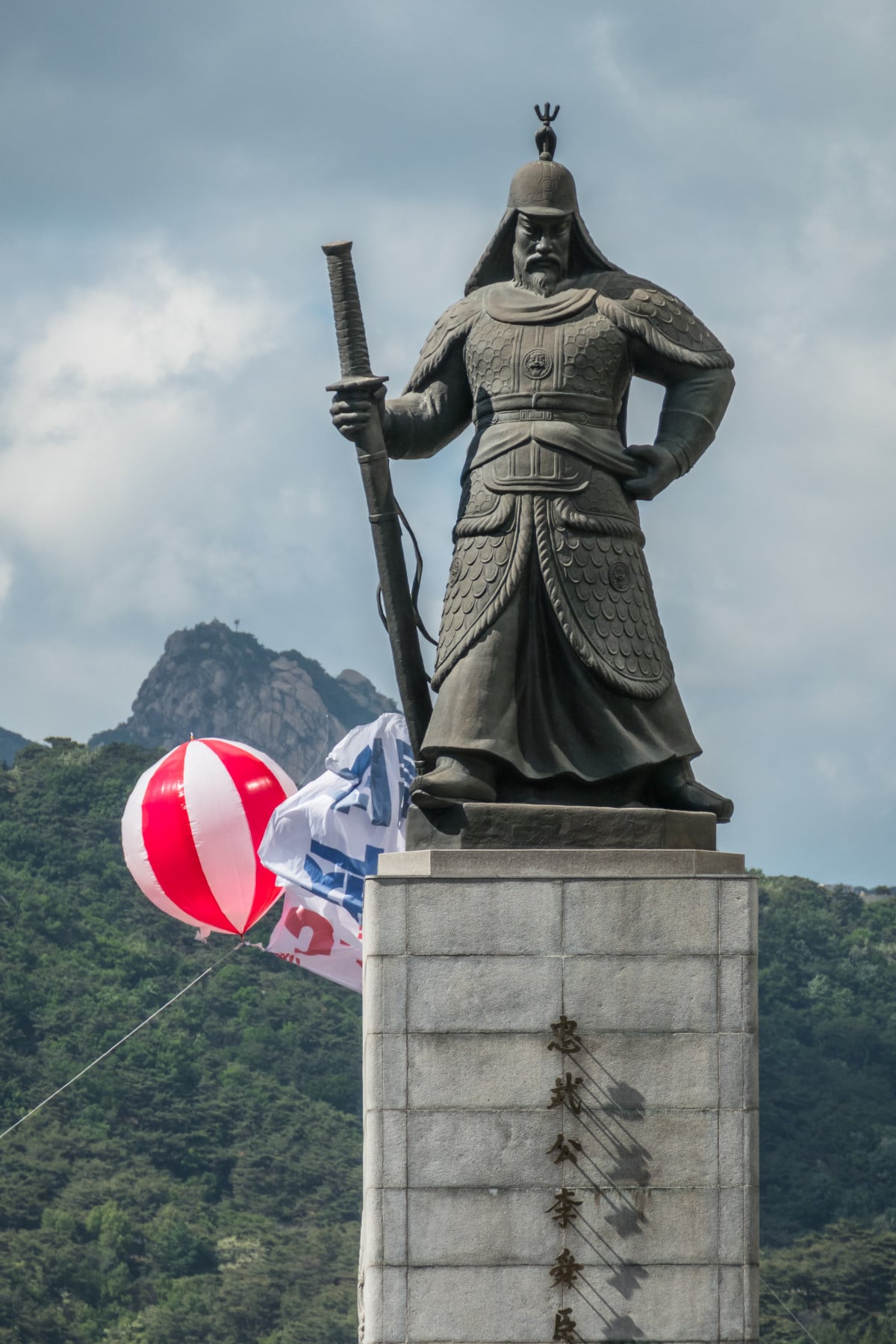
If you exit at Gwanghwamun Station, you'll walk along Gwanghwamun Square for 400 meters, a walkway in the middle of the imposing avenue facing the palace. You'll have the palace directly in front of you, with a statue of King Sejong, an important 15th-century ruler, in the center of the square. If you turn around, you'll see a pedestal with a standing statue of Admiral Yi Sun Shin, a true war hero, renowned for his strategic acumen and his fleet of battleships (long before the modern era of these warships) known as "turtle ships."

Due to its central location, there may be traffic. As mentioned before, the subway is the best way to reach Gyeongbokgung Palace. However, from Incheon Airport or outside Seoul, the bus can be a convenient way to get there. From Incheon Airport, take bus #6011.
Gyeongbokgung Palace Hours and Fees

Gyeongbokgung Palace Map
To help you find your way around the directions I'll give below, here's a map of Gyeongbokgung Palace . I've indicated the numbers corresponding to the photos and their associated explanations, so that even if you don't take the guided tour, you'll have a general idea of what's around you.
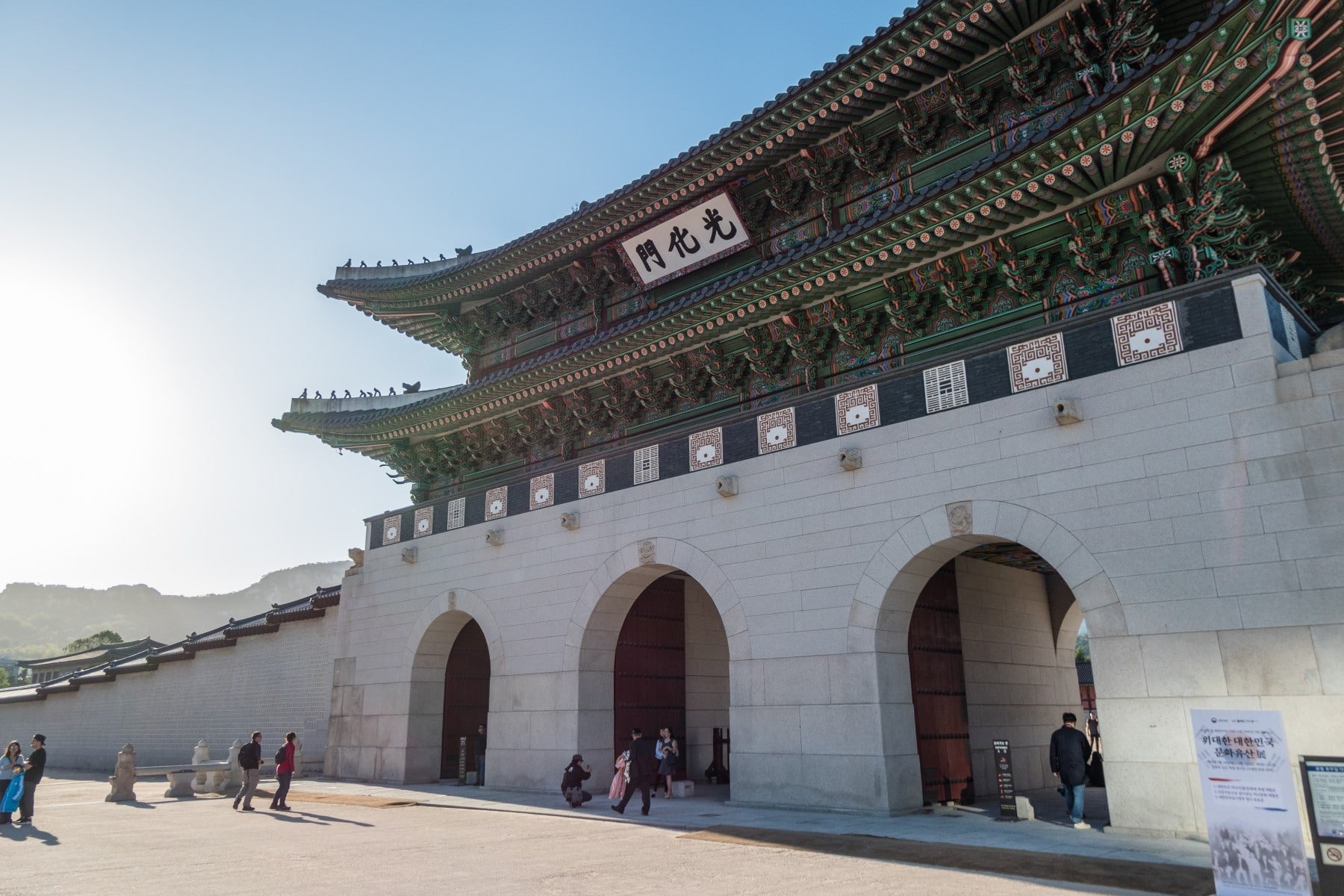
1. Gwanghwamun (Great Outer Gate)
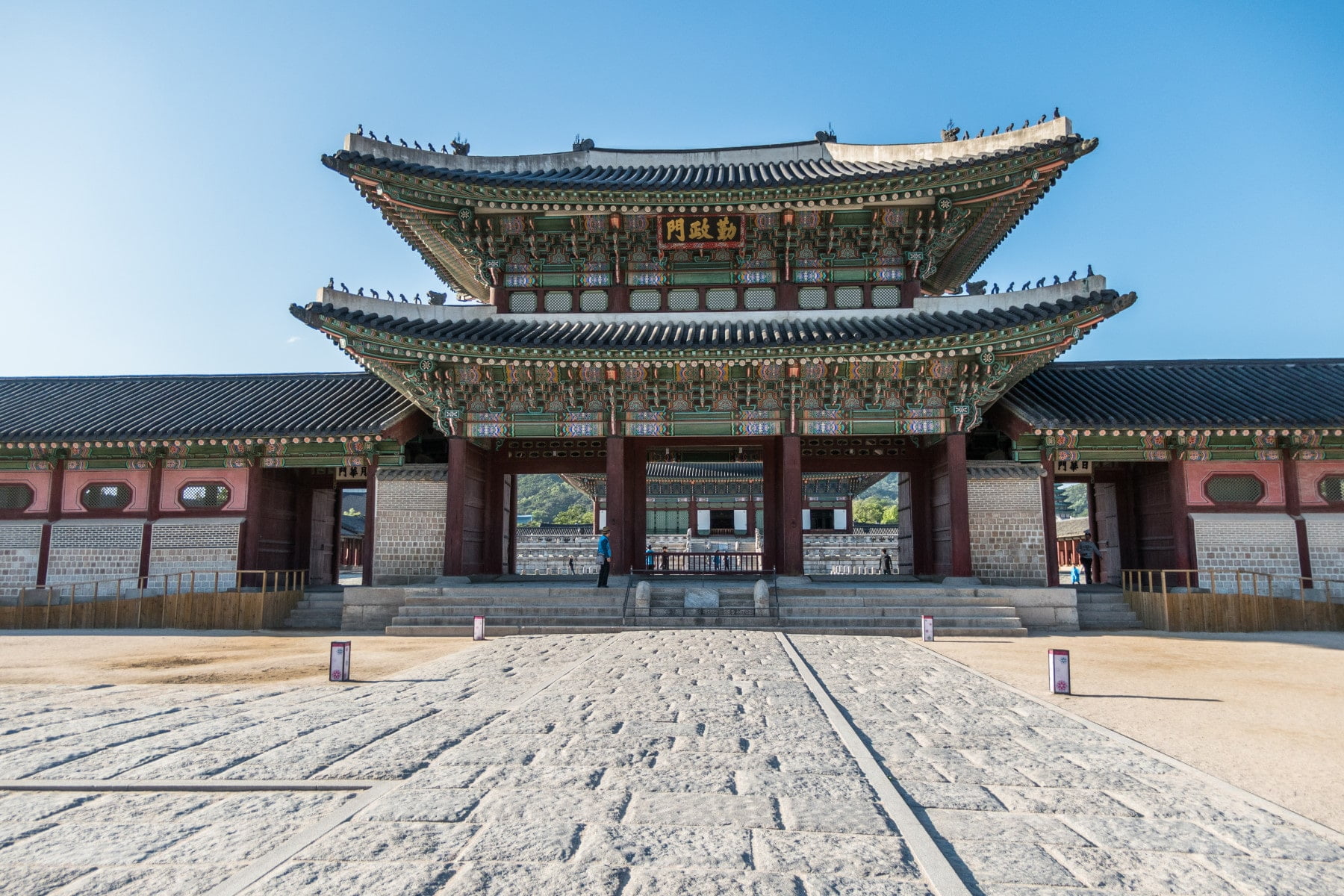
2. Heungnyemun (inner gate)
3. Geunjeongjeon (Throne Hall)
4. Sajeongjeon Hall
5. Sujeongjeon Hall
6. Gangnyeongjeon (King's Quarters)
7. Gyotaejeon (Queen's Quarters)
8. Amisan (terrace with garden)
9. Jagyeongjeon (Queen Mother's Quarters)
10. Donggung (Prince's residence)
11. Gyeonghoeru (Royal Pavilion)
12. Hyangwonjeong (Royal Pavilion)
13. Geoncheonggung (royal residence)
14. Jibokjae (bookstore and reception hall)
15. Taewonjeon Hall (shrine)
16. Sinmumun (North Gate)
17. National Palace Museum of Korea
18. National Folk Museum of Korea

A Brief History of Gyeongbokgung Palace

I mentioned it in the intro, the Gyeongbokgung Palace was the main royal palace of the Joseon dynasty, founded at the coronation of the new king, Taejo (Yi Seong-gye) in 1392. Note that this dynasty left a lasting mark on the country and was also the last in the history of Korea.
The new King Taejo decreed the town of Hanyang (which would become Seoul) as his new capital in 1394. The location was chosen based on the Chinese principle of Fengshui. The construction of Gyeongbokgung Palace was completed in 1395. Although the name of the palace indicates a temple under the protection of the heavens, it cannot be said that it was a success…
In summary, here are the key dates to remember:
1592-1598 : This was a period of Japanese invasion, known as the Imjin War. The systematic attacks by Japanese troops on sites representing power did not spare the king's palace, which was largely destroyed by fire. Following this tragic episode, Changdeokgung, a secondary palace, was rebuilt and served as the main palace for nearly three centuries.
1867 : Prince Regent Heungseon restored Gyeongbokgung Palace during the reign of King Gojong (1852-1919). It then comprised more than 500 restored buildings, spread over 40 hectares.
1910-1945 : This is the period of Japanese occupation. The palace was dismantled and a large part of the buildings (80%) were destroyed during the Japanese colonization.
1927 : The Gwanghwamun Gate is removed. To consolidate their power, Imperial Japan constructs a massive architectural structure in the front area of the palace to house the Japanese General Government, which previously blocked the view of the palace.

1990-2009 : Over time, the palace was gradually restored. It wasn't until the late 90s that the imposing Japanese building was demolished. By the end of 2009, it was estimated that 40% of the structures that existed before the Japanese occupation of Korea had been restored or rebuilt.
2009- : South Korea is currently in a new phase of restoration planned over 20 years to restore the site to its original splendor.

Attend the Changing of the Guard at Gyeongbokgung Palace
Before getting to the heart of the matter regarding the visit itself, I wanted to talk to you about an inseparable aspect of visiting this palace: the Changing of the Guard ceremony . It's a very symbolic ceremony, which doesn't have the same aura as the famous one at Buckingham Palace in London, but it can still be interesting to witness.
Changing of the Guard Ceremony
South Korea takes the preservation of its culture and heritage very seriously. In Seoul, the dress code and procedure are based on the style of the Joseon Dynasty, but these are not "real" guards. They are actors, who have been allowing this "reenactment" since 1996 with traditional uniforms and weapons in hand. The whole thing is orchestrated with traditional music playing in the background.
The changing of the guard ceremony was first instituted in 1469 during the (short) reign of King Yejong, when the day guards changed with those on night duty.
The royal guards of the Joseon Dynasty were by definition responsible for guarding and patrolling the royal palaces and city gates. The commander of the gate guards, called Sumunjang, was the military leader who led these royal guards.

Guards on duty in front of the door
The Royal Palace Parade
Other “spots” to guard
Since we're on the subject, I wanted to mention that if you happen to miss the guards at Gyeongbokgung Palace (like we did…), there are several other places where you can spot them. The first ones we saw were stationed in front of the Daehanmun Gate , which serves as the main entrance to Deoksugung Palace. A guard stood on each side, completely unfazed.

Our stroke of luck and perfect timing presented itself as we were heading to Namdaemun Gate ("Great Southern Gate," its real name being Sungnyemun, meaning "Gate of High Ceremonies"), located 500 meters from Deoksugung Palace. Although there was no one there when we arrived, as we lingered in the area, we suddenly saw a contingent of guards, all in costume, who were just then performing a brief changing of the guard ceremony.
In concrete terms, there are supposed to be guards present all day, every day except Tuesdays, and except on rainy days, or when the weather is too cold or too hot.
There is a special ceremony at the opening (10:00) and closing (16:00). After that, the guards change shifts every 30 minutes and you have nine guards patrolling the gate three times a day – at opening, at noon (12:30 to be exact) and at closing. Since it was 14:20 when we went, I don't know if it was just a "simple" shift change, but what I remember is that after a nice series of photos, I was satisfied with the experience.

Visit the different structures of the palace
Let's get to the heart of the matter this time concerning the visit to the palace itself. I will first discuss numbers 1, 2 and 3 corresponding to the map, which represents the heart of this imposing ensemble.
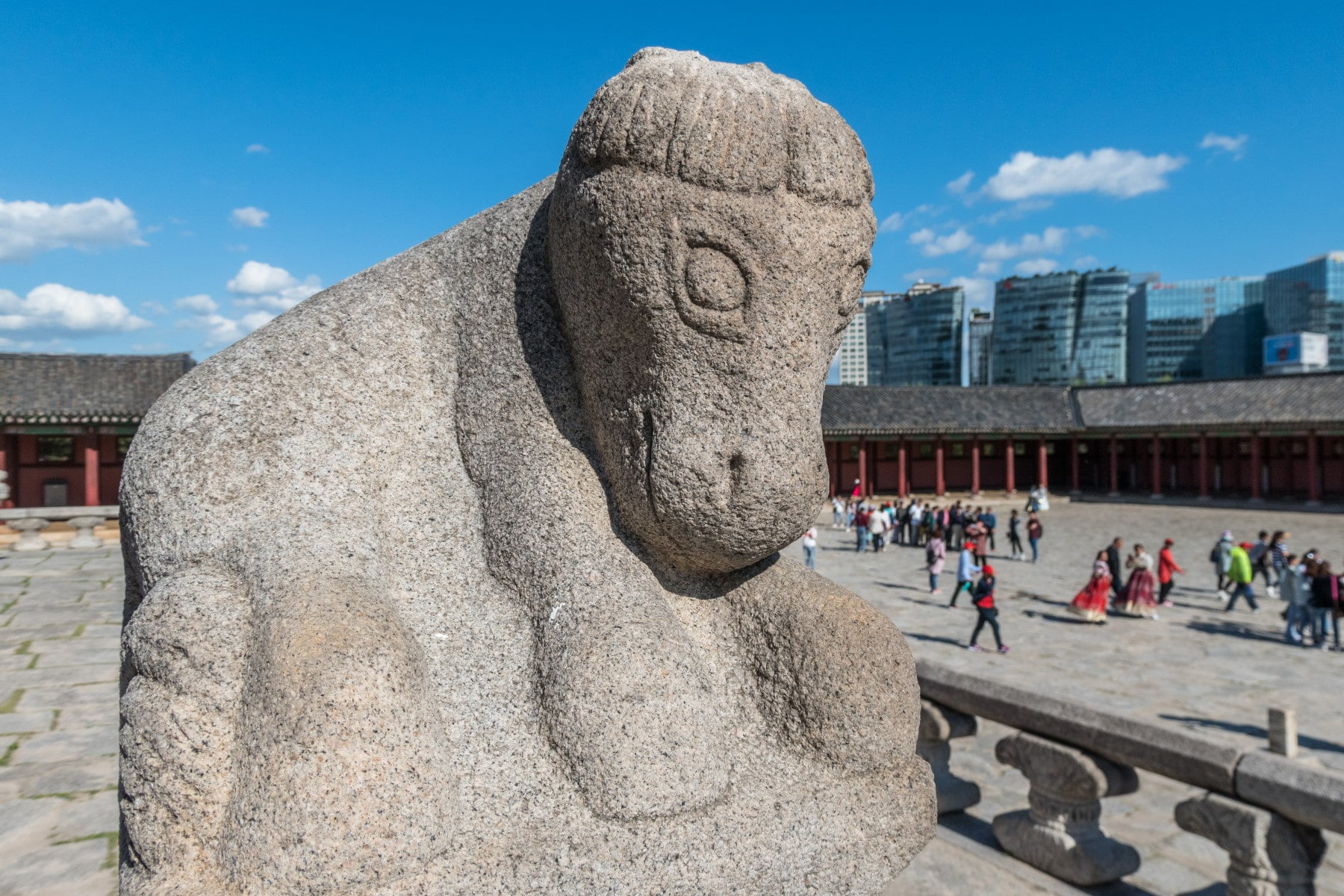
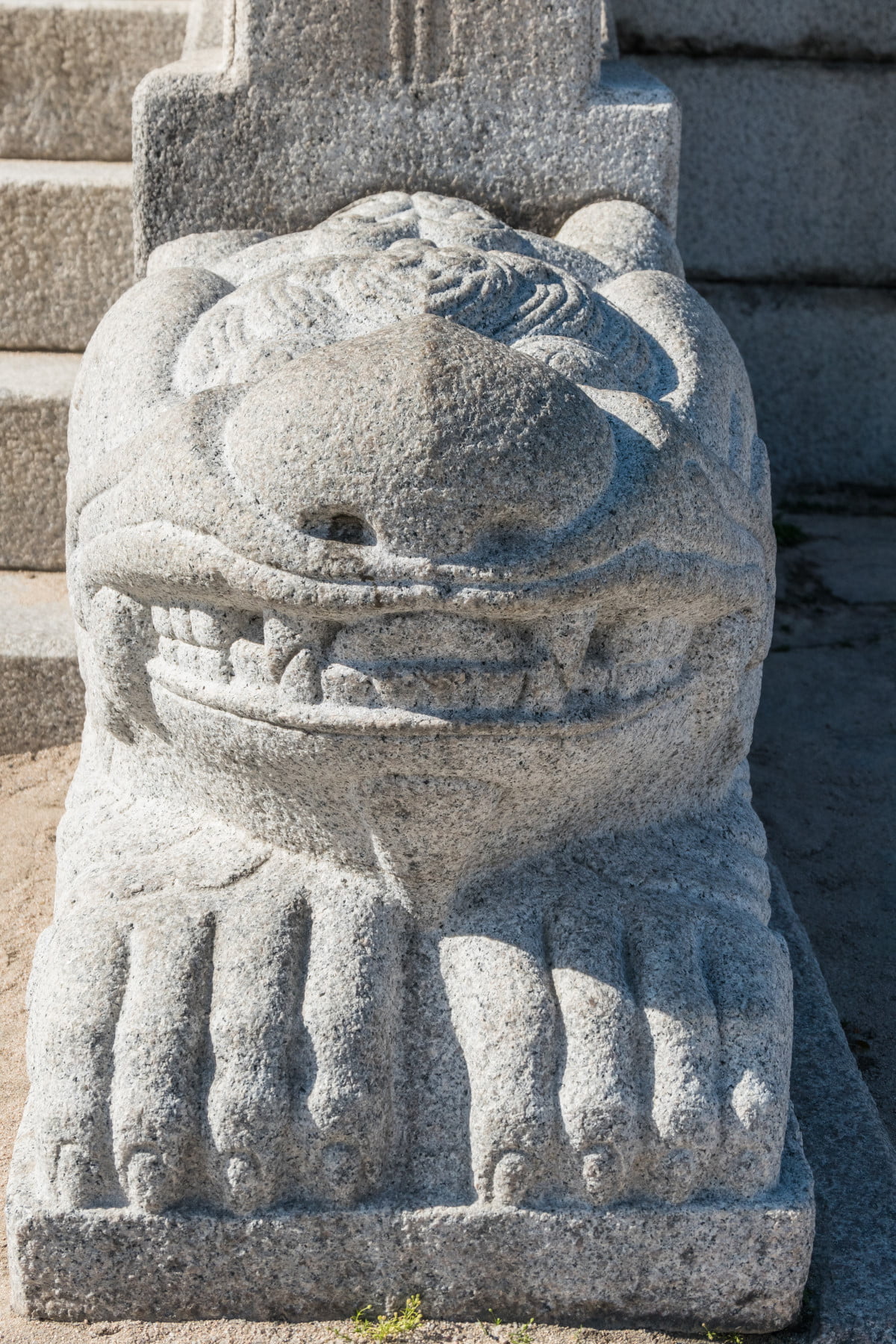
Note the presence on each side of the gate of pedestals with a statue of a kind of lion. This is the one seen in the old photo above, and it is specifically the haetae , an animal from Korean mythology . It has the form of a lion covered in scales or fur with a horn on its forehead.
Also called haechi , it became the official symbol of Seoul in 2008 and is widely perceived as a strong national symbol. They usually go in pairs, not just for aesthetic reasons, but because they represent a male and female couple, protectors often placed at the entrance of important buildings.

1. Gwanghwamun Gate
It is through its large main gate, in front of the square bearing the same name, Gwanghwamun, that you will enter the Gyeongbokung Palace complex.
Since Gyeongbokgung Palace was the main palace of the Joseon Dynasty, the gates were built like fortresses with high stone walls and three arched entrances. This is a configuration that was also found in Vietnam. Namely, the central arch is only used by the king while the crown prince(s) and government officials used the side entrances.

The architecture features a double roof, typical of Korea. A bell inside the building was used to announce the time of day. Gwanghwamun Gate was first rebuilt in 1968, in a "provisional" version in concrete, but has since been completely restored by replacing its original structure.
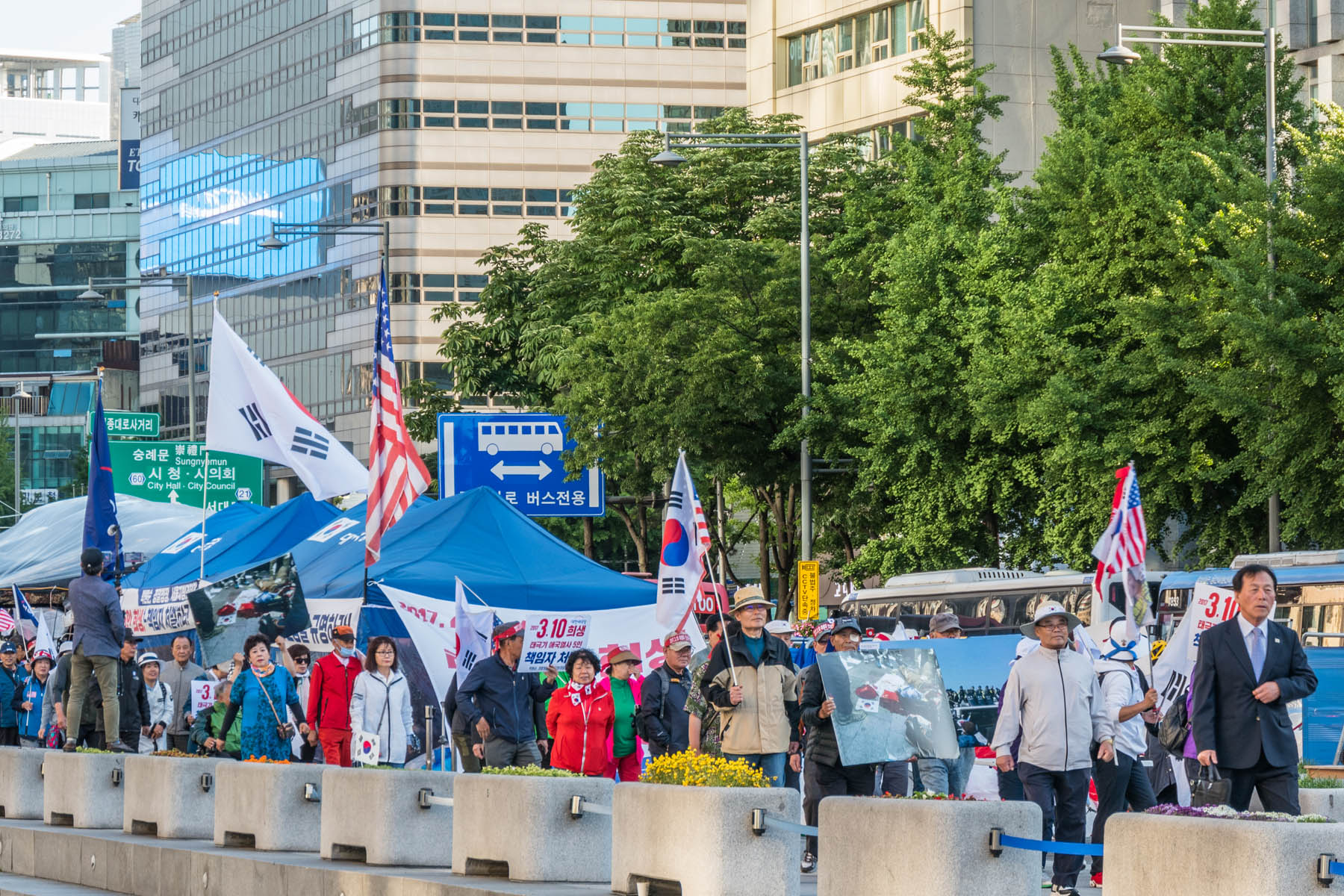
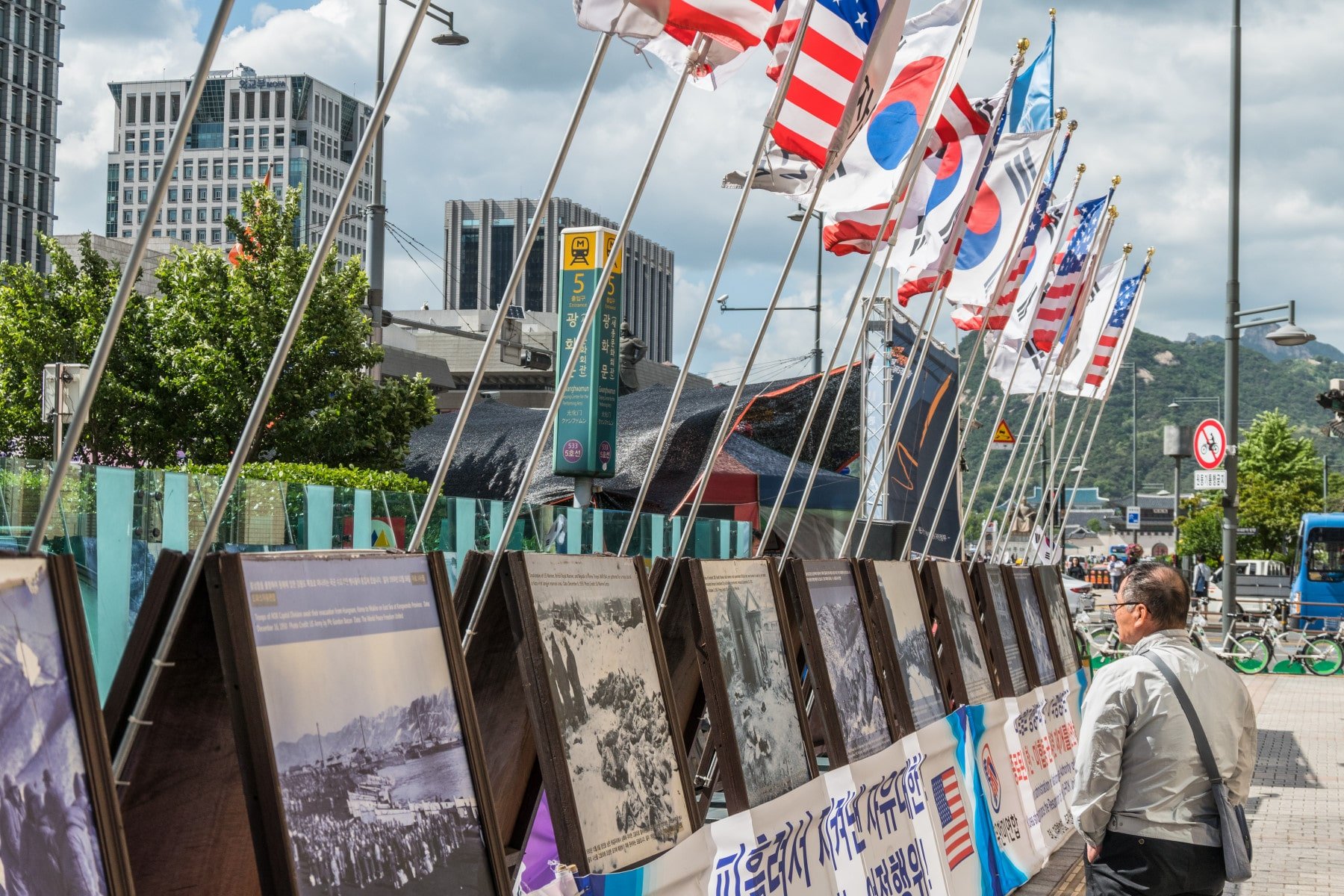
During the Joseon Dynasty, the square in front of Gwanghwamun Gate was used by citizens to gather and express their political opinions. Behind the palace is the Blue House, the current residence of the Korean president (equivalent to the Elysée Palace) but also with the proximity of the American embassy across the street, Gwanghwamun Square still serves as a place for demonstrations and important political events. This is what we could see with anti-communist leaflets and protests that seem almost daily.
2. Heungnyemun (The Second Inner Gate)
Just after passing through the main gate, you'll find the ticket counter on your right . Unless you're wearing traditional clothing, don't forget to buy them 😉 If this is your first palace in Seoul, get the package mentioned above for 10,000 won; that way, you'll be all set for future visits.

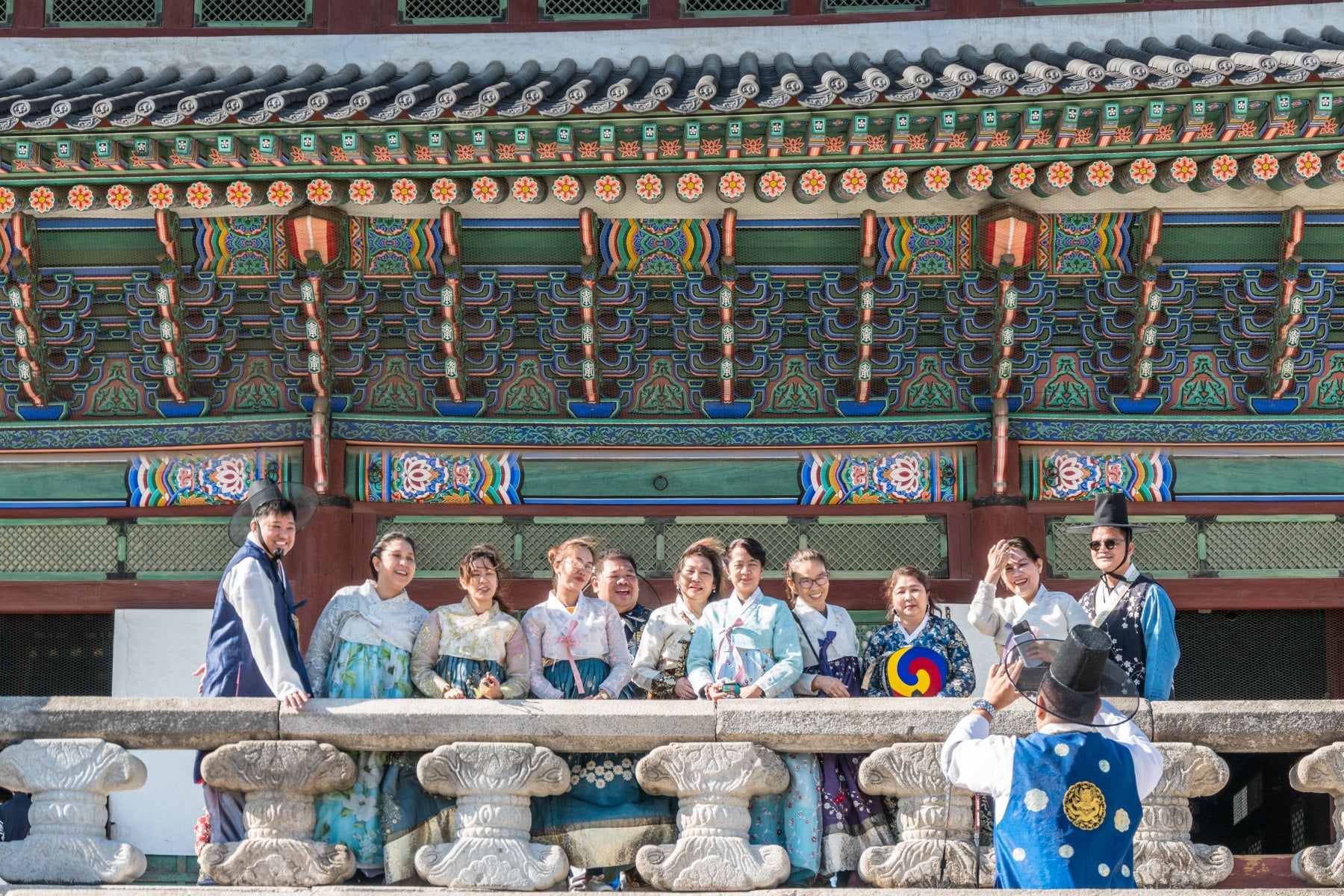
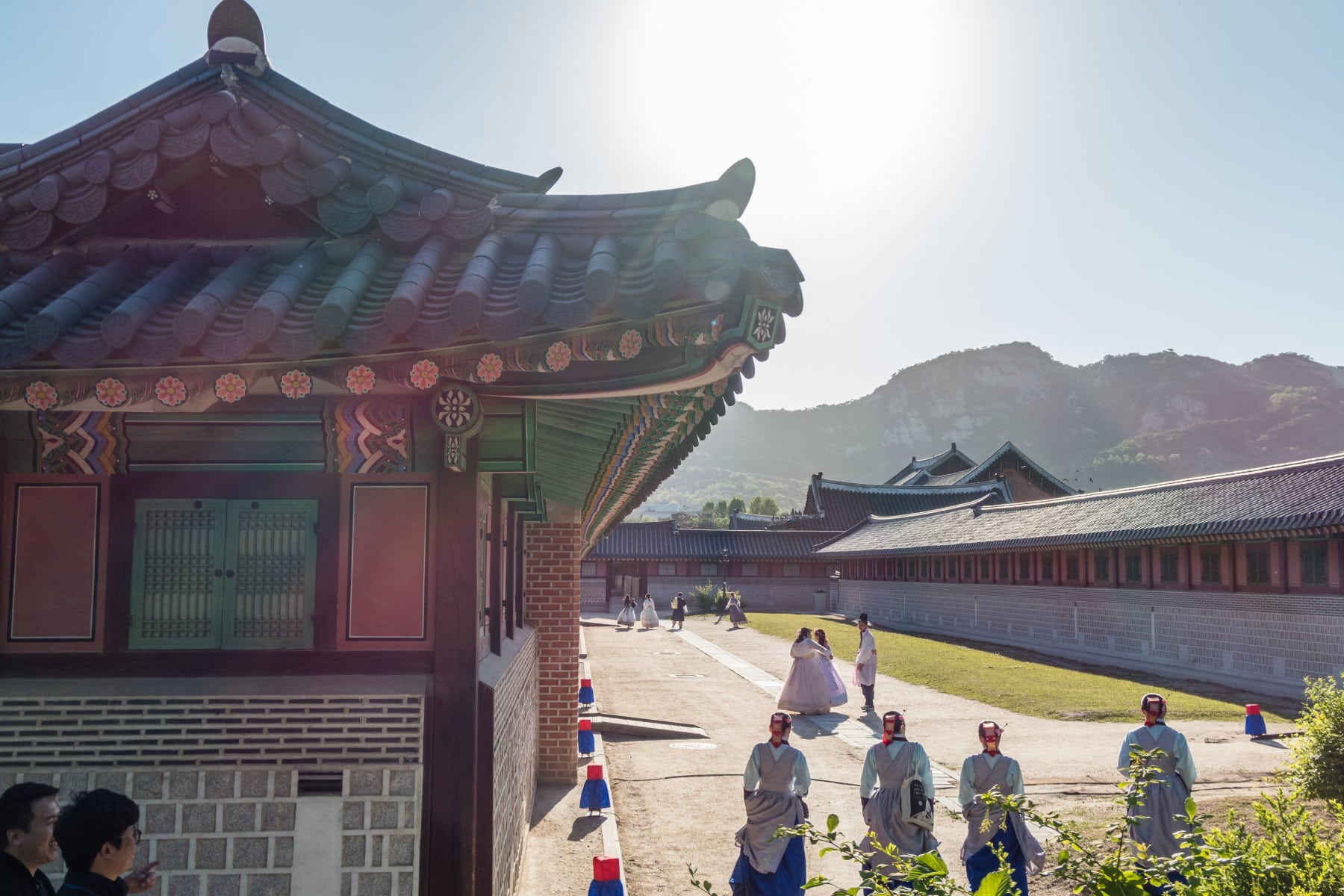
It's a vast courtyard separating the main gate from the secondary Heungnyemun gate . This brings to mind the crowds that can fill the space. Needless to say, as a must-see in Seoul , it's a popular spot for selfies, and many locals come every day to visit their heritage, which has been beautifully restored, it must be said.
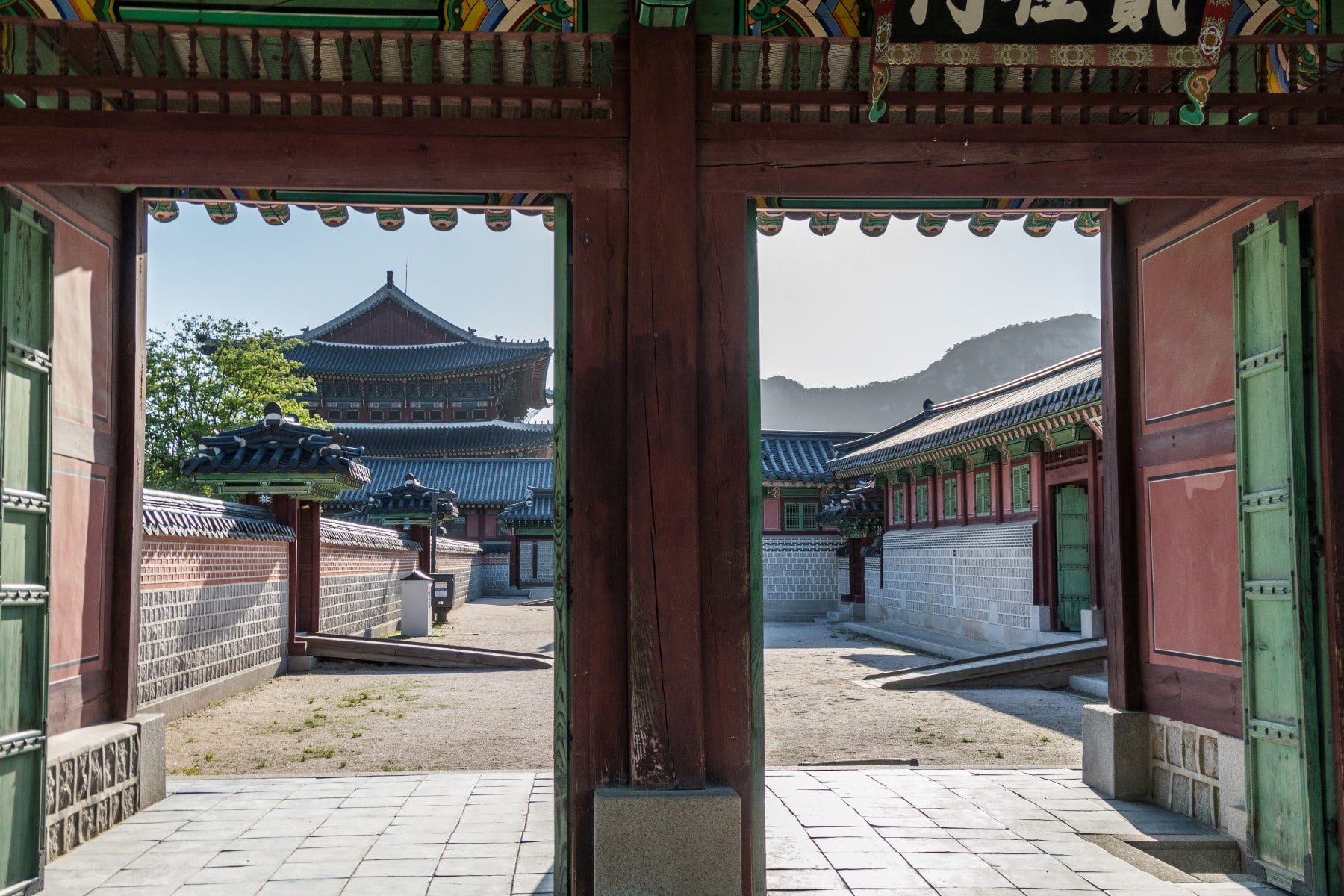
This is also the case with the inner gate, Heungnyemun, which was restored to its original state after the colonial-era Japanese government building was demolished. This gate surrounds a cloister with an intermediate courtyard, alongside the one surrounding the throne room, Geunjeongjeon.
There were people, and yet, I want to point out that we arrived late. To clarify the circumstances, we had just arrived from Bangkok that morning, the time to go to the hotel and reach the palace via the Cheonggyecheon promenade, we entered the Gyeongbokgung Palace only around 16:00.
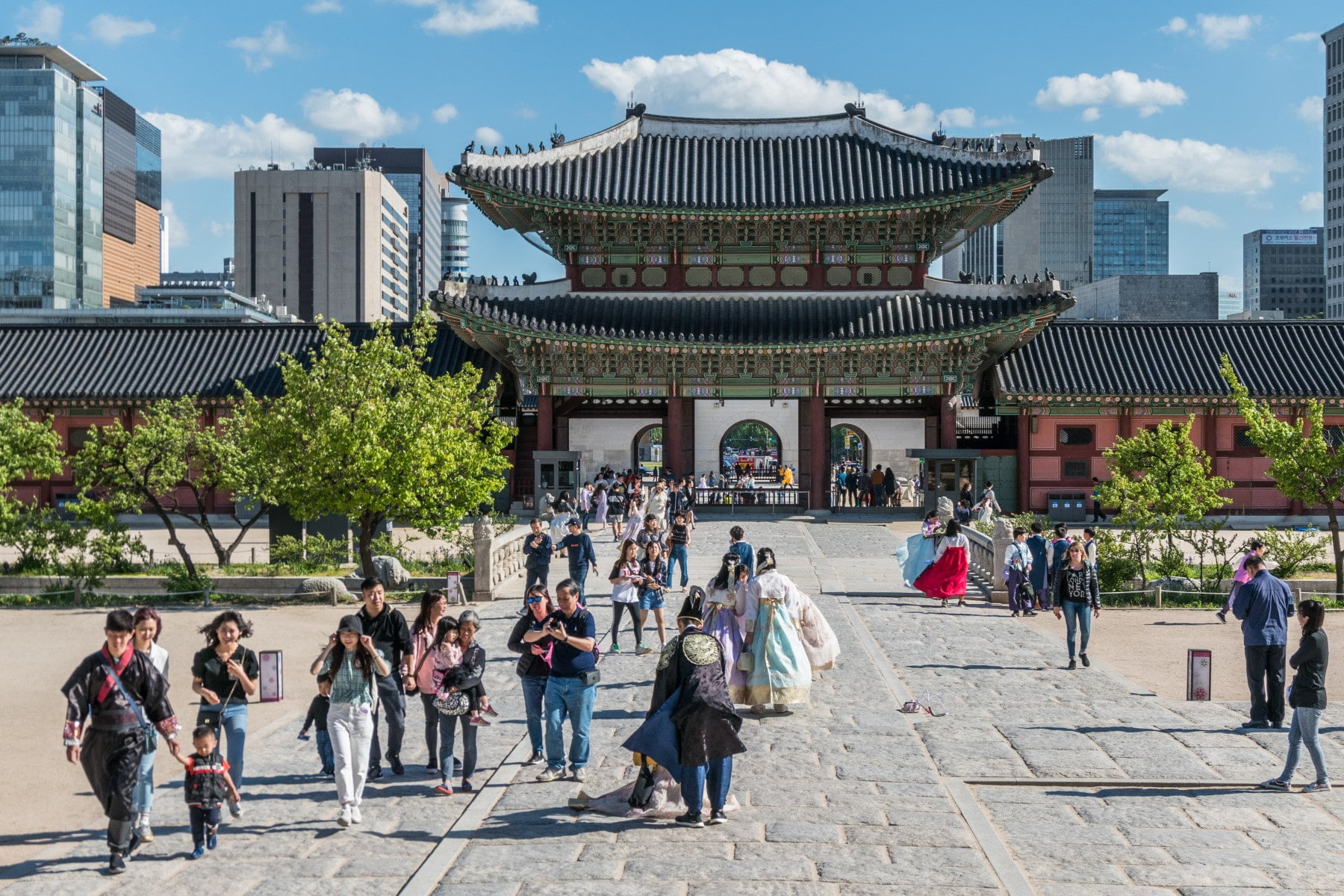
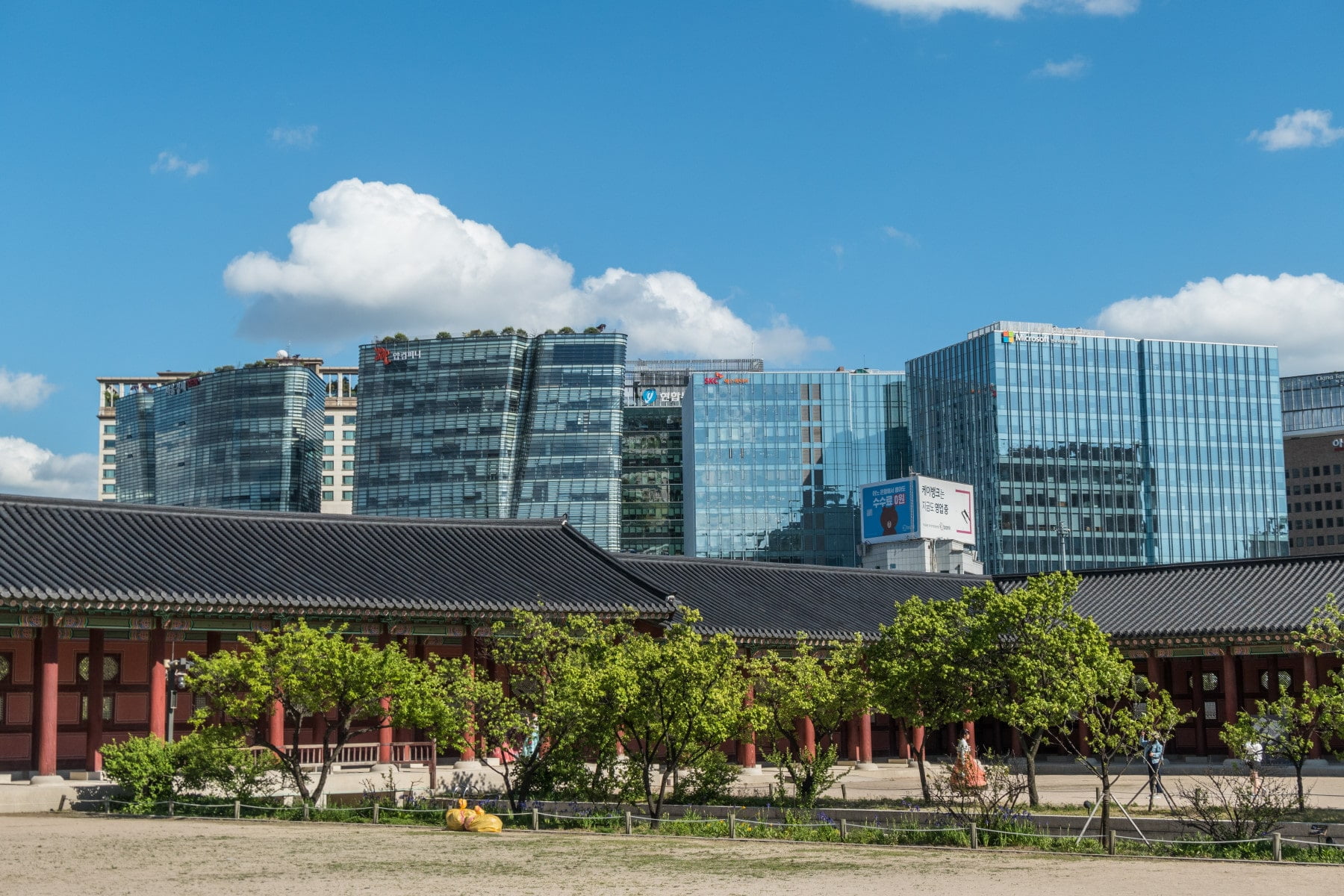
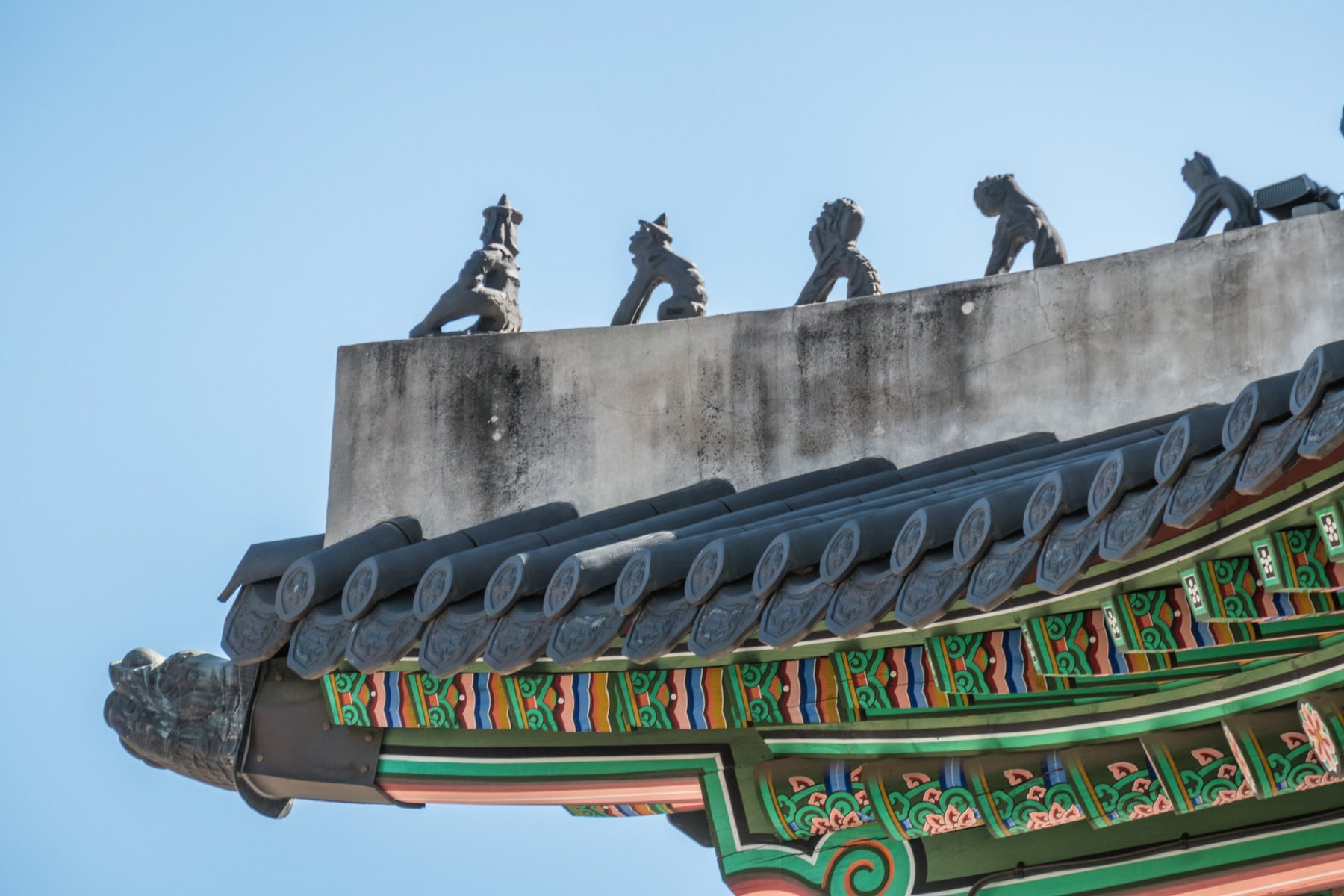
However, I wasn't particularly expecting this trend here either, of dressing traditionally to visit a historical site. It's a phenomenon we'd already seen the previous year in Japan. I don't know who first came up with the idea, but interestingly, it's also something you can see in Thailand, particularly at the ruins of Ayutthaya.
3. Geunjeongjeon, the throne room
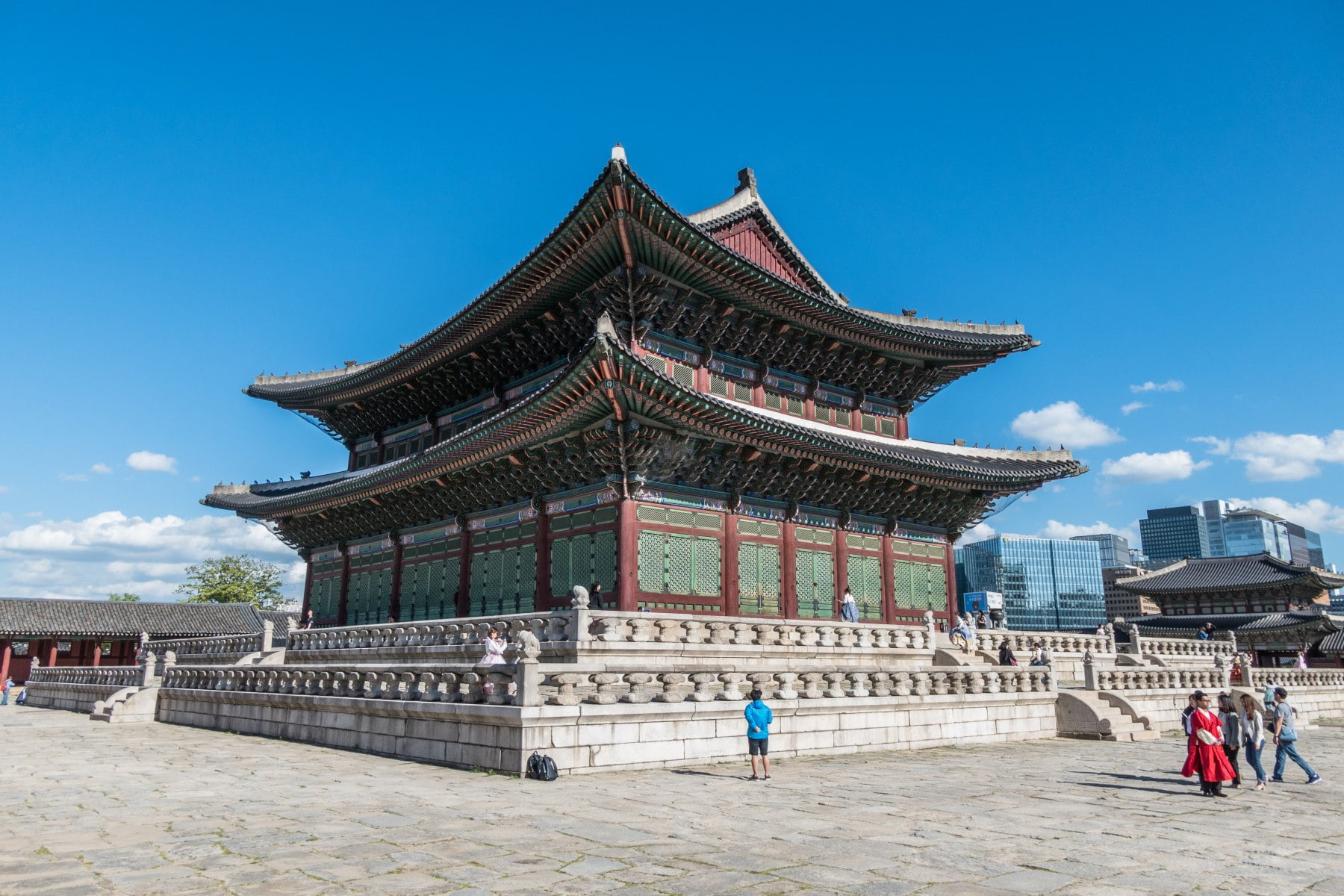
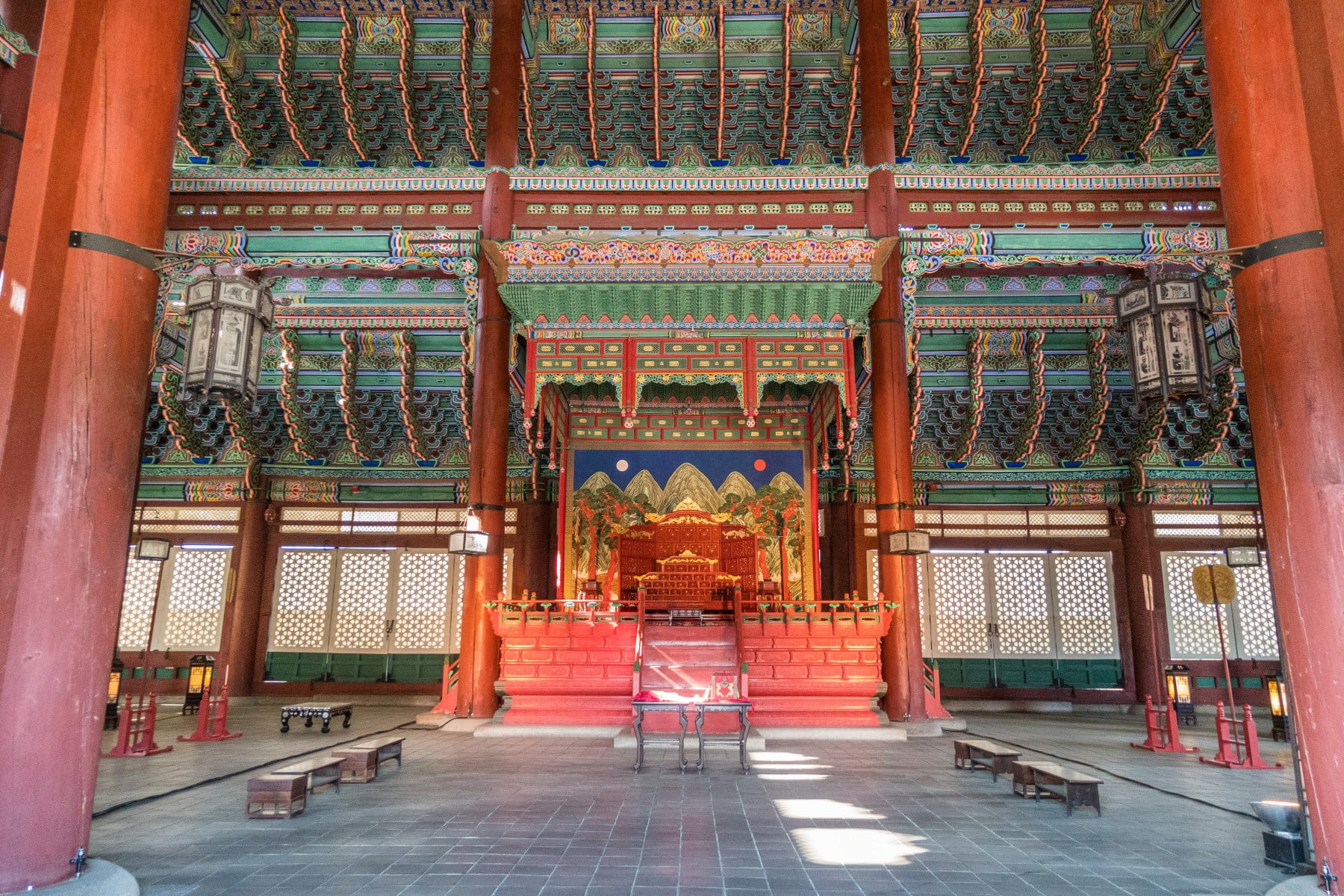
Geunjeongjeon means "diligent government". It was the throne room of the kings of the Joseon Dynasty, used to manage important state affairs such as coronations, cabinet meetings, state visits, etc.
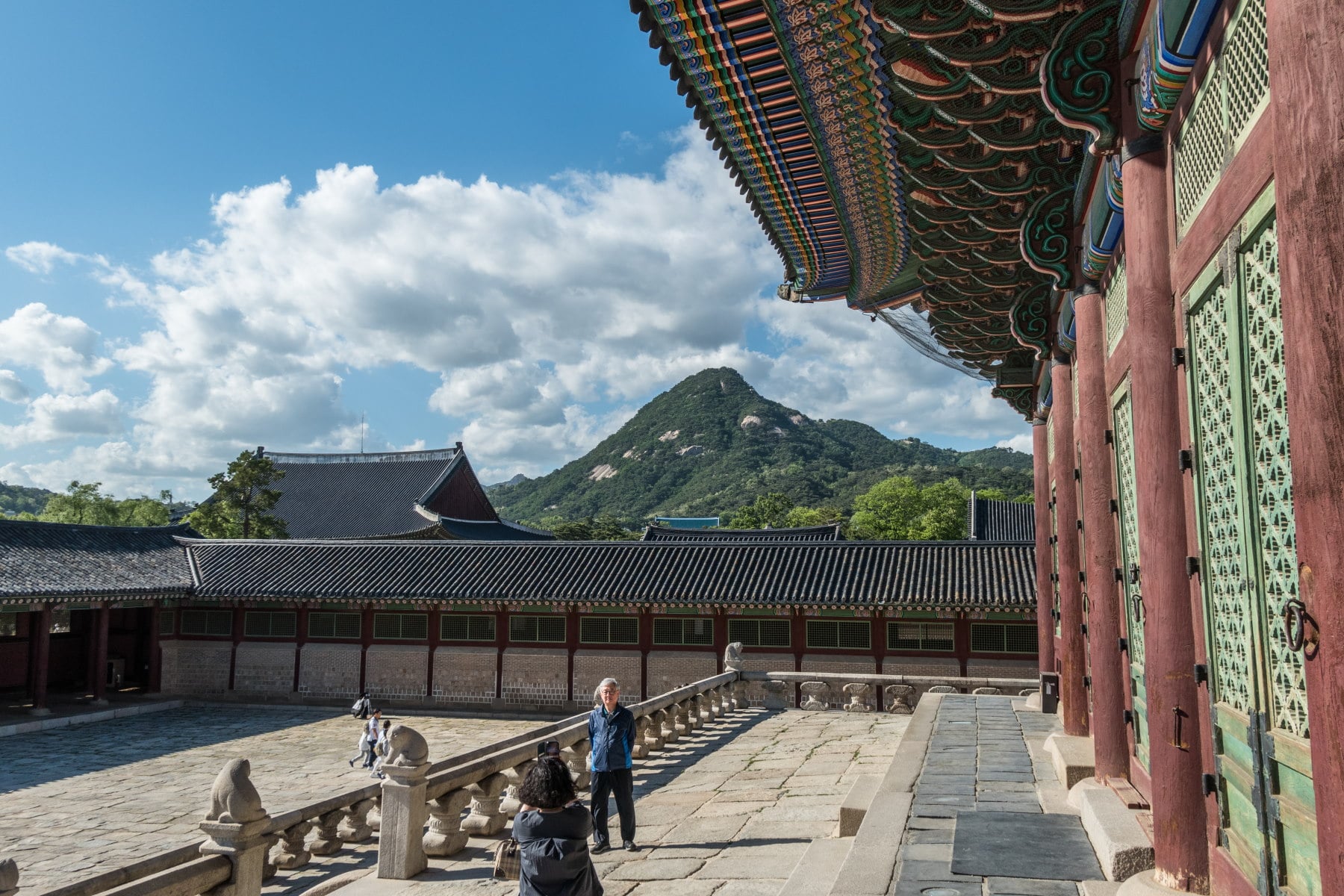
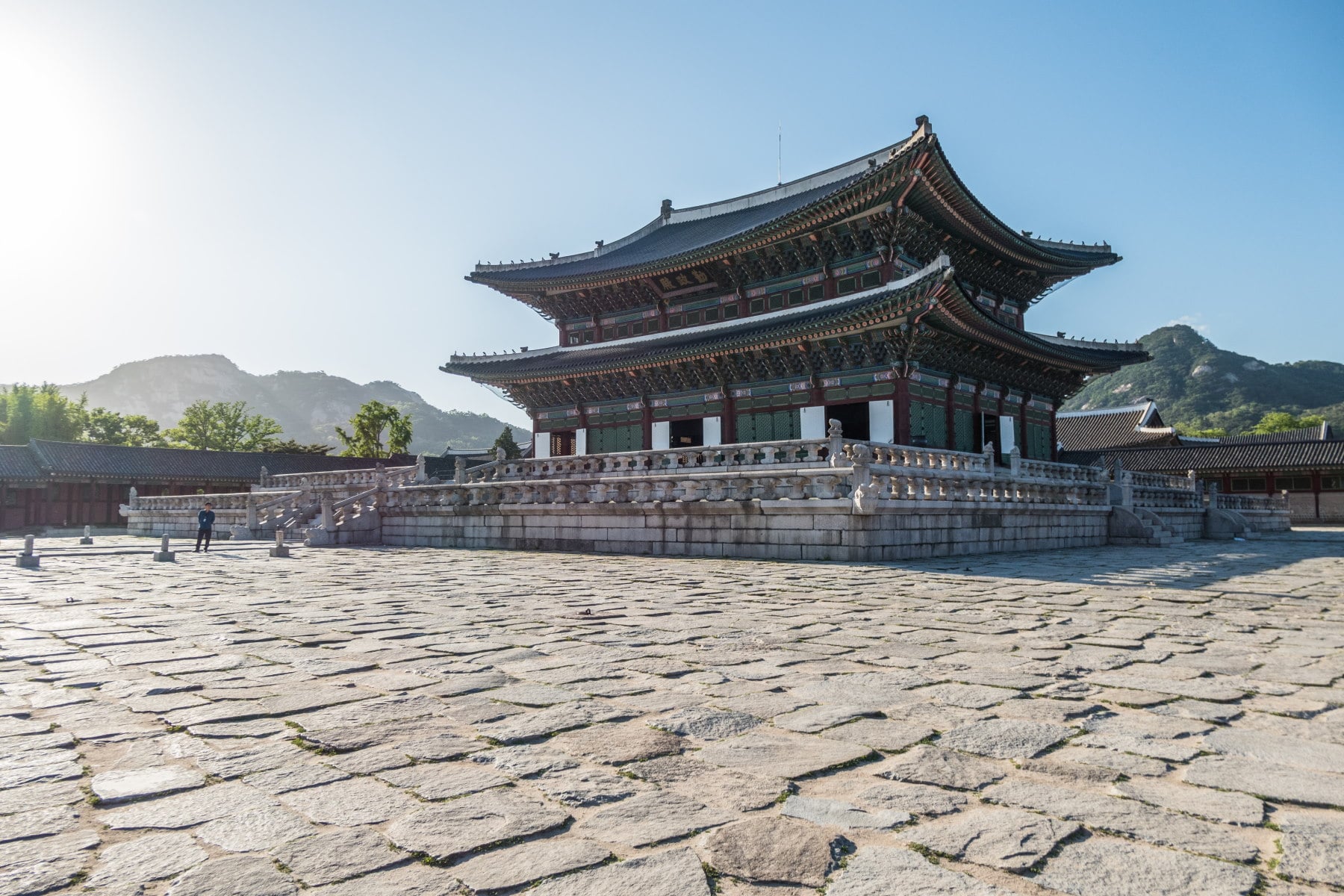
The current hall was built in 1867, after being burned down during the Japanese invasion in 1592. Symbolizing the sacred monarchy, it is the great hall of the palace. It is in the middle of a stone-paved square, the path leading to the hall is marked by steles with inscriptions on them. These indicate the positions of court officials, lined up here by rank (as indicated on the stone steles) during official functions at Geunjeongjeon.
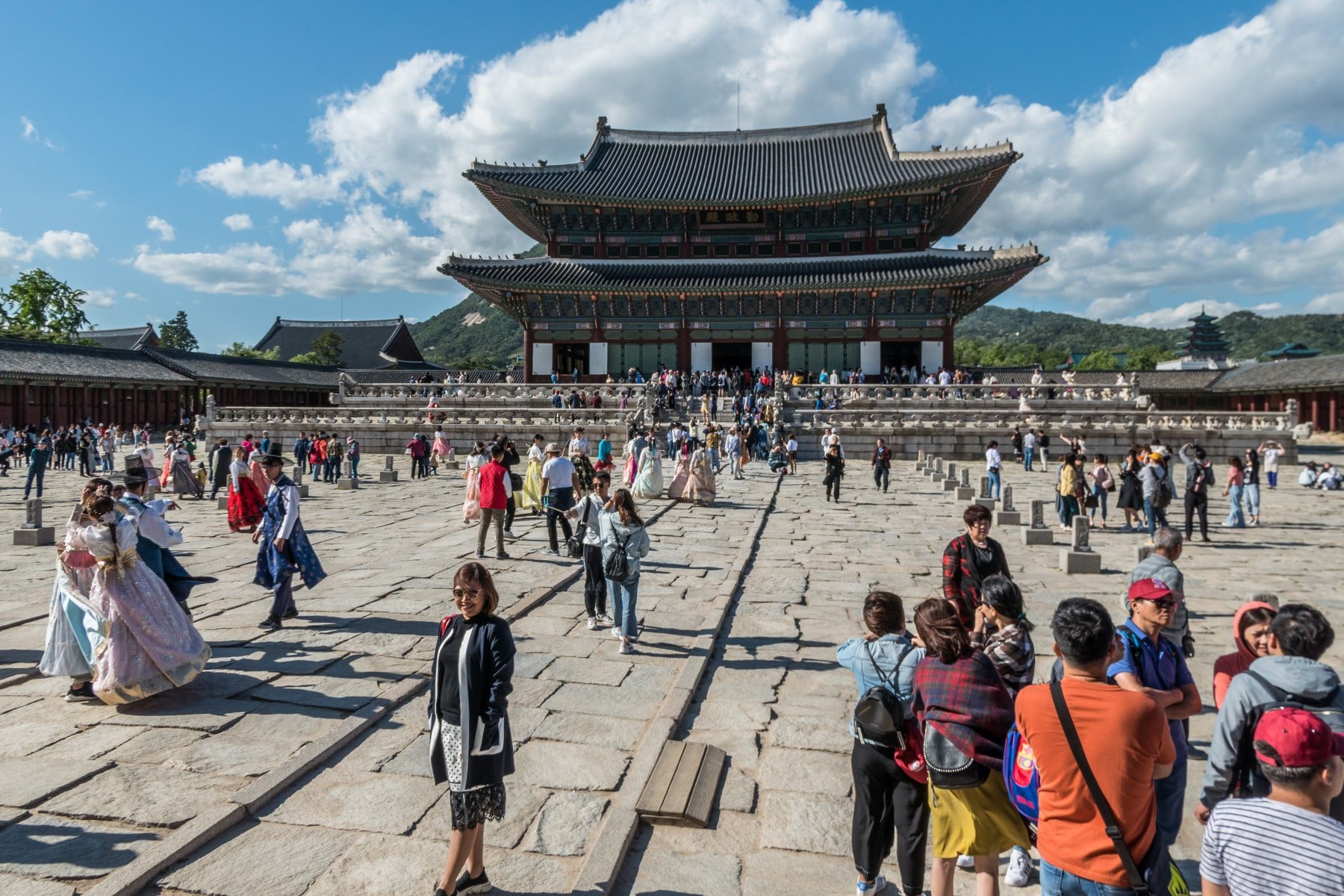
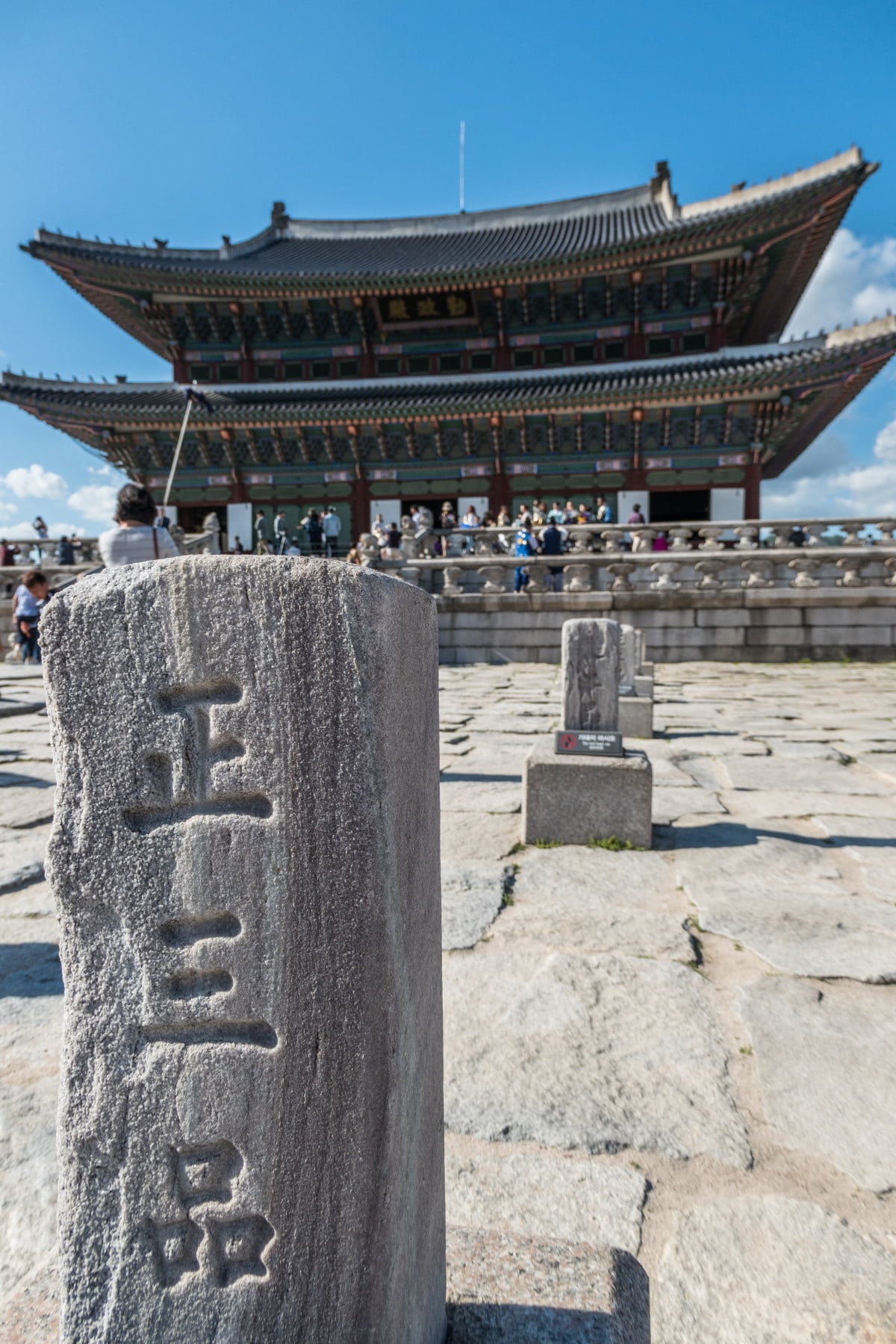
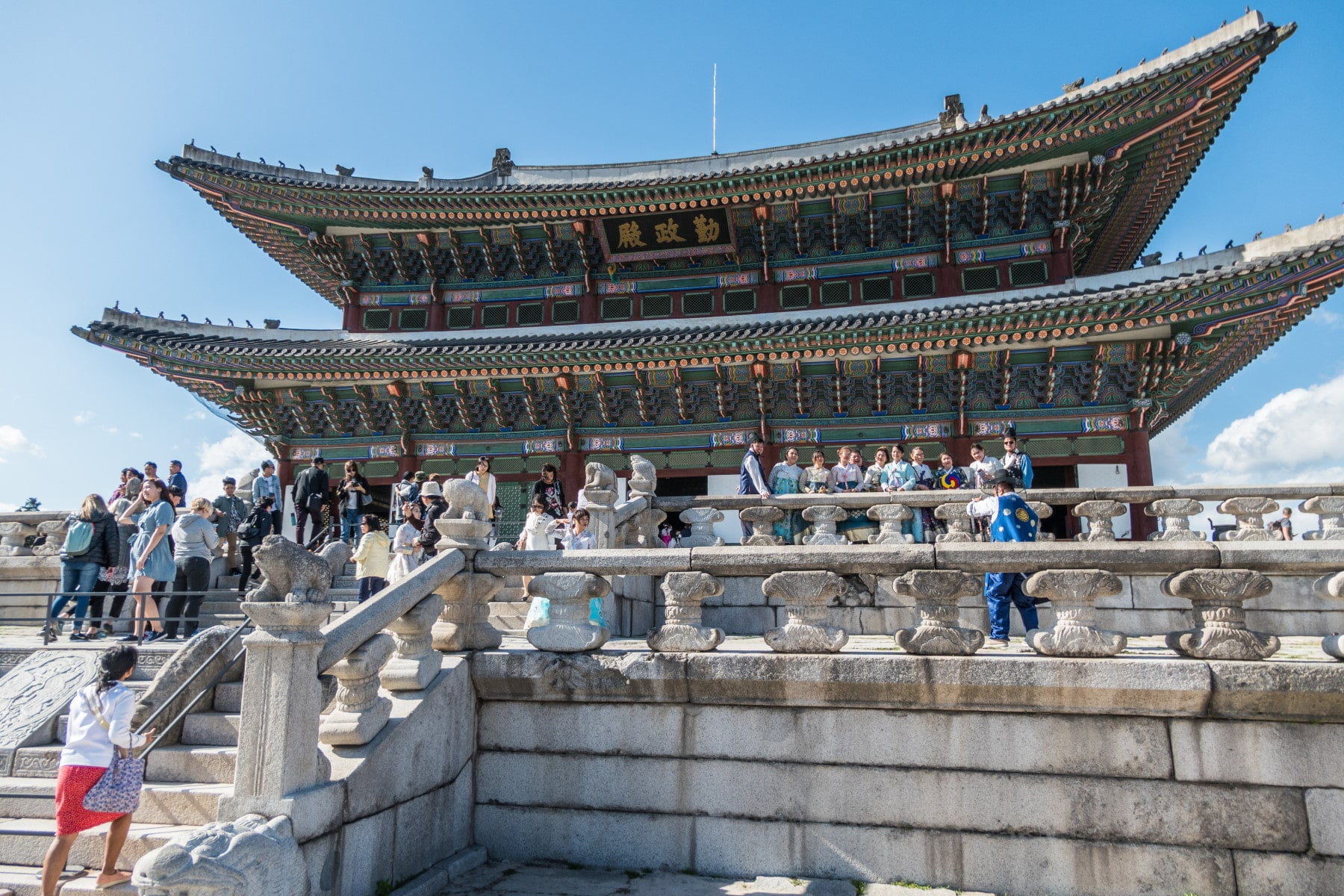
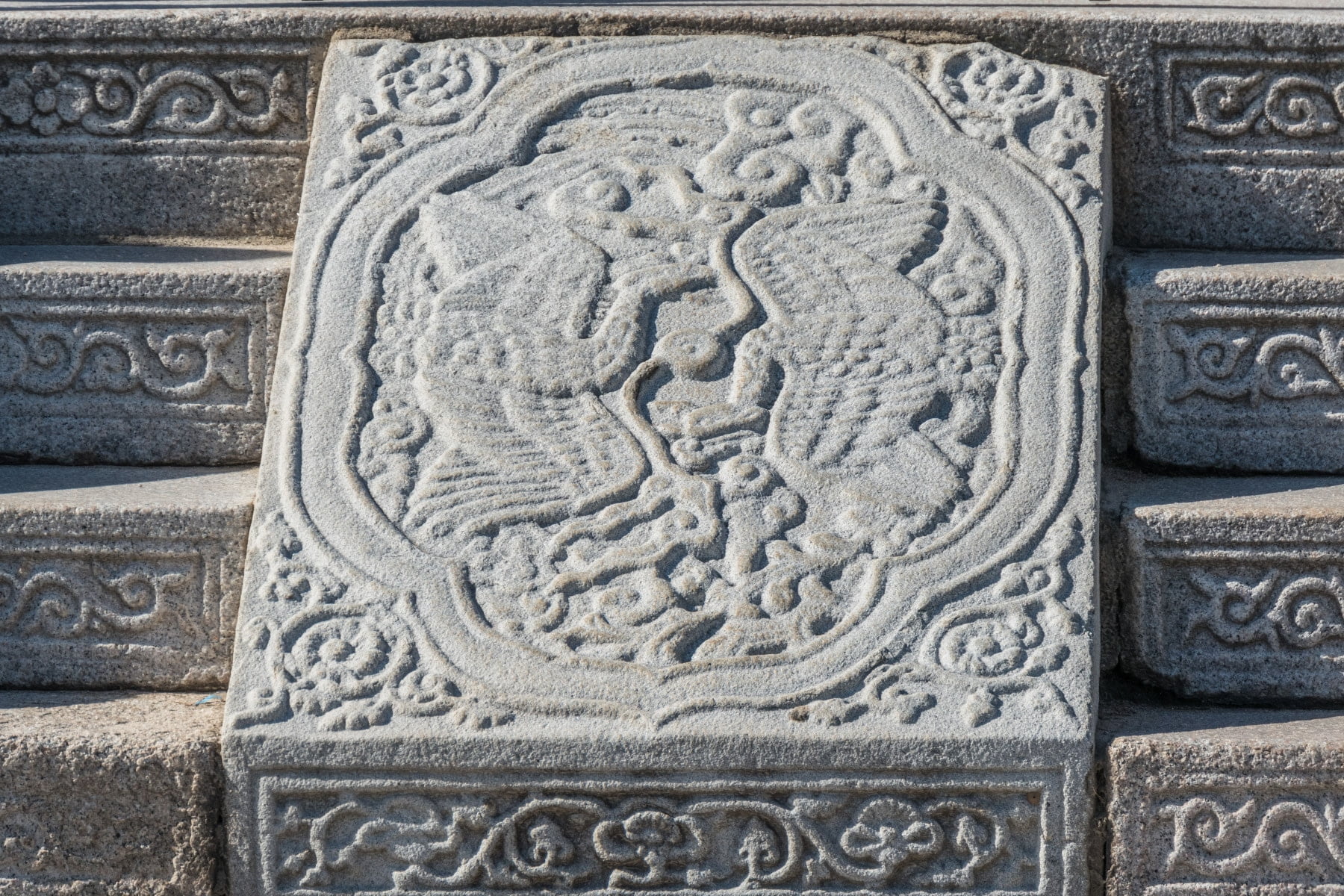
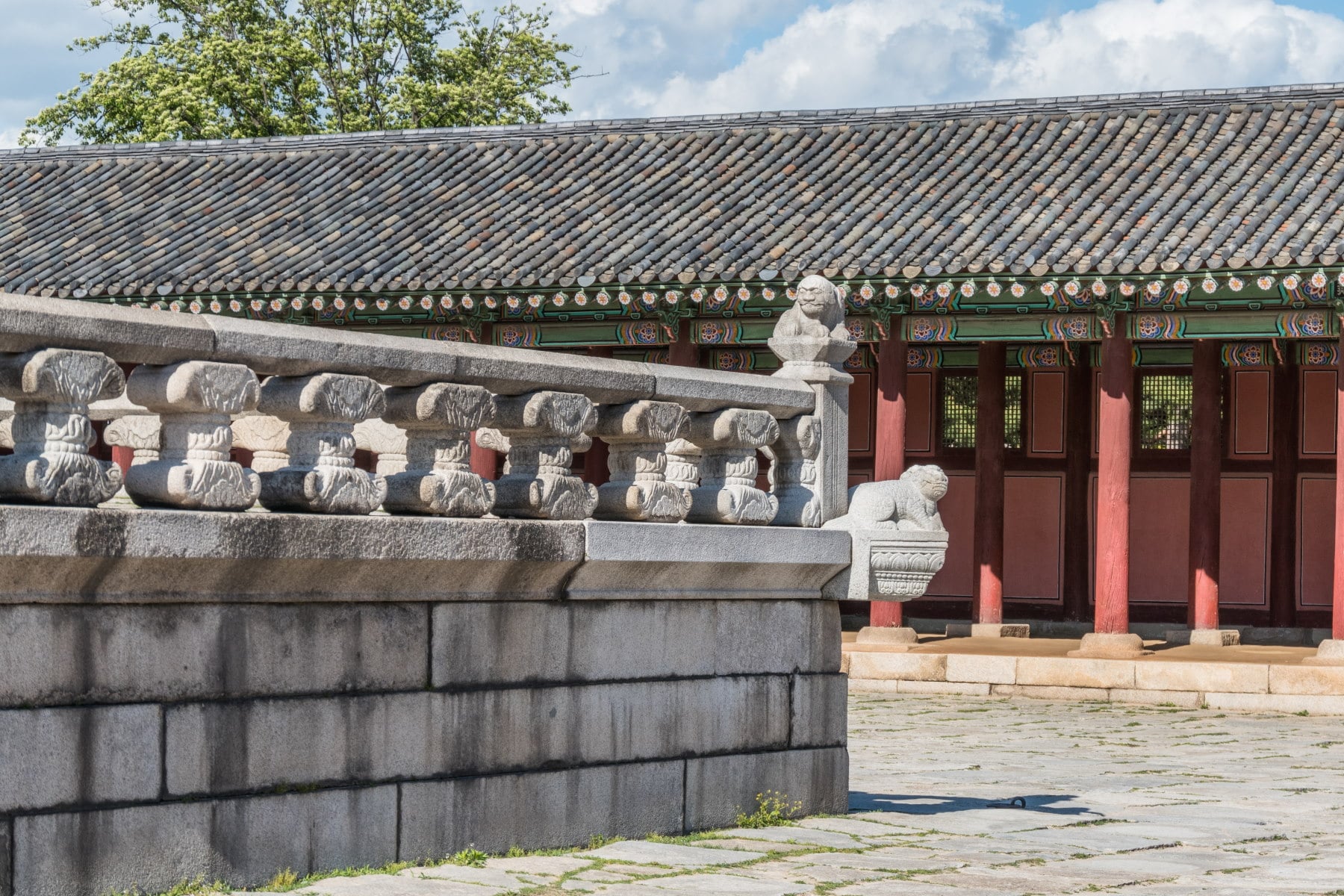
The Geujeongjeon Hall rests on a stone base, which is accessed by a series of steps decorated with floral motifs carved into the stone. The balustrades are also carved into the stone, and animal statues (including the haetae, of course) scattered here and there complete the decor.
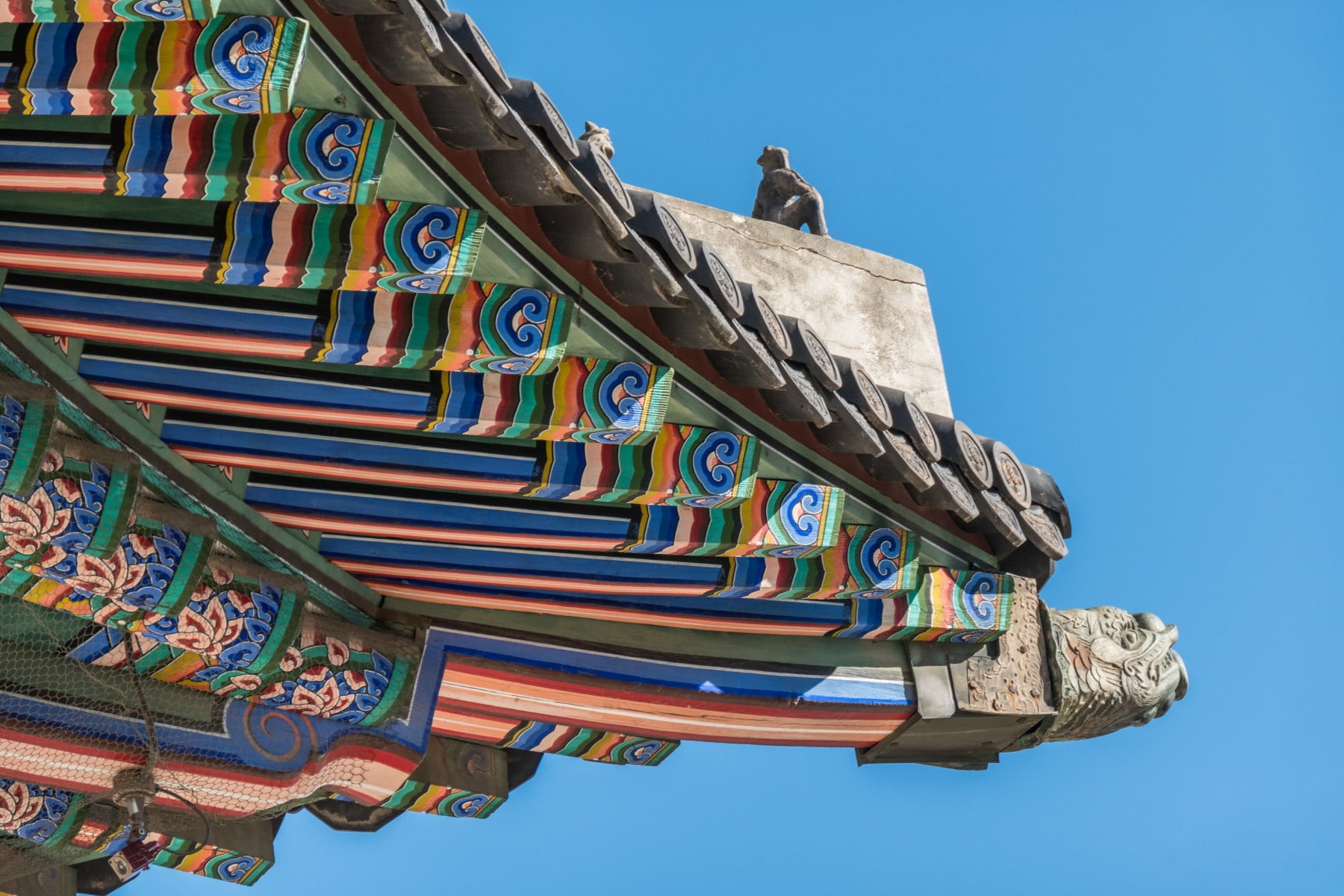
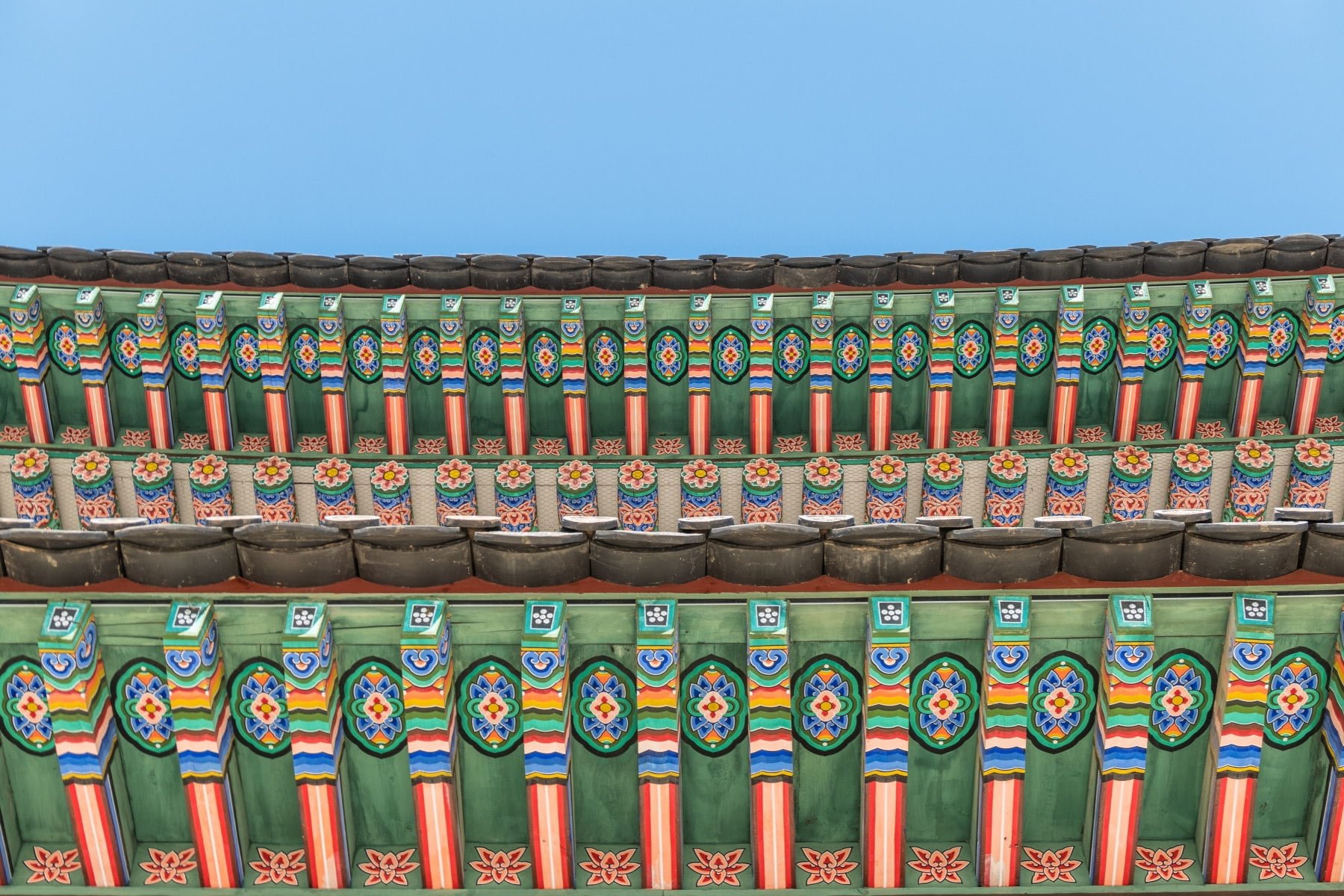
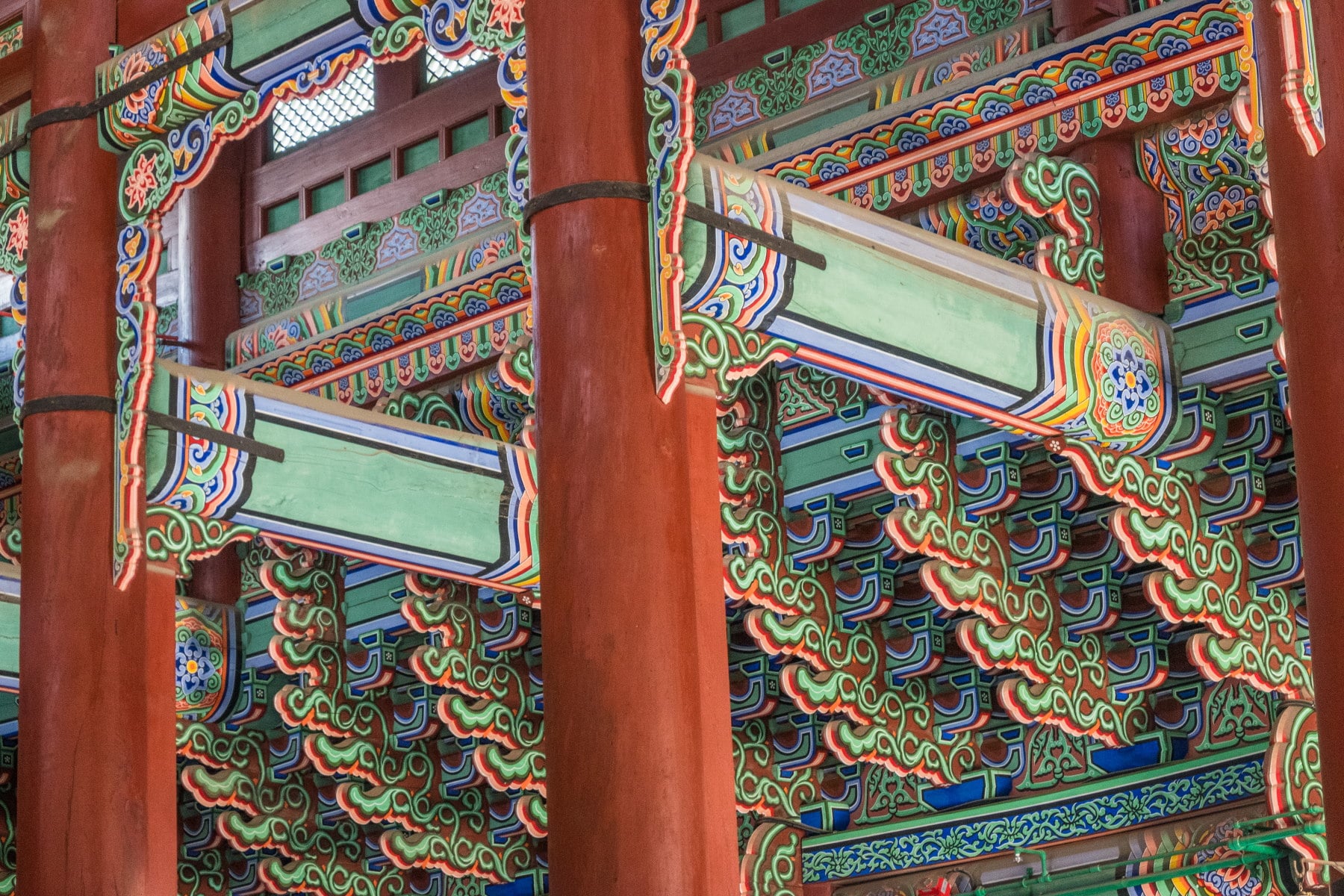
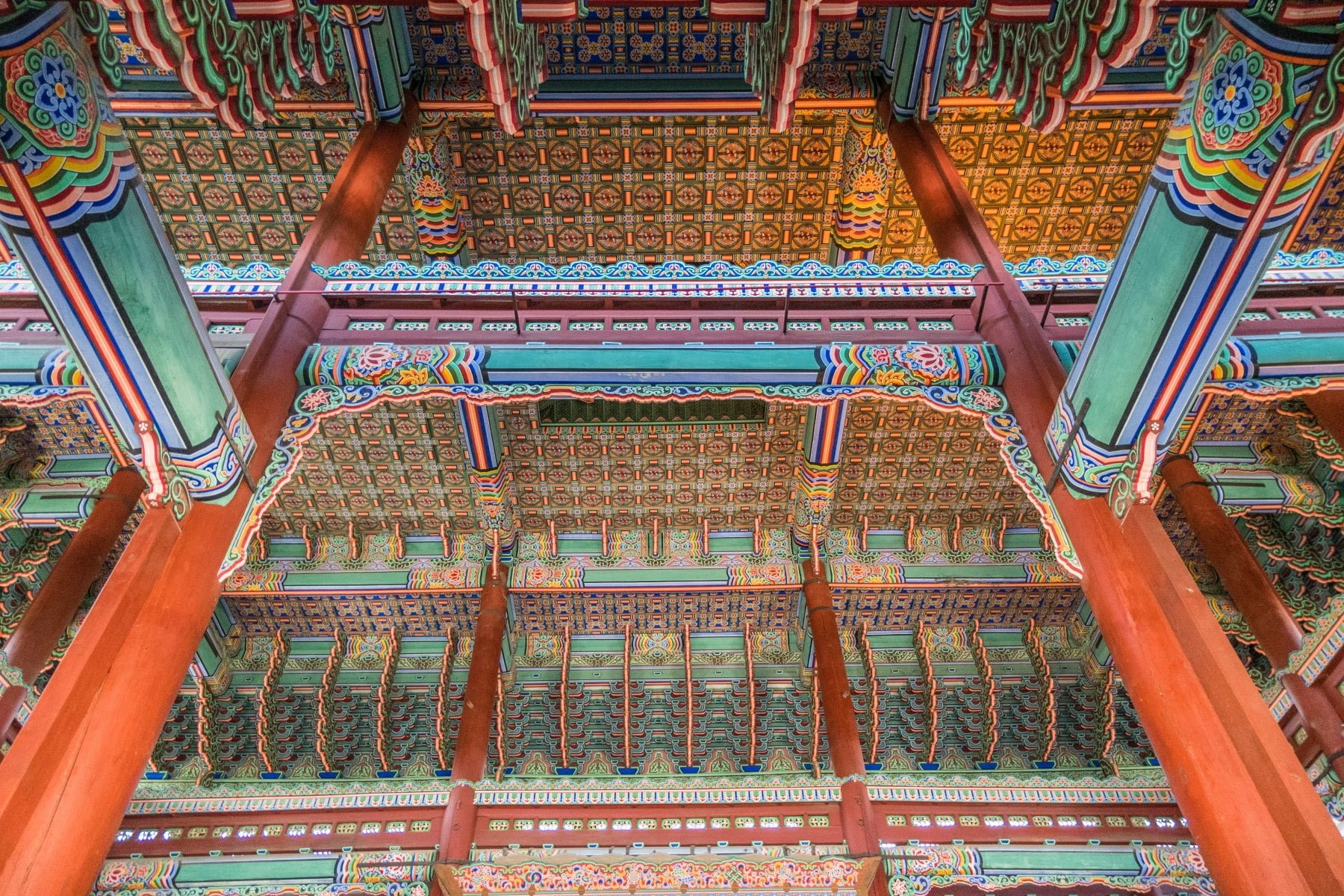
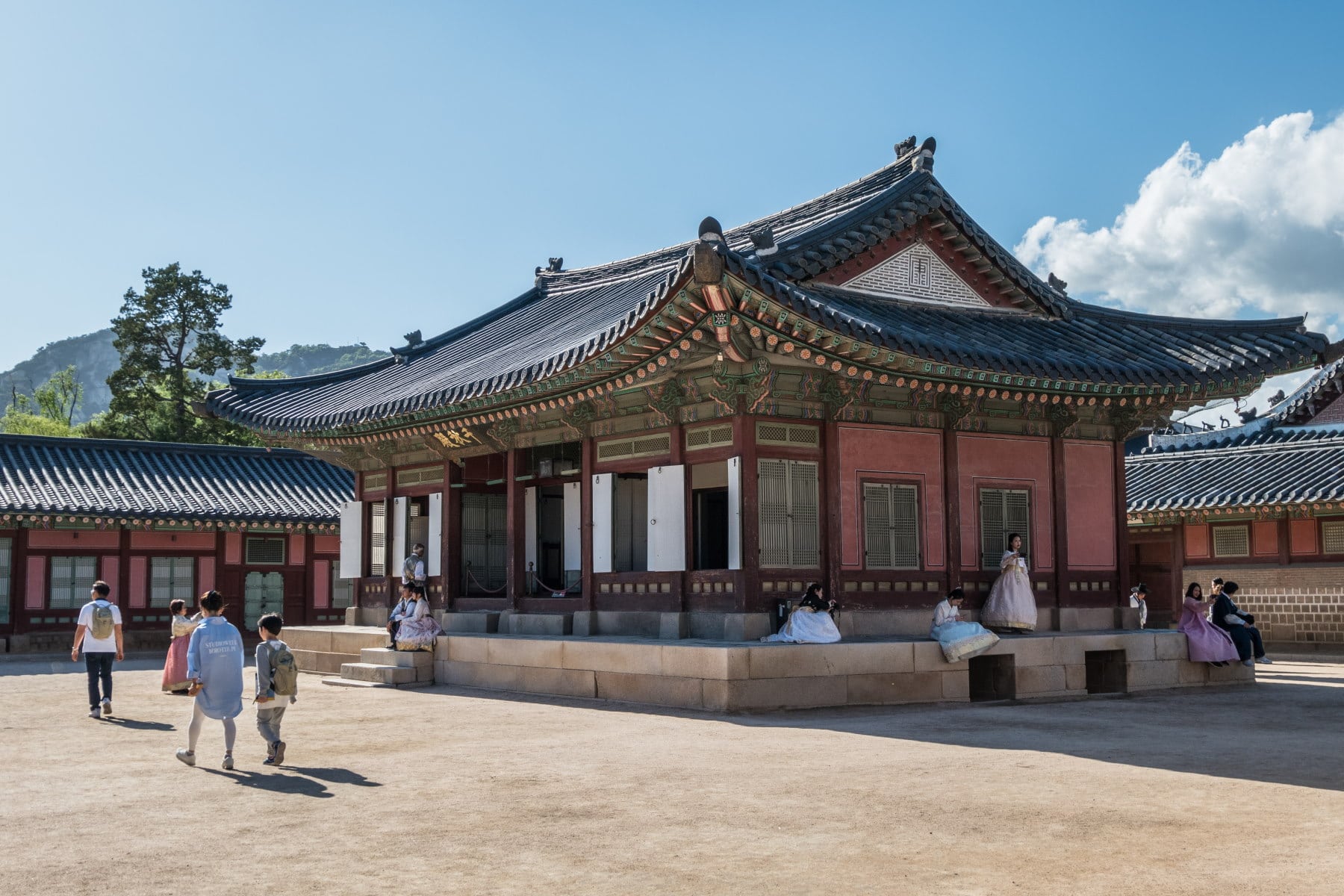
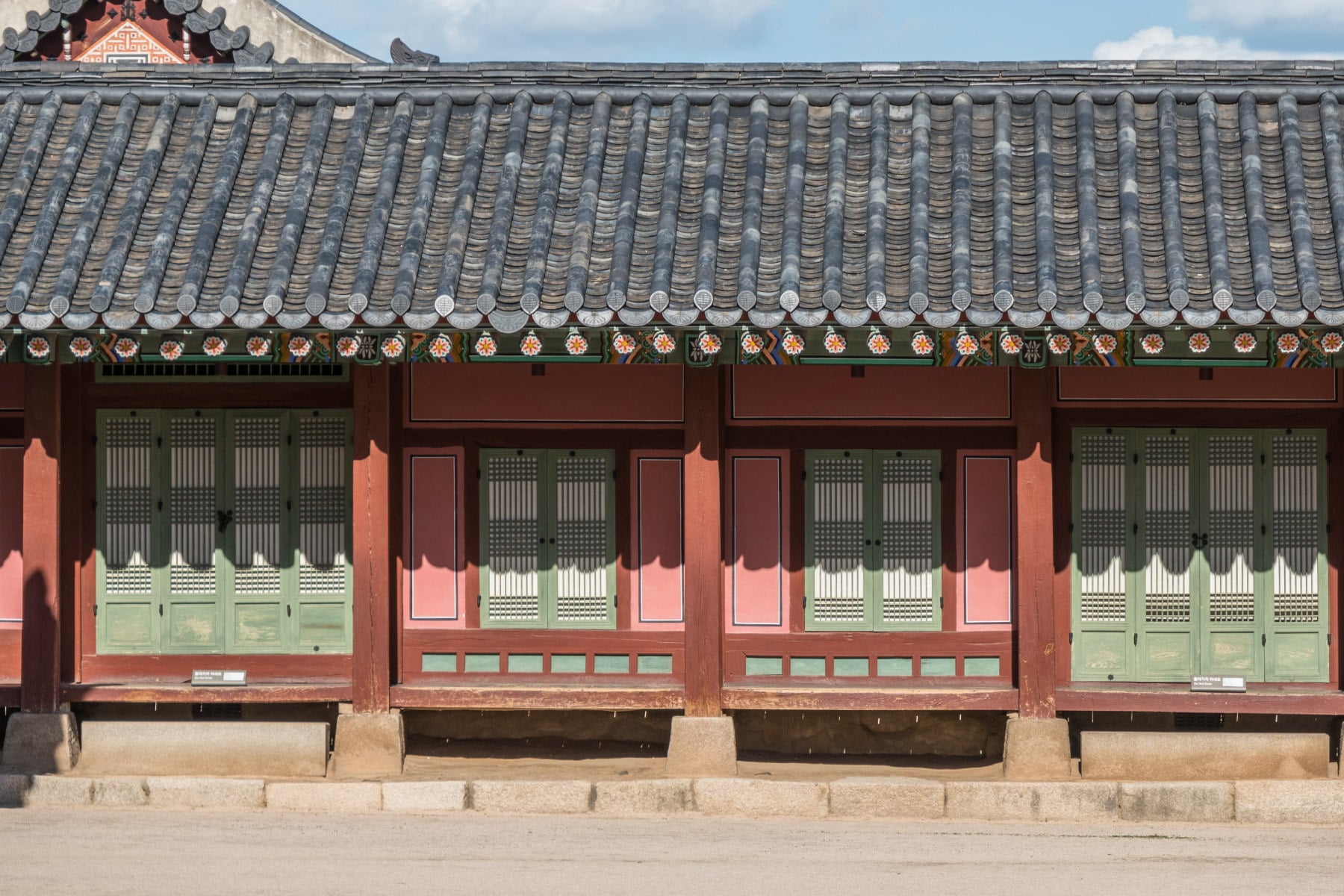
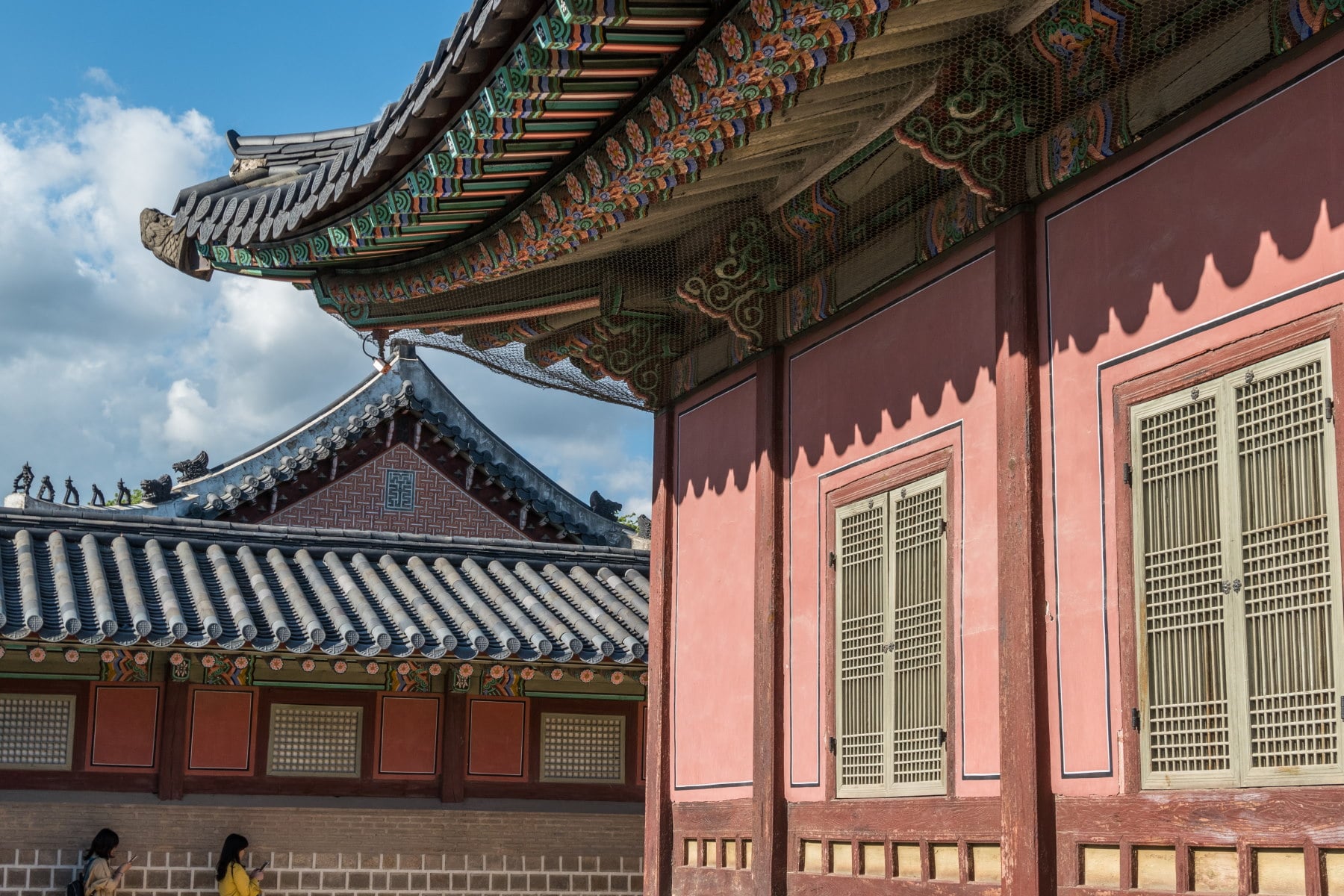
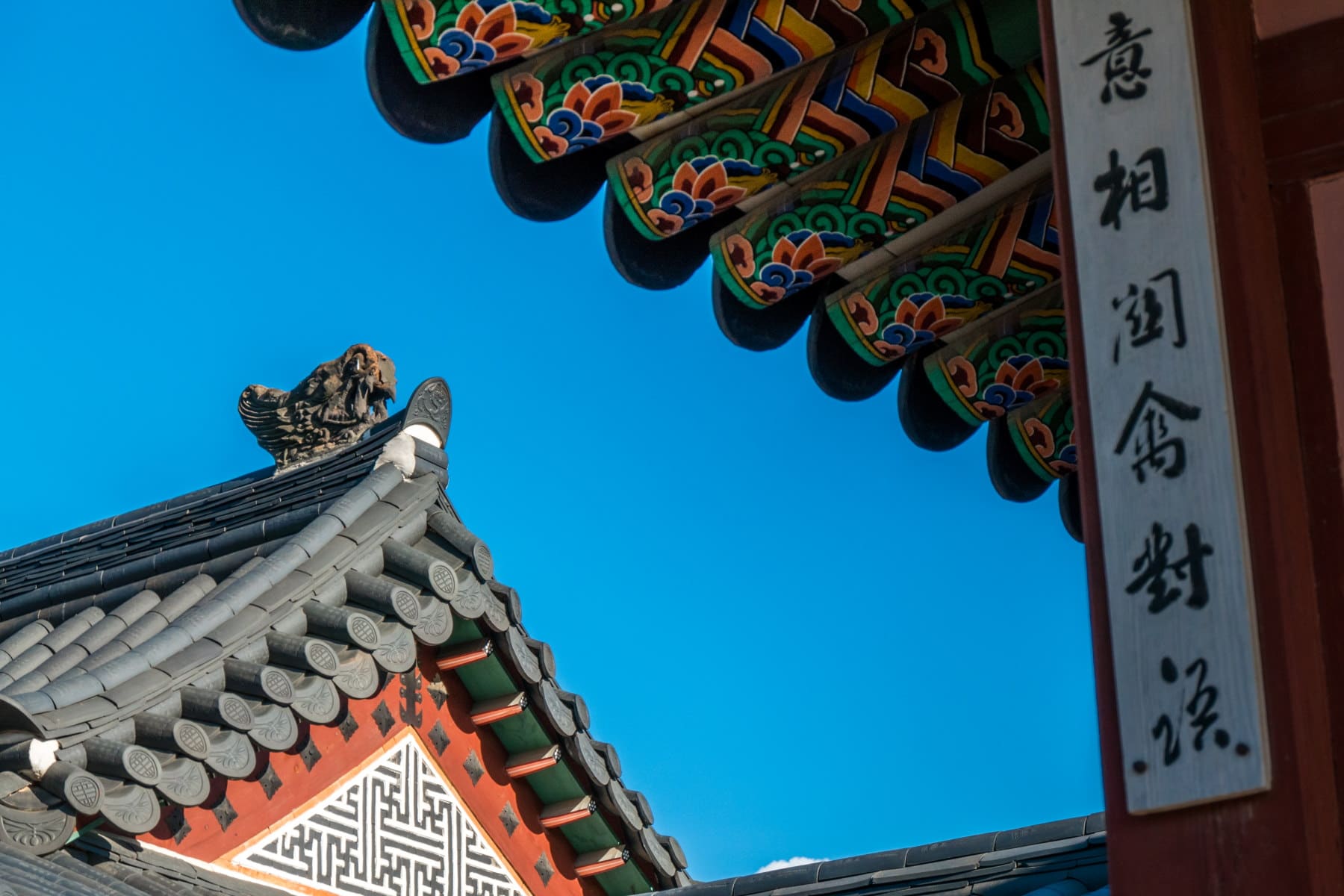
The imposing, particularly colorful roof is immediately noticeable. While there is a certain similarity with Japanese roofs in the architecture, Korean roofs are much more decorated, with colorful patterns, all dominated by a pretty green.
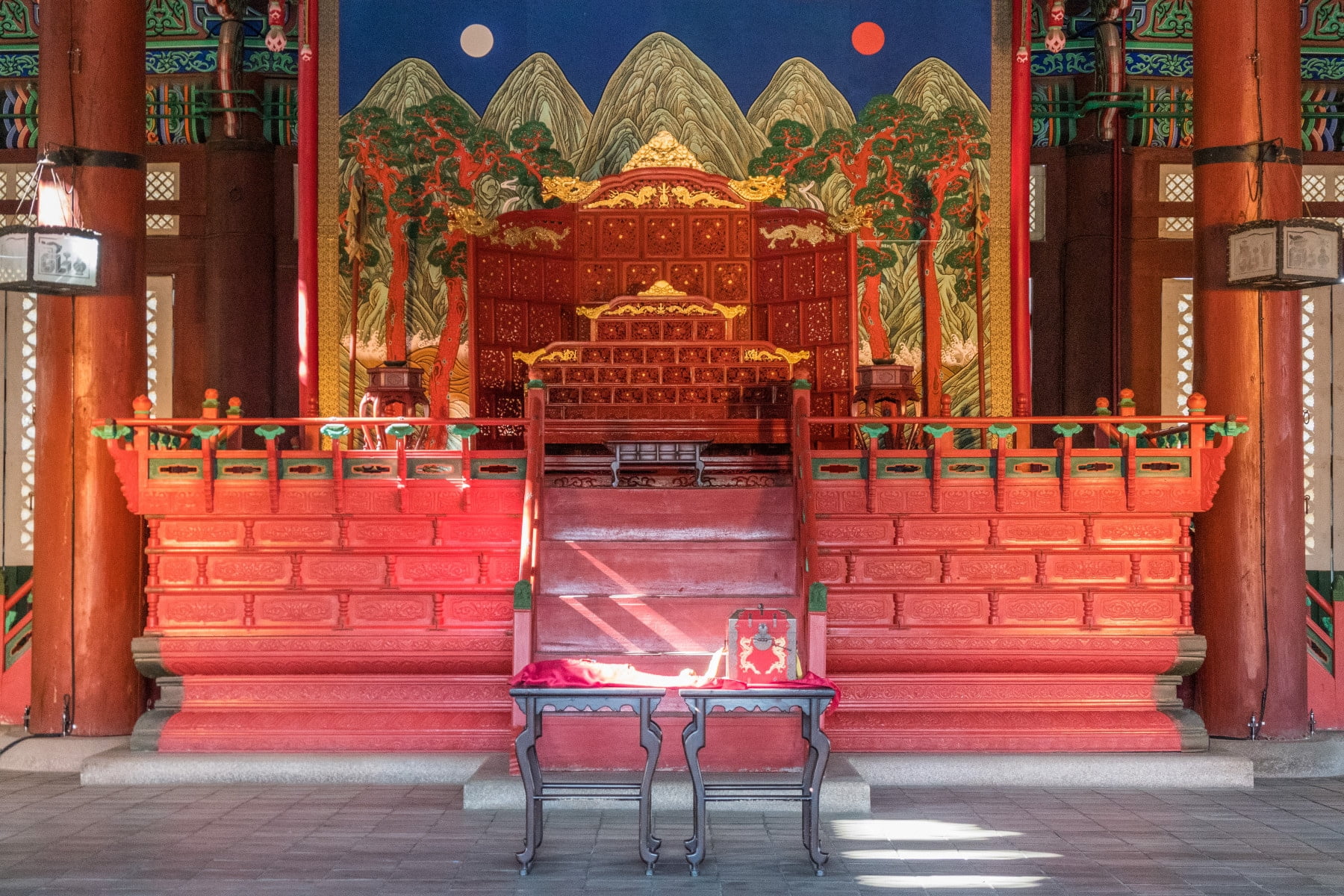
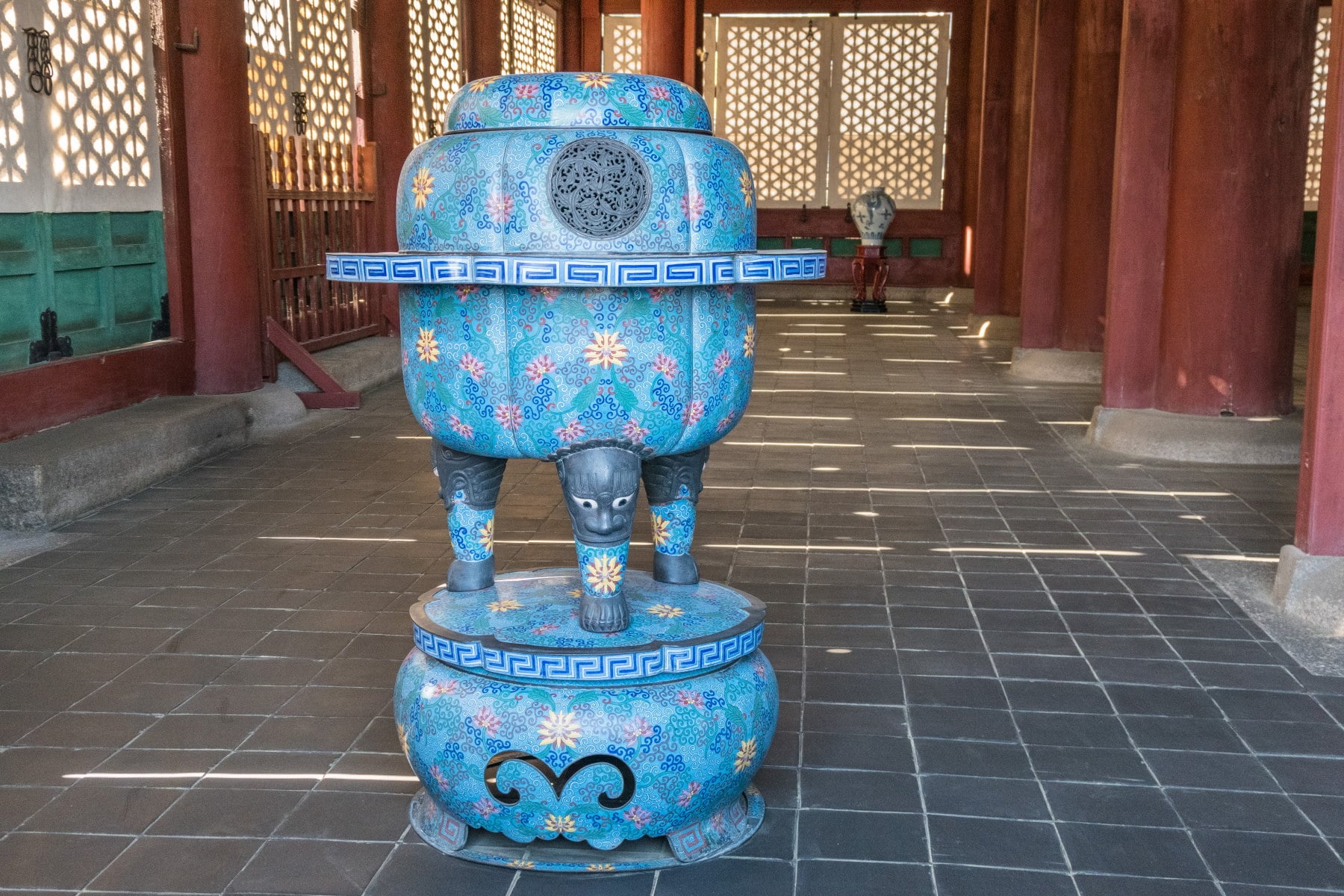
The Geujeongjeon Hall itself remains quite austere. There is practically no furniture despite its vast size, but the ceiling is magnificent. In an alcove in the ceiling, there is a pair of seven-clawed dragons, which symbolize the king and the state.
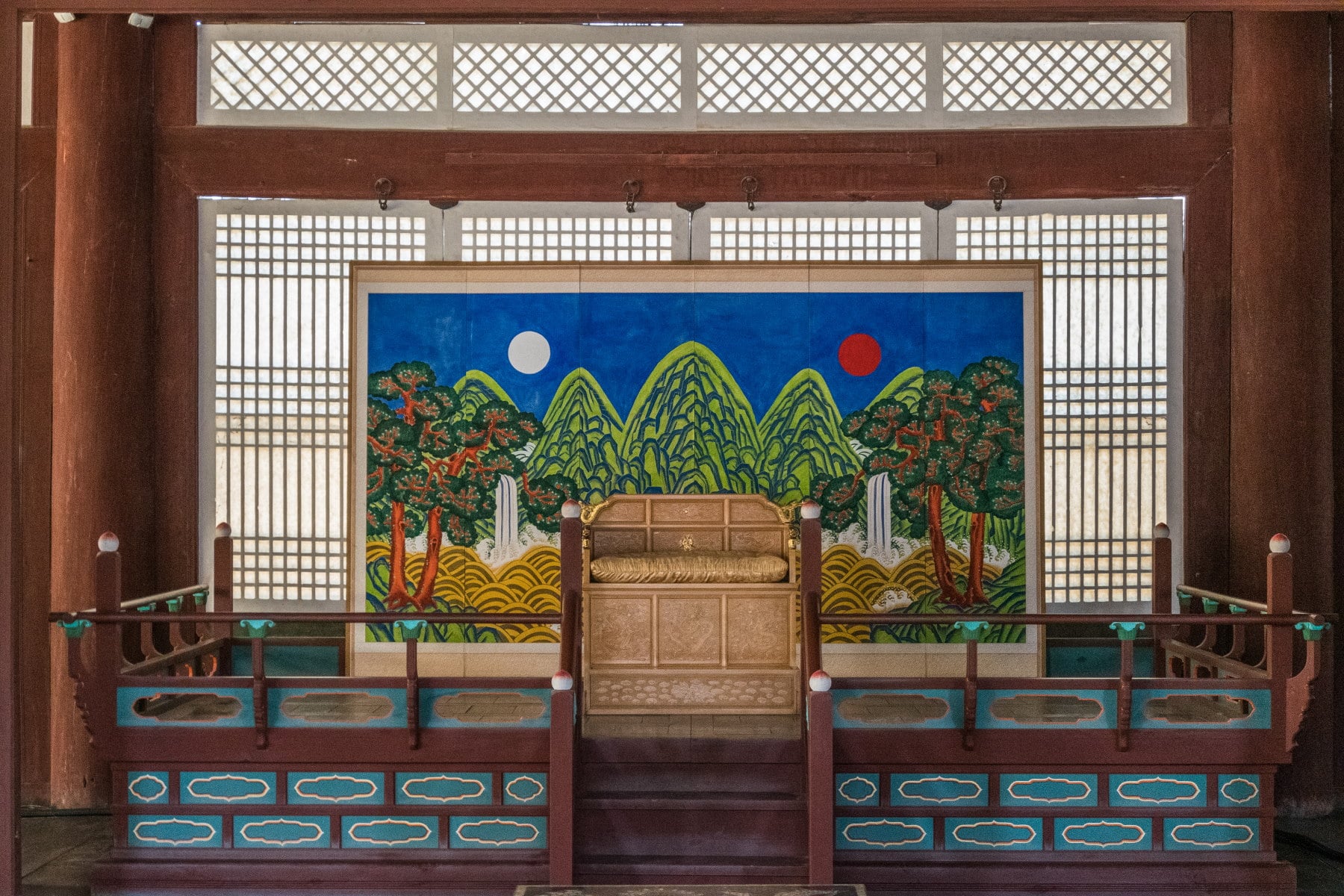
Behind the throne is a painting of a five-peaked mountain, with the sun and moon positioned on either side.
4. Sajeongjeon Hall
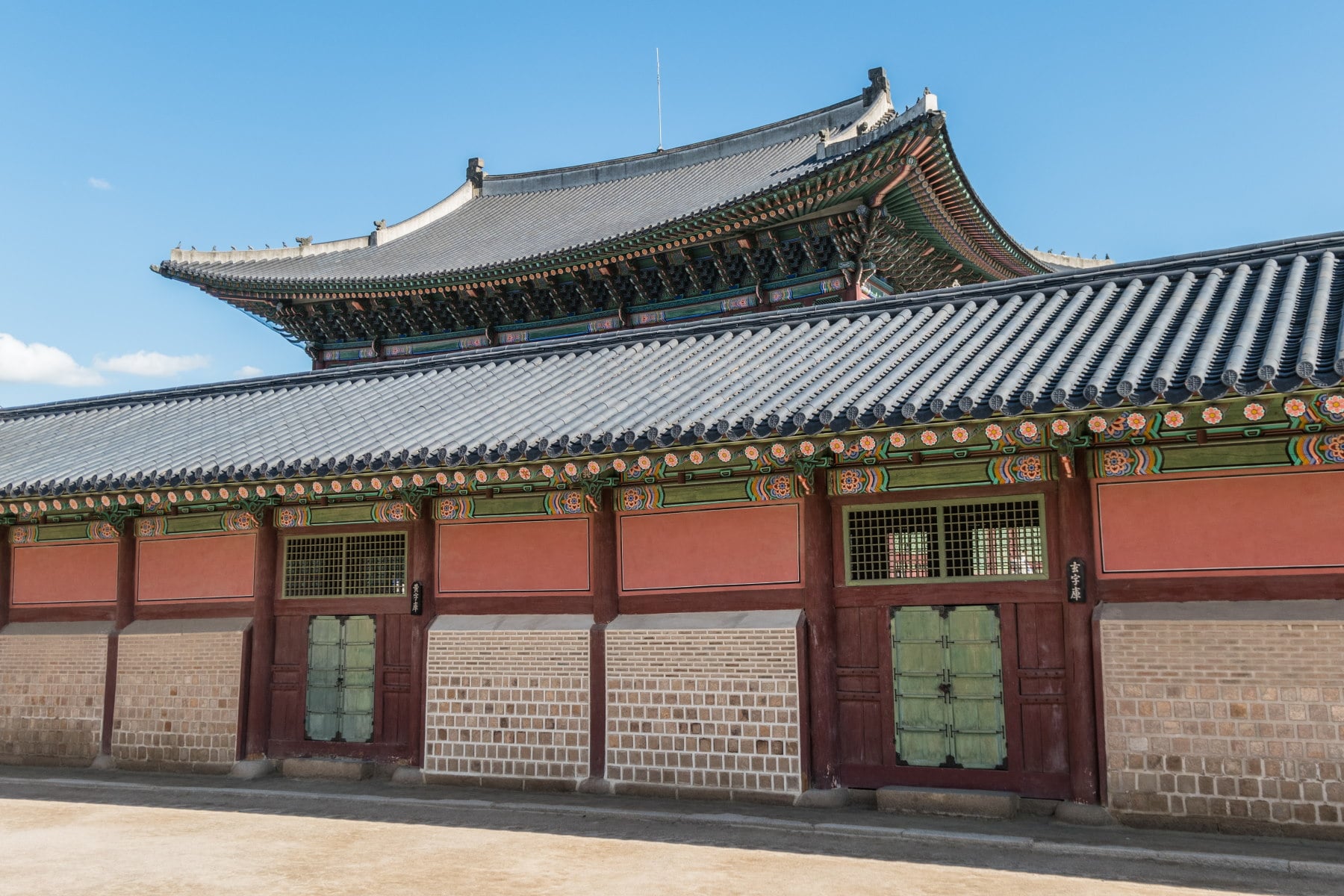
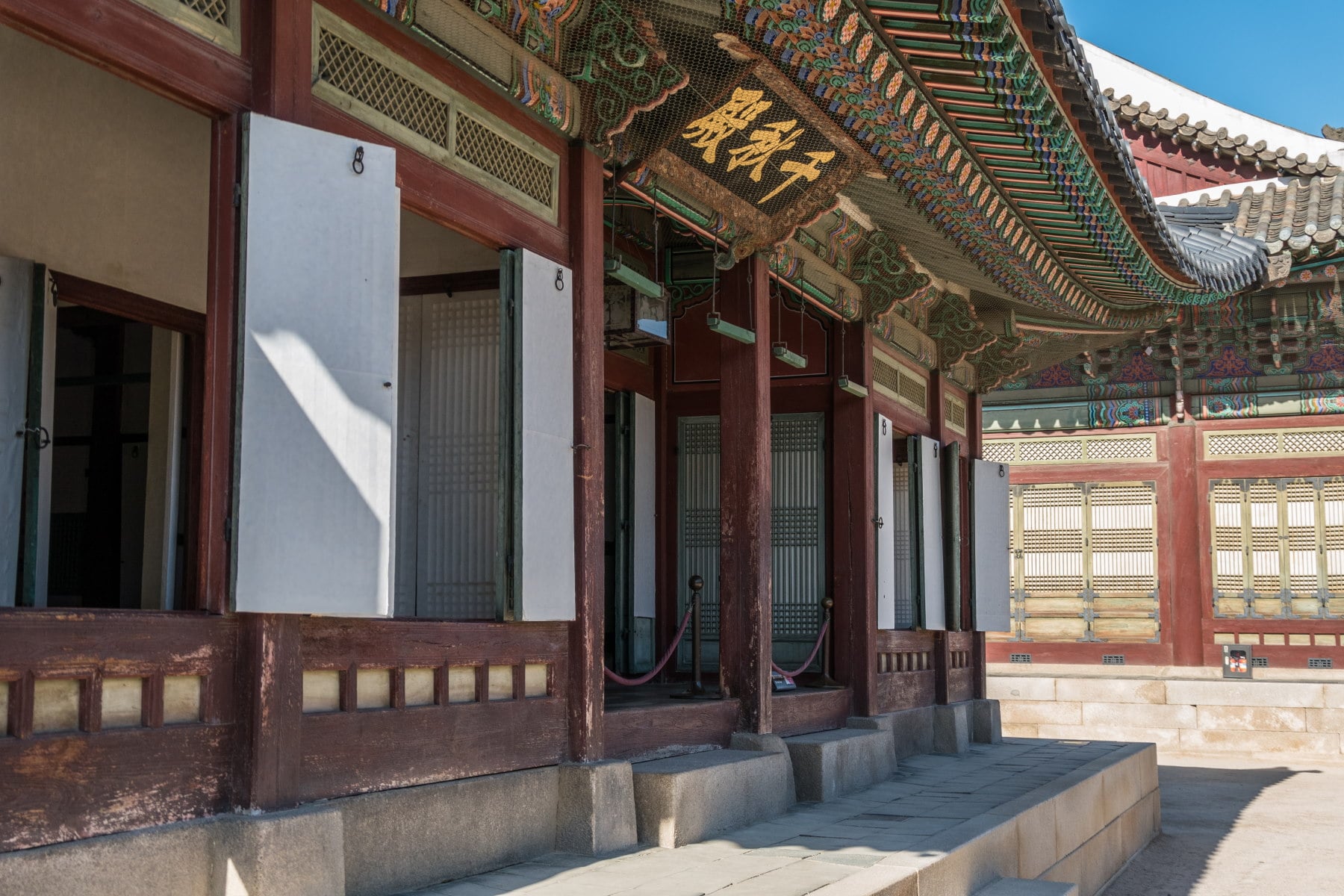
Sajeongjeon served as the king's main office to manage state affairs. Joseon leaders held daily morning assemblies with top officials here. It features a tableau similar to that of the throne room.
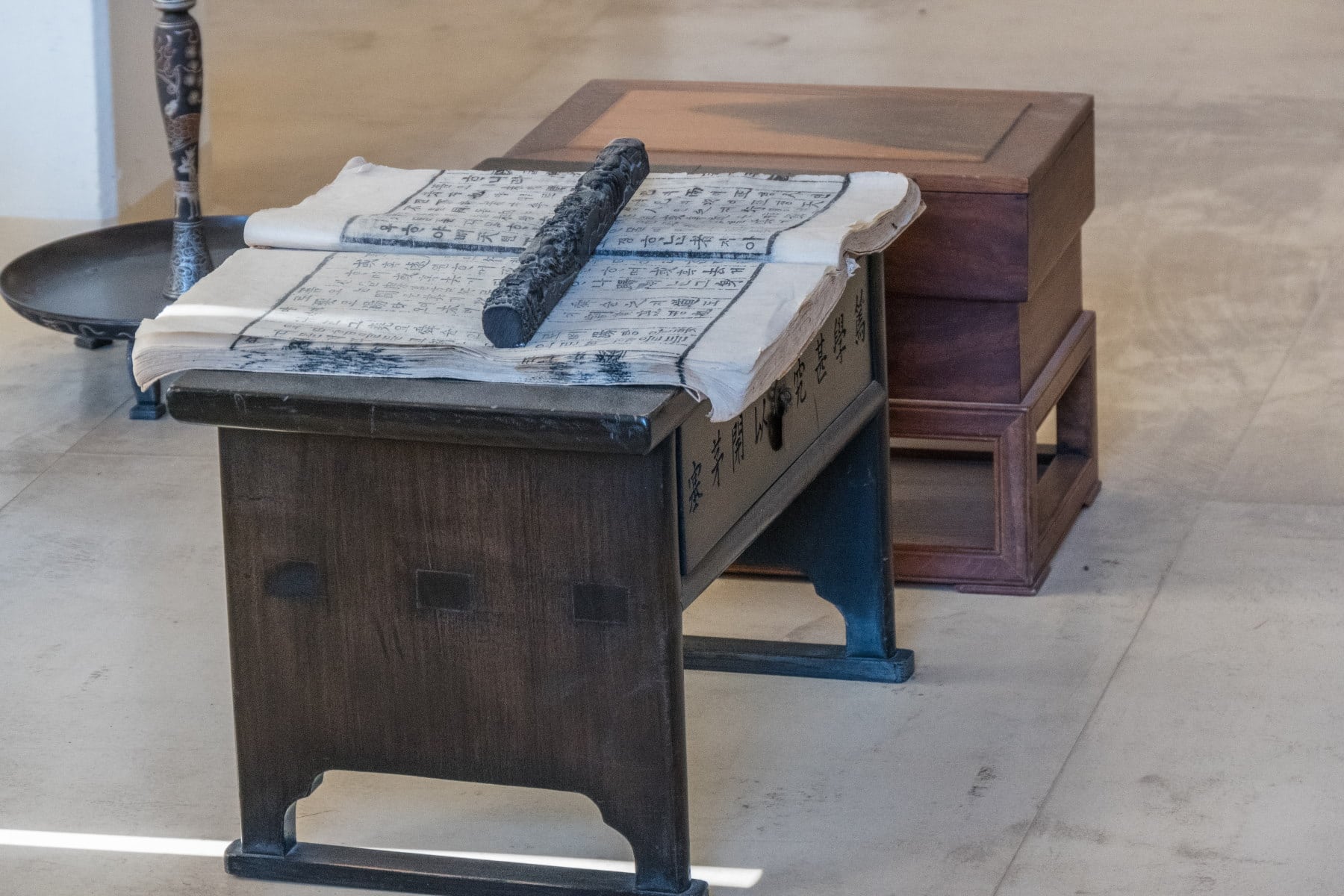
One of the buildings also served as a library for the kings, where they studied classics of Chinese literature and sought advice from a group of scholars on how best to be fair. We don't linger too long in this area before moving on, because otherwise we'll never finish visiting...
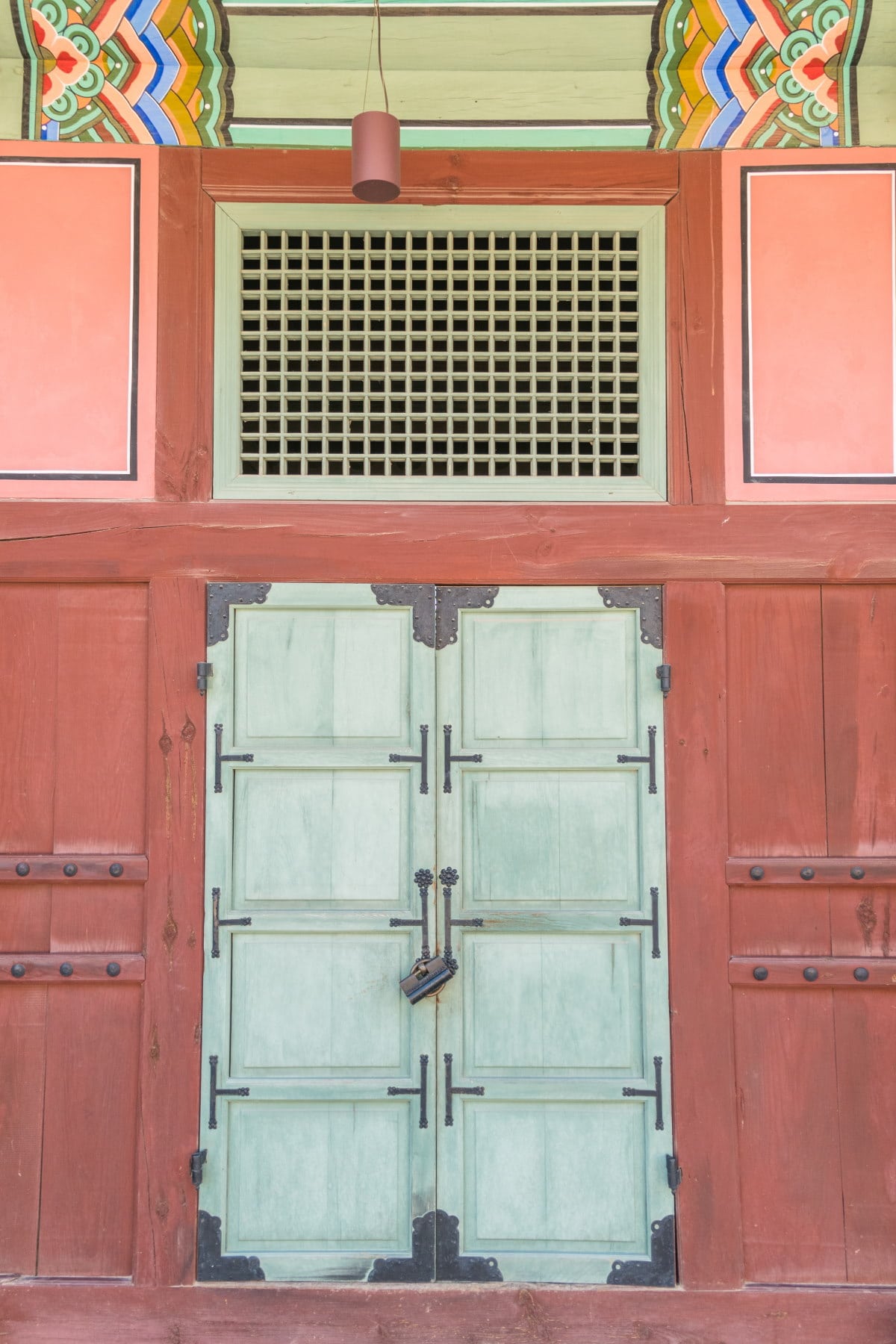
After I say that but it doesn't stop me, true to myself, from serving you a "big" series of photos of the place.
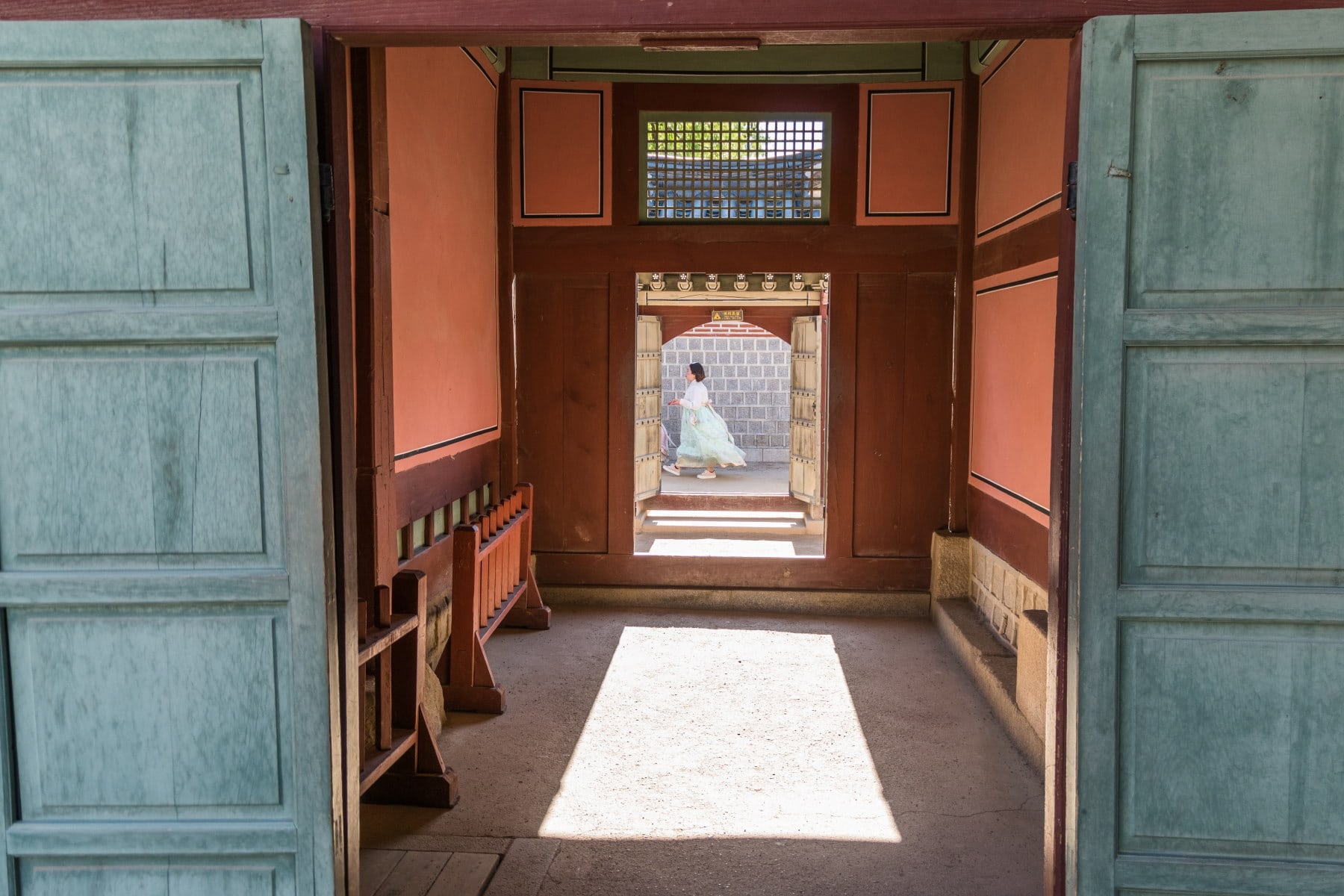
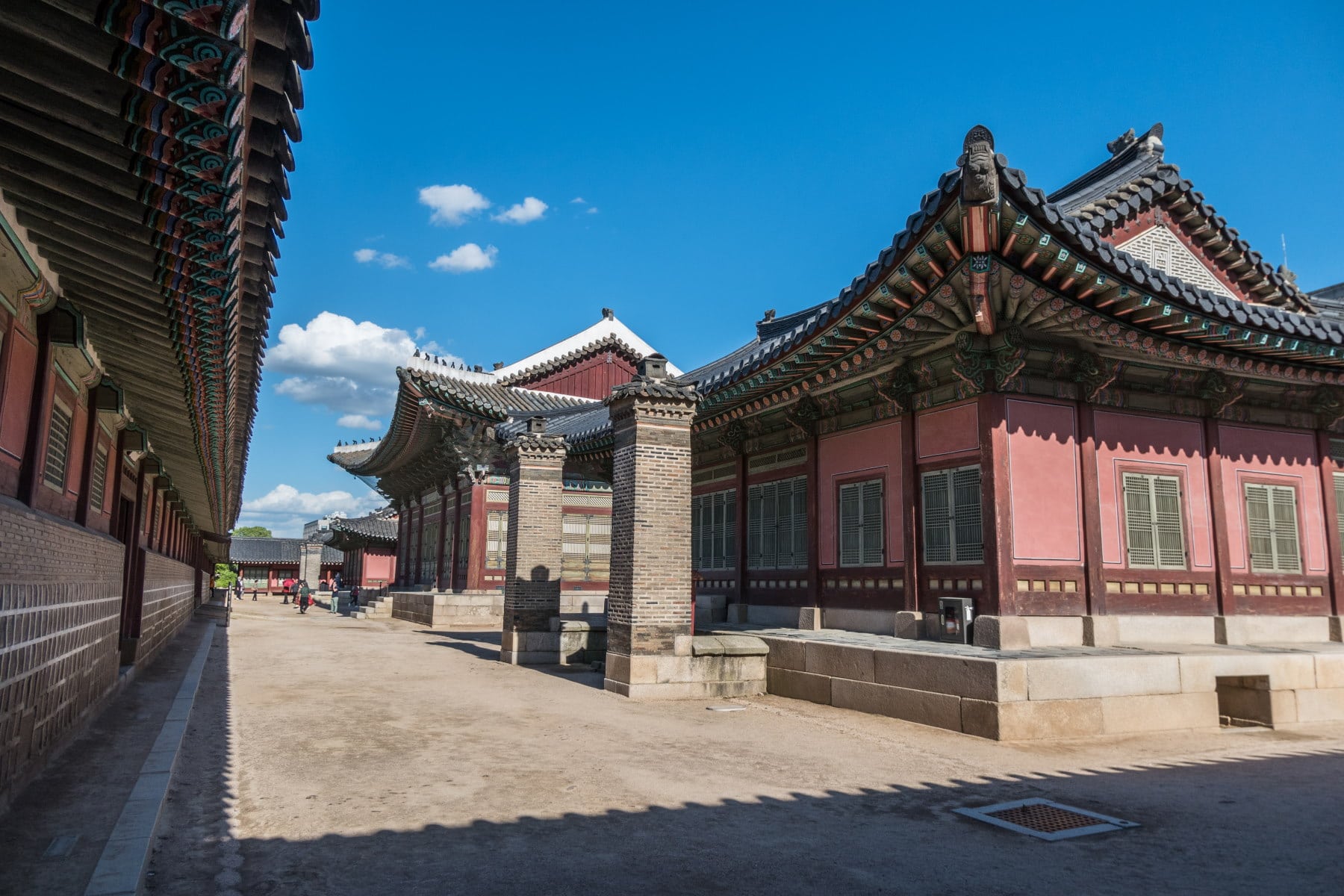
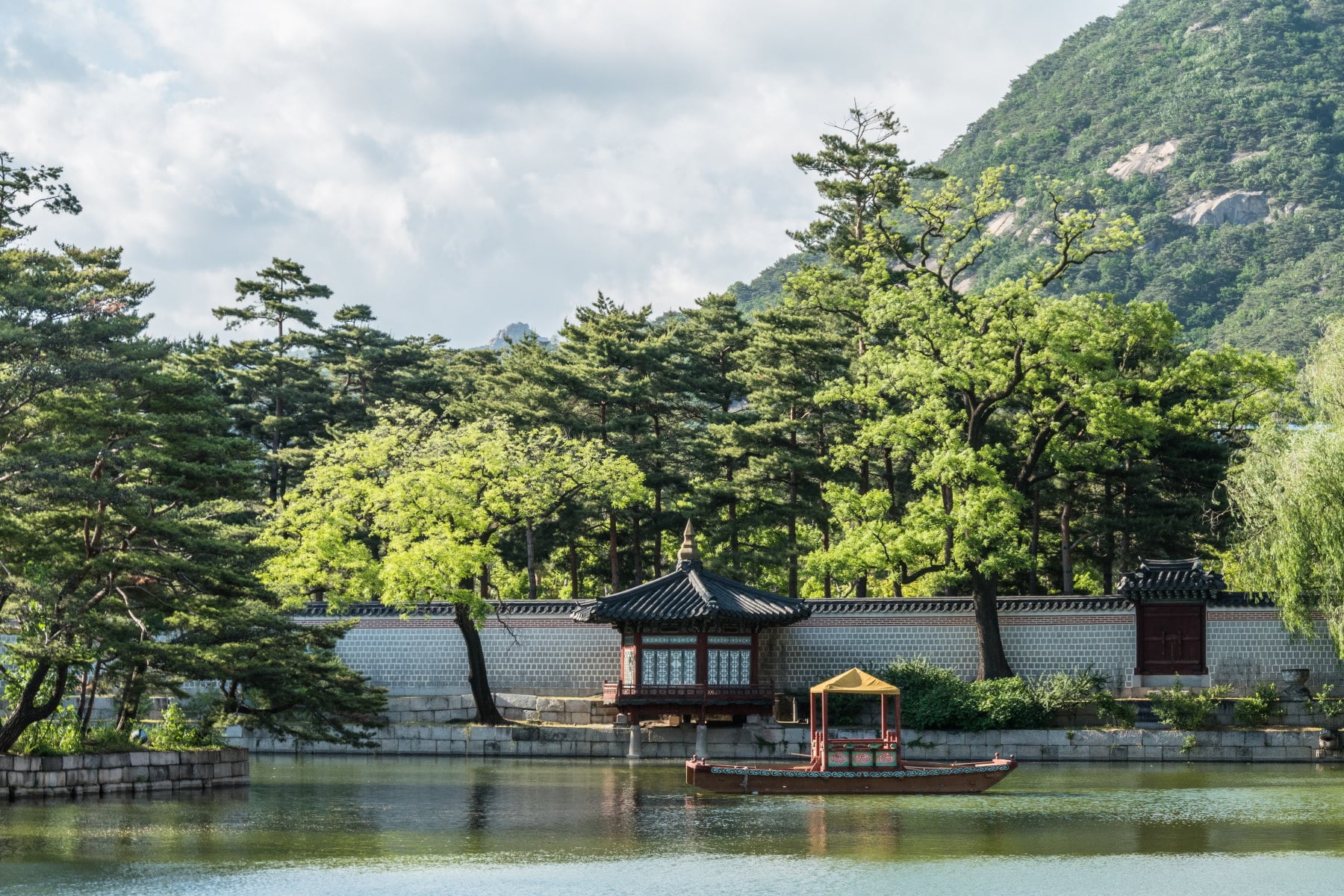
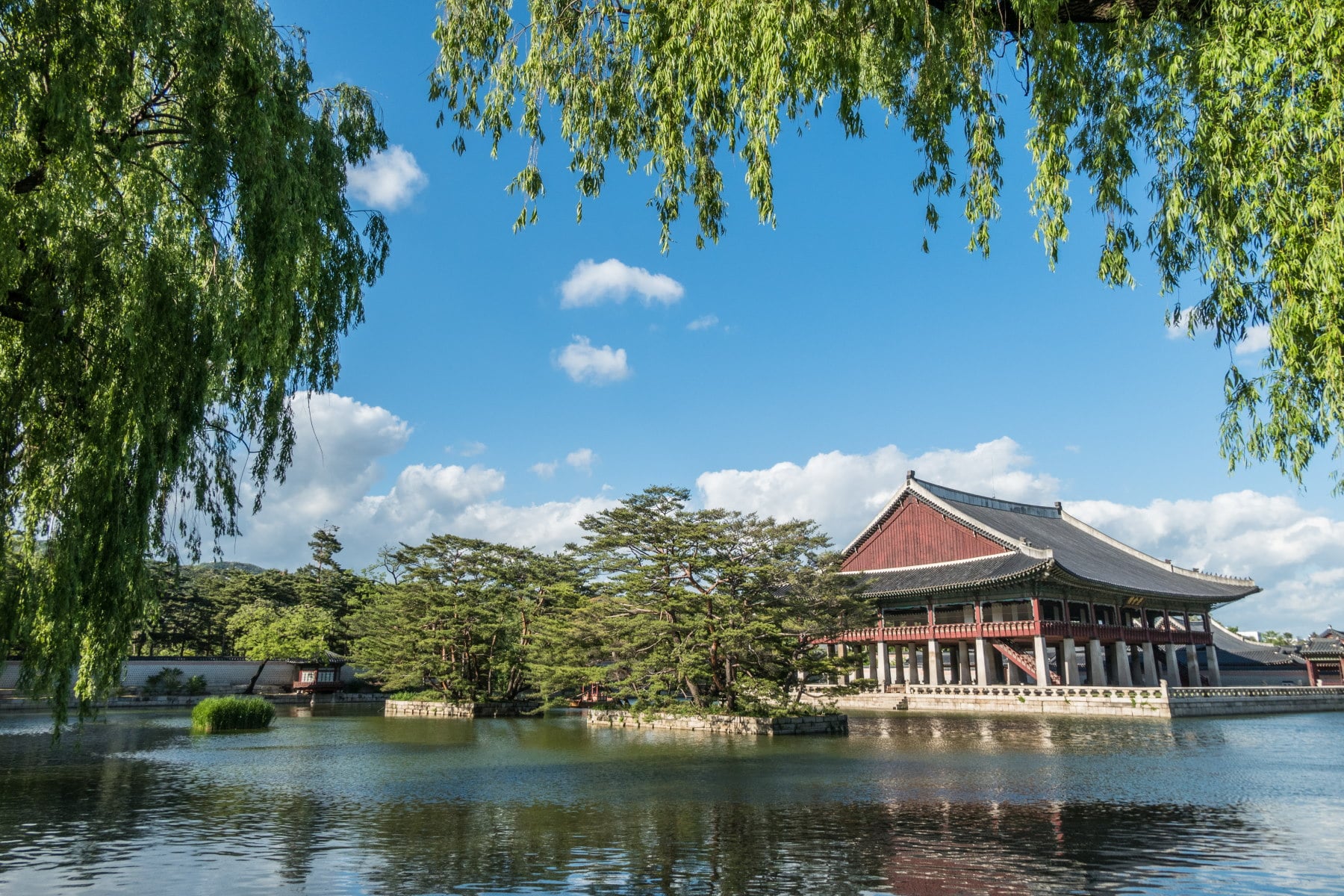
11. Gyeonghoeru Pavilion
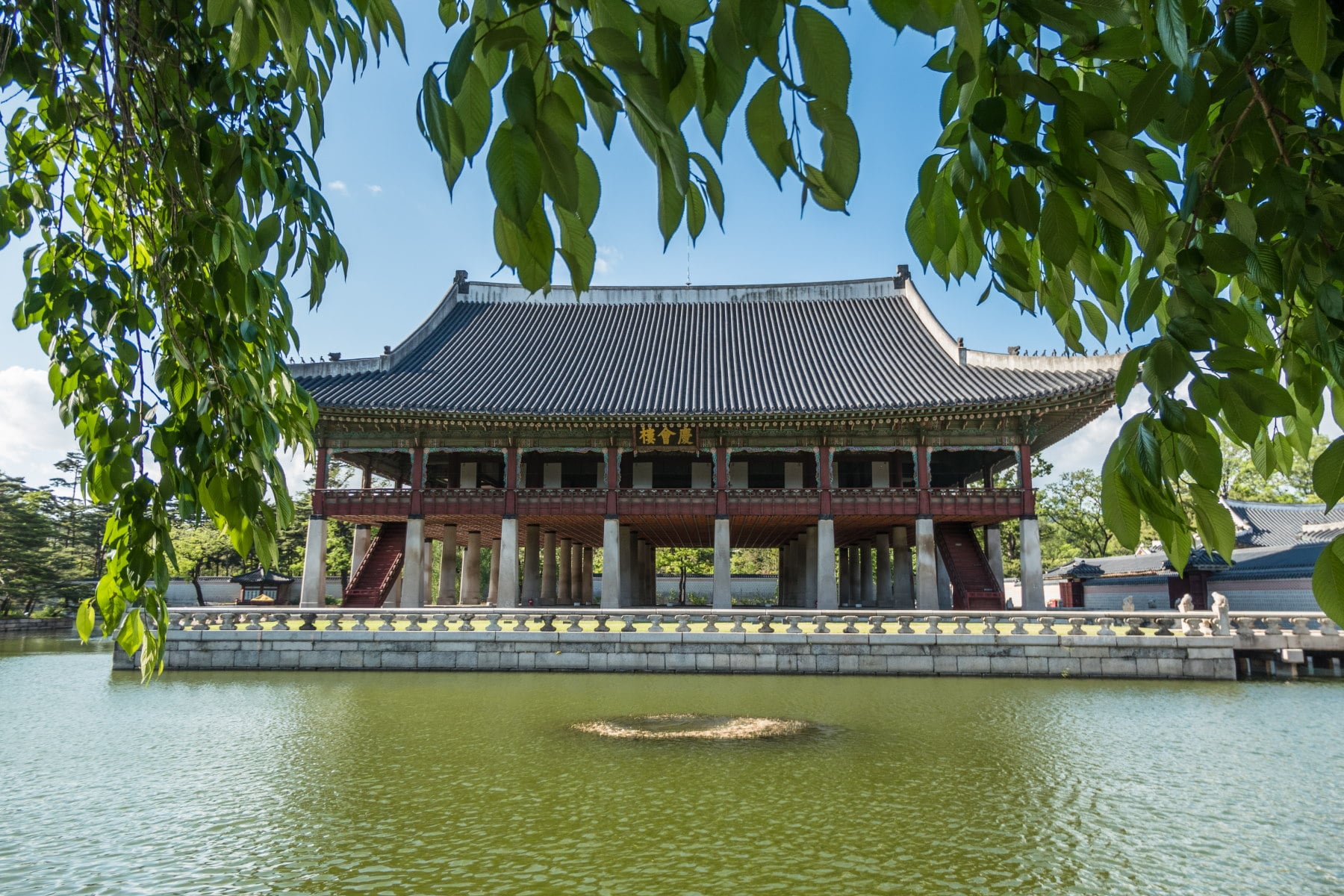
We then went to the Gyeonghoeru Pavilion. Surrounded by a pond, it is one of the most photogenic spots in the palace.
The Gyeonghoeru Pavilion served as the royal banquet hall . It was used for important state events, royal celebrations, receptions for foreign diplomats, and certain rituals.
The windows of the rooms on the upper floor frame the magnificent view of Inwangsan Mountain. Furthermore, the 12 rooms of the pavilion refer to the 12 months of the year while the 24 exterior pillars supporting the structure represent the 24 solar terms.

Royals and special guests also used to boat on the pond. In 1997, the pond's clean-up project revealed two bronze dragon sculptures lying at the bottom of the mud. Each dragon weighed 66.5 kg and was about 1.5 m tall. It was believed that the dragon controlled water and therefore rainfall. They deliberately placed these dragons in the pond to protect the wooden architecture from fire, but to hope for rainfall that would allow for a prosperous harvest.
FYI, this pair of dragons is currently on display at the National Palace Museum (on the left after the large Gwanghwamun gate).
The current pavilion was rebuilt in 1867 , after burning completely during the Japanese invasion of 1592. While other structures of the palace have since burned down or been destroyed again, this pavilion has at least survived until now. This makes it the oldest remaining structure from the new restoration.
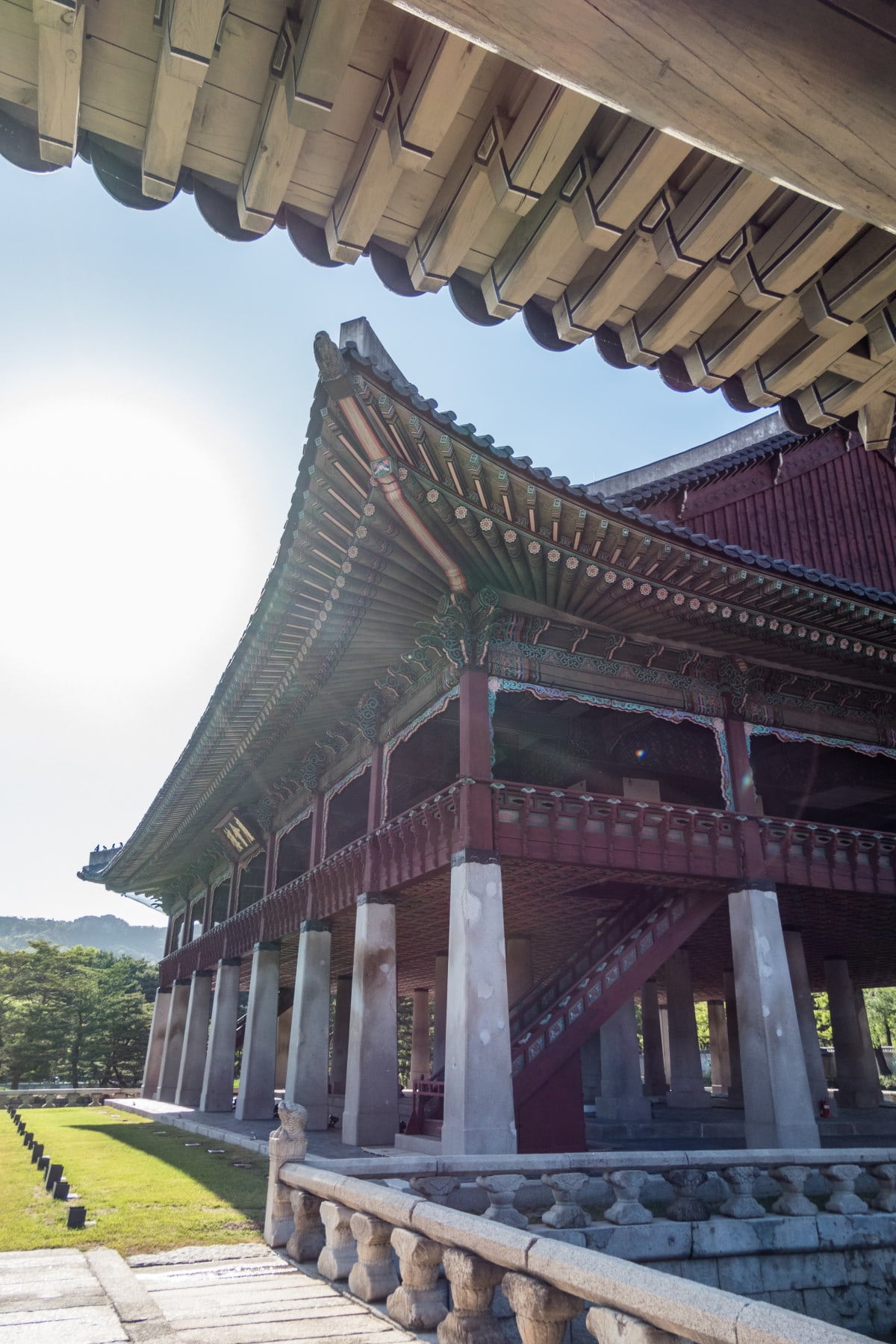
15. Taewonjeon Hall
We then rushed to the next spot to see, because it was already 17:00 and some areas start to close (it takes a while to get everyone out before the 18:00 closing time in May). We were the last ones to enter the complex of buildings called Taewonjeon, located at the very back of the palace, near the North Gate (Sinmumun).

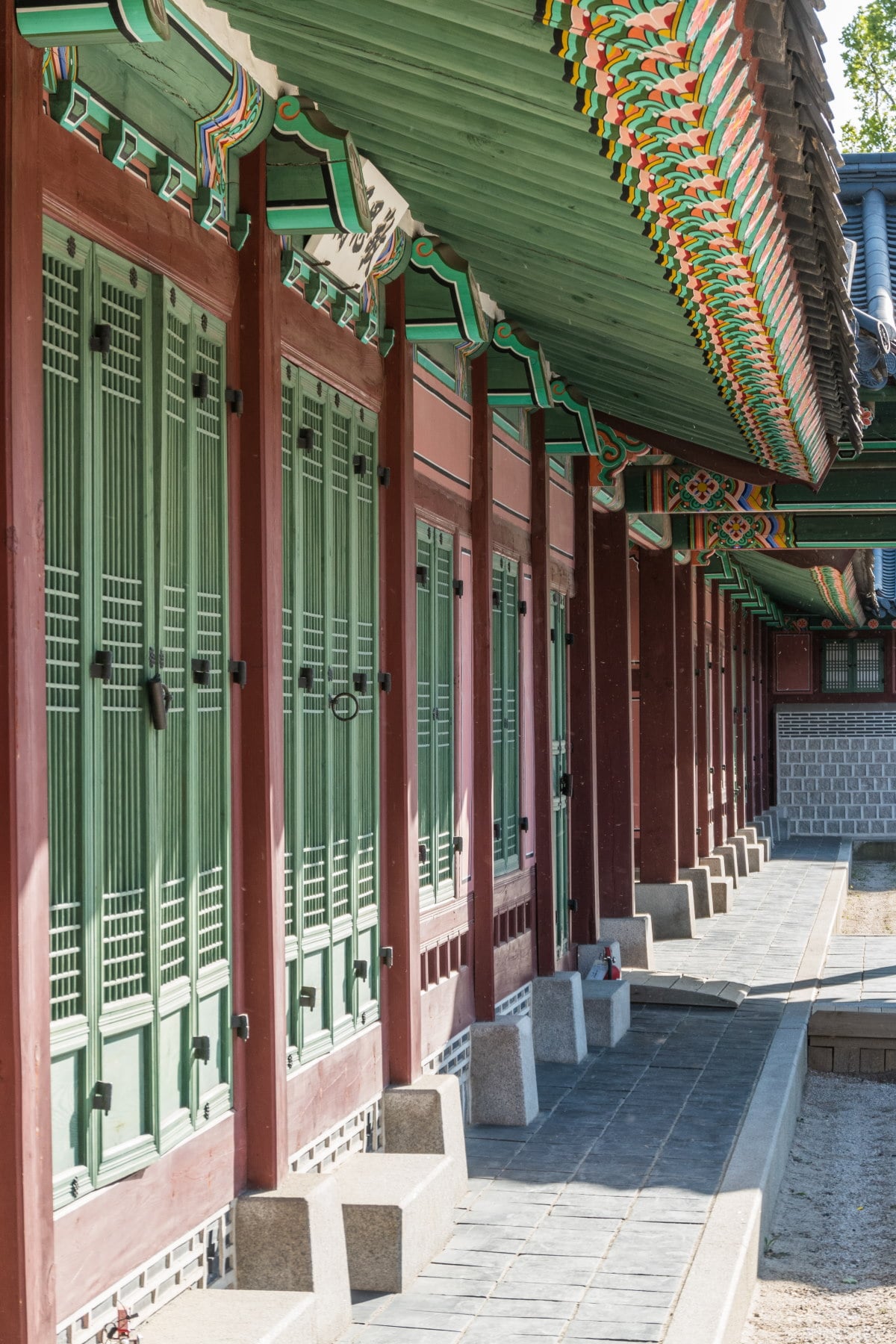
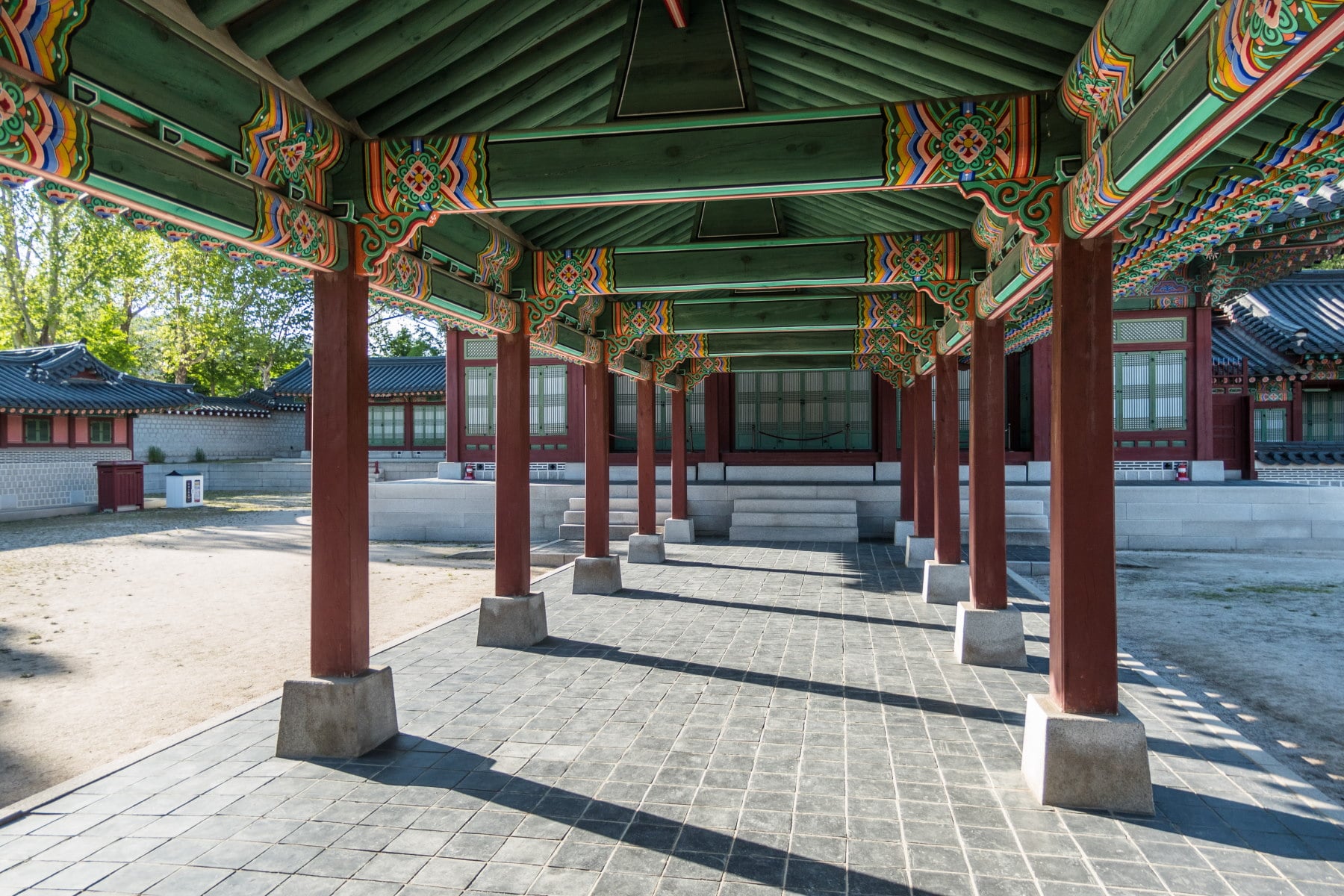
The main hall of Taewonjeon housed the portrait of King Taejo , founder of the Joseon Dynasty. The other buildings comprising this complex, located in the northwest corner of Gyeongbokgung Palace, were named Binjeon Hall, Honjeon Hall, Yeongjeon Hall, and Taewonjeon Hall. Each had a specific function, resembling shrines or, failing that, religious sites.
Binjeon Hall is where deceased royals were laid to rest right after their death. While Honjeon Hall kept the mortuary tablets for two years before moving them to Jongmyo Shrine. Finally, Yeongjeon Hall was used to display the portraits of the deceased and is also where funeral rites were held.
At the beginning of the 20th century, the entire complex that made up Taewonjeon Hall was dismantled, and the current one is only a replica . This is actually a criticism I often hear about Korea. It suffered heavy damage from various wars, so there's very little left that's original, almost everything is a reconstruction, a replica.
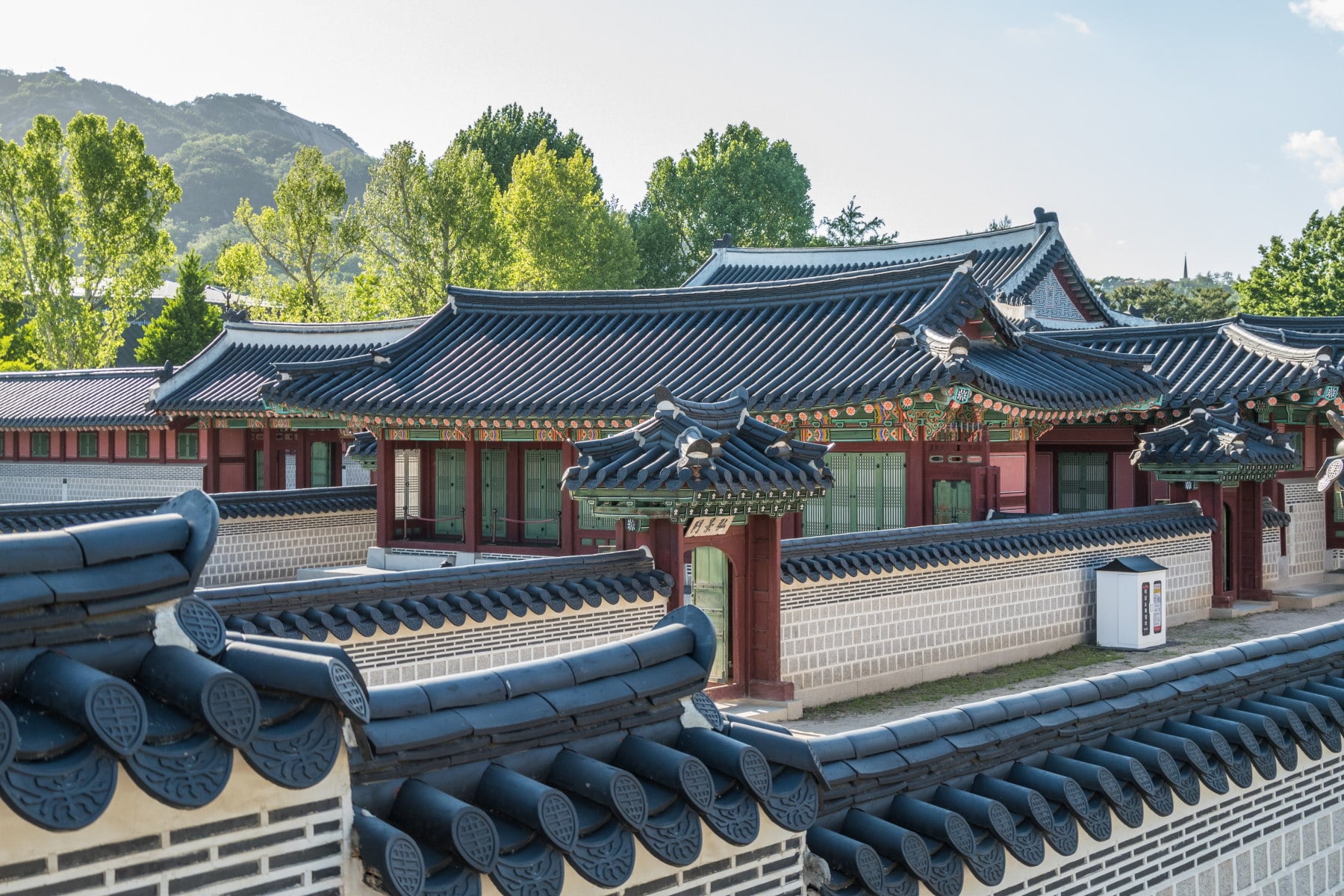
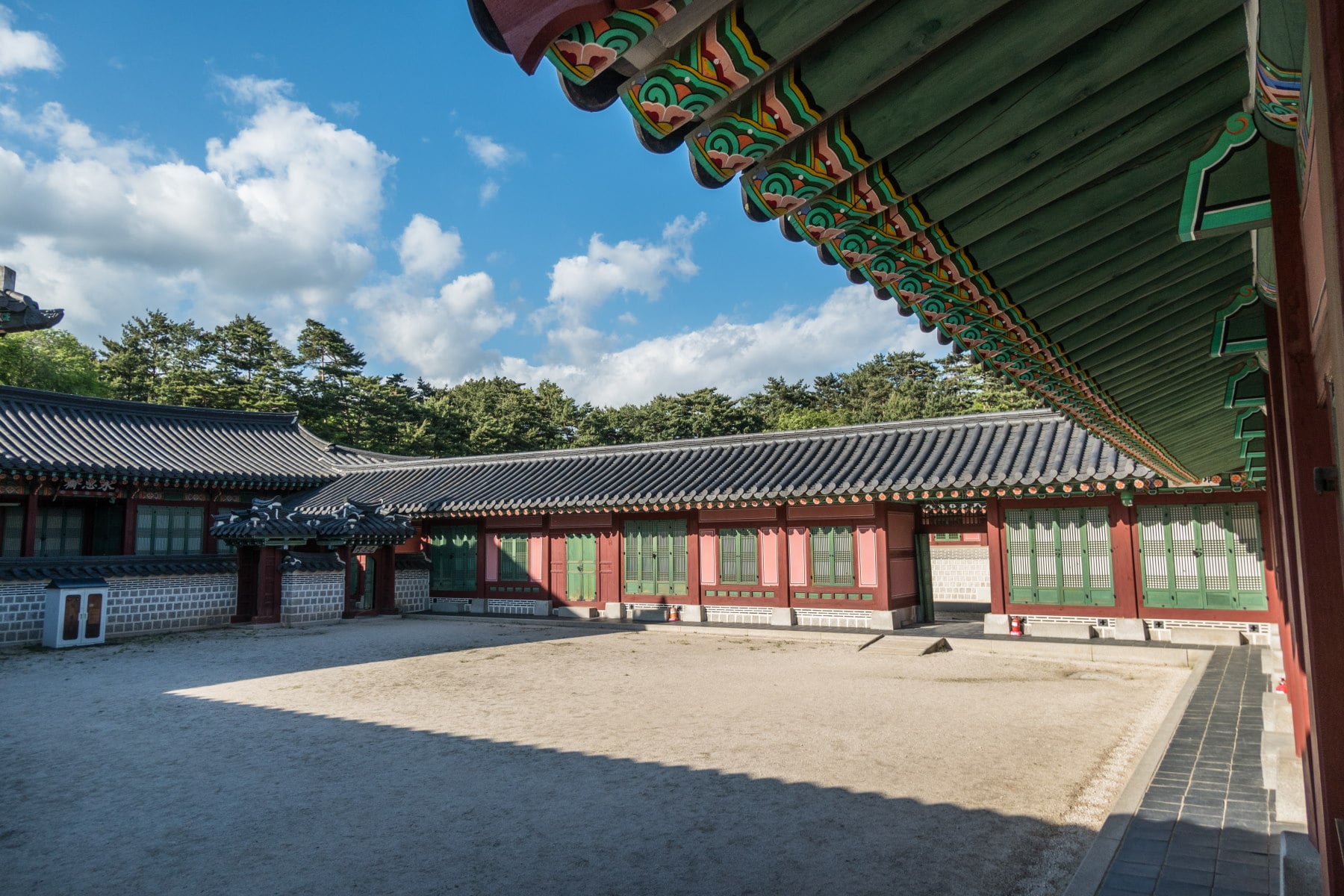
It is felt, it is true, but firstly, it is not really their fault, and secondly, we must give time time too. Tell yourself that these buildings will perhaps still be visited in 400 years if there are no other wars (well in Korea, it is not won, with its neighbor ...), and that it will therefore be old at a given moment.
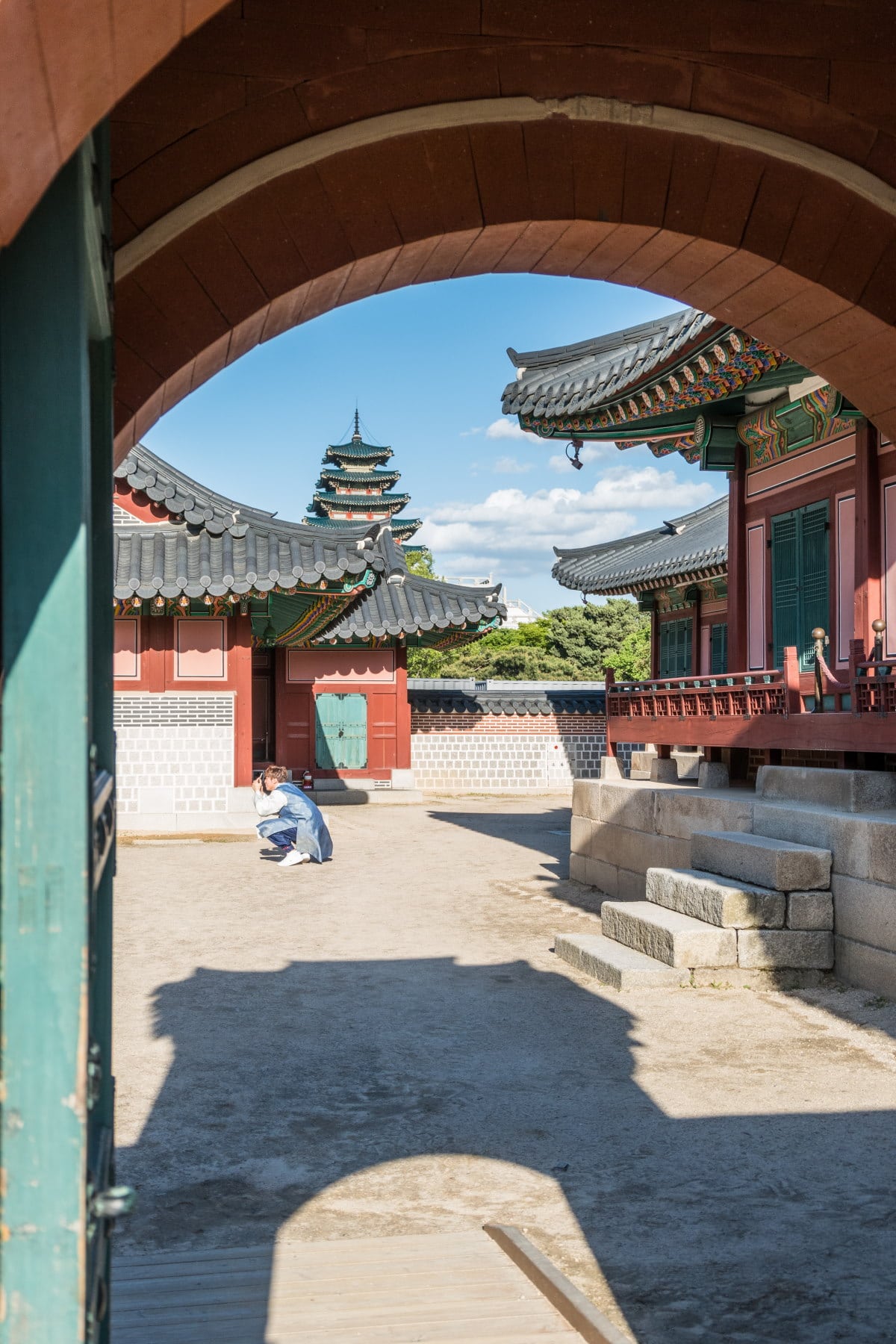
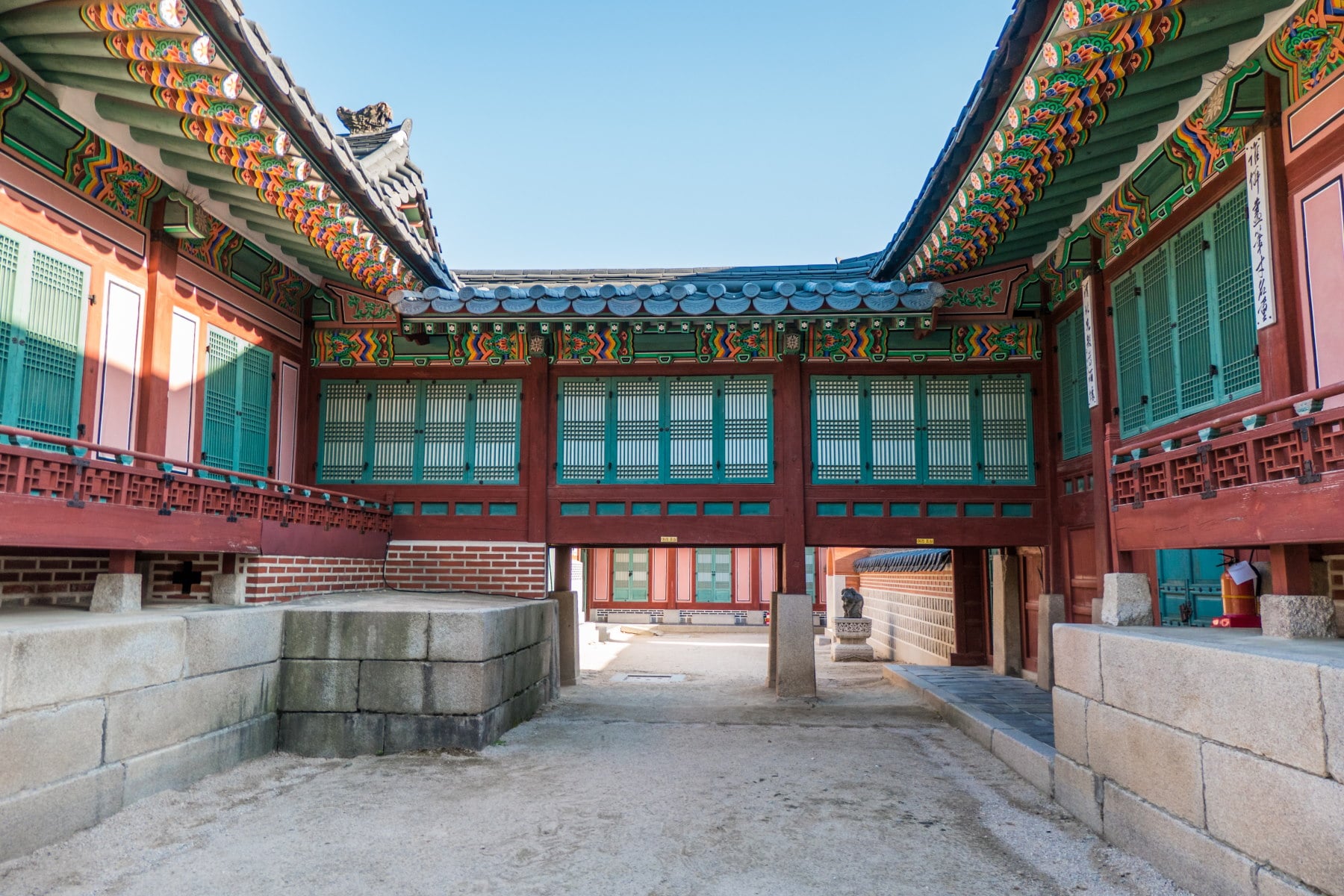
After this quick passage, we passed behind the pond at the pavilion, in a group of buildings not numbered on the map, so I don't know what they correspond to. So the design remains similar to what we had been able to see until then, so nothing transcendent, we didn't linger either while the time was running out, the palace was going to close soon.

12, 13. Hyangwonjeong Pavilion and Geongcheonggung Palace
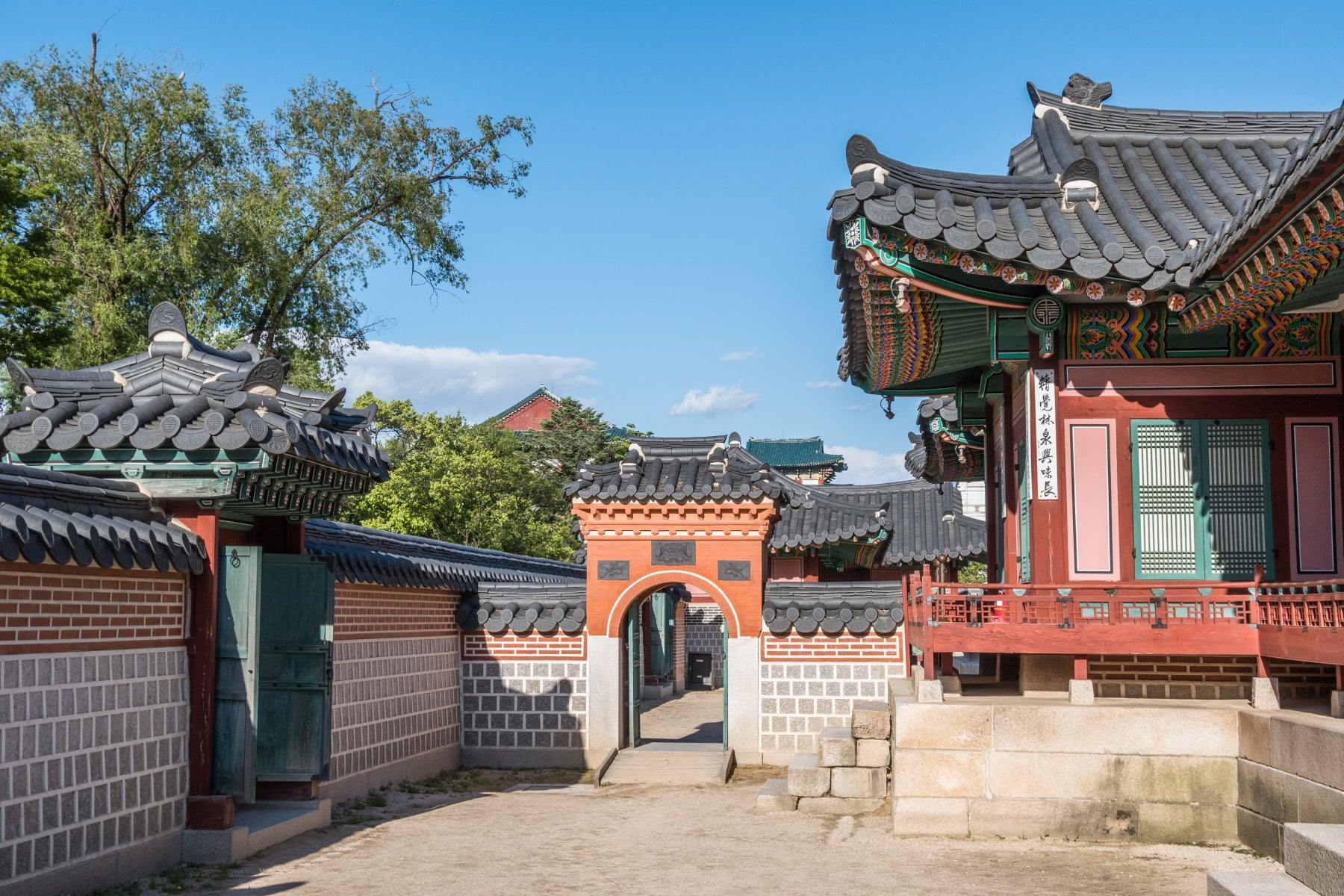
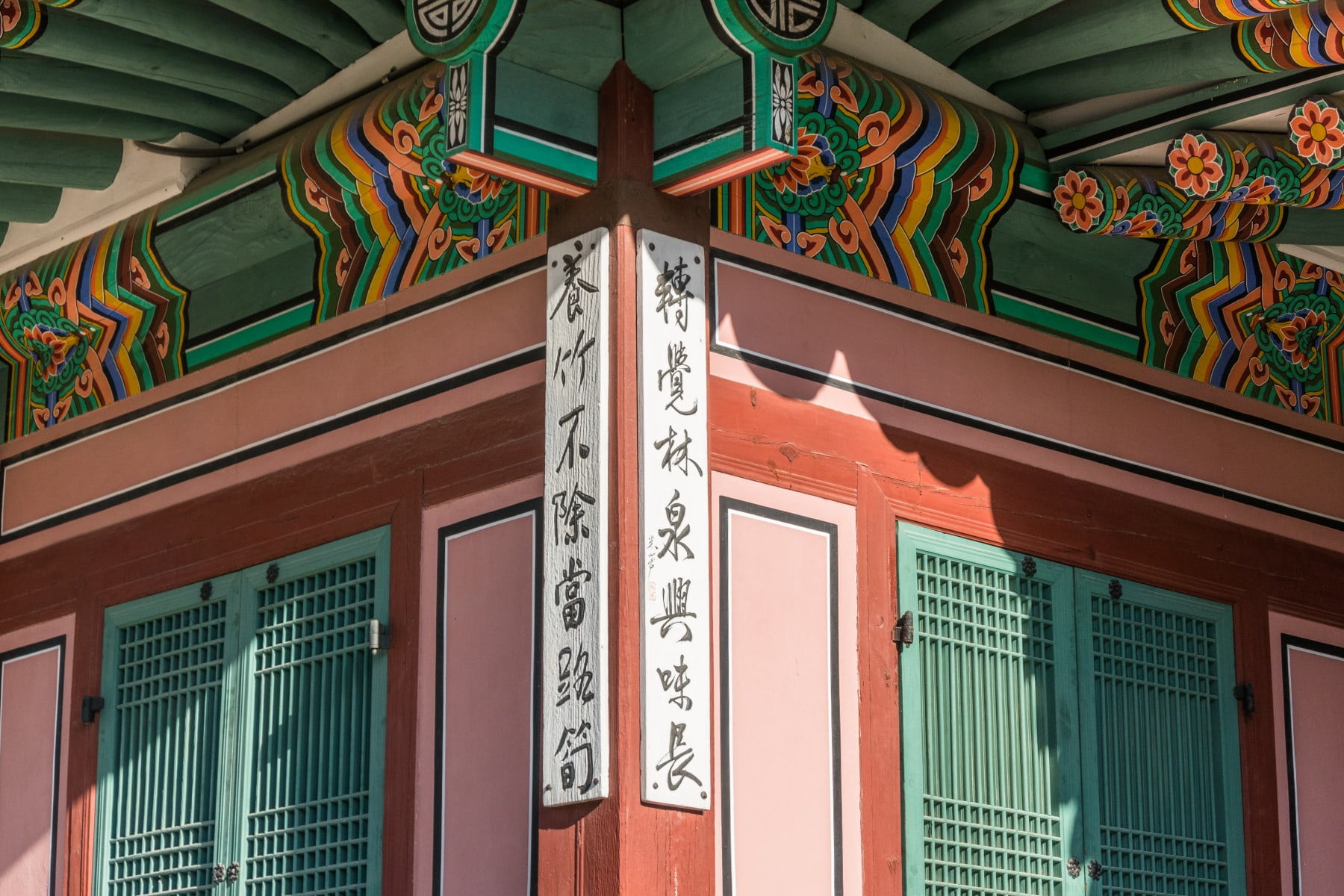
We were starting to quicken our pace since we had just closed the doors of Taewonjeon Hall behind us. To make things easier, it turned out that Hyangwonjeong Pavilion , and the entire area, was closed for renovations during my visit…
It was the personal garden of Emperor Gojong and his queen, Myeongseong. Gojong reigned from 1867 to 1907 and was the last king of the Joseon Dynasty and the first of only two emperors of the Korean Empire, which collapsed with the country's colonization by Japan in 1910. It was Gojong who undertook most of the renovation work on the palace (begun by his father who was in charge of the regency when his son was still a minor), after it had been abandoned for more than two centuries.

At the rear of the complex, he decided to build a secluded residence, Geongcheonggung Palace (number 13 on the map), to enjoy quiet, private time. The residence was built in 1873, five years after the reconstruction of Gyeongbok Palace. Opposite the residence lies Hyangwonji Pond, landscaped with the Hyangwonjeong Pavilion in the center and connected by a wooden bridge. This is the centerpiece of the garden adjoining the palace, designed as a place of relaxation for the royal family.
It also looks very photogenic, too bad we couldn't take a look, in the late afternoon, there was beautiful light.
14, 18. Jibokjae and the National Folk Museum of Korea
Next to the Geongcheonggung residence is Jibokjae, which is actually three buildings, with the Hyeopgildang and Parujeong halls. These three structures were originally located in Changdeokgung Palace. They were later moved to Gyeongbokgung when King Gojong moved from his then residence to the newly renovated palace in 1888. King Gojong used these buildings as a library and a reception hall for foreign delegations.
Compared to other buildings, Jibokjae Hall is different because it features Chinese architecture that was considered "modern" at the time.
Obscuring this entire section, we could see number 18 on the map, the National Folk Museum of Korea , recognizable by its pagoda towering above the other buildings. It's one of two museums integrated into the palace (the other being the National Palace Museum of Korea, already mentioned and corresponding to number 17). We wouldn't have particularly visited it anyway, and it's a more modern building.

9, 10. Jagyeongjeon and Donggung
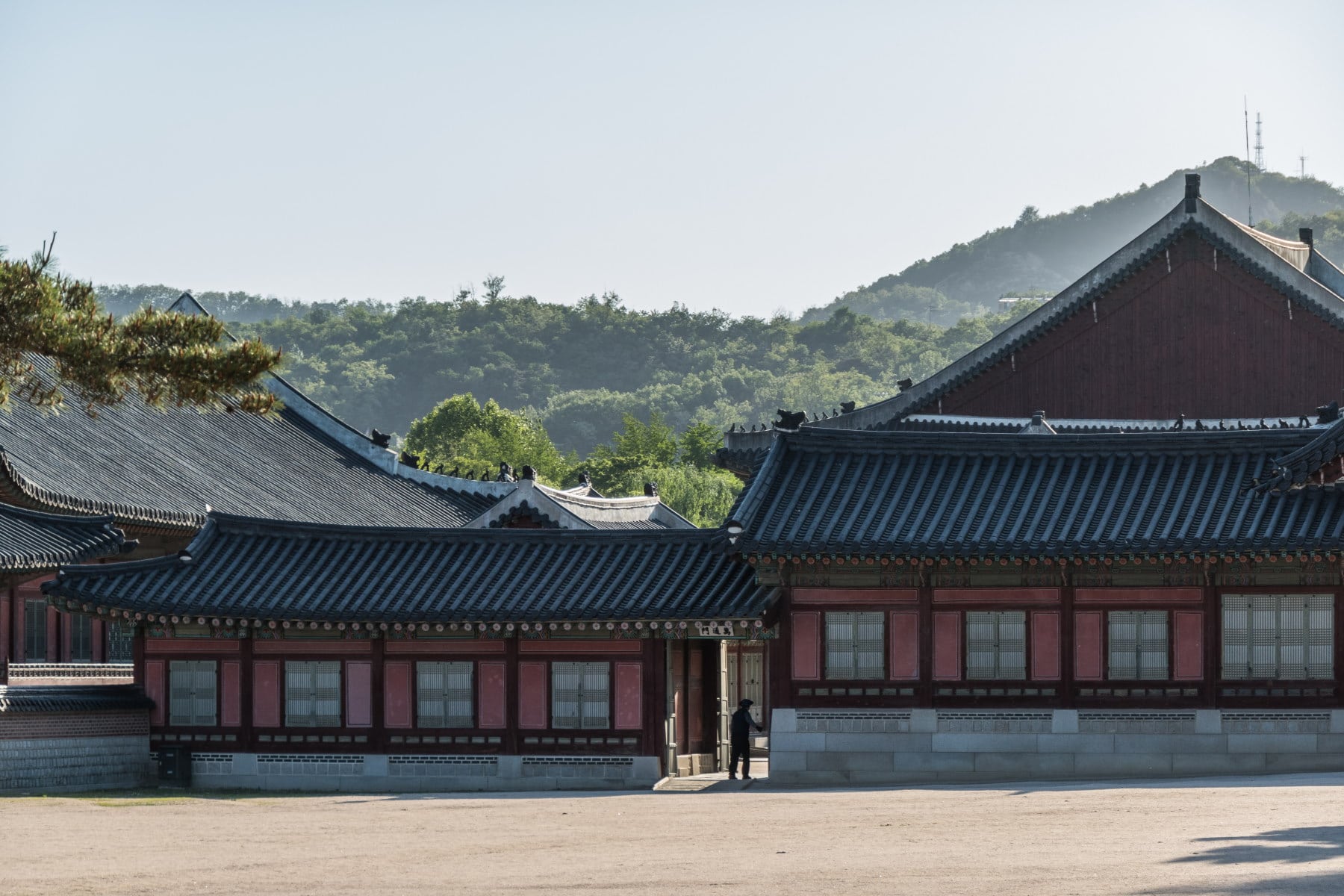
Upon reaching the main gate, after being relatively alone since our visit to the Taewonjeon hall, we began to see a few people again, passing by the Jagyeongjeon residence (No. 9).
The Jagyeongjeon Hall served as the residence of Queen Sinjeong , the woman through whom King Gojong came to power, even though he was not her descendant (but held power as the senior dowager). The hall was built when Gojong's father, Daewongun (then Regent Heungseon), began the reconstruction of Gyeongbokgung Palace. Unfortunately, the building burned down almost immediately after completion… But the new structure was promptly restored in 1888.

Not far from Jagyeongjeon is Donggung Residence (number 10 on the map), the residence of the Crown Prince. This residence is located to the east of the throne hall, which is not entirely insignificant, because as the sun rises from the east, this palace symbolizes the future ascension of the Crown Prince to the throne.
While this configuration was not original to Gyeongbokgung Palace, it was added by King Sejong in 1427. Obviously not having survived the tragic history of the place, the current building was rebuilt in 1999.
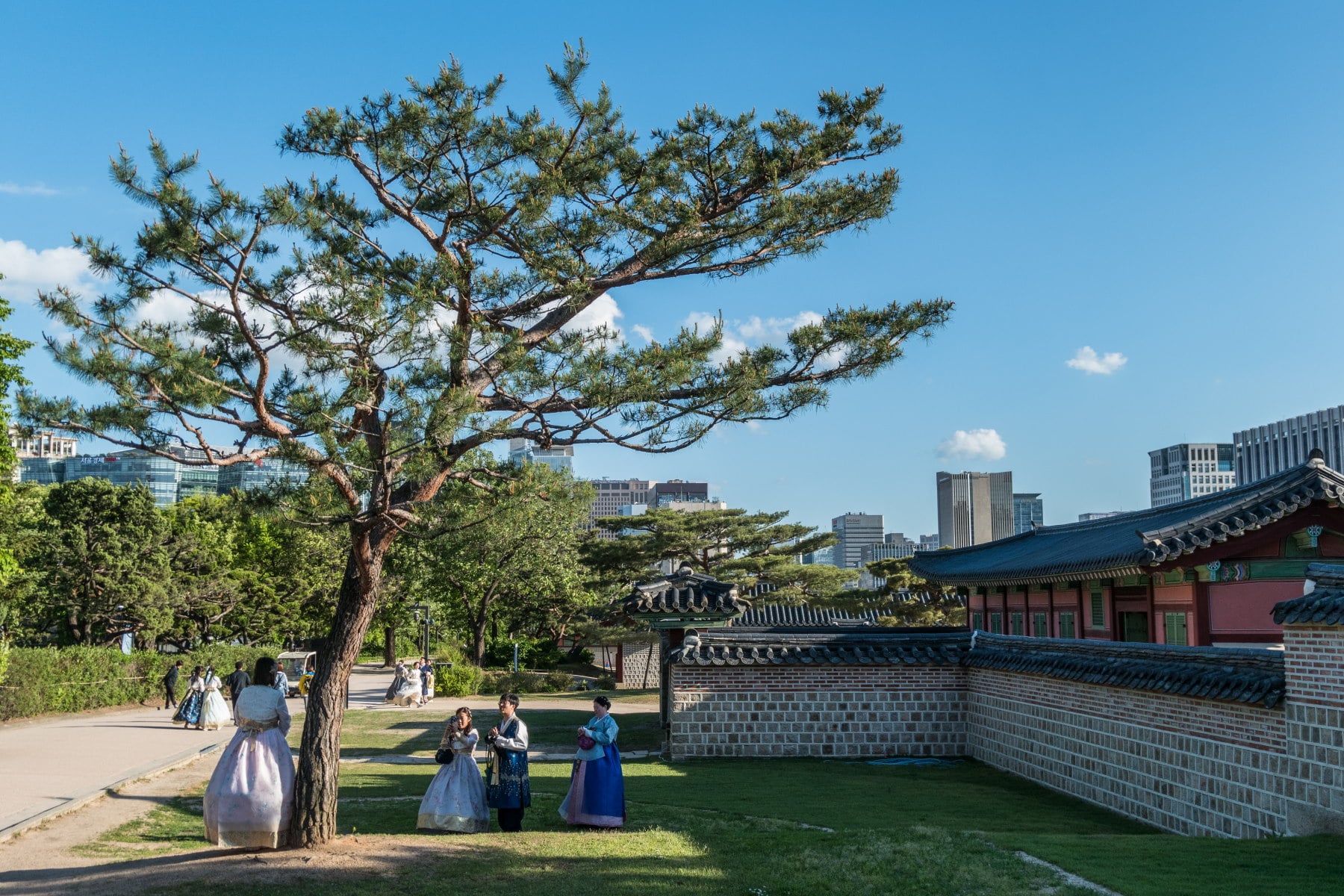
If we look at the plan, we see that there is normally nothing between these two residences. Which is no longer the case today. I have not found an up-to-date plan while these buildings have apparently been completed since 2015…
6, 7 and 8. Gangnyeongjeon, Gyotaejeon, Amisan Garden
This is a whole area that we will completely skip due to lack of time. It is located at the back of the Sajeongjeon hall (behind the throne room as a reminder).
It includes the king's quarters (Gangnyeongjeon, No. 6 ) and the queen's quarters (Gyotaejeon, No. 7 ). Gangnyeongjeon Hall has been burned down three times in history, including during the reign of King Sejong from 1397 to 1450, who instigated the fires.
It was rebuilt in the late 19th century like the rest, but was dismantled to be used as material for the reconstruction of the living quarters of Changdeokgung Palace in 1918. The current building was not rebuilt until 1995, using specifications based on the original plan.

A similar fate befell the queen's quarters, as the Gyotaejeon Hall was dismantled at the same time. Its materials were then used to construct the Daejojeon Hall in Changdeokgung Palace.
Number 8 , finally, corresponds to the Amisan Garden. Located behind the Queen's quarters (Gyotaejeon), Amisan consists of an artificial mound , which symbolizes Mount Emei (located in Sichuan, China). This sacred mountain was considered the most beautiful and mysterious of that era.
There are terraces of flowering plants arranged harmoniously on the mound. One can also notice chimneys, which functioned as exhausts of the heating system of the Gyotaejeon Hall.

Back to the throne room
To complete our loop around Gyeongbokgung Palace, we passed the East Gate, Geonchunmun, much more modest in appearance than the main one. We reached the cloister surrounding the throne room under a beautiful late afternoon light, while we urged the last recalcitrants like us to leave.
It was an opportunity to take some photos of the place, previously so lively and now empty with only the staff waiting to be able to close all the doors.



What to do around Gyeongbokgung?
- Bukchon Hanok Village
- Insadong Neighborhoods
- Walk along Cheonggyecheon
Enjoyed this article? Save it on Pinterest!


