


Guest article submitted by Max, from the blog Max on the Move, who lived in Seoul for eight months as a student.
Every itinerary in Seoul has its palaces, markets, and views from Namsan. But to see how young Seoulites spend their evenings, you have to go west to Hongdae . Street musicians, small concert venues, vintage shops, cafes housed in old buildings, and a crowd that seems eternally twenty-two years old: this is the neighborhood where Seoul unwinds.
I know the area well because I used to live right next to it. In 2020, I spent eight months in Sinchon as an exchange student at Ewha University, just one subway stop from Hongdae, and I still go back to Seoul every year. Hongdae was where I went to listen to music, people-watch, or simply take a long walk that would end somewhere with a good cup of coffee.
Here I share my ideas for visiting Hongdae , the streets to explore, the best times to go, and how to get there from the airport. I also explain why you should set aside some time for Sinchon, its quieter neighbor.
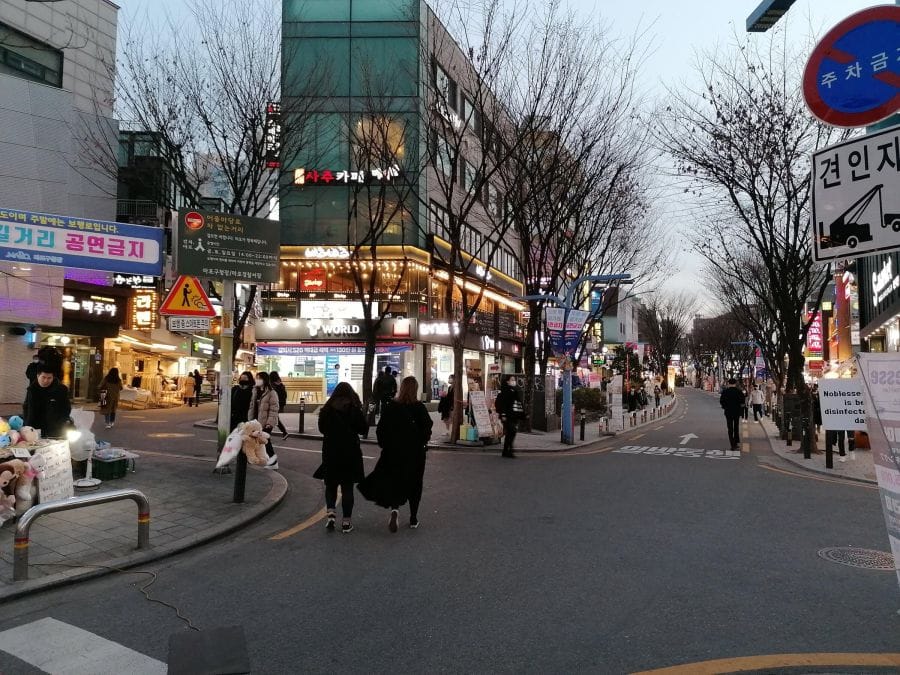
1. What exactly is Hongdae?
"Hongdae" is short for Hongik Daehakgyo , Hongik University. Known in Korea for its fine arts school, its students began taking over the surrounding streets in the 1990s with workshops, murals, small bars, and music. The name eventually came to refer to the entire area around the campus, which now extends into the neighboring districts of Yeonnam-dong, Sangsu-dong, and Hapjeong.
Hongdae isn't a place with a set entrance and opening hours. It's a neighborhood to wander through, and it transforms completely throughout the day. In the morning, it's quiet, almost sleepy. In the afternoon, the cafes and shops fill up. From sunset until late at night, especially on Fridays and Saturdays, the streets belong to musicians, dancers, and groups of friends heading to the next bar.
2. Take a walk along the street of entertainment
The heart of Hongdae is the pedestrian street near Hongik University Station, often simply called Walking Street or Busking Street . On weekend evenings, it transforms into an open-air stage: singers with small amplifiers, dance groups performing K-pop choreography step by step, sometimes even a full band. Each performance draws its own circle of onlookers, and people flit from one to the next.
The performances are informal, so there's no set schedule. Come after sunset on a Friday or Saturday: you'll have a good chance of stumbling upon some artists. It's free, but if you enjoy a performance, leaving a few thousand won in the guitar case is a nice way to show your appreciation.
During my visits, I mostly saw K-pop singers and dance groups. For street performances, I still prefer Sinchon, which is right next door: the atmosphere at Star Square seems more spontaneous to me. I'll come back to that later.
3. The Free Market and the Hope Market
If you're in Seoul for a weekend between spring and autumn, make a detour to Hongdae Playground , also known as Hongik Children's Park, across from the university. The Free Market, launched in 2002, is one of the neighborhood's artistic hubs. There you'll find creations sold directly by local artists and craftspeople: illustrations, jewelry, ceramics, bags, postcards, and small works of art.
The Saturday market is known as the Free Market , and the Sunday market as the Hope Market . The usual opening hours are from 13:00 PM to 18:00 PM, with a winter break. However, the schedule may vary depending on the season and weather: check the Free Market or Hope Market listings before heading out.
I've browsed the stalls myself, and for me, it's the best place in Hongdae to find a souvenir that isn't factory-made. You can often chat with the person who made it. Entry is free.
4. Gyeongui Line Forest Park and Yeonnam-dong
To escape the crowds, head to Gyeongui Line Forest Park , a long, narrow park laid out along the route of a former railway line, around Hongdae, towards Yeonnam-dong and in the direction of Sinchon. Locals call the Yeonnam section "Yeontral Park," a blend of Yeonnam and Central Park.
On sunny afternoons, the lawns fill with people sitting and enjoying a coffee or a beer bought from a convenience store. On weekend evenings, you'll also find street musicians, creating a more relaxed atmosphere than on the main street. On either side of the park, the narrow streets of Yeonnam-dong are home to cafes, bakeries, and restaurants, often housed in old buildings. It's a great place to slow down after the hustle and bustle of downtown Hongdae.
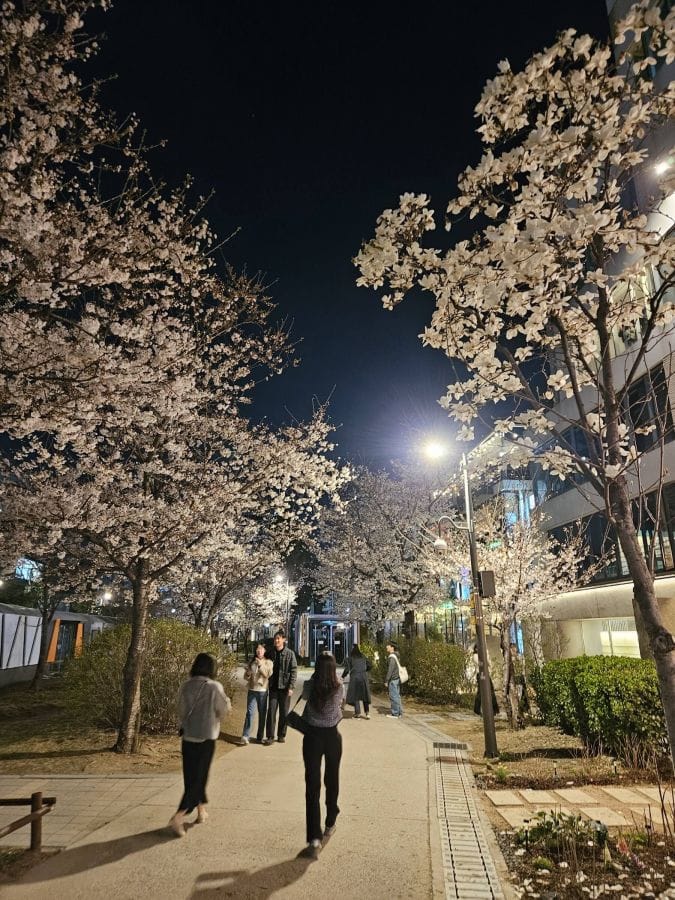
I strolled there in early April, when the cherry trees lining the path were in full bloom and people continued walking under the illuminated branches until late in the evening. If you're in Seoul during cherry blossom season, this is one of the walks I recommend in the western part of the city.
5. Concerts and nights out
Hongdae is the birthplace of the Korean independent music scene, and small concert venues are still a part of the neighborhood. Rolling Hall is one of these historic venues. On weekends, you can find concerts by local rock or indie bands. Schedules are announced on the venues' social media, and tickets are generally much cheaper than those for major K-pop concerts.
After the concerts, the neighborhood continues to buzz until morning: clubs, bars, private karaoke rooms for friends—known as noraebang —and photo booths where groups line up to leave with their set of pictures. Some establishments stay open until the first subway trains. If you plan to head home early, remember to check the schedule for the last train.
The clientele of Hongdae's clubs is young: most people are thirty or younger. My favorite was B1 . For a more relaxed evening, I liked Corner Pub , a good place to have a beer and play darts or beer pong. As for noraebang (street food stalls), I frequented them all over Seoul, and Hongdae has them on almost every corner.
One word of caution: around Halloween and on some bank holiday weekends, the streets can be particularly crowded. If you don't like dense crowds, choose another evening.
6. Shopping: vintage, small brands and design
Hongdae attracts young designers and vintage enthusiasts. Around the pedestrian street and in the neighboring alleyways, you'll find thrift stores, small Korean streetwear brands, stationery shops, character boutiques, record stores, and cosmetics chains. Prices are affordable for students, making it a more relaxed shopping area than Myeongdong or Gangnam.
For art and design, head to KT&G Sangsangmadang , a cultural center with exhibitions, a design shop, and a concert hall. Many spaces are free to access, although some events and performances require tickets.
7. Eat like a student
Hongdae and Sinchon also cater to student budgets: they're great neighborhoods for eating well without breaking the bank. On the menu: tteokbokki, gimbap made to order, Korean barbecue, and plenty of international cuisine. And above all, chimaek , that quintessentially Korean combination of fried chicken and beer, perfect for sharing with friends at the end of the day.
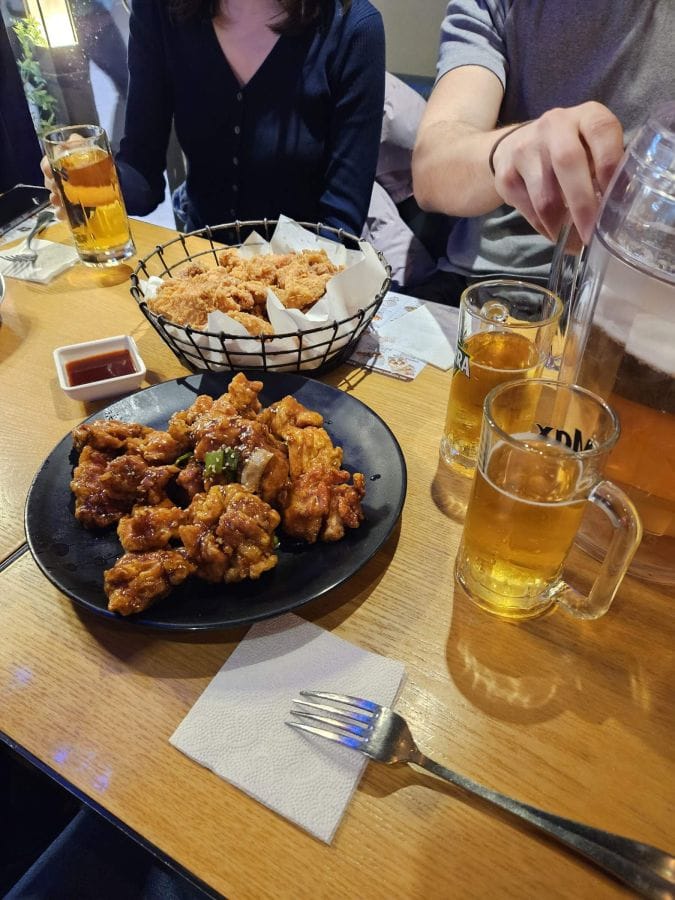
My usual address in Hongdae is bb.q Chicken , one of the big fried chicken chains in Korea: order one plain plate and another with sauce, then share.
My personal recommendation, however, isn't Korean at all: mala xiang guo , a spicy Sichuan stir-fry where you choose your own vegetables, tofu, and meat. It's very popular with local students, and I ate it at least once a week when I lived there. My favorite spot, Mido Maeunhyangsot in Sinchon , has outlasted dozens of competitors: in a student neighborhood, that's a pretty good sign. Fill your bowl mainly with vegetables—my favorite is lotus root—and order the sweet and sour pork with honey-orange sauce on the side.
8. Mangwon Market and the Han River at Sunset
From Hongik University Station, take Line 2 to Hapjeong , then Line 6 for one stop to Mangwon . Mangwon Market is a traditional covered market where locals shop, with stalls selling fried foods, dumplings, rice cakes, and small side dishes at affordable prices. It's primarily a neighborhood market, and that's precisely what makes it so charming.
From the market, you can continue on foot to Mangwon Hangang Park , on the banks of the Han River. A great way to end a day in this part of Seoul is to sit by the water at sunset and have fried chicken delivered to the park, like many Seoulites do on summer evenings. We did it once, and it's one of those simple moments that makes you feel like you're truly living in the city.
9. Right next door: Sinchon, where I lived
Hongdae attracts the attention of foreign visitors, but just one stop further east on Line 2 is Sinchon , my neighborhood during my exchange program. It's also accessible on foot from Hongdae, via the walkways built around the old railway line. Between Yonsei and Ewha universities, you'll find the same student energy, but in a calmer, more everyday atmosphere.
Three places I recommend in Sinchon
- Star Square, a place where something unexpected almost always happens in the afternoon. I've seen K-pop covers played with real instruments and, once, a gymnast perform in the middle of the square, surrounded by three rows of spectators.
- Yonsei-roThe main street, with its street food stalls, cheap clothes and cosmetics shops, leads to the gates of Yonsei University, whose campus can be explored for free.
- The food basement of the Hyundai Department StoreConvenient for a quick lunch. As a Swiss person, I was quite surprised to find real Swiss raclette cheese in my supermarket.
Sinchon also has many cafes specializing in desserts. When it's hot, students queue up for bingsu , a Korean dessert made with shaved ice, available in every imaginable flavor.
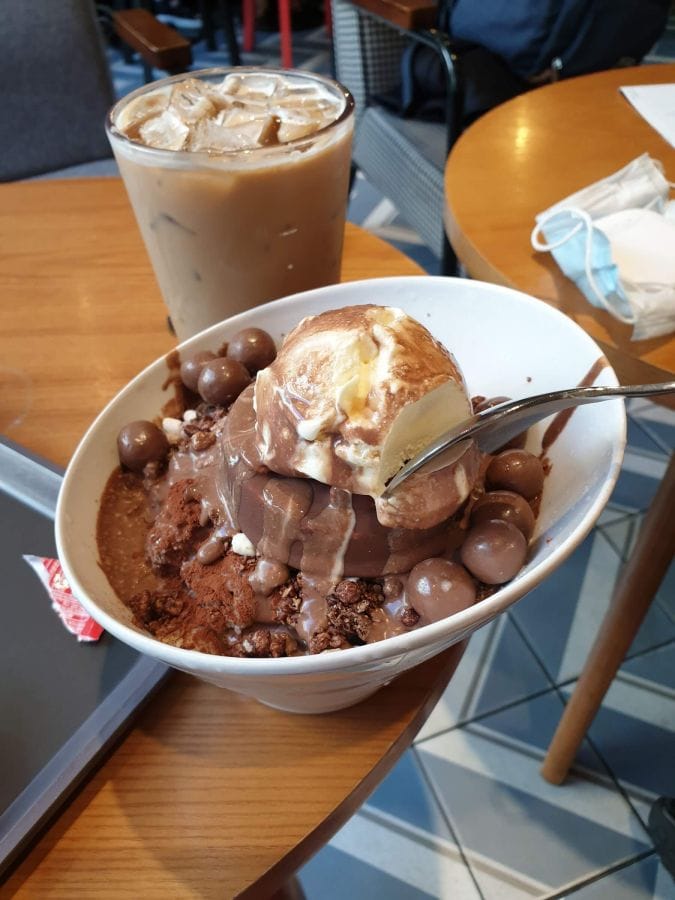
Sinchon is also a good, often cheaper, base for staying in Seoul: Hongdae, Ewha, and the city center are easily accessible. I compare it with Hongdae, Myeongdong, and other neighborhoods in my guide to where to stay in Seoul.
10. Practical information for visiting Hongdae
What other attractions can I combine with Hongdae?
- 4 Days in Seoul: What to See & How to Plan Your Stay, to organize visits to the palaces and the center, including Gyeongbokgung.
- 10 Days in South Korea: My Itinerary, Budget & Travel Tips, if Seoul is part of a longer trip.
What I remember most about Hongdae are the street musicians, the evenings that stretch on, the cafes in old houses, and the neighborhood's vibrant energy. Come in the evening and take your time strolling around without a set itinerary. And when you feel like taking a break, head over to Sinchon. You might like it as much as I do.
About the author: Max is a Swiss travel blogger from Solothurn. He spent eight months in Seoul as an exchange student at Ewha University, then lived in Tokyo for three years. He shares his travels on maxonthemove.com.
