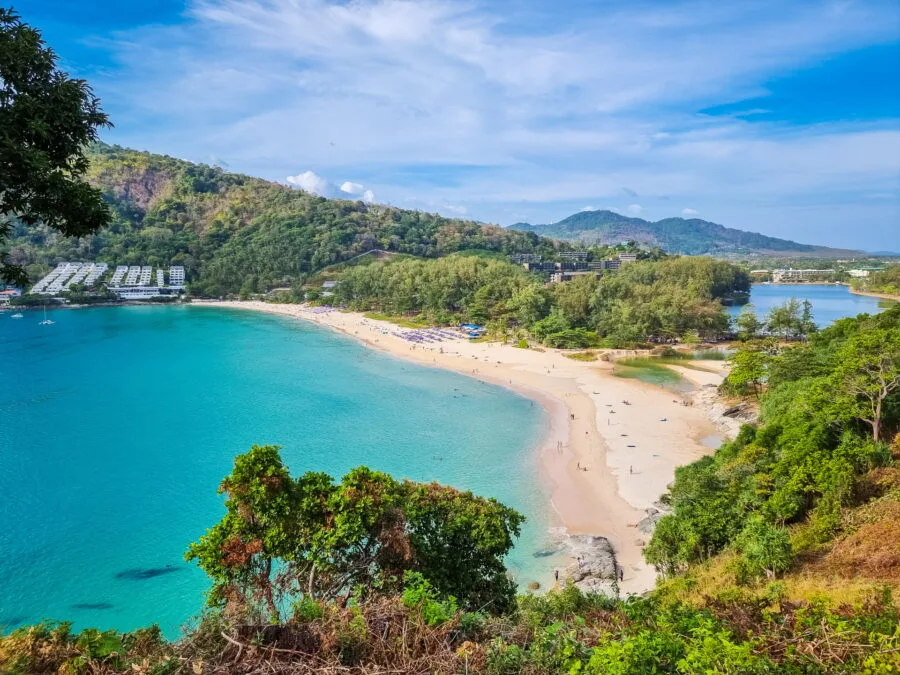
Nestled off the coast of the Andaman Sea, the Similan Islands are a true natural gem of Thailand. The archipelago consists of nine islands and islets, to which two other islands (Ko Bon and Ko Tachai) were added to form the Mu Ko Similan National Park, created in the early 80s.
The region is renowned as one of the best diving sites in the world, thanks to exceptional marine biodiversity and breathtaking landscapes.
While these islands are often explored on a day trip (my case here), it is also possible to opt for combined stays of 2 days + 1 night, in order to fully enjoy this little corner of paradise. In these cases, the night is spent on the boat and not on one of the islands as was the case previously.
And even if you are not a diving enthusiast, a visit to the Similan promises a unique experience and an unforgettable getaway. Let's dive into this memorable day together!
Mu Ko Similan: an exceptional marine national park
1. A protected natural treasure
Established in 1982, the Similan Islands National Park (Mu Ko Similan National Park) now covers over 140 km², encompassing both land and marine areas. This status aims to preserve an exceptional ecosystem, renowned for its unique marine biodiversity. Vibrant coral reefs, crystal clear waters and spectacular underwater wildlife attract divers and nature lovers each year, earning the Similan Islands a common ranking among the top ten diving areas in the world.
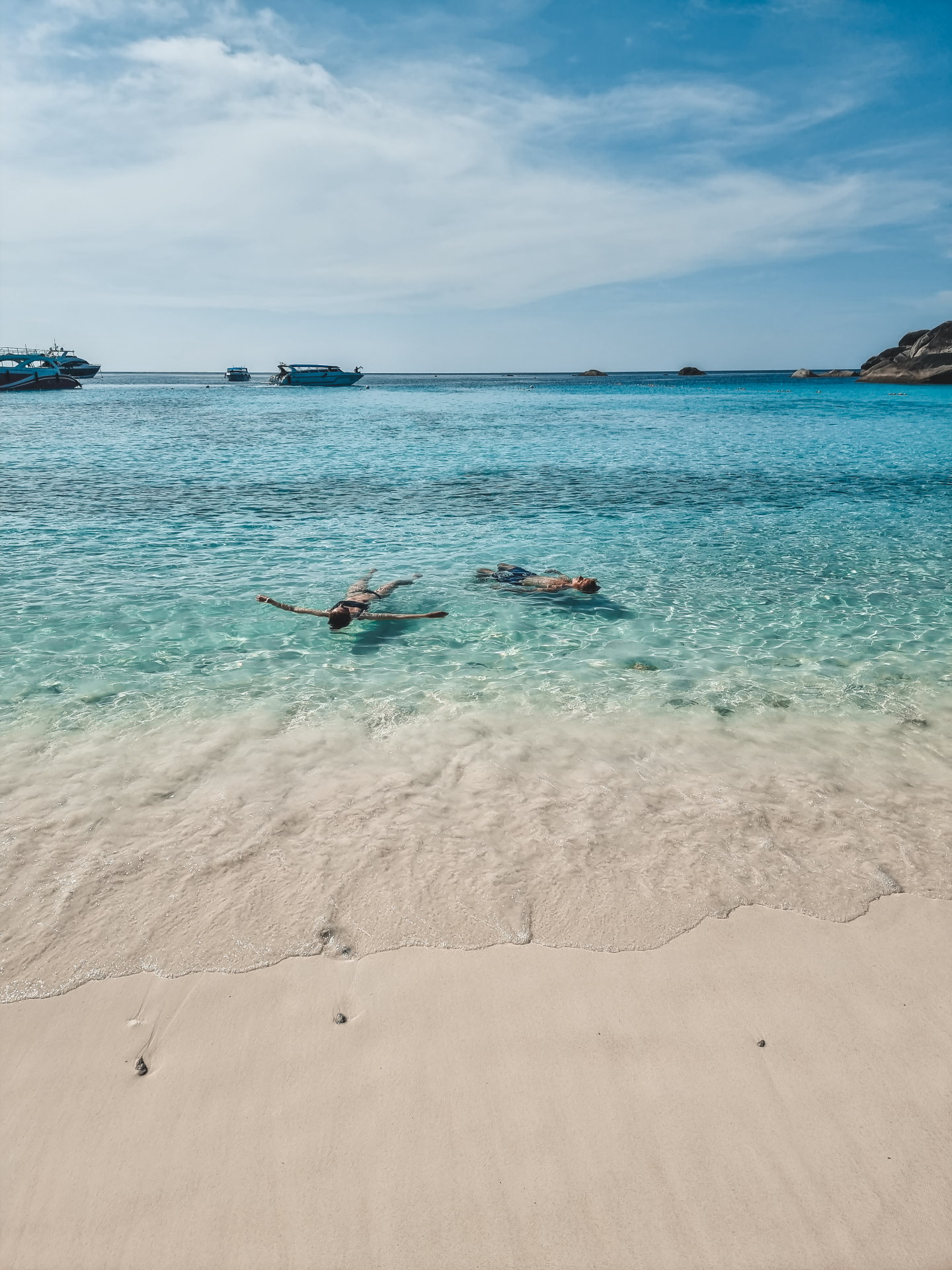
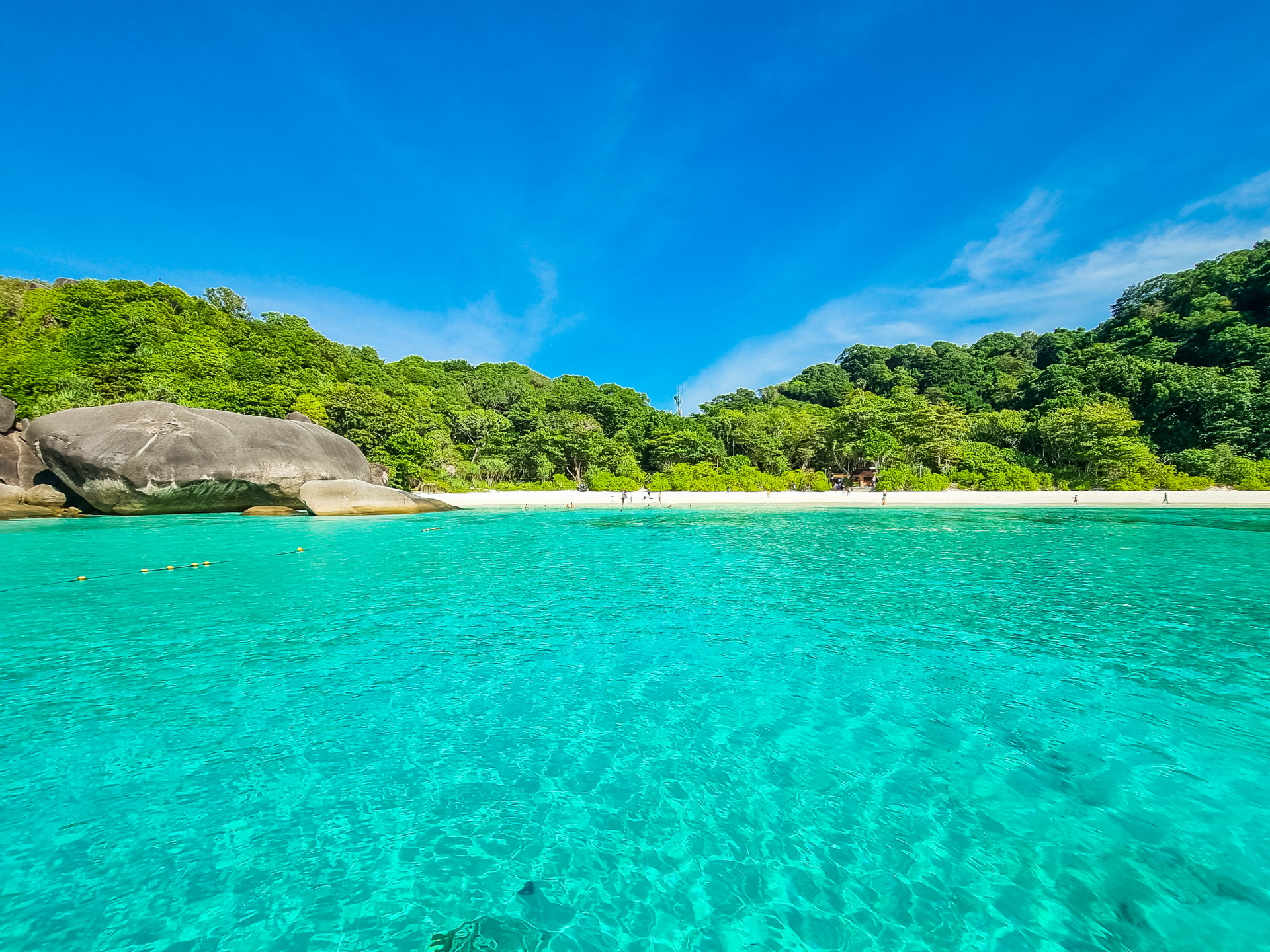
These landscapes, with their fine sandy beaches, turquoise waters, and imposing granite formations, irresistibly recall the Seychelles, Ko Similan in particular. It is one of the most beautiful sites I have had the opportunity to discover in Thailand.
2. A seasonal opening to preserve the ecosystem
This natural wealth is fragile, however, which has led the authorities to adopt strict measures to protect the ecosystem and regulate access. It's important to know that the Similan Islands are only accessible from mid-October to mid-May . During the monsoon season, the national park is closed to limit the environmental impact and allow the flora and fauna to regenerate. This is also a safety precaution, as venturing out to sea during this period can quickly become dangerous.
To preserve this unique environment, a few rules must be respected:
- Do not take anything (corals, shells or other natural elements).
- Single-use plastics are strictly prohibited in order to reduce pollution.
3. A postcard archipelago
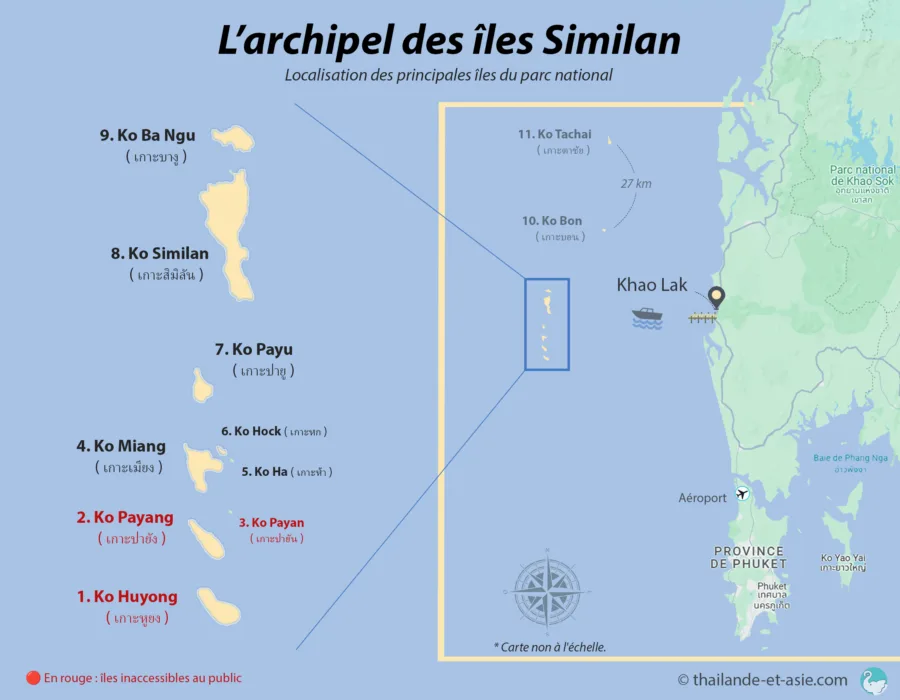
The word Similan comes from Yawi, a Malay dialect, and means "nine," a reference to the nine main islands that make up the original archipelago, each identified by a number. In 1998, the park was expanded to include two more remote islands: Ko Bon (No. 10) and Ko Tachai (No. 11).
The Mu Ko Similan National Park now comprises 11 islands, but typical excursions focus mainly on the original islands, around Ko Miang (No. 4) and Ko Similan (No. 8) . The three southern islands of the archipelago (Nos. 1, 2, and 3) are closed to the public to protect turtles and other endangered species, while Ko Bon (No. 10) and Ko Tachai (No. 11), more isolated in the north, are accessible via specific excursions, particularly those focused on diving.
To better understand the organization of the archipelago and their location, here is a map made especially for this article. There is a slight blur in the names depending on the sources: some consider that islands #5 and #6 form a single group (Google Maps for example designates it as "Ko Ha", therefore number 5), while others identify island #6 as a small cluster of rocks at the southwest tip of Ko Similan. These rocks are locally known as Hin Pousar, or "Elephant Head Rock".
1. Ko Ha (n°5): first snorkeling spot
It was with some apprehension that we left the platform that morning: seeing the crowd gathered at the starting point, I feared that this day, which I wanted to be memorable, would be spoiled by too many people. (Spoiler: it will be memorable, and the number of visitors on site will be much more reasonable than expected, I will come back to that.)
I will come back later to the organization of this day, but let's get straight to the heart of the matter with the first stop, which we reached after a 1h20 journey by speedboat.
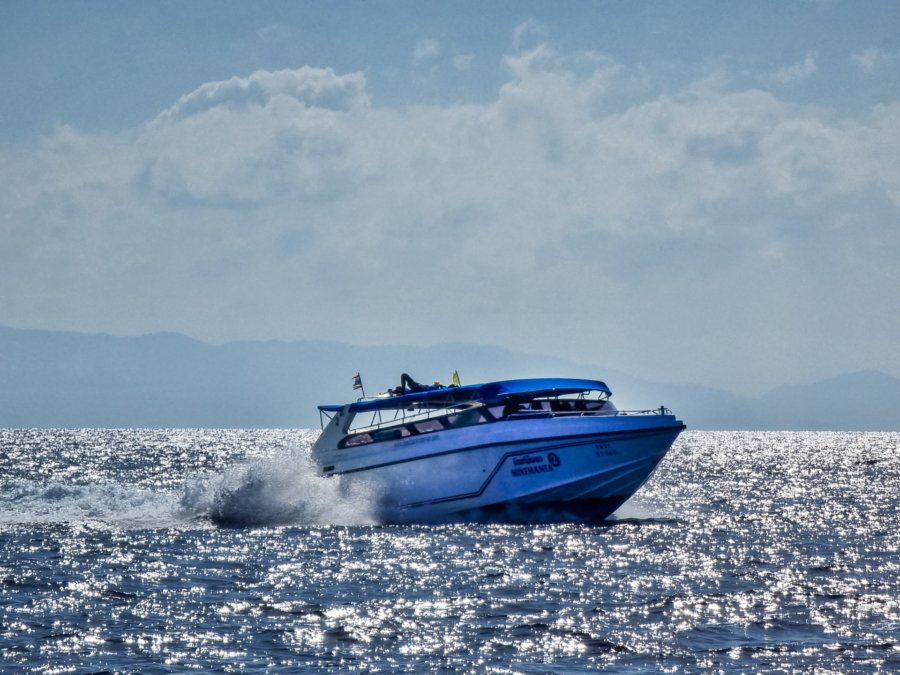

As mentioned above, this island sometimes includes Ko Hock (n°6) depending on the sources. But it is at the foot of Ko Ha (which literally means 'island five') that we dropped anchor to start this day of snorkeling. The island is here reduced to a rocky mass covered with a little greenery, forming an ideal terrain for the local flora and an incredibly rich underwater ecosystem.
I was quickly reassured (and relieved) once there: the site was far from crowded, with few boats in the area, apart from a second speedboat from the same company as ours (Sea Star). There were hardly more than twenty of us on board, which allowed us to enjoy the experience in a peaceful atmosphere.
We were told 45 minutes to explore these translucent waters. By the time everyone got into the water, we felt like we had the spot all to ourselves… Even though it got a little fuller afterward, there were only two boats there. I didn't need to be asked twice to jump in the water and enjoy it too.
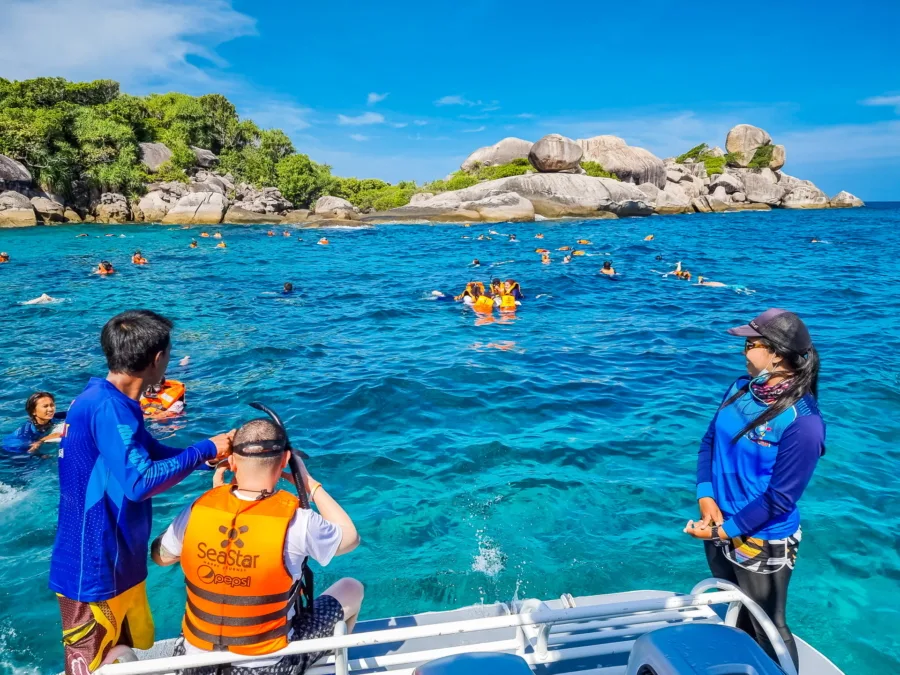
Normally, water is not really my thing. But with these colors, it was too tempting, and I knew it would already be quite warm in these latitudes. For this first snorkeling session, I jump in a little without thinking, without a vest… but I quickly realize that half an hour of slow swimming on the surface, even in a fairly calm sea, can be more exhausting than it seems.
At the next stop, I promise myself to wear the life jacket: it makes the effort easier and allows me to concentrate more on contemplating the seabed (and this has nothing to do with knowing how to swim or not).
My biggest regret? Not having brought a GoPro (simply because I don't have one) or a waterproof case for my phone (I should have invested...). So I don't have any pictures to show you, but my memory will remember them for a long time!
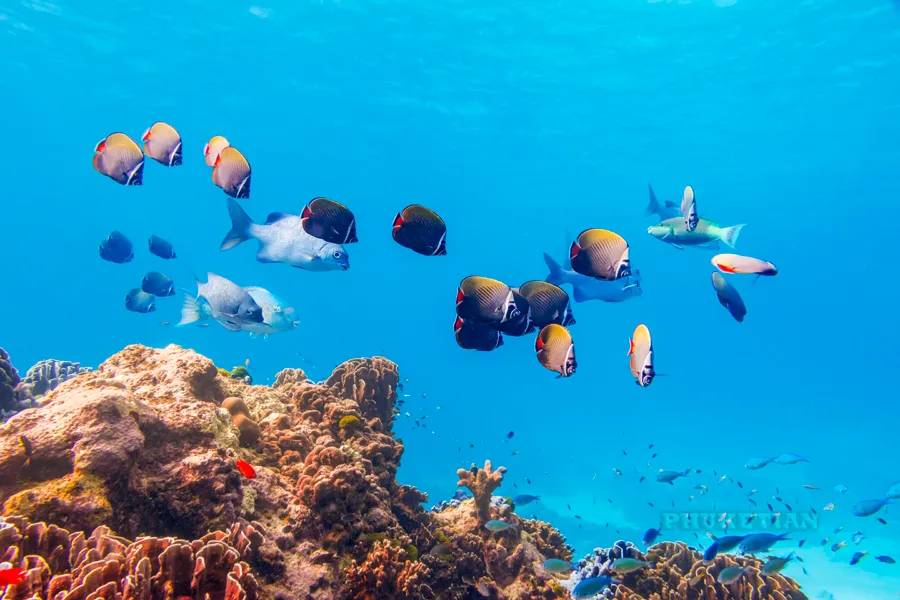
What I can describe to you is a real festival of colors, blue, yellow, gray: parrotfish, clownfish (the famous "Nemo"), species of groupers and a myriad of other fish whose names I would be quite incapable of giving you... Honestly, less than an hour in this setting, it goes by at breakneck speed!
2. Ko Miang (n°4): lunch break and express exploration
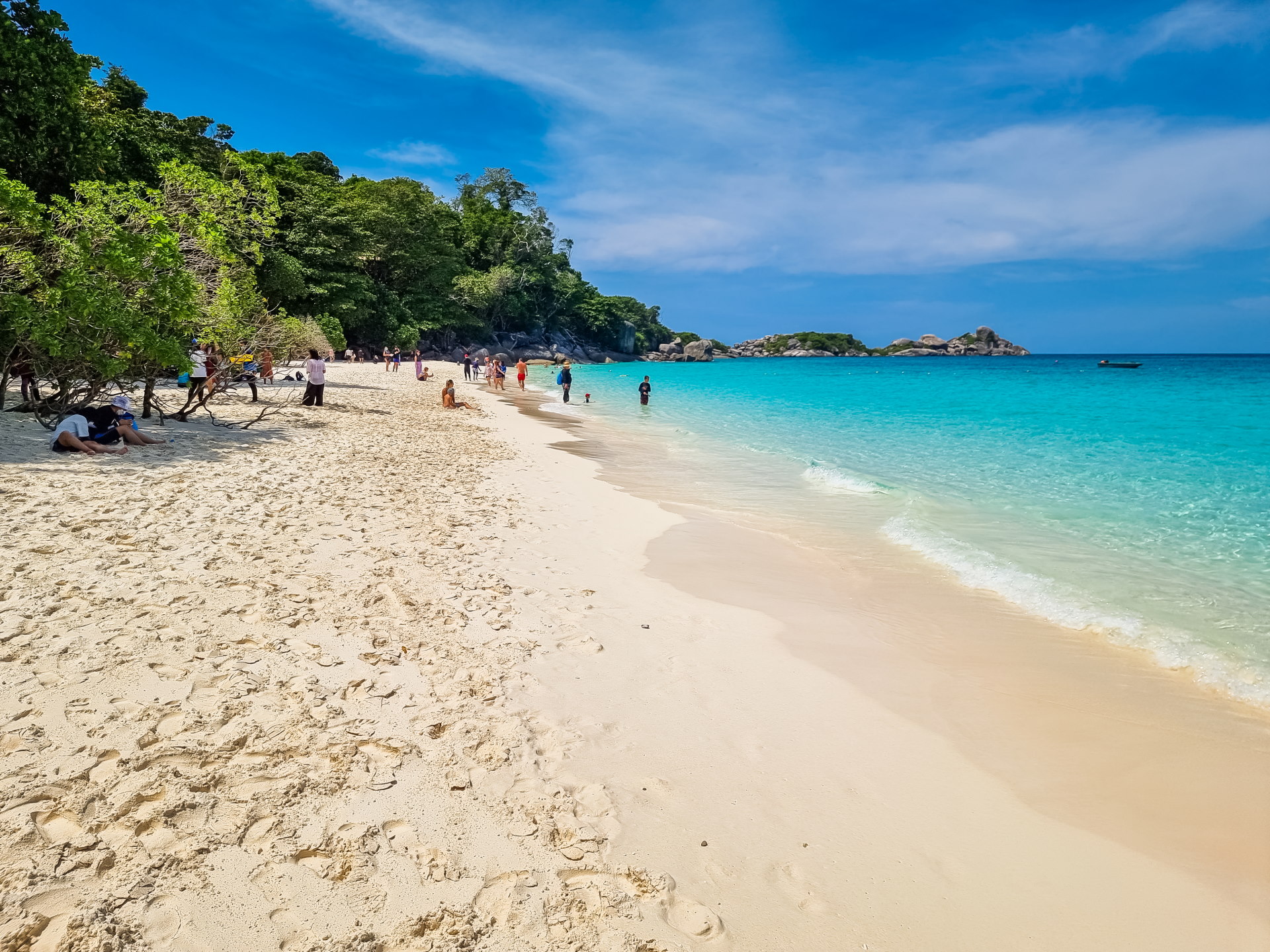
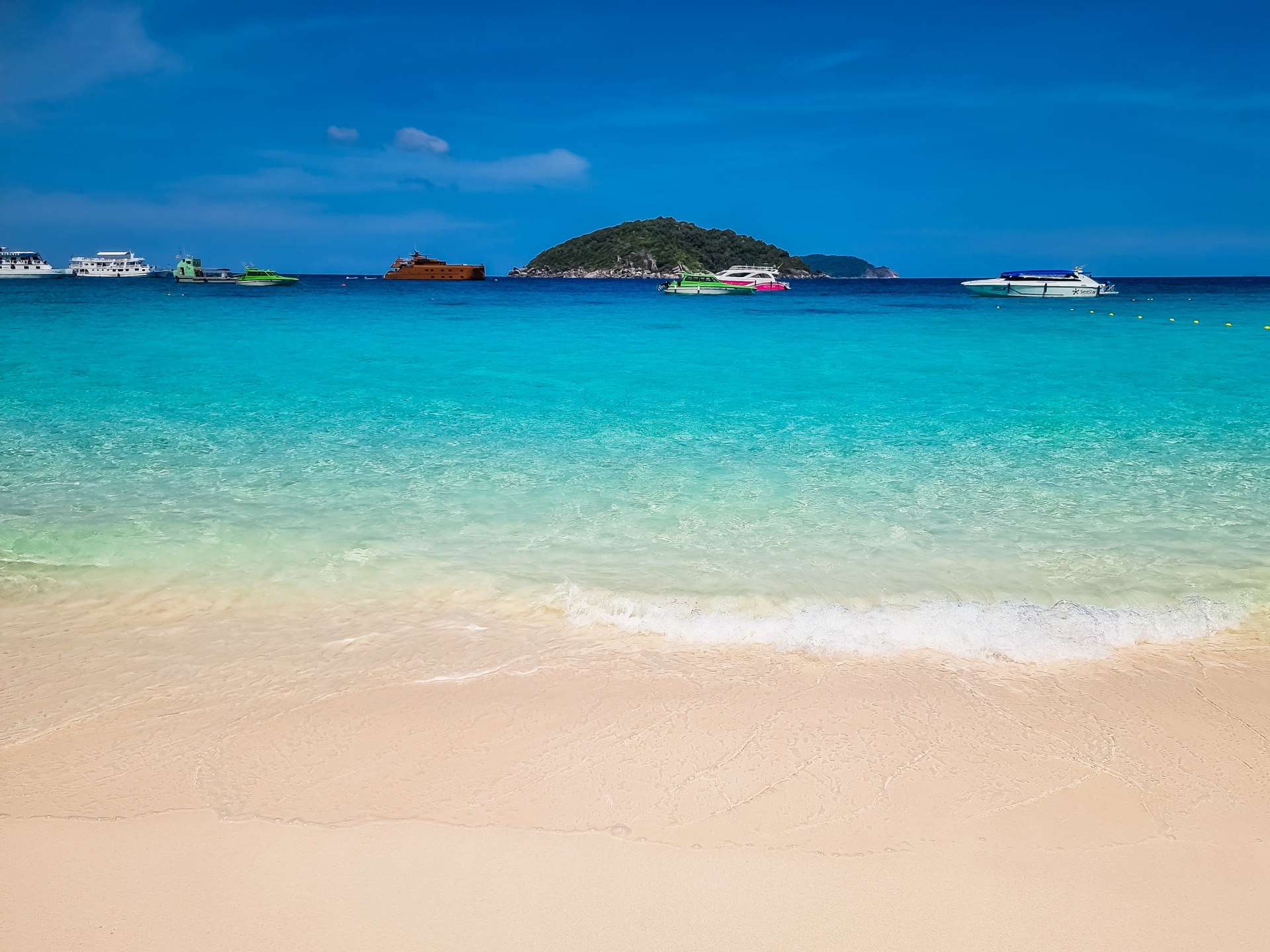
It's a little before 11:30 that we disembark on the magnificent beach of Ko Miang, after a short navigation since Ko Ha is only 300 m from the shore of Ko Miang. Even if we barely get out of the water, it makes you want to get back in it right away because the setting is so idyllic.
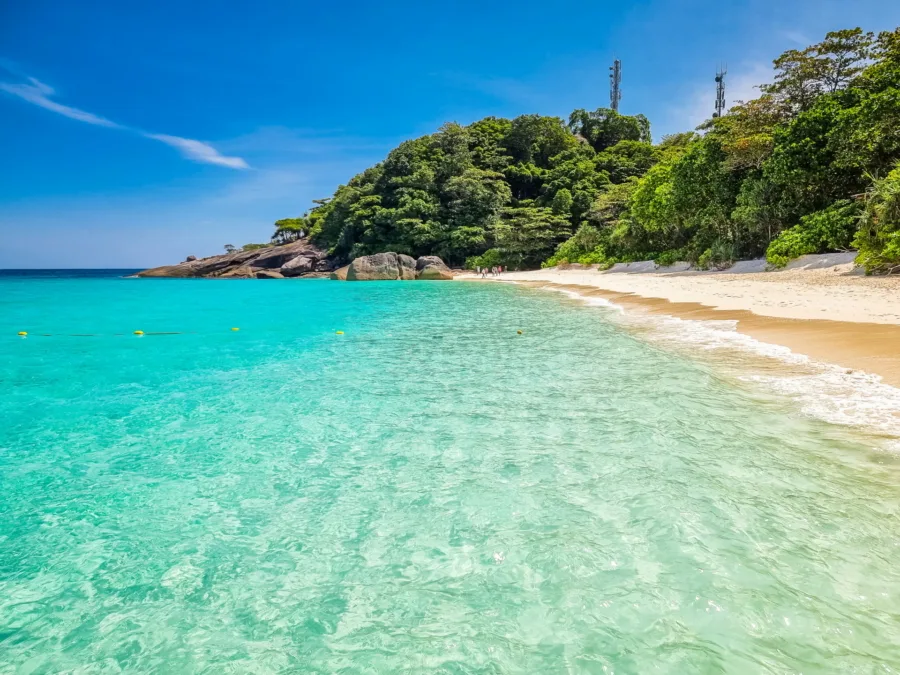
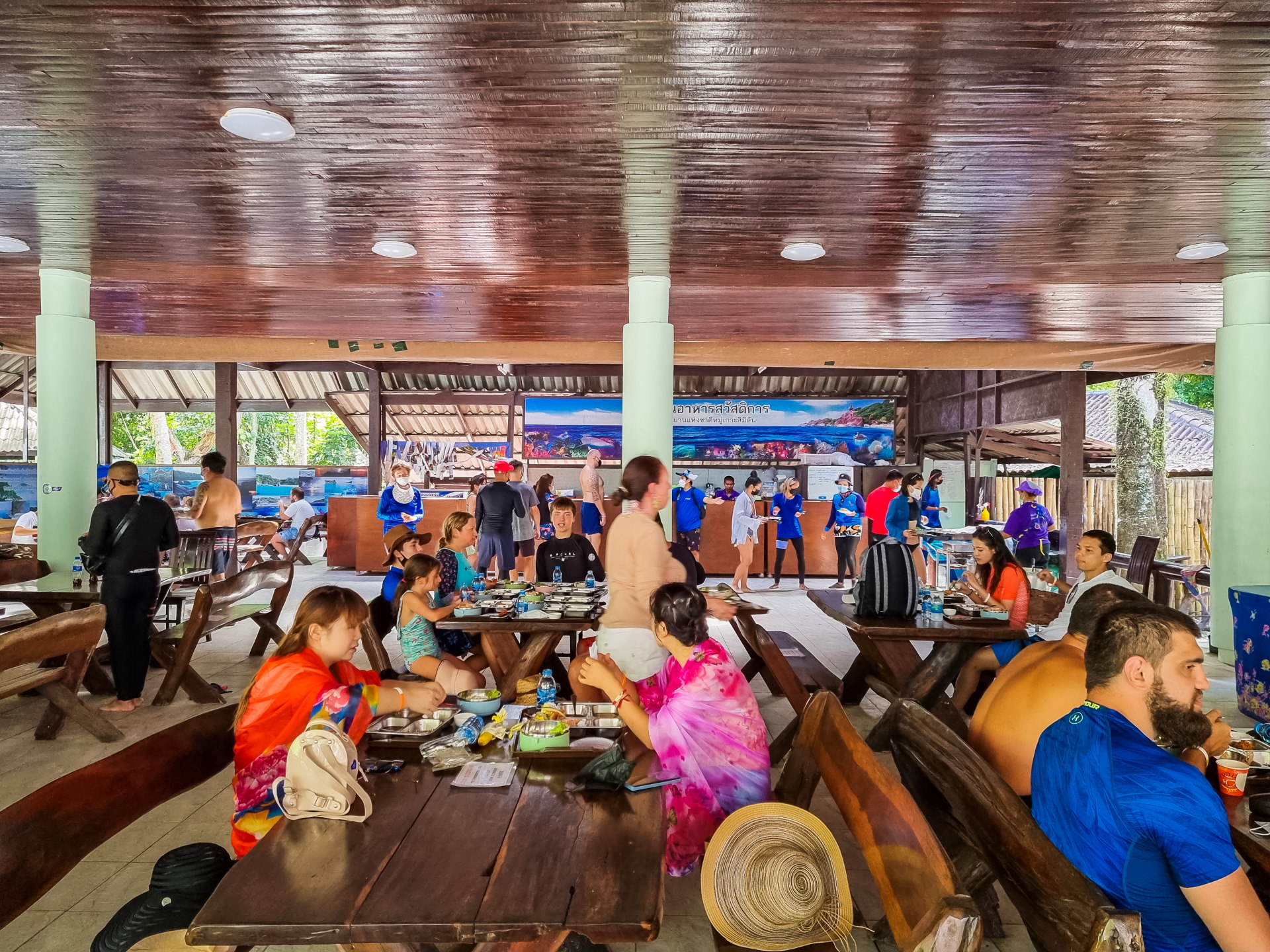
Following the signs, you can easily reach the restaurant area. On the same principle as the "food courts", common here in Thailand, you have the choice between several dishes based on vegetables, meats and seafood. I'm hungry and I especially want to explore the island a little: needless to say, I didn't hang around to eat.
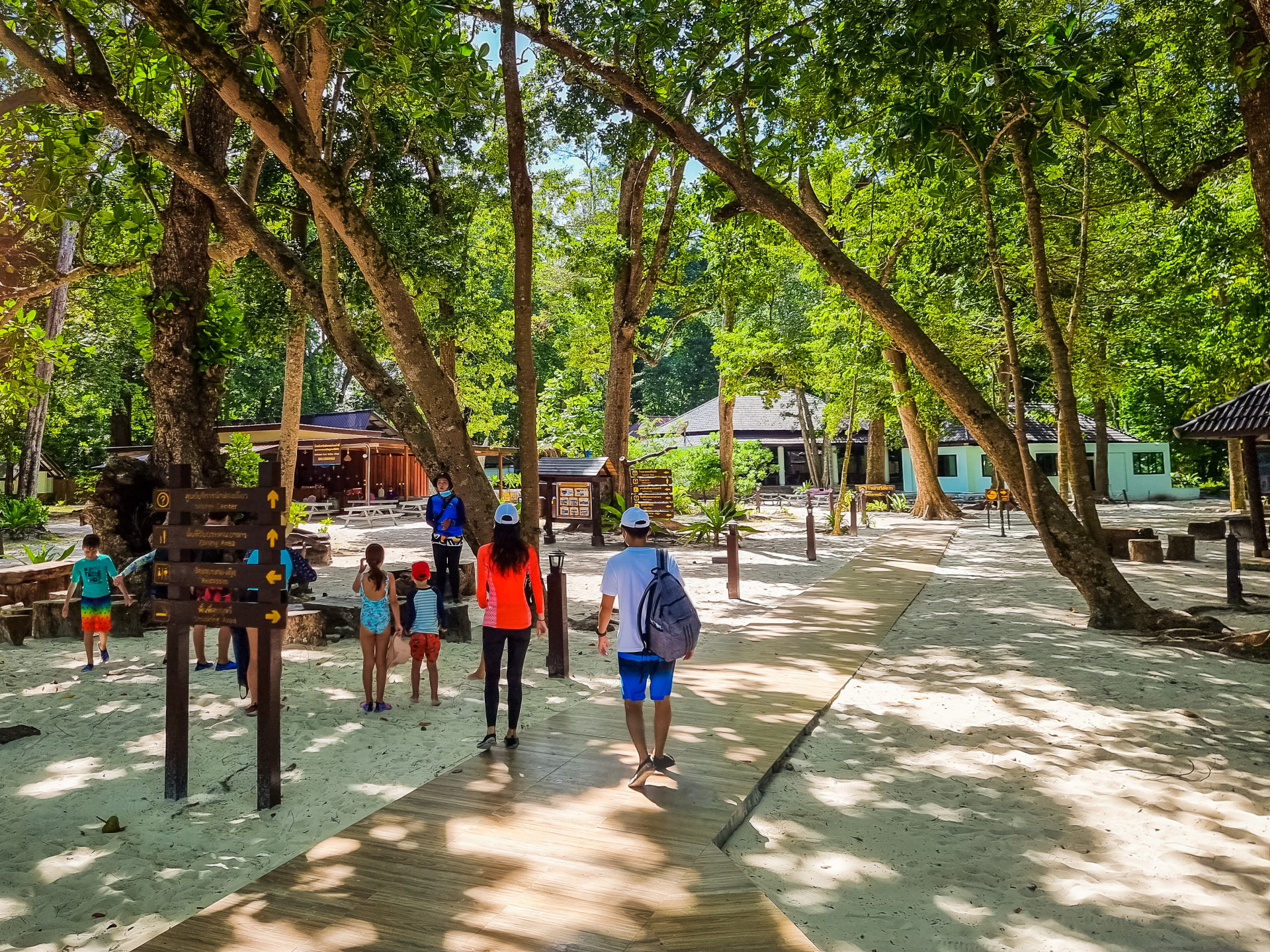
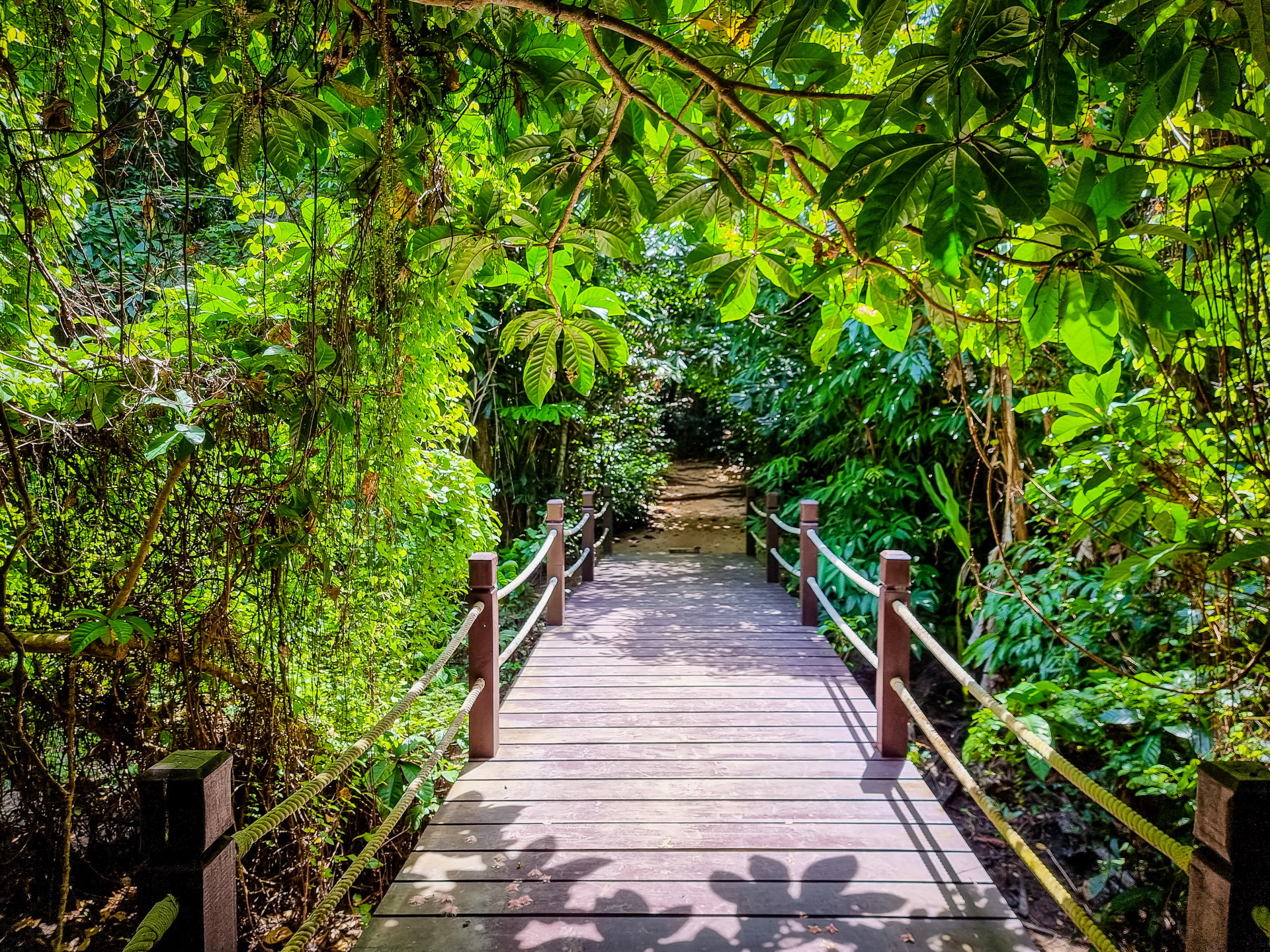
Once we'd had our fill, we set off on the path leading to Ko Miang's other beach, simply called Had Lek ("the small beach"), while the one we were arriving at was Had Nah . The walk, barely 400 meters through the rainforest, quickly brought us to our destination. The path climbs slightly, but it's entirely in the shade; there's really no difficulty at all.
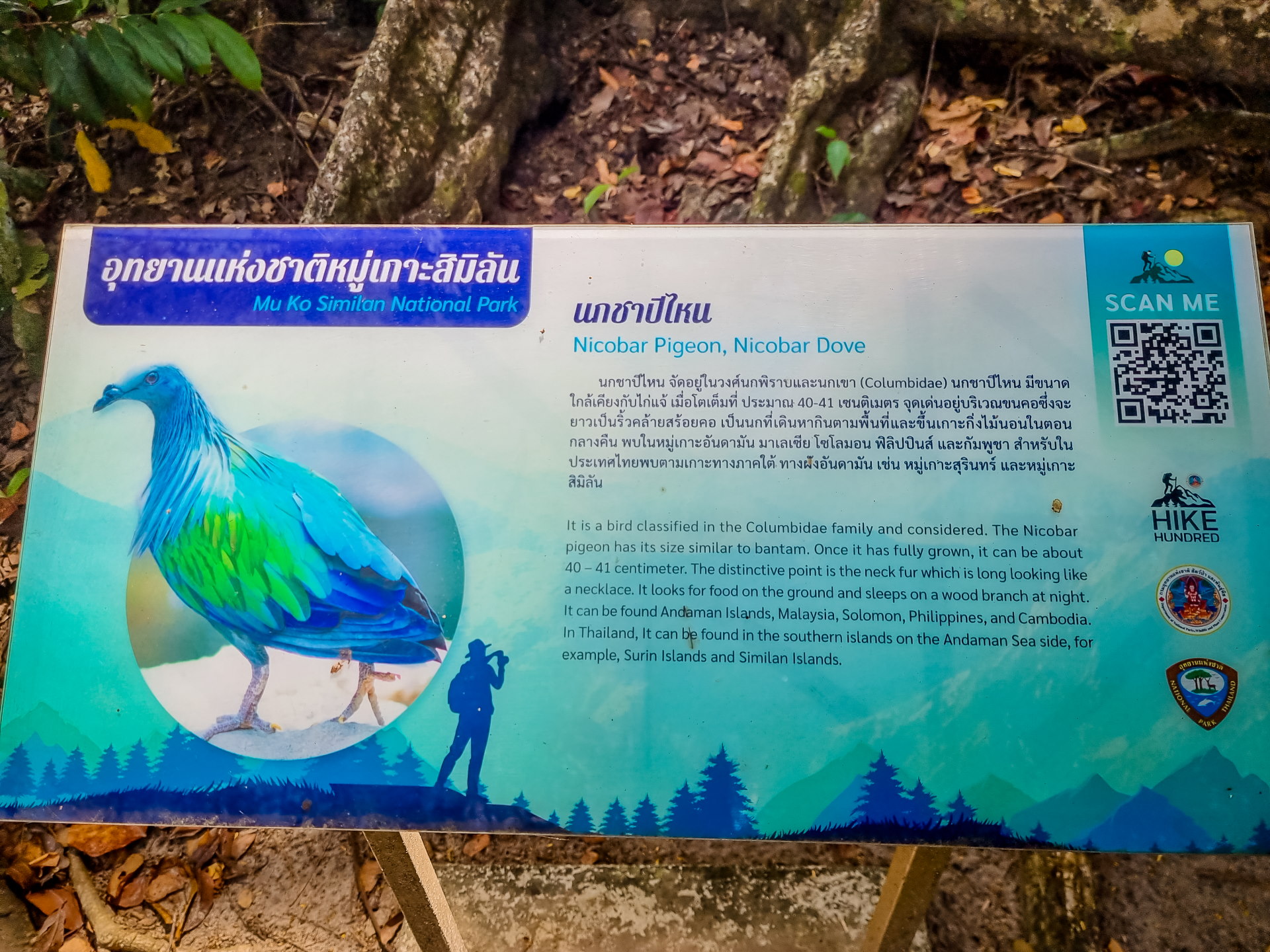
About halfway along, we cross a small wooden bridge, although at this time of year, the stream that's supposed to flow beneath it is dry. Shortly after, we come across a sign informing us that a rare species of pigeon lives here: the Nicobar pigeon , native to the islands of the Indian Ocean. Much more colorful than its urban cousin, this bird, also called the Nicobar pigeon , is actually a close relative of the famous Dodo of Mauritius, which has been extinct for several centuries.
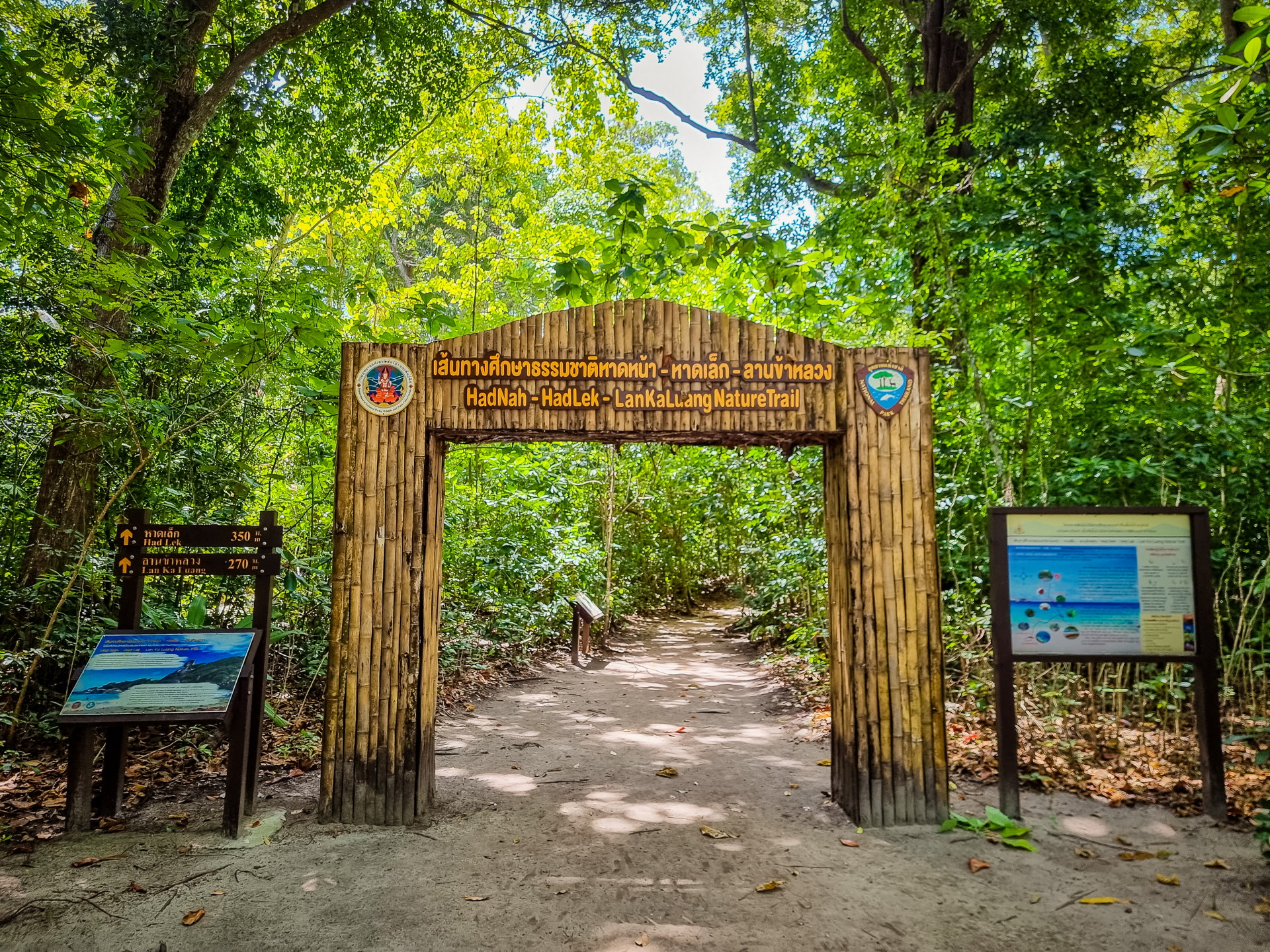
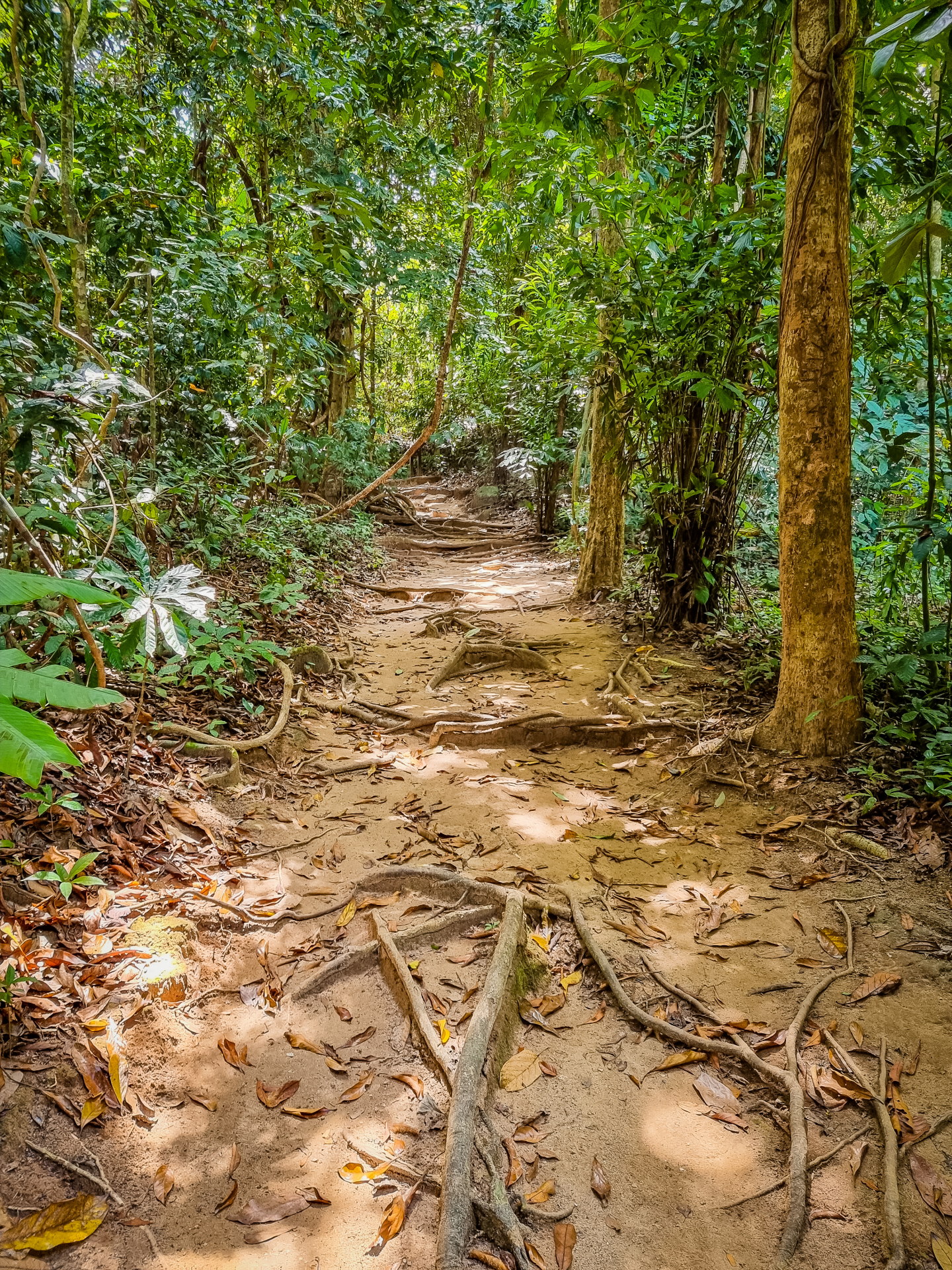
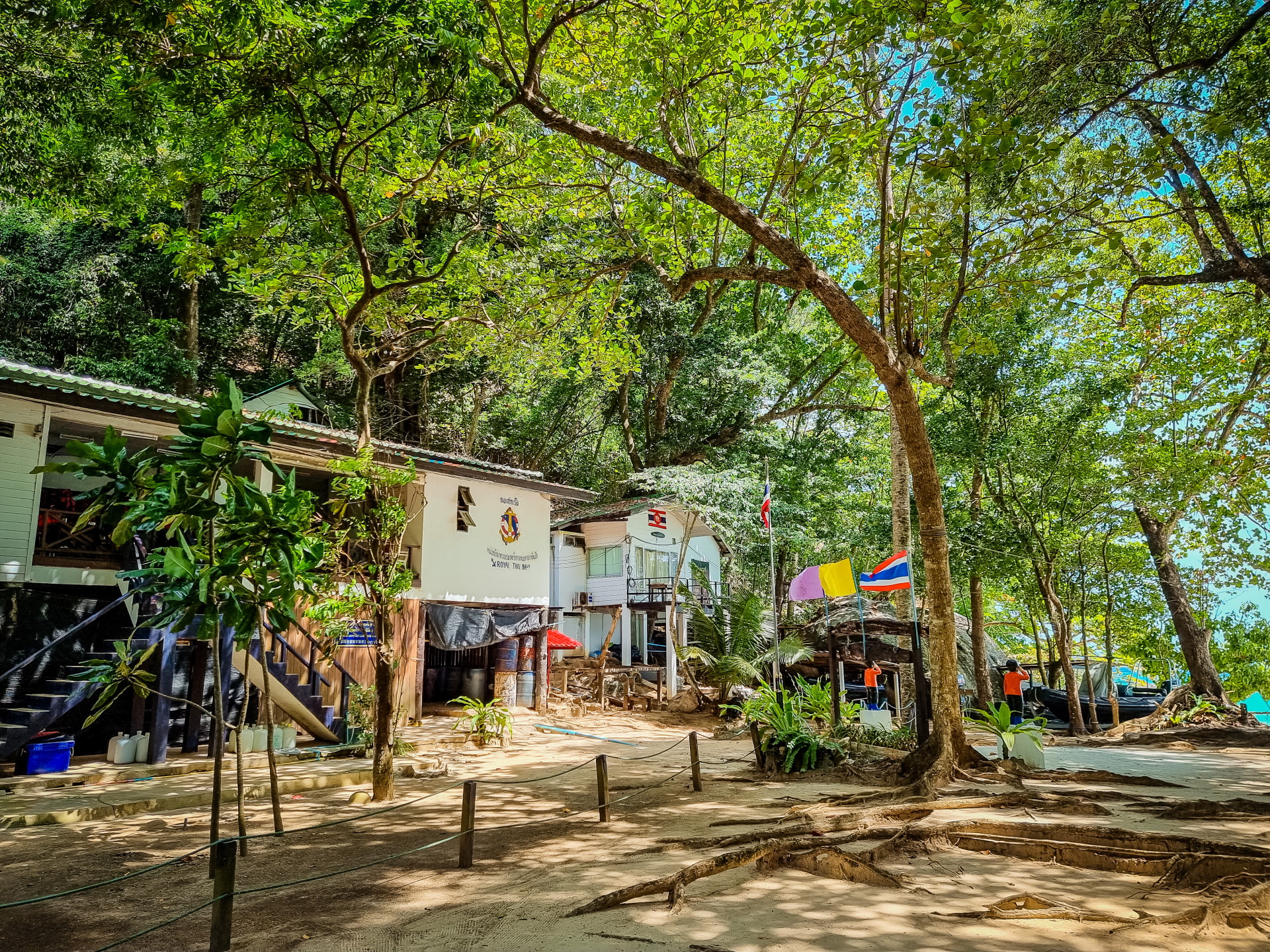
Arriving at Had Lek, we discover the lodgings of the rangers who watch over the island. The very nice thing is that there is no one there... Well almost, but there are not even ten of us spread out over the entire beach, which is to say no one on the scale of the Similans.
We enjoy this special moment in absolute fullness. But like all good things, it doesn't last: after 15 short minutes, we turn back, a little rushed by the uncertain timing (we were told about an hour on the island).
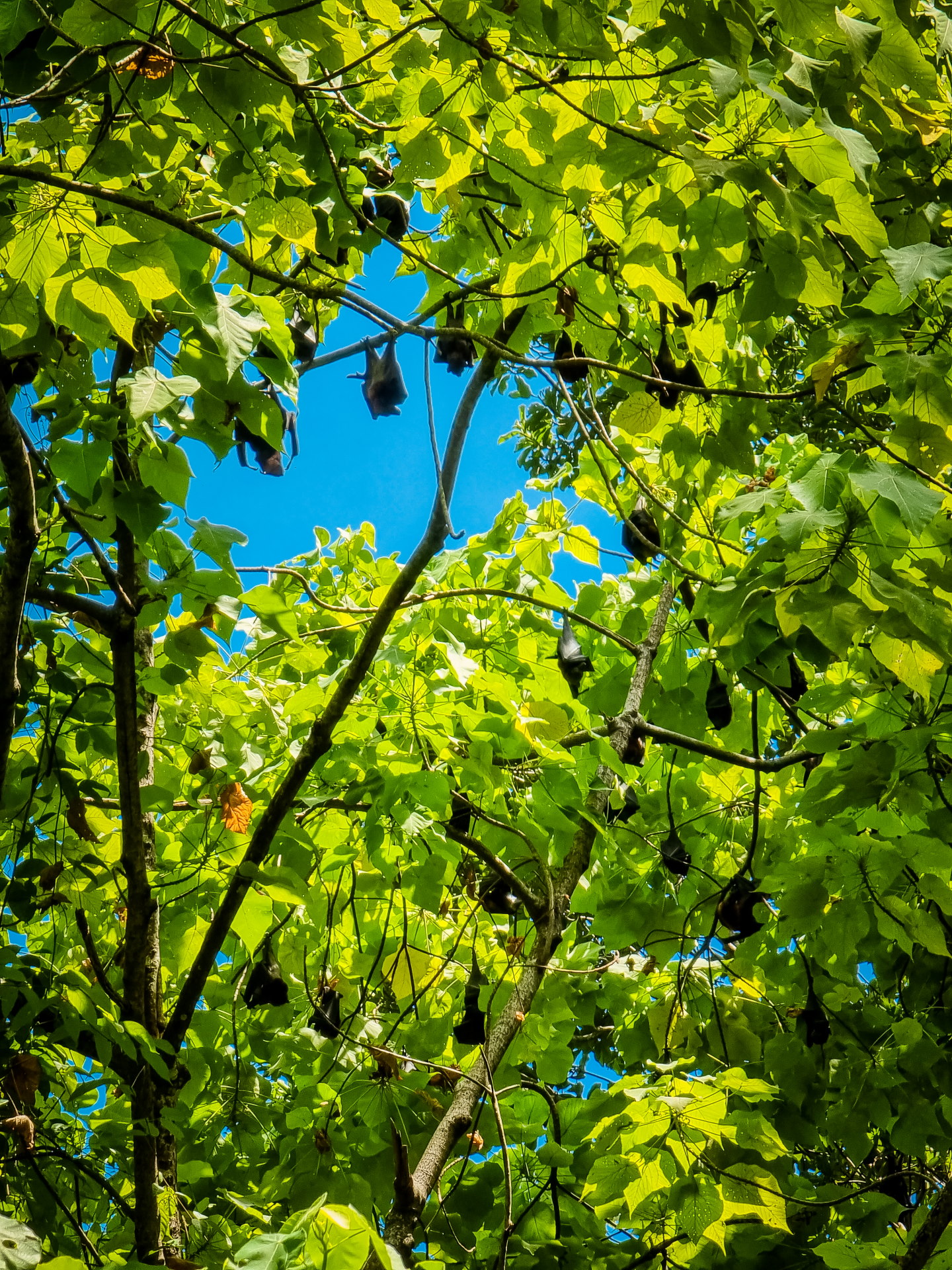
On the way back, looking up at the trees, I noticed some black spots. Zooming in with my phone, I realized it was a cluster of tree bats.
Due to lack of time, I was unable to go to the viewpoint indicated at the top of Had Lek. I don't know how long it would have taken to get there, but the view of the island seemed worth the detour. Oh well, you can't have everything...
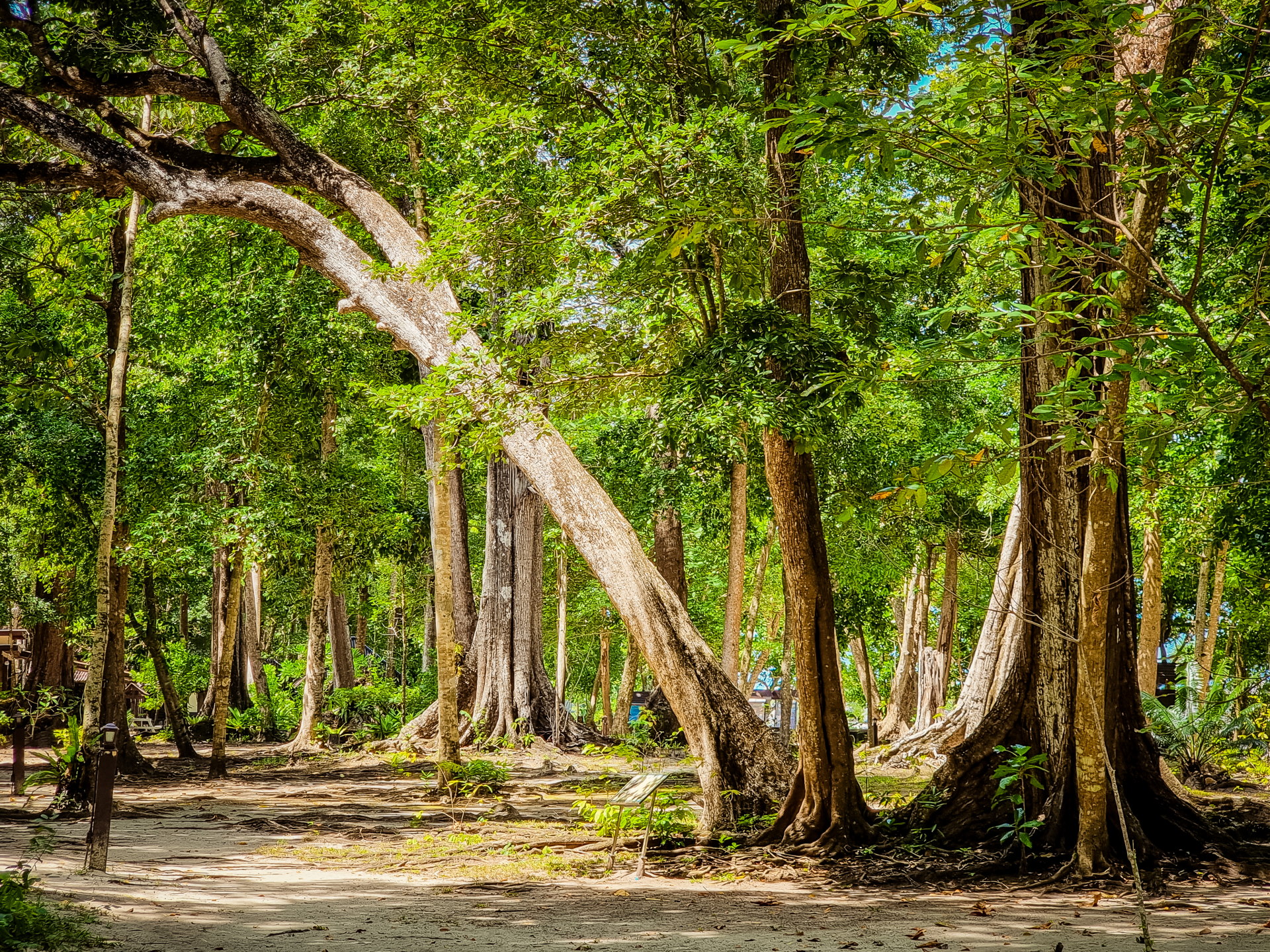
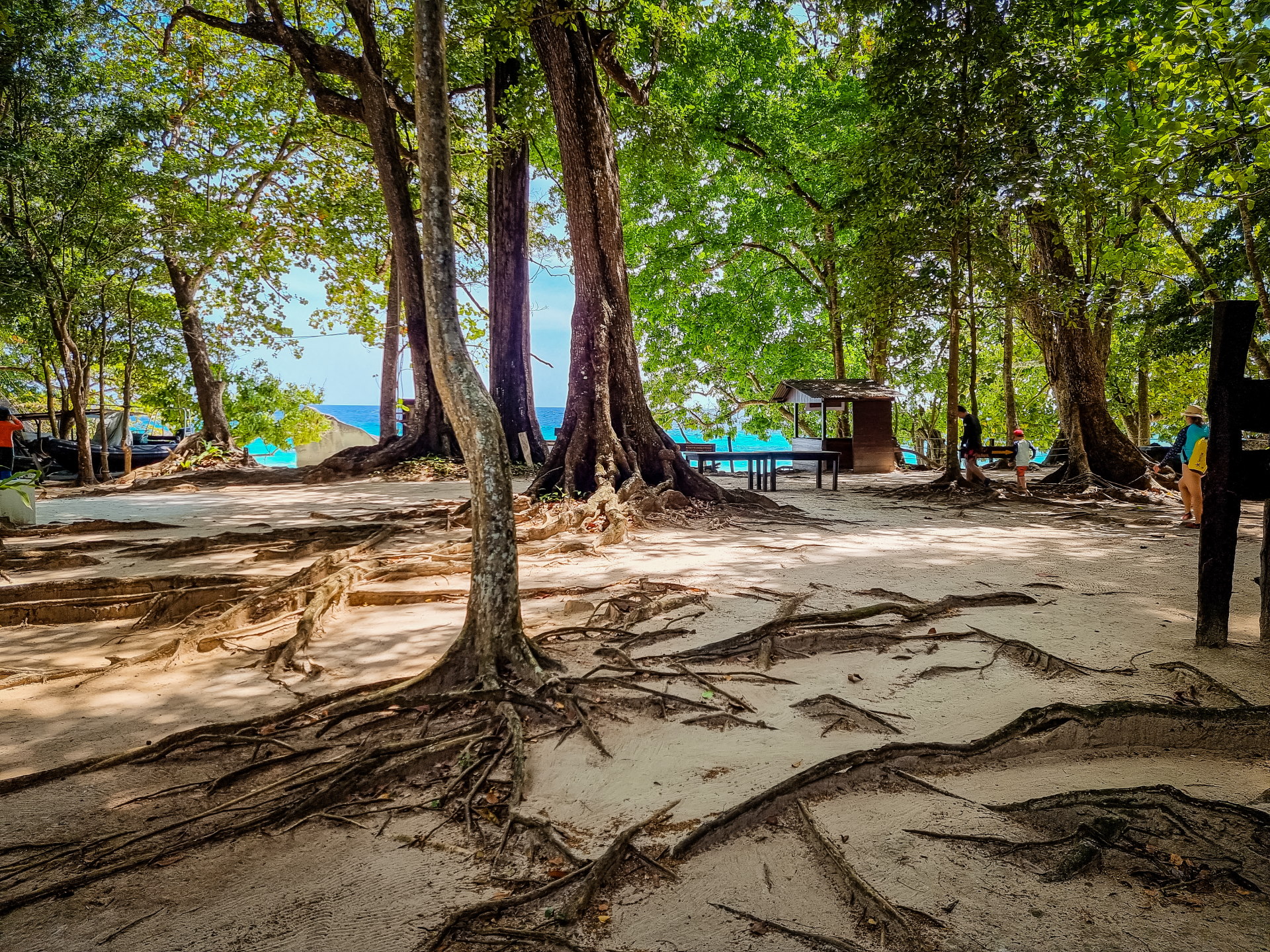
Back towards the big beach, I have fun observing some trees whose roots, emerging from the ground, give the impression of floating above the sand. We had barely 10 minutes left to enjoy this sublime environment.
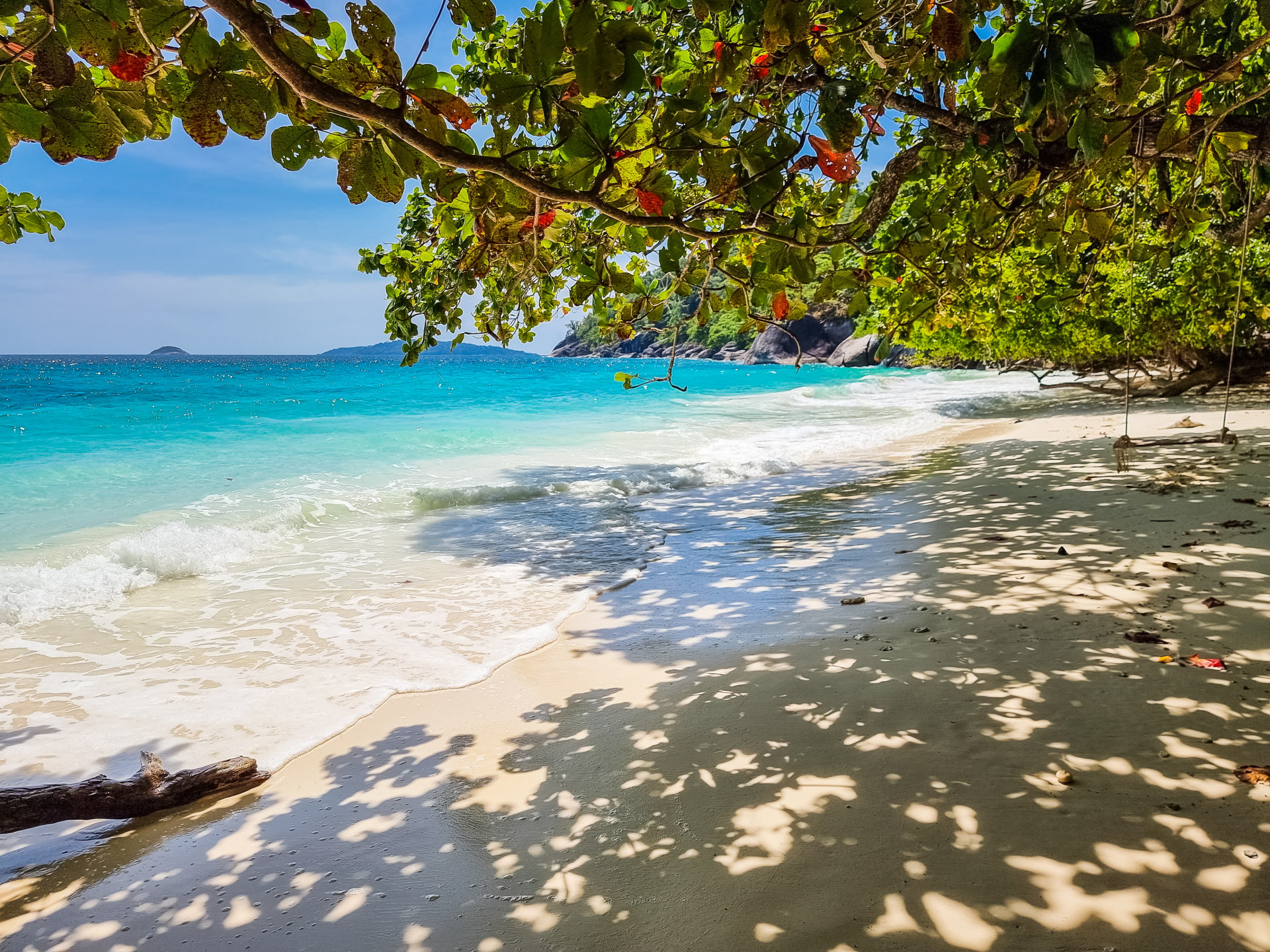
The sand, soft and slightly pink, adds to the magic of the place. Opposite, Ko Payu (island no. 7) is clearly visible on the horizon. The sun shines without excess: the temperature is ideal, and we couldn't have dreamed of better weather. Even there, the ambient calm remains astonishing.
In total, we spent 1 hour and 20 minutes on Ko Miang. It was a little before 13 p.m., and as we were getting ready to leave, I contemplated one last time this barely veiled blue sky and this emerald-colored water, so clear. The day, although barely started, already seemed perfect in itself.
3. Ko Ba Ngu (n°9): second snorkeling spot
This leg of the journey covers the longest distance of the day (excluding the round trip): about ten kilometers to reach the next snorkeling spot, located at the foot of Ko Ba Ngu , the last main island in the north of the archipelago. But thanks to the speed of the speedboat – these boats certainly have some power under the hood – it only takes us about ten minutes from the beautiful beach of Ko Miang to reach our destination.
The island's surroundings remain true to the Similan style, with their large granite boulders. But Ko Ba Ngu is much more imposing than the small island of Ko Ha , where we made our first stop.
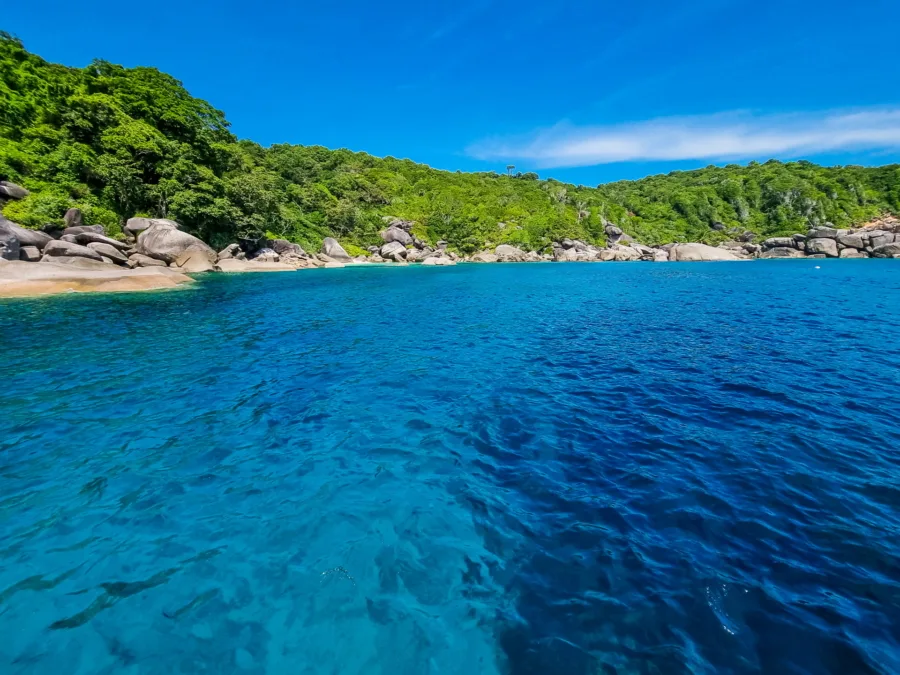
The setting around us is superb, but we are here to admire what is under the water… We are again entitled to 45 minutes. Not much time to procrastinate and just enough time to equip ourselves that we are back in these clear waters, this time with my vest on my back.
And how enjoyable it is! You can let yourself float, and with a few leg kicks, move around quietly, relaxed, to effortlessly observe the activity of the seabed, because here again, the submerged rocks offer an ideal habitat for a teeming underwater flora and fauna.
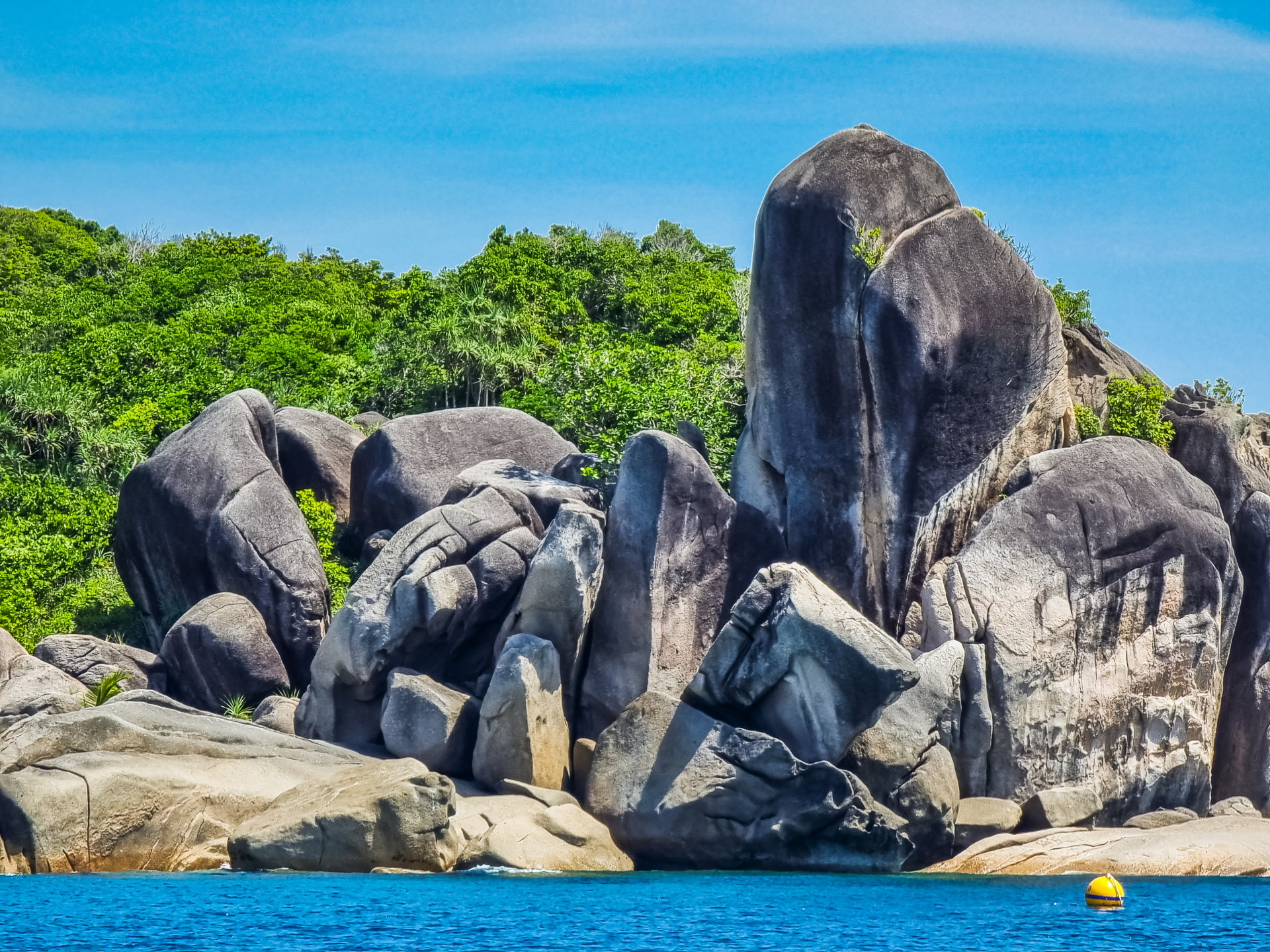
The surprise will come towards the end of this snorkeling session, and not the least, I found myself surrounded by a cloud of small jellyfish! I did not see any tentacles so I think they were all the more harmless as I did not feel anything by the time I got back to the boat.
But suffice to say that when I realized that there were loads of them coming, brought by the current, I didn't ask for my rest to finish this swim a little earlier. It's almost 15 p.m., time to join our last stop.
4. Ko Similan (No. 8): the highlight of the show on a paradise island
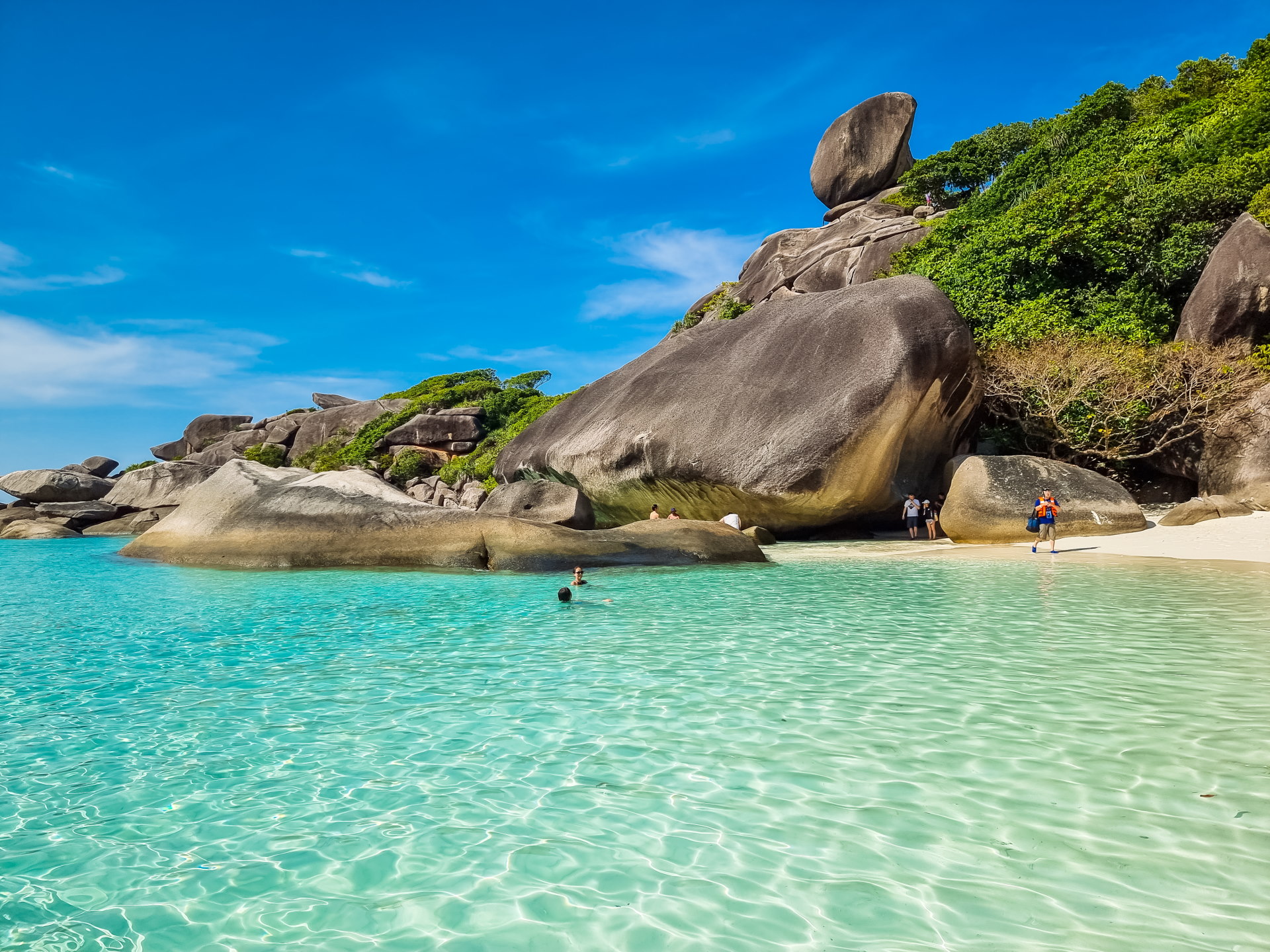
From Ko Ba Ngu, it is only 2 km to reach the last stop of the day, located north of the main island, Ko Similan, which gives its name to the archipelago. And I can tell you that the arrival at Ao Kuerk Bay (also called Donal Duck Bay), is, so to speak, spectacular.
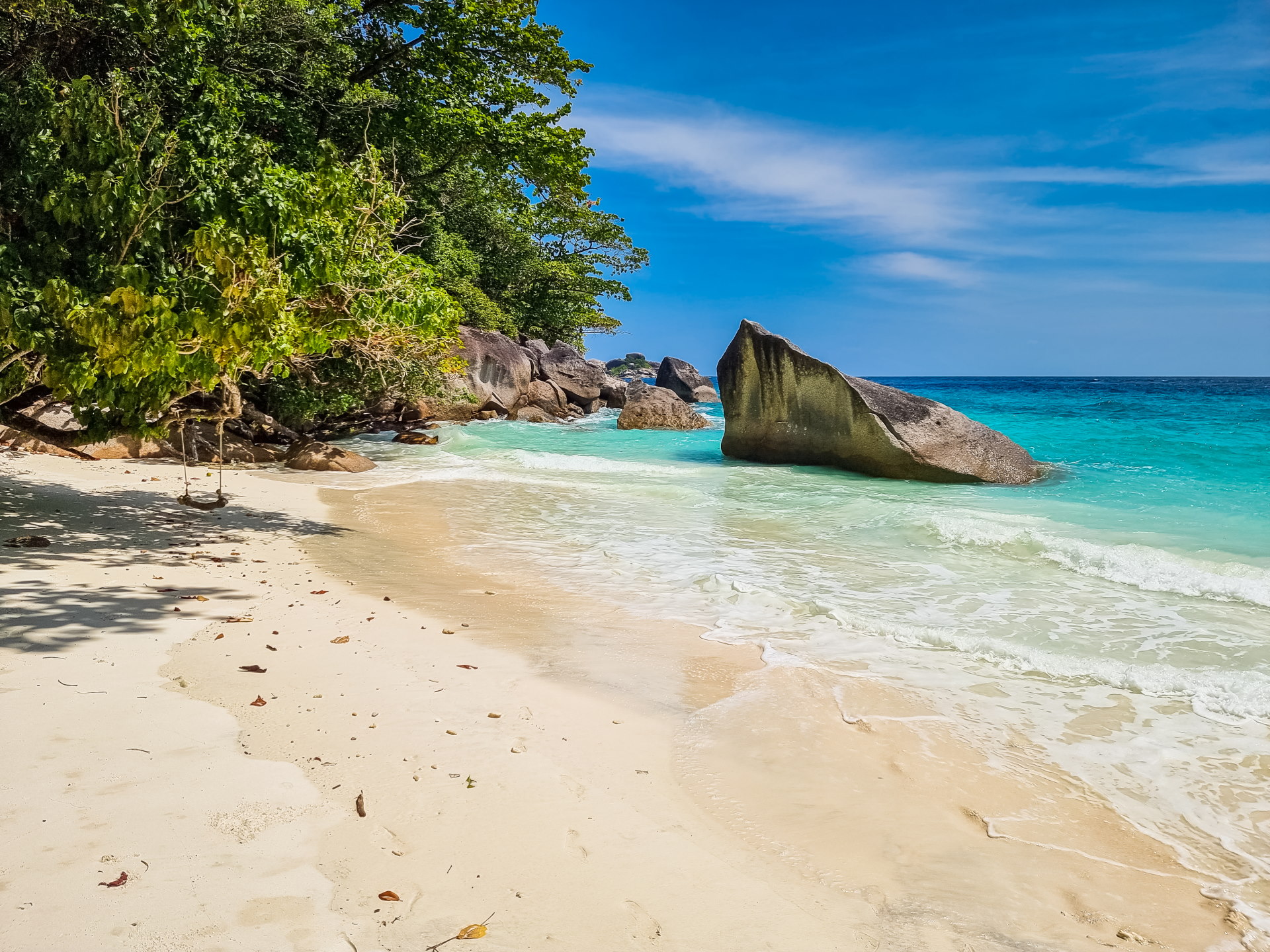
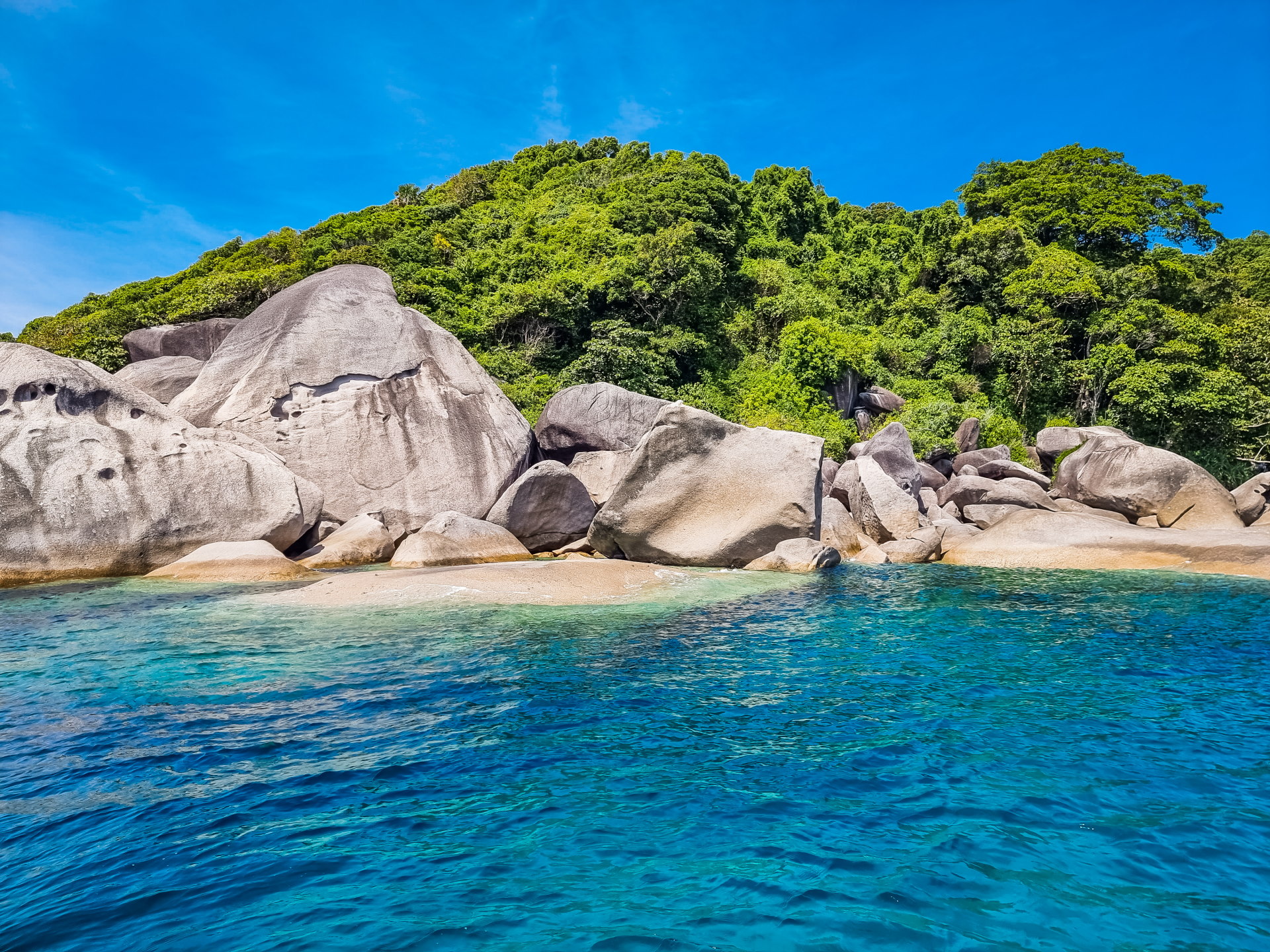
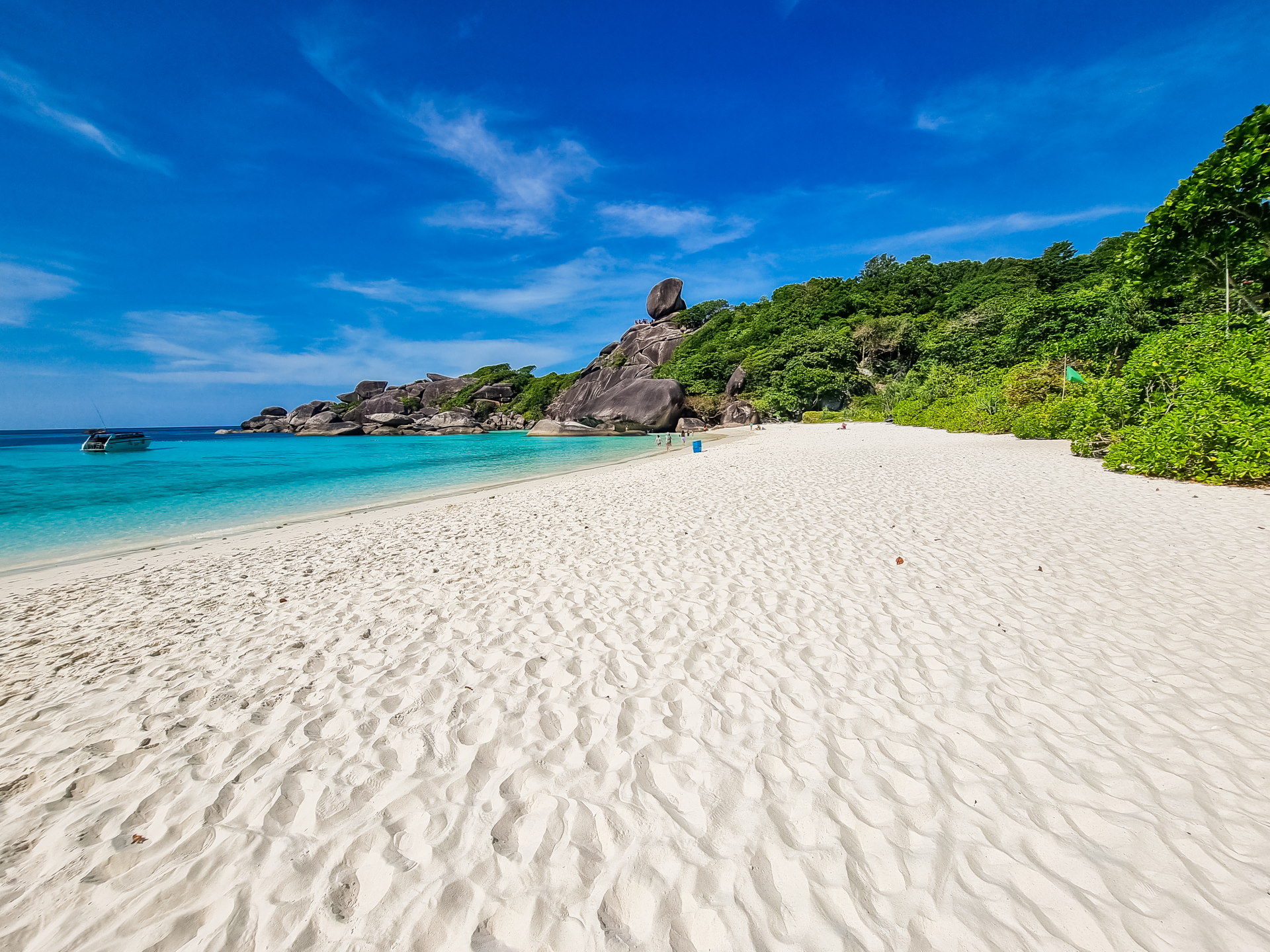
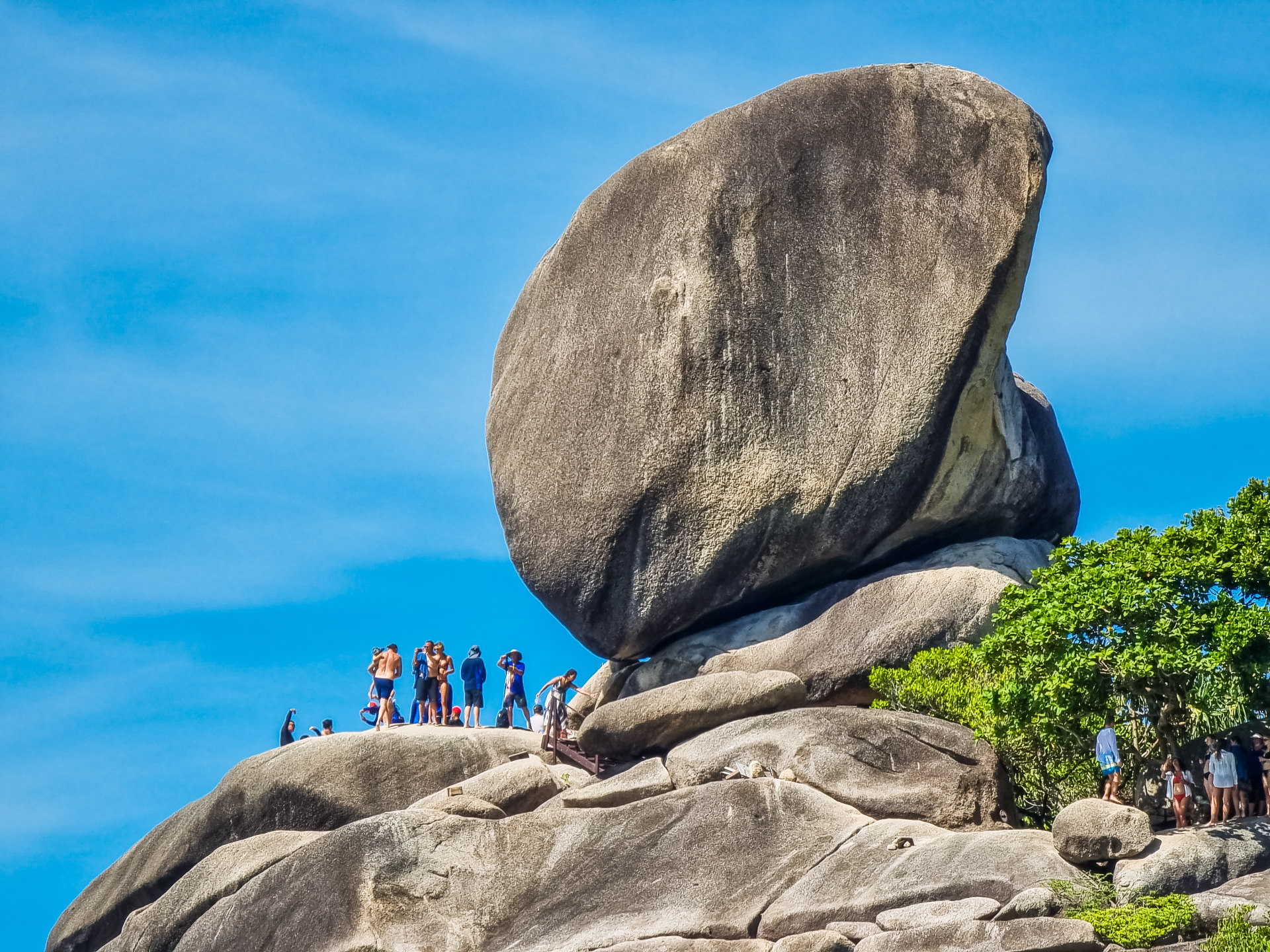
Imagine the picture: the contrast between the blue of the sky, the sea still as magnificent with its reflections tinted with light green, and the gray of the enormous granite blocks. One of them, an iconic rock overlooking the bay, seems suspended like a trophy. It is an image that is made to last.
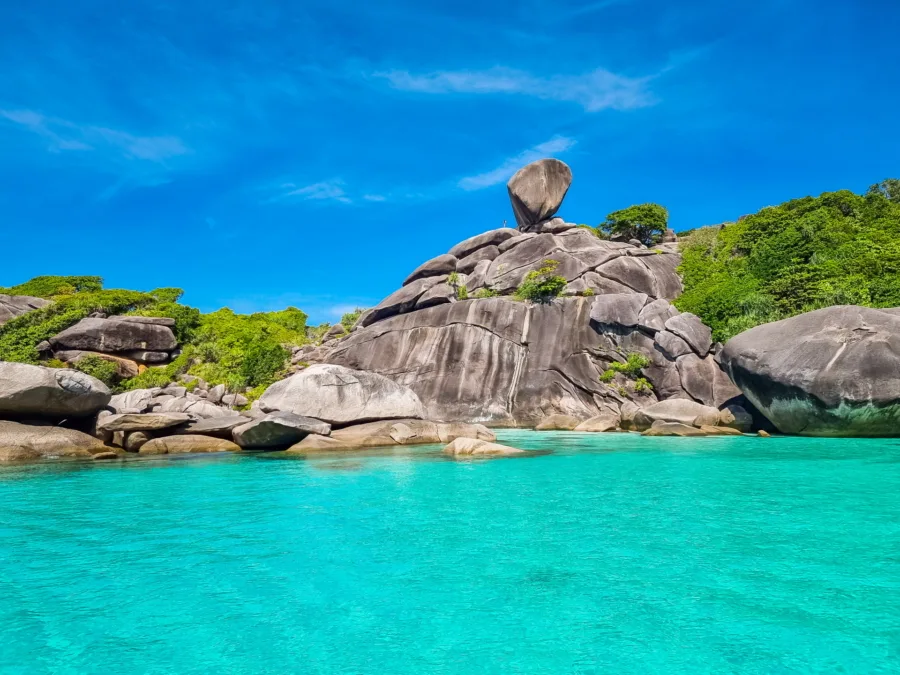
And to this already immense pleasure is added the privilege of landing on this beautiful beach of fine white sand, practically alone in the world. But no time to stay in bliss on the shore: I take advantage of being among the first to set foot to head straight to the famous viewpoint of the island, before the crowd rushes there. After all, I don't know how long we will be able to enjoy this apparent calm.
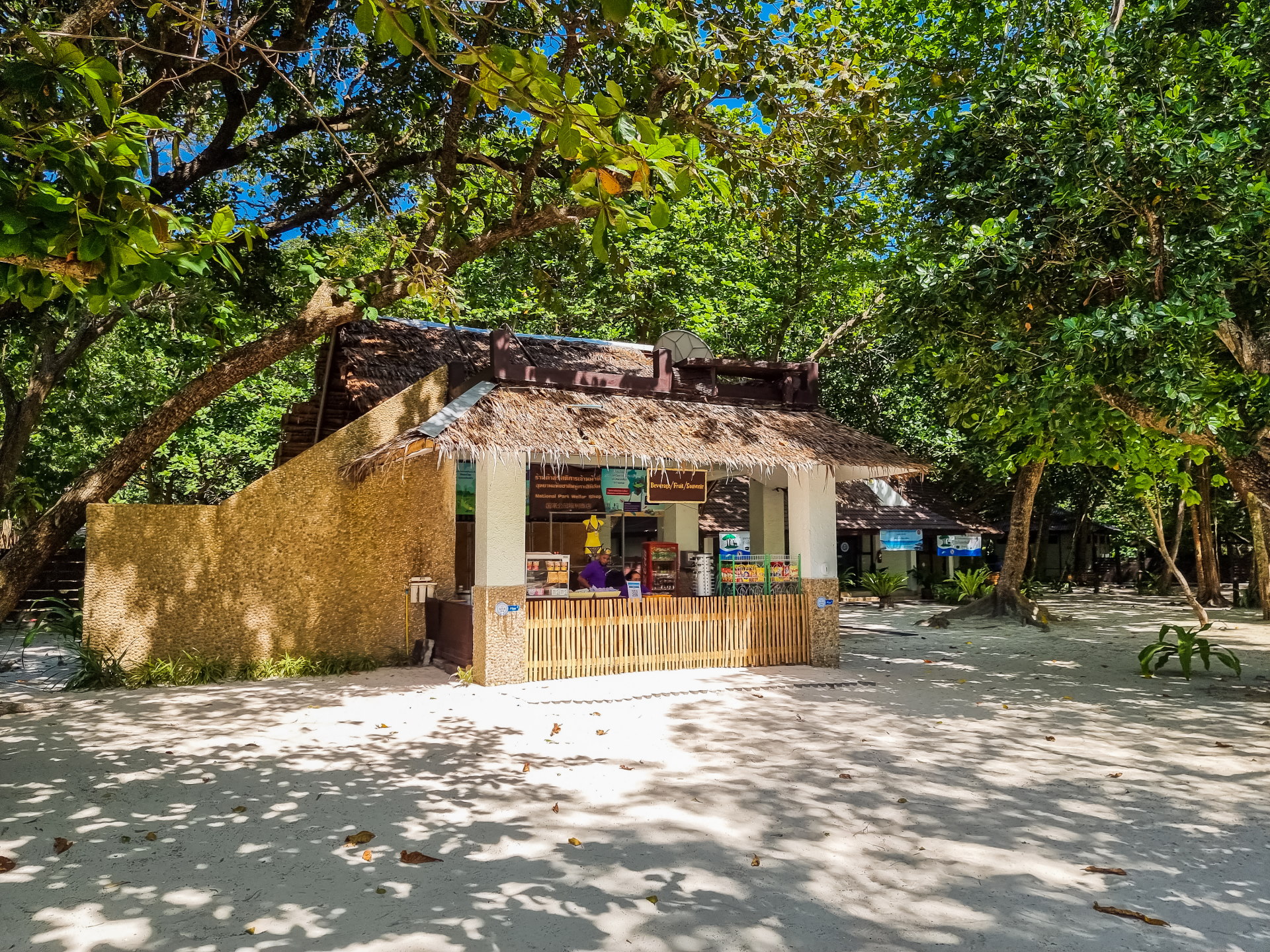
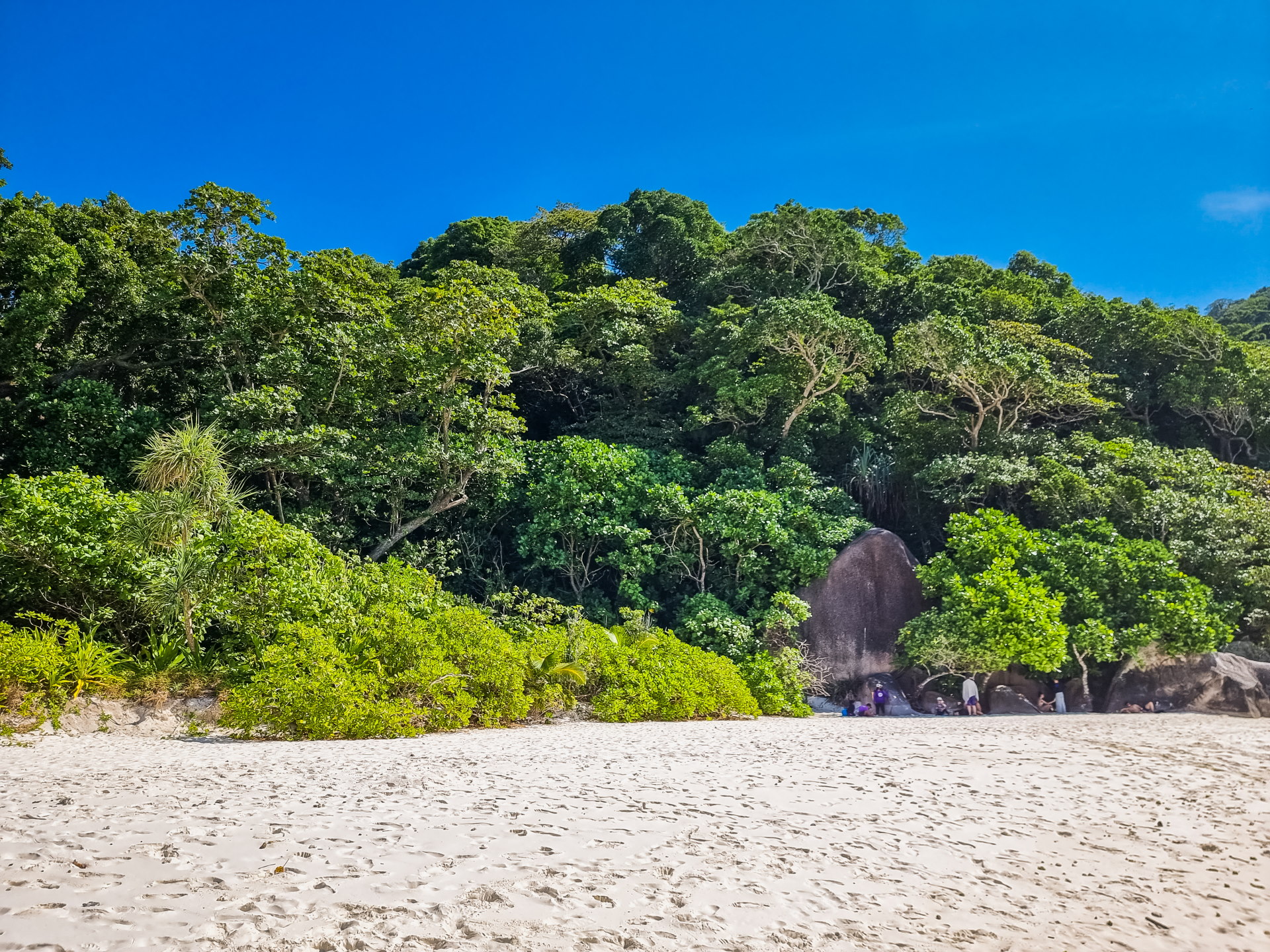
In the shade of the trees bordering the beach, you will discover a small developed area, with even a local supermarket where you can buy fruit, drinks or something to nibble on if what your tour operator offers is not enough to satisfy you.
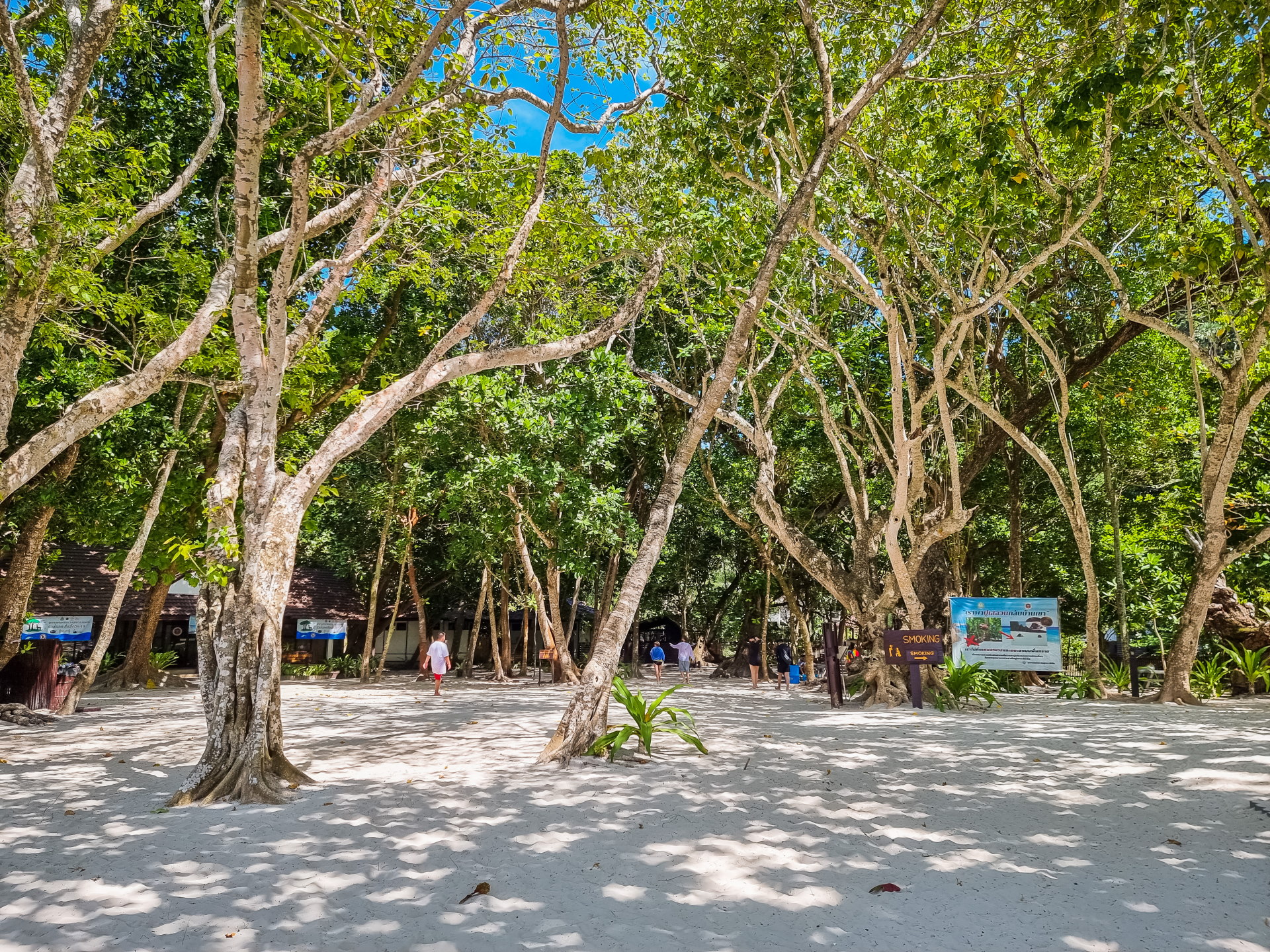
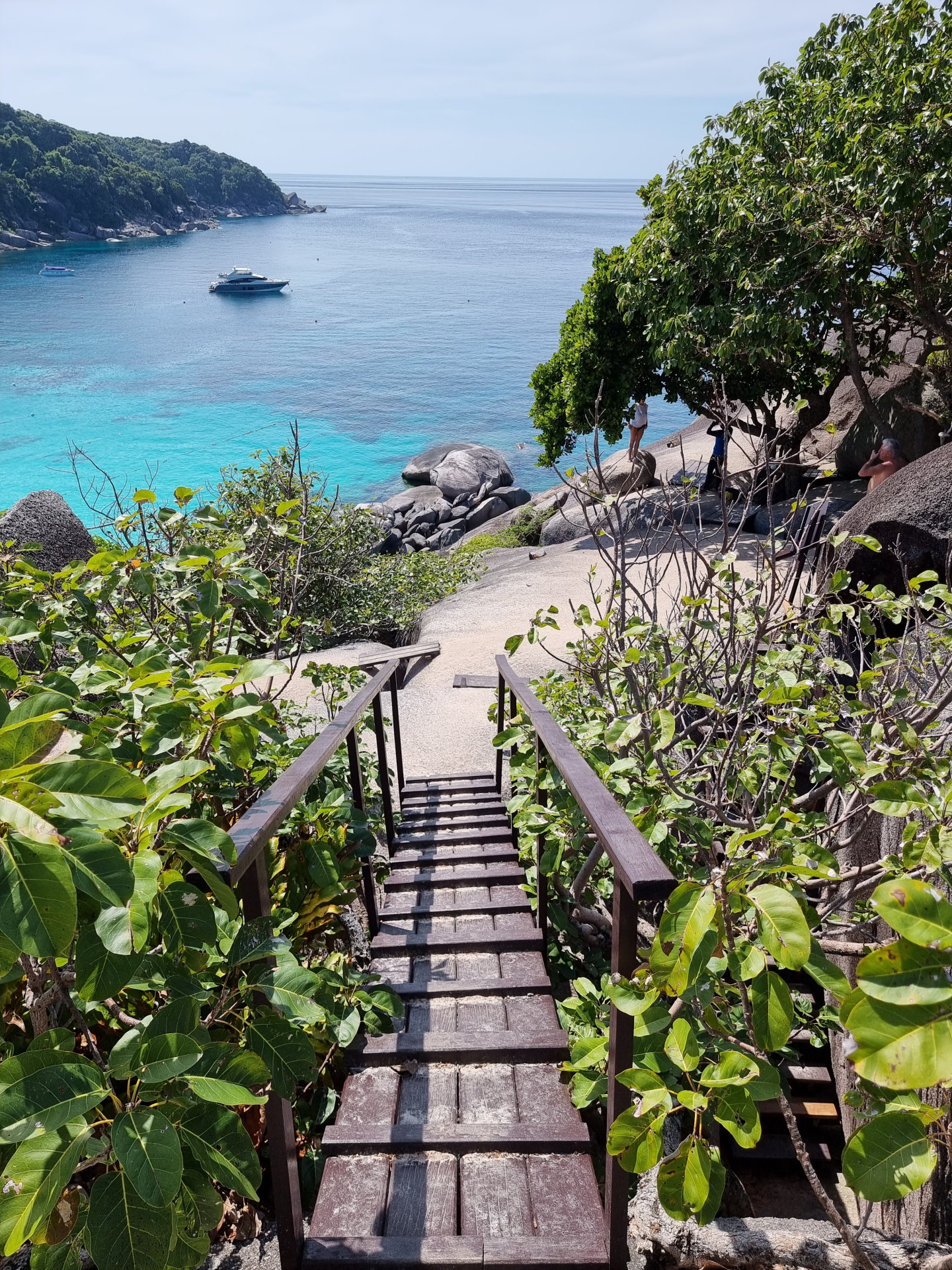
The path to the viewpoint is marked with a sign “Sail Rock Viewpoint Trail” — so the rock is associated with the shape of a sail, great, let’s take a closer look. The path is short, barely 150 m. It’s a bit of a climb, but it’s well marked: a ramp and some wooden stairs make the start of the climb easier, before giving way to more natural ground.
You just have to watch out for the tree roots that snake under your feet and watch your head because you pass under a few rocks, especially towards the finish since there is a passage between two blocks where you have to lean over. A small climb that lasts barely 10 minutes.
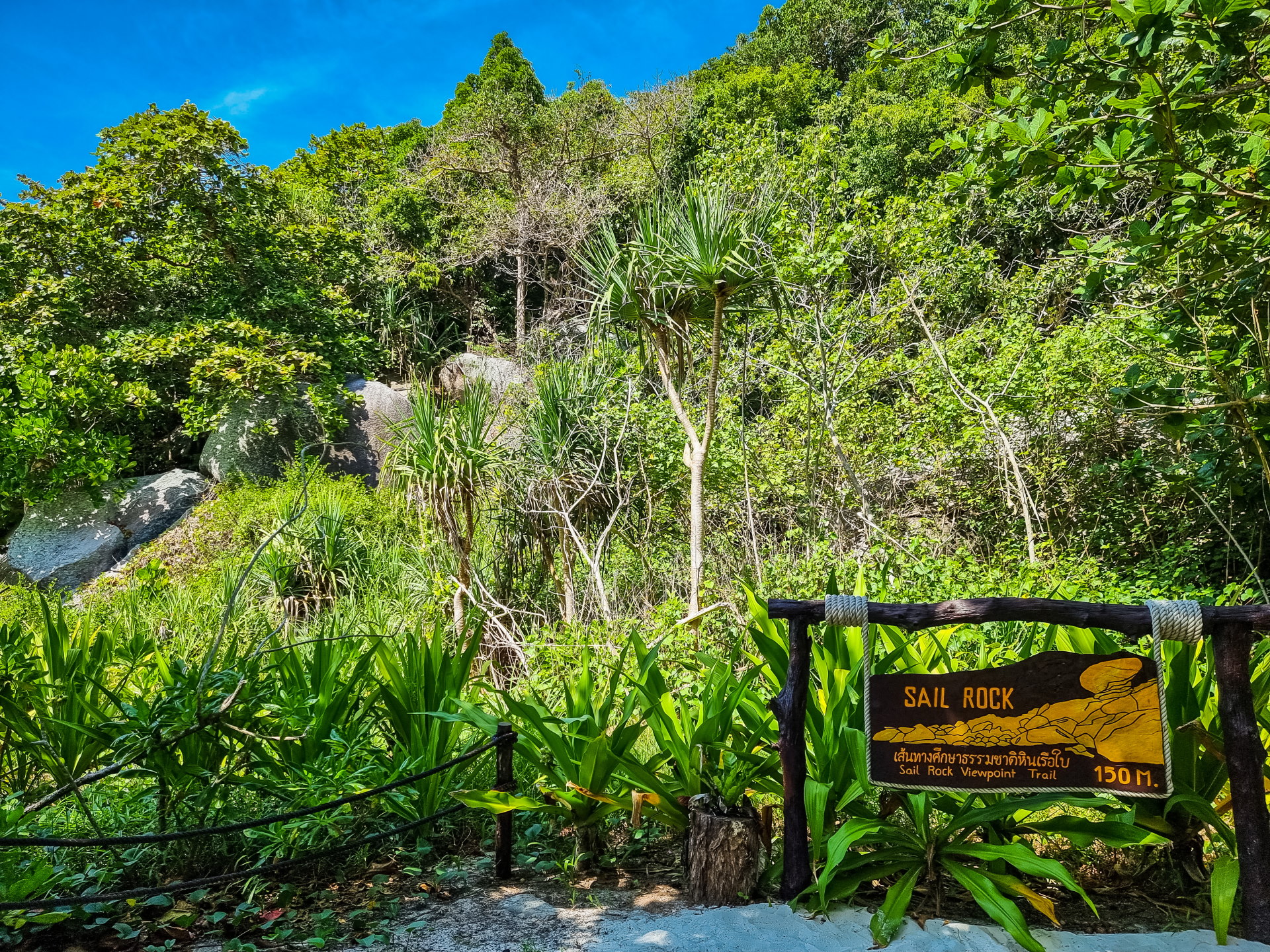
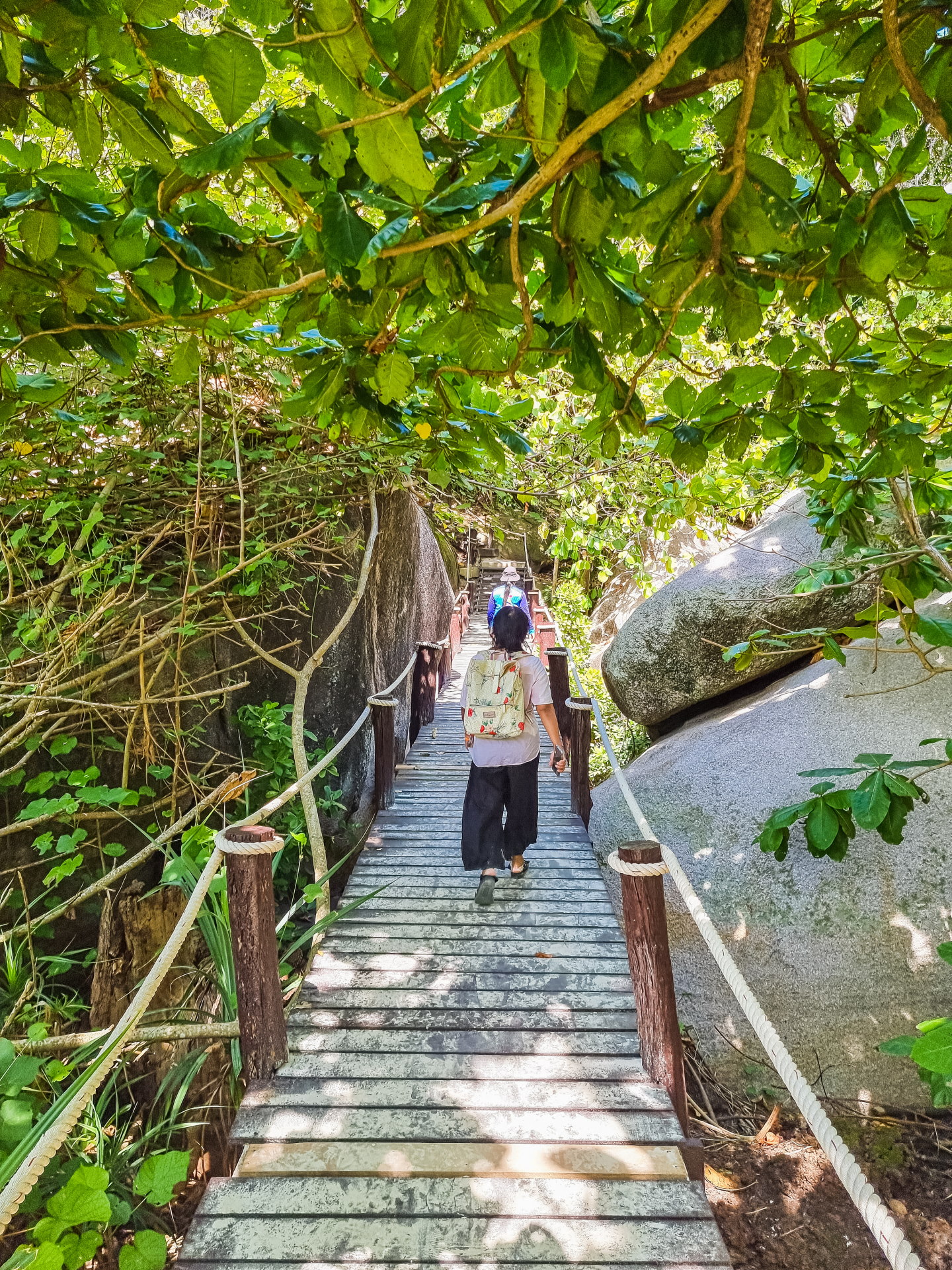
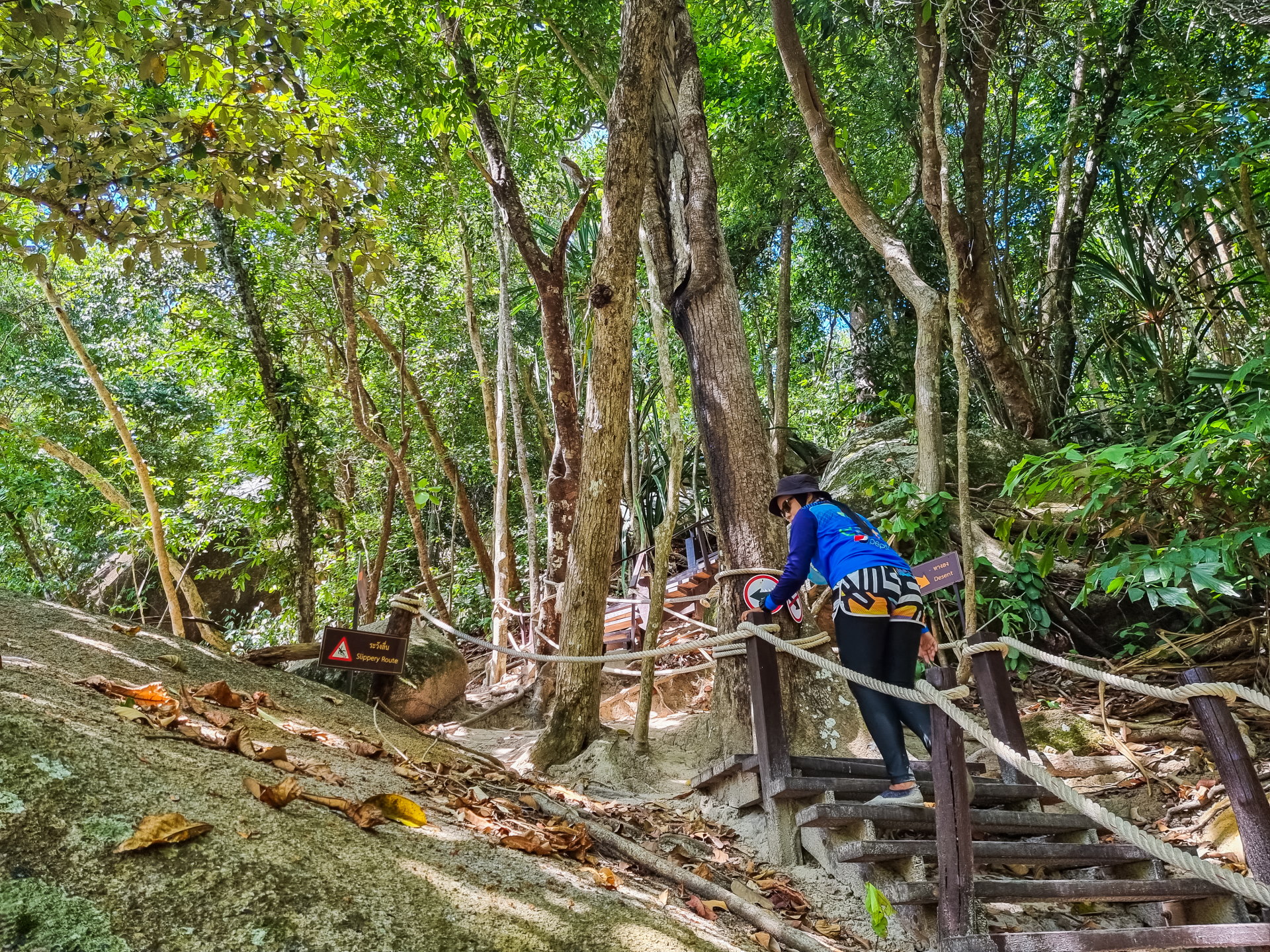
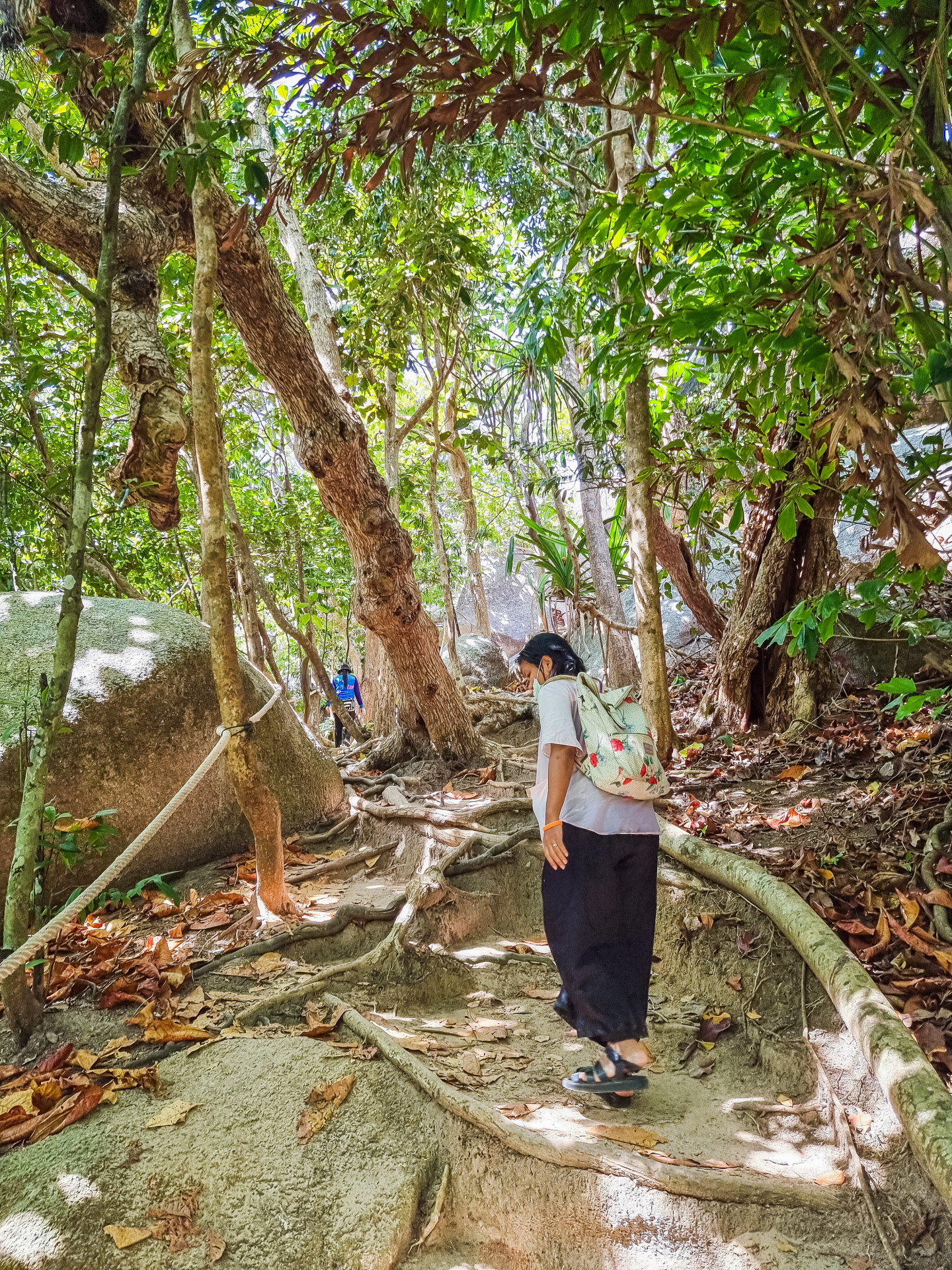
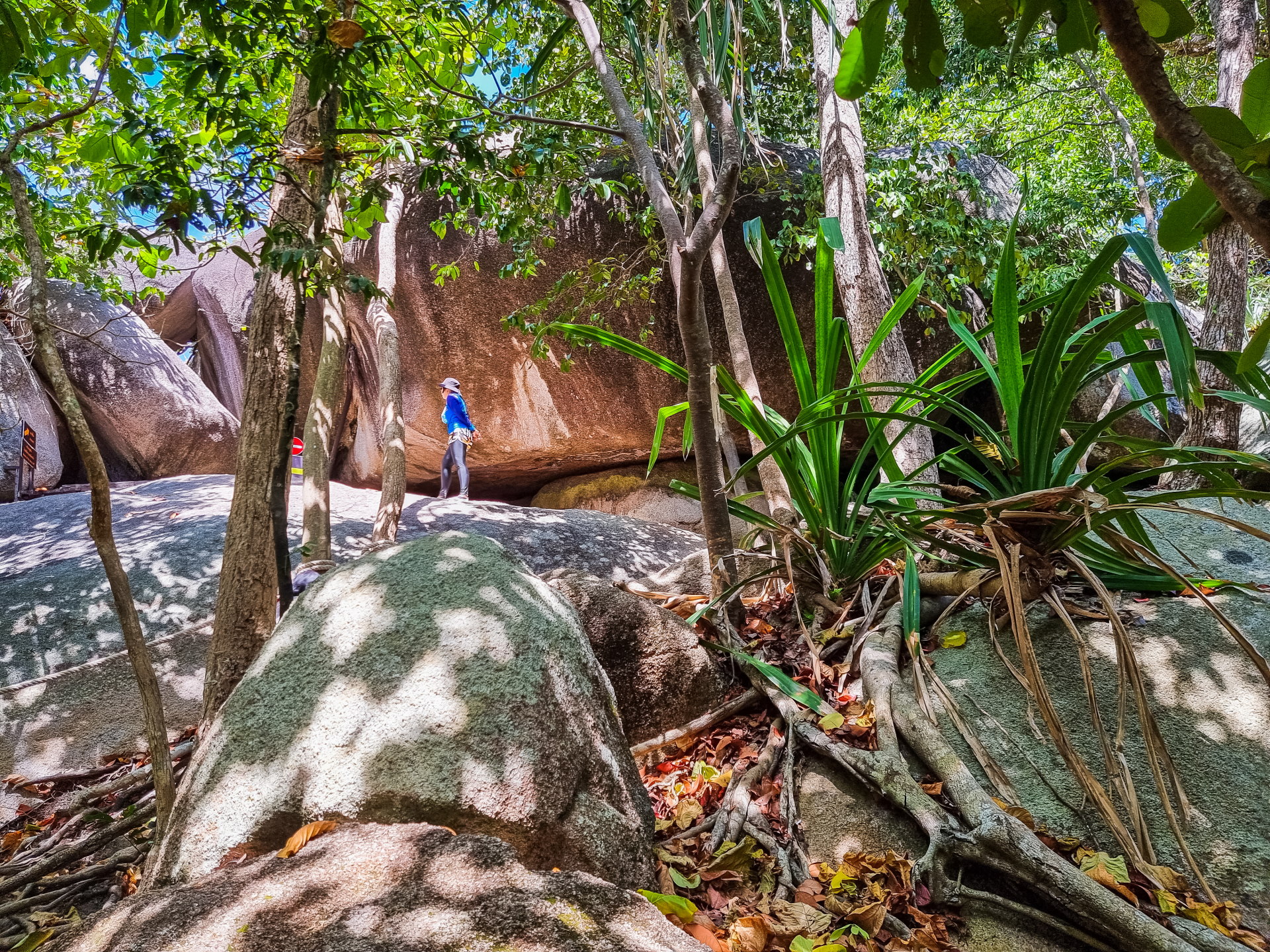
I did well to go there directly, because when we arrive, we are alone except for a companion of our boat, the only one visible at that moment in the bay. She takes her role very seriously when she offers us to immortalize this heavenly view, making us pose in several postures and angles.
At the top, you will see walkways and other stairs that allow you to easily move around the large rocks. On one side, looking down at the beach, it is so empty that you can literally count the number of people present (17 if you are attentive), what happiness.
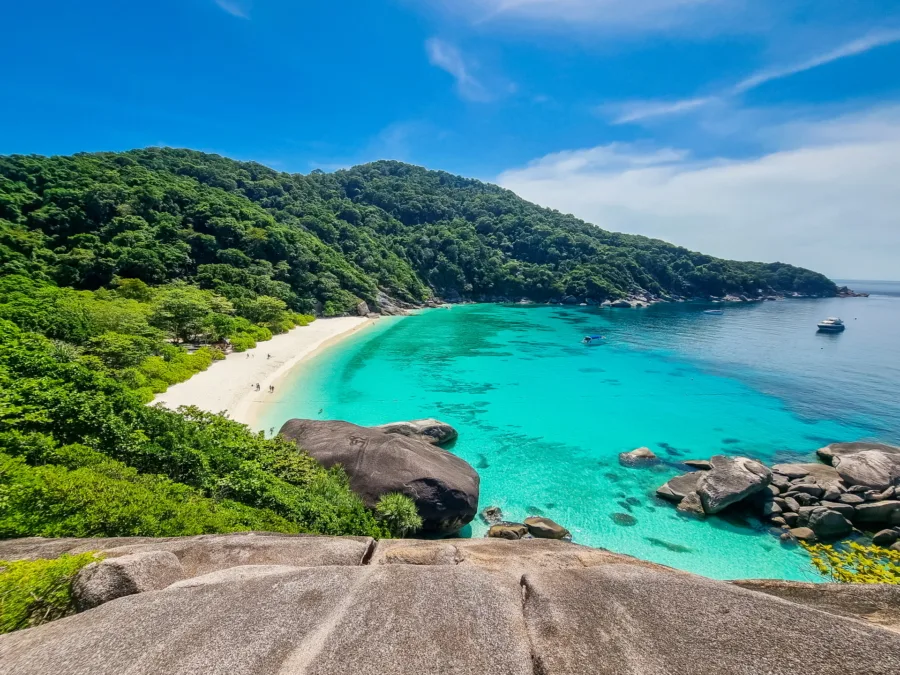
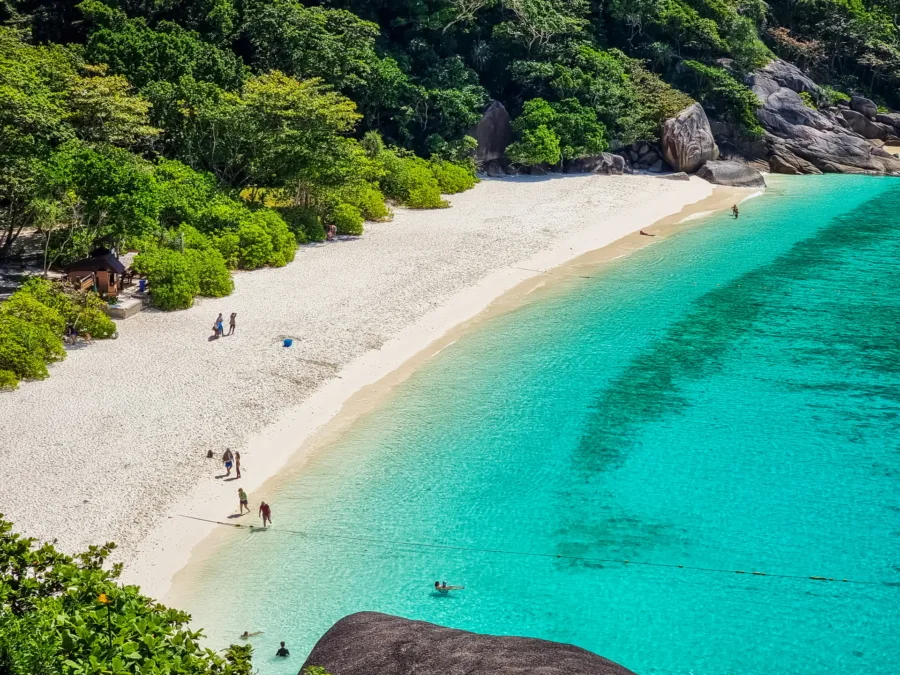
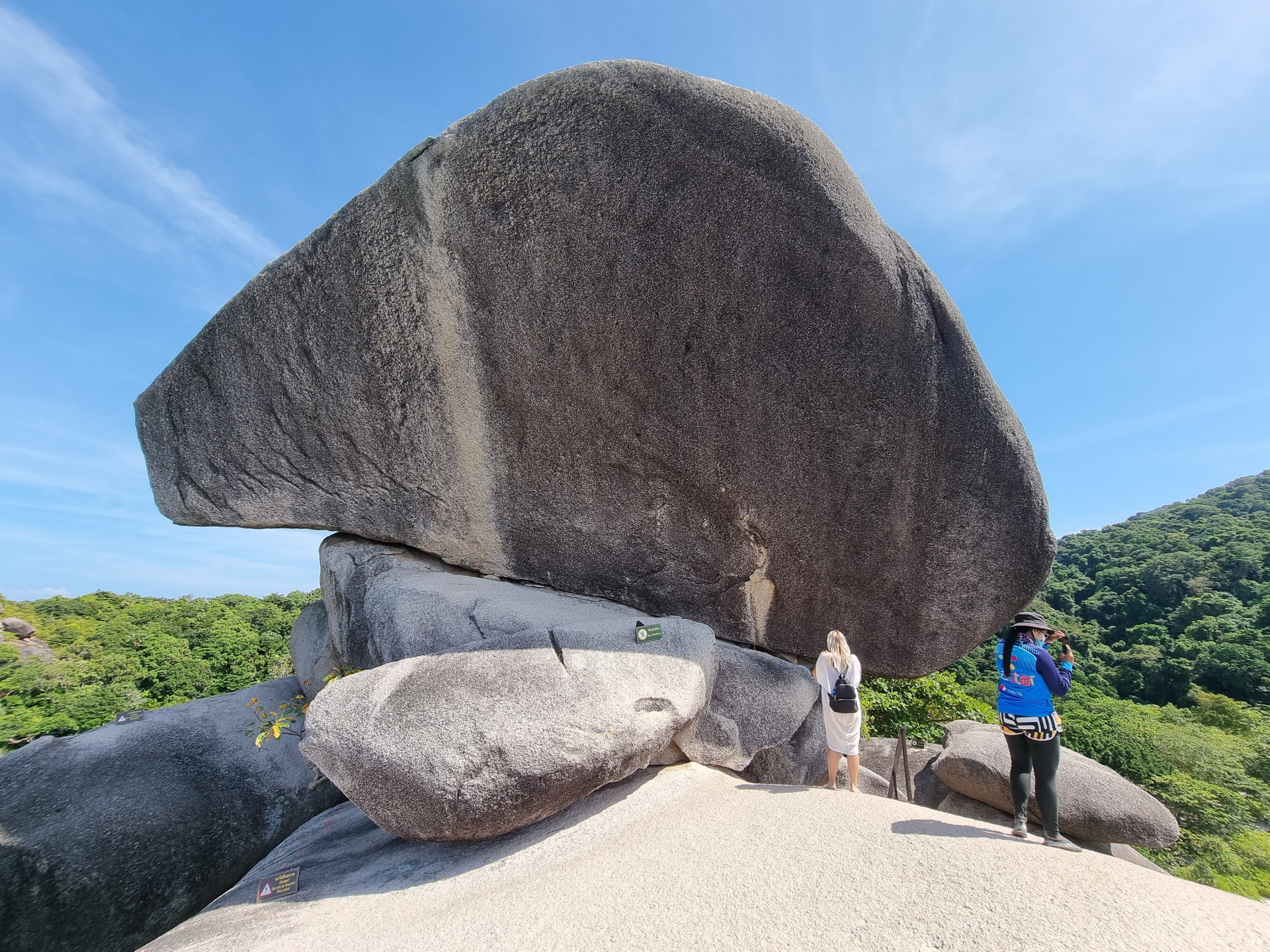
I took a good 20 minutes to admire the scenery from this prime spot and snap photos while the place was still practically deserted . Approaching the island's star attraction, "Sail Rock ," you really get a sense of its imposing size. It's astonishing to see the balance on which these giants rest, as if you were facing a giant cairn or a life-size game of Jenga . Take your pick!
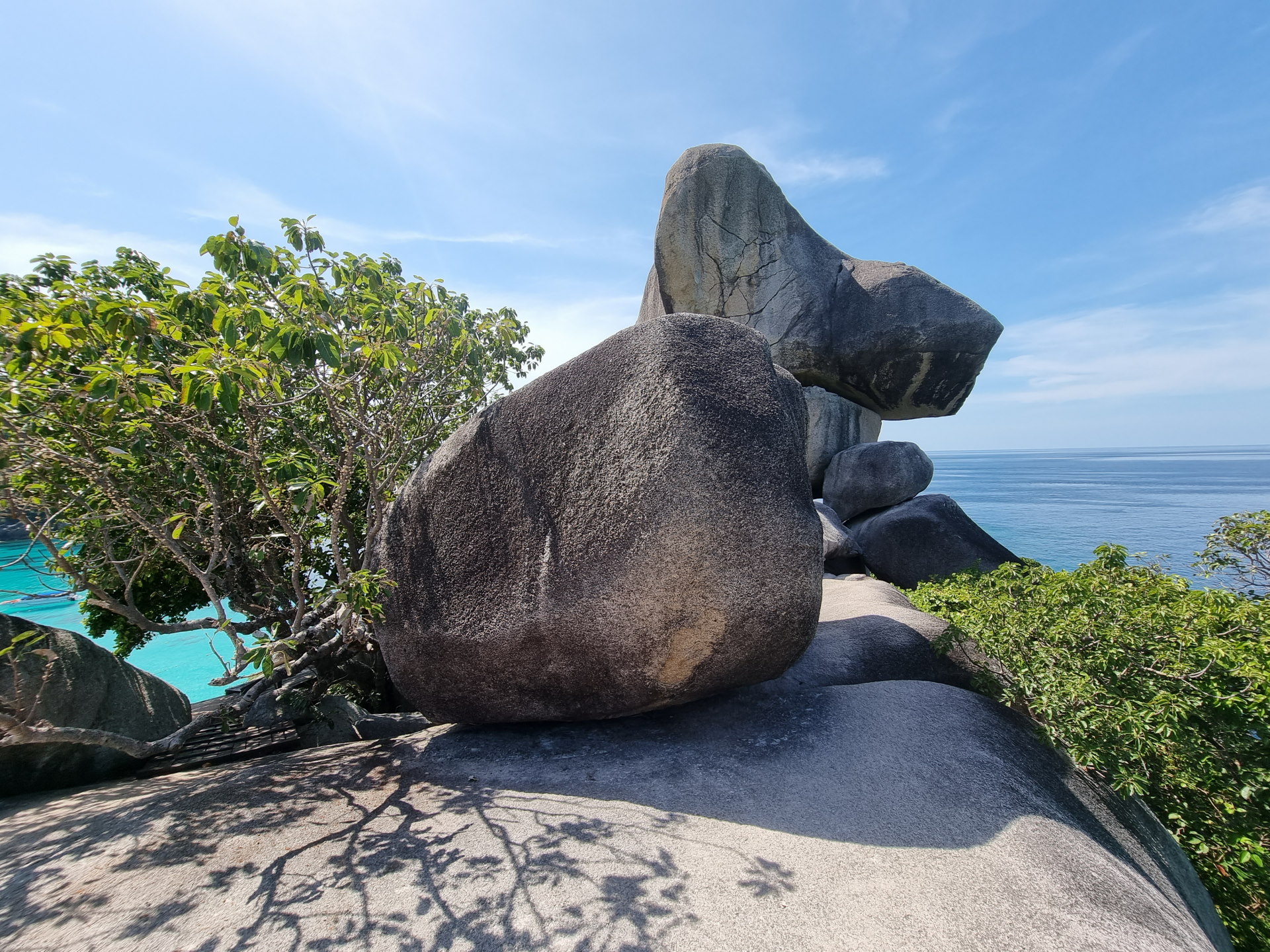
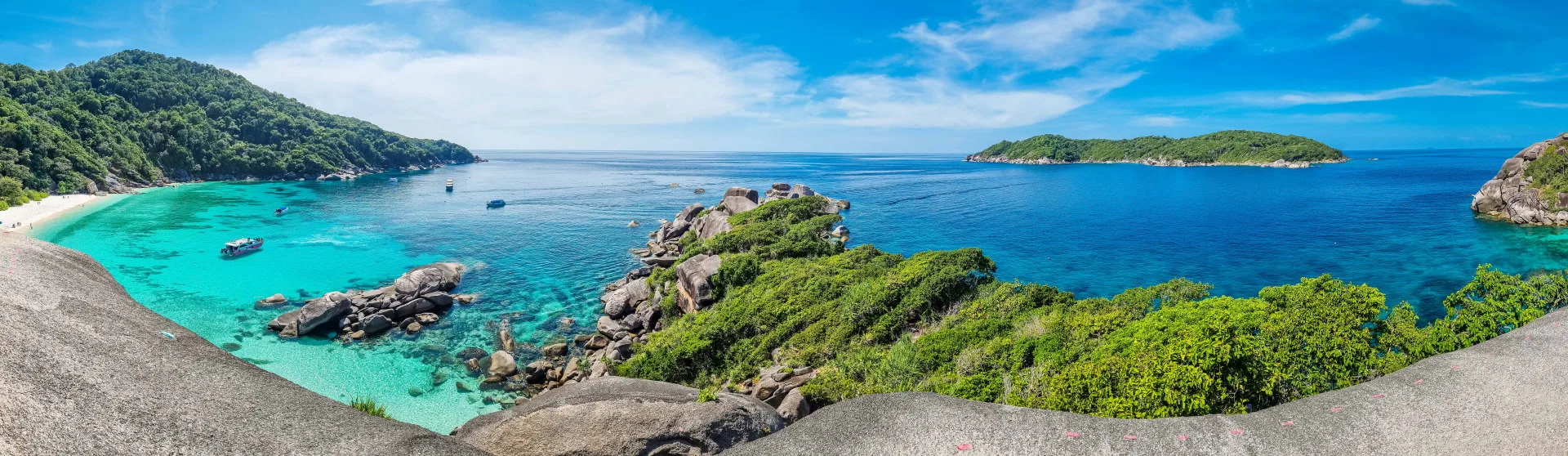
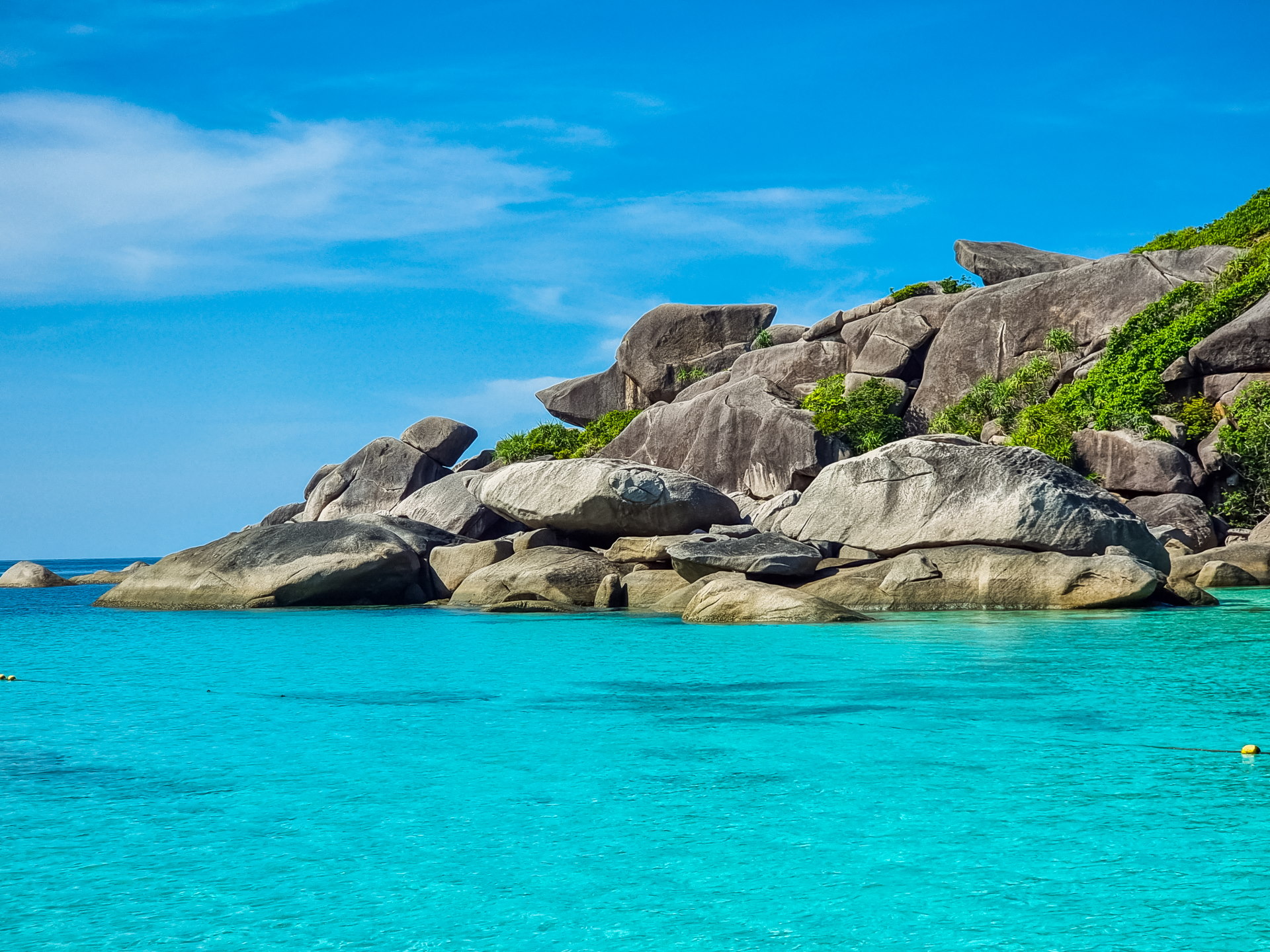
Facing Sail Rock , a point of land juts out into the sea. It is on this rocky promontory that other famous granite boulders are located , the ones that inspired the English nickname for this bay: Donald Duck Bay . And for good reason: their shape, seen in profile, resembles the head and beak of the famous Disney character.
Finally, to the side, Ko Ba Ngu, where we came from, comes into very clear view. Once satisfied, it's time to go back down, because I can already see two other boats approaching the shore.
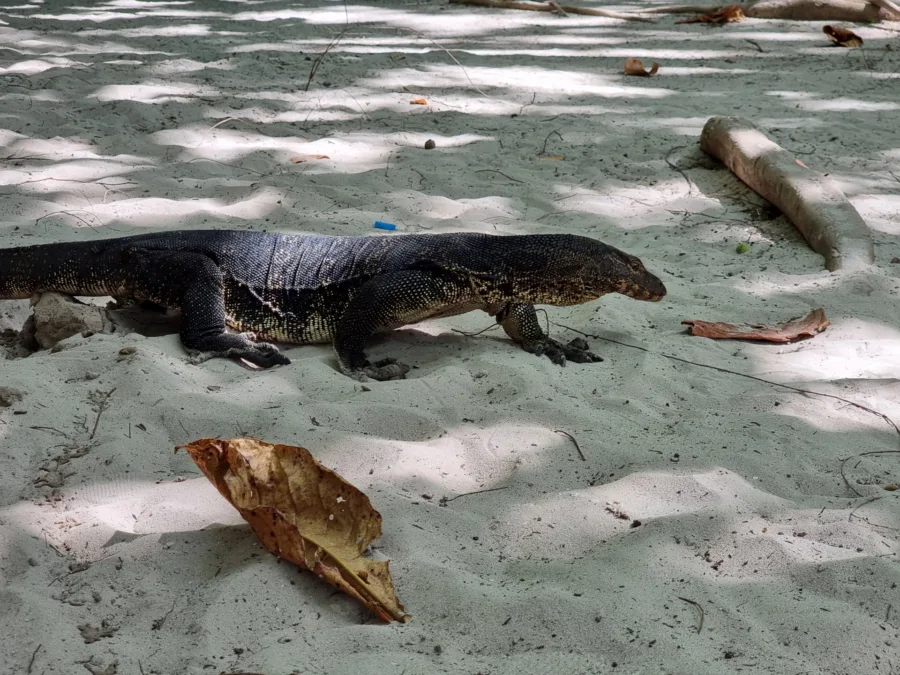
Back downstairs, my wife uses the provided toilets while I take a break in the shade of the trees. There, I notice a beautiful monitor lizard , strolling at its own pace between the picnic tables set up here.
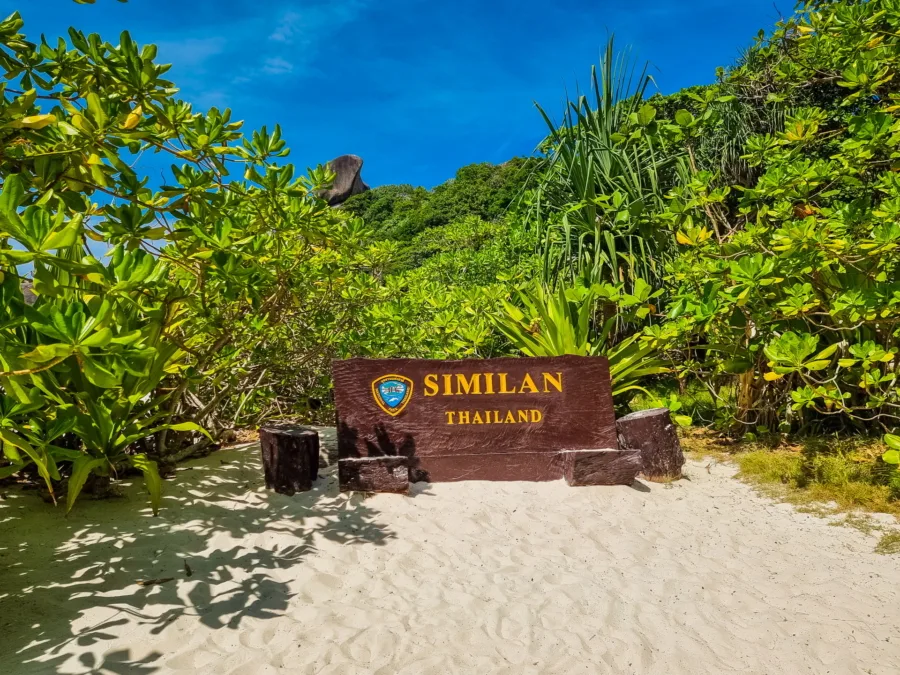
Neither I nor anyone else seems bothered by this presence, so common in Thailand. Meanwhile, a group of tourists – probably southern Thais or Malaysians – are immortalizing the moment in front of the "Mu Ko Similan National Park" sign.
Finally, back on Ko Similan beach . The sand is so white it's almost blinding (my glasses are tinted, but they're not really sunglasses...). The timing is perfect : while we're enjoying the tranquility on the beach, I can already spot a group of tourists clustered around "Sail Rock" at the top.
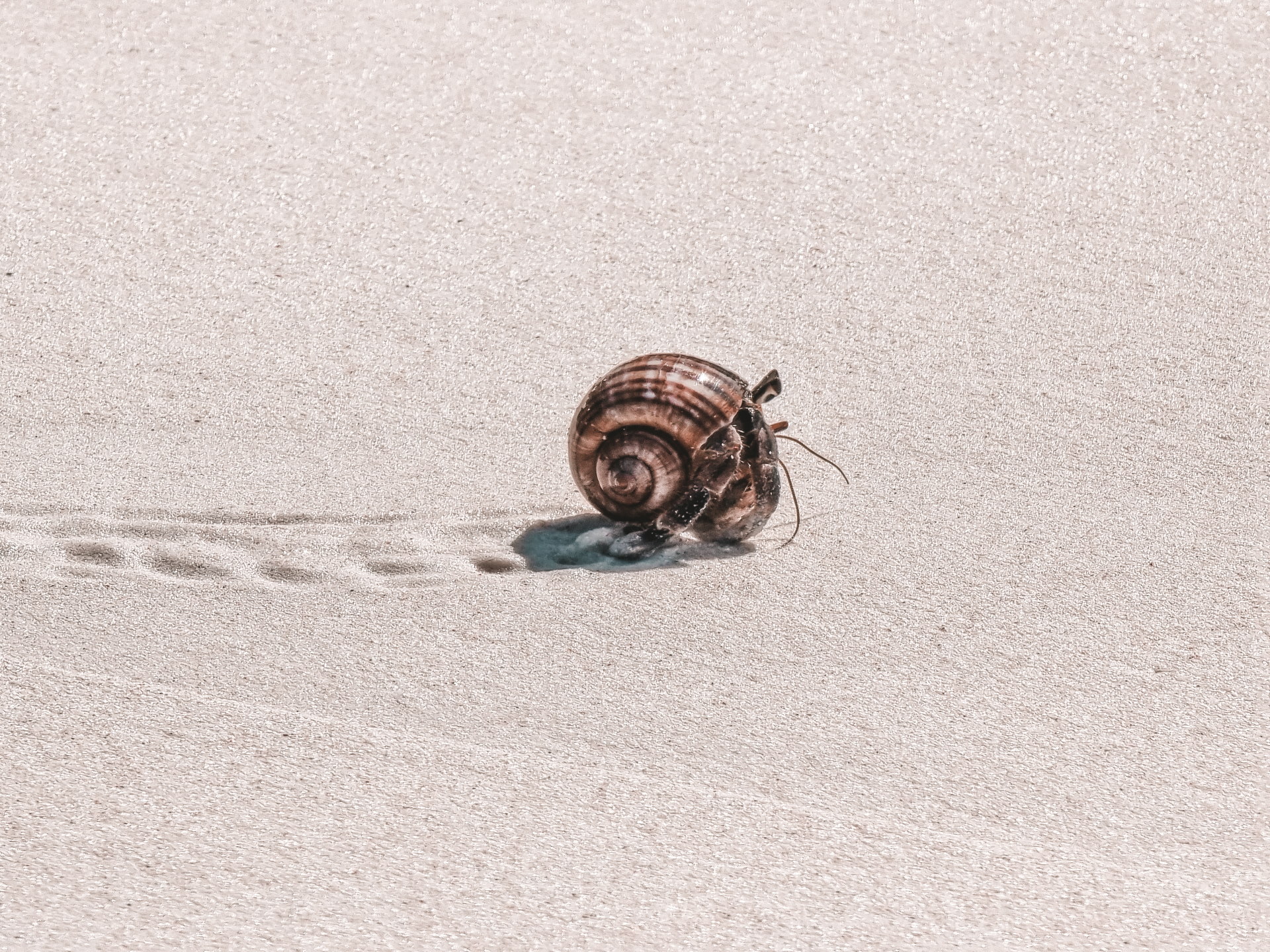
Since we still had some time to spare, we walked to the end of the beach to relax in the shade of another imposing rock. Fifteen minutes of daydreaming , watching the little hermit crabs scurrying about on the warm sand.
It's almost 15:30 PM. I'm enjoying these precious last moments on Ko Similan with my feet in the water. After 1 hour and 20 minutes of serenity here, it's time to say goodbye to this little paradise and gently return to reality.
How to get to the Similan Islands
Similar to Phang Nga Bay (whose article I just completely rewrote ), the easiest option is to go to Phuket , at least by default; you'll find plenty of places to organize your excursion there. The obvious alternative is Khao Lak, given that the Similan Islands are just offshore and most tours depart from the Thap Lamu pier.
Besides the obvious time saving, sleeping closer will give you a slightly cheaper rate. From Phuket, you'll already have a good hour's drive to reach Khao Lak, and the first departures take place from 5:45 a.m., ouch!

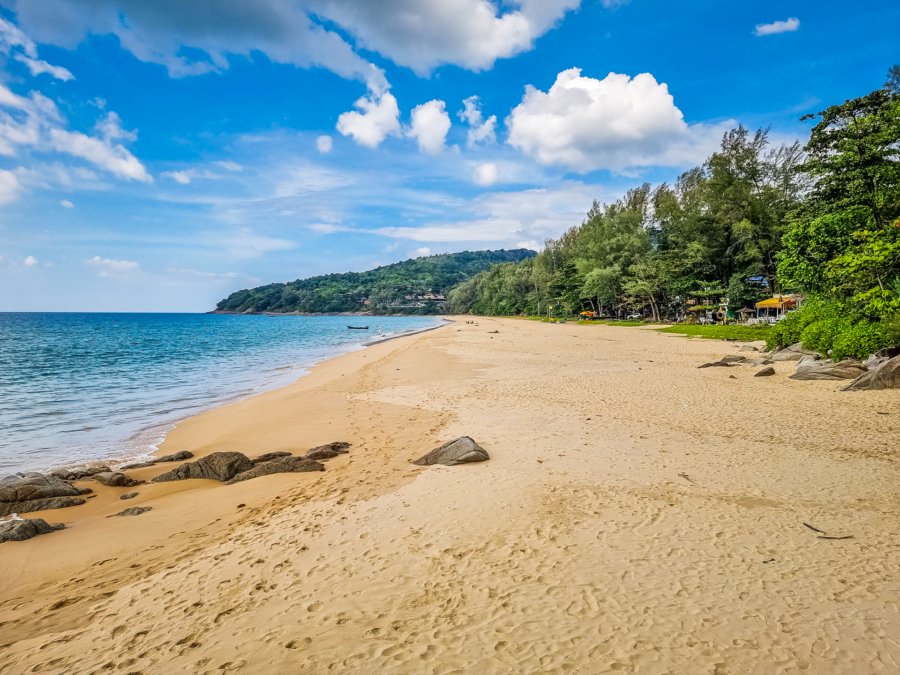
1. Getting to Phuket
Phuket is easily accessible from the main major Thai cities (starting with Bangkok and Chiang Mai) thanks to its international airport. The latter is also directly accessible from Europe with possible direct flights such as Paris - Phuket or even Nice - Phuket via the national airline Thai Airways.
- By plane : From Bangkok, allow about 1h30 flight. Companies like Thai Smile, AirAsia or Nok Air offer very affordable rates.
- By bus or car: From Bangkok, the bus journey takes about 12 hours. If you rent a car, the driving time is similar.
- By train : not very practical because it is not direct, the nearest train stops at Surat Thani, from there you would have to take a bus or van.
2. Getting to Khao Lak
Khao Lak is easily accessible from Phuket but can also be reached from Surat Thani if you are arriving from the Gulf of Thailand (Samui, Ko Phangan in particular).
- From Phuket: Allow around 1h30 (70 km) if you rent a car or take a bus/minivan.
- From Bangkok: You can take a direct flight to Phuket and then drive to Khao Lak.
- From Surat Thani: You will have buses or minivans, allow around 2h30 for the journey.
You can book your transport from Phuket via the search tool:
Can you visit the islands on your own?
The answer to this question is NO. For two main reasons:
National Park Regulations: The Similan Islands are part of Mu Ko Similan National Park, a protected area with strict regulations designed to preserve the archipelago's fragile ecosystem. Access to the islands is controlled, and park authorities impose restrictions on the types of boats allowed to dock. Traditional longtail boats do not meet the required standards for operating in these waters, which may limit their access.
Logistics and safety: The Similan Islands are located approximately 65 kilometers off the coast of Khao Lak, a considerable distance to cover in a longtail boat, typically designed for shorter, coastal journeys. Sea conditions can be unpredictable, and long journeys in longtail boats can pose safety risks. Furthermore, these boats do not always have the necessary navigation and safety equipment for such voyages.
Choosing your excursion to the Similan
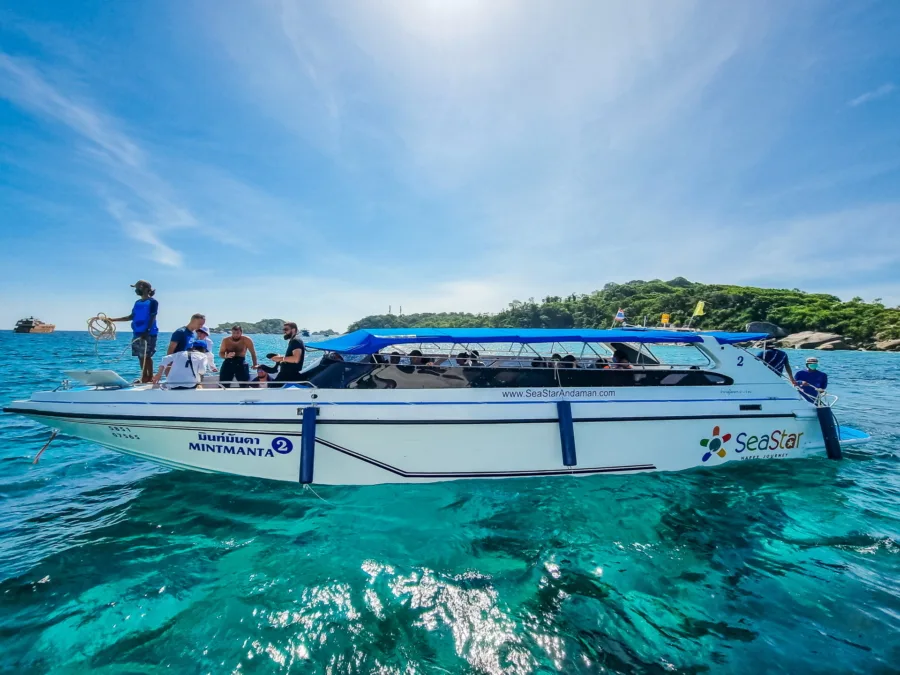
Most tours are full-day tours, departing from Thap Lamu Pier. Each company usually has its own pier, spread along a 700m stretch of coastline. Here are some well-known companies:
By the day:
- Wow Andaman : they don't have a website but since it is intended for domestic tourism, they have a Facebook page, from which it is possible to book. Their advantage, besides competitive rates, is to use a catamaran instead of the classic "speedboat", which brings undeniable comfort (the downside being to be more numerous).
- Love Andaman : they are a bit more expensive proportionally but have an excellent reputation, You have the details of the program here. Be careful not to confuse them with "We Love Andaman", an agency with a similar name also offering this service. It does not have a bad reputation per se but I want to qualify the difference.
Indicative price:
Between 3 and 000 Baht, depending on comfort level and group size.
⚠️ CAUTION: Typically, if the fare is around 3 baht, it is unlikely that the entrance to the national park is included (000 baht to be paid separately in this case), check carefully if the fare includes the ticket to Mu Ko Similan.
Typical program for a day in the Similan:
- Patient Care from your hotel to Phuket ou Khao Lak.
- Light breakfast at the quay before departure.
- Two snorkeling stops : mask and snorkel provided.
- Buffet lunch : often organized on Ko Miang (n°4).
- Beach visit and iconic viewpoint on Ko Similan (n°8)./li>
Package 2 days + 1 night:
As I mentioned in the intro, for those who wish to extend the experience and spend the night there, more immersive options exist. But if there are excursions including one night (or more); it is no longer possible to sleep on the islands themselves, accommodation is now on the boats.
Therefore, these are obviously larger boats than the usual speedboats, and excursions are rather designed for diving trips (even if just snorkeling is also possible).
- Khao Lak Explorer : This is a reference in Khao Lak if you plan to go diving or take your PADI there. They have been there for over 10 years and a little more importantly, it is an agency with French-speaking instructors. See an example of their program over this duration: Khao Lak Explorer 2D + 1N
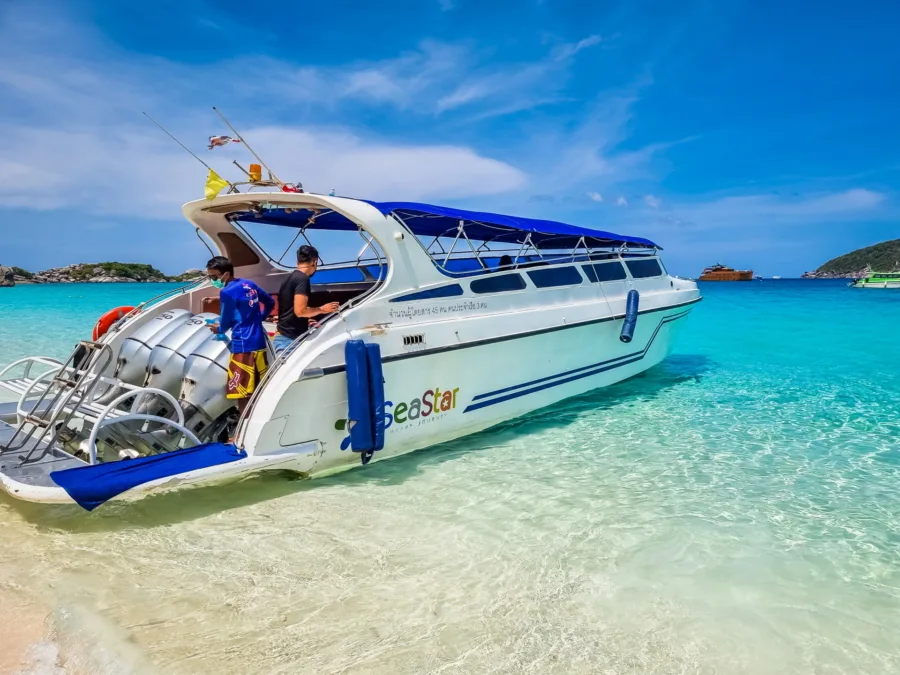
- Sea star : the tour operator I had chosen also offers day + night combinations, also on a boat more geared towards scuba diving (see here).
Organizing my day with Sea Star
To give you a concrete idea, here is how my day went, in its organization, with Sea Star, the company I had chosen. As our hotel was very close to the Thap Lamu wharf, we were picked up at 8:00 am (no more waking up at 5:XNUMX am!).
Barely 15 minutes later, we were there (we could have even gone there by ourselves but hey, since the transfer was included…). There, we disembark in what looks like a sort of large open canteen, where people are already busy around. And for good reason: this is where the famous breakfast included in the excursion is taken.
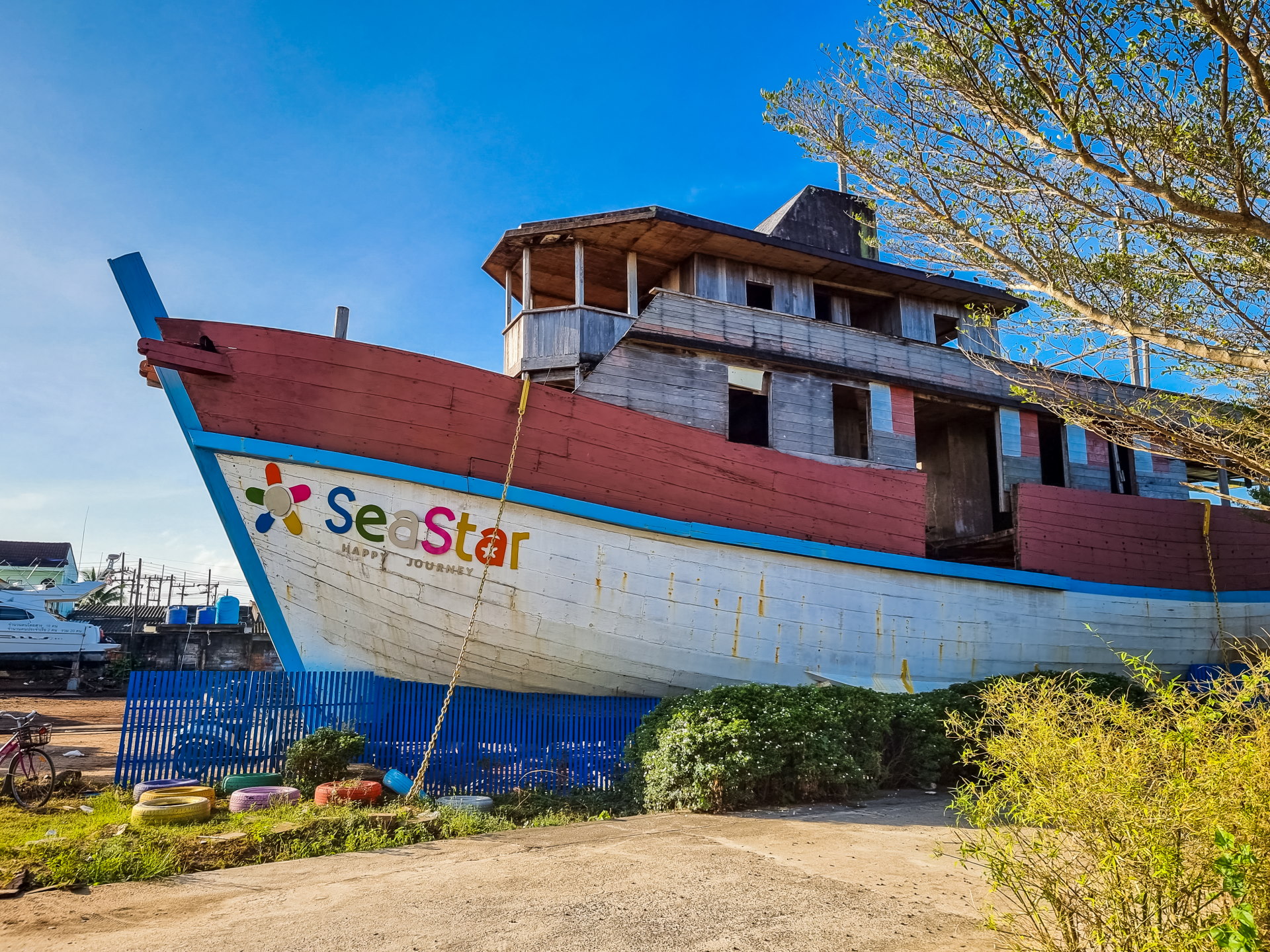
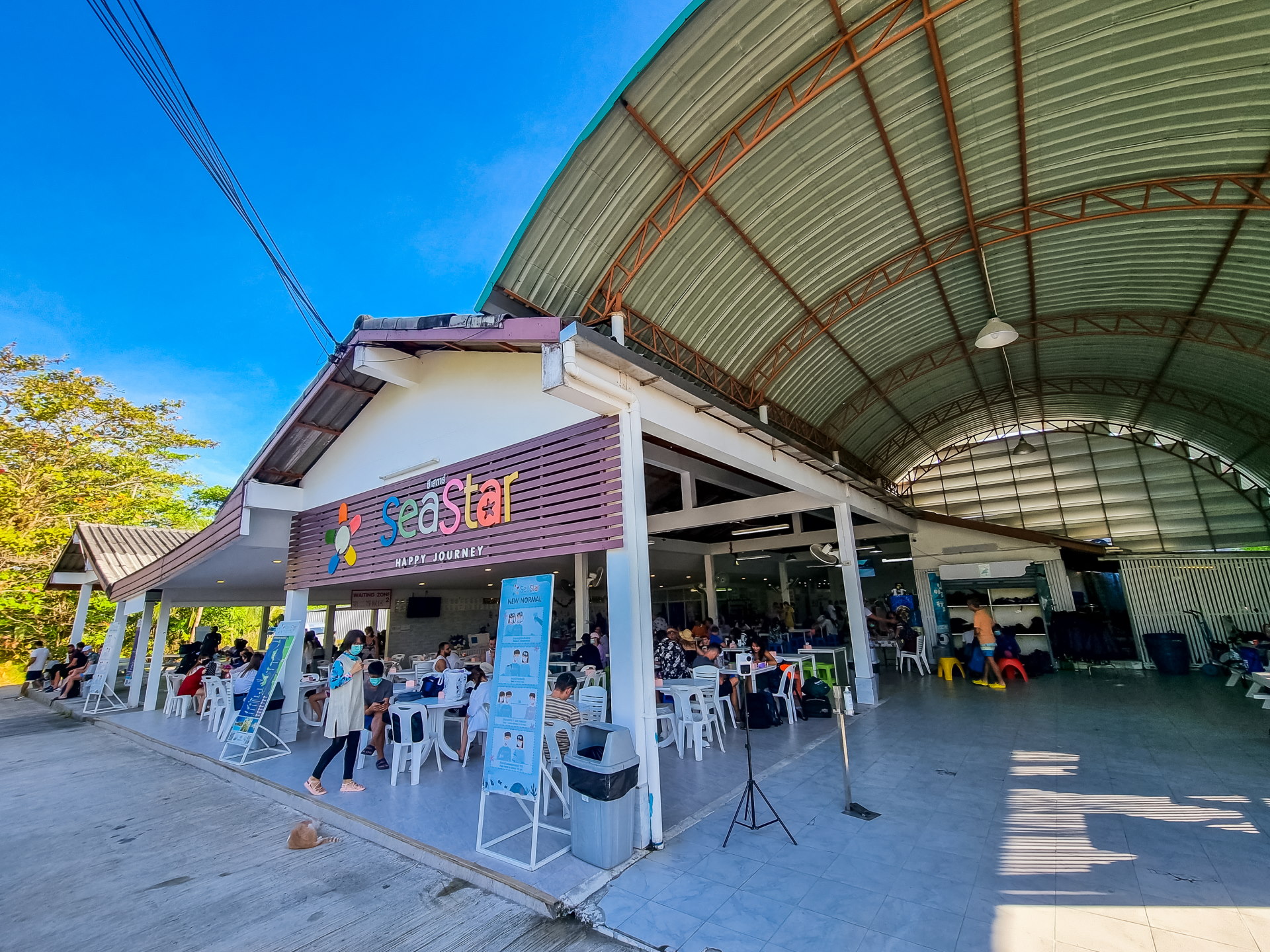
Out of curiosity, I took a look at Google Street View and since we were there, the large room has been partitioned and air-conditioned. They have also added tables and benches outside for those who prefer to enjoy the warm ambient air.
At one point, the excitement among the staff members signals that things are speeding up. After a quick briefing and a listing to distribute the participants according to the chosen excursions, everything is organized efficiently. All that remains is to reach their private dock, located 100 m away, to embark.
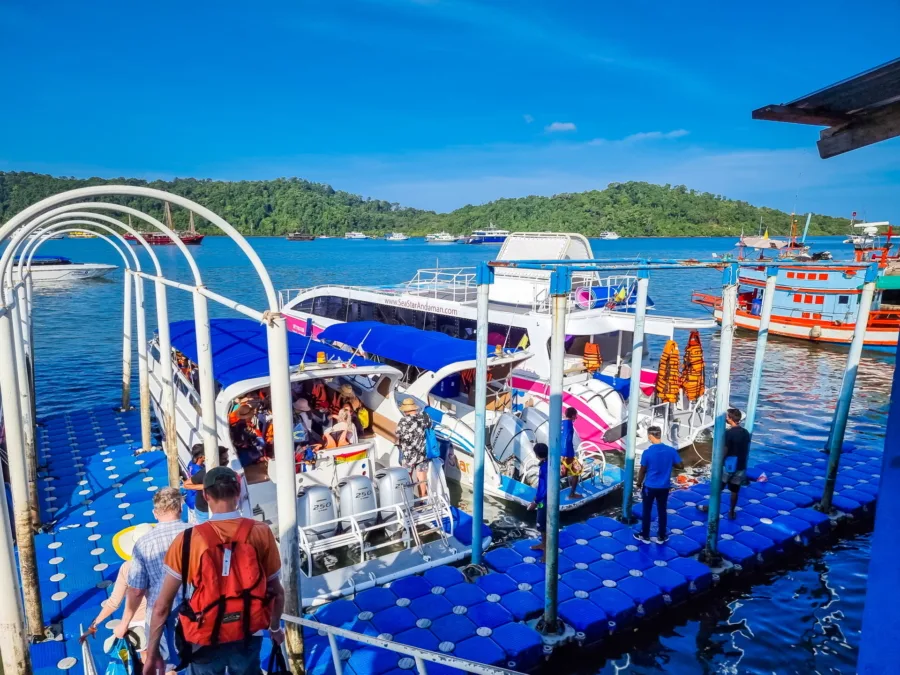
We left by speedboat at 9:00 am and returned to the dock in the late afternoon, shortly before 5:00 pm. Including the travel time to and from the dock, we spent approximately 5 hours there , between 10:30 am and 3:30 pm.
This is where I come back to a remark made at the beginning of the article: at the rally point, I found that there were many more people than I expected. Of course, I knew that the Similan were popular, but we were in the middle of restrictions due to Covid. This is also what had decided me to do this excursion at that time.
At first, seeing so many people, I was a little disappointed… until I realized that this meeting point is used for all the company's excursions! So not everyone was going to the Similan Islands: some were going to the Surin Islands, others probably to Ko Bon and/or Ko Tachai.
Finally, to avoid all visitors ending up in the same places at the same time, the company has a well thought-out organization. Some boats do the order of visits differently or in reverse, which helps to limit the crowds at each spot. This explains why we didn't have this impression of crowds, except during the lunch break on Ko Miang.
Prices and practical details
We had the choice between a speedboat (3 baht per person) or a catamaran (700 baht), which was more comfortable. I chose the speedboat, as you might have guessed, and we were entitled to two small discounts:
- “Local” reduction : 200 baht less because we were staying nearby.
- Thai rate : 400 baht less for Jitima, as the entrance to the national park is cheaper for Thai residents.
In the end, it came down to 3 baht for me et 3 baht for her, or, a total of 6 baht for two people.
If the quote does include the entrance to the national park, note that it must be paid separately on site (500 baht per person). The Sea Star staff collects this amount because they give it later in the day to the national park rangers, present on the island to monitor the area.
General advice:
It is recommended to book in advance, especially during peak tourist season, and to check traveler reviews to choose the company that best suits your expectations.
Other examples of towers:
Where to stay to get to the Similan Islands
There are three drop-off points to choose from here:
- Khao Lak
- Phang Nga
- Phuket
Just to clarify, since Phang Nga is also the name of the province, I am referring here to the city of Phang Nga, which can also serve as a base for visiting the region.
In addition to the suggestions below, you can search for your accommodation using the search tool below:
1. Sleeping in Khao Lak
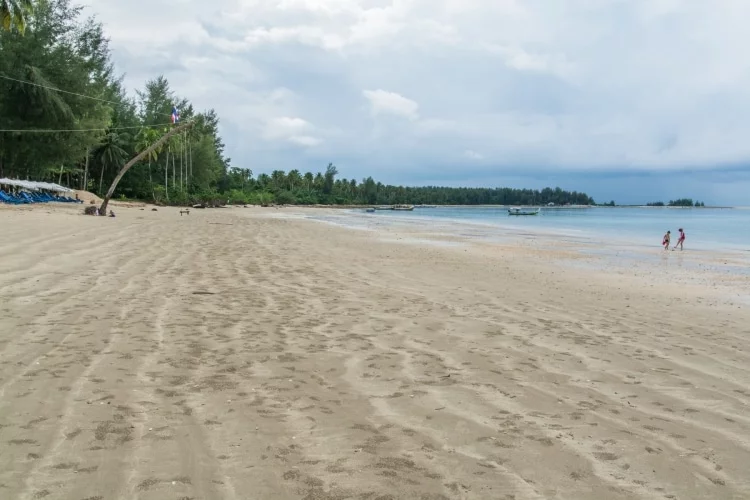
This is the most logical option, as it's the closest to the Thap Lamu pier. Depending on your hotel, expect an average of 20 minutes of travel time in the morning. Khao Lak (which I discuss in more detail here ) is wilder and quieter than the beaches south of Phuket. An ideal option for those seeking a peaceful setting.
– My choice of hotel in Khao Lak –
For this stay, I opted for the following hotel: The Briza Beach Resort. Although it's starting to show its age and could do with a renovation, it's still a beautiful, well-rated establishment with a nearly private beach, shared with only four other luxury hotels. And above all, its location is excellent: just a 10-minute drive from the Thap Lamu docks, perfect for avoiding an early morning wake-up call before the excursion.
This choice also allowed us to enjoy the beach in the evening, the day before the excursion, and to try an excellent local restaurant located right next door: Nana On The Beach , which I highly recommend.
The Briza Beach Resort
Note: 8,6 / 10
Budget: from €45
We stayed in the main building, which, although a bit standard and lacking in charm, offers spacious and comfortable rooms. They have a more modern, but consequently more expensive, section just across the road. But in our case, the price was still very reasonable.
2. Sleeping in Phang Nga
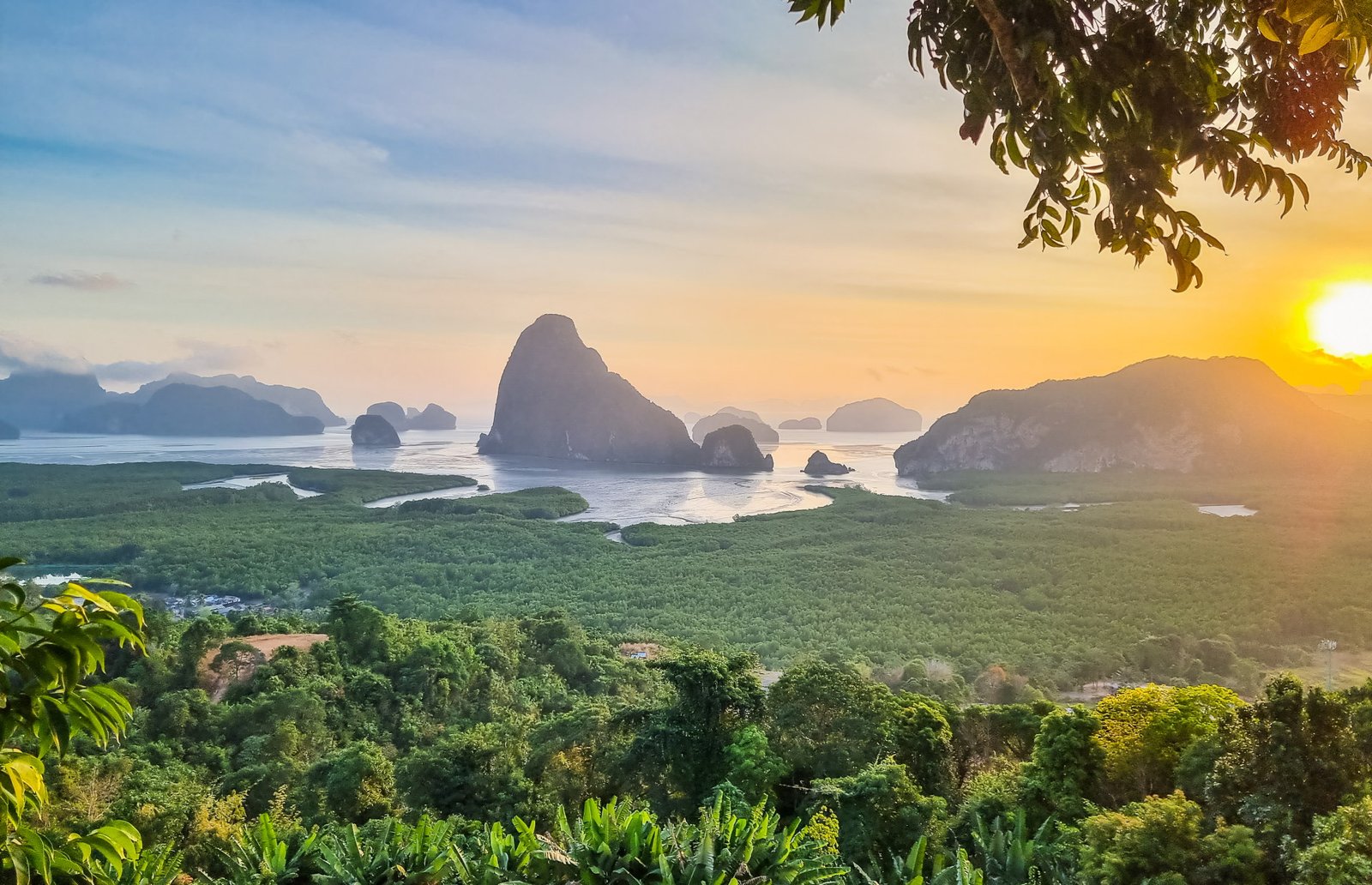
I have never slept in the city itself but rather on the outskirts of the bay, although you have several options, notably around the famous Samet Nangshe Viewpoint (I talk about it in my article dedicated to Phang Nga Bay ).
This is an option if you don't absolutely need to be by the sea. Keep in mind that there are a few places to visit from the town, including caves and temples that might be worth seeing.
3. Sleeping in Phuket
If you prefer a little more excitement or want to simplify your stay by choosing just one accommodation to explore the area, Phuket is a good strategic choice. You'll have to get up earlier to visit the Similan, but you'll have a wide range of options for beach style and accommodation type.
The opportunity to remember that visiting his city, Phuket Town, is a beautiful experience not to be missed, with its Sino-Portuguese architecture and its unique atmosphere.
For those planning a trip to Phuket, choosing the right location is crucial: from lively beaches like Patong and Kata to quieter spots like Nai Harn and Kamala, each area has its own appeal. If you're unsure, I encourage you to check out my comprehensive guide on where to stay in Phuket , which will help you choose the perfect place based on your preferences and travel style.