For a long time, I thought Khao Lak referred to just one beach. In reality, it's the name given to a whole chain of beaches and villages stretching over 30 km along the Andaman Sea. It's a popular destination for those seeking a quieter, more natural setting than Phuket, located about an hour's drive further south.
The first time I went there was after a road trip from Bangkok, passing through Ranong before following the coast. I returned a few years later to visit the Similan Islands , with Khao Lak being a perfect starting point for that excursion.
The idea of this article: to share with you an overview of what you can discover around Khao Lak, between these wild beaches and waterfalls.
Khao Lak Beach Map
To give you a point of reference for the places I'm going to talk about below, here's a map of the beaches that make up Khao Lak and its various villages.

1- The beaches of Ban Thap Tawan and Bangsak
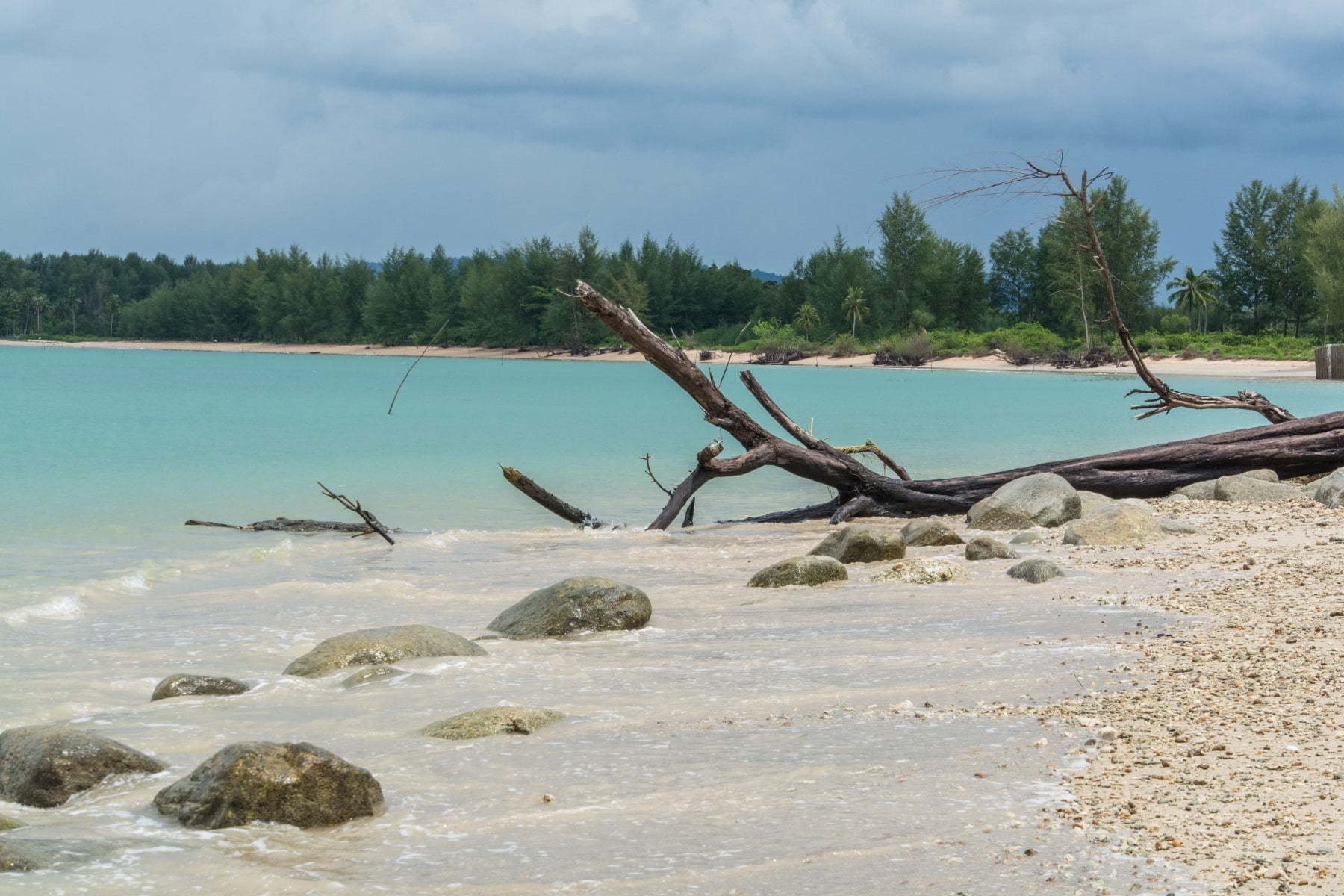
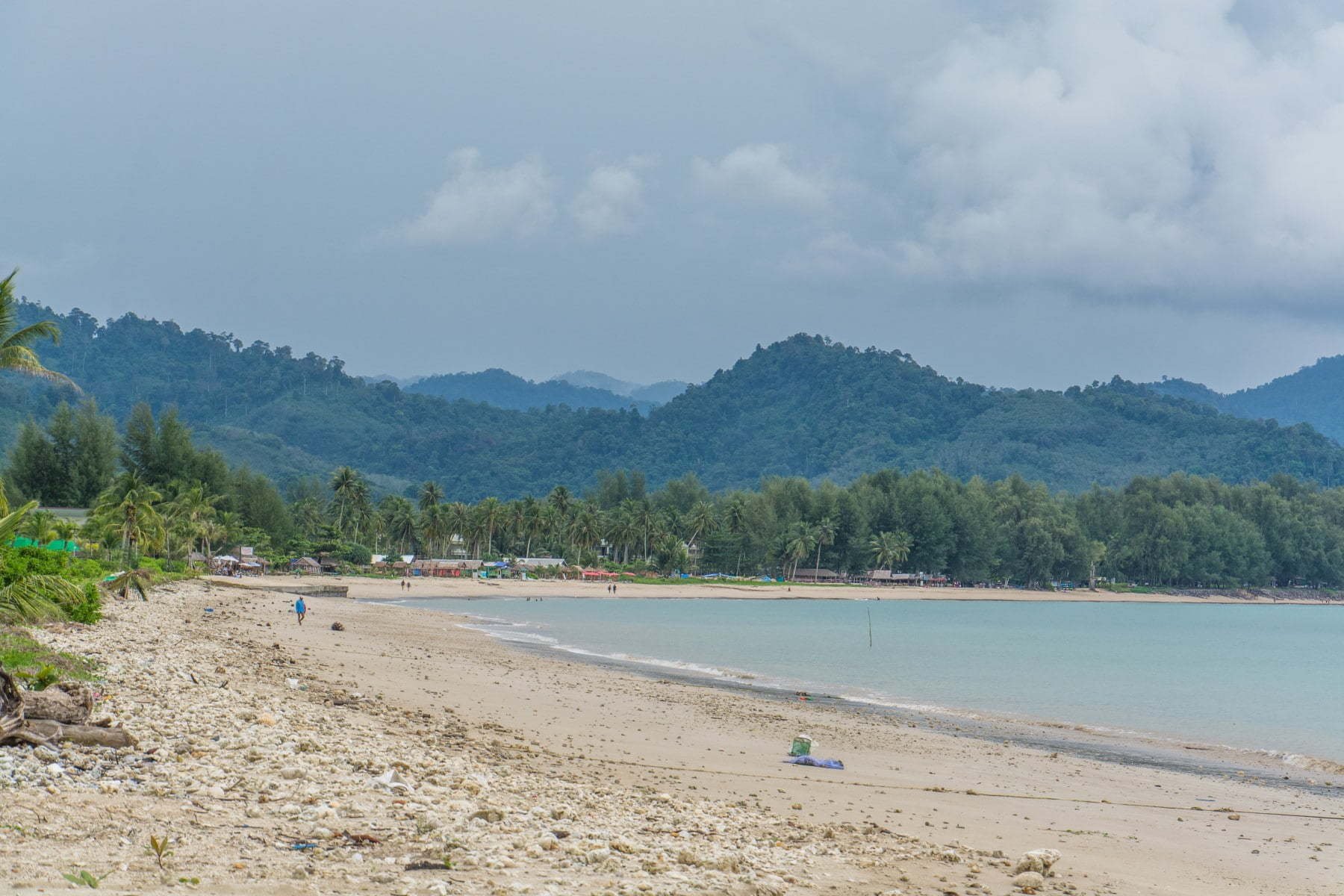
The first beach I stopped at was Ban Thap Tawan . It offered a great view of the coastline, bordered by mountains and coconut palms for miles . The section of beach I went to was next to a small wooded area, where a Thai family was having a picnic.
It's true that the setting is perfect for it. However, the seabed in this area is rocky, so not particularly suitable for swimming, especially since it's quite shallow. The spot was next to the large Bangsak beach , which stretches for almost 6 km and which I also had a great view of from this vantage point.
There are a few resorts in this area:
- Le Méridien Khao Lak Resort & Spa (formerly Bangsak Merlin Resort): a large beachfront complex.
- Graceland Khaolak Beach Resort : for those looking for on-site activities, including bowling and a kids' club.
- Haadson Resort : a smaller structure, with 39 rooms and villas spread across a large wooded area.
There are also places to eat, notably at the Happy Beach bar & restaurant.

2- Pak Weep Beach
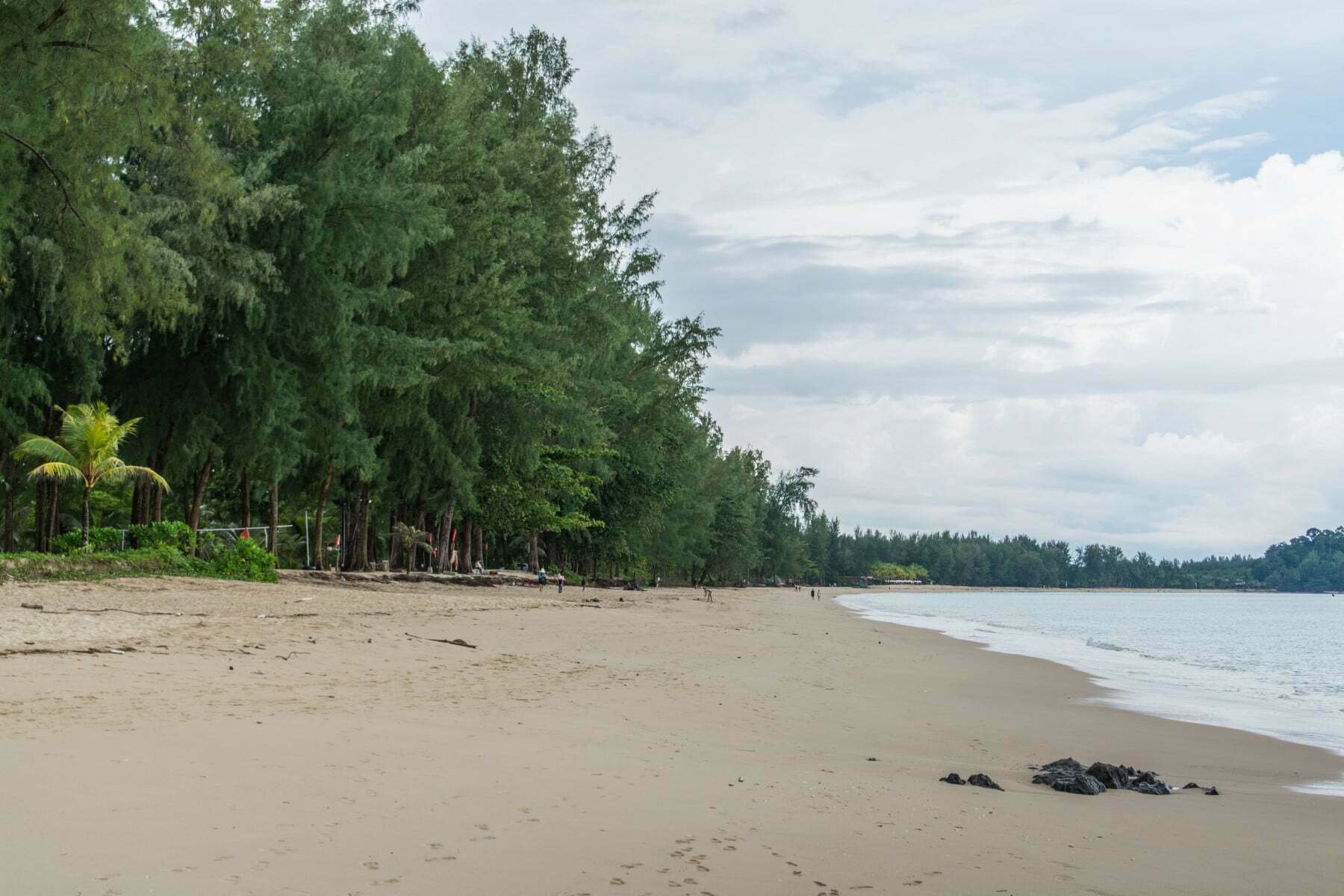
Next stop, the end of Pak Weep beach , located south of Bangsak beach. The separation between the two beaches is a strip of sand interspersed with rocks. Despite access via a sandy path, it's an area that appears more developed.
In front of the main hotel in the area, the Mai Khao Lak Beach Resort & Spa , you'll find the usual massage parlors and small restaurants, but in a distinctly relaxed atmosphere, free of concrete. It's a shame the weather wasn't on our side; it somewhat spoiled the visual experience.


3- Sai Rung Waterfall and other waterfalls
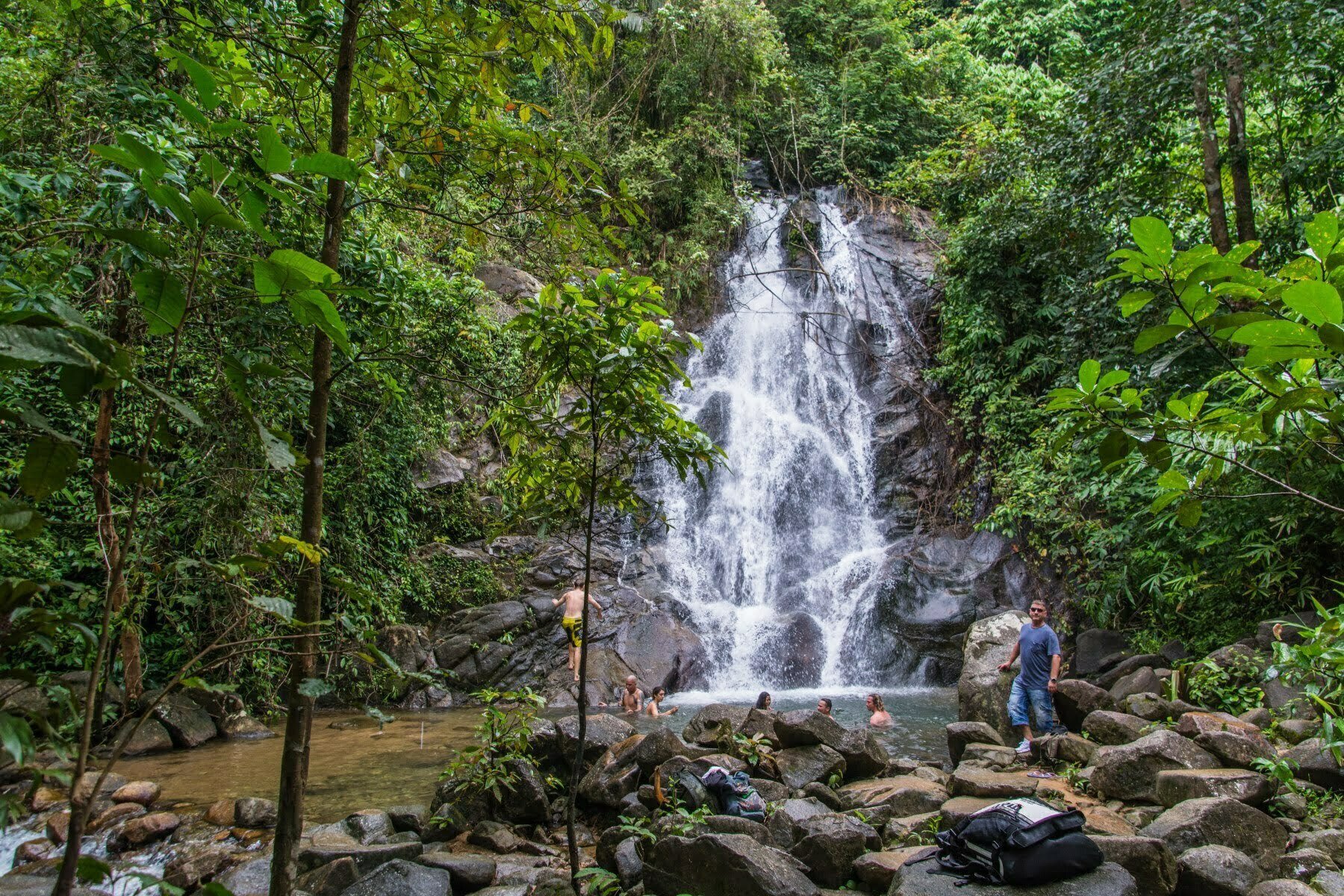
As the area is surrounded by mountains (we are only 50 km from Khao Sok National Park), we can see several waterfalls along Khao Lak, without having to stray far from the beaches. The small waterfall of Sai Rung for example is only four kilometers from the beach of Pak Weep where we came from.
Access is free (rare enough to be worth noting) as it is not part of a national park. However, parking costs 20 Baht. Its unique feature is that it is located on private land, in an area dedicated to tree cultivation, primarily rubber trees (whose harvested sap is used for rubber).
Access is easy; simply follow the marked path (be careful if it's wet, it can be slippery) for 100 meters. The waterfall itself isn't particularly impressive, but the setting in the middle of the forest is quite nice, and there's a pool at its base where you can cool off. A small group of tourists was just doing that when we passed by.


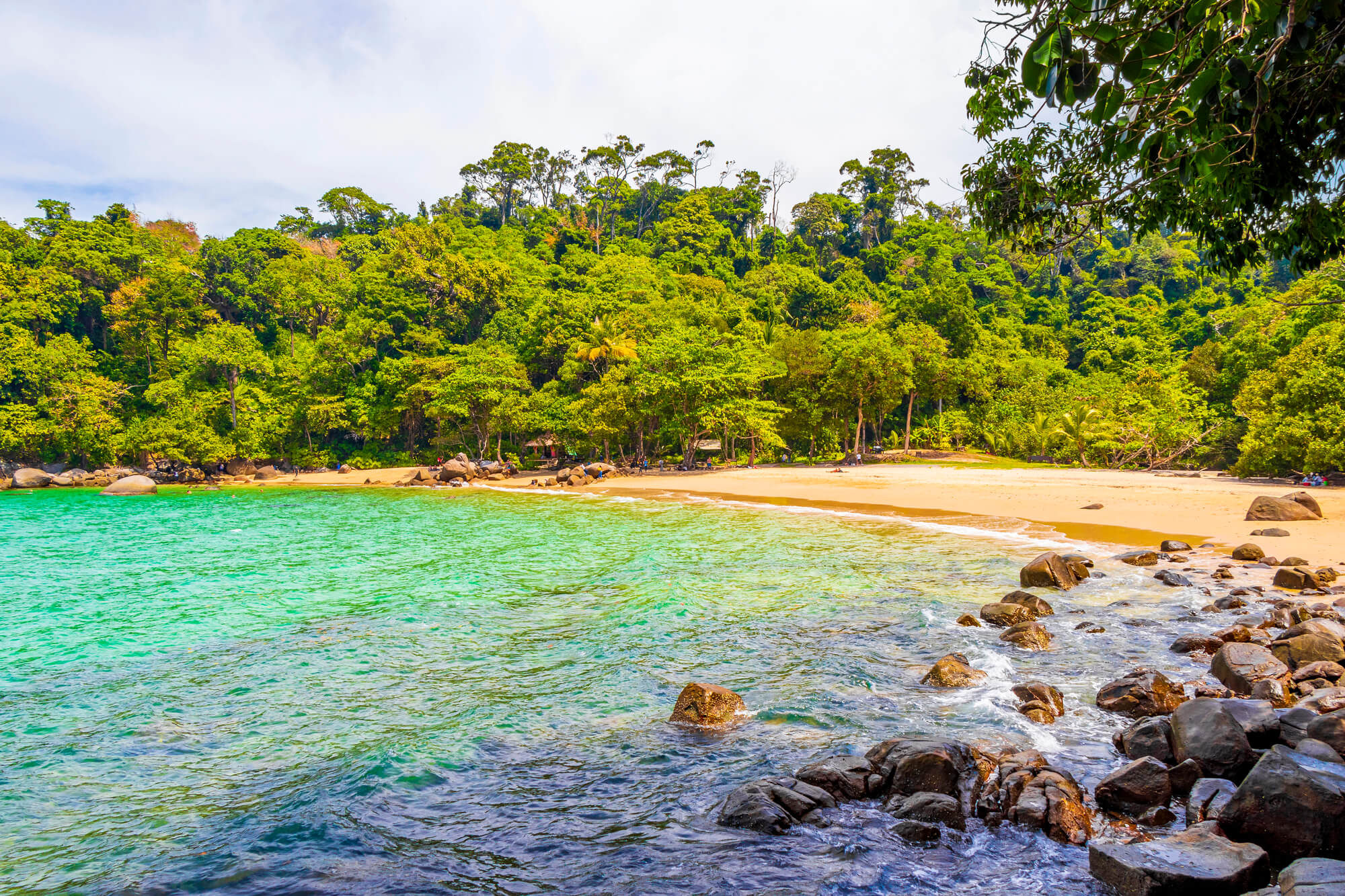
If I only had time to visit one, there are at least ten waterfalls in the region, particularly in Khao Lak-Lam Ru National Park . This national park stretches from the coast up to 50 km inland to the east. Along the beaches, there are some lovely coves, not always crowded, as there is an entrance fee for the national park, including access to the beaches ( 200 Baht per person ).
On the mountain side, in addition to the natural landscape, which includes primary forest, you can enjoy raft and bamboo boat trips . As for waterfalls, I can mention Ton Chongfa Waterfall, Hin Lad Waterfall , or the one that gives its name to the park (or vice versa, I'm not sure), Lam Ru Waterfall.
Further south of Khao Lak, you also have Khao Lampi National Park and its waterfall of the same name or the picturesque Ton Phrai waterfall.
4- Pakarang Cape
After the waterfall, my next stop marked on my GPS indicated “White Sand Beach”, which I wanted to check if it deserved its name 😉
White Sand Beach was also a good opportunity to stop for a bite to eat. Since our previous stop, I'd been looking for a hotel with a restaurant right on the beach , so we could really enjoy the surroundings. Keep in mind that we were there during the low season, early November, when the rainy season wasn't quite over. So some restaurants weren't open yet, and the same was true for the smaller resorts.
Finally, we had our meal at Ao Thong Beach Bungalows & Restaurant. As a side note, White Sand Beach isn't the name of the beach itself , but rather the name of a resort… which we found on Google Maps. It does have a restaurant, but it happened to be closed, so we went to the neighboring one, which was open that day, despite a bit of rain when we arrived, which thankfully didn't last.
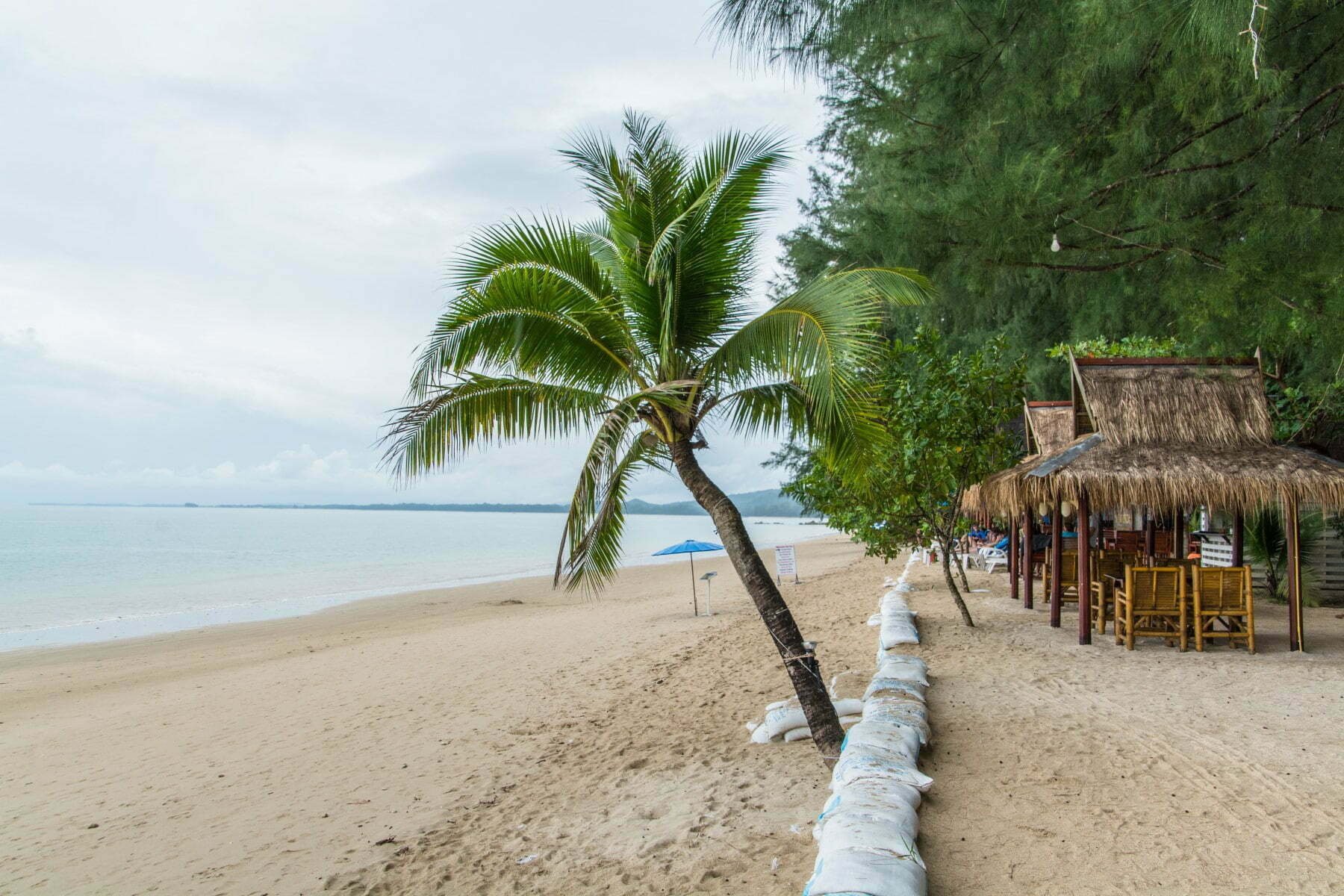


Given the many sandbags supporting the terrace raised above the beach, we can clearly see that Khao Lak is badly affected by erosion with the waves of the rainy season. So far, we can't say that it's the prettiest I've seen.
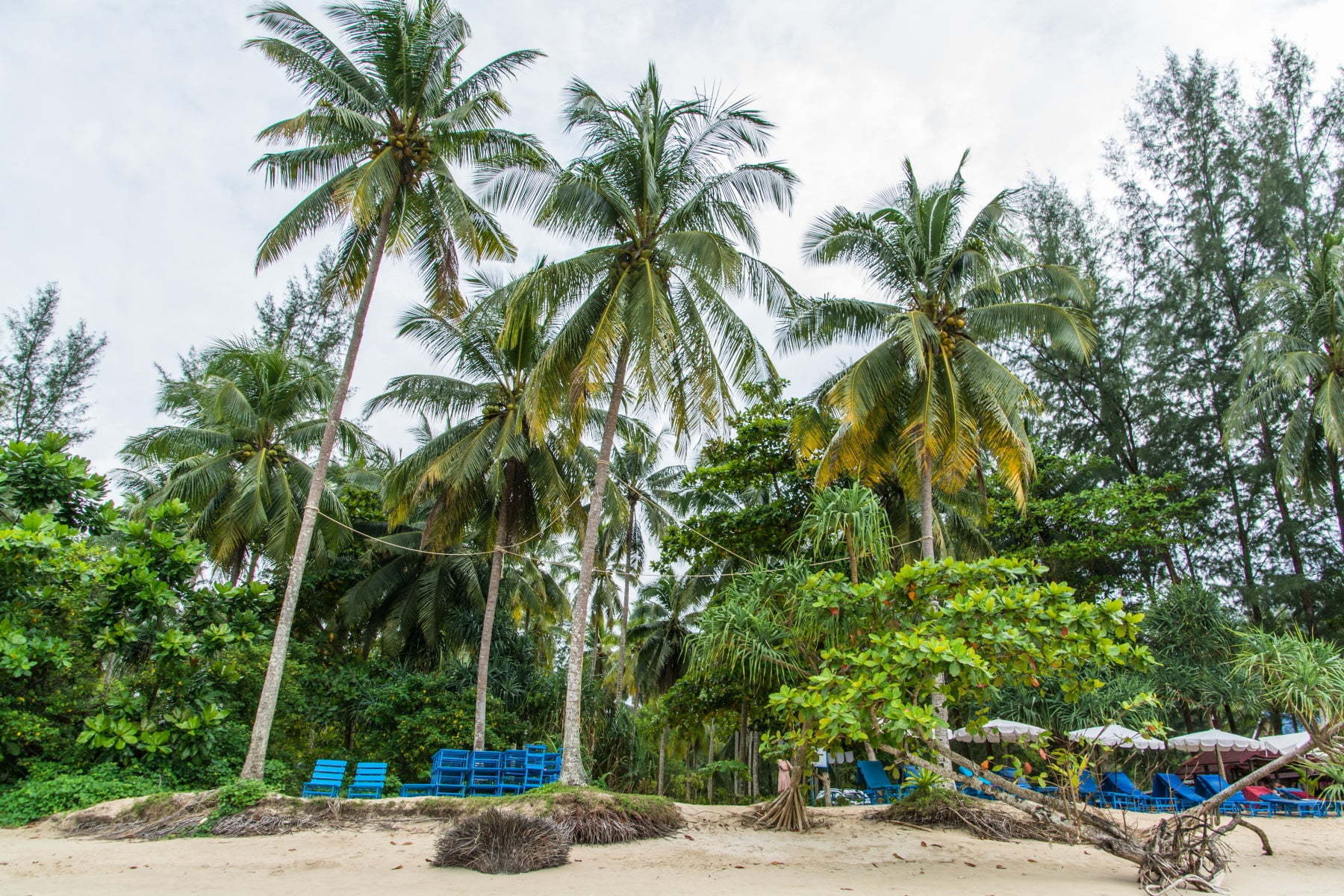
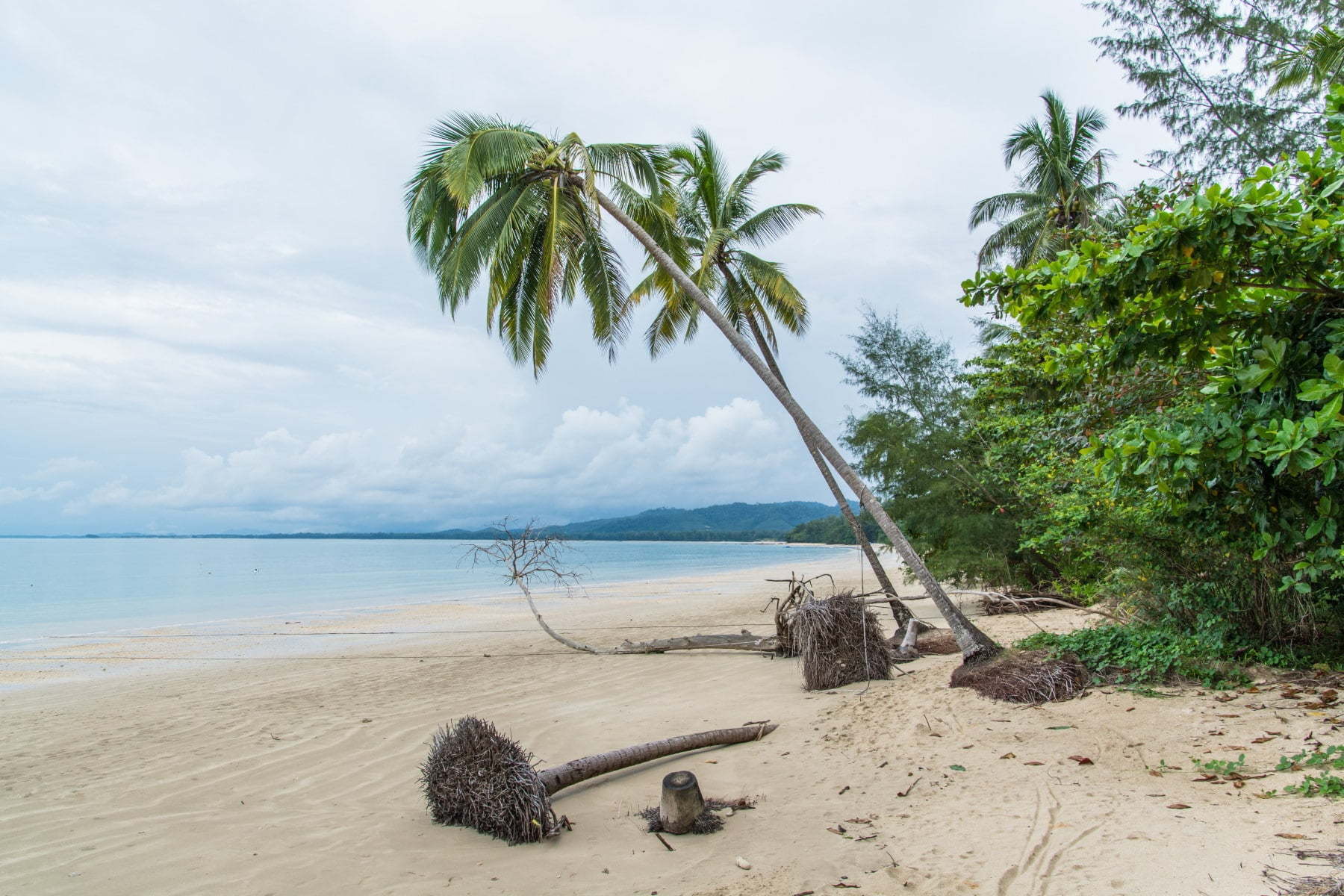
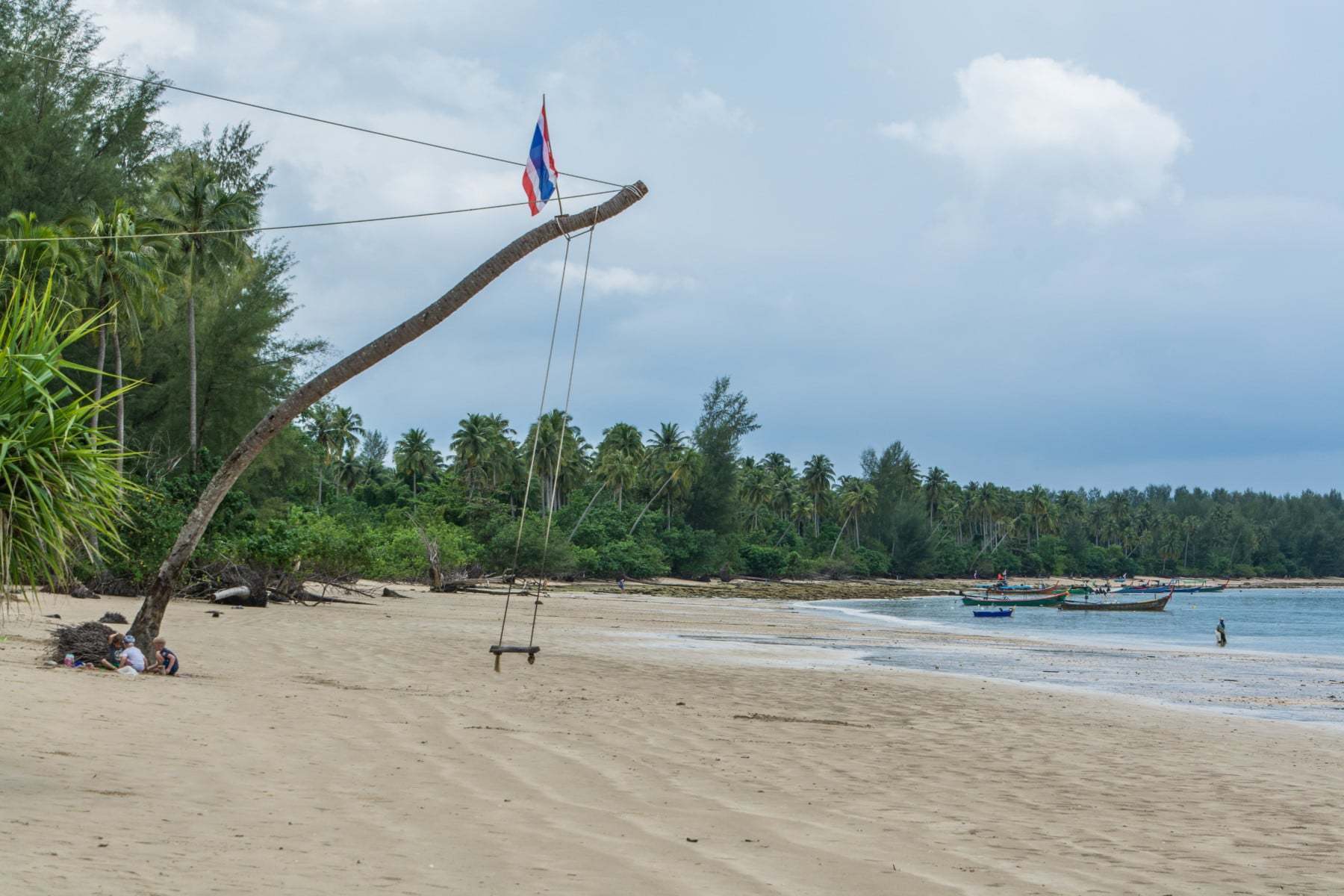
Once my stomach was full, I wanted to take a look at another part of the same beach, nicknamed Coconut Beach . It's true that many places along the coast are lined with pine trees, but this small strip of beach, next to Cape Pakarang (which also includes the beach with the restaurants), is dotted with coconut palms.
There are several small restaurants, including the Boatyard, next to which I parked. Access is also via a sandy path, and you really feel like you're surrounded by nature . No large resorts (although there is one nearby, as we were passing by the Kantary Beach Villas & Suites ), no concrete jungle—it's a truly lovely little beach.

5- Khuk Khak Beach
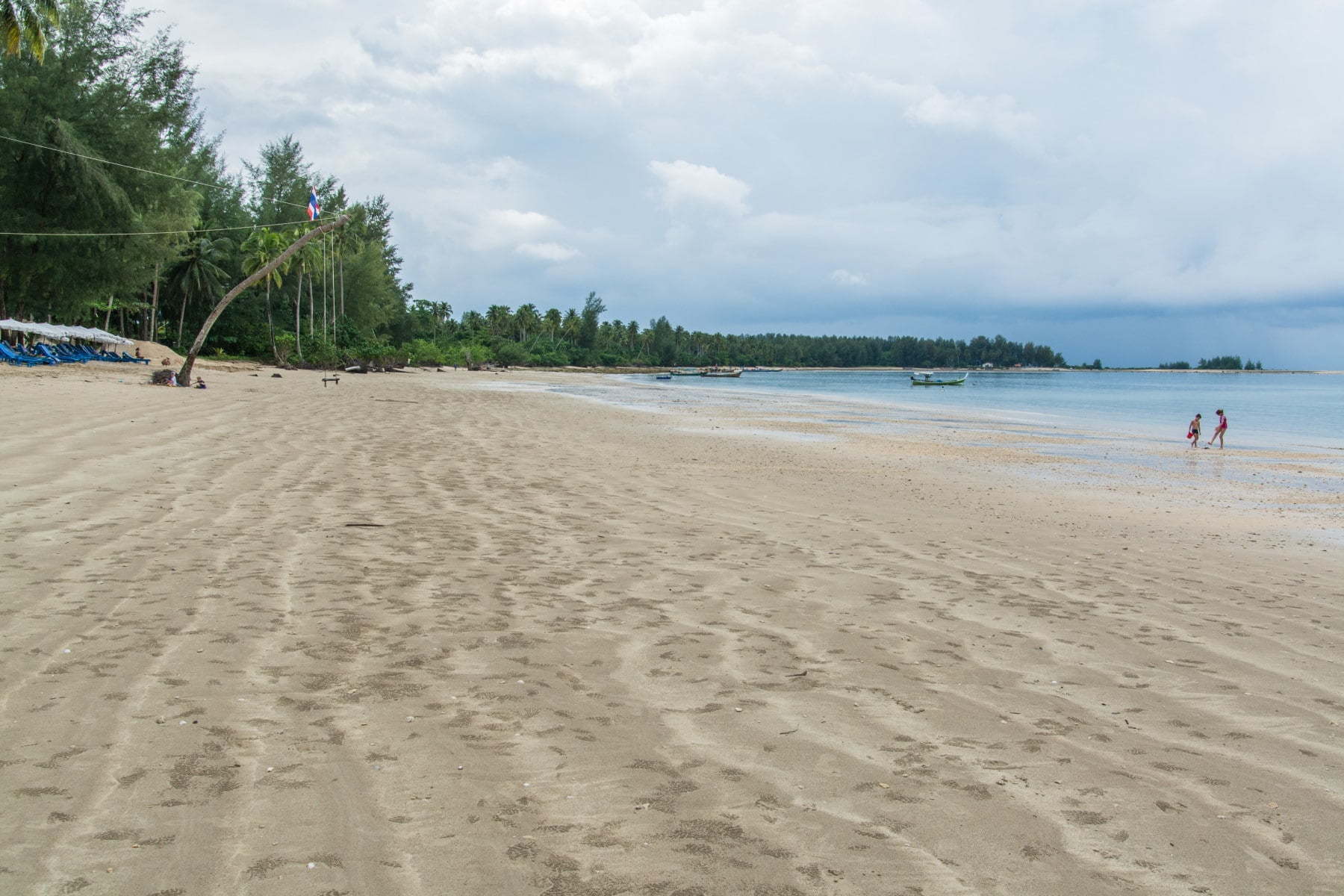
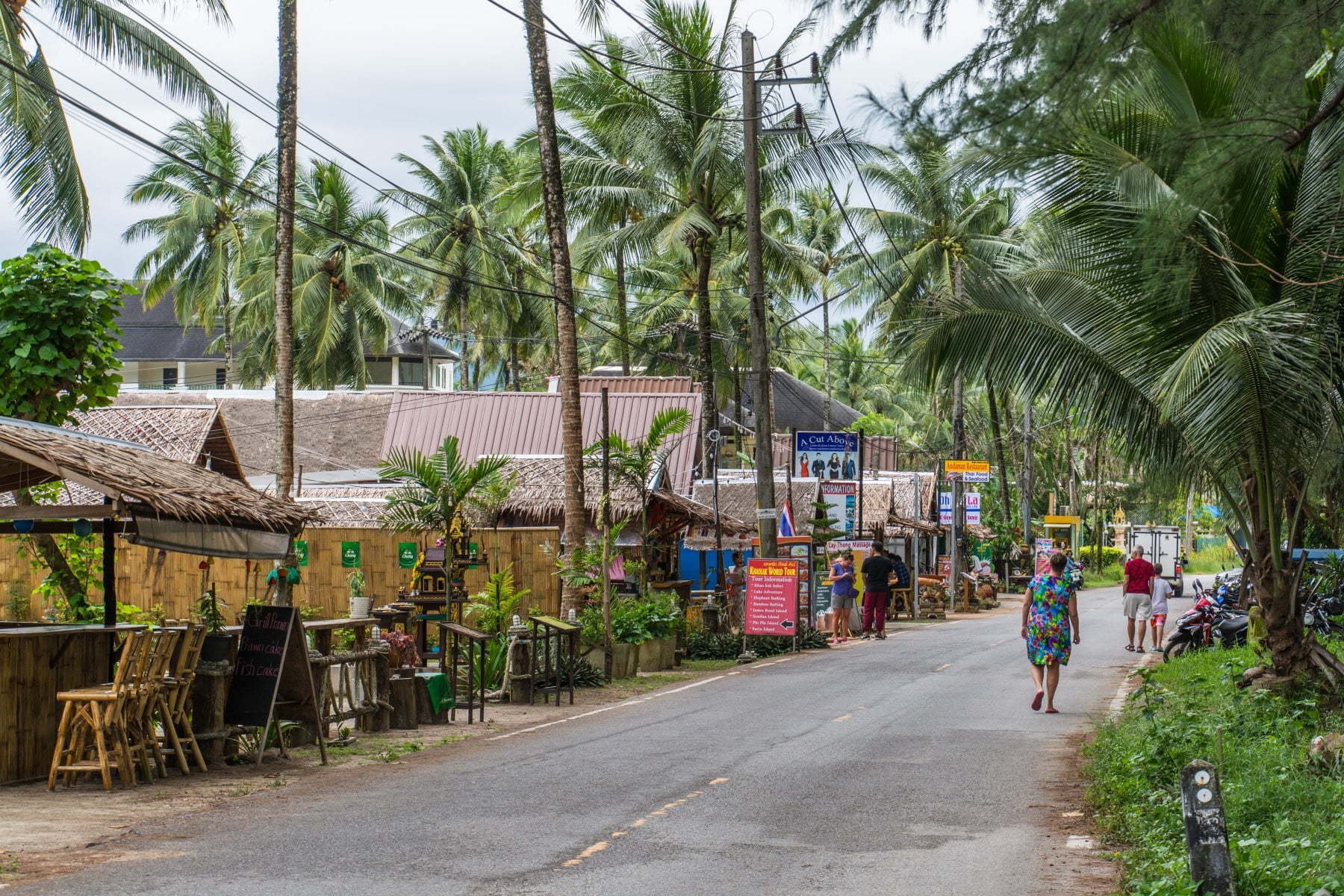
Khuk Khak beach is a wide, gently sloping beach lined with pine trees that begins south of Cape Pakarang. The section I visited, just before the main village of Bang Niang, was quite peaceful apart from two hotel complexes.
- The Haven Khao Lak Ideal for a stay without young children, with a large saltwater pool. The property does not accommodate young children; please check the minimum age when booking if you are travelling with a teenager.
- Khao Lak Orchid Beach Resort : a possibility with children, with a dedicated children's pool and family accommodation.
Along the small road bordering the beach, there were a few small restaurants and massage parlors offering a place to take a break from sunbathing. I didn't linger there, so I won't elaborate further; the sky was becoming threatening, and I wanted to continue my exploration.


6- Bang Niang village and market
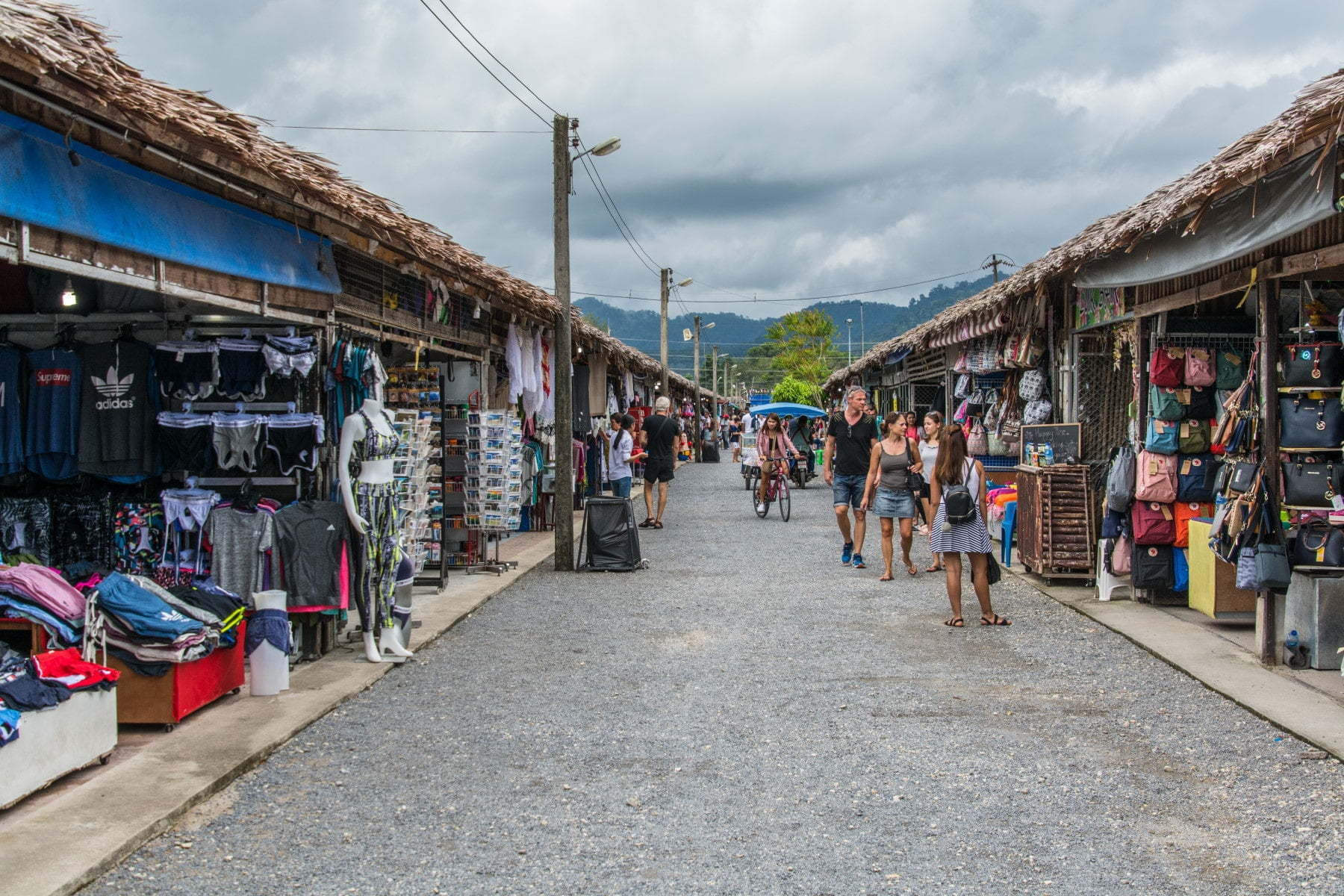
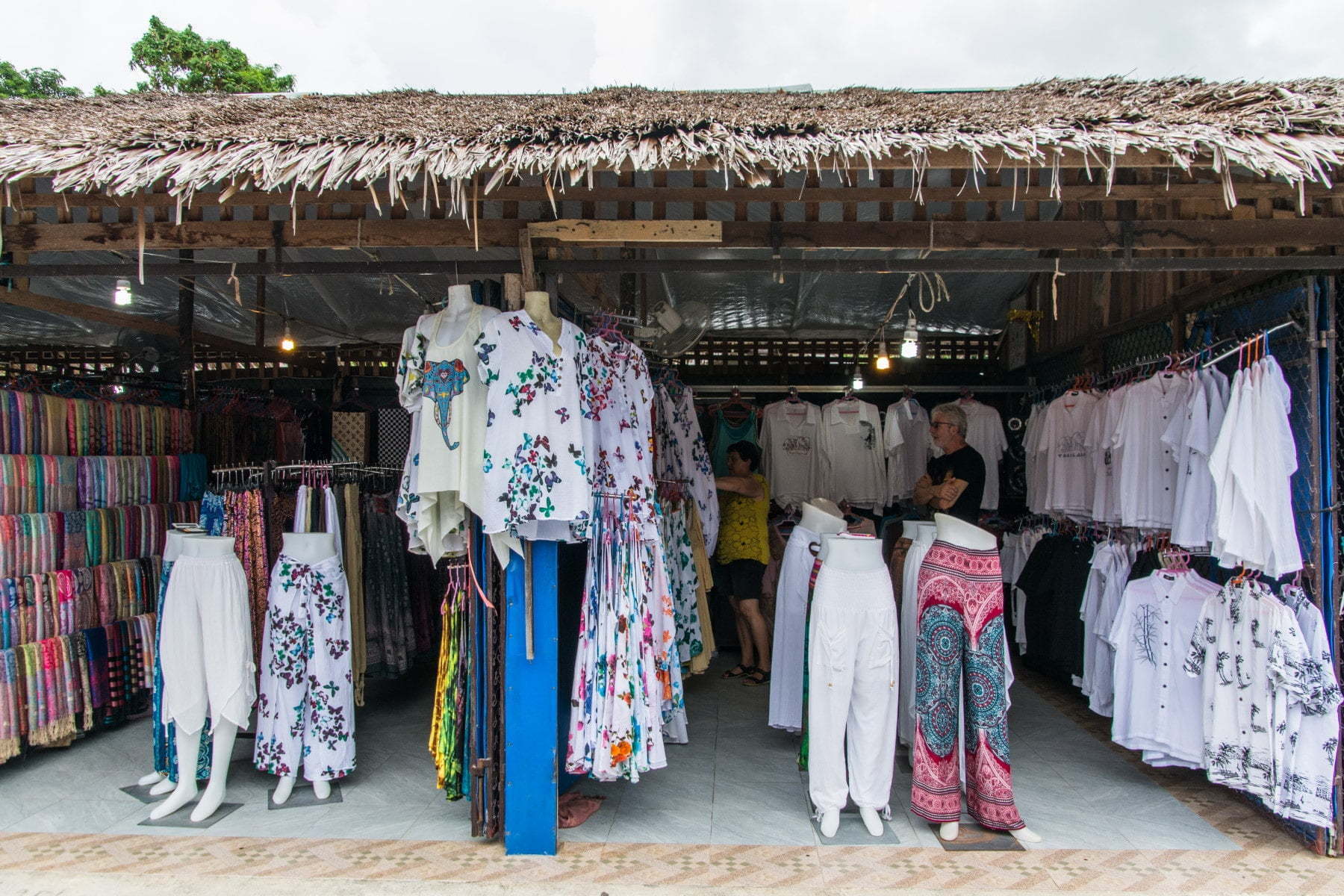
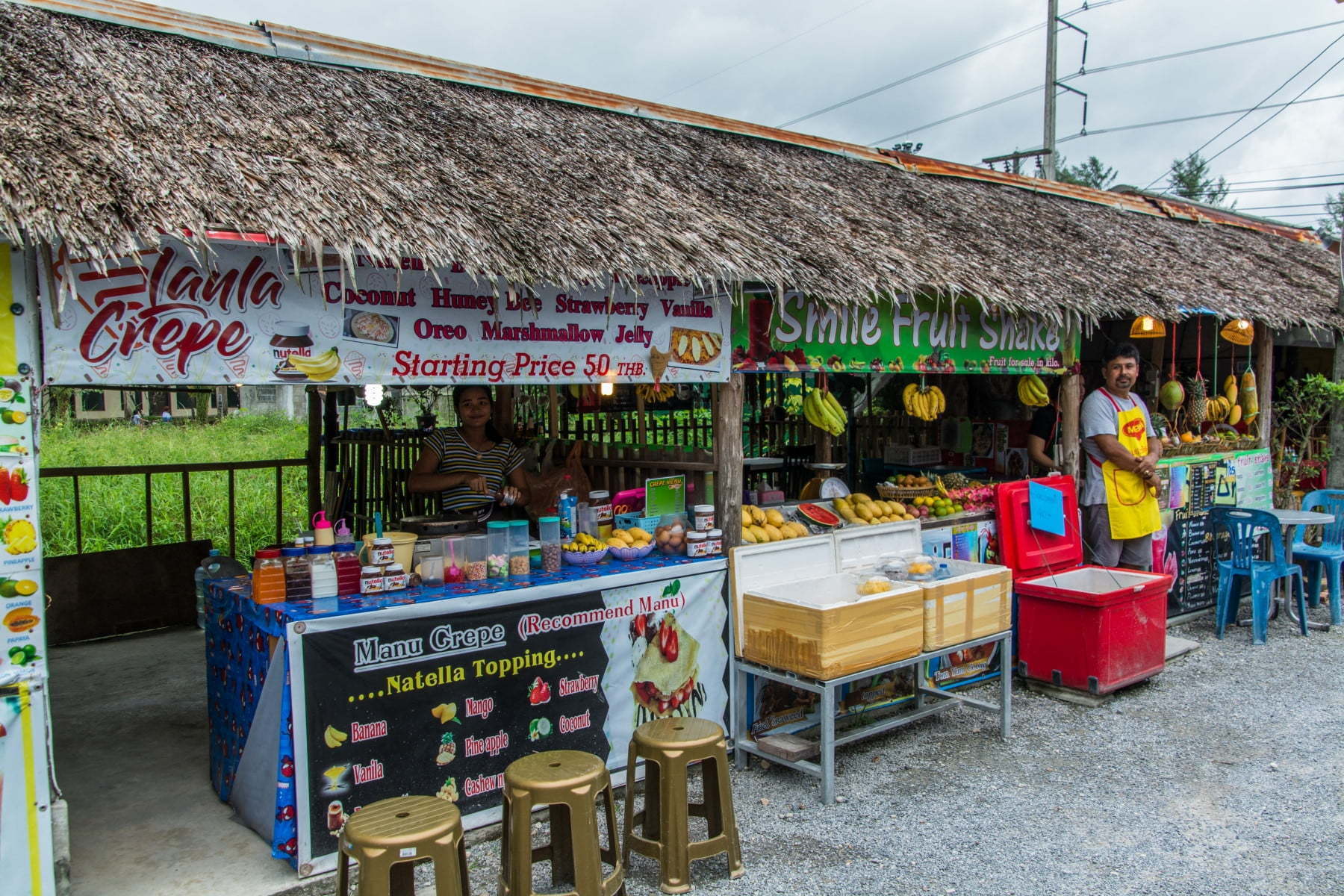
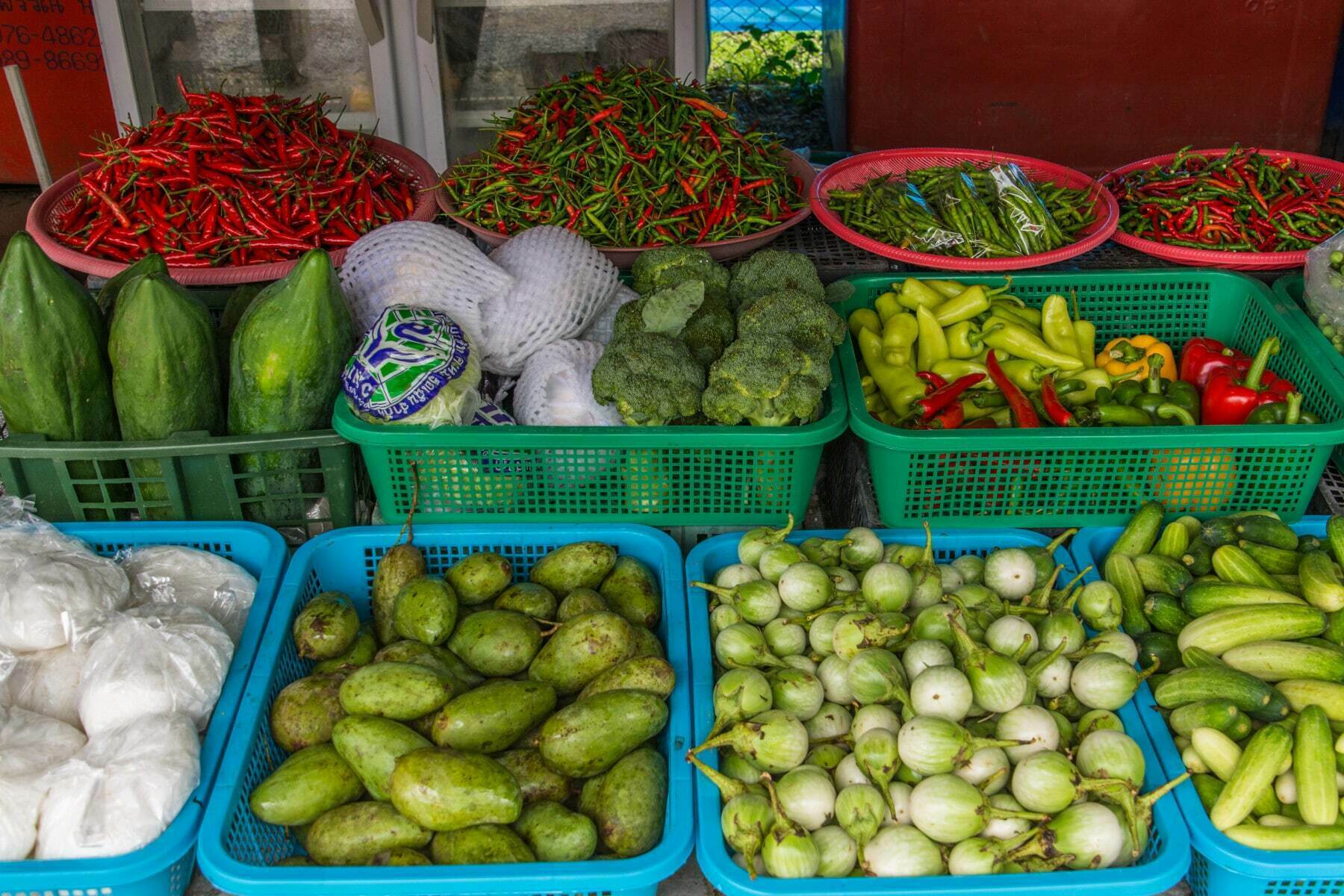
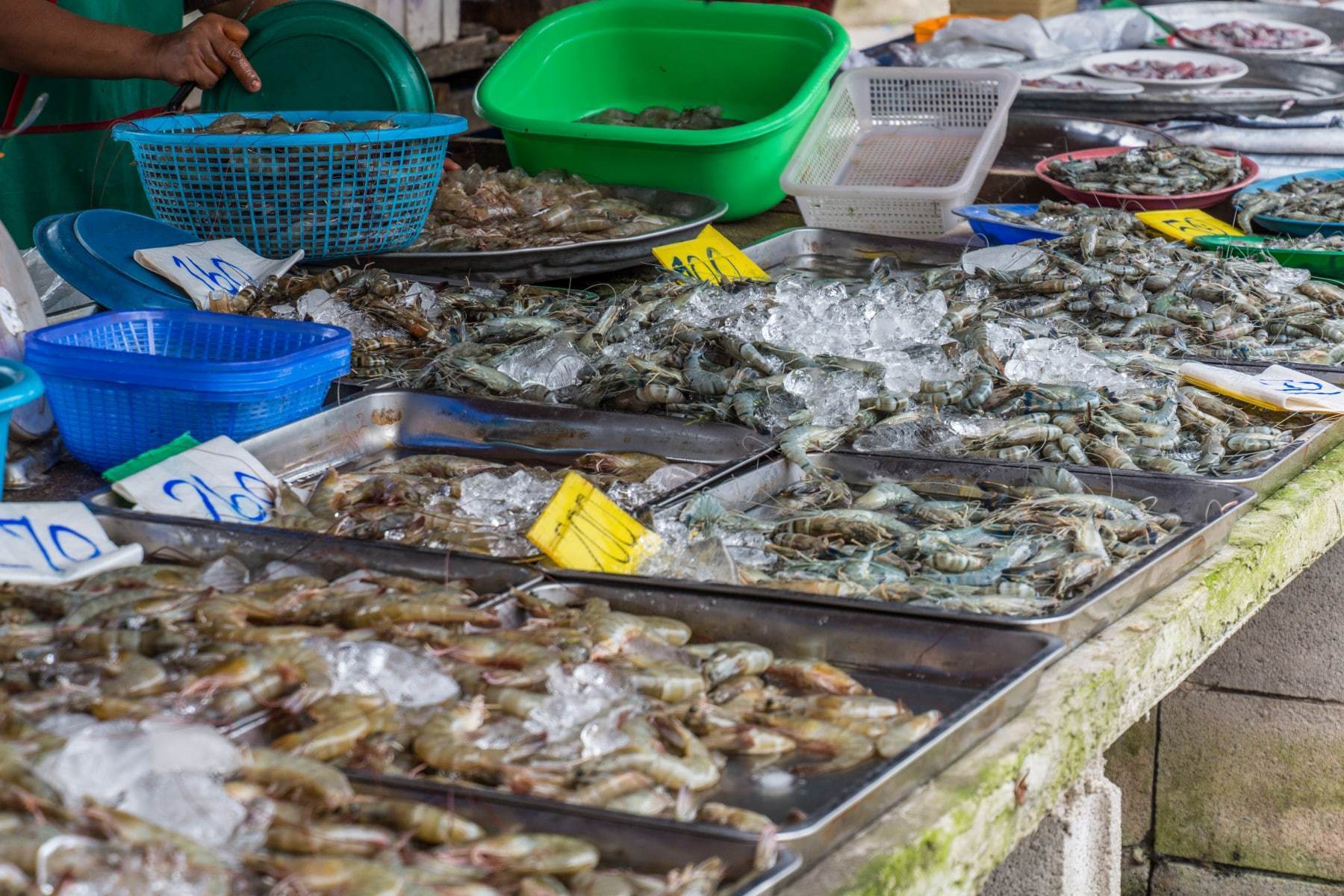
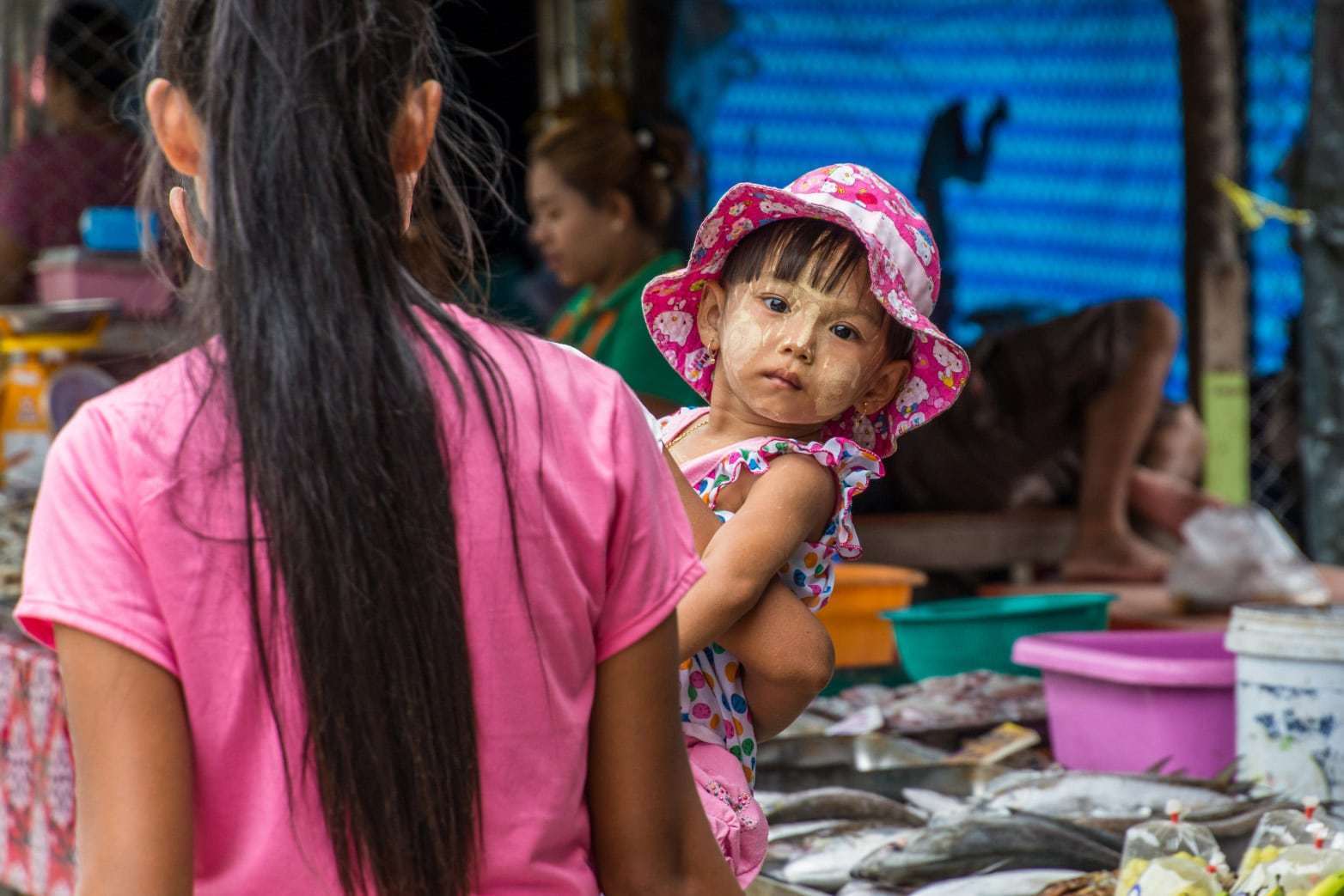
The village of Bang Niang has become a rival to the main village of Khao Lak, namely La On, and its Nang Thong beach, just south of Bang Niang. The emergence of its market may have something to do with it. The Bang Niang market mixes fresh produce (vegetables, fish, shellfish, fruit) with souvenirs, clothing, small cafes, and restaurants.
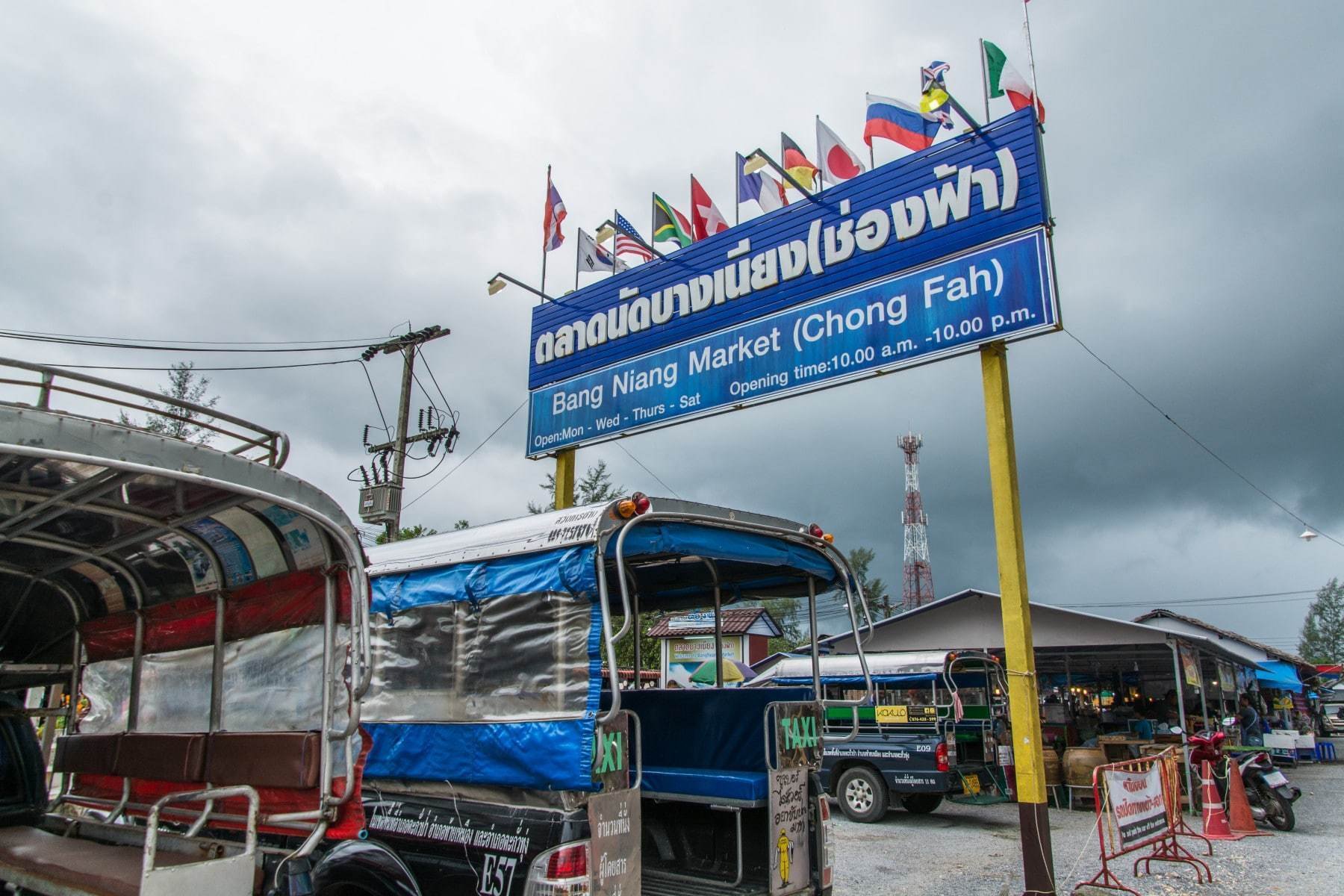
All in a fairly relaxed atmosphere. The only criticism of the place (which Jitima pointed out to me) is that they cut down all the trees in the area to build the market rather than keeping a covered side, with greenery. But overall, while we saw mostly tourists there, a few locals were also doing their shopping and the welcome seemed genuinely friendly.
Unfortunately, I wouldn't have time to see more and wouldn't go to take a look at Nang Niang beach , because the rain finally decided to fall, just as we were finishing our tour of the market.
7- Nang Thong Beach and Khao Lak Lighthouse
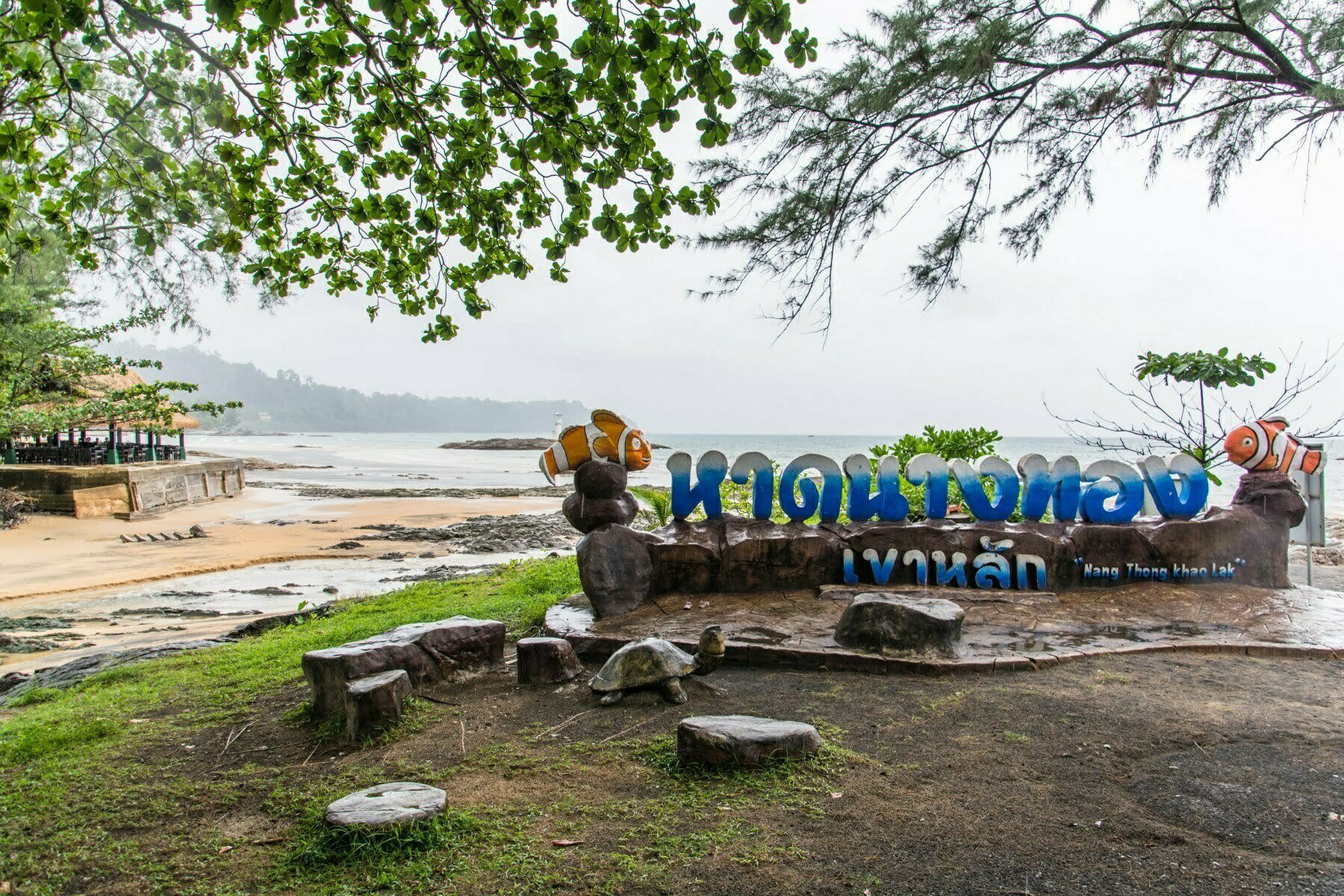
As a final stop, and despite the rain, I headed towards the beach from which you can see the small Khao Lak lighthouse . The lighthouse was merely an excuse to choose one last stretch of beach, so I could have roughly seen the different areas that make up Khao Lak from north to south.
I had wanted to take a look despite the rain, as Nang Thong is considered the main beach of Khao Lak , but the bad weather forced me to cut my stop short. I then painstakingly took a few photos under my umbrella while Jitima waited patiently in the car. On the plus side, it meant we weren't kept in the area for very long, as we still had quite a drive ahead of us (I was going to Nakhon Si Thammarat to see his family that day).
What I gather is that it's a rocky area, that Nang Thong has a high concentration of large hotels, and that it's next to Khao Lak-Lamru National Park (less than 5 km further south). Just 13 km away, off the main N4 road and next to a naval base, you'll find the village of Thap Lamu , whose pier, spelled Tab Lamu Pier, is a departure point for excursions to the Similan Islands , located more than 60 km off the coast.


8- Tsunami memorials
It was following this tragic event that I first heard about Khao Lak. Already enjoying a certain popularity since the early 2000s, this coast was the hardest hit (along with Phuket) by the infamous deadly tsunami of December 2004.
Among those affected that day, the royal family itself lost a prince, Poom Jensen, son of the eldest daughter of the late King Rama IX, who was on holiday in Khao Lak. Since then, several memorials have been erected. One is in the north, the Ban Nam Khem Tsunami Memorial Center , located next to the fishing village of Ban Muang.
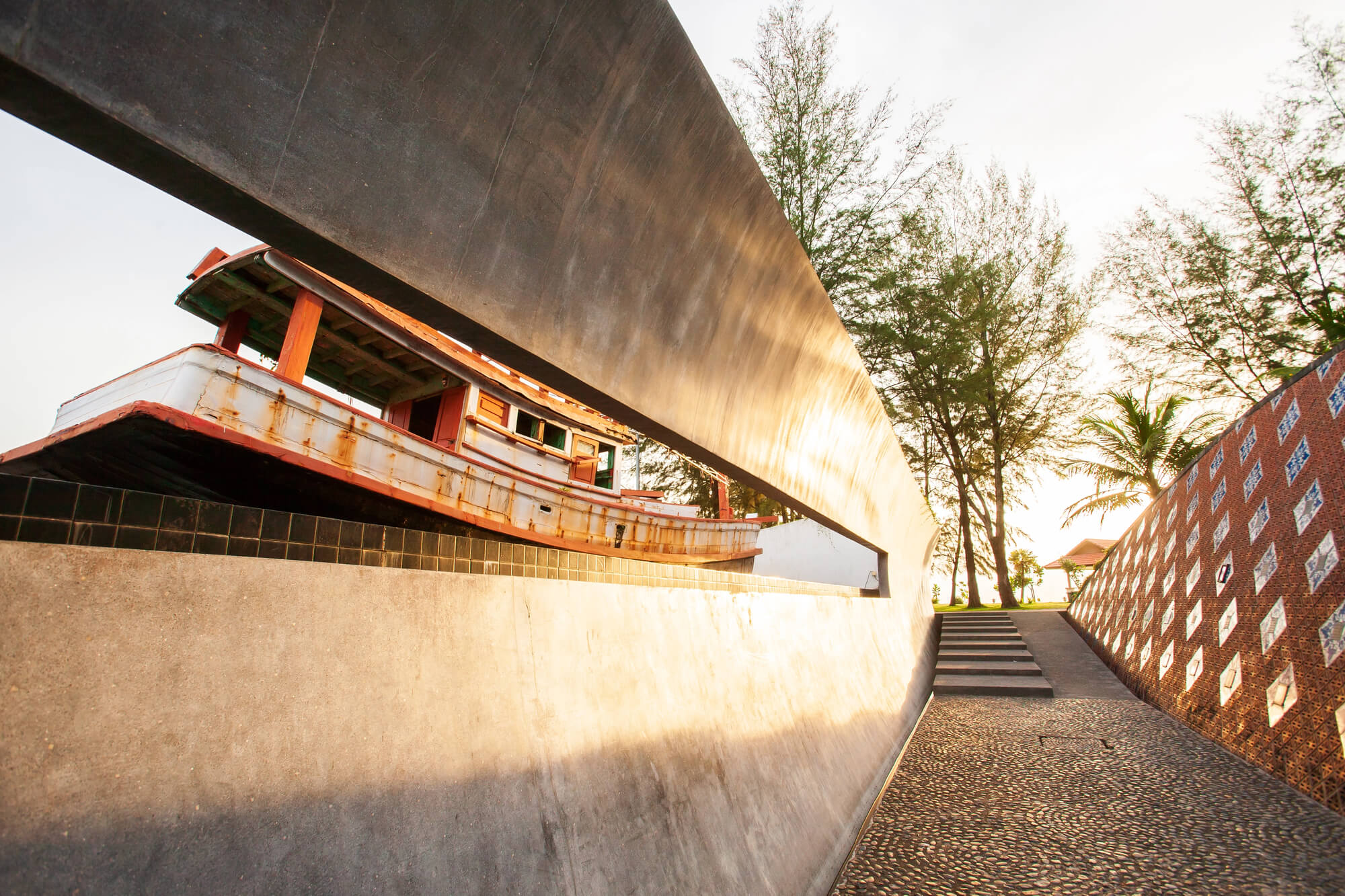
Another, better known one, the International Tsunami Museum (entrance fee of 300 Bahts however) displays a small Thai Navy shuttle that ran aground there more than a kilometer from the coast, recalling the power of the phenomenon.
Finally, there's another memorial further south, simply called the Tsunami Museum , which also displays the wreck of a reconnaissance vessel. Originally, when I was planning this trip, I thought I'd at least visit one to take some photos, but since it wasn't my priority and I was short on time, I didn't go, especially as the weather was gloomy.
Want to explore the surrounding area from Khao Lak?
Even if it wasn't during this specific trip, I highly recommend a few getaways accessible from the region:
▪️ The Similan Islands : a true snorkeling paradise, just an hour away by boat. While less popular than Phuket, Khao Lak is much more convenient. As I mentioned earlier, the Tab Lamu pier, part of Khao Lak, serves as the departure point, so there's no need to leave at 6 a.m., and with the reduced travel time, the price is also proportionally lower.
The Similan Islands, a snorkeling paradise
▪️ Phang Nga Bay : famous for its spectacular karst formations and iconic islands like James Bond Island or Ko Panyee, it can easily be explored by longtail boat, via day trips that can depart from Khao Lak.
Explore Phang Nga Bay: Sights to See and Practical Tips
▪️ Ko Phra Thong : an amazing and still unspoiled island, quite different from classic postcards, with its savannah landscapes, long deserted beaches and a timeless atmosphere, I loved it!
Ko Phra Thong: an island with a unique landscape
Where to stay in Khao Lak?
Choosing the right beach is important in Khao Lak: the different areas stretch over more than 30 km, and local travel can quickly add up.
- Bang Niang or Nang Thong: Ideal for being close to restaurants, shops, and the lively atmosphere of the villages. However, be sure to check the hotel's location: being in a good area doesn't necessarily mean having everything within easy walking distance. See accommodations at Bang Niang or to Nang Thong.
- Bangsak or Pak Weep: to stay in the quieter areas of the north, with long beaches and resorts. See the sections Bangsak et Pak Weep below.
- Khuk Khak: another quiet area to stay, with a few restaurants near the beach. See the hotels listed in the section on Khuk Khak.
Getting to Khao Lak
Khao Lak is not a city in the traditional sense, but it is very well connected thanks to National Route 4 (also known as Phetkasem Road). You can therefore access it from any tourist destination in the region, starting with Phuket, where the closest airport to Khao Lak is located.
From Phuket Airport : a direct transfer to your hotel is the easiest option. Travel time depends on the beach where you're staying, as hotels are spread out over several dozen kilometers.
For public buses : these are simple bus stops, not dedicated bus terminals, since, as mentioned from the beginning, these are villages scattered along the coast and not a major city or town. These buses are just passing through, generally heading to Takua Pa, Ranong, or even Surat Thani.
For a shared transfer, check the schedule, meeting point and hotels served before booking.
My impressions of Khao Lak
Khao Lak is a more family-friendly and less crowded destination than Phuket. As I mentioned in the introduction, its coasts, despite running alongside a national road, have remained pleasantly wooded and wild (Phang Nga is, in fact, one of the provinces, along with Ranong, with some of the best-preserved nature in Thailand).
However, the development of the villages forming Khao Lak allows for reasonable tourism , making it possible to enjoy a beach without playing Robinson Crusoe and going through an obstacle course to reach your destination, as can be the case on secondary islands like Ko Phra Thong, which we had visited previously.
To conclude:
Khao Lak has the right balance of amenities and transportation to provide a hassle-free holiday experience.
I must admit that I was pleasantly surprised . Considering it popular from hearing so much about it, I was expecting something more developed, like a sort of small seaside town.
What misled me was that although there is indeed a small beach called Khao Lak (the latter being just after the Lamru National Park, at the Khaolak Emerald Beach Resort & Spa hotel ), this name ultimately refers to the entire coast between this "original" Khao Lak beach and the village of Ban Nam Khem, which represents 32 km of coastline!
It's therefore large enough to accommodate many people without spoiling the entire coastline. There isn't a string of huge hotels blocking access to the beaches and leaving no room for nature. And ultimately, I completely understand why Khao Lak is so successful as an alternative, or even an escape, to Phuket in the region.
Enjoyed this article? Save it on Pinterest!