


After the must-see Chiang Mai and Chiang Rai, Nan was the next northern city I discovered when I first started in Thailand. However, it took me many years before I had the opportunity to return.
The city still retains many traces of its Lanna heritage, with old wooden houses linked to the local nobility and temples that have stood the test of time. Less bustling than Chiang Mai, Nan remains a small city that can be explored quite quickly, and often serves more as a transit point or base for exploring the surrounding region, rather than a place to stay for several days.
However, while it serves well as a gateway to the surrounding mountains, Nan is also ideal for a simpler immersion in the daily life of Northern Thailand. The city is easily explored on foot or by bicycle, although some more distant sites obviously require transportation.
The notorious temples in Nan
Thailand is known for its many temples of all kinds, and Nan is no exception. Obviously, the goal is never to see all the temples: there are simply too many (dozens in the city center alone), and the repetition would put off many visitors.
As with every destination, the goal is to target the most interesting ones , because even if we tend to see temples every day, the architecture, styles and particularities specific to each one are such that I never get tired of them (well, and I also have to give you a rundown).
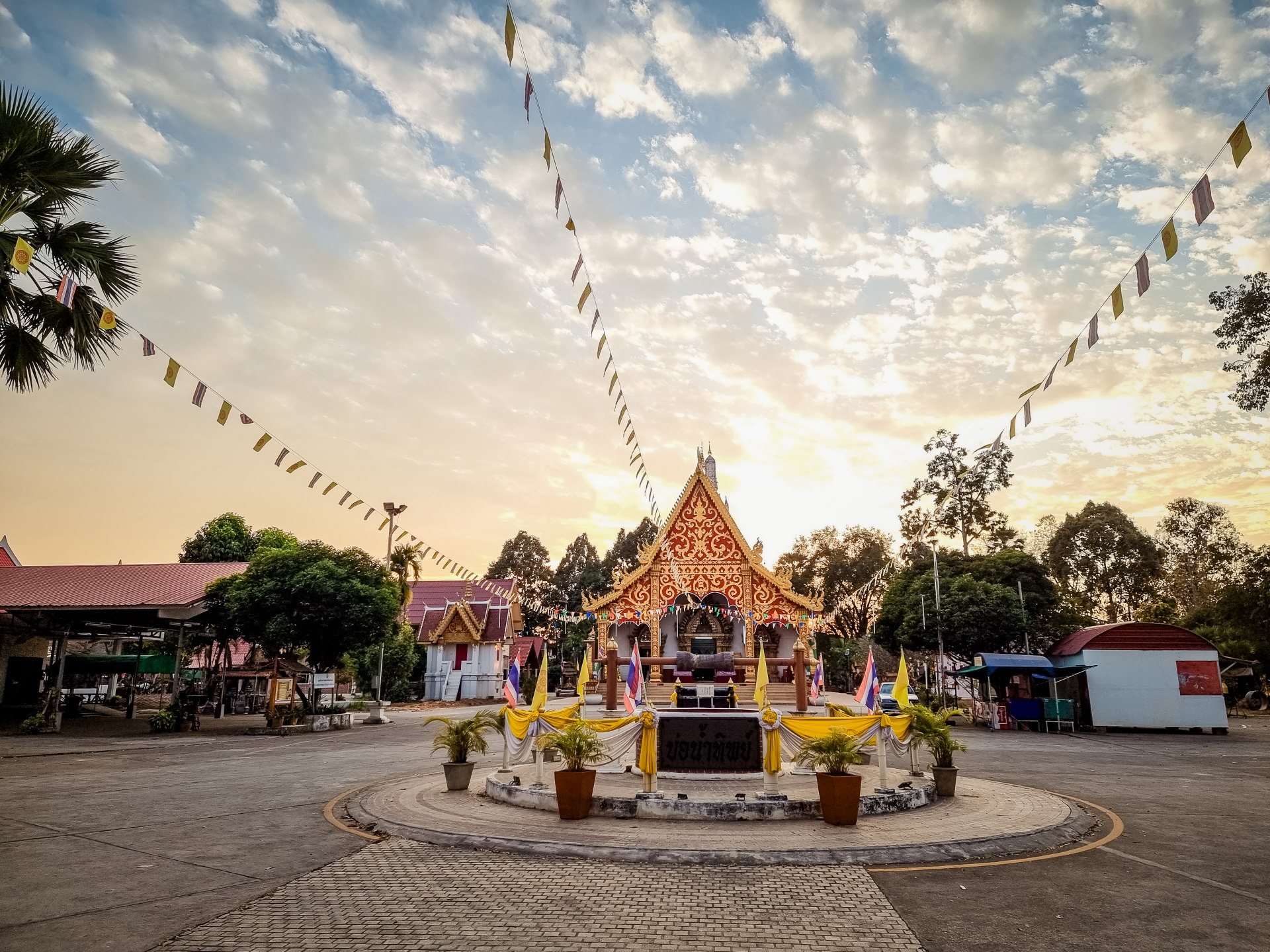
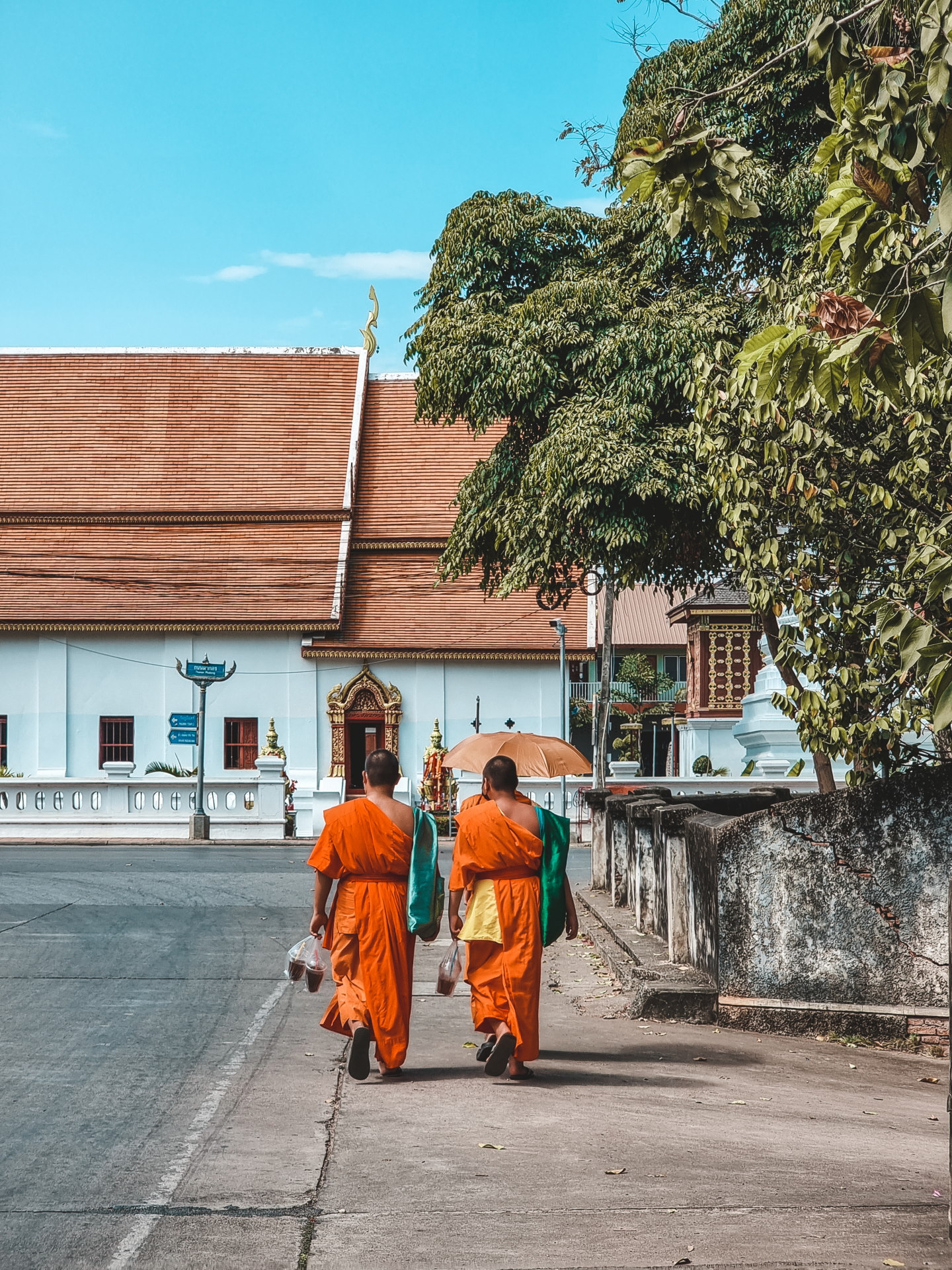
Although many of Nan's temples are old, with structures dating from the 15th to the 19th centuries (for the most recent renovations), I will focus primarily on those that deserve more than just a glance. Those I won't describe in detail here are sometimes photogenic, like Wat Hua Khuang and its beautiful library of scriptures (ho trai).
Others are more anecdotal, such as Wat Suan Tan , dating from the 14th century, which we used to pass by at sunset.
Downtown
Wat phumin
We naturally began with the temple which, over time, has become the true showcase site of Nan. It is not the oldest temple, however, but rather the exquisite detail of the murals it houses that attracts visitors.
It was all the more a pleasure to return because, during my first visit, we had to deal with the frustration — always a bit random when travelling — of a site then largely covered with scaffolding, in the middle of exterior renovation.
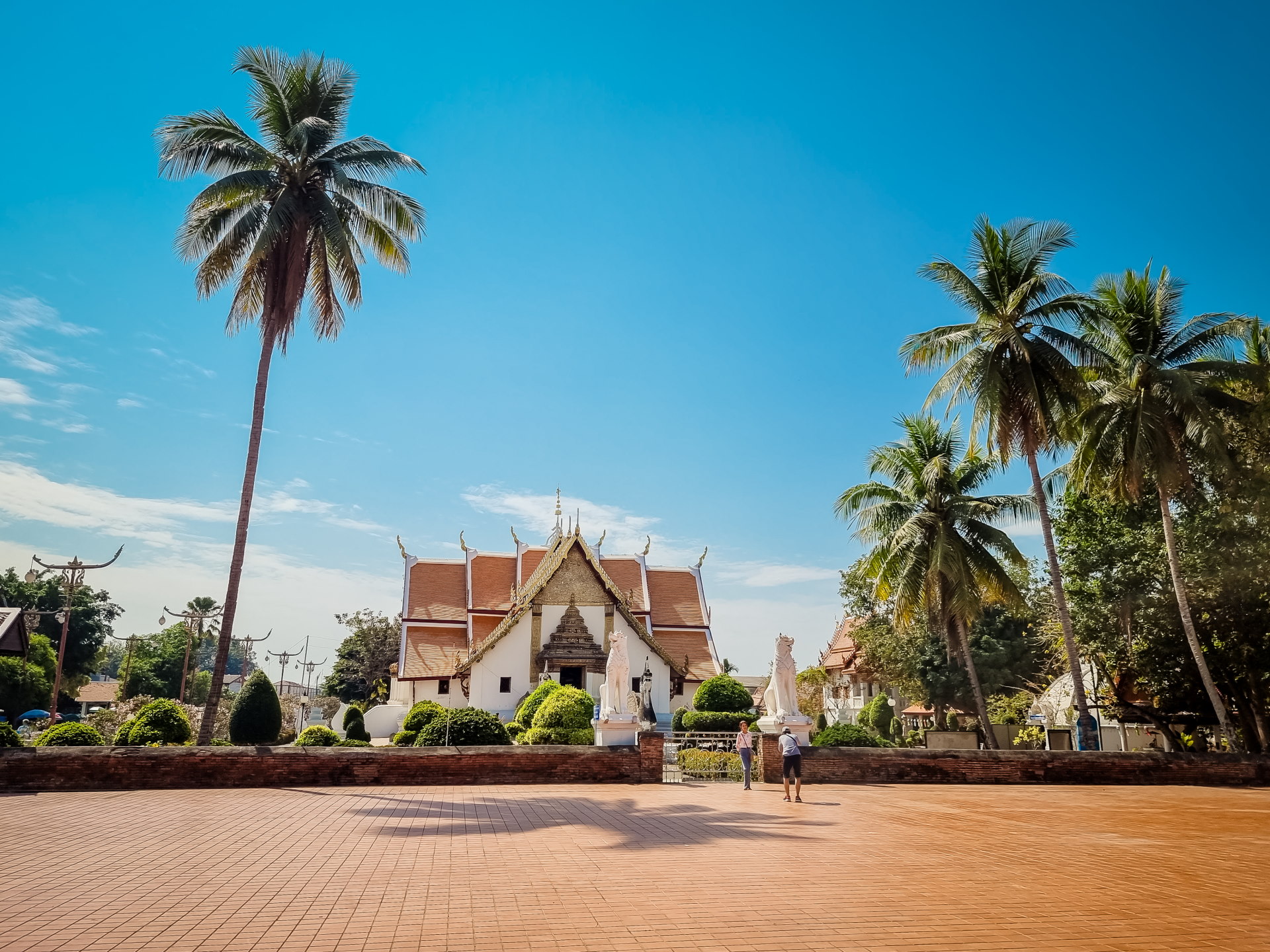
We went there that morning by bicycle, lent by our guesthouse, in less than ten minutes. The temple, still active, does not currently charge an entrance fee, but as is often the case, a donation is welcome.
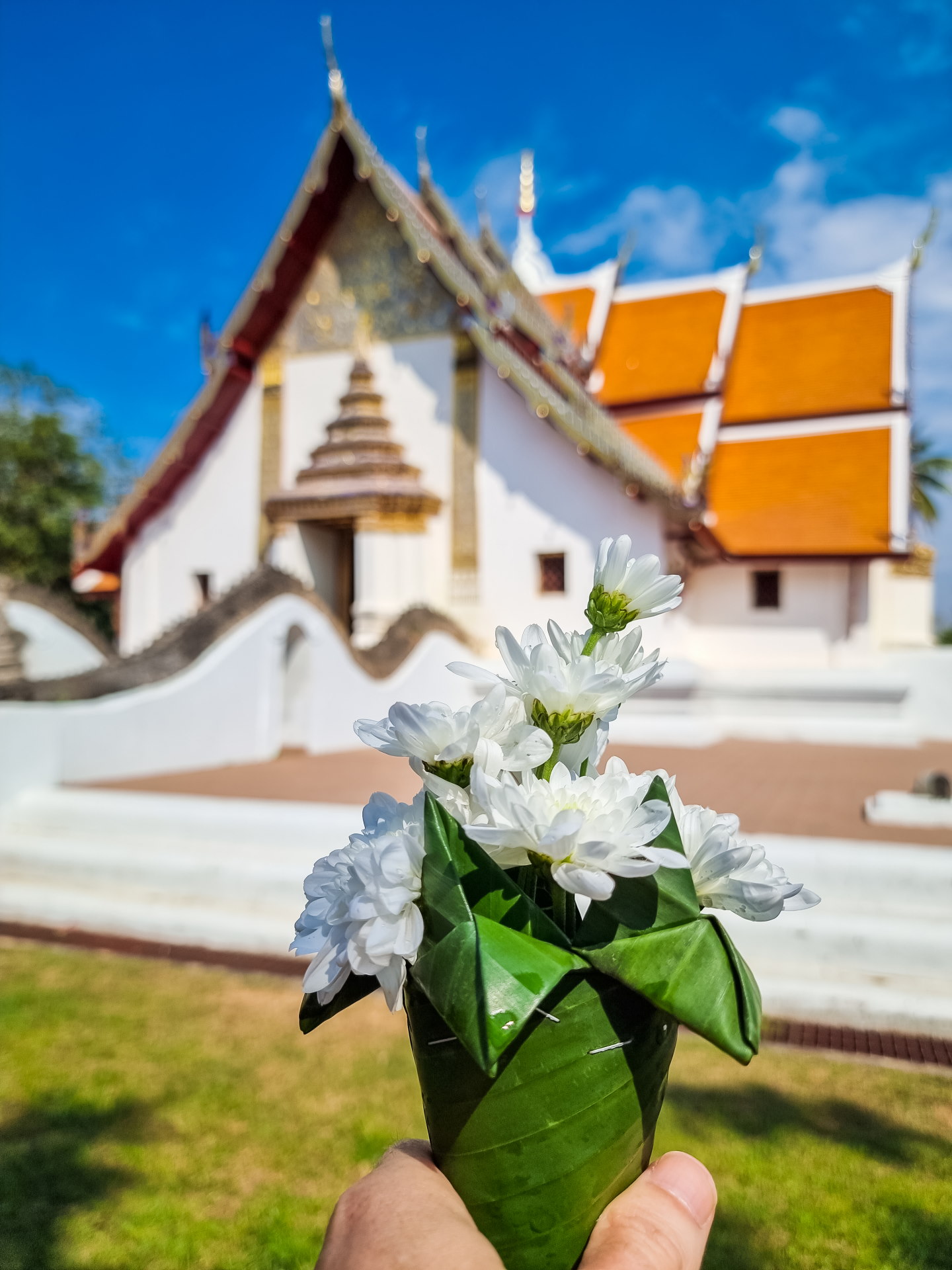
We opted to buy a small bouquet of flowers, placed inside in the baskets provided, where other visitors had done the same before us.
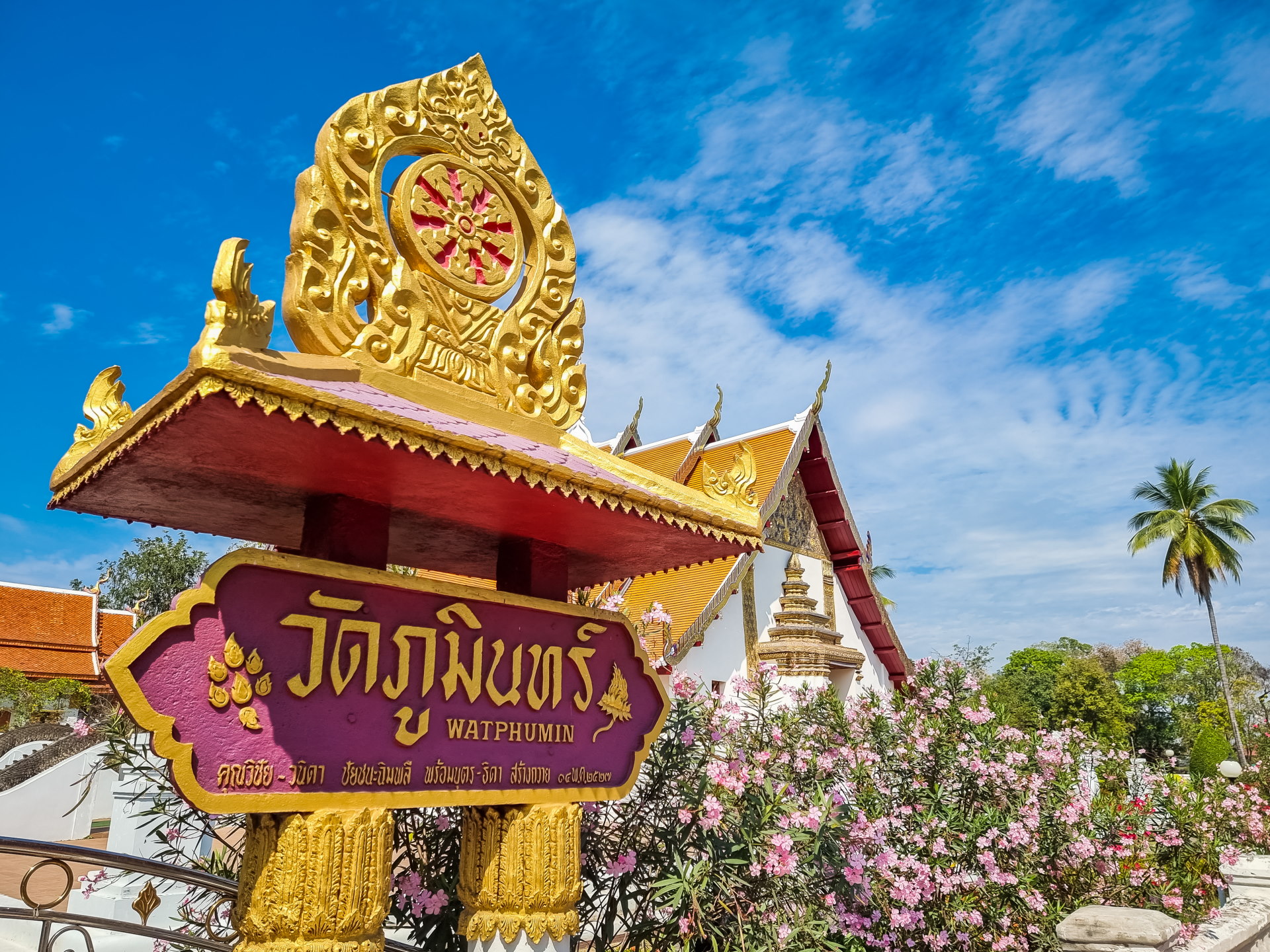
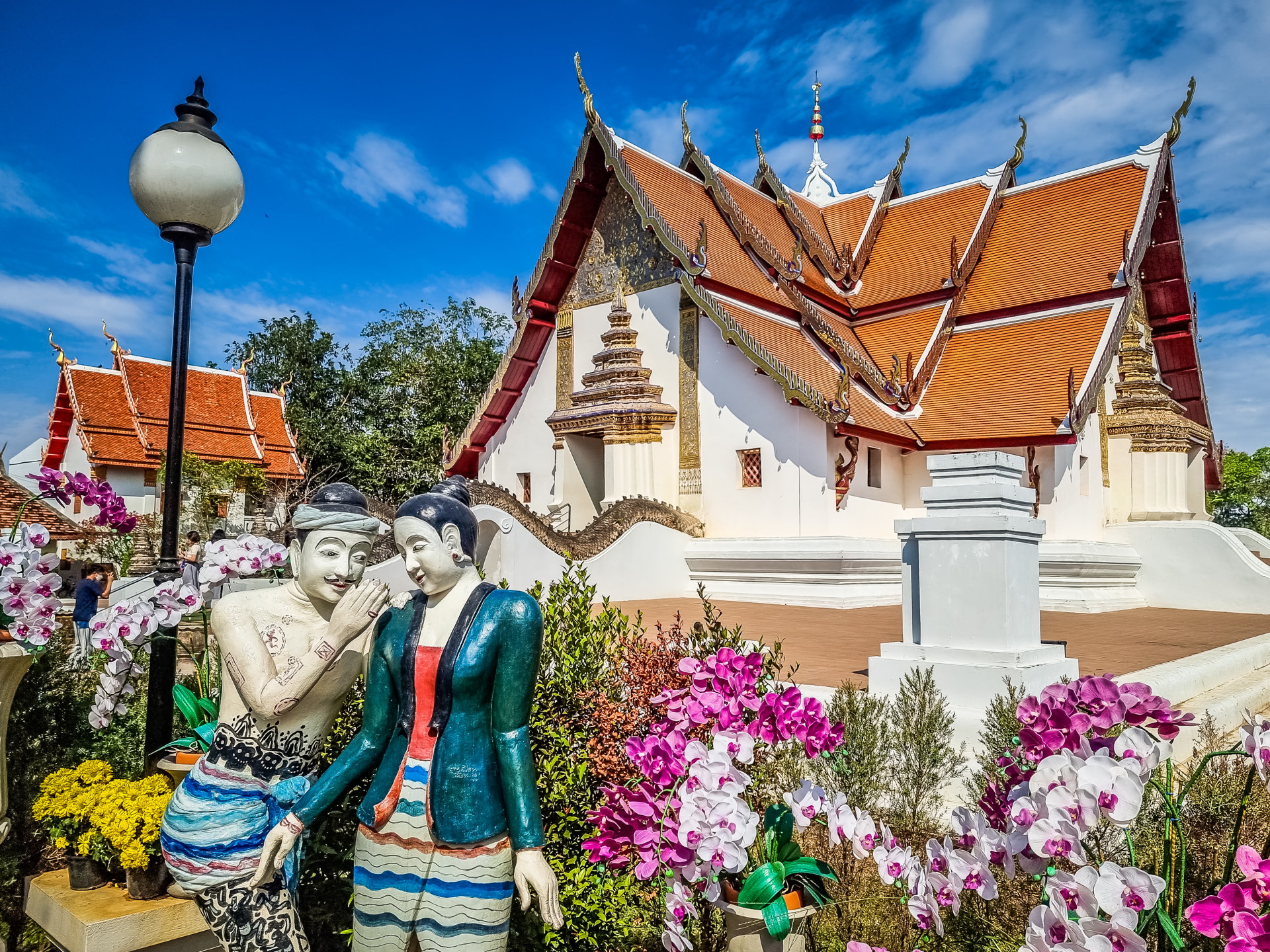
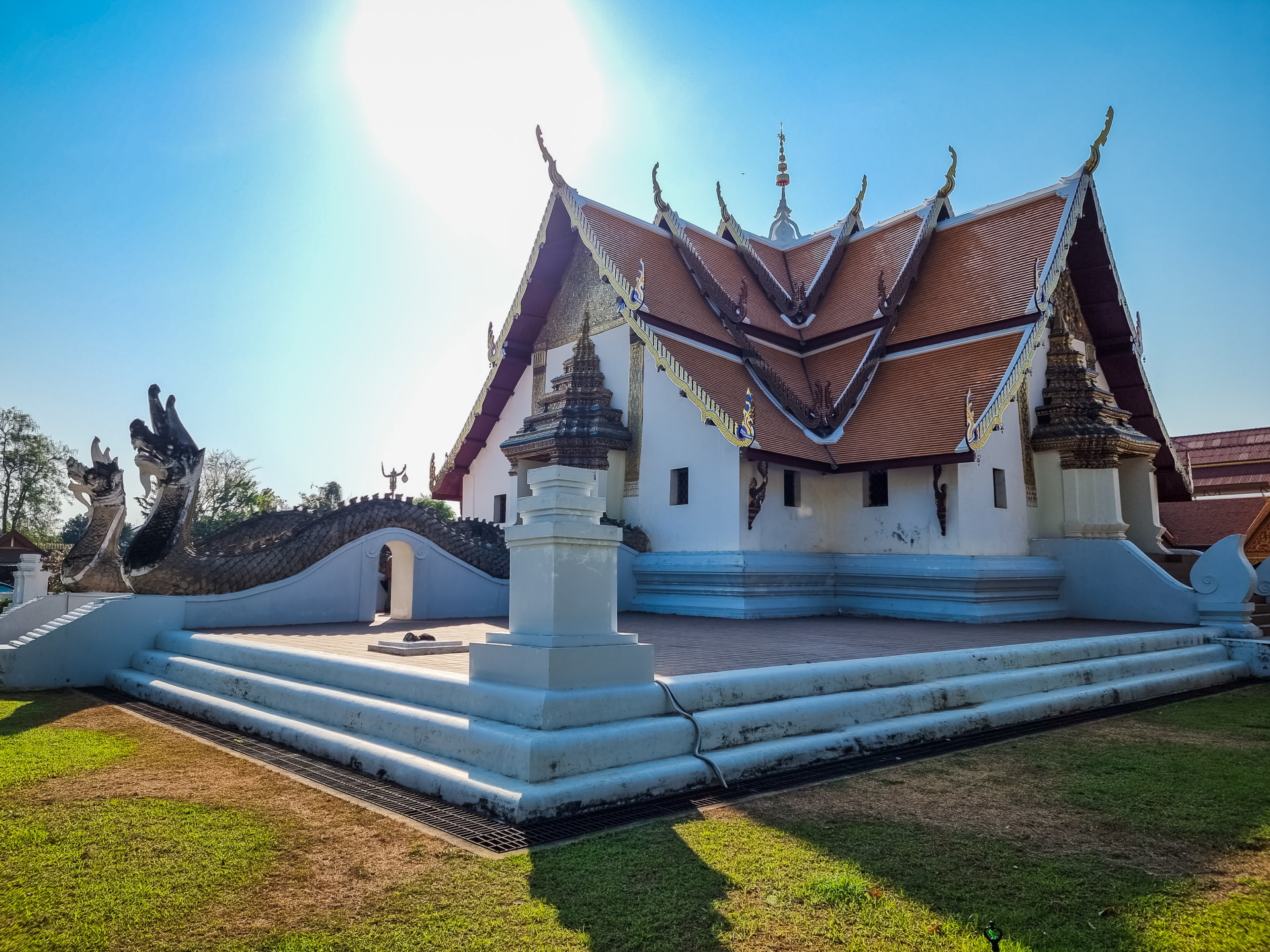
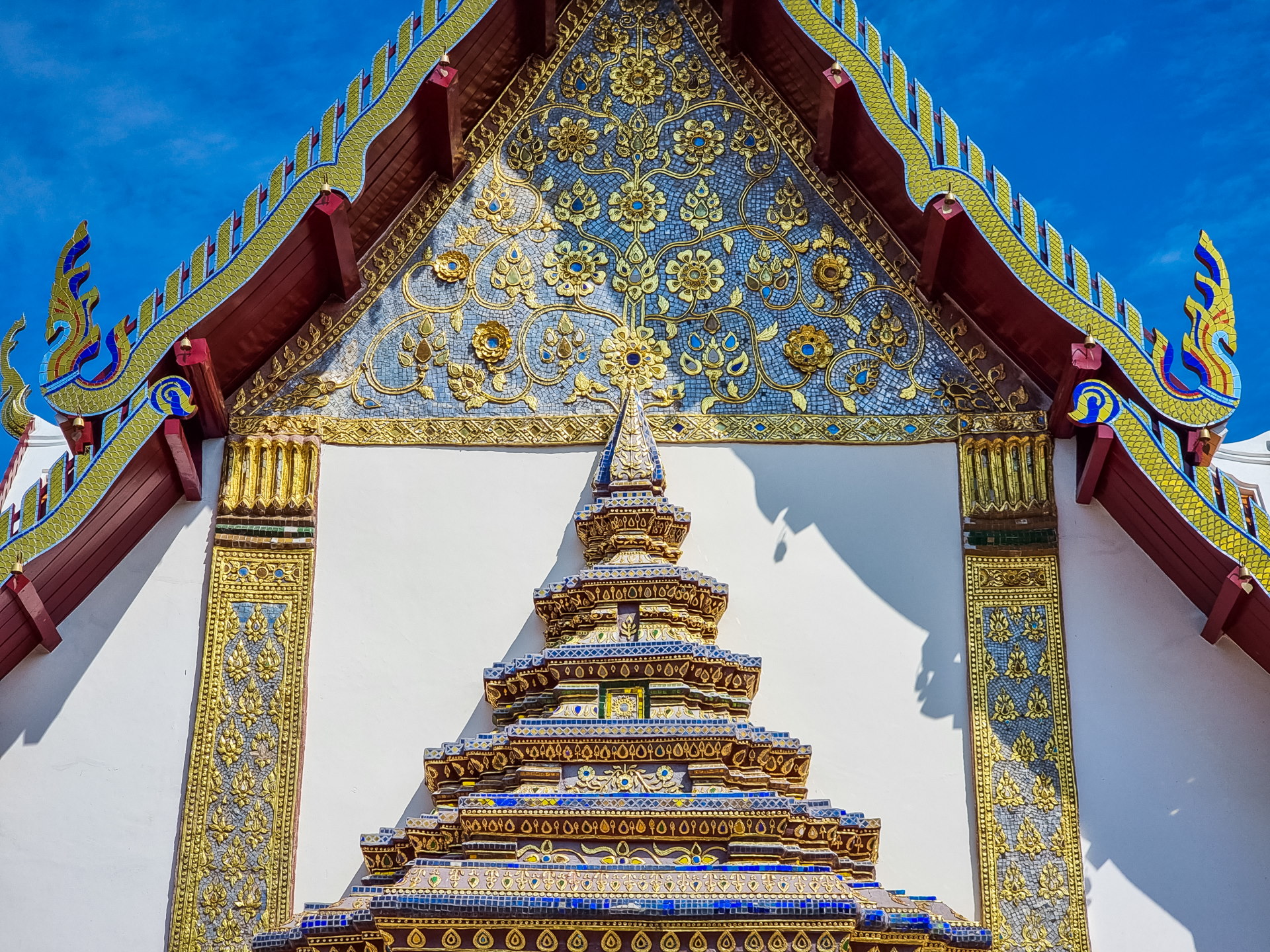
Wat Phumin was founded in 1596 by the ruler of Nan at the time, Chao Chetbut Phrommin , from whom the current temple takes its name. In 1704, it suffered heavy damage at the hands of the Burmese army, as did the rest of the city.
The temple was not restored until between 1867 and 1875, the period to which the paintings that make it famous today date.
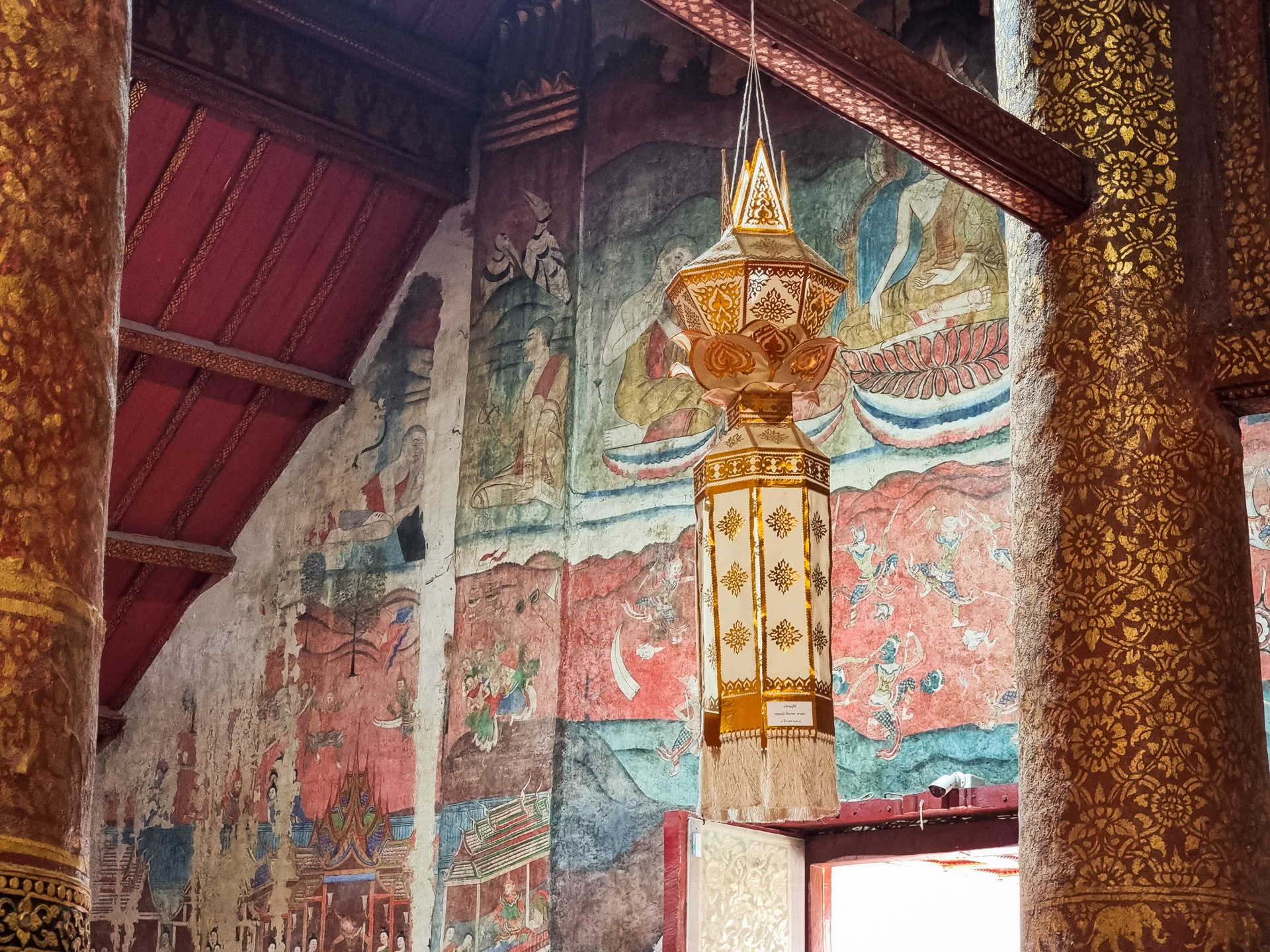
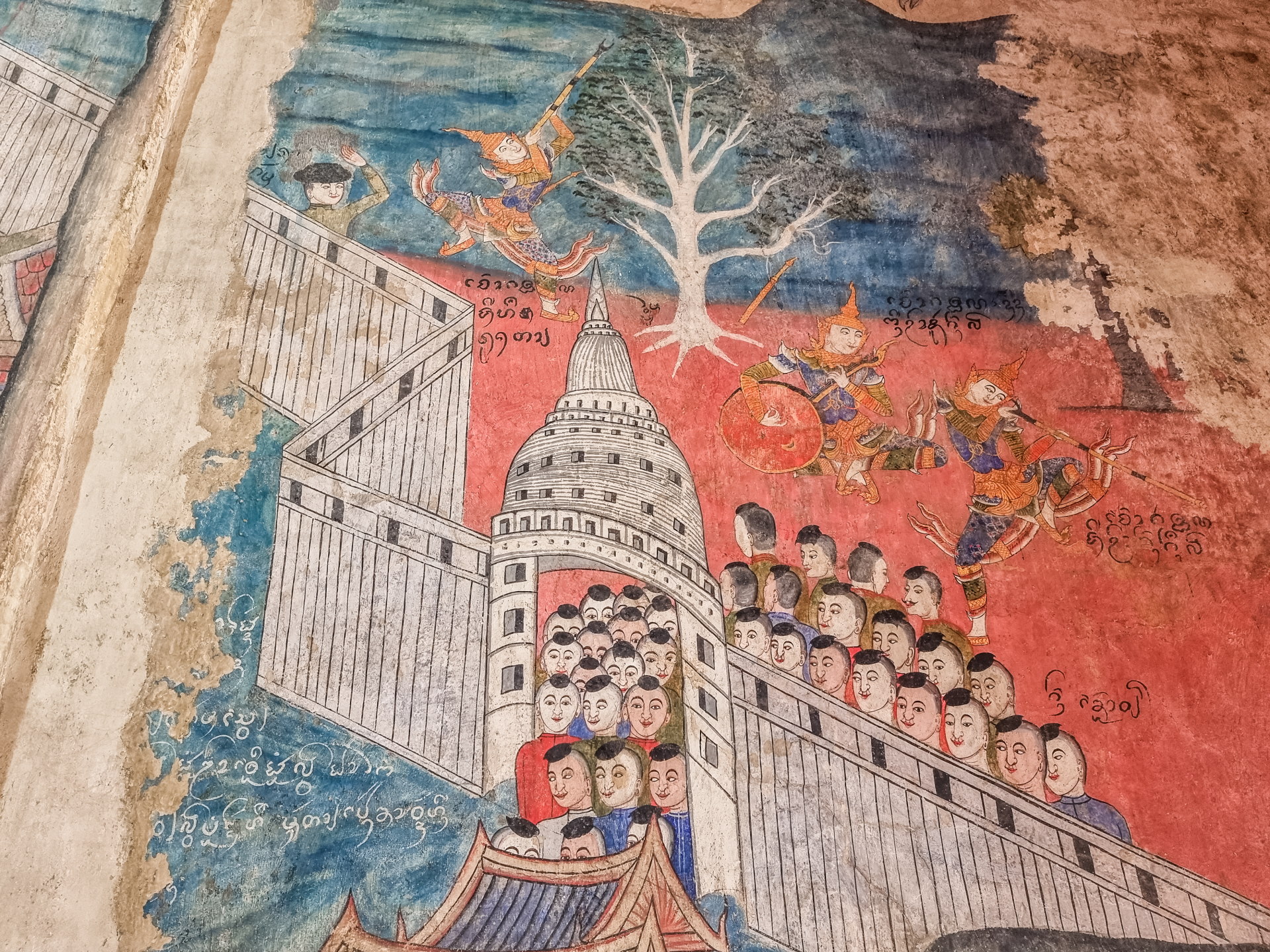
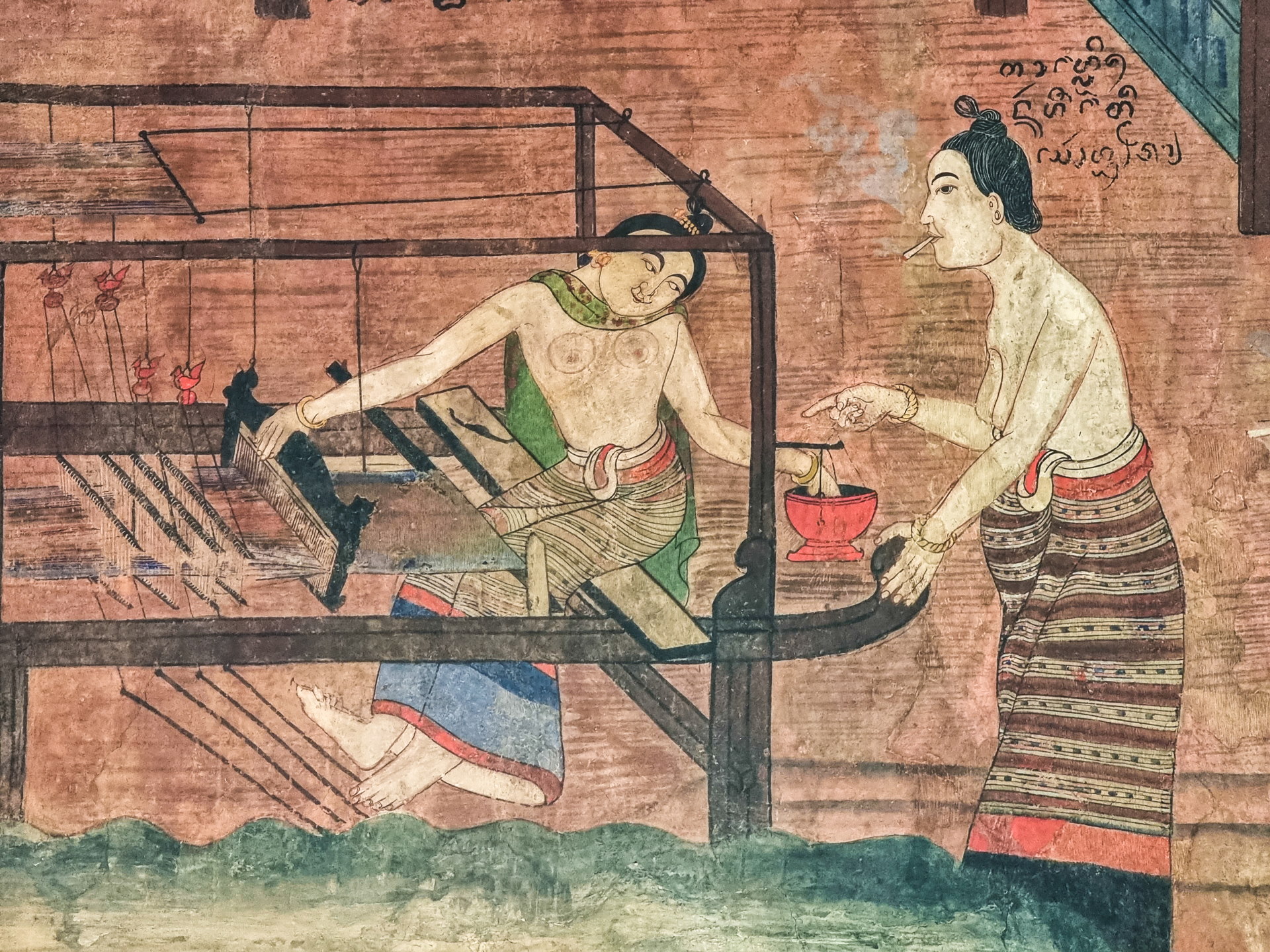
Created by artists of the Thai Lü (or Tai Lue) ethnic group, present in the region, the ubosot's frescoes include the now-famous painting called Pu Man Ya Man , or "the whispering couple." While some facades have suffered from dampness due to successive floods, the paintings that are still clearly visible remain particularly colorful.
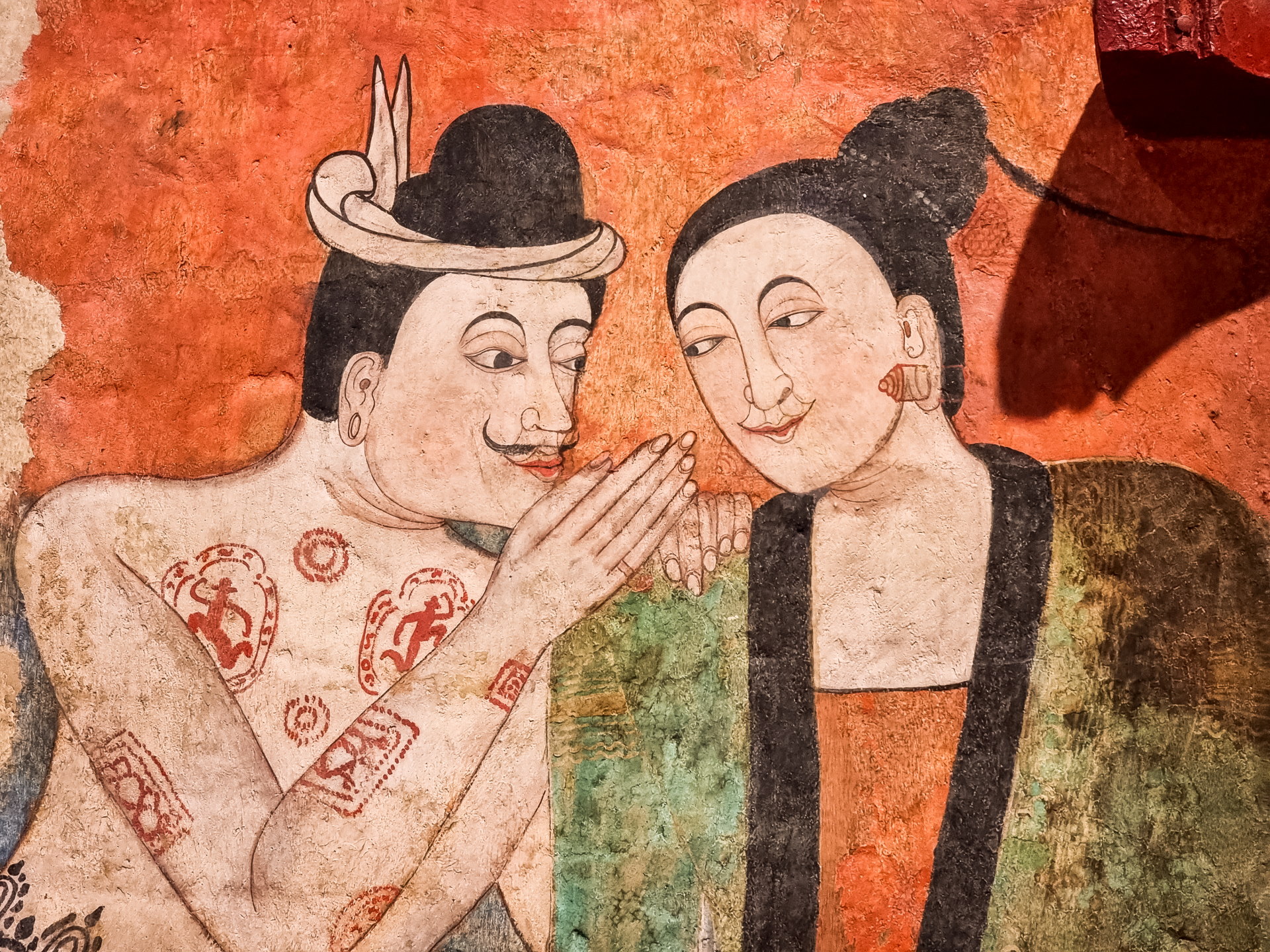
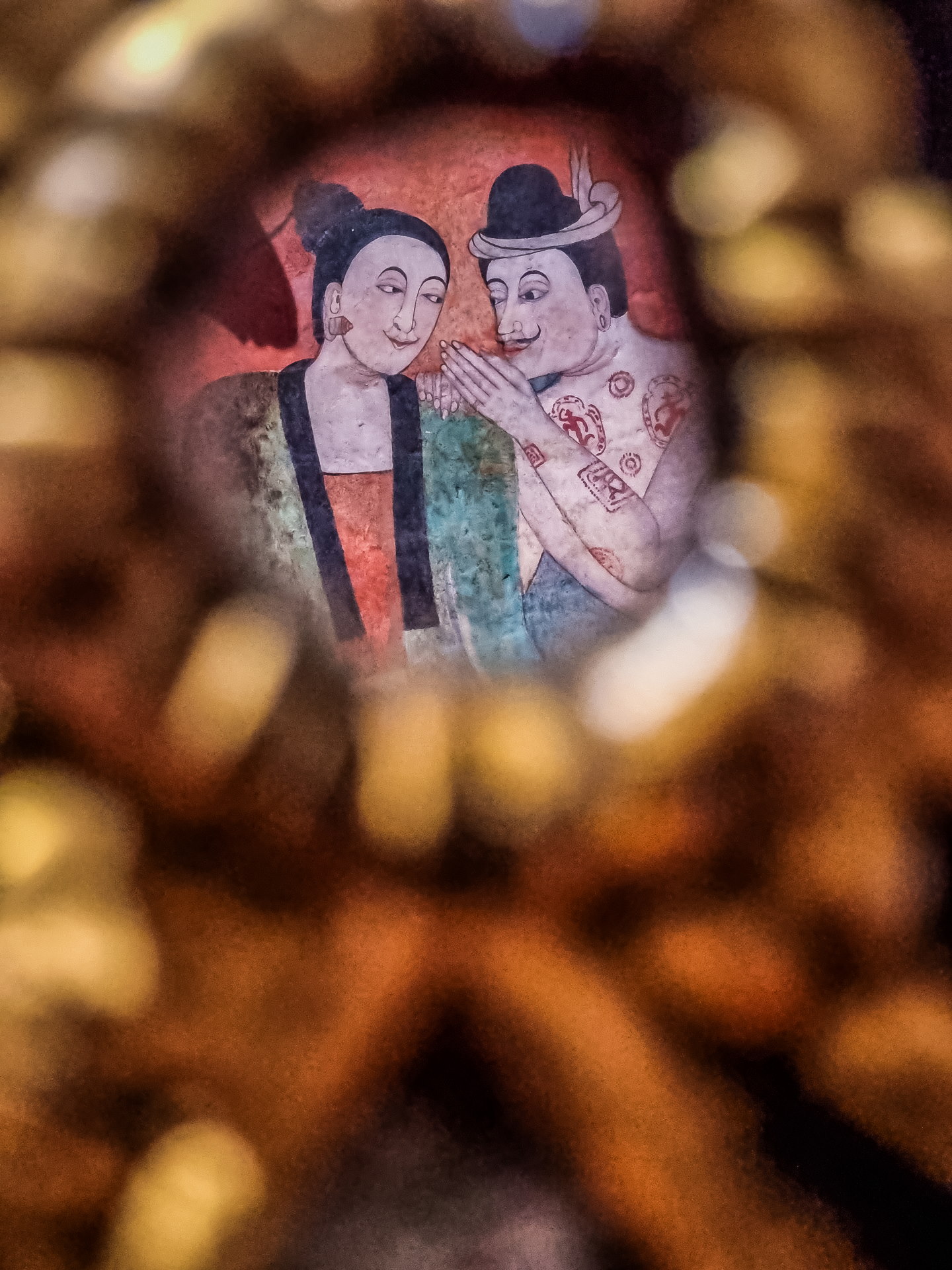
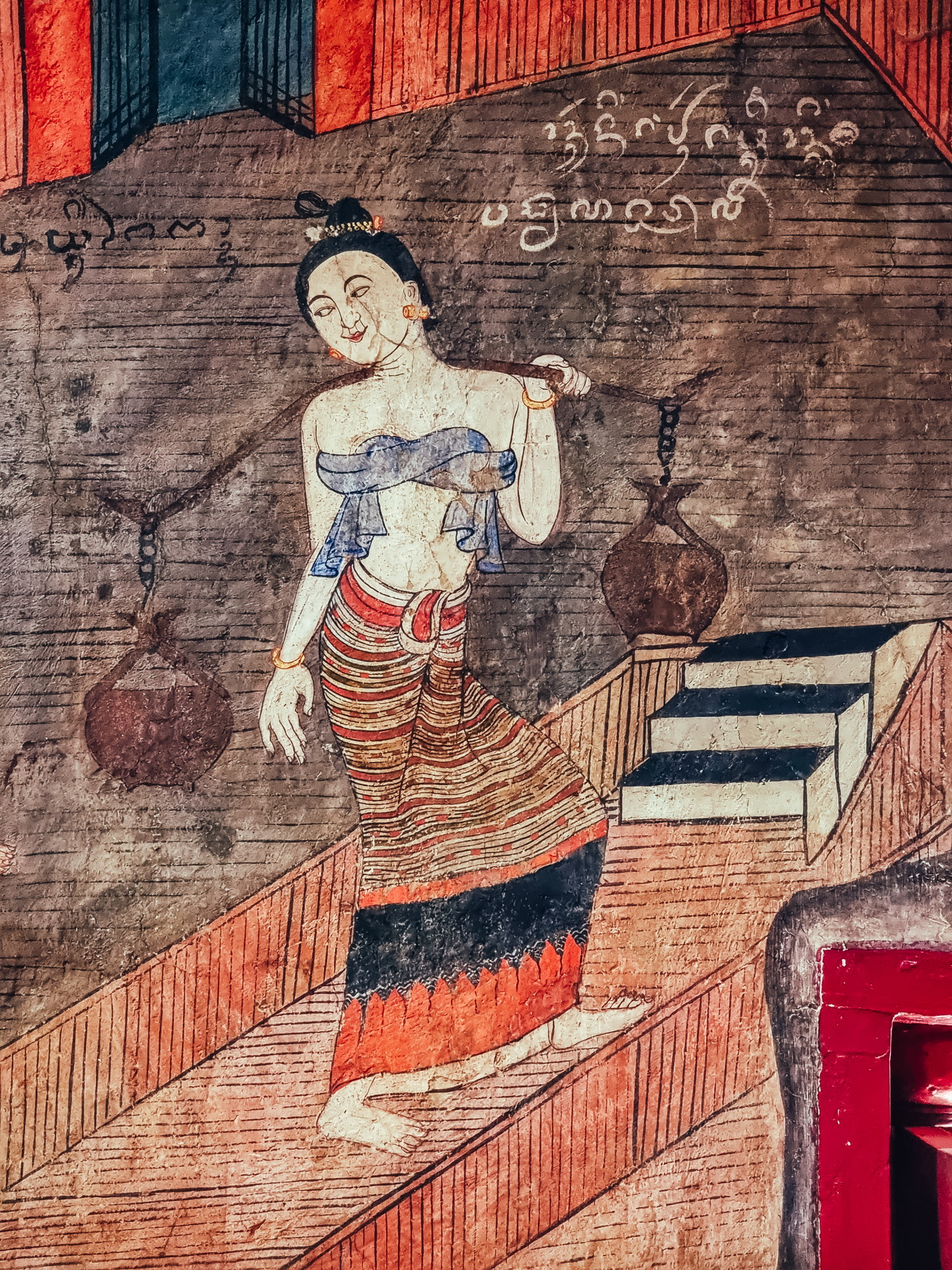
The whole thing forms a kind of giant book, mixing scenes of daily life from the late 19th century, representations of the life of Buddha and the mythology surrounding him, but also lighter images of local fauna and flora.
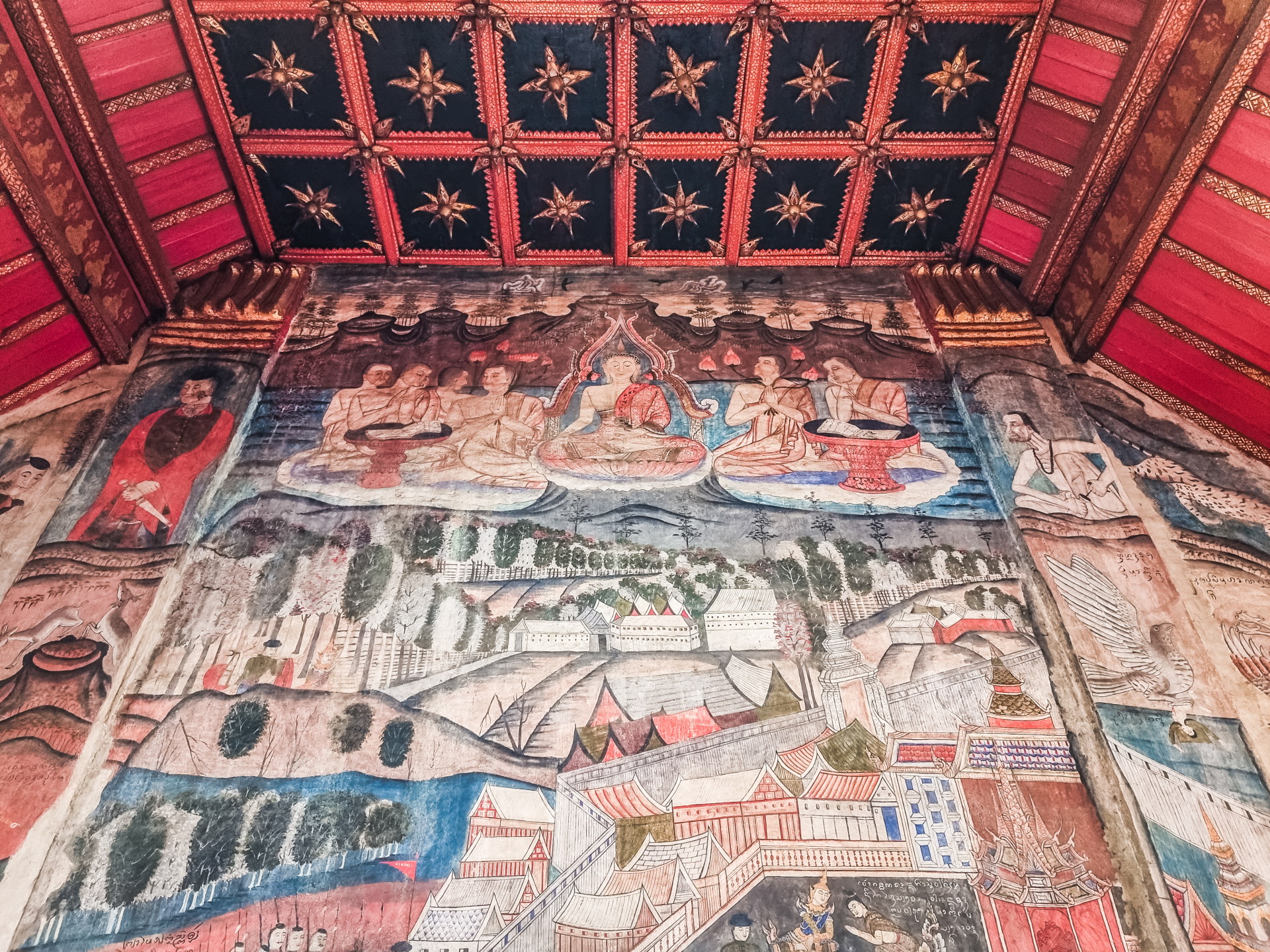
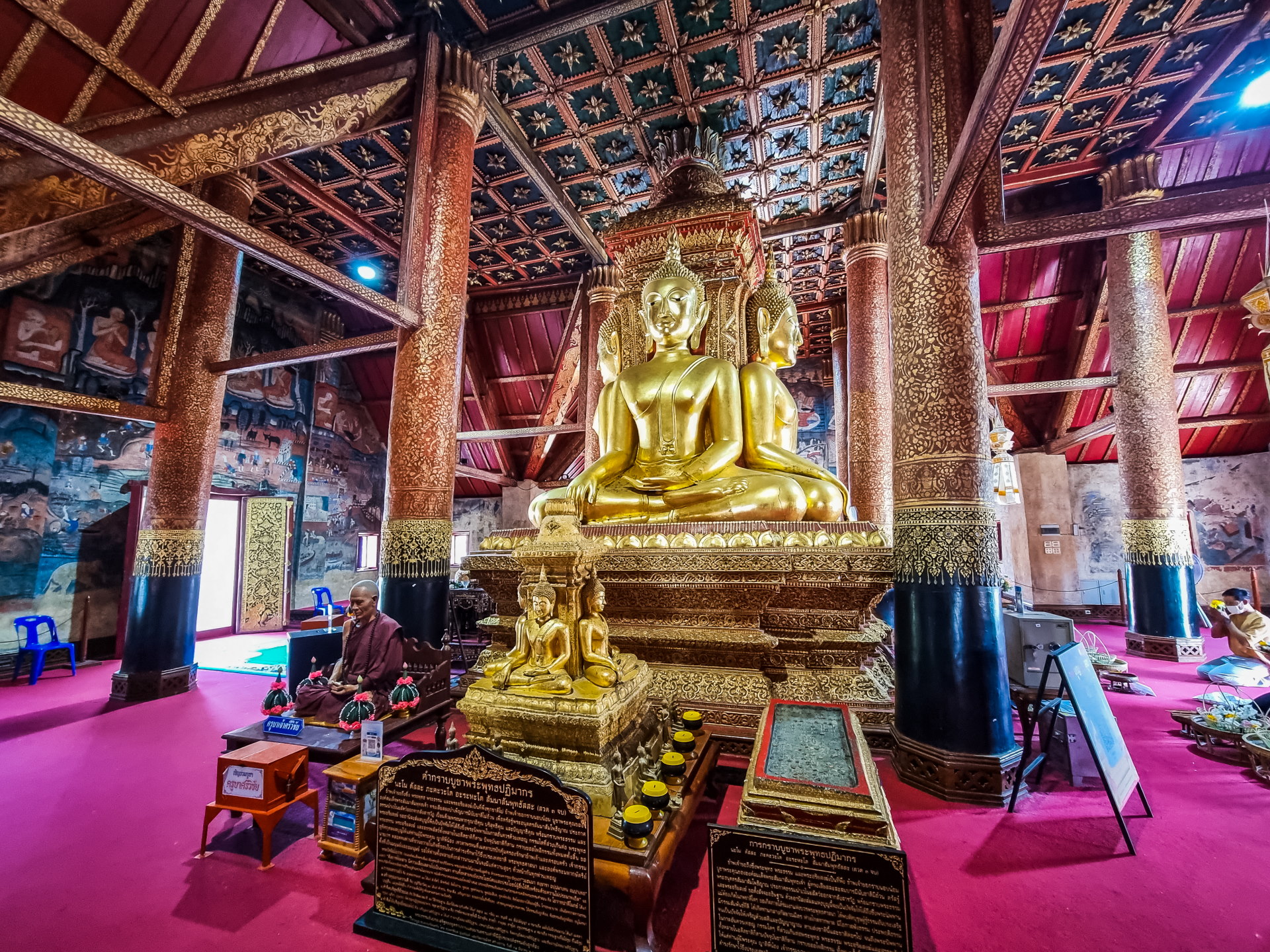
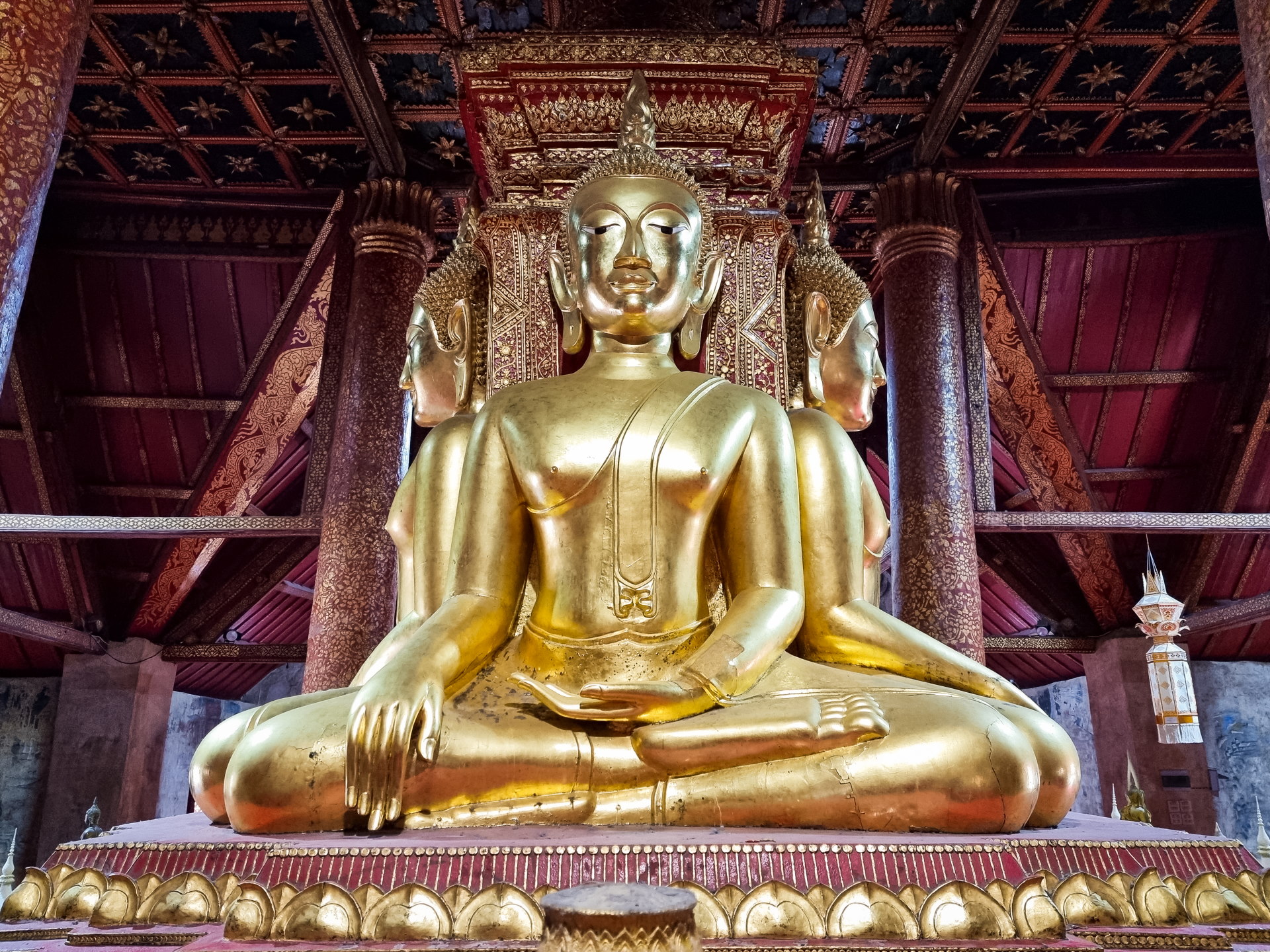
At the center sits a quartet of Buddha statues, another distinctive feature of Wat Phumin. Unlike the classic rectangular plan with a single altar at the back, the ubosot here adopts a cruciform shape: each of the four entrances to the building therefore faces a statue.
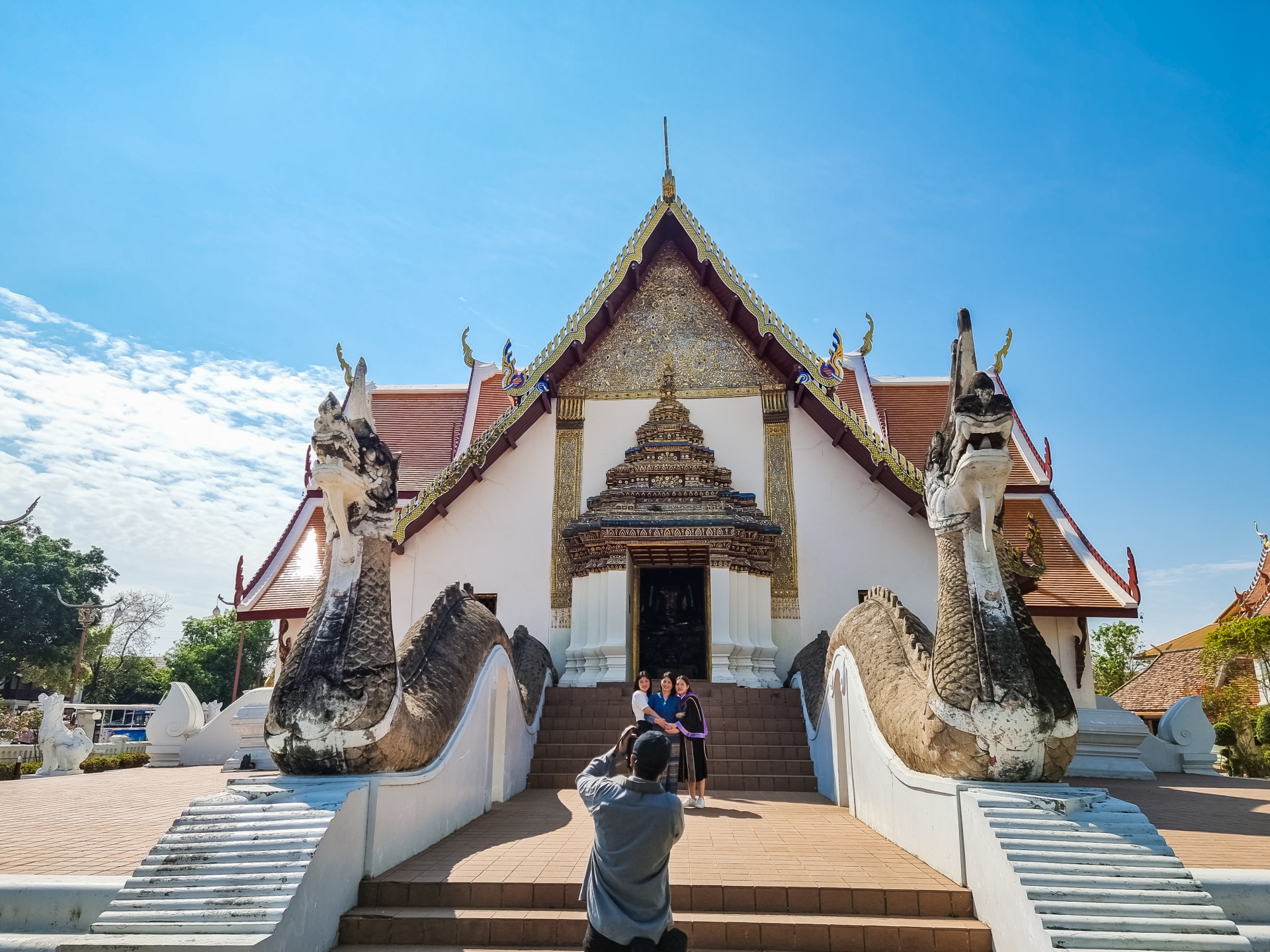
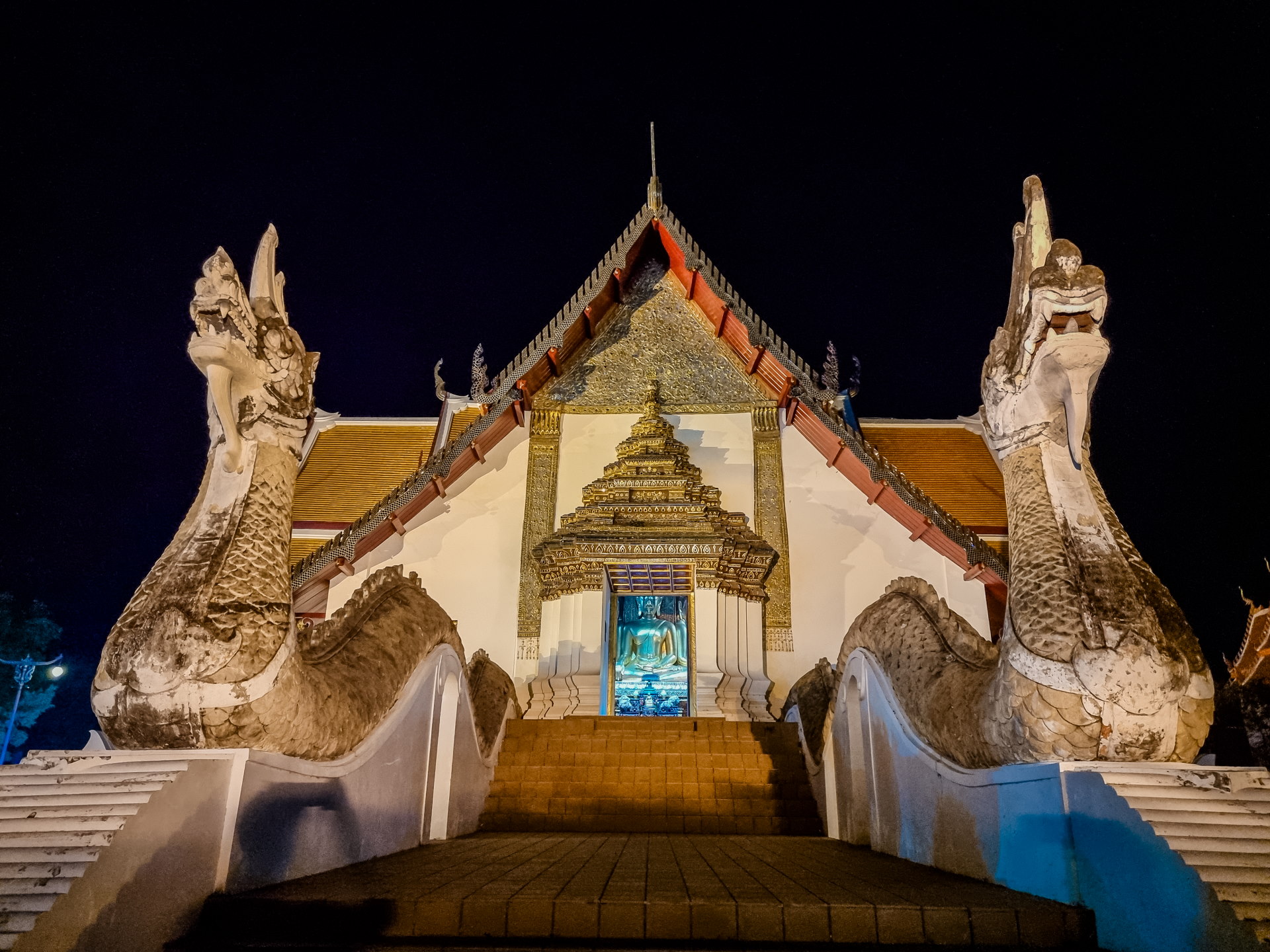
Outside, the temple is also distinguished by the presence of the naga, the mythological serpent inseparable from Theravada Buddhist temples and guardian of sacred places, but with an architectural subtlety unique to Wat Phumin —or rather, two. The naga is only present on the north-south axis, with its head to the north and its tail to the south.
The structure is designed to suggest that the serpent supports the temple on its back. Another distinctive feature is the presence of an arch beneath the naga.
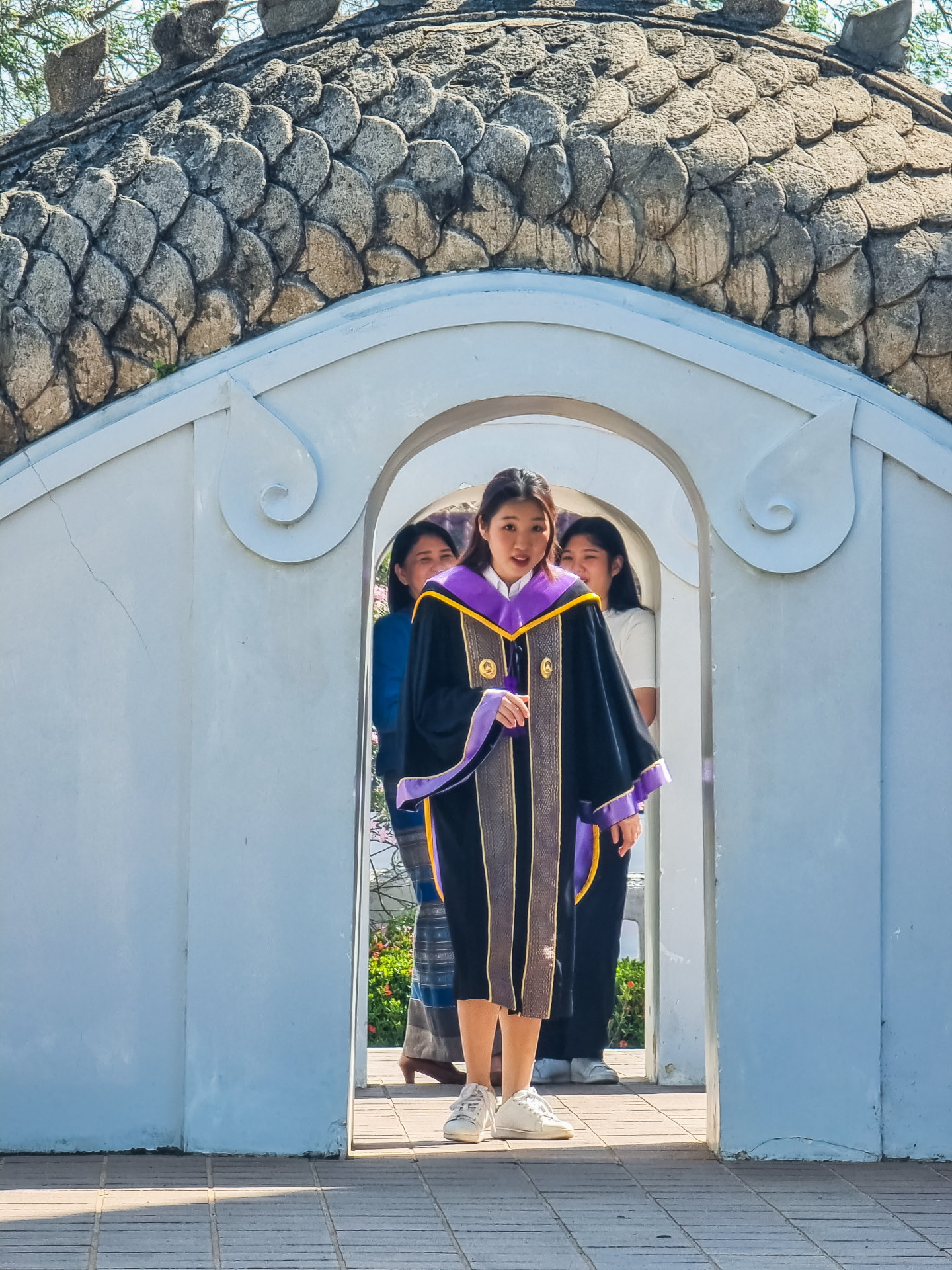
Passing underneath symbolically marks the passage from the profane space to the sacred enclosure of the temple, placed under the benevolent protection of this mythical guardian, closely linked to water and purification.
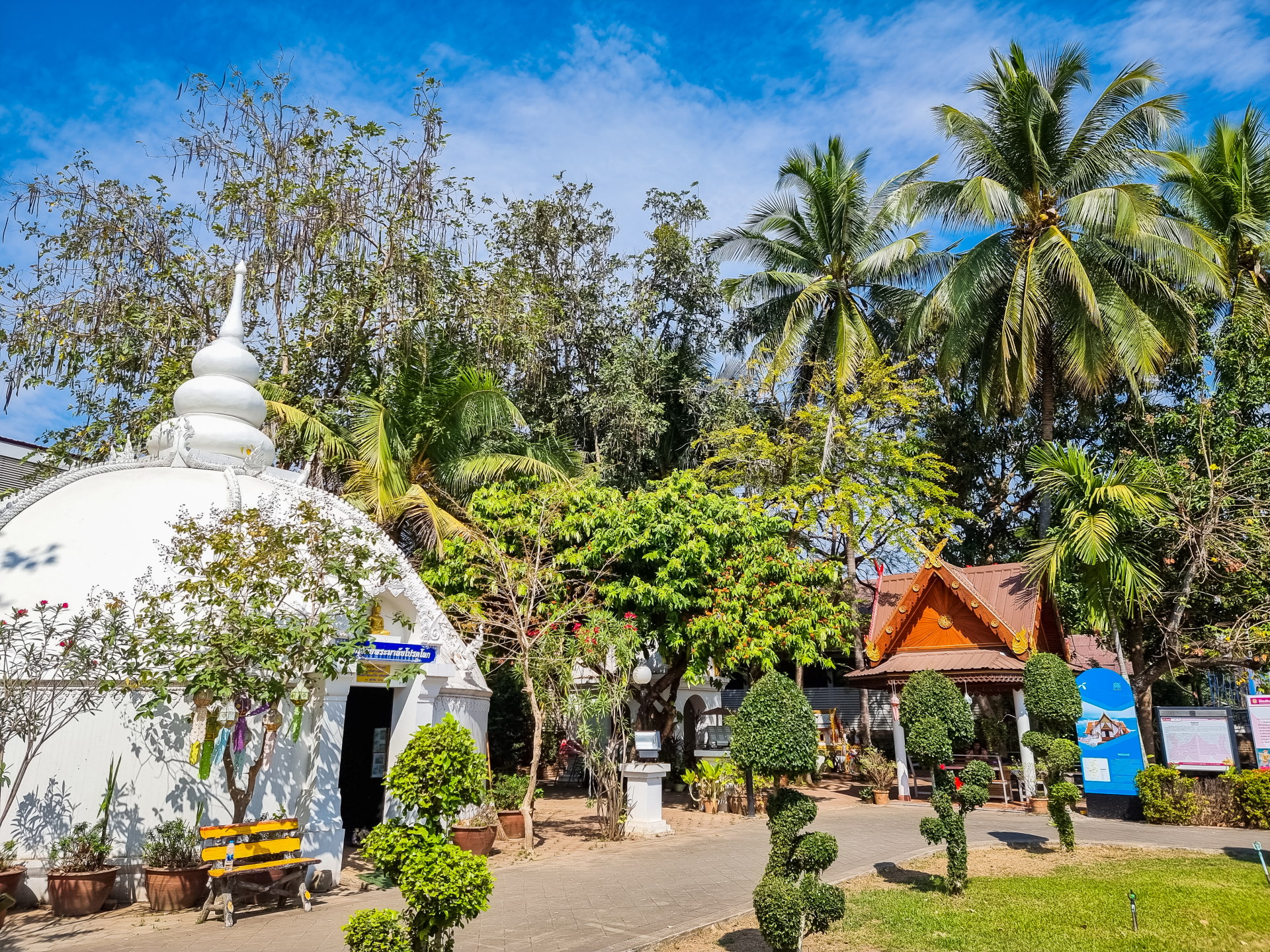
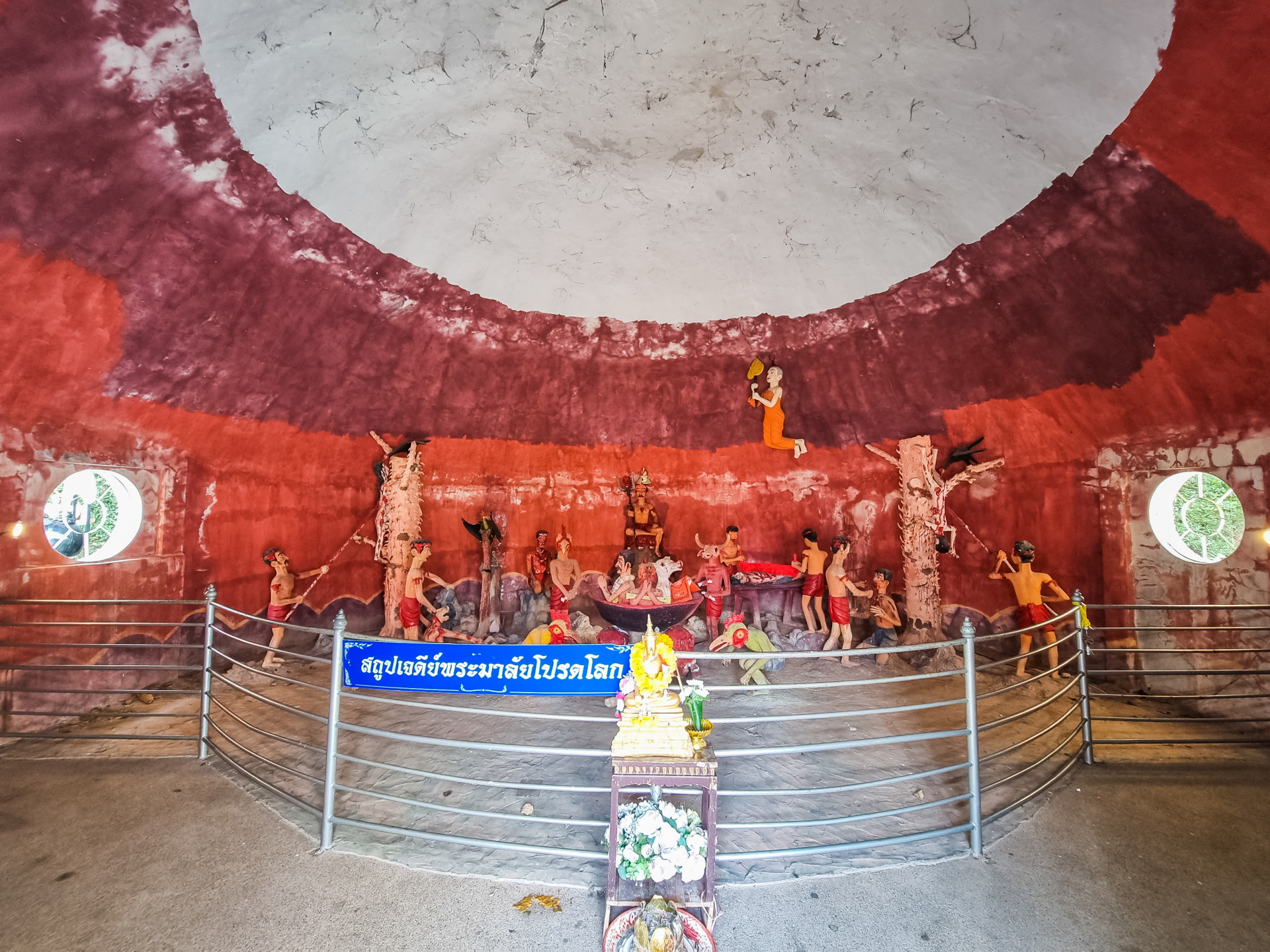
Apart from the ubosot, the temple also houses an unusual structure resembling an igloo — a circular building that can also be seen at the Baan Dam Museum in Chiang Rai — which presents a scene illustrating the Buddhist vision of hell.
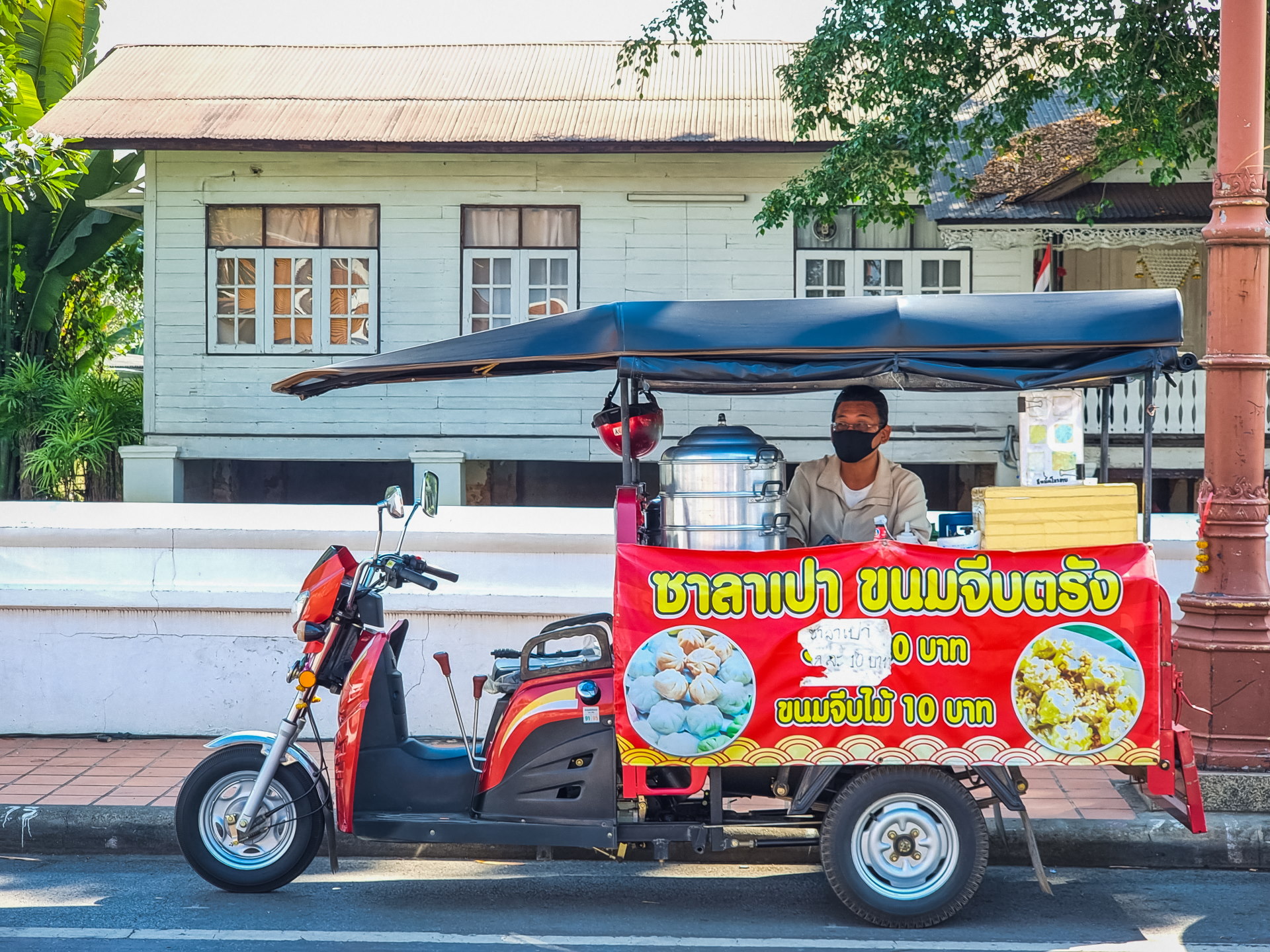
Finally, as with any tourist site in Nan, it's not uncommon to encounter street vendors or waiting rickshaws around the temple. This mode of transport still exists in the city, where tuk-tuks are virtually nonexistent.
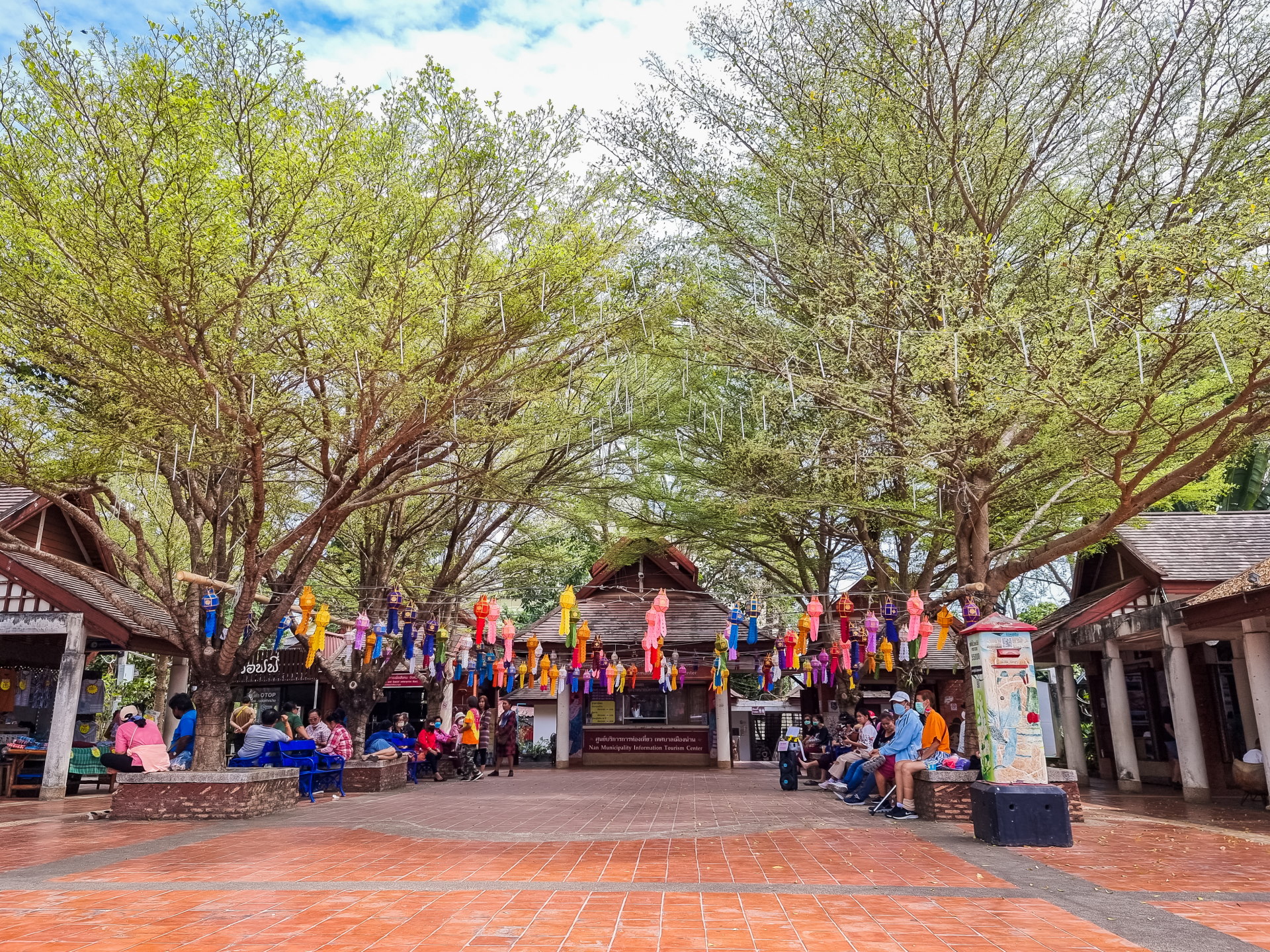
Note: The Tourist Information Center is located directly opposite Wat Phumin.
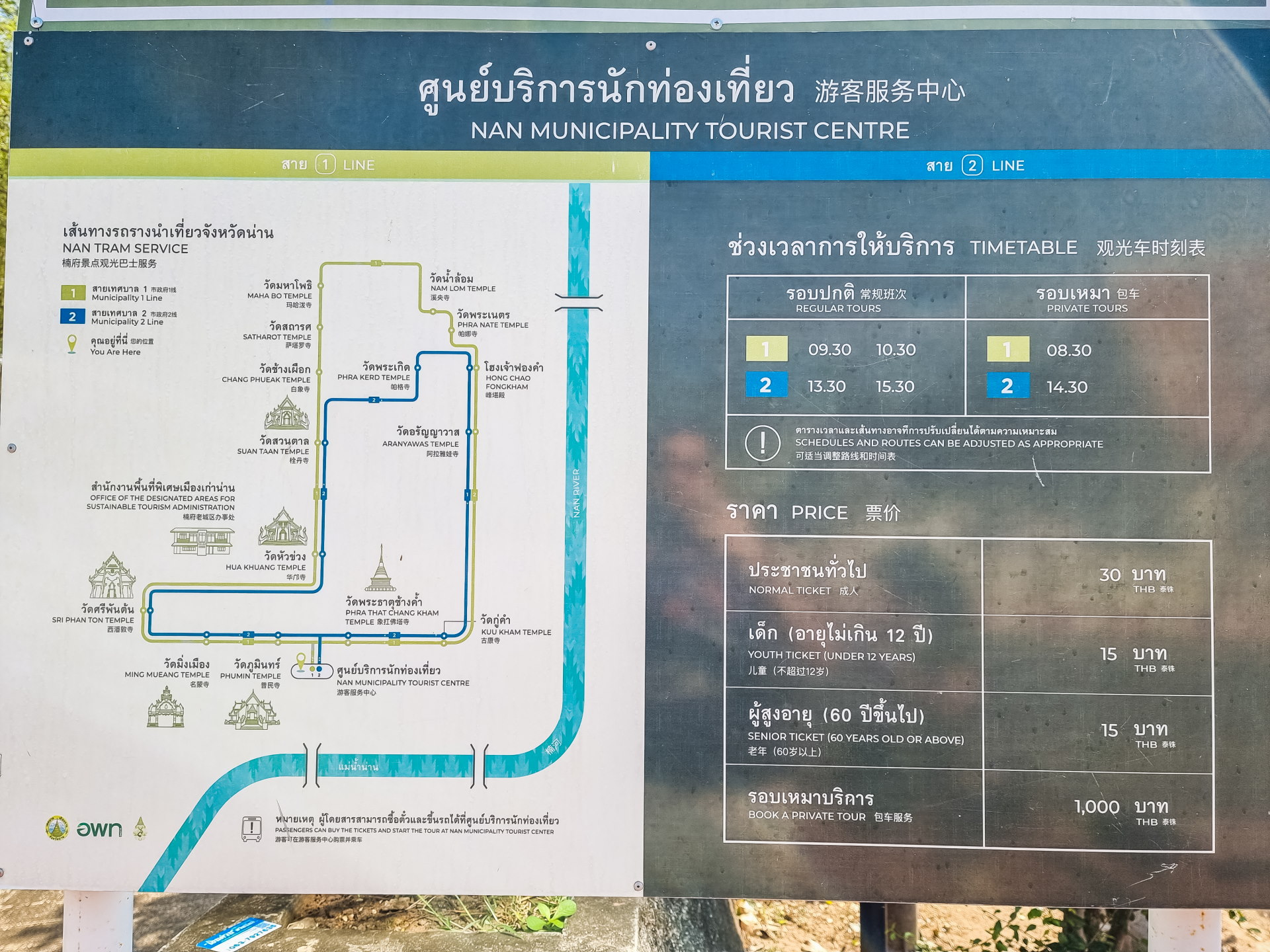
From there, you have access to a tram system with an unbeatable fare (30 baht). The trams make a large loop around the city's main temples twice in the morning, then a smaller loop twice in the afternoon. To avoid the timetable constraints, it's possible to charter a tram (1,000 baht).
Wat Phra That Chang Kham Worawihan
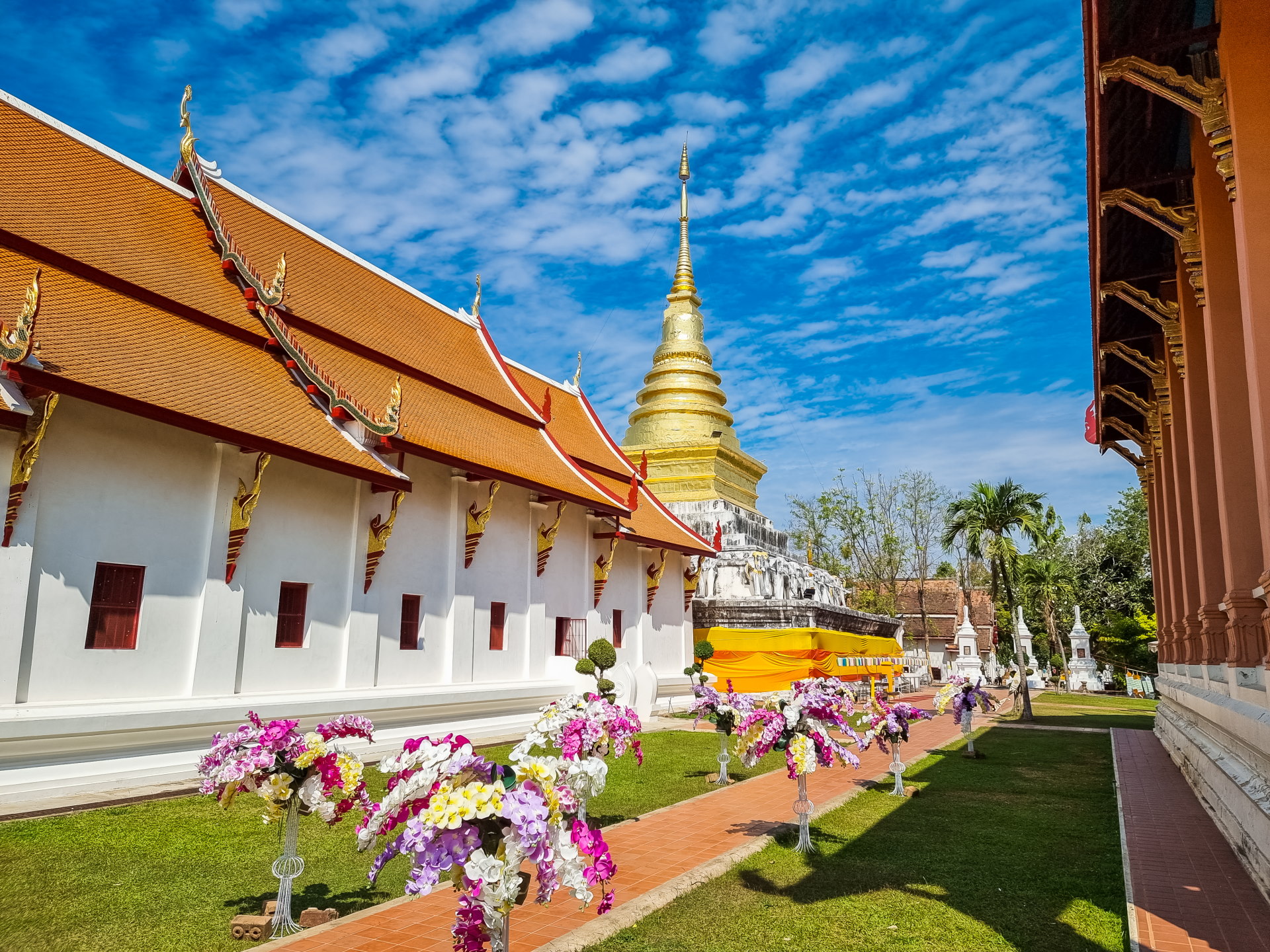
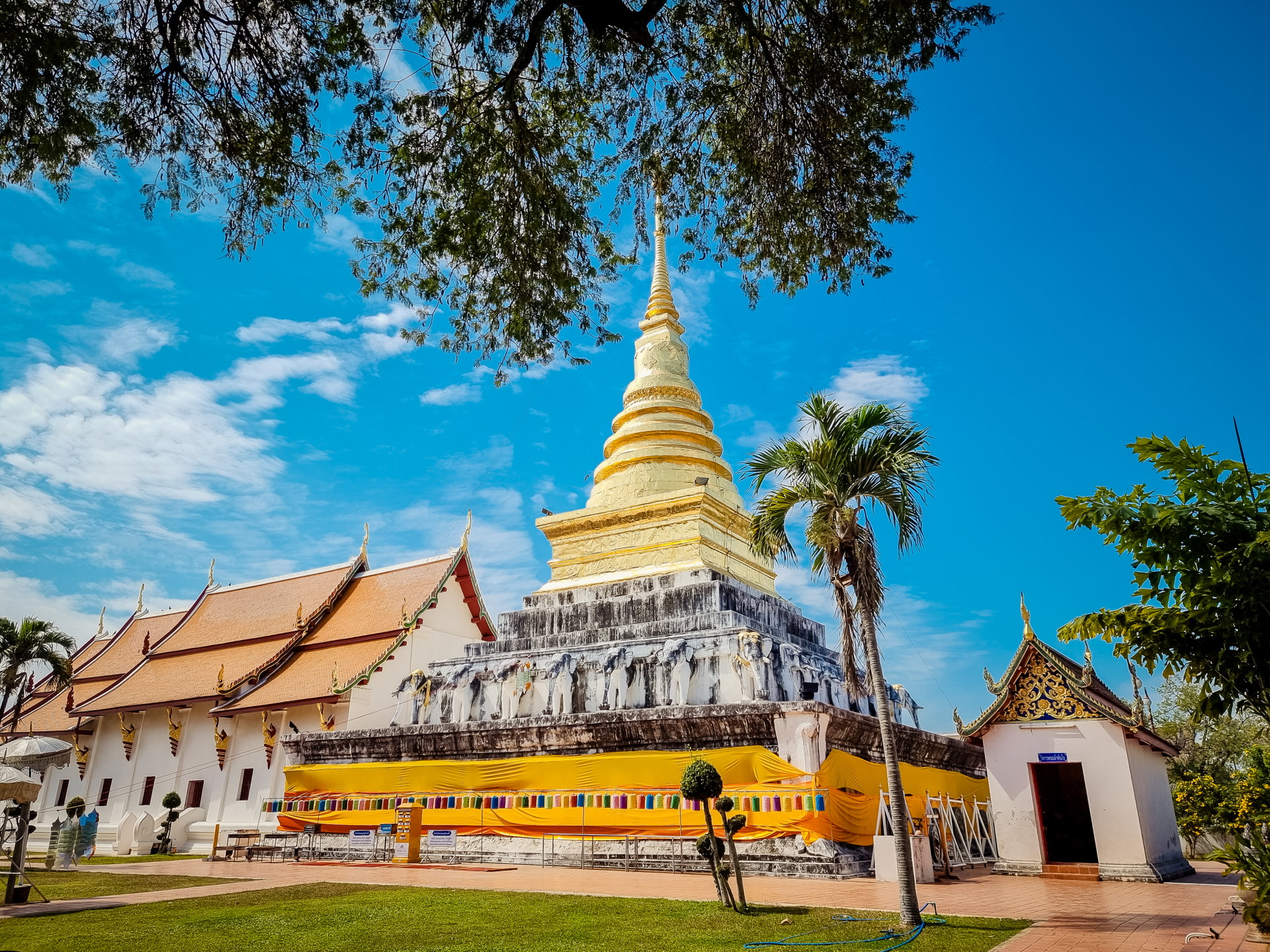
Almost opposite is this temple with the long name, sometimes shortened to Wat Chang Kham , in reference to the elephant sculptures that support its chedi (the translation of "Chang Kham").
It is, in fact, the centerpiece of this temple, older than its neighbor. Built in 1406, it is the oldest structure on the site, and one of the oldest in Nan.
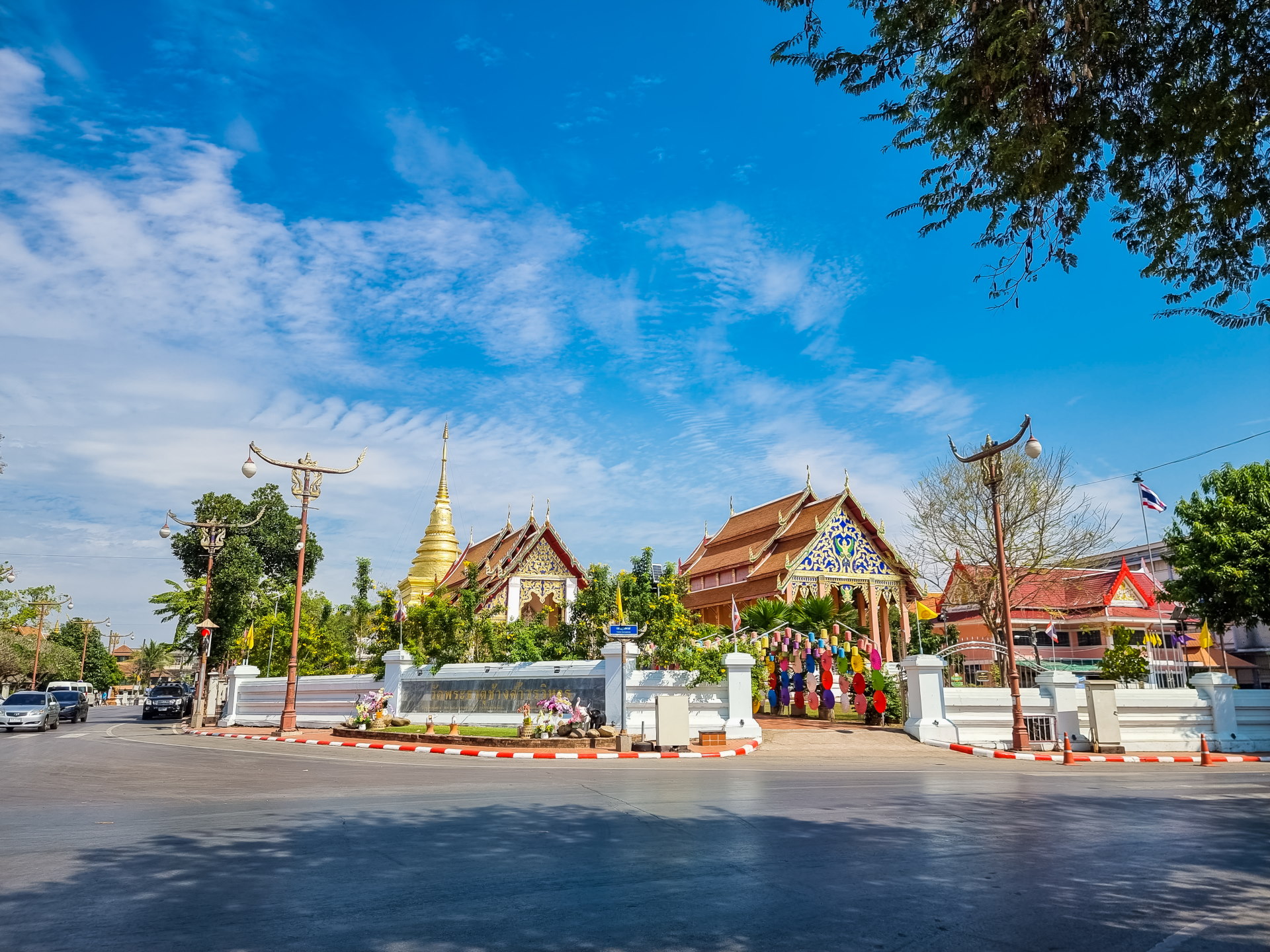
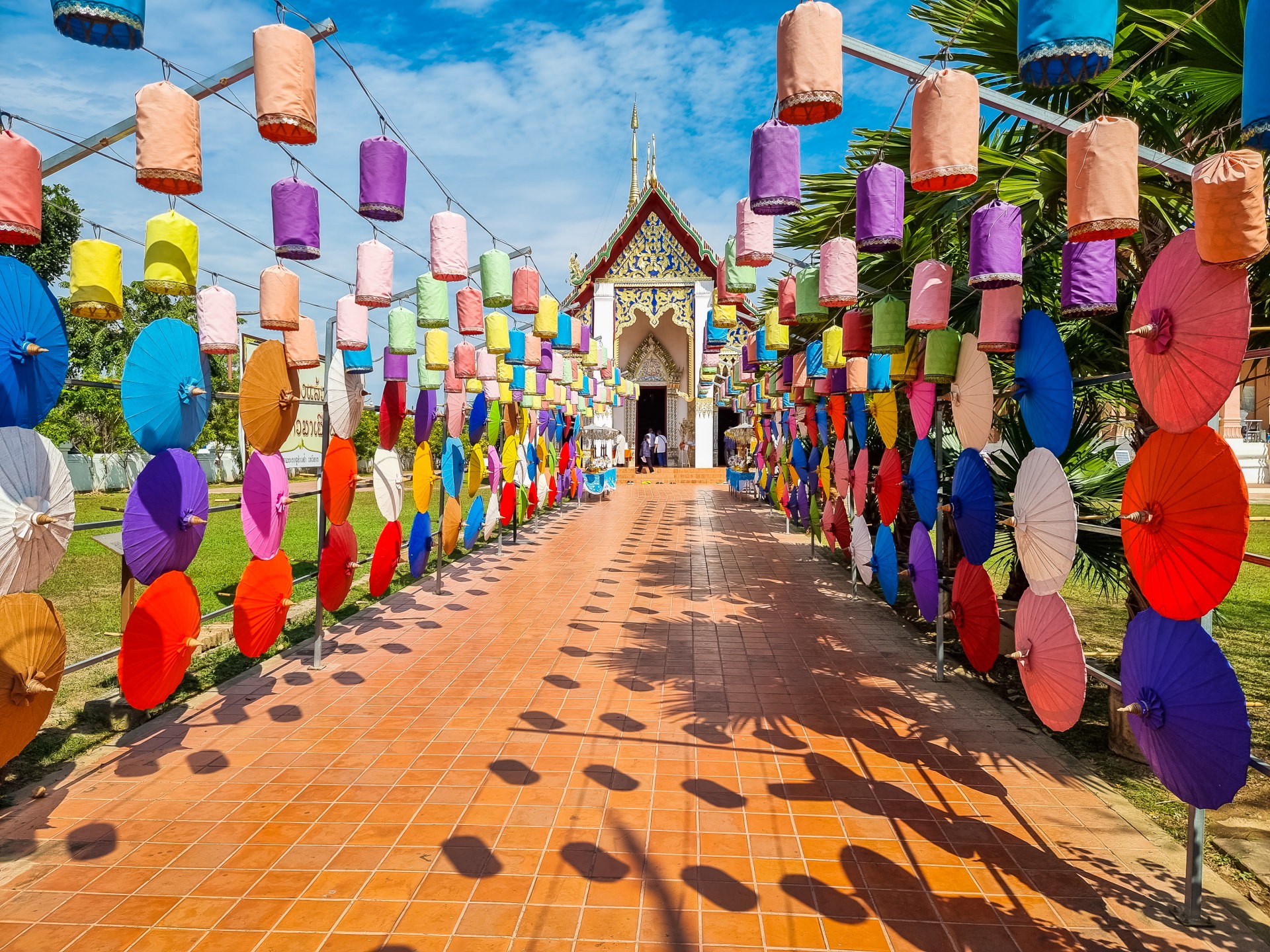
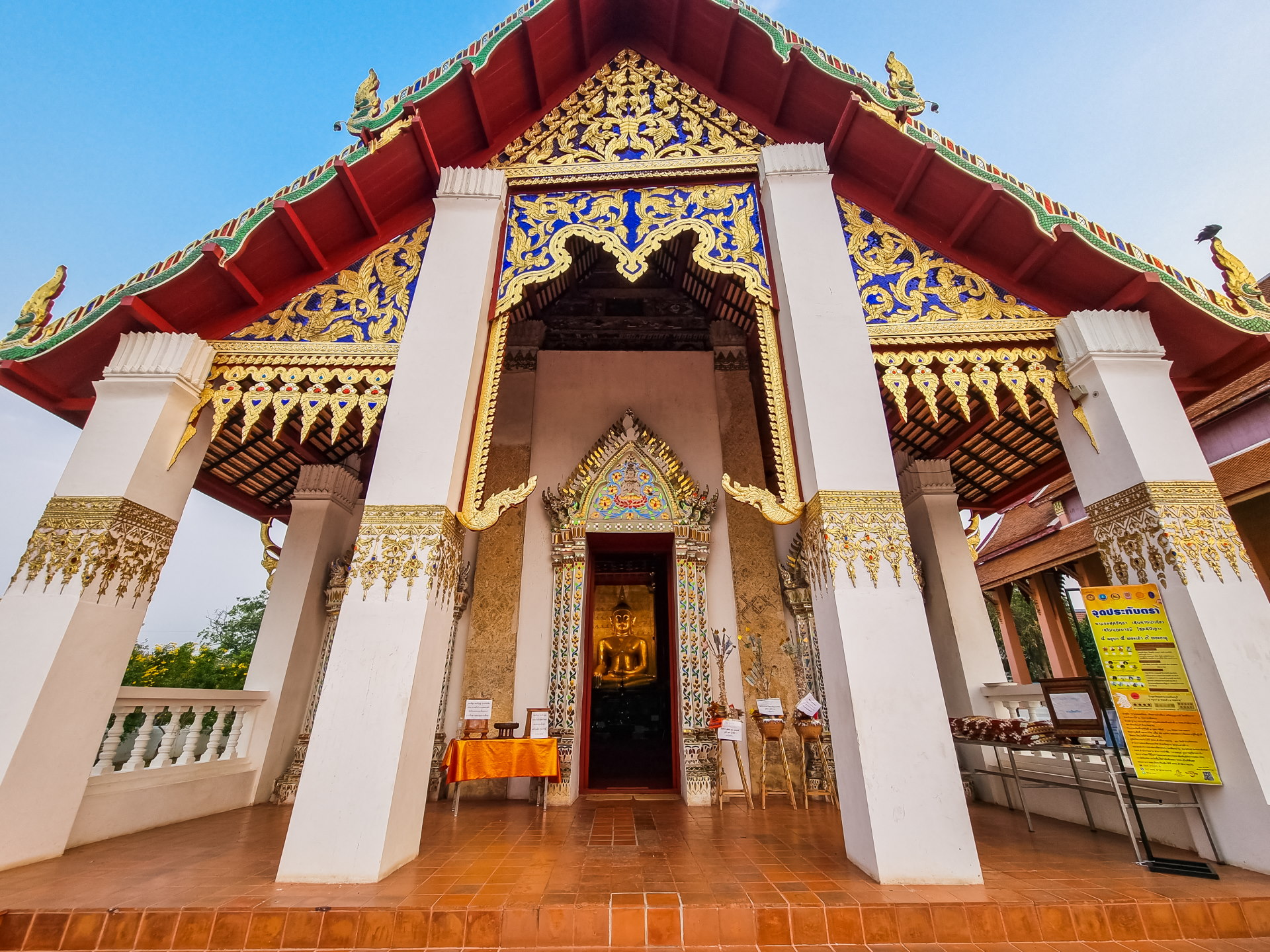
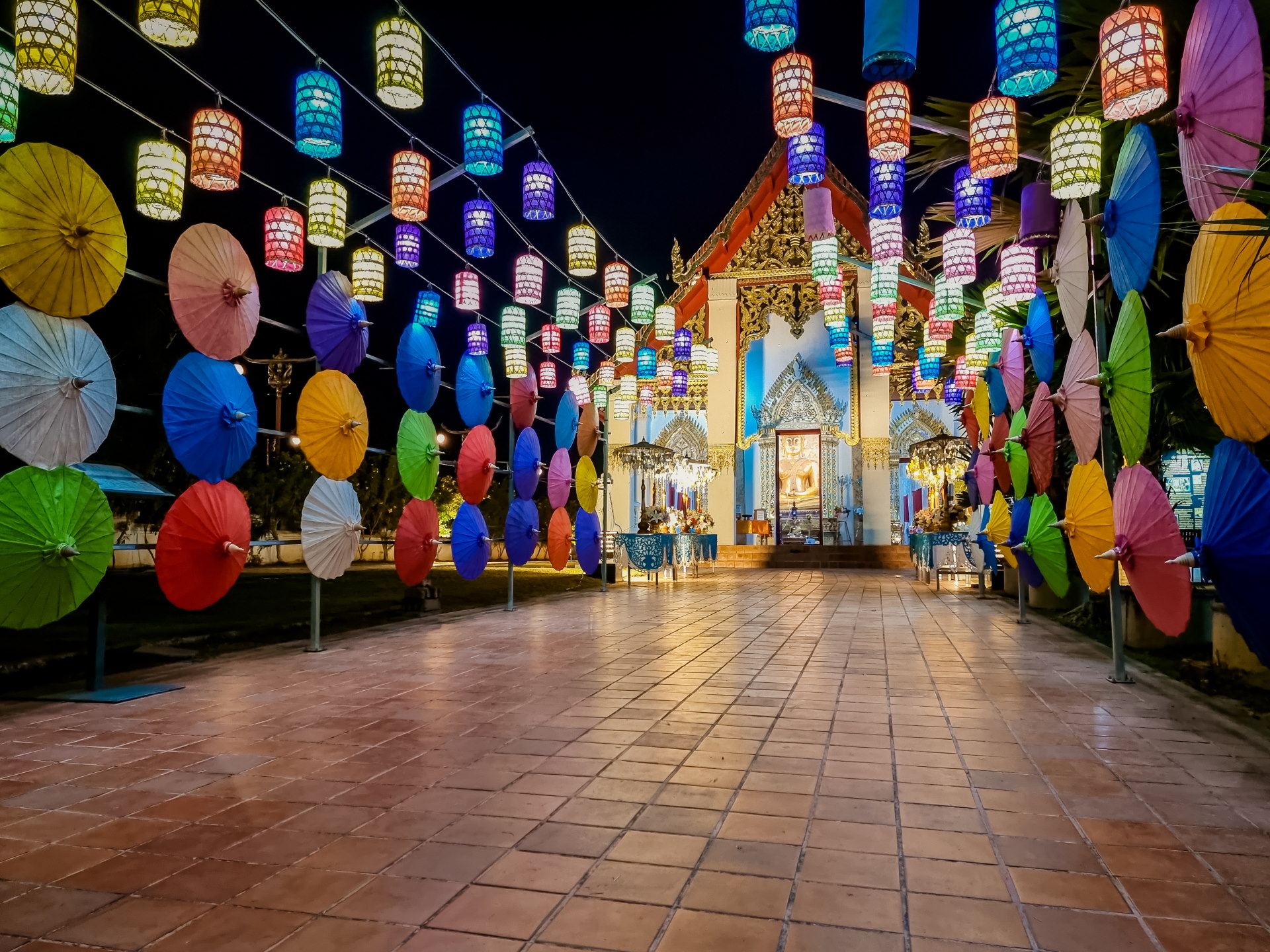
But when you enter the temple grounds, the first thing you see at the end of the walkway is the viharn , which that day was decorated with rows of umbrellas and colorful lanterns.
The exterior is in very good condition and displays a Lanna style, recognizable among other things by its shimmering colors, its decorated columns and the presence of guardian lions ( singha ) at the entrance.
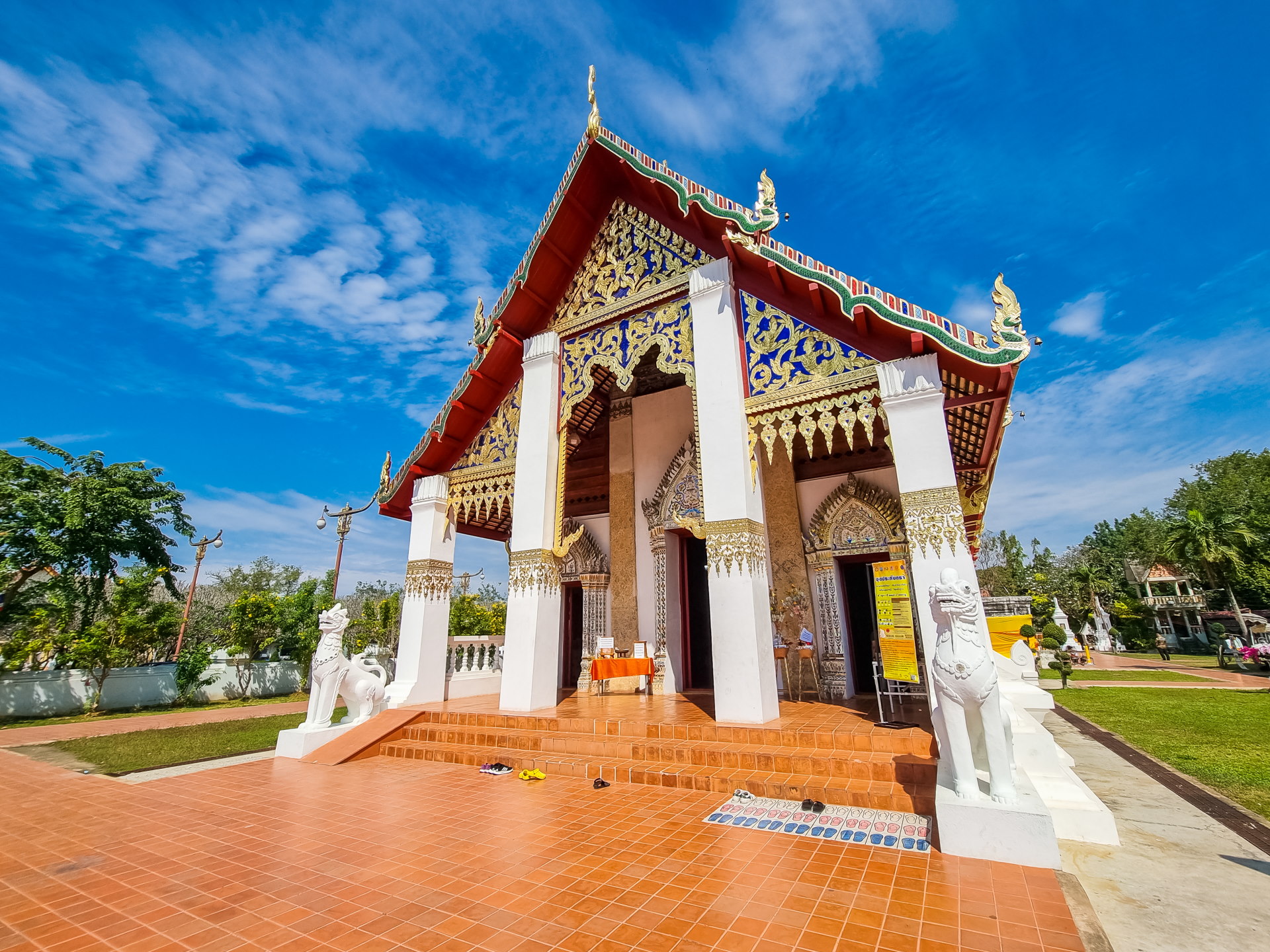
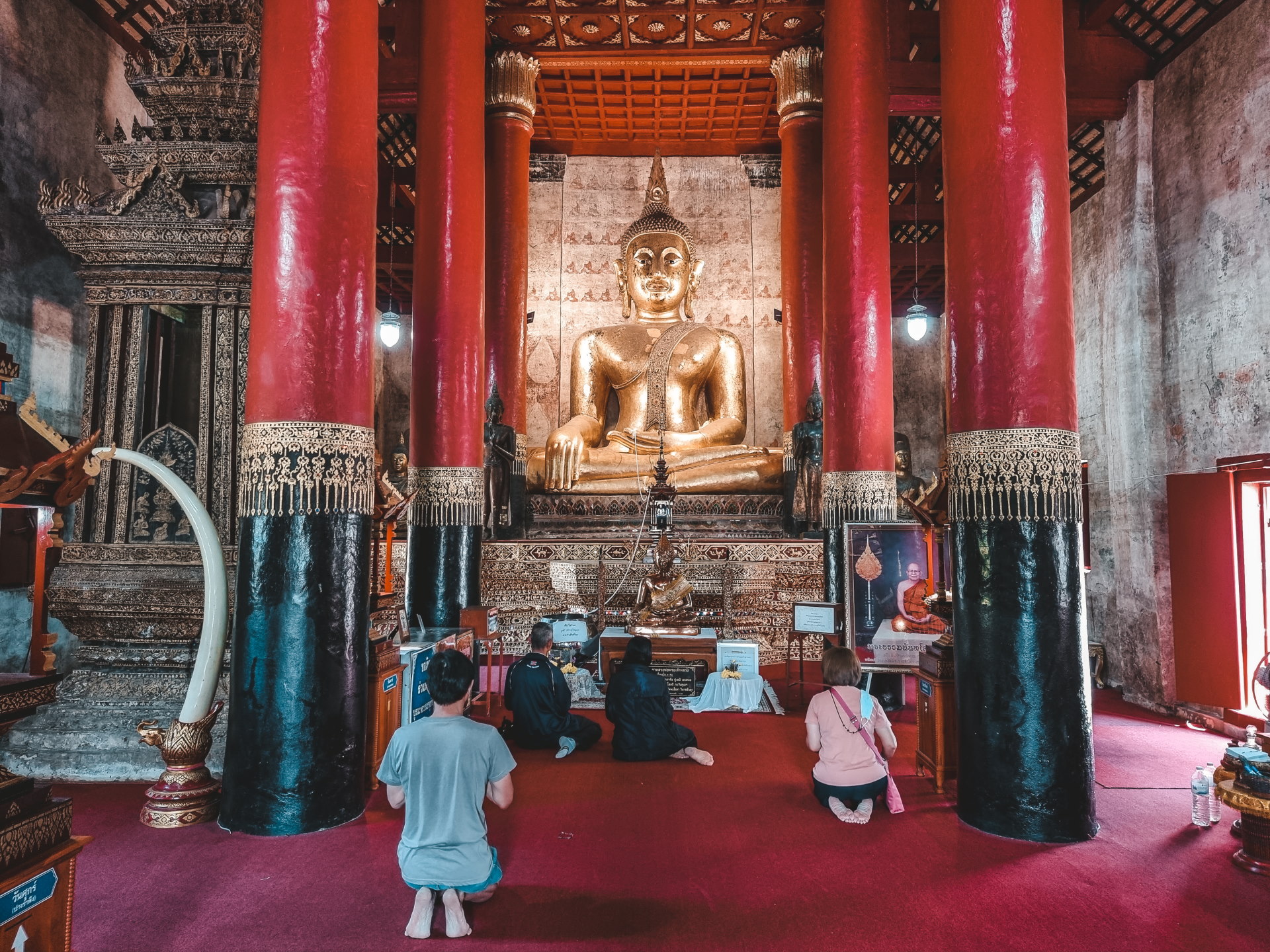
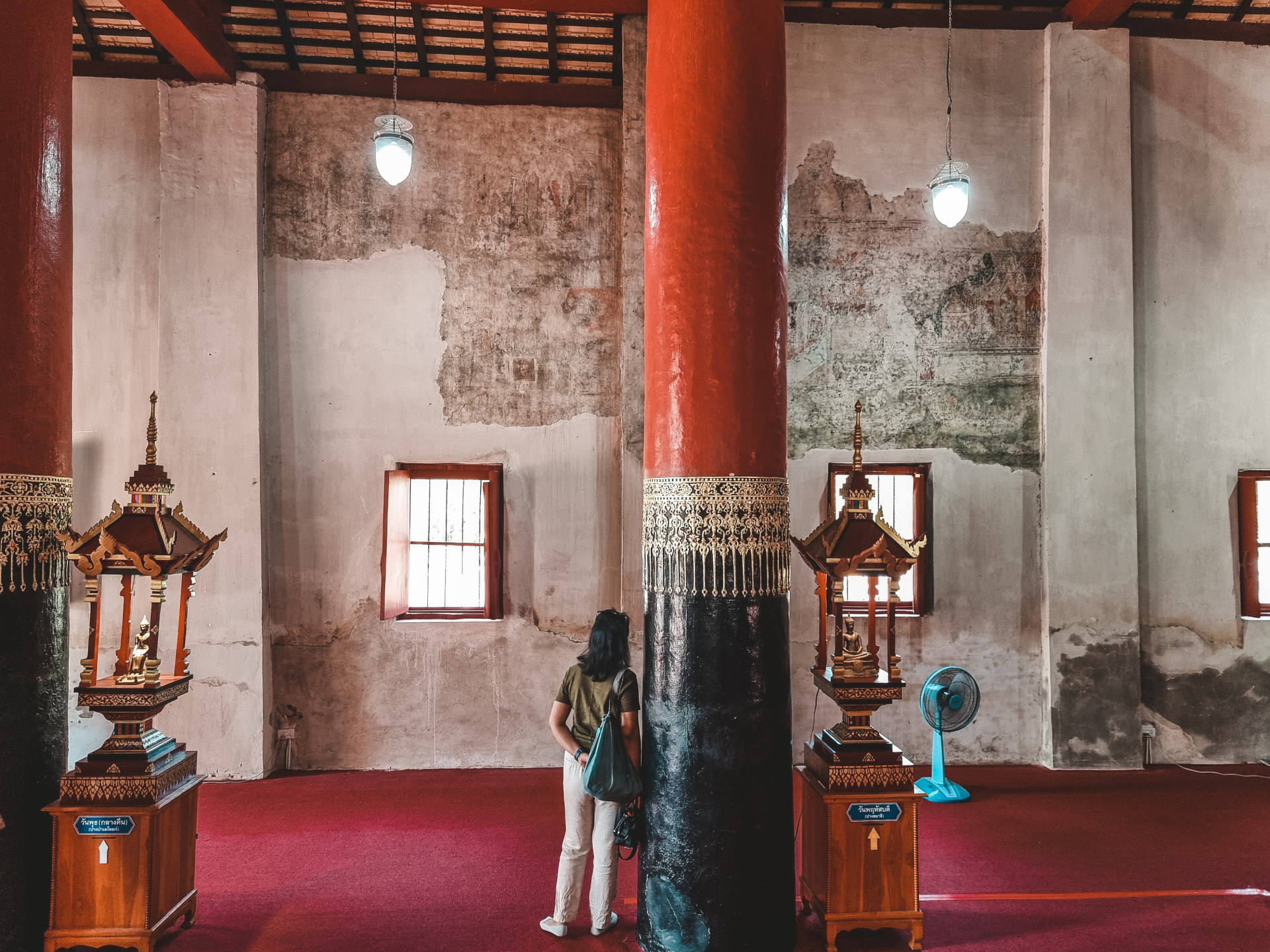
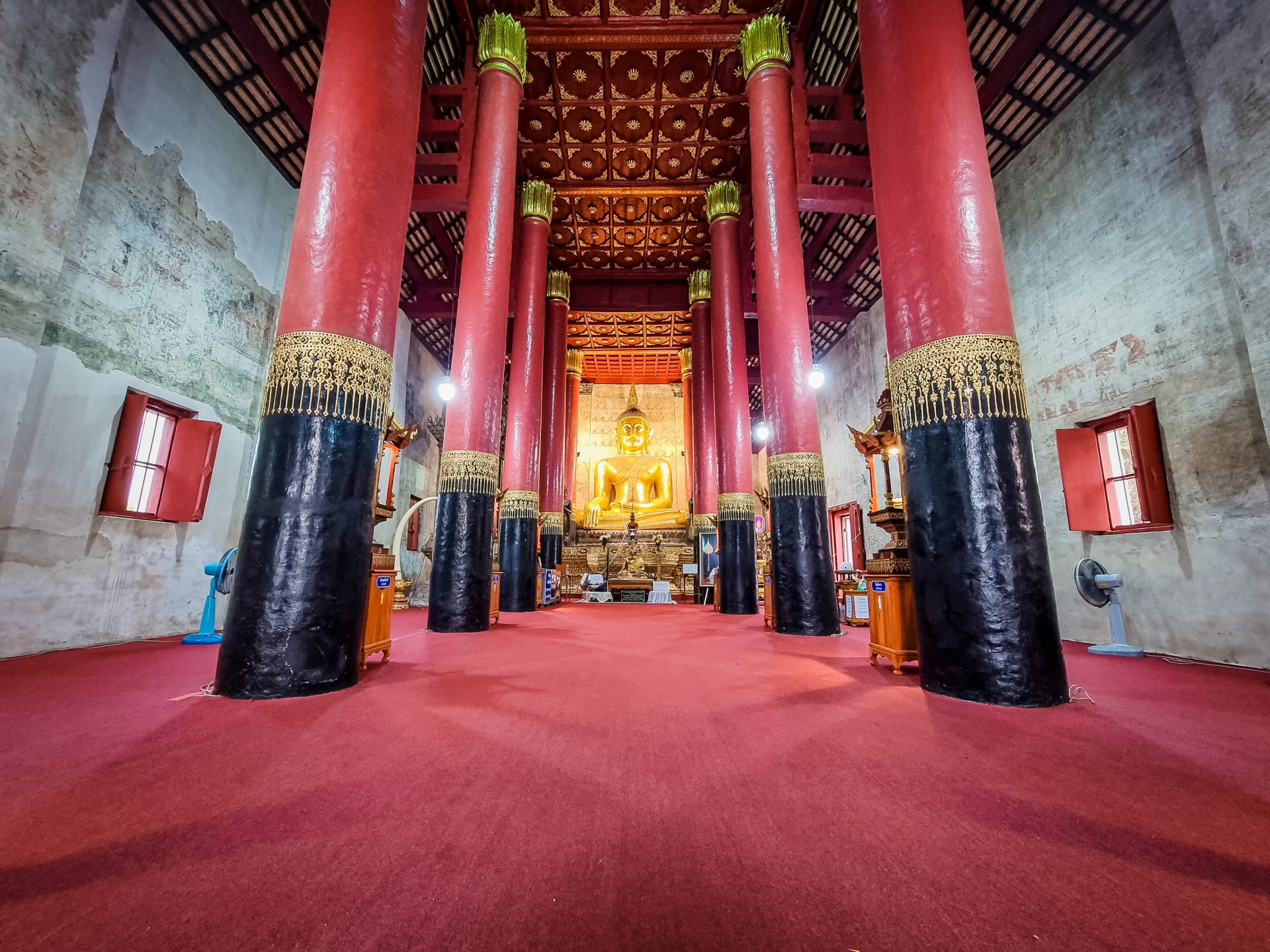
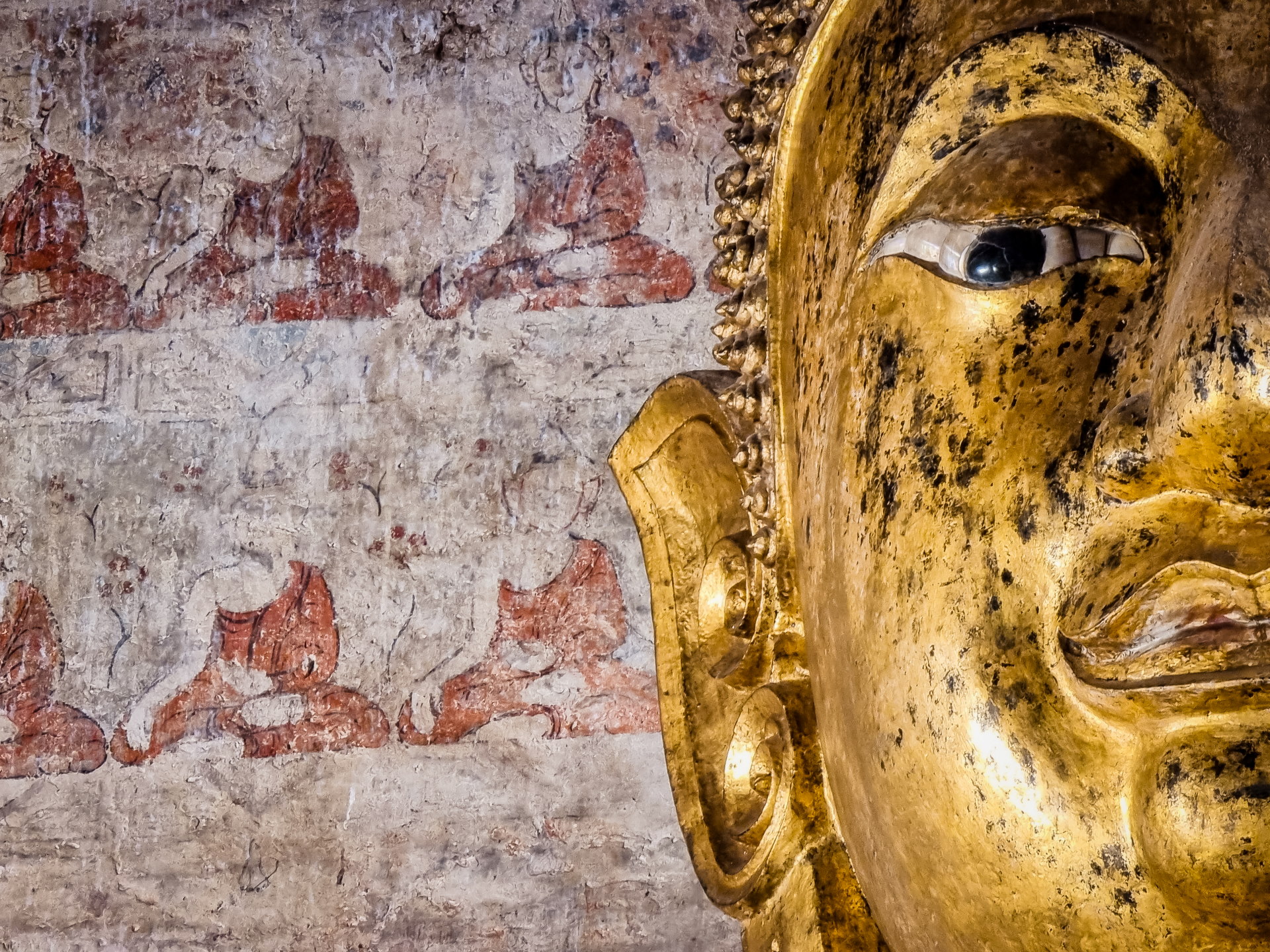
Inside, the weight of the years is more pronounced. On the facades, old 19th-century frescoes are still partially visible, but many were covered with lime during renovations carried out in the last century.
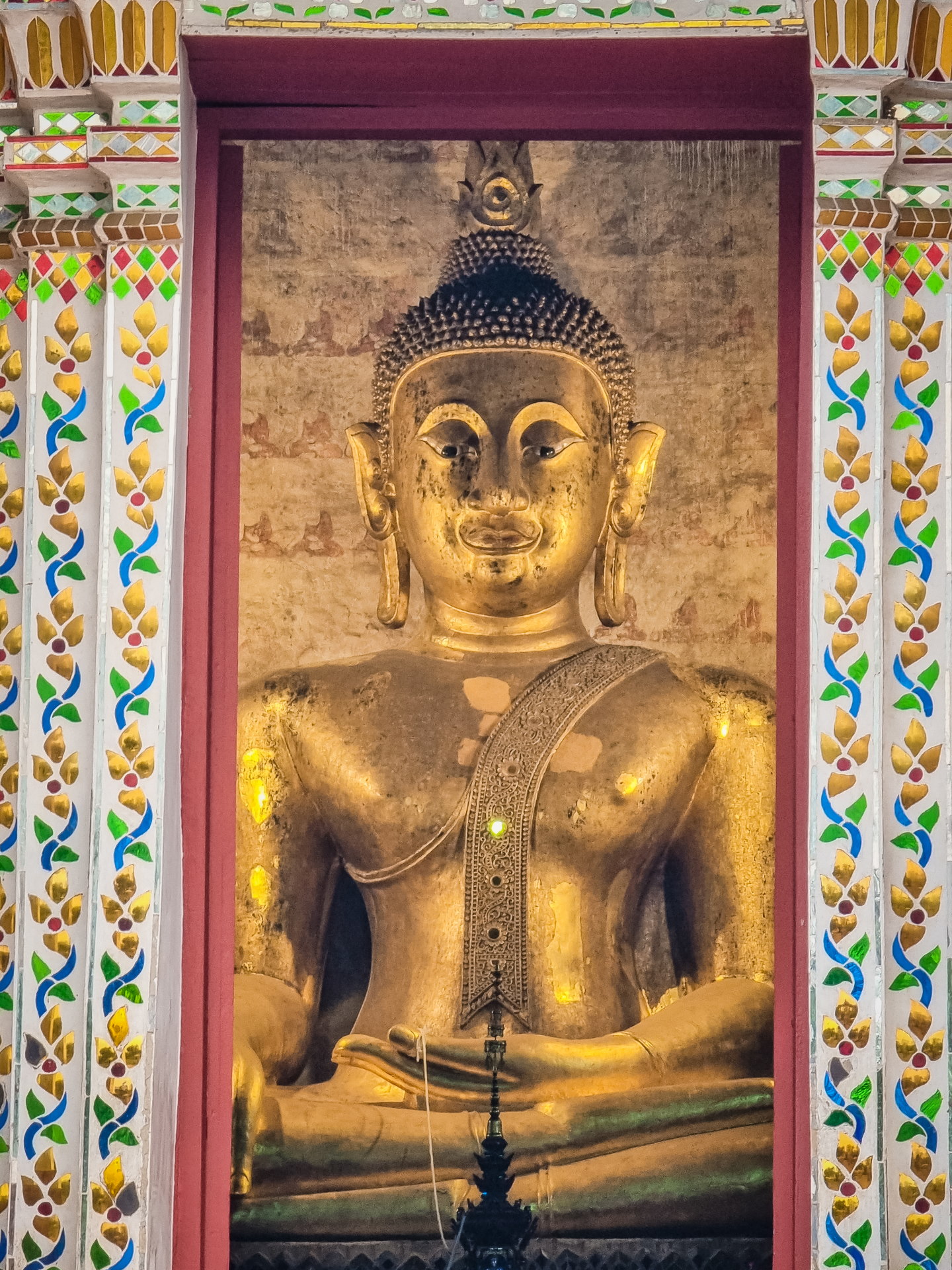
The main image is a large seated Buddha statue in the Lanna style, named Phra Chao Luang . On either side, more discreet because they are much smaller, are two older standing Buddha statues in the Sukhothai style, cast in 1426. Behind this group, the murals can still be seen.
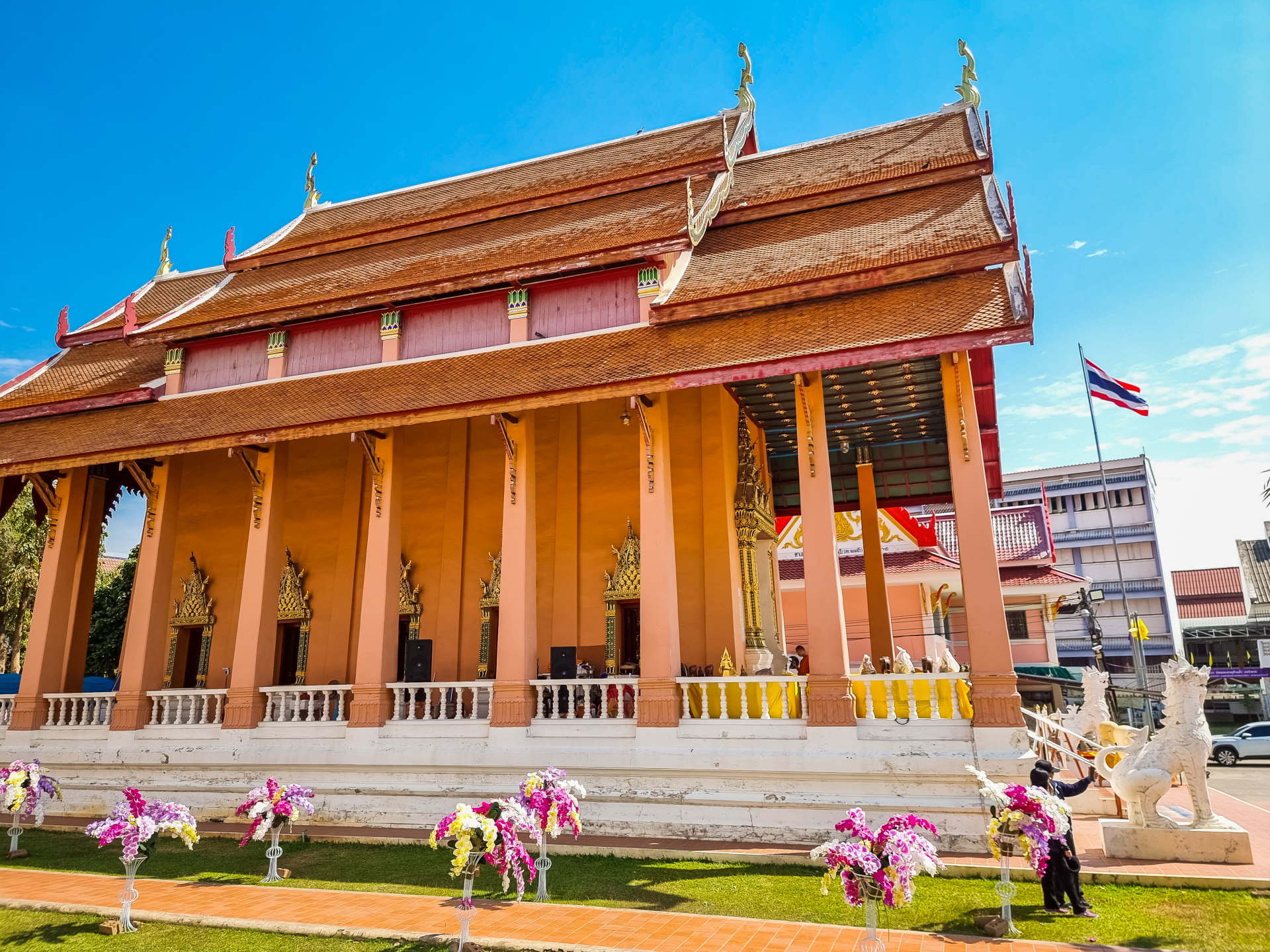
Next to the viharn is another large building. If you're already familiar with Thai temples, you might easily mistake it for the ubosot from the outside. Except it's not… it turns out to be the largest ho trai in Thailand.
The ho trai is usually the temple's religious library, housing what is known as the Tripitaka , the scriptures containing the Buddha's teachings. Although it no longer serves as a library, the building's interior betrays its former function through its unusual narrowness.
Rather than leaving an empty room, it now houses a row of display cases holding 12 miniature chedis. According to a Northern Thai tradition, 12 major chedis are associated with the 12 signs of the lunar zodiac.
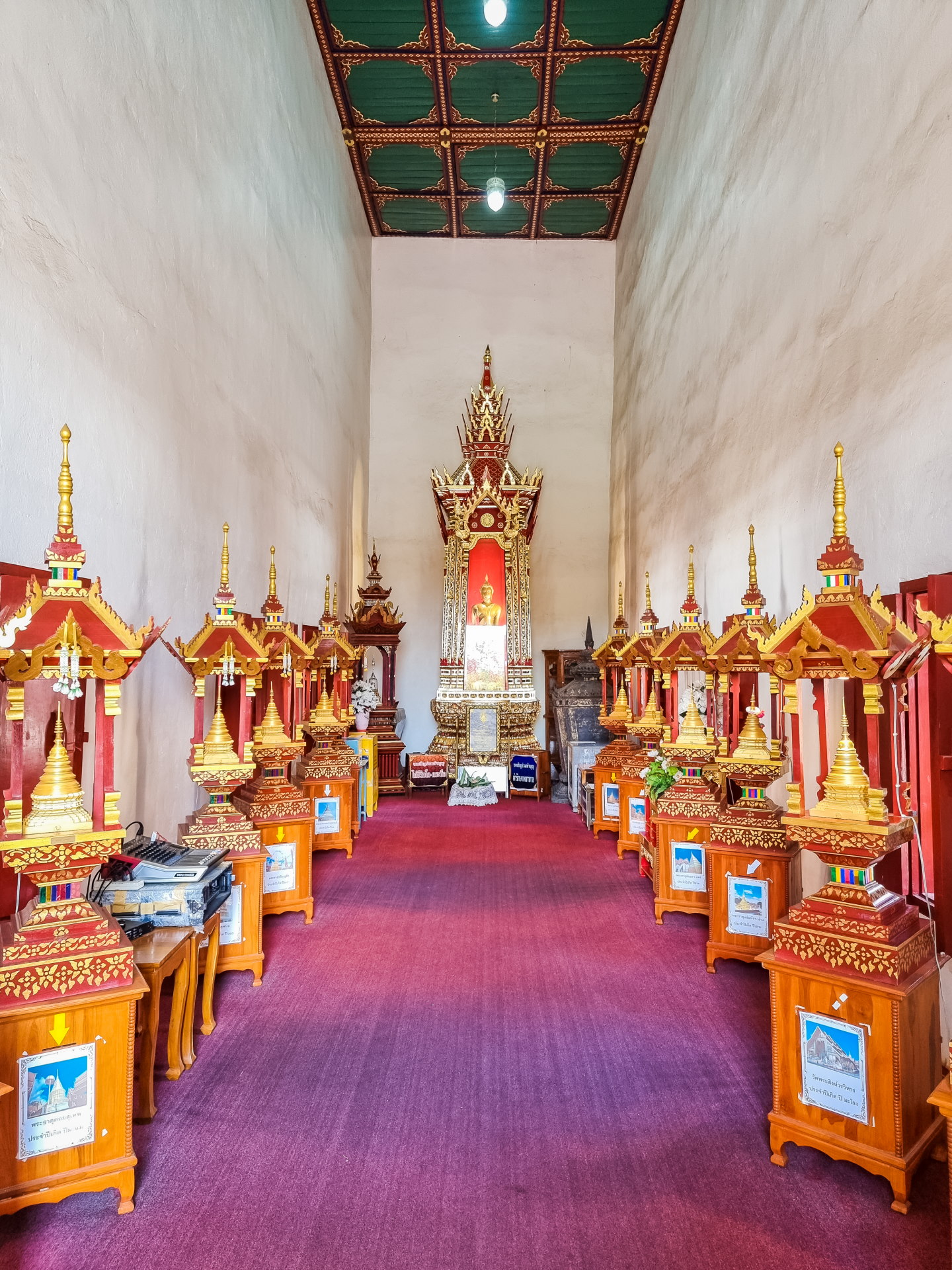
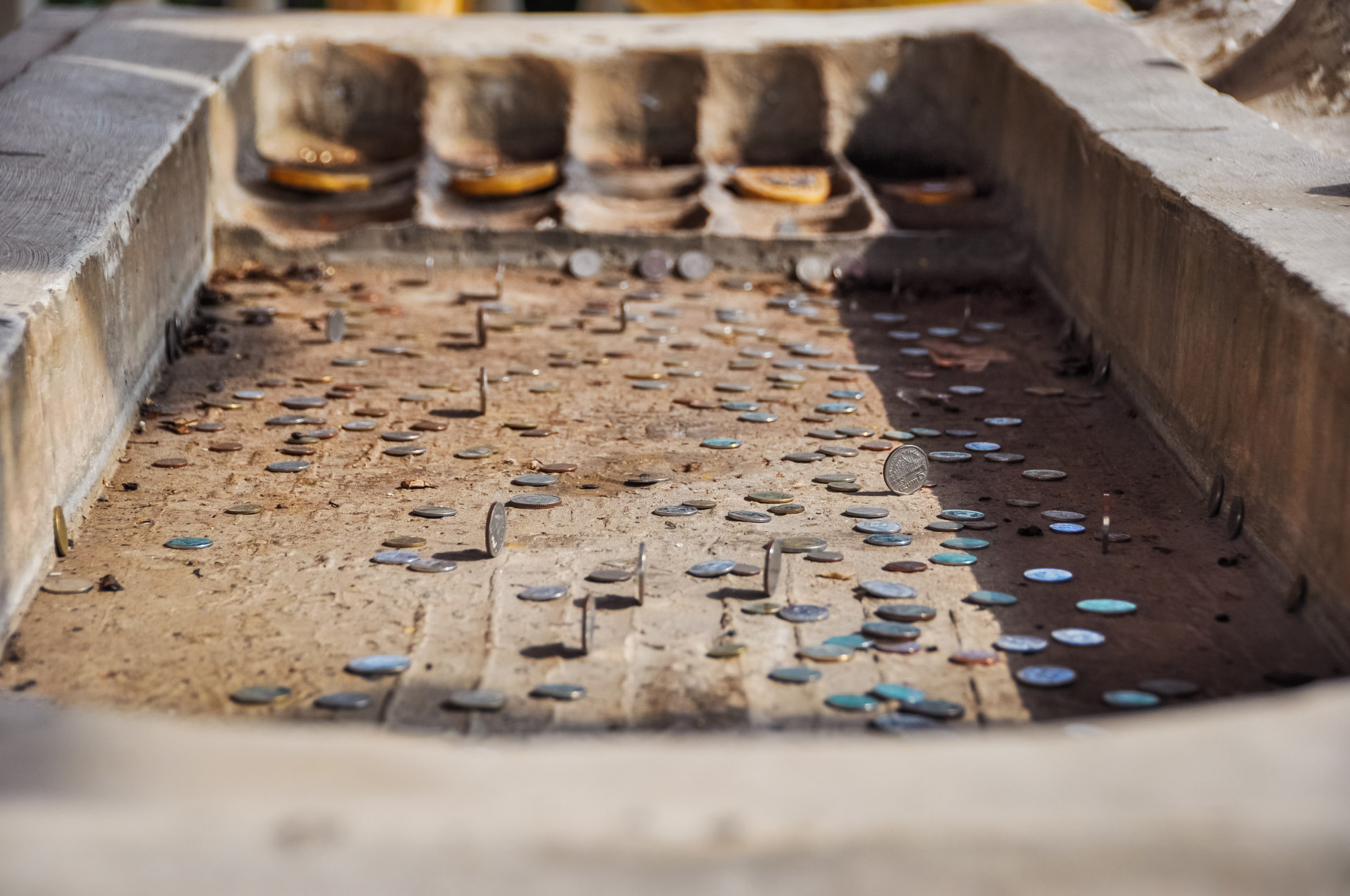
Worshippers traditionally visit the chedi corresponding to their birth year to make offerings and accumulate merit. Here, they can simply make an offering using the collection box located under each display stand.
Returning to the chedi, which we'll examine more closely behind the viharn , it blends Sukhothai (hello elephants all around!) and Lanna styles. Its summit is covered in golden plaques, shining brightly under this beautiful sunny day we were enjoying.
More discreetly, at the rear, at the foot of its square base, is a small prayer room containing a Buddha surrounded by two novices.
Finally, a little apart behind the whole, we find the last room that we usually encounter in a temple: a small ubosot , whose facade is richly decorated at the level of the pediment.
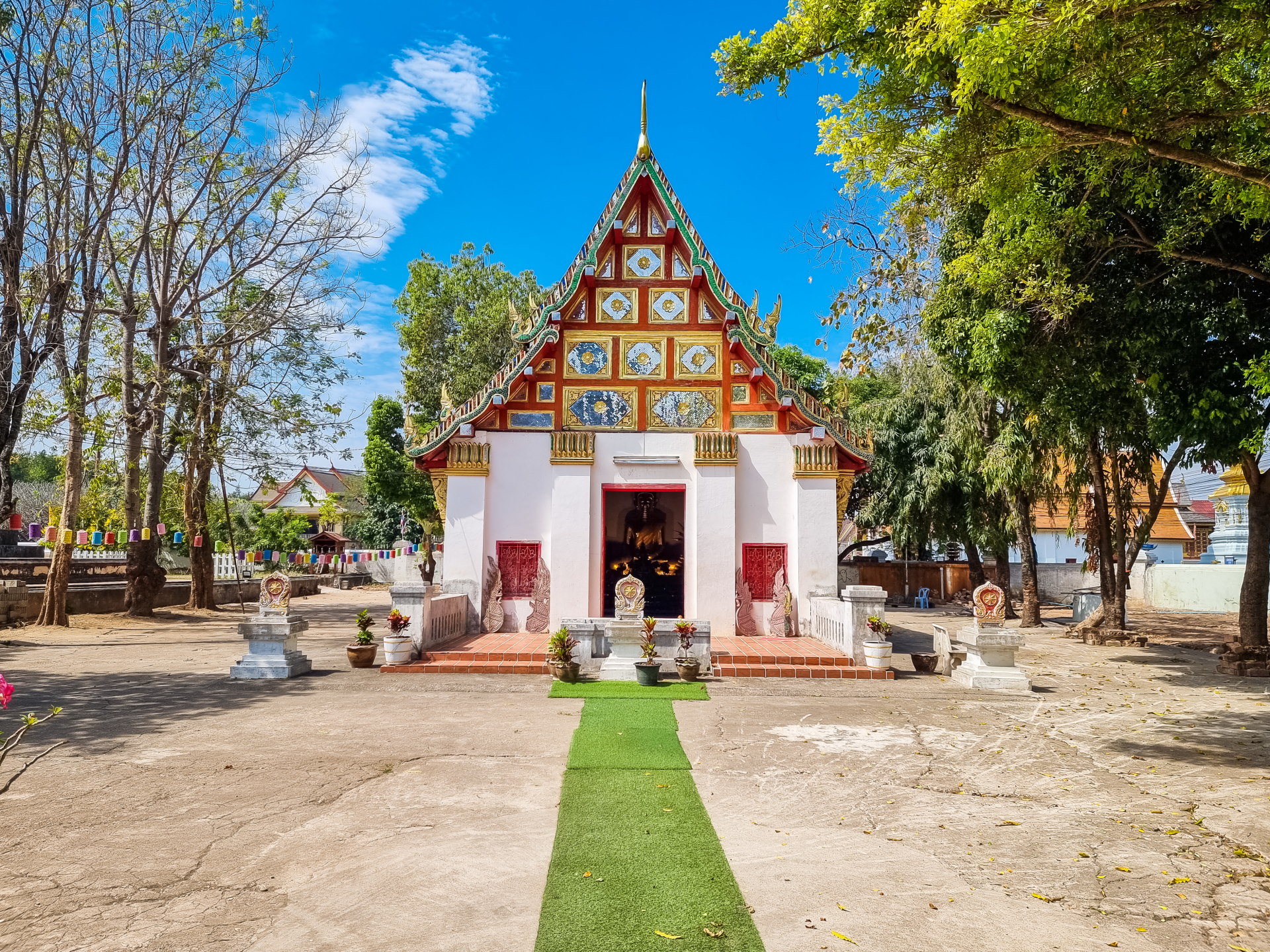
Just like Wat Phumin, I returned to this same temple the following morning, when it was completely empty and quiet. The vibe was completely different, more serene, and I appreciated the details inside the viharn much more.
Wat Ming Mueang
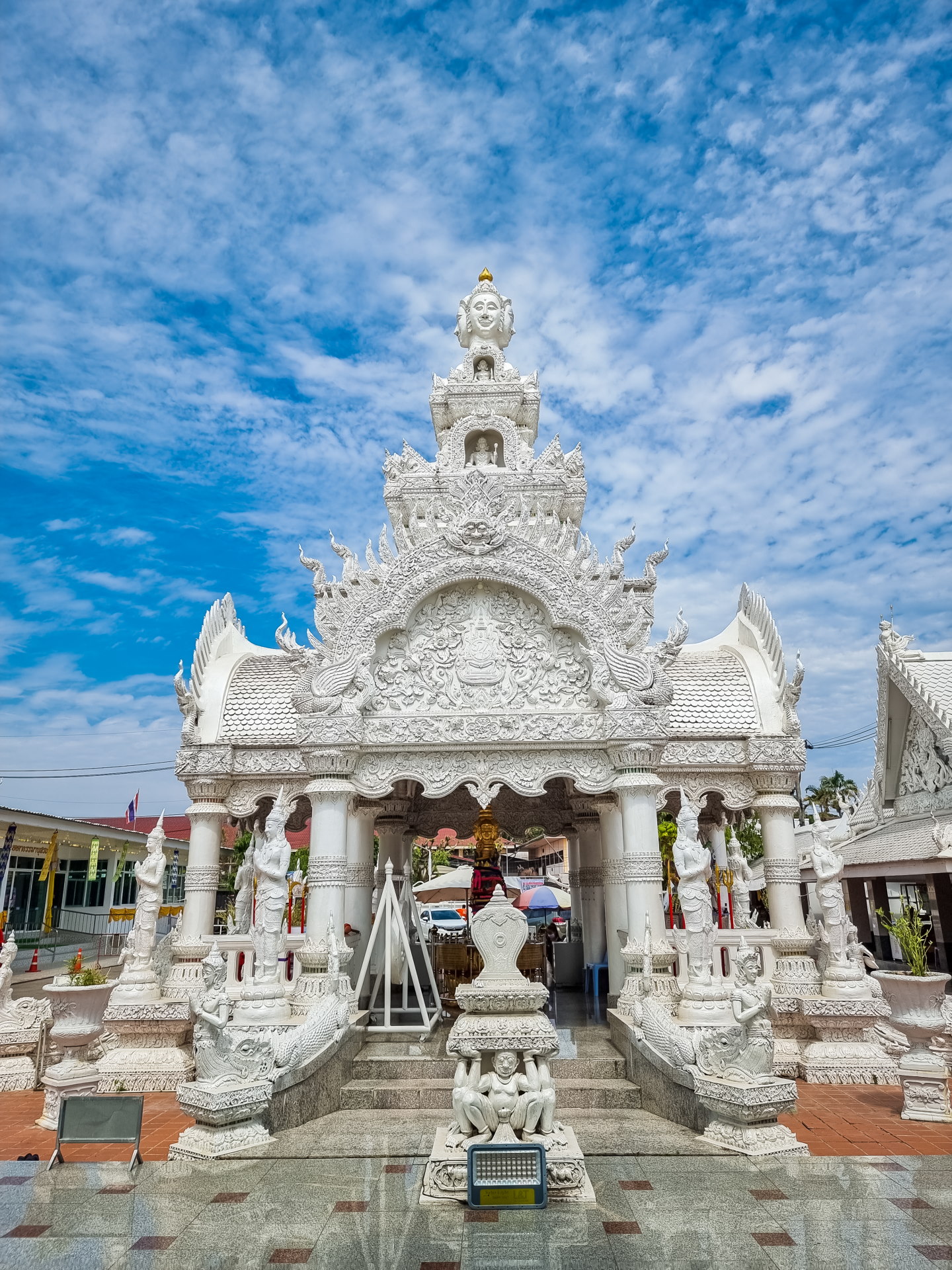
Located 300m from Wat Phumin, you have Wat Ming Mueang . Of more recent construction, 1857 to be exact, its location is not a coincidence as it is situated on the site of the old Nan city pillar and thus acts as the City Pillar Shrine.
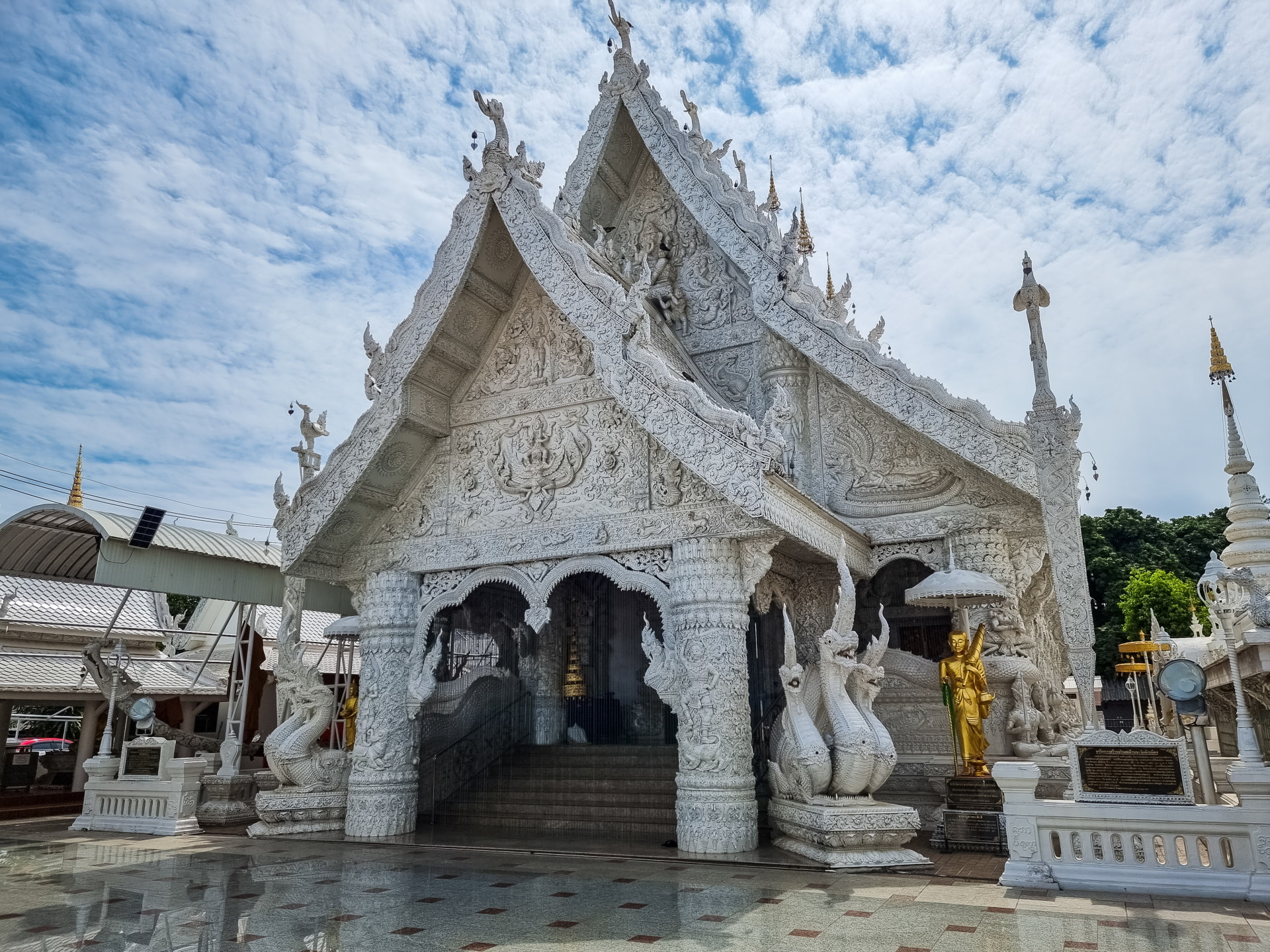
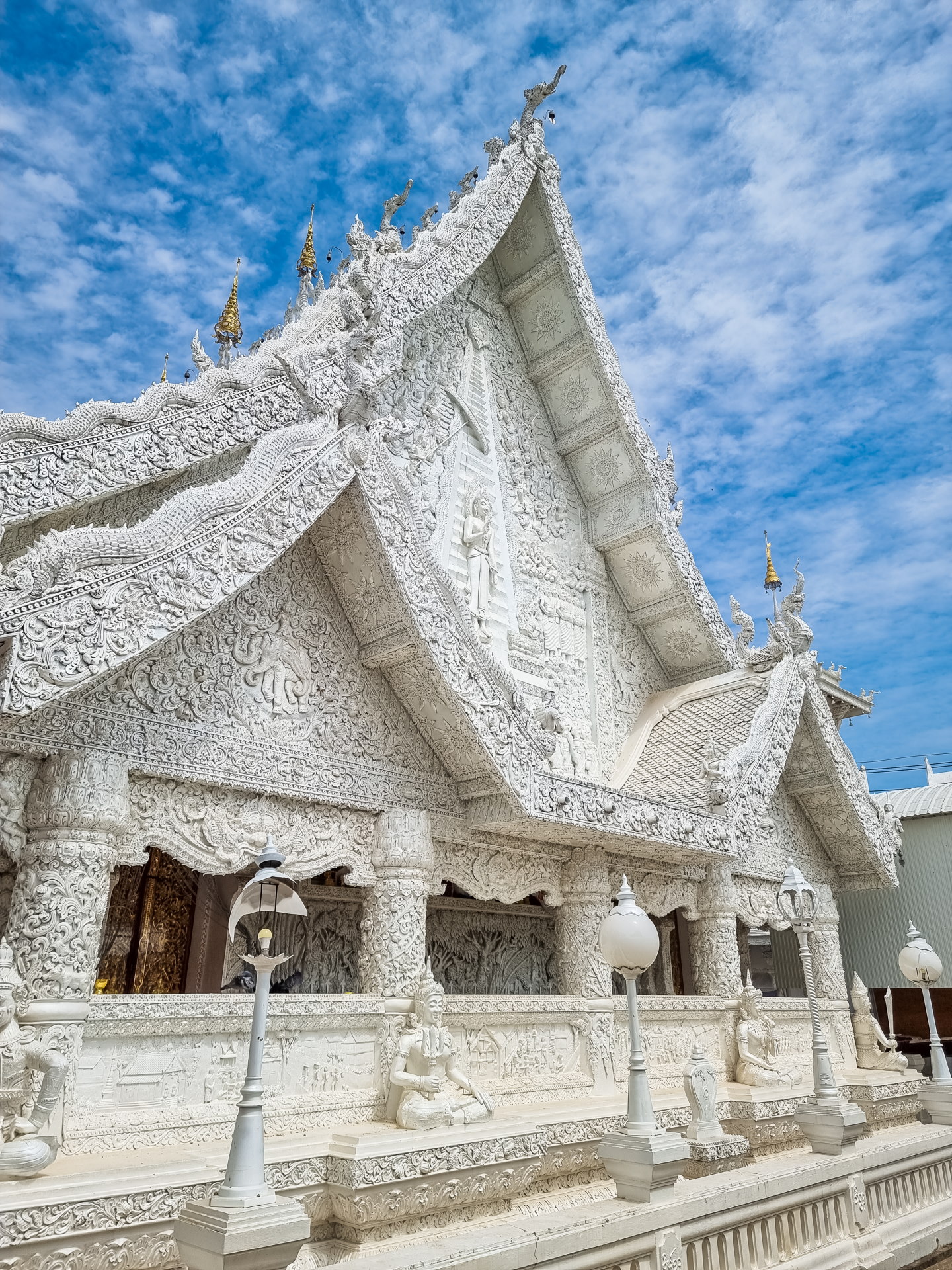
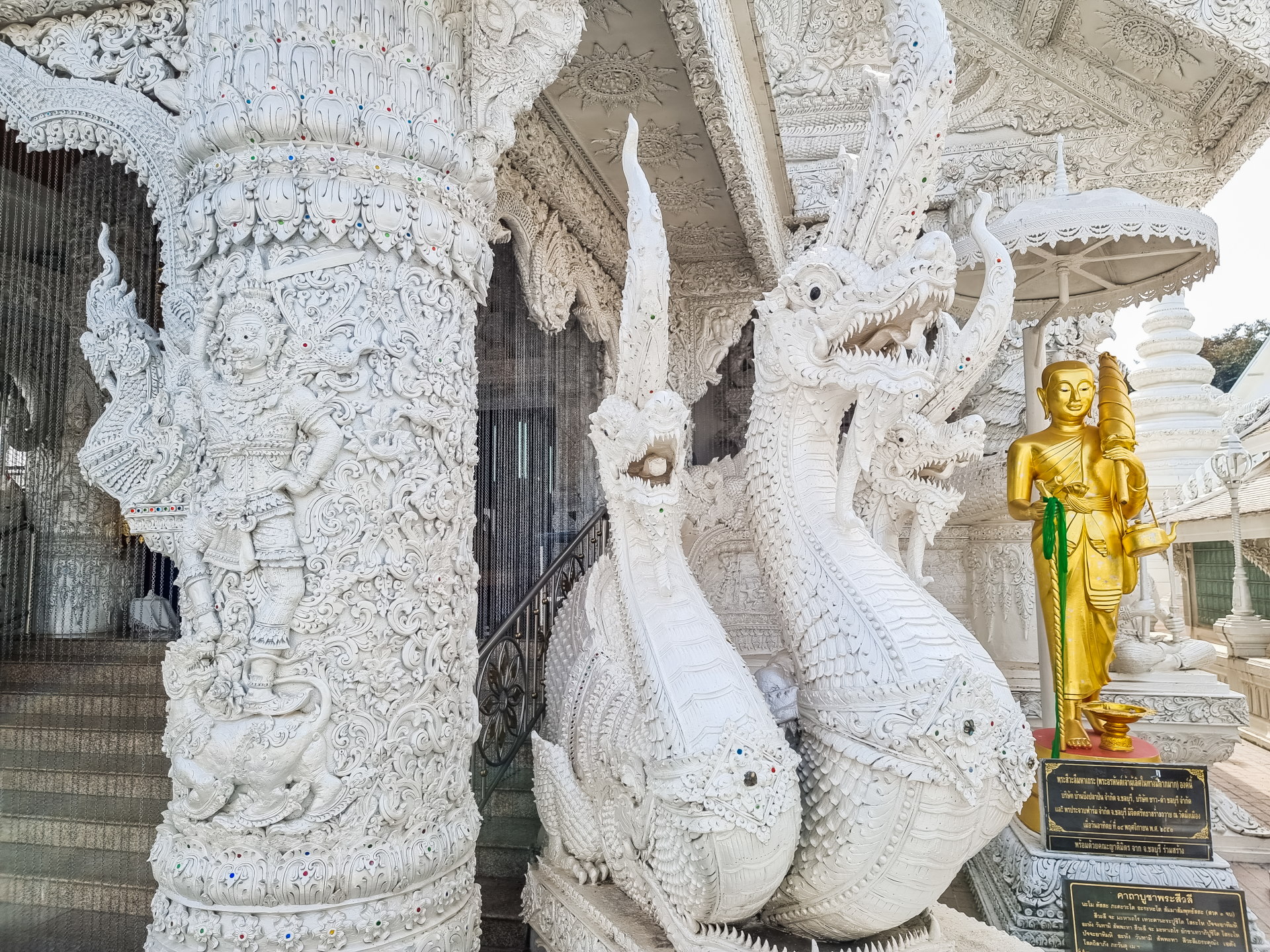
The latter is sheltered under a structure open on the sides, placed in front of the temple's ubosot. White predominates and, with the sculptures and bas-reliefs covering the buildings, the whole thing has a slight resemblance to Wat Rong Khun in Chiang Rai (well, only a very brief one).
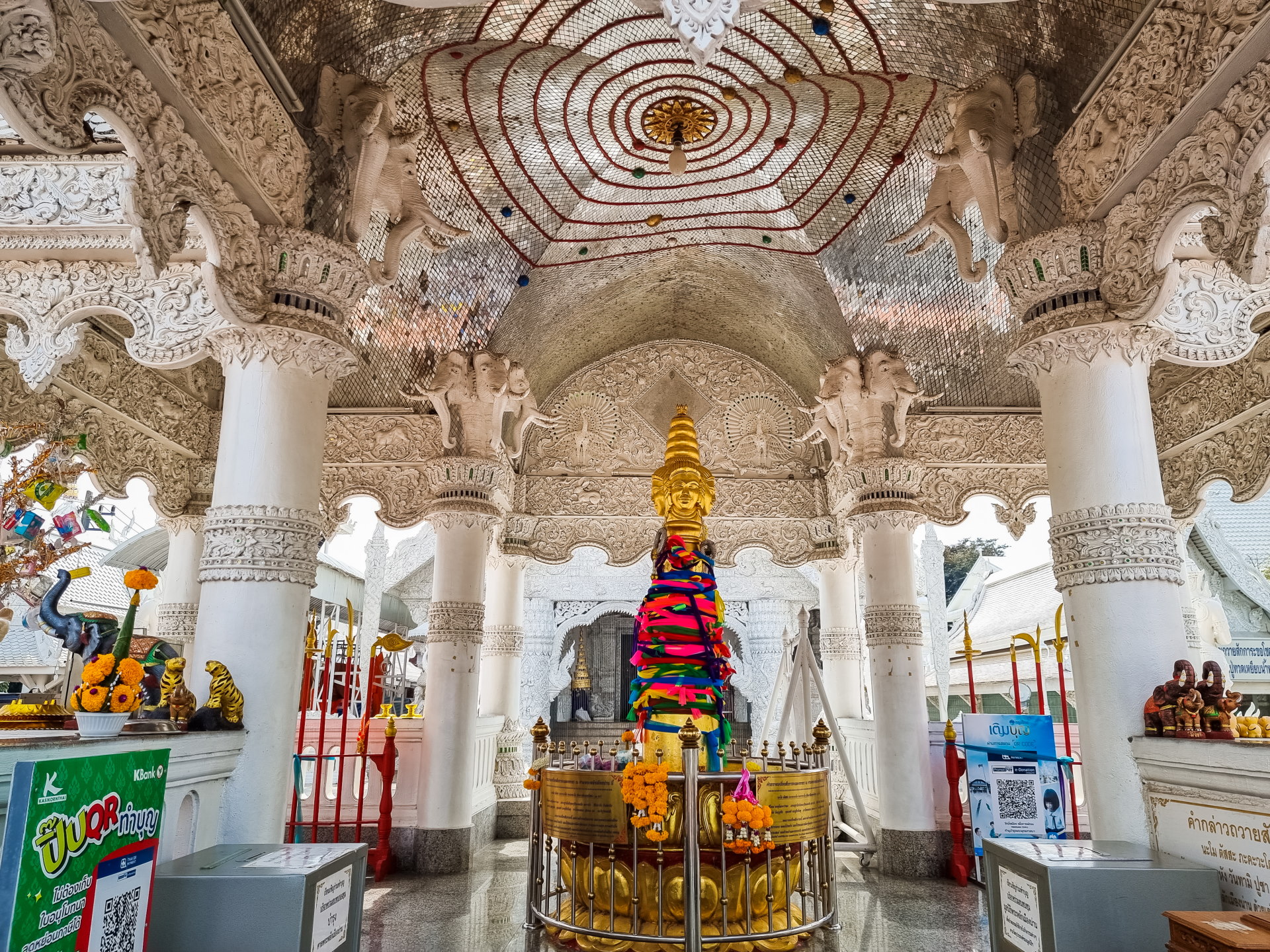
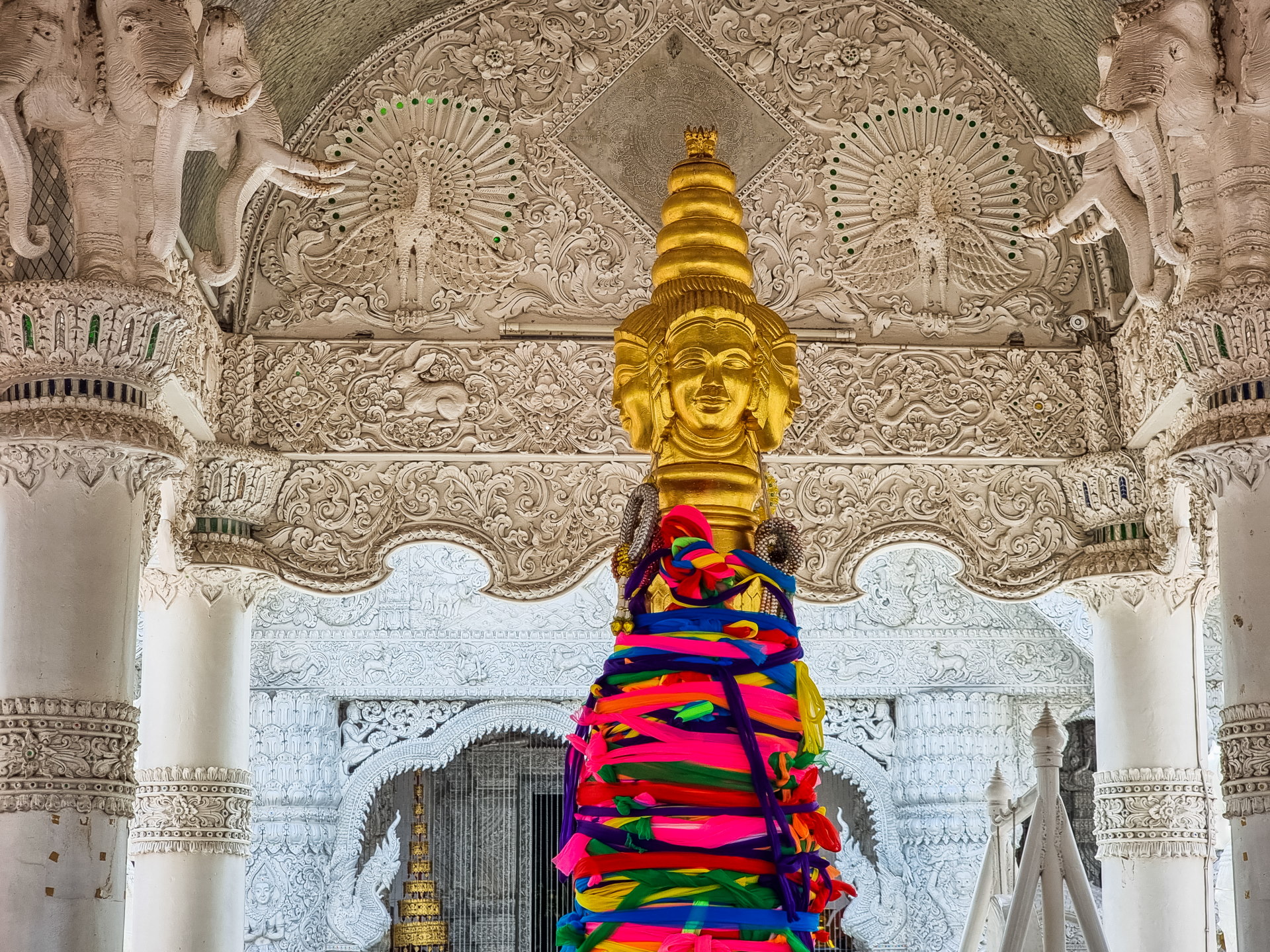
The sacred pillar (responsible for protecting the city from catastrophes), 3 meters high, has a carved wooden base, adorned with lacquered motifs and gilded with fine gold.
Its most distinctive feature is its summit sculpted with the effigy of Brahma, the creator god and central figure of Hinduism, often represented — as here — with four faces (each having a name: Metta, Karuna, Mutita and Ubekkha).
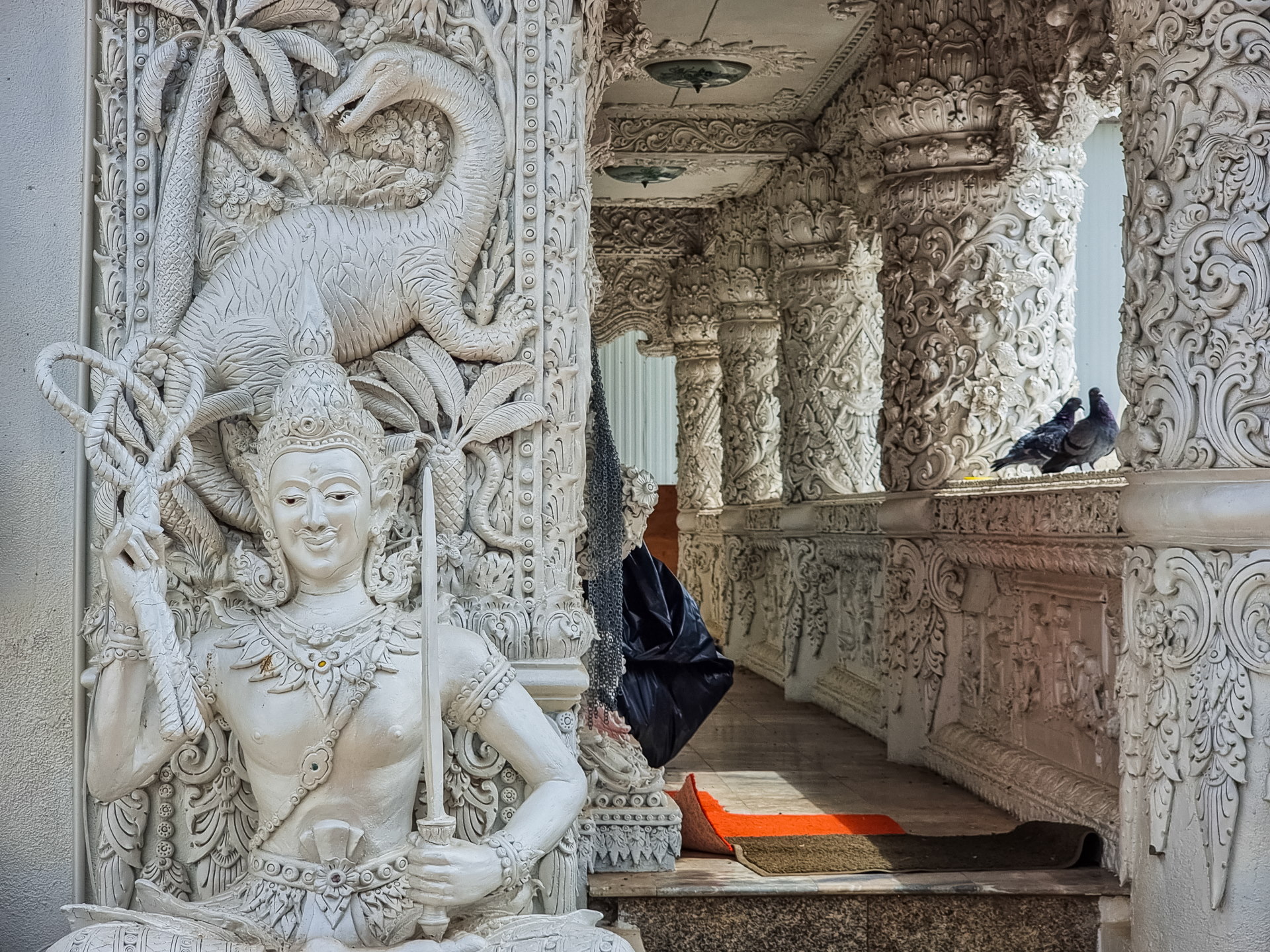
The ubosot is more recent, as it replaced the old one in 1984. The hall is adorned on its exterior walls with plaster sculptures classically illustrating the life of the Buddha, with a twist… because behind it, you can also recognize a good old dinosaur, without me knowing the reason, except a whim of the Chiang Saen artisans who worked on this temple.
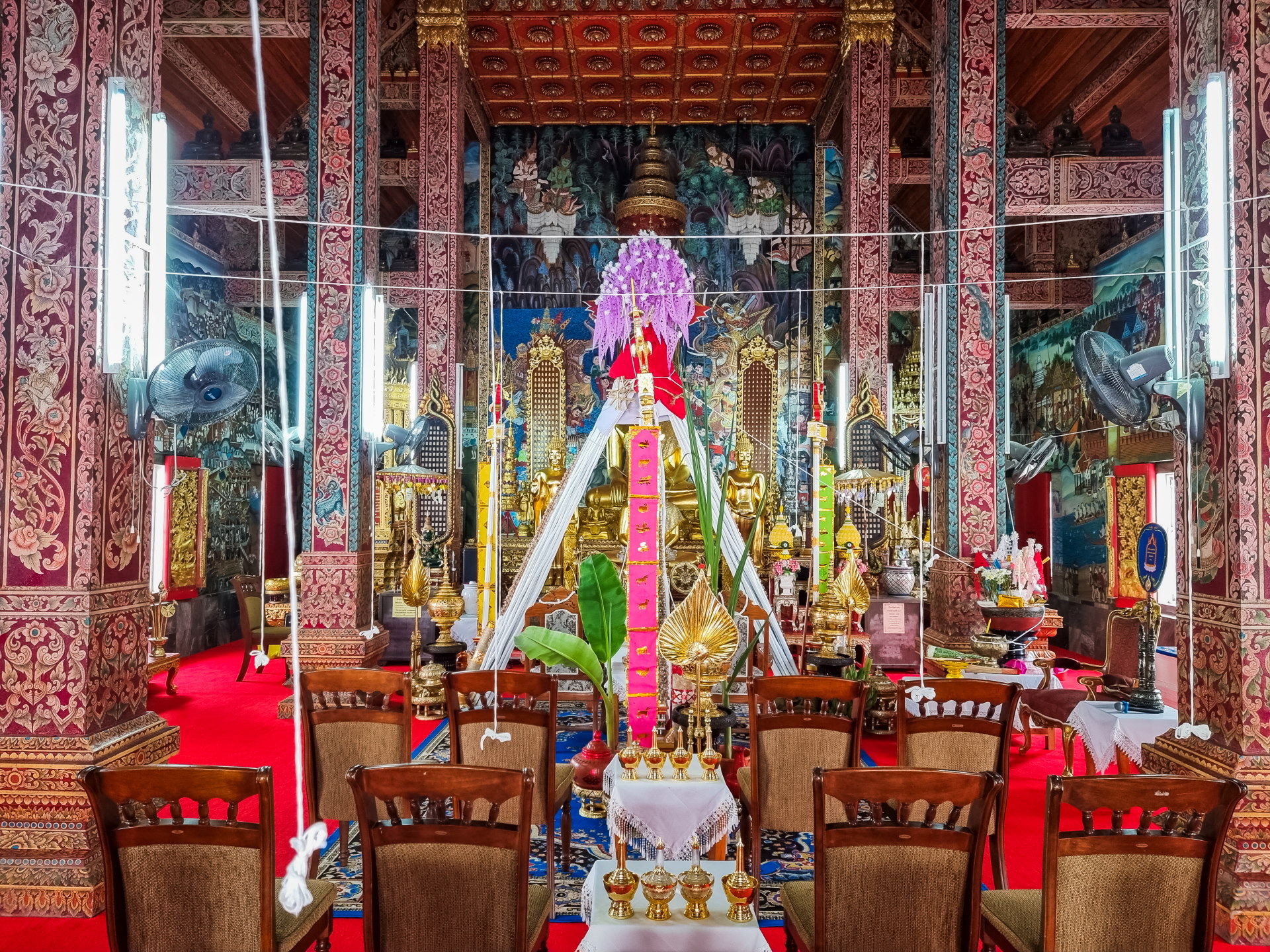
Inside, brightly colored murals depict the way of life of Nan's former inhabitants. Not a must-see in Nan, but it has its charm.
On the outskirts of Nan
Wat phra that khao noi
Located on a small hill just 1 km from the center, Wat Phra That Khao Noi is the spot to overlook Nan! Moreover, its name is not very sophisticated since phra that simply means "sacred relic" and khao noi , small hill.
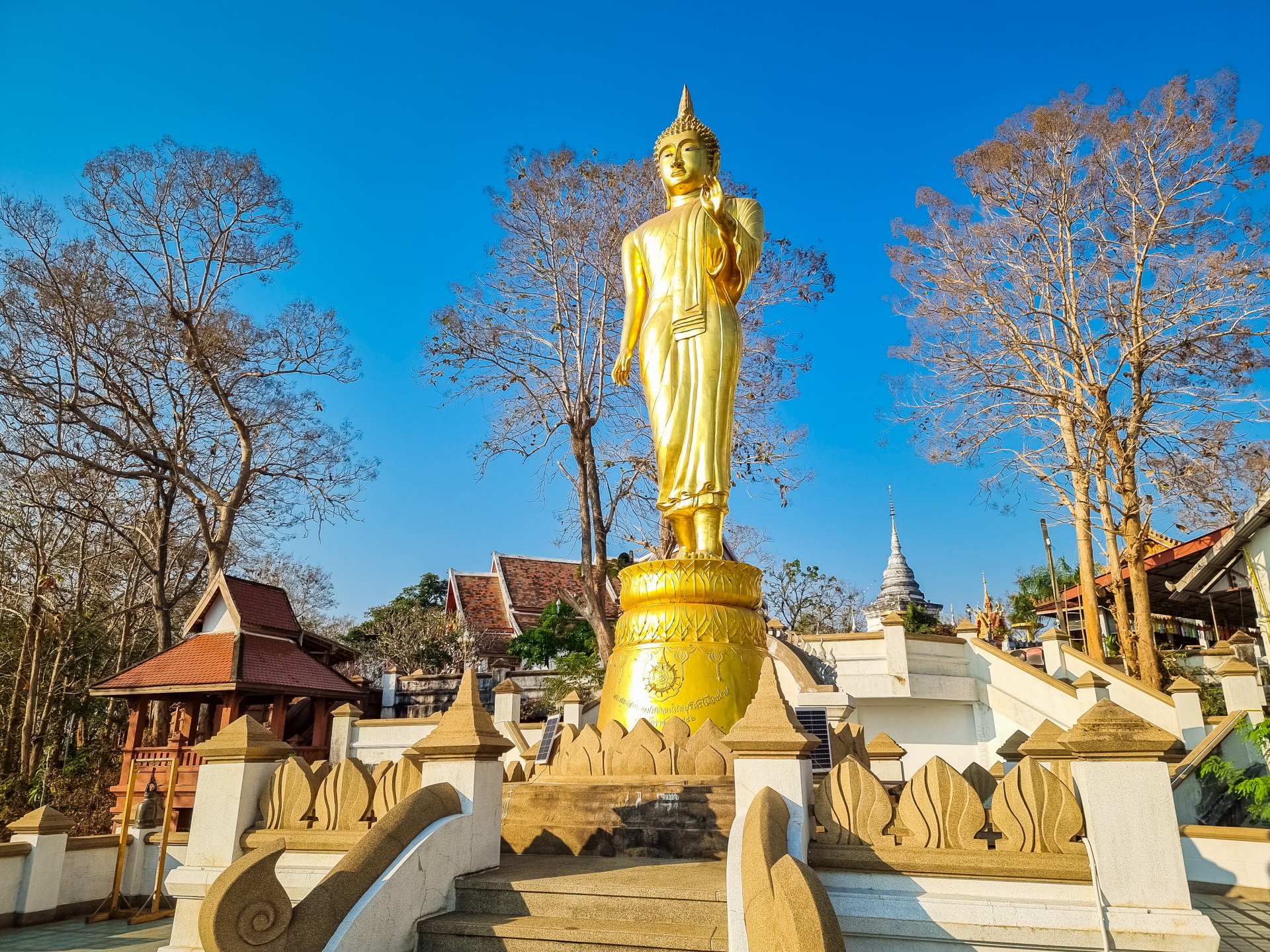
This is a typical example of a temple where people don't come specifically for the building itself, but to enjoy its commanding location. It's from here that you can get a souvenir photo of Nan, with a large, Sukhothai-style walking Buddha statue standing on a circular pedestal, overlooking the valley.
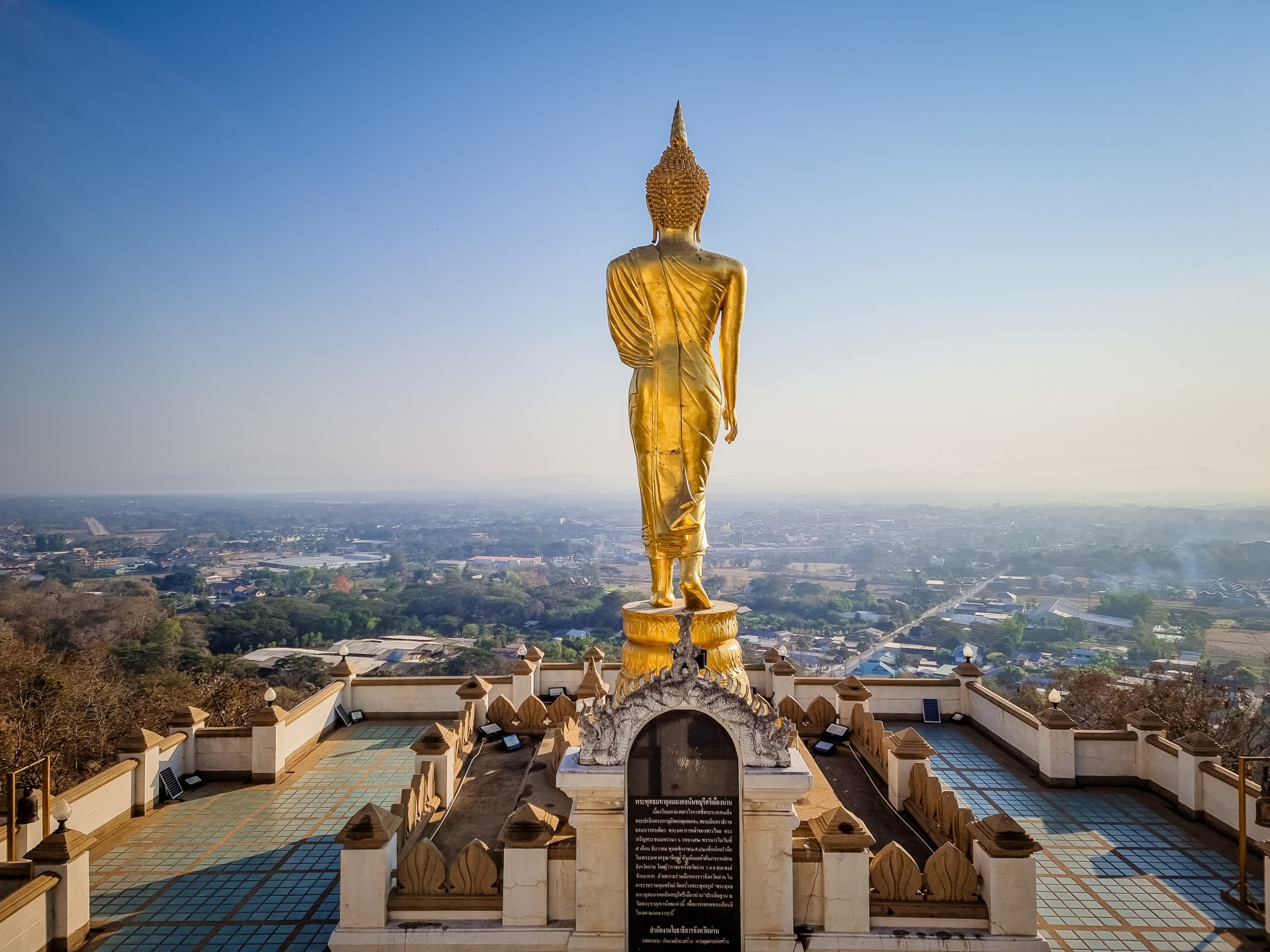
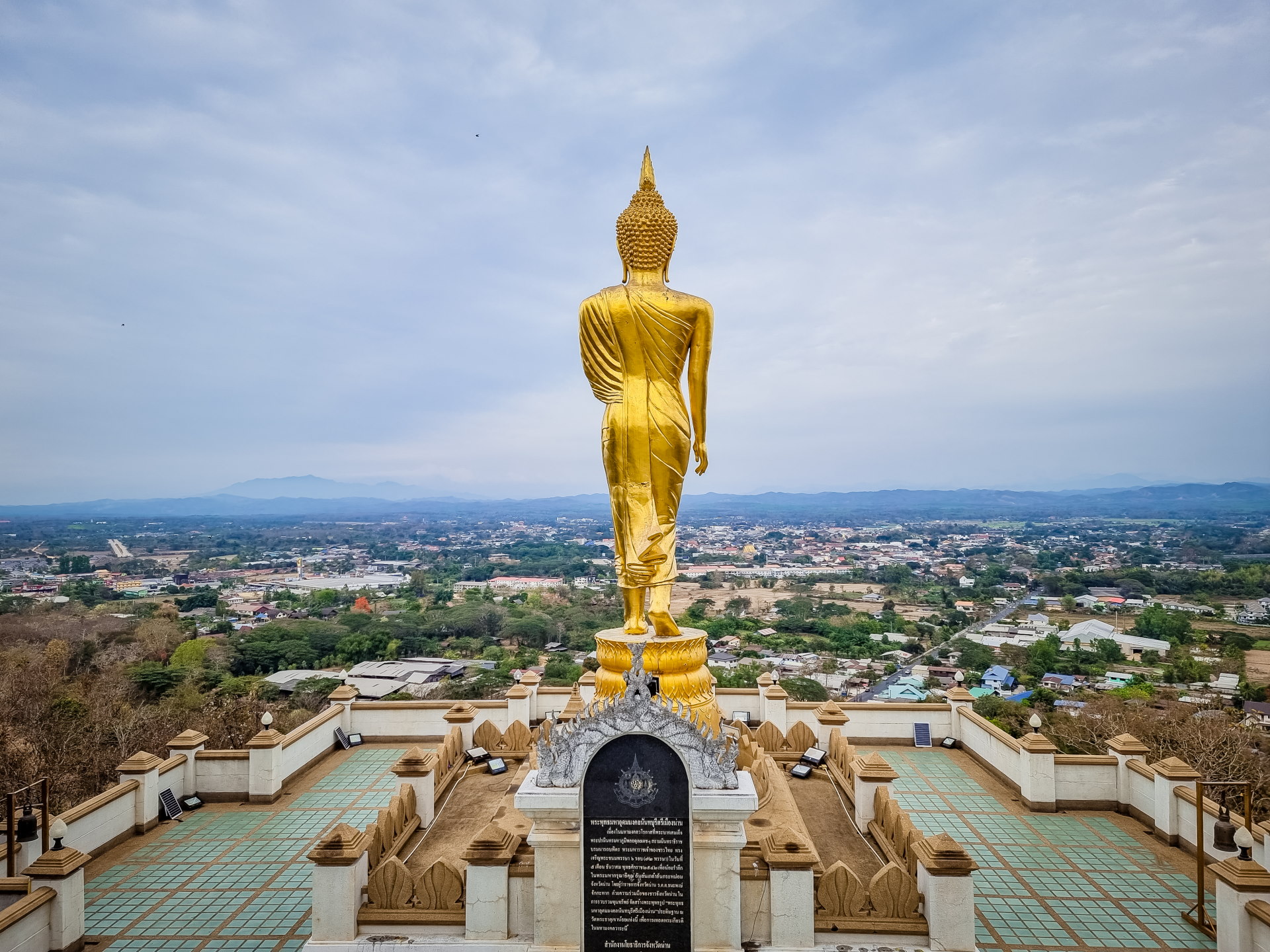
As a side note, we went there in the evening with Jitima, at the end of our day of sightseeing together; the next day, she had to go back to Bangkok for work. And even though Nan is small, as is often the case in Thailand, there is an airport, whose runway can be seen from the hill of Wat Phra That Khao Noi.
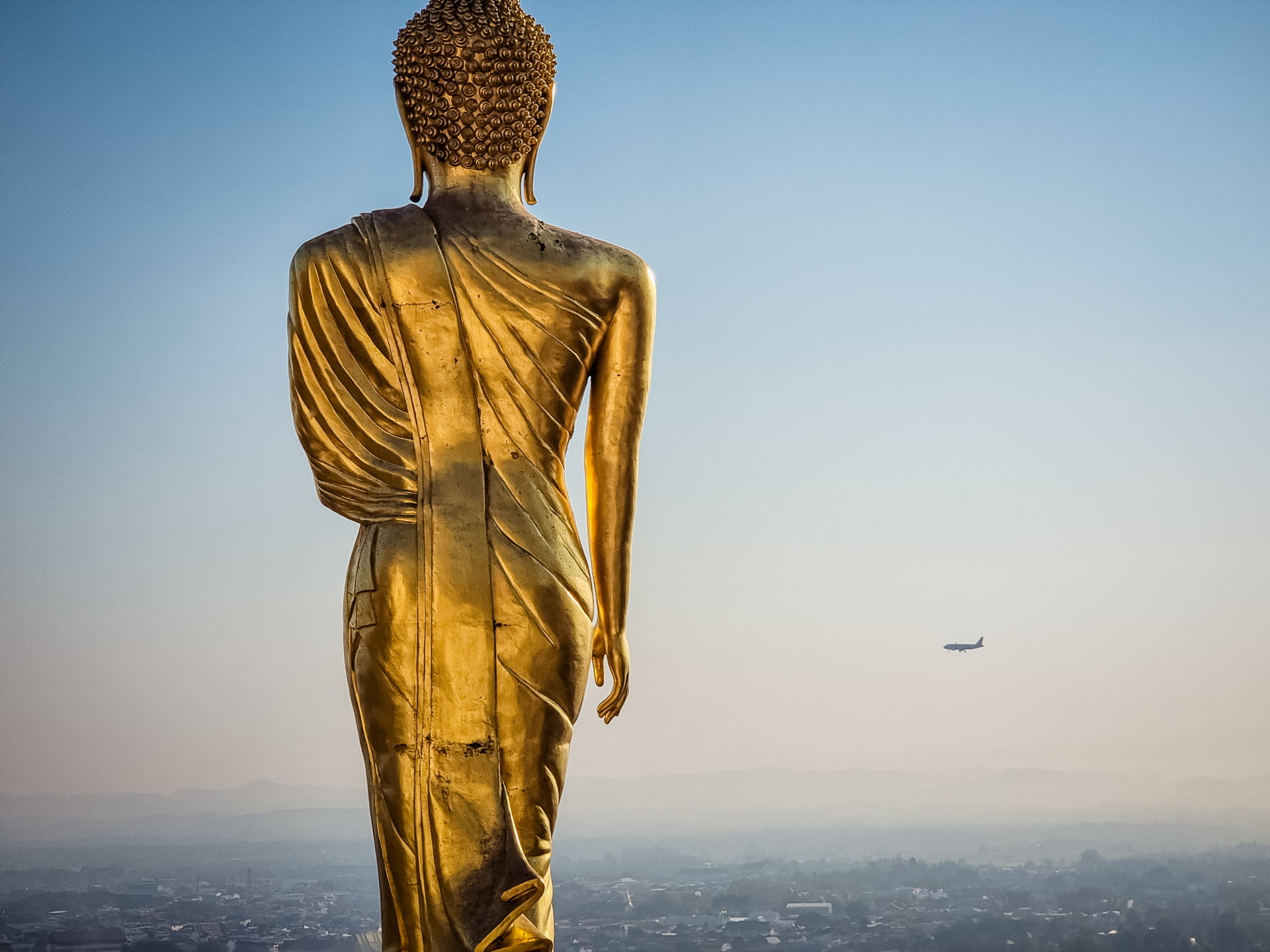
Since I had to get up anyway to drop her off, I went to the temple early in the morning to see what it looks like here with morning light, but also to say "hello", waiting for Jitima's departure time to see his plane take off, passing in front of the famous statue overlooking the city.
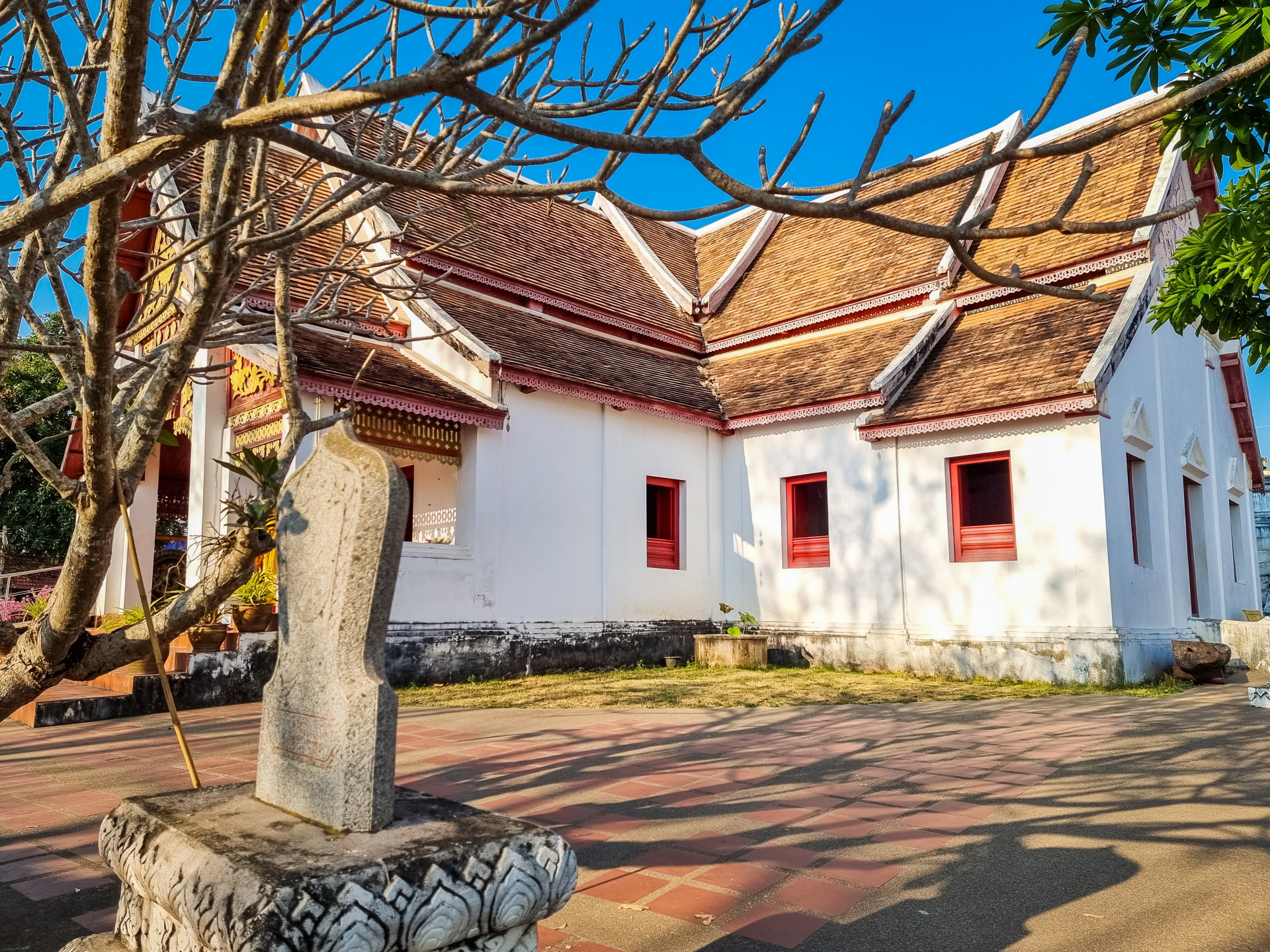
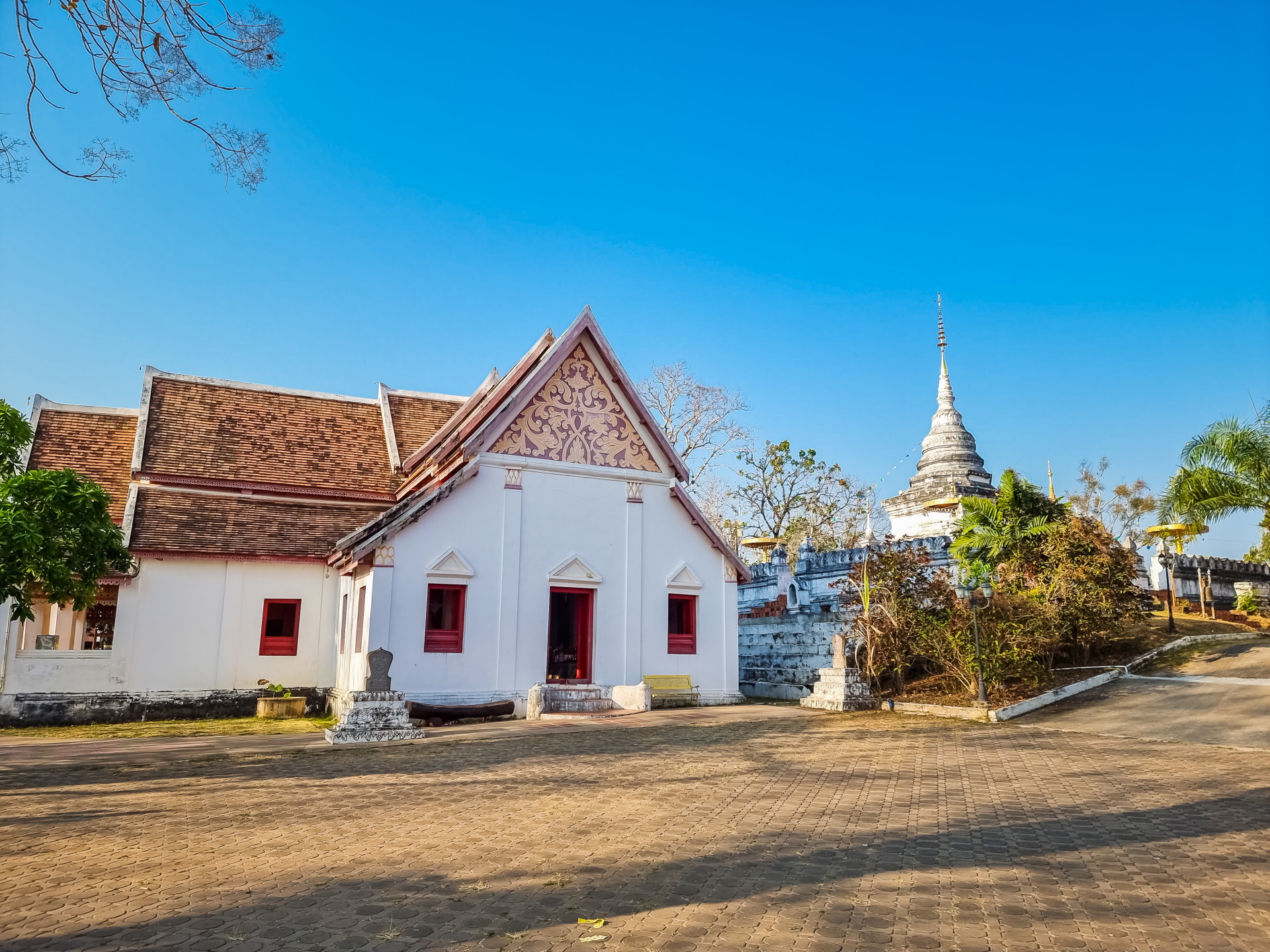
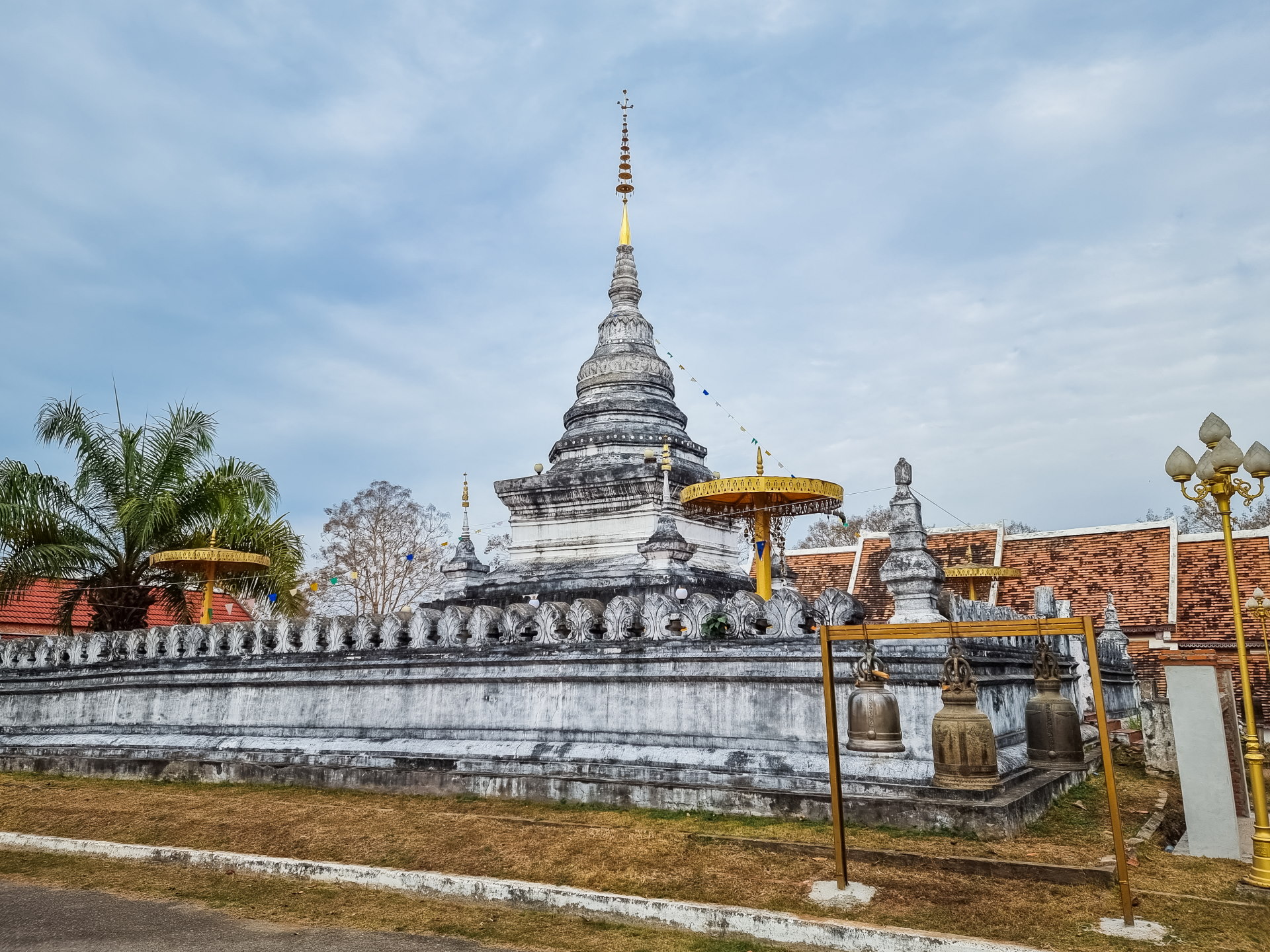
In practical terms, the site includes a large white chedi dating from the late 15th century, blending Burmese and Lanna styles. Major renovations took place between 1906 and 1911, when the T-shaped ubosot that now stands in front of the chedi was added.
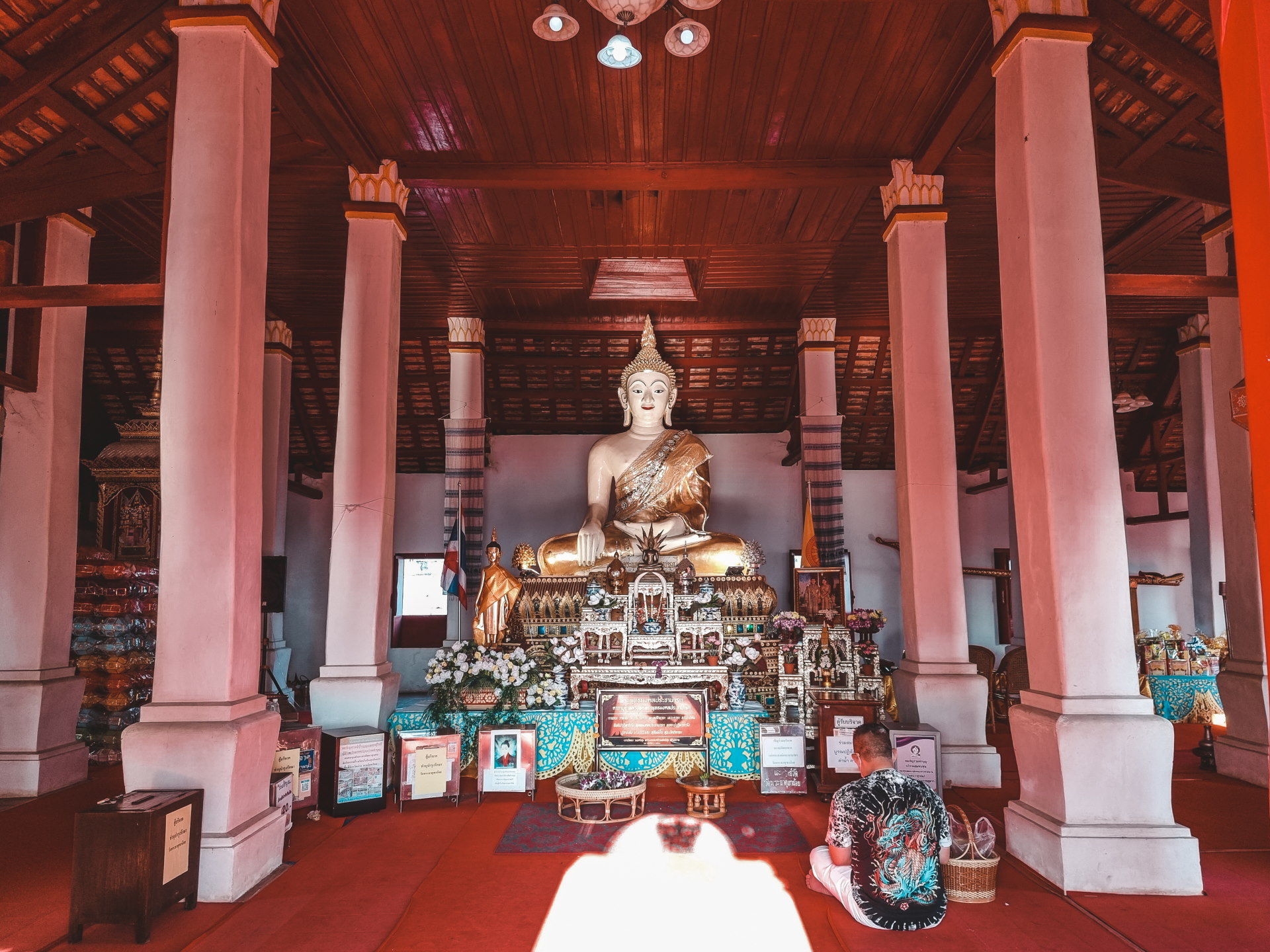
Even before reading the information while doing my research to write this article, I could have guessed the hand of the Burmese artisans who participated in this construction, as the statue preserved inside betrays its origins.
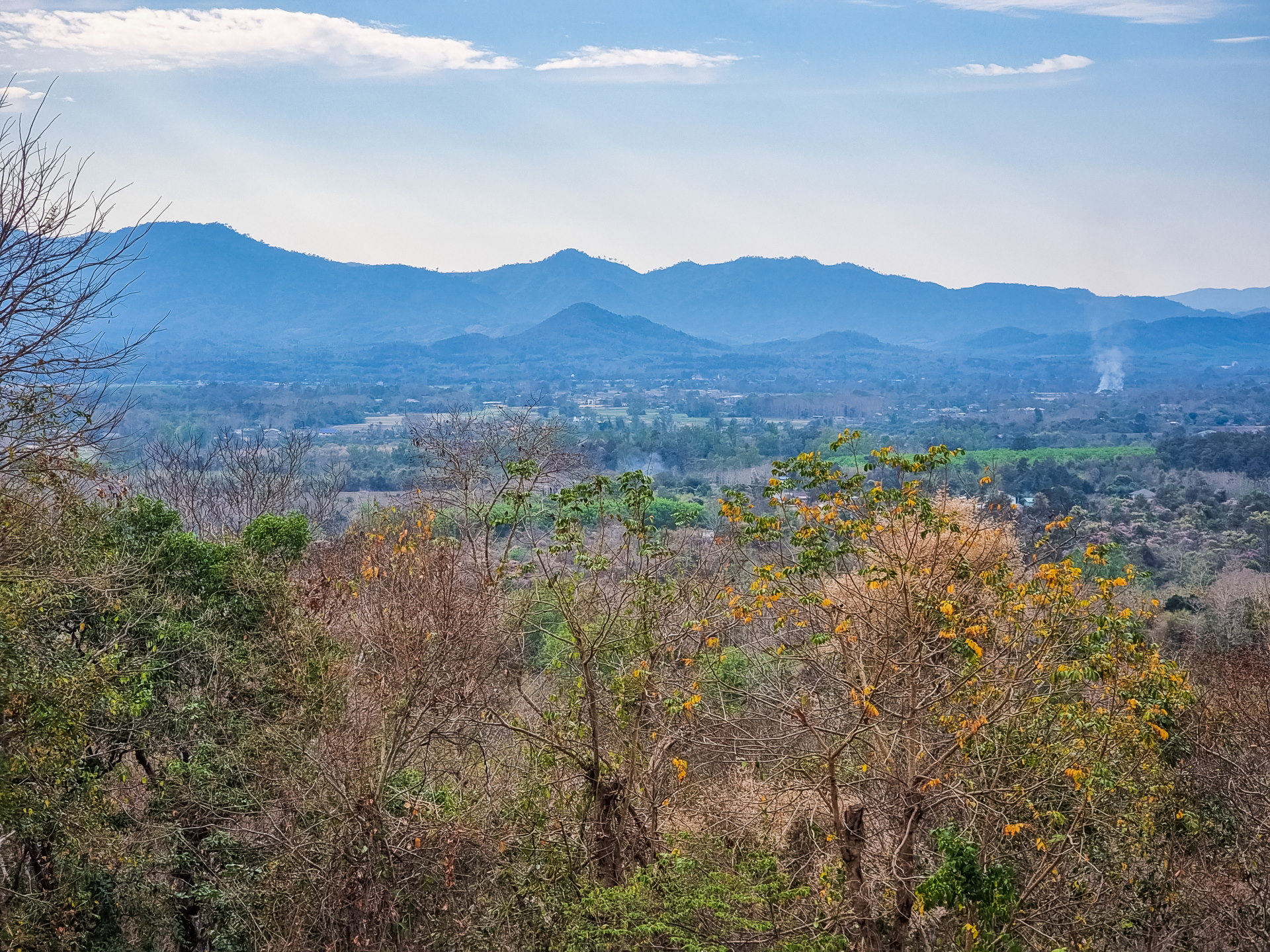
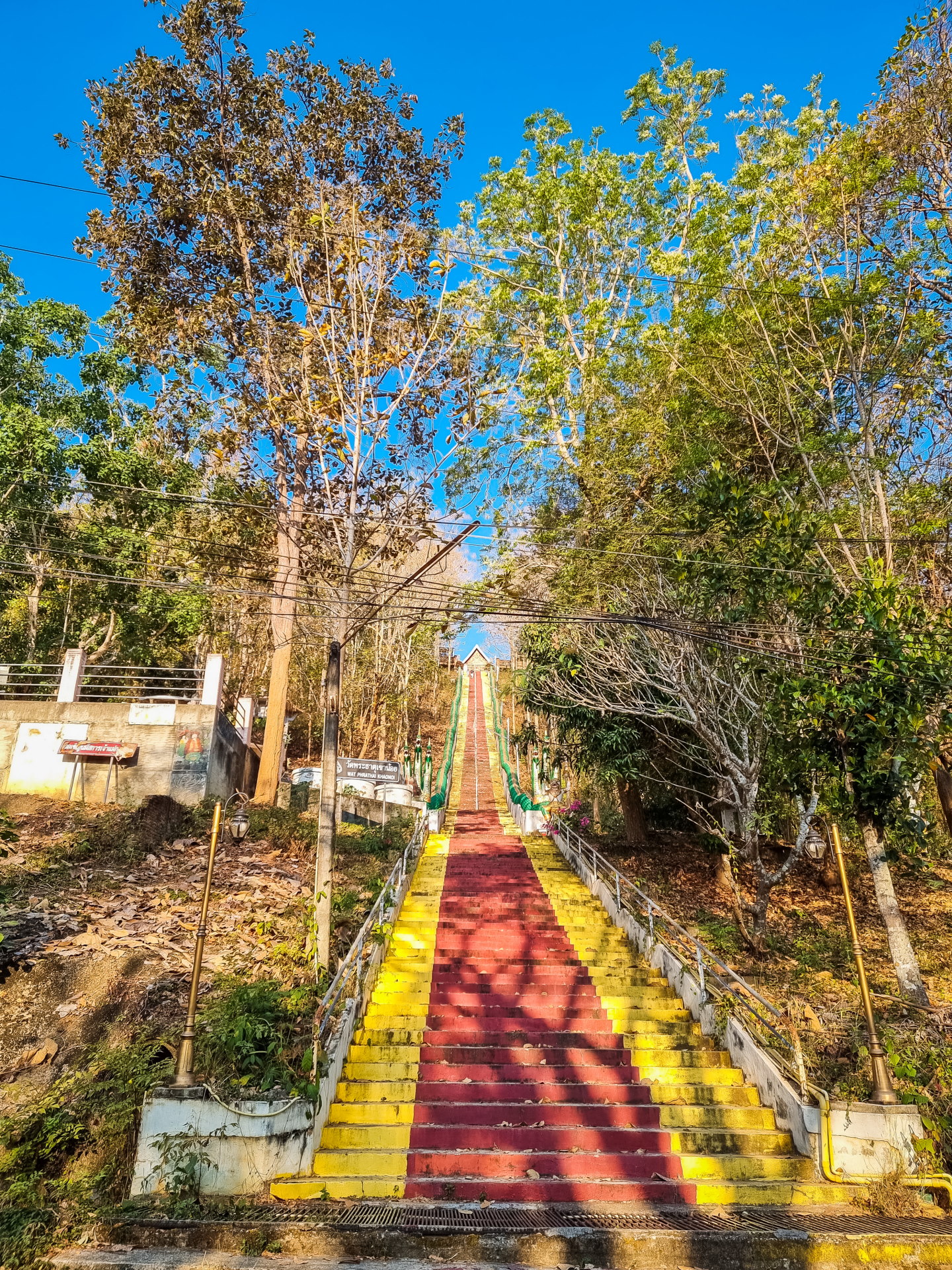
Alternatively, as is often the case for this type of temple in Thailand, you can also go there directly by the road leading to the top, but if you prefer the "spiritual" version, there are stairs at the foot of the hill which lead next to the platform with the standing Buddha.
Wat Phra That Chae Haeng
I am making a big time jump for this temple, since I visited it with my parents about ten years ago… Also located on a small hill, it is opposite the previous temple, 2 km southeast of the city exit.
Founded in 1355, it is considered the most important in the city. You can almost guess this upon arrival, since a wide avenue lined with naga trees leads to the terrace located in front of the heart of the monastery.
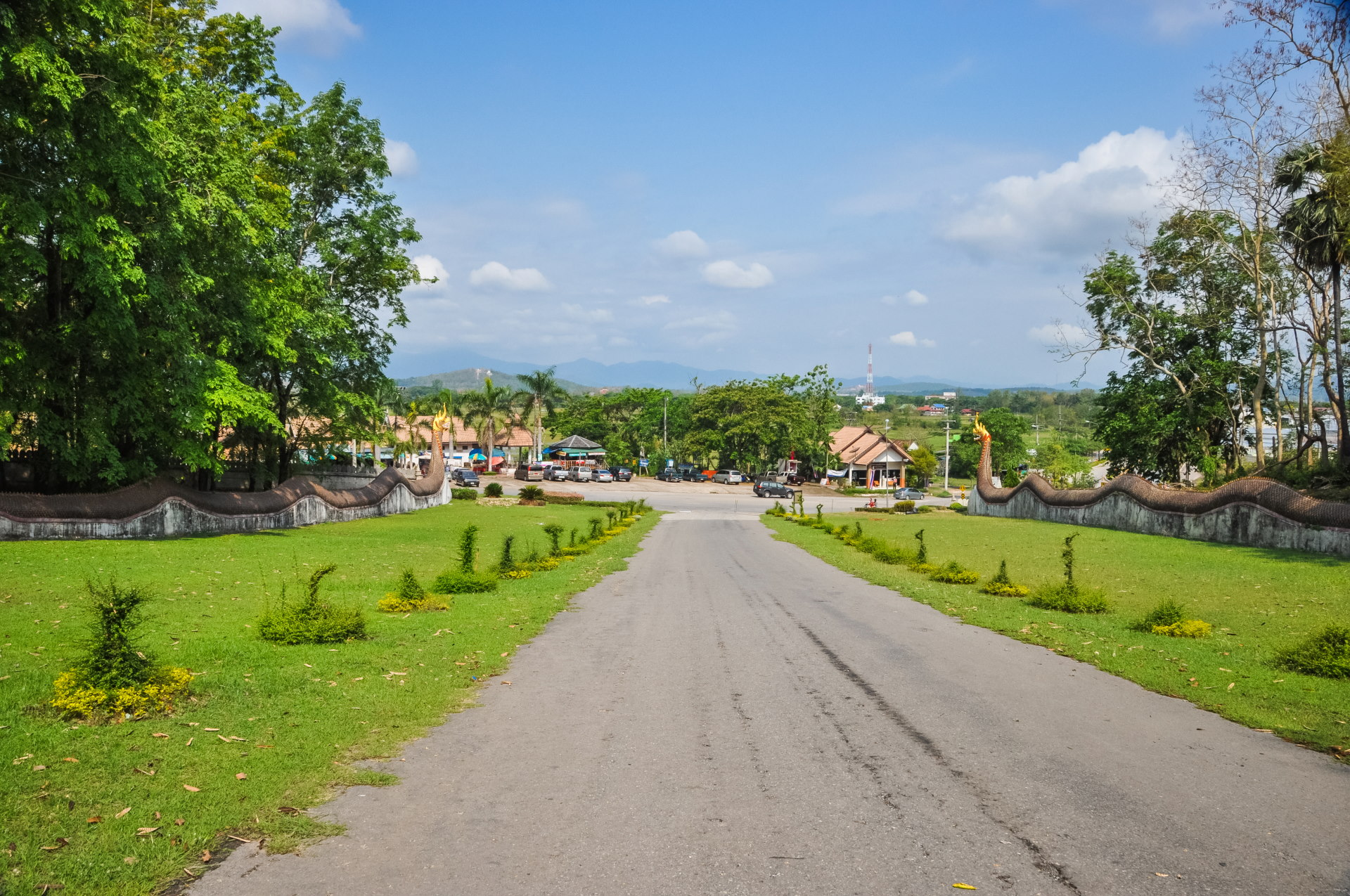
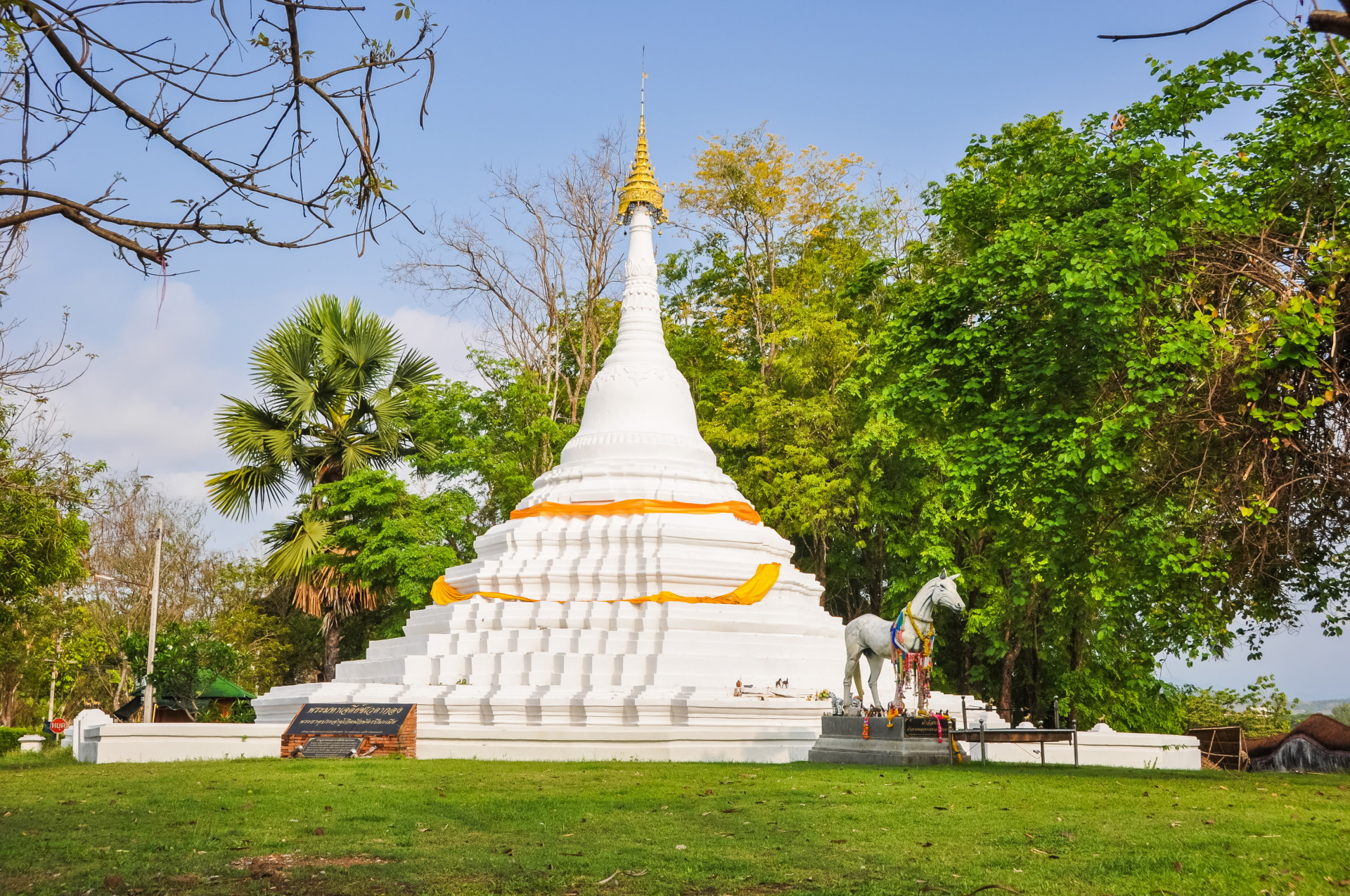
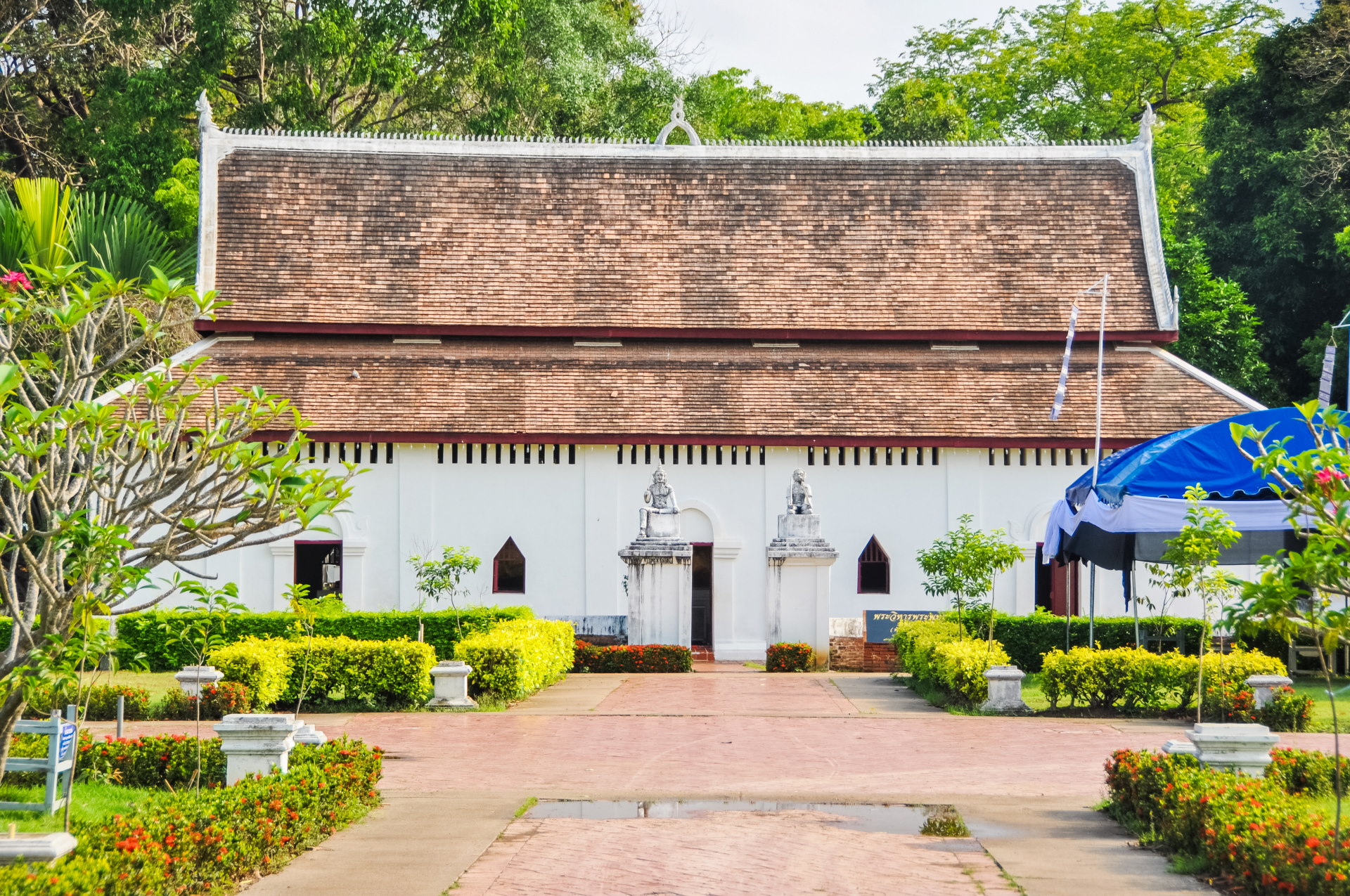
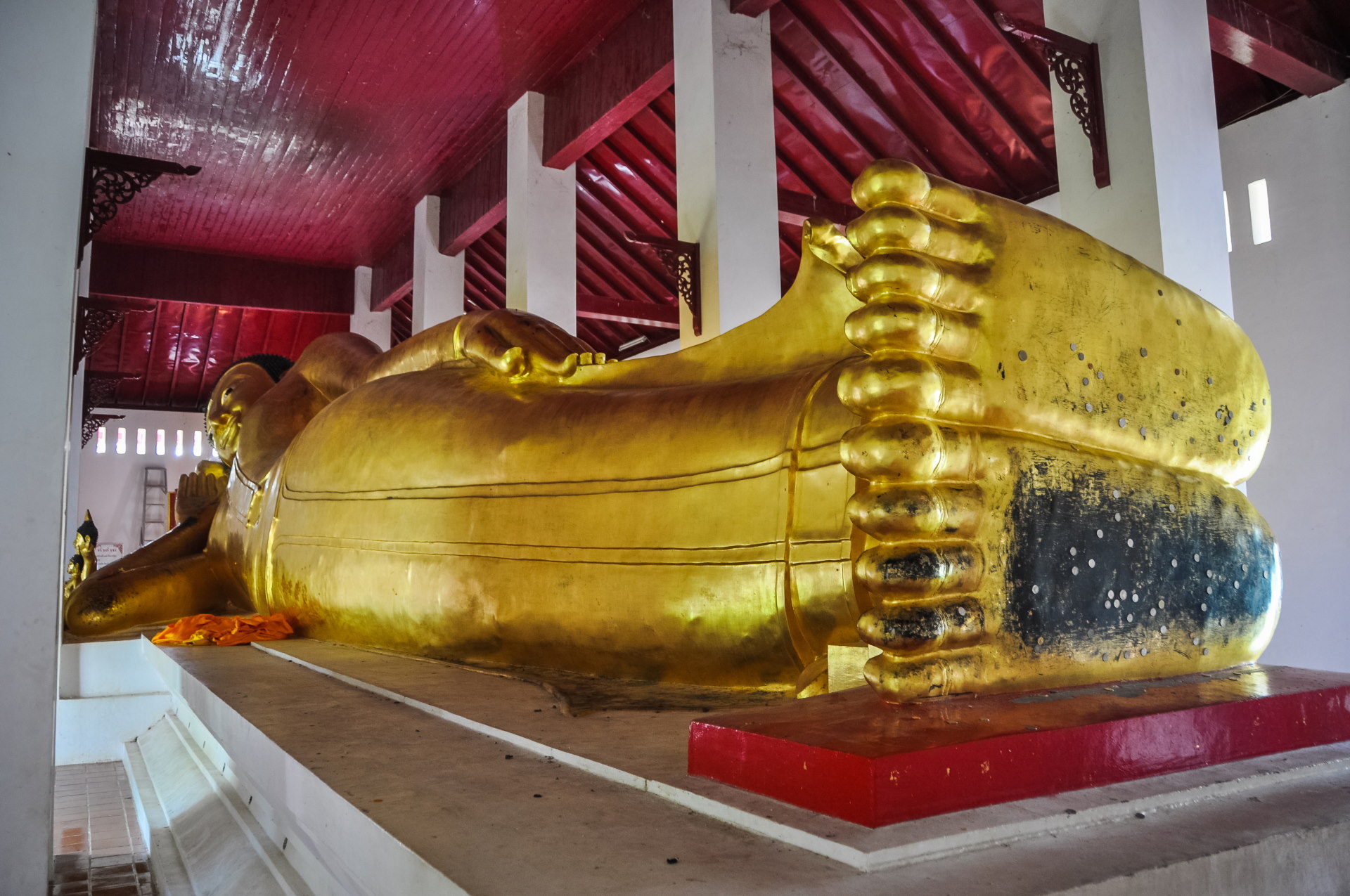
Even before entering the cloister, in the center of which stands the old chedi, several buildings comprising the temple complex are located outside the fortified enclosure. There, one can see a white chedi, which I believe to be in the Burmese style. On the left side is a rather unassuming building, housing a beautiful reclining golden Buddha.
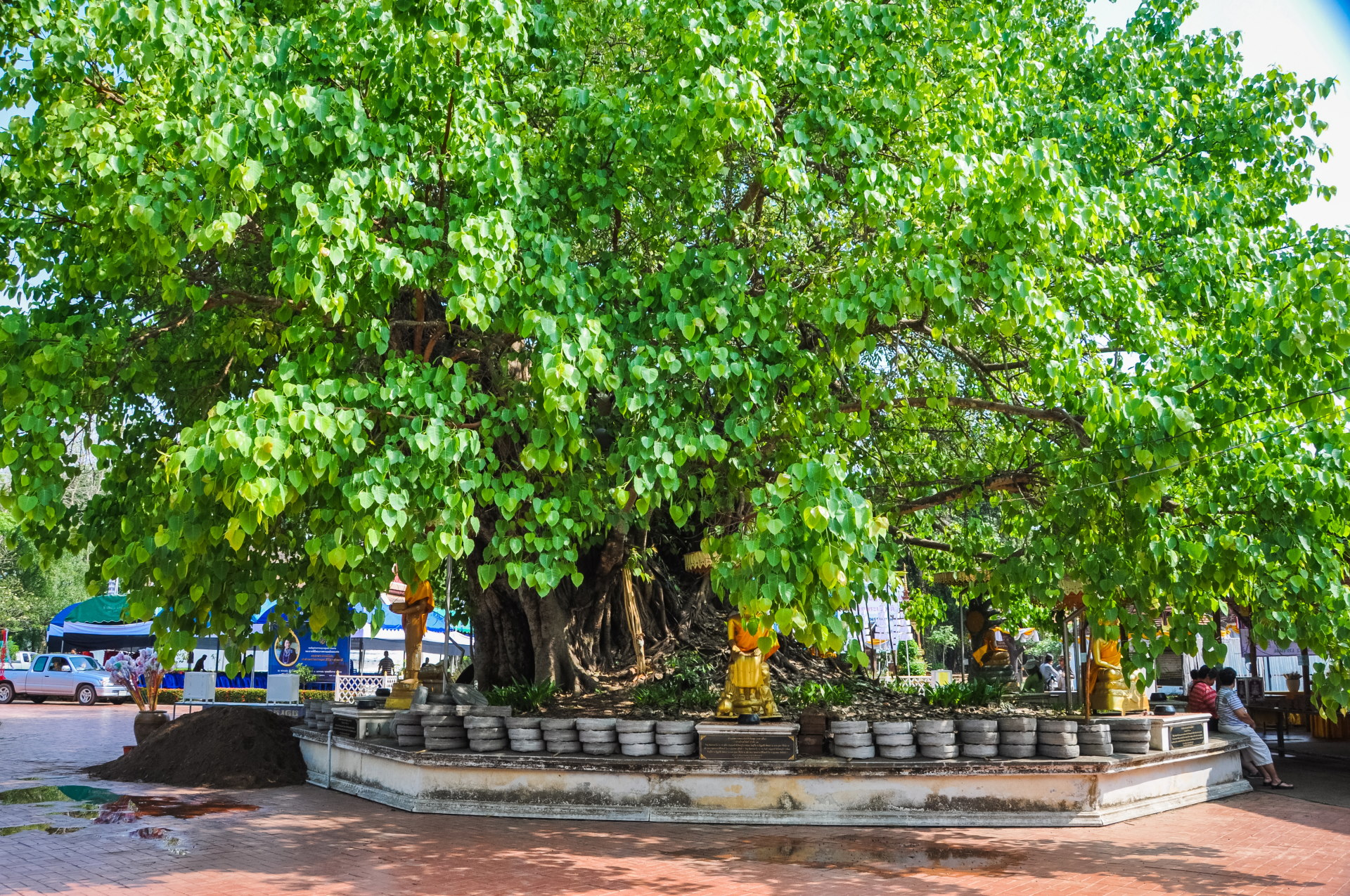
In front of the cloister stands a beautiful bodhi tree and a small ubosot. There is a second ubosot, modern but charming thanks to its two-tiered roof and wooden gable.
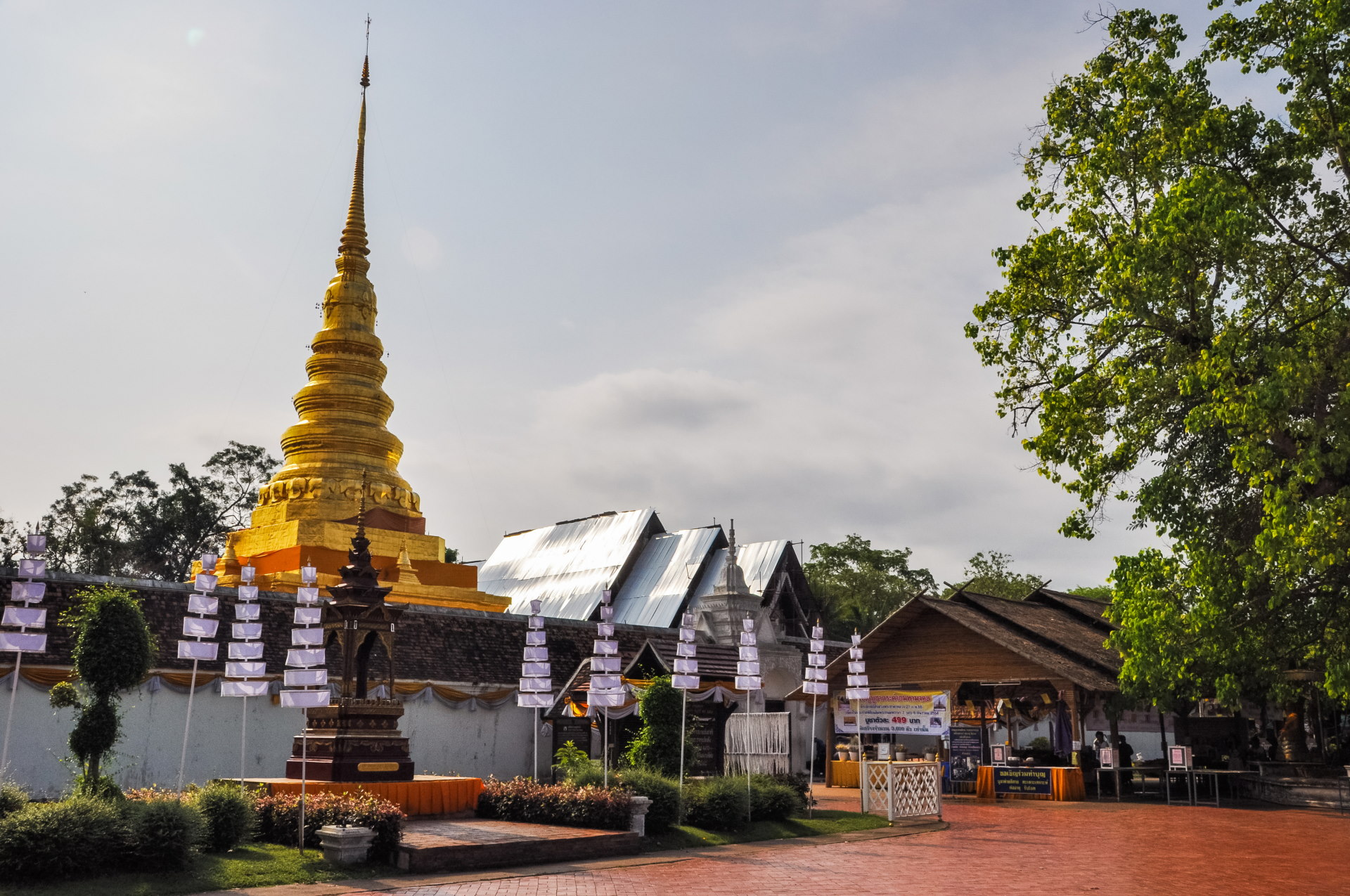
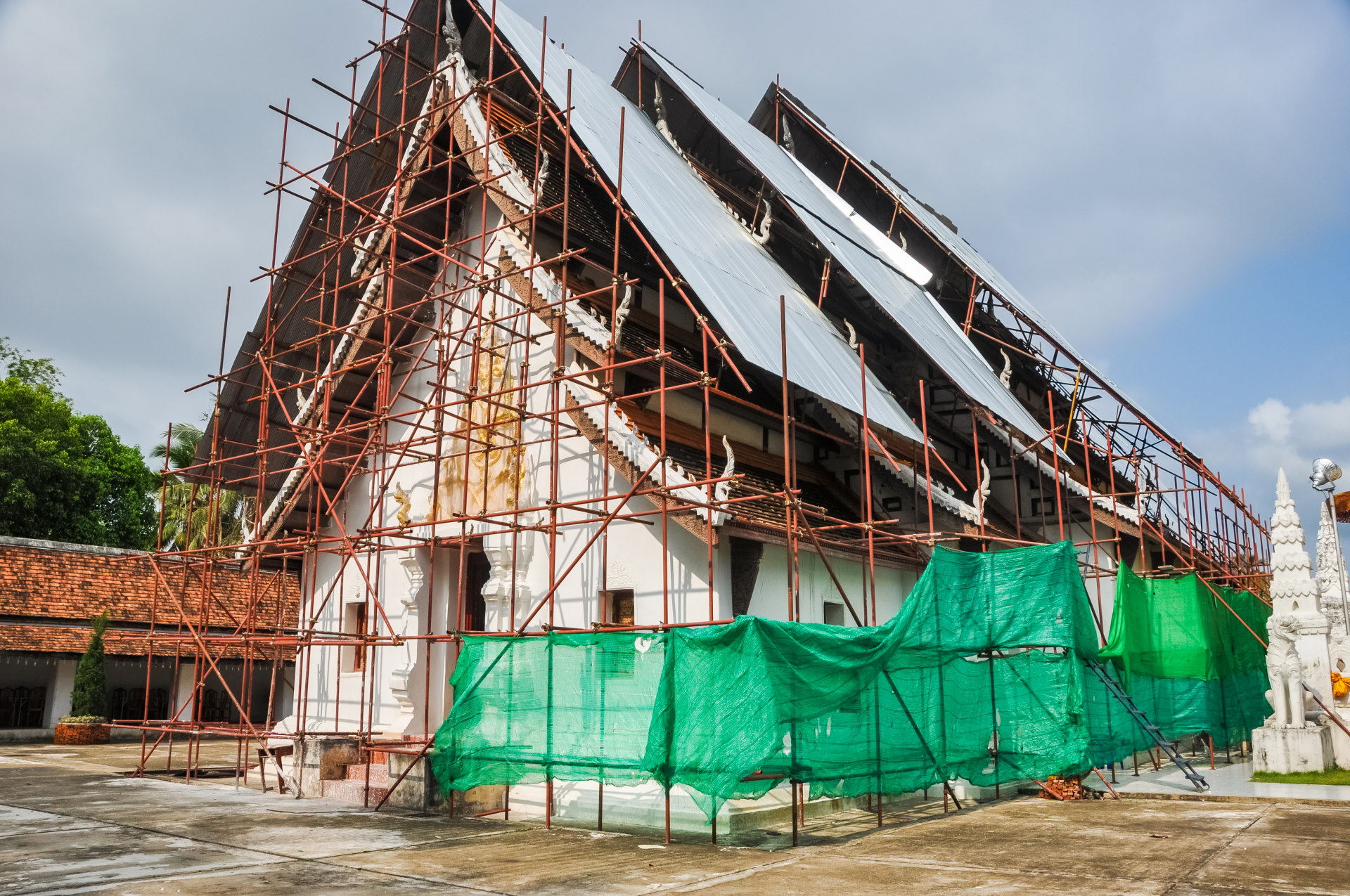
The courtyard where the chedi is located includes a large Thai Lü-style viharn, guarded by two white lions. Unfortunately, it was under renovation at the time, so its roof was covered with corrugated iron sheets.
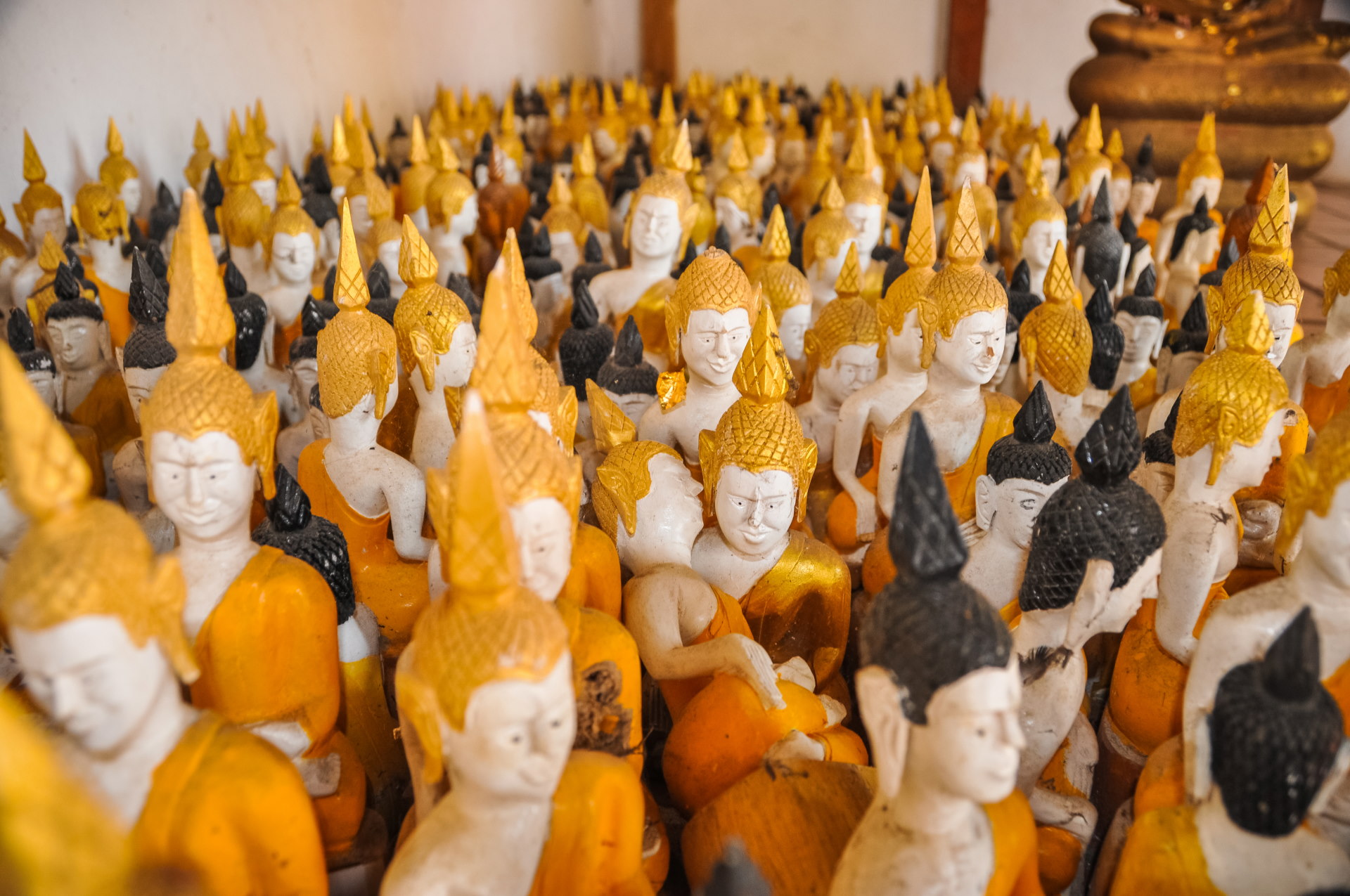
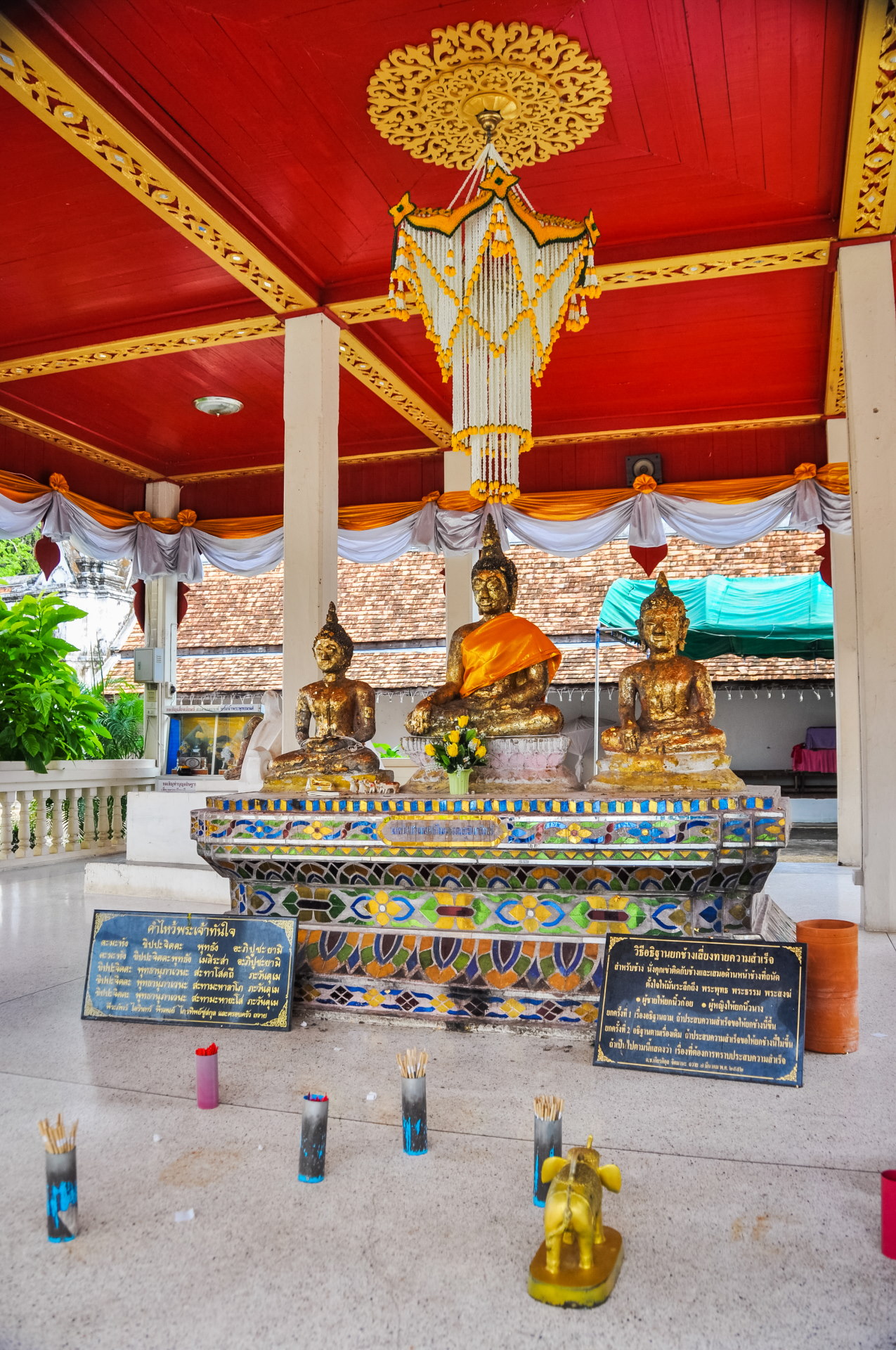
Inside, we saw numerous miniature Buddha statues that had been set aside; these are normally arranged all around the hall, between the top of the walls and the roof. Also in the courtyard is a mondop, with a cruciform roof and open spaces on the sides.
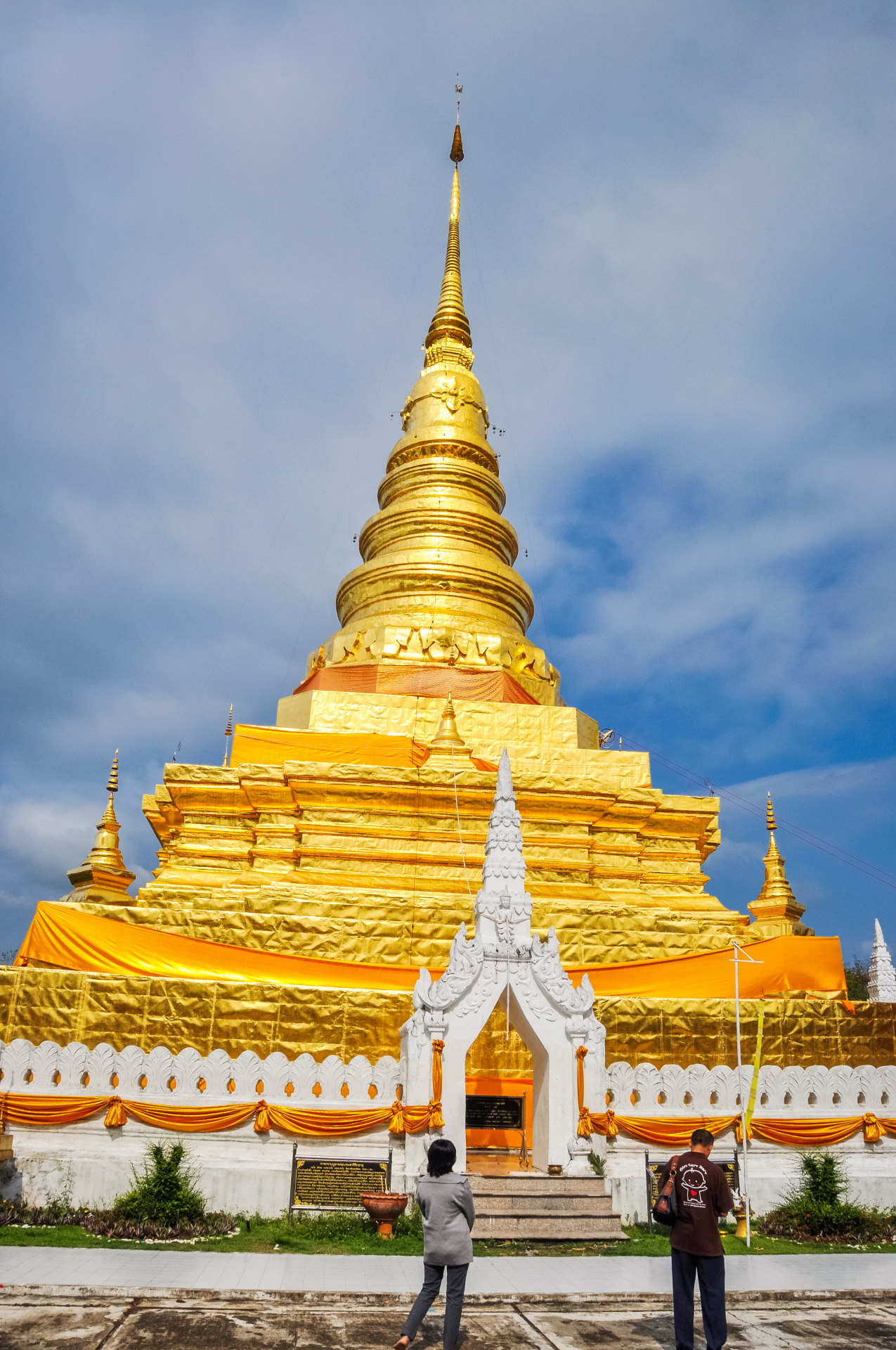
In the center are several statues and a figurative "imprint" of Buddha. The chedi itself rises to a height of 55 meters and is entirely covered in gilded plates. Its current appearance, resting on a square base, is the result of a reconstruction built over the original, dated 1610. It houses a relic of the Buddha as well as votive tablets made of silver and gold.
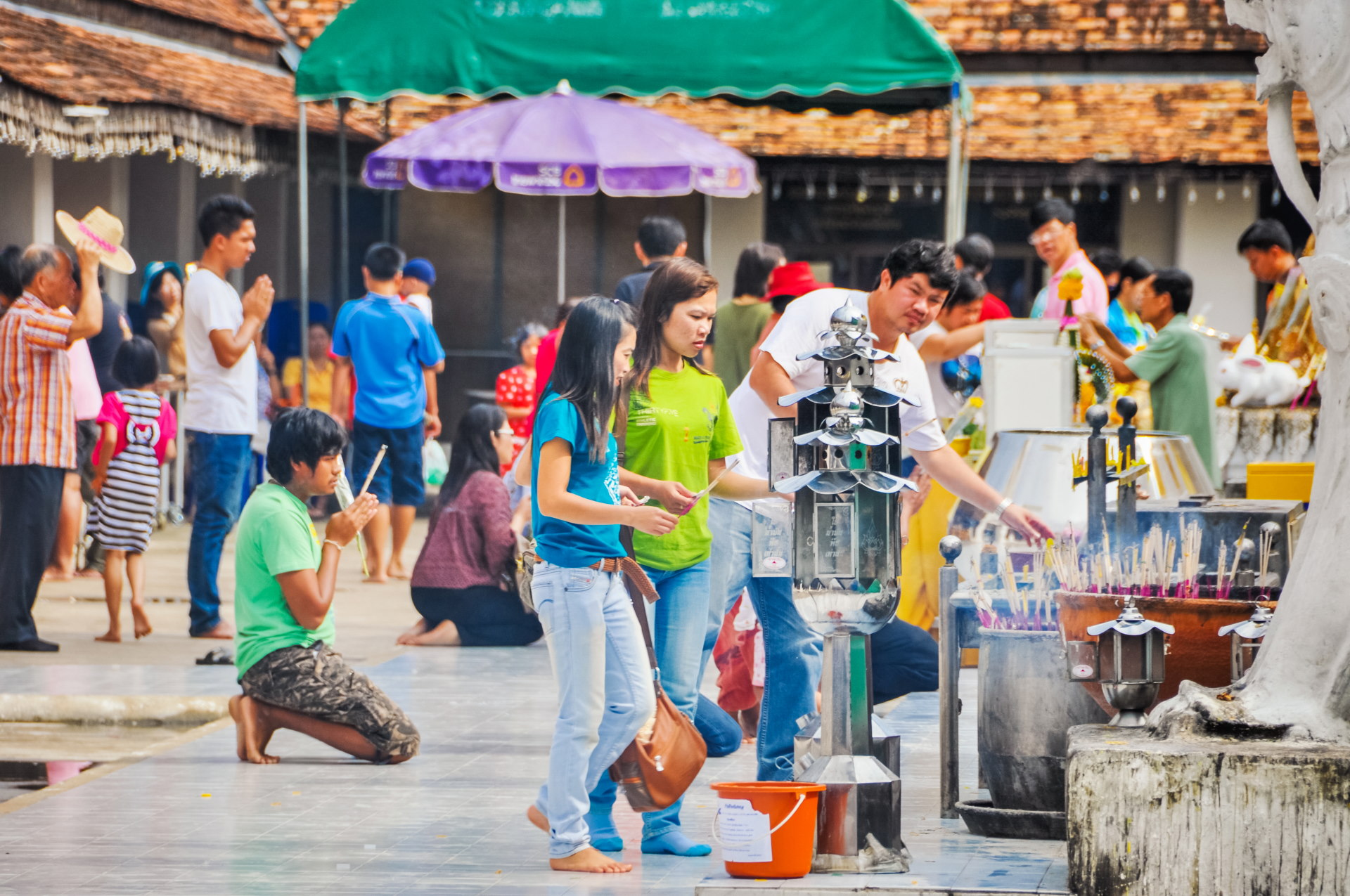
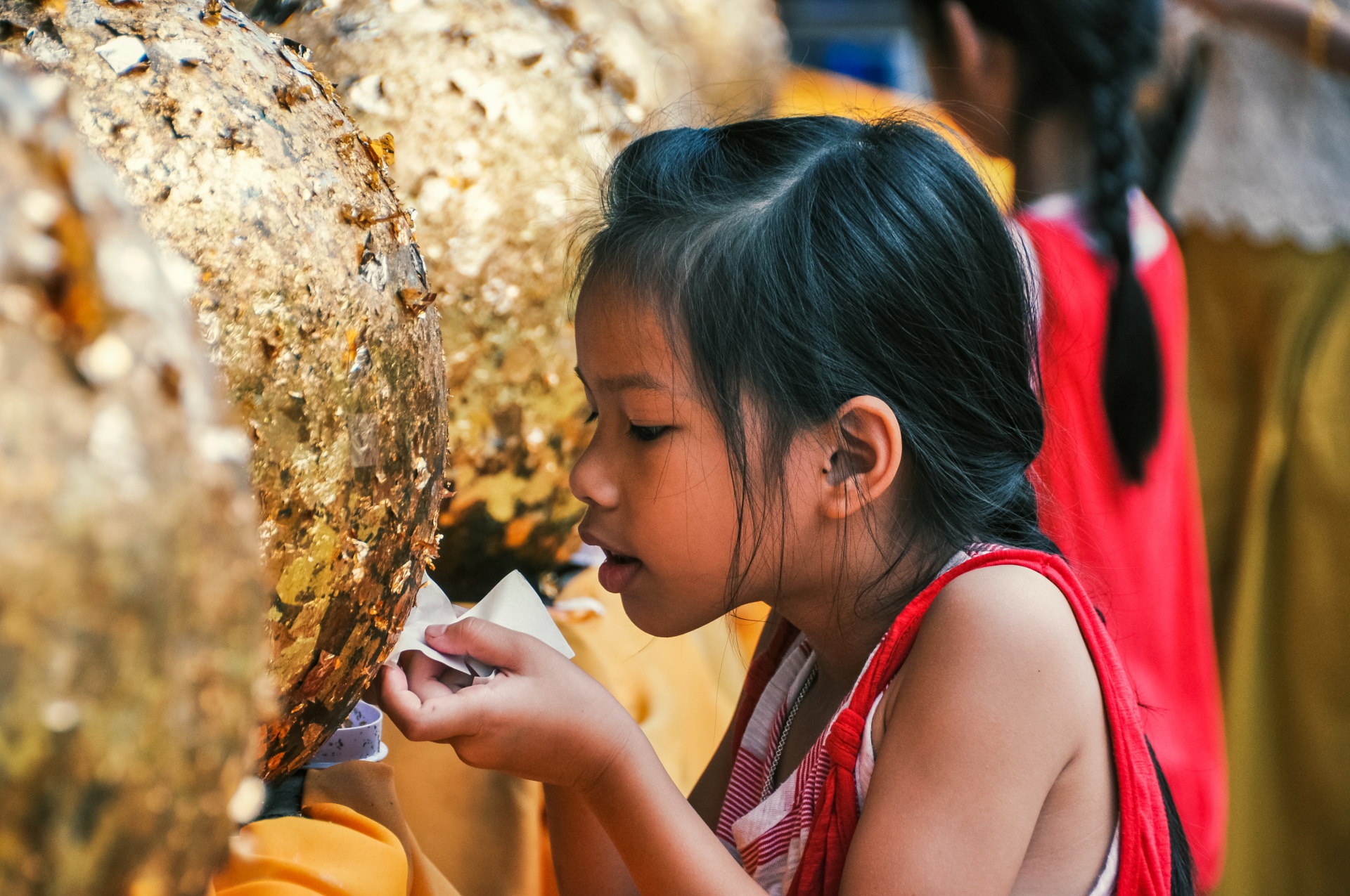
When we visited, it was a few days before Songkran, a school holiday period, so there were quite a few people.
Heritage & Historic Houses
Khum Chao Ratchabut
Built in 1866, this two-story teak house was built by Prince Maha Phrom Suratthada, hence its name "Prince's Residence", or even "House of the King of Nan", since he would later become the 64th and last ruler of the city.
In 1903, when the new royal palace was built (which would later become the current National Museum), Chao Maha Phrom Suratthada offered the house to one of his sons, Mokfa Na Nan , as a bridal residence. The latter then received the title of Chao Ratchabut, hence the current name of the house.
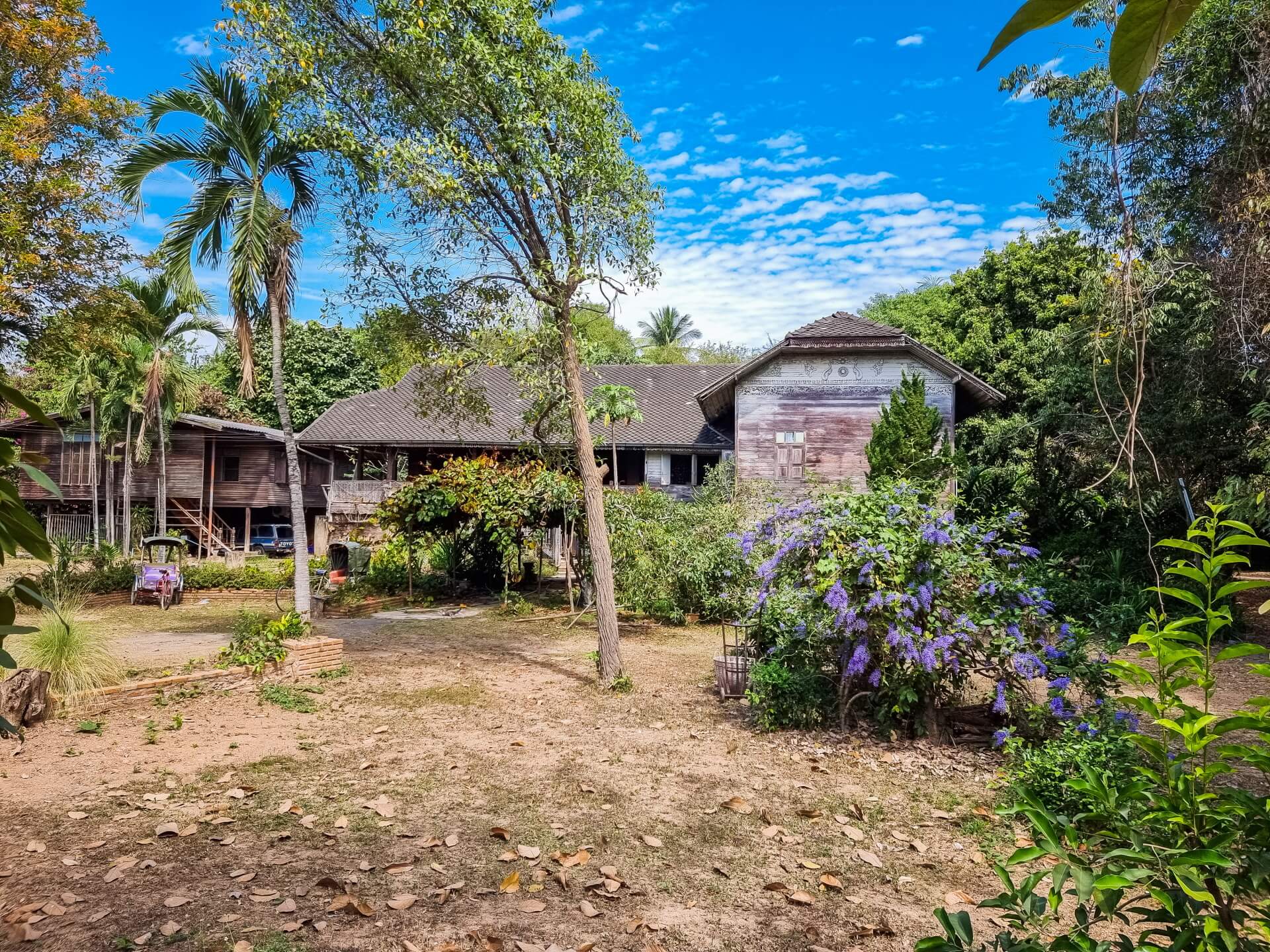
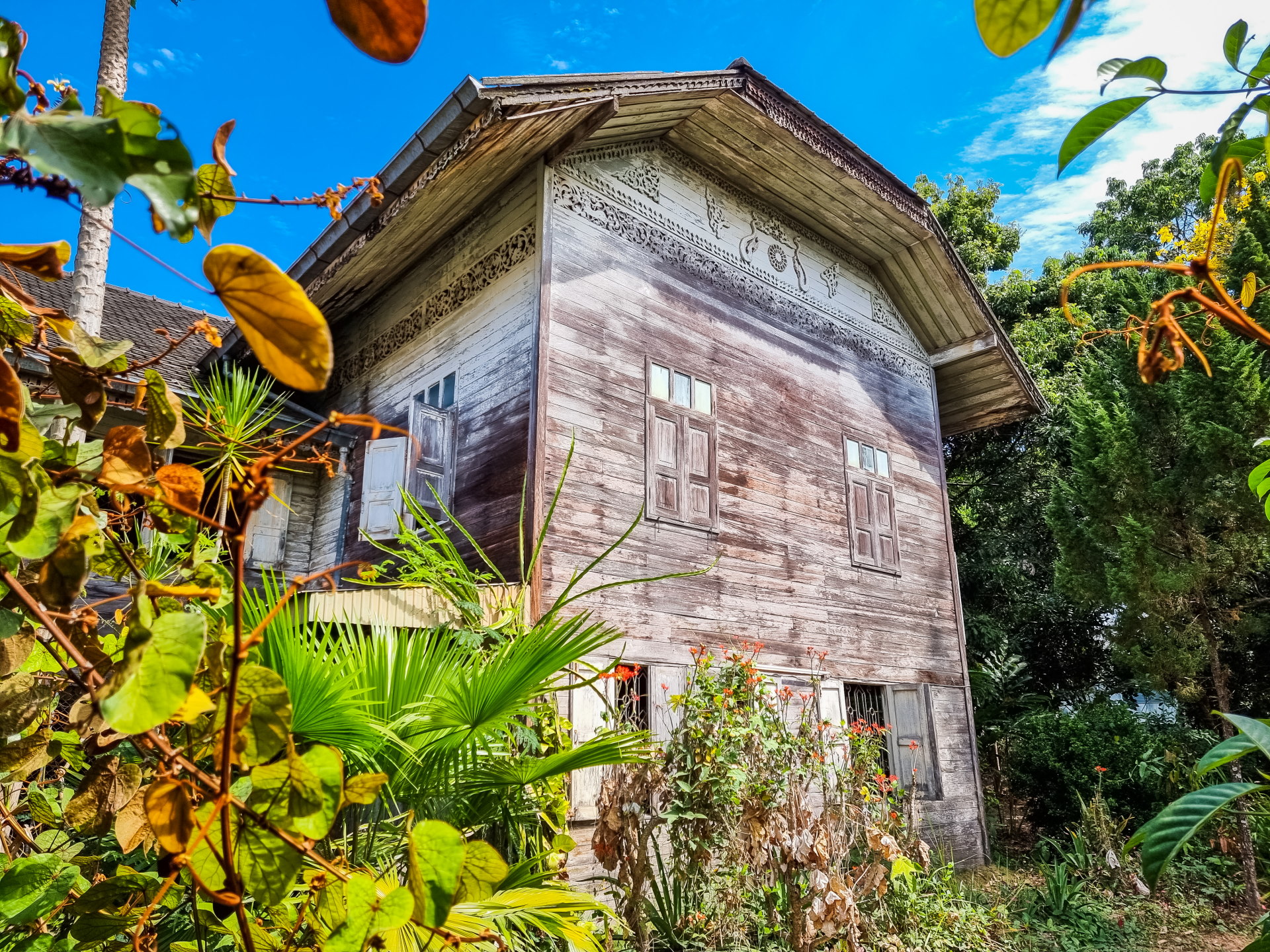
The house, in its current form, is a reconstruction dating from 1941. It still belongs to his descendants: Chao Watsana Na Nan, the eldest, and Chao Sompratthana, who, upon retiring, returned to live in Nan and has maintained the family home ever since. She is also the one who, when she is present, personally conducts the tours.
Obviously, when you're alone, it's a little awkward to walk through the gate at the entrance, because you feel like you're coming into someone's home. That's still true, but the house is always open to visitors, so don't hesitate!
We arrived at the right time because the owner was starting a tour with a group of Thai tourists like us in the house.
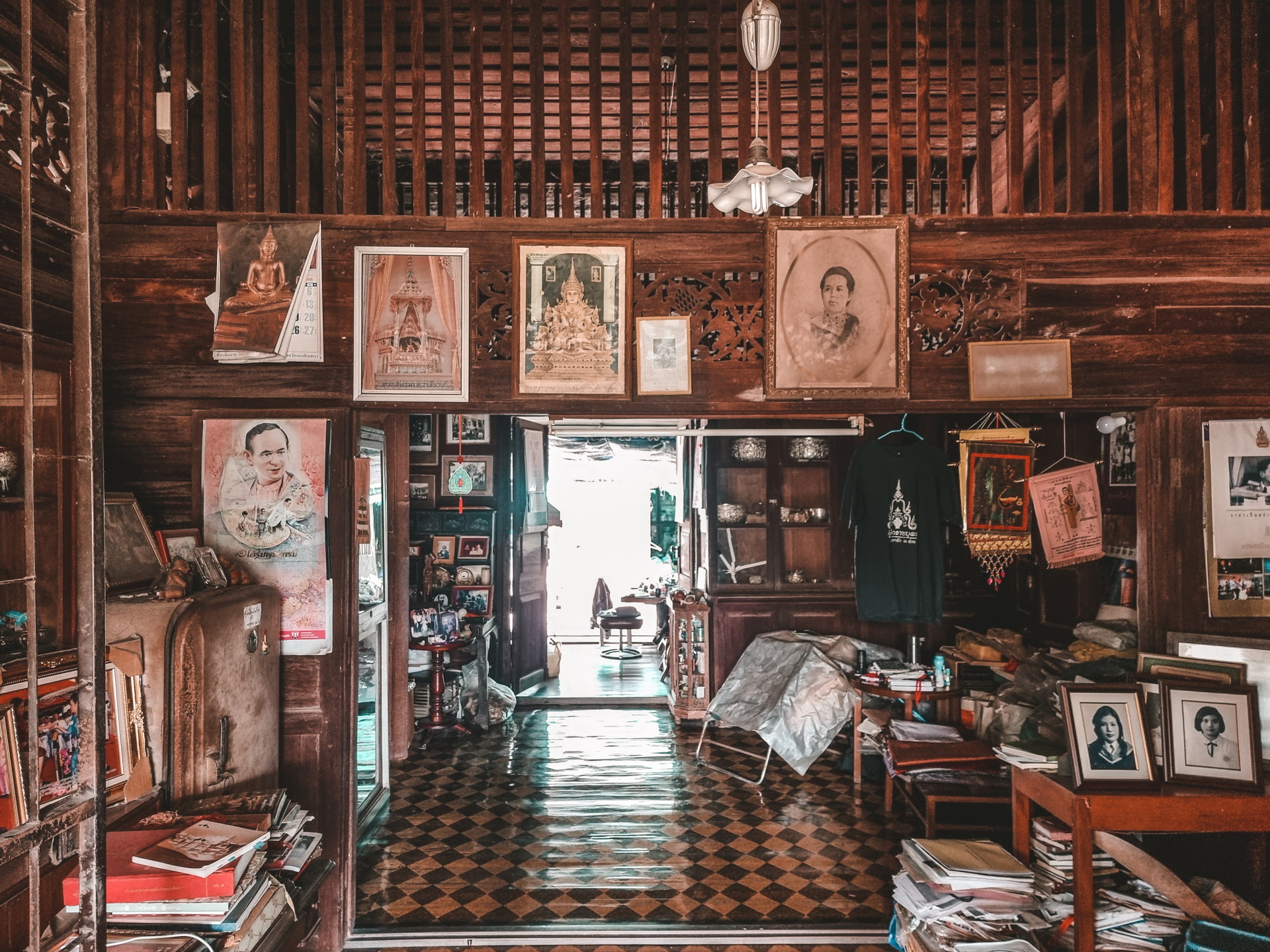
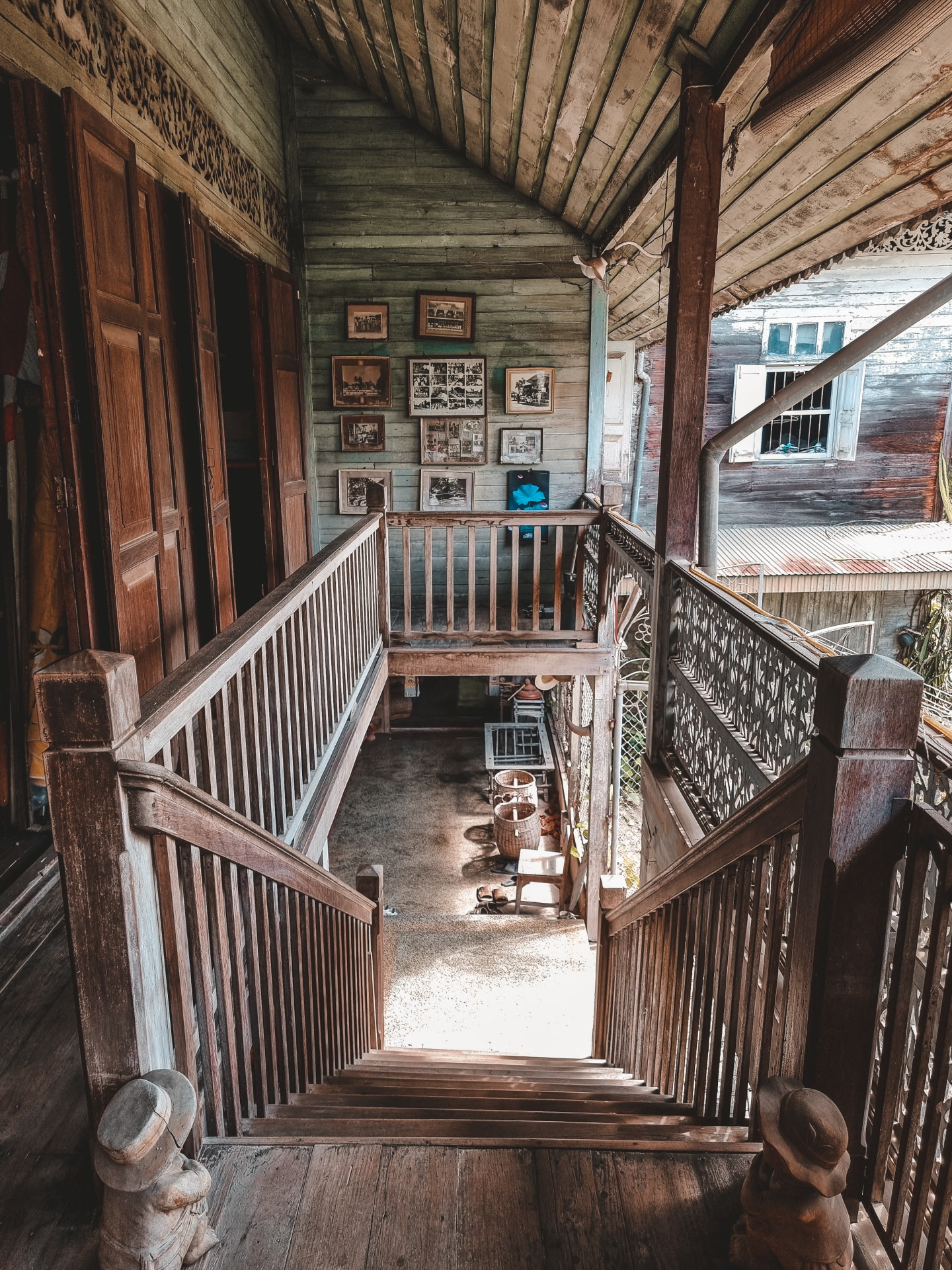
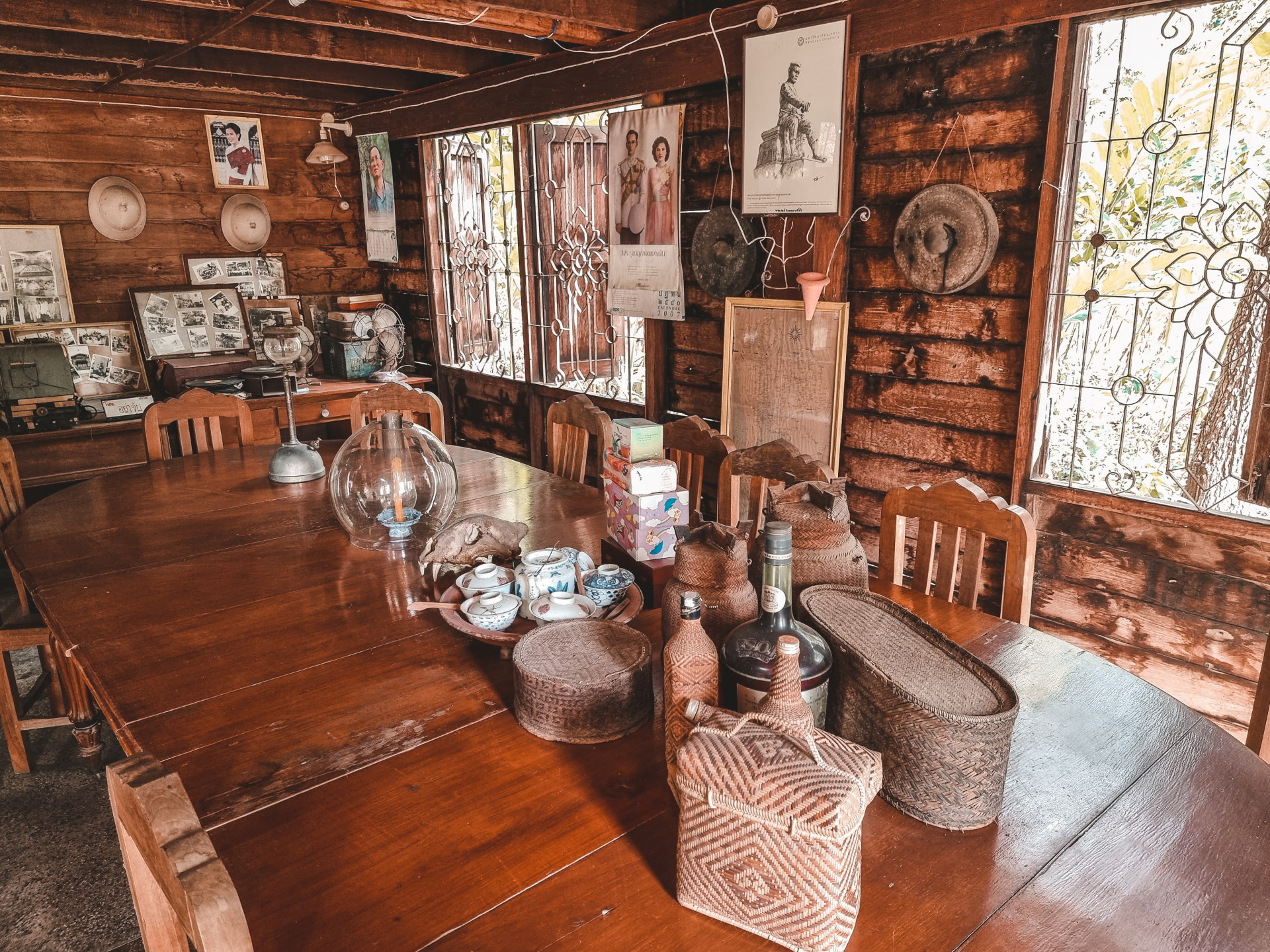
It is also quite special because the house has remained in its original state: we are therefore halfway between a living museum and a time bubble, bearing witness to the life of the Nan nobility.
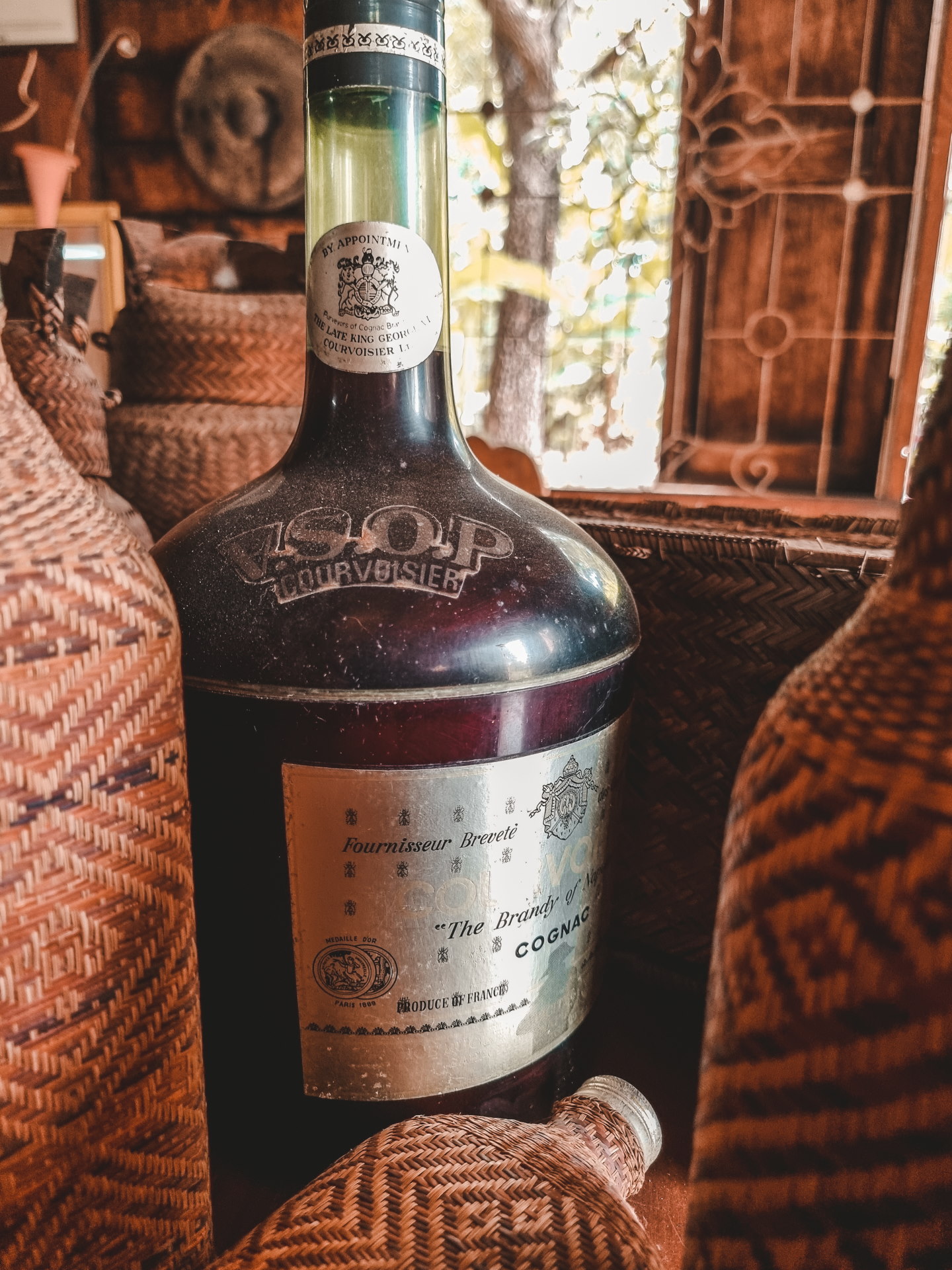
On the ground floor, there was a former living room and dining room. Numerous photos decorate the walls and a collection of objects of all kinds is scattered around the place, I would even spot a bottle of cognac from our region (never opened, no less…).
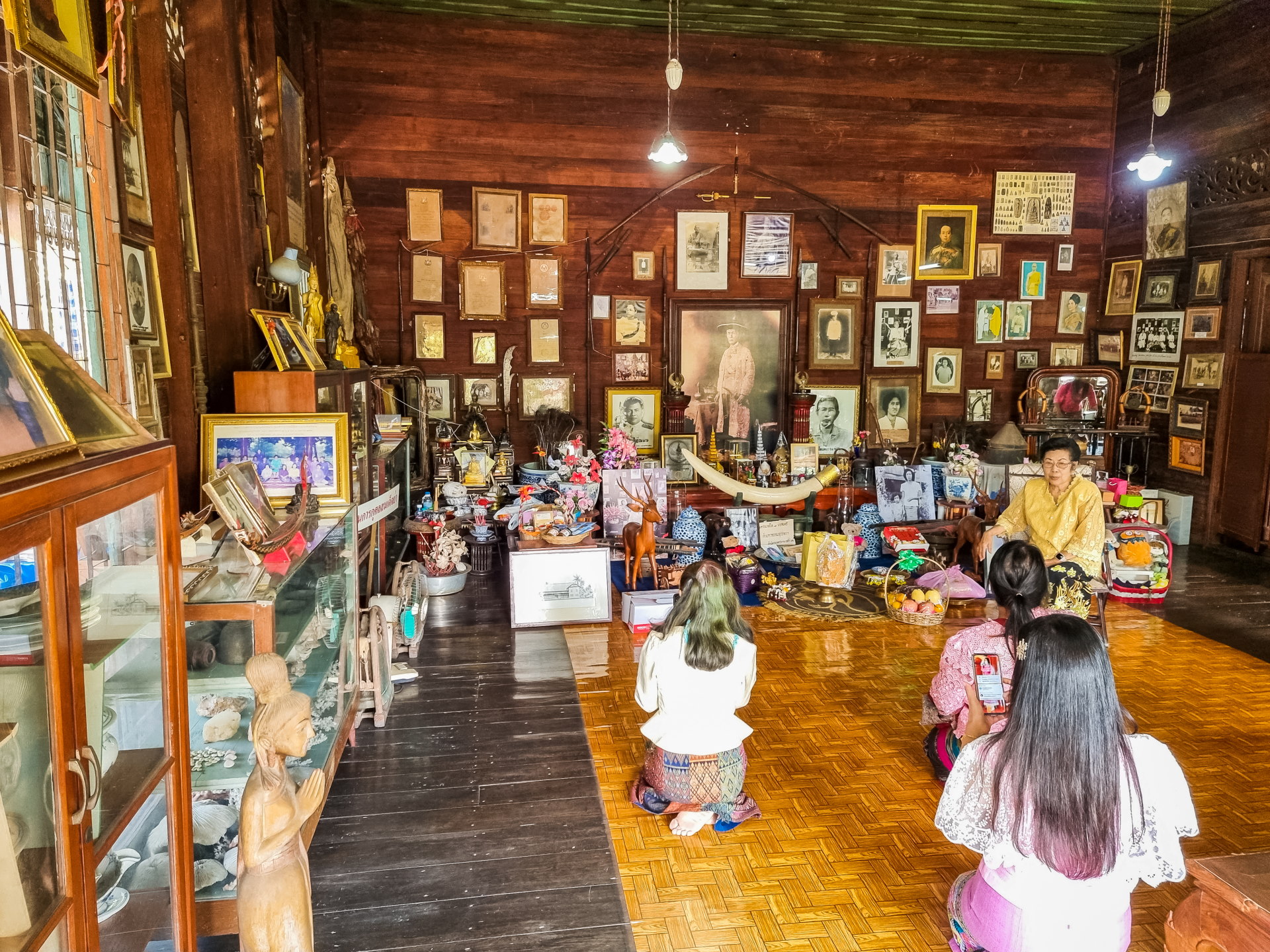
Upstairs, Chao Sompratthana settles into a large room still covered in photographs and a display case containing a beautiful ceremonial costume. There, she recounts several anecdotes about her family's life to her very attentive audience, drawn by this glimpse into the lives of the nobility.
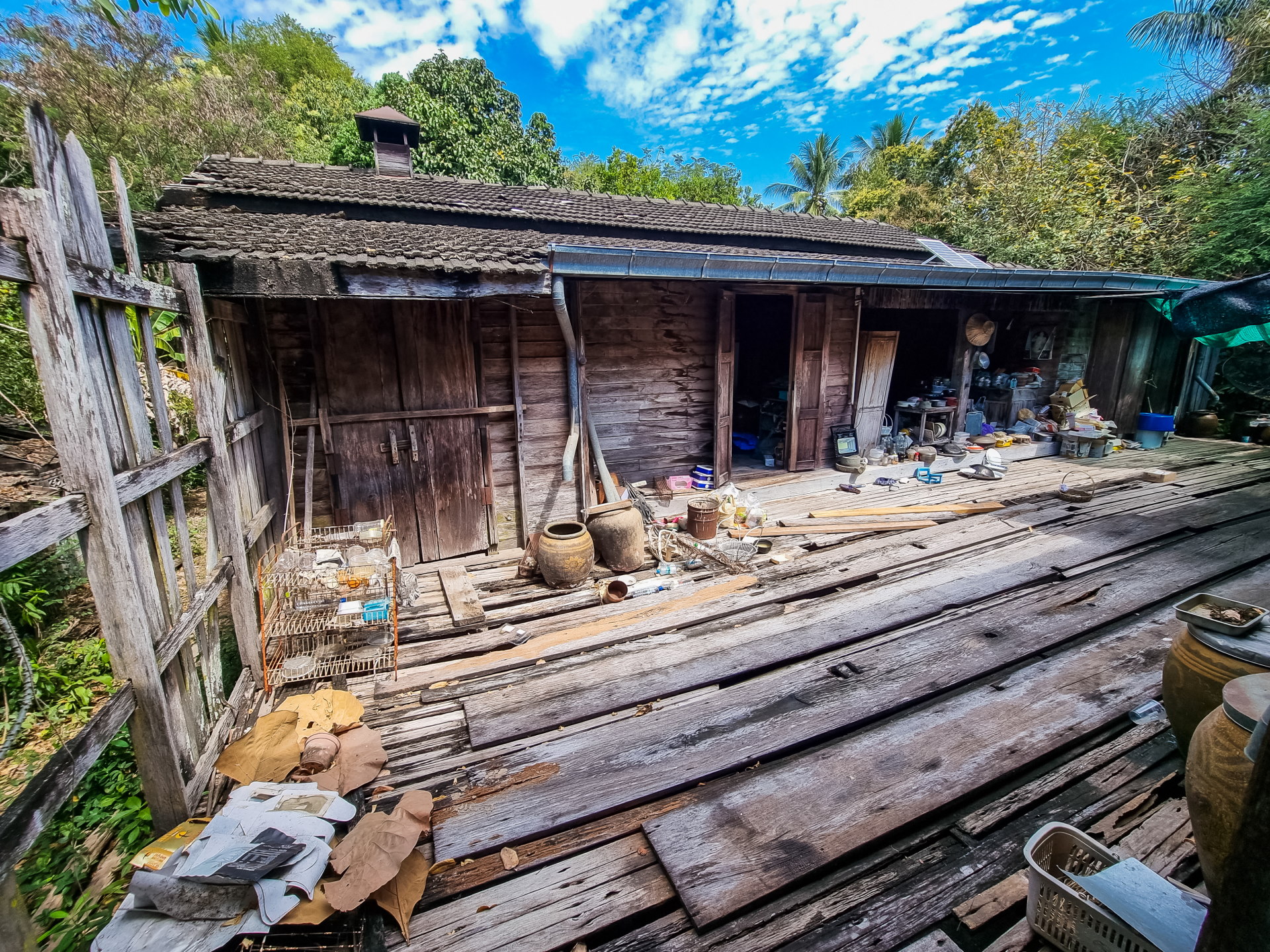
At the rear, connected by a wooden terrace, are the former kitchens and servants' quarters. No further can be seen, as an entire wing of the house is not open to the public.
Nan Noble House
Another house of historical importance, it is simply called in English "House of a Nobleman of Nan," as I have stated in the title. The Thais, however, know it by the name of its previous owner, Hong Chao Fong Kham ( Hong meaning noble house), who inherited it from Chao Si Bun Ma , of the royal lineage of Nan.
Some sources mention a 150-year-old house, while others suggest it is two centuries old. Either way, it is a fine example of a teak residence on stilts, typical of Lanna architecture, composed of several wooden buildings interconnected by a terrace.
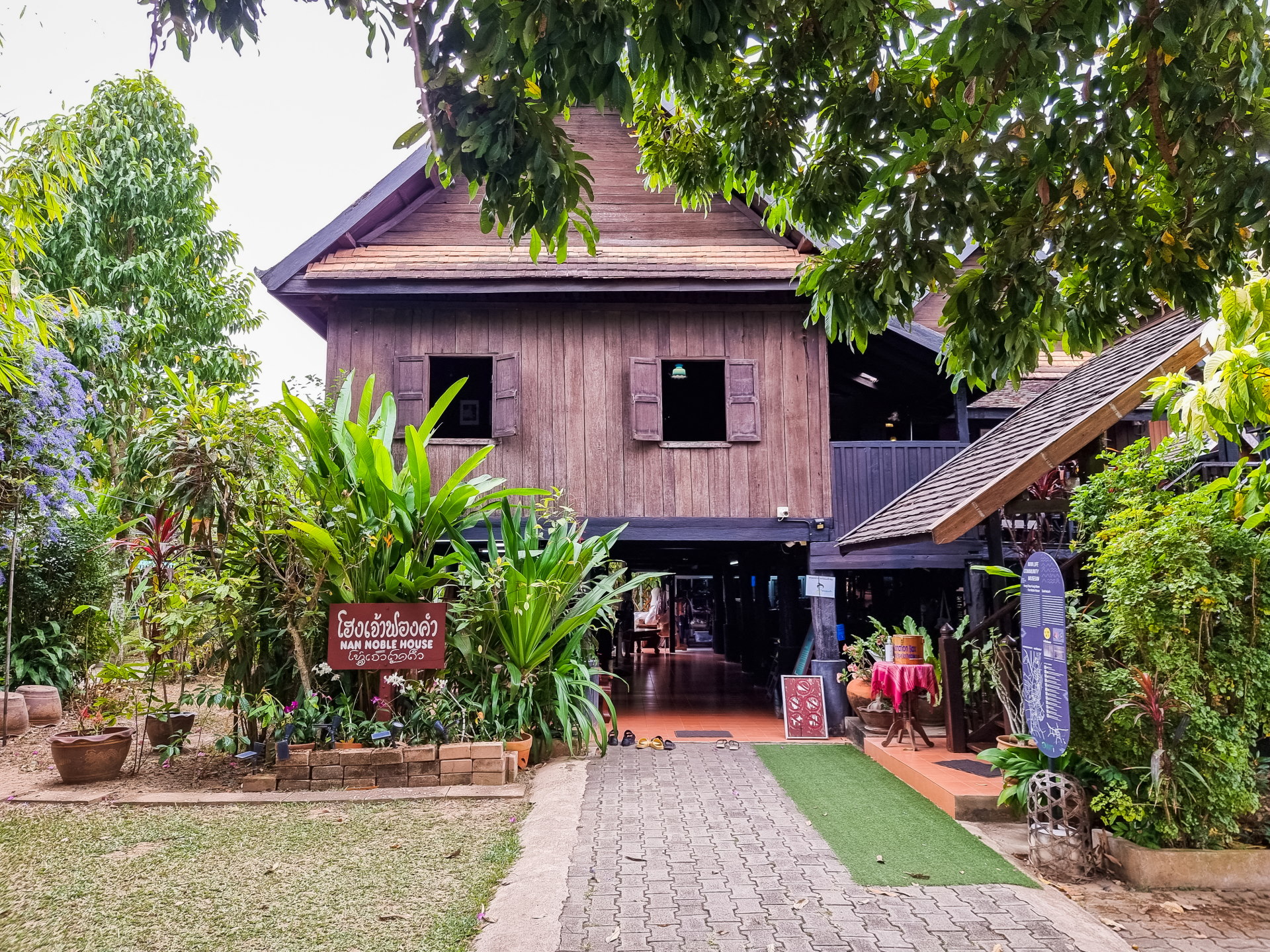
The advantage of these houses, a similar configuration of which I've already seen in Lampang , is that they are assembled without nails. This makes them easy to dismantle and reassemble.
I specify this because it is the case here: the house was originally located about a hundred meters behind a temple in the neighborhood, then was moved to this location, being slightly "modernized" in the process by the use of terracotta tiles instead of the traditional wooden shingles.

These buildings house various rooms, including bedrooms, a living room, a prayer room and a kitchen, and the whole is superbly maintained and presented as if it were still inhabited by its first owners, offering a true window into the past.
The current owner, daughter of Chao Fong Kham, has also been twice rewarded for her preservation efforts by a committee of the Siamese Architects Association.
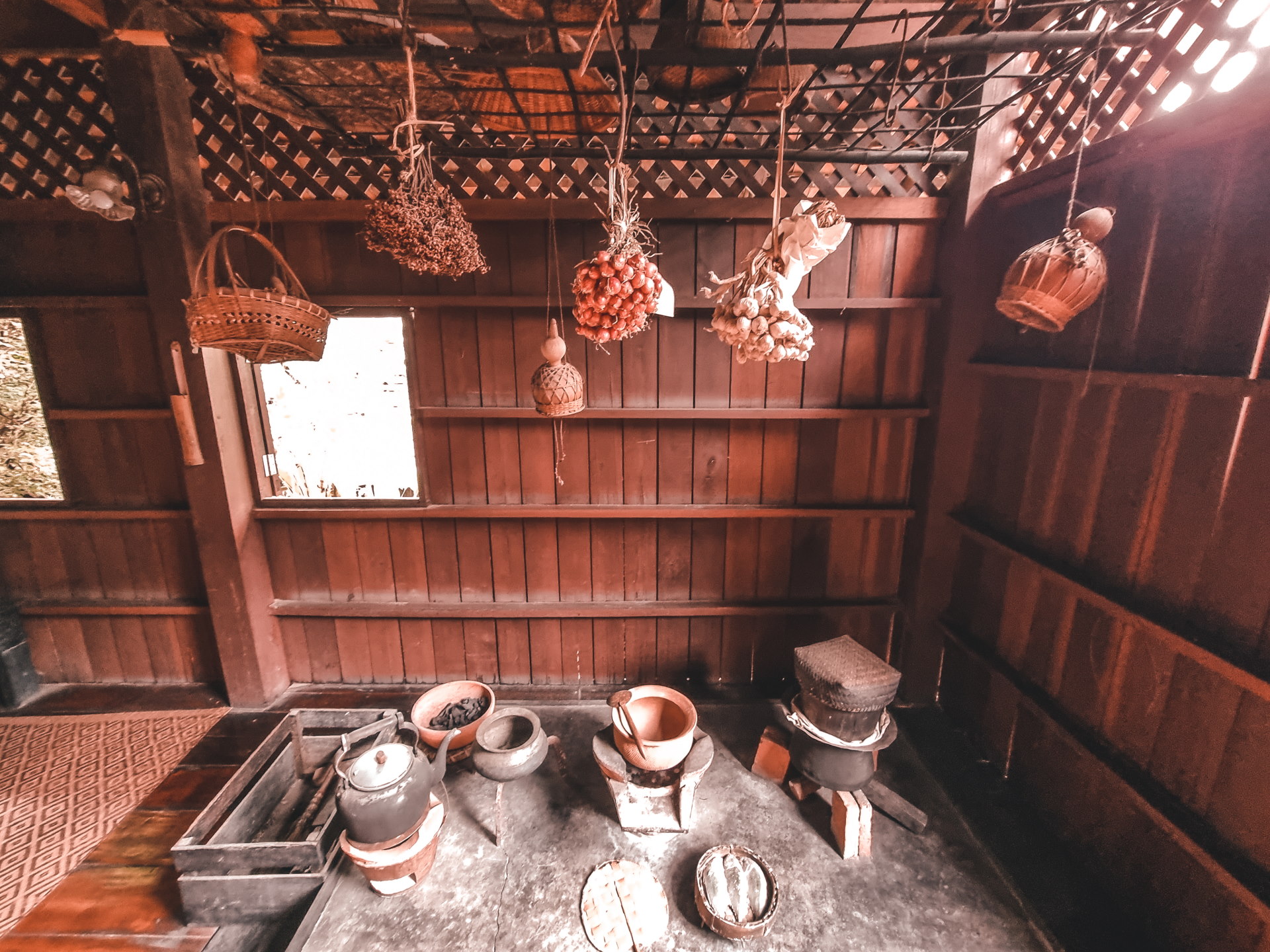
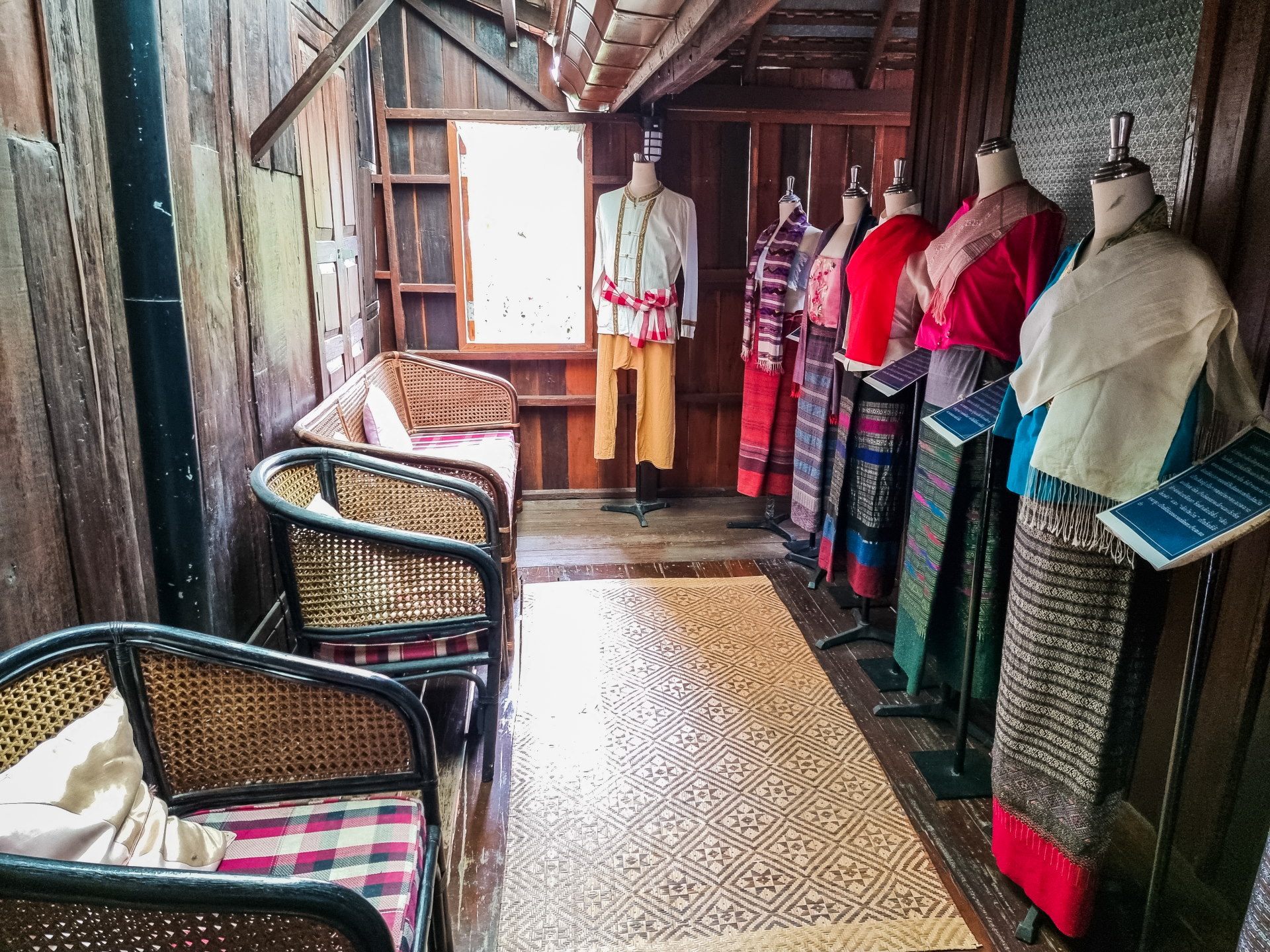
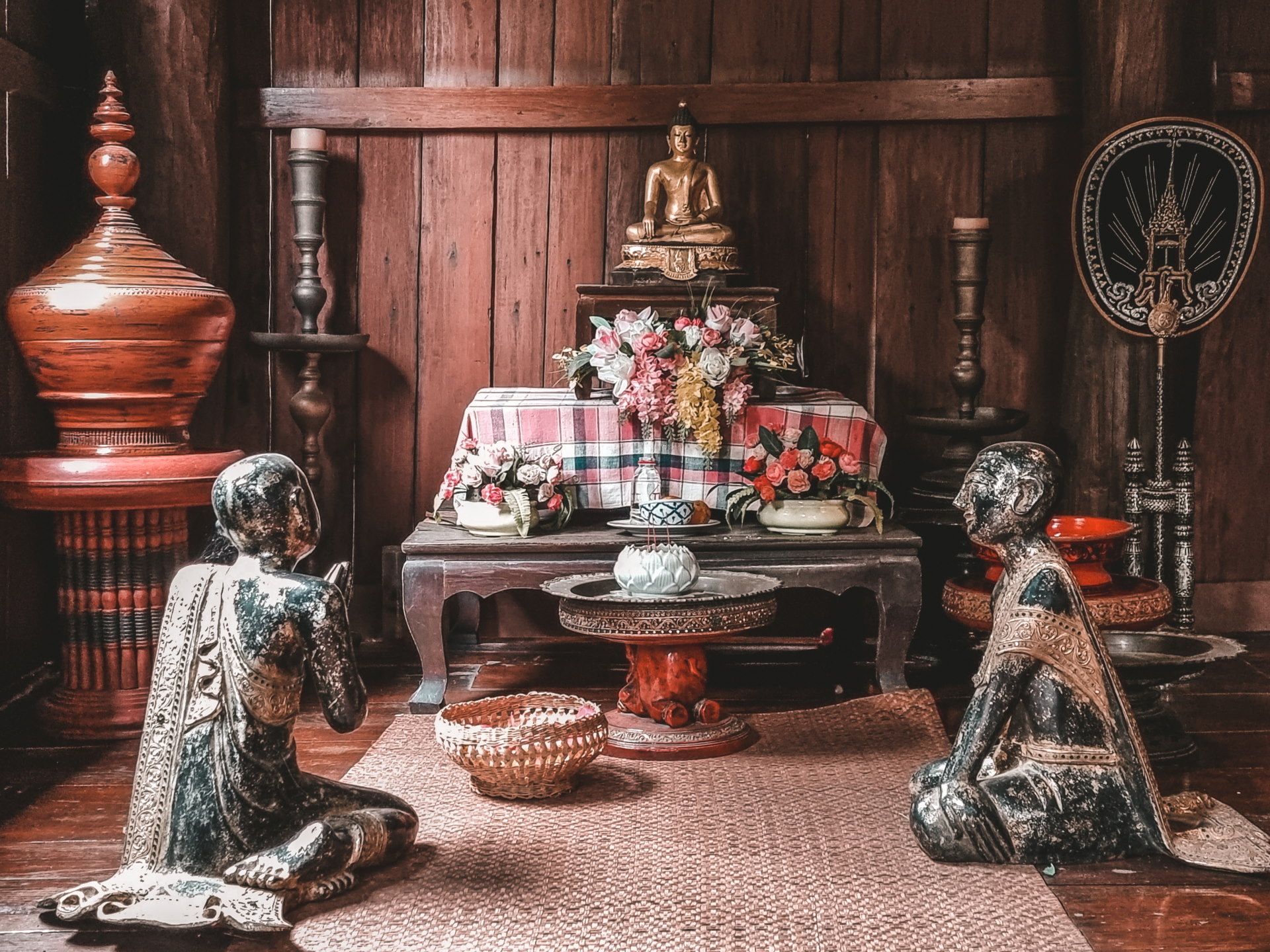
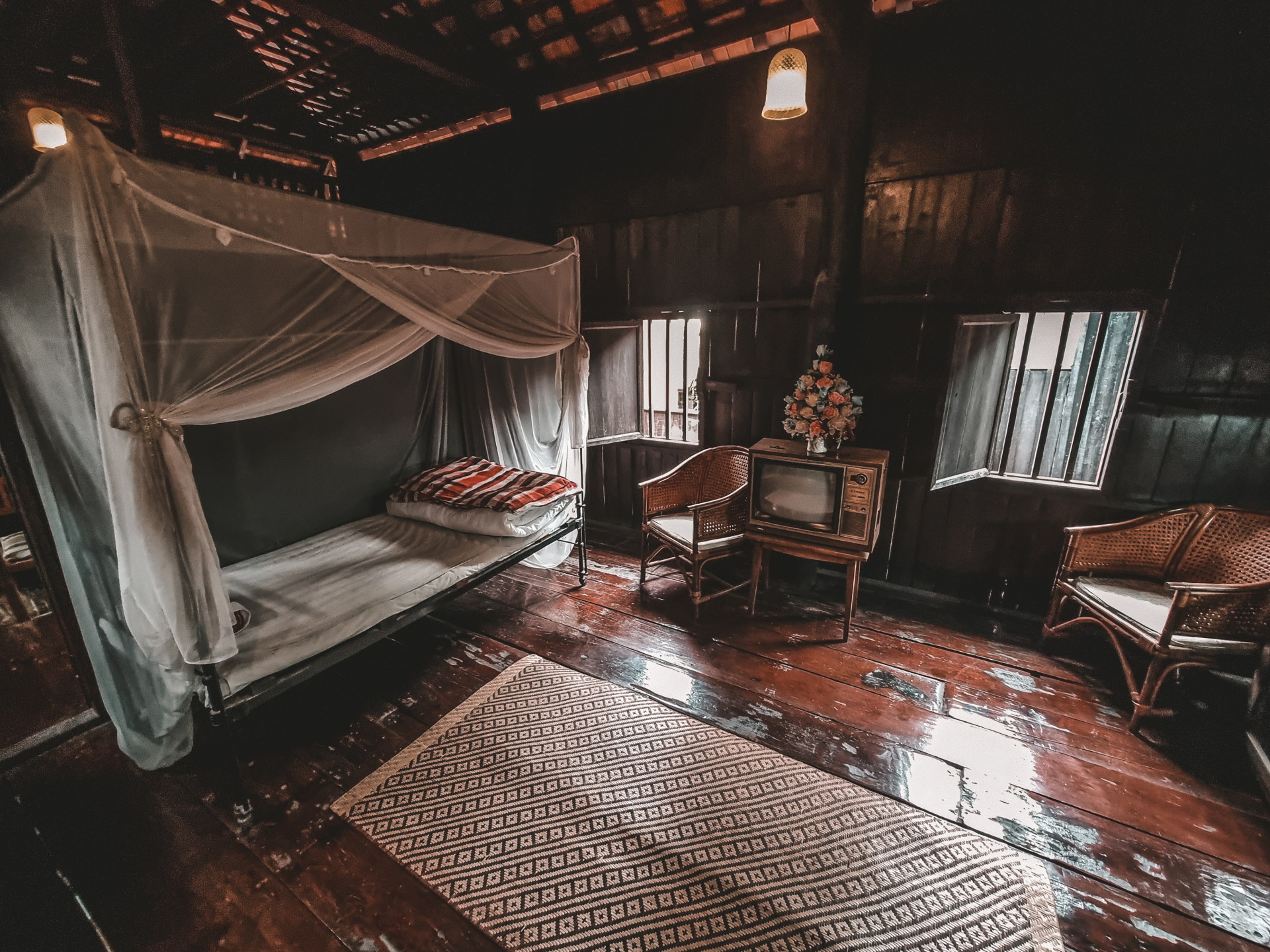
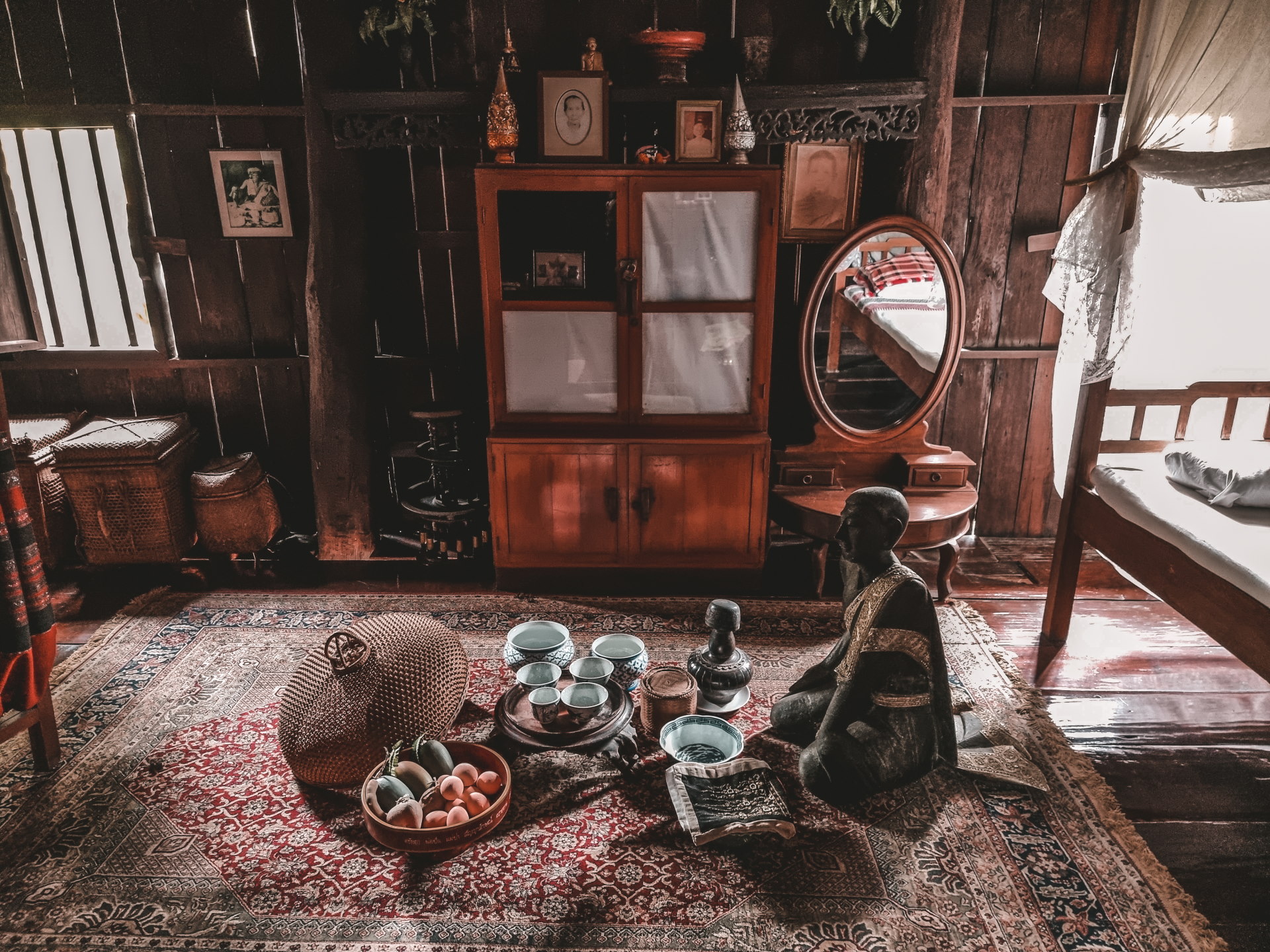
Spread across the different rooms, the exhibition also includes everyday objects such as furniture, utensils, silverware and textiles, as well as collections of banknotes and ancient coins, and various antique objects such as bronze drums, swords or woven fabrics, among others.
Finally, under the house, the space is furnished and serves as a demonstration area for weaving, cotton spinning and embroidery, in addition to allowing the purchase of fabrics and products from their workshop.
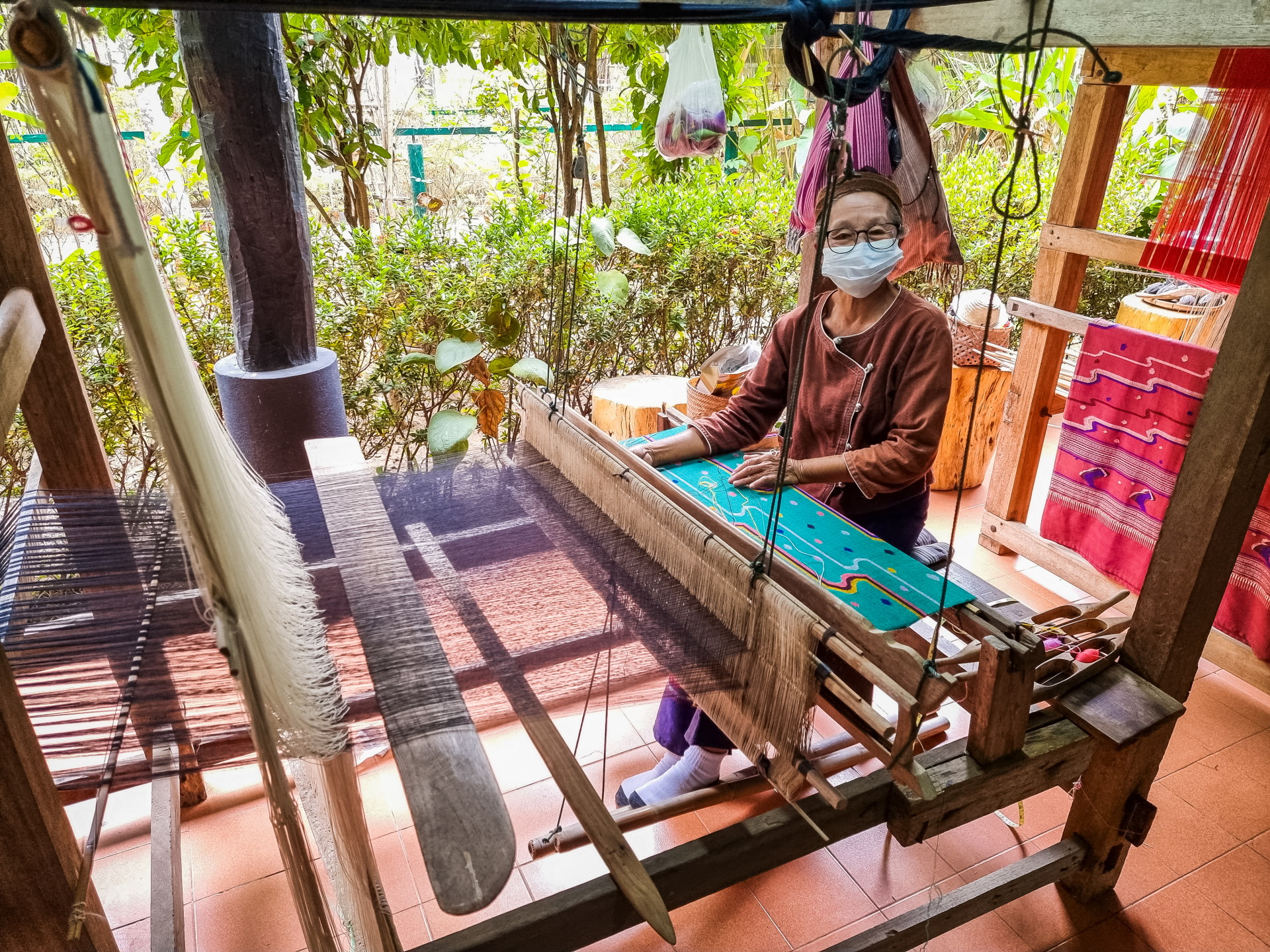
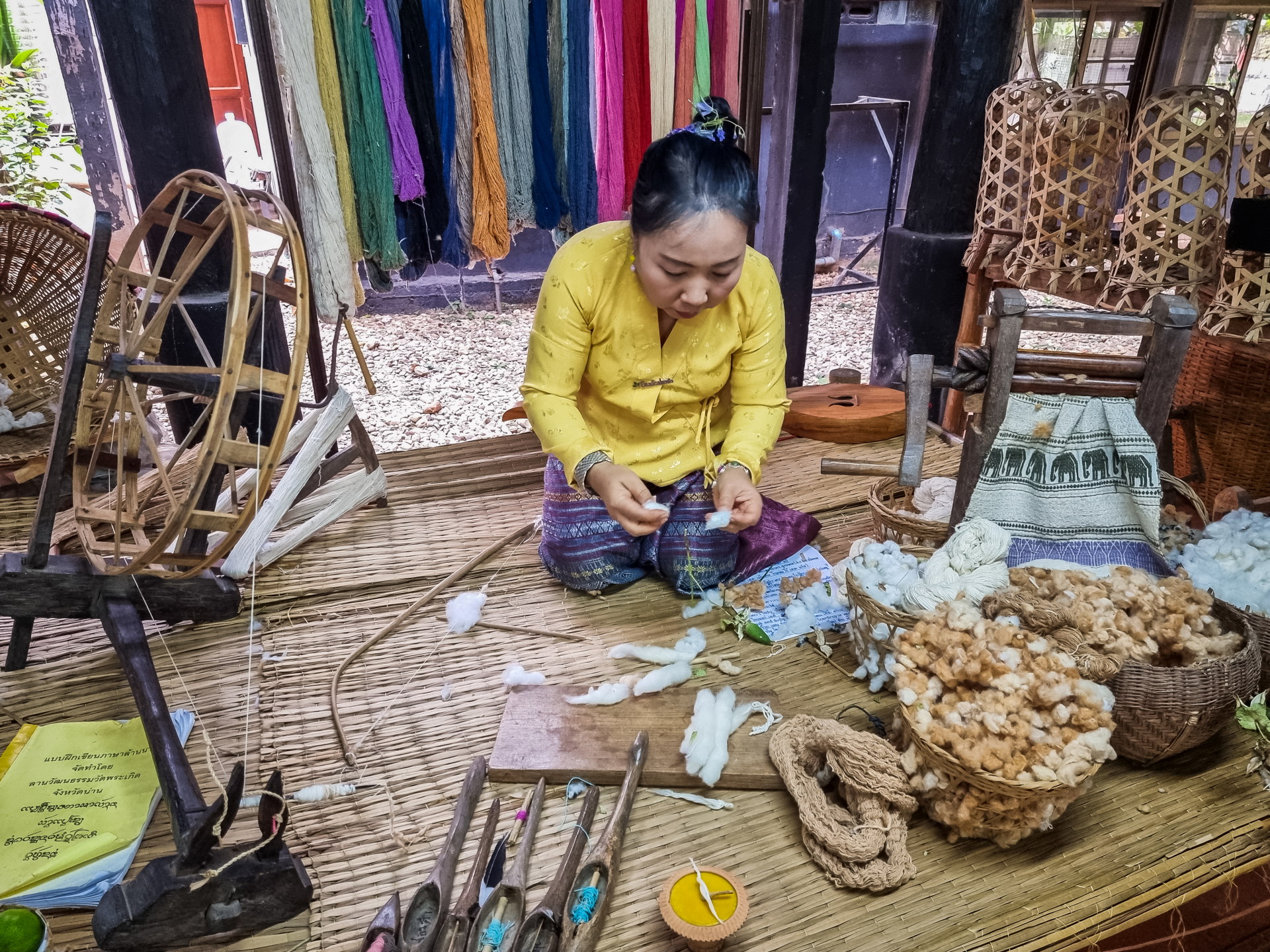
In addition to individual tourist visits, the house can accommodate groups or organize cultural workshops such as weaving, dyeing or traditional cooking classes, giving this house a kind of second life.
Other notable buildings
If you like old houses or historic buildings, there are several others. I won't go into more detail, as some can only be viewed from the outside, and besides, I didn't visit them all.
- Khum Chao Thep Mala : a teak house on stilts, whose appearance strongly reminds me of the style of Baan Than Khun, a similar house located opposite the Wat Mahathat de Nakhon Si Thammarat, about 1,400 km away. As an aside, while doing my research for this article, I saw that this house was recently sold (for $2 million!).
- Thananuson Royal House Located directly opposite Wat Phumin, it is a raised wooden house, more modest in appearance. It is said to have belonged to Luang ThananusornA high-ranking official, more precisely an agent of the Nan Provincial Treasury. From the limited information I can find, it dates from the late 19th or early 20th century. The interior is not open to the public, but the courtyard is accessible as it houses an Amazon-branded café (the local Starbucks).
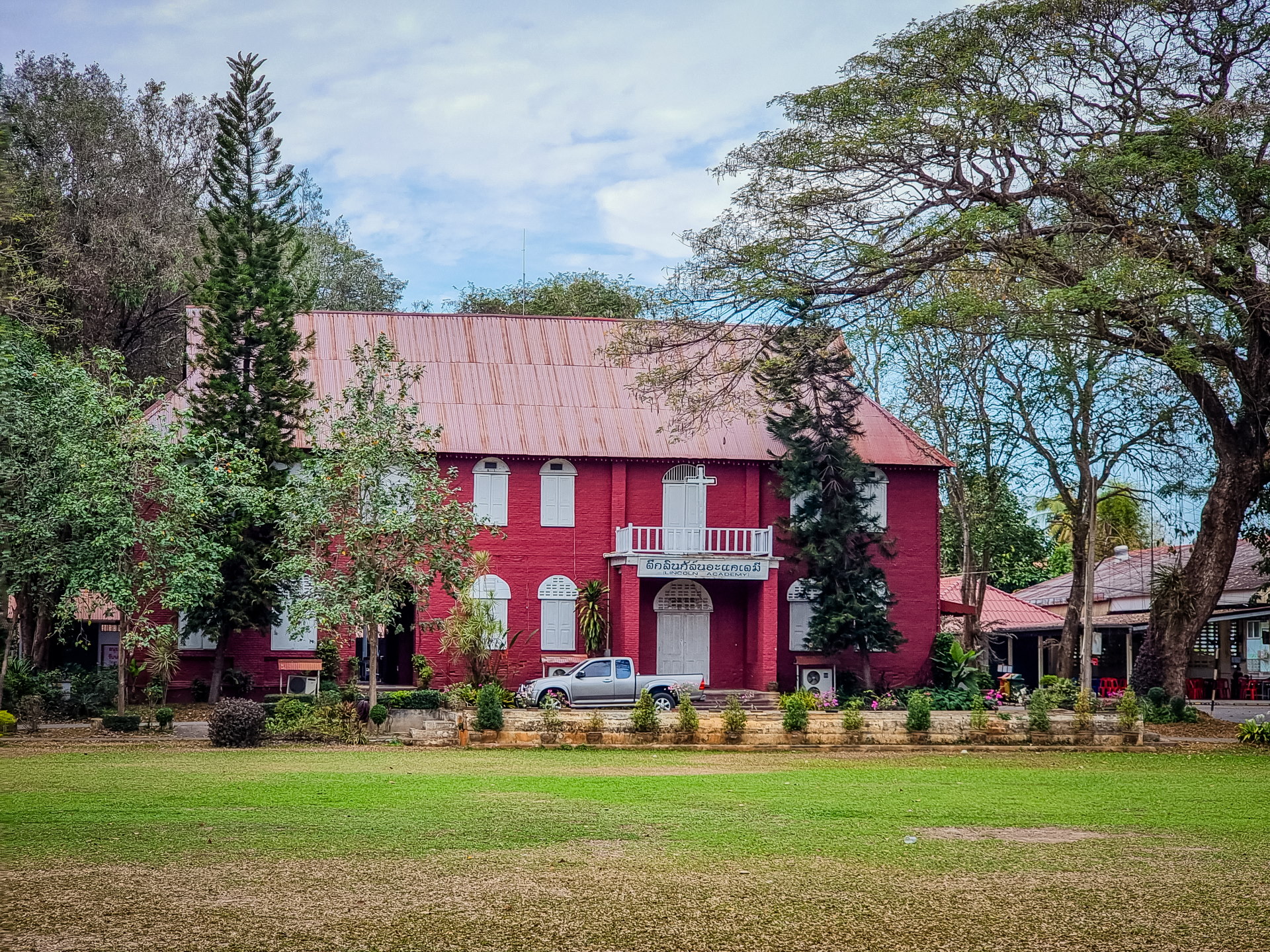
- Rangsi Kasem Building Located within the grounds of the Nan Christian School, it is a Western colonial-style building, and for good reason: it was built between 1915 and 1916 by American missionaries. After their departure, the school was transformed into a museum recounting the history of the site. Next door, you will also find a small church (Prasitthiporn Nan Church). In another area, about 500m away, related to this same story, I saw another colonial-style building, recognizable by its red facade (a sign simply says "Lincoln Academy" above the door).
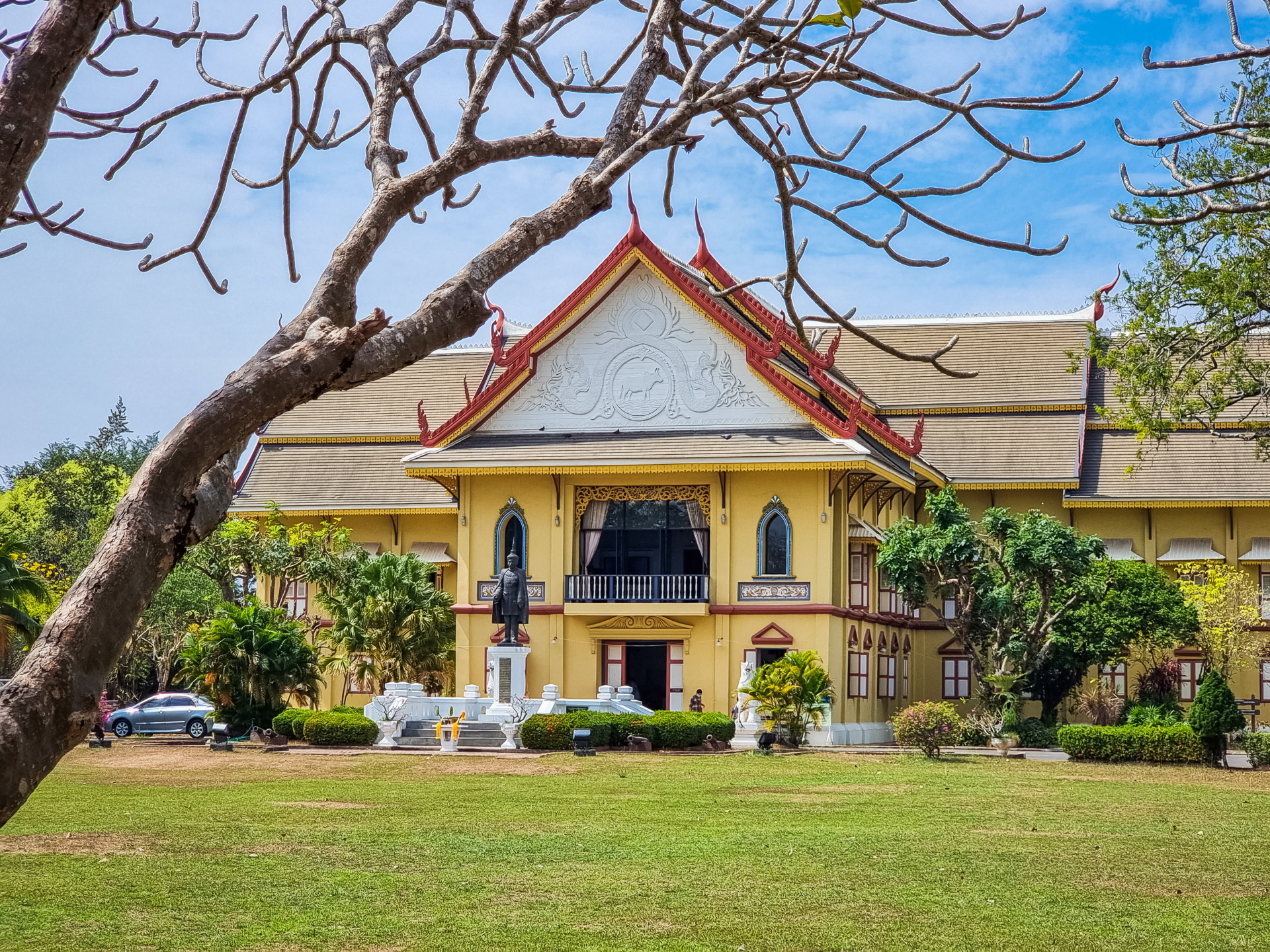
- Nan National Museum (former royal palace) I had to end this section with this building, since it is, as I mentioned earlier, the former palace of the last king of Nan, Chao Maha Phrom Suratthada.
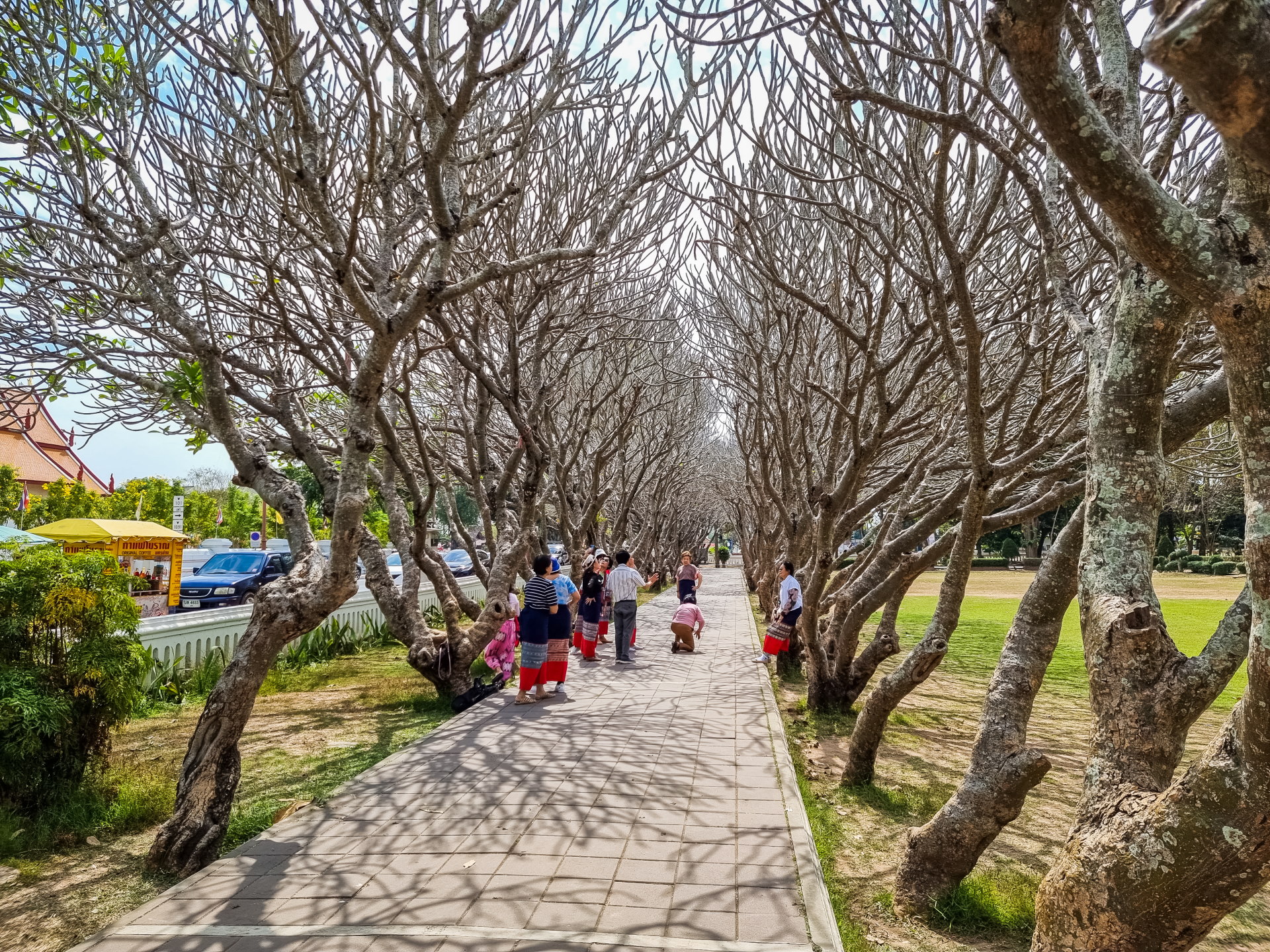
A Western-style building with local influences, now a museum, it displays artifacts related to local royalty, the province's history, and the region's various ethnic groups. Even without going inside, the building is worth a look for its architecture, and you can enjoy a beautiful tree-lined avenue along the street. Furthermore, it's located directly opposite Wat Phra That Chang Kham, and therefore not far from Wat Phumin.
Walks & atmosphere
Old City Wall
In mentioning the old fortifications, it is mainly an opportunity for me to briefly touch on the history of Nan, which stands out a little.
Indeed, the city began to flourish in the middle of the 14th century, when several villages joined together to settle on the banks of the Nan River, giving birth to the new capital of Nanthaburi , its original name.
This took place within the context of the nascent kingdom of Lan Xang (present-day Laos), with the founding of Luang Prabang, and as Nan sought to rival the then local capital, Pua. Under the name Wara Nakhon , the small kingdom was initially linked to the powerful kingdom of Sukhothai.
Relatively isolated between the mountains, Nan enjoyed a semi-independent capital status, becoming known as Chiang Klang (“the middle city”) when it came under the influence of the Lanna kingdom in the 14th century, following the decline of Sukhothai.
It was during this period that the first fortifications were built. Like Lanna, the region then came under Burmese control from the mid-15th to the late 18th century. Nan regained a degree of autonomy until 1931, when it was fully integrated as a province of Siam, shortly before Siam became Thailand.
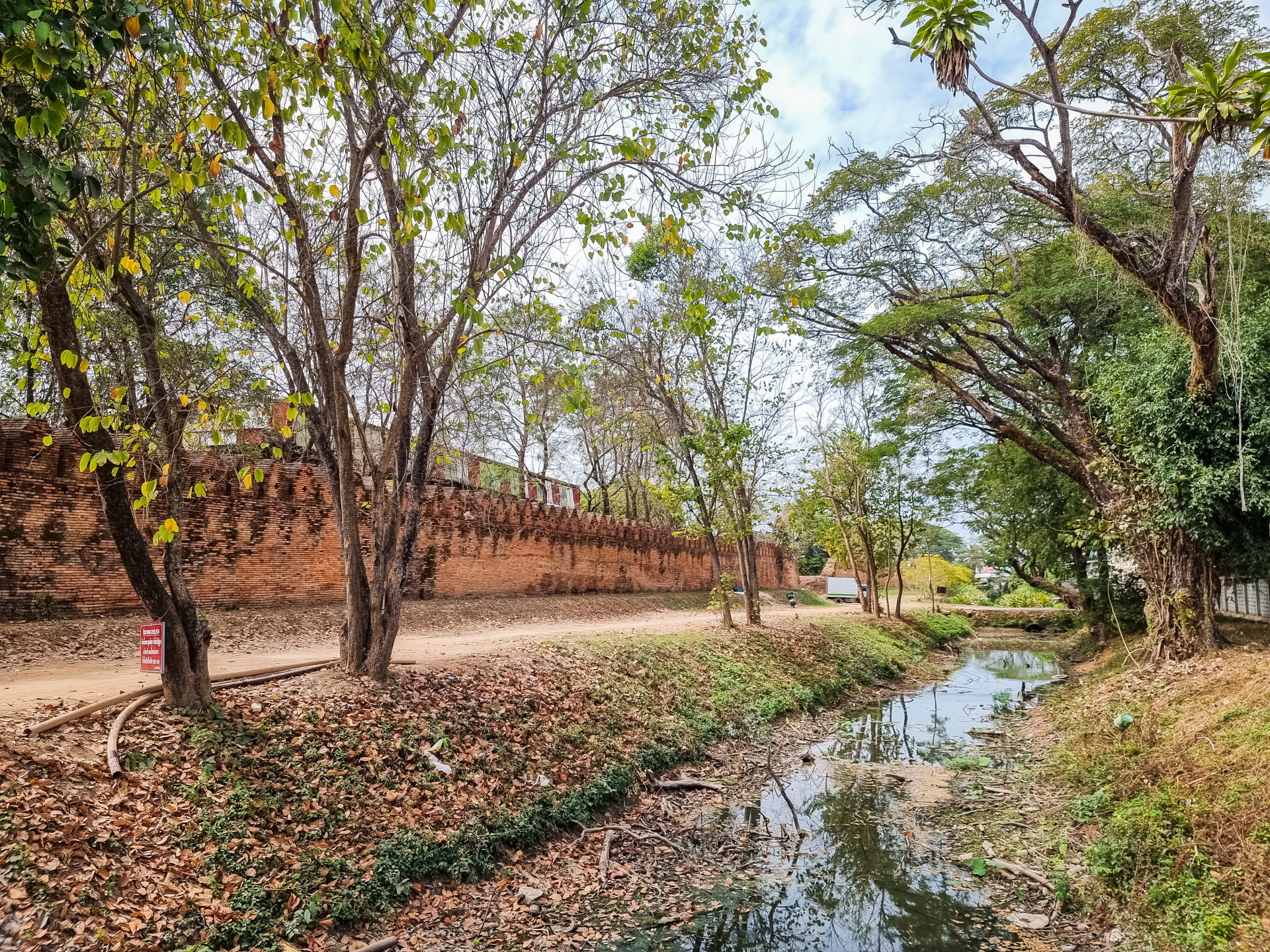
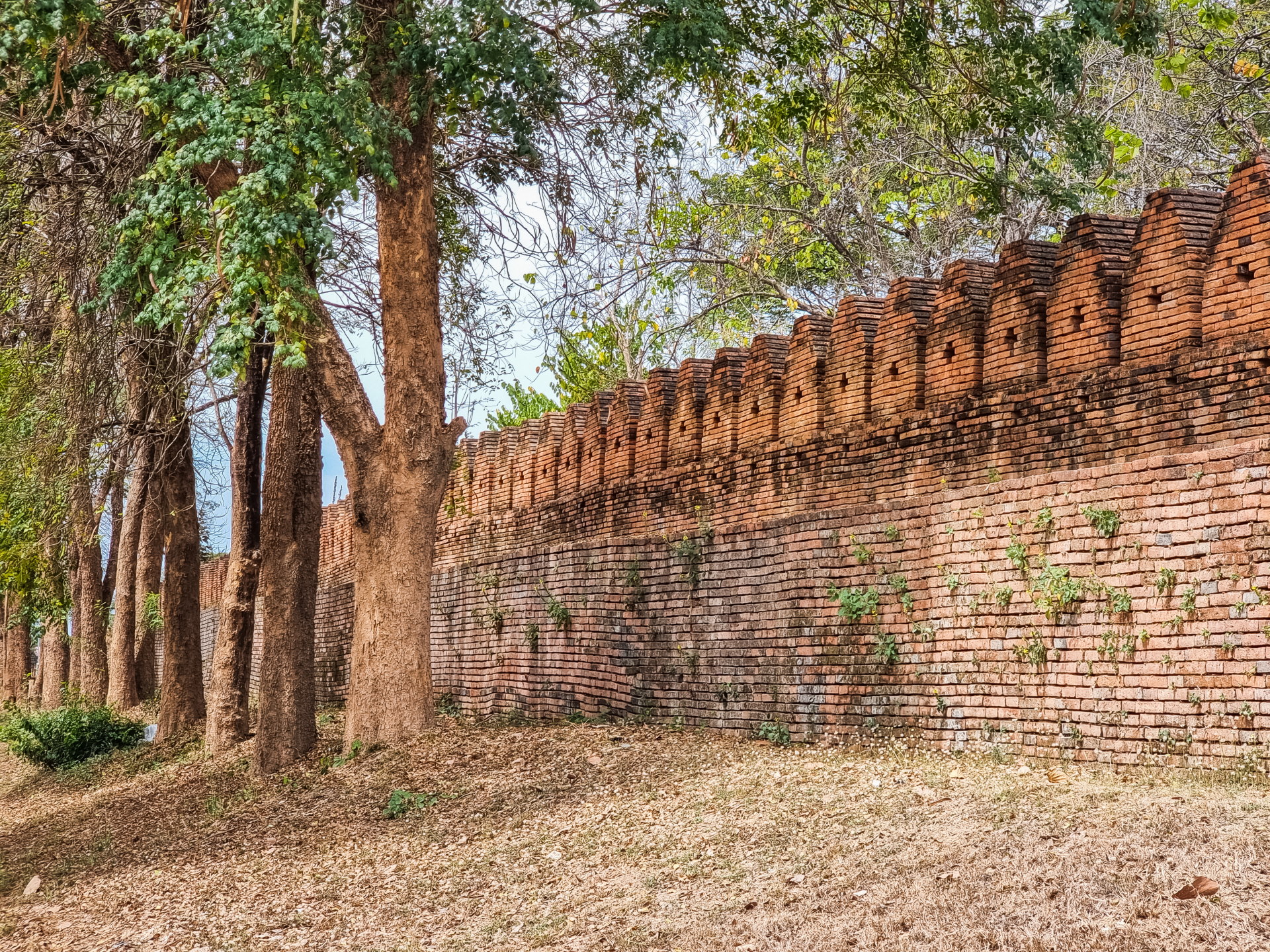
The version of the walls visible today is, however, late since, following a major flood in 1817 which destroyed what was then only a wooden palisade surrounding the town, the enclosure was not rebuilt until 1885 , this time in brick.
Originally, this brick belt stretched for 3,600 m, of which only a renovated portion of about 415 m remains today. It bears a resemblance to similar structures found in Chiang Mai.
This section is visible directly from the roadside if you walk along the same road as the one that passes by Wat Phumin, on your way to the Night Market or Wat Suan Tan, located 500m further on.
Bike ride along the banks of the Nan
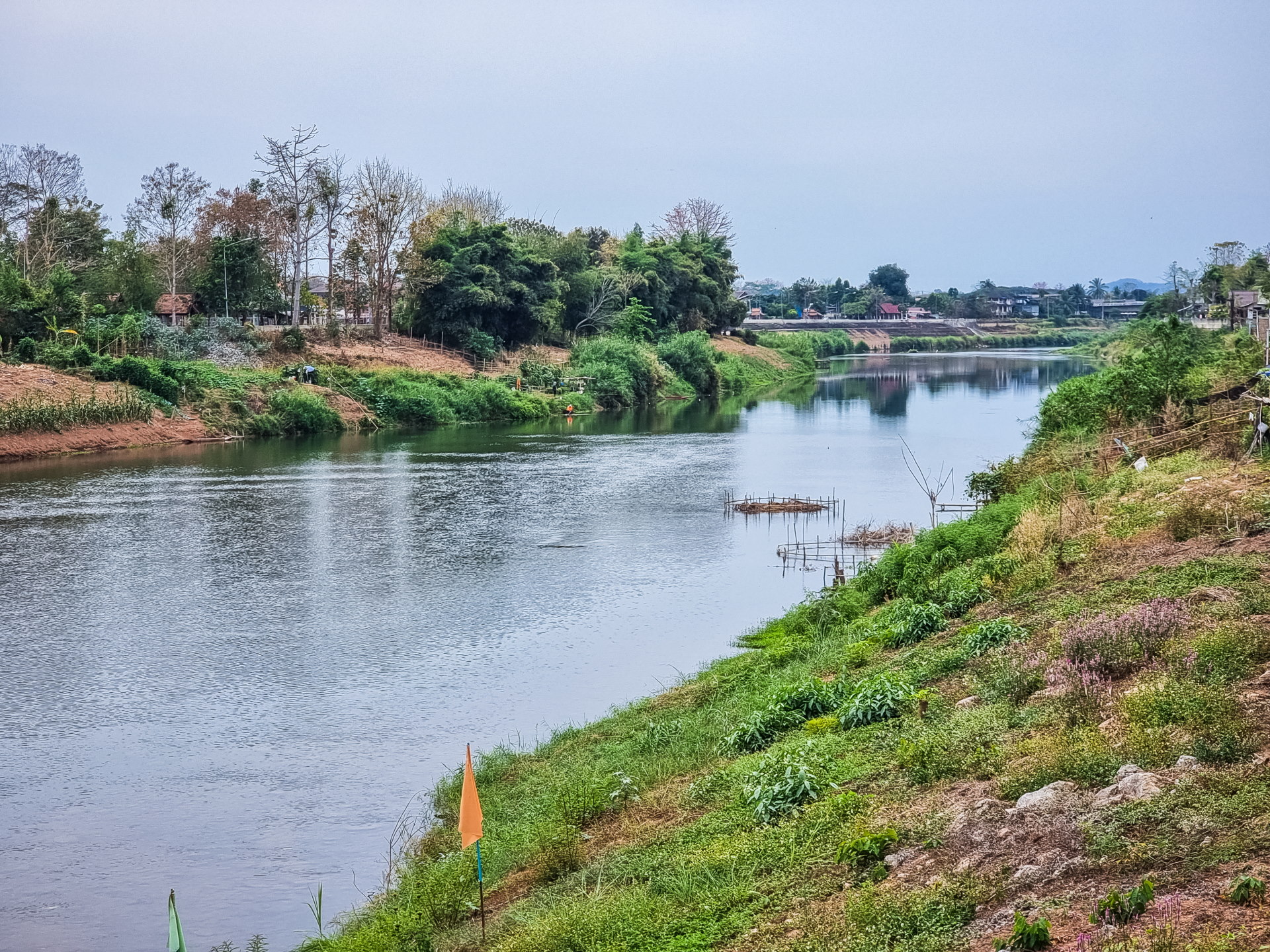
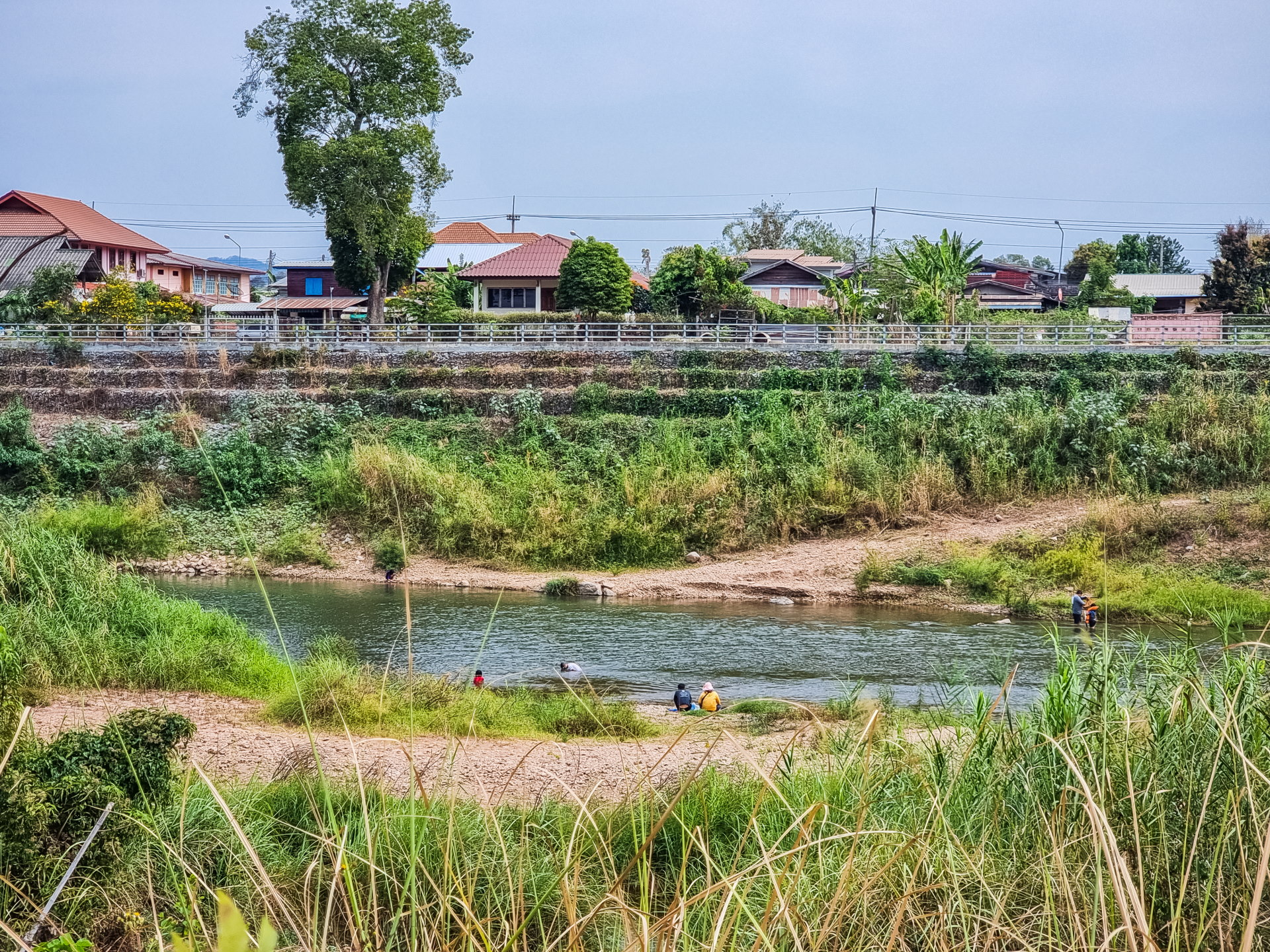
It was then, as we were heading towards the Nan Noble House, that we decided to walk along the "quays". Yes, I put it in quotes, because these are not quays landscaped like those often found in cities crossed by a river, with restaurants and cafes with terraces, or even parks.
Here, there's none of that… Just a rather deserted road running alongside the stream. The opposite bank looks just as calm. The river is quite low, and the banks, fairly wide in fact, are landscaped in places with makeshift gardens, the inhabitants taking advantage of the mineral-rich soil.
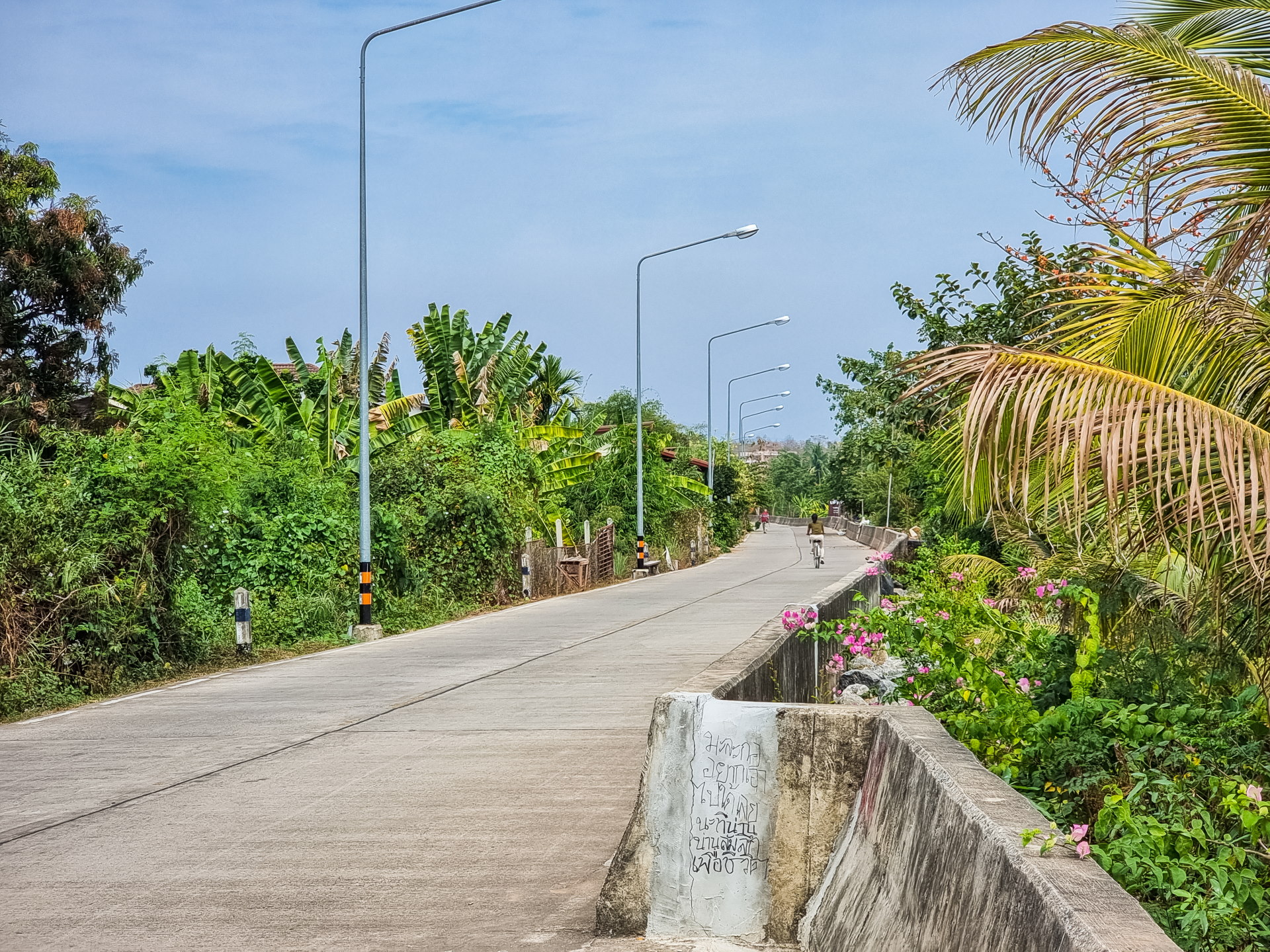
We can see some people going about their business, including children taking advantage of the calm stream to swim in it.
We were hoping to find a restaurant there, which was the main purpose of our visit. I had spotted one, but it was closed that day… So we had to turn around and go down a perpendicular street, retracing our steps slightly (I'll put the address on the map at the end).
In our case, we mostly walked along the northern part, near the Noble House, but there is still an area where several cafes, restaurants and even a bar open in the evening are grouped together, along the banks (placed on the map).
Rat Phatdu Fresh Market
It's more of a visual landmark than a place I've actually "visited". However, I encourage you to take a look: it's always in these kinds of places that you can capture interesting scenes of everyday life.
What I did, however, was hang around the area early in the morning (and briefly in the evening too), mainly along Sumon Thewarat Street.
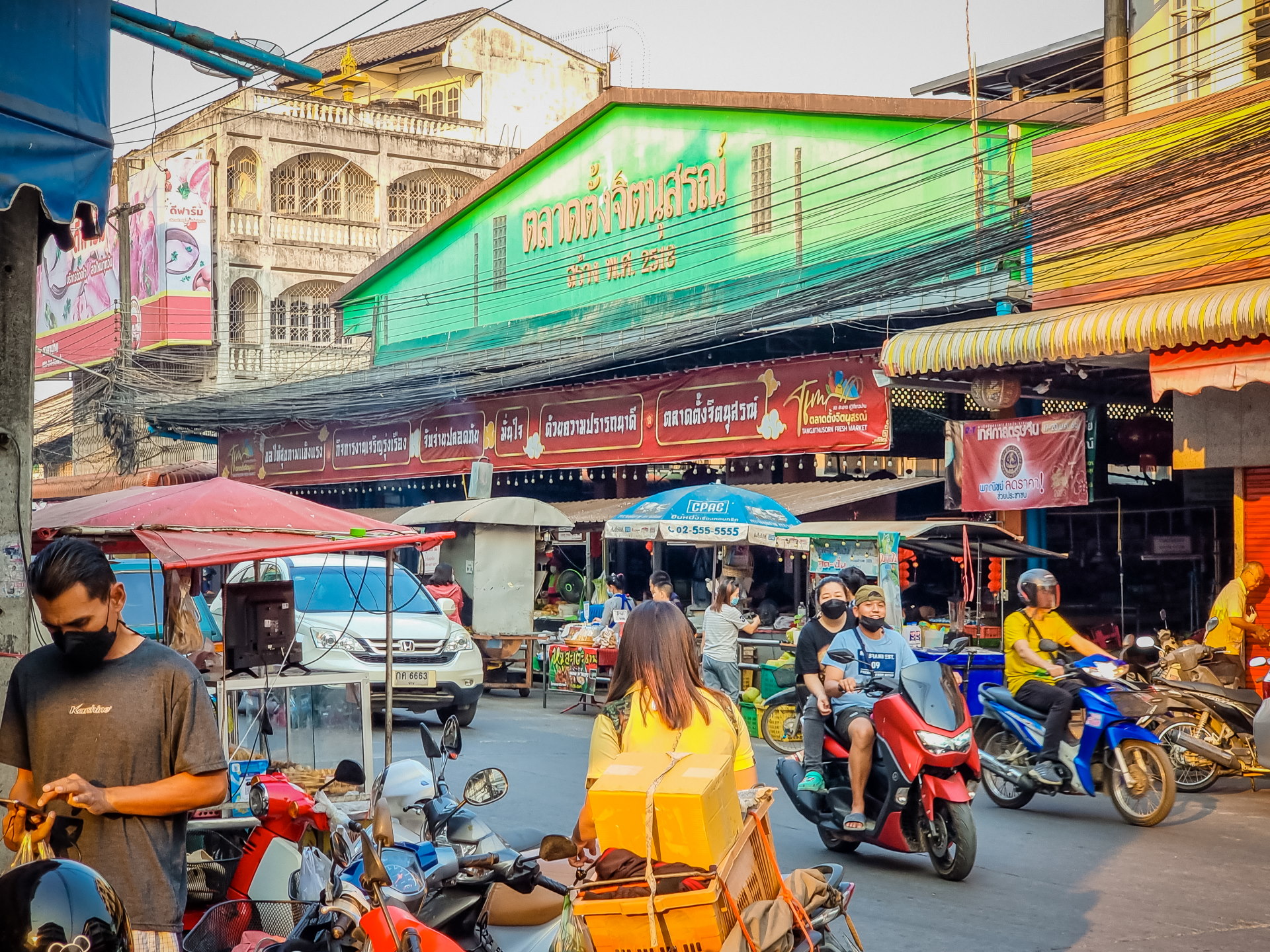
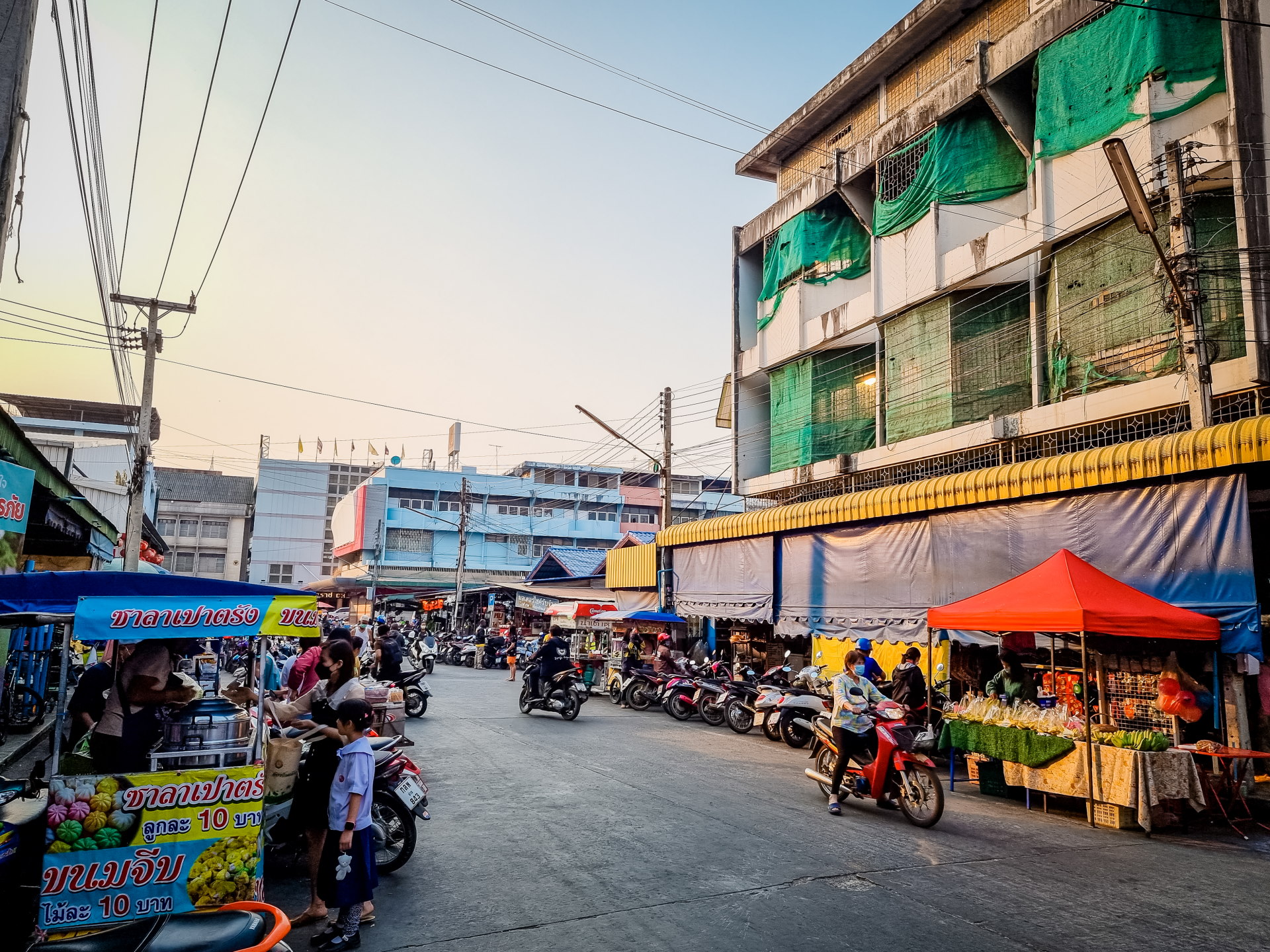
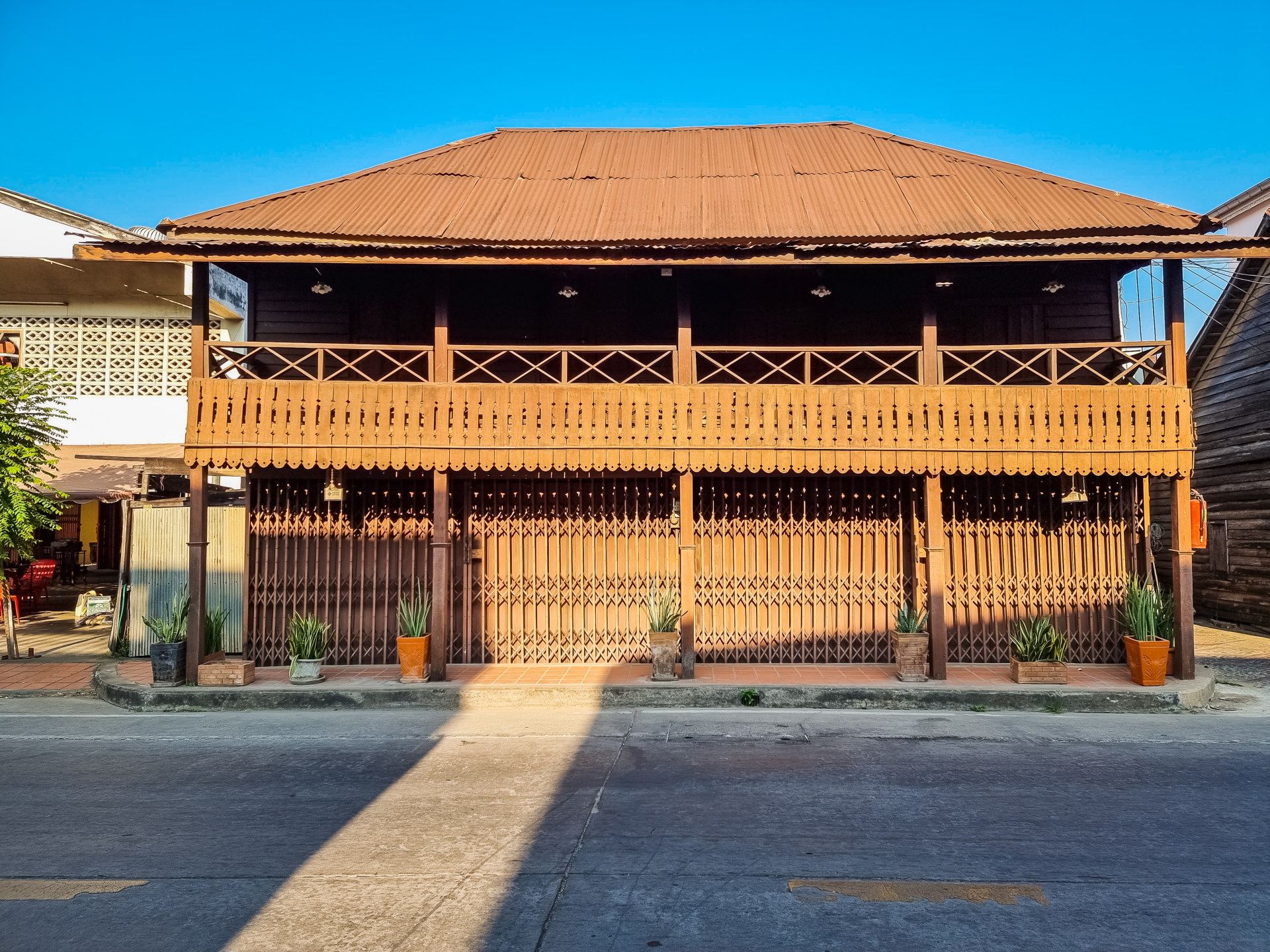
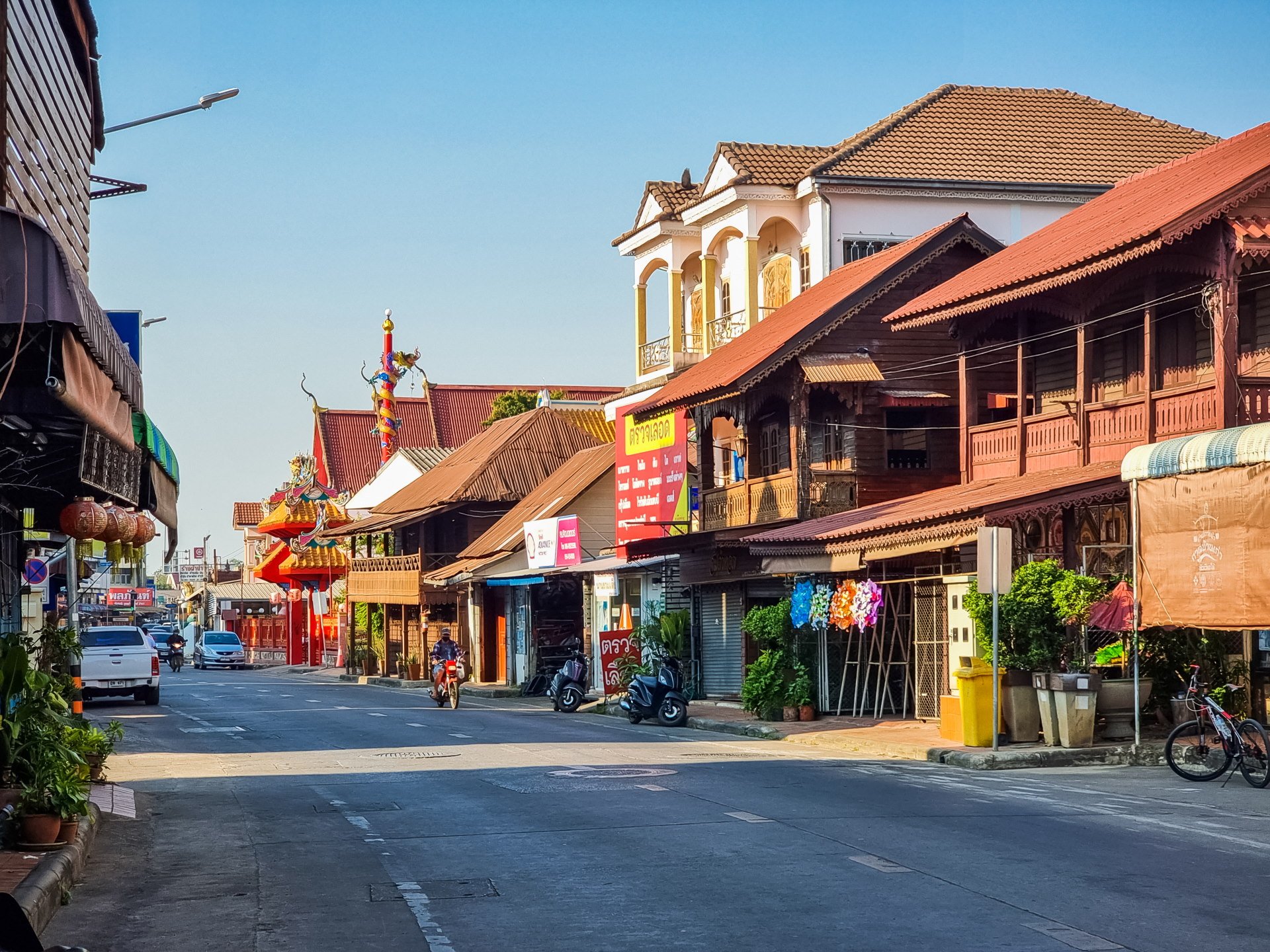
As someone who appreciates architecture in general, I really enjoyed the variety of buildings that line this street. Some houses resemble chalets, while others are more typical of the concrete style of the 50s.
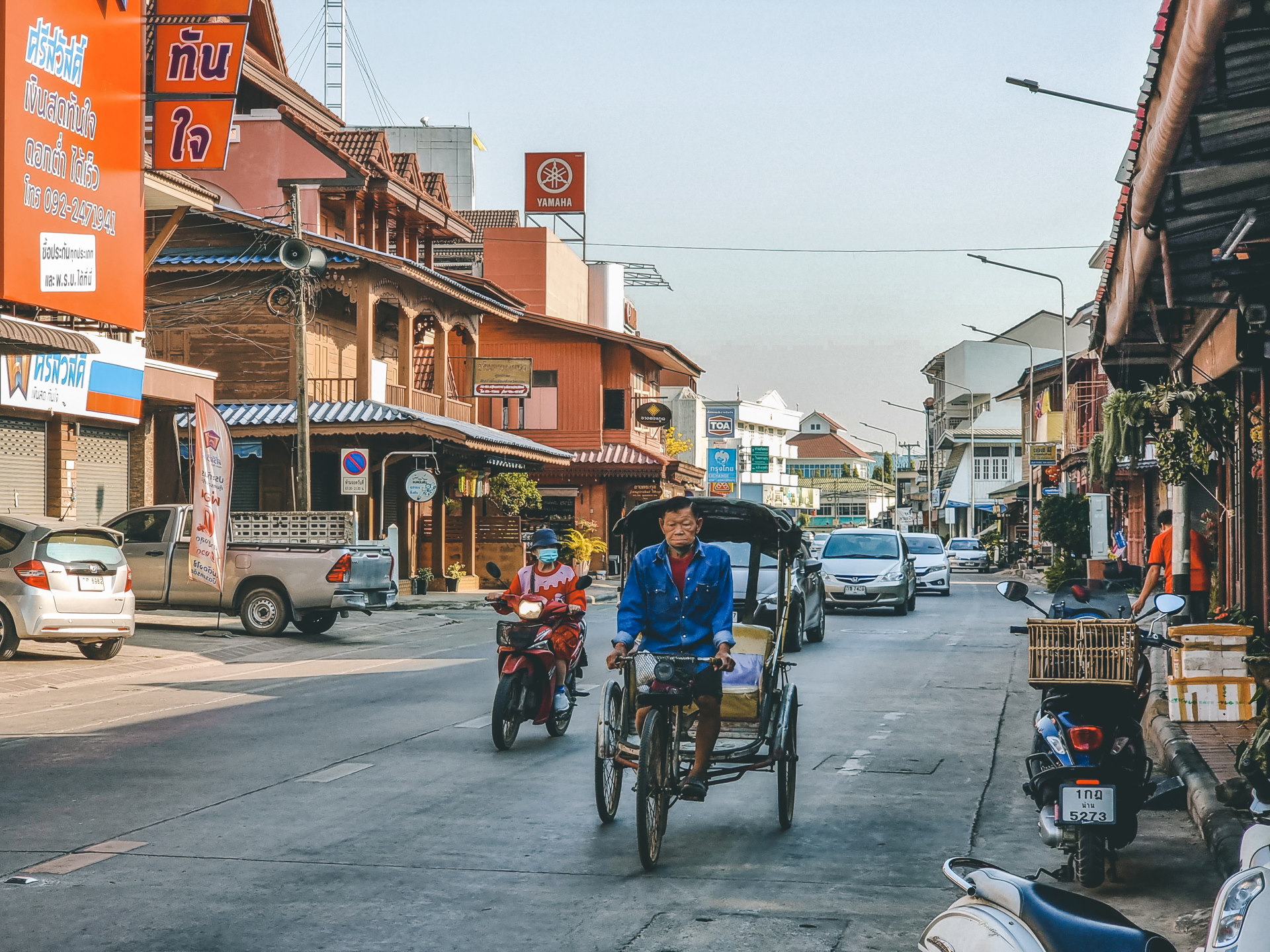
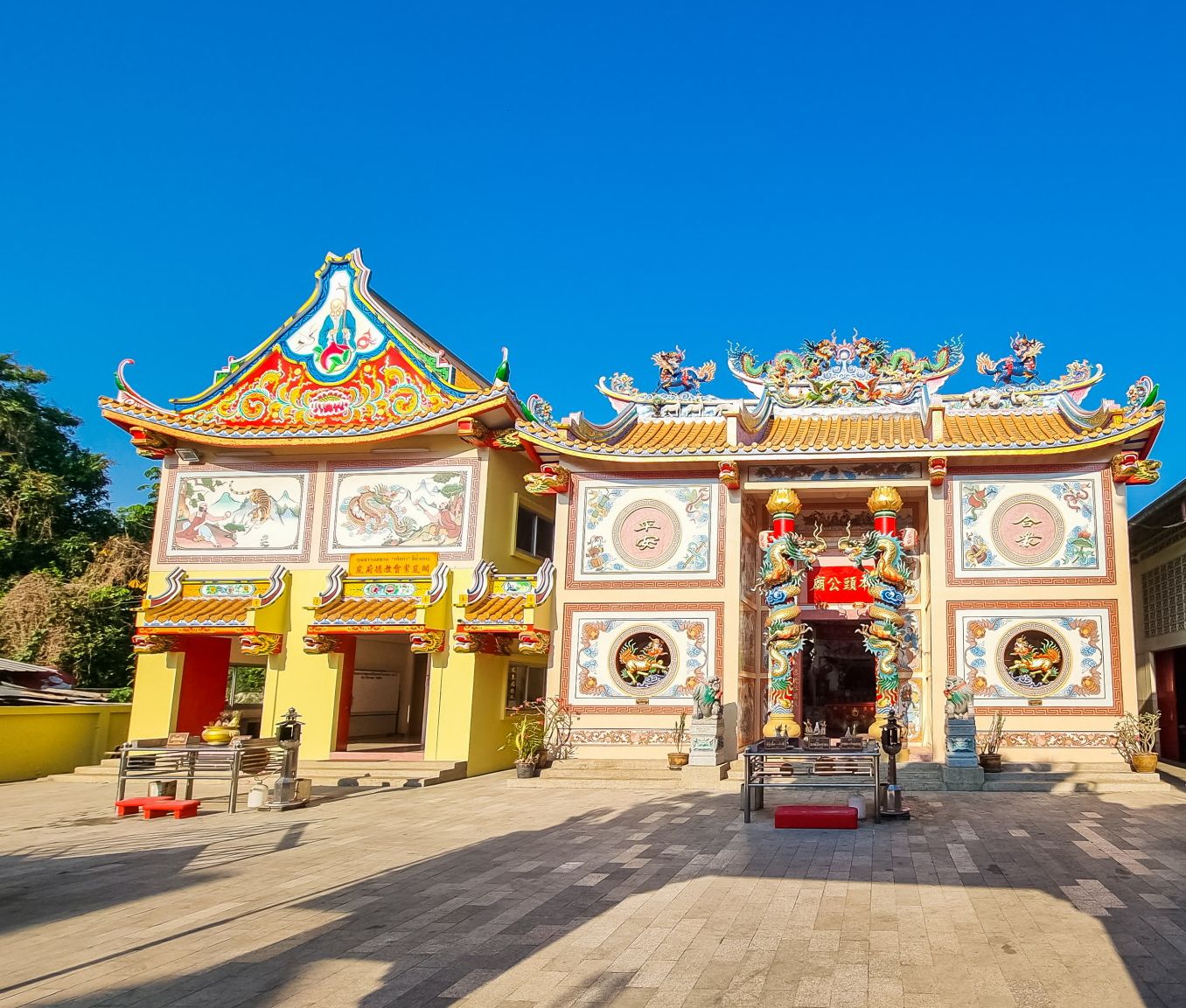
Going further, you come across a Chinese shrine, but above all an area with quite a few wooden storefronts, old-fashioned shop facades, and even a cycle rickshaw passing by as a bonus.
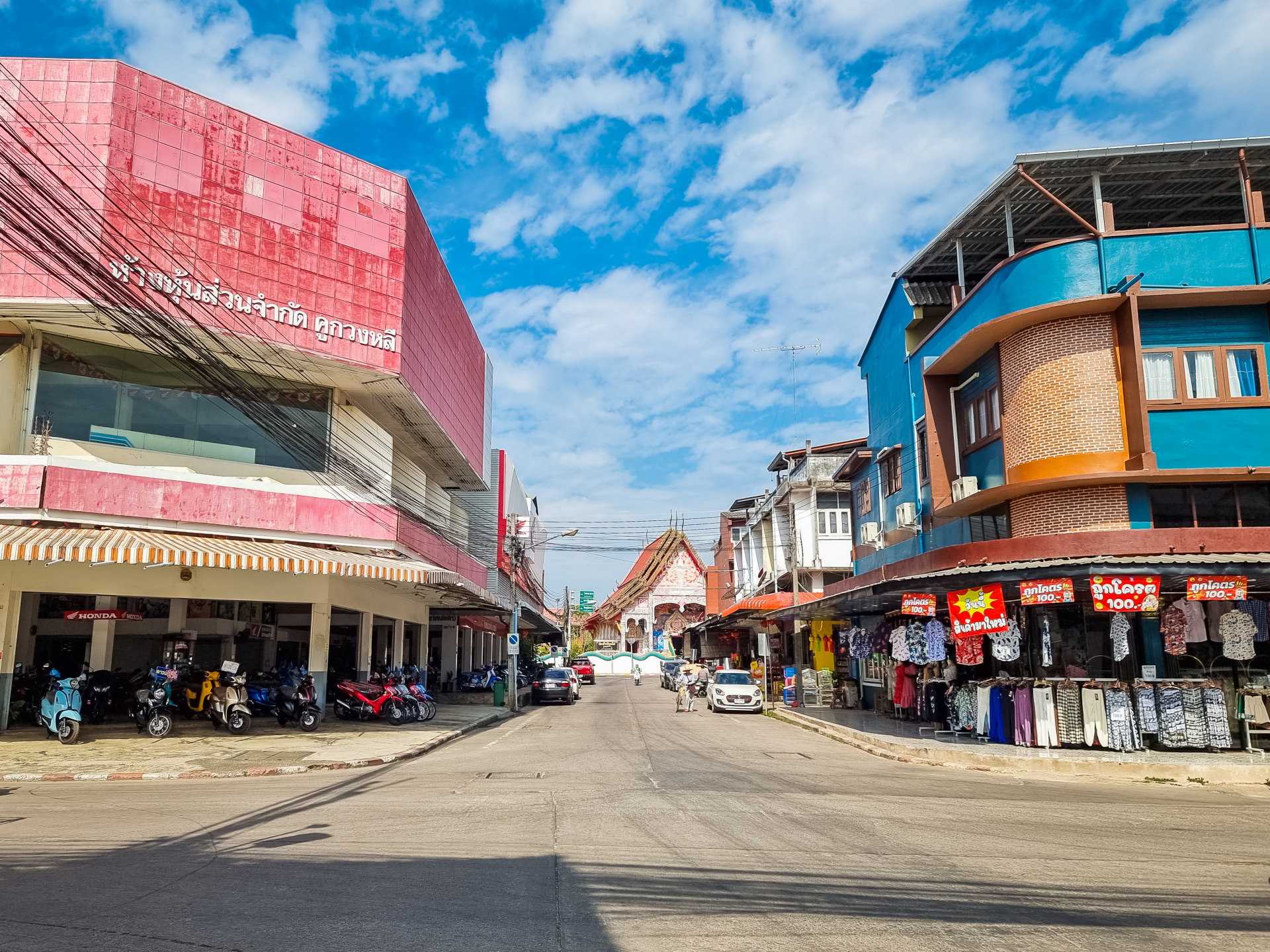
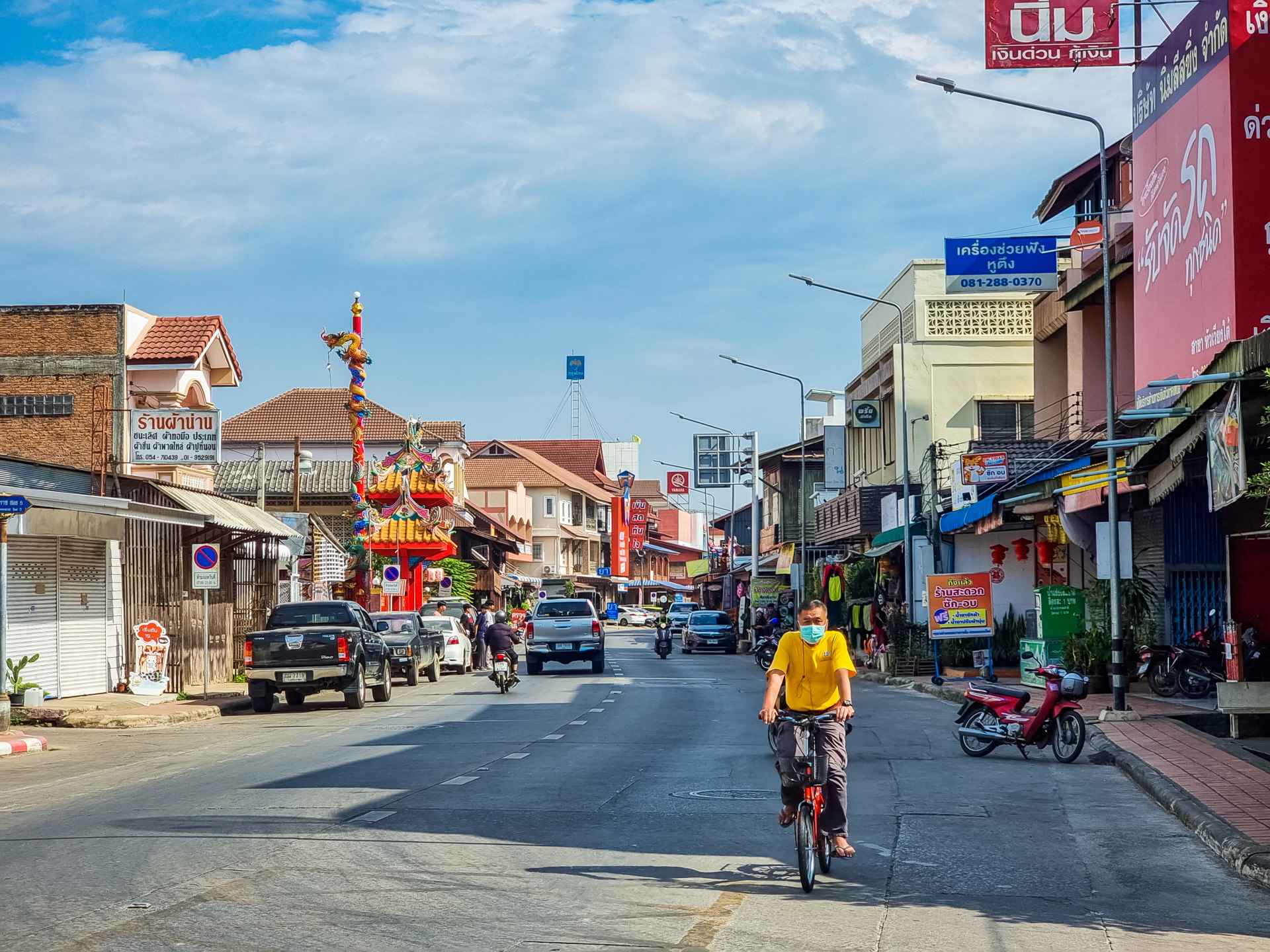
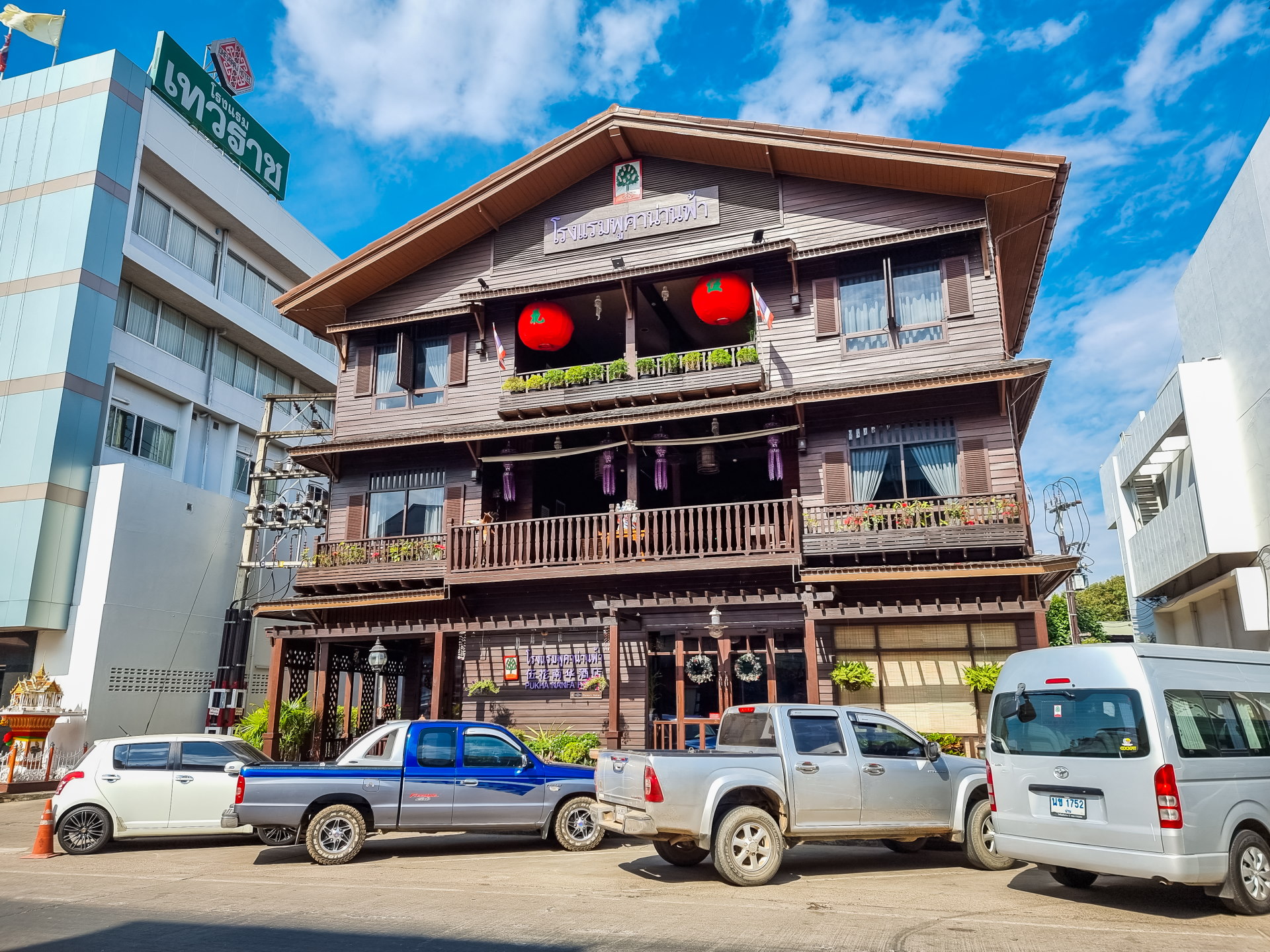
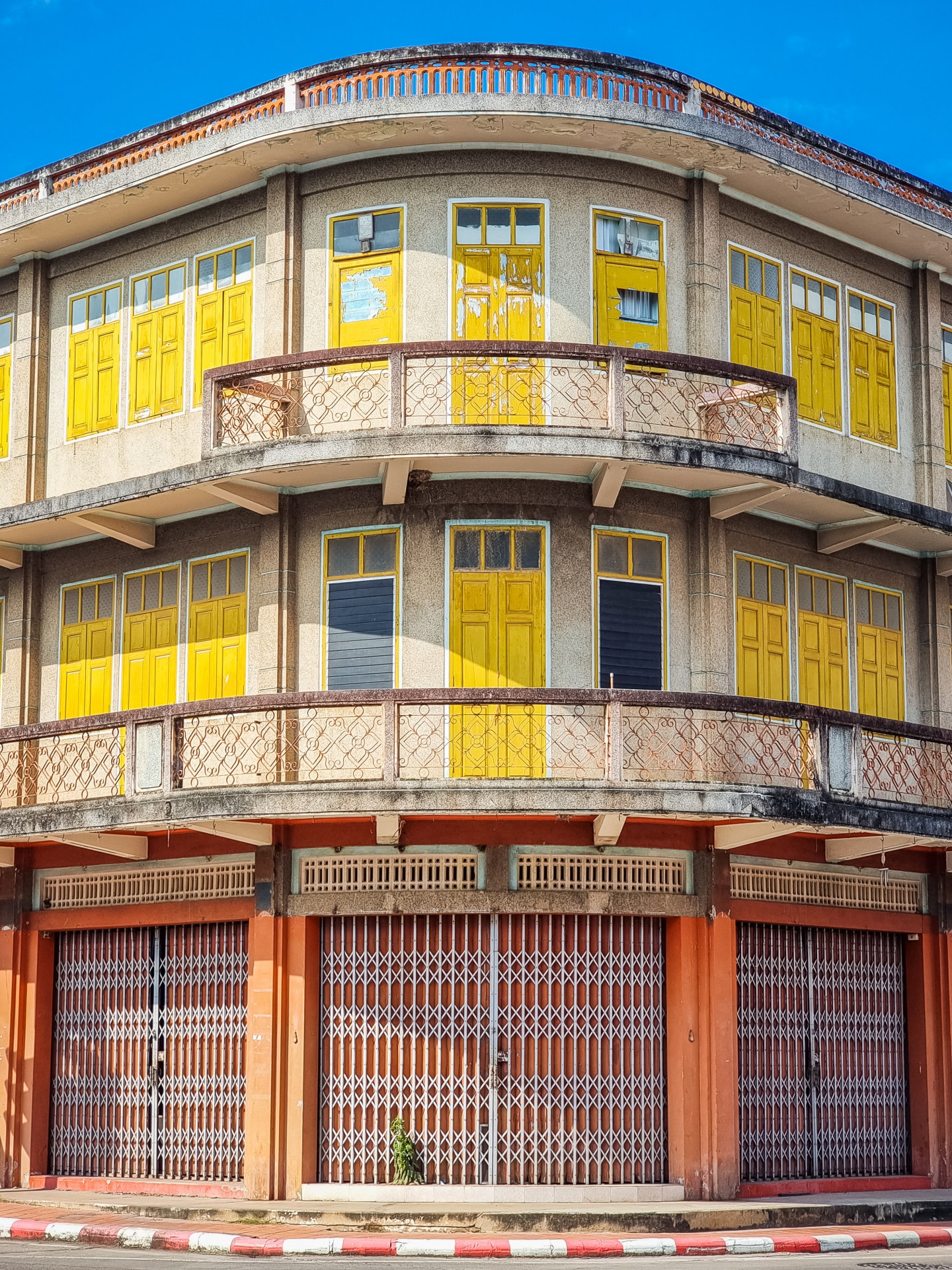
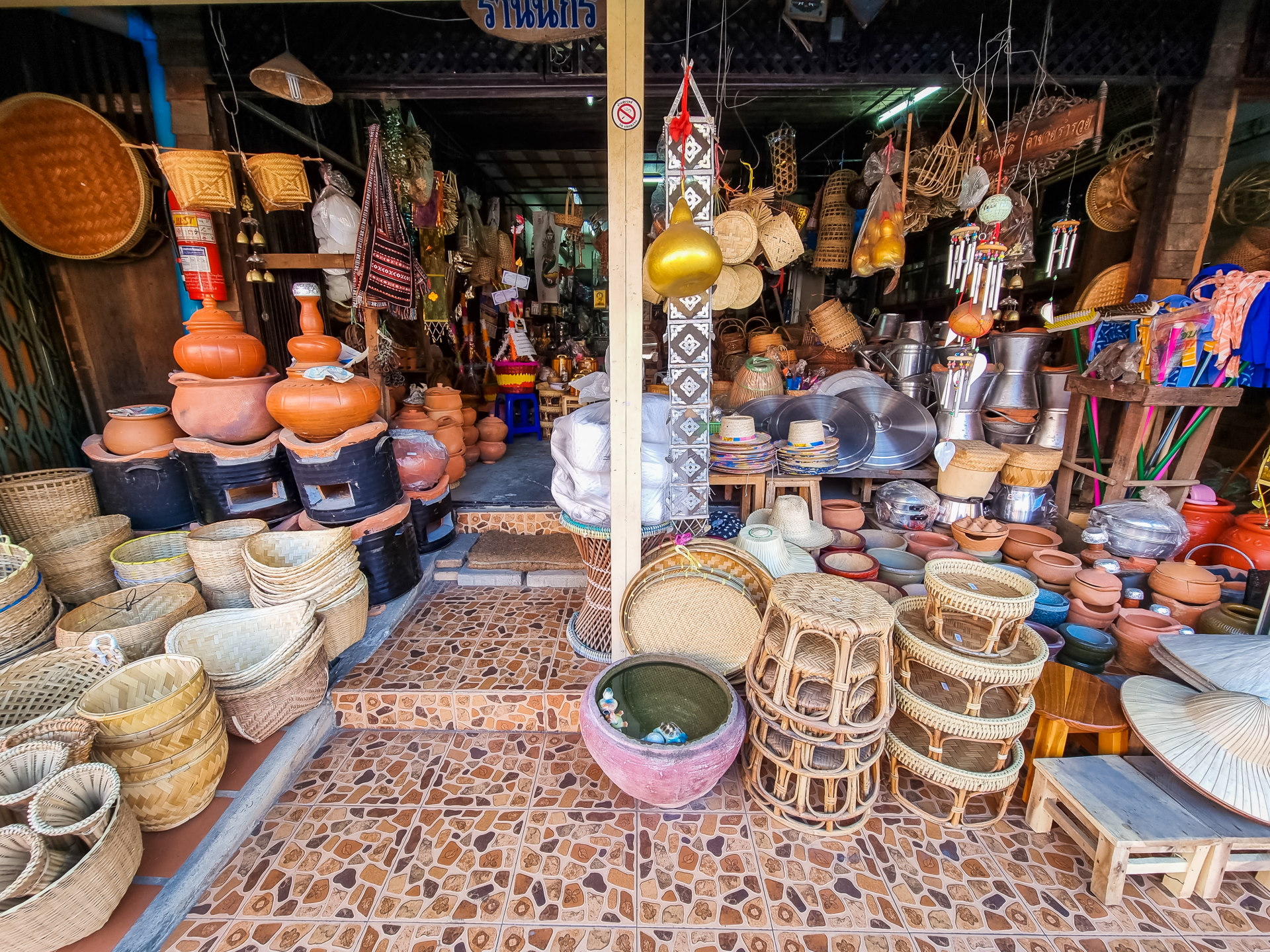
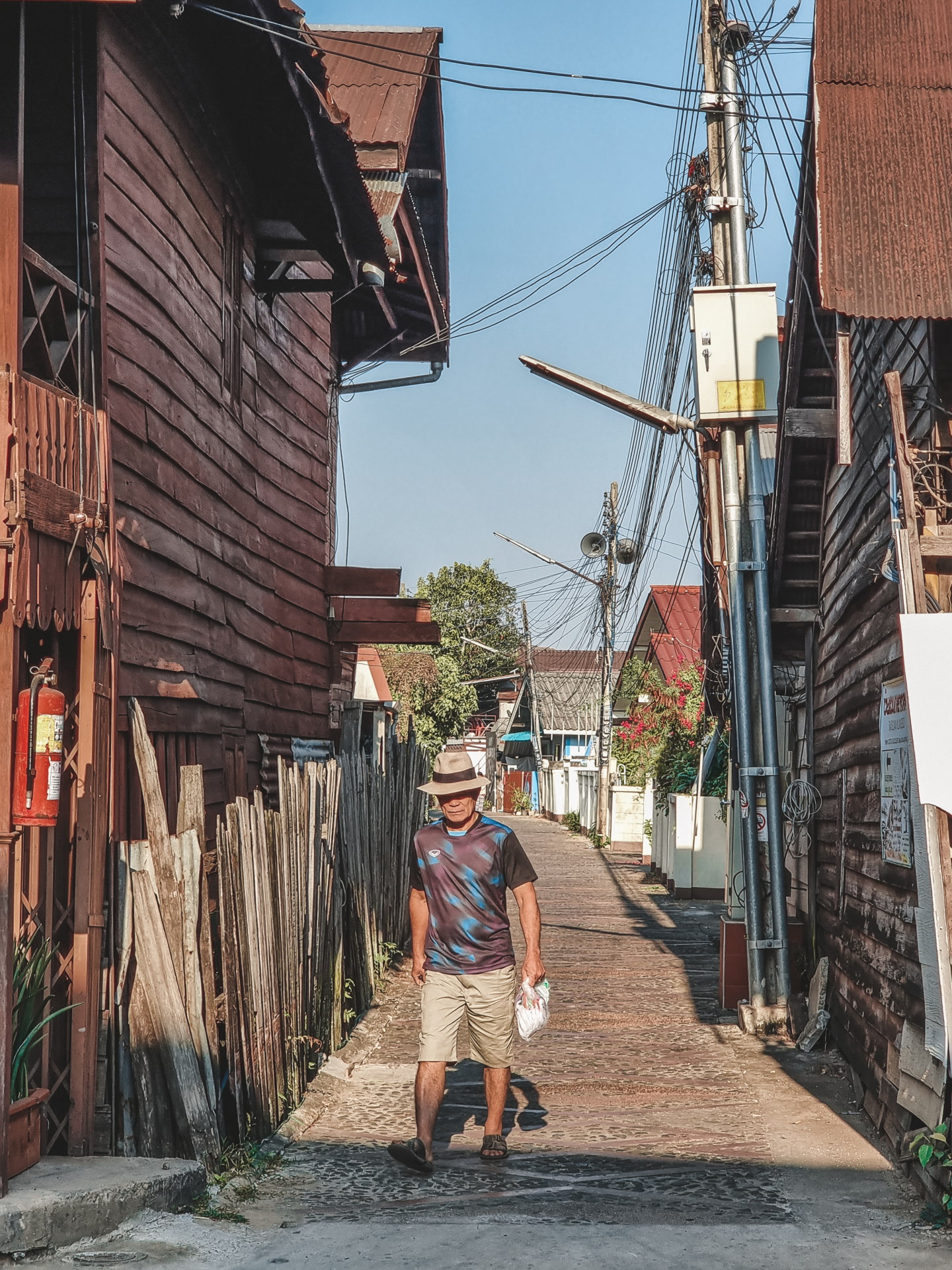
An old-fashioned atmosphere, bathed in morning light: exactly the kind of interesting visuals that capture the essence of a small provincial town like Nan . If you're somewhat familiar with Thailand (and Southeast Asia in general), you might notice something "missing."
Look closely at the photos, there's a bit of a lack of cables 🙂 And yes, Nan has cleaned up its main axes, giving a visual result that some might find "boring" or less Asian, as you wish, but I like it all the more this way, because we can better appreciate the architecture, less blocked by the tangles of cables that still adorn many streets, even in Bangkok.
Si Mueang Park
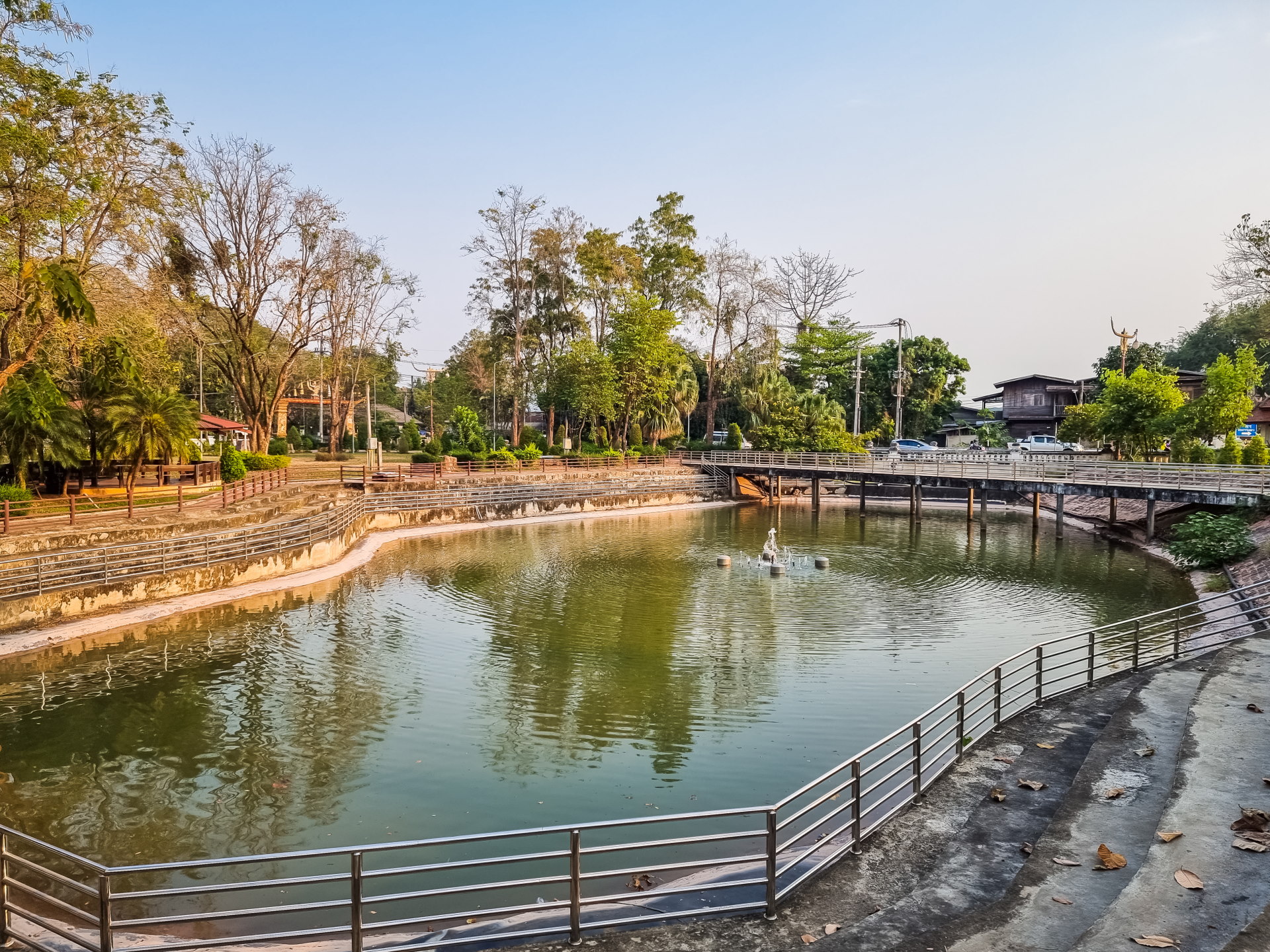
A short optional visit, which is most interesting in the late afternoon, since that is the time when locals frequent the parks (or early in the morning; otherwise, it is too hot during the day).
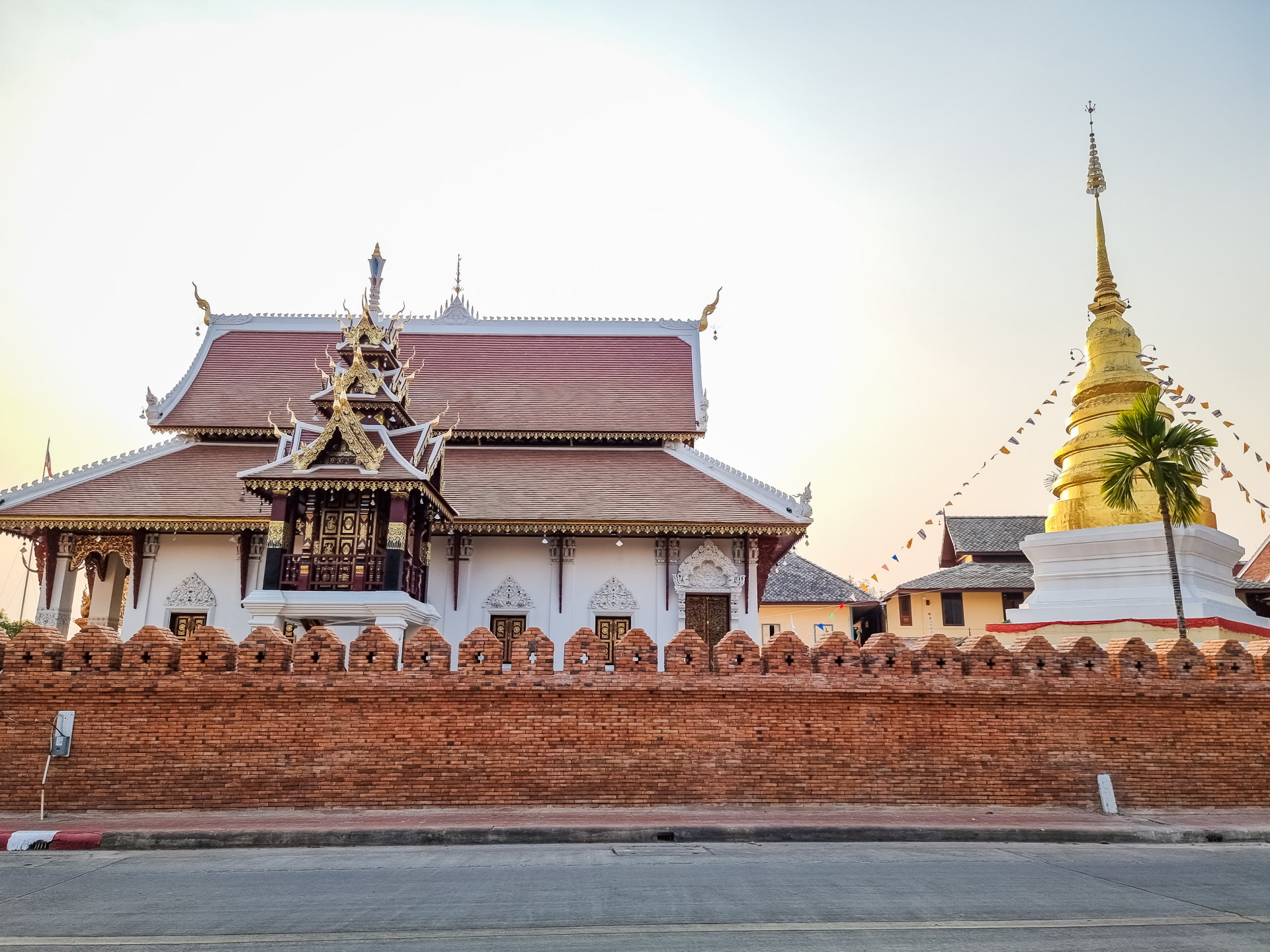
You'll see students leaving class, people going for a jog, and sometimes public Zumba classes, which are quite common in Thailand. The day I was there, it was rather deserted, but that didn't detract from the setting, especially since I was treated to a beautiful sunset overlooking Wat Ku Kham , just across the road.
The park is structured around two ponds. It's more of a "pocket park" than a "real" park, but I encourage you to take a look around because, since my visit, it has been completely renovated, adding a touch of modernity and making it even more inviting to relax and unwind.
Nan Walking Street
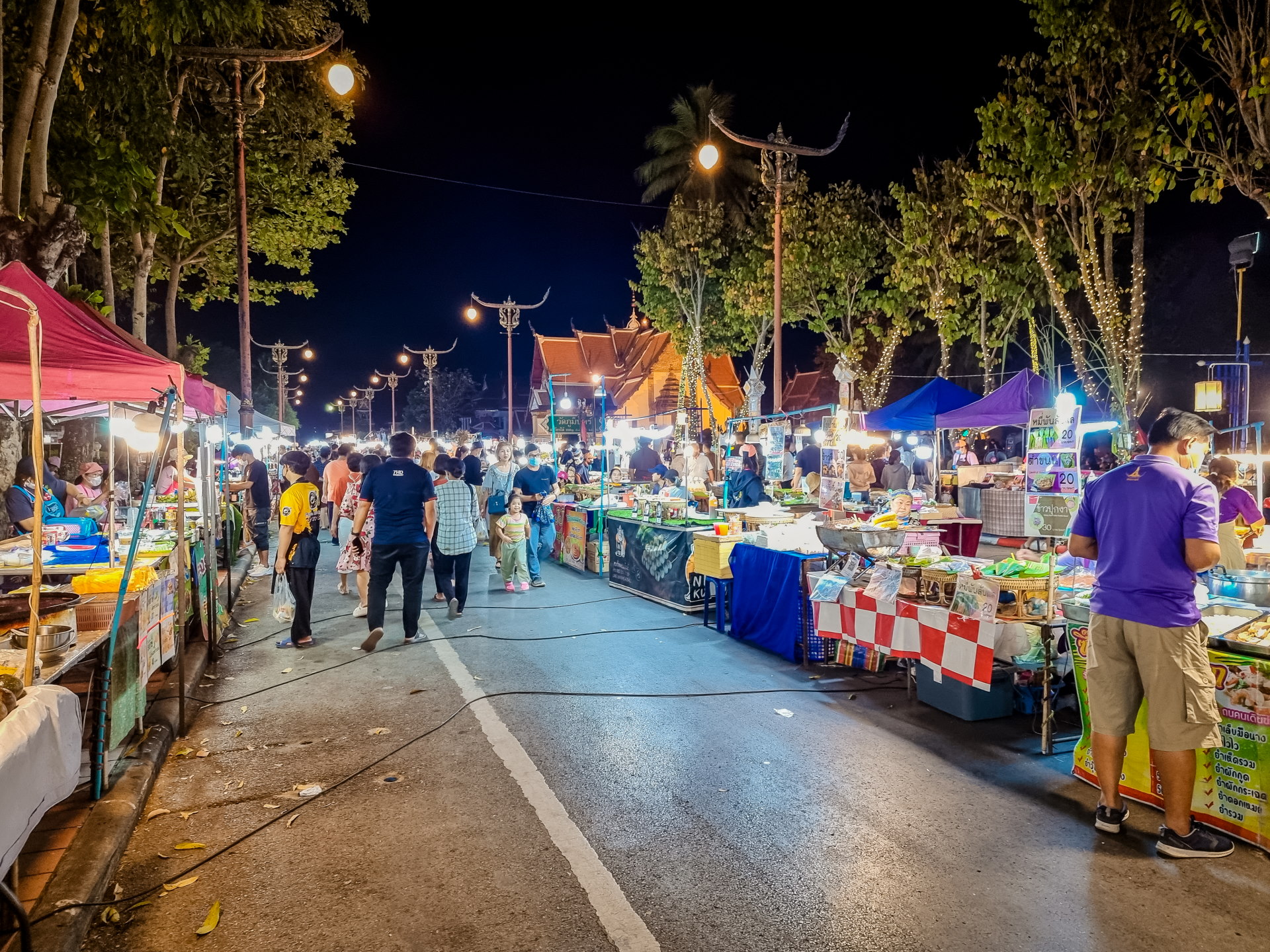
Open Friday to Sunday — 16:00 PM to 21:00 PM
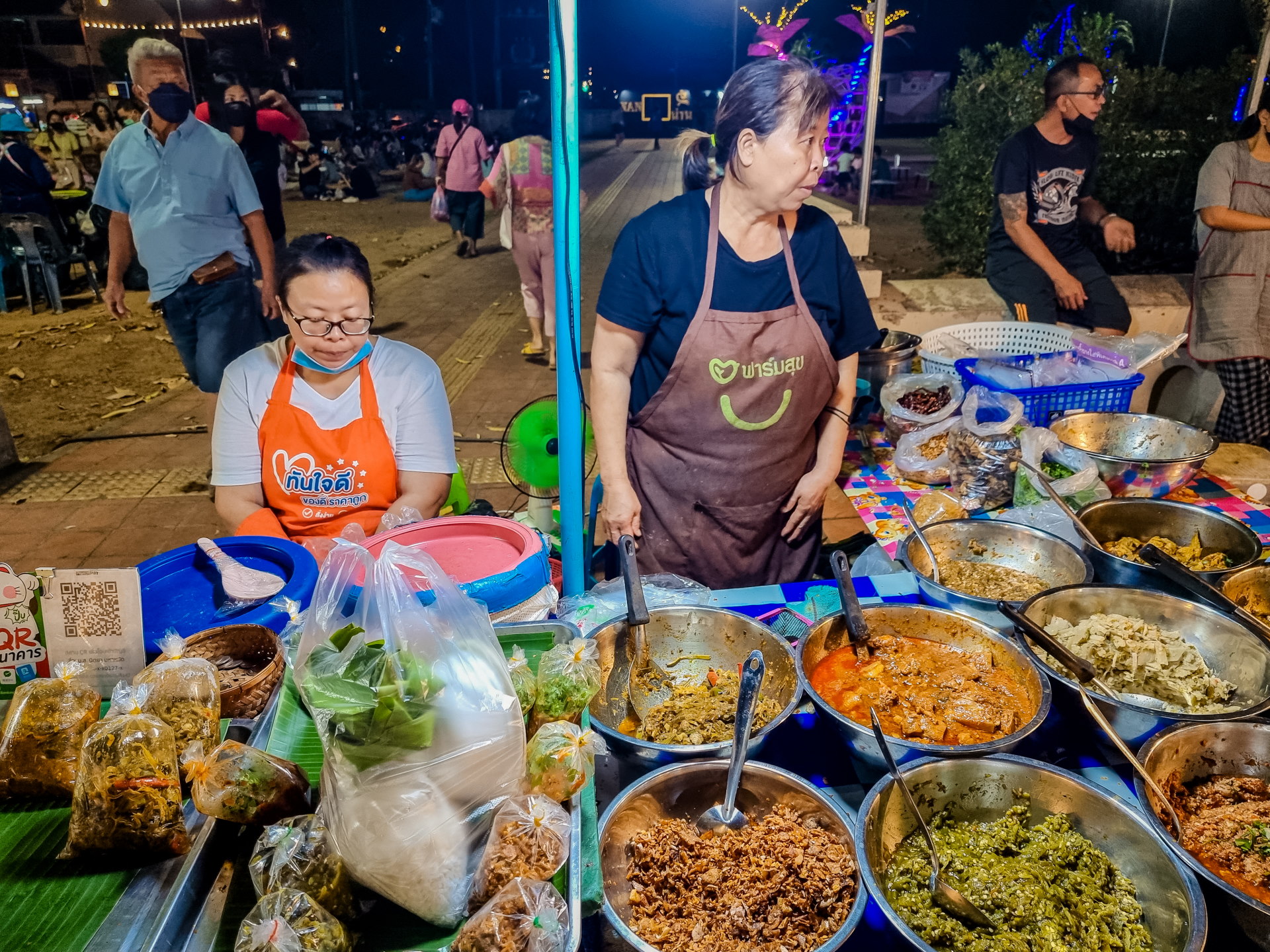
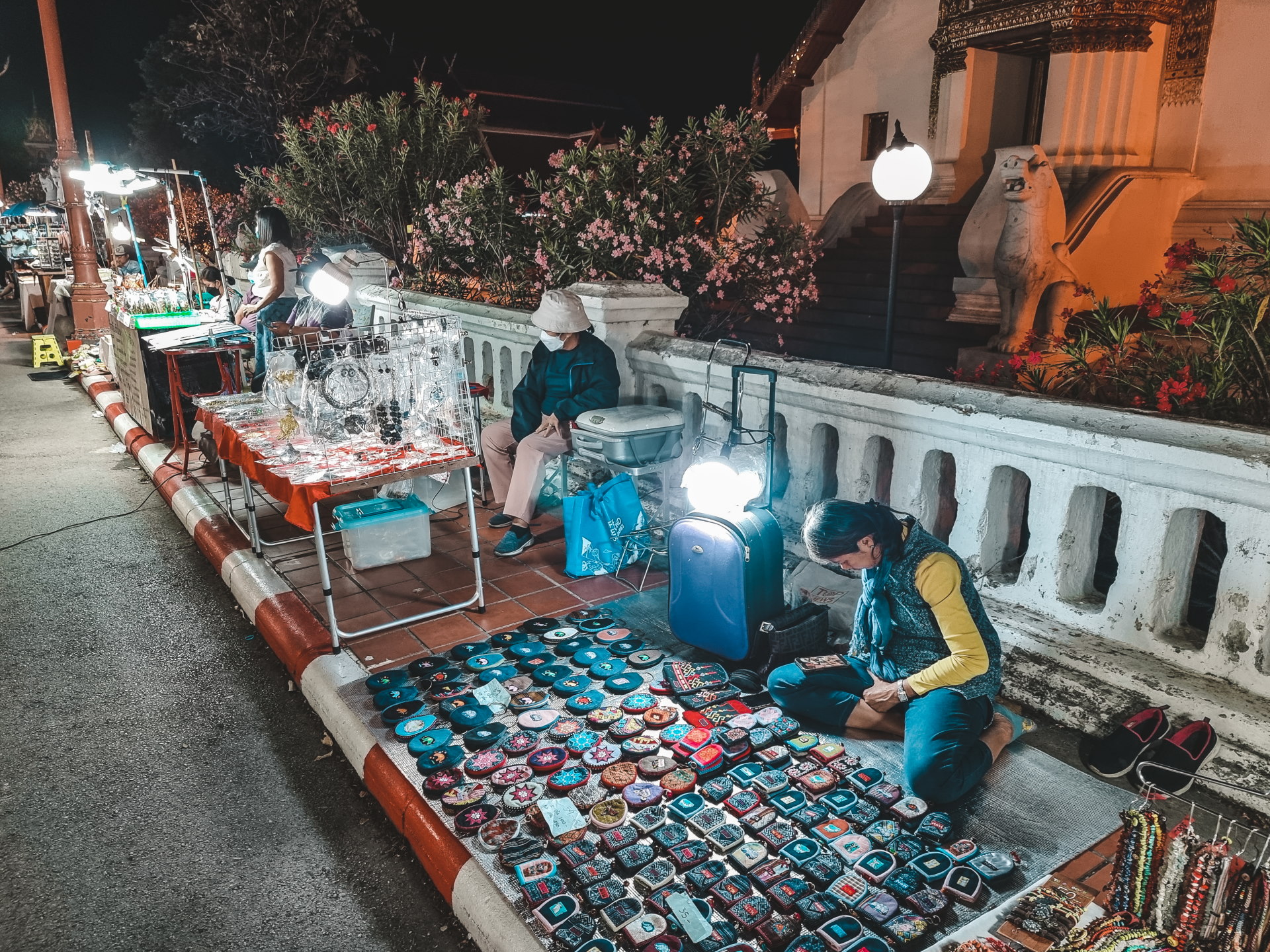
I'll end this article with something that would be the perfect way to conclude a day in Nan, especially if you're staying for a weekend. The street in front of Wat Phumin becomes pedestrianized for a few hours, and you'll find a wide selection of food, desserts, and handicrafts there.
The concept is all the more appealing here as the large square next to Wat Phumin, which you can admire in passing with its night lights, is transformed into a vast picnic area, as well as another square of grass on the other side of the street.
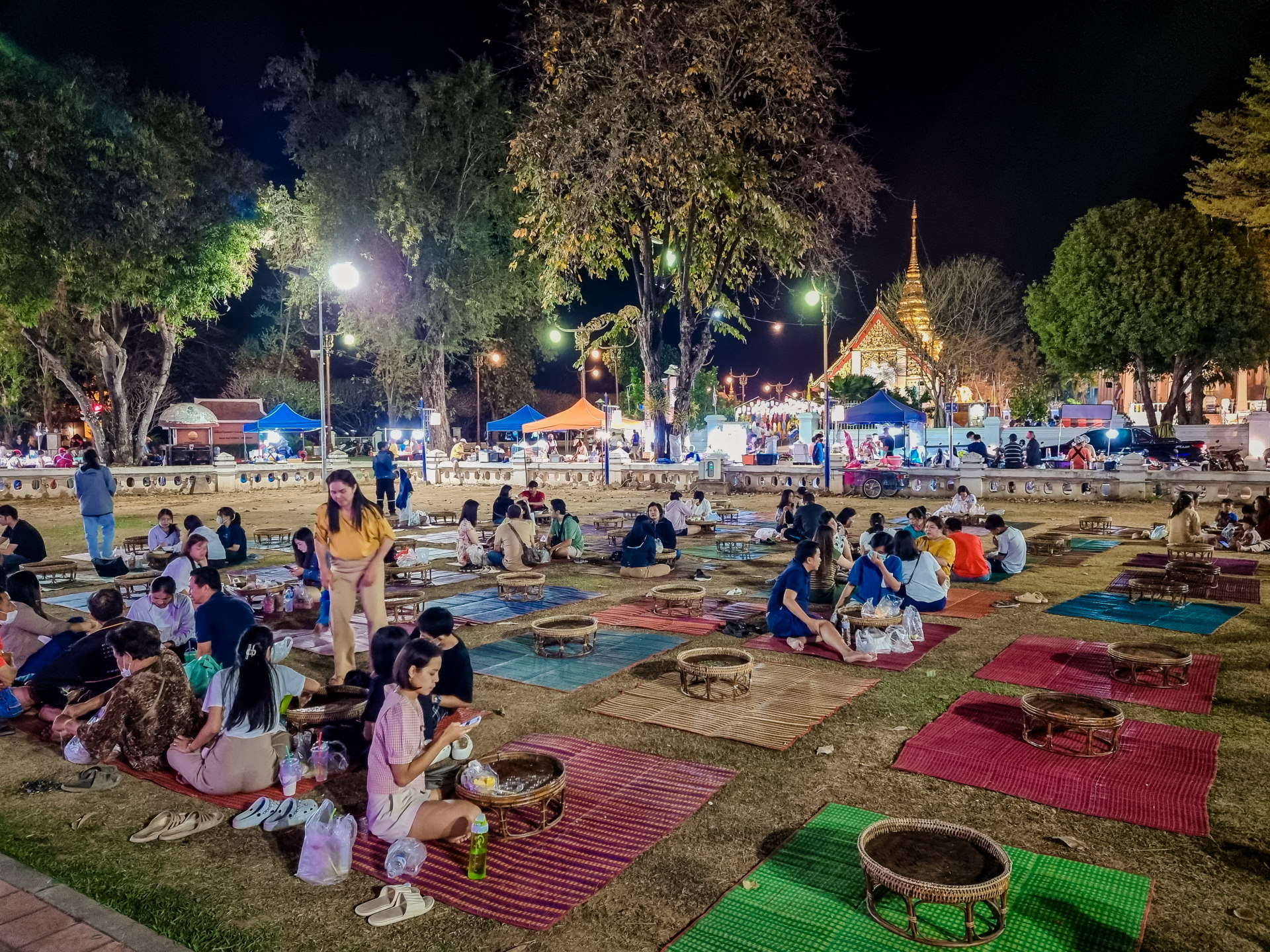
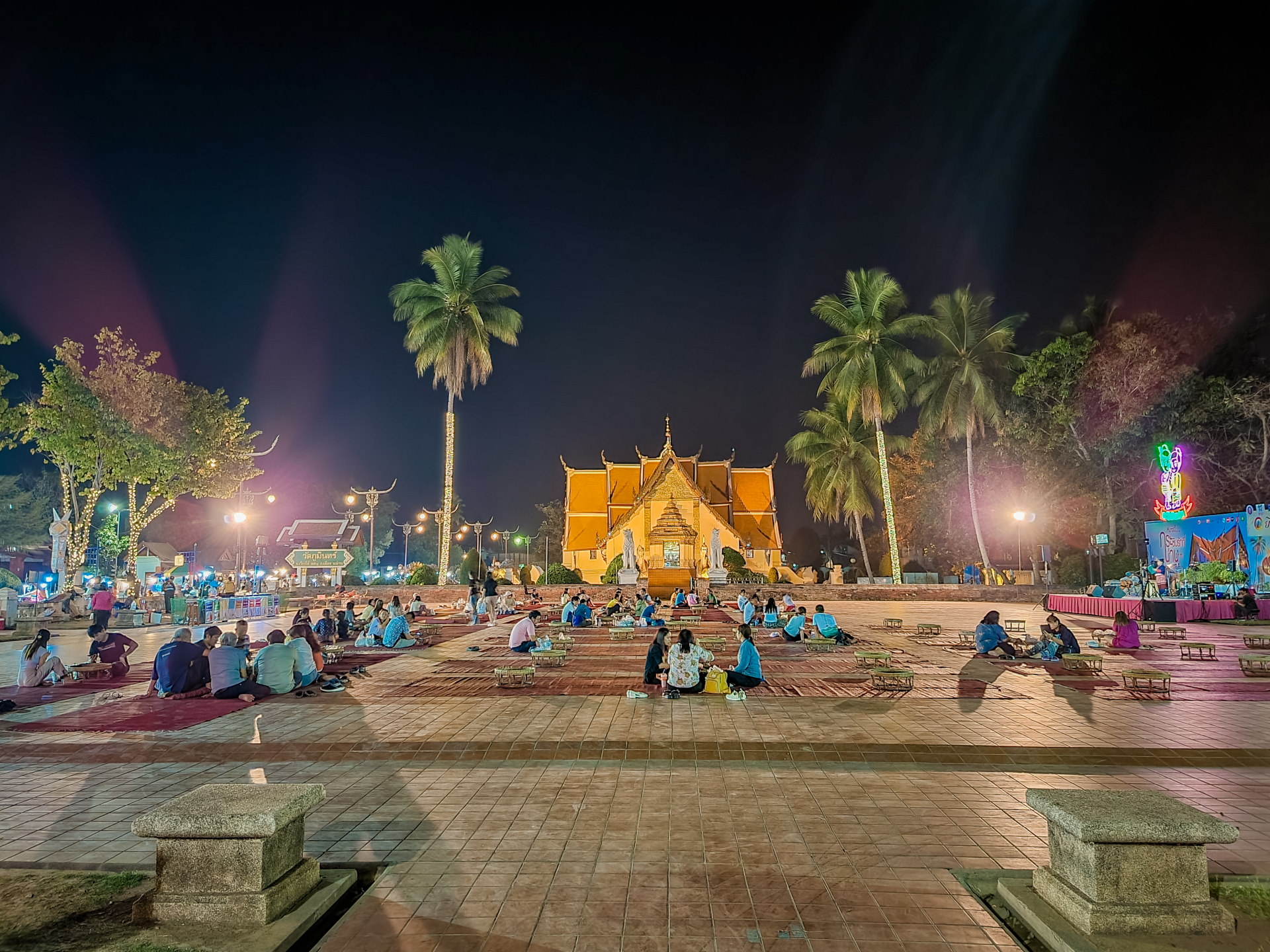
You take what you want from the street vendors, then you can sit down on the mats with wicker tables that anyone can use to eat there, in the open air.
Even if it won't be the same setting and a more "classic" concept, don't worry if you're in Nan during the week: you also have a night market (placed on my map), open every day, very close to Wat Suan Tan.
How to get to Nan
Nan is not served by train, but if you prefer this mode of transport, the nearest station is Den Chai , about 2.5 hours from Nan. From Den Chai, there are regular buses to the city.
Otherwise, the main options for getting there are by plane from Bangkok or by bus from major nearby cities like Chiang Mai, Chiang Rai, or Phitsanulok. Here is some useful information to help you plan your arrival:
Airplane (Bangkok ⇆ Nan)
There are regular air links between Bangkok (Don Mueang Airport – DMK) and Nan (Nakhon Airport – NNT).
- Companies: Thai AirAsia, Nok Air
- Flight duration: about 1 hours
- Indicative prices: ~1,200 to 2,000 THB one way (approx. €30–55) depending on the time of year and advance purchase
- Remarks: Arrival at Nan Airport, approximately 15 minutes from the city center by car/taxi
Flights departing from Bangkok are often in the morning or early afternoon. Schedules vary depending on the season, so it's a good idea to check directly on the websites of the airlines or low-cost travel agencies.

Buses (from nearby major cities)
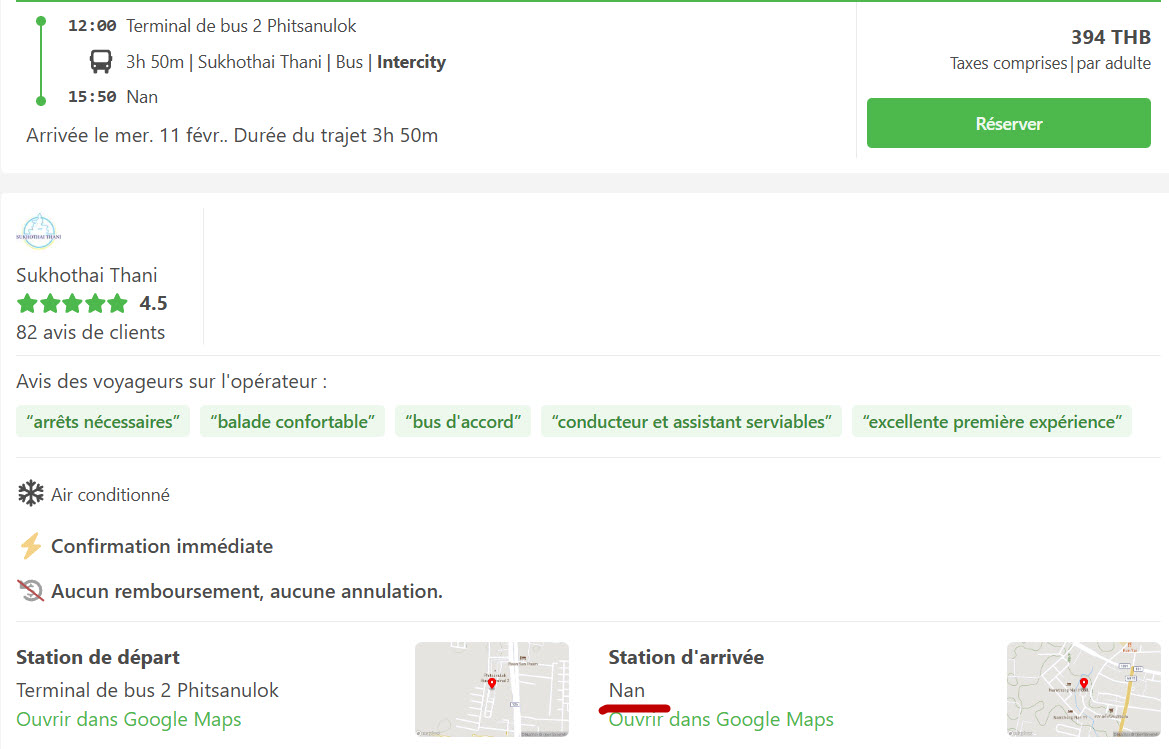
Buses are the most common option for traveling from the rest of Thailand to Nan. Departures are from the main bus stations, and for arrival, Please double-check that the terminus is the city of Nan (see illustration below), because sometimes the final destination is either before (Wiang Sa) or after the city (Thung Chang).
- Chiang Mai → Nan :
- Companies: GreenBus
- Duration: ~6 to 7 hours
- Price: ~600 THB (approx. €16)
- Comfort: standard or VIP seats depending on the bus
- Bangkok → Nan :
- Companies: Nakhonchai Air, Sombat Tour, Bangkok Busline
- Duration: ~10 hours
- Price: ~700–800 THB (approx. €19–22)
- Phitsanulok → Nan :
- Companies: Sukhothai Thani
- Duration: ~4 hours
- Price: ~400 THB (approx. €10)
Alternatives and combinations
Minivans sometimes operate between Nan and other intermediate towns, especially for shorter journeys or from certain intercity points, but the timetables are often less regular and you should check locally or via local guesthouses.
You'll have connections from Lampang, Phayao, or Phrae, for example. These cities will generally serve as transit points when you continue your trip after Nan.
Where to stay in Nan
To be honest, this isn't so much a section to tell you "where" to sleep, in the sense of a particular neighborhood, since Nan is small, there's really no point in focusing on anything other than the center… Before giving you my usual place to stay, here are a few good alternative suggestions:
- Khum Muang Min Boutique Hotel : a hotel a stone's throw from Wat Phumin, perfectly in keeping with the "old house" spirit of Nan.
- Huen Rim Nan : a family-run guesthouse located along the banks of the Nan River.
- Villa Mahaphrom Hotel : 500m from the national museum, a very nice, modern and comfortable hotel.
The hotel where I stayed was the same as during my previous visit to Nan. This allowed me to observe the evolution of prices, but also the obvious move upmarket that is becoming widespread in Thailand.
For reference, the first time I booked two rooms for three nights, which cost me $76. This last time, also for three nights but only ONE room, it cost me $100!
Srinual Lodge
Note: 8,6 / 10
Budget: from 28€
Located slightly away from the main points of interest in Nan (1 km), this hotel has managed to stay current and maintain a warm welcome. While its rustic charm initially gave it an almost sinister air, its recent renovation allows it to embrace its vintage character while remaining modern.
I chose it because of its still attractive price, but also for the bikes provided, and importantly in my case, the fact that there was a parking lot!
