Given the abundance of national parks in Thailand, I thought it would be helpful to bring some clarity with a selection of parks worth seeing.
According to the official website of the department managing national parks ( Department of National Park or DNP), the country currently has 156 national parks spread across all provinces and including both land and marine parks.
These parks are established according to specific criteria, namely that they contain natural resources of ecological importance or unique beauty, with another important criterion being the presence of particularly notable flora and fauna. That's the official definition. Given the sheer number of them, Thailand readily grants this status to virtually any notable mountain range or archipelago of islands…
The comparison is easy: in France , although the area is equivalent to Thailand (counting only the Metropolitan area), there are only 10 national parks , although this figure should be put into perspective because in Thailand, the parks are very numerous because they are fragmented and do not generally cover a huge area.
The many national parks in Thailand
Under the guise of protecting wildlife and flora, Thailand is adding a large number of national parks, as most of them charge an entrance fee, even for Thais. Of the 156 national parks, only about twenty are free. Generally, the entrance fee is between 200 and 400 baht per person (for foreigners, not including the vehicle fee).
There is also a controversy mainly concerning marine parks as some private companies manage to deviate from the rules and build resorts etc. on normally protected land (it is the goal of a national park normally to avoid that…). But the goal of this article is not to criticize, it is already good that bits of nature are at least preserved.
Of course, this is just a sample; this ranking is based on those I know or would like to see (out of the 15, I've visited 11 so far). The idea is to create a mix of well-known parks and others that are less so.
So let’s take a detailed look at my selection of national parks to visit in Thailand for nature lovers!
Northern Thailand
1- Doi Inthanon

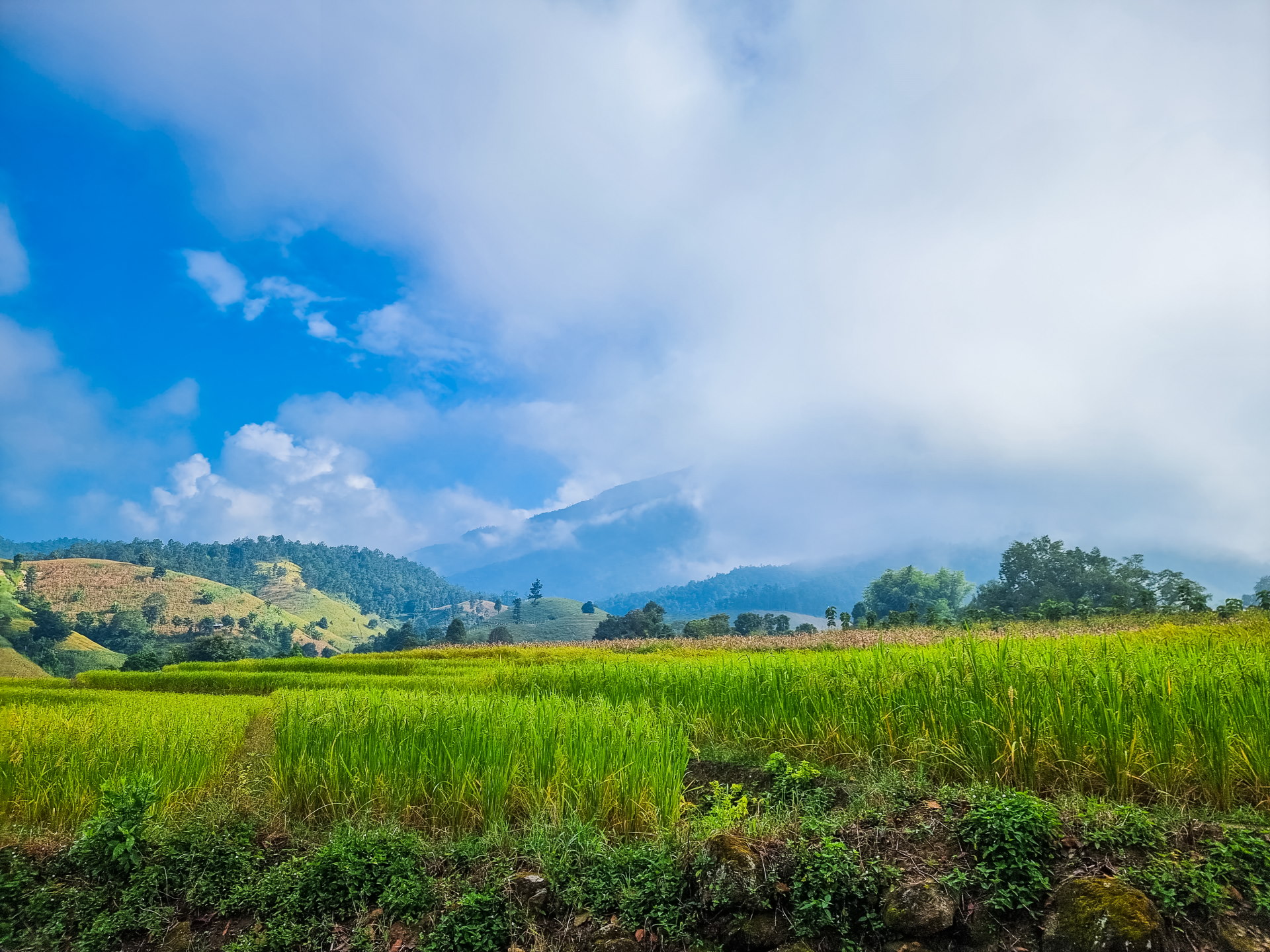
The park was created in 1972 (then expanded in 1978) and welcomes more than 800,000 visitors per year.
Doi Inthanon is located southwest of Chiang Mai. It is best known for being the highest peak in Thailand at 2,565 m, as well as for the two royal chedis on the road shortly before the summit.
It is home to numerous animal and plant species. In particular, it boasts the highest number of bird species in a single location in Thailand. Karen and Hmong tribal villages are also still found in these mountains. And it is on the slopes of this mountain, at Pa Pong Piang , that I believe the most beautiful rice terraces in the country are located.
→ Read my article on Doi Inthanon
2- Doi Suthep–Pui National Park
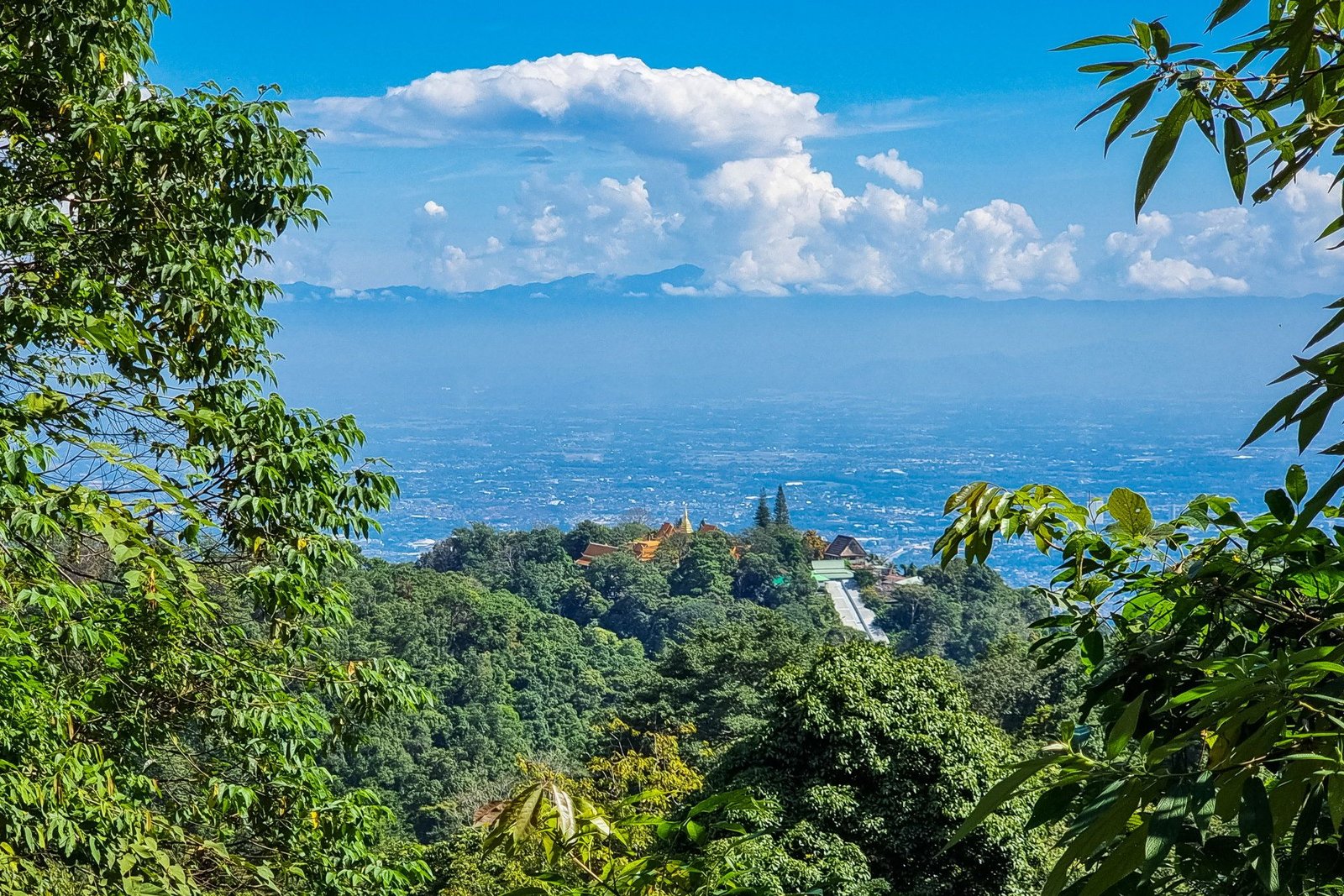

Created in 1981, the park welcomes more than 300,000 visitors per year.
Also located in Chiang Mai province, Doi Suthep is not necessarily the most beautiful in itself, if I am honest, but it has the merit of being super easy to access.
In reality, while everyone is familiar with its perched temple, few truly explore the paid section of the park, which features a series of waterfalls. Otherwise, everything else, including Doi Pui , another peak on the same mountain within the park, is free to access. You'll find several Hmong villages, coffee plantations, a royal winter palace (entrance fee separate), and Wat Pha Lat, another temple worth visiting on the way up. Enough to fill a full day of sightseeing!
→ Read my article on Doi Suthep
→ Read my article on Doi Pui
Central and Western Thailand
3- Erawan National Park

Established in 1975, it receives approximately 650,000 visitors each year.
Located in Kanchanaburi province, generally associated with its famous Bridge on the River Kwai and the Death Railway , this region is also renowned for its natural beauty. Erawan National Park is known for its series of seven waterfalls that cascade through the forest, their turquoise waters creating numerous natural pools. While less prominent, Erawan Park also encompasses four caves.
→ Read my article on Erawan National Park.
4- Khuean Srinagarindra National Park
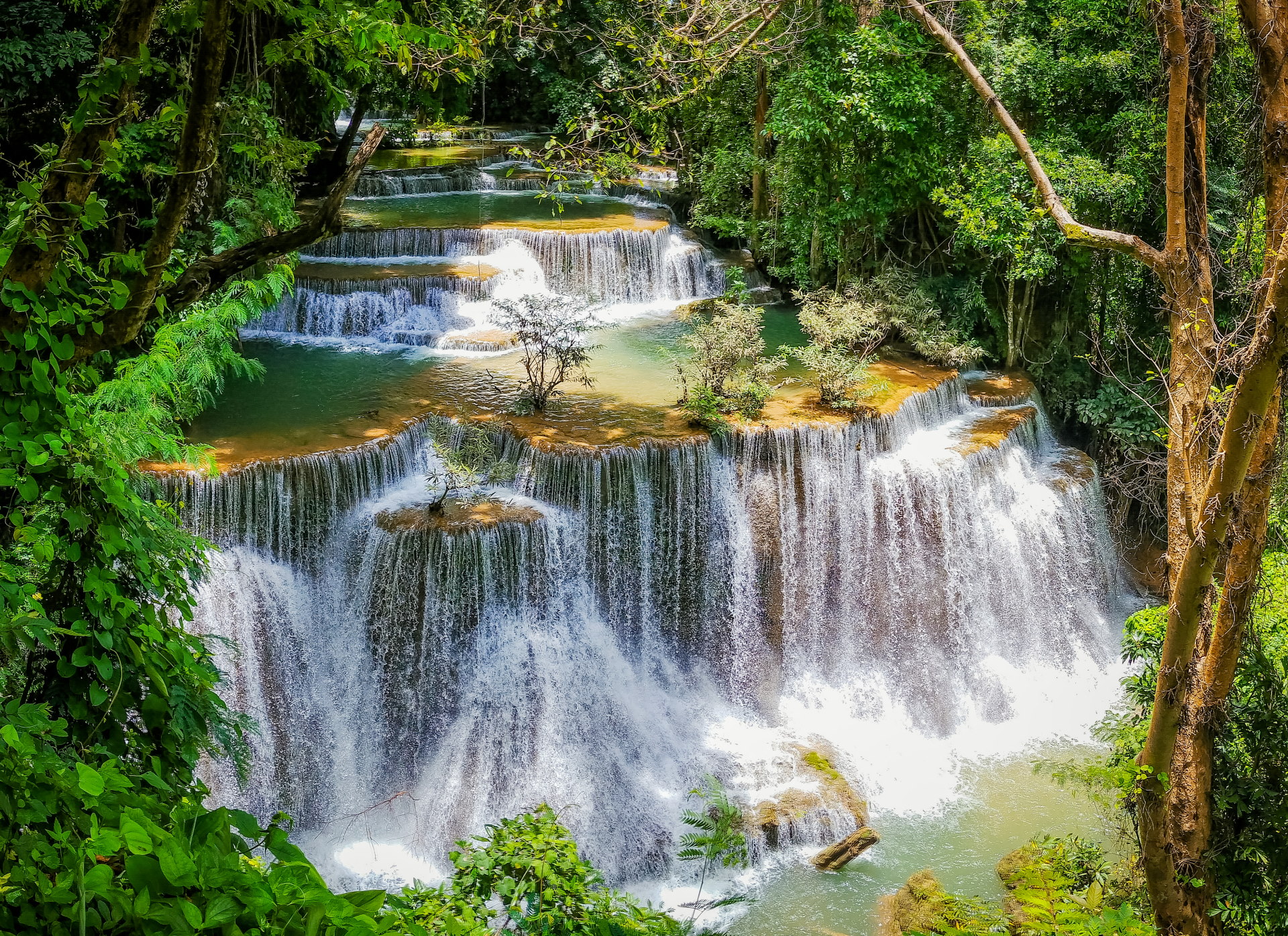
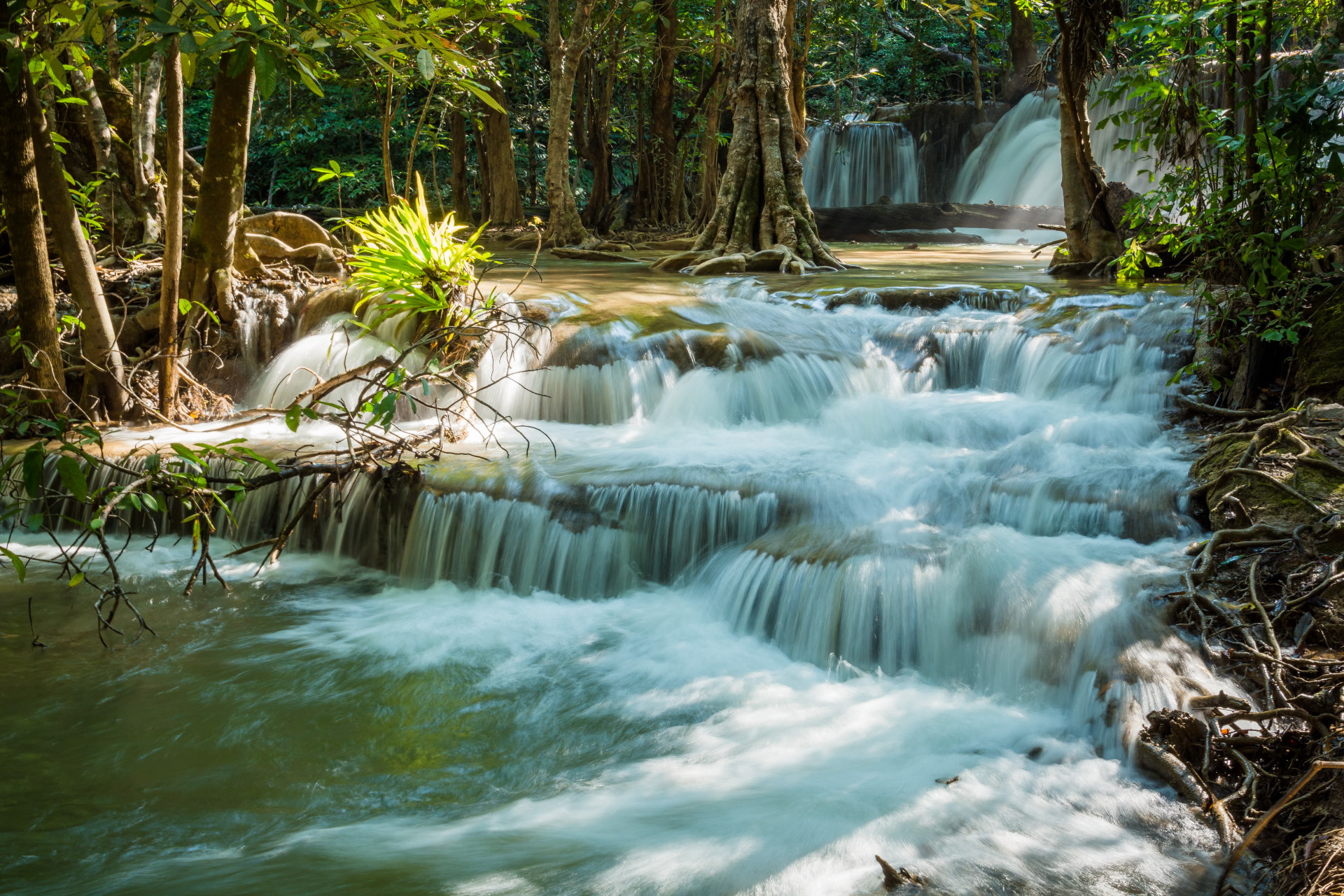
Created 6 years after Erawan in 1981 , the site attracts fewer visitors with around 145,000 curious people each year.
Khuean Srinagarindra is especially popular for Huay Mae Khamin Falls , a serious alternative to Erawan Park , still in the same region of Kanchanaburi, which is the province with the most national parks in the country after Chiang Mai.
Apart from these falls, there are some caves like Tham Phra Prang (which served as a refuge for Thai soldiers during conflicts with its Burmese neighbor in the 18th century) and the lake, formed by the Srinagarind dam, which offers beautiful panoramas.
→ Read my article on Huay Mae Khamin Falls
5- Khao Sam Roi Yot National Park
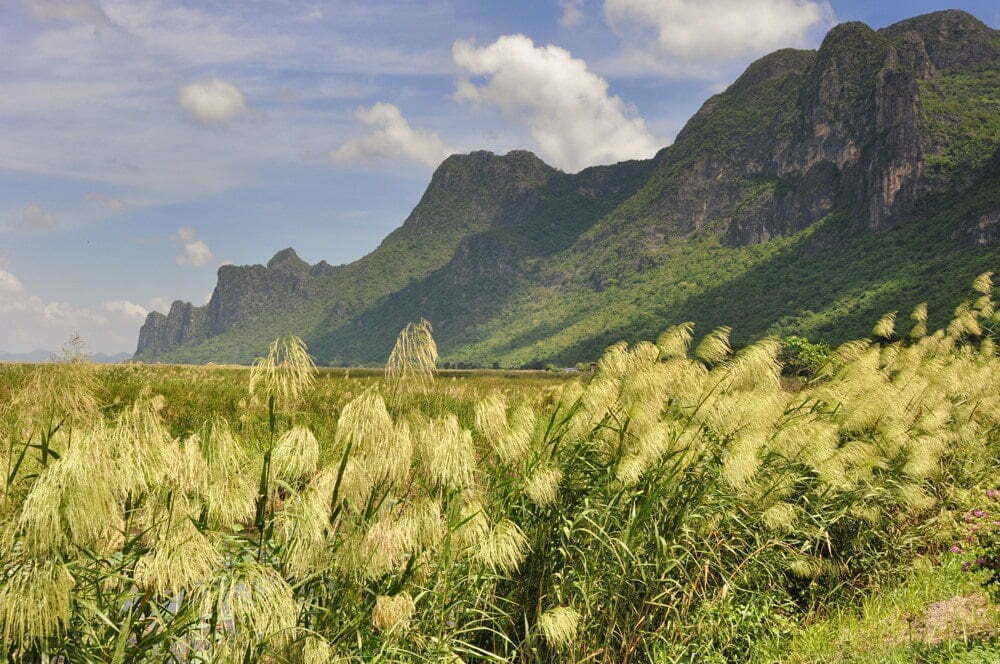
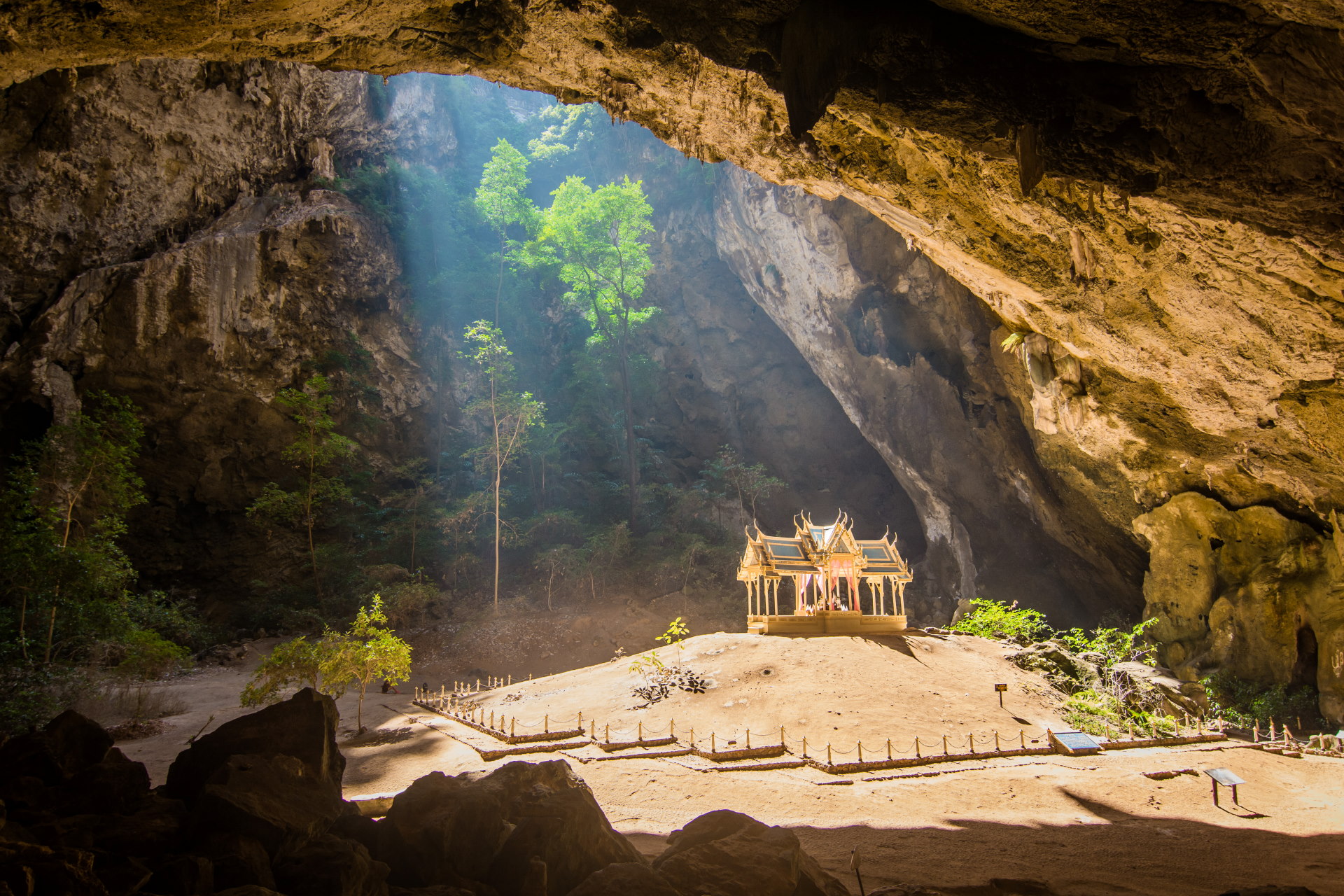
Created in 1966 , it was one of the pioneers, in this case, the first coastal national park . It receives approximately 160,000 visitors per year.
It's one of my favorites, if I may say so. Khao Sam Roi Yot is considered a marine park due to its seaside location, 50 km south of the small seaside town of Hua Hin . It's home to the famous cave with the royal pavilion , built here to commemorate the visit of King Rama V, who also left his signature carved into the rock.
→ Read my article on Sam Roi Yot National Park
6- Khao Laem Ya – Mu Ko Samet National Park
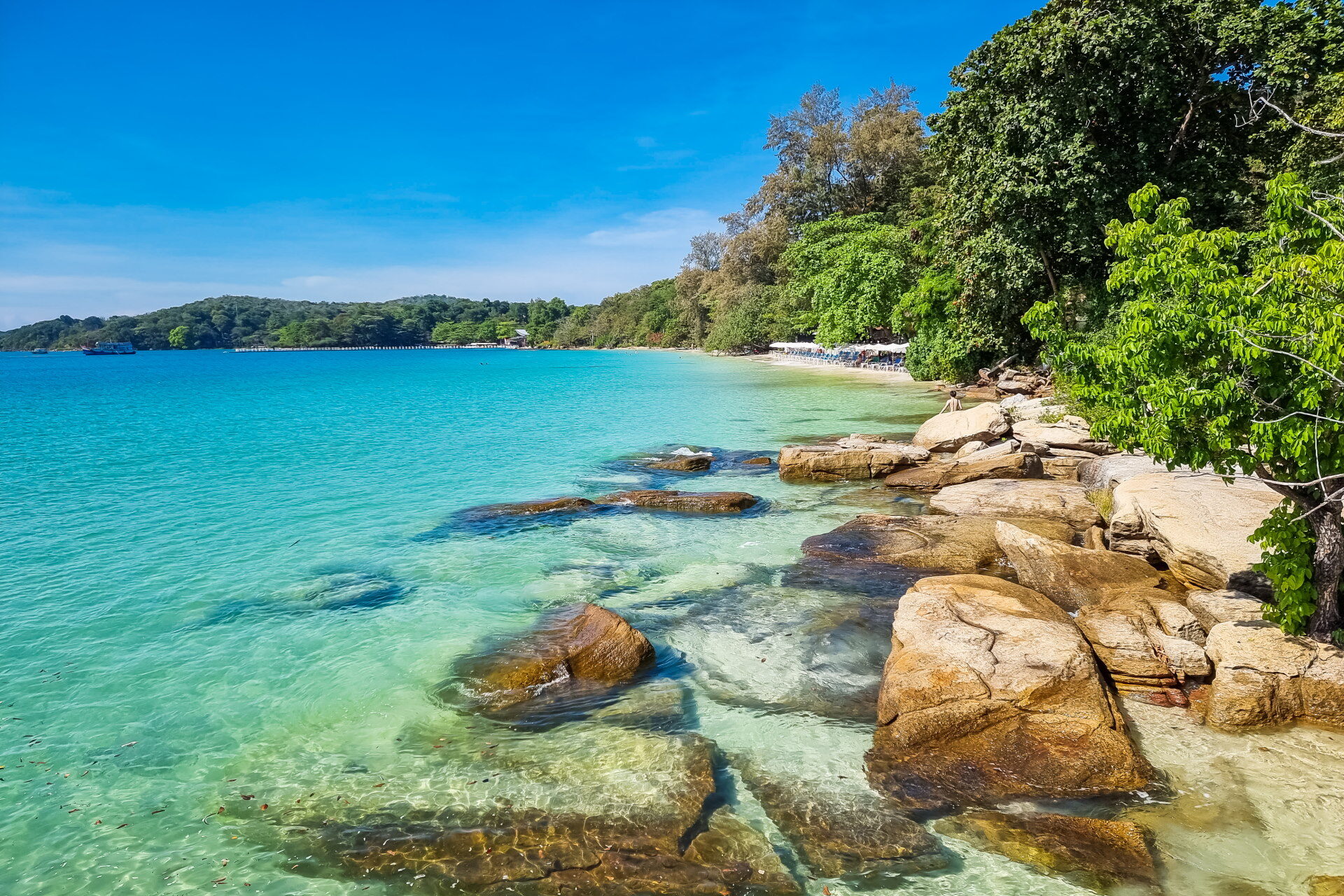
The park was created in 1981 and today welcomes 1,600,000 visitors annually.
This national park is popular because it includes the island of Ko Samet , located off the coast of Rayong (south of Pattaya). This means that if you're staying on the island, you'll need to pay the entrance fee (there's a ticket booth upon arrival at the pier). The island is beautiful, although it can get quite crowded on weekends, and it offers a lovely escape close to Bangkok.
→ Read my article about Ko Samet Island
Northeast Thailand (Issan)
7- Khao Yai National Park


Established in 1961 , it was Thailand's first national park and is also the largest, covering an area of 2,168 km², making it one of the most visited national parks with over 1,500,000 visitors each year.
It is one of the closest national parks to Bangkok, just a 3-hour drive northeast of the capital. It is located, among other places, in the province of Nakhon Ratchasima (as the park straddles three provinces in total).
Khao Yai National Park is best known for its large herds of wild elephants, as well as its dense forests inhabited by numerous monkeys (macaques, gibbons), and several waterfalls. This makes it an ideal place for trekking and escaping Bangkok without going too far.
→ Read my article on Khao Yai National Park
8- Pha Taem National Park
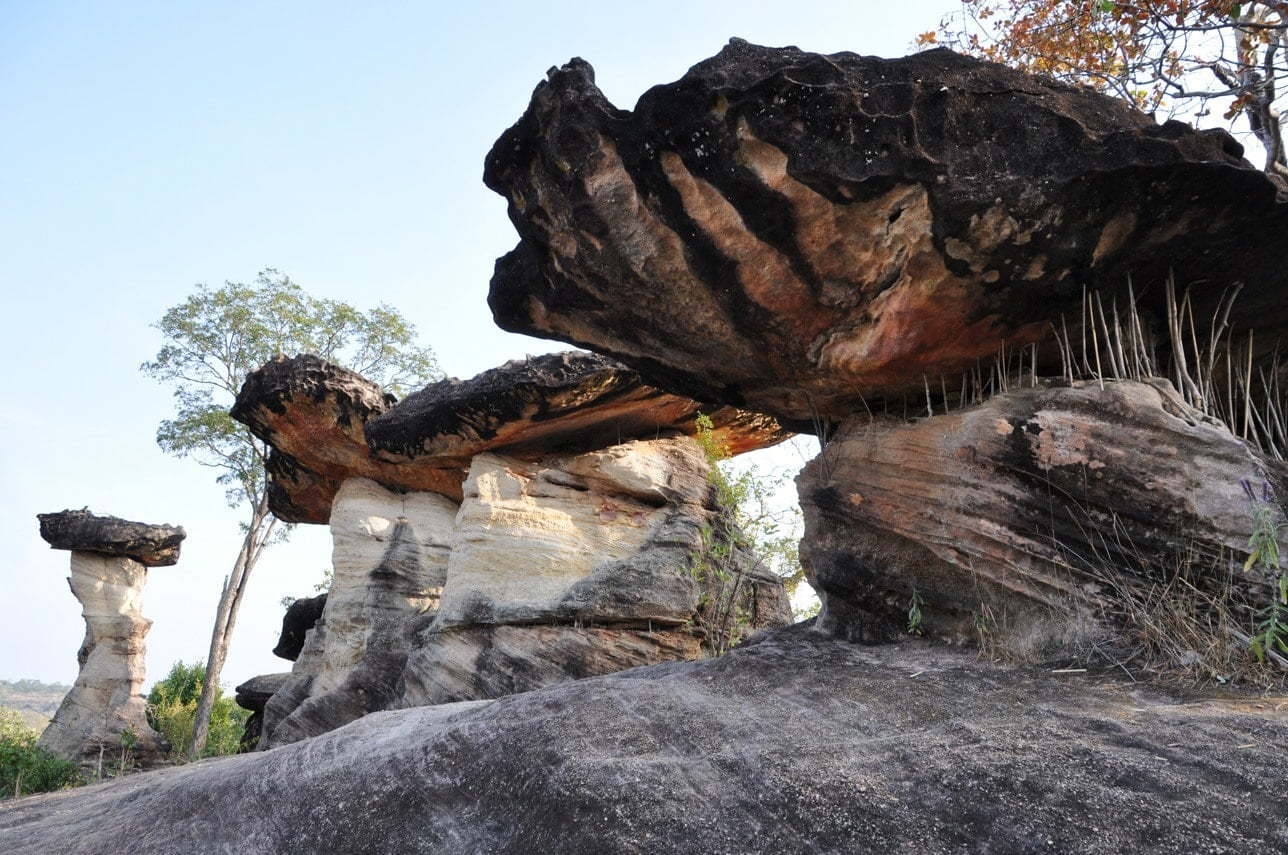

Established in 1991, there are approximately 180 visitors per year.
Located in the province of Ubon Ratchathani, in the greater Issan region (northeast), Pha Taem is a national park that borders the banks of the Mekong River, facing Laos.
You can admire rock formations like Sao Chaliang, but one of the main attractions remains its cliff, at the foot of which are prehistoric paintings in ochre hues, as well as several waterfalls, including Song Chan , which flows through a hole. While not exceptional, Pha Taem National Park is a must-see in the region.
→ Read my article on Pha Taem National Park
Southern Thailand
9- Ao Phang-nga National Park
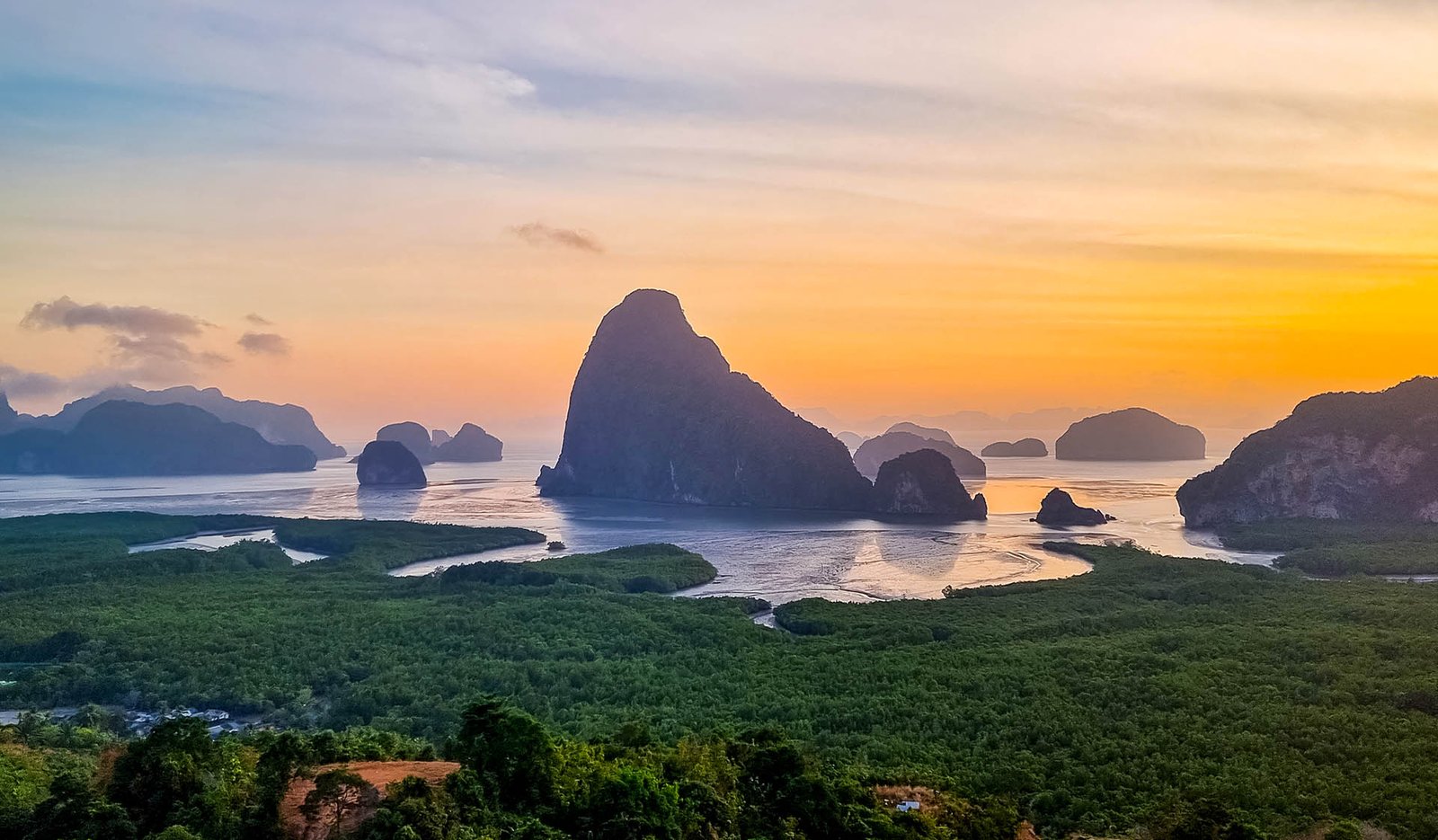
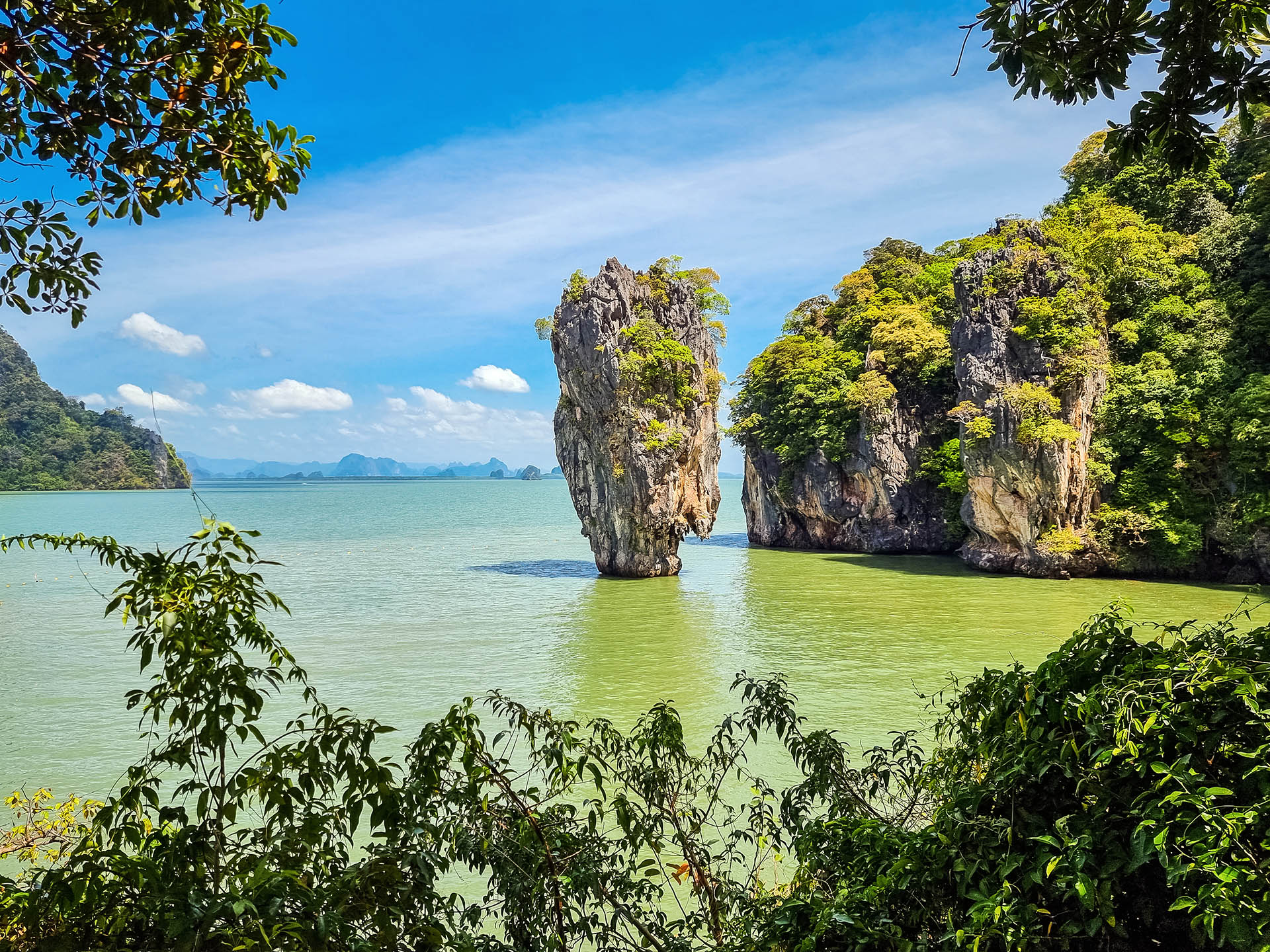
The site was declared a national park in 1981, and it receives an average of 1,000,000 visitors per year.
Sometimes called the Halong Bay of Thailand, Phang Nga Bay is renowned for its landscapes of karst rock formations rising from the sea, sheltering mangroves. It owes its fame in particular to one of these islets, which became known as " James Bond Island " after serving as a filming location for a movie in the saga of the famous British spy.
If you add the views of the bay from the land, Phang Nga is a must-see if you are staying on the Phuket side.
→ Read my article on Phang Nga Bay
10- Hat Noppharat Thara – Mu Ko Phi Phi National Park

Created as early as 1983 (but ratified in 1998) therefore before the film, The Beach , which made it famous, the park welcomes more than 1,000,000 visitors per year.
Ko Phi Phi needs no introduction , as it's an integral part of the national park encompassing the main island of Phi Phi Don and several surrounding islands, including Phi Phi Ley, home to Maya Bay. Note that a 20฿ fee is levied on each arrival at the main pier, but this does not include the national park entrance fee, which must be paid separately for island excursions.
→ Read my article about the excursion around Ko Phi Phi
11- Mu Ko Similan National Park
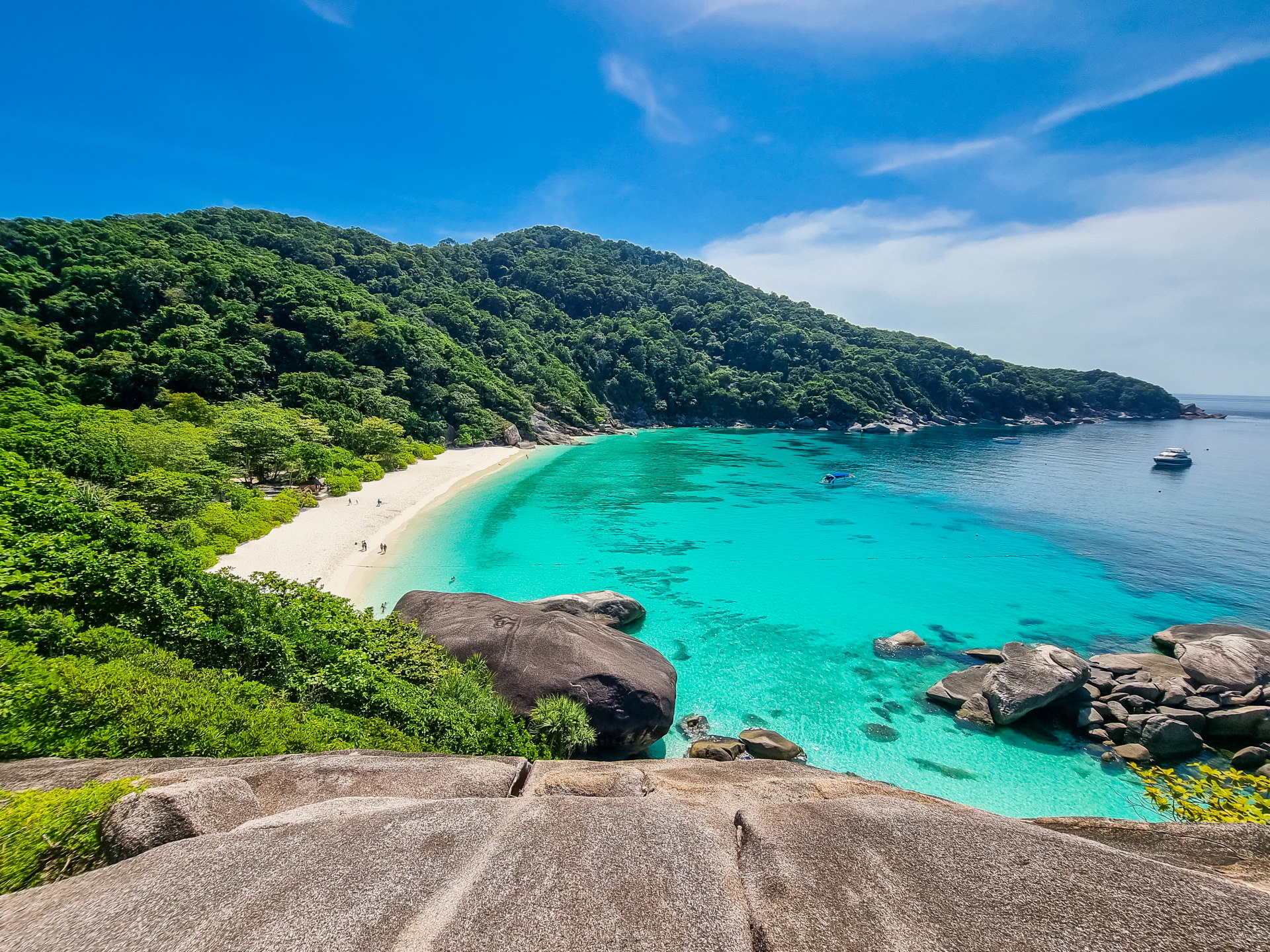
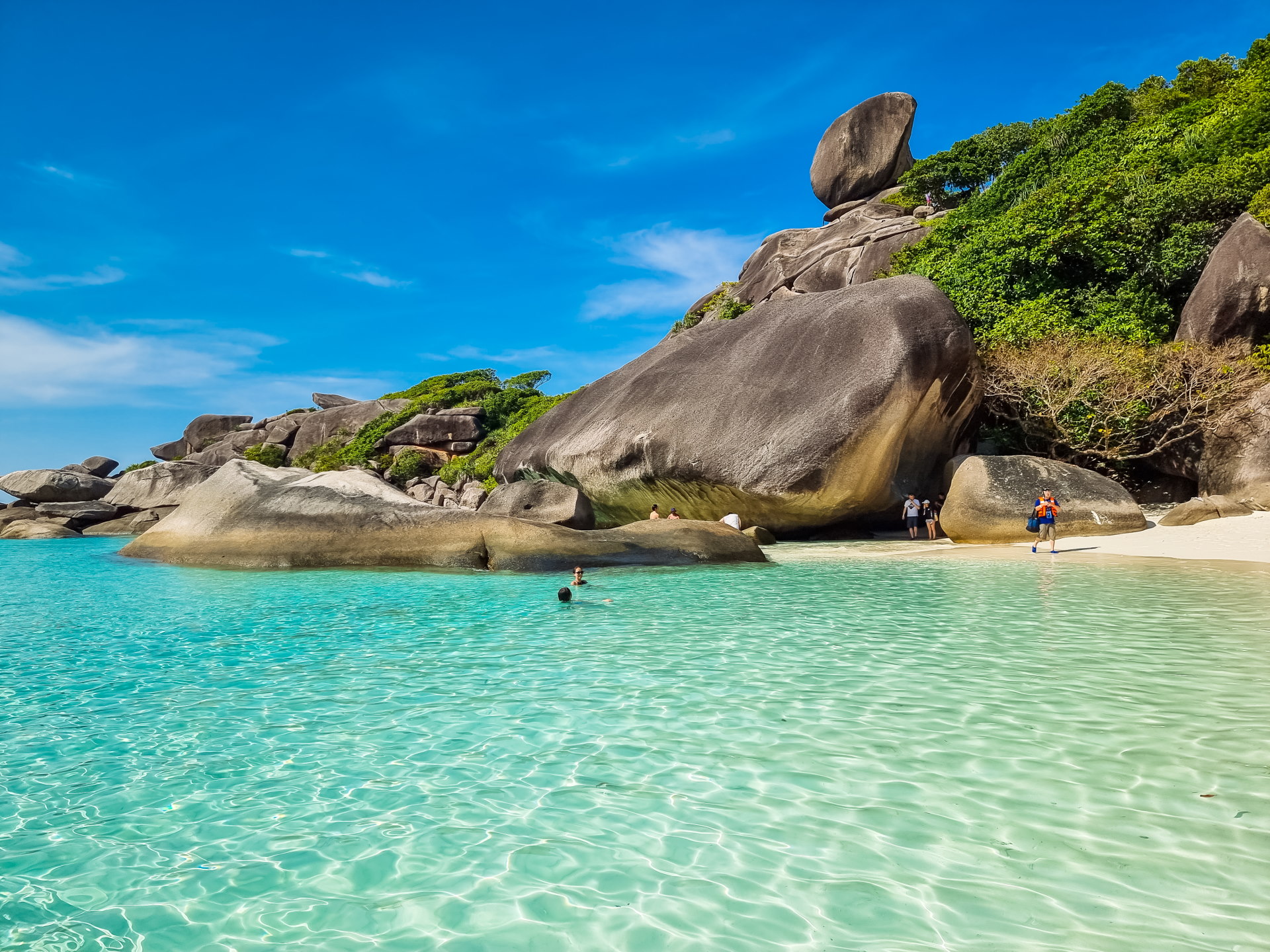
Established in 1982, the marine park welcomes more than 600,000 visitors per year.
A must for any diving enthusiast, the Similan archipelago , made up of nine islands, is a true paradise. It's a place I had the opportunity to visit in the best conditions, and it was simply magnificent!
Unfortunately, the site is a victim of its own success. It's becoming difficult to fully enjoy it, despite a daily visitor quota system.
→ Read my article on Mu Ko Similan National Park
12- Mu Ko Surin National Park
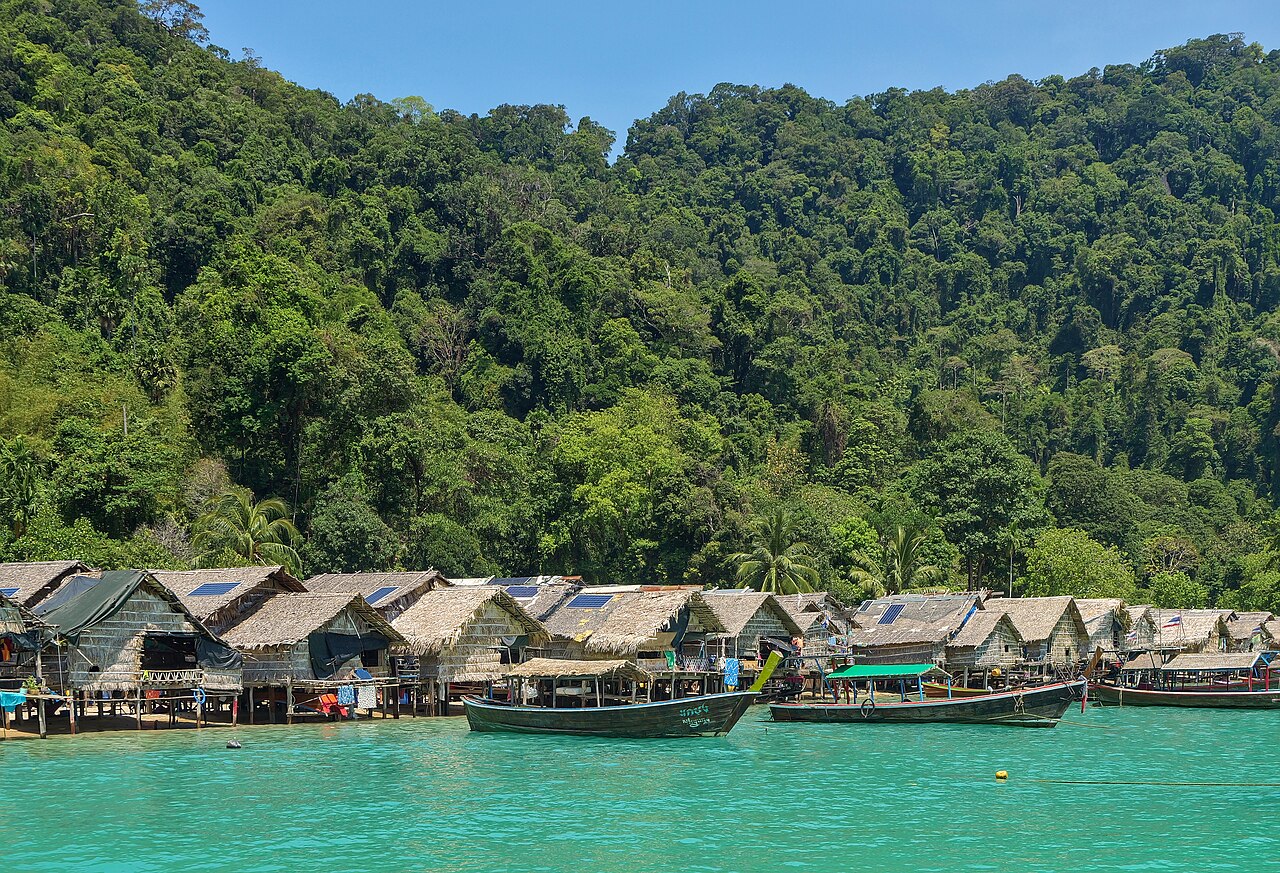
Created in 1981 , just before the Similan Islands, it's the place to go for crystal-clear waters and colorful marine life. More remote and isolated, it receives only 50,000 visitors a year.
One of the only parks on this list that I haven't yet had the chance to visit. The Surin Islands are further north than the Similan Islands (not far from the Burmese archipelago of the Mergui Archipelago). Besides these islands and wild beaches, the park is also known for being home to a Moken village, the sea people.
13- Khao Sok National Park

It was established in 1980 and welcomes 400 visitors per year.
Also north of Phuket, but this time inland, on the road leading to Surat Thani (the port to the Gulf islands such as Ko Samui and Co.), Khao Sok Park is a series of steep mountains, often very humid.
Chew Larn Lake is its main attraction, as you'll be ideally surrounded by nature. You can sleep on one of the floating hotels and set off on an adventure, trekking, exploring caves, and encountering the local flora and fauna, including the world's largest flower, the famous rafflesia (also called rafflesia).
Whether along the river or on the lake, Khao Sok offers a perfect environment to cool off, go rafting, canoeing and swimming in one of the parks considered one of the most beautiful in Thailand. One of my favorites in Thailand, somewhat pompously called the Guilin of Thailand.
→ Read my article on Chew Larn Lake (coming very soon!)
14- Tarutao National Park
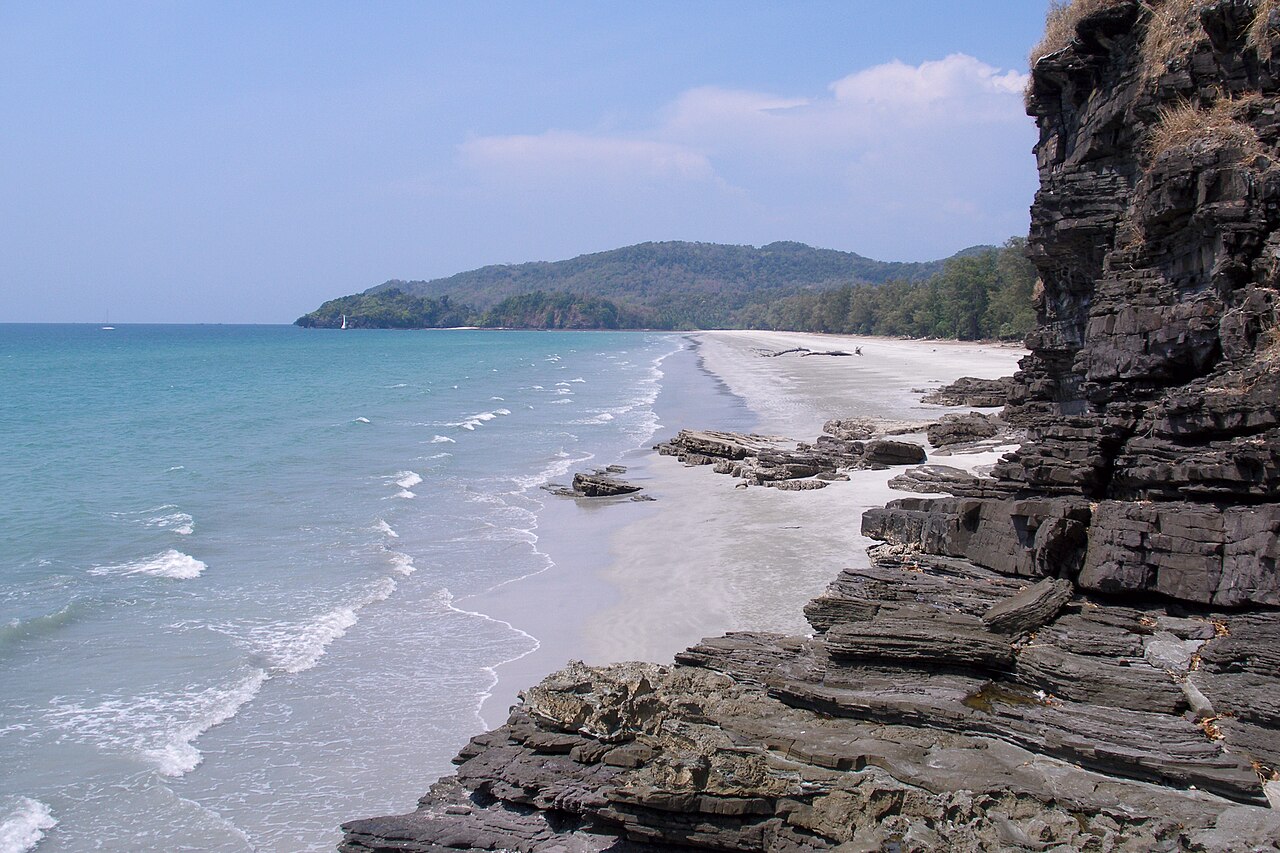
Created in 1974, it welcomes 125,000 visitors each year.
Located off the coast of Satun, in the far south of Thailand, the park is right next to the Malaysian island of Langkawi . It encompasses 51 islands, the most famous of which is Ko Lipe , prized for its idyllic setting. It's a prime spot for deep-sea diving enthusiasts and marine life lovers, the only other site on my list that I haven't yet visited.
15- Mu Ko Ang Thong National Park
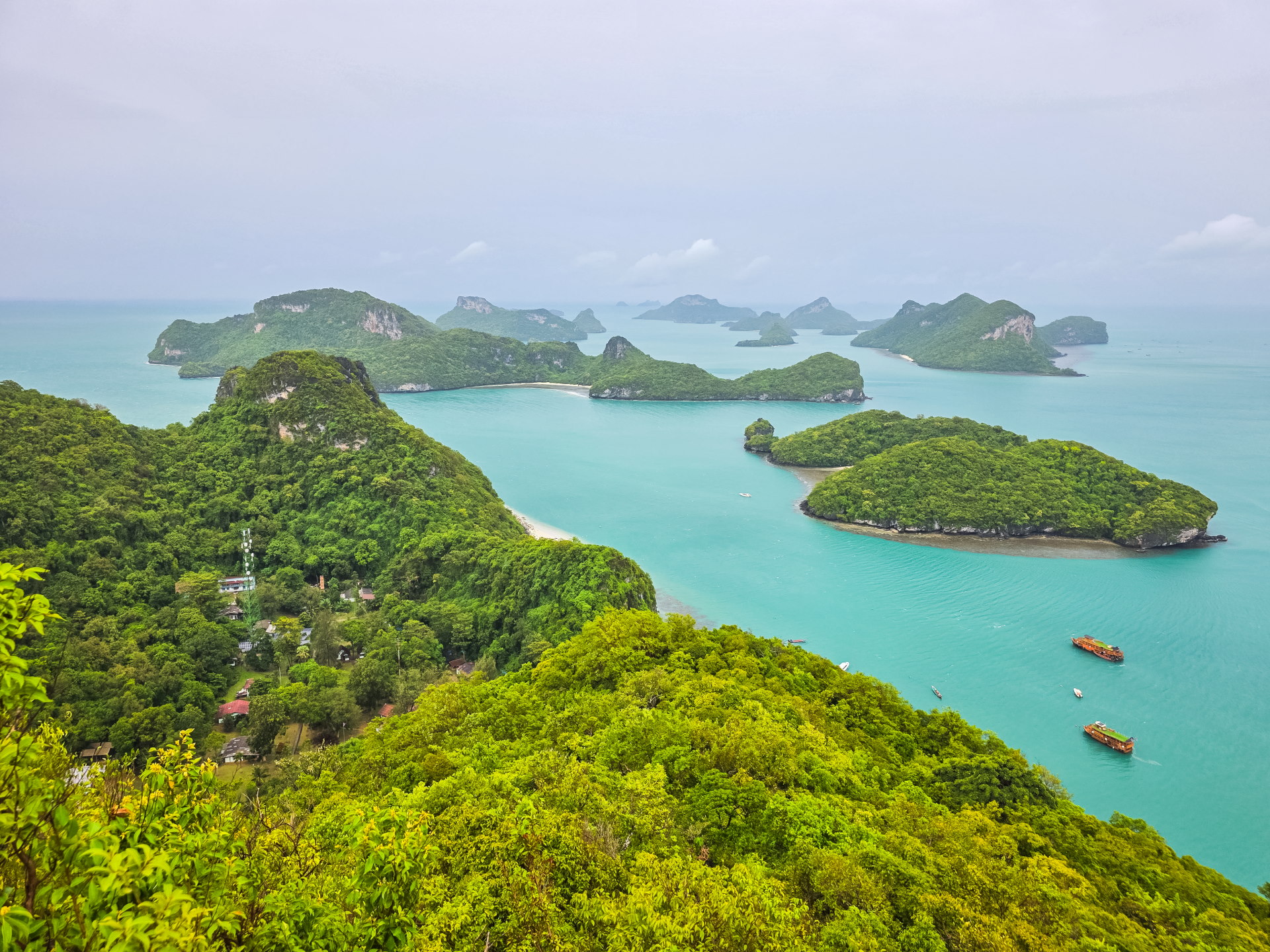
Created in 1980, the park sees some 130,000 visitors pass through each year.
Last on the list, this marine park is located near the islands of Ko Samui and Ko Phangan. The park covers a group of 42 islands and islets (representing just over 80% of the islands in the area, but not all of them).
It's a pleasant setting for kayaking and admiring a typical Southern Thai landscape from its magnificent viewpoint overlooking these islands (which can also be admired from the plane landing in Ko Samui).
→ Read my article on Mu Ko Ang Thong Park (coming soon!)
Did you like this article? Share it on Pinterest!