


When we think of Singapore, we tend to associate it with an expensive city, where luxury predominates, we think of a city in general, a financial center and other somewhat caricatured and not always attractive images of this small, atypical Asian country.
However, if we start to dig deeper, we realize that the island and city-state of Singapore is very environmentally conscious and does not develop at the expense of nature. For the city, often called the garden city, makes considerable efforts to provide green spaces and preserve its natural areas, however limited they may be.
And while the Marina attracts all eyes, with this luxury hotel offering breathtaking views of the center from its rooftop pool, it is above all the superb garden behind it, Gardens by the Bay, that deserves a look to get a glimpse of local know-how in terms of modern and ecological urban planning.
Singapore, green city
This is a well-deserved observation, and for good reason: if we take the proportion of green spaces available per inhabitant (approximately 5 million in Singapore), they have 66 m².
To put things in perspective, the WHO (World Health Organization) recommends a minimum of 9 square meters per person to provide a minimum level of comfort for its inhabitants (and allow them to breathe). Bangkok, for example, had an average of only 3,3 square meters a few years ago! And while it has made progress in recent years, raising this figure to just over 6 square meters, more than double, it's still 50% below the minimum…

Paris, to give you an idea, is at 11,5 m², decent but misleading, because it is largely due to the integration of the Bois de Vincennes and especially the Bois de Boulogne, otherwise we arrive at only 5,8 m² per inhabitant in the center.
So, the figures vary depending on the calculation methods, and cities like Reykjavik, Auckland, Bratislava, or Sydney often appear as the greenest cities. However, if you look up the same figure for green space per inhabitant, you see that Sydney, for example, currently has "only" 18 m², far behind Singapore, which, strangely enough, doesn't appear in any of the green city rankings I could find while writing this article.
The key takeaway is that the city has ambitions: to be a resolutely modern, clean city that cares about its residents. Singapore has understood that development can happen without sacrificing its green spaces. It is a model in Asia, because clearly, in this respect, there is much progress to be made in the major metropolises of Southeast Asia. The only other city that is also a good student is Kuala Lumpur (surprisingly!), with 44 square meters of green space.

Singapore has a lot to offer in terms of well-being for its inhabitants and therefore, for its visitors too. That is why visiting Singapore is still interesting for those who are not fans of big cities, because it perfectly combines steel, buildings and generous nature.
The Southern Ridges
To be precise about my vision for this article, let's be concise: this isn't about summarizing all the green spaces the city has; that would be quite long to write, and exploring them all beforehand would also take too long…
No, the idea here is simply to show you what I was able to see in one day, when I had the opportunity to return to Singapore and dedicate time to sightseeing. So it's more focused on nature, whereas the first time I mainly visited the different districts that make up the city.
I also took a day to go and take a look at the small surrounding islands which are also part of the country, including St John and Kusu but also Pulau Ubin, which reveals another side of Singapore , nice for a bike ride.

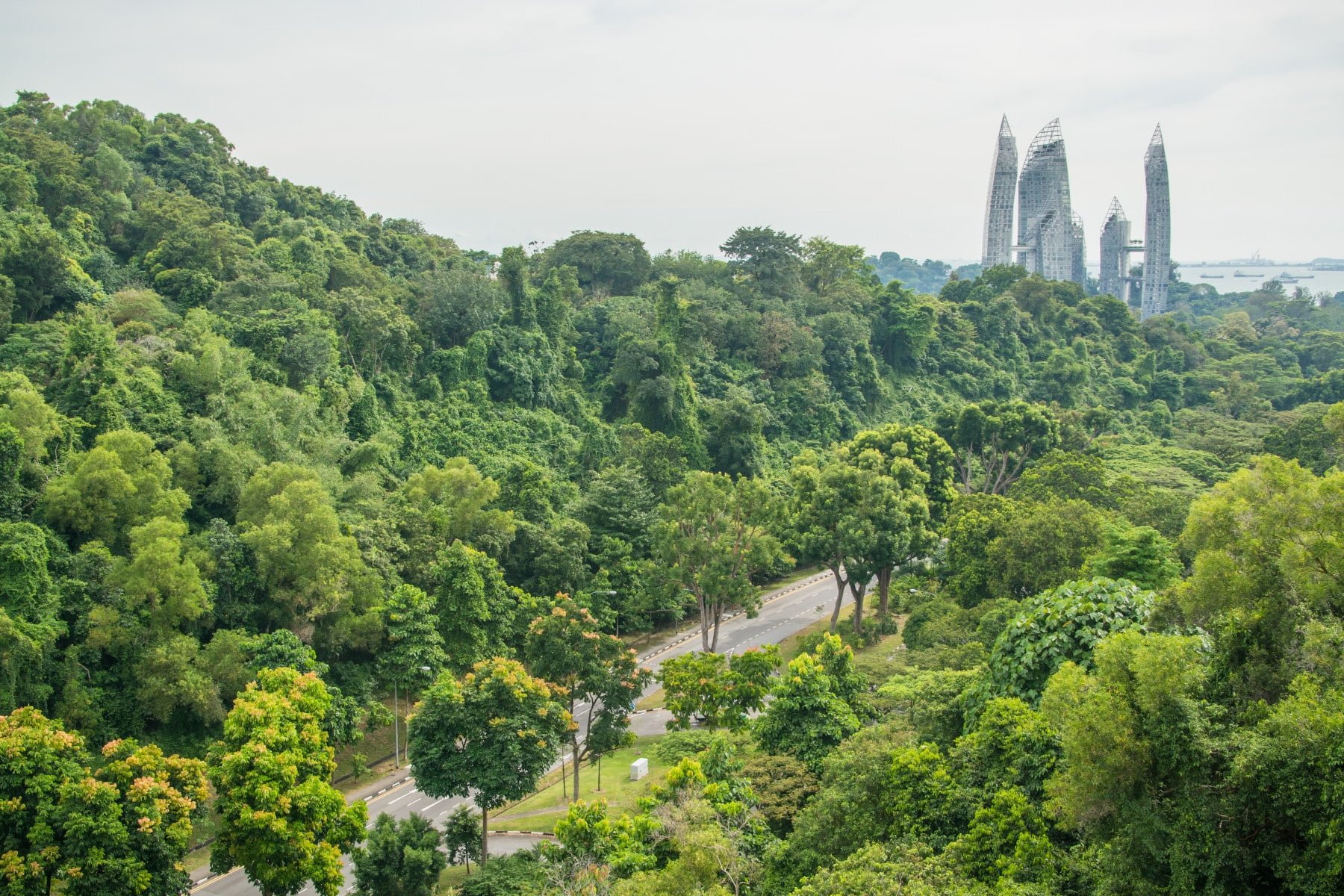
And we come first to the "Southern Ridges ," which can be translated as "the southern ridges ." Because this group of parks is, in fact, located on a high ground, formed by several hills south of Singapore.
And the reason I wanted to start there is because it perfectly illustrates the city's achievements in providing substantial green spaces. The "Southern Ridges" is a 10-km trail that winds through the forest and connects no fewer than four parks : Mount Faber Park, Telok Blangah Hill Park, Hort Park, and Kent Ridge Park. The walk can be extended all the way to the Labrador Nature Reserve by the sea.

Henderson Waves
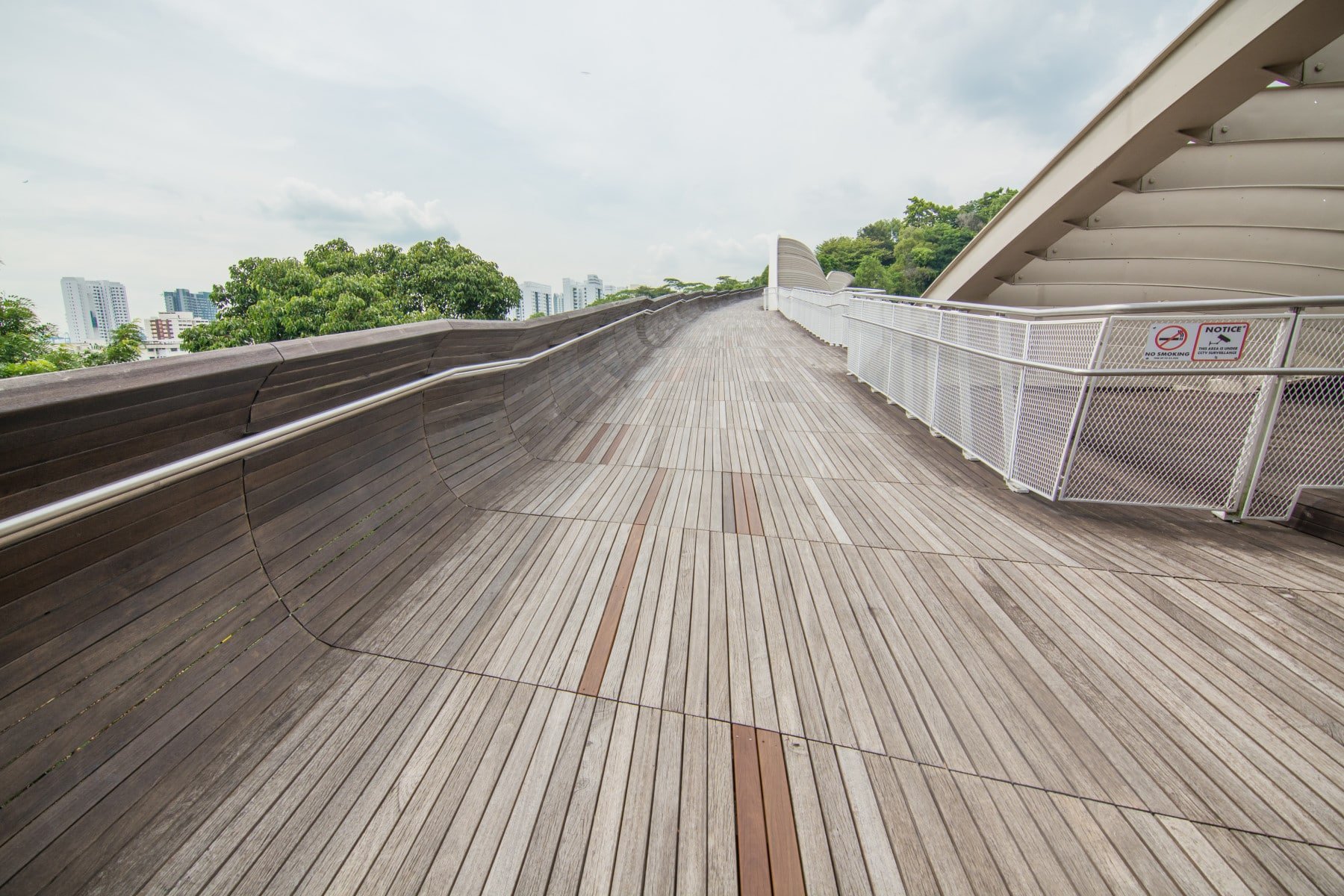
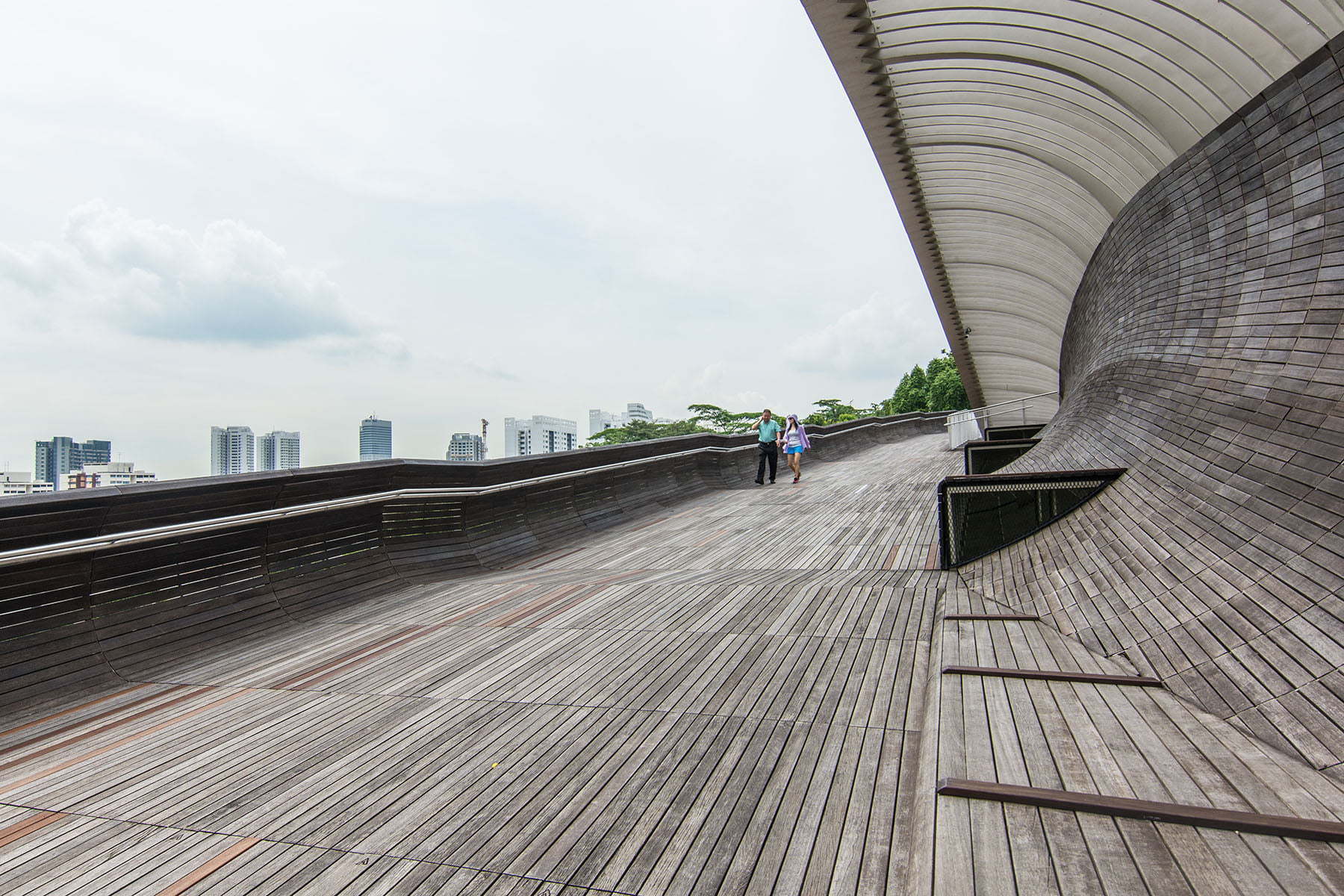
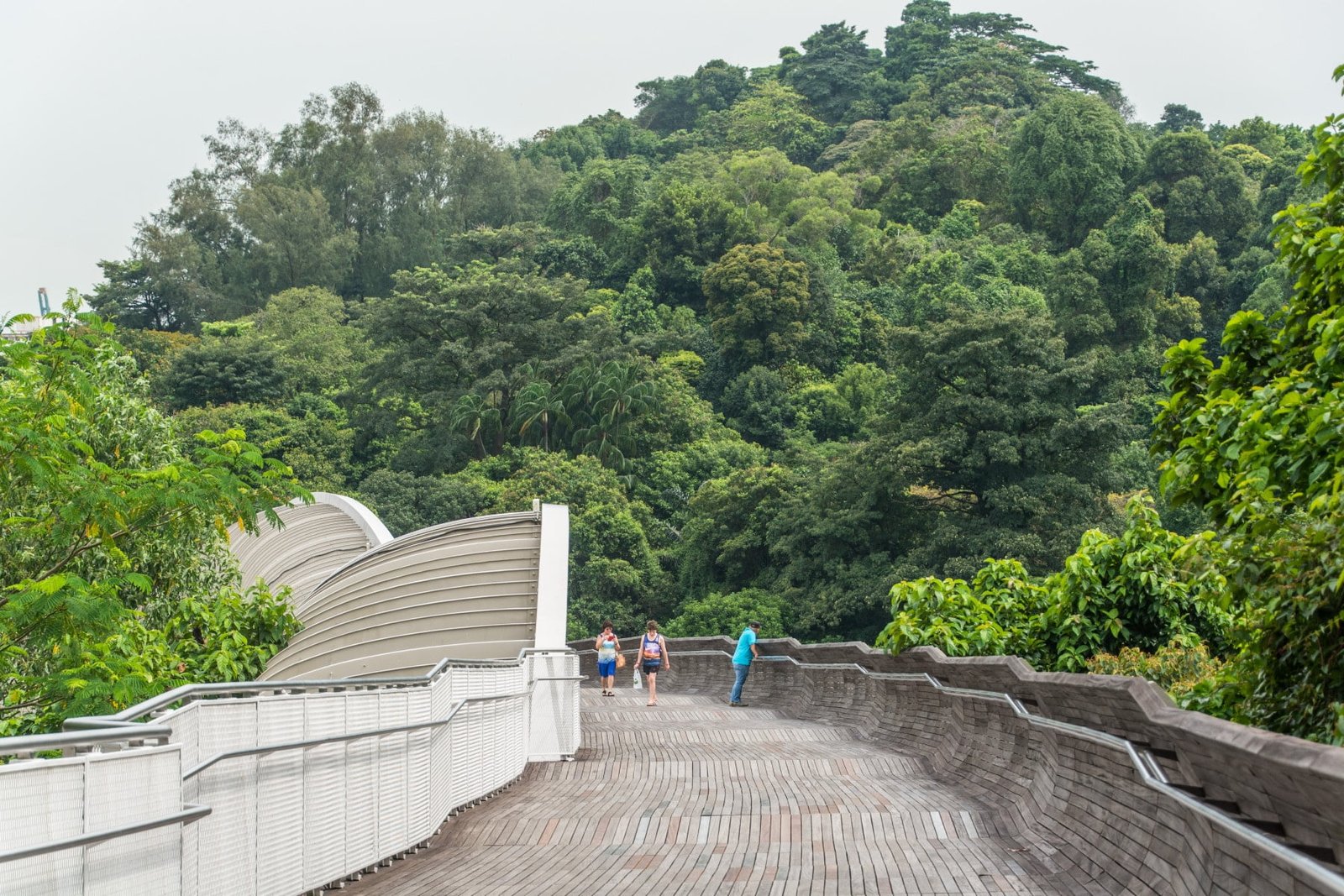
And we start with one of the iconic points of this walk, the pedestrian bridge named Henderson Waves . Henderson is the name of the road passing underneath (itself named after the Scottish botanist Murray Ross Henderson, curator of the herbarium of the Singapore Botanic Gardens from 1924) and Waves means wave in English.
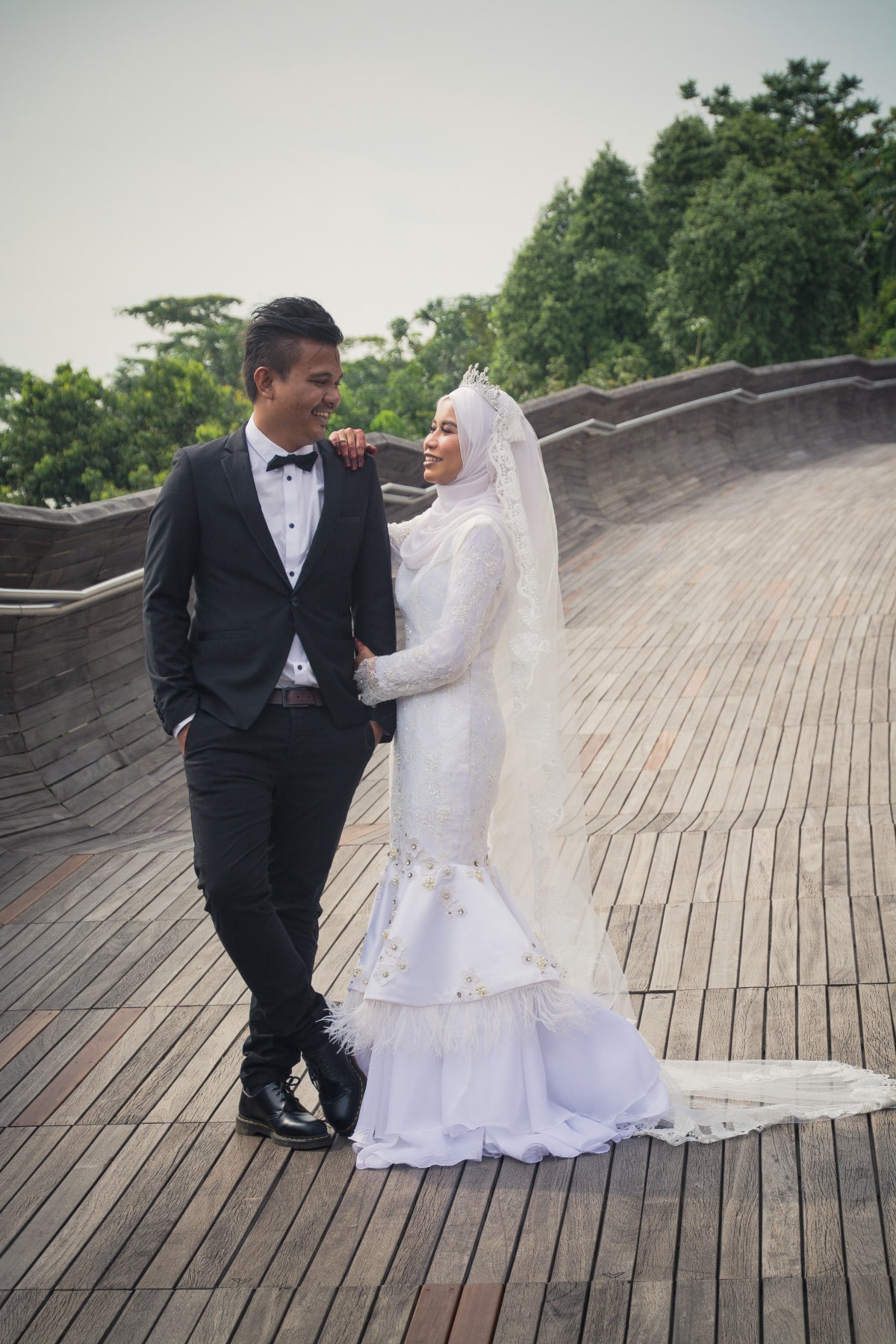
The term simply refers to the wave-shaped architecture of this structure suspended 36 meters above the void . Besides its obvious aesthetic appeal, enhanced by its forms and the extensive use of wood, its primary function is to connect Mount Faber Park to Telok Blangah Hill Park.
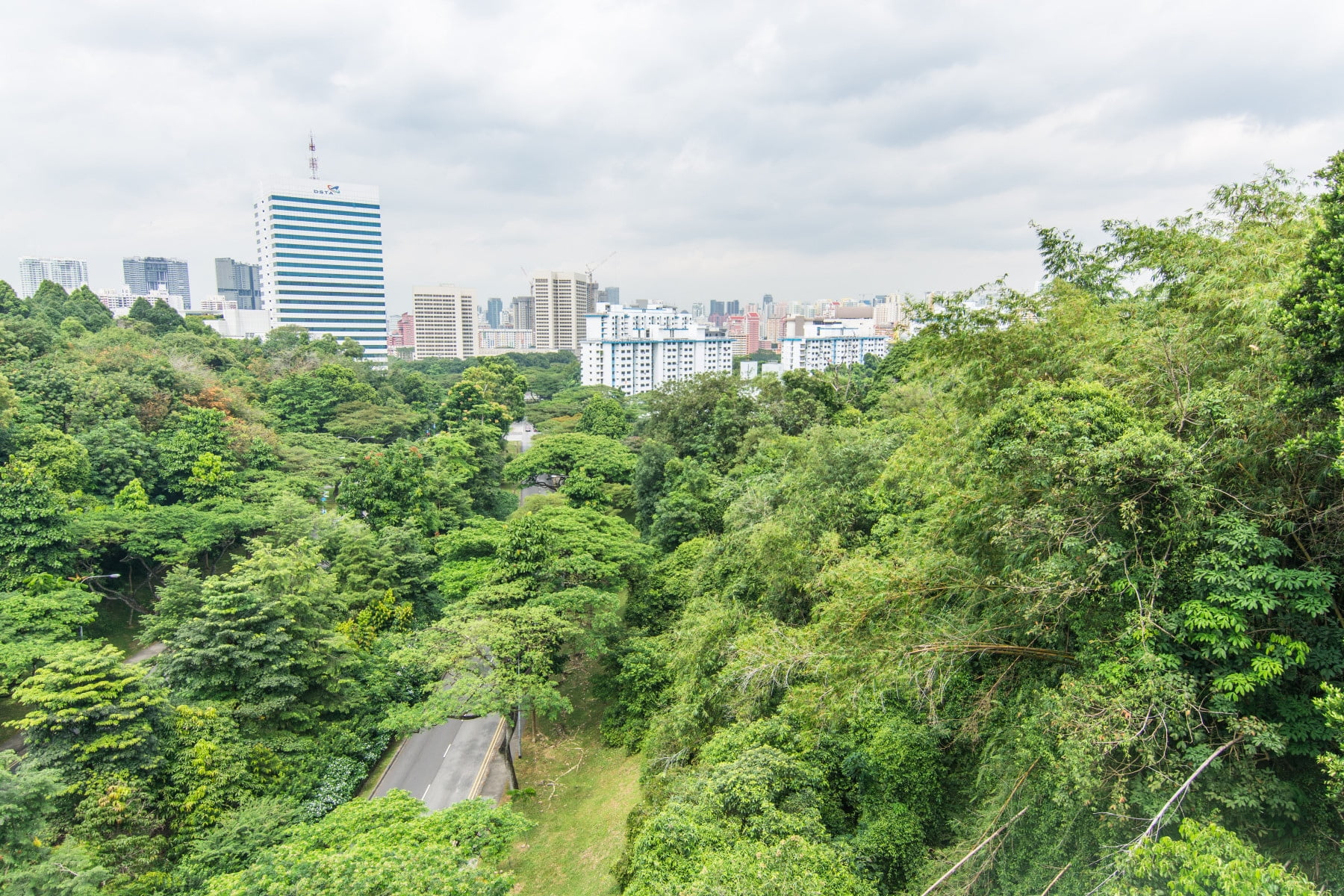
Its location also makes it an excellent vantage point overlooking this southern part of Singapore. It's a favorite spot for locals to stroll on weekends, as there are seating areas along the sides. We happened to run into a young couple about to get married there, taking their pre-wedding photos.
Telok Blangah Hill Park and the Forest Walk
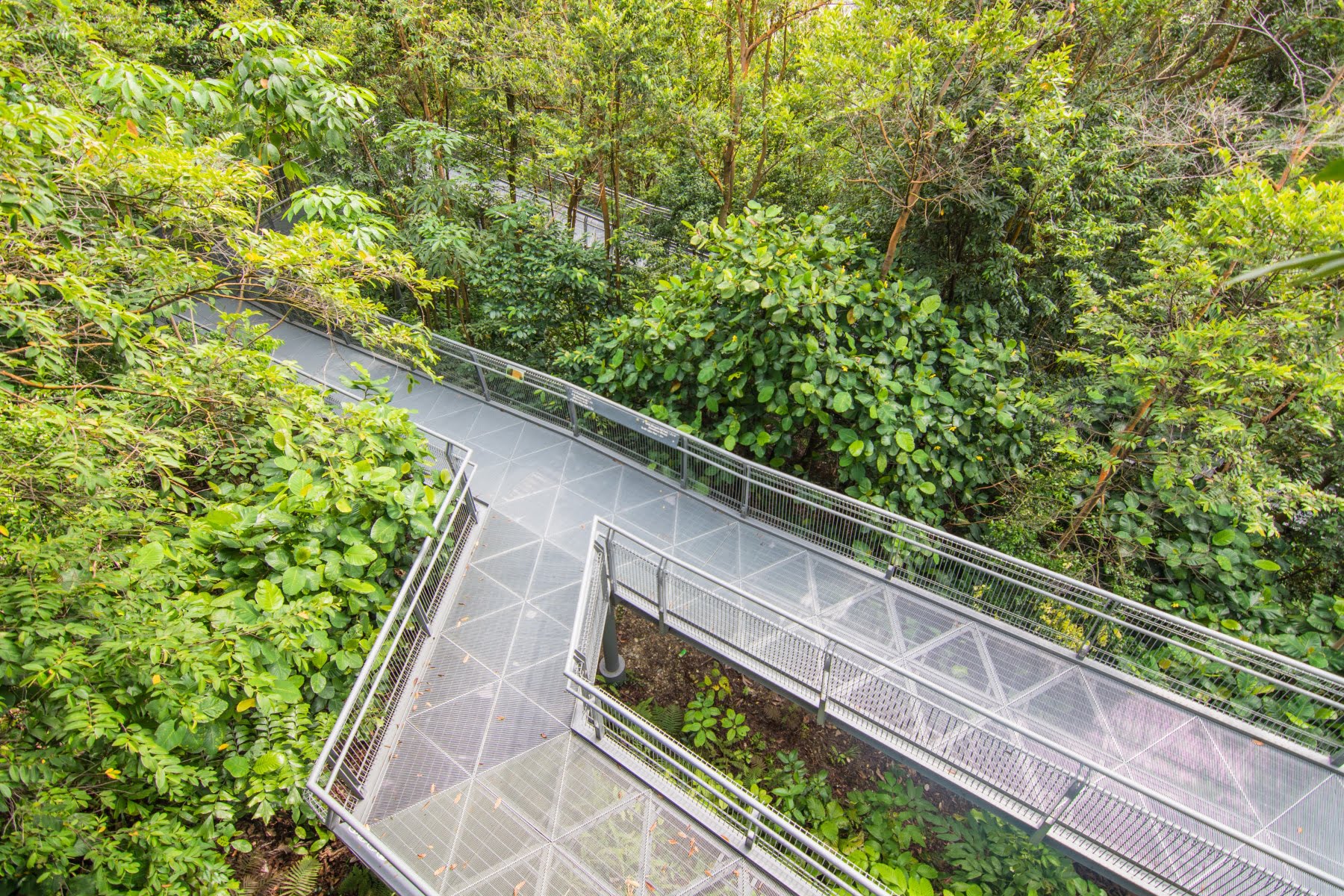
After spending a good 10 minutes on the bridge, we turned onto the other side onto the "Forest Walk" , a path leading to the next park on Telok Blangah Hill.
This led us back down to a parking lot, via a tree-lined path (hence the name Forest Walk), an area where it's possible to encounter monkeys. While we didn't see any (well, in Thailand, we're used to seeing them, so it wasn't a big deal), we climbed the other hill and came across an old mansion , Alkaff Mansion.


The Alkaff Mansion
This house, built in 1918, served as a holiday home for the Alkaff family before being abandoned after World War II. It then served as the headquarters for the World Buddhist Society in the 70s/early 80s before becoming a renowned restaurant blending Dutch and Indonesian cuisine in the early 90s.
The latter ceased its activities in 2003 and was briefly returned to government hands before becoming a restaurant again, this time Italian, between 2011 and 2016.
At the time of our visit, the latter was therefore unused although we could see some work in progress. And for good reason, today (since May 2019) it has become not a restaurant, but a set of projects. This still includes a new restaurant (Spanish for a change, the UNA) as well as a bar (the Txa) and a café (the Wildseed Cafe).


The path in the canopy
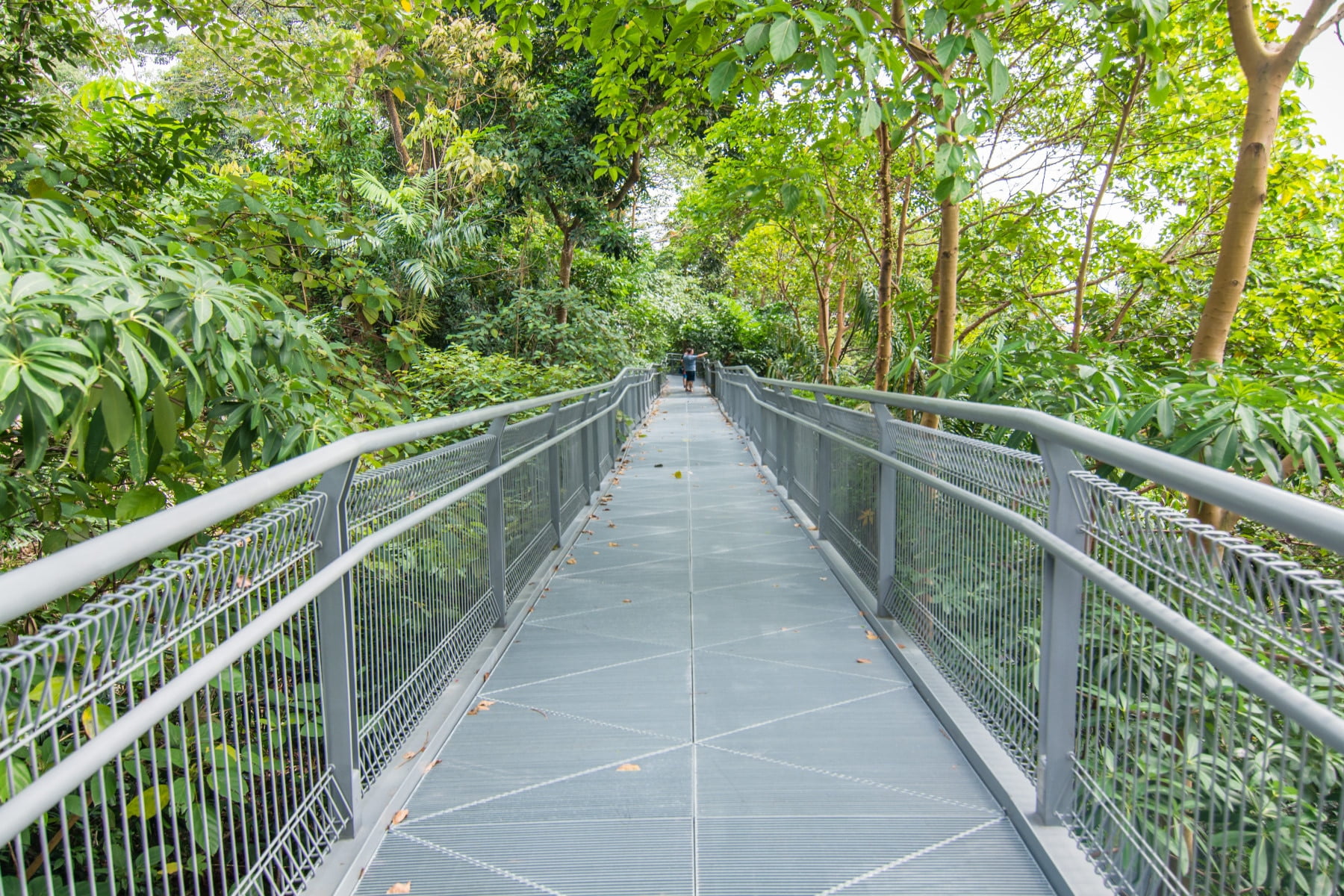
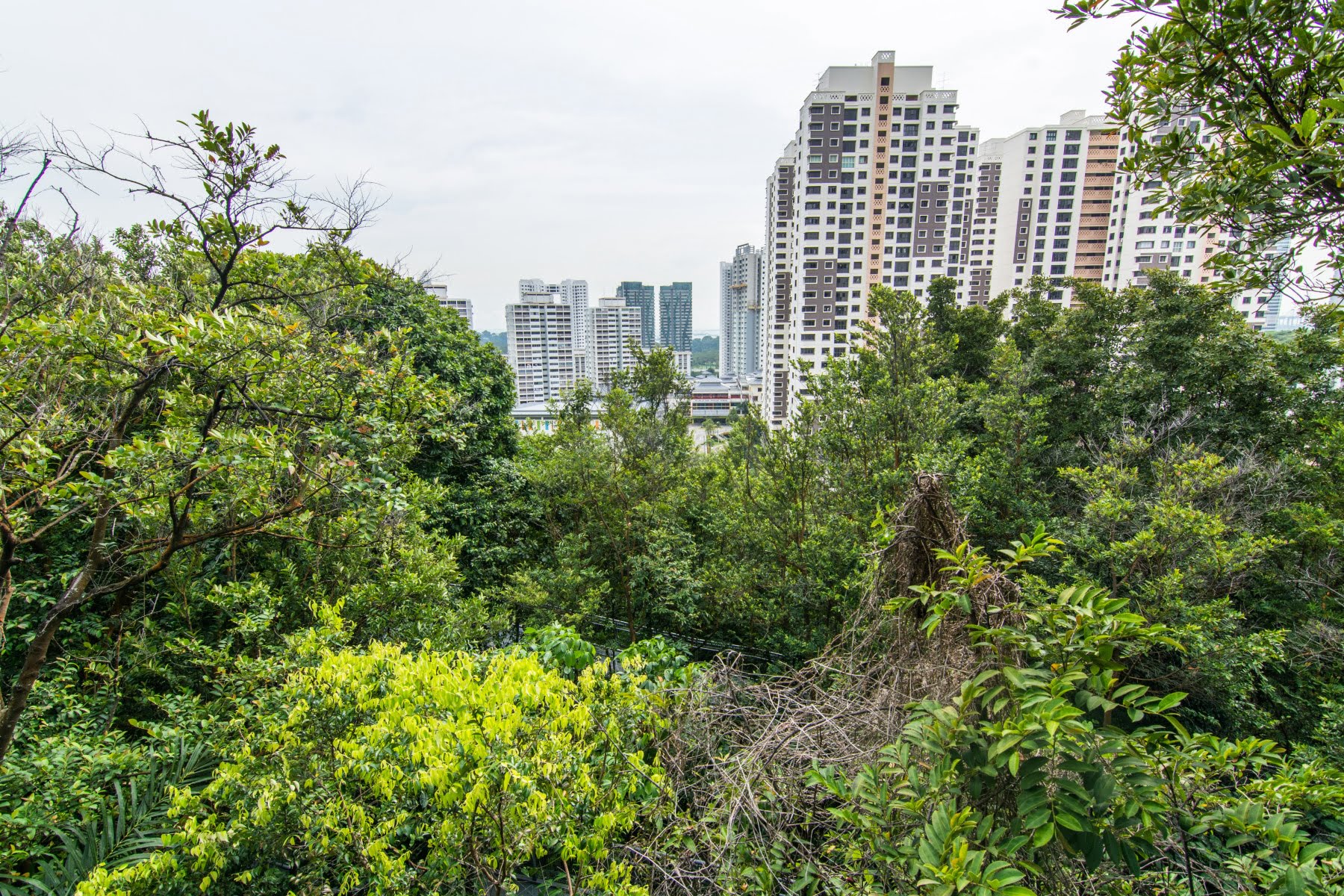
It was just after passing the manor house that we took this path. It leads through a secondary wooded area . Here, thanks to the raised platform traversing the hillside , you can see a variety of flora and observe birds in their natural habitat. The path winds through the woods , from which, through gaps in the foliage, you can glimpse the surrounding buildings, reminding you that yes, you are still very much in the city.
If we had continued along this path, we could have gone as far as the Alexandra Arch Bridge , another pedestrian bridge connecting Telok Blangah Hill Park to HortPark gardens ("Hort" being short for horticulture). This section is a collection of gardens with various themes (Balinese, water garden, vegetable garden, etc.), which we wouldn't see, as we were retracing our steps to return to the top of Telok Blangah Hill , which we had just crossed.
Not having all day to dedicate to the southern ridges , I figured we'd already seen half of them. That already gave us a good idea of the area.
Top of Telok Blangah Hill Park
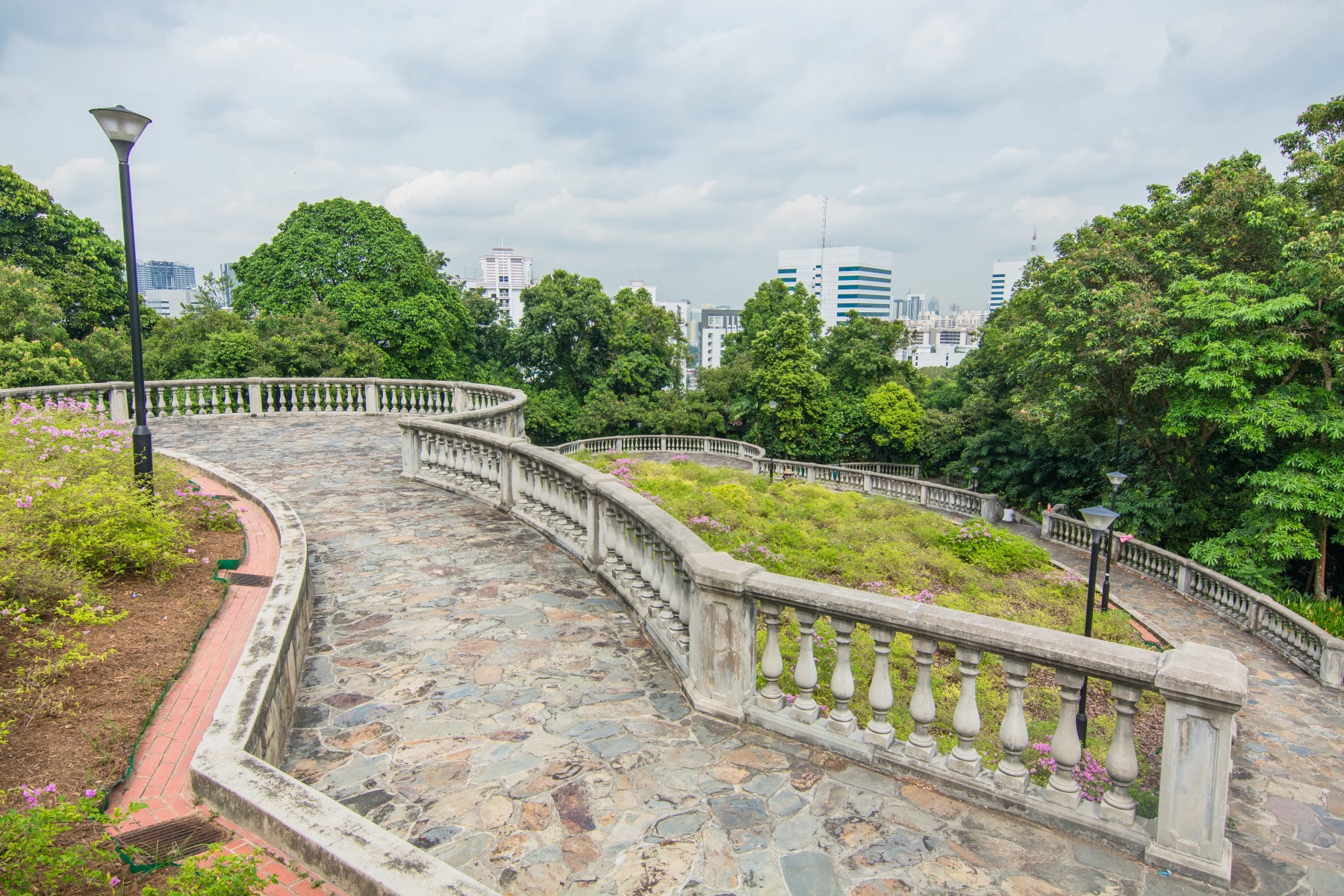
The reason I wanted to go there before continuing our walk towards Mount Faber is because it's the highest point in the eastern part of the Southern Ridges. The hillside is laid out in a system of circular terraced gardens (giving it the name Terrace Garden ) and dotted with bougainvillea. I imagine it's very beautiful when they're in full bloom, but there, despite the presence of a gardener at work, it has to be said that the site looked rather neglected.
As for the beautiful 360° view promised by the official website , it was rather disappointing, as it was quite obscured by trees (in fact, the website itself removed the "read more" link for this spot, implying changes are coming). Jitima didn't miss anything, since she was too lazy to climb the few steps to the top (well, I should also mention that I was only going up to take photos and we were heading back the way we came right after).


Mount Faber
After crossing the Henderson Waves again, we were on the side of Mount Faber Park. This 56-hectare park is one of the oldest in Singapore. It existed long before it was incorporated into Southern Ridges.
If you miss its peak, Faber Point (you can't see everything), continue on to the cable car station . Because yes, there is a cable car there, operational since 1974. This one connects Mount Faber to Sentosa , the famous island dedicated to entertainment (where Universal Studios Singapore is located).
Originally, I was planning to take it to get there but since it's not really Jitima's thing, I fell back on option B, which was to go back to the metro and join Gardens by the Bay towards the Marina.


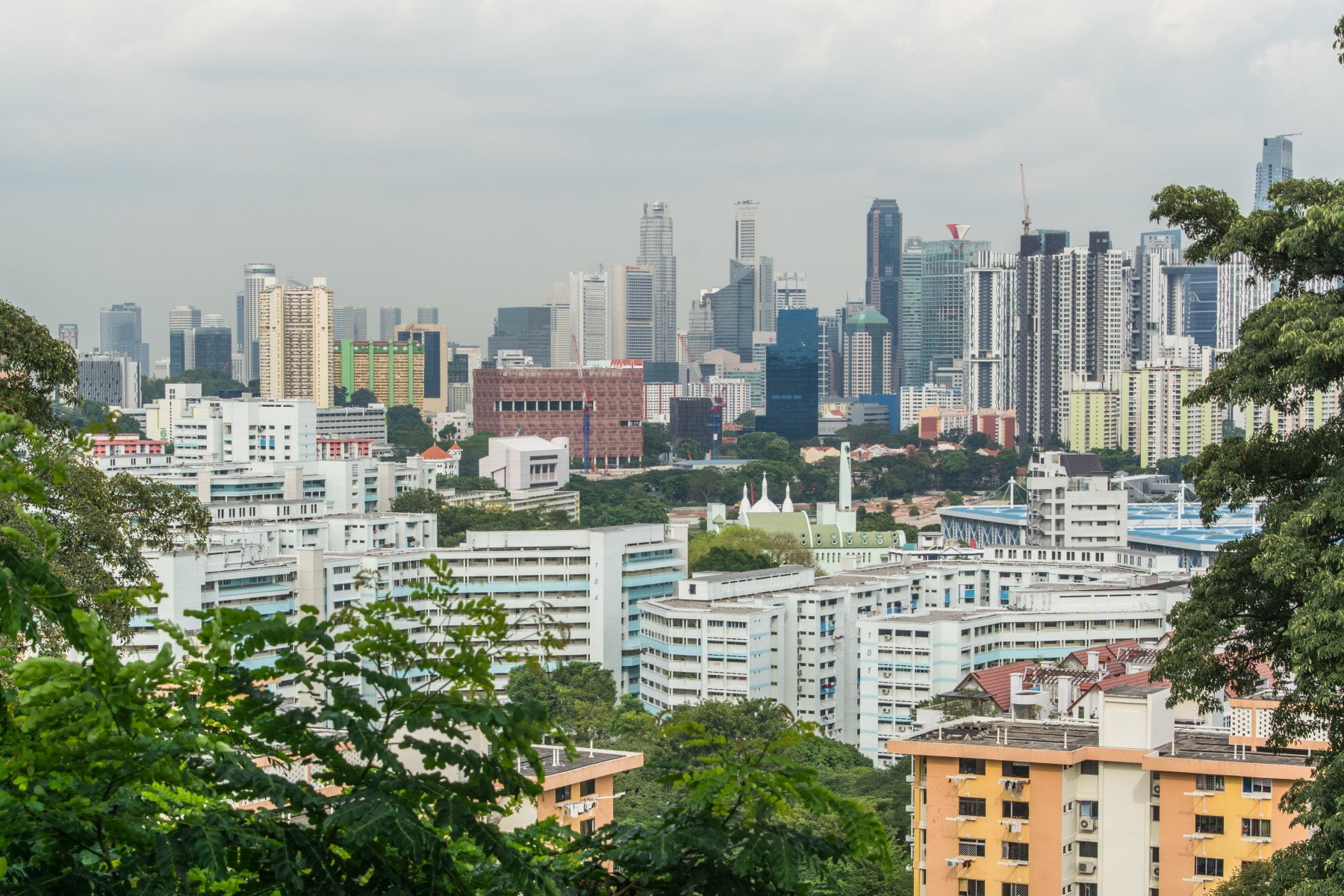
But before doing that, we passed through an area where we could see the dense jungle section of Mount Faber . Indeed, the hill is partially covered in rainforest here. The vegetation on the slope helps stabilize the terrain and beautifies the park.
Upon arriving at the station, we made sure not to miss ringing the bell nicknamed the " Bell of Happiness"! This bell, dating from 1910, came from a Polish ship, the Dar Pomoza. It was a famous tall ship that trained elite young sailors for international races. The bell was initially given to Sentosa in 1992. Then, in 2012, it was moved to Mount Faber where it has stood ever since, alongside a wall of small wishing bells.
It is located in what is now known as the "Garden of Happy Promises" at Faber Peak . According to local popular belief, visitors and newlyweds, by ringing the bell together, would be blessed forever, bringing eternal happiness, peace and harmony (no less!).


After this "divine" moment, we hesitated to stop at the Faber Bistro to admire the view (incidentally, at the time of writing this article, I saw that the establishment is permanently closed...) but given the price of the drinks, and our timing, we decided to continue, despite a certain fatigue arriving, from walking.
To reach the subway , at Harbour Front station (NE1 of the North Eastern Line), we ended this walk at Southern Ridges by following a path and then stairs through the woods, following the Marang Trail.

Gardens by the Bay – Gardens by the Bay
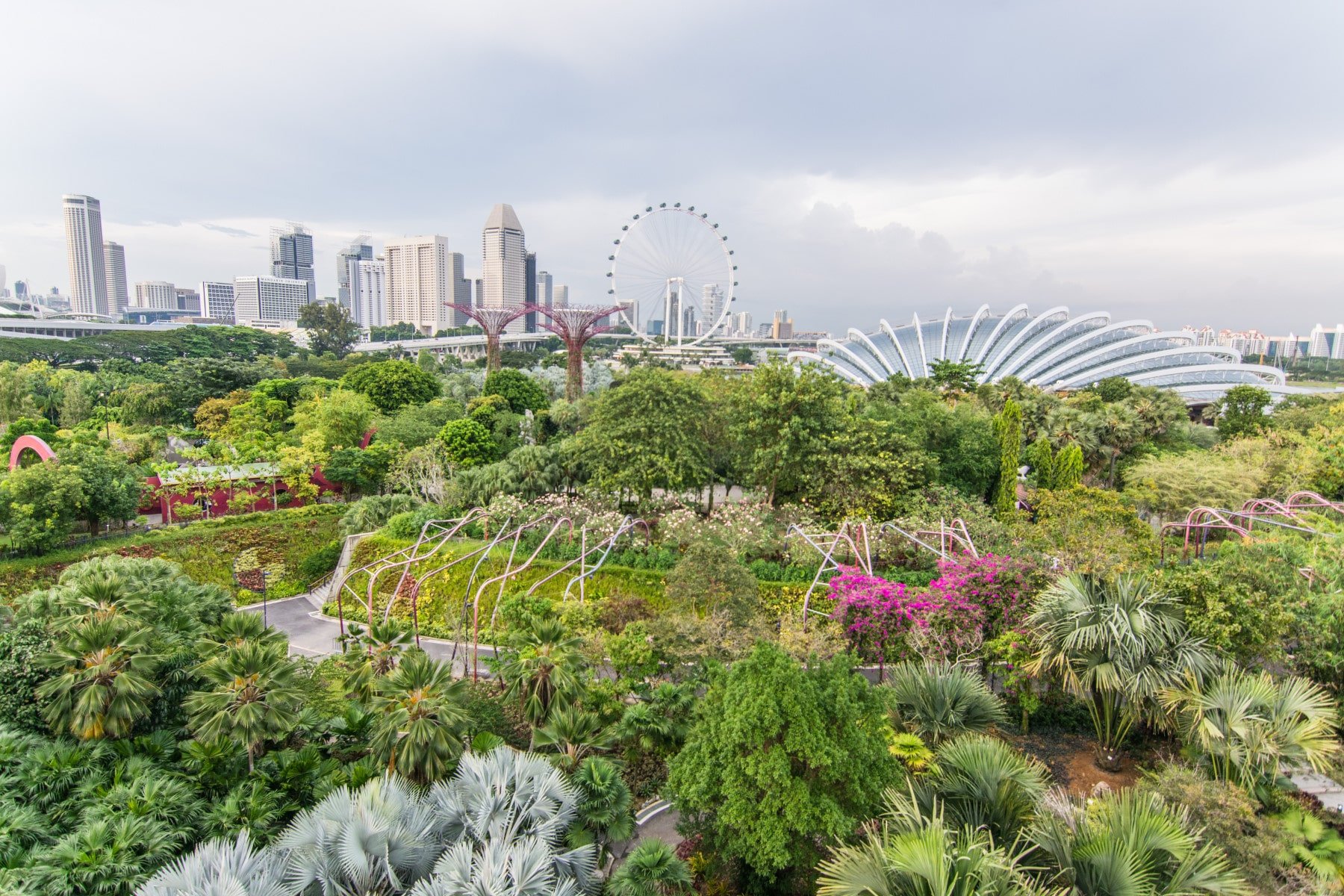
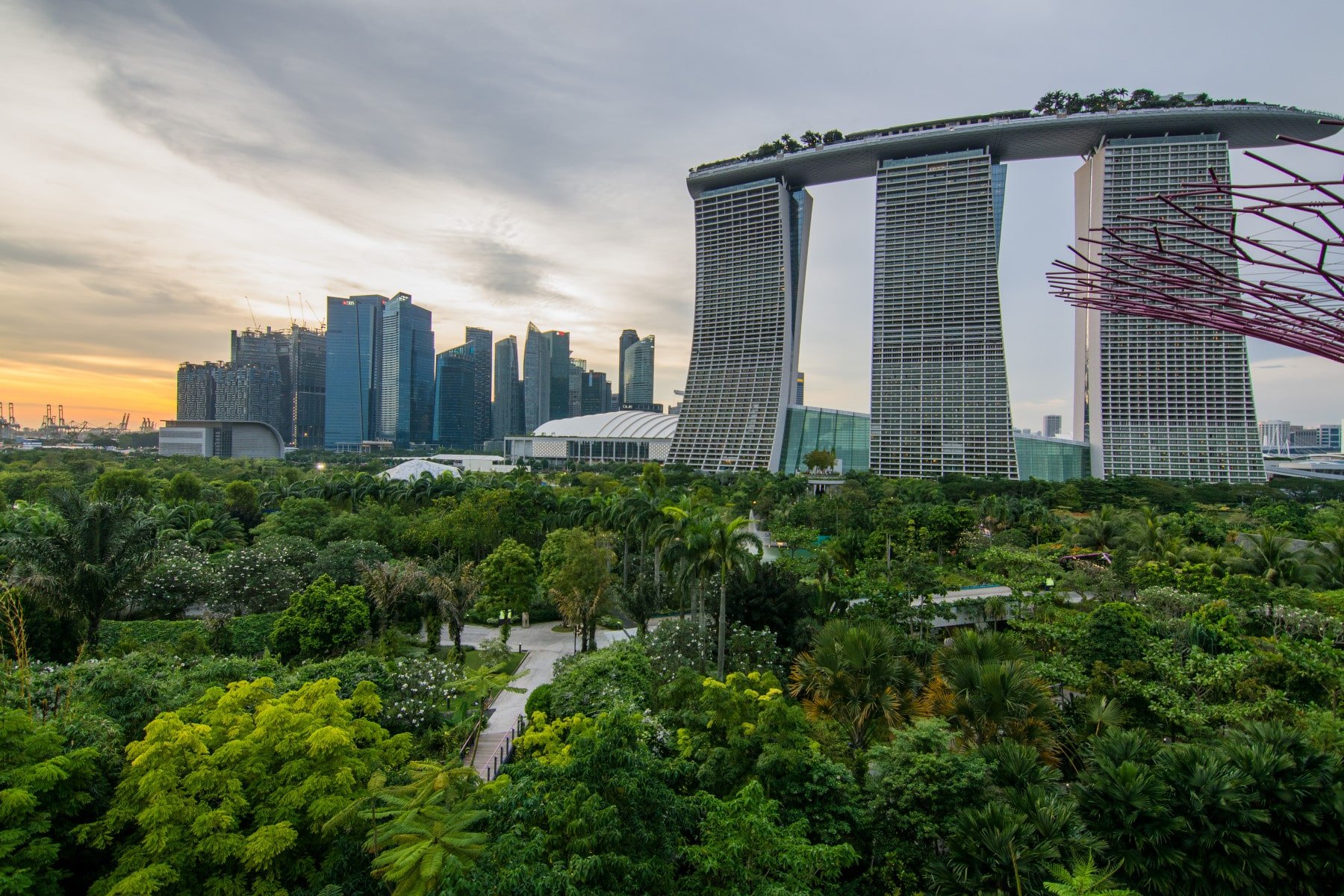
Located just behind the imposing luxury hotel and its legendary swimming pool overlooking the bay (Marina Bay Sands), Gardens by the Bay is the other inseparable landmark of this bay located in the south of Singapore.
It was actually by passing behind the hotel that I arrived at the park, after exiting the Bayfront tube station (CE1 of the Circle Line). I crossed the Dragonfly Bridge which offers a beautiful view of the extent of the gardens.
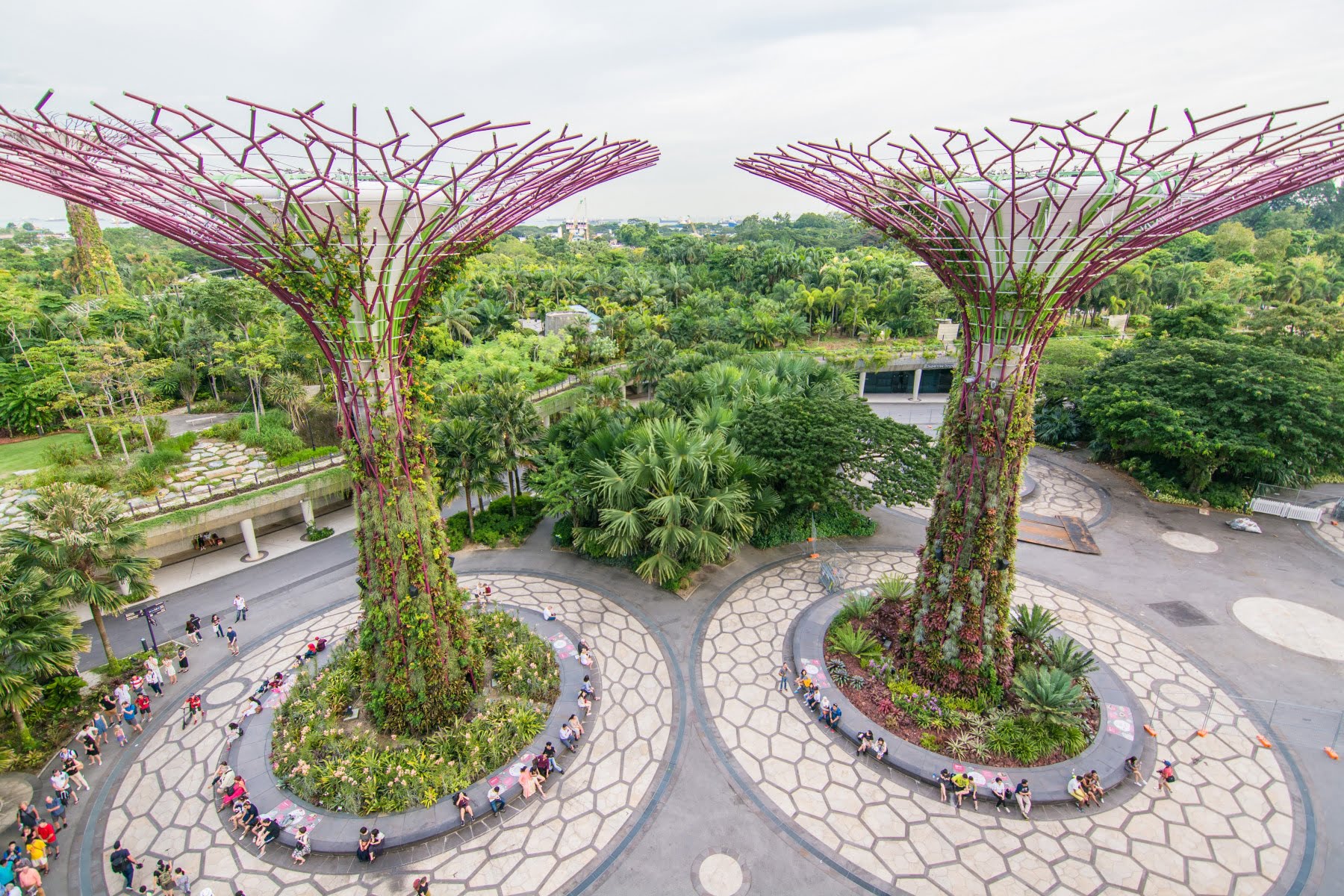
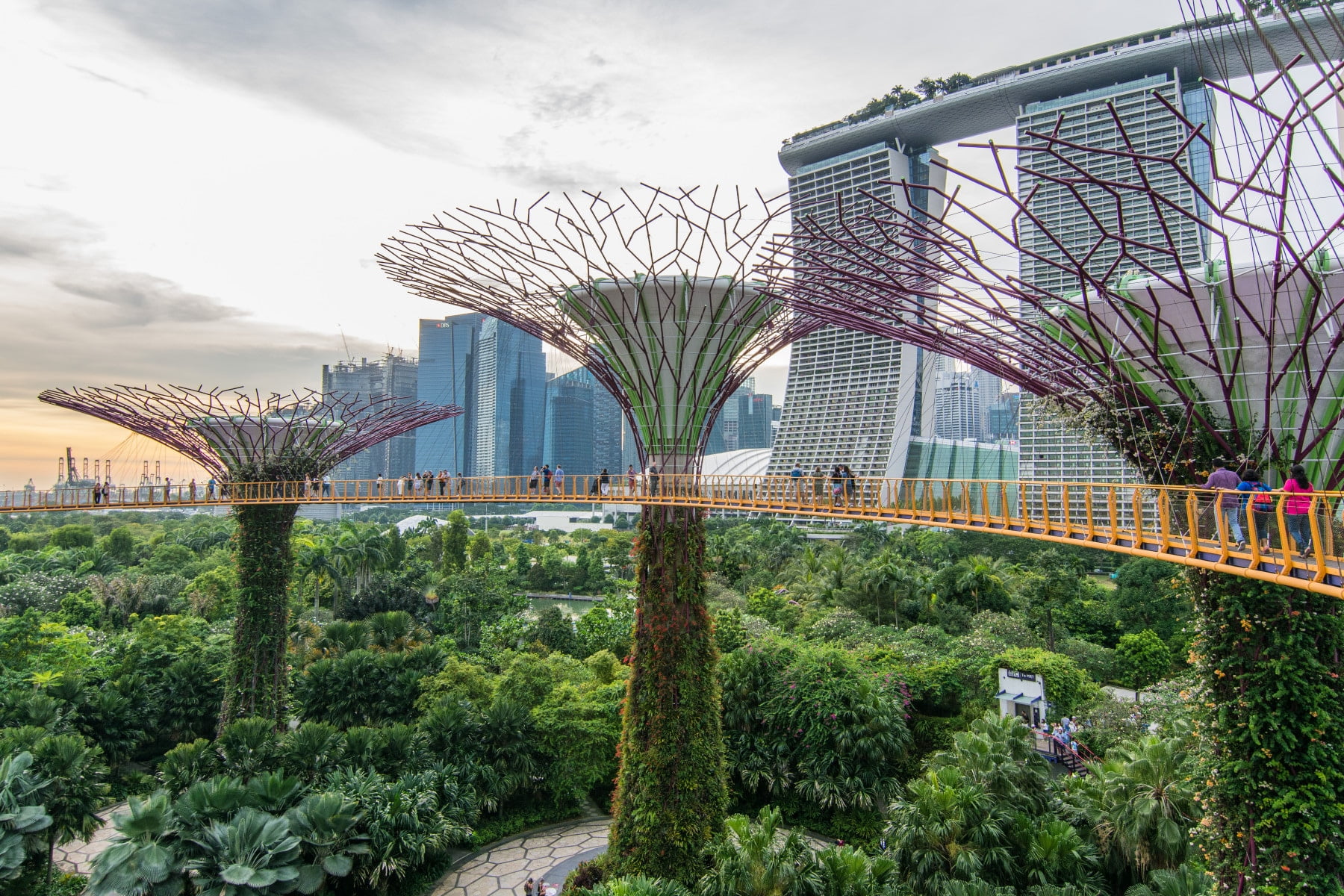
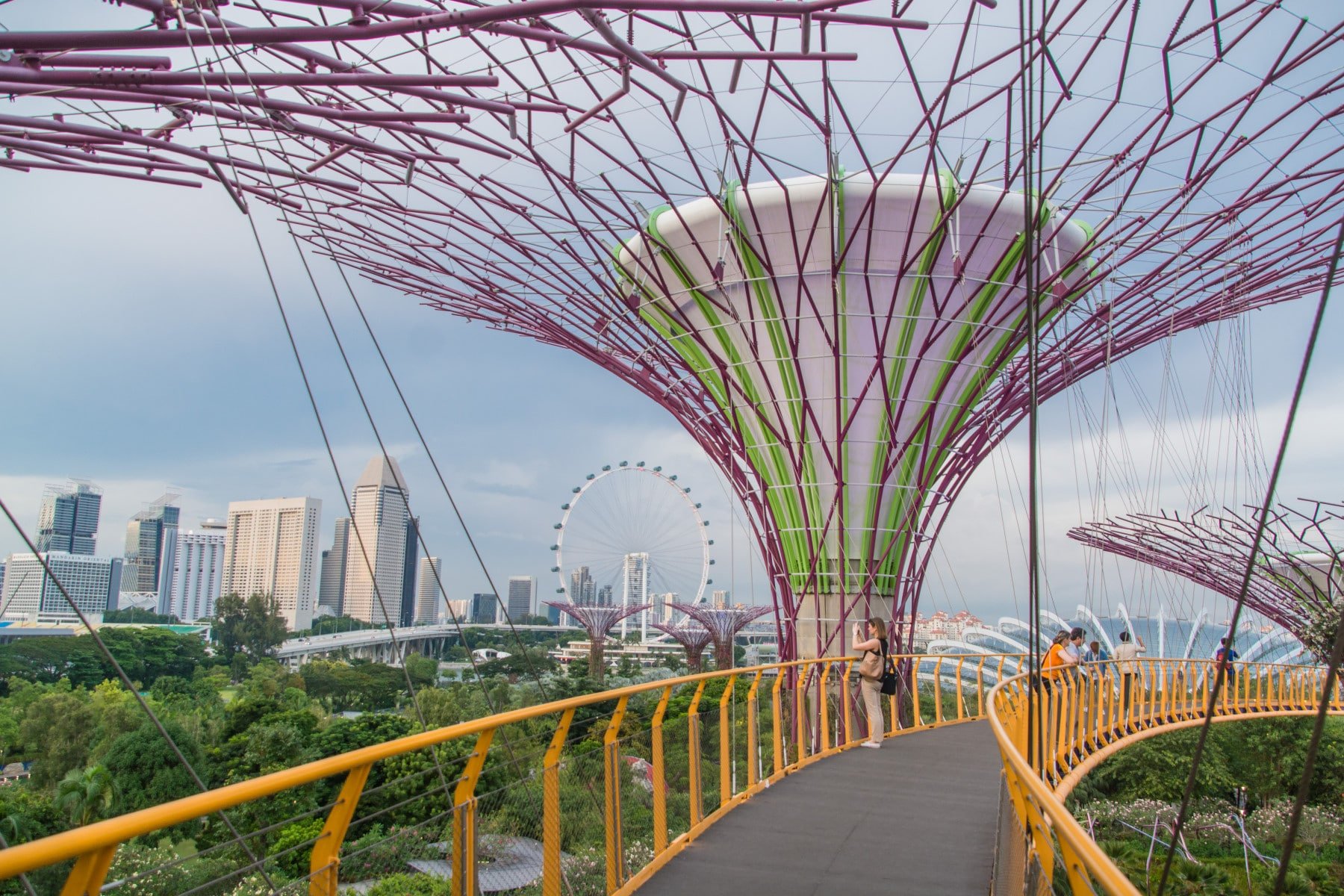
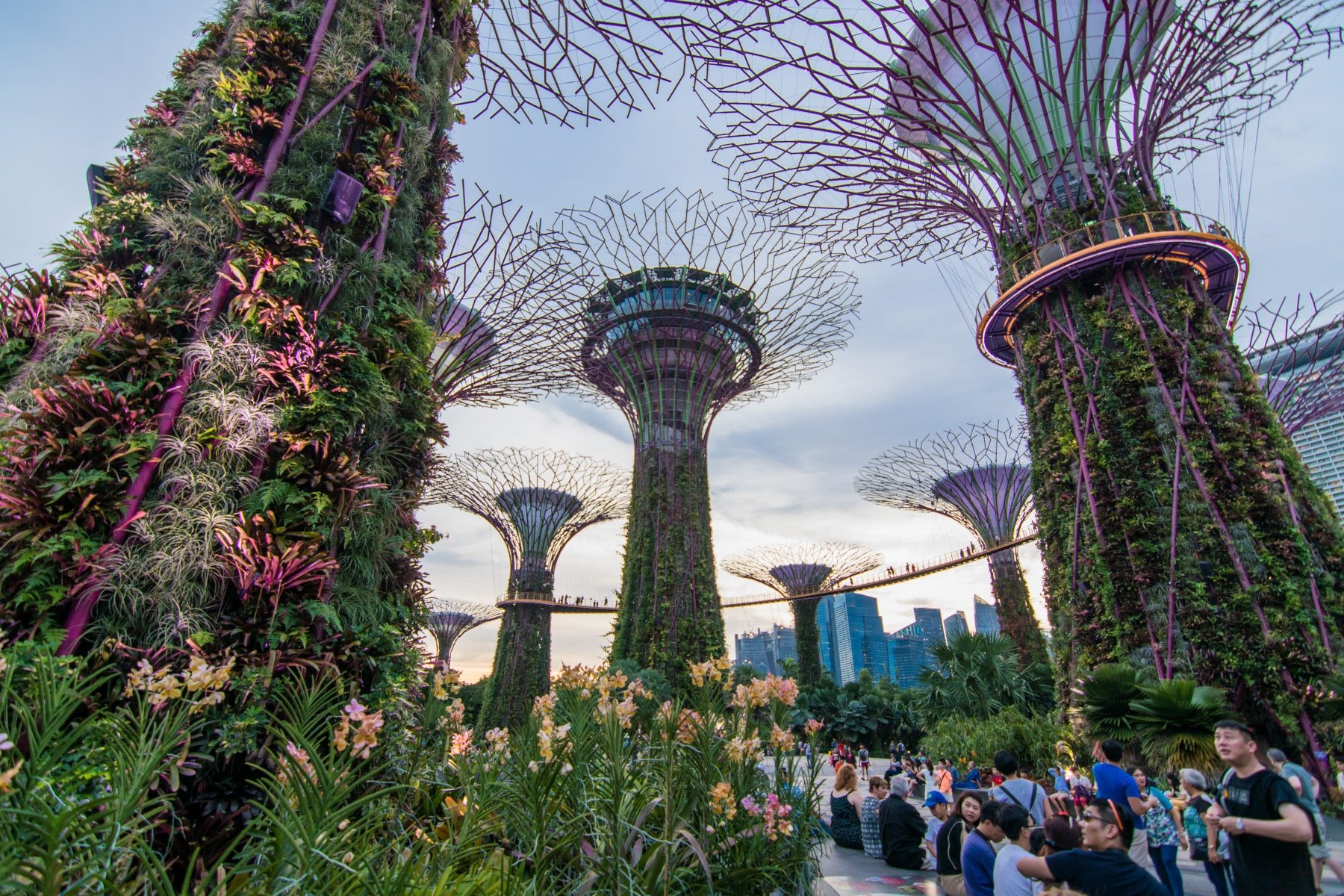
The park, opened in 2012 (after 5 years of work), covers an area of more than 100 hectares, near the main port of Singapore. Its main attraction lies in these metal structures resembling a kind of large tree, also called "Super Tree".


The latter, 18 in number and as high as 16-story buildings (well it varies since the latter are between 25 and 50 m for the tallest), are distributed over the surface of the garden (roughly in 3 different zones). They hide a jewel of technology, allowing the air conditioning to be supplied to some other buildings in the park and supply solar energy to the sound and light show presented to visitors at nightfall (which I also attended).
Above all, they each house 150.000 plants representing 600 different species, a real concentration of biodiversity! With their futuristic appearance, they are often compared to the world of Avatar and that was indeed my feeling when I arrived in front of these giants.
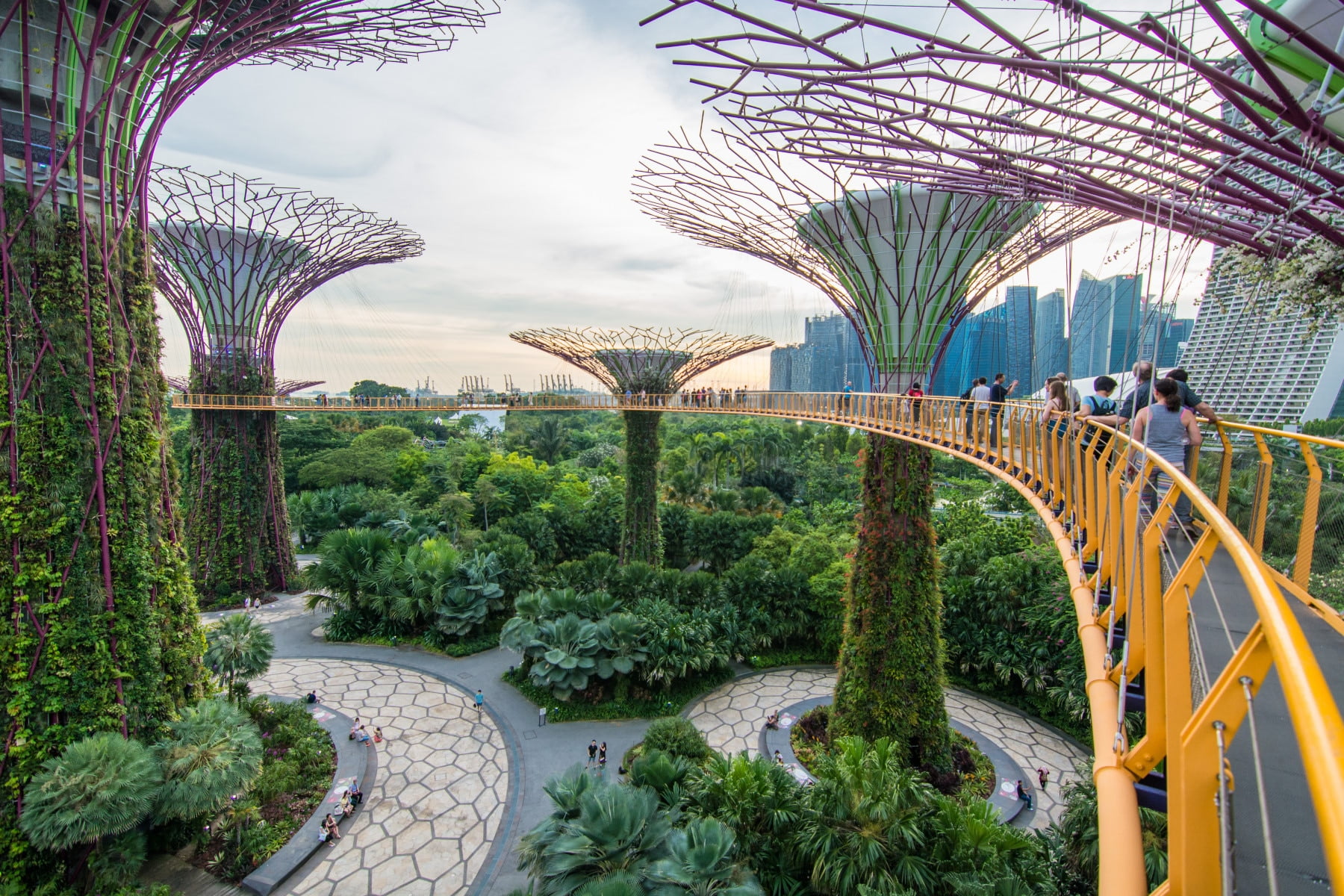
While the outdoor gardens are free to access, some areas require a fee. This includes the suspension bridge between two giant trees, the OCBC Skyway. It offers a panoramic view of the entire park and a glimpse of the downtown skyline, including the nearby Marina Bay Sands.



Gardens by the Bay at night: the sound and light show (Garden Rhapsody)
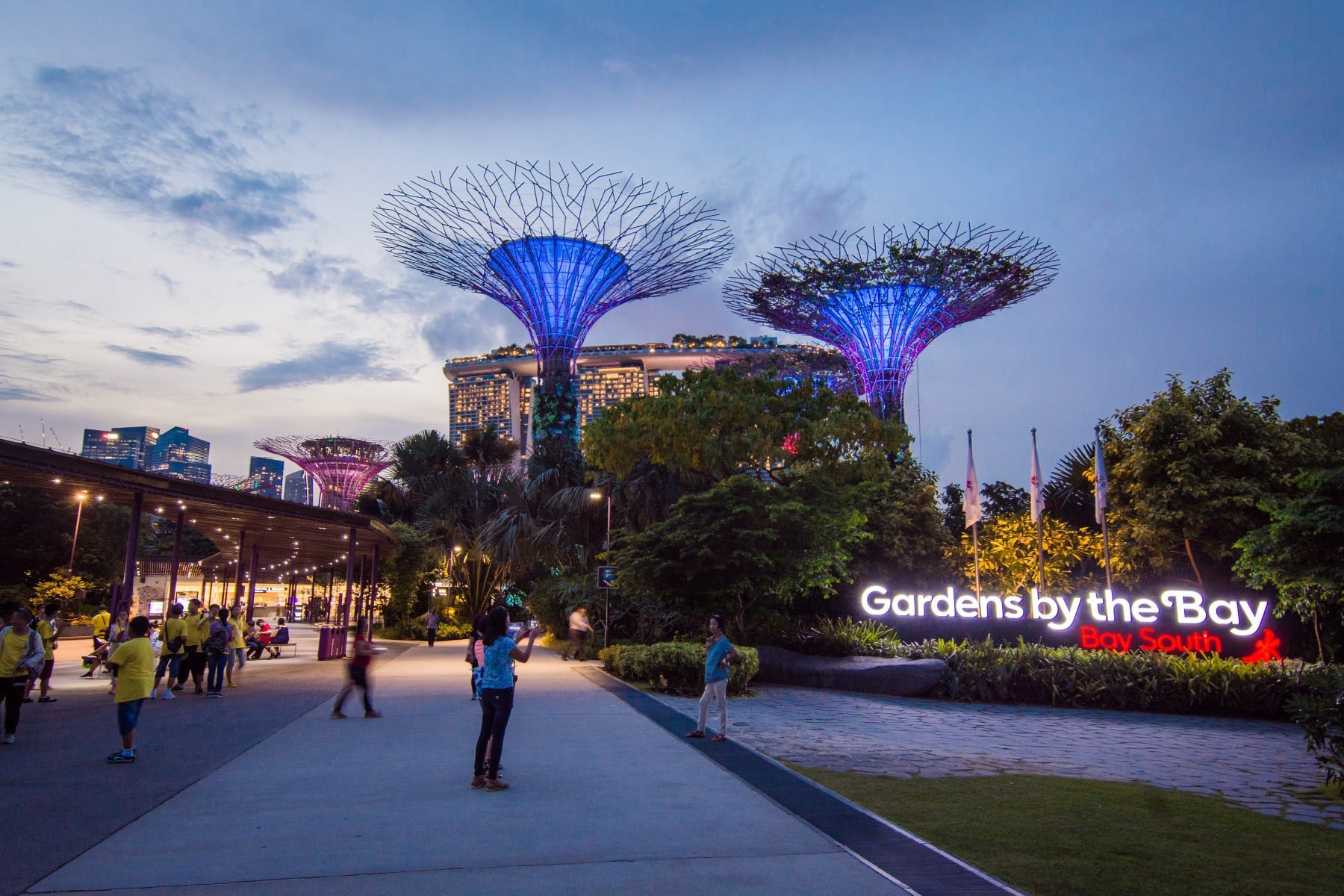
It was the very next day that I returned to Gardens by the Bay to see the little sound and light show. Jitima had to go back to Bangkok that afternoon, so I went to see the islands that day. Before nightfall, I took the opportunity to visit the Cloud Forest Dome, which we hadn't had time to see together the day before (and which I'll talk about in a moment), due to lack of time. As the photos above suggest, we arrived in the late afternoon, before nightfall, but we didn't stay for the show that evening because we were exhausted after walking all day.
The best spot to see this show is, in theory, on the platform overlooking the Supertree Grove (the main 50m tall super tree) next to the "Secret Life of Trees".
This was also where all the enthusiasm for evening photography was concentrated. Not having a tripod, I made do with a railing to take my photos.
In practical terms, the show consists of a light display whose colors change to the rhythm of the music . Nothing extravagant in itself, but it must be admitted that the nighttime atmosphere is also worth seeing; it's very photogenic and it's cooler.



Cloud Forest and Flower Dome
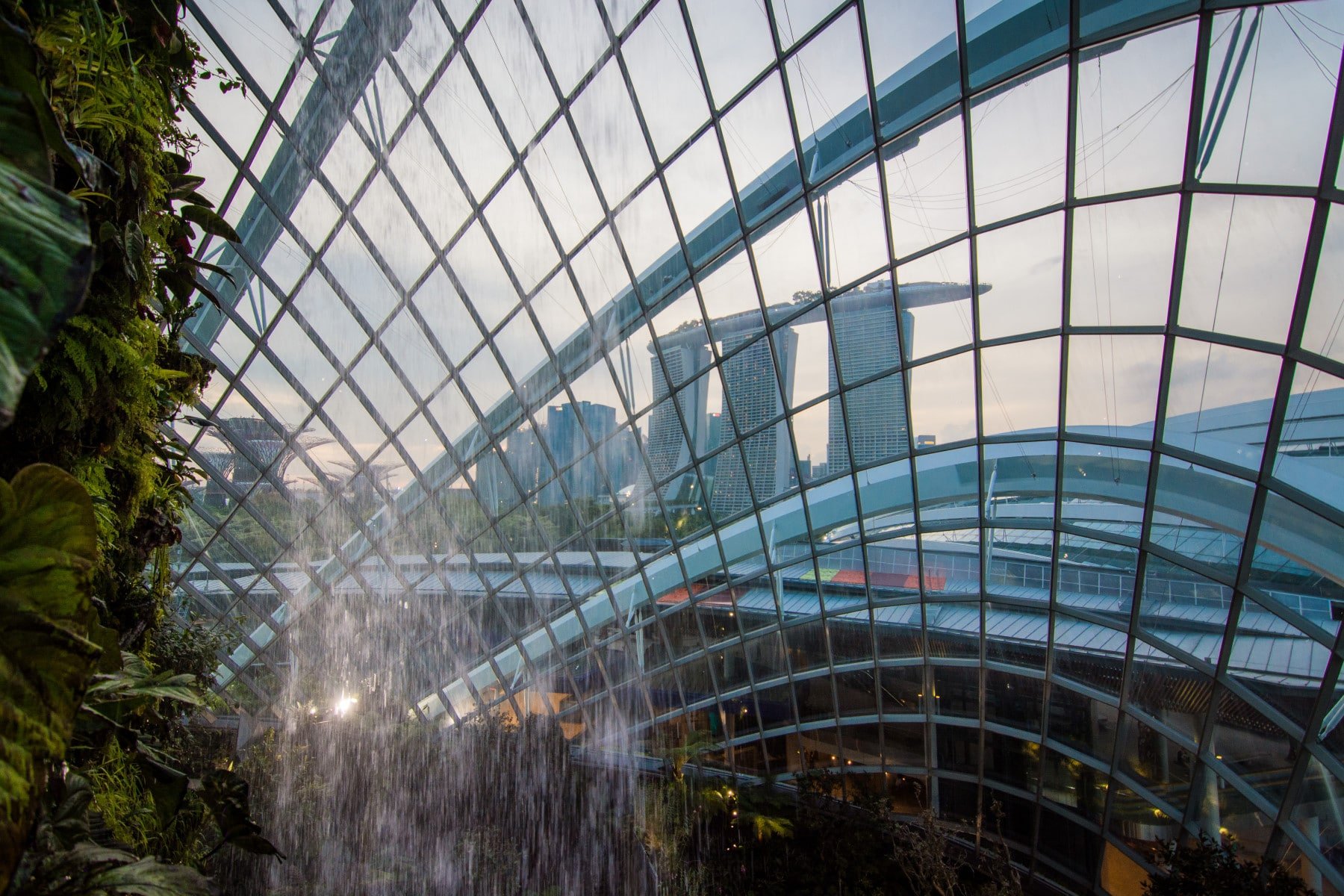
Gardens by the Bay, in addition to the gardens outside, includes two monumental greenhouses surrounded by domes that you can't miss. These two domes are self-sufficient in the sense that the steam turbines, which maintain the ideal temperature, run on recycled organic waste.
The first, called Flower Dome, is, as its name suggests, dedicated to flowers (and plants in the broad sense). Thus, it hosts no less than 250 species of rare plants from all four corners of the globe.
Due to lack of time and having a limited budget, I did not visit the latter. I instead headed towards the second, called Cloud Forest.


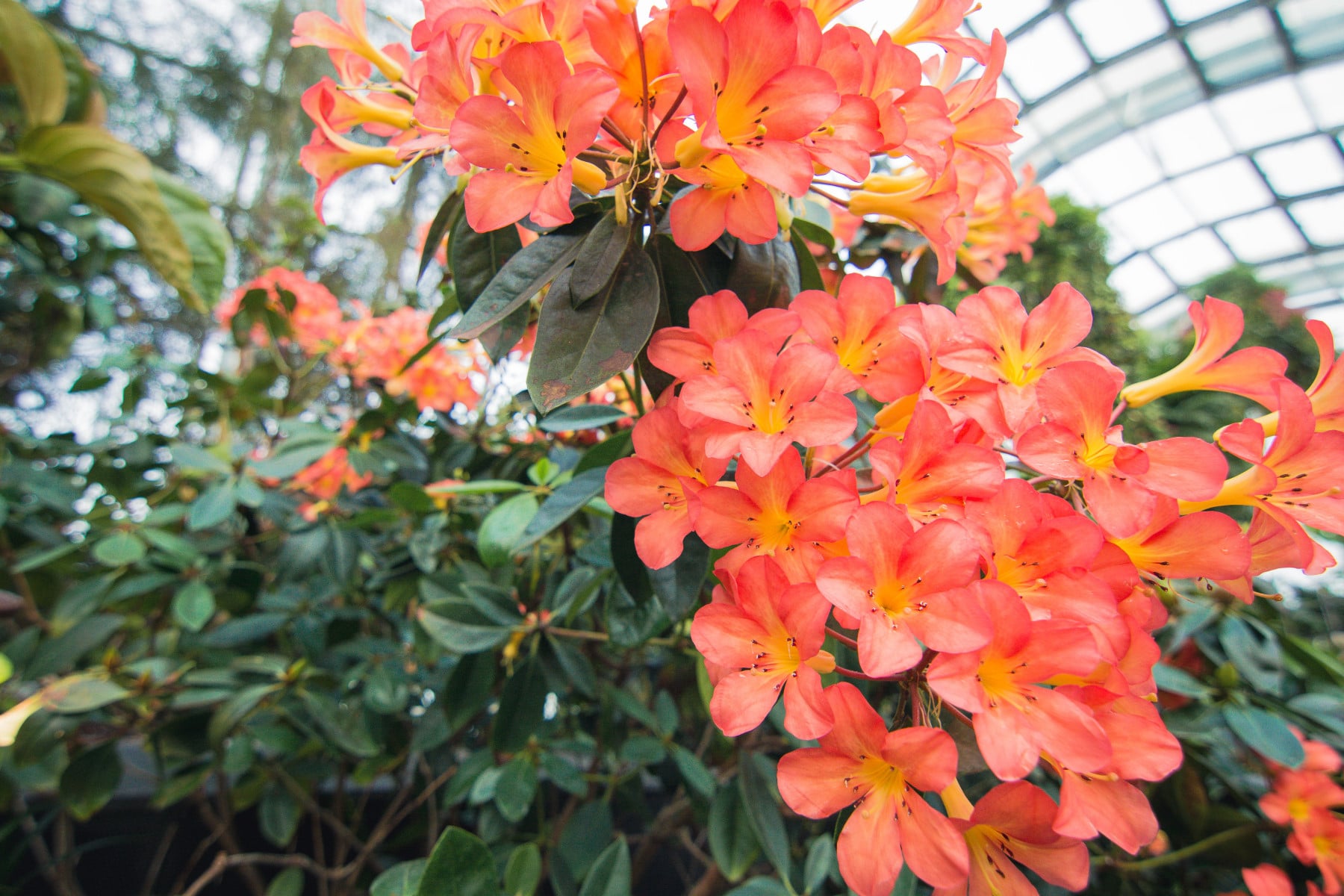
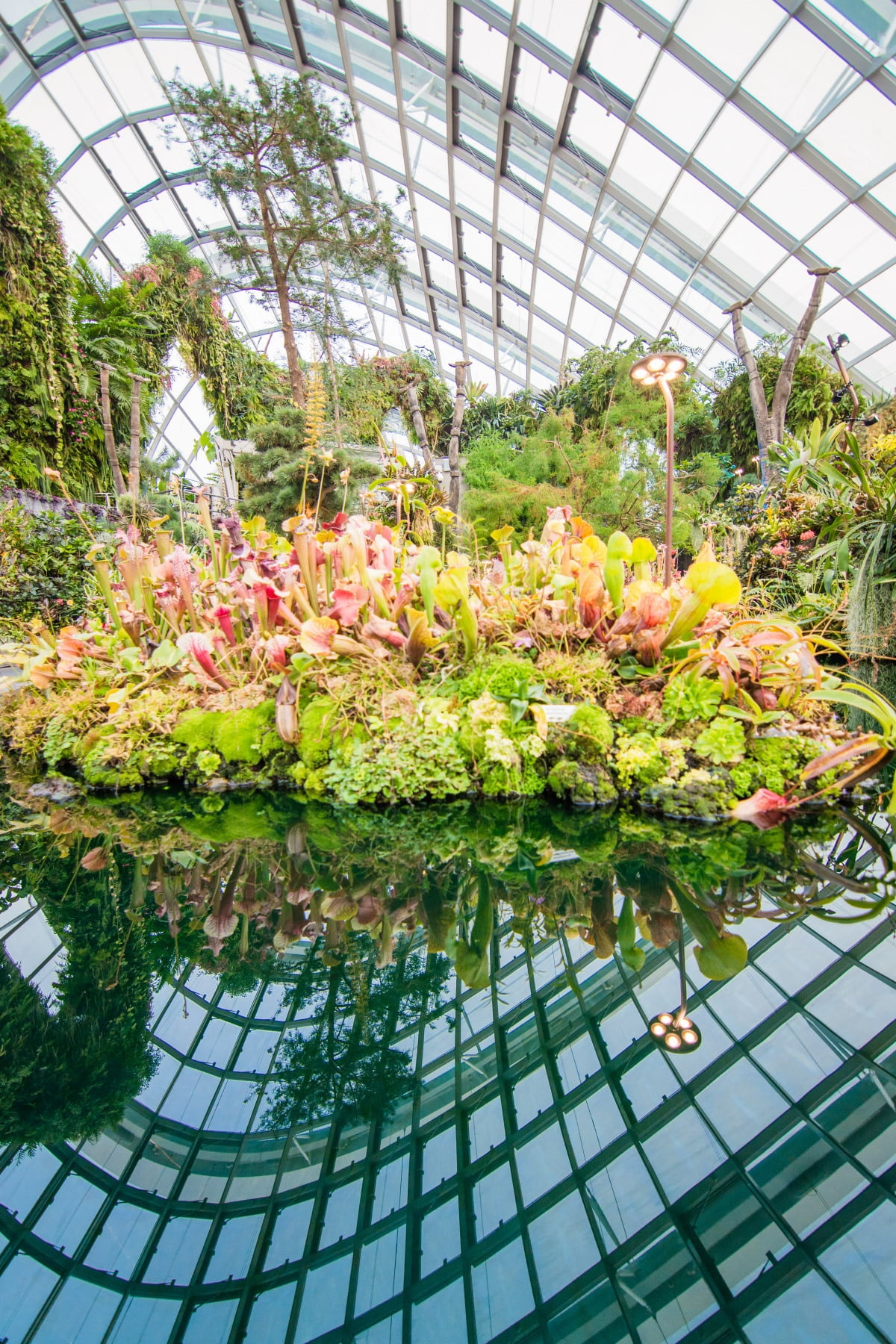
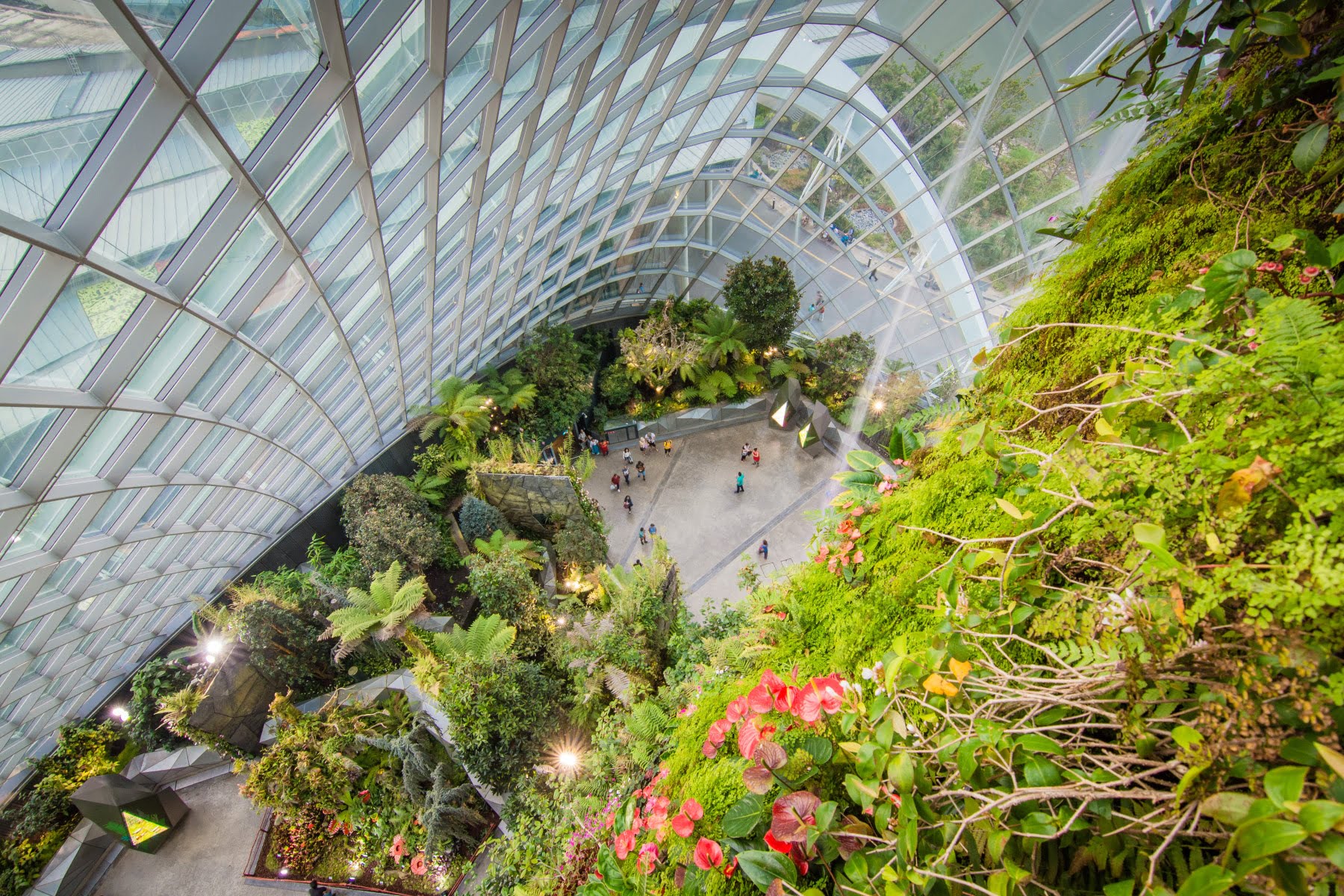
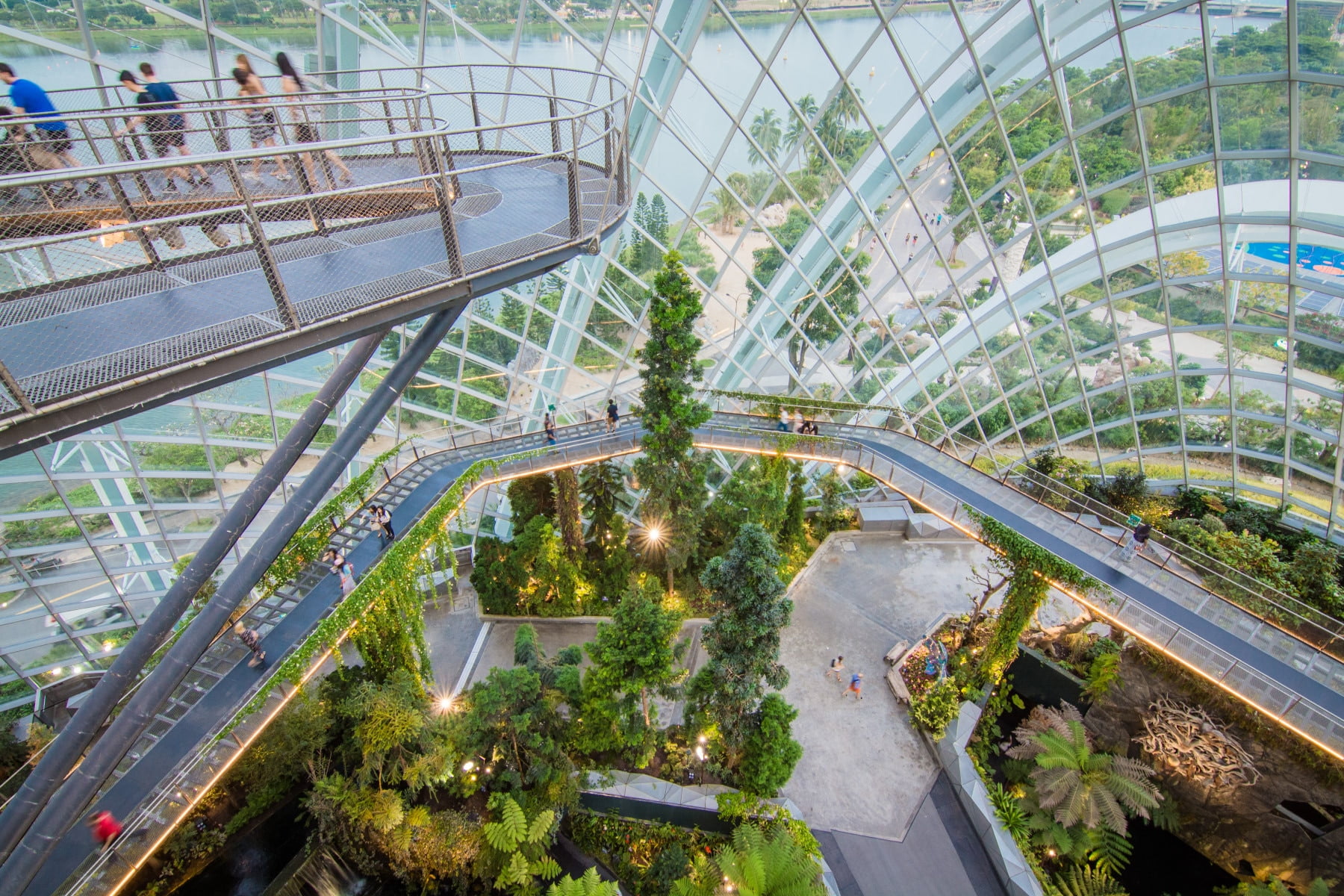
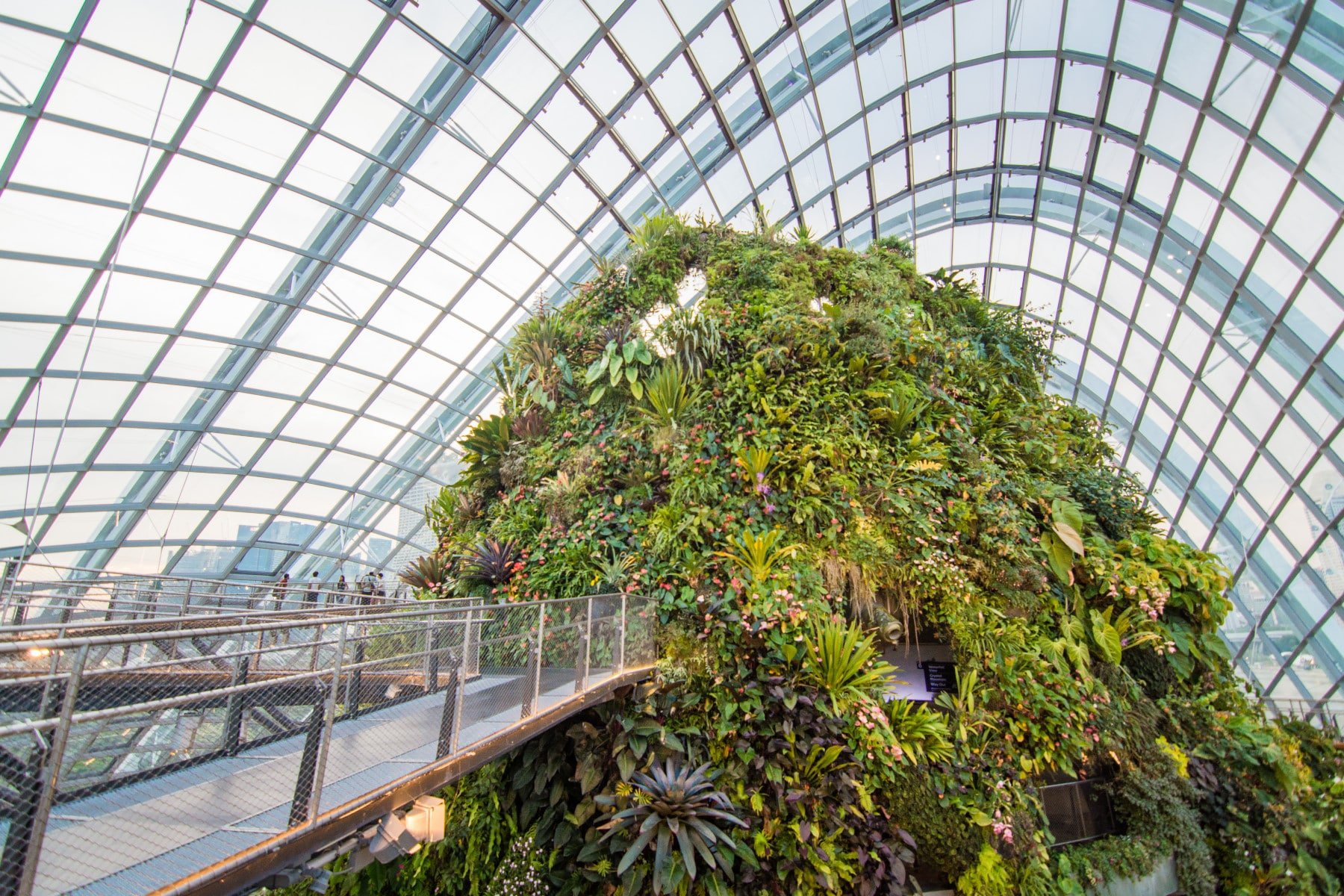
This greenhouse recreates a mountain climate and ecosystem across an area of nearly one hectare. And what better way to do this than to physically "simulate" a mountain! Indeed, upon entering the greenhouse, you are greeted by this giant mound covered with plants and vegetation that normally only grow at altitudes of 2000 meters.
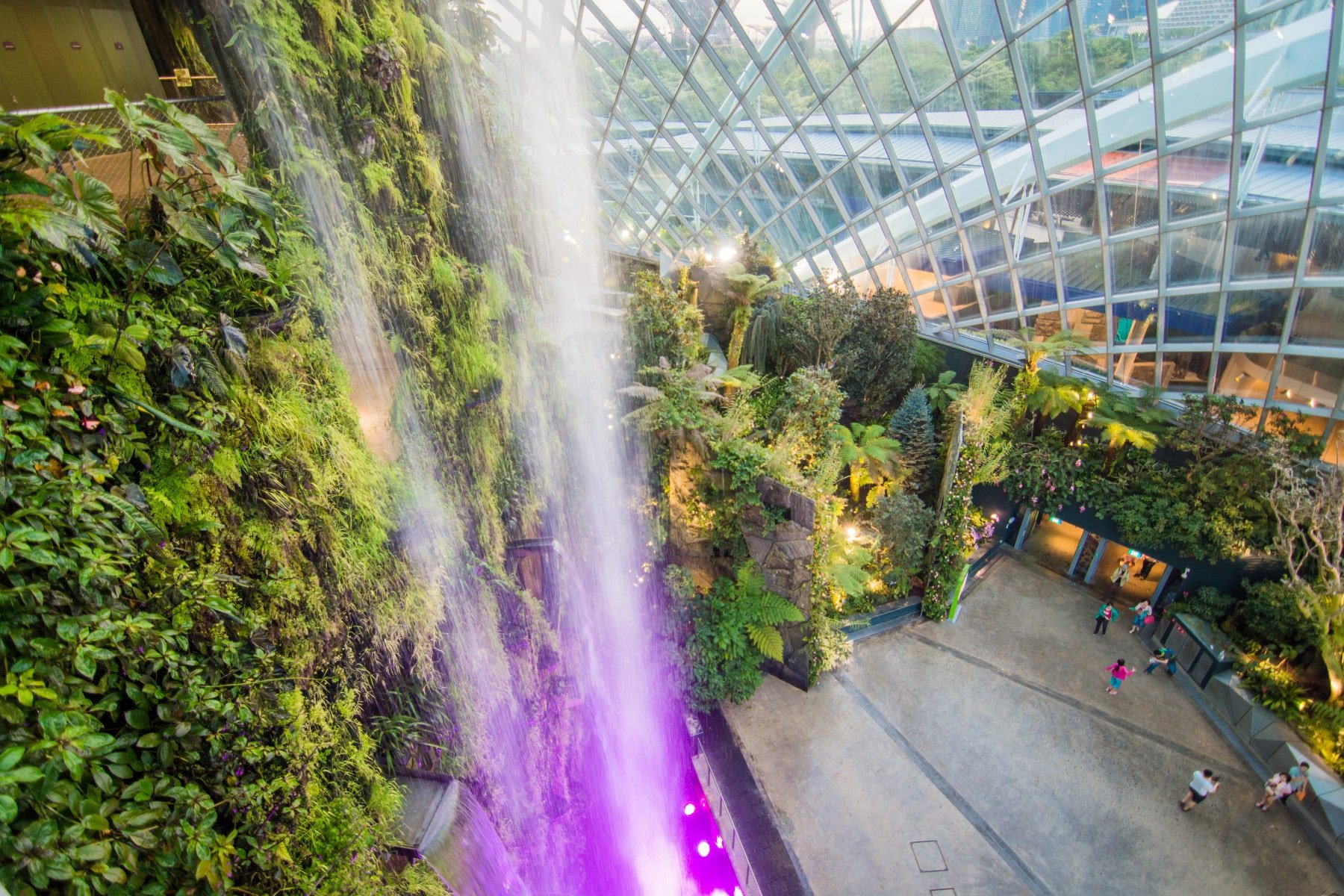
From its summit, reaching a height of 35 meters, plunges the world's highest indoor waterfall (a drop of 30 meters). That sets the scene. Even though it's all artificial, it's still a breathtaking sight. Simply being surrounded by this coolness is a welcome relief when it's typically hot outside all year round (the indoor temperature is maintained between 23°C and 25°C).
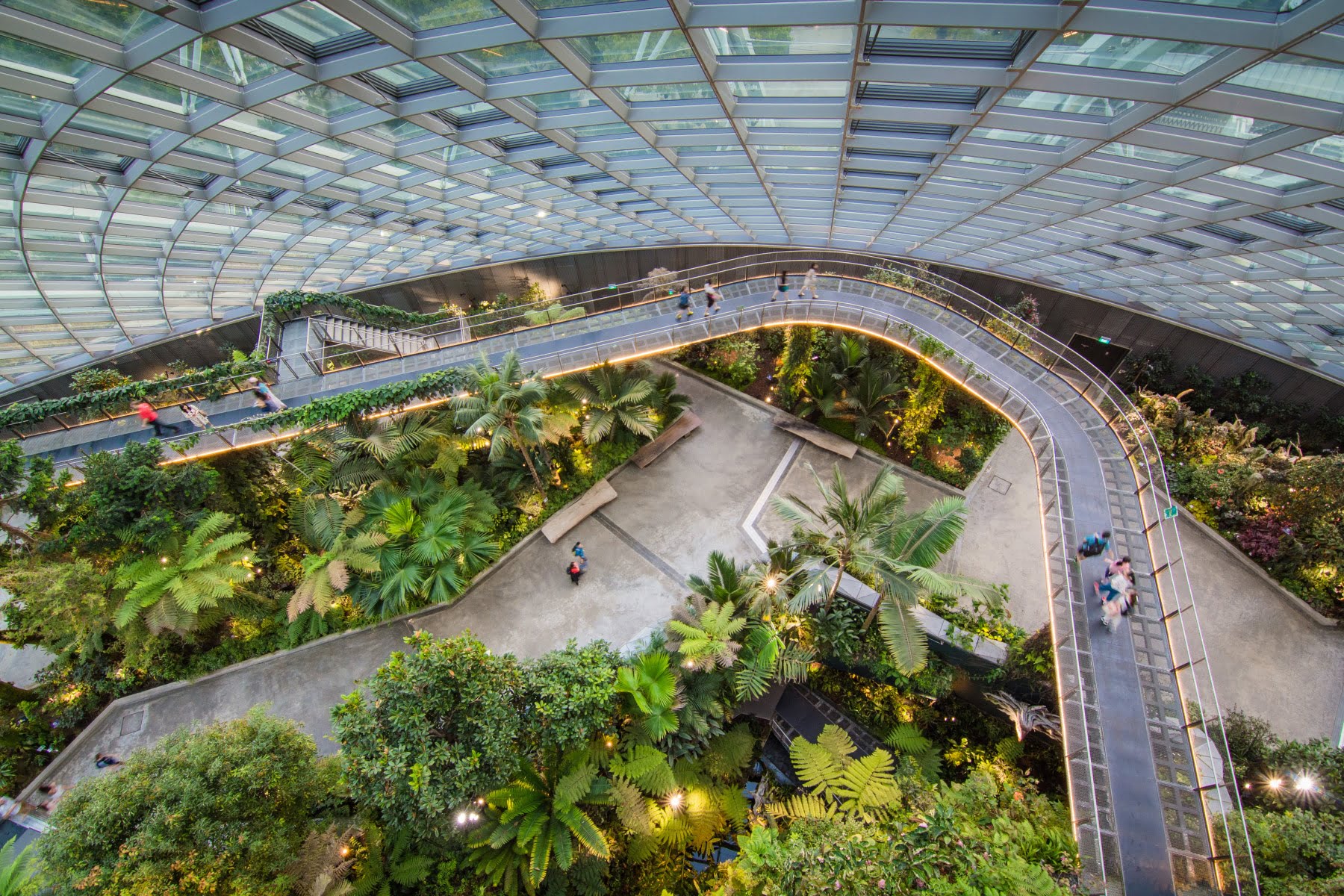
The site is divided into several zones, centered around the "mountain." The summit is accessed via an elevator, leading to the garden called "Lost World." On the levels below, there are two elevated platforms offering a bird's-eye view of the dome, the Cloud Walk above, and the Tree Top Walk below.
If you take your time, you can easily spend 45 minutes or even an hour there.
Some other suggestions
To conclude this article, I wanted to offer a few suggestions and other places to explore. This is to emphasize that Singapore is not just a city of soulless buildings, as I have partly demonstrated.
Well, I know that at first, I didn't want to go on and on so as to stay focused on what I saw there, and I tried not to add too much, but I can't help but share this bonus with you, which I won't fail to visit next time!
MacRitchie Reservoir
This is generally the most popular park for observing local flora and fauna, including monkeys, monitor lizards, and even colugos if you're lucky (a type of flying lemur). Centered around a reservoir, the largest in Singapore, MacRitchie Reservoir offers numerous hiking trails, including the Treetop Walk, a 250-meter-high suspension bridge that takes visitors above the canopy. It's also possible to enjoy the lake by renting canoes and kayaks.
Bukit Timah Nature Reserve
Bukit Timah Nature Reserve is the oldest and largest forest reserve in Singapore. It is located next to the MacRitchie Reservoir, separated only by a road. It therefore has similar wildlife, which includes no less than 40% of Singapore's species (including plants and animals).
The reserve also has many hiking trails as well as rock climbing and mountain biking, so it is ideal for those who like to get active. It is also home to the highest point in Singapore, hang on tight, it goes up to … 163 m…
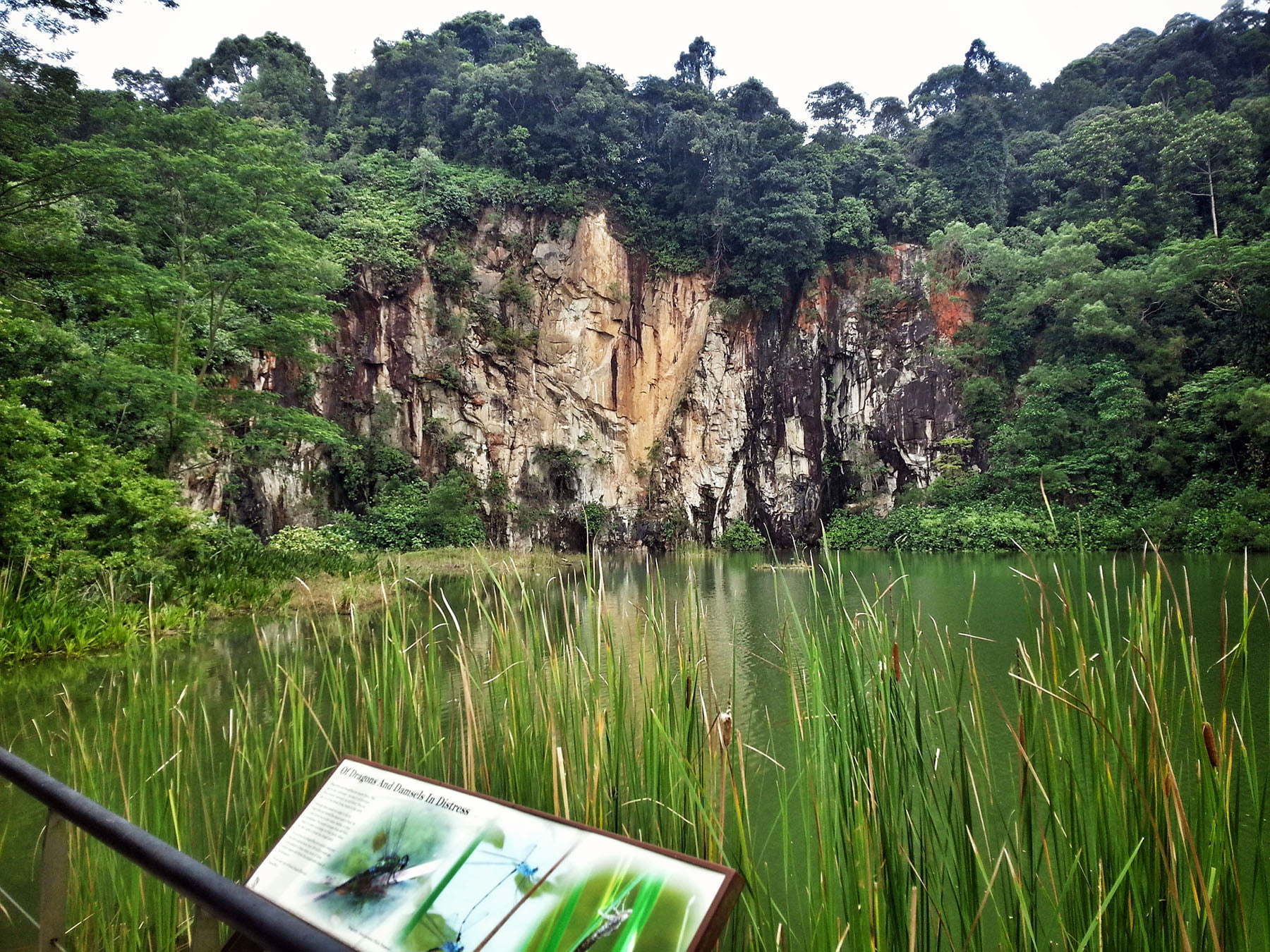
Singapore Botanic Gardens
The gardens opened in 1859, making them one of the oldest parks in Singapore. They are home to over 10 species of plants and are one of the world's best orchid breeding and research centres. They are an ode to nature and a natural haven just a stone's throw from the department stores of Orchard Road.
These qualities have been recognized, as the site was also listed as a UNESCO World Heritage Site in 2015.
The botanical gardens are open from 5am to midnight every day and entry to the park is free so there's no reason to deprive yourself.

Sungei buloh wetland reserve
I will end by mentioning the "wetland", meaning a wetland area of Singapore. It is located in the far north on the edge of the Strait of Johor, separating Singapore from neighboring Malaysia.
It's an area covered in mangroves with paths laid out for walking around them. You can even see the towers rising on the other side in Malaysia from Eagle Point, which overlooks the sea. There, you might spot horseshoe crabs and gobies (also called "mud skippers" in English), fish that walk and move on the surface of the muddy water (mud means "mud").
Did you like this article? Share it on Pinterest!

