


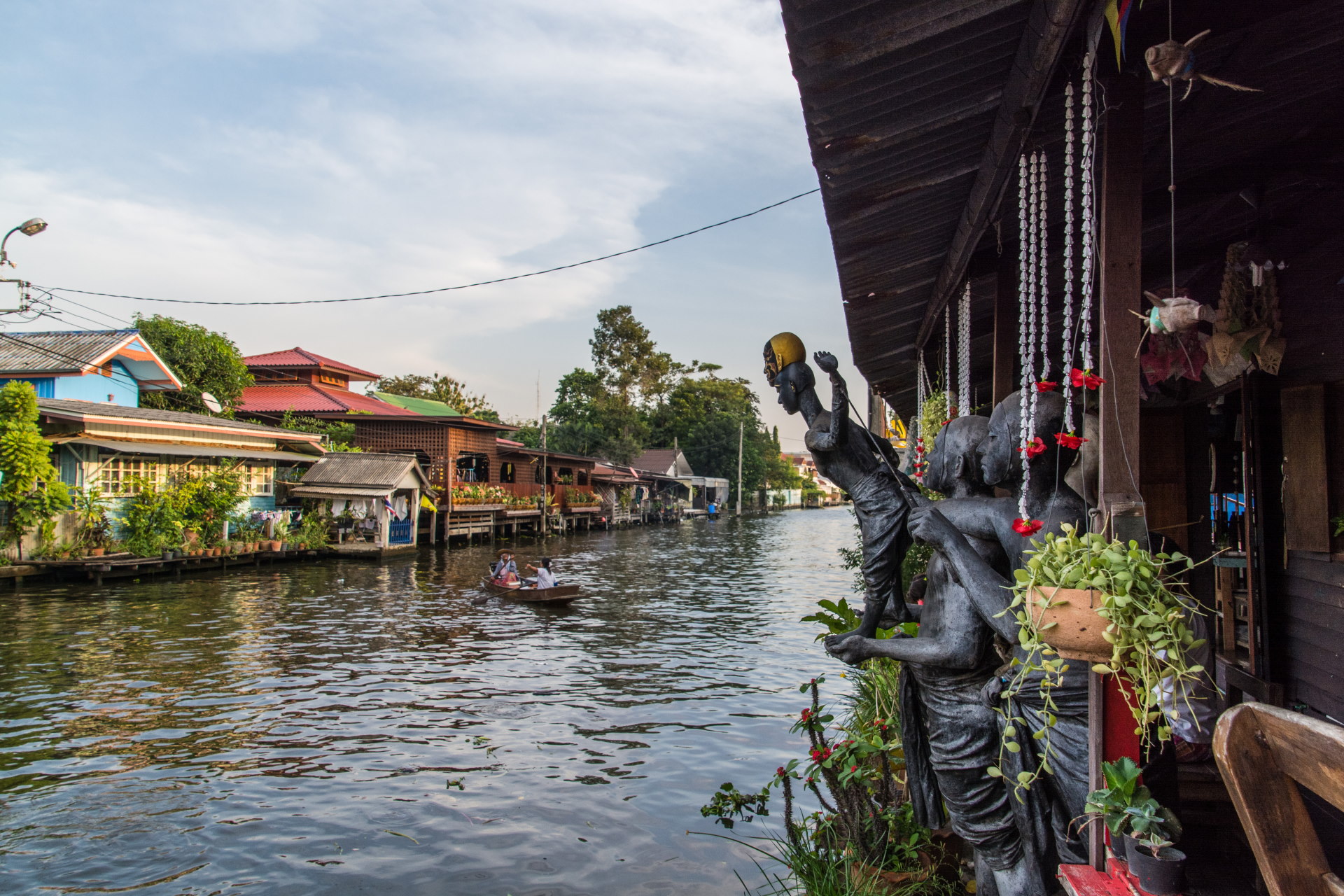
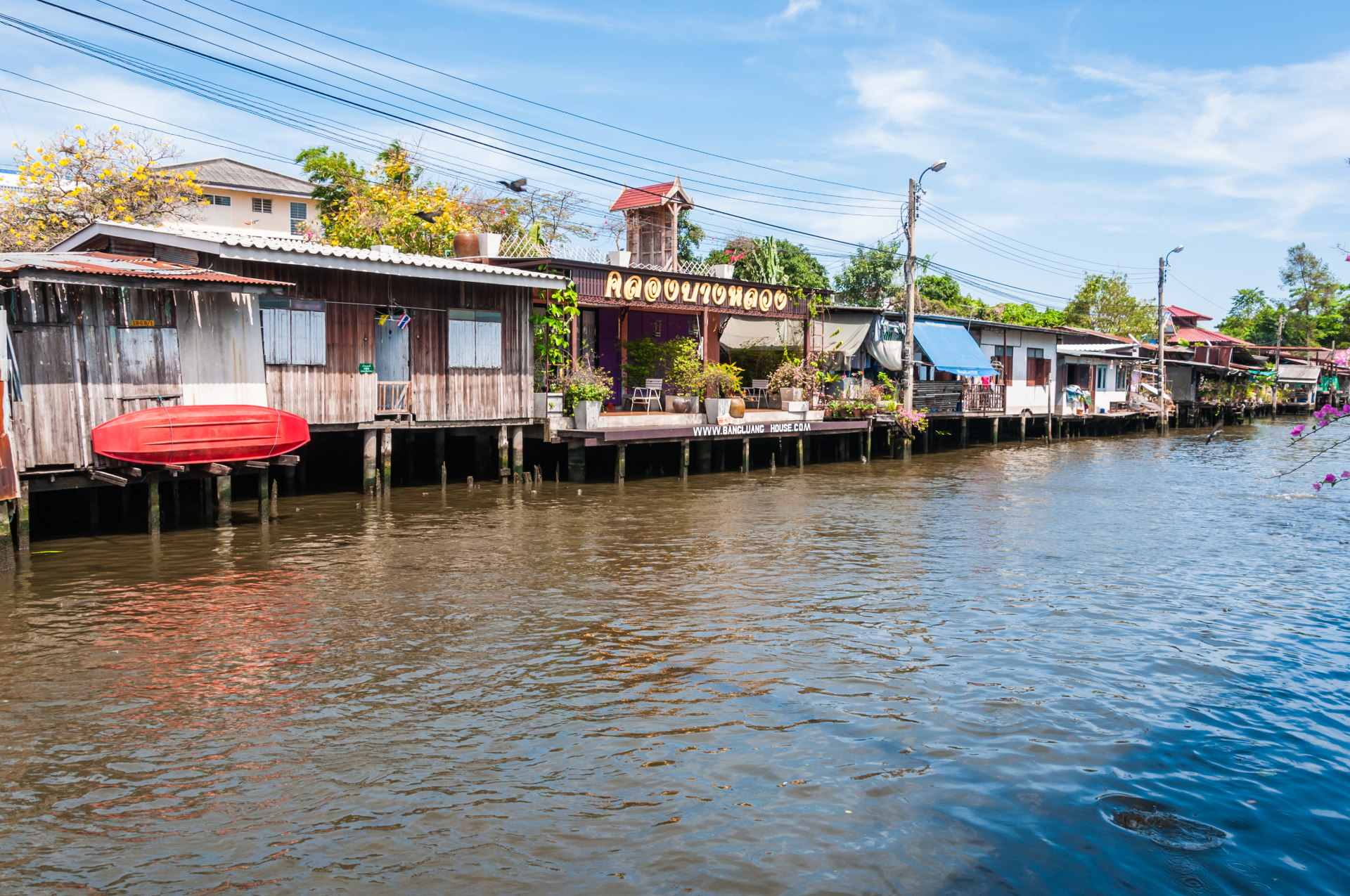
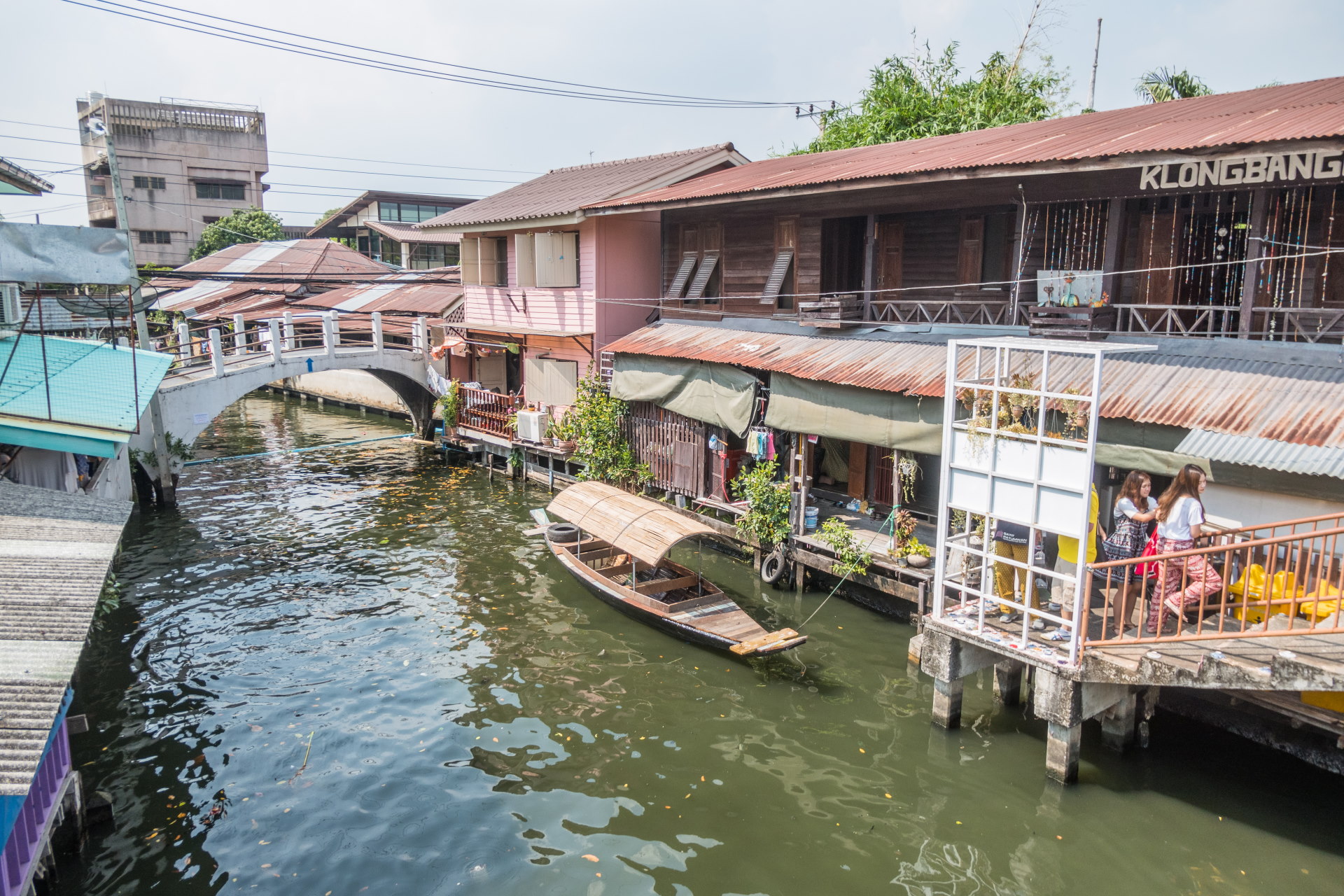
The Artist's House or Baan Silapin, as it is called in Thai, is an old wooden house located on the edge of the Bangkok Yai canal, in the heart of the Khlong Bang Luang community, in the Thonburi district.
Having become a café, gallery and a place dedicated to crafts, it offers above all a good opportunity to discover another side of Bangkok, far from the main avenues of the center.
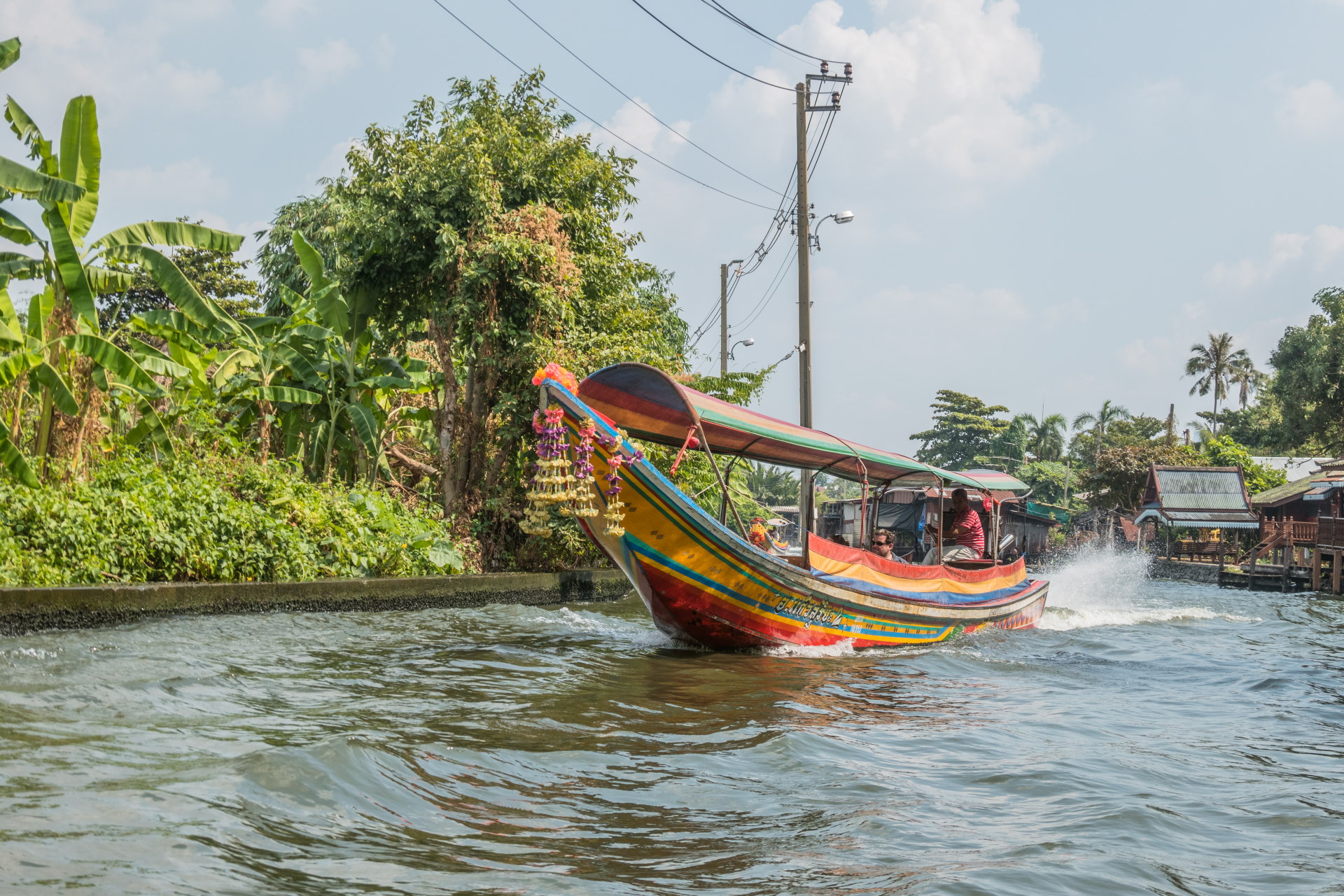
It's now quite easy to get there by metro via the MRT, but arriving by longtail boat still retains a special charm. However, you shouldn't just pass by, as many tours do: Baan Silapin deserves a stop, if only to walk along the walkways bordering the canal and explore the surrounding neighborhood.
Khlong Bang Luang, a vestige of the "Venice of the East"
It's sometimes forgotten, but Bangkok was long known as the "Venice of the East ." Its numerous canals served both for personal travel and the transport of goods, structuring a large part of daily life. With the city's development and the rise of the automobile, many canals were filled in to make way for roads and other infrastructure, gradually abandoning this way of life on the water.
Today, while a vast network still exists, many khlongs have unfortunately become unnavigable, due in particular to bridges that are too low or the concrete lining of their banks. The few canals still used for public transport on the east side of Bangkok, such as the Saen Saep, are rather exceptional. In recent years, however, the city has made considerable efforts to clean and rehabilitate part of the network.

It is mainly on the right bank, specifically in Thonburi , that the bulk of the still-navigable network remains. Private boat trips offer the opportunity to observe traditional stilt houses alongside more luxurious homes and the numerous temples lining the canals.
It is also an original way to reach several floating markets, such as Taling Chan or Lat Mayom (open only on weekends).
The Bangkok Yai canal, which passes in front of Baan Silapin, has its own unique history as it corresponds to part of the old course of the Chao Phraya.
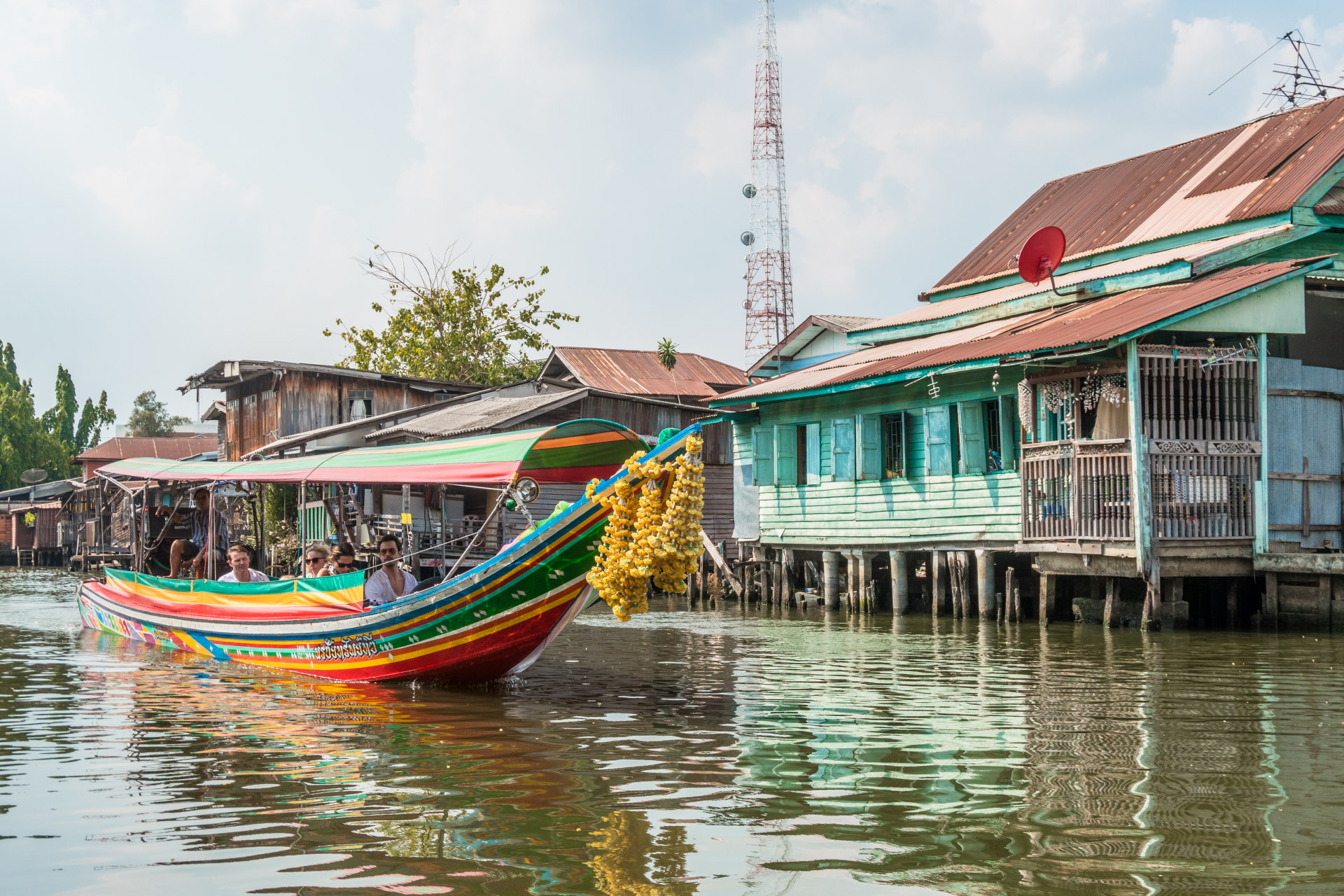
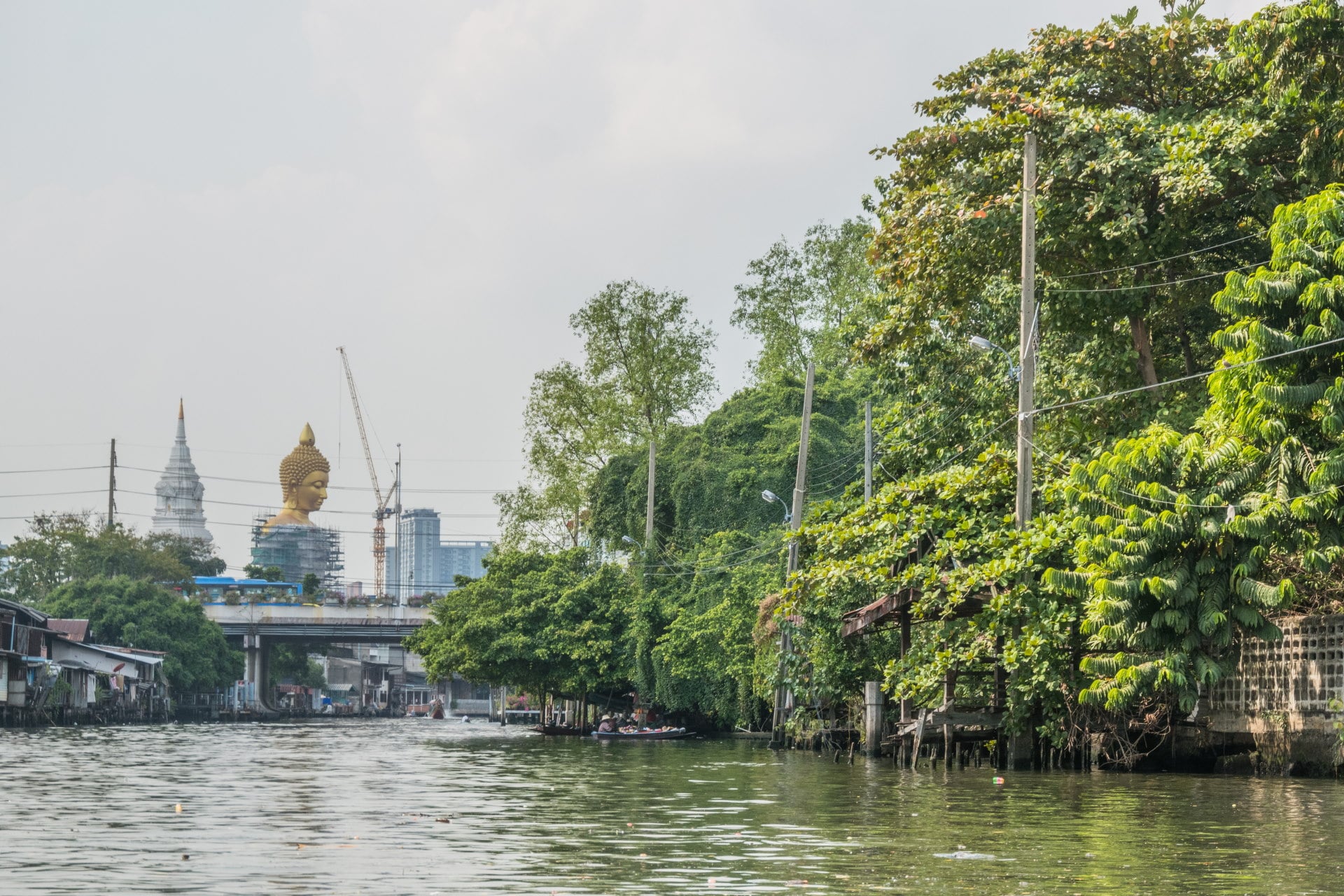
In the 16th century, a canal was dug to avoid the wide loop that the river then formed. Under the influence of the current, this shortcut gradually widened until it became the main channel that the Chao Phraya follows today in front of the Grand Palace and Wat Pho, while the old course became the Bangkok Noi and Bangkok Yai canals.
It was on the banks of this river that the Khlong Bang Luang community developed. With its wooden house, walkways and terrace overlooking the water, The Artist's House is today one of the most accessible examples of this heritage.
Baan Silapin: the artists' house
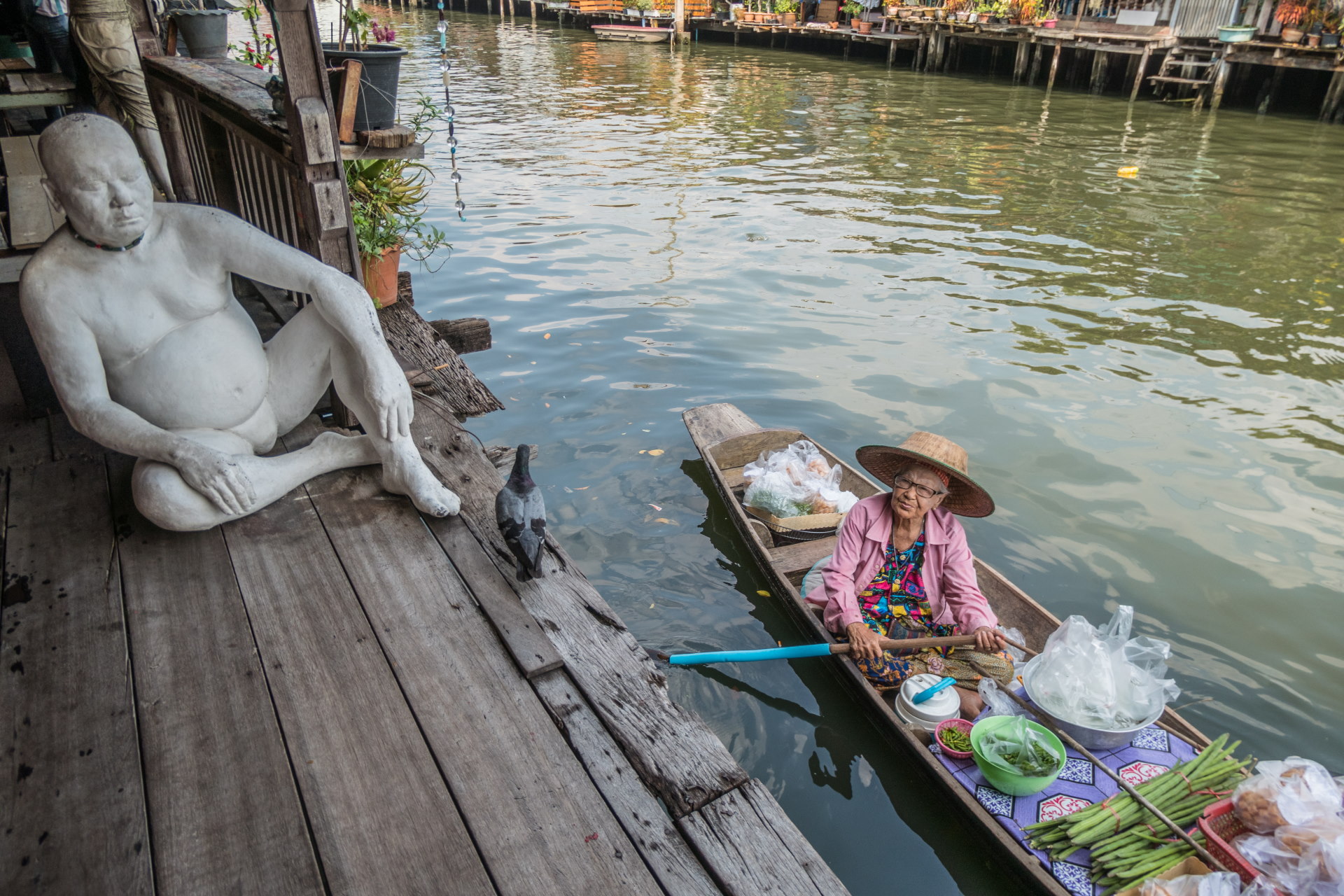
From the canal, Baan Silapin remains easily recognizable by its wooden terrace, but also by the colorful life-size statues sometimes installed at the water's edge.
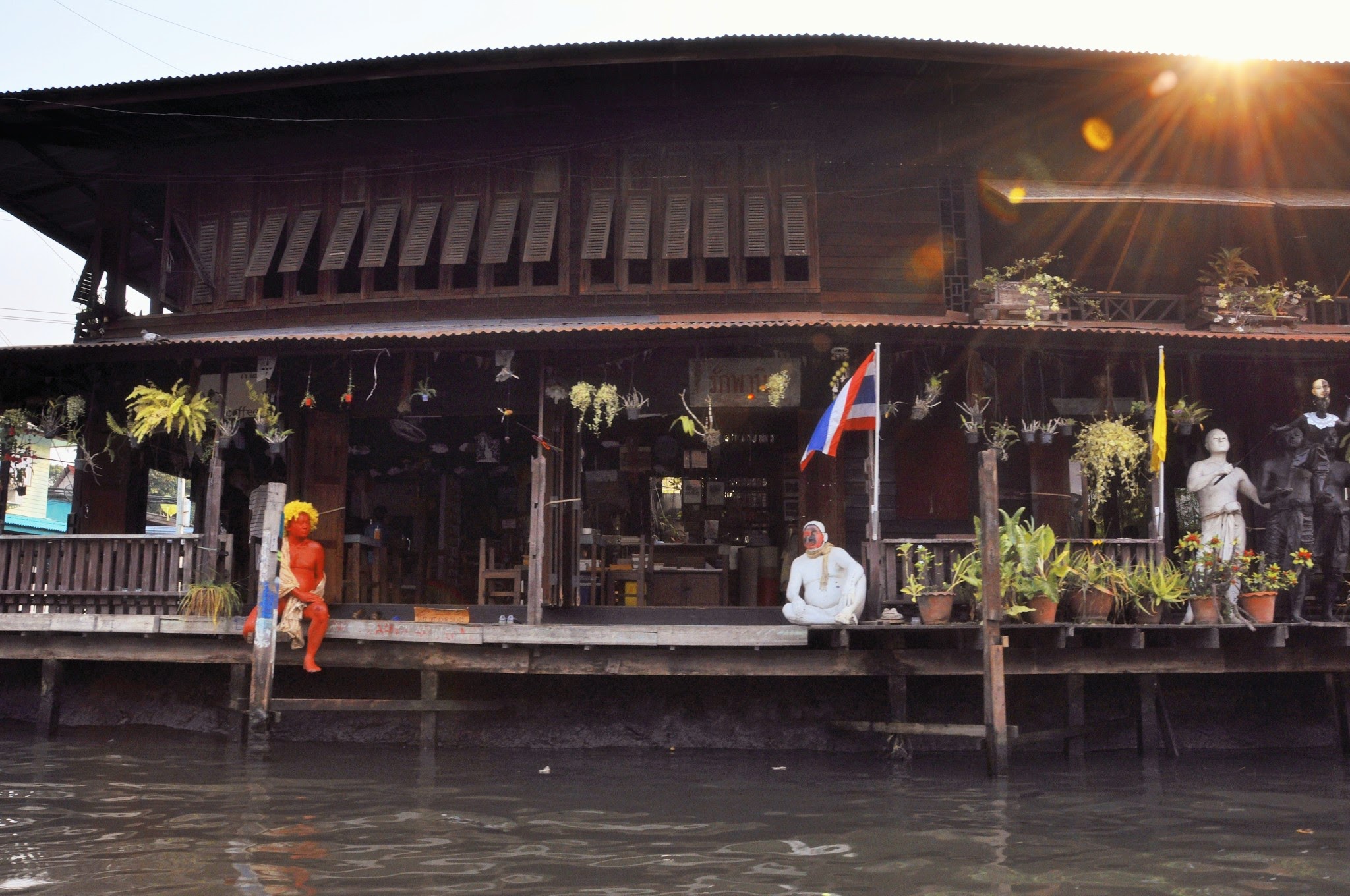
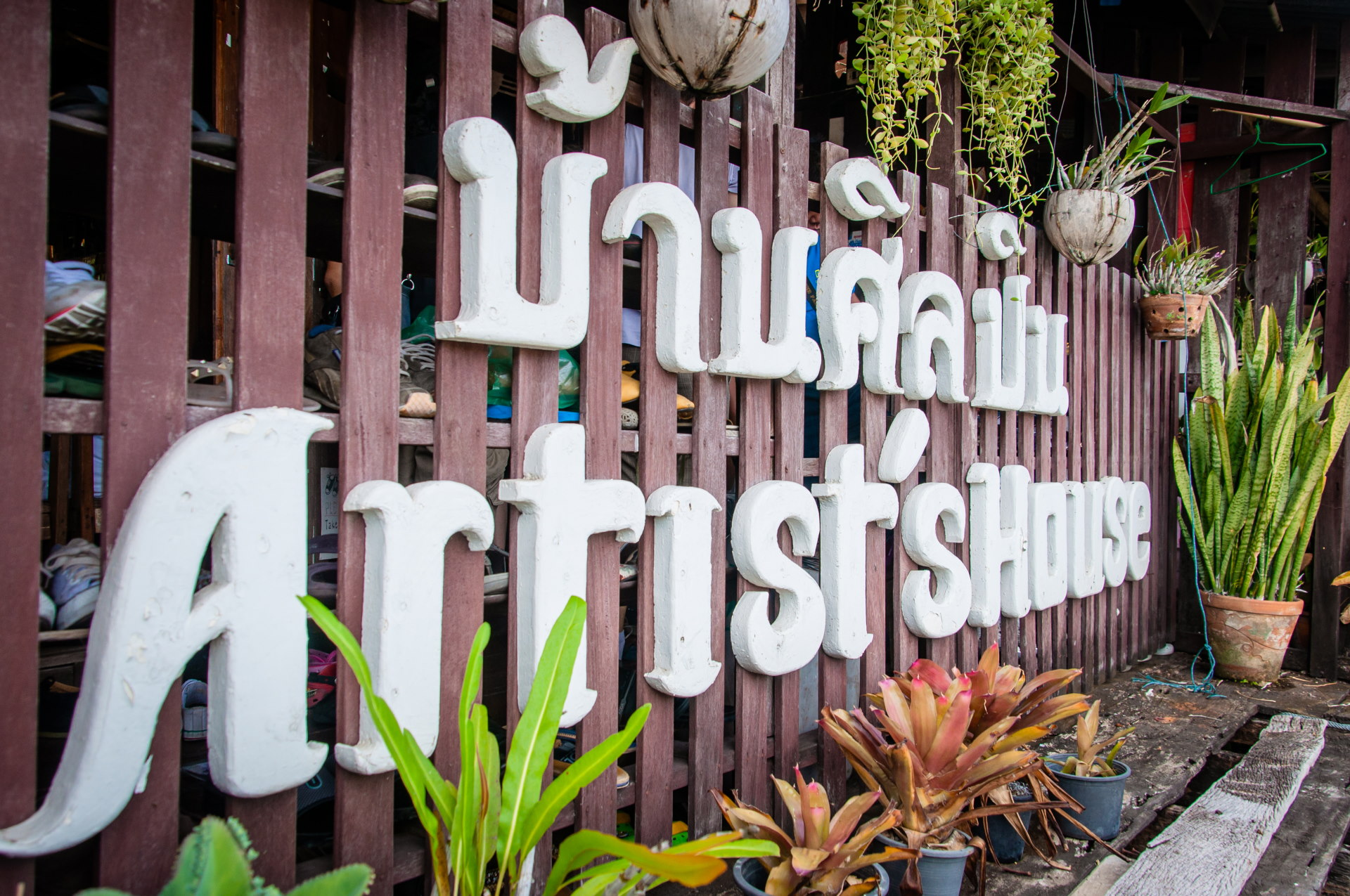
Before becoming the artists' home we know today, this wooden house built in a style known as "Manila" belonged to the Raksamruat family, a line of goldsmiths.
Already over a century old, this two-story house built according to an L-shaped plan was sold to Chumpol Akkapantanon, a local artist who restored it before transforming it into a gallery and opening it to the public under the name Baan Silapin.
The house also has the unique feature of having been built around an old chedi, which likely once marked the boundary of the neighboring Wat Kamphaeng Bang Chak. Still visible in the center of the building, it serves as a reminder that the site has a history that predates its transformation into an art space.
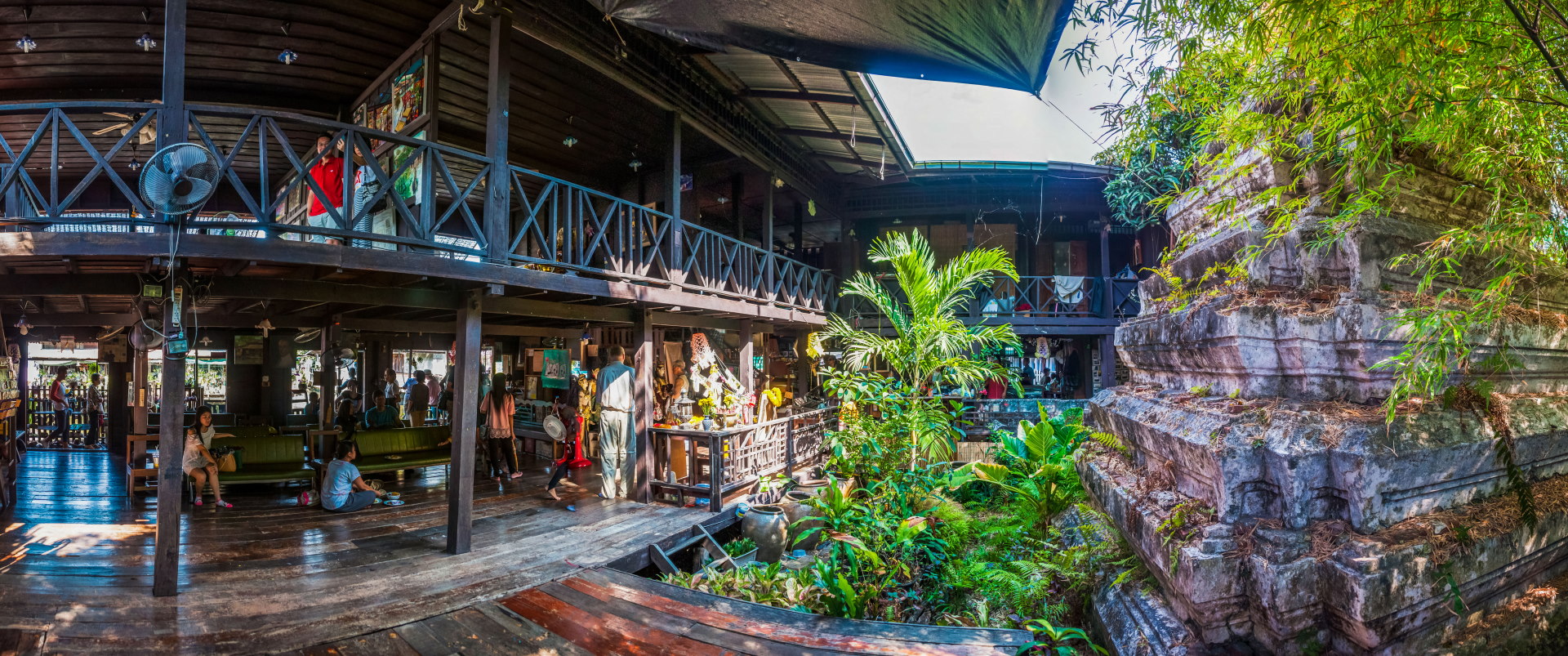
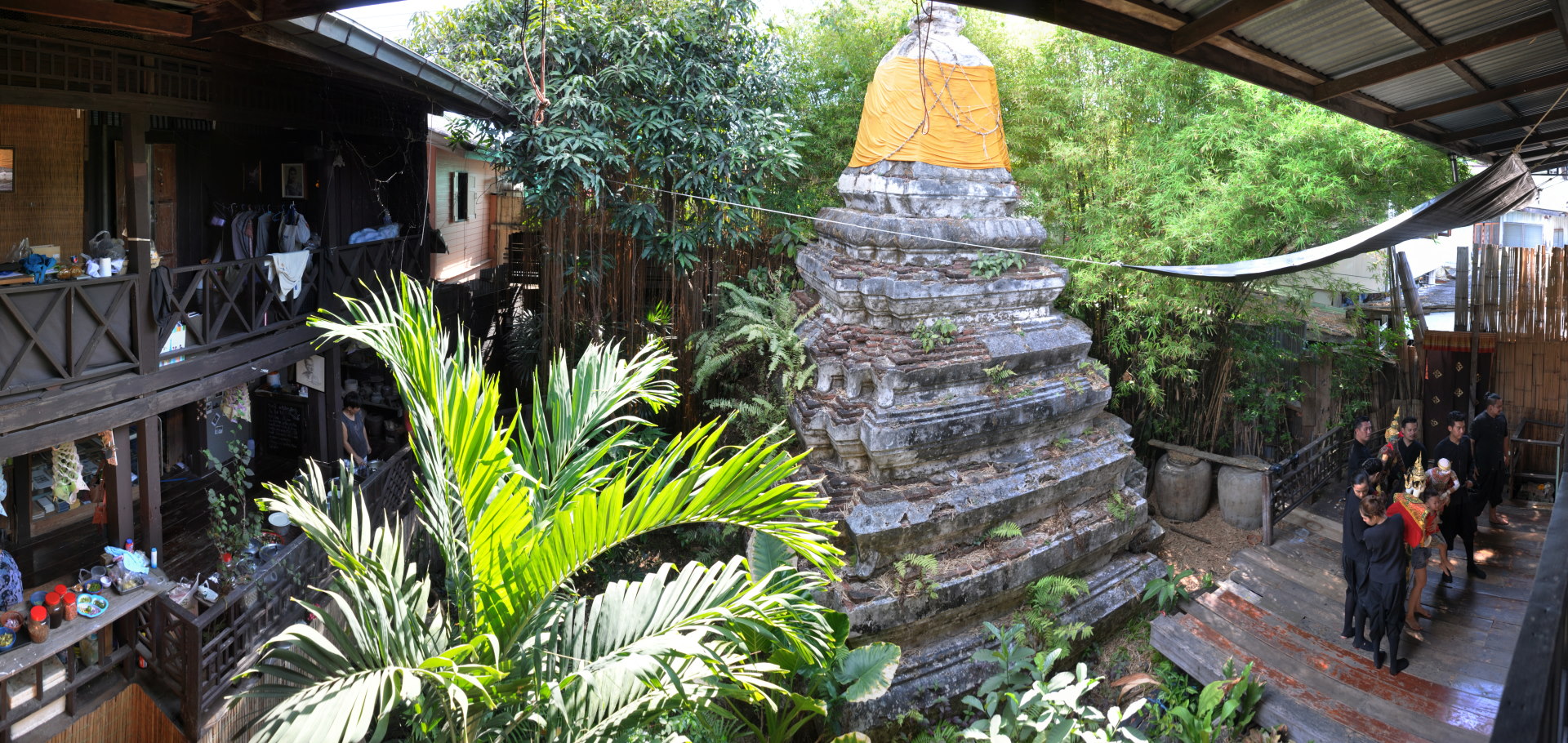
Art, puppets, a café
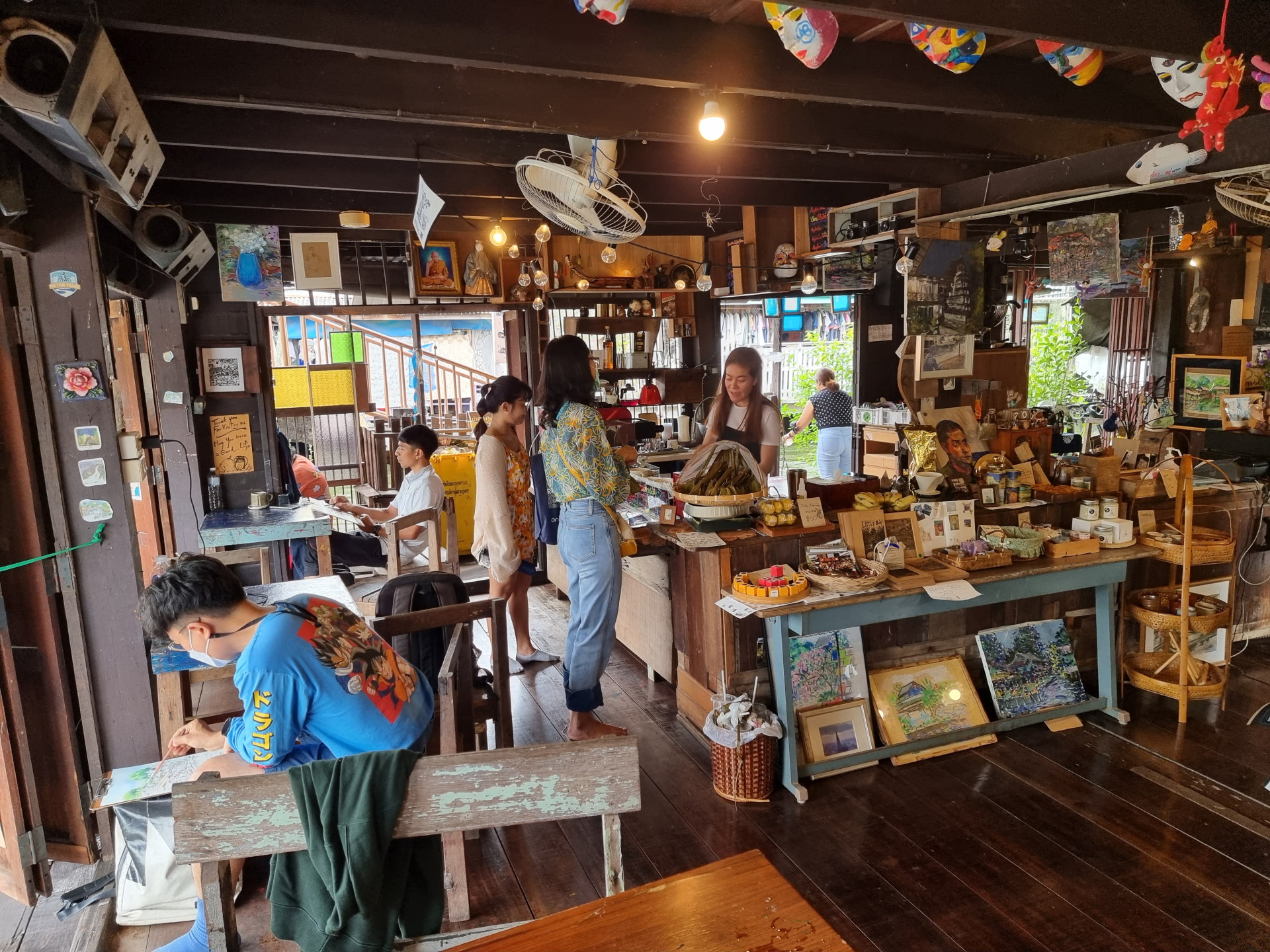
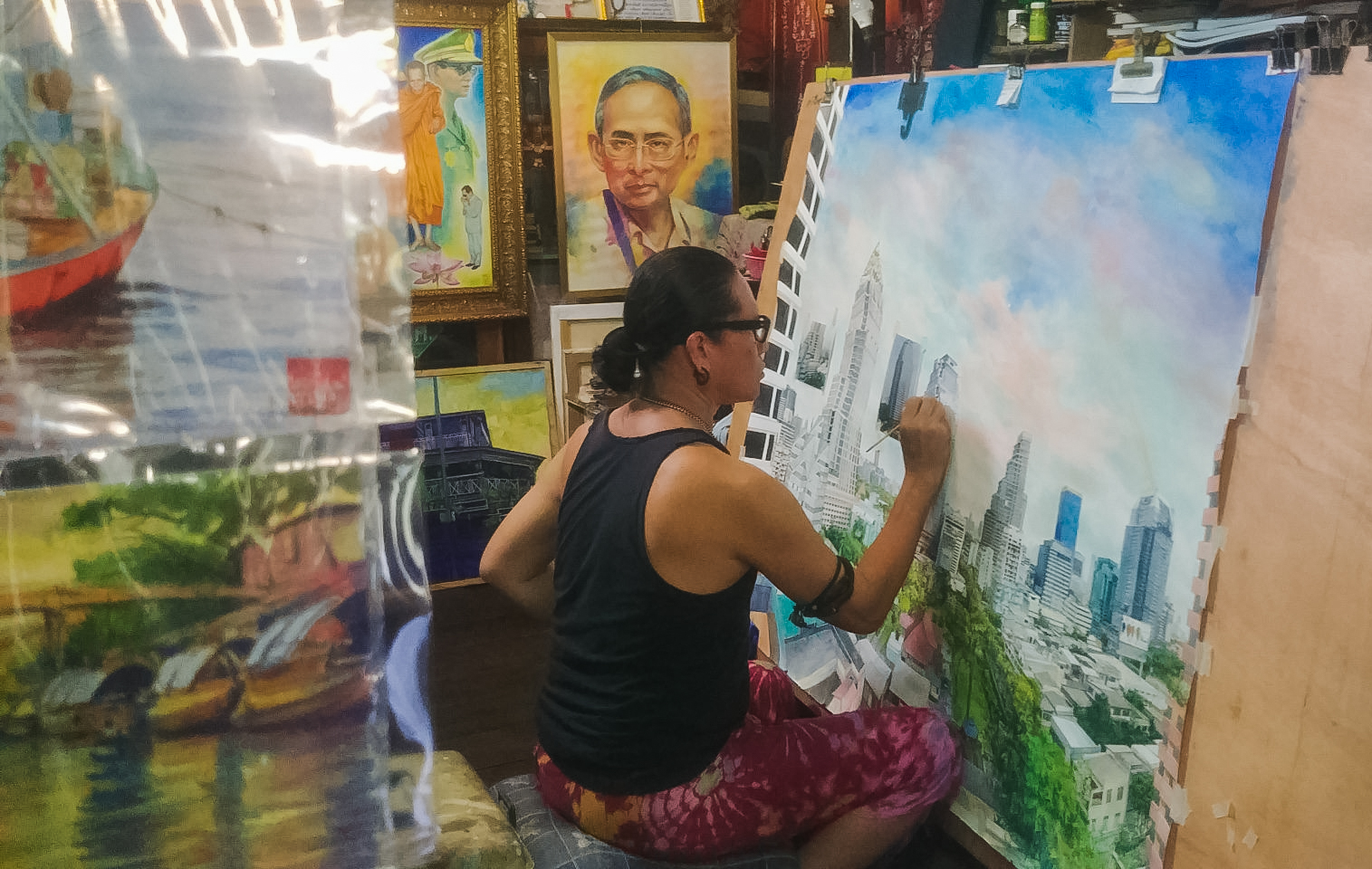
The place has changed since my first visit, but it remains firmly focused on art and creative activities. The gallery upstairs houses paintings and various other works, including those by the artist who bought the house. Most of the works on display here are also for sale.
Workshops can also be organised, especially on weekends, focusing on drawing, painting, bracelet making or papier-mâché.
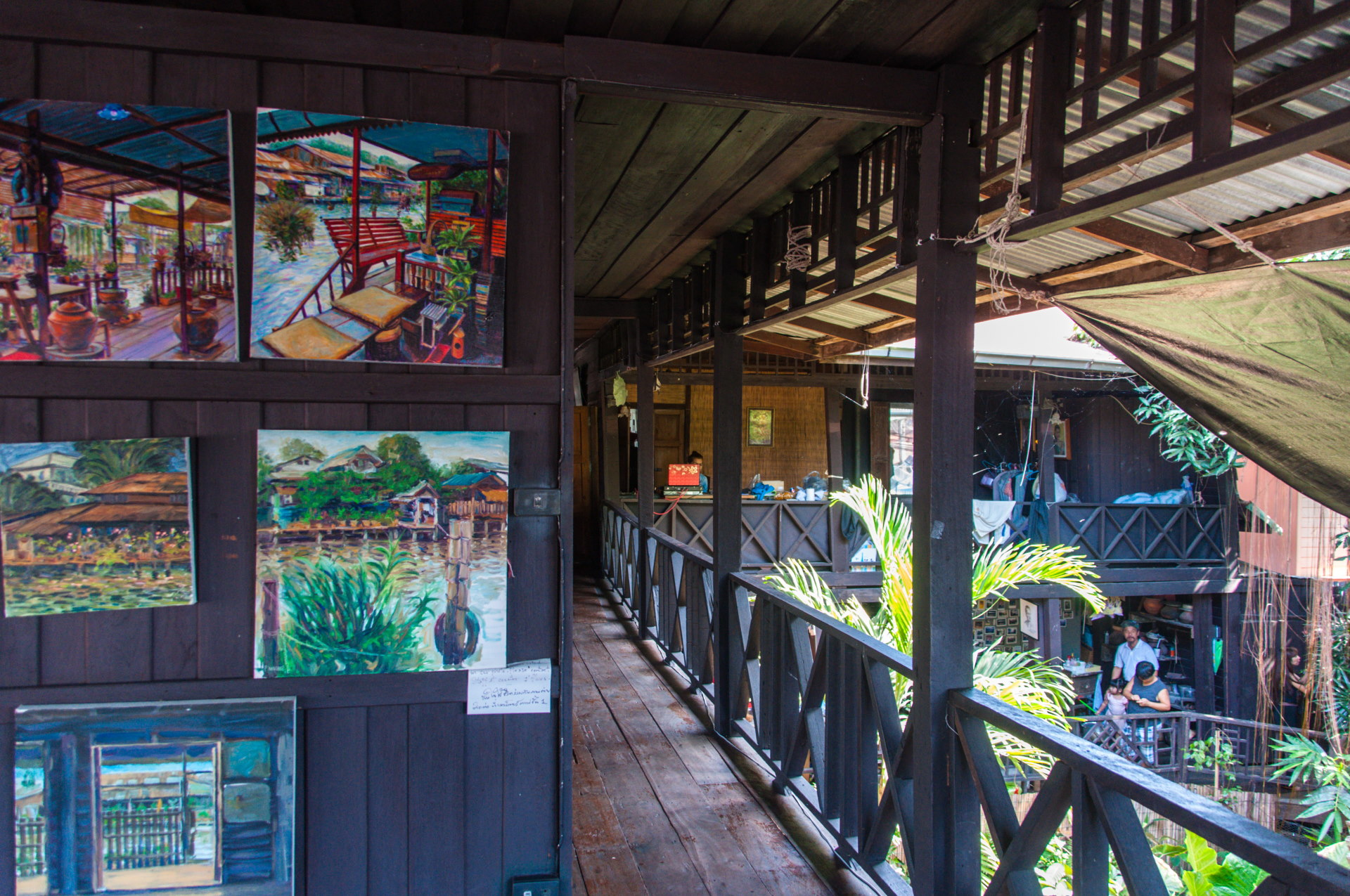
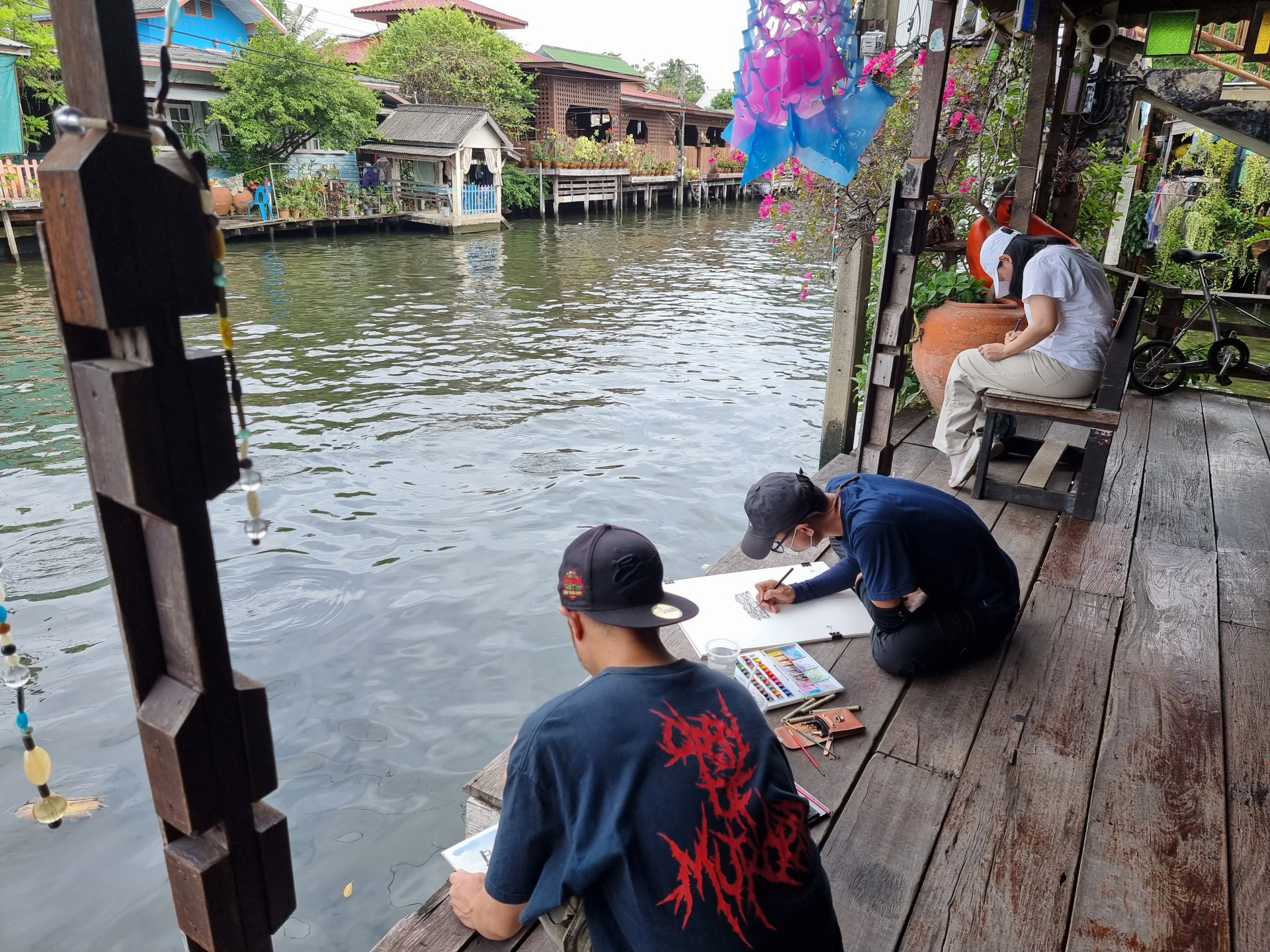
Among the various art forms associated with Baan Silapin, traditional puppetry has long held a central place. When I first knew this place, the show was even one of Baan Silapin's must-see events, scheduled almost every day at 14 p.m., except for Wednesdays.
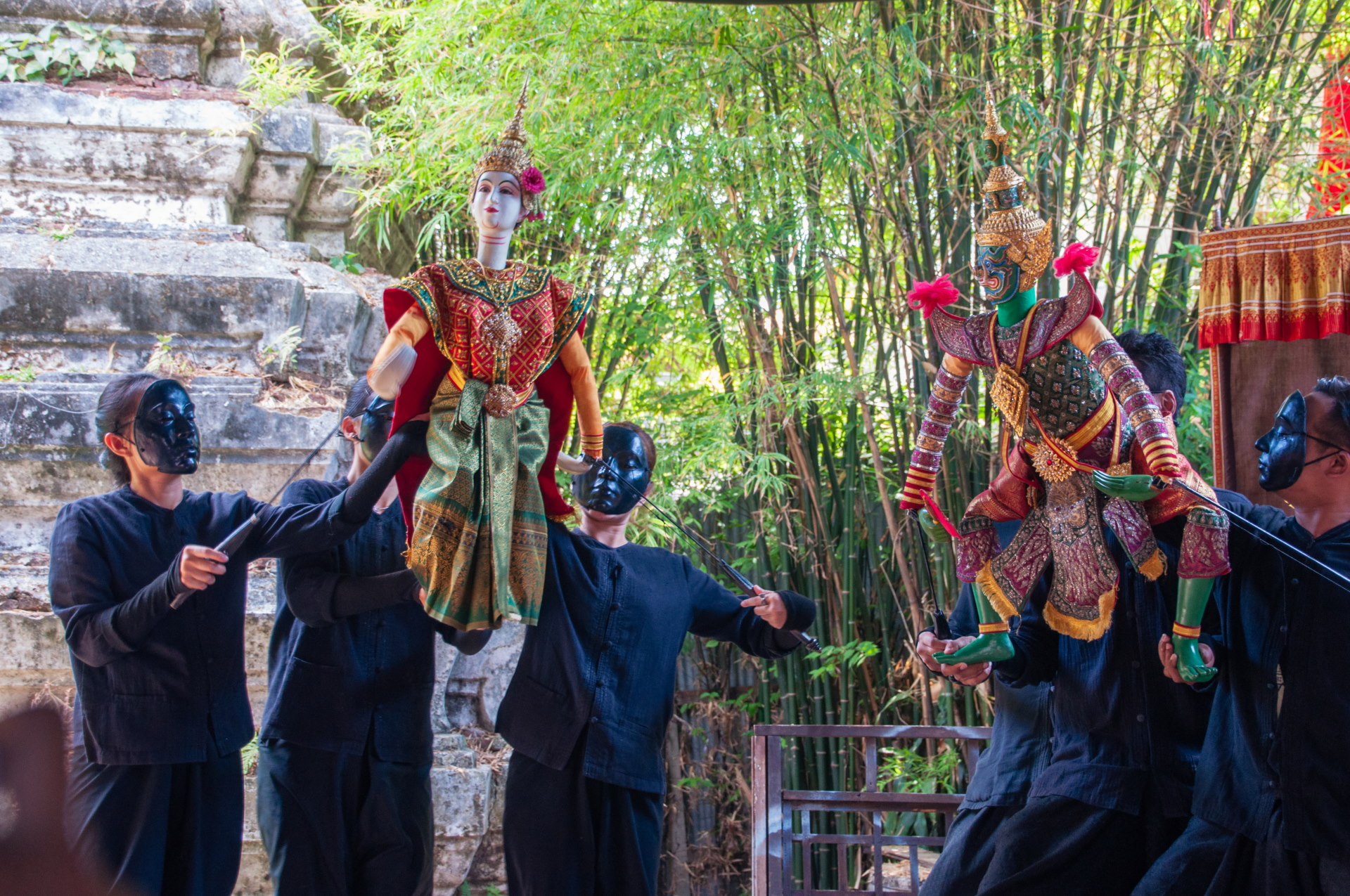
One could attend a free performance given by the experienced puppeteers of the Kham Nai troupe, made up of artists specializing in hun lakhon lek.
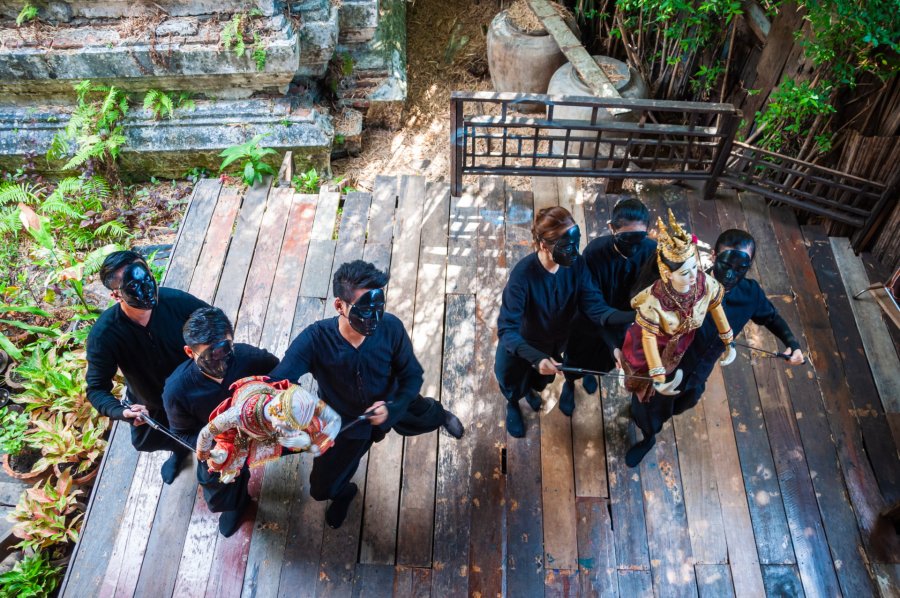
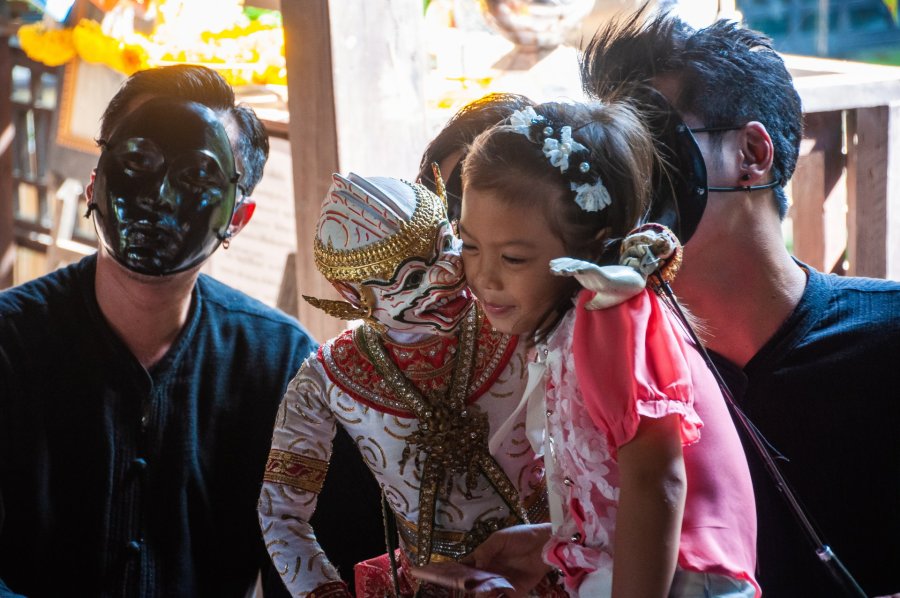
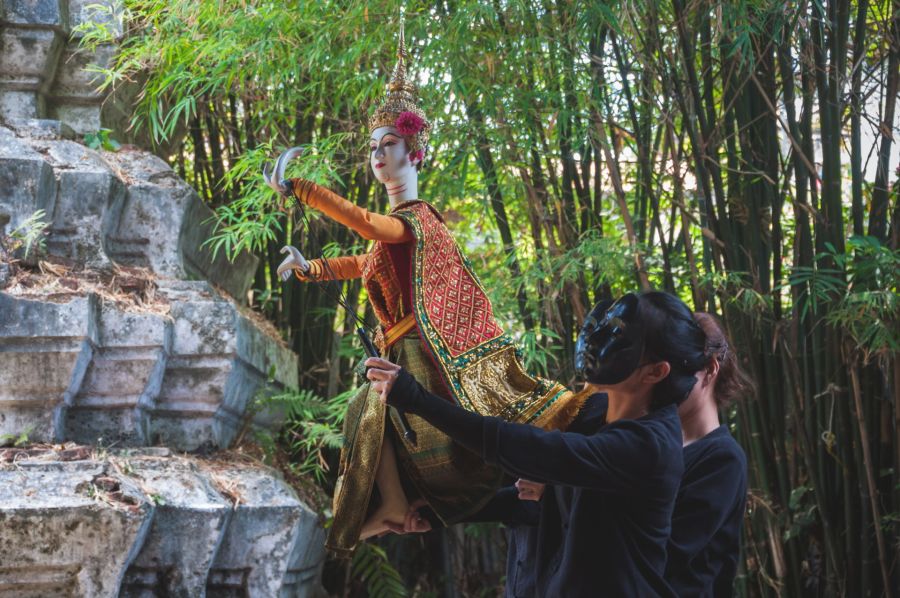
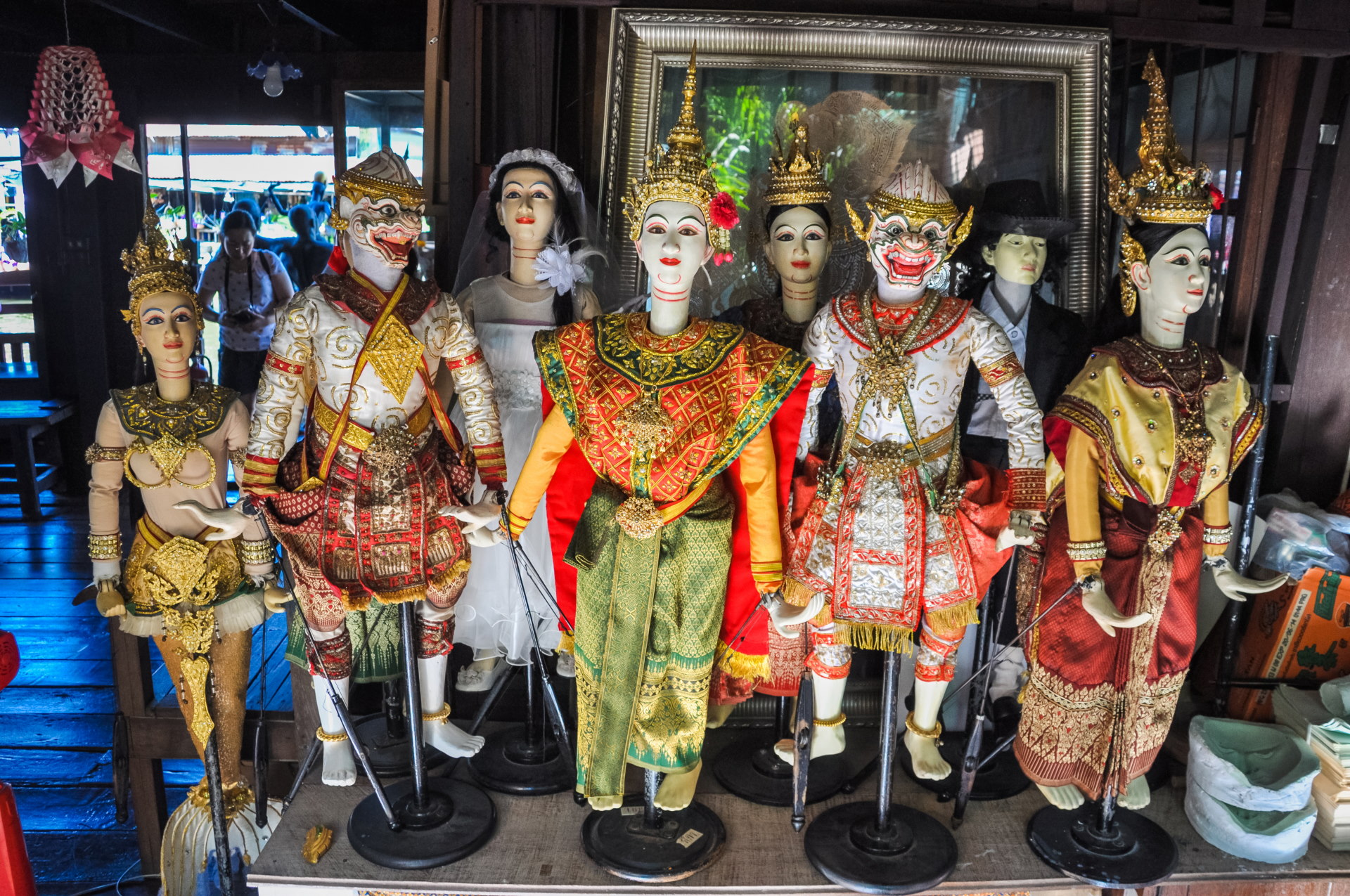
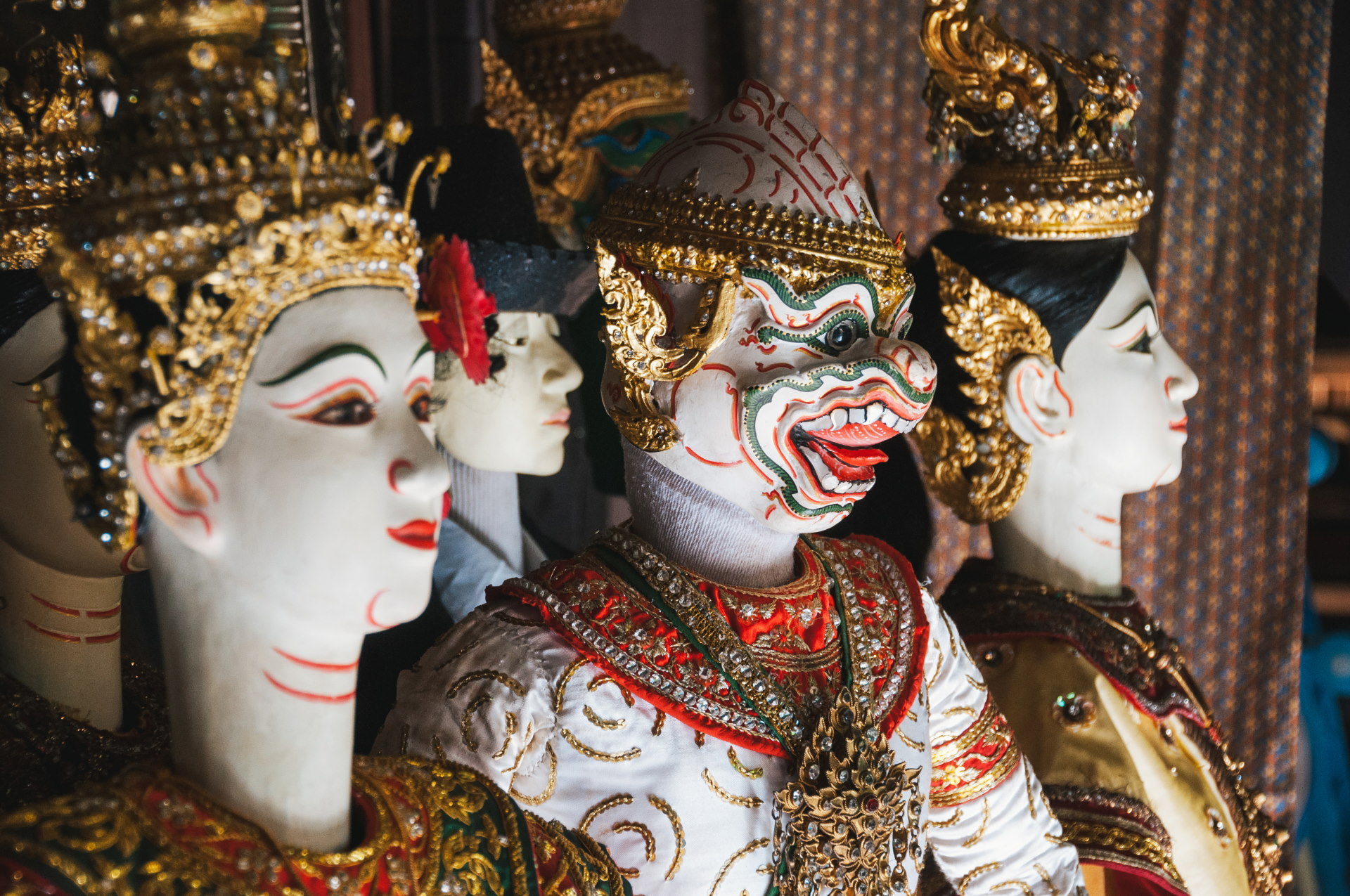
The puppets notably depict characters from the Ramakien, the Thai national epic derived from the Indian Ramayana. In short, it's a story of princes, princesses, demons, and the monkey king Hanuman, episodes of which can also be seen in the paintings of the cloister surrounding Wat Phra Kaew at the Grand Palace.
Each puppet is manipulated by three people, three men or three women depending on the character being portrayed. One person controls the head and left arm, another the right arm, and the third the legs. There is something particularly graceful about their synchronized movements, giving the impression that they become one body, bringing the puppet to life.
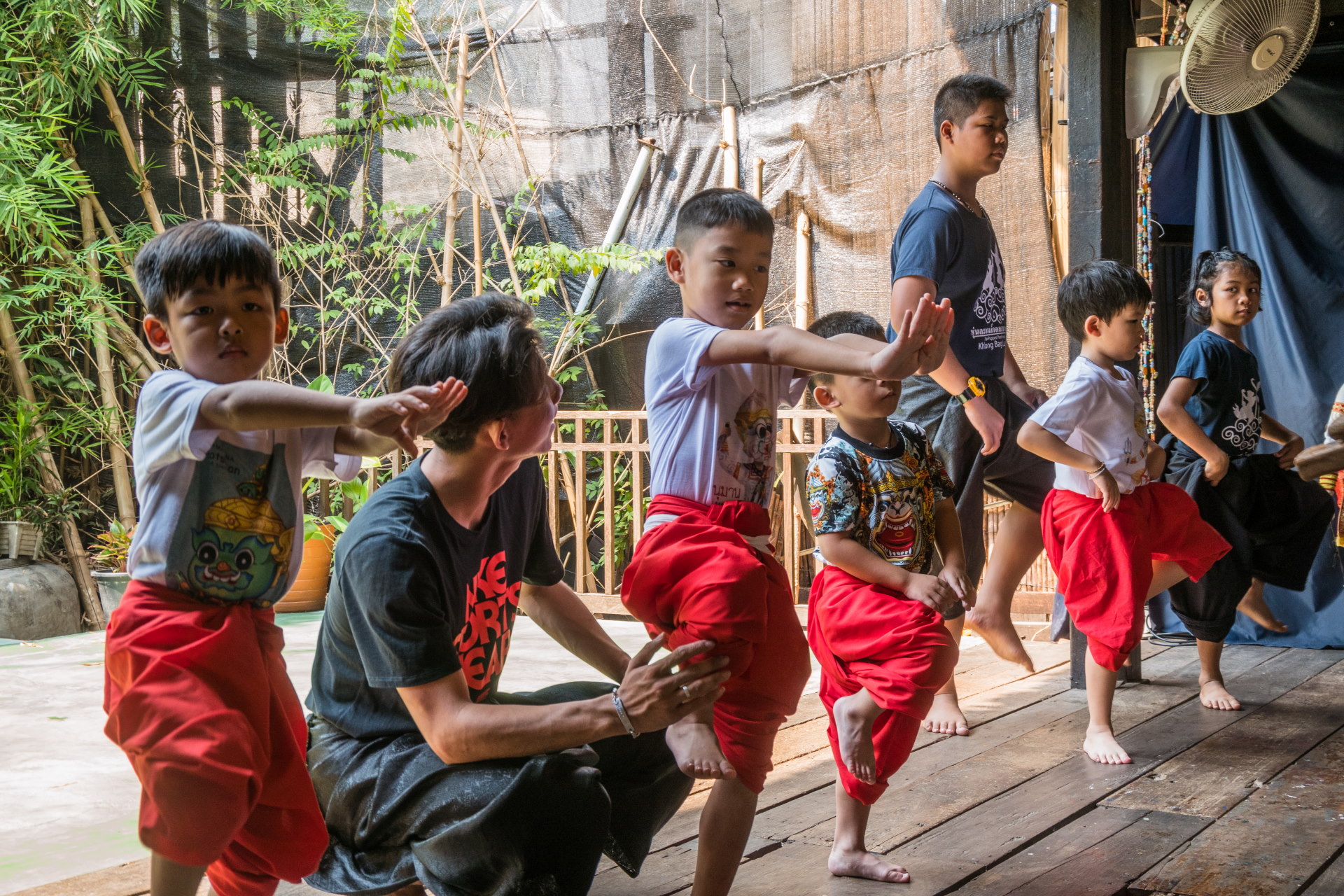
After Covid, this regular format disappeared. However, during one of my subsequent visits, I attended a session in which young people were rehearsing the movements necessary for manipulating the puppets.
These courses, offered at an affordable price, allow young people in the neighborhood to learn an art that is generally expensive to learn, while also contributing to its transmission.
Since the establishment of the Khlong Bang Luang Floating Market , free puppet shows seem to have reappeared on weekends at 14 PM on the stage of Wat Kamphaeng Bang Chak. However, I don't know their current schedule. In any case, the puppets remain on display in a glass case inside the house.
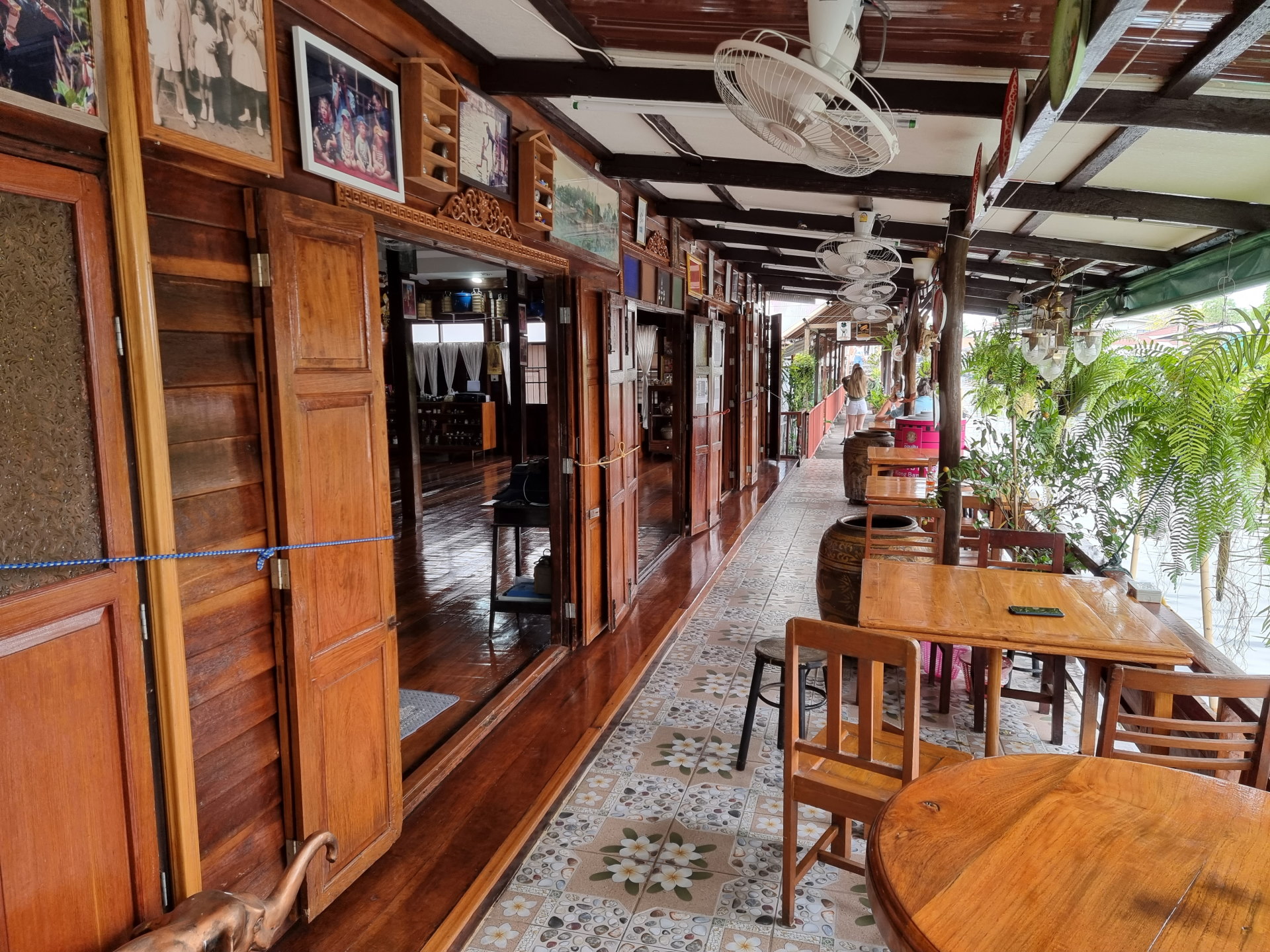
Finally, if you are not particularly into art, you can simply have a drink at the cafe and sit inside or on the terrace, feet above the canal, watching the boats go by.
The Khlong Bang Luang district and the floating market
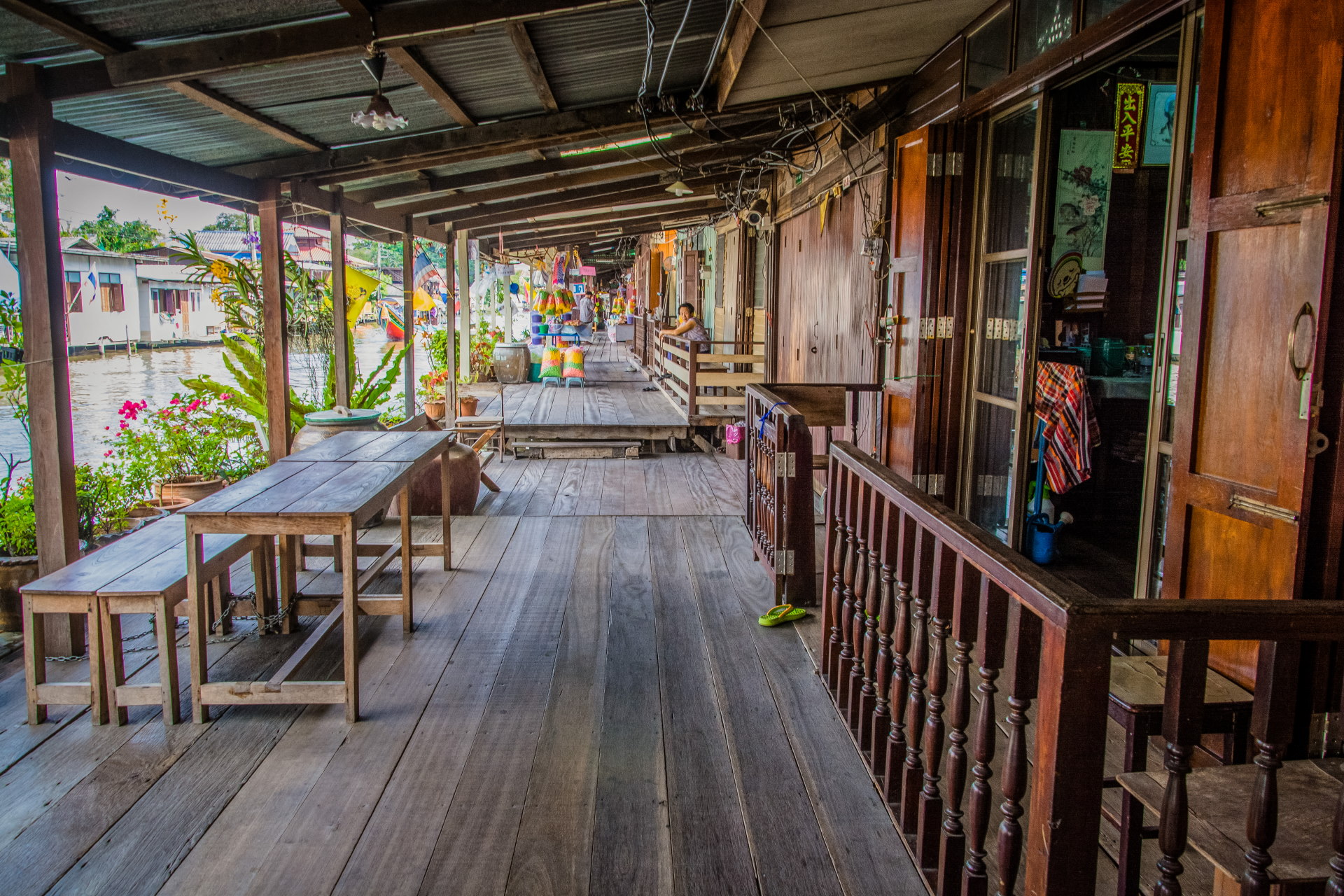
If you stroll along the canal, you'll come across several shops attached to the house, all dedicated to crafts. But it's also an opportunity to see scenes of everyday local life, as the neighborhood remains more vibrant than ever.
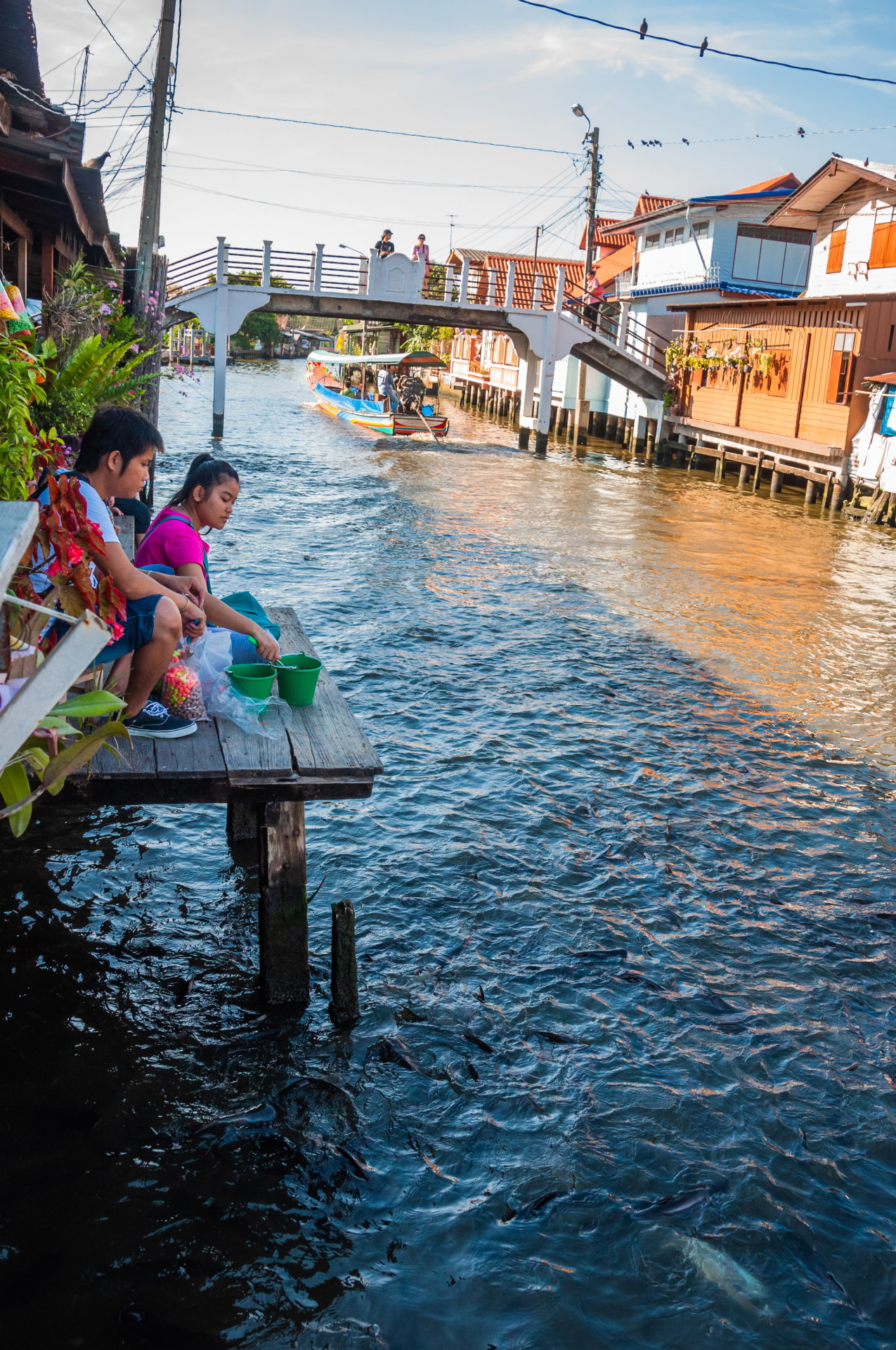
Continuing along the canal, we pass old wooden buildings, some of which house small shops run by elderly ladies. These might be simple grocery stores or businesses selling both clothing and fish food.
Due to the proximity of the temples, fishing is prohibited in this part of the canal, while feeding the fish is a classic way to earn merit in Thailand.
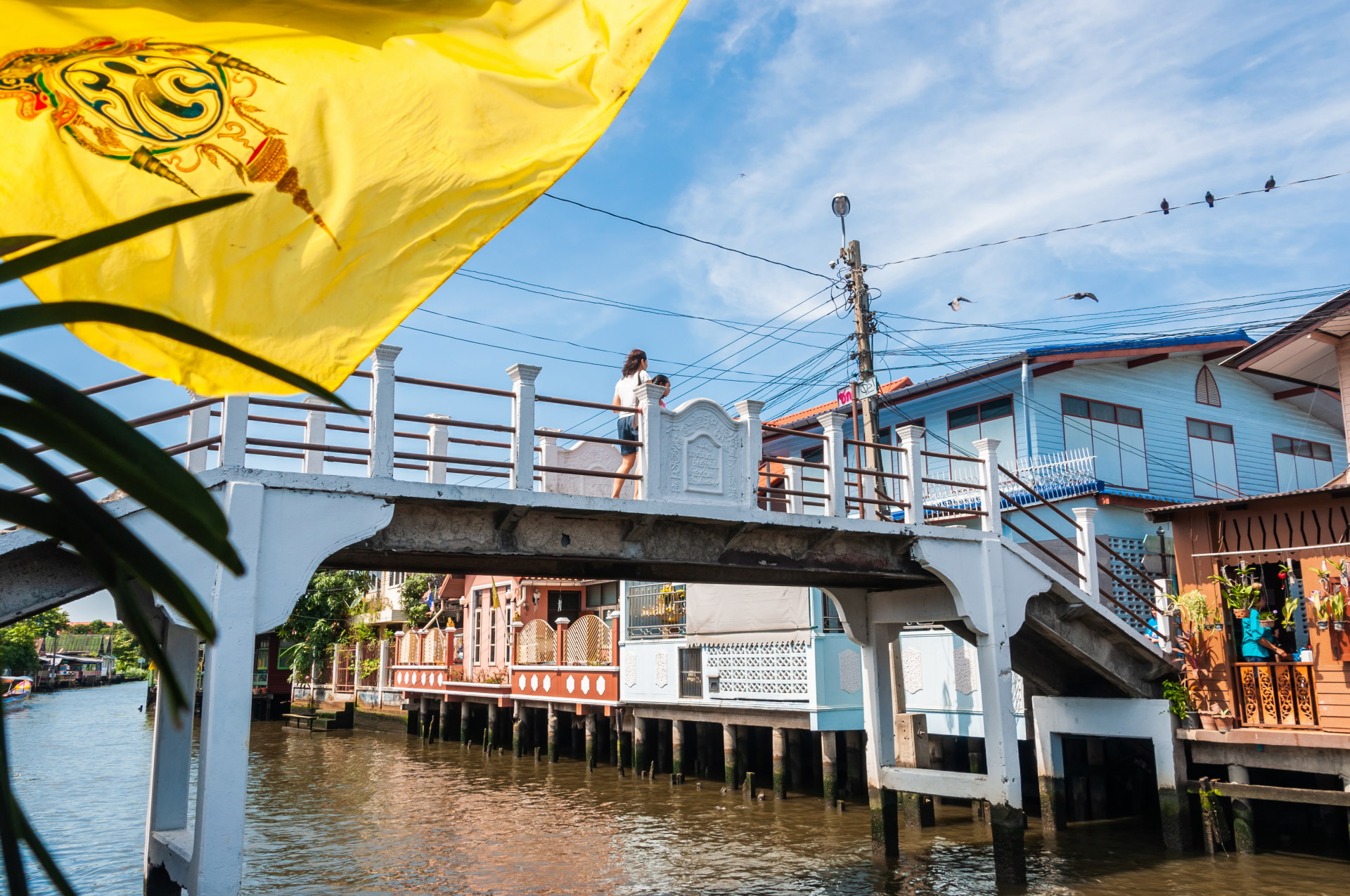
If you go to the Wat Khuhasawan Worawiharn side , you will find a small bridge offering a beautiful view of the canal, with a few restaurants offering simple dishes on both banks.
You can always take a look at the temple in question, but it doesn't stand out in particular; you might as well choose the one on the other side of the house so as not to overwhelm yourself.
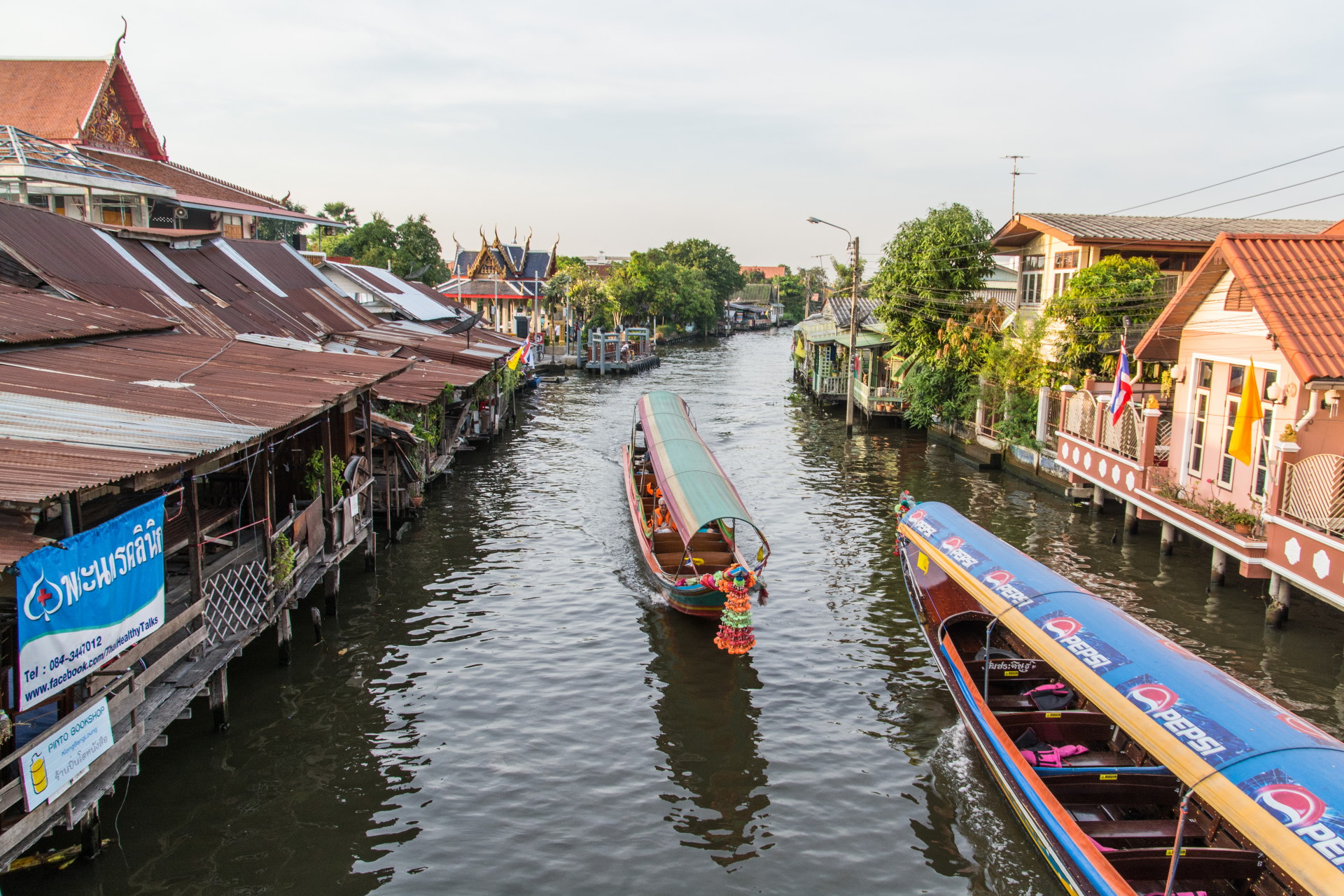
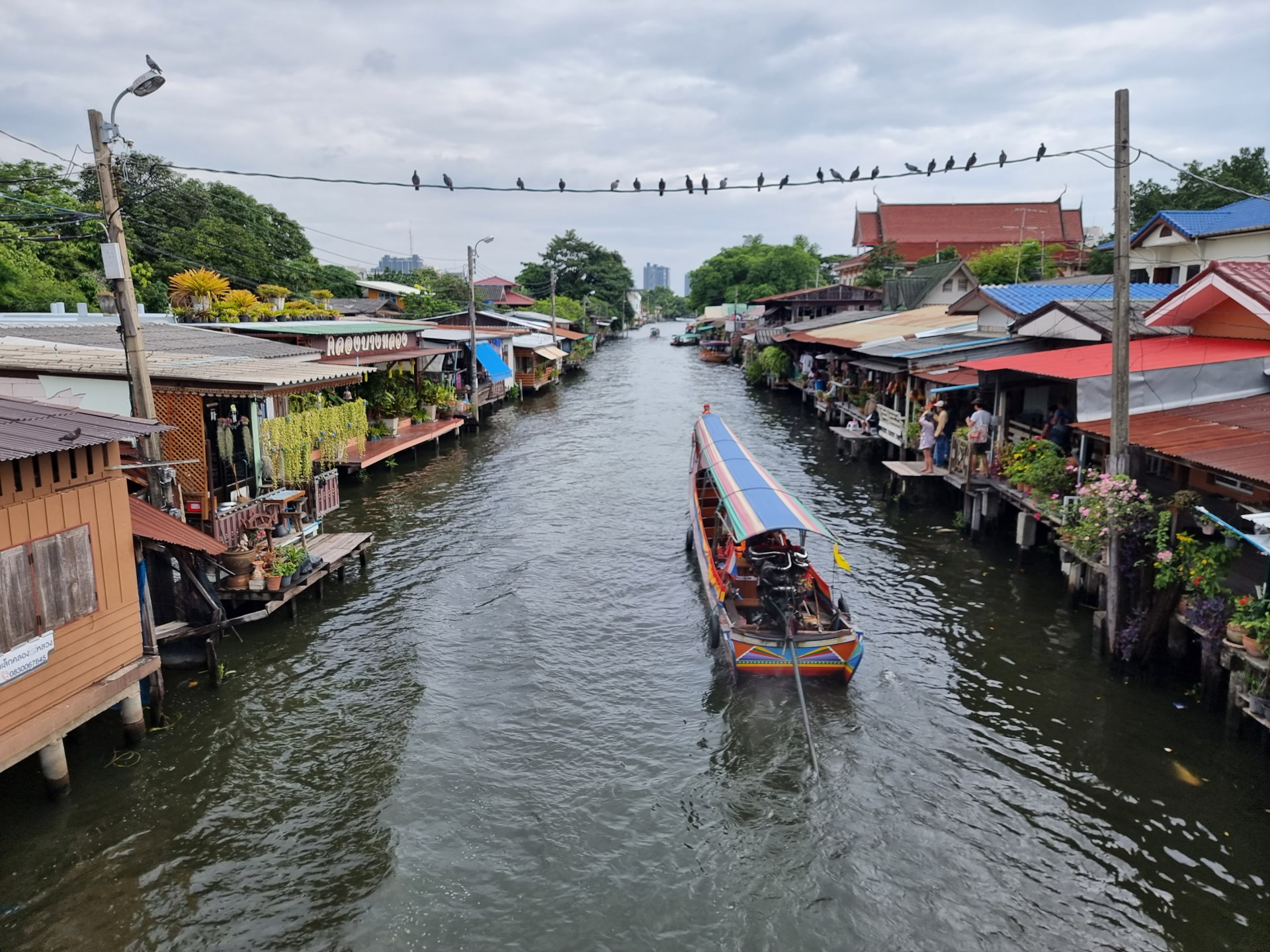
You can then take the small Soi 28 to make a loop behind the artists' house and explore the surrounding streets, long enough to forget that you are still in Bangkok.
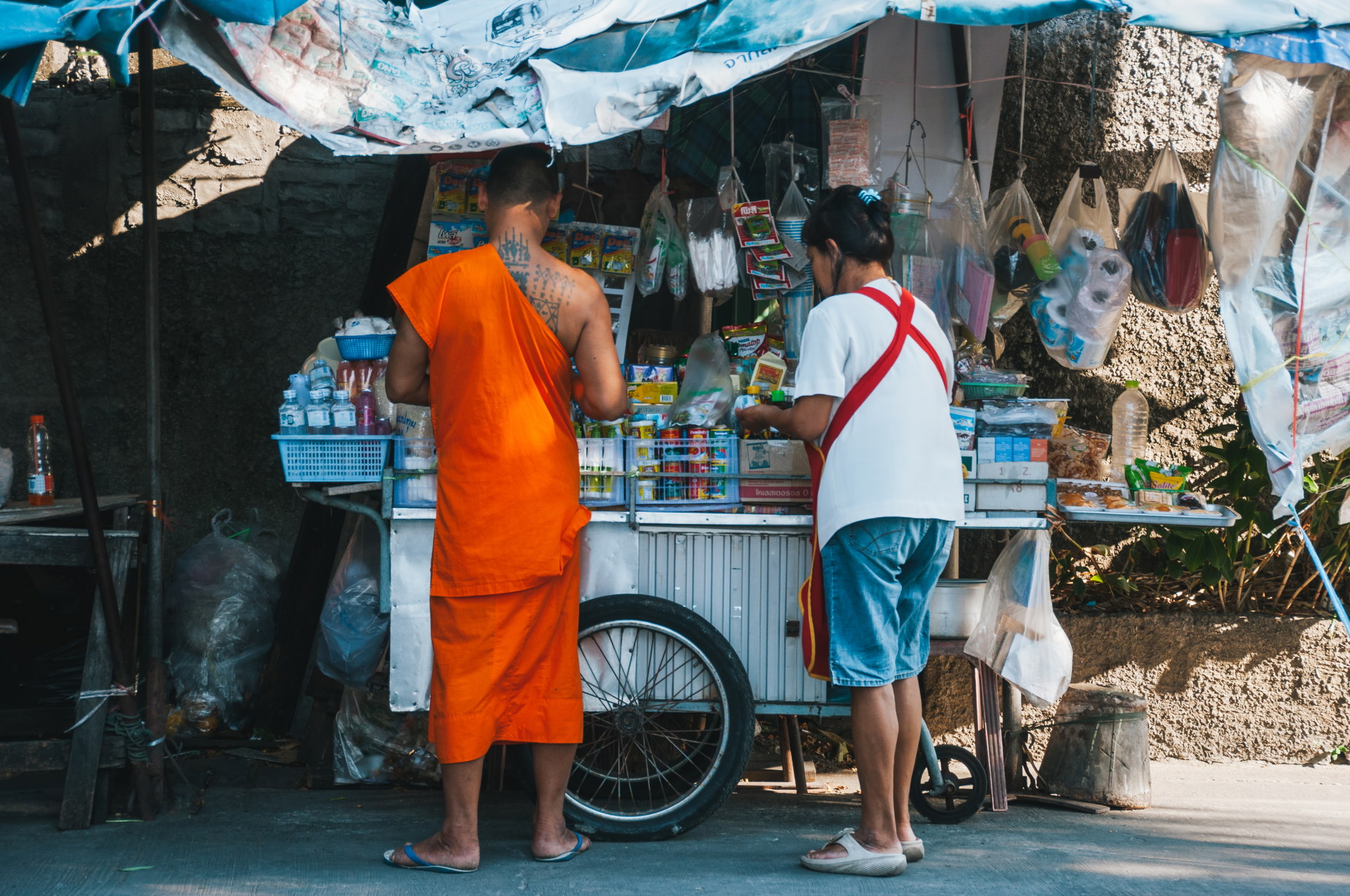
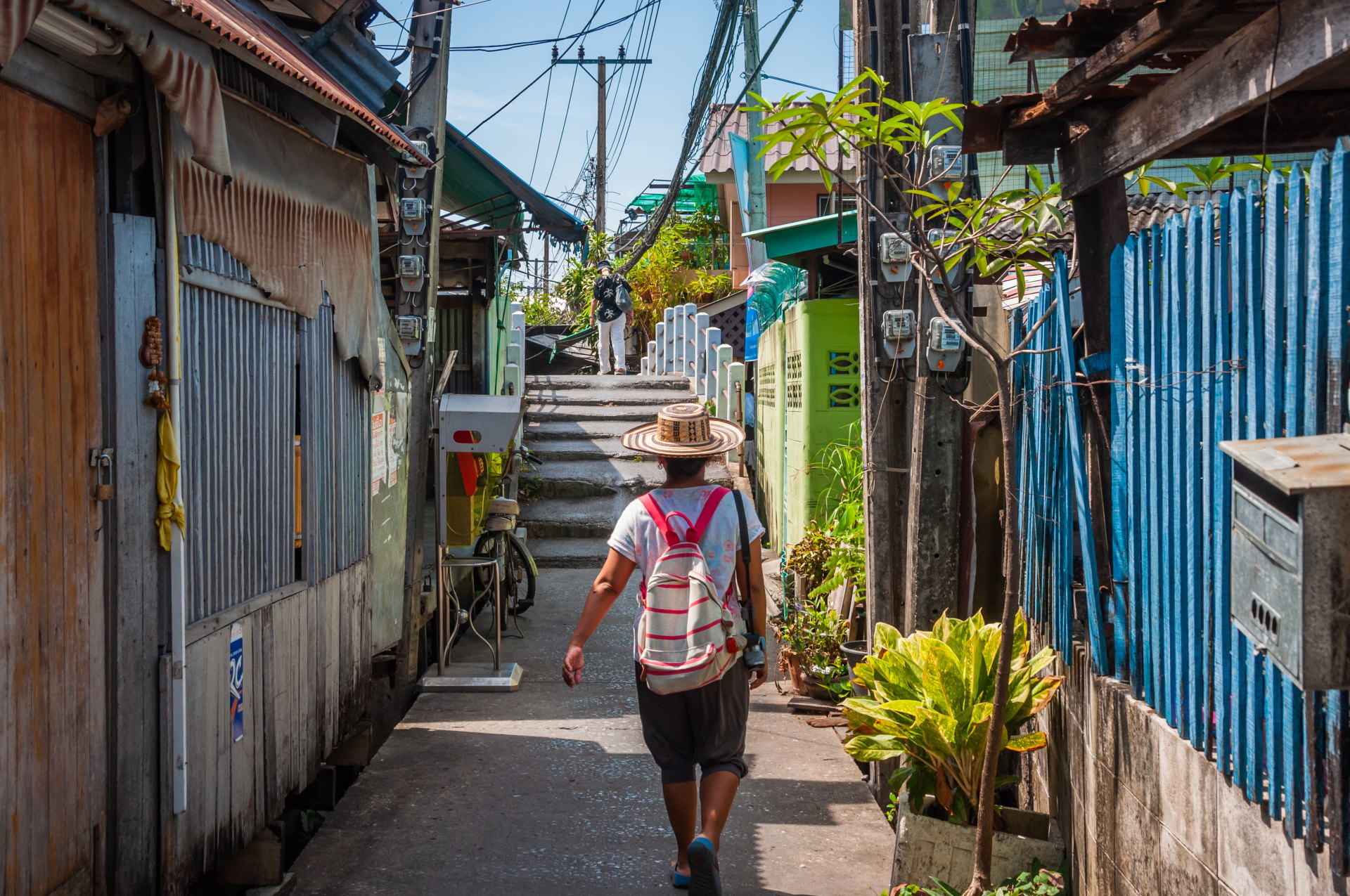
It's an opportunity to experience a simple life in a generally quiet neighborhood, save for the occasional scooter passing through its narrow streets. You'll come across modest houses, some housing a shop, a small café, or an old-fashioned barber, and perhaps monks strolling between temples.
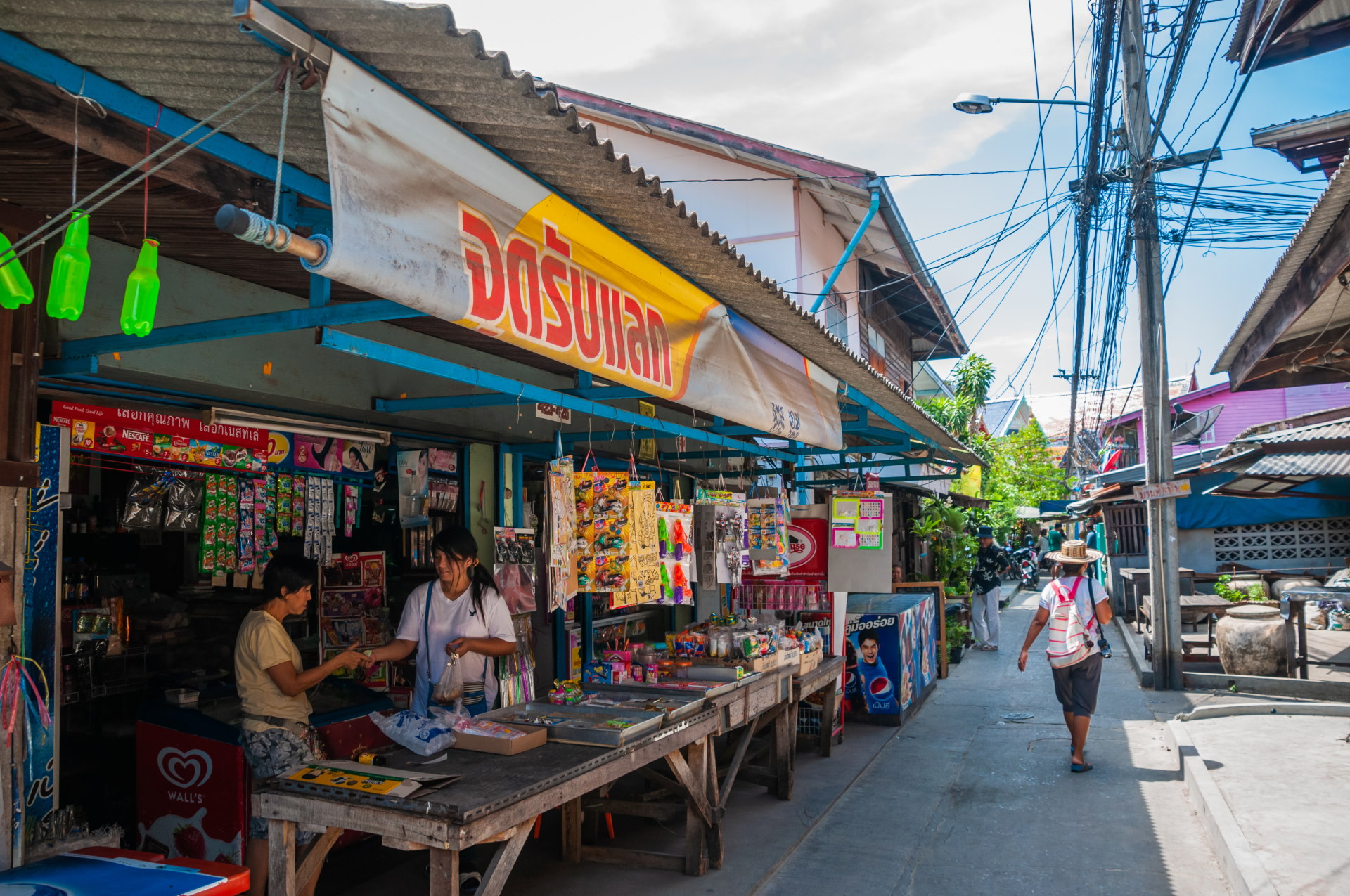
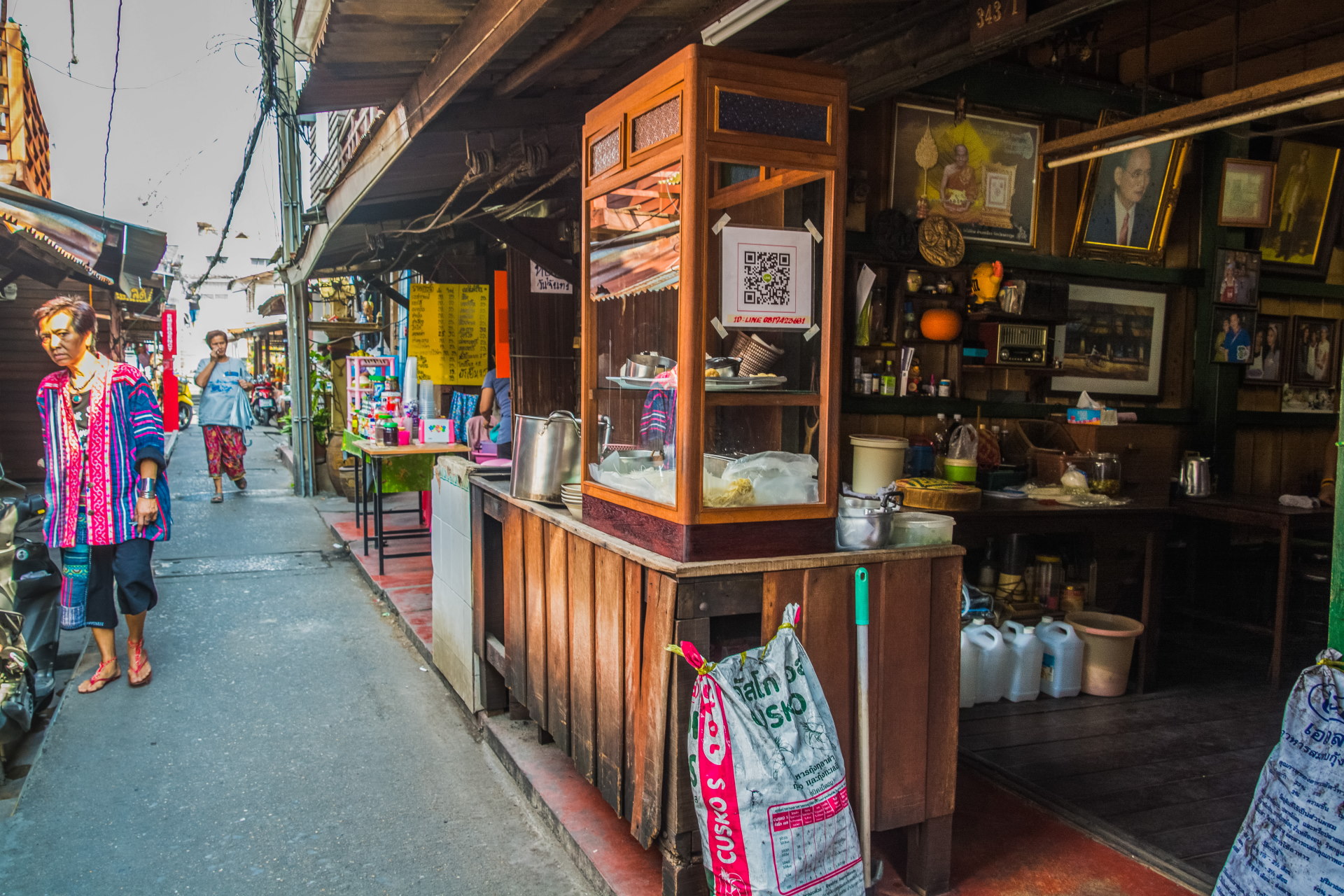
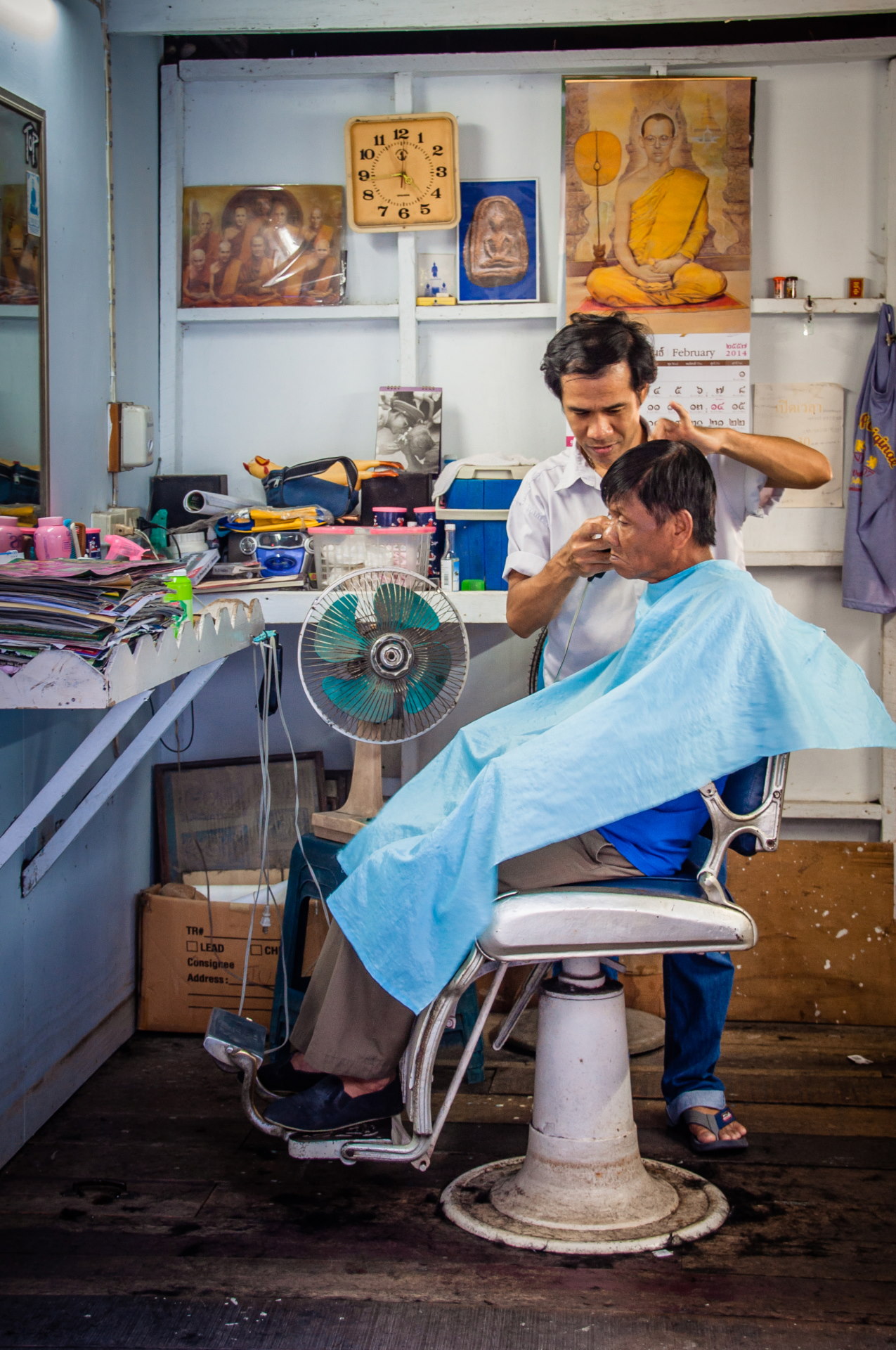
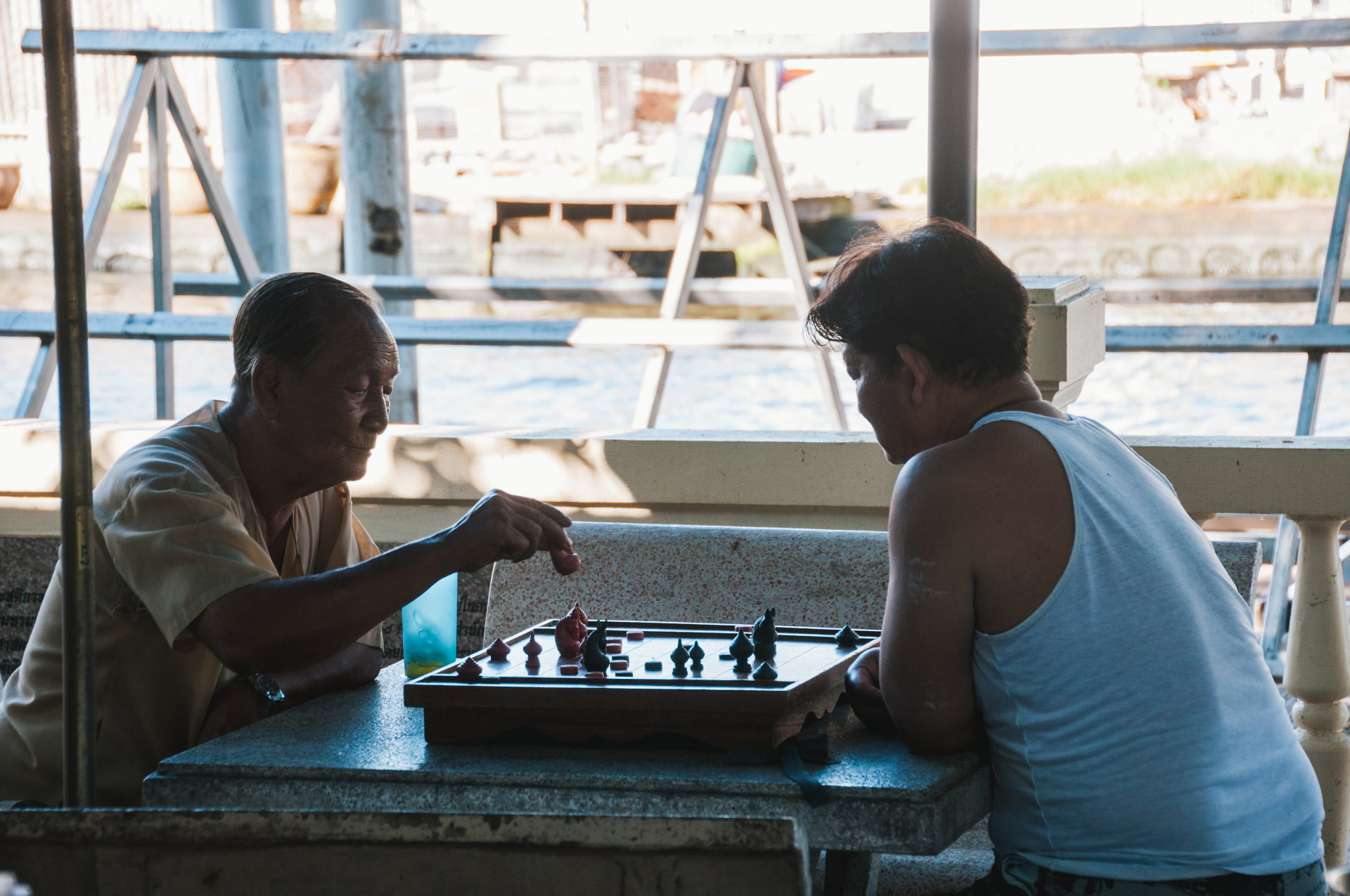
You will cross a small bridge spanning the small intermediate canal of Bang Chak, which adjoins the side of Baan Silapin then visible, before arriving in the perimeter of another temple, Wat Kamphaeng Bang Chak.
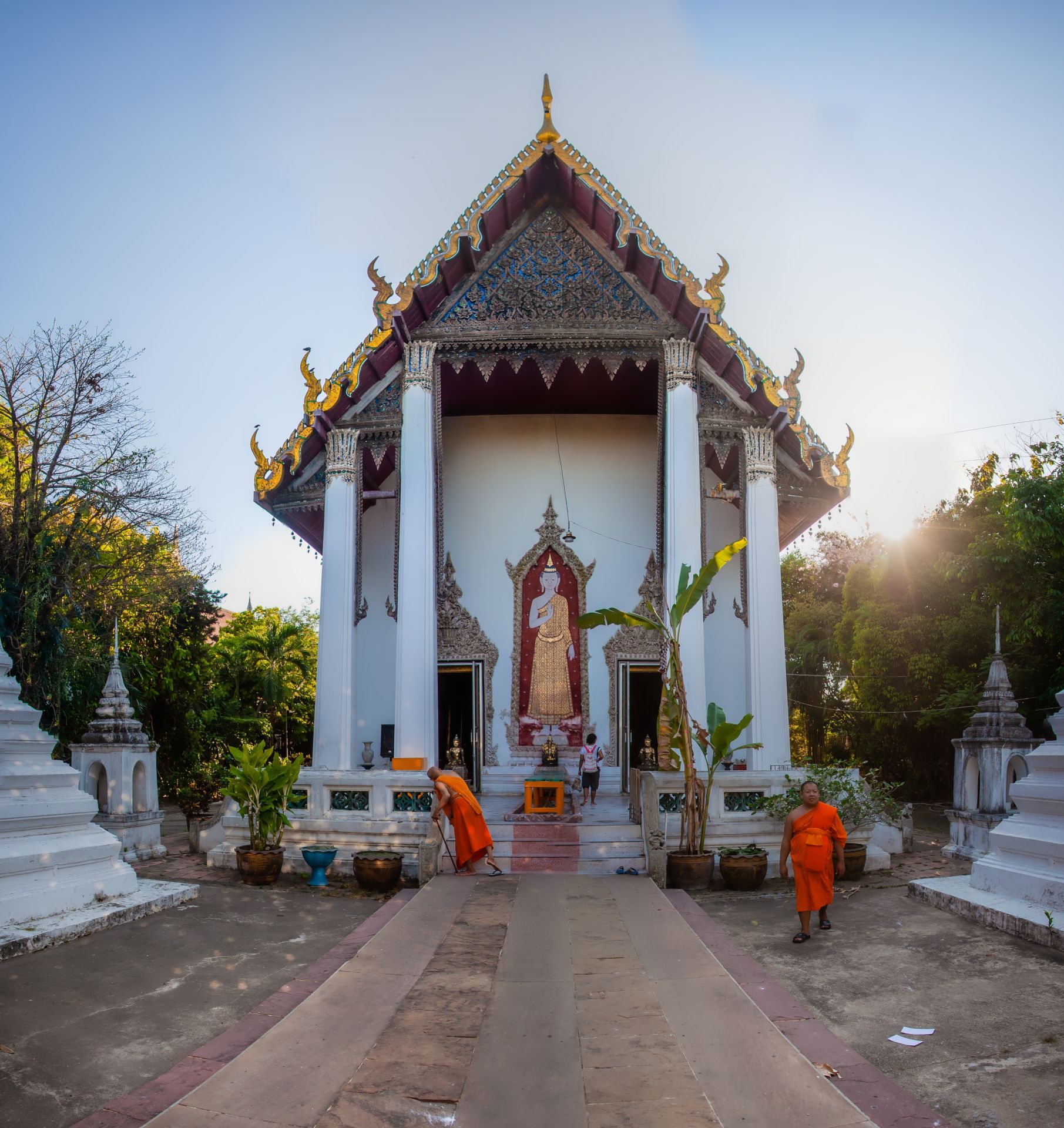
The latter is notable for its interior murals, but also for the one visible on the outside, depicting a Buddha standing on its facade.
It is surrounded by two annex buildings, renovated since my last visit, as well as several small chedis which are reminiscent of the very architecture of the one still present in the artists' house.
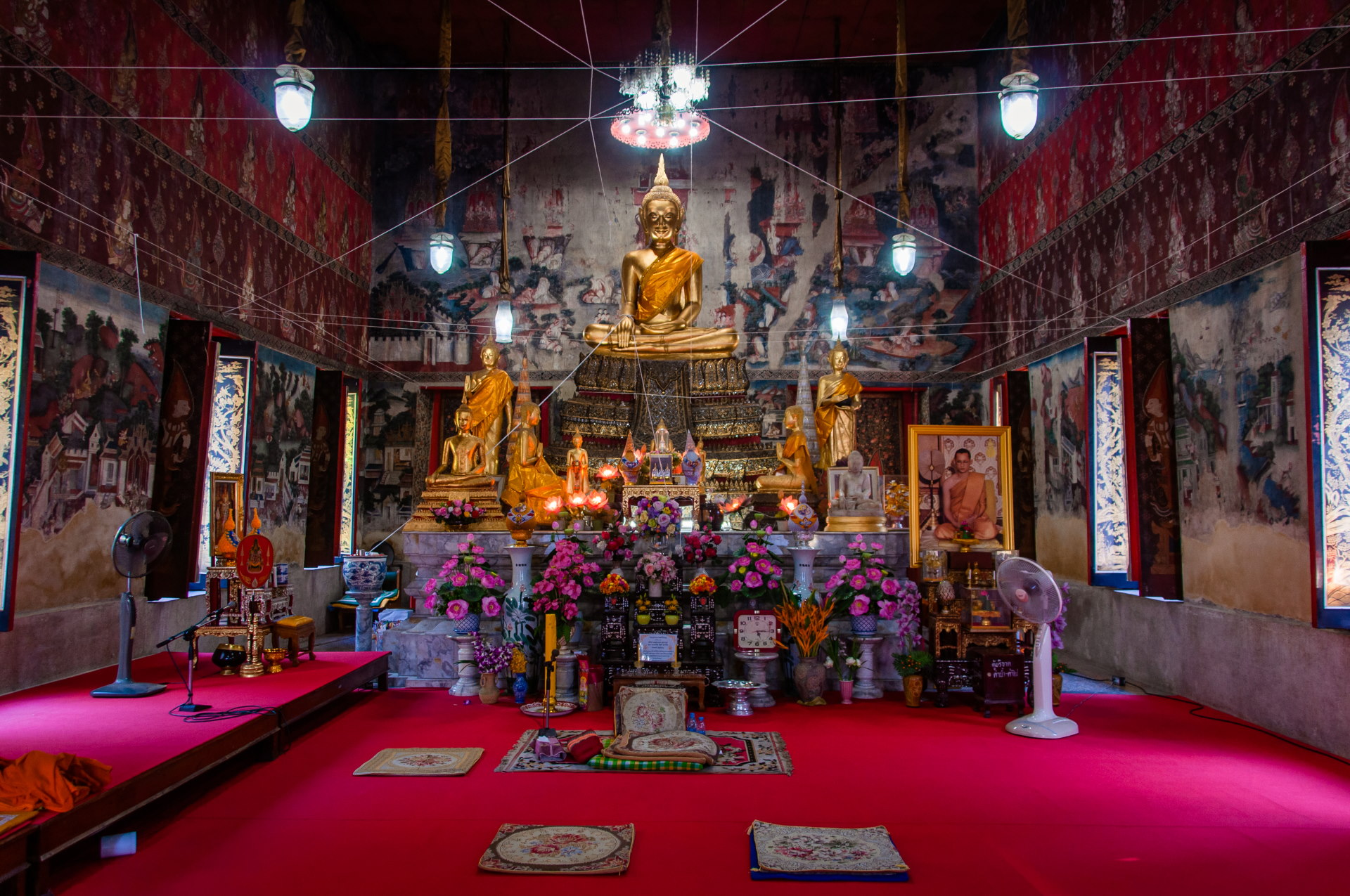
This part of the neighborhood has become much more dynamic in recent years, as it is an extension of Baan Silapin and the artistic activities developed around the house.
Just before reaching the courtyard of Wat Kamphaeng Bang Chak, you will come across a more lively area with several shops and recently installed craft workshops.
This is also where you'll find Khun Aoi's Kitchen , the restaurant I recommend in this area, on the canal and less than 100m from Baan Silapin.
The whole thing is now presented under the name Khlong Bang Luang Floating Market , although the term floating market is to be taken in a broad sense here, since the shops are installed along the canal and not on boats.
What is there to see around Baan Silapin?
A visit to Baan Silapin and the Khlong Bang Luang district can take a few hours at most, without necessarily filling an entire day. However, its location makes it easy to incorporate into a broader exploration of Thonburi and other surrounding areas, or to enjoy a boat trip on the khlongs (canals).
Wat Paknam Phasi Charoen and Talat Phlu
Less than 2 kilometers from Baan Silapin, Wat Paknam Phasi Charoen has become one of the most recognizable monuments in this part of Bangkok, thanks in particular to its immense golden Buddha statue, perfectly visible from the same Bangkok Yai canal.
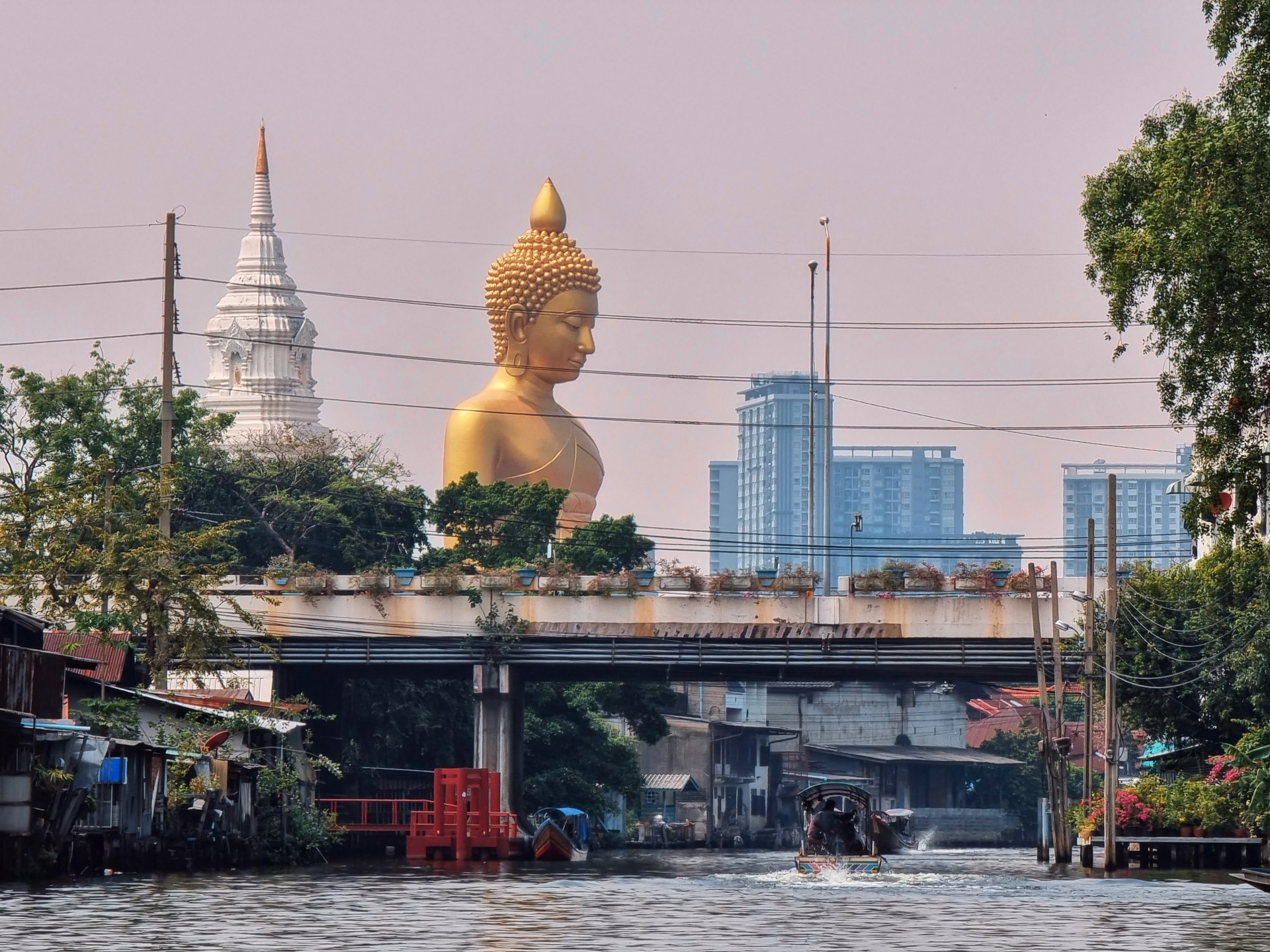
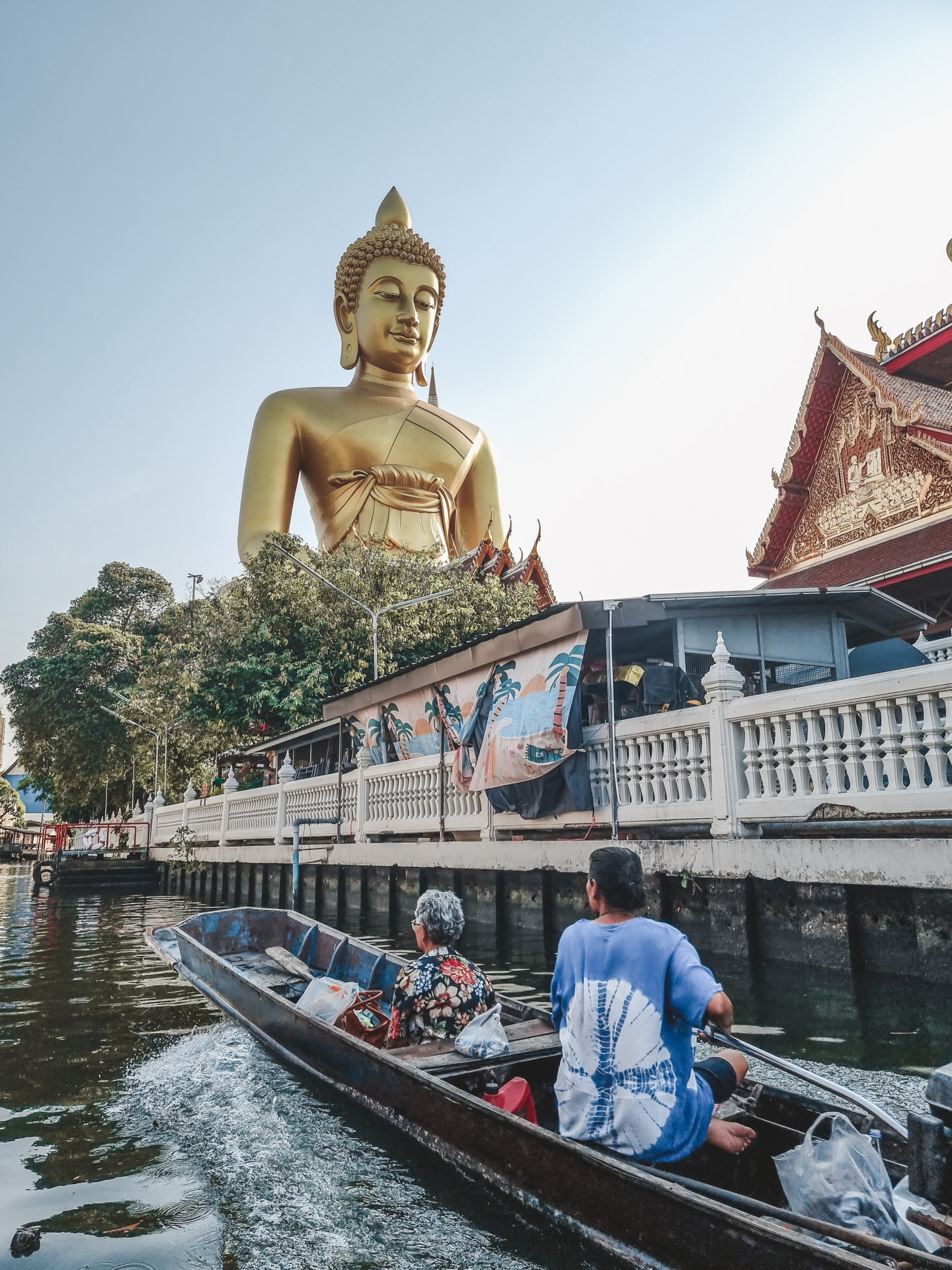
The complex is also worth a visit for its large pagoda, the top floor of which houses a stunning glass stupa under a richly decorated dome.
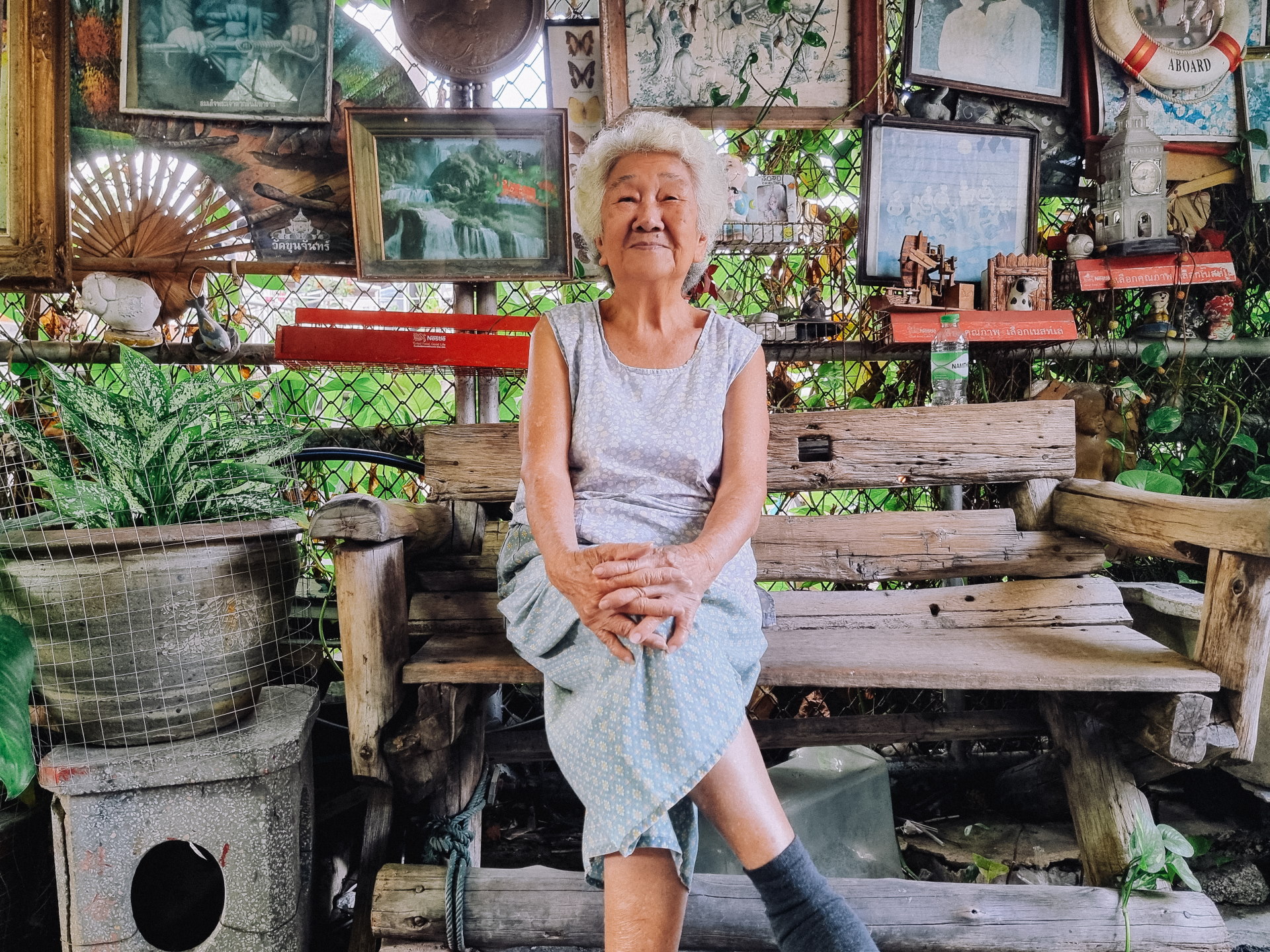
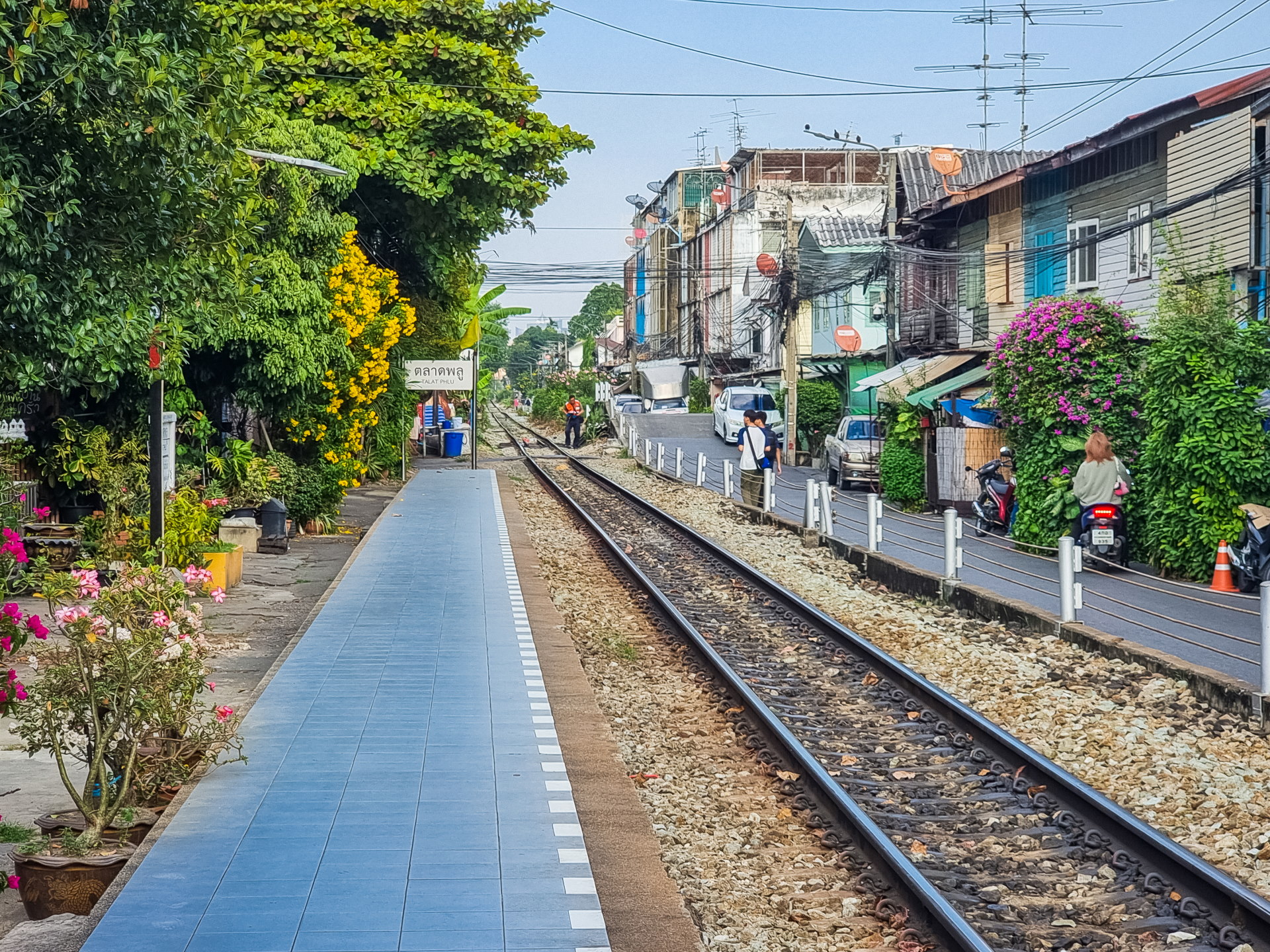
You can then continue on to Talat Phlu , an old quarter of Thonburi known for its market and numerous restaurants. Around the train station and along the neighboring streets, the walk also offers the chance to see several temples, old houses, and a still very present local atmosphere.
Continue exploring the khlongs by boat
Baan Silapin can also be a stop on a longer excursion along the Thonburi canals. If you opt for a private boat, the itinerary can include Wat Ko and various temples along the khlongs (canals).
On weekends, it's also possible to consider a trip to the floating markets of Taling Chan or even Khlong Lat Mayom . The route will, of course, depend on the starting point, the available time, and what you have agreed upon with the boat driver.
Baan Silapin and its surroundings on the map
Practical information for visiting Baan Silapin
The artists' house is open every day from 10am to 18pm and admission is free.
- Hours: every day from 10 a.m. to 18 p.m.
- Price: Free entry.
- Time required: Allow approximately one to two hours to explore the house, enjoy the cafe and stroll around the Khlong Bang Luang area.
- When to come: The place is quieter during the week, while weekends are more lively and more conducive to activities.
How to get to the artists' house
The opening of the MRT's Blue Line extension has greatly simplified access to Baan Silapin. However, it's still possible to arrive via the canals, a more unique way to explore the area.
- In MRT: Get off at Bang Phai station on the blue line and take exit 4. From there, it's a 10-15 minute walk to Soi Phet Kasem 20, then on to Wat Kamphaeng Bang Chak. You can also take a motorbike taxi for part of the way.
- By taxi or with Grab: Specify Baan Silapin or Wat Kamphaeng Bang Chak as your destination. Access via Soi Phet Kasem 20 is currently the easiest way to reach the house.
- On a boat : No public transport lines directly serve Baan Silapin, but it is possible to include this stop in a private longtail boat tour on the Thonburi canals (khlongs). Boats can be rented from certain locations. Chao Phraya river quaysMake sure you specify that you wish to stop at Baan Silapin or Khlong Bang Luang and agree on the route and price before departure, as many tours simply pass by.
- By car : Head to Soi Phet Kasem 20 and park at Wat Kamphaeng Bang Chak, keeping in mind that spaces can be limited on weekends. Alternatively, you can park at Wat Thong Sala Ngam, which is the option I chose on my first visit.
Sleeping near The Artist's House
The artists' house itself does not offer accommodation. However, it is possible to sleep just opposite, by the canal, and enjoy the tranquility of the neighborhood. During the day, the atmosphere is a little less peaceful due to the regular passage of boats.
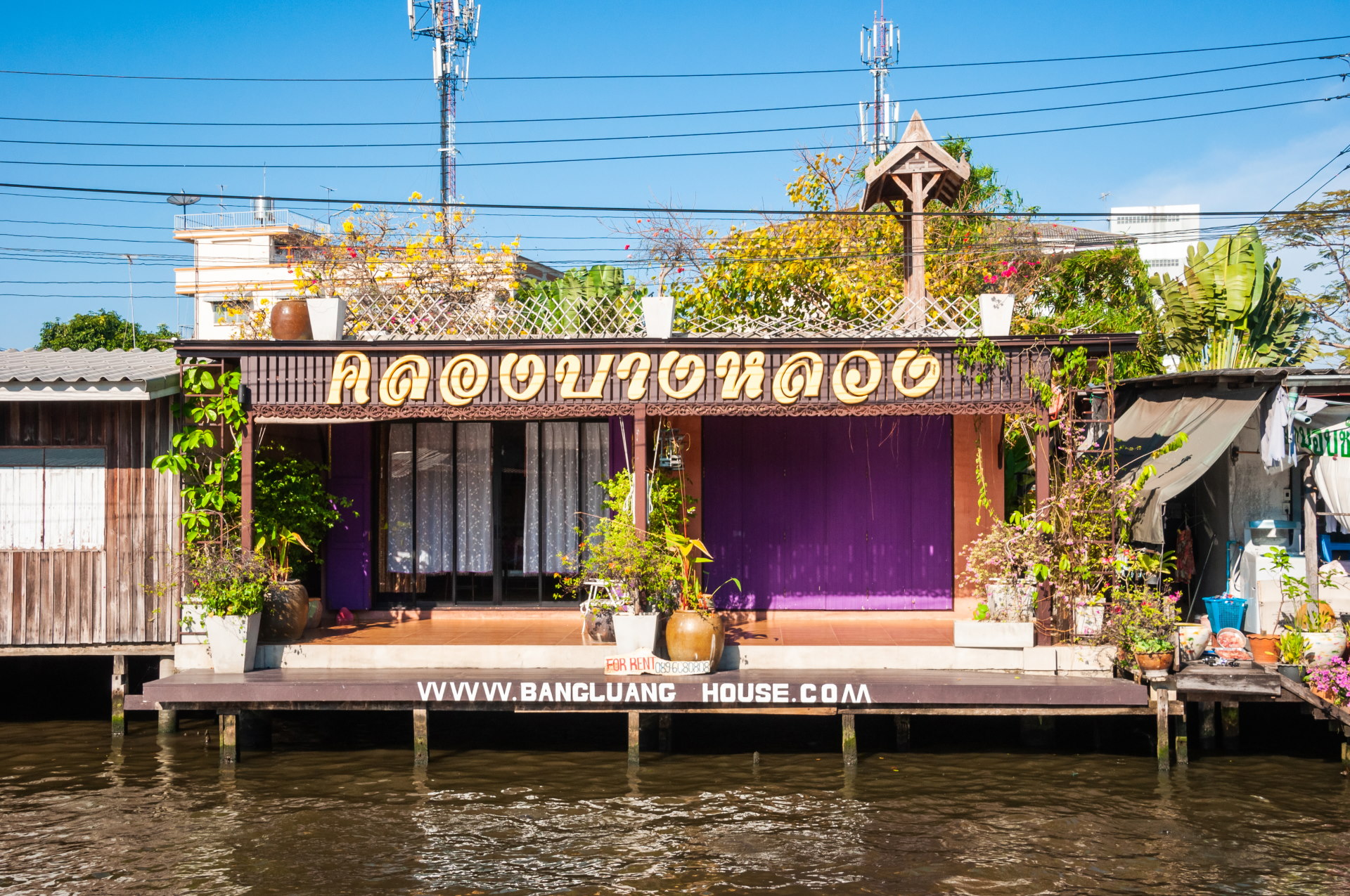
Bangluang House
Note: 9,3 / 10
Budget: from €48
Located on the opposite bank and accessible via the nearby bridge, Bangluang House offers the perfect place to spend the night close to Baan Silapin. The hotel enjoys a very good reputation and offers attractively decorated rooms. The cheapest studios are often fully booked, but there are also spacious suites available, some up to 65 square meters.
Did you like this article? Share it on Pinterest!

Have you heard of this place? What do you think of this initiative?
