


Chiang Rai offers a very different atmosphere from the larger metropolis of Chiang Mai, with a more moderate level of crowds.
Yet Chiang Rai, with its mountainous landscapes and tranquil atmosphere, has nothing to envy in the former capital of Lanna, of which it was the precursor. More remote, it offers a less touristy setting that is its greatest charm.
Generally, when people think of Chiang Rai, they immediately think of its white temple, the famous Wat Rong Khun, which attracts many visitors every day. But the city also serves as an ideal gateway for exploring the far north of Thailand and its Golden Triangle.
A minimum of two or three days on site seems reasonable to me in order to see something other than the temples that make this city and region famous, which can be divided as follows:
- Day 1: Chiang Rai temples and the Black House
- Day 2: A day in the Golden Triangle
- Day 3: The Kok River Valley
- Between excursions: markets, Wat Phra Kaeo and walks around town
If you then wish to spend several days in the mountains, I have planned another segment in my five-day itinerary in Chiang Rai province . In this case, keep the Golden Triangle for this loop and dedicate your second day from Chiang Rai to the Kok River.
Day 1: Discover the temples of Chiang Rai
The first day was based on a geographical logic: starting with the white temple, south of Chiang Rai, then moving on to the sites north of the city.
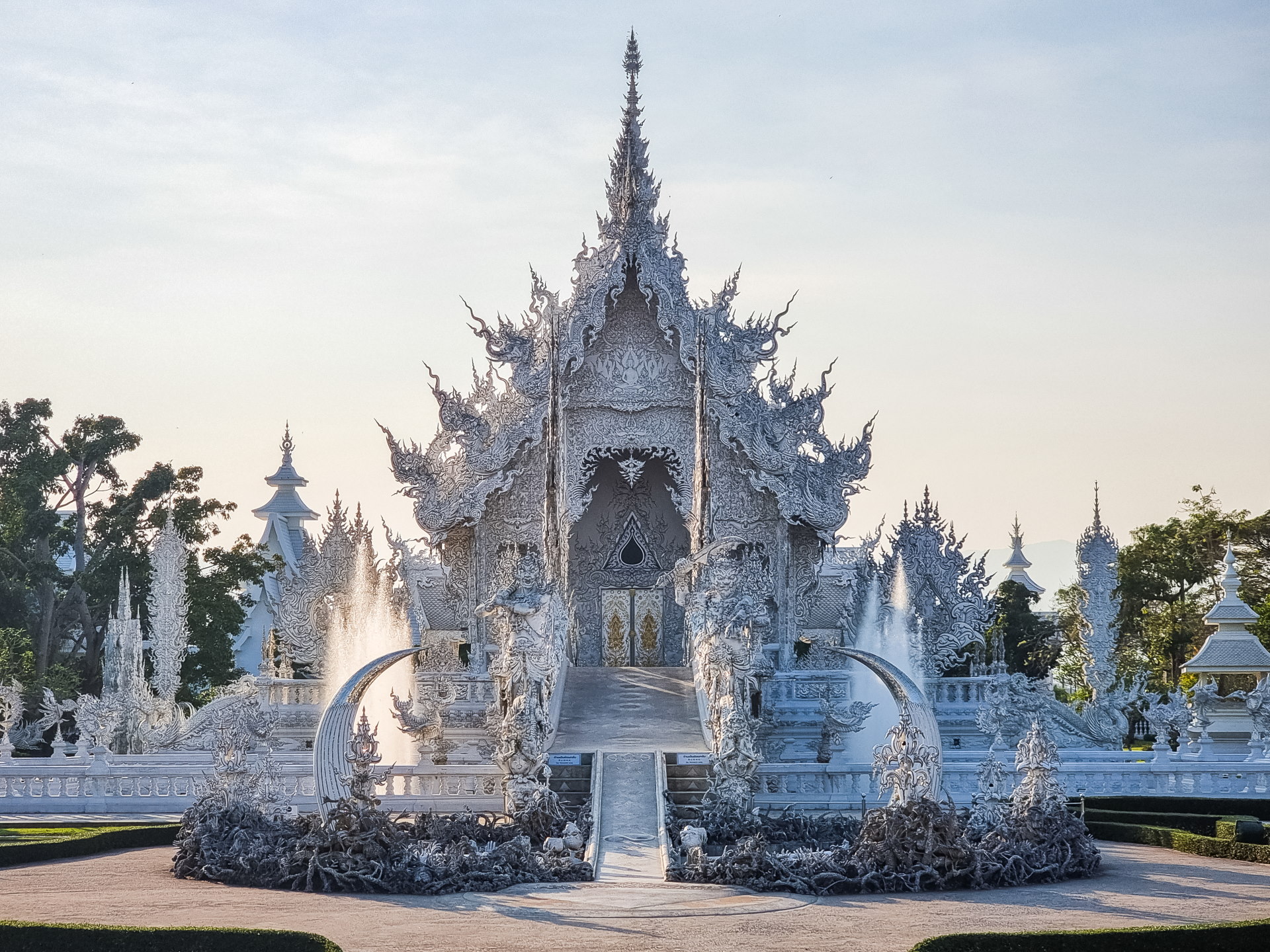
- Wat Rong Khun (white temple)Chiang Rai's iconic temple, blending white sculptures with contemporary references.
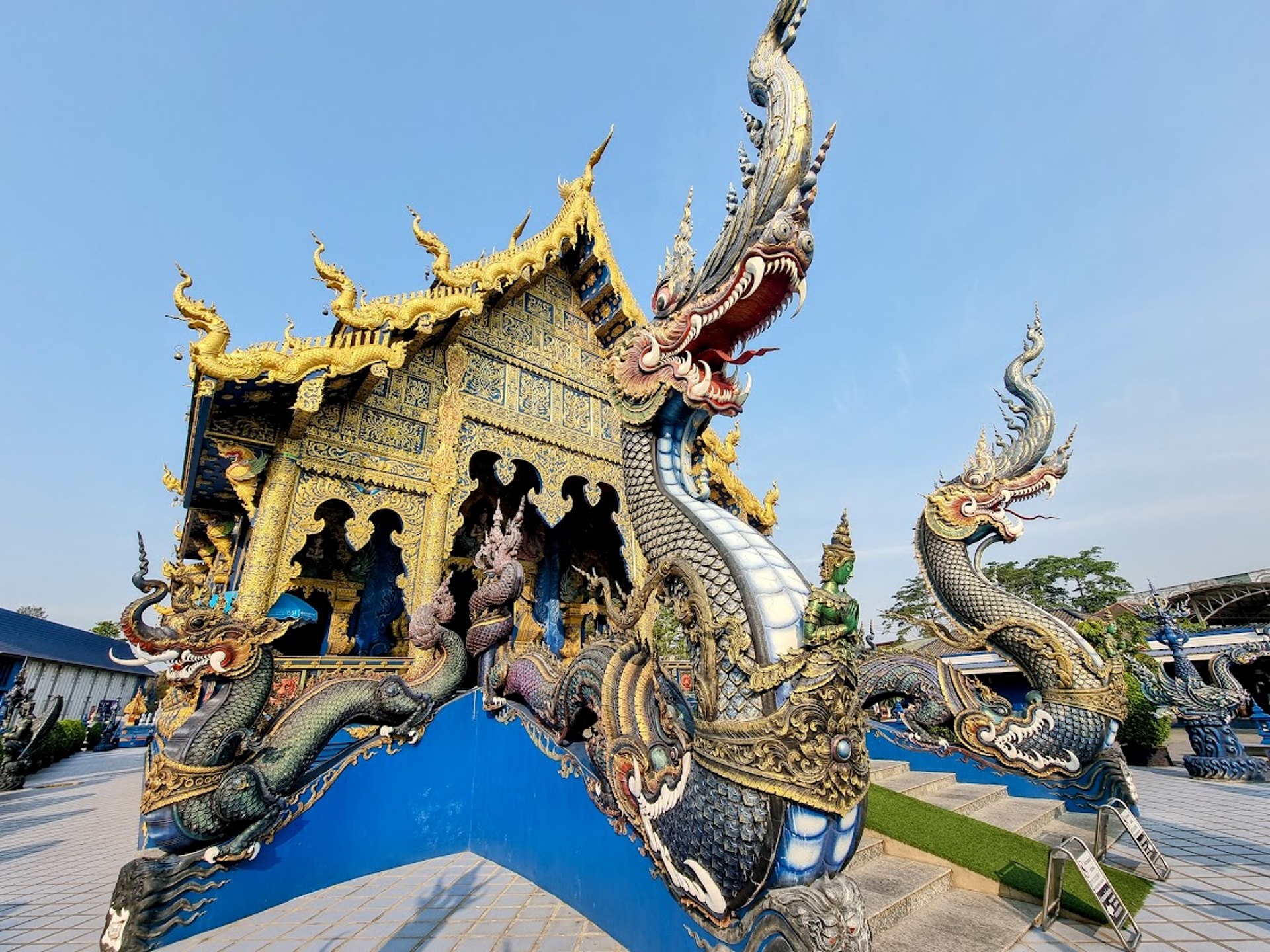
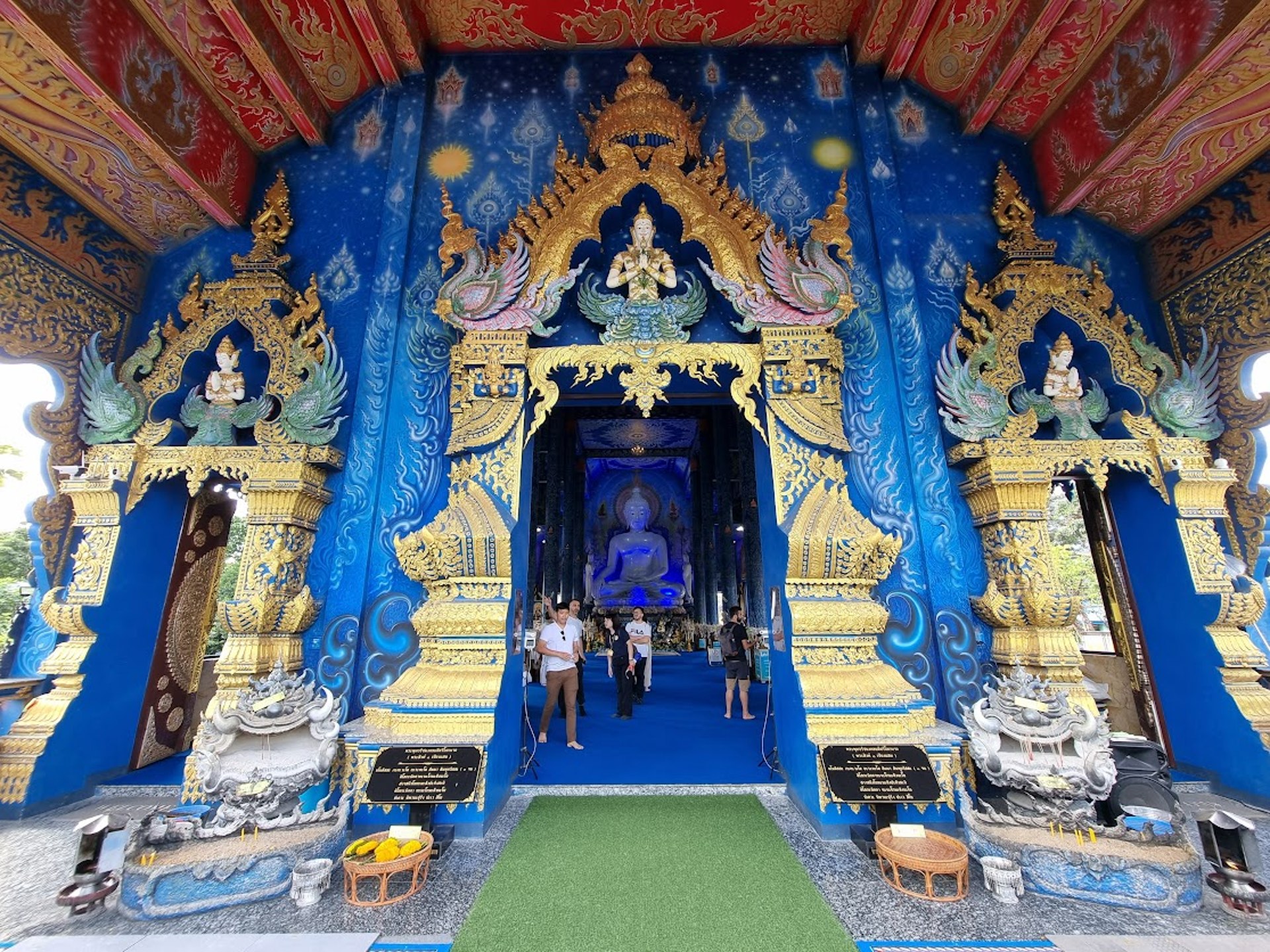
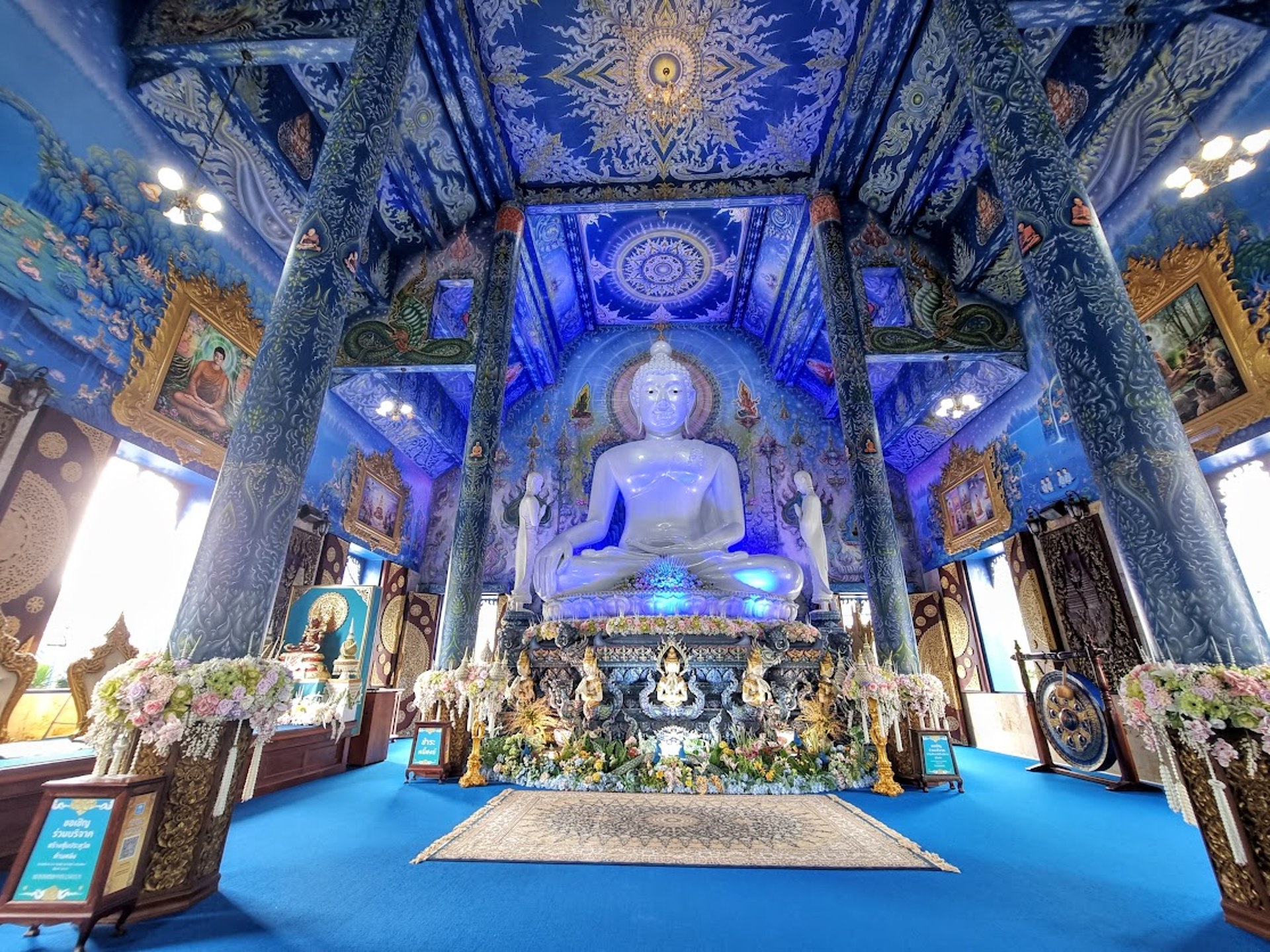
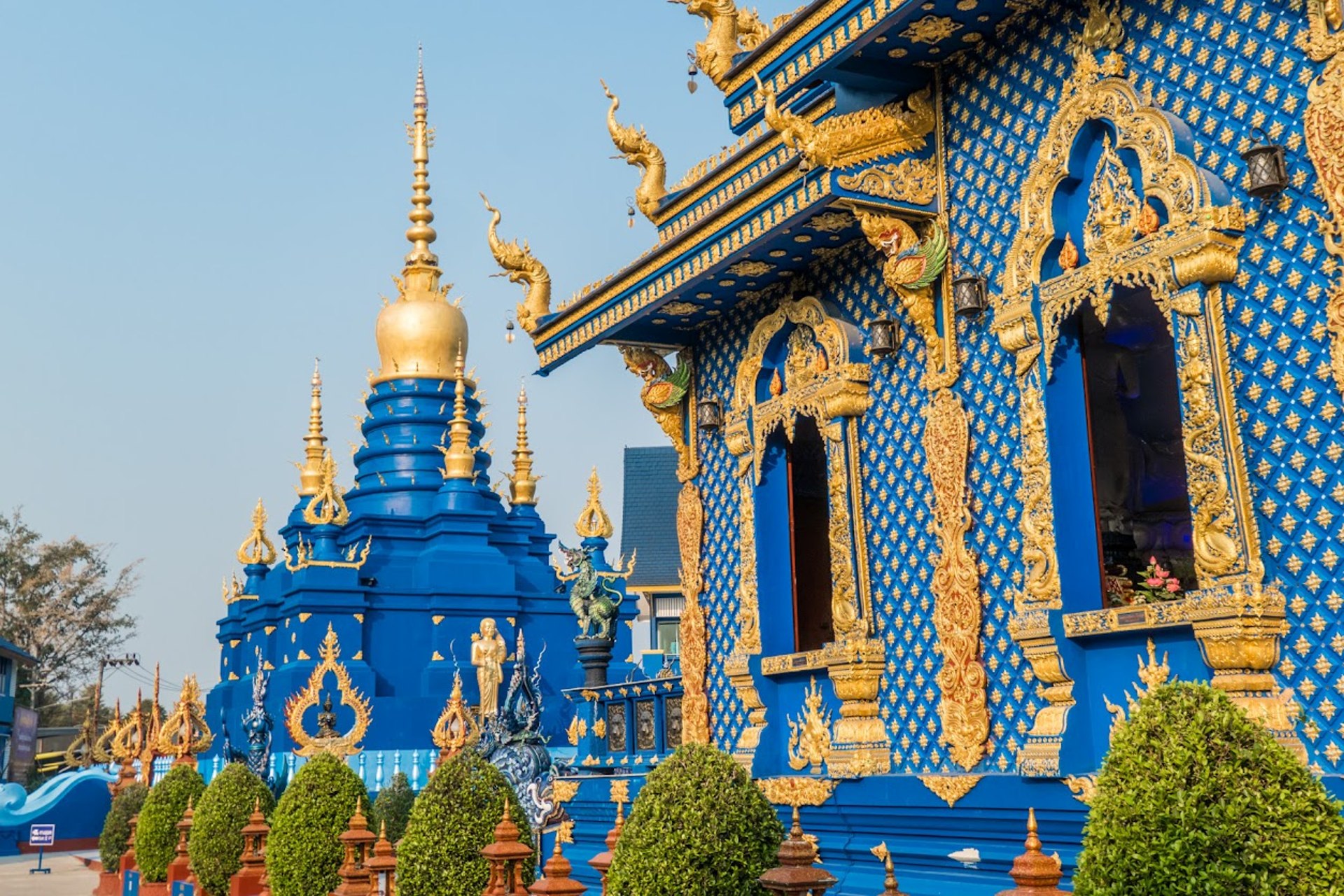
- Wat Rong Suea Ten (blue temple)A temple of intense blue, with a large white Buddha inside the main hall.
- Baan Dam Museum (Black House)A collection of buildings and collections that reveal the dark universe of the artist Thawan Duchanee.
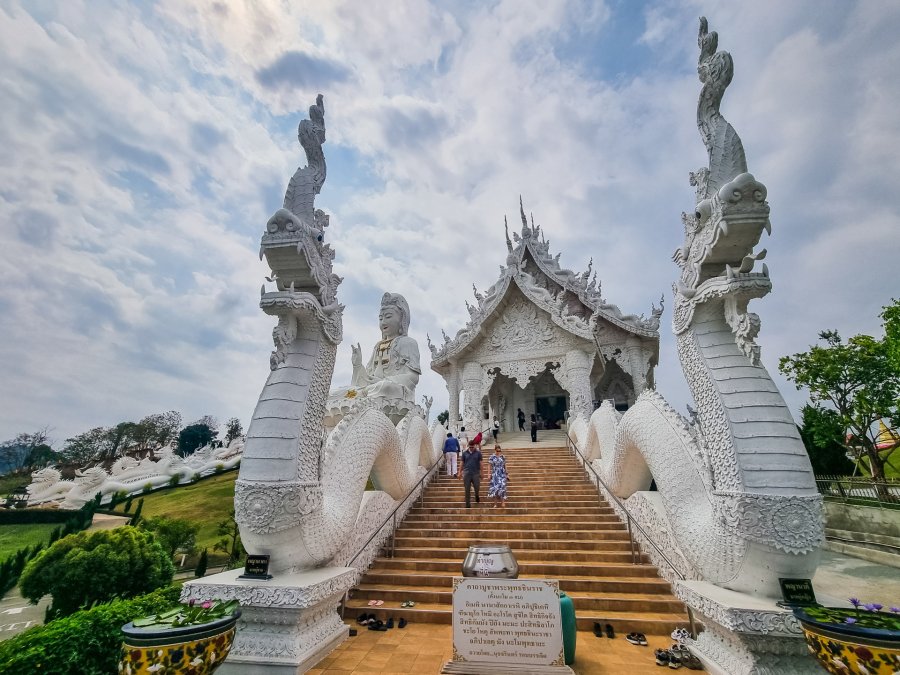
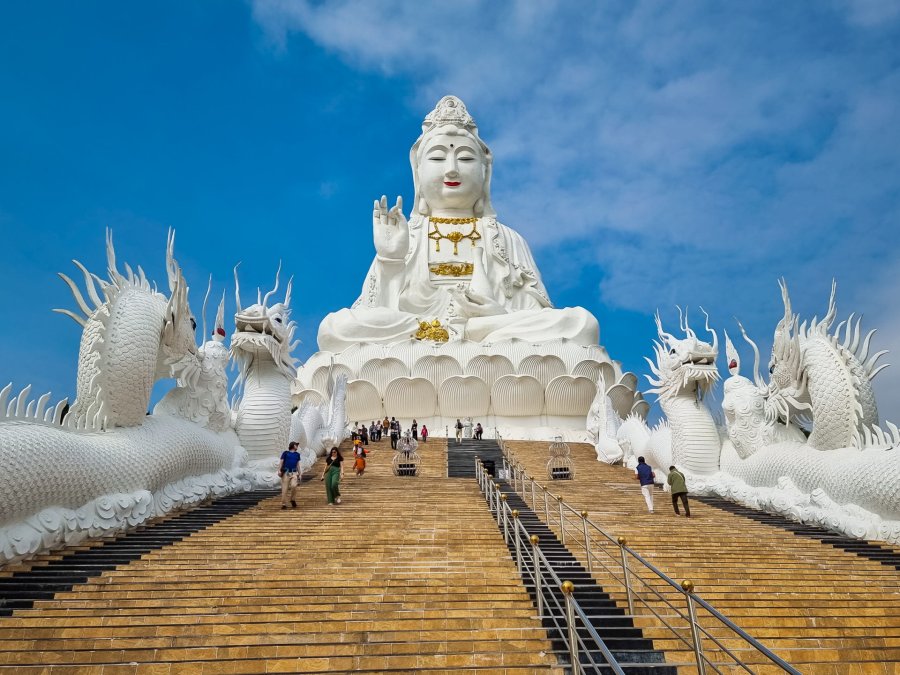
- Wat Huay Pla KangA nine-story pagoda and a huge statue of Guanyin, with a view of the surroundings of Chiang Rai.
To get from one site to the next, you will easily find blue songthaews (shared pickup taxis) at least at the first two temples, but to avoid searching, you can hire a taxi for the day.
Wat Rong Khun (The White Temple)
Located 13 km south of the city centre, it is impossible to miss Chiang Rai's number 1 attraction: the White Temple , or Wat Rong Khun.
Its power of attraction is such that some people do not hesitate to make the round trip from Chiang Mai in a single day, even though it represents a 6-hour drive! This is why I do not recommend this option, hence this article, which aims precisely to encourage people to spend more time there and see beyond this single temple.

This unique work is by Thai artist Chalermchai Kositpipat , a native of Chiang Rai. Begun in 1996, this temple fascinates with its brilliant white color, a symbol of purity, which contrasts magnificently with the blue skies of the Thai winter (November to February).
Over the years, the artist continued to add sculptures and elements, blending Buddhist traditions with contemporary references. Among them, heroes and villains from the Hollywood universe slip in here and there, making the space as intriguing as it is unique.
Wat Rong Khun is a site in perpetual evolution: its completion is planned… for 2070!
To delve into the details of the symbolism and get explanations about the different structures that make up this iconic temple, I have written a complete article:
→ Wat Rong Khun: Everything you need to know about Chiang Rai's famous White Temple.
Wat Rong Suea Ten (The Blue Temple)
Wat Rong Suea Ten is located just north of Chiang Rai city center, on the other side of the Kok River . Currently, admission is free , making it a worthwhile visit to discover another facet of contemporary Thai art.
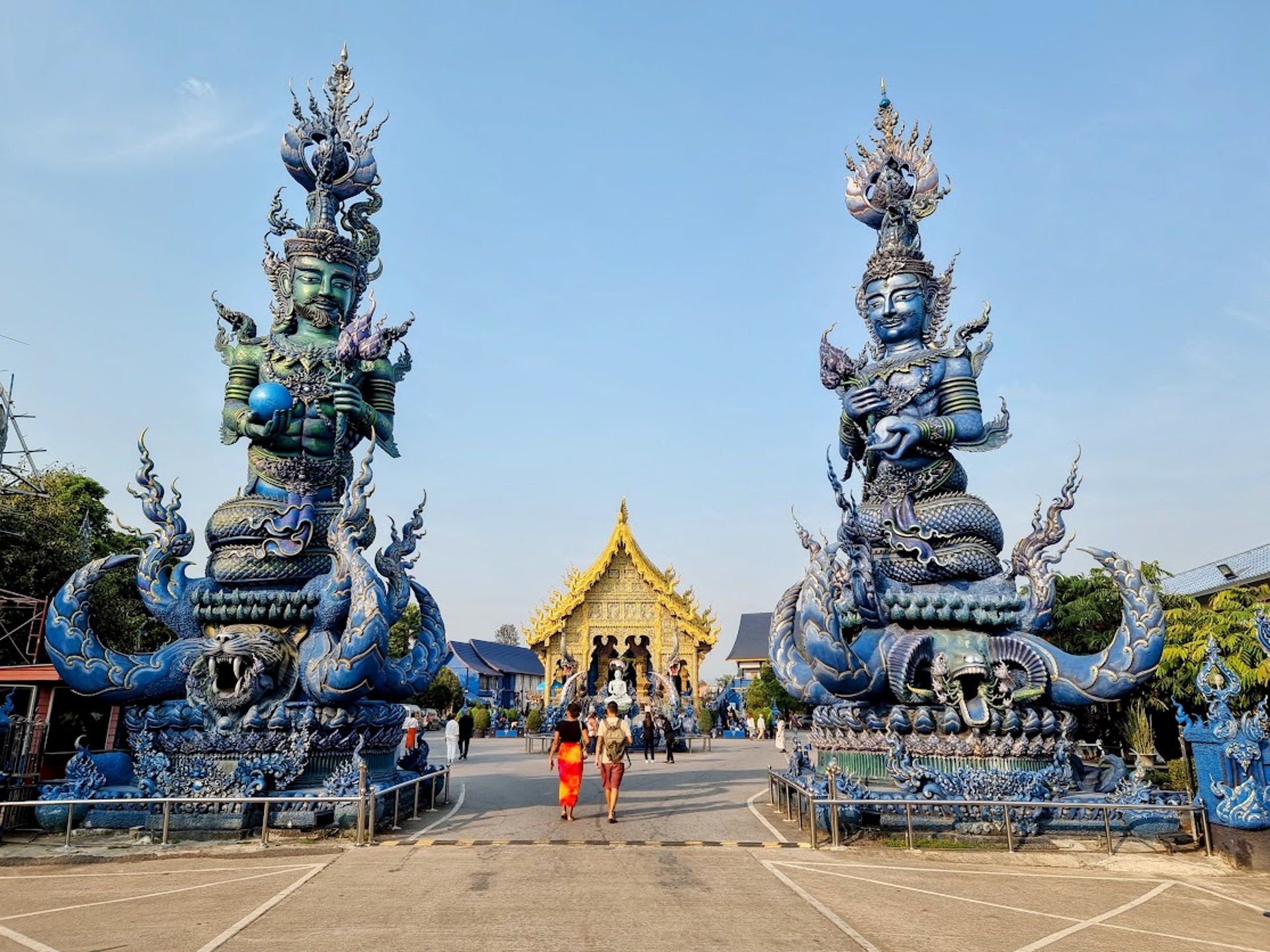
Indeed, upon arriving at the Blue Temple , one is immediately struck by its dominant color and style, which is strangely reminiscent of the White Temple. And for good reason: the creation of this temple is the work of a disciple of Chalermchai Kositpipat , the artist behind the famous Wat Rong Khun.
The major difference with the latter is that here we are dealing with a truly functional religious building, with buildings housing the monks who keep this temple alive.
The name in Thai means "dancing tiger" : it refers to a time when tigers still lived in the area and used to jump into the nearby Kok River. The surrounding village thus adopted the name Rong Suea Ten.
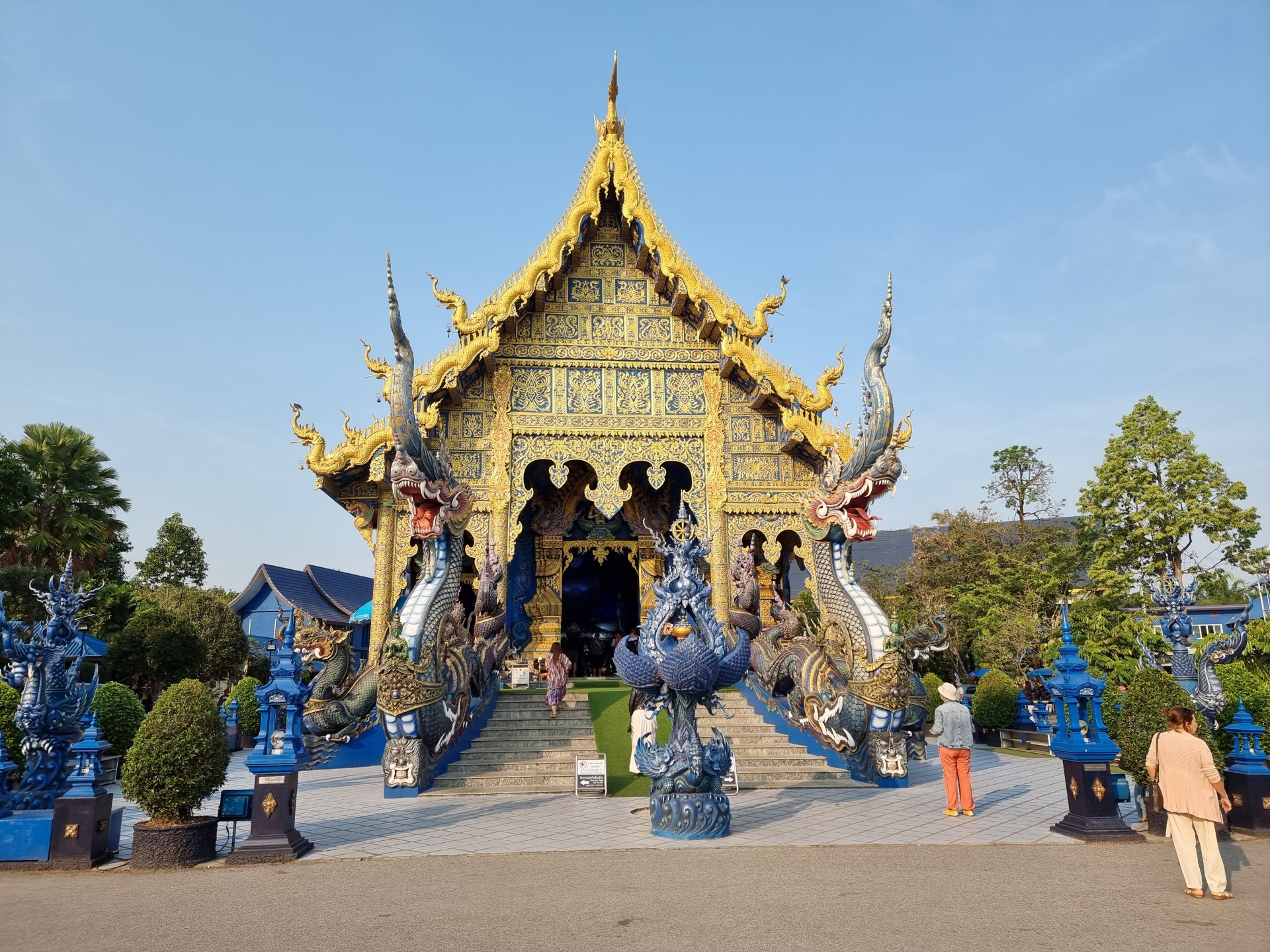

On the current site stood an ancient, ruined temple that the locals wanted to rebuild. The project began in 2005 , but it was really the completion of the main hall in 2016 (yes, it took so long!), housing a magnificent white Buddha, that started to attract visitors.
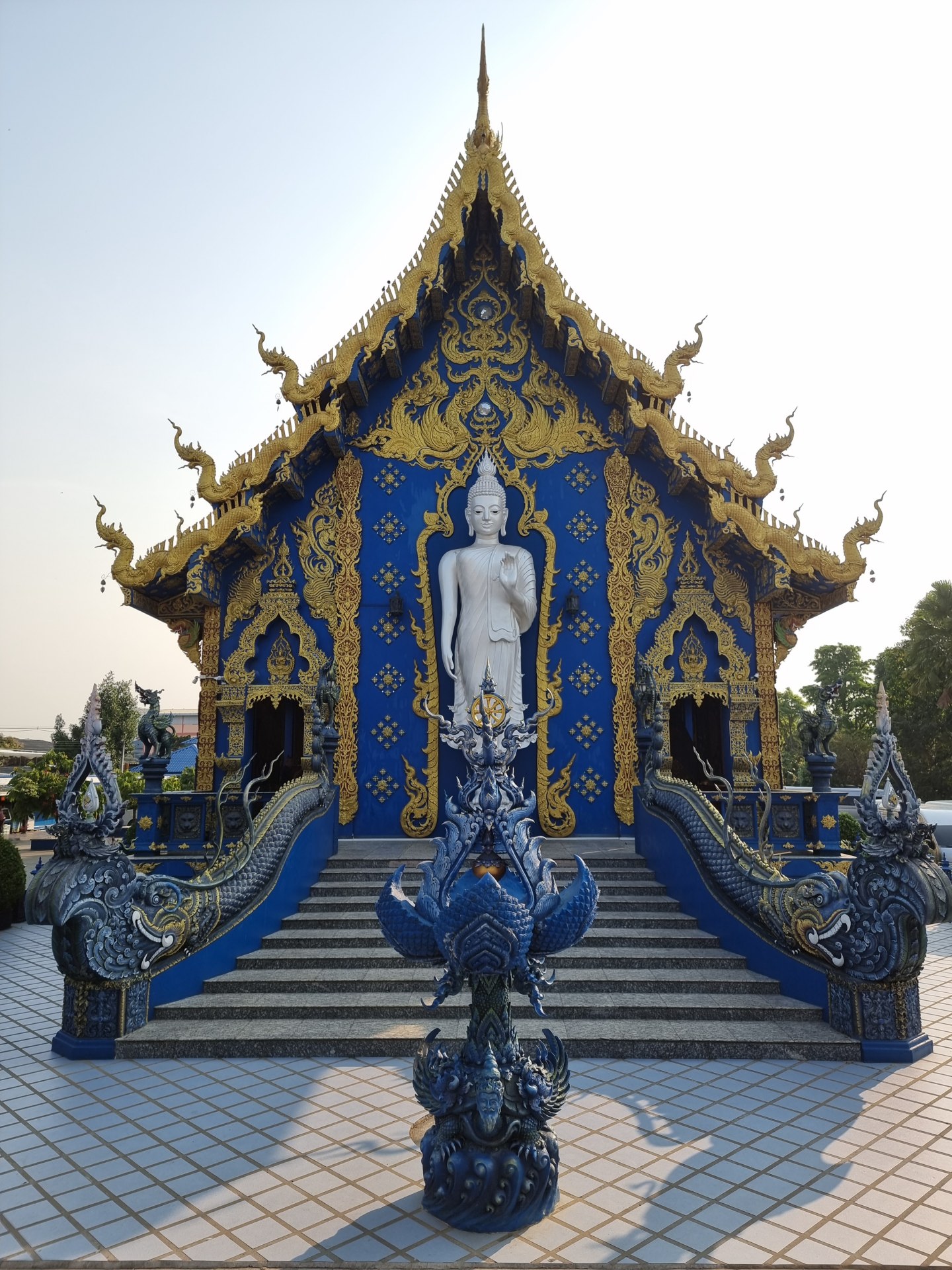
The temple is entirely blue – from the exterior walls to the interior paintings – and, just like its white “cousin”, is constantly evolving (although it is clearly more limited in terms of space).
On the rear facade, one can admire a standing Buddha statue , also white, facing a blue chedi , resting on a square base… blue, of course!
Baan Dam Museum (The Black House)
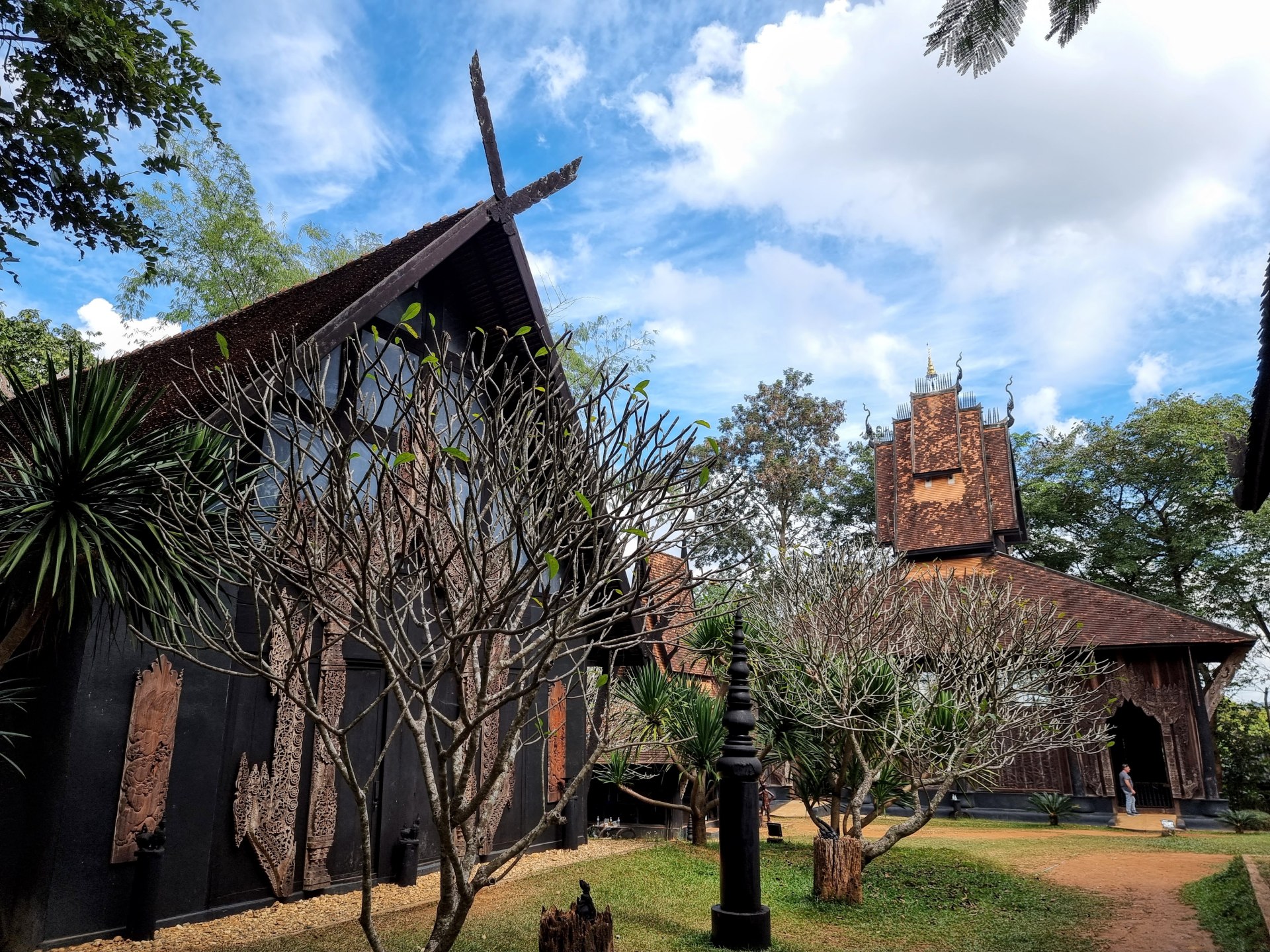
The term "Baan" means "house" in Thai, but can also be interpreted as "village," which is relevant here, as the site includes about forty buildings constructed in a style inspired by the traditional architecture of northern Thailand, thus forming, like a kind of village.

At first glance, one might mistake it for a museum showcasing folk art and local traditions. This is indeed how the tourist office presents the place. However, the Baan Dam Museum is anything but a traditional museum.
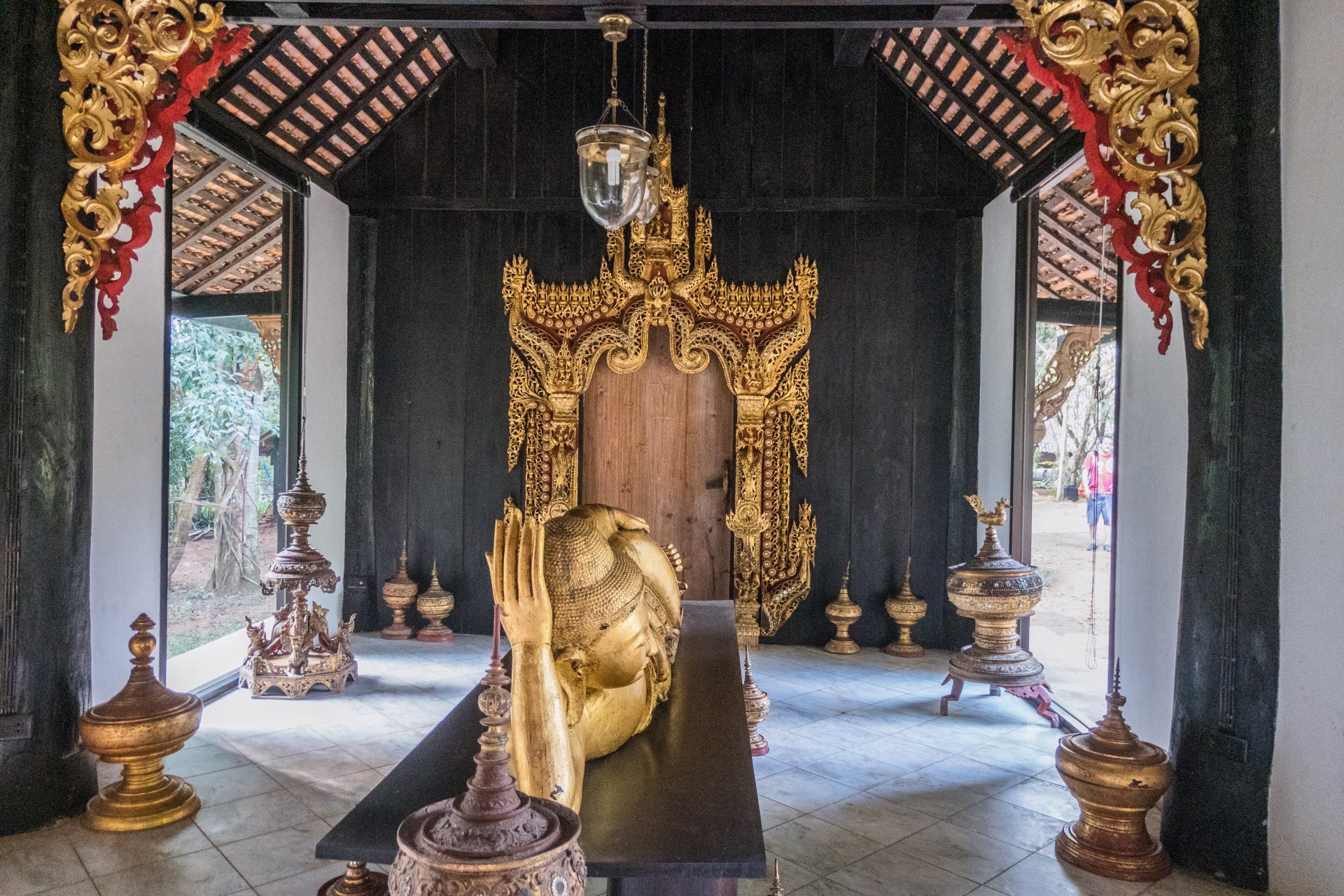
The omnipresent black color and the many details on display reveal the true intention behind this place: it is in fact a life-size artistic work, imagined by Thawan Duchanee, a renowned national artist in the field of fine arts, known for his singular and bold style.
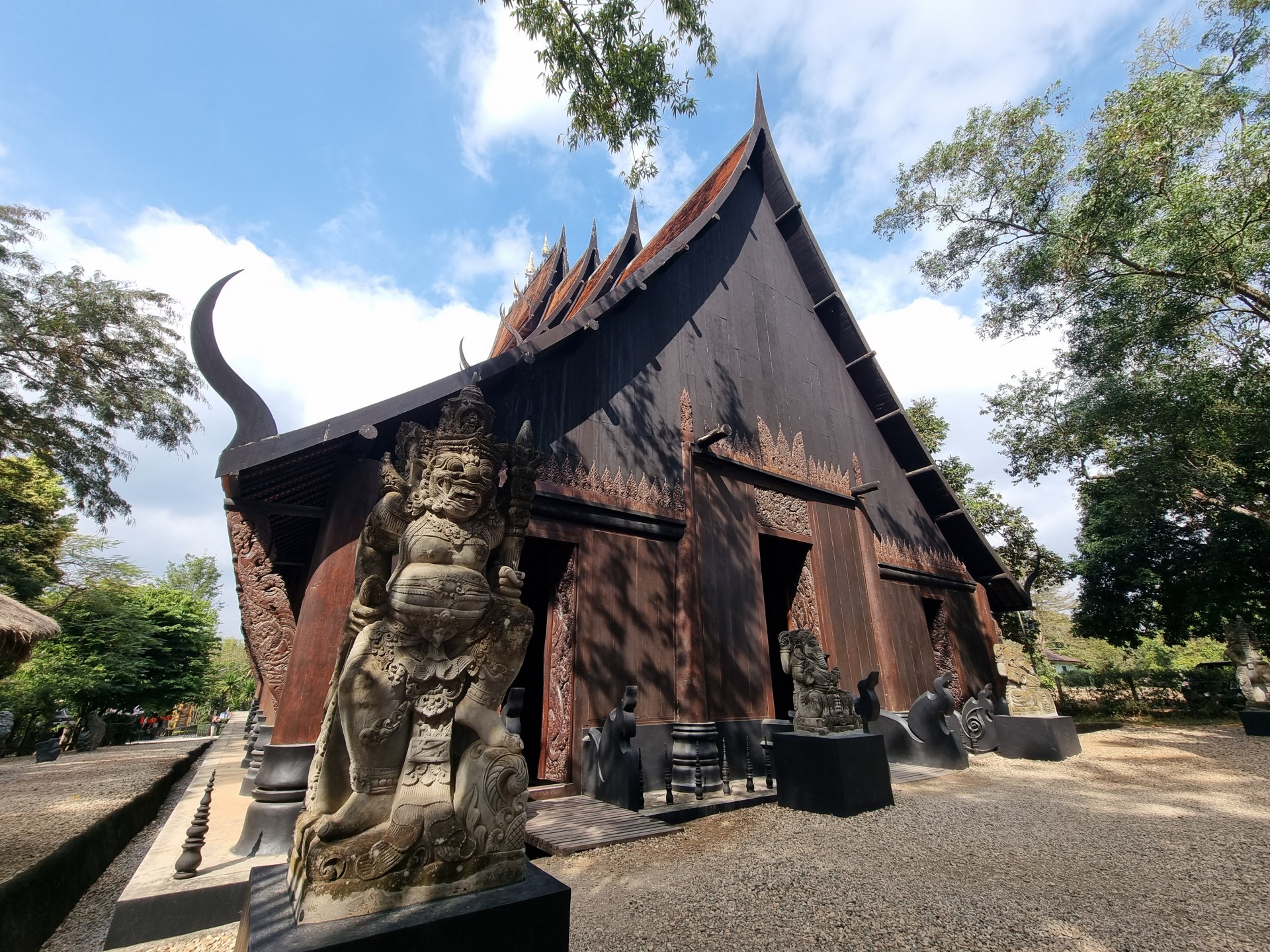
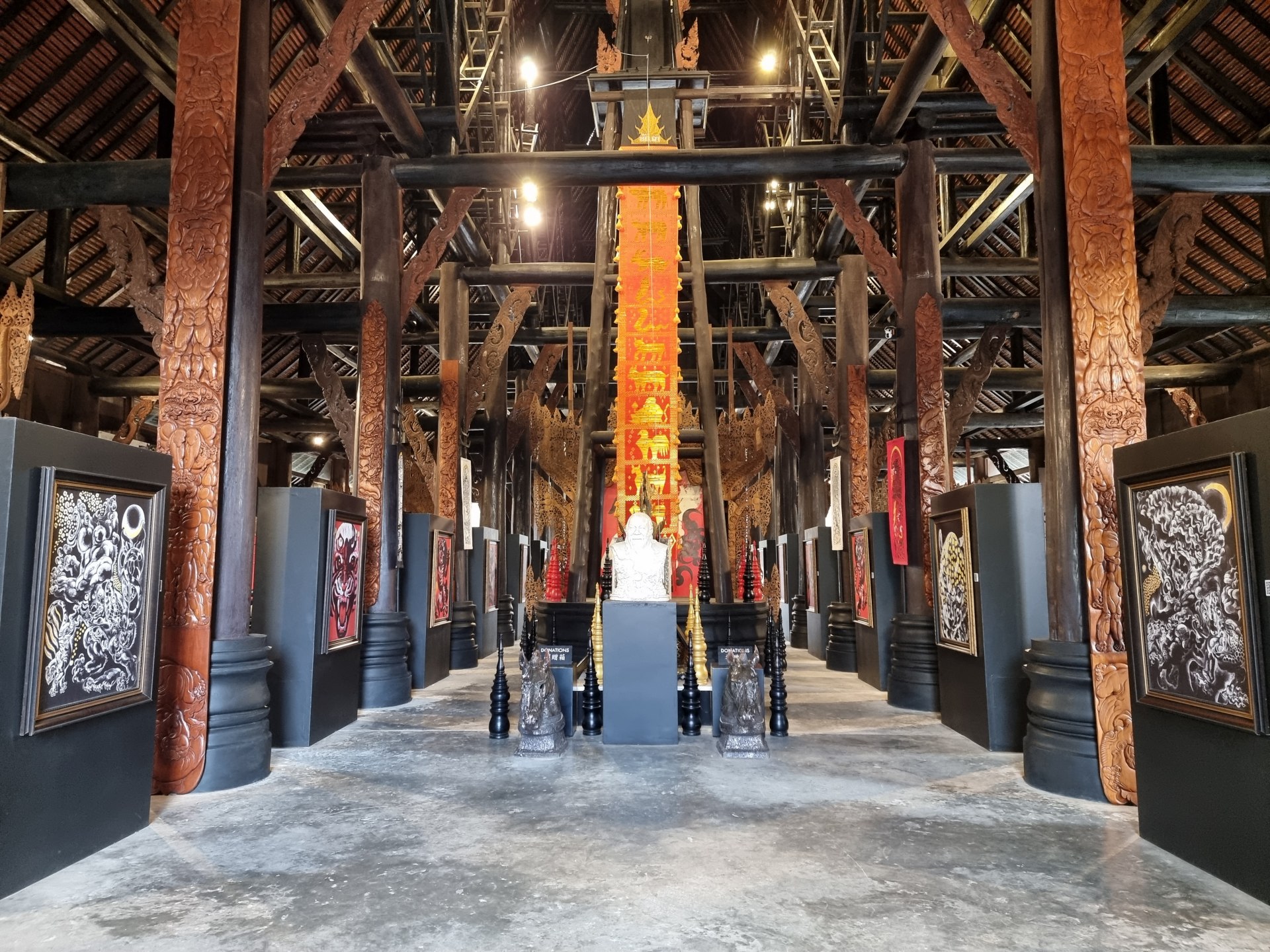
Overall, the exterior of the buildings impresses with their carved wood motifs, although some stand out with unusual appearances, including bell-shaped rooms, or a fish-shaped building with an interior furnished like a bedroom.
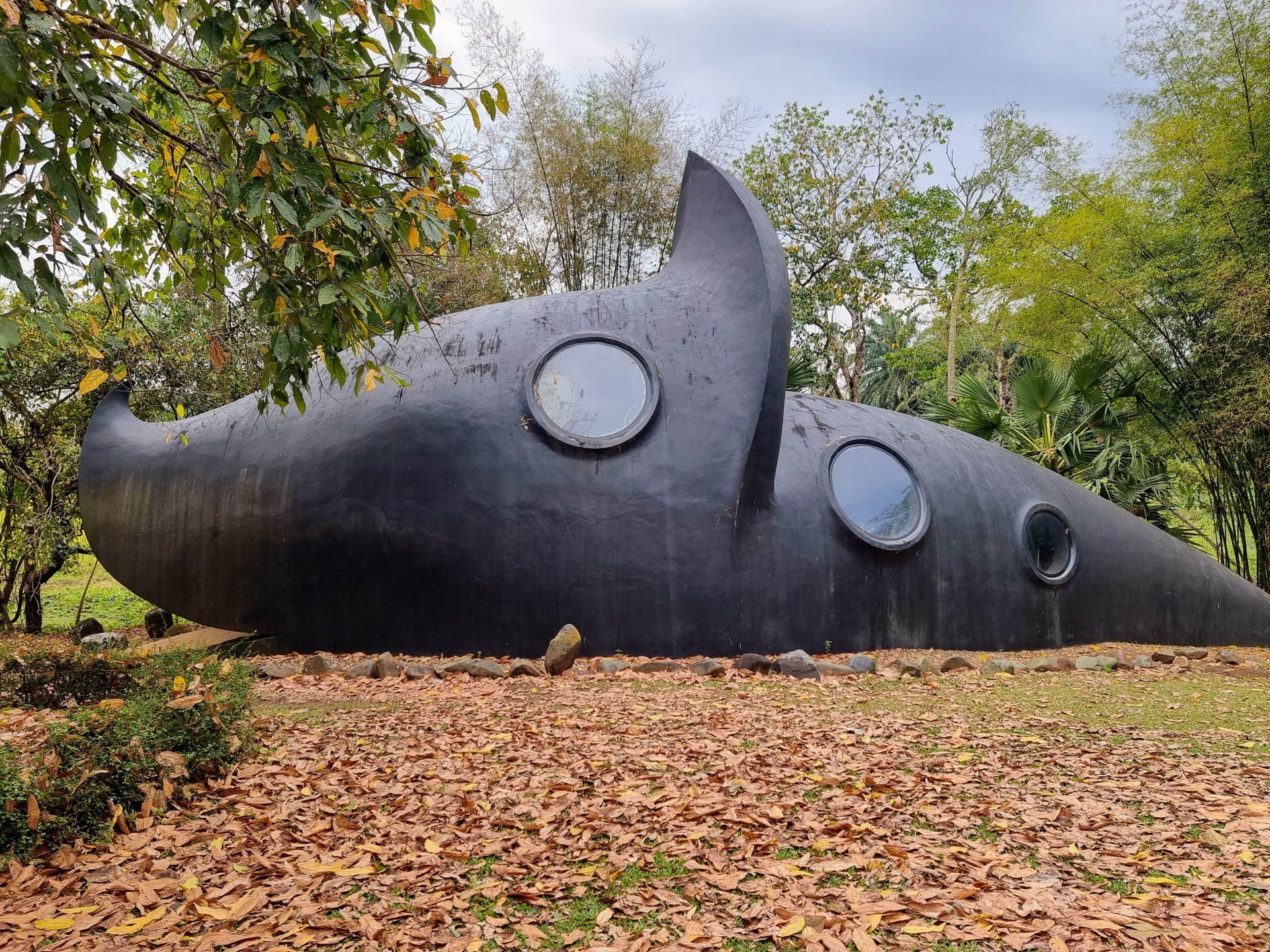
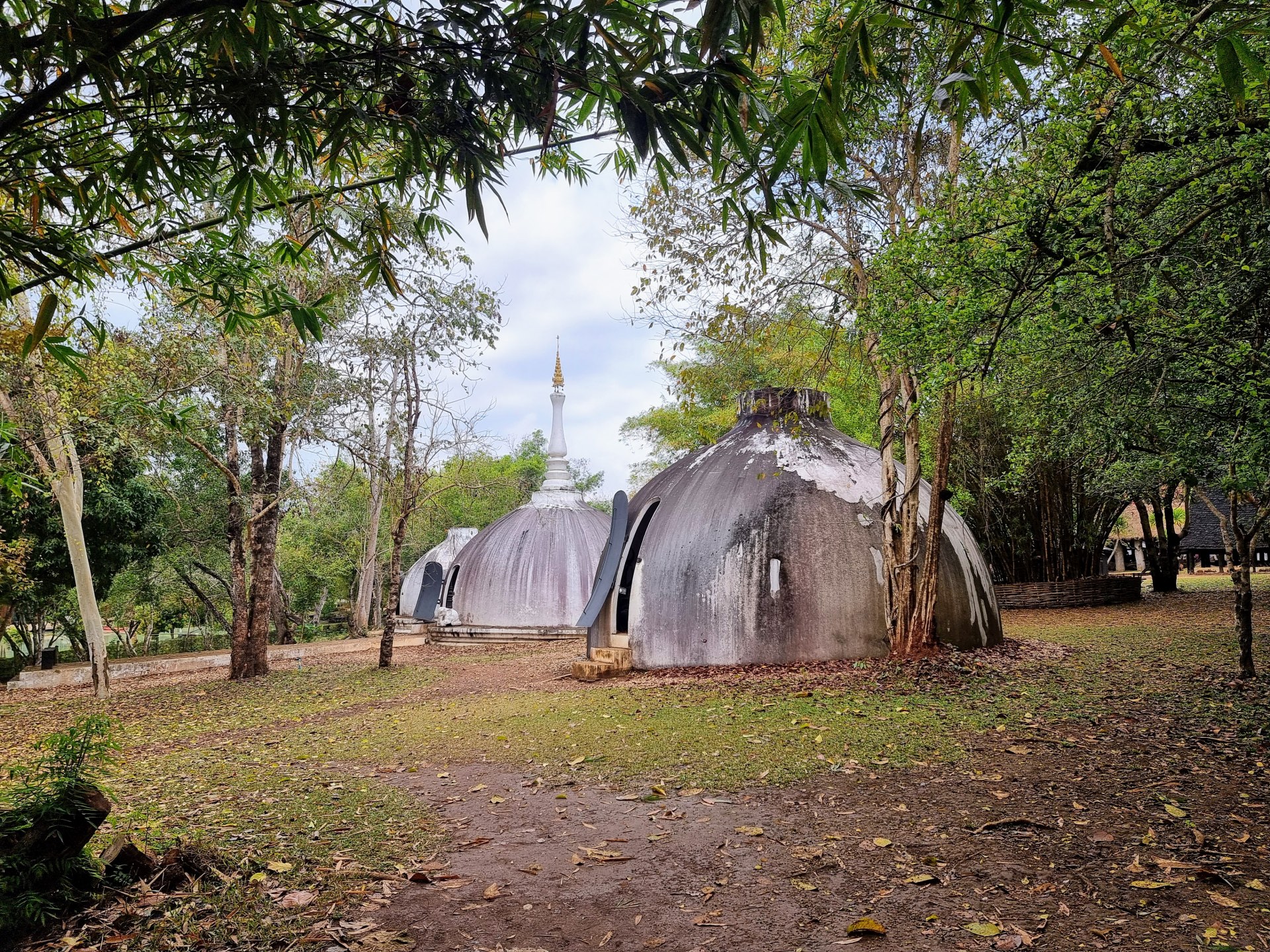
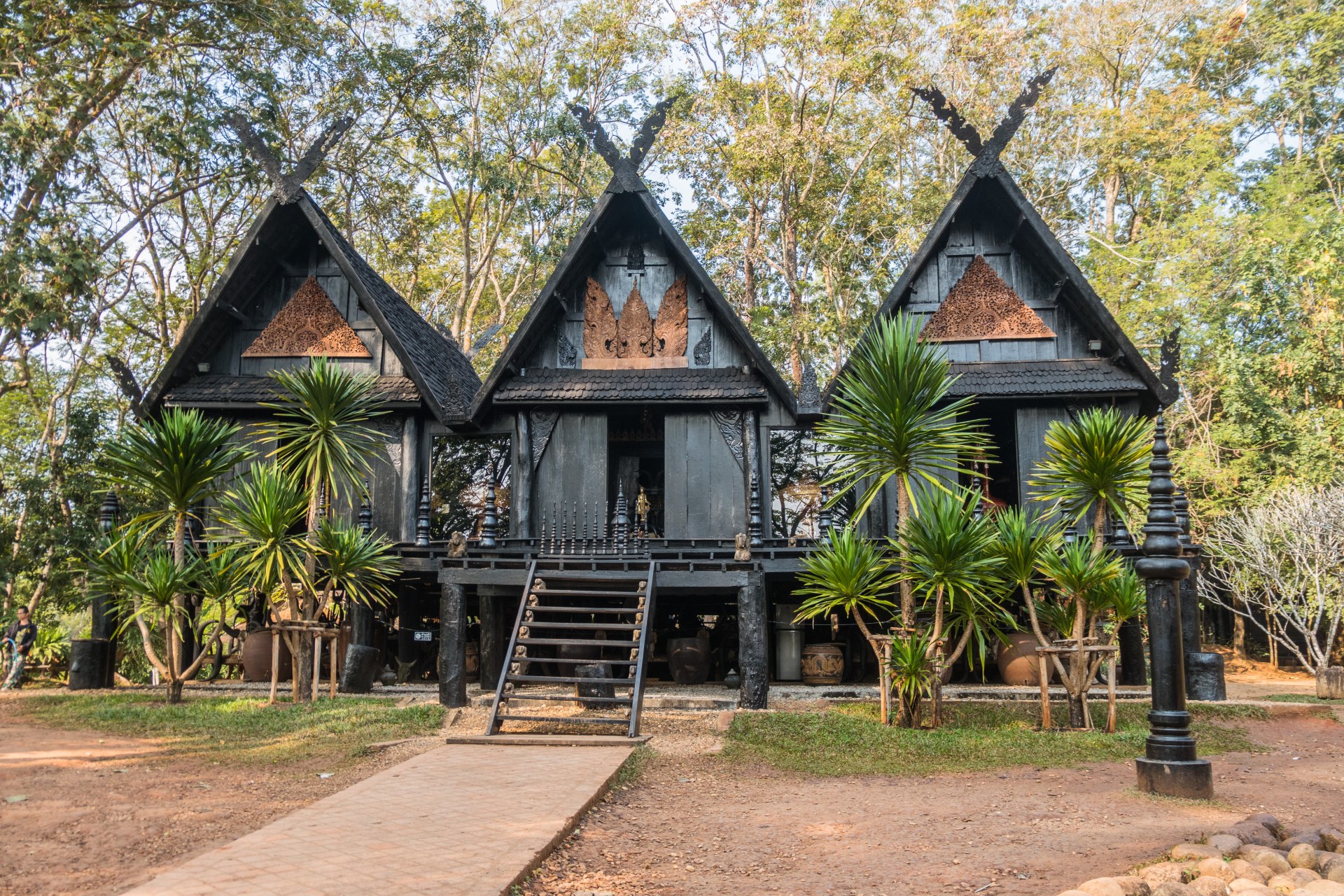
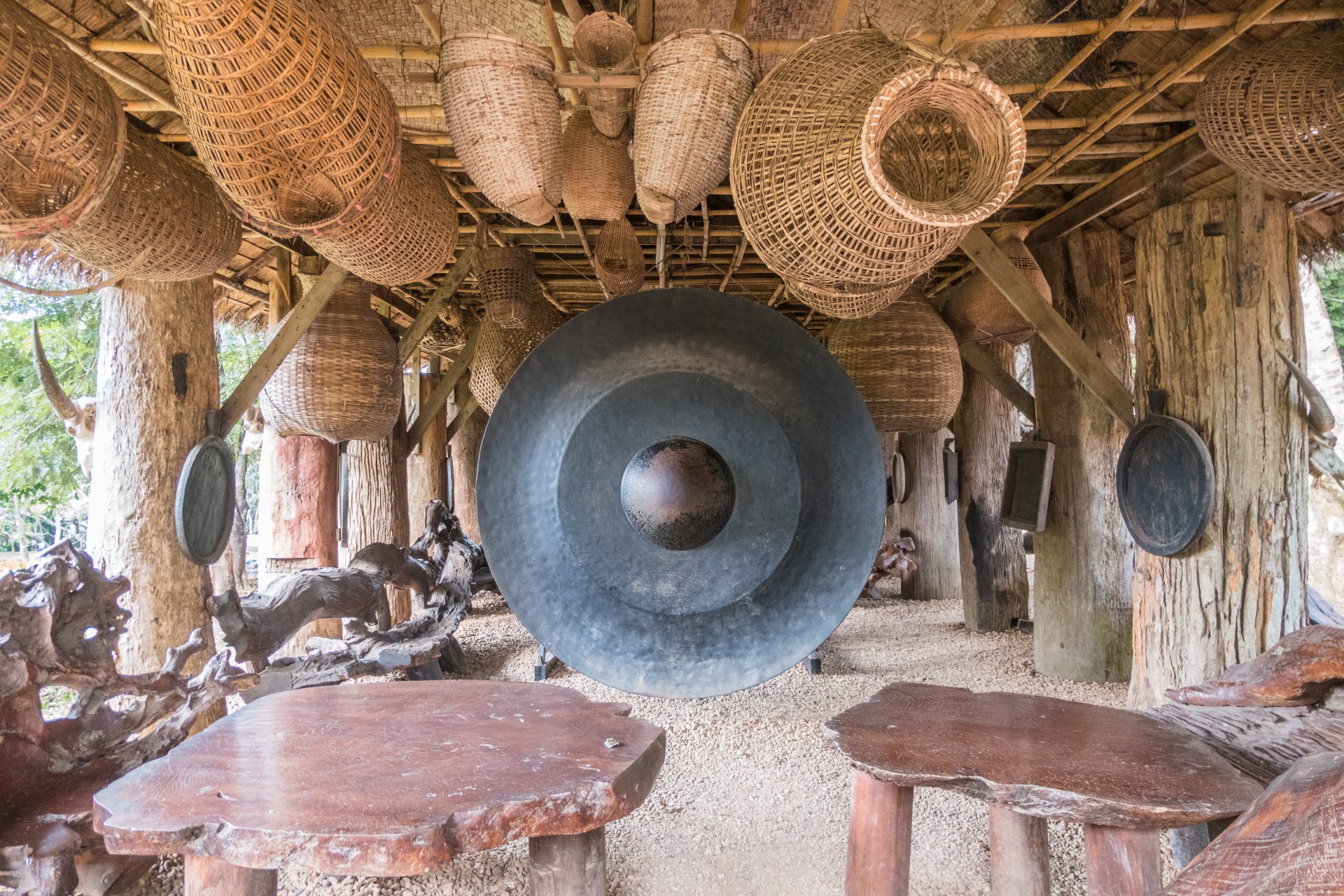
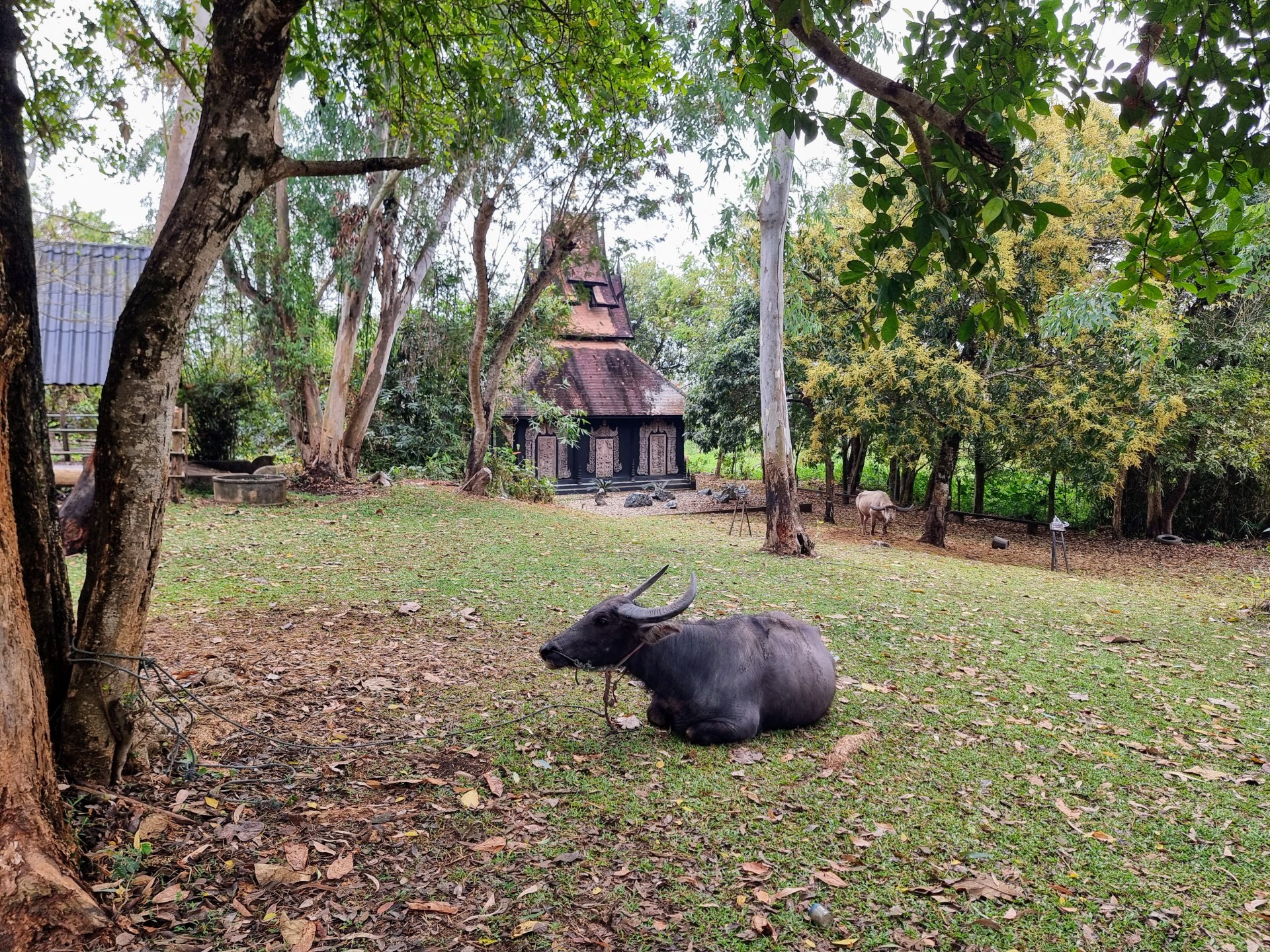
The interiors are also unusual. There are other "pseudo" rooms and even fake toilets or bathrooms, while others house a profusion of animal skins (crocodiles, snakes, bears, wolves). Finally, scattered throughout, there are bones and numerous buffalo horns.
In a different vein, you will repeatedly encounter figurines with very, very prominent male anatomy. These artistic choices give the place a dark, almost disturbing atmosphere according to some, far removed from the idea of a traditional museum.
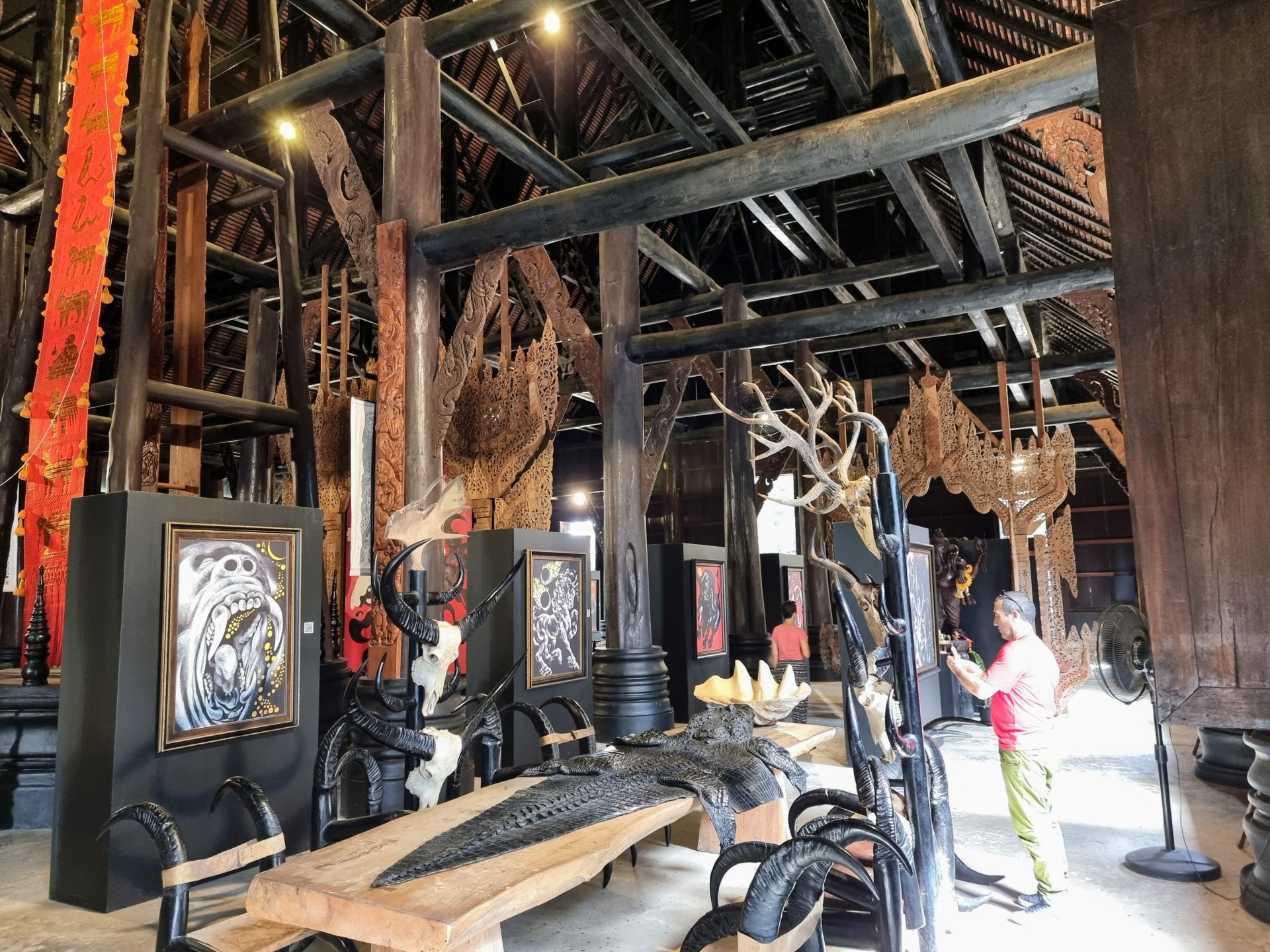
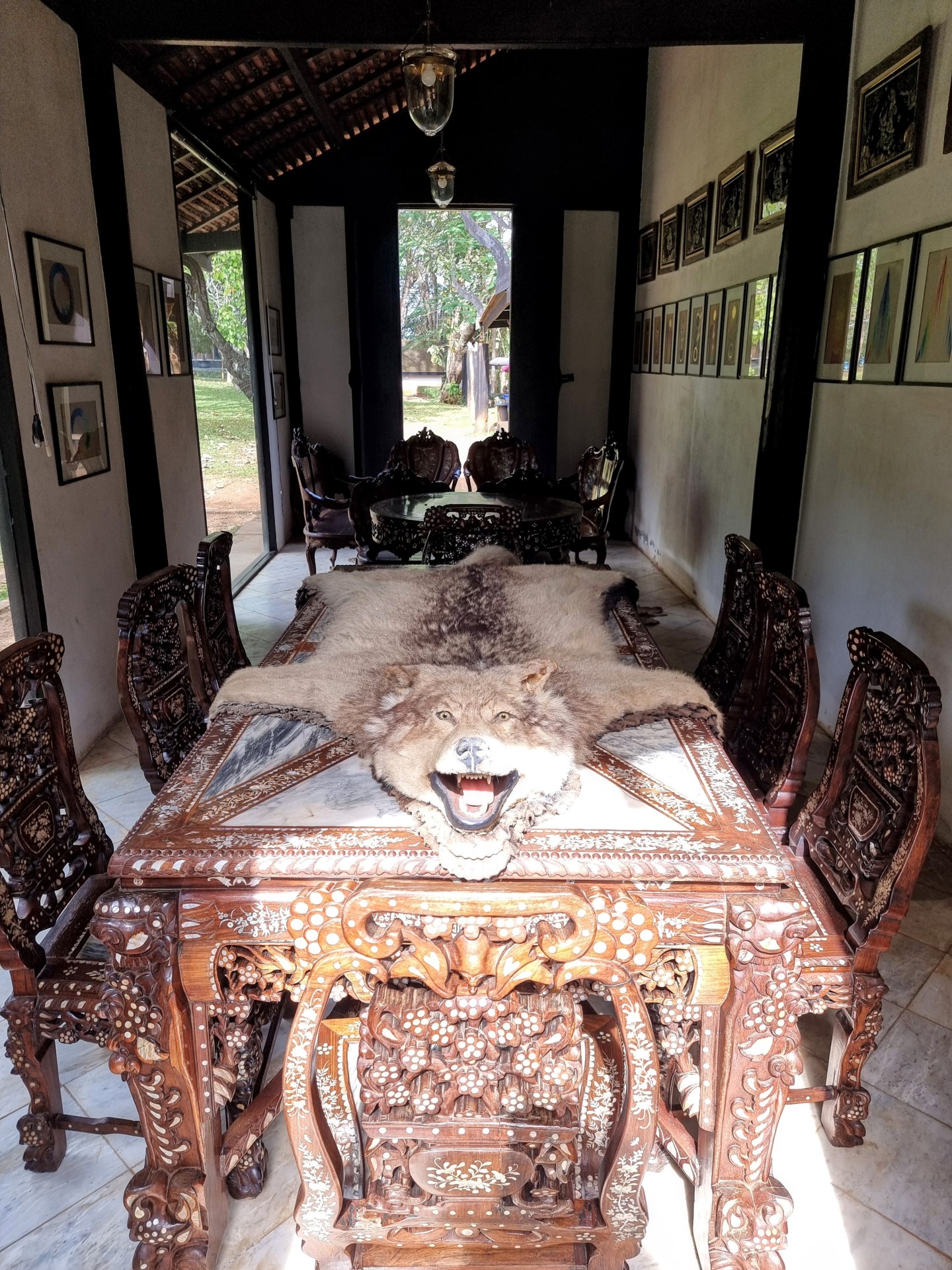
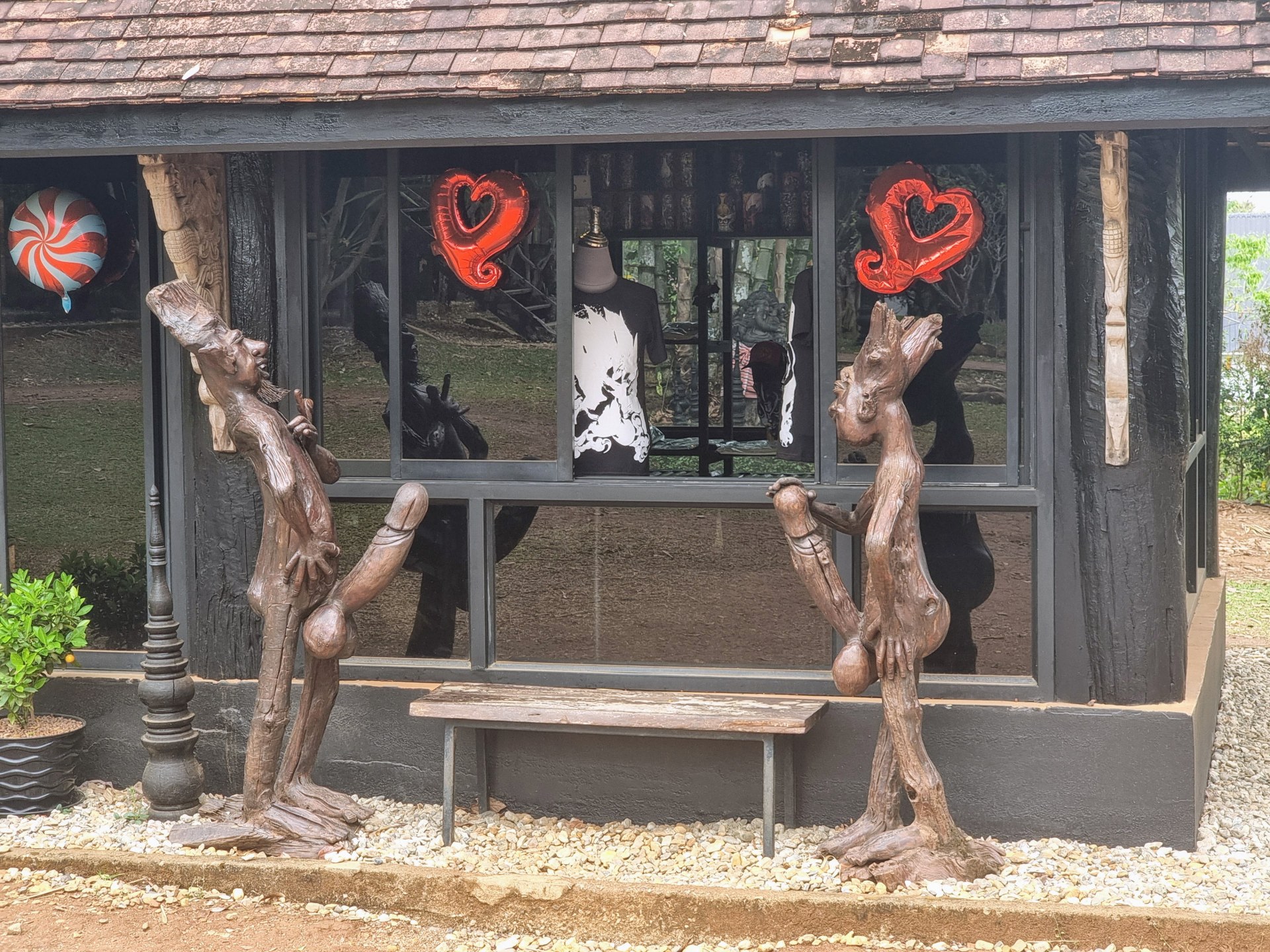
The message behind it all? A reflection on human failings. The omnipresent black color and these particular elements symbolize the darkest aspects of our nature. The animals on display symbolize our domination and the suffering inflicted upon the animal kingdom, while the risqué sculptures denounce the obsession with material and carnal desires.
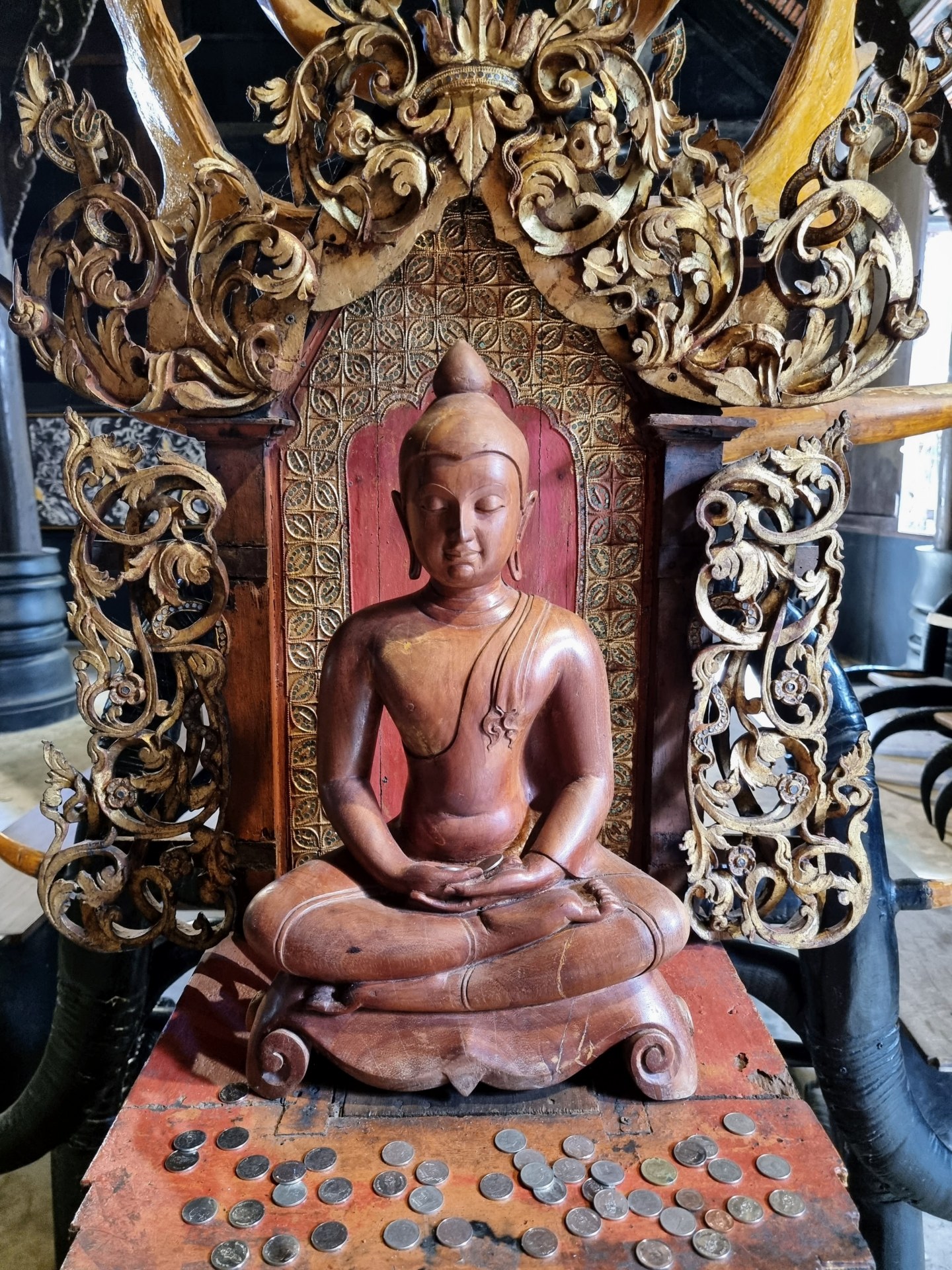
Of course, Buddhism and beliefs are not forgotten because on the site you will find many statues of Buddha (mostly carved wood) as well as of the Hindu deity, Ganesha.
Since the death of its creator, his son has taken over the management of the site, which continues to evolve over time, although to a lesser extent compared to Wat Rong Khun.
As an interesting aside, it is worth noting that in Chiang Rai, without consulting each other, two contemporary artists conceived two distinct projects: Thawan Duchanee for the Baan Dam Museum, with its dark theme, and Chalermchai Kositpipat for Wat Rong Khun , where white, representing purity and light, dominates.
Two works at opposite ends of the spectrum, forming a kind of artistic yin and yang: darkness versus light, gloom versus purity. Two visions, two experiences, a striking contrast.
Wat Huay Pla Kang
Wat Huay Pla Kang is a Buddhist temple that stands out in its architecture, due to its Chinese influence, linked in particular to Mahayana Buddhism, dominant in the Middle Kingdom.
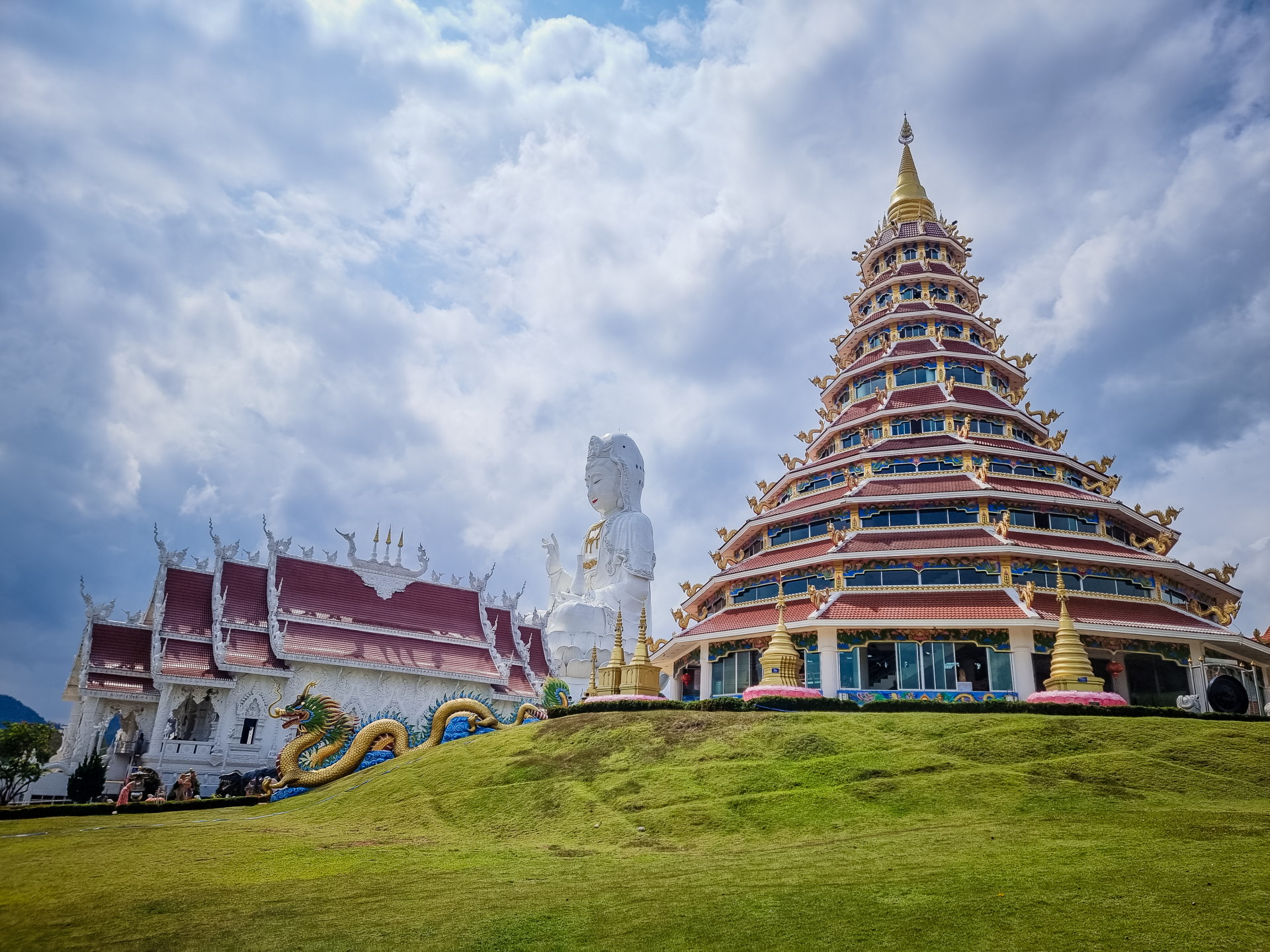
Located approximately 7 km from the center of Chiang Rai, this atypical temple, very popular with locals, comprises three main buildings:
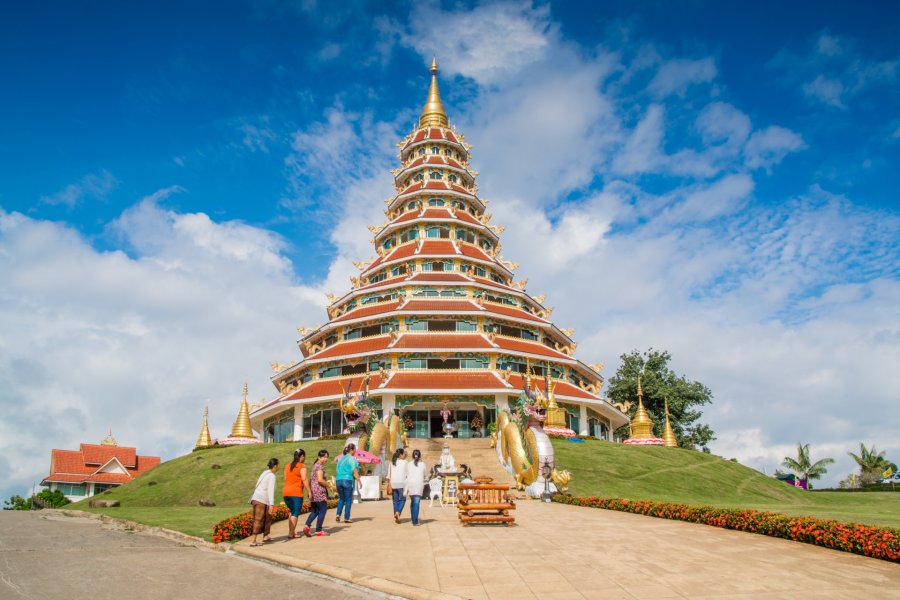
- Phop Chok Dhamma Chedi, the 9-story pagoda.
- The White Ubosot, the only one incorporating Thai architectural styles.
- The statue of Guanyinimposing at 79 m high.
To get all the details, I've dedicated an article to this temple and a walk to take in the area surrounding it:
→ Wat Huay Pla Kang and the Kok River Valley in Chiang Rai
The advantage of this temple, although modern and therefore without historical value, is that the three buildings are completely different.
The 9-story pagoda already offers a glimpse of the surrounding landscape, but the ultimate experience here is accessing the 25th floor inside the head of the goddess! The only paid access to the site (40 baht), but it offers a breathtaking view of the Chiang Rai area.
Day 2: A day in the Golden Triangle
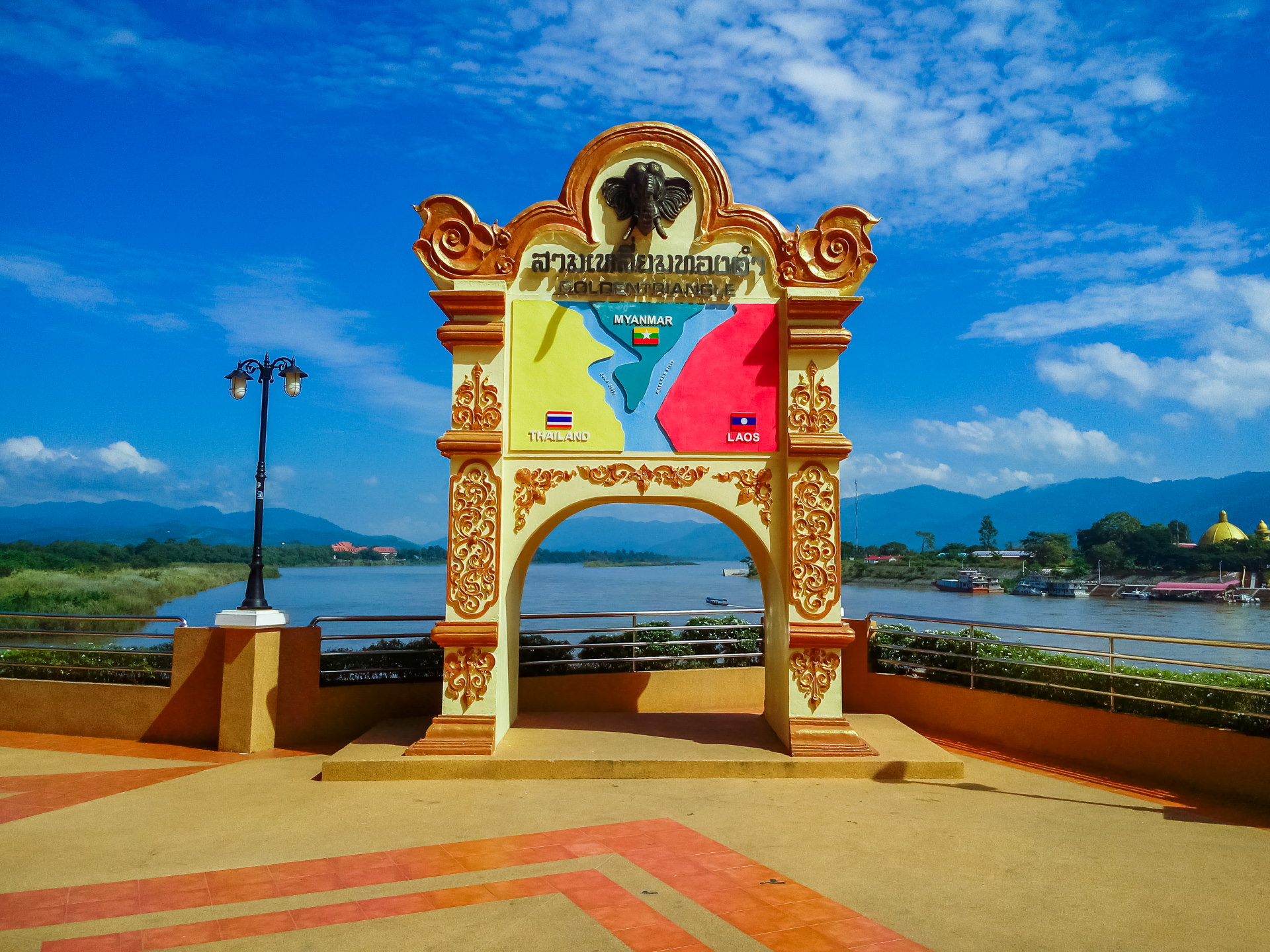
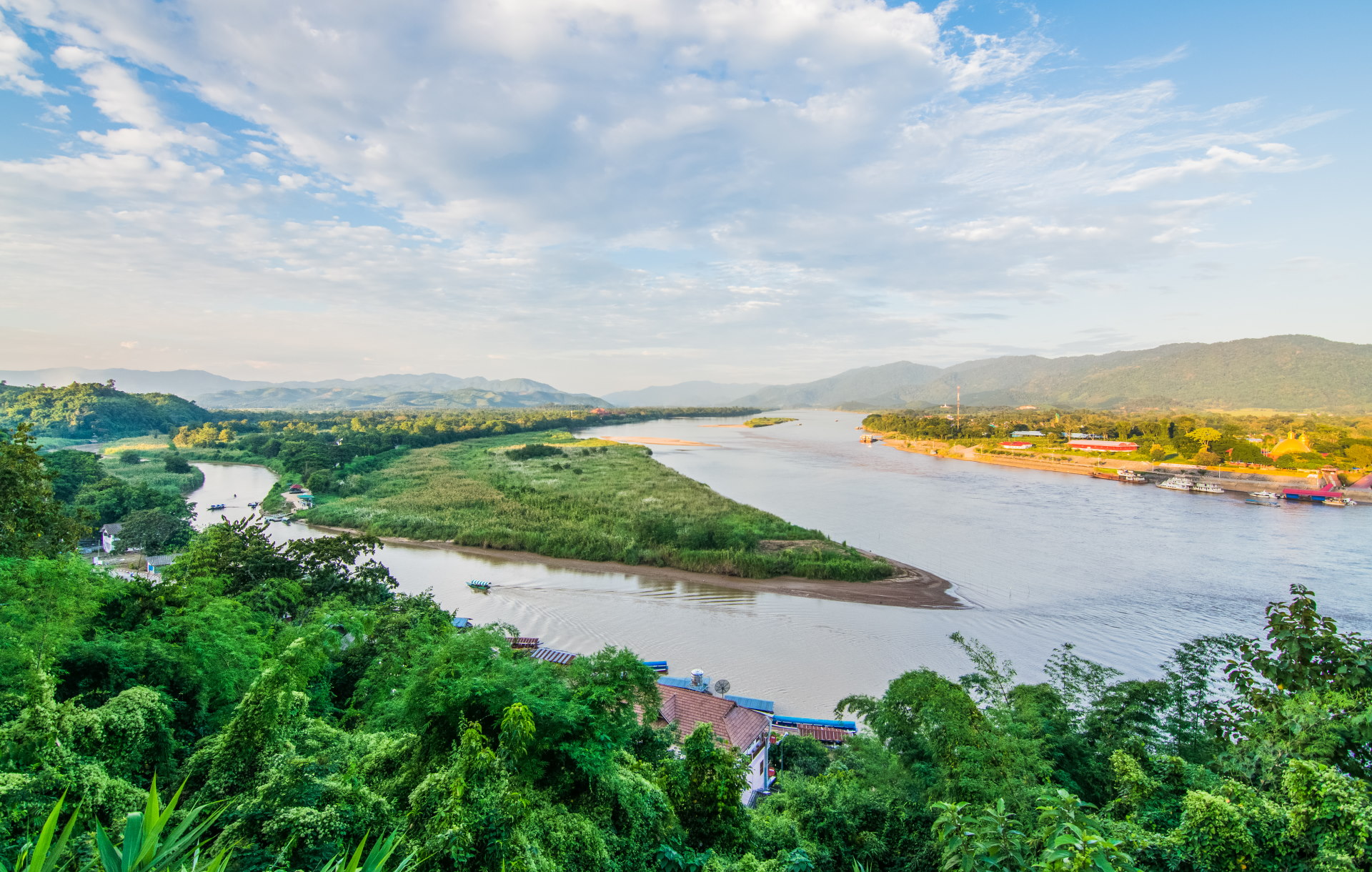
The Golden Triangle refers to the region where the borders of Burma, Thailand, and Laos meet, with the Mekong River as their common denominator. This name reflects both the regional triangle formed by these three countries, while the term "gold " recalls the turbulent history of this region, once a hub of the lucrative opium trade.
Today, the Golden Triangle attracts visitors primarily for its mountain panoramas, rice paddies, tea and coffee plantations, and picturesque villages.
A day that blends landscapes and cultures, perfect for getting a glimpse of the province and getting out of the city.
- Golden Triangle ParkA triple border where the Mekong meets the Ruak River.
- Hall of OpiumAn enriching visit to better understand the region and its past.
- Mae Sai Border MarketLocated at the border crossing with Burma, it is an ethnic melting pot.
- Ban Pha Hi (coffee village)A coffee-producing village with an incredible view of the valley.
- Tea plantation (Choui Fong)This plantation offers a relaxing setting and the opportunity to enjoy locally produced quality tea.
This itinerary requires having a vehicle for the day, with or without a driver, or choosing a tour that includes these stops. It's a full day: leave early and keep in mind that visiting the museum and the detour to Ban Pha Hi takes longer than a simple photo stop.
Doi Tung is a possible option depending on your timing, but I haven't included it by default because it requires some time to fully enjoy the royal villa and gardens on an already busy day. However, since the Hall of Opium is closed on Mondays, you could replace the museum with Doi Tung if your visit falls on that day.
The Golden Triangle Park in Sop Ruak
The famous point where Thailand, Laos, and Myanmar meet is more than just a landmark on a map. Upon arrival, it's impossible to miss the large golden Buddha statue, perched on a boat-shaped structure on the riverbank.
The "park" is called that, but it's more of a mix of souvenir shops and a viewing platform offering a view of the confluence of the Mekong and Ruak rivers, with Laos and Myanmar on the opposite bank. As for Laos, you can't miss the buildings and giant casino on the other side, a veritable new city with a less than glorious history. I wouldn't recommend going there, but a boat trip on the Mekong is possible if you have the time.

You can gain some altitude by accessing the small hill of Wat Phra That Pu Khao, where there is a viewpoint overlooking the border crossing as well as a small ruin of an ancient temple.
The Hall of Opium
Just 2 km from the Golden Triangle Park, the Hall of Opium is undoubtedly one of the most interesting museums in the region. It was established under the royal patronage of the Mae Fah Luang Foundation, with the aim of raising awareness among visitors about the history and consequences of the opium trade in this iconic region.
The visit begins with a long, symbolic tunnel. Inside, the exhibits address the origin of opium, its social and economic impacts, the role of colonial powers, and the alternatives implemented in the region.
Note that the museum is closed on Mondays, so plan another visit instead if you happen to be there that day.
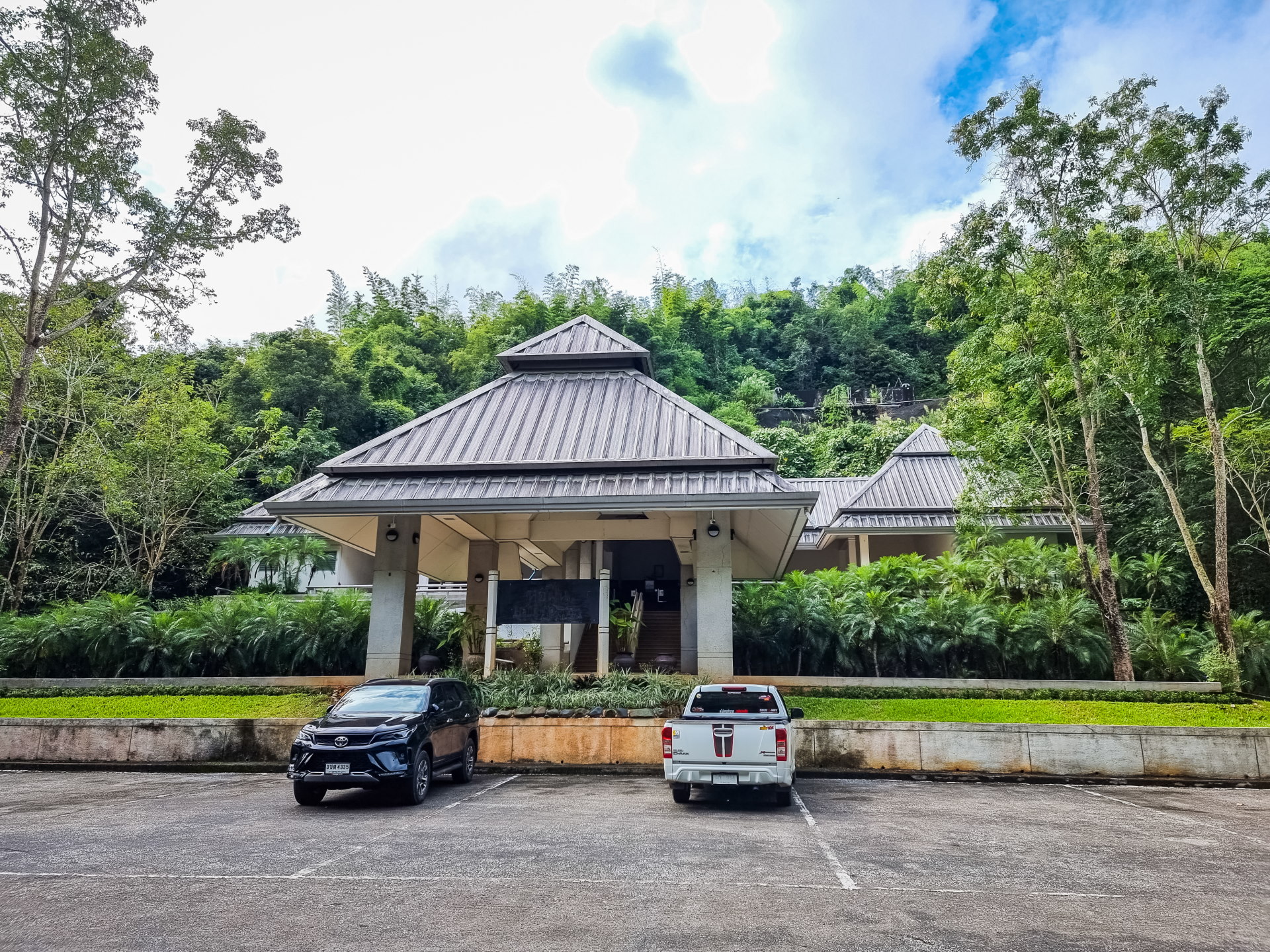

Note the name: the Hall of Opium is different from the House of Opium, which is located directly in Sop Ruak. I provide details about the location and practical information in my article on Chiang Saen and the Golden Triangle.
The Mae Sai border market
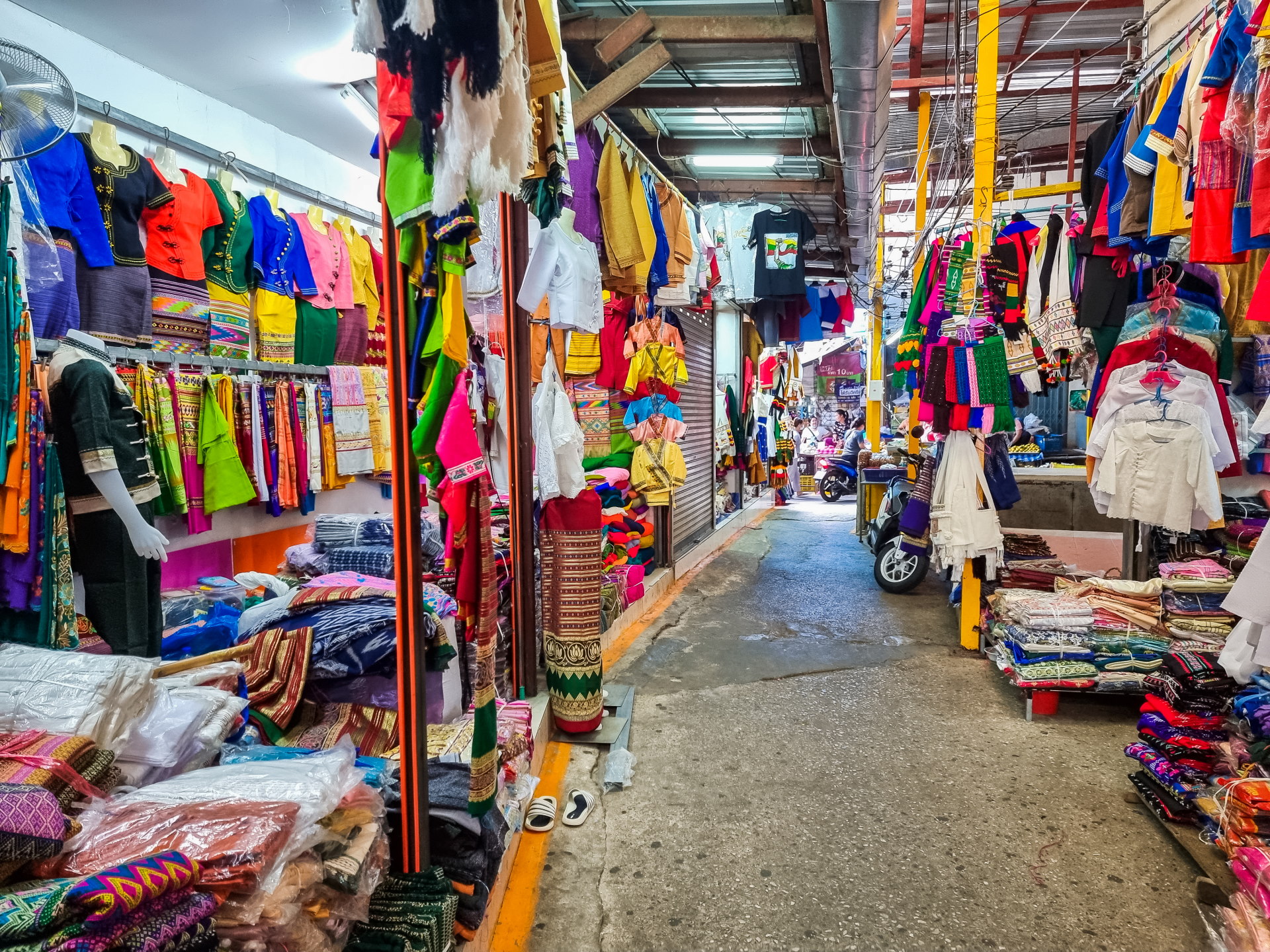
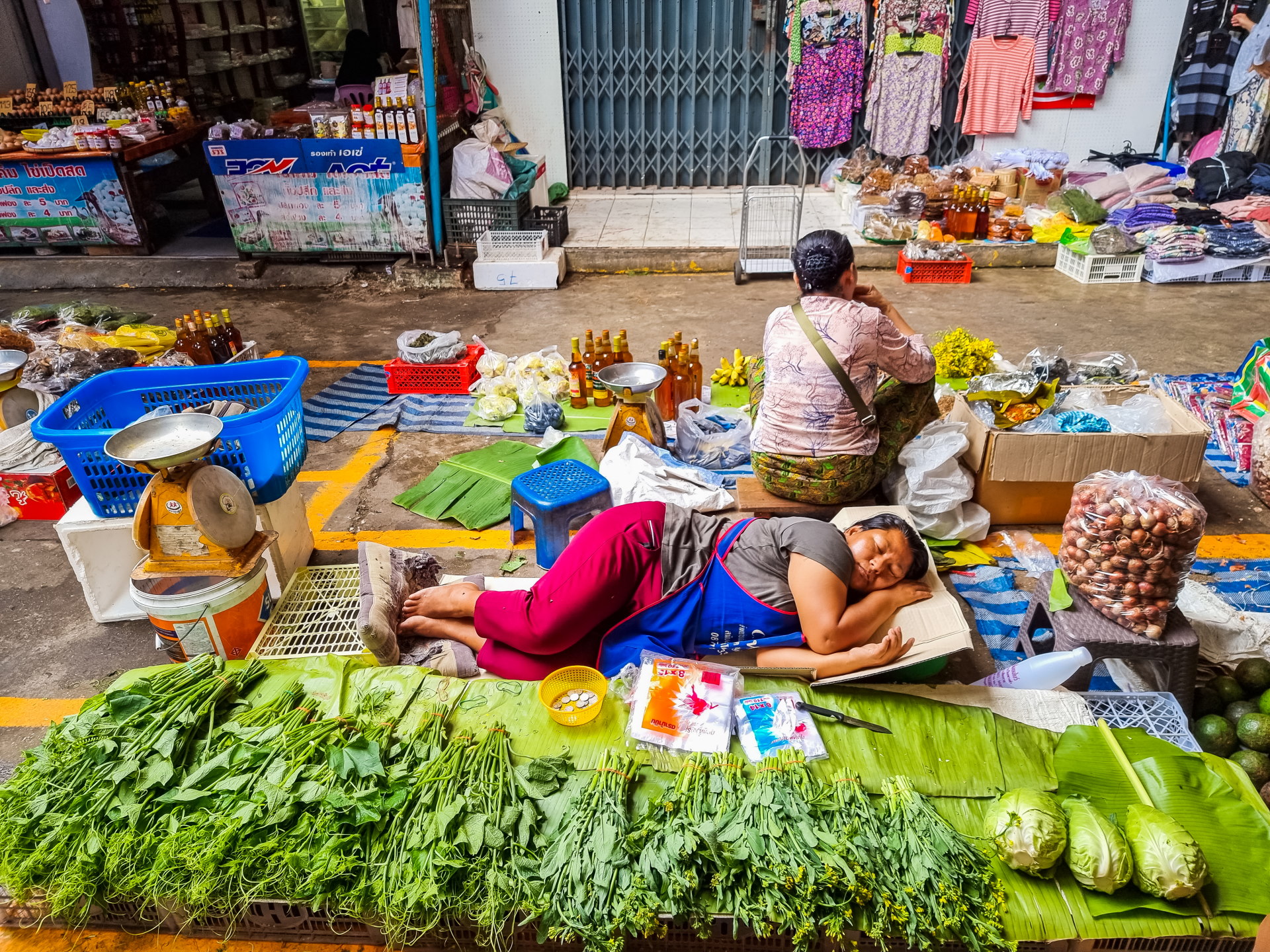
After the Mekong, we head towards Mae Sai , on the Burmese border. Many Burmese come here every day to buy and sell goods to take back across the border.
The market is a veritable Ali Baba's cave, with all types of goods: from clothes and beauty products to fresh flowers and vegetables.
Ban Pha Hi: A break in a coffee village
When I first discovered this mountain, it was precisely to reach Ban Pha Hi . I had noticed that coffee was produced there and that it was an Akha village. On this last point, it's not immediately obvious, as the houses are increasingly made of more permanent materials, similar to those found on the plains.
Apart from the traditional swing that can be seen at the entrance to the village, and a few rare inhabitants with some traditional clothing, you should not go there to see a traditional village in the "pure" sense of the term but rather for its location, straddling Thailand and Burma, whose border you follow by taking route 1149.
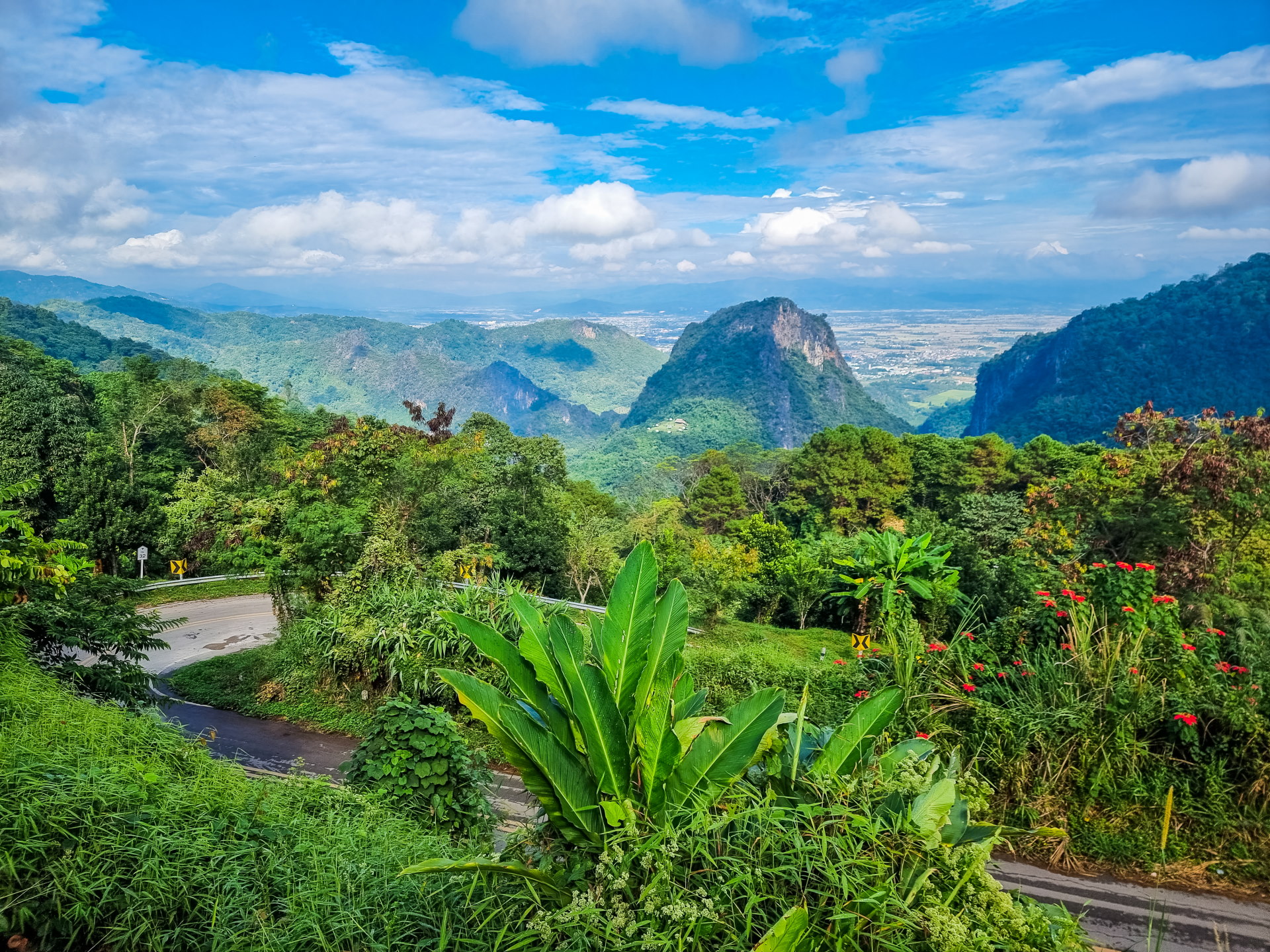
The village is perched in the mountains that form a natural border, but it faces the Chiang Rai valley. For me, a coffee lover, it's a great reason to go up to this area; it's cool, sometimes you're literally up in the clouds, and you'll pass lots of plantations along the road.
The place has changed a lot since my first visits, as more Thais have ventured into the area, but it remains a unique experience, especially since the village is just one of the stops to make in the area.

Depending on the time you have available, you can take a tour of Wat Phra That Doi Tung as well as the royal villa and its garden.
→ For access and all stops in the surrounding area, see my article on Ban Pha Hi, Doi Tung and Route 1149.
The Choui Fong tea plantation
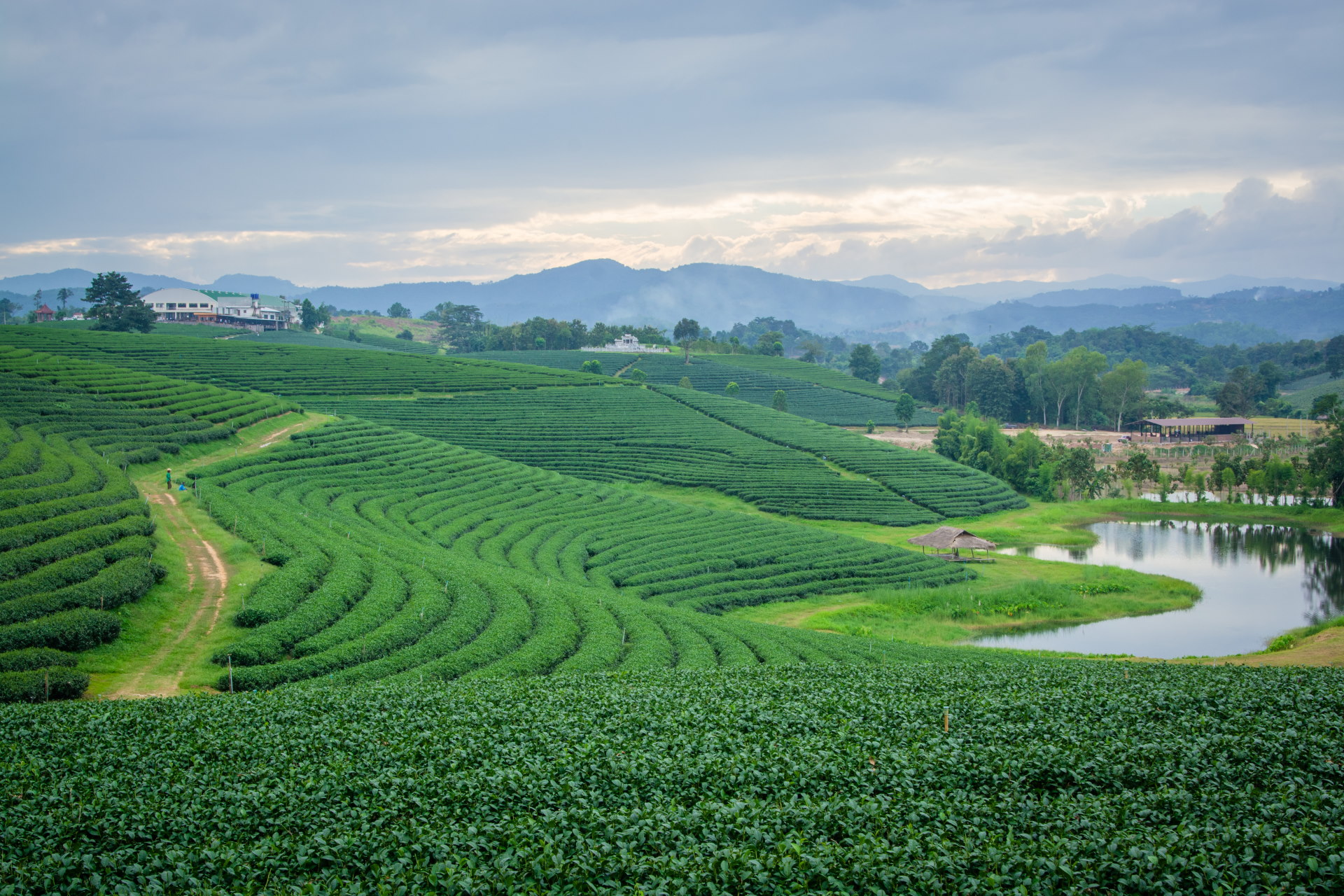
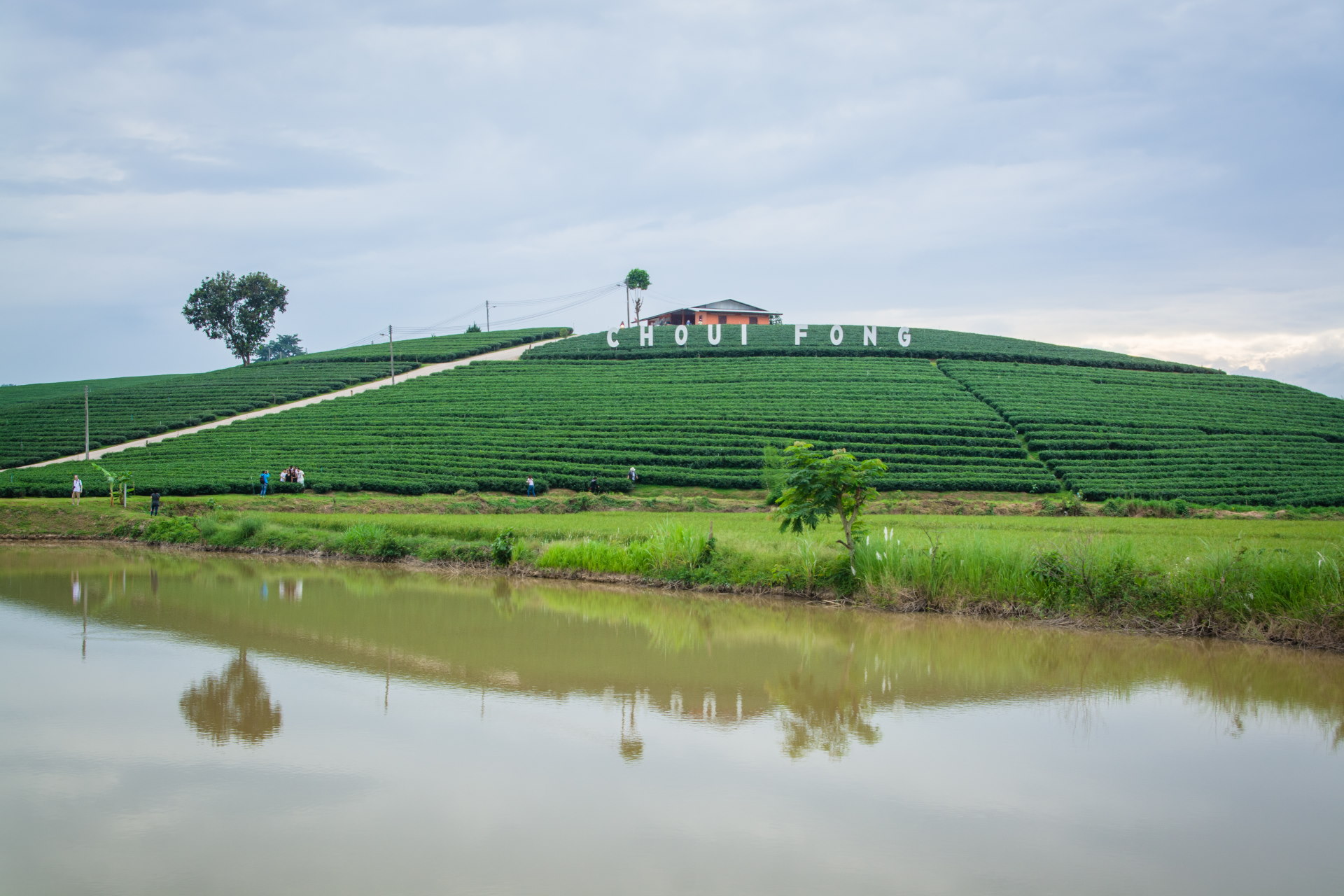
On the return journey to Chiang Rai, Choui Fong offers a scenic drive through tea plantations (and pineapples in the surrounding area). Rows of tea bushes follow the contours of the hills, with spaces to stop for a drink and enjoy the view, particularly of Doi Tung visible in the distance.
This is the stop to save for the end of the day, if you still have time before closing. After the museum and the mountain detour, it's better to take a leisurely break than to rush to add one last visit.
Day 3: Explore the Kok River Valley
If you have an extra day, well done, you're doing more than average! In that case, I suggest exploring the west of Chiang Rai, along the Kok River. You'll stay in the same hotel, but the scenery will change: villages, fields, and mountain roads will replace the temples.
The area around Chiang Rai is characterized by spectacular mountain scenery and the history of the hill tribes who have lived there for generations. Among them are the Akha, Lahu, Karen, Yao, and Lisu , each with their own traditions and way of life.
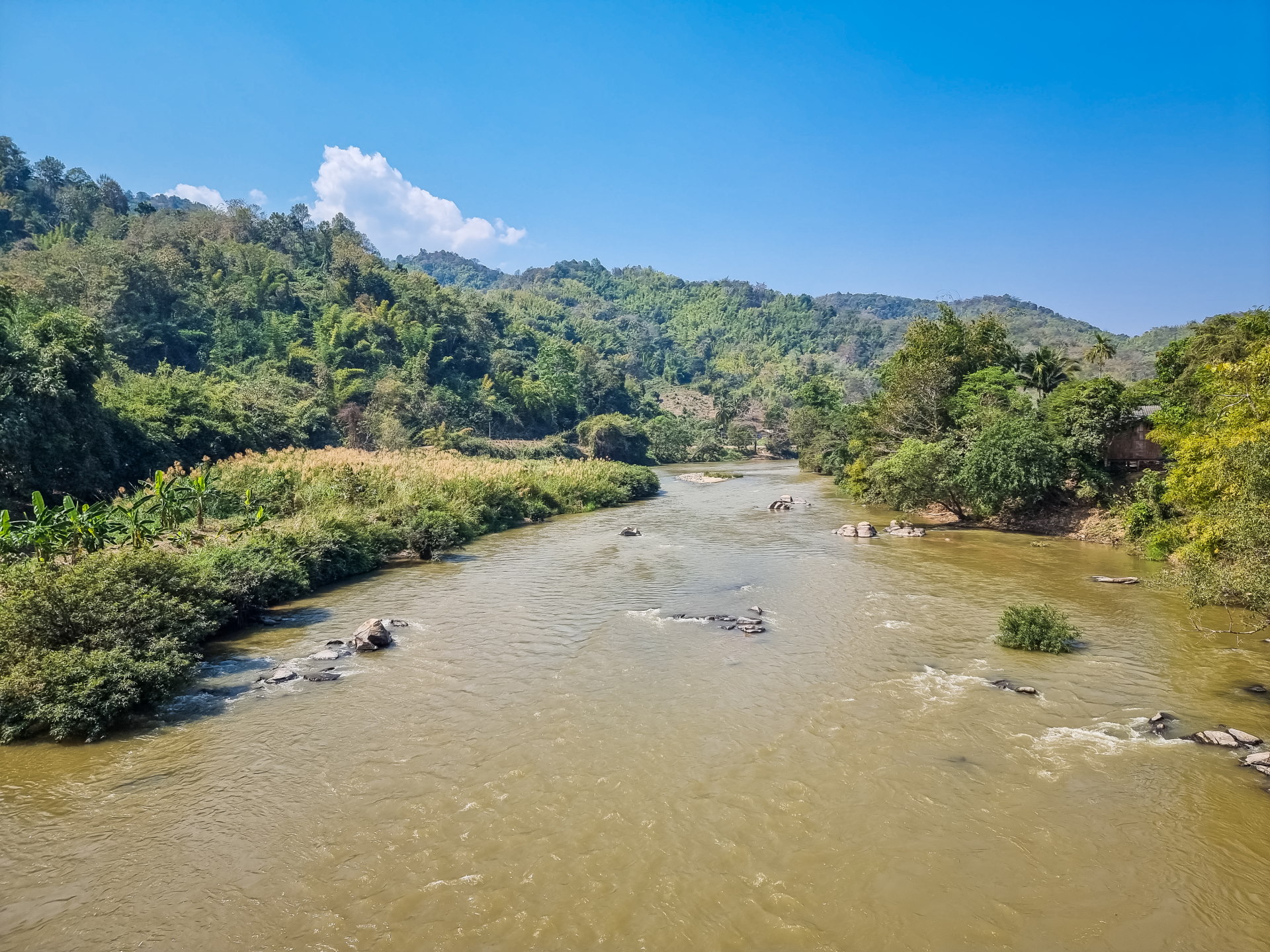
One of the best ways to explore this cultural facet while enjoying nature is to follow the Kok River valley , which runs through the region, connecting Chiang Rai to several ethnic villages and natural sites.

If you would like to learn more about these communities and the surrounding landscapes, I have compiled the must-see places and the best experiences to have in my full article which I share with you below.
- Wat Tham PhraA possible first stop is this temple on the riverbank.
- The road and the villages of the valleyAgricultural landscapes and a few stops to choose from depending on your preferences.
- The Huai Kaeo waterfallA walk in the forest to complete the day before returning to Chiang Rai.
For this program, having your own vehicle is preferable, but it also works with a private driver for the day. This allows you to choose your stops and reach the waterfall, which is accessed away from the main road.
However, there are excursions that do more or less the same thing, so if you prefer to have a guide and better understand what surrounds you, I'll tell you about it here.
Knowing that normally I include Wat Huay Pla Kang in this day, you can start directly in the valley if you have already visited it on the first day or on the contrary, lighten the temple day.
Alternatively, there is still a boat trip that can be done; it is another way to discover the Kok River, but it does not serve the same places: it is better to consider it as a variation of this day.
Access points, villages and hiking opportunities are detailed in my article dedicated to the valley:
See the steps and tips for exploring the Kok River Valley.



What is there to see in the city between excursions?
The days described above will mainly take you outside the city center and even outside the city itself. But if you have some free time, you can wander around the streets of Chiang Rai a bit.
The markets and the clock are easily explored in the evening; Wat Phra Kaeo or the municipal market can complement a free morning, on the day of your arrival or before leaving.
So I'm keeping these suggestions separate, to be distributed according to your schedule and desires, rather than adding them to already busy days.
Wat phra kaew
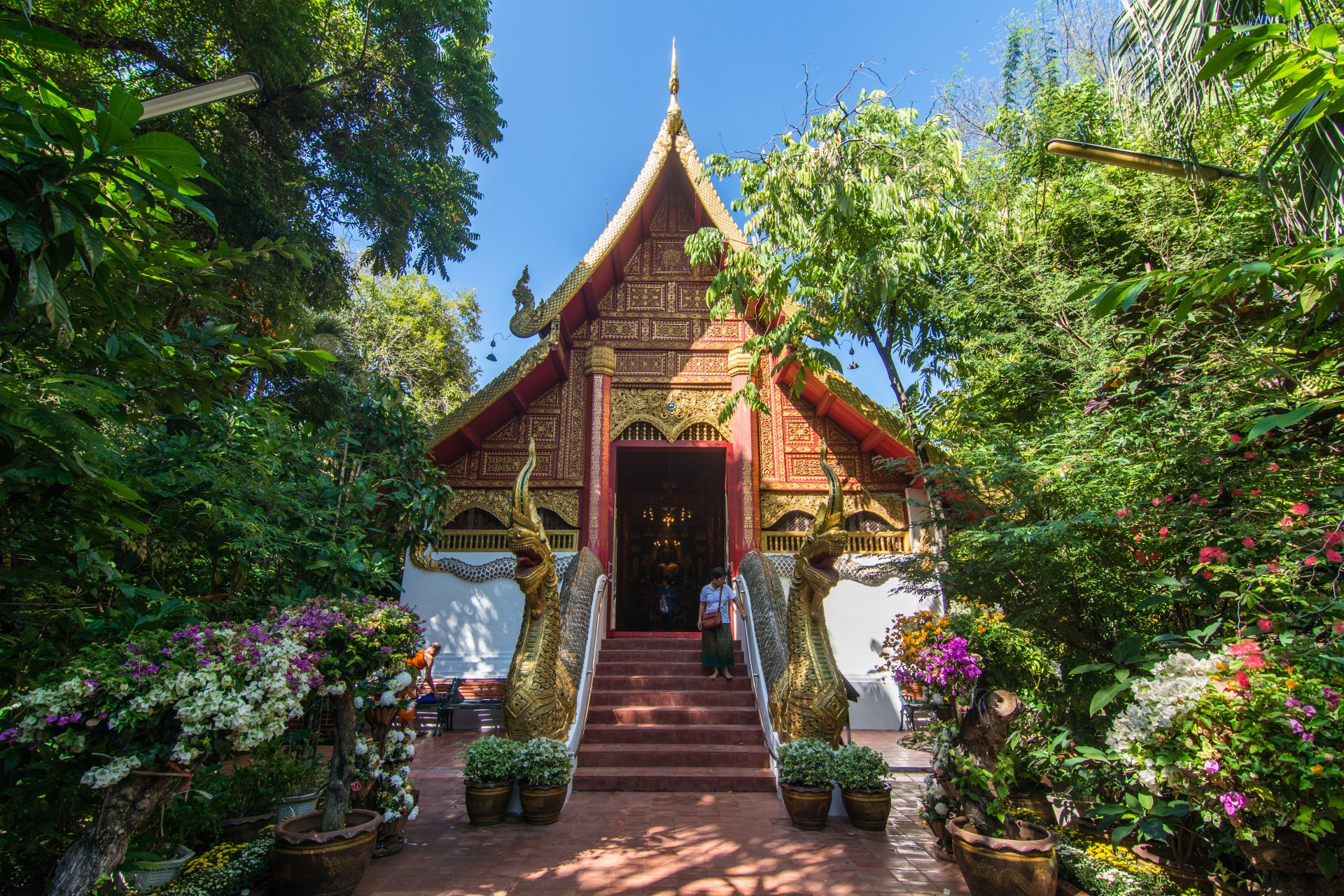
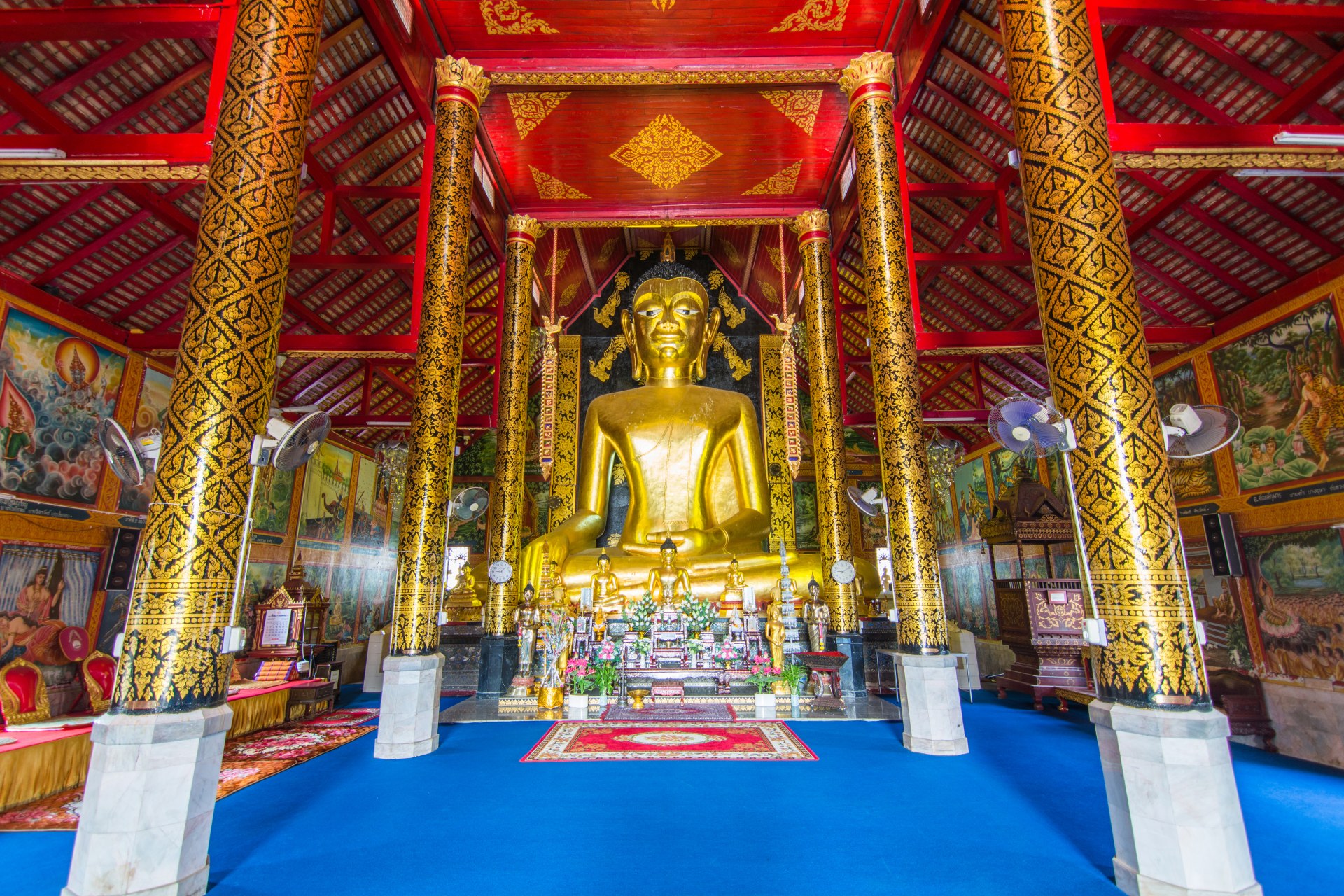
Yes, it is indeed the same name as the famous temple in Bangkok . And for good reason: it was in Chiang Rai that the famous Buddha statue was discovered in 1434 , which would give its name to the most important temple in the country, Wat Phra Kaew , or Temple of the Emerald Buddha.
Then located in a temple called Wat Pa Yia (the "temple of the bamboo forest"), the story goes that the statue was revealed in 1434 when the layer of stucco covering it cracked. This layer had probably been applied to protect the statue from looting in case of invasion.
A statue with an eventful journey
Although the origin of this statue remains mysterious, its history from its discovery is well documented. After being found in Chiang Rai , it left the city in 1436 to be transferred to the new capital of the Lanna kingdom, Chiang Mai , but ended its journey by "mistake" in Lampang , where a temple was built especially to house it (today Wat Phra Kaew Don Tao Suchadaram ).
Thirty-two years later, the statue was finally brought back to Chiang Mai, to Wat Chedi Luang , before being taken to Laos in 1551 , when the Lanna kingdom came under the rule of Lan Xang.

It was first housed in Luang Prabang , then moved to Vientiane in 1564 , where it remained for over 200 years at Wat Phra Keo . In 1778 , during the capture of Vientiane by the Siamese armies led by Chao Phraya Chakri (the future Rama I , founder of the Chakri dynasty), the statue was taken back to Bangkok.
Today, the Emerald Buddha is on display at Wat Phra Kaew , within the grounds of the Grand Palace in Bangkok.
The Phra Kaew Morakot – its official name – is not actually made of emerald, but of jade. The name "Emerald Buddha" refers to its color, not to the stone from which the statue was carved.
Since this significant discovery, the original temple in Chiang Rai has been renamed Wat Phra Kaew , in homage to this sacred statue. The site also houses a museum , which is well worth a visit to delve into the religious and cultural history of the region.

The Wat Phra Kaew Museum
Housed in a two-story wooden building, the Phra Kaew Temple Museum offers a rich collection of religious and historical artifacts. Here you will discover ancient sculptures, Buddhist artifacts, and pieces dating back to the Lanna Kingdom period.
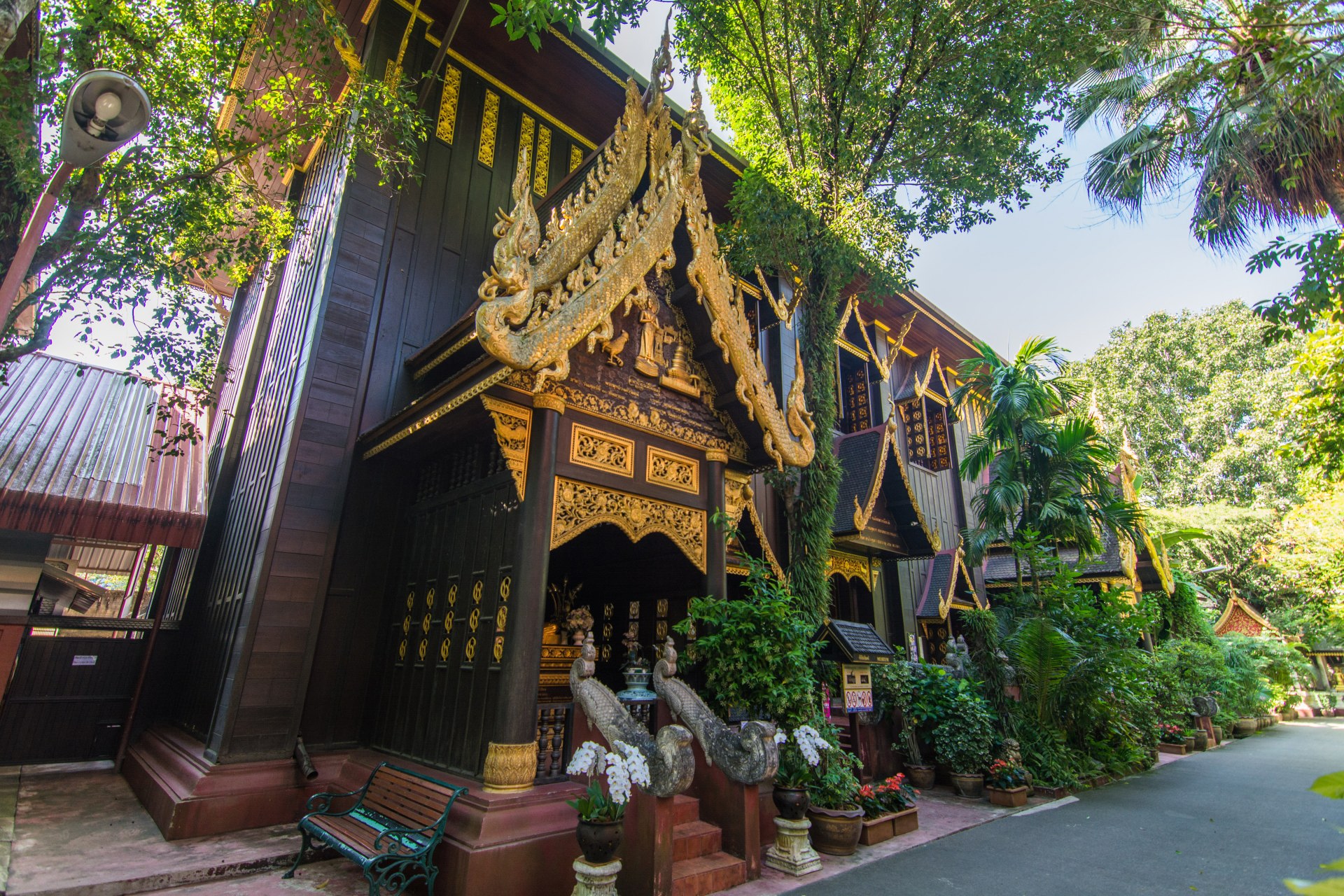
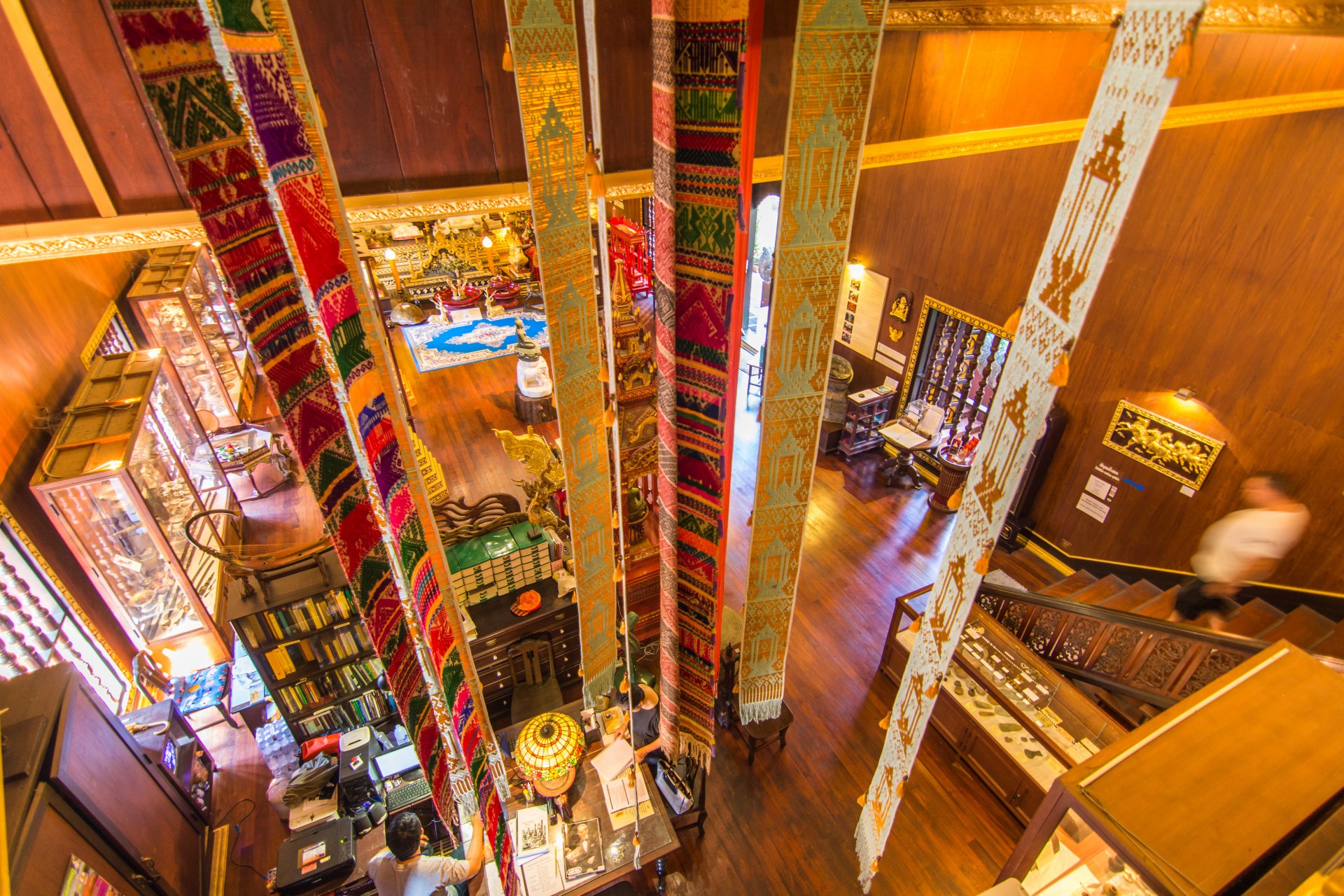
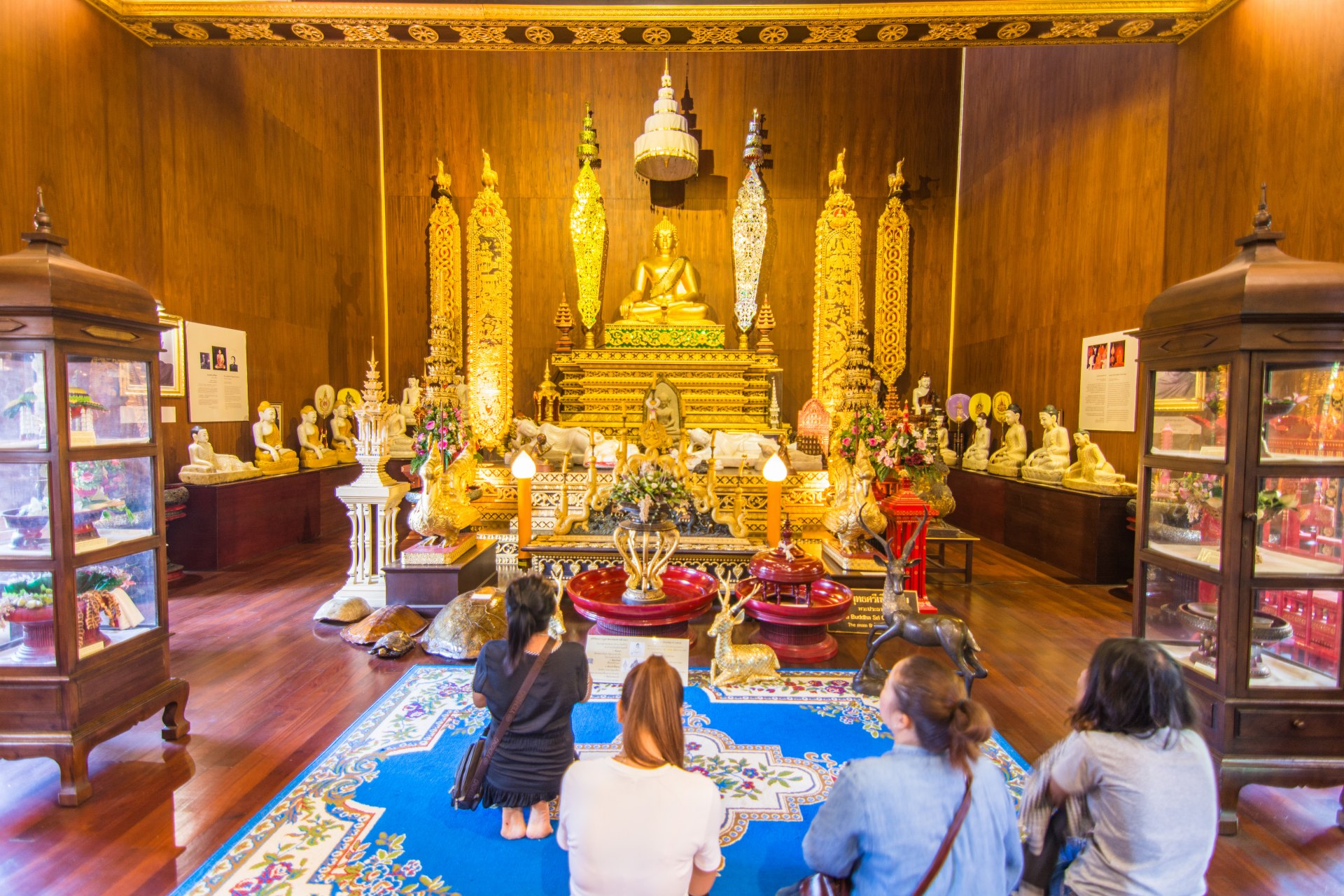
Entry is free, and the museum is open from 9:00 AM to 17:00 PM daily, except in exceptional circumstances. It's an excellent complement to a visit to the temple, allowing you to deepen your understanding of Chiang Rai 's cultural heritage.
Markets and other attractions in town
Of everything I've presented so far, only Wat Phra Kaeo is truly located in the city center. The Blue Temple, although quite close, is on the other side of the Kok River and therefore doesn't "technically" fall into this category.
And while there are a few other temples worth visiting, such as Wat Jed Yod, a stone's throw from the night bazaar, or Wat Mung Muang, not far from the municipal market, it is more the other facets of the city that I will be discussing here.

The municipal market
Not far from Wat Mung Muang (and four other temples, if you like a challenge), you'll find Kad Luang Chiang Rai Market, aka the city's municipal market.
If you've never set foot in a small local market in Thailand, this is a good opportunity to catch up. Unlike what you might expect from a city market, this one feels more like a country market. It's one of the places where you can truly feel the authenticity of Chiang Rai.
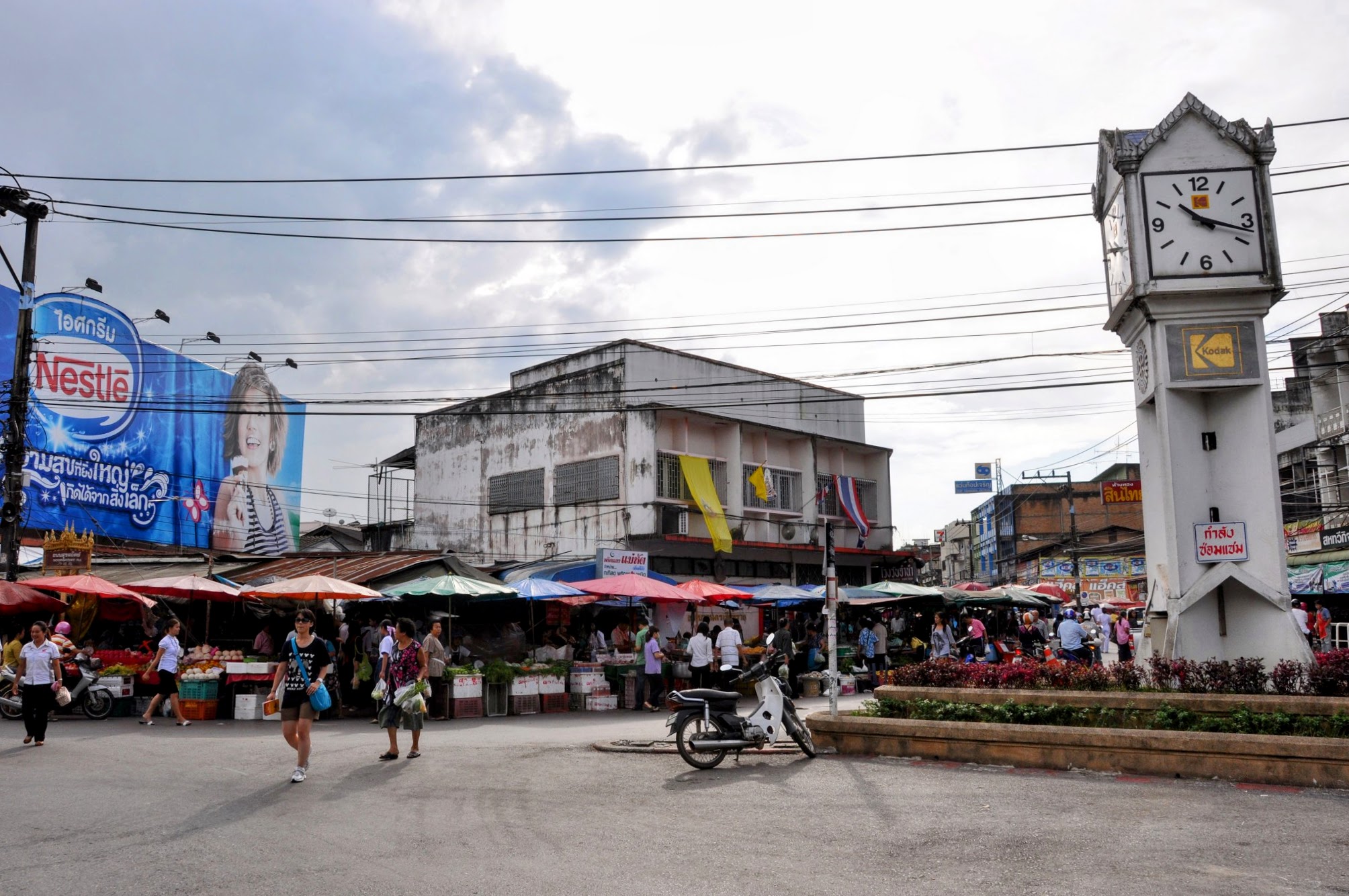
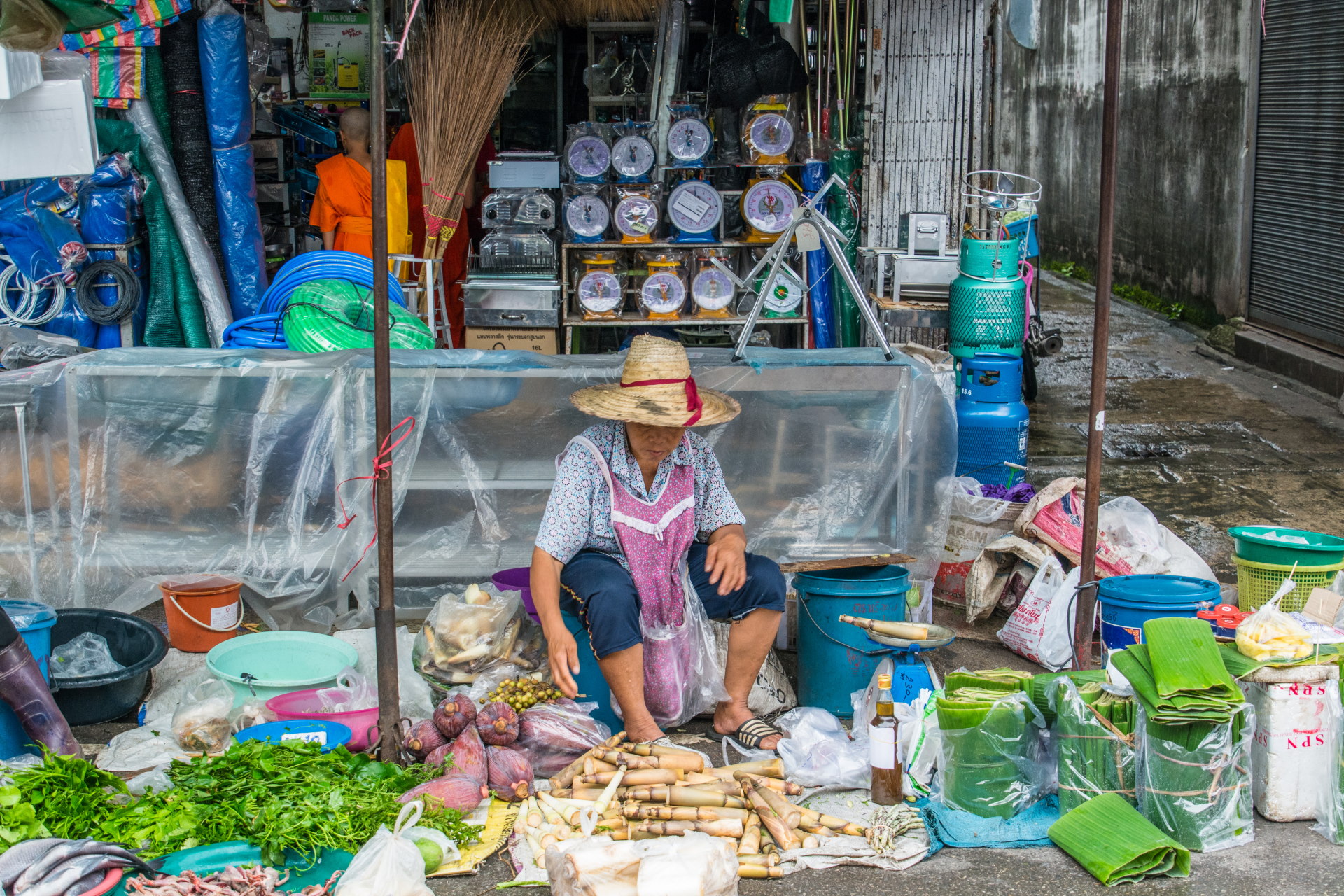
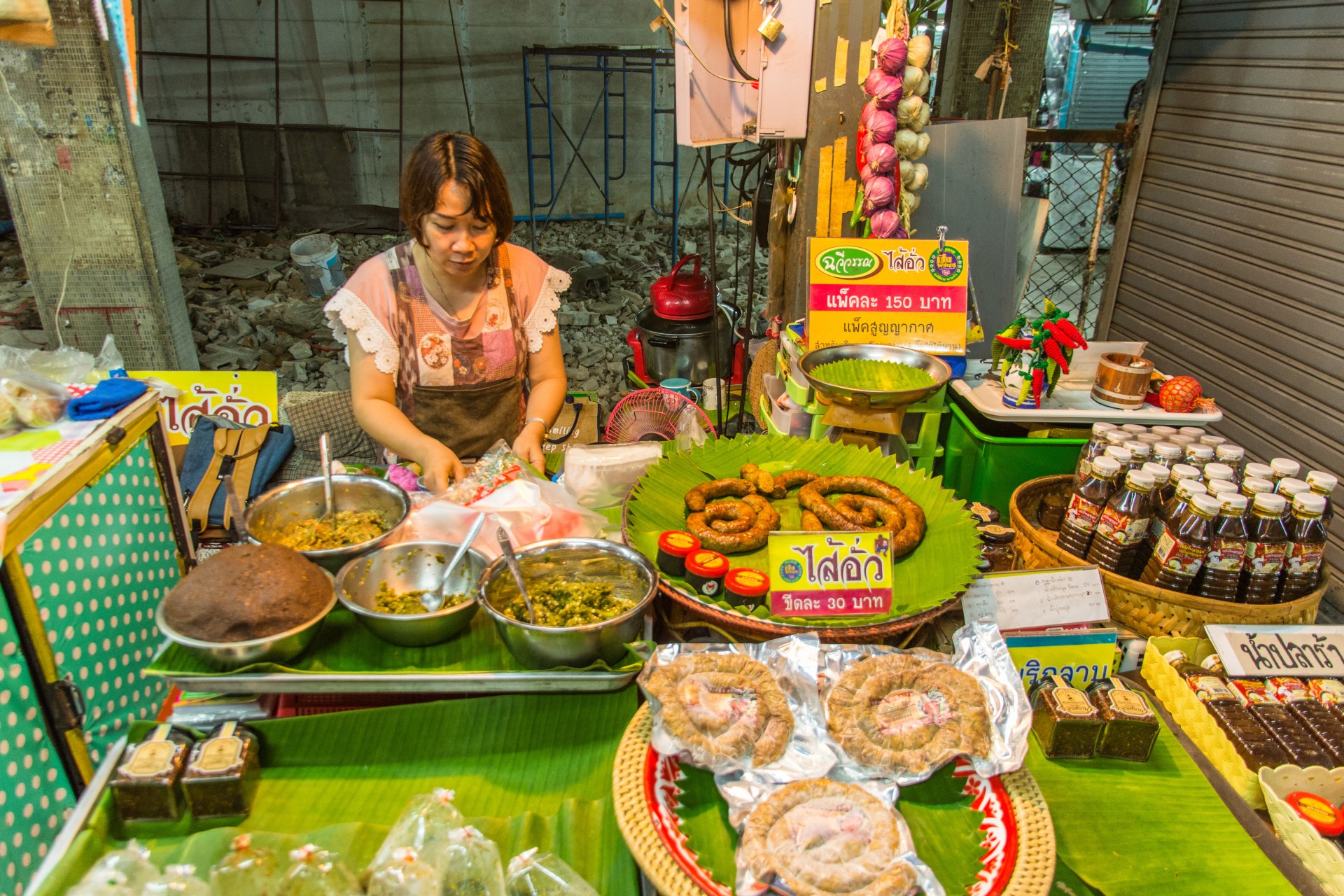
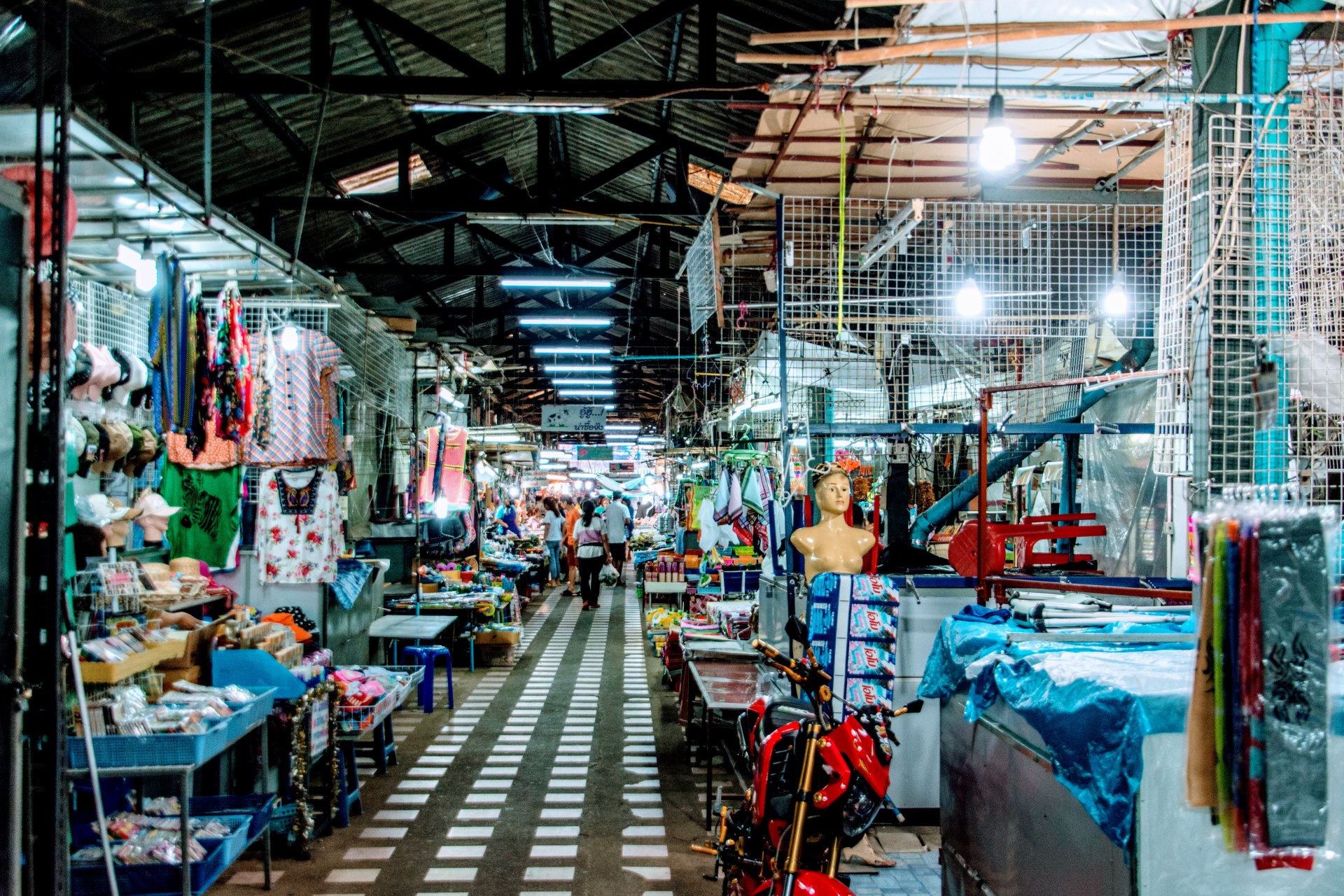
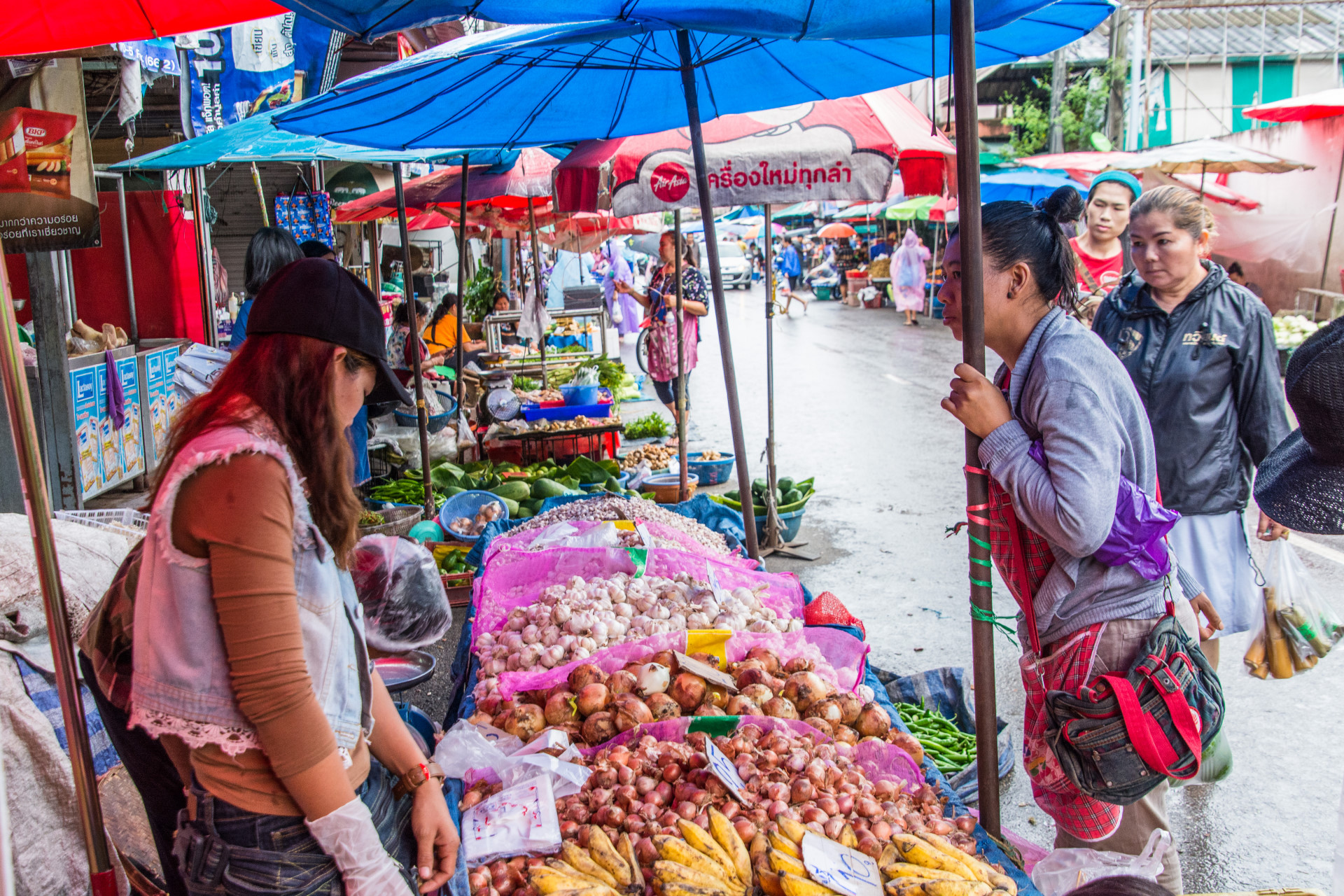
You'll find a little bit of everything here: beautiful, colorful fruit and vegetable stalls sit alongside fish, fresh meats, and ready-made local dishes. But that's not all! The market also offers clothing, all kinds of accessories (watches, glasses, etc.), and even groceries. In short, it's a real little fair, lively and bustling for most of the day.
A little anecdote : It was precisely in this market that we went to buy the fresh ingredients needed for the cooking class we took in Chiang Rai (see below).
night market
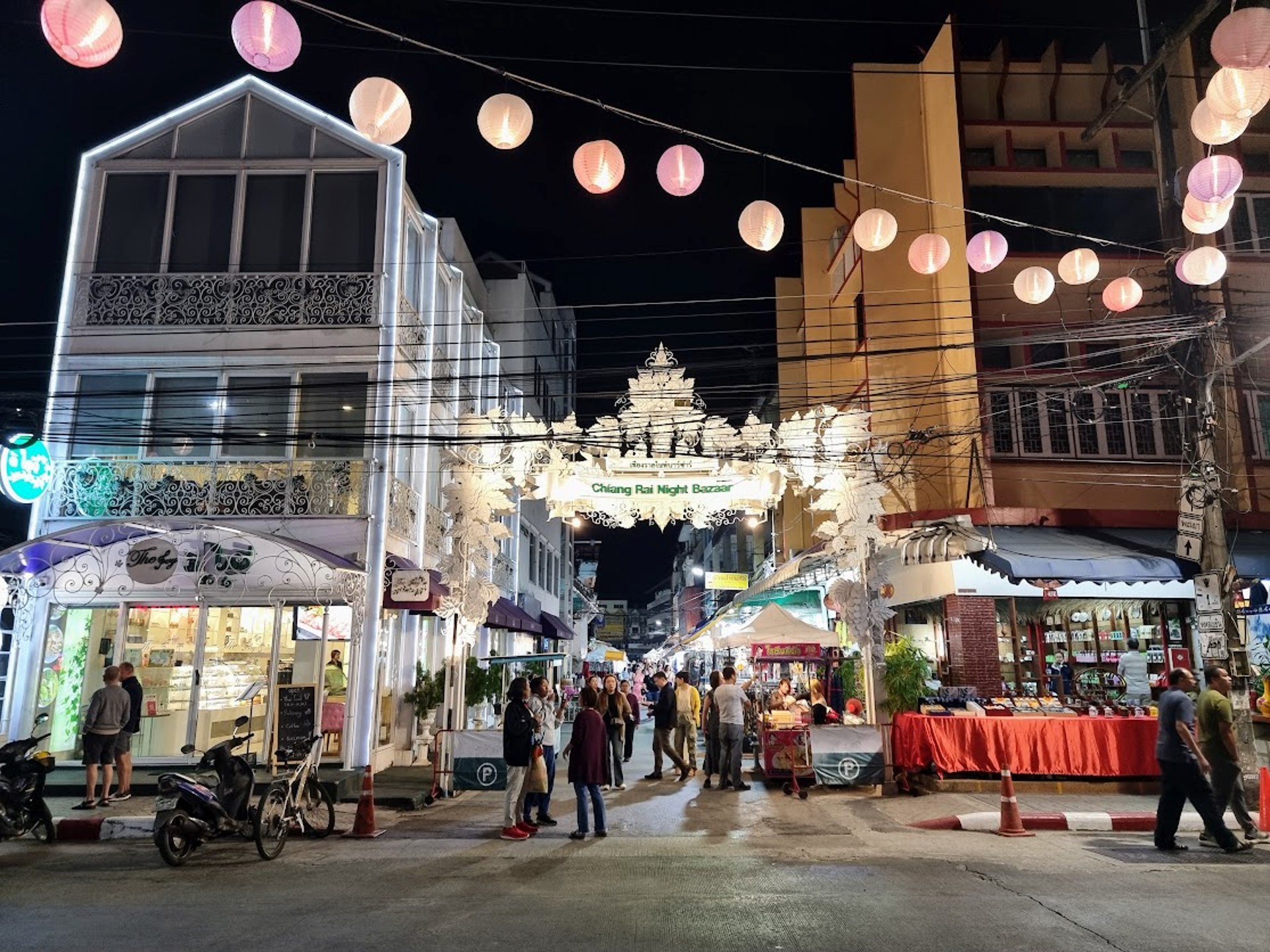
Staying on the theme of markets, let's move on to what, in my opinion, remains one of Chiang Rai's main attractions: its Night Bazaar. Located right next to the main bus terminal, it's hard to miss. The entrance is well signposted, and the bustle surrounding it immediately makes you want to take a look.
Stalls mingle with shops lining this market, with a predominance of souvenirs: T-shirts, soaps, local crafts, and even a few paintings and drawings. But the market isn't just about shopping; it also boasts culinary offerings and live entertainment.
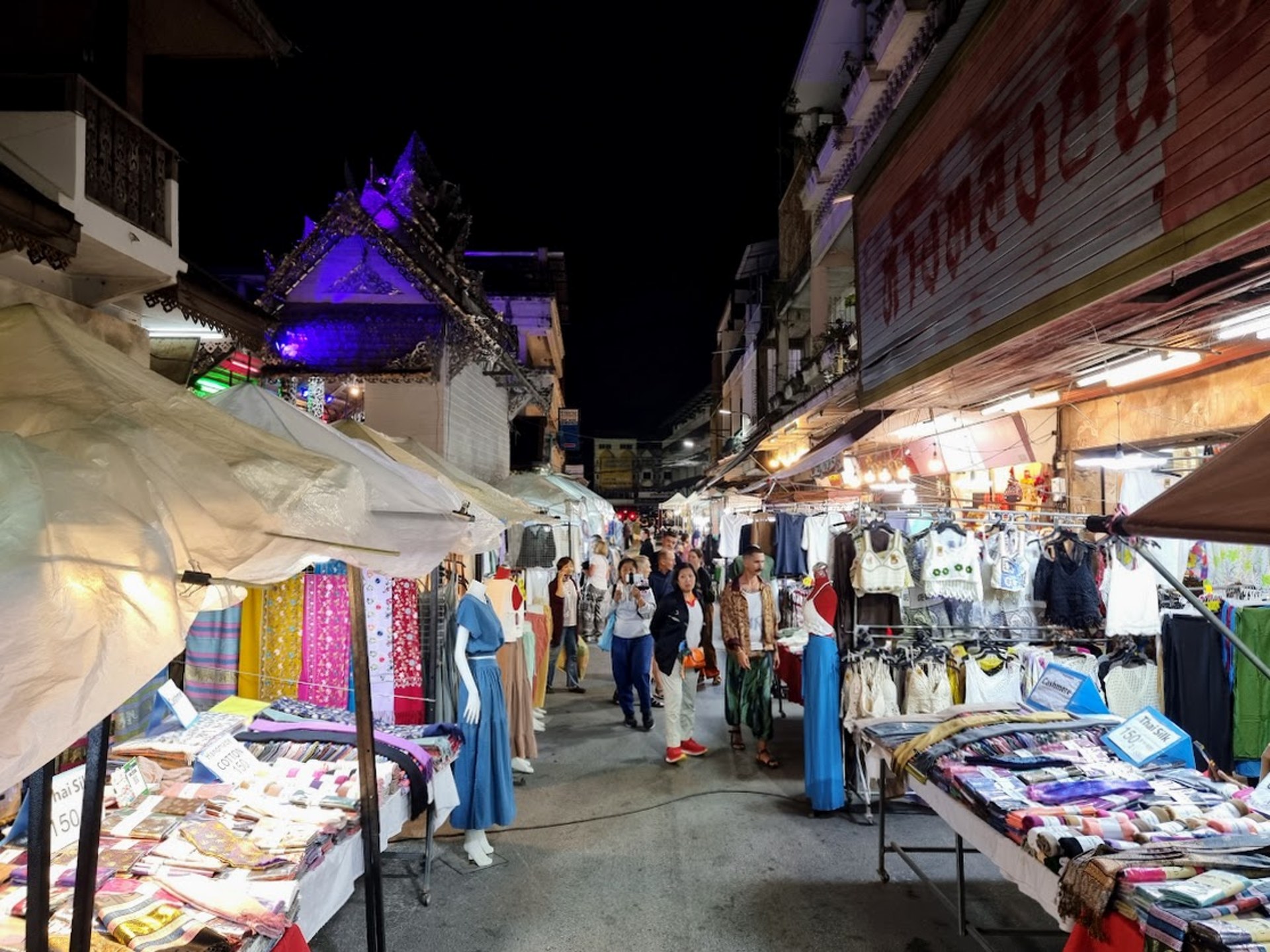
There are two dining areas, each with a stage. Each evening, you'll see a mix of local musicians (often a guitarist), traditional dancers, and sometimes a small cabaret-style show, with the artists taking turns from one stage to the next throughout the evening.
Personally, I love the relaxed, family atmosphere. My favorite spot? The first restaurant you'll come across on the left after the main entrance. With its large wooden tables, benches, and a lively stage in the evenings, it's the perfect place to enjoy a meal. The menu is varied: classic Thai cuisine, northern specialties, and even a few Western dishes.
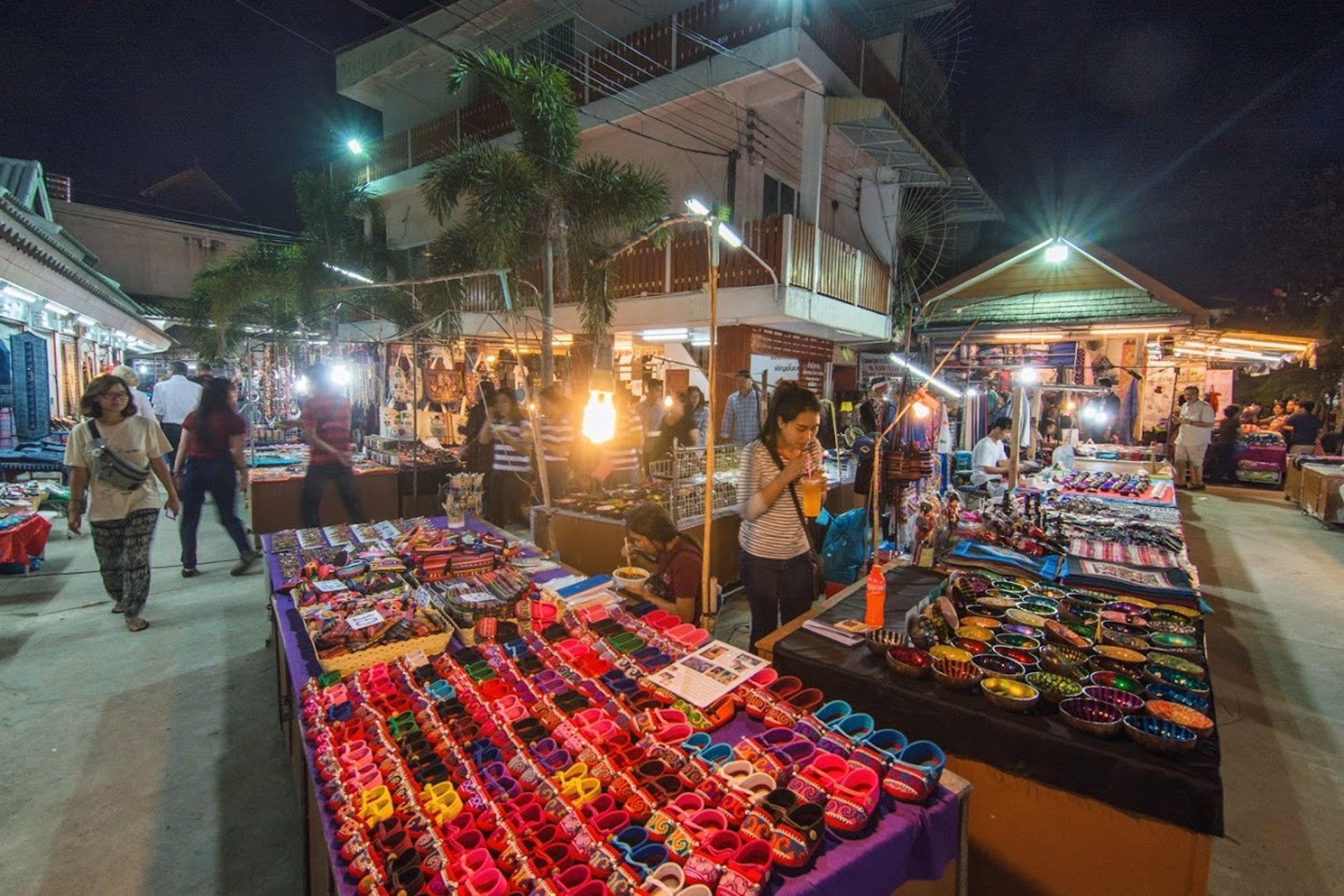
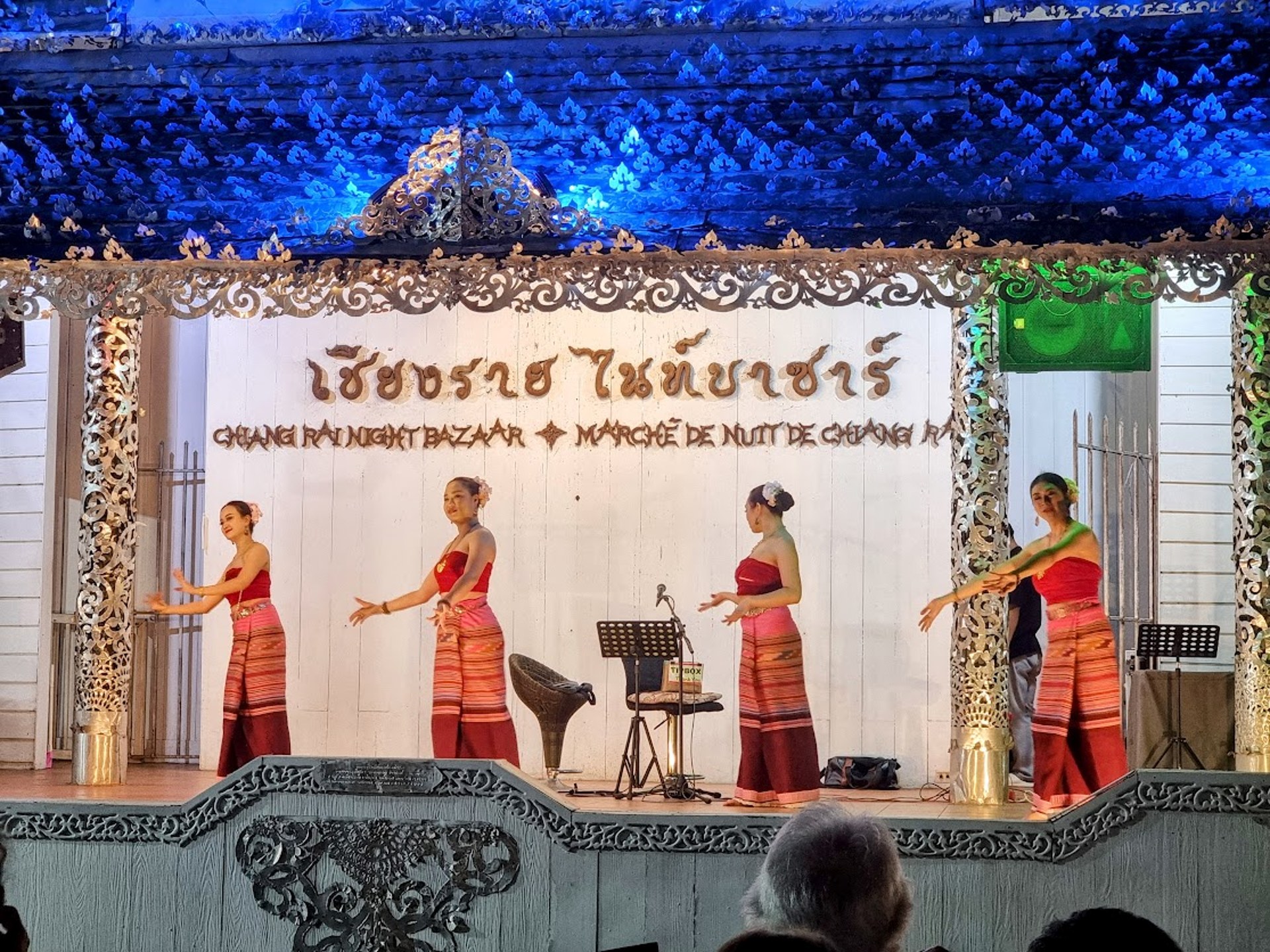
The second dining area, on the other hand, looks more like a food court, with iron tables in the center and stalls all around. While the "street food" aspect can be appealing and looks nice, I found the quality of the food significantly less convincing, so I personally avoid it.
Chiang Rai Walking Street
Since we're talking about markets, it's impossible not to mention the Chiang Rai Walking Street , which takes place every Saturday from 15:00 PM to 22:00 PM. This weekly event takes place partly along Thanalai Street and in a square opposite the museum (which I'll talk about later), next to Chiang Rai City Park , the only park in the city center.
This bustling market is filled with street food stalls and local crafts. You'll find everything from clothing to woodblock prints and other handcrafted creations. If you're in town on a Saturday, this is definitely a must-visit to immerse yourself in a more local atmosphere and discover unique products.

Hilltribe Museum
If you ever have some time to kill on a rainy day, there's a small museum dedicated to the hill tribes: the Hilltribe Museum. I've never tried it, as I'm not much of a museum person, but it seems to have been created with a genuine desire to educate visitors about the culture of the local hill tribes of northern Thailand.
The establishment is managed by the Population and Community Development Association (PDA) , which is committed to community development activities in Chiang Rai and emphasizes responsible tourism. Their goal? To support tribal villages while avoiding the trap of "human zoos," particularly concerning the long-necked Karen people.

The museum offers to explore the culture of the six main tribal groups: Akha, Hmong, Karen, Lahu, Lisu and Yao, through exhibitions on:
- Traditional costumes and customs of the tribes
- The history of opium (we are in the Golden Triangle after all)
- The role of bamboo in their daily lives
- Their agricultural and hunting activities
- Dos and Don'ts When Visiting a Hill Tribe Village
One particularly notable point is their critical approach to the long-necked Karen, also called Padaung.
→ If this topic interests you, I discuss it in more detail in this article dedicated to my visit to a Padaung village near Mae Hong Son.
Chiang Rai Clock
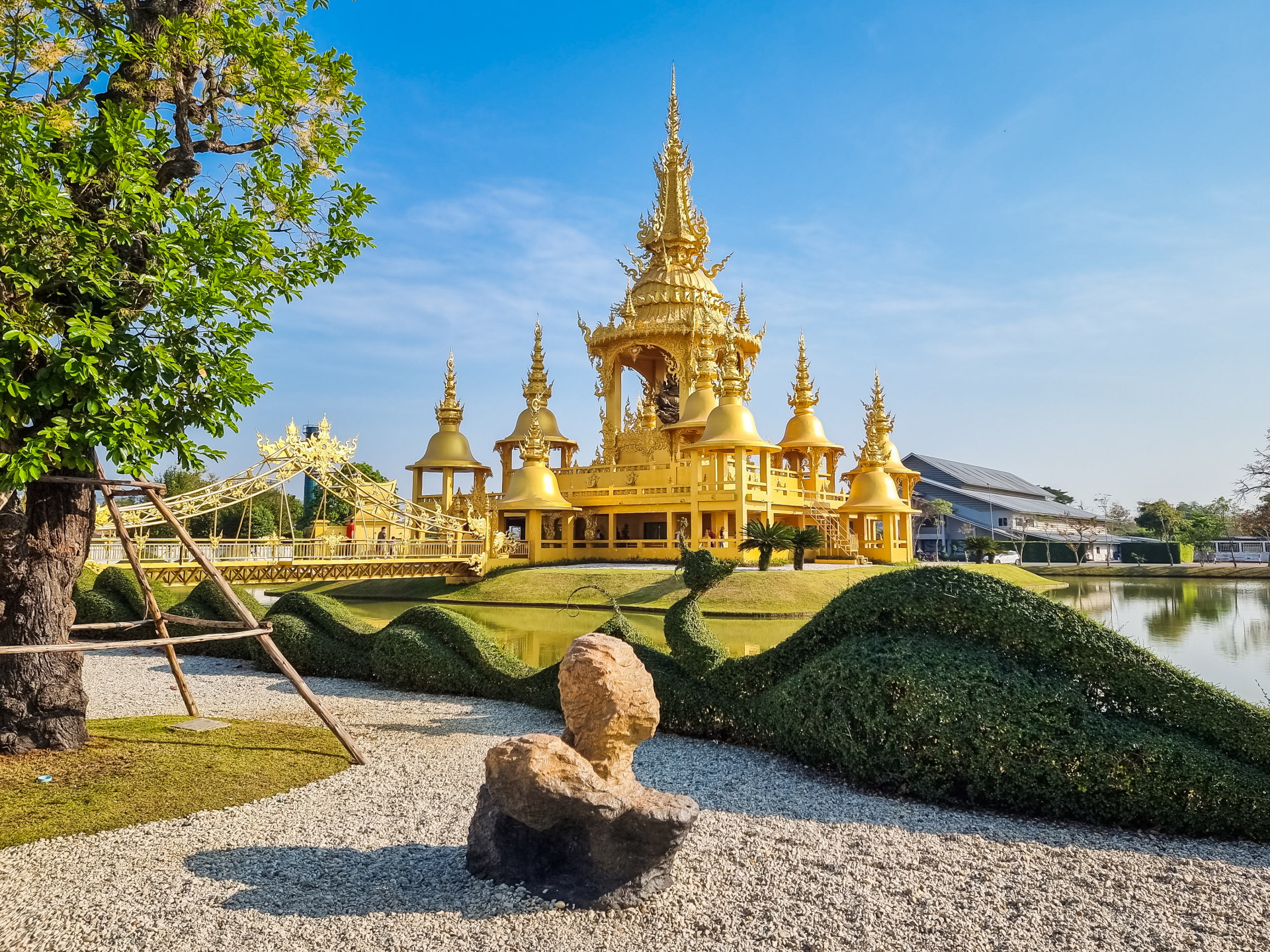
At first glance, you might wonder what the point of visiting a "simple clock" is. But just like the White Temple, it's its architecture that makes it special. Its golden color immediately catches the eye, and if you look closely, you'll notice similarities in the patterns decorating this tower located in the middle of a roundabout. These details will undoubtedly remind those who have already visited Wat Rong Khun of something.
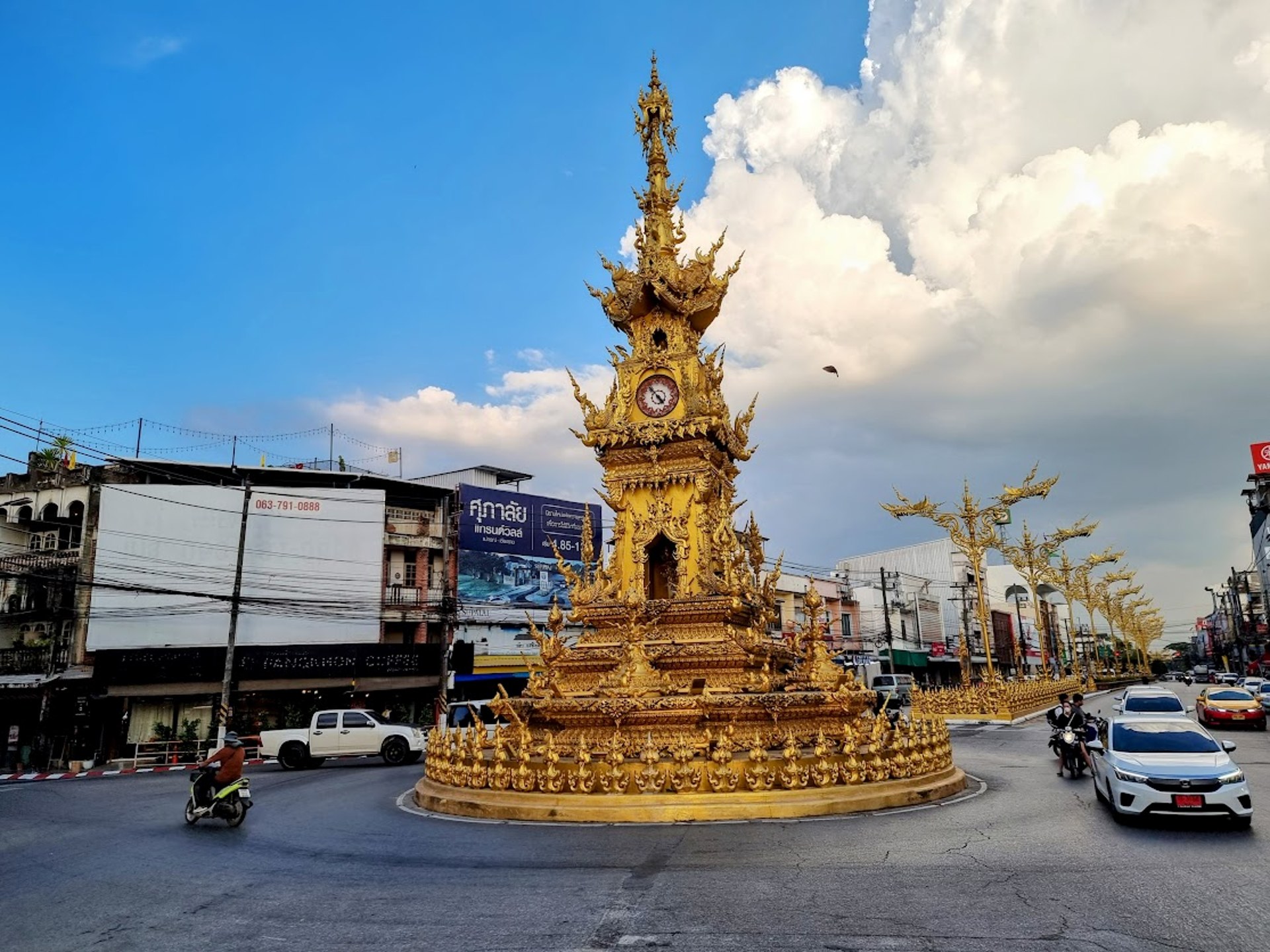
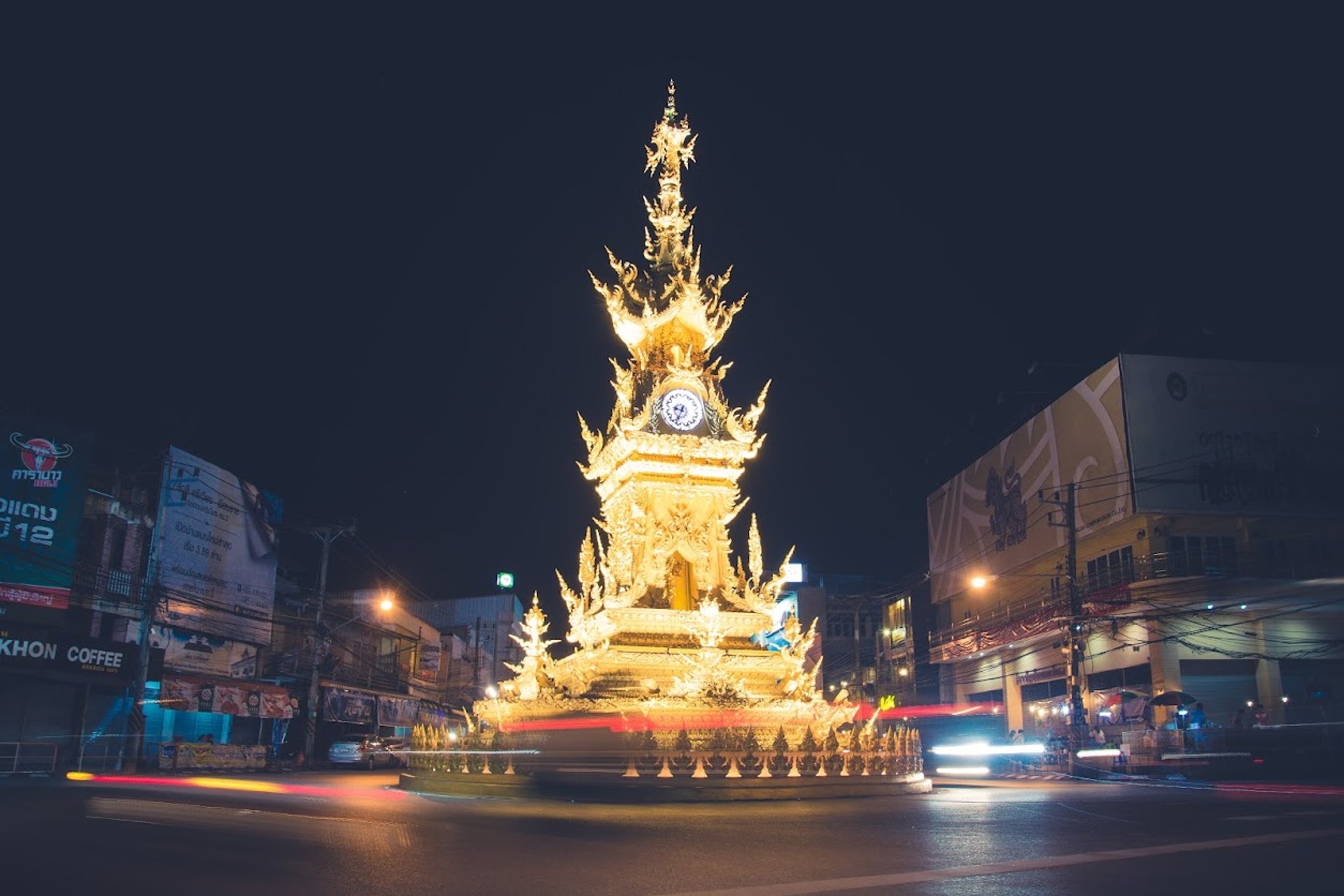
And for good reason: this clock is none other than another work by Chalermchai Kositpipat , the creator of the White Temple, who gifted it to the city. More than just a "post that tells the time," it is a true work of art.
In the evening, it becomes an attraction: at 19:00 p.m., 20:00 p.m., and 21:00 p.m., a small sound and light show comes to life for 10 minutes, highlighting its golden details. A small street restaurant is also set up nearby, on the corner of Jetyod Street, for those who want to enjoy the show while nibbling on a local dish.
Where to get a good coffee in Chiang Rai?
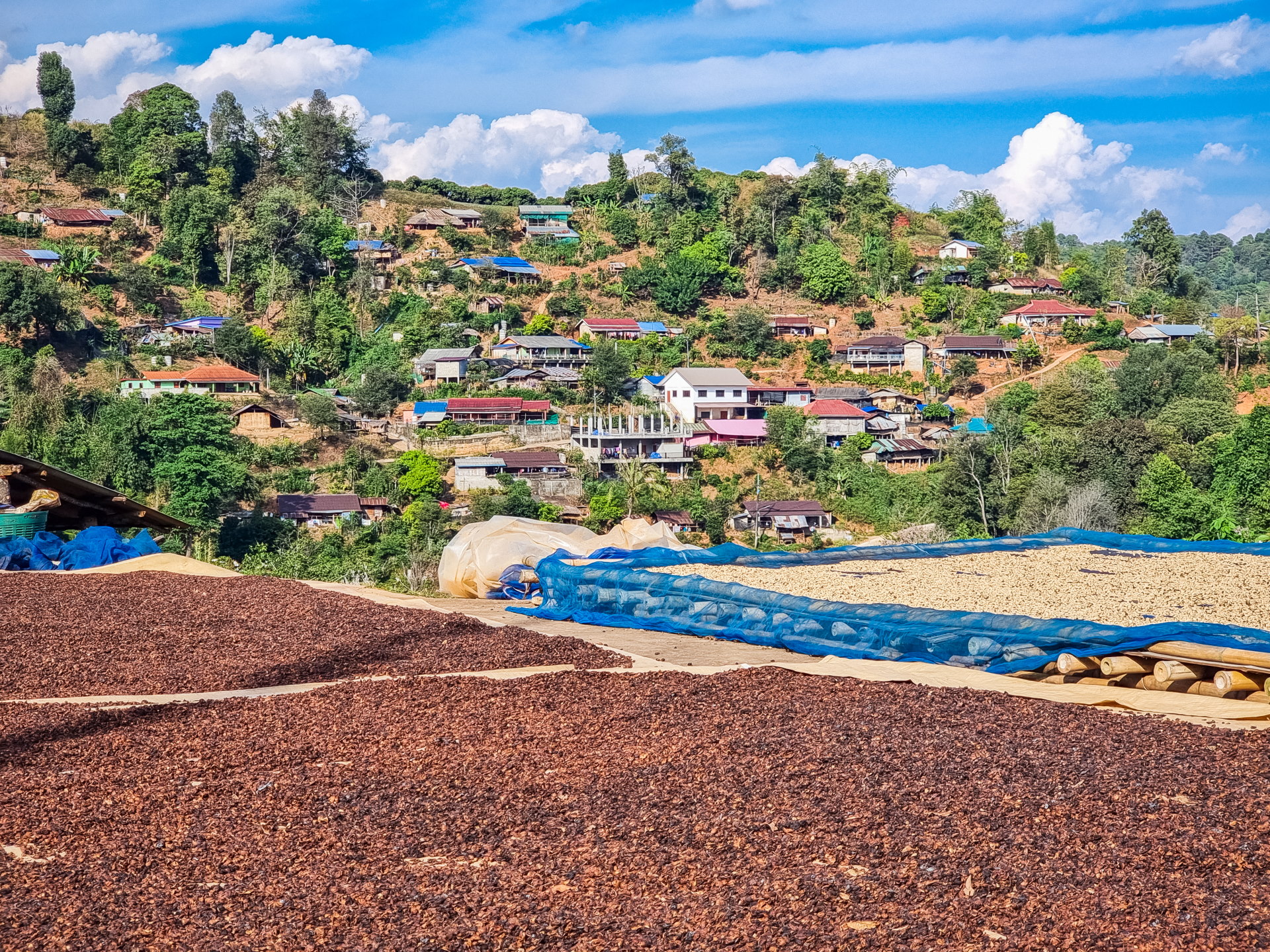
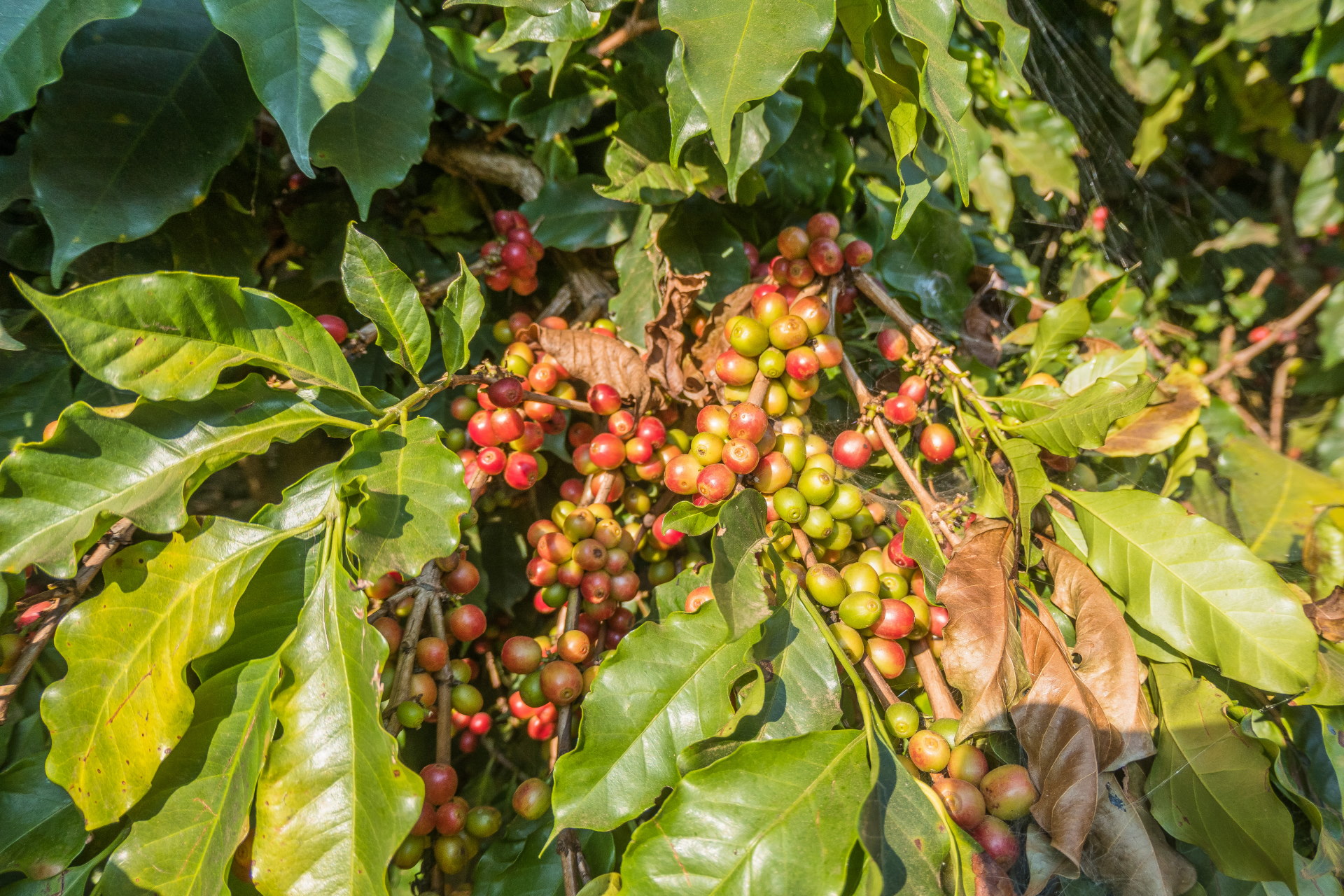
In recent years, there has been a boom in micro-roasters in Thailand, and Chiang Rai is no exception. With the rise of local plantations, more and more cafes are choosing to roast their own beans, often featuring high-altitude coffees from local communities.
Some addresses that play the game of artisanal roasting and specialty coffee:
- Laan-Tim's Cafe : Owned by the managers of a nearby hotel that I recommend (the Baan Norn Plearn), it's a perfect little cafe for a quiet breakfast and they do artisanal roasting.
- Akha Hill Coffee Roastery : Not far from Laan Tim, as its name suggests, this brand collaborates with producers from Akha communities to offer ethical and traceable coffee.
- Bechegu Roaster : I recommend the latter more for its unusual setting and its view of the large statue of Wat Huay Pla Kang than for the excellence of its coffee.
- Doi Tung Coffee (honorary mention): Even if it is clearly more industrial, it remains emblematic of northern Thailand and remains a pioneer in the field.
The advantage of micro-roasters is that they allow for better quality control, a more direct circuit between producers and consumers, and often a promotion of the region's specific terroirs.

It's not always the case, but to spot them, look for establishments that use the term "Roaster" or "Roastery." Otherwise, those offering a selection of several beans (multiple varieties with varying roast levels—light, medium, or dark) are defined as "Specialty Coffee."
I often enjoy searching for unusual places to enjoy my favorite drink, and in doing so, I often discover places I would never have set foot in otherwise!
Other ideas for adapting your two or three days
If you would prefer to replace a day of the program, or if you have more time, here are some other possible visits from Chiang Rai.
Cooking Classes in Chiang Rai
If you're looking for a unique and cultural experience in Chiang Rai, I highly recommend taking a cooking class. This class, led by Chef Jaru at Akha Kitchen , is much more than just a cooking lesson: it's an immersion into the culinary world, enriched by the passion and knowledge of a woman from one of the region's hill tribes.
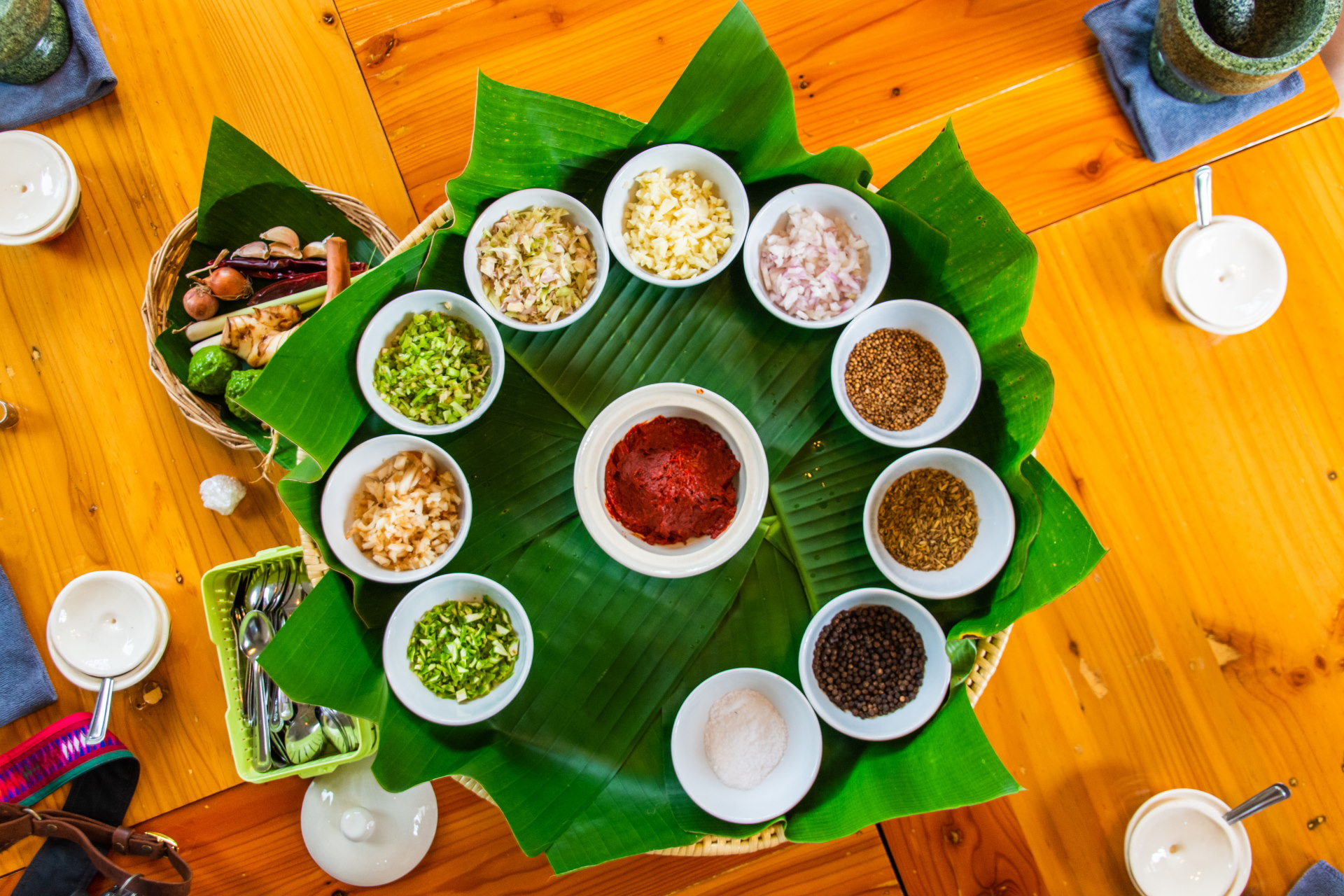
You will learn how to prepare typical dishes while discovering local ingredients, selected directly at the market.
To learn more about this experiment that I tested, I invite you to read my article below:
Elephant Steps: Meet the Elephants
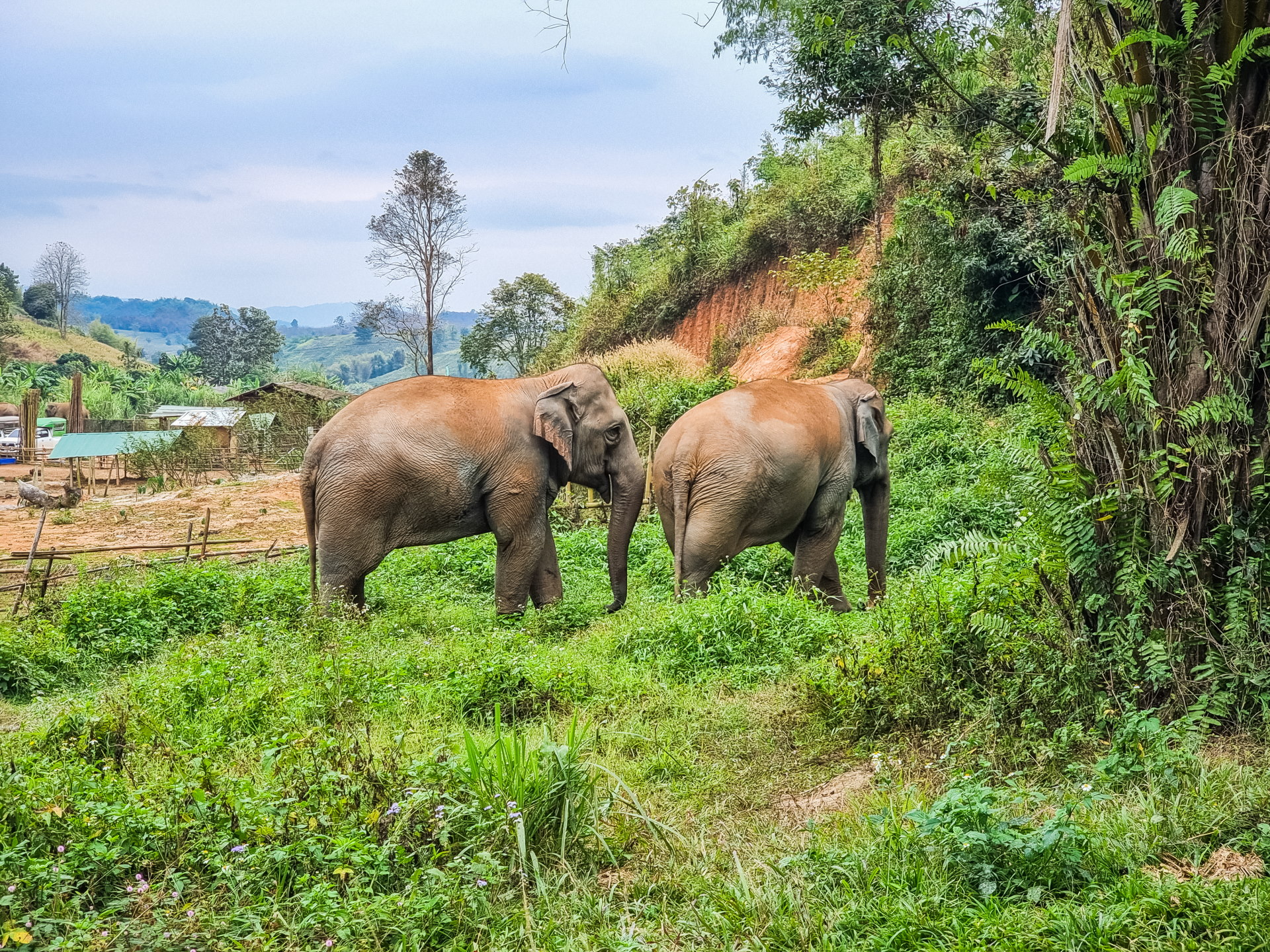
Chiang Mai isn't the only place with elephant sanctuaries; you can also find them around Chiang Rai. I'm referring, of course, to the opportunity to observe elephants in a more respectful setting than typical tourist attractions.
Rather than supporting camps where these animals are exploited for shows or elephant rides, it is possible to opt for an immersive experience in the great outdoors , where you can observe these giants up close while respecting their well-being.
The French-speaking reference in Chiang Rai is Sophie's Elephants at Elephant Steps , which I have had the opportunity to test on multiple occasions and which offers a walk alongside elephants in the jungle , without intrusive interaction or forced bathing.

Singha Park: a farm like no other in Chiang Rai
You might be familiar with the name Singha , that famous light beer that can be enjoyed all over Thailand and even elsewhere in the world. Well, it has its own park! Also known as Boon Rawd Farm , after the brewery that created the brand, it's a vast agricultural estate that was originally, and quite logically, dedicated to growing barley for the production of their famous beer.
But since 2012, the site has shifted towards tourism, transforming the farm into an agritourism attraction. A large part of its area is now dedicated to Oolong tea plantations , but there are also flower fields, panoramic viewpoints and, of course, several restaurants and cafes where you can relax between walks.

Overall, I've heard a lot of good things about it, but of all the sites featured in this article, this is one of the few I've never been to. I've never been a big fan of this kind of place, which is generally much more popular with Thais for family outings and photoshoots. But one day I think I'll go and make up my own mind!
Activities at Singha Park?
- Guided tram tours → For 150 baht per adult and 50 baht for children under 110 cm, trams run every 30 minutes from 9am to 16pm, offering a 50-minute tour through the various areas of the park.
- Bike rental → The ideal option to explore the park at your own pace.
- 150 baht per hour for a mountain bike or tandem.
- 50 baht per hour for a child's bike.
- Available from 8am to 18pm on weekdays and until 19pm on weekends.
- Zipline → For thrill seekers, a zip line is available for 300 baht, from a tower housing a pizzeria.
- Mini-zoo → A small area where you can observe giraffes and zebras, an addition that especially appeals to children.
Khun Korn waterfall: the largest waterfall in Chiang Rai
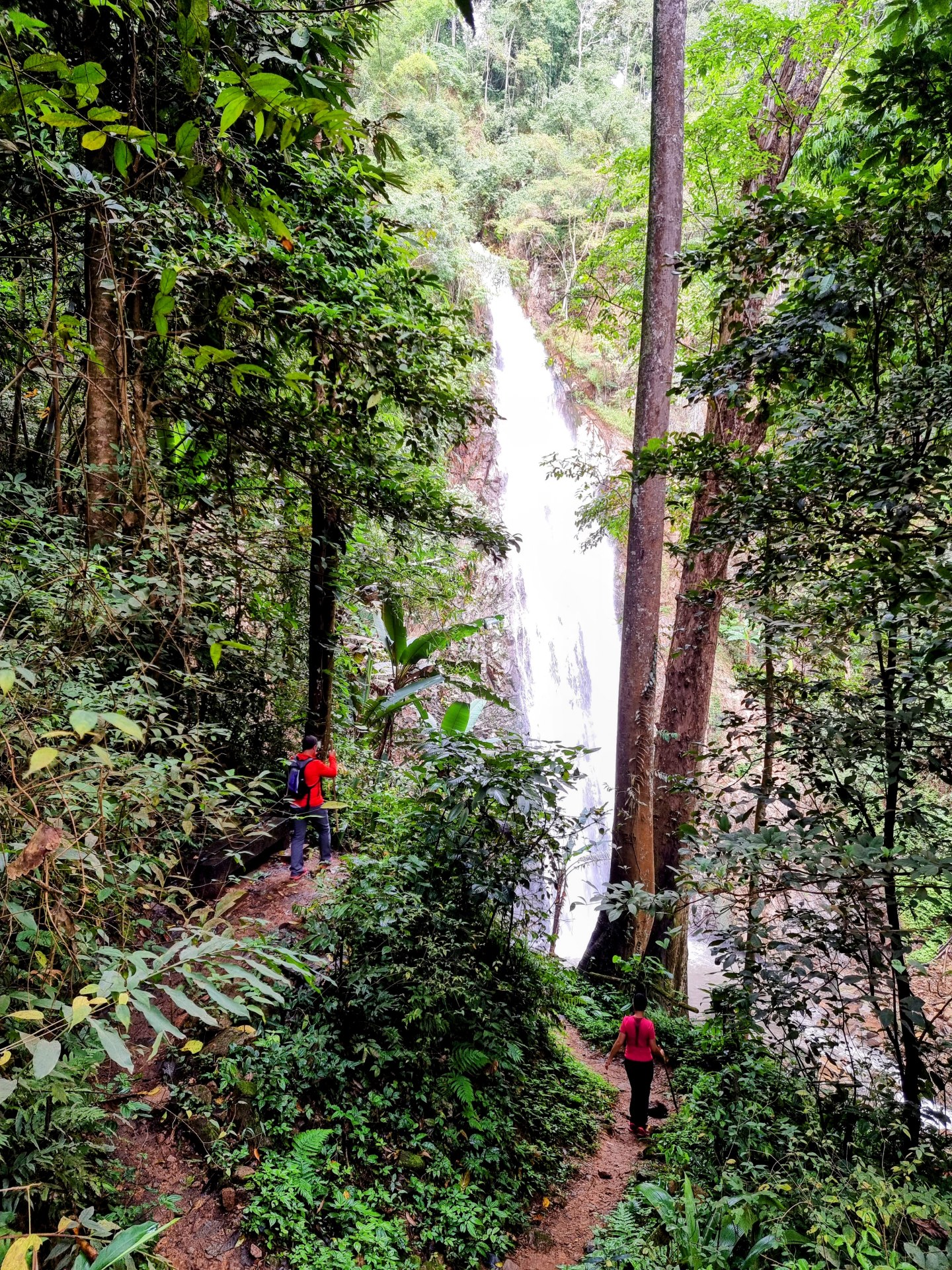
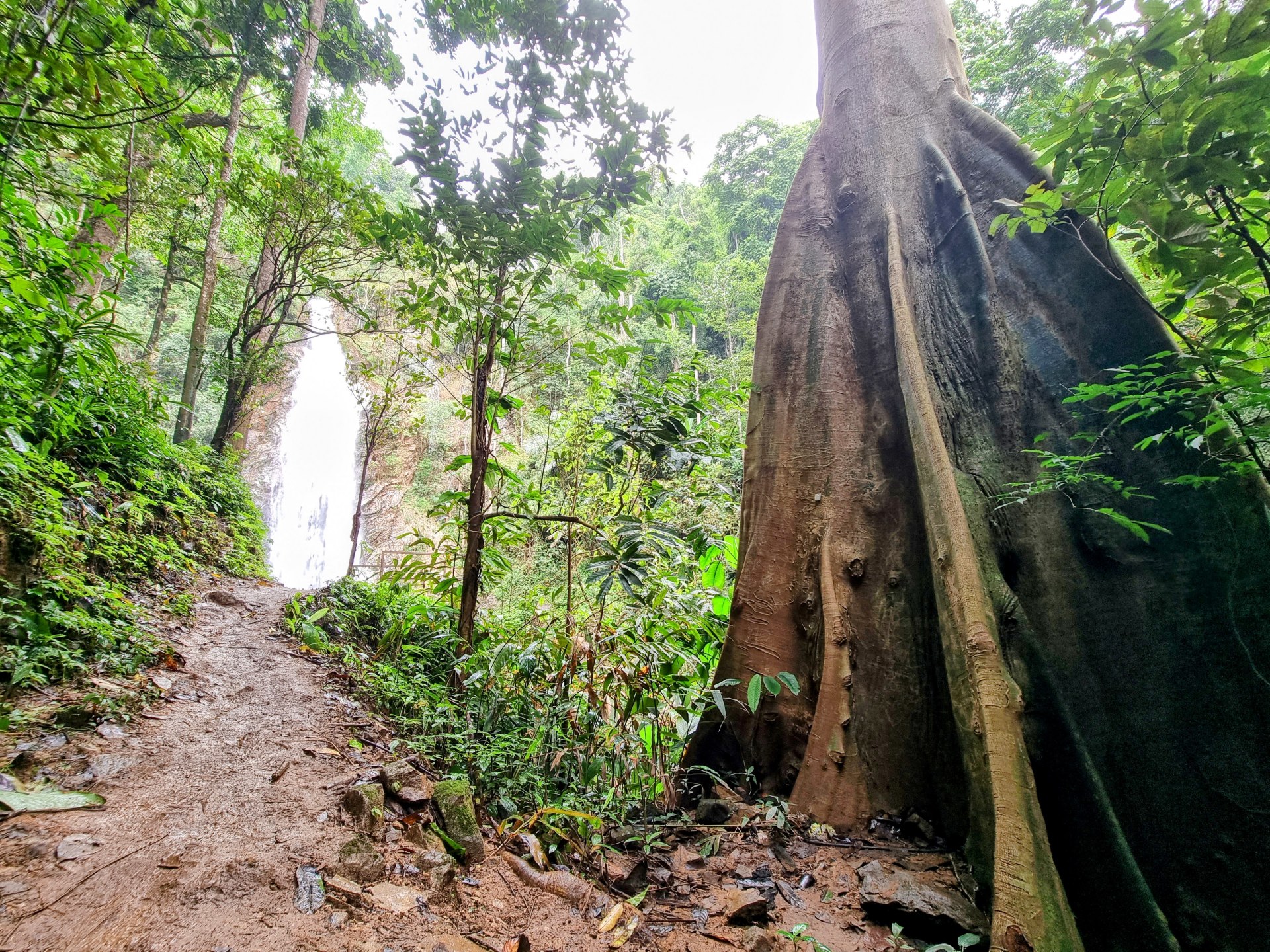
Located about 30 kilometers west of Chiang Rai, Khun Korn Waterfall ( or Nam Tok Khun Korn in Thai) is one of the most impressive waterfalls in the province. While somewhat out of the way compared to other attractions closer to the city, it can easily be combined with a visit to the nearby Singha Park.
At 70 meters high , it is the tallest accessible waterfall in the province. Despite this advantage, it took me a while to find an opportunity to visit it.

Nestled in the Khun Korn Forest Park , this waterfall offers a spectacular natural setting, surrounded by dense vegetation and a wild landscape that is well worth the detour. Access requires a little effort, because unlike some Thai waterfalls where you can park practically at the foot of the water, here you will have to walk a bit.
But the reward is worth it! Moreover, once there, the atmosphere is refreshing thanks to the mist created by the waterfall, perfect for escaping the intense heat of the hot season ( mid-February to early May ). Note, however, that during this period, especially between February and March, the waterfall's flow can be reduced , or even quite weak, before the first rains return.
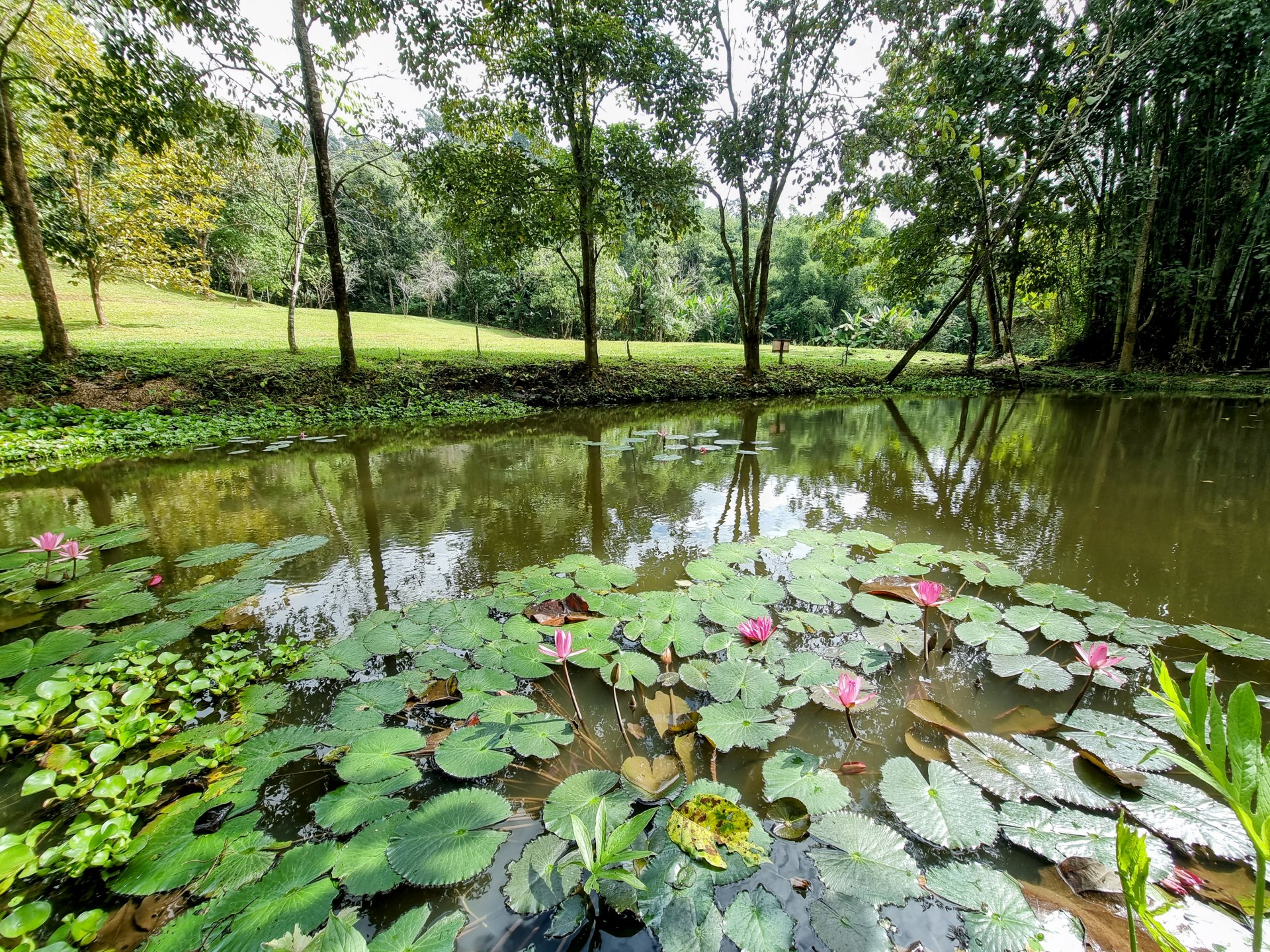
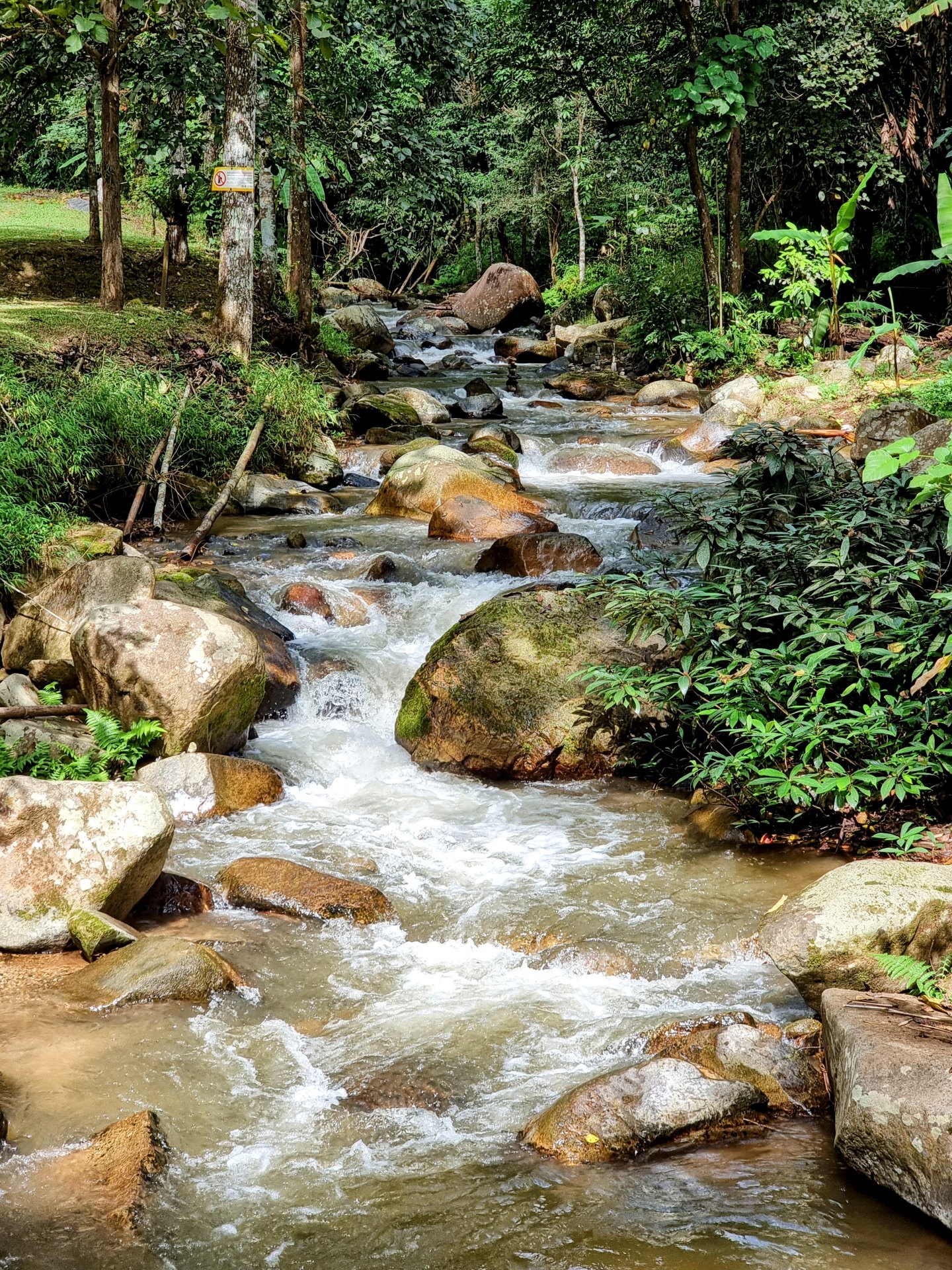
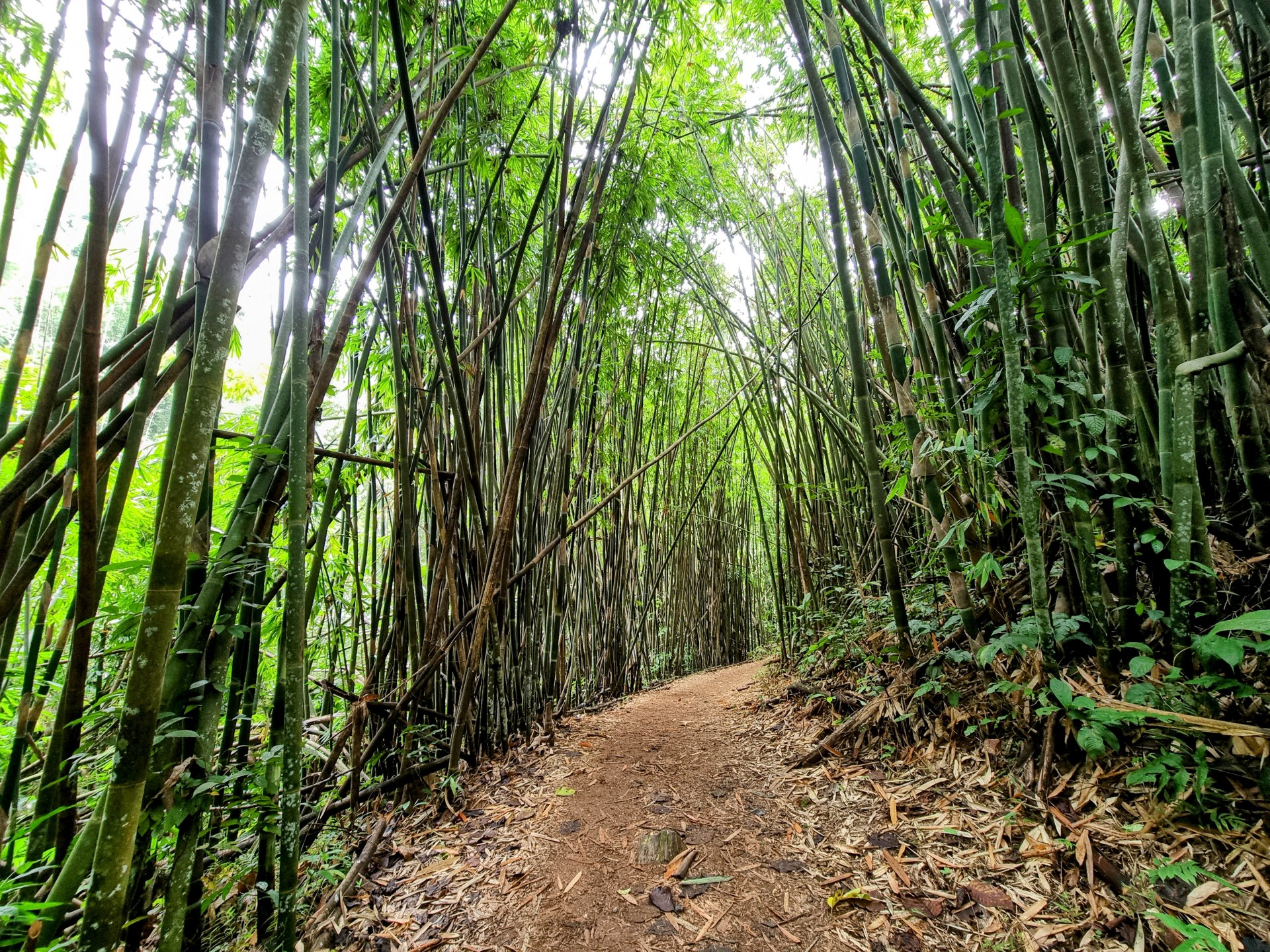
- From the parking lot, a 1,5 km trail winds through the jungle and runs alongside a river.
- Allow about 30 to 40 minutes walk on a well-marked path, with some slightly steep passages.
- The path is pleasant, shaded and crosses a bamboo forest before arriving in front of the waterfall.
The origins of Chiang Rai: a bit of history
To help you understand a little about what Chiang Rai is, here's a short summary. It all started in the present-day city of Chiang Saen, on the banks of the Mekong River.
Then called Ngoen Yang, this small kingdom was ruled by Lao Meng, the 24th sovereign of the lineage. The region's fate changed with his successor, Mangrai (1238-1317), sometimes spelled Mengrai, who ascended the throne in 1259.

Mangrai quickly demonstrated his ambition by forging alliances with neighboring states and annexing territories by force. He notably established strategic alliances, such as with the kingdom of Sukhothai , to consolidate his power in the region.
By uniting the Tai principalities of the north, he founded the Lanna kingdom, or "kingdom of a million rice paddies," which became a regional power. This rapid expansion led him to move his capital from Ngoen Yang, which was too far removed from the city center on the banks of the Mekong.

In 1262, Mangrai established his new capital, Chiang Rai, in the fertile valley of the Kok River, a tributary of the Mekong. Chiang Rai is therefore named after its founder, since "Chiang" simply means "city" in northern Thai, thus: the city of (Mang)Rai.
For 30 years, the city remained the heart of the kingdom, but it ceded its role in 1296 to a new capital, Chiang Mai ("the new city") . Lanna was still expanding, and Chiang Mai offered a more central location to control the recently conquered territories, such as the Mon kingdom of Hariphunchai (modern-day Lamphun).
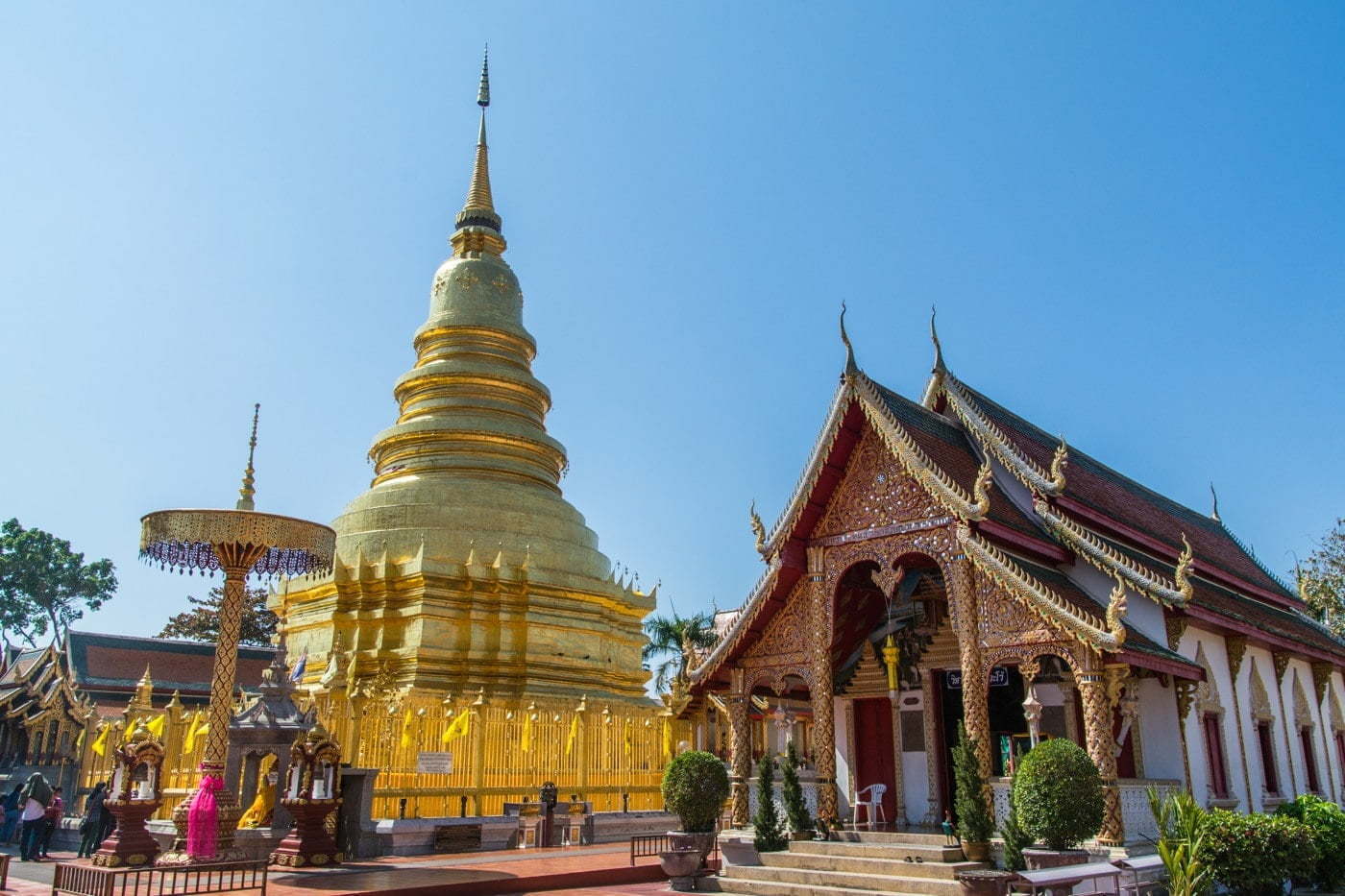
Chiang Rai didn't disappear, however. In 1434, it made history again with the discovery of the Phra Kaeo Morakot. Yes, I'm talking about the most important representation of Buddha venerated in Thailand, the famous Emerald Buddha (actually made of jade), which you can admire today at Wat Phra Kaew in Bangkok!
Like the rest of the Lanna kingdom, Chiang Rai was under Burmese rule between the late 16th and 18th centuries. This period was marked by regular tensions between the Lanna kingdom and Siam, which finally regained control of the region in 1775.

Although Lanna retained a degree of autonomy with its own rulers, it was gradually integrated into the Kingdom of Siam under the reforms of King Chulalongkorn (Rama V) at the end of the 19th century.
In 1899, Chiang Rai was officially incorporated into Siam and became a province in its own right in 1910. From a small royal capital to a provincial town, it remains a cultural and historical pillar of northern Thailand.
When to go to Chiang Rai
Chiang Rai's climate follows the same pattern as the rest of northern Thailand, with three distinct seasons. And while Chiang Rai can be visited year-round, the experience will vary depending on the season.
Between the cool season, ideal for hiking, the hot season marked by fog and slash-and-burn, and the rainy season, which transforms the landscapes into a sea of green, here's what you need to know to choose the right time for your trip:
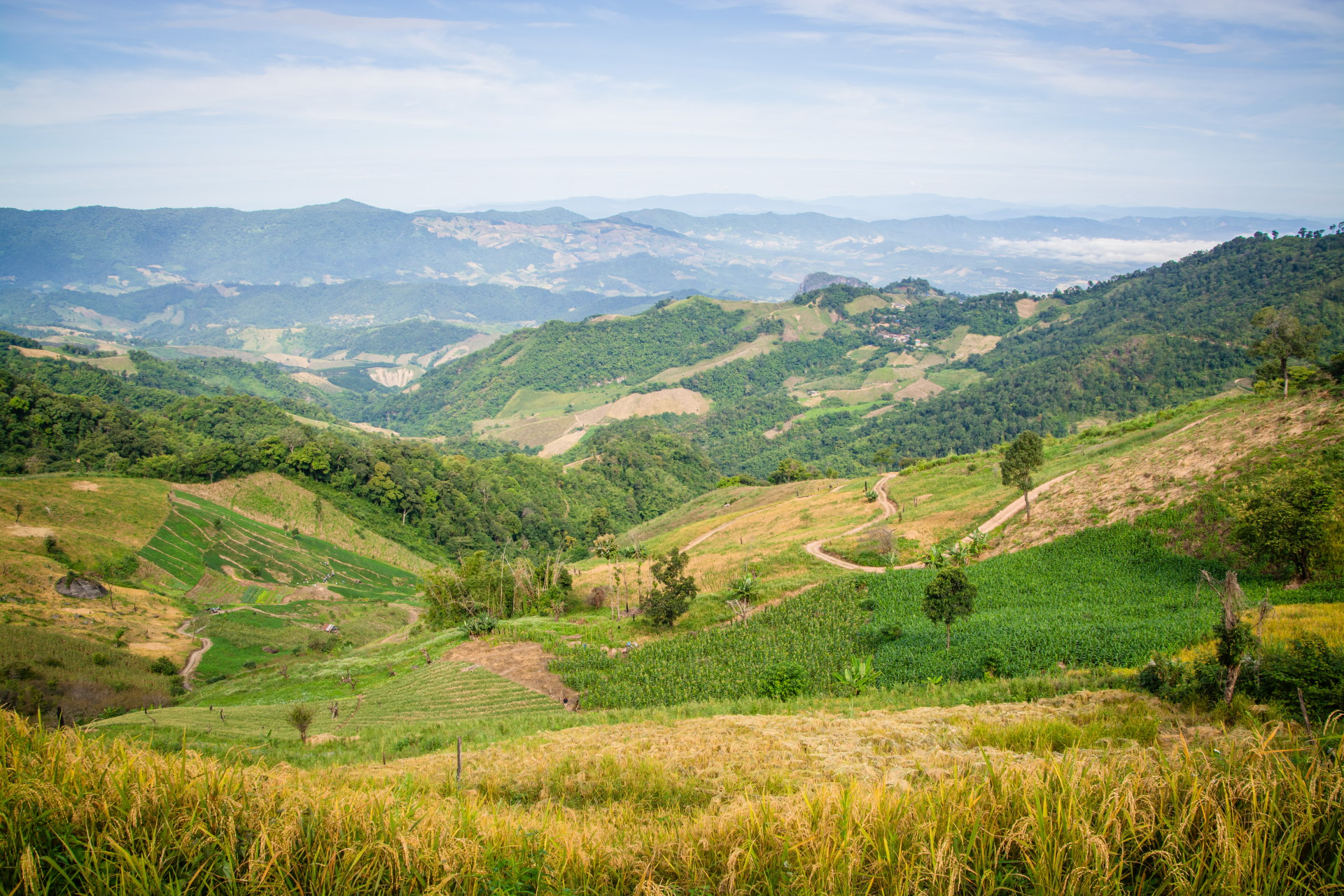
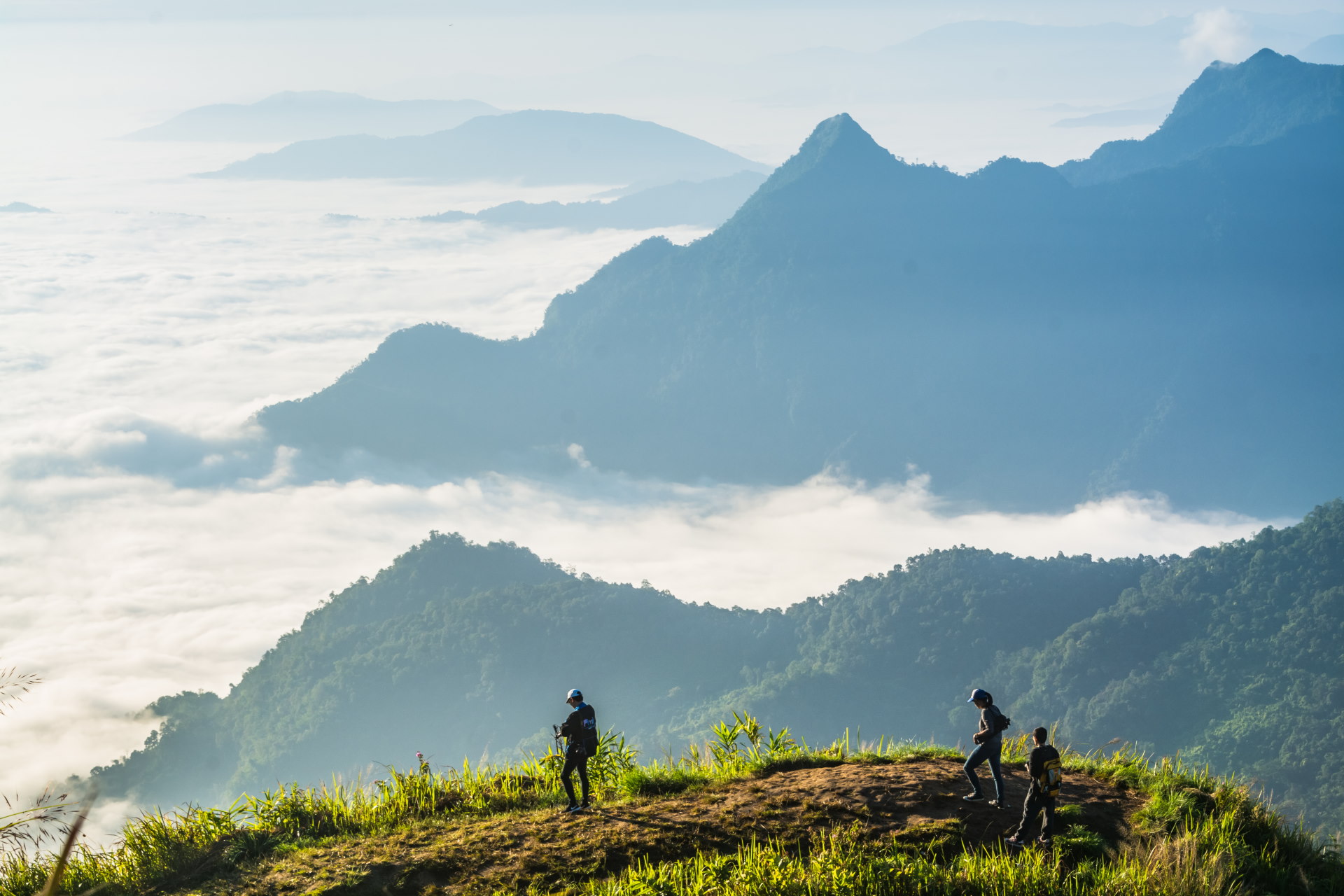
▬ Cool season (November – February) : Ideal for exploring the region with dry weather and lush green landscapes, sometimes lasting until January. This is also the busiest time of year. November is particularly good , as the landscape is still very green and it's the rice harvest season, which gives the many fields beautiful colors.
➡️ To be aware of : Evenings and higher altitudes can be cool , especially in January. A sweater or light jacket would be a good idea.
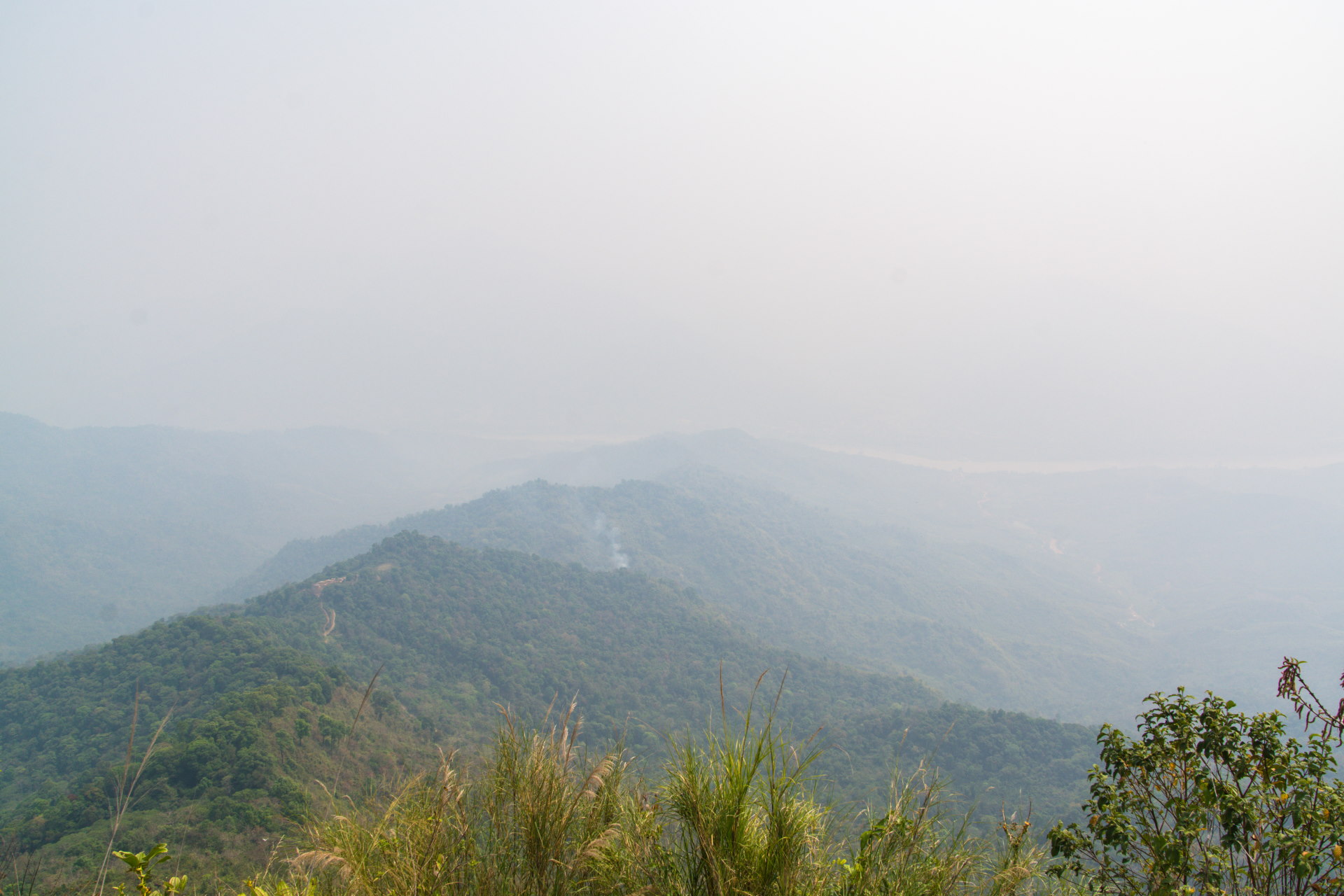
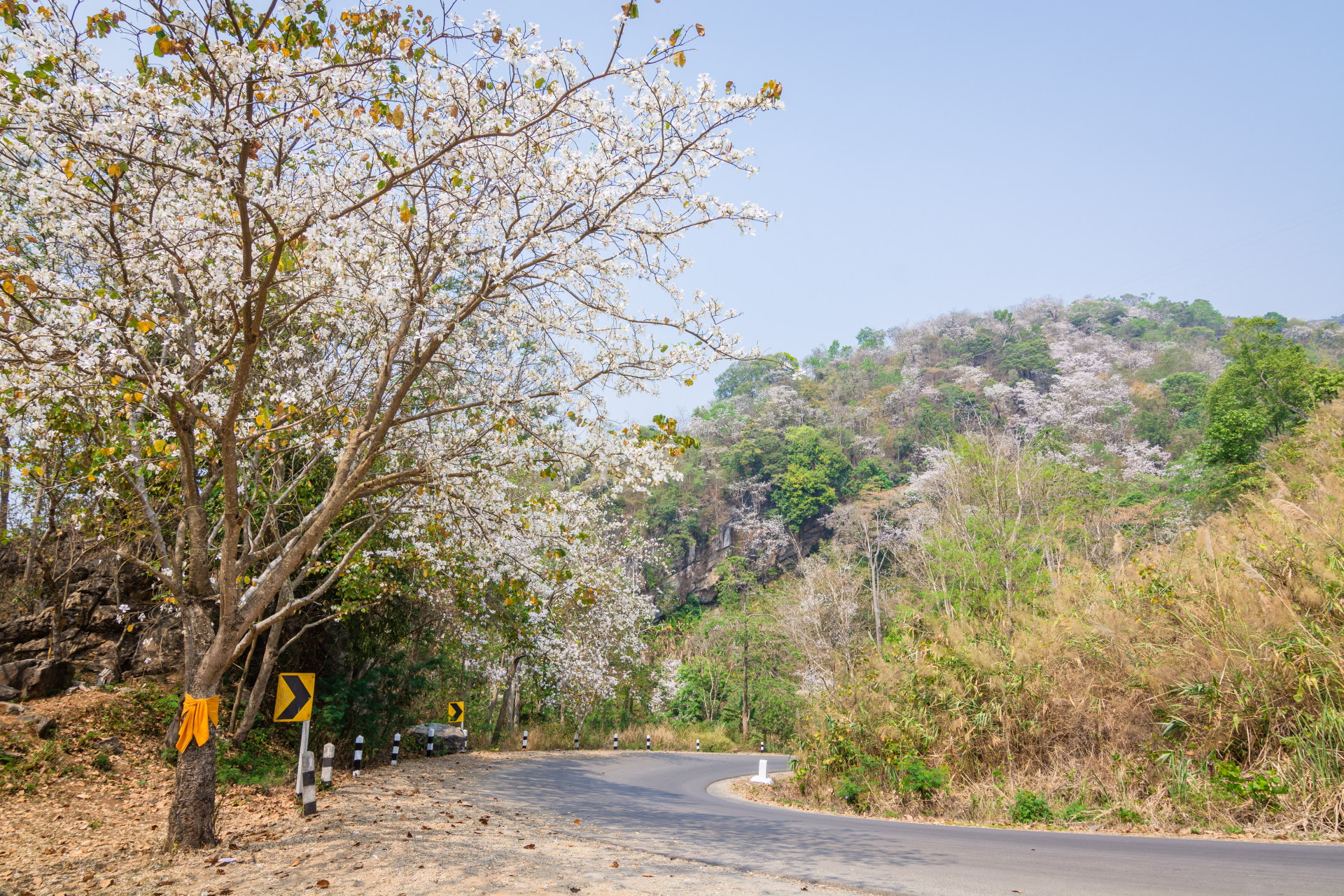
▬ Hot season (March – May) : A more complicated period for travel, with heat that can be stifling and episodes of significant pollution linked to controlled burning in the countryside.
➡️ Advantage : Fewer tourists and some trees in bloom.
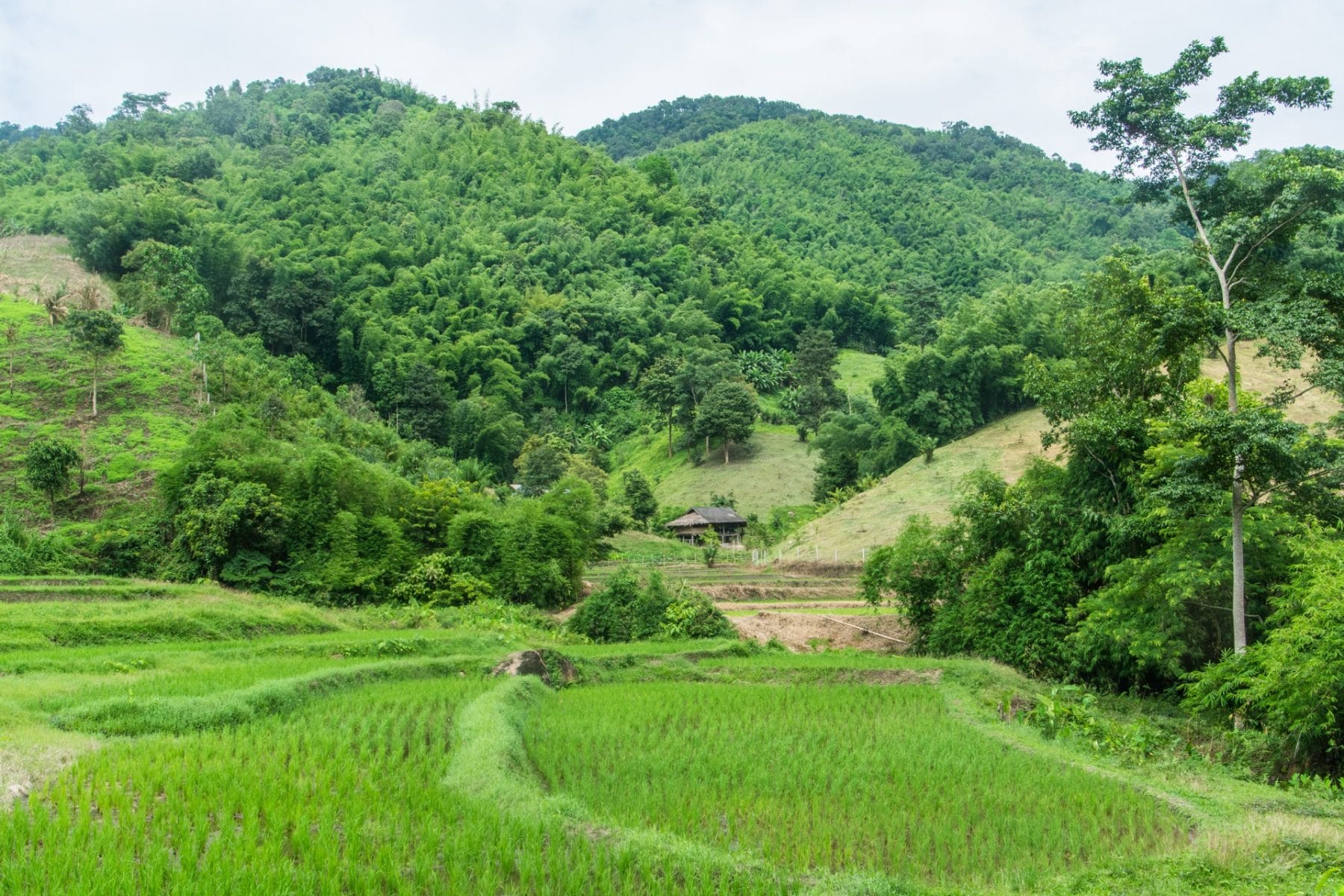
▬ Rainy season (May – October) : lush landscapes, cascading waterfalls, and overflowing rice paddies can be seen from July onwards. July and August are the rainiest months, with more frequent downpours and greyer skies. Some mountain roads can be slippery, and flash floods are possible.
➡️ To bring : A poncho or rain jacket for sudden but usually brief showers.

How to get to Chiang Rai?
Chiang Rai is the northernmost province of Thailand, bordering Myanmar to the west and Laos to the east. The city of Chiang Rai is located approximately 200 km northeast of Chiang Mai (about a 3-hour drive).
The city has an international airport (yes, really!), but otherwise, buses remain the most common way to reach the city from other parts of Thailand. Note that a railway extension is currently underway to add train service to Chiang Rai, but this will take a few more years.

By plane (from Bangkok)
The fastest and most direct option. The flight time between Bangkok and Chiang Rai International Airport (CEI) is 1 hour and 15 minutes . Several local airlines operate regular flights from Don Mueang Airport (DMK):
- Nok Air
- Air Asia
- Thai Lion Air

From Bangkok's main airport (Suvarnabhumi – BKK), you have at least two possible airlines:
- Thai Viet Jet Air
- Thai Airways
For prices, expect to pay approximately:
- From €25 without hold baggage (mainly from Don Muang).
- €50 one way with one piece of checked baggage (15 or 20 kg depending on the airline).
By bus (from Bangkok)
From Mo Chit terminal (north of Bangkok), several bus companies provide service to Chiang Rai.
- Duration : 12 hours journey, mainly in night bus.
- Prices : Between 500 and 900 baht depending on the class chosen (VIP, 1st class, 2nd class).

By train
No direct line to Chiang Rai yet!
Work to extend the train to Chiang Rai has officially begun, but for now, You must first reach Chiang Mai and then continue by bus or car. if you want to favor or test this mode of transport.
How to get to Chiang Rai from Chiang Mai?
This is a very common route , as many travelers combine the two cities. Several options exist:
By bus: the most economical option
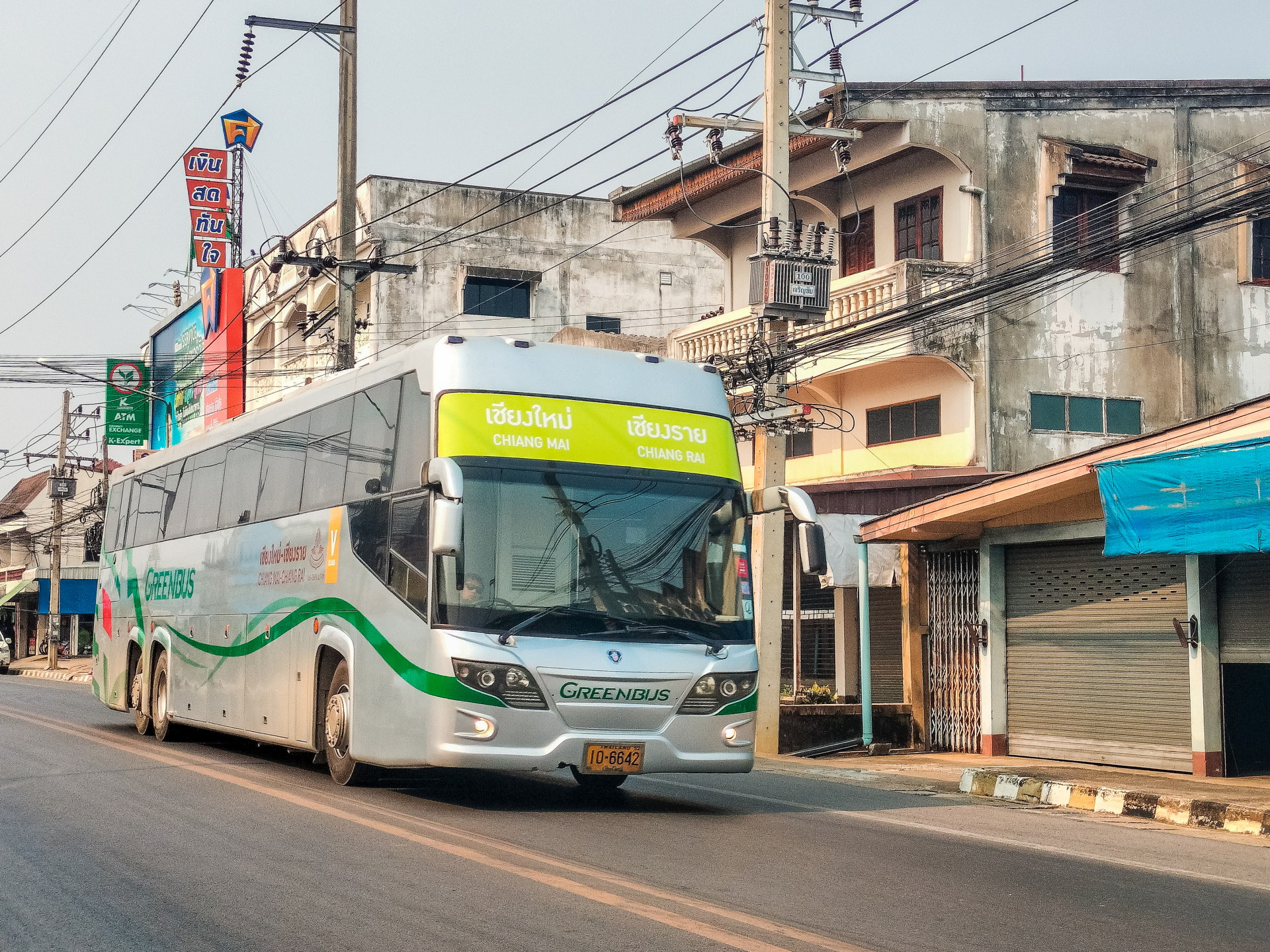
The Green Bus company provides service between Chiang Mai and Chiang Rai with regular departures.
- Duration : 3 to 4 hours drive.
- Prices : Between 250 and 500 baht depending on the bus category and schedule.
- Start time Since the Chiang Mai Bus Terminal 3.
- Booking : You can book in advance on 12go Asia (affiliate link) or directly to the bus station.
Renting a car: the most flexible option
If you enjoy driving and want to explore the region at your own pace, renting a car is a good option. Route 118 connects Chiang Mai to Chiang Rai, winding through the mountains.
➡️ Before you start, I recommend you read my article dedicated to driving in Thailand to fully understand the local specificities.
- Travel time : Approximately 3 hours.
- Car rental : Available from 800-1000 baht/day at Avis, Budget, Thai Rent a Car, etc.
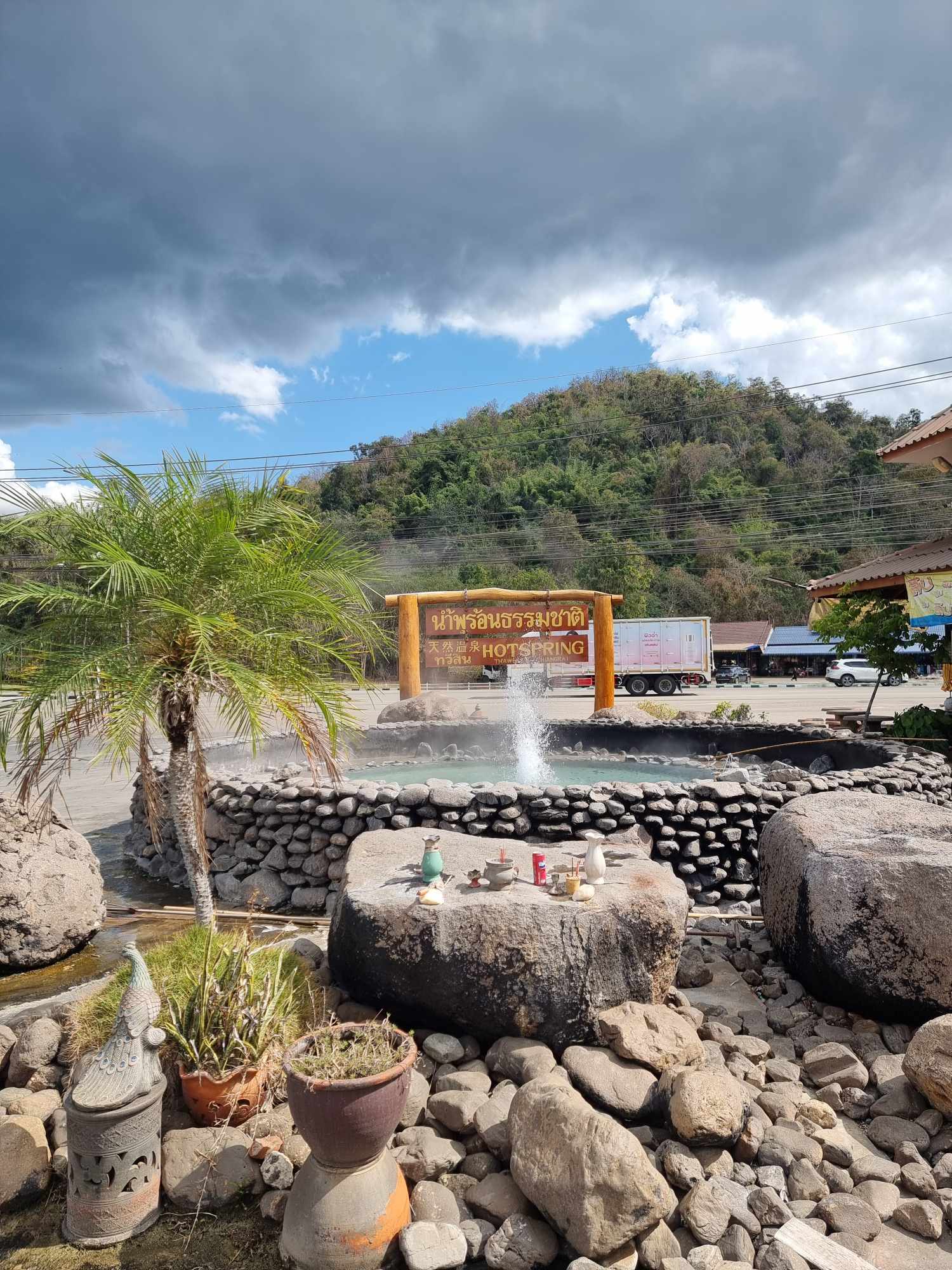
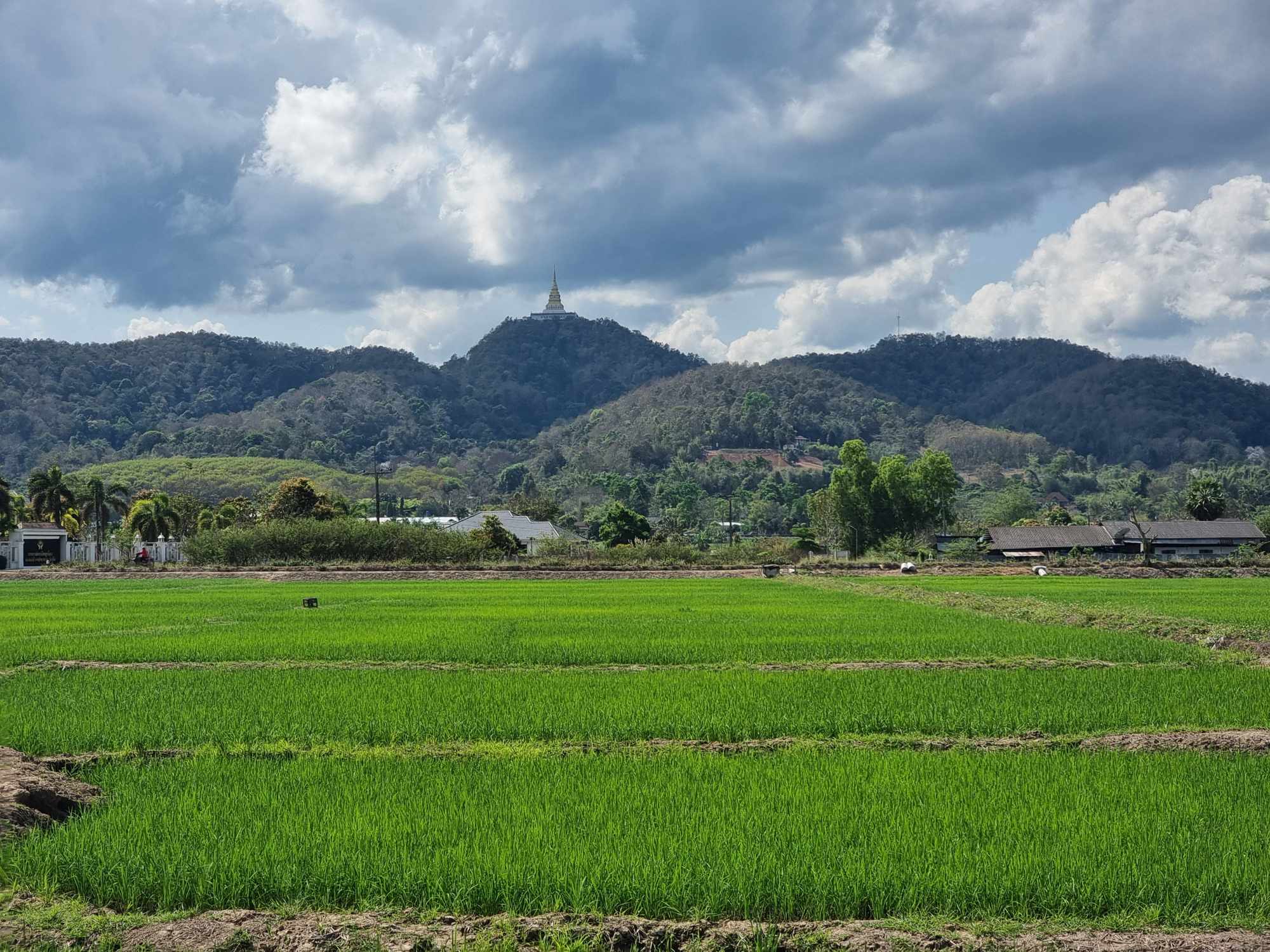
- Benefit : Allows you to stop along the way. You have in particular the hot springs of Mae Kachan, the temple Wat Saeng Kaeo Phothiyan, a superb viewpoint at Wat Phrathat Mon Phrachao Lai or even simply the famous white temple, If this is your first time there, you might as well include it in your trip before arriving in Chiang Rai.
Take a taxi / private car
- Price : Approximately 2500 to 3500 baht for a trip in private taxi.
- Where to book? : Via local agencies, the hotel, or apps like Bolt et Grave (it's rarer they are sometimes available for long distances).
- Benefit : Comfort and flexibility, ideal if you are traveling with family or a small group.
️ By motorbike: for the more adventurous
Experienced motorcyclists can consider making the journey by motorcycle , even if the route itself isn't the most spectacular. However, this allows you the freedom to appreciate the mountain roads once you arrive, particularly those mentioned in this article.
- Location : Motorcycle 150cc or more recommended (600-1000 baht/day).
- Precaution : Mountain road with traffic and winding, preferable to have experience and suitable equipment.
Where to stay in Chiang Rai
Chiang Rai is not a big city in itself, and for me the choice is simple: I prefer to simply sleep near the Night Bazaar , because I like to be able to stroll there in the evening after a day of exploring.
The atmosphere is relaxed, and it's especially convenient for having dinner without having to walk too far (because after a long day, laziness is often a real problem!). In short:
- Near the Night Bazaar (or the Clock Tower): this is the ideal option for those who want to be close to the evening's festivities, with restaurants, night market and bus station nearby.
- On the banks of the Kok River Quieter, with beautiful hotels offering a more natural ambiance.
- Around the city : If you are looking for a quieter experience or a more unusual setting.

My hotel recommendations in town
✅ Cheap (~300-600 THB / night)
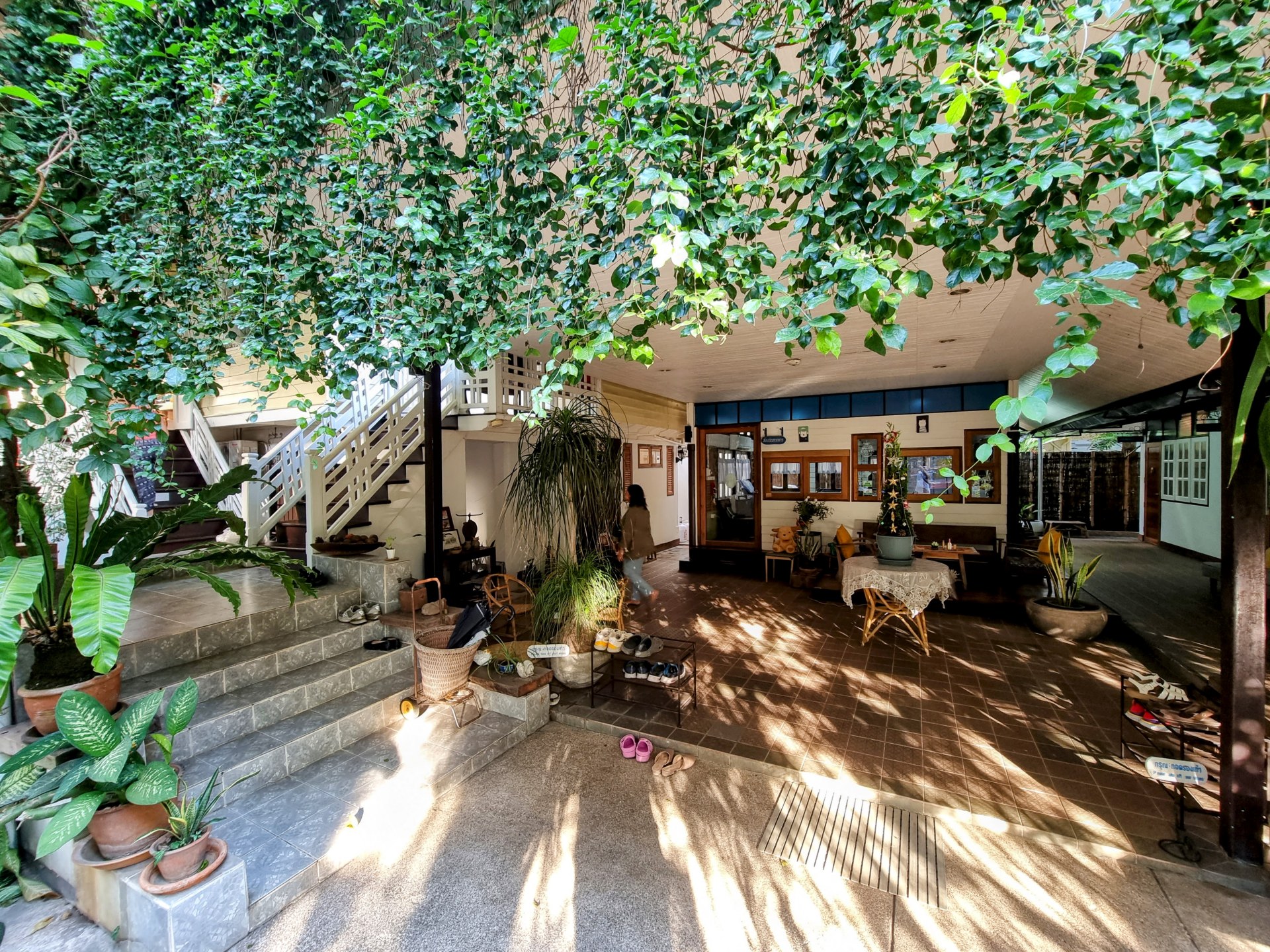
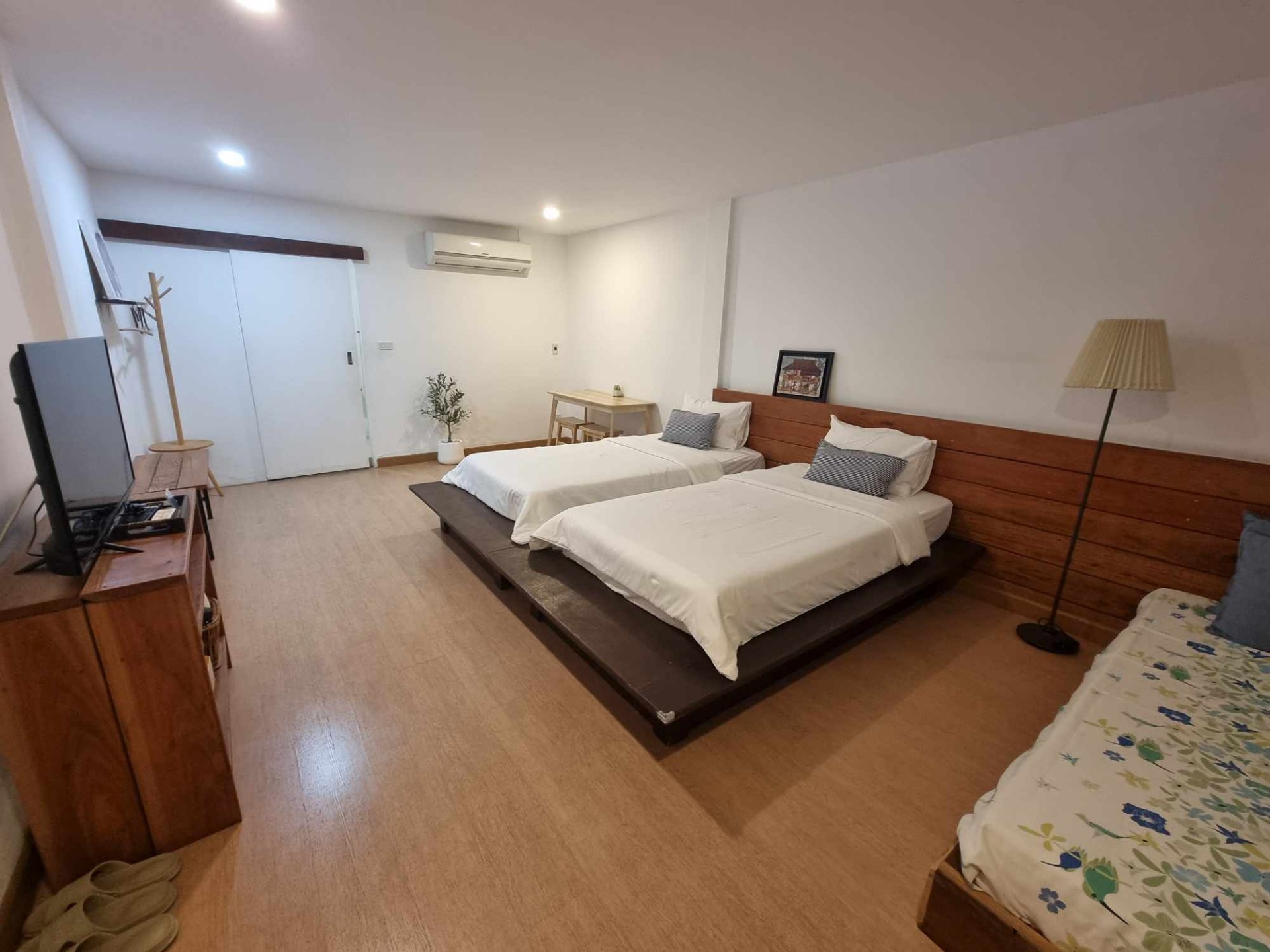
- Baan Norn Plearn : Charming guesthouse with a cafe that I recommend, 15 min walk from the Night Bazaar.
- Spinomad Hostel : Modern and well located for backpackers.
✨ Comfort (~800-1500 THB / night)
- Sleepy House Chiang Rai : Nice little hotel on a quiet street just a stone's throw from the night market.
- Nak Nakara Hotel : Very good value for money, with a swimming pool and local decor.
- Hi Chiangrai Hotel : A bit funky in terms of design but very well positioned and remains good value for money.
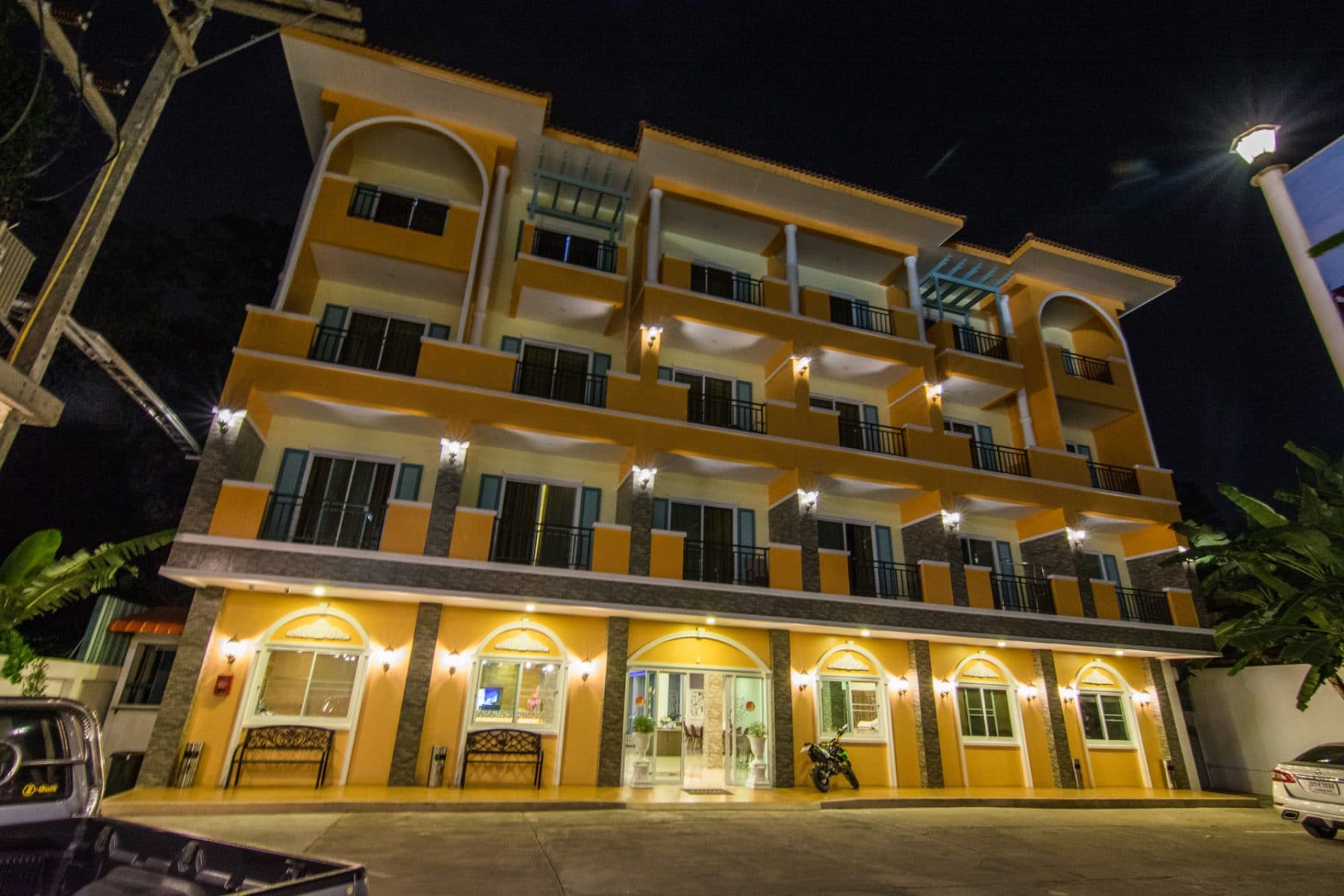
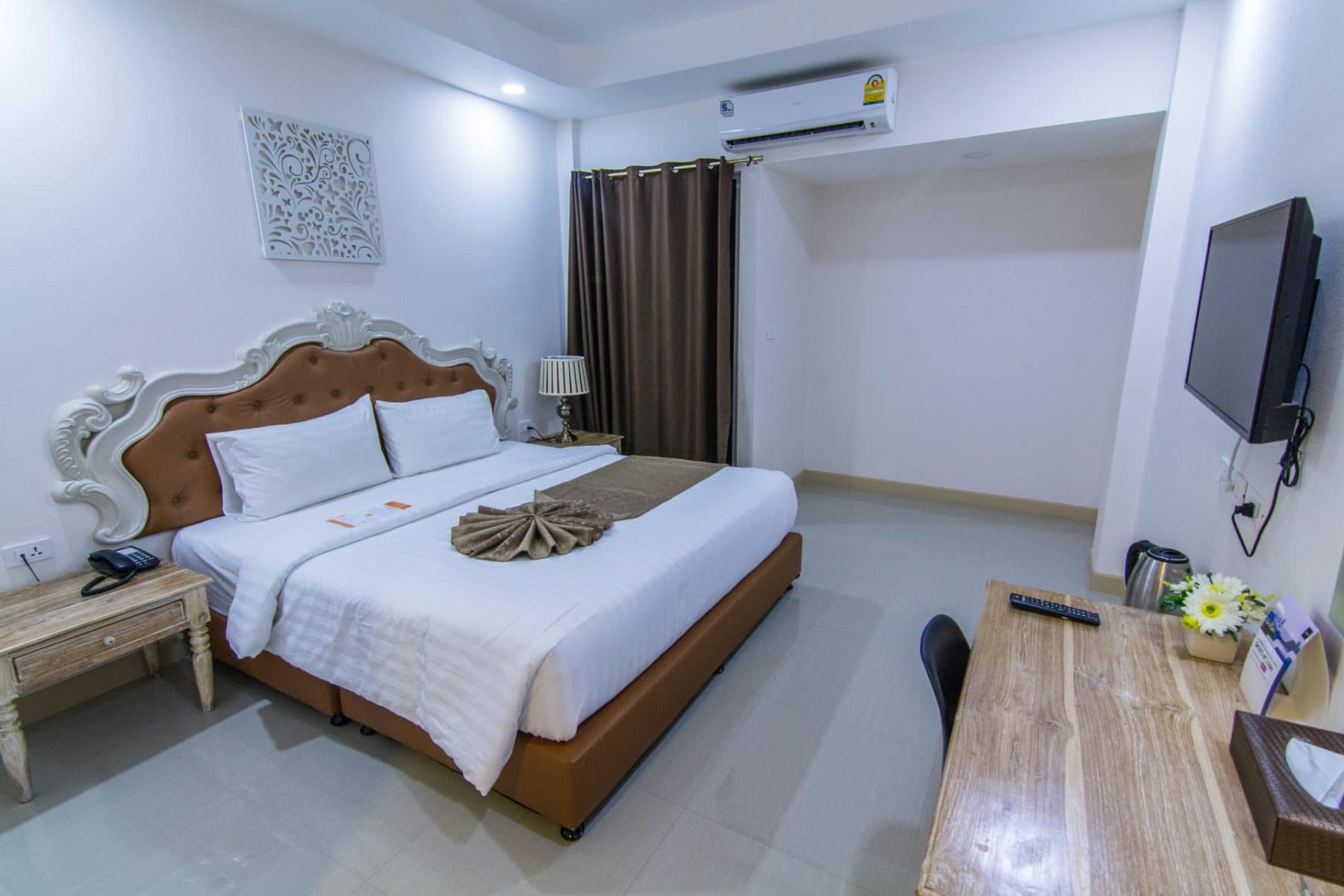
High-end (~2000 THB and up)
- Sann Hotel Luxury at a low price. This hotel with a pool, near the Clock Tower, offers excellent value for money.
- Le Meridien Chiang Rai Resort : Luxury on the riverside, peaceful, perfect for relaxing after a day of exploring.
- The Legend Chiang Rai Boutique River Resort and Spa Another superb hotel with river views, excellent for a more upscale stay. A benchmark in Chiang Rai.
Search for a hotel in Chiang Rai
If you want to see more options, here is a handy tool to compare prices and book your accommodation easily:
Tips
Bring cash : Many small shops, markets, and local transport services do not accept credit cards. It's best to have cash, especially outside the city center.
Transport tip: avoid tourist traps
- From the airport, always ask for the counter or use Bolt/Grab to avoid inflated prices.
- For excursions to the Golden Triangle, give preference to local agencies or independent transport to avoid overly formatted tourist circuits.
Local SIM card recommended : To use Google Maps, Grab/Bolt, or book transportation easily, a local SIM card (AIS, DTAC, TrueMove) is useful. Available at the airport or more widely in the city at 7-Eleven convenience stores.
→ For more information, please refer to my dedicated article on choosing between SIM and eSIM
Extend your trip to Chiang Rai province
Don't make the same mistake as many travelers by settling for a quick day trip from Chiang Mai: Chiang Rai deserves more time and is not just about its white and blue temples.
Chiang Rai can be explored beyond its city, between the peaks of Phu Chi Fah and Doi Pha Tang, the tea plantations and villages around Mae Salong and other things that I myself have not yet seen, there is plenty to do.
I have grouped the essentials in the form of a road trip in my article: a five-day itinerary in the province of Chiang Rai, between mountains and the Golden Triangle , with details of the daily schedule.
Attractions on a map
This map groups together the places around Chiang Rai and, more broadly, the sites of the province.
